



Content Writer
Saprophytes are creatures that survive or feed on other dead, decaying, or degraded organic materials. They do not feed on live creatures, unlike parasites. Saprophytes help plants recycle decayed or dead organic materials by breaking them down into smaller particles that are easier to recycle.
- Saprophytes are commonly referred to as "plants".
- Their name comes from the Greek word "phyte," which means "plant."
- They are an important element of soil biology because of their function in balancing the overall ecosystem.
- They break down complex organic materials into simpler compounds.
- Saprophytes obtain their nutrients from dead and decomposed organic material.
- They consist of spores and perform metabolic activities.
- Mucor and yeast are common examples of saprophytes.
Read More: Heterotrophic Nutrition
Key Terms: Saprophytes, Mucor, Yeast, Ecosystem, Plant, Photosynthesis, Heterotrophic, Environment, Roots, Stems, Enzymes, Decomposition
Characteristics of Saprophytes
[Click Here for Sample Questions]
The key characteristics of saprophytes are as follows:
- Saprophytes create filaments.
- They have no leaves, roots, or stems.
- It can generate spores.
- They are heterotrophic in nature because they are unable to conduct photosynthesis.
- Saprophytes are primarily single-celled creatures.
- These are ameboid creatures.
- They are responsible for breaking down degraded or decaying materials into simple organic compounds.
- Plants consume the degraded compounds.
- They get their food and energy by feeding on fungi or other parasitic living things.
- Saprophytes reproduce primarily by division or the sexual or asexual generation of spores.
- It releases digestive fluids that help them break down the organic materials in their environment.
- The fungus creates digestive enzymes by growing tubular structures called hyphae.
Read More:
Saprophytic Nutrition
[Click Here for Sample Questions]
Saprophytes consume dead and rotting materials through extracellular digestion. They release digestive chemicals into the environment, which help to break down organic materials into simpler forms.
- The organisms immediately take the nutrients generated through their cell membranes.
- Proteins are broken down into amino acids in saprophytic nutrition.
- Starch is broken down into simple sugars.
- Fats are broken down into glycerol and fatty acids.
- These final products are carried through cell membranes.
- It releases essential nutrients such as carbon, nitrogen, and phosphorus into the environment.
- Saprophytes balance the ecosystem.

Saprophytes
Read More: Excretion in Plants
Examples of Saprophytes
[Click Here for Sample Questions]
Some of the major examples of saprophytes are mentioned below,
Mucor
Mucor, often known as mould, is a saprophytic fungus that thrives on decaying organic waste, particularly carbohydrates-rich organic debris. Mucor may be found on old bread, vegetables, and manure, among other things. It may reproduce both sexually and asexually.
Yeast
Yeast is frequently found in sweet foods. It may be found in significant concentrations in grape juice, floral nectar, and vineyards. Under ideal conditions, it reproduces through budding.
Penicillium
Penicillium may be found on decaying foods, including bread, jam, jellies, fruits, vegetables, moist leather, and shoes.

Examples of Saprophytes
Read More: Life Processes
Functions of Saprophytes
[Click Here for Sample Questions]
The functions of saprophytes are discussed in below section:
- Saprophytes speed up the process of decomposition in presence of warm environment.
- They provide important nutrients like phosphorus, iron, calcium, or potassium to the plants.
- Saprophytes creates different types of enzymes that are essential for absorption of nutrition.
- It has the ability to divide spores mitotically.
Read More: Morphology of Flowering Plants
Decomposers
[Click Here for Sample Questions]
Decomposers are another name for saprophytes. They are also responsible for breaking down decaying organisms into simpler organisms. The organisms are recycled for the benefit of the plant.
- Warmth and humidity speed up the decomposition of dead and decaying materials.
- It can take as little as 24 hours under certain conditions.
- Decomposition might take six weeks or longer in colder, less humid regions.
- Saprophytes must have enough water in the soil to develop, and the soil must be neutral or slightly acidic.
- It struggles to thrive in alkaline soils and anaerobic conditions.
- They require adequate oxygen in their growing habitat.
- Saprophytic fungi such as Rhizopus and Mucor are examples.
- Monotropes in the orchid family were formerly considered to be saprophytes.
Stages of Decomposition
[Click Here for Sample Questions]
The process of decomposition starts when an organism dies, and decomposers start feeding on it. The stages of decomposition are as follows:
Fresh
When an organism dies, the intake of oxygen stops completely, and on the other hand, carbon dioxide content increases. This will lead to the start of the autolysis process. It is also found that the process of putrefaction is initiated at this stage only.
Bloat
This is the second stage of decomposition and is initiated after the process of putrefaction is completed. At this stage, the accumulation of gases takes place. In this, the bloating of dead organisms is initiated.
Active Decay
Active Decay is the third stage of decomposition. In this stage, the organism tends to lose mass from its body and starts disintegrating. It will release chemicals like methane, ammonia and hydrogen sulphide.
Advanced Decay
This is the final stage of decomposition, where odour starts coming out of the dead organism's body. Since the organism is lying dead on the ground as a result the content of nitrogen will increase in the surrounding soil. This is quite beneficial for plants.
Read More:
Things to Remember
- Saprophytes are a type of organism that feeds on decaying organic matter.
- They obtain nutrition by secreting enzymes through the cells of the plants.
- Saprophytes are important for decomposition and the nutrient cycle.
- They are responsible for giving tough characteristics to trees.
- These types of organisms do not thrive under alkaline conditions.
Read More: Organisms and Population
Sample Questions
Ques: What are saprophytes, and what do they do? (4 marks)
Ans: Saprophytes decompose dead and decaying organic materials into simpler compounds that plants may absorb and recycle. As a result, they serve a critical role in preserving ecological equilibrium.
- It contains hyphae, which are tube structures that branch into dead materials.
- It generates digestive enzymes that break down complicated stuff into simpler forms.
- The hyphae take These simpler chemicals, which eventually turn into mycelium.
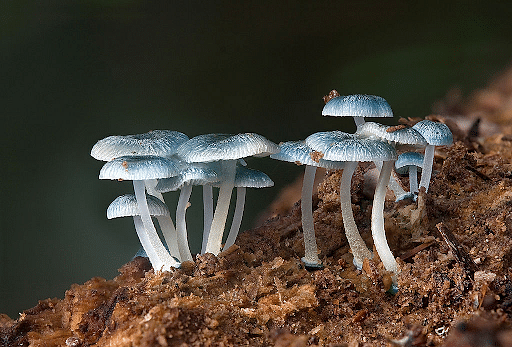
- Saprophytes feed on decomposing plants like leaves, twigs, and logs.
- They may be found in many kinds of places.
Ques: What is autolysis? (2 marks)
Ans: Autolysis is the breakdown of a deceased organism's different tissues and cells by cellular organisms within the body. Putrefaction, on the other hand, is the growth and reproduction of microorganisms throughout the body after the creature has died. It occurs in necrotic tissues. The process resembles the digestion process carried out by the living cells.
Ques: What are the stages of decomposing in saprophytes? (4 marks)
Ans: The stages of decomposition are as follows:
- Fresh: When an organism dies, the intake of oxygen stops completely, and on the other hand, carbon dioxide content increases. This will lead to the start of the autolysis process. It is also found that the process of putrefaction is initiated at this stage only.
- Bloat: Bloat is the second stage of decomposition and is initiated after the process of putrefaction is completed. At this stage, the accumulation of gases takes place. In this, the bloating of dead organisms is initiated.
- Active Decay: Active Decay is the third stage of decomposition. In this stage, the organism tends to lose mass from its body and starts disintegrating. It will release chemicals like methane, ammonia and hydrogen sulphide.
- Advanced Decay: Advanced Decay is the final stage of decomposition, where odour starts coming out of the dead organism's body. Since the organism is lying dead on the ground as a result the content of nitrogen will increase in the surrounding soil. This is quite beneficial for plants.
Ques: Digestion in saprophytes? (3 marks)
Ans: Saprophytes are well known for their use of extracellular digestion, which is a type of digestive mechanism unique to saprophytes. Certain digestive chemicals are released into the environment during this process, which aids in the breakdown of organic molecules into simpler materials. The remaining nutrients are subsequently taken straight via the organism's membrane cell, where they undergo metabolism.
Ques: What is the process of feeding in saprophytes? (2 marks)
Ans: Saprophytes create filaments. They have no leaves, roots, or stems. It can generate spores. Saprophytes eat both animal and plant remnants because they graze on all types of dead, decayed, or decaying materials in an environment. What's left after saprophytes have eaten is really a great food source for plants.
Ques: Explain Saprophytic Nutrition? (3 marks)
Ans: Saprophytes consume dead and rotting materials through extracellular digestion. They release digestive chemicals into the environment, which help to break down organic materials into simpler forms. The organisms immediately take the nutrients generated through their cell membranes. It releases essential nutrients such as carbon, nitrogen, and phosphorus into the environment. Proteins are broken down into amino acids in saprophytic nutrition.
Ques: What is Putrefaction? (2 marks)
Ans: Putrefaction is considered the stage of decomposition, which involves breaking down the body of an organism after its death. It involves the breaking down of tissues of organisms and is responsible for the liquefaction of most organs of plants. The process begins from the large intestine and is indicated by greenish discolouration of the skin of the organisms.
Ques: What is the difference between saprophytic plants and symbiotic plants? (4 marks)
Ans: The difference between saprophytic plants and symbiotic plants are as follows:
| Saprophytic Plants | Symbiotic Plants |
|---|---|
| Saprophytic plants feed on dead and decaying organism for nutrition. | Symbiotic plants establishes relationship with other organism for nutrition. |
| There is no types of these plants. | They are divided into three categories namely Mutualism, Commensalism, and Parasitism. |
| They undergo extracellular digestion. | They undergo intracellular digestion. |
| Honey fungus is an example of Saprophytic plants. | Lichen is an example of Symbiotic plants. |
Ques: Give some examples of saprophytes? (3 marks)
Ans: Some common examples of saprophytes are as follows:
- Mucor: Mucor, often known as mould, is a saprophytic fungus that thrives on decaying organic waste, particularly carbohydrates-rich organic debris. Mucor may be found on old bread, vegetables, and manure, among other things. It may reproduce both sexually and asexually.
- Yeast: Yeast is frequently found in sweet foods. It may be found in significant concentrations in grape juice, floral nectar, and vineyards. Under ideal conditions, it reproduces through budding.
- Penicillium: Penicillium may be found on decaying foods, including bread, jam, jellies, fruits, vegetables, moist leather, and shoes.
Ques: How does different types of saprophytes digest their meals? (5 marks)
Ans: Saprophytes are types of organisms that gain nutrients from dead and decaying organic matter. This happens because they do not have any chlorophyll in it. They are responsible for generating digestive fluid from dead organisms.
- The process of digestion is completed by extracellular digestion.
- The digestive substances are secreted from the surroundings.
- They break down complex organic substances into simpler compounds.
- The simpler compounds are absorbed by the membranous cell of the required organism.
- During the process, required proteins are converted into amino acids.
- Fats are converted into fatty acid, and starch is converted into sugar.
Ques: Explain saprotrophic plants? (4 marks)
Ans: Saprotrophic plants are special types of plants that feed on dead and decaying organic matter. They feed on dead organisms using mycorrhizal fungi. They do not possess any type of chlorophyll.
- These types of plants are dependent on detritus for nutrition.
- Saprophytic plants play a special role in the soil biology.
- They break down complex organic compounds into simpler substances.
- Indian pipe, Corallorhiza, and mushrooms are some of the examples of saprophytic plants.
Read Also:



Comments