



Exams Prep Master
Permanent magnets include materials in which the material's intrinsic structure creates the magnetic field. However, in particular, in materials known as ferromagnets, all of the electrons' spins and orbits line up, leading the materials to become magnetic. By reducing the domain randomization and by influencing it with an electrical field, a collective magnetic field can be formed. This is one of the processes by which electromagnets are produced. If the domains, however, are already arranged in a way that points in the same direction, then even without using an external influence they will produce a collective magnetic field. These are known as permanent magnets. The orbits of both the electrons as they travel around the nucleus produce a magnetic field. Here, we will study the behavior of permanent magnets, and discuss some important questions.
| Table of Contents |
Keyterms: Magnet, Magnetic Field, Electrical field, Elecromagnets, Electron, Orbit, Earth, Nucleus, Atoms, Crystal, Electric charge
What is a Permanent Magnet?
[Click Here for Sample Questions]
Permanent magnets include materials in which the material's intrinsic structure creates the magnetic field. Both electrons and the nucleus of something like the atom may be within atoms and crystals. The hearts and the electrons operate as tiny magnets, spinning pieces of electric charge, with magnetic fields built into the particles. Consequently, the total of a single electron, electron rotates, and electrons trajectories determine the earth's magnetic field for magnetic materials.

Permanent magnets
Magnetic Behaviour with Magnetism
[Click Here for Sample Questions]
Ferromagnetic materials also exhibit magnetism. A few magnetite alloys are among the materials. The magnetism characteristic of a ferromagnetic substance influences the direction of domains within the material. When the parts are random, the magnetic field lines created individually cancel out. Reduce the randomness of the environment by manipulating it with an electrical field to form a collective magnetic field—electromagnets in various ways, including this one. Even though no external force acts, a composite magnetic field will include the domains in the same direction. These are solid and long-lasting magnets.
When a magnetizing field to ferromagnetic materials, the domains reorganize to create magnetism and do not return to their original condition. When the generating area is zero, the realms have not yet reassembled themselves to normality.
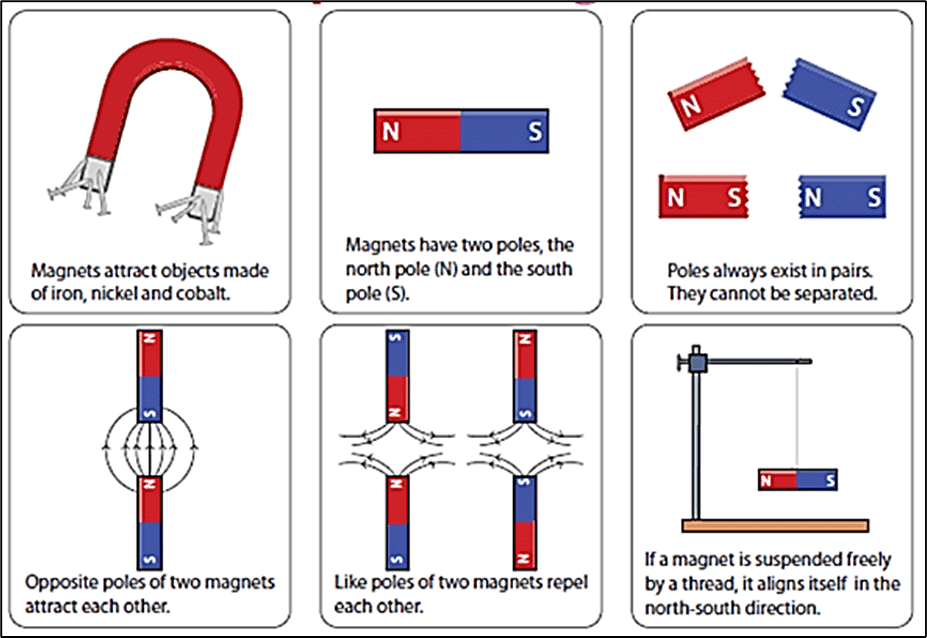
Magnetic Behaviour with Magnetism
The substances take either demagnetize or stay magnetized for some time, known as remanence. Hysteresis is the inability of a material to maintain its magnetic properties. Didn't we discover that an iron nail attached to a magnet will sometimes attract other non-magnetic iron nails for a short period after it has from the appeal? The reorientation of both the iron spike domains is to blame. This impact is weak, and it will be gone quickly. As a result, the iron nail in question will not have a permanent magnet. The real benefit of a permanent magnet over any other form of attraction is that it does not need a constant source of external energy (electricity in the case of electromagnets) to demonstrate magnetism. We'll utilize permanent magnets like compass needles, for example.
Also Read:
| Related Articles | ||
|---|---|---|
| Magnetization and Magnetic Intensity | Permanent Magnets and Electromagnets | The Bar Magnet |
| The Earth’s Magnetism | Magnetic Poles | Magnetism and Gauss Law |
How does the Permanent Magnet Work?
[Click Here for Sample Questions]
The way the crystalline nuclei of the magnet determine a permanent magnet works. In all magnetic material, the protons that encircle the hearts of their atoms create a magnetic field that is naturally occurring, albeit only in a small amount. Each of these groups of particles single magnetic domain and each of these groups may orient itself in the same direction. Like other permanent magnets, each field has its north and south poles. When a magnetic material is not magnetized, its domains face in random directions, canceling out each other's magnetic fields.
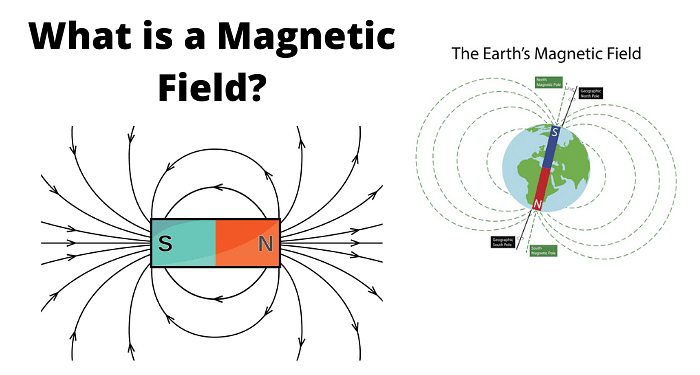
Magnetic fields
Magnetic materials are mixed and heated to very high temperatures to make a permanent magnet in a strong magnetic field. As the magnetic domains in the material align with the magnetic field outside, they become more and more aligned until all parts have and the material reaches its saturation level in the magnetic field. After that, the material and the aligned domains are in place. The magnet is anisotropic due to the alignment of parts. Hard magnetic materials will maintain most of their environments aligned when the external magnetic field, resulting in a powerful permanent magnet.
Types of Permanent Magnets
[Click Here for Sample Questions]
Depending on the numerous types available, they are for various purposes. This post will go through the many permanent magnets and their characteristics. Permanent magnets into the following categories:
-
Magnetic Metallic Elements
Most of these materials have unpaired electron spins and thus are paramagnetic. Permanent magnets have reels that interact and align spontaneously. Some metals are magnetism when found in their native state, such as ores, because their crystalline orbitals allow spins to interact. Iron ore, copper, cobalt, and the rare earth minerals neodymium and dysprosium are just a few things found in these rocks—natural ferromagnets of this kind in the early experiments of magnetism. However, new technology has made it easier to get magnetic materials, making it possible to make a wide range of products predicated on naturally magnetic components.
-
Magnets Made of Rare-Earth Elements
These elements are in high-strength compact magnets where their more excellent price is not an issue since their electrons can, resulting in intense magnetic fields. The most prevalent rare-earth magnet types are NIB and samarium-cobalt magnets.
-
Single-Chain Magnets (SCMs) and Single-Molecule Magnets (SMMs)
SCMs are a kind of molecular polymeric material that exhibits delayed magnetization relaxation. They provide a single polymeric chain magnetic hysteretic behavior at low temperatures. Their behavior is superficially similar to that of magnetic particles and single-molecule magnets. The primary variations in the physical origins of magnetic behavior open up new possibilities. The progress achieved in the synthesis, characterization and theoretical understanding of SCMs is reviewed here, with comparisons and distinctions to SMMs. The next shows a view benefits class of materials for each criterion and the subject's critical areas.
Properties of Magnetism
[Click Here for Sample Questions]
Attractive feature: A magnet attracts magnetic materials such as steel, cobalt, and iron.
Property of Directive: When a bar magnet hangs freely, it points north-south. The magnet's the North Pole is the tip that points to the geographic north, while the south pole is the tip that points to the geographic south. When two magnets' north poles close together, the repulsive force, there is an attracting force between the north poles of one magnet and the south pole of the other.
A magnet's north and south poles cannot be separated, and two comparable bar magnets with poorer qualities result in a bar magnet in half. In contrast to electric charges, electromagnetic monopoles separated magnetic north and south poles, and isolated magnetic polar caps do not exist.
The Magnetism of the Earth: The earth acts as a massive bar magnet. When you are on the earth's surface, the intensity of the earth's magnetic field changes depending on where you are. When measured in T, the earth's atmosphere is already on the order of 10–5 T in strength. The exact reasons for the earth's magnetism are yet unknown:
- The dynamo effect is another name for this phenomenon.
- Strong electric currents are created by the passage of charged ions when the earth rotates around its axis.
Basic Characteristics Earth's Magnetism
[Click Here for Sample Questions]
The earth's magnetic field lines resemble a (hypothetical) gigantic magnetic dipole at the planet's center.
- The dipole's axis does not line up with the earth's axis of rotation.
- The southern magnetic pole is near the polar geographic region of the planet.
- The poles' nomenclature is perplexing, and one should avoid being perplexed. When we examine the earth's magnetic field lines, we can see that, unlike a bar magnet, the field lines enter the ground at the north magnetic pole (Nm) and exit at the south magnetic pole (Sm).
- The convention evolved because the magnetic north was the direction in which a magnetic needle's north pole; the north pole of a magnet. After all, it was the pole that sought north.
- Internally, the north magnetic pole functions similarly to the near the poles of a bar magnet, and the reverse is valid for the magnetic field outside the earth.
Earth's Magnetic Element
[Click Here for Sample Questions]
These values characterize the magnitude and direction of something like the earth's magnetic field in a particular place entirely.
The earth's magnetic elements are as follows:
- Declination of the magnetic field
The Earth's Magnetic Field's Horizontal Components:
- Except near the equator, the earth's magnetic field is vertical. Therefore, resolve the earth's magnetic field in the magnetic meridian into a horizontal and vertical component at each location.
- When we say "horizontal component of something like the earth's magnetic field," we refer to the horizontal component of the earth's atmosphere.
Example of a Permanent Magnet
[Click Here for Sample Questions]
A common example of a permanent magnet is a refrigerator magnet. The magnetic field created by a bar magnet is seen in the graphic below. The magnetic field is the magnet's effect sphere. By scattering iron filings on a bar magnet, it may be visualized. The filings will align themselves along the lines of the magnet's magnetic field. Physically, the strength of several magnets may be seen in the same way.
Things to Remember
- The earth’s magnetic field is not due to a huge bar magnet inside it. The earth’s core is hot and molten. Perhaps convective currents in this core are responsible for the earth’s magnetic field
- The sizes, as well as the direction of the earth’s magnetic field, are determined by three components: Declination of the magnetic field. The angle of dip, or magnetic inclination.
- There are three types of Permanent Magnets i.e., Magnetic Metallic Element, Rare-earth element, and Single-chain Magnets
- When a magnetizing field is applied to ferromagnetic materials, the domains rearrange and do not revert to their previous state. When the producing area is zero, the realms have not yet returned to normalcy.
- Ferromagnetic materials, which include metals such as iron, nickel, and cobalt, have some unpaired electrons in their atoms. A number of these atoms are clustered together to form separate magnetic domains, each with its own north and south poles, thus each domain functions effectively as a little magnet.
Also Read:
Sample Questions
Ques. What is the process of making magnets? (2 Marks)
Ans. Casting, pressing and sintering, compression bonding, injection molding, extruding, and calendaring methods are all used to create modern magnet materials. Magnets must frequently be further treated, such as by grinding or other machining techniques, before being combined into a higher-level assembly. Learn more about our bespoke machining and assembly capabilities by visiting our manufacturing and assembly website.
Ques. What Characterizes a Magnetic Substance? (3 Marks)
Ans. The atomic electron orbitals are commonly d- or f-states with large angular momentum (and hence considerable magnetic moments) that line up along crystal axes and interact in a way that favors alignment in either the same direction (Ferromagnetism) or opposing directions (antiferromagnetism) (antiferromagnetism, usually exhibits no or fragile "magnetic" properties). The spin of an electron (which has its own magnetic moment) can interact ferromagnetically (more typically antiferromagnetically) to generate a sort of magnetism (usually weaker).
Ques. Discuss Magnetic Behaviour with Magnetism? (3 Marks)
Ans. When a magnetizing field is applied to the ferromagnetic material, the domains reorganize to create magnetism and do not return to their original condition. When the driving field is zero and the domains have not yet reassembled themselves to normality, the substances take to demagnetize or remain magnetized for a period of time, which is known as remanence. When we try to assign the magnetic property back to zero by applying a field in the opposite direction, the amount of reverse field necessary to demagnetize that substance is referred to as coercivity. The inability of material to keep its magnetic property is referred to as hysteresis.
Ques. How does the Permanent Magnet Works? (3 Marks)
Ans. The protons that encircle the hearts of their atoms in all magnetic materials form a magnetic field that occurs spontaneously, albeit in a modest quantity. Each of these particle groups has its own magnetic domain, and each of these groups may orient itself in the same way. Each field, like other permanent magnets, has a north and south pole. When a magnetic substance is not magnetized, its domains face in random directions, canceling out the magnetic fields of each other. To create a permanent magnet in a strong magnetic field, magnetic materials are combined and heated to extremely high temperatures.
Ques. What are the types of Permanent Magnets? (3 Marks)
Ans. There are three types of Permanent Magnets:
Magnetic metallic Elements: The majority of these materials are paramagnetic because their electron spins are unpaired. Permanent magnets have reels that spontaneously connect and align.
Rare-Earth Magnets: These elements are used in high-strength compact magnets, where their lower price does not matter because their electrons can produce powerful magnetic fields. NIB and samarium-cobalt magnets are the most common rare-earth magnet kinds.
Single-Chain Magnets (SCMs) and Single-Molecule Magnets (SMMs): SCMs are molecular polymeric materials with delayed magnetization relaxation. At low temperatures, they exhibit a single polymeric chain magnetic hysteretic behavior. Their behavior appears to be comparable to that of magnetic particles and single-molecule magnets on the surface.
Ques. What are the Basic Characteristics of Earth's magnetism? (5 Marks)
Ans. Below are the basic characteristics of Earth’s Magnetism
- The dipole's axis does not coincide with the earth's axis of rotation;
- The planet's southern magnetic pole is located near the planet's polar geographic area.
- We can observe that, unlike a bar magnet, the earth's magnetic field lines enter the ground at the north magnetic pole (Nm) and escape at the south magnetic pole (Sm) (Sm).
- The convention arose because the magnetic north was the direction in which the north pole of a magnetic needle; the north pole of a magnet. After all, it was the pole that was searching for the north.
- Internally, the north magnetic pole works similarly to the near poles of a bar magnet, and the magnetic field outside the planet works similarly.
Ques. Explain the magnetic elements of the earth's magnetic field. (5 Marks)
Ans. The components are as follows:
- Declination of the magnetic field (q)
- Inclination to magnetism (d)
- The component that is horizontal (BH)
Magnetic declination is defined as the tiny angle between the magnetic axis and the geographic axis at a given location. It is symbolized by the symbol.
Magnetic Inclination: The angle formed by the compass needle of a vertically held compass with the horizontal is known as magnetic dip, dip angle, or magnetic inclination. This angle fluctuates depending on where you are on the Earth's surface. Positive inclination values imply that the Earth's magnetic field is directed downward, into the Earth, at the measurement site. A dip circle is an instrument that may be used to determine the value.
(1)Because the magnetic field near the equator is parallel to the horizon, there is no angle of dip.
(2) Because the magnetic field is almost vertical at the poles, the dip will be greatest.
For Latest Updates on Upcoming Board Exams, Click Here: https://t.me/class_10_12_board_updates
Check-Out:



Comments