



Content Writer
Alkanes are organic molecules containing only single-bonded carbon and hydrogen atoms. It is an acyclic, branched, or unbranched hydrocarbon having the general formula CnH2n+2.
- Alkanes are subdivided into chain alkanes, cycloalkanes, and branched alkanes.
- They do not belong to any other functional groups.
- Alkanes are chemical molecules that are organized in a tree structure with single carbon-carbon bonds.
- They are also known as paraffin, as they have a lesser affinity for general reagents.
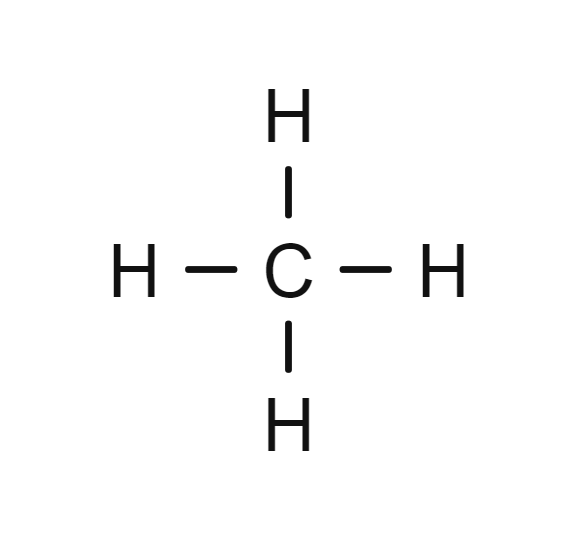
- Methane is considered the simplest compound that belongs to this category.
- They are considered aliphatic saturated hydrocarbons.
- Since alkanes contain a high number of carbon atoms, they are also used as anti-corrosive agents.
Key Terms: Alkanes, Hydrocarbons, Methane, Paraffin, Molecules, Functional Groups, Carbon, Hydrogen, Atom, Organic Compounds, Straight Chain Alkanes, Branched Chain Alkanes, Reagents
What are Alkanes?
[Click Here for Sample Questions]
Alkanes are a type of hydrocarbon which forms an open-chain structure. It is the simplest organic compound that is made by using only carbon and hydrogen atoms.
- These hydrocarbons are also regarded as the primary organic substance.
- In alkane hydrocarbon, all four valencies of carbon atoms are satisfied by four atoms or a group of atoms.
- The chain structure of the compound is called octane.
- It is the longest hydrocarbon with a molecular formula of C₈H₁₈.
- These items are extensively spread in nature and are used for various purposes.
Example of What are Alkanes?Example 1: Some examples of such items are coal, petroleum and natural gas. Example 2: The molecular formula of Methane is CH4 . It contains one Carbon atom and 4 Hydrogen atoms. Only a single covalent bond is present in this compound.
 |
Also Read:
| Related Articles | ||
|---|---|---|
| Carbon and Its Compounds Revision Notes | Isotopes of Hydrogen | Hydrogen |
Structure of Alkanes
[Click Here for Sample Questions]
The molecular formula of alkanes is CnH2n+2. The carbon atom in the compound is sp3 hybridized. It forms C-H sigma bonds by the axial overlap of the sp3 hybrid orbital of carbon and the s orbital of hydrogen.
- The atoms of C – C and C-H will have a bond lengths of 154 pm and 112 pm respectively.
- When identical compounds are attached to carbon atoms then they will form a condensed structure.
- The molecules are represented in a zig-zag manner.
- It has a bond angle of 109°28′.
- The shape of the compound is tetrahedral.
- The alkanes consist of a carbon atom lying at the centre and four hydrogen atoms at the four comers.

Structure of Alkanes
Types of Alkanes
[Click Here for Sample Questions]
Alkanes are divided into three subgroups: chain alkanes, cycloalkanes, and branched alkanes. The basic difference among all three is the structure of these molecules.
Chain Alkanes
Chain alkanes or straight chain alkanes consist of each carbon atom bonded with not more than two other carbon atoms. It is also known as normal alkanes.
- It will form a carbon chain of atoms without branching.
Example of Chain AlkanesExample 1: Hexane is represented as CH3−CH2−CH2−CH2−CH2−CH3. |

Cyclo Alkanes
Cycloalkanes are a class of hydrocarbons that will form a ring-like structure. These compounds have the general formula CnH2n . These compounds have different properties based on their structure.

Branched Chain Alkanes
Branched-chain alkanes are a type of alkanes where at least one carbon atom is bonded with more than two other carbon atoms. Isoalkanes and neo alkanes are two types of alkanes.

List of Alkanes and its structures
[Click Here for Sample Questions]
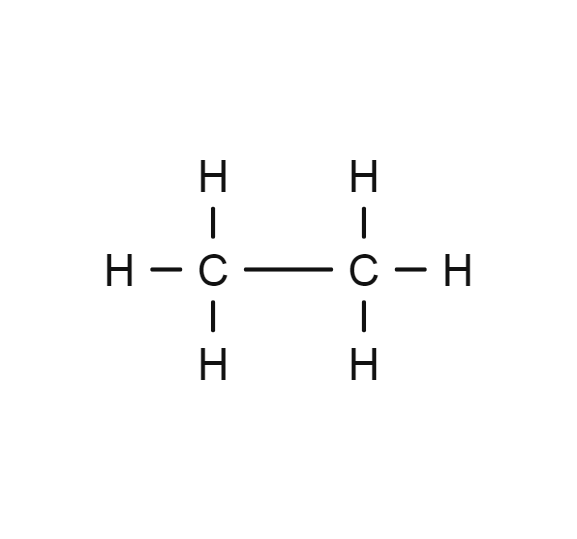
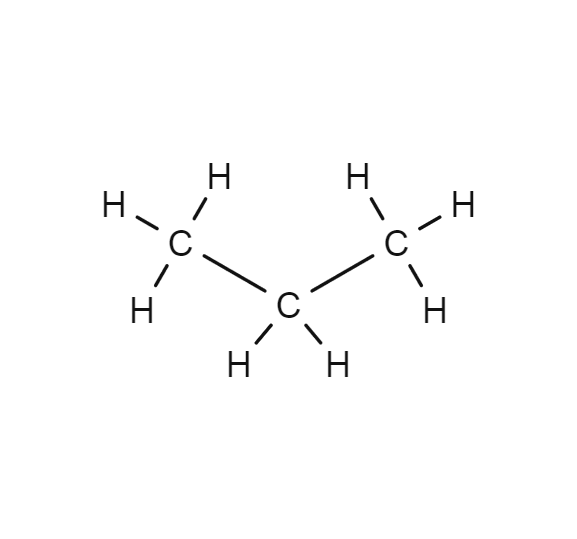
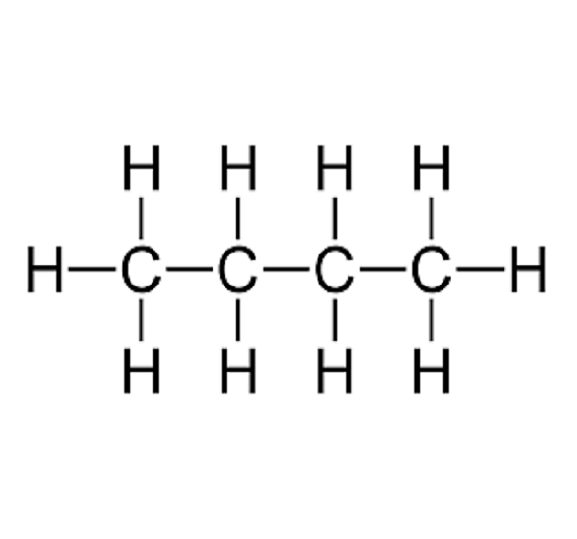
The different types of alkanes and its structures are as follows:






Physical Properties of Alkane
[Click Here for Sample Questions]
Some of the important physical properties of alkanes are,
Solubility of Alkanes
Since alkanes consists of covalent connections between C-C and C-H, as well as the very tiny differences in electronegativities of carbon and hydrogen, they are often non-polar molecules.
- We know that polar molecules dissolve in polar solvents and nonpolar molecules dissolve in nonpolar solvents.
- Therefore alkanes are either insoluble in water or hydrophobic in nature.
They are soluble in organic solvents because the energy required to overcome existing Van Der Waals forces and generate new Van Der Waals forces is very similar.
- When a non-polar alkane is put to a polar solvent, water molecules and alkane molecules are both attracted to each other.
- However water and alkane molecules are not attracted to each other.
Melting Point of Alkanes
The melting point of Alkanes also increases with the increase in molecular weight. It is difficult to break the intermolecular forces of attraction between higher alkanes as they are generally solids.
- Even-numbered alkanes pack better in the solid phase than odd-numbered alkanes.
- It forms a well-organised structure that is difficult to break.
- This result in a higher melting point for even-numbered alkanes than odd-numbered alkanes.
Boiling Point of Alkanes
The boiling point of alkanes increase with increase in molecular weight as intermolecular Van Der Waals forces increase. The straight chain alkanes have higher boiling point in comparsion to structural isomers.
Smell and Colour
Alkanes are colourless and odourless. They possess Van der Waals force of attraction.
State of Matter
Alkanes, having one to four carbon atoms, are gases in nature. Those compounds with five to seven carbon atoms are liquid in nature. Any alkane with 18 or more carbon atoms is solid in nature.
- Alkanes form bonds with carbon or hydrogen atoms.
Density
Alkanes float because their density is lower than that of water. As molecular mass rises, density rises as well. Apart from weak Van der Waals forces, London forces, and dispersion forces, alkane molecules are held together by weak intermolecular interactions.
Chemical Properties of Alkane
[Click Here for Sample Questions]
The chemical properties of alkanes are as follows:
Combustion
When alkanes are exposed to too much oxygen (O2), they easily burn, releasing carbon dioxide gas, water, and energy in the form of heat and light.
CH4 + O2 ------→ CO2 + H2O
Halogenation
Alkanes have a very strong bond, which makes them less reactive. They do not react with halogens without ultraviolet rays. Halogenated alkanes are produced by using UV rays.
- It is a substitution reaction in which halogen atoms replace one or more hydrogen atoms.
CH4 + Cl2 ------→ CH3Cl + HCl
Pyrolysis of Alkanes
Pyrolysis of Alkanes involves the decomposition of alkanes in the absence of air to give lower alkanes. The nature of products depend upon the pressure, structure of alkanes and presence or absence of a catalyst.
C6H14 ------→C6H12 + H2
Nitration of Alkanes
Nitration of alkanes involves the replacement of hydrogen atoms with the nitro group, which is carried out in the vapour phase. The process is carried out by heating a mixture of alkane and concentrated nitric acid.
R– H + HO – NO2 -------→ R-NO2 + H2O
Alkanes Formula and its Condensed Structures
[Click Here for Sample Questions]
The different alkanes formula and its condensed structure are as follows:
| Name | Molecular Formula | Condensed Structural Formula |
|---|---|---|
| Methane | CH4 | CH4 |
| Ethane | C2H6 | CH3CH3 |
| Propane | C3H8 | CH3CH2CH3 |
| Butane | C4H10 | CH3(CH2)2CH3 |
| Pentane | C5H12 | CH3(CH2)3CH3 |
Preparation of Alkanes
[Click Here for Sample Questions]
Different ways of preparation of alkanes are as follows:
Hydrogenation
Alkenes and alkynes are unsaturated hydrocarbons that undergo hydrogenation over Raney nickel as a catalyst at a temperature of about 473K to 573K. It is also known as the Sabatier and Sanderson reaction.
CnH2n + H2 ----→ CnH2n+2
Decarboxylation
Decarboxylation involves a reaction in which carbon dioxide is separated from carboxylic acid. It involves the fusion of anhydrous sodium salt of fatty acid with soda.
CH3COONa + NaOH ---------→ CH4 + Na2CO3
Wurtz Synthesis
Wurtz Synthesis involves heating alkyl halides with sodium metal in the presence of dry ether as solvent. Higher alkanes can be prepared with the lower alkyl halides.
Uses of Alkanes
[Click Here for Sample Questions]
Alkanes are very useful compounds. Some of the properties that make it useful are as follows:
- Propane and butane, when liquefied at low temperatures, are utilised as propellants or aerosol sprays in propane gas burners.
- Pentane to octane fuels are suitable for internal combustion engines.
- The viscosity of nonane to hexadecane is high; as a result, it is used in diesel and aviation fuel.
- C35 alkanes are utilised in paraffin wax candles, anti-corrosive compounds, and lubricating oil.
- Higher alkanes are broken down into lower alkanes before being used.
Important Topics for JEE MainAs per JEE Main 2024 Session 1, important subtopics included in the alkanes are as follows:
Some memory based important questions asked in JEE Main 2024 Session 1 include:
|
Things to Remember
- Alkane is a chemical molecule that is made up of hydrogen and carbon atoms.
- They are divided into three subgroups: chain alkanes, cycloalkanes, and branched alkanes.
- Hydrocarbons are also regarded as the primary organic substance
- They are colourless and odourless, which are less reactive compounds.
- Straight-chained alkanes have higher boiling points and melting points.
Also Read:
Sample Questions
Ques: What are alkanes? (2 marks)
Ans: Alkanes are saturated hydrocarbons. To put it simply, Alkane is a chemical molecule that is made up of hydrogen and carbon atoms. Their carbon atoms are closely packed with hydrogen which makes it less reactive.
Ques: What is the general formula for the structure of Alkanes? (1 mark)
Ans: The formulae for the structure of alkanes is CnH2n+2 where n is the number of carbon atoms.
Ques: Write the structure of C7H16? (2 marks)
Ans: The structure of C7H16 is

Ques: Why do longer alkane chains have higher melting and boiling point? (2 marks)
Ans: The number of electrons in a molecule increases as the carbon chain lengthens. This indicates that the molecules have more (relatively) stronger intermolecular forces. As a result, it takes more energy to break these forces, resulting in greater melting or boiling temperatures.
Ques: What is the process to name alkanes? (3 marks)
Ans: Alkanes are named according to the norms of IUPAC. All alkanes have a common suffix -ane and the full name is determined by the number of carbon atoms. For example: An alkane with one carbon is methane, with two carbon is ethane and so on. The normal chain alkanes can be generally written with a prefix ‘n’ like n-propane, n-hexane etc., but for isomeric alkanes, the prefix ‘iso’ and ‘neo’ are used.
Ques: What do you mean by alkyl groups: (2 marks)
Ans: The alkyl group is formed when an alkane with hydrogen is separated from a bond. It is very often referred to as ‘R’, which is the same as halogens, which are referred to by the letter ‘X’. When an alkane molecule gets attached to a substituent group like halogen, it gets transformed from a carbon hydrogen bond to a carbon substituent bond.
Ques: How many covalent bonds does ethane have? (2 marks)
Ans: Ethane has seven covalent bonds. The molecular formula of ethane is C2H6 where there are 6 bonds between carbon and hydrogen and one bond between carbon and carbon. Here each hydrogen atom shares one electron with carbon to form a covalent bond and the two carbon atoms also share one electron to form a carbon-carbon covalent bond.
Ques: Explain the structure of octane? (3 marks)
Ans: Let us look at the structure of Octane. Octane consists of 8 carbon atoms bonded to one another in a long chain alkane molecule by a single covalent bond. A total of four single covalent connections are formed when each atom is connected to enough hydrogen atoms. Octane refers to the whole long-chain structure. It’s structure is,

Ques: What are the physical properties of alkanes? (3 marks)
Ans: The physical properties of alkanes are as follows:
- Alkanes are colourless and odourless.
- There density is lower than that of water.
- These molecules are held together by weak intermolecular interactions.
- Melting point of alkanes also increases with the increase in molecular weight.
Ques: Why alkanes are considered non-polar molecules? (2 marks)
Ans: Alkanes are considered non-polar molecules because of the covalent connections between C-C and C-H, as well as the very tiny differences in electronegativities of carbon and hydrogen. We know that polar molecules dissolve in polar solvents and nonpolar molecules dissolve in nonpolar solvents, therefore alkanes are either insoluble in water or hydrophobic in nature.
Ques: What is alkyl groups? (2 marks)
Ans: Alkyl group involves one carbon-hydrogen bond in an alkane molecule is changed into a carbon-substituent bond when a substituent, such as halogen, forms a bond with it. It is created when an alkane that contains hydrogen is separated from one bond. Similar to how halogens are represented by the letter X, this alkyl group is commonly shown by the letter R.
For Latest Updates on Upcoming Board Exams, Click Here: https://t.me/class_10_12_board_updates
Check-Out:



Comments