



Education Journalist | Study Abroad Lead
Animal husbandry refers to the breeding of animals for their products. It comprises Dairyfarming (or Cattle farming), Poultry farming, Apiculture, Pisciculture, Equine farming. There is no doubt that animal husbandry is one of the major sources of income for farmers. However, it necessitates a great deal of knowledge and invention without which it would be difficult to meet the world's demand for animal products.
| Table of Content |
Key Takeaways: Animal Husbandry, Poultry, Breeding, Feeding, Cross Breeding, Farm Management.
What is Animal Husbandry?
[Click Here for Sample Questions]
Animals provide us with a variety of animal products that constitute high nutritional value, but it requires a great deal of proper care and concern too. These species require a thorough understanding of the genetic features, necessities, and behaviour of animals.
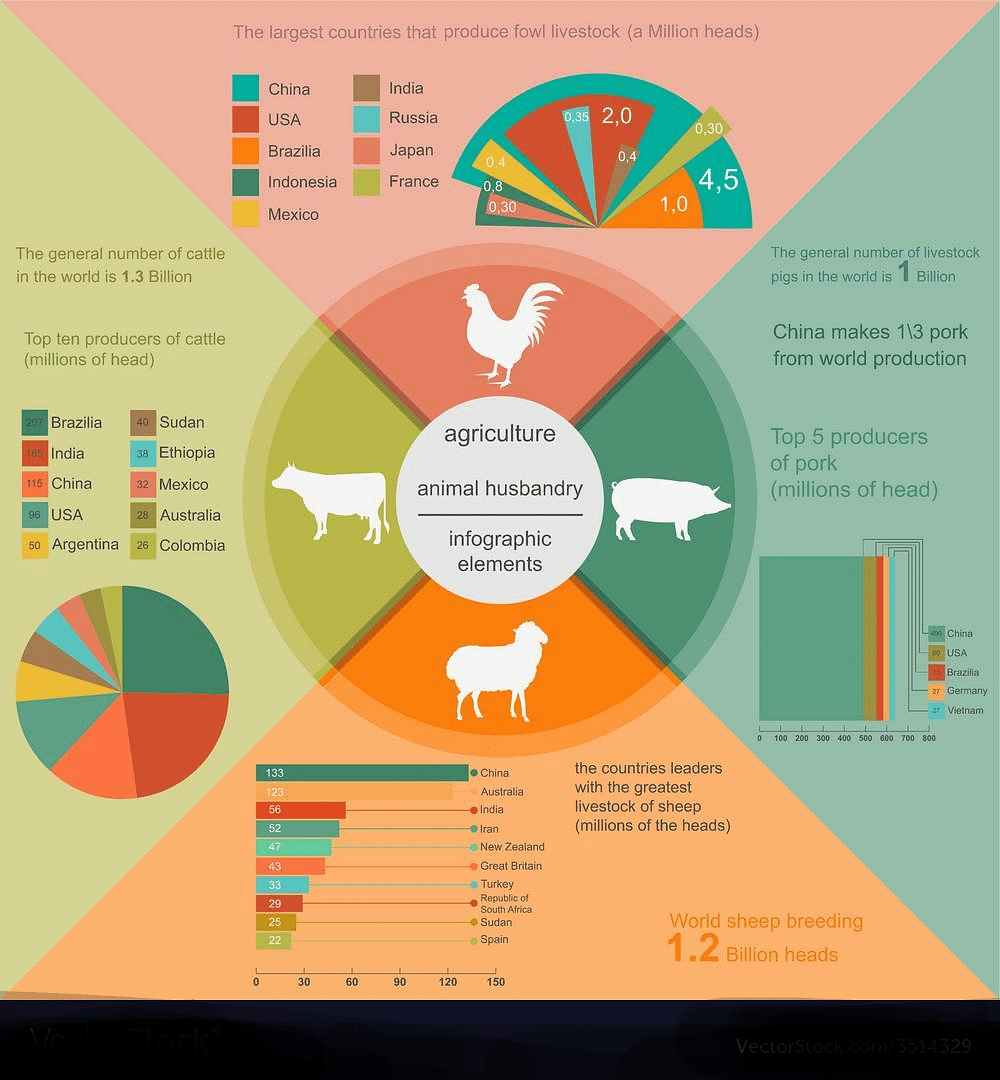
Animal Husbandry
Types of Animal Husbandry
[Click Here for Sample Questions]
There are 4 type of Animal Husbandry:
- Dairy Farming: Dairy farming is a technique for the production of products such as curd, cheese, yoghurt, butter, cream and many more.The dairy products, majorly milk, we get from animals such as cows, bison, and goats.
- Poultry Farming: The term "poultry" refers to a broad variety of domestic fowl, including native and commercial chickens, ducks, guinea fowl, geese, quail, pigeons, etc. Poultry is practised all across the world, with chickens being by far the most common species.
- Fish Farming: In this Farming, fishes are raised in tanks or ponds for various types of purposes. This could increase the demand of fishes in the market.
- Bee Farming: In this Farming, Bees are raised which would increase the demand of bees in the market.
Also Read:
| Related Articles | ||
|---|---|---|
| Chromosomes and Genes | Colour Blindness | Single Cell Protein |
| Biofortification | marine creatures | Manure |
Impact of Animal Husbandry on the Environment
[Click Here for Sample Questions]
The surroundings and methods in animal husbandry vary from one type of animal to the other depending on their type of care, food, and environment. Demand for eggs, meat and other dairy products which can be produced by poultry farming are increasing day by day. It is increasing by increasing population also. There are not huge resources of poultry as compared to the demand of them by humans. Various habitats are decreasing due to animal husbandry. Not only forests, but freshwater is also going to decline. Our ecosystem is going to imbalance due to animal husbandry.
What is Poultry Farming
[Click Here for Sample Questions]
Animal Husbandry is a branch of organic farming and horticulture. It got its roots from cattle farming and the nurturing of animals like cows, goats, bison, sheep, and so on. Following that, it was expanded to include cattle and poultry farming cultivation, egg and broiler production, fisheries, apiculture, and so on.


Poultry Farming
Poultry fowls can suffer from a variety of human diseases caused by infection, microscopic organisms, fungus, parasites, and nutritional deficiencies. Thus, to prevent the same it is required to do cleaning, sterilisation, and sanitizer splashing at regular spans. The occurrence of infections and severe diseases along with the reduction in poultry losses can be prevented with appropriate vaccination.
It includes two types of Management which are as follows:
Farm Management
Farm Management is included in poultry farming which is used in maintaining shelter and food.
- Shelter: Birds in poultry farming should be maintained with care in their shelter. Their feeding, housing, and care is to be done in the shelter which is to be well-maintained and cleaned. Requirement of good hygiene and proper ventilation is necessary.
- Food: Egg layers and broilers are the two categories which are included in poultry farming for which food requirement is very much necessary. They should be feeded with rich-protein and good hygiene.
Disease Management
In poultry Farming, Disease-free conditions are very important as there are numerous diseases which exist in our environment on a high-level. Poultry farming is an endeavour to rear domestic animals for meat and egg production. In this way, improved chicken breeds are produced and nurtured to produce broilers and eggs for meat.
Importance of Poultry Farming
[Click Here for Sample Questions]
The inbreeding depression industry is continuously growing and industrialising because the growing population, increased purchasing power, and urbanisation have all been powerful drivers of its growth in many parts of the world.
Further, breeding advancement has resulted in the domestication of such breeds that fit certain needs and are becoming increasingly helpful. This has ultimately led to the cross-breeding of Indian and foreign breeds for the enhancement. It is concentrated on fostering new variations for the under-mentioned traits:
- The quantity and type of chicks.
- Commercial chick production through dwarf broiler parents.
- Adaption to summer transformation/resistance to warm temperatures.
- Fewer maintenance requirements.
- Reduction in the size of the egg-laying bird with the ability to employ less expensive yet more fibrous feeding regimens using agricultural outcomes.
Also Read:
Things to Remember
Following are some important points:
- The branch of agriculture, i.e., Animal husbandry deals with animals for their products such as meat, fibre, milk, and much more.
- Poultry farming is an endeavour to rear domestic animals for meat and egg production.
- Asia is the most important egg-producing region, accounting for more than 64% of global output.
- Poultry is grown by around 80% of provincial families in agricultural nations. Chickens account for 90 percent of global poultry meat production.
- Over the last thirty years, global egg production has increased by 150 percent. Much of this growth has occurred in Asia, where production has nearly quadrupled.
Sample Questions
Ques: Why is poultry farming important? (2 Marks)
Ans: Poultry farming is important for the production of eggs and meat for commercial purposes. Many chickens are farmed all around the world as a reliable and beneficial source of food, such as eggs and meat.
Ques: Explain 3 common diseases of poultry? (3 Marks)
Ans: The name of 3 common diseases of poultry include:
- Fowl cholera: This disease is a disease of birds which can be caused by the bacteria namely Pasteurella multocida. It causes swollen wattles, pneumonia in their body.
- Botulism: It is a type of disease which is very rare. However, it is a very dangerous disease which is caused by the bacteria namely Clostridium botulinum. It produces toxins which are very harmful.
- Fowl typhoid: It is a septicaemic disease which is caused in chickens and turkeys. It is caused the bacteria namely Gram negative, Salmonella Gallinarum and S. Pullorum.
Ques: Write any three proper poultry farm management. (3 Marks)
Ans: The three proper poultry farm management are:
- Selection of infection-free and reasonably priced kinds.
- Appropriate hygiene and medical attention and secure ranch conditions.
- Adequate nutrition and water.
Ques: Write important advantages of poultry farming. (3 Marks)
Ans: The advantages of poultry farming are as follows:
- Maximum returns with the least amount of speculation.
- Eggs are healthy and high in nutrition.
- Meat contains less cholesterol.
Ques: Answer the following questions:
(a)How do I know if an egg is fertile?
(b)Can Eggs be Produced in the Absence of a Male?
(c)Is it true that brown eggs are healthier than white eggs? (3 Marks)
Ans: (a) Incubate the egg for a few days to determine whether an egg is fertile, and then light it to see if cell division has begun.
(b) The majority of eggs produced for human use are delivered in this manner and are not prolific.
(c) No, the colour of the egg has no bearing on its solidity. However, how hens are maintained does affect how healthy the eggs are!
Ques: What is the average life expectancy of a chicken? (2 Marks)
Ans: If the conditions are favourable, chickens in small rashes can live for quite some time. A life expectancy of 6-8 years is not illogical, although most business layers are saved for a period of two to three years.
Ques: At what age do chickens start laying eggs? (2 Marks)
Ans: Most layers should begin egg production at roughly 20-22 weeks of age under ideal conditions, which include adequate nutrition, optimal day length, adequate housing, and excellent management practices.
Ques: How frequently do chickens lay eggs? (3 Marks)
Ans: This is dependent on three major factors:
- Firstly, it depends on the variety of chicken: A few chickens are bred for meat production and lay few eggs; others are bred for egg production and can lay as frequently as once per day; and still others are bred for "double purpose" and are excellent for both egg-laying and meat production, albeit not perfect for all purposes.
- Secondly, it depends on the age of the hen: Hens begin to lay when they are around 4-5 months old, and they lay the most throughout their first year. Every year following that, their output decreases.
- Thirdly, it depends on the time of year: Egg production decreases dramatically during the colder months of the year and summer is the peak laying season.
For Latest Updates on Upcoming Board Exams, Click Here: https://t.me/class_10_12_board_updates
Check-Out:



Comments