



Education Journalist | Study Abroad Lead
Community ecology studies interactions between different species in groups. It studies the interactions among populations due to specific genotypic and phenotypic traits. The ecological community consists of autotrophs and heterotrophs. Autotrophs trap solar energy by photosynthesis to produce food for the entire ecosystem. The other living beings are heterotrophs, known as consumers.
- Natural communities in the biosphere include a forest, a pond, and a desert.
- Primary growth forms like herbs, shrubs, and trees to analyze a plant community.
- Periodicity is the regular occurrence of the metabolic processes occurring in the dominant species of the community for a year.
- Eco-tone is the region of vegetation that extends between two distinct types of adjacent ecosystems.
- The trophic pyramid is a standard feature found in all ecological communities.
- Food chains are interconnected to create highly complex food webs.
| Table of Content |
Key Terms: Community Ecology, Autotrophs, Heterotrophs, Food Chain, Food Web, Community Structure, Ecological Pyramids
What is Community Ecology?
[Click Here for Sample Questions]
Community ecology is also known as synecology. It studies interactions between species in groups known as interspecific interactions. The study of temporal and spatial scales includes abundance of species, biogeographical distribution, population dynamics, structure, and demography. The main focus of community ecology lies in the examination of interactions among populations influenced by specific genotypic and phenotypic traits.
Community ecology examines the interactions and competition among organisms coexisting in specific ecological niches, such as lakes, prairies, or wooded areas. The biotic community is strongly influenced by abundance and dispersion.
Examples
- A forest community comprises a plant community like grasses, fungi, bushes, and trees. The animal community consists of insects, squirrels, deer, foxes, birds, fish, etc
- A coral reef community comprises algae, coral fish, molluscs, starfish, and snakes.
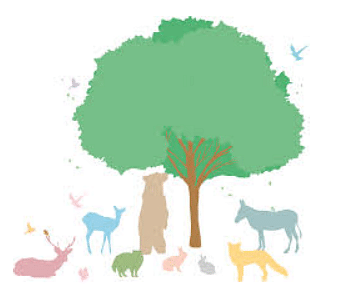
Community ecology
Biotic Elements of Communities
[Click Here for Previous Year Questions]
Biotic elements of communities encompass the entire spectrum of living organisms that coexist and interact within an ecosystem. These elements contribute significantly to the community's structure, function, and dynamics. Biotic components can be broadly categorized into:
- Producers: Producers are autotrophic organisms that can synthesize their own food using sunlight or inorganic substances. At the foundation of the food chain are primary producers, which encompass plants, algae, and certain bacteria.
- Consumers: Heterotrophic organisms, known as consumers, obtain their food from other organisms. Further classification divides them into primary consumers (herbivores), secondary consumers (carnivores that prey on herbivores), and tertiary consumers (carnivores that feed on other carnivores).
- Decomposers: Decomposers are responsible for breaking down organic matter and recycling nutrients back into the ecosystem. They include fungi and bacteria that decompose dead plants and animals.
- Detritivores: Detritivores are organisms that feed on detritus, which is partially decomposed organic matter. They aid in the decomposition process and include organisms like earthworms and certain insects.
- Mutualists: Mutualists are species that benefit from a cooperative relationship. Bees and flowering plants share a mutualistic bond; plants provide nectar, and bees aid in pollination.
- Predators and Prey: Predators are organisms that hunt and kill other organisms for food, while prey are the organisms being hunted. This predator-prey relationship is essential in regulating population sizes and maintaining ecological balance.
- Symbiotic Organisms: Symbiotic organisms live in close association with each other, and their interactions can be mutualistic, commensal, or parasitic.
The interactions between these biotic elements are complex and create a delicate balance within the community. Changes in one population can have cascading effects on the entire ecosystem, leading to adaptations and coexistence among different species. Understanding the dynamics of biotic elements is essential for ecological studies and conservation efforts.
Also Read:
| Related Articles | ||
|---|---|---|
| Parasitic Symbiosis | Organisms and Populations | Plasmodium Life Cycle |
Characteristics of a Community Ecology
[Click Here for Sample Questions]
The characteristics of a community ecology include genetic diversity of species, trophic structure, self-reliance, dominance, relative abundance, growth form, and structure.
Natural communities in the biosphere include a forest, a pond, and a desert. Every community is unique concerning its structure, development, and behavior.
Diversity of Species
The diversity of species includes bacteria, plants, and animals. These organisms are genetically and taxonomically distinct from one another. The species diversity can also be local, or regional.
Growth Form and Structure
Primary growth forms like herbs, shrubs, and trees to analyze a plant community. The other growth forms are broadleaf trees, deciduous trees, evergreen trees, etc., The growth forms influence the entire structure of a community.
Dominance
All species do not show equal growth and distribution. They are not equally significant. Only a few species show prominent growth and distribution. These dominant species determine a community’s characteristics, dominate the community, and exercise control over other species in the community.
Self-reliance
Autotrophic plants prepare their food from sunlight, carbon dioxide, and water. They are self-reliant. Heterotrophic bacteria and animals depend on plants and animals. They do not show self-reliance.
Relative Abundance
According to the survival traits some species are available more in number and some others less. Due to their characteristics, the proportion of distribution of different species varies in a community.
Trophic Structure
The ecological community consists of hypothetical vertical levels of species from top to bottom. They are called trophic levels. Each community has its trophic structure that controls the flow of food and energy moving from autotrophs to herbivores to carnivores.

Trophic Structure
Periodicity
Periodicity is the regular occurrence of the metabolic processes occurring in the dominant species of the community for a year. It includes photosynthesis, respiration, excretion, growth, and reproduction.
Edge-effect and Ecotone
Eco-tone is the region of vegetation that extends between two distinct types of adjacent ecosystems. This region is easy to identify as a marginal zone. Eco-tones have greater species diversity than adjacent communities. The edge effect is the increased variety and density of plant species along a common intersection.
Also Read: Symbiosis
Community Structure
[Click Here for Previous Year Questions]
The type of species and their relative abundance determine a community structure. The type and quantity of species in an ecological community depend on several factors. The most prominent species are generally located close to the equator, whereas communities with the less prominent species are located towards the polar sides.
The Trophic Pyramid Structure
The trophic pyramid is a standard feature found in all ecological communities. There are four or five tiers in each ecological pyramid. The flow of food energy occurs from one basal food chain level to the next upper level. At every level of the food pyramid, there is a loss of food energy in the form of heat. It takes a lot of species to maintain food energy for those at the next level.
- Every biological community has several species at the bottom layer of the pyramid known as autotrophs.
- They are green plants that directly harvest sunlight by a process called photosynthesis.
- The remaining species which depend on autotrophs in the pyramid are called heterotrophs.
- At various stages of development, animals must consume multiple meals.
- A food chain consists of autotrophs, herbivores, primary carnivores, and ending with a top carnivore as the top predator.
- Every organism in the pyramid need not follow the food chain in a straight line.
- It can consume other plants and animals too.
- So, food chains are interconnected to create highly complex food webs.
Also Read: Difference Between Species Population and Community
Things to Remember
- Community ecology studies interactions between species in groups known as interspecific interactions.
- Community ecology studies the interactions and competition of organisms that coexist in a particular ecological niche.
- Autotrophs harness solar energy by photosynthesis to produce food for the entire ecosystem. The rest of the organisms are heterotrophs, referred to as consumers.
- The characteristics of a community ecology include genetic diversity of species, trophic structure, self-reliance, dominance, relative abundance, growth form, and structure.
- Natural communities in the biosphere include a forest, a pond, and a desert.
- The diversity of species includes bacteria, plants, and animals.
- Primary growth forms like herbs, shrubs, and trees to analyze a plant community.
- Periodicity is the regular occurrence of the metabolic processes occurring in the dominant species of the community for a year.
Previous Year Questions
- Extraction of metal from the ore cassiterite involves...[JEE Advanced 2011]
- Commonly used vectors for human genome sequencing are...[NEET UG 2014]
- Interfascicular cambium and cork cambium are formed due to..
- Pneumotaxic centre is present in...[UP CPMT 2007]
- Reaction of HBr with propene in the presence of peroxide gives….[NEET UG 2004]
- Assuming the expression for the pressure exerted by the gas on the walls of the container, it can be shown that pressure is...[MHT CET 2016]
- Which among the following is the strongest acid?...[TS EAMCET 2017]
- Isopropyl alcohol on oxidation forms..
- A vector is not changed if..
- Which of the following arrangements does not represent the correct order of the property stated against it?...[JEE Main 2013]
Sample Questions
Ques. State what does standing crop of a trophic level in an ecosystem represents. [Delhi 2013] (1 Mark)
Ans. The standing crop in an ecosystem denotes the collective mass of living material or energy content of all organisms at a specific trophic level and location during a given time.
Ques. Predators serve vital roles beyond their place in the food chain. State any two such roles with examples. [Delhi 2014] (2 Marks)
Ans. Apart from being a part of the food chain, predators play an important role in
(i) Maintaining the prey population and also regulating intraspecies competition in communities.
(ii) Indicating ecological disturbances in communities as predators are small in number and highly sensitive to ecological changes owing to their excessive adaptation.
Ques. Can a species simultaneously occupy multiple trophic levels within the same ecosystem in an ecological community? Explain with the help of one such example. [All India 2013,2008 C] (2 Marks)
Ans. Indeed, the trophic level of a species indicates its functional position in the energy flow. The preference of food habits depends on the available food.
- It is possible for a single species to occupy multiple trophic levels within the ecosystem simultaneously.
- Eg. The sparrow functions as a primary consumer when it eats seeds and as a secondary consumer when it hunts insects and worms.
Ques. Construct a grazing food chain using the following five links each. Earthworms, birds, snakes, vultures, grass, grasshoppers, frogs. [2008] (1 Mark)
Ans. The grazing food chain is represented by
Grass — >Grasshopper— > Bird— >Snake -> Vulture
Ques. Distinguish between pyramids of biomass using an illustrative example. [Delhi 2013] (3 Marks)
Ans. The pyramid of biomass illustrates the biomass relationship between producers and consumers. It can be:
Upright, e.g. in a grasslands ecosystem Inverted, e.g. in a pond ecosystem

Ques. Define climax community. How can a sere differ from a serai community? [Delhi 2008 C]. (2 Marks)
Ans. A climax community can be defined as a community that gets established at the terminal stage of succession and remains in equilibrium with the environment, The Differences between sere and serai communities are as follows:
| Sere | Climax Community |
|---|---|
| It is the sequence of development stages of an ecological community that starts from the pioneers to the climax stage. | The climax community happens when a stable state is reached, where there is high biodiversity and several new species. |
| A sere can be categorized into two types: primary succession and secondary succession. | It is not classified |
Ques. Explain the flow of energy in an ecosystem across various trophic levels with appropriate examples. What does each segment in this pyramid signify? [Delhi 2014 c] (3 Marks)
Ans. Energy flows in an ecosystem in a one-way direction, going from producers to consumers. Energy loss as heat is a natural occurrence during the transfer from one trophic level to the next.
At each successive trophic level, the amount of flowing energy ultimately diminishes. The concept is illustrated using a diagram of a grazing food chain. The pyramid of energy is always upright and each level in the ecological pyramid indicates the amount of energy present at each trophic level in a given time or per unit area.

Ques. Write any two limitations of the ecological pyramids of Elton. [Delhi 2014 c] (3 Marks)
Ans. The limitations of ecological pyramids are:
- Ecological pyramids do not consider the same single species operating at two or more trophic levels.
- Ecological pyramids assume simple food chains that do not exist in nature and do not accommodate the food web.
- Ecological pyramids often do not include saprophytes, detritivores, and decomposers, despite their essential role in the ecosystem.
Ques. What are the 4 types of interactions in ecological communities in nature? (2 Marks)
Ans. Within ecological communities, species interactions encompass four primary types of two-way interactions: mutualism, commensalism, competition, and predation (including herbivory and parasitism)..
Ques. Write the Difference between Autotrophs and Heterotrophs. (5 Marks)
Ans. The differences between Autotrophs and Heterotrophs are:
| Autotrophs | Heterotrophs |
|---|---|
| Autotrophic bacteria and green plants | All members of the animal kingdom and saprophytic plants |
| They contain chloroplasts | They do not contain chloroplasts |
| Autotrophs are producers that prepare their food by photosynthesis | Heterotrophs are animals or consumers that depend directly or indirectly on autotrophs. |
| They are photoautotrophs and chemoautotrophs. | They are herbivores, primary carnivores. Secondary carnivores, and tertiary carnivores. |
| Autotrophs with chloroplasts trap light energy and convert it into chemical energy. | Heterotrophs cannot trap light energy. |
| They are placed at the primary level in the food pyramid. | These are placed at the secondary or tertiary level in the food pyramid. |
| They generally cannot move from one place to the other place. | They can move from one place to another in search of food and shelter. |
| Green plants, green algae, and a few photosynthetic bacteria | Earthworms, Insects, Cows, buffaloes, tigers, horses, and humans. |
For Latest Updates on Upcoming Board Exams, Click Here: https://t.me/class_10_12_board_updates
Check-Out:



Comments