



Content Curator
Inner Transition elements, or the f-block elements, are defined as elements wherein the last electron takes entrance in the f orbital. Inner transition elements, in general, occupy a position in between lanthanum (Z=57) and hafnium (Z=72), and actinium (Z=89) and rutherfordium (Z=104) in the modern periodic table. These elements commonly belong in the group 3 of the modern periodic table but are yet depicted separately.
Read Also: Periodic Classification of Elements
Key Terms: Inner Transition elements, Lanthanoids, Actinoids, Lanthanides, Transition metals, Orbital, Lanthanum, Hafnium, Actinium, Rutherfordium, Modern periodic table
Introduction to Inner Transition Metals
[Click Here for Sample Questions]
Inner Transition elements can be bifurcated into two parts, namely, lanthanoids and actinoids as mentioned below:
- Lanthanoids: A Lathanoids series comprises elements wherein the last electron enters the 4f orbital.
- Actinoids: An actinoid series comprises elements wherein the last electron takes entrance to the 5f orbital.
Both lanthanoids and actinoids series comprise 14 elements each and are represented by Ln and An respectively. These elements are mostly with higher atomic mass and high chemical reactivity. Cerium with atomic number 58 and Lr with atomic number 103 are the first and last elements of the f-block.

Introduction to Inner Transition Metals
Read More: Physical Properties of Metals and Non-Metals
Position of Inner Transition Metals in Modern Periodic Table
[Click Here for Sample Questions]
The inner transition elements are placed at the bottom of the modern periodic table and categorized into lanthanoids and actinoids. First row at the bottom of the modern periodic table represents lanthanoids and the following second row represents actinoids.
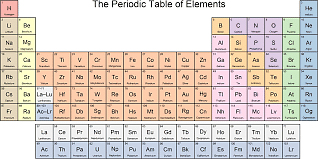
Position of Inner Transition Metals in Modern Periodic Table
Read More: Group 15 Elements
General Electronic Configuration
[Click Here for Sample Questions]
The general electronic configuration of inner transition elements is 4f1-145d0-16s2 for the lanthanoids, starting from cerium (Z=58) and ending at lutetium (Z = 71) and 5f1-146d0-17s2 for actinoids starting from (Z = 90) and ending at lawrencium (Z = 103).
- Lanthanoids: The atoms of the lanthanides generally come with an electronic configuration of 6s2, however with a variable occupancy of the 4f level. In other cases, the electronic configuration of every tripositive ion comes in the form of 4fn (n = 1 to 14 with increasing atomic number).
- Actinoids: The electronic configuration of actinides has been witnessed as [Rn] 5f1-14 6d0-1 7s2. In any case, the energy of 5f and 6d electrons, as per actinides, are compacted very close to one another, leading the electrons to enter into the 5f orbital.
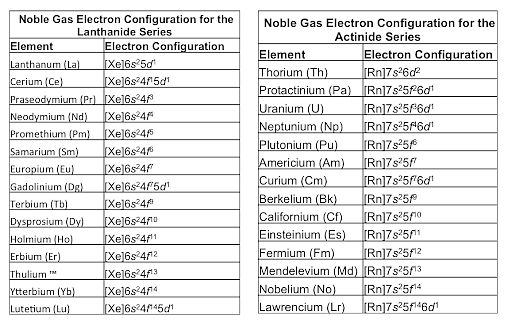
General Electronic Configuration
Check Also: Electronegativity Chart
Atomic and Ionic Size
[Click Here for Sample Questions]
The atomic and ionic sizes of inner transition elements possess variability as mentioned below:
- The atomic radius of lanthanides decreases, from lanthanum to lutetium, i.e, with an increase of atomic number, the atomic radius of the elements decreases gradually. This process is termed as lanthanide contraction.
- The gradual decrease in the atomic radius is not regular except M3+ ions.
- Due to lanthanides contraction, the radii of the 3rd transition series are extremely identical to the elements corresponding to the 2nd transition series.
- At the same time, the gradual decrease in the size of the atomic radius, or the respective M3+ ions in the series, is termed as actinoid contraction. The contraction, in any case, is greater from one element to another that consequently leads to poor shielding by 5f electrons.

Atomic and Ionic Size
Oxidation State
[Click Here for Sample Questions]
F-Block Element possesses varying oxidation states but +3 is the stable one. Lanthnoids come with variable oxidation states and are generally known to reflect an oxidation state of +2 and +4 in the form of complexes. In the case of actinoids too, +3 is the most stable oxidation state.
Also Read:
Properties of Inner Transition Metals
[Click Here for Sample Questions]
Here are the characteristics of inner transition metals:
- The third last shell of inner transition elements are usually filled with electrons.
- These elements also form compounds that depict profound catalytic activities.
- The atomic radii, for both lanthanides and actinides, decreases along with the series.
- Actinides, in general, are radioactive by nature.
- Like transition metals, inner transition elements are colored ions as well.
- Elements of this level generally show variable valencies.
- They show metallic properties as well, leading them to be good conductors of heat and electricity.
Read Also: Electron Gain Enthalpy
Difference between Lanthanoids and Actinoids
[Click Here for Sample Questions]
For clearer understanding, here is a distinction between lanthanoids and actinoids:
| Lanthanoids | Actinoids |
|---|---|
| The lanthanide series is usually defined as the fifteen metallic elements from lanthanum (atomic number 58) to lutetium (atomic number 71) in the modern periodic table. | The actinide series is usually defined as the series of fifteen metallic elements beginning from actinium (atomic number 89) to lawrencium (atomic number 103) in the modern periodic table. |
| The last electron takes entrance in the 4f orbital. | The last electron usually takes entrance in the 5f orbital. |
| The general electronic configuration of the lanthanoid series is 4f0-145d0-16s2. | The general electronic configuration of the actinoid series is 5f1-146d0-17s2. |
| In general, lanthanoids do not form complexes. | While actinoids commonly have a greater tendency towards forming complexes. |
| Excluding promethium, these elements are generally non-radioactive. | These elements are usually radioactive. |
Read More: Organic Compounds
Applications
[Click Here for Sample Questions]
Here is a detailed list of where and how these inner transition elements are put into usage:
- These elements are essentially utilised in making nuclear weapons. One of the major instances of the same is Uranium, which is highly reactive since it has naturally occurring isotopes that are unstable.
- Lanthanoids are also generally utilized to produce lasers.
- Most of the inner transition metals help in generating nuclear power.
- These elements come with several medicinal uses, such as destroying specific targeted cells in the body. One such instance is cancerous cells.
- These elements also help big time in making robust magnets.
Check Important Notes for What Are Noble Gases?
Things to Remember
- Inner transition metals are the elements where the last electron enters the f orbital.
- Crucially, the inner transition elements that go beyond atomic number 92 up to 103 are both synthetic and radioactive. They cannot usually be retrieved from the earth’s crust.
- These elements usually give rise to compounds that are paramagnetic in nature.
- The most essential point to note is the electronic configuration of both sides. The general electronic configuration of the Lanthanoid series is 4f0-145d0-16s2, while for the actinoid series, it is 5f1-146d0-17s2.
Also Check: Ionization Enthalpy
Sample Questions
Ques. Define in brief what is meant by alloys? What is an important alloy that comprises some of the lanthanoid metals? (3 marks)
Ans. An alloy is a typical mixture of a metallic-solid solution that is composed of two or more elements. The mixture, however, can either be a partial solid solution, or a complete solid solution. One of the most vital alloys that lanthanides have is Mischmetal. The mixture is known to comprise of lanthanides (4-95%), iron (5%) and a few traces of S, C, Si, Ca and Al. It is used in cigarettes and gas lighters, flame bullets and shills. These solutions are also widely used in flame-throwing tanks.
Ques. The actinoid contraction is generally witnessed to be greater from element to element than lanthanoid contraction. State the reason why? (3 marks)
Ans. It is generally witnessed that the shielding effect of 5f orbitals is slightly less than the shielding effect of 4f orbitals. This is the major reason why the valence shell electrons of actinides go through greater effective nuclear charge, unlike lanthanides. This is why the actinoid contraction is greater than lanthanoid contraction as is evidently seen from element to element.
Ques. What is the reason behind Mn2+ compounds being more stable than Fe2+ towards oxidation to their +3 state? (3 marks)
Ans. The electronic configuration of Mn2+ [18Ar] is 3d5, which is known to be a very stable configuration, while the electronic configuration of Fe2+ [18Ar] is 3d6. Mn2+ comes with a more stable half filled electronic configuration, leading the compounds to be more stable and resistant towards oxidation than Fe2+ towards a +3 oxidation state. As per what is generally witnessed, Fe2+ (3d6) is prone to losing one electron very easily to further offer Fe3+( 3d5, which has a very stable configuration).
Ques. What are some of the main characteristics of inner transition elements? (3 marks)
Ans. Here are some of the characteristics of inner transition elements:
- Actinides are generally radioactive in nature.
- As per what we have witnessed in transition metals, inner transition elements are colored ions as well.
- Elements of this level usually show variable valencies.
- Inner transition elements also form compounds that show profound catalytic activities as well.
- Due to somewhat similar shell configurations, and same size variations, every individual element of this series is known to come with closely similar properties. This leads to their separation being quite more difficult than anticipated.
Ques. What is the leading cause behind lanthanide contraction? (3 marks)
Ans. The atomic radius of lanthanides is evidently witnessed to gradually decrease, from lanthanum to lutetium that leads to a simultaneous increase of atomic number. In simple words, the process where the atomic radius gradually decreases with a side-by-side increase of atomic number is referred to as lanthanide contraction. When it is said that the atomic number increases, it is clearly meant that the number of protons are increasing. The reason behind why this happens is because, for every proton that is added in the nucleus, the remaining extra electron moves to the same 4f orbital.
For Latest Updates on Upcoming Board Exams, Click Here: https://t.me/class_10_12_board_updates
Check-Out:



Comments