



Education Journalist | Study Abroad Lead
Nuclear winter is a hypothetical outcome of any nuclear war. It is a climate condition that usually occurs after a nuclear war that can lead to a lot of dust and soot in the atmosphere. This dust remains in the air for months to years. It is generally believed to cause an imbalance in the ecosystem. It is suspected by scientists that nuclear wars eventually result in environmental hazards such as nuclear summer, depletion of the ozone layer, and drastic climate fluctuations. The ozone layer that is present around the Earth protects all living beings by acting as a filter providing relief from harmful rays such as the ultraviolet radiations of the sun. These radiations can cause various health hazards such as skin cancer. In this article, we will have a look at nuclear winter and its effects.
| Table of Contents |
Key Takeaways: Nuclear Winter, Nuclear War, ultraviolet radiations, soot, sunlight, ozone layer
Nuclear Winter
[Click Here for Sample Questions]
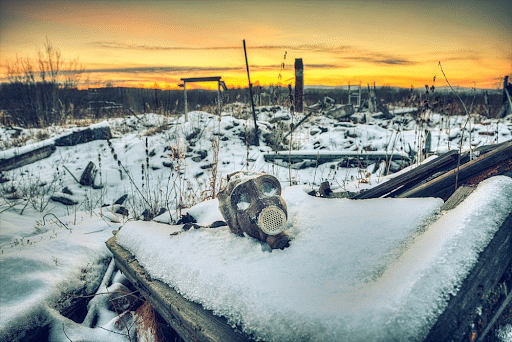
Nuclear winter is a hypothetical change that would take place after a nuclear war. It can cause an incomprehensible amount of ash and other residues to stay in the atmosphere for a time that ranges from months to years. Nuclear wars can block the sunlight that can have a huge impact on life. With the combination of the cold, radiation, and darkness, the world infrastructure could be dismantled wiping away a great number of animals and plants that in turn have a strong impact on the human ecosystem.
Nuclear Winter
Therefore, as a result of nuclear warfare, nuclear winters affect humans far more than any other living entity. From inhaling the highly polluted air to developing new medical ailments, human beings are adversely affected by the effects of thermal radiation which can result in a significant loss of life. It is also known to impact crops all over the world as the quality of the soil gets deteriorated due to the radiation.
Some of the other consequences of nuclear winter are assumed to be a decrease in the annual rainfall, a rise in the levels of the sea, and a drastic cooling of the temperatures at the surface.

Consequences of a Nuclear Winter
The term nuclear winter mainly refers to the winter-like or cooling climatic conditions that exist all around the year and have adverse consequences on the living entities. The nuclear firestorms emit smoke that has the potential to travel higher in the atmospheric region and stay there for a longer period of time which is predicted through the advanced climatic models that are used in nuclear winter research.
Also Read:
| Related Articles | ||
|---|---|---|
| Atoms and Nuclei | Mass-Energy and Nuclear Binding Energy | Relativistic Mass Formula |
| Deuteron Mass | Neutron Mass | Nuclear Physics |
Typeb of Nuclear Winter
[Click Here for Sample Questions]
The sunlight that passes through the clouds heats up the nitrogen oxide present in the atmosphere. When temperatures are higher, the oxides of nitrogen result in a loss or depletion of the ozone at an alarmingly higher rate than usual.
Defining the structure and replication of warfare nuclear theorists have come up with over six types of nuclear winter which are as follows
-
Marginal Nuclear Winter
When nuclear weapons are present in a modern warfare setup significantly impacts the temperature by lowering it and impacts the agricultural production that eventually causes drought and famines, it is known as a marginal nuclear winter. A large part of the earth that is generated goes through the process of precipitation on the surface of the earth while the rest of the Ash stays in the atmosphere.
-
Minimal nuclear winter
This basically refers to a small attack that usually results in a minimal cloud cover. This has an almost negligible environmental effect and only affects the specific target area.
-
Nominal nuclear winter
In the case of a nominal nuclear winter the targeted area witnesses dark skies usually. This is accompanied by droughts fluctuations in the temperature all over the globe and also affect the sunlight in the noon. As a result of this over the course of time son would eventually bone hotter due to the evaporation of clouds. Due to frequent nuclear blasts, blast solar radiation that reaches the surface of the Earth is at the highest level.
-
Severe nuclear winter
This results in an extreme loss in the amount of sunlight that reaches the surface of the earth. It usually spreads across months causing freezing temperatures all over the globe. This also hampers the process of photosynthesis negatively.
-
Substantial nuclear winter
This includes depletion of the ozone layer, pollution, lower temperatures, and reduced levels of rainfall. In the substantial nuclear winter, plants are also deprived of sunlight which also affects their photosynthesis process that eventually kills little to no agricultural products. This is harmful to living entities and can even turn fatal. As it can also lead to extinction it can cause a huge imbalance in the biodiversity of an area or of Earth
-
Extreme nuclear winter
An extreme nuclear winter consists of extreme darkness throughout that affects the normal life on Earth and makes survival impossible.

Nuclear War
Effects of Nuclear Winter
[Click Here for Sample Questions]
Post a nuclear war, nuclear winter has adverse effects on humans. Some of these effects as:
-
Depletion of Ozone layer
Nuclear detonations can produce a huge amount of nitrogen oxides in the air by breaking them. These oxides move up through thermal convections, reaching the stratosphere layer. These nitrogen oxides then break down the ozone layer of the atmosphere catalytically. When the ozone layer is depleted, harmful ultraviolet rays of the sun reach the surface of the Earth causing multiple diseases such as skin cancer.
The soot that is produced also absorbs these radiations from the sun and thereby contributes to the ozone layer breakdown or depletion.

Ozone layer depletion
-
Climatic Effects
A nuclear war of even a small scale can lead to huge disruptions in the global climate for many coming years. The soot released will lower the temperature by several degrees. This cooling can be catastrophic as it can last for many years.
Nuclear Summer
[Click Here for Sample Questions]
The period after the nuclear winter wherein the temperature enormously rises is known as a nuclear summer. Due to the combustion of methane as a result of the decay of frozen corpses and organic matter in winters and carbon dioxide emission, a greenhouse effect is created. This can cause the temperature of the Earth to rise significantly leading to the death of most of the living entities that managed to survive nuclear winters.
Things to Remember
- Nuclear winter is a hypothetical change that would take place after a nuclear war.
- It is suspected by scientists that nuclear wars eventually result in environmental hazards such as depletion of the ozone layer, nuclear summer, and drastic climate fluctuations.
- Defining the structure and replication of warfare nuclear theorists have come up with over six types of nuclear winter.
- Nuclear detonations can produce a huge amount of nitrogen oxides in the air by breaking them.
- The period after the nuclear winter wherein the temperature enormously rises is known as a nuclear summer.
Also Read:
Sample Questions
Ques. What are the conditions for nuclear winter to occur? (2 marks)
Ans. Nuclear winter can only occur in certain conditions which are:
- The nuclear weapons that are detonated should be all over the areas such as cities that result in a huge amount of debris along with ash.
- Nuclear detonation needs to take place at such a huge scale that its yield or debris is ejected not only in the air around but also into the Troposphere and stratosphere. Just ejecting debris into the upper atmosphere will not cause a nuclear winter as most of the debris that is released will eventually fall back on Earth in a month's time via rain. When it reaches the stratosphere, only then will it block or reduce the radiation from the sun causing nuclear winter.
Ques. What is the volcanic winter? (5 marks)
Ans. A volcanic winter usually refers to a reduction in the global temperature that is caused as a result of volcanic ash along with droplets of water and sulphuric water. This, in turn, blocks the rays of the sun and leads to an increase in the level of solar radiation, also known as Earth's albedo. This usually happens after a huge explosive volcanic eruption. The cooling mainly takes place when sulphur gases are ejected in the stratosphere and form aerosols. These stratospheric aerosols from the volcanoes cool down the surface of Earth by reflecting the radiations from the sun. The stratosphere region, therefore, becomes warm as the terrestrial radiation is absorbed by it.
Some researchers attribute volcanic winter with population bottleneck that basically refers to a sharp decrease in the population of a species that is immediately followed by a time period of differentiation or great genetic divergence.
Ques. What is nuclear winter? (5 marks)
Ans. Nuclear winter refers to a hypothetical outcome of any potential nuclear war. The term nuclear winter mainly refers to the winter-like or cooling climatic conditions that exist after a nuclear war all around the year and have serious consequences on the living entities. It is a condition that typically occurs after a nuclear war and can result in a large amount of dust and soot in the atmosphere. This dust can be found in the air for months or years after the nuclear explosion or war. It is widely assumed to cause an imbalance in the ecosystem.
The ozone layer that exists around the Earth protects all living beings by acting as a filter, providing relief from harmful rays such as the sun's ultraviolet radiations. These radiations can cause a variety of health issues, including skin cancer.
Nuclear winter is a considerably hypothetical change that can cause an incomprehensible amount of ash and other residues to stay in the atmosphere.
Nuclear wars can block the sunlight that can have a huge impact on life. With the combination of the cold, radiation, and darkness, the world infrastructure could be dismantled wiping away a great amount of animals and plants that in turn have a strong impact on the human ecosystem.
Ques. How does nuclear winter impact humans and the atmosphere? (5 marks)
Ans. Nuclear winter has an adverse effect on the atmosphere and the world as a whole:
- Climatic Effects
A nuclear war of even a small scale can lead to huge disruptions in the global climate for many coming years. The soot released will lower the temperature by several degrees. This cooling can be catastrophic as it can last for many years.
- Depletion of Ozone layer
Nuclear detonations can produce a huge amount of nitrogen oxides in the air by breaking them. These oxides move up through thermal convections, reaching the stratosphere layer. These nitrogen oxides then break down the ozone layer of the atmosphere catalytically. When the ozone layer is depleted, harmful ultraviolet rays of the sun reach the surface of the Earth causing multiple diseases such as skin cancer.
The soot that is produced also absorbs these radiations from the sun and thereby contributes to the ozone layer breakdown or depletion.
Ques. What are the various types of Nuclear winter? (5 marks)
Ans. The various types of Nuclear Winter as determined by researchers are:
- Marginal Nuclear Winter
A marginal nuclear winter occurs when nuclear weapons present in a modern warfare setup significantly lower the temperature and impact agricultural production, resulting in drought and famine.
- Minimal nuclear winter
This essentially refers to a minor attack that usually results in a thin layer of cloud cover. This has a negligible environmental impact and only affects the targeted area.
- Nominal nuclear winter
In the event of a nominal nuclear winter, the targeted area usually experiences dark skies, accompanied by droughts and temperature fluctuations all over the world, as well as an effect on the sunlight at noon. As a result of the evaporation of clouds, sun would eventually become hotter over time. Because of the frequent nuclear blasts, the solar radiation that reaches the Earth's surface is at an all-time high.
- Severe nuclear winter
Severe nuclear winter results in a dramatically reduced amount of sunlight reaching the earth's surface. It typically spreads over months, causing freezing temperatures all over the world. This also has a negative impact on photosynthesis.
- Substantial nuclear winter
Substantial Nuclear Winter includes ozone layer depletion, lower temperatures, high pollution, and lower rainfall levels. Plants are also deprived of sunlight during a significant period of time during this nuclear winter, which affects their photosynthesis process and ultimately kills little to no agricultural products. This is hazardous to living things and can even be fatal. Because it can also lead to extinction, it can cause a significant imbalance in the biodiversity of a region or the entire planet.
- Extreme nuclear winter
It includes periods of extreme nuclear winter consisting of extreme darkness throughout that affects normal life on Earth and makes survival impossible.
Ques. What is nuclear summer? (3 marks)
Ans. A nuclear summer is another hypothetical scenario that results as a result of nuclear warfare that is followed by nuclear winter. This is caused due to the aerosols that are released into the atmosphere. These droplets reach the stratosphere and therefore prevent the light from the sun from reaching the surface of the Earth.
After nuclear warfare, the cooling effect will generally overcome the place. This is followed by a greenhouse effect that causes warming. This rapidly increases the surface temperature of the place by multiple degrees.
This leads to the extinction of most of the life that might have survived the nuclear winter. The nuclear detonations will also release levels of carbon dioxide and other greenhouse gases. This is followed by a decay of the organic matter. The detonations also contribute by inserting nitrogen oxide into the stratosphere layer which then further depletes the ozone layer causing harmful radiations to penetrate the stratosphere and reach the surface of the Earth. With the rise in the temperature, the water present in the atmosphere also increases. This intensifies the greenhouse warming effect. In extreme substances, it can also cause sublimation of methane. A huge climate change will take place that triggers destruction on a large scale.
Ques. What is the ozone layer? Describe its importance. (5 marks)
Ans. The ozone shield or ozone layer is that region of the Earth's stratosphere that is responsible for absorbing most of the ultraviolet radiations from the sun. The ozone layer has even less than 10 parts per million of ozone. The importance of ozone can be understood by the fact that it is useful in shielding the earth from the harmful ultraviolet rays of the sun.
Skin cancer can be caused in humans by ultraviolet radiation. The ultraviolet rays break the oxygen molecule into free oxygen atoms that can further combine with the oxygen molecule in order to form ozone. This prominent layer of ozone is located somewhere 12 to 15 miles beyond the surface of the Earth.
Ozone is harmful at ground level, but the ozone layer high in the atmosphere plays an important role in protecting all the living entities on Earth. The ozone layer absorbs these harmful radiations and prevents them from reaching the earth's surface. The stratospheric layer of the earth's atmosphere contains the ozone layer. The layers that make up the lower part of the atmosphere remove pollutants from the earth's surface.
For Latest Updates on Upcoming Board Exams, Click Here: https://t.me/class_10_12_board_updates
Check-Out:



Comments