



Content Writer
Oligosaccharide is a carbohydrate formed by the linkage of three to six units of monosaccharides or sugars. However, in some cases oligosaccharide is formed by linkage of as many as ten units together. Oligosaccharide is formed when 3 to 10 units of monosaccharides combine by the glycosidic linkage resulting in the loss of water molecules. The molecular formula of an Oligosaccharide is C37H62N2O29. The calorific value of oligosaccharides is between 1.5-2 cal/gm. It is found in garlic, legumes, pear, white onion, and watermelon. For example, Raffinose, a type of Oligosaccharide, is formed by combining 3 molecules of monosaccharide, fructose, gentianose, and melibiose.
| Table of Content |
Key Terms: Oligosaccharide, Carbohydrate, Glycosylation, Monosaccharides, Glycosidic Linkage, Sugar
Oligosaccharides
[Click Here for Sample Questions]
Oligosaccharides are polymers that contain very few numbers of monosaccharides units connected through glycosidic linkage. Oligosaccharides are further divided into subclasses depending on the number of monosaccharides present in oligosaccharides. Oligosaccharides on hydrolysis in water in the presence of enzymes or acids give two to nine units of monosaccharides. Most of the oligosaccharides can be found in plants.
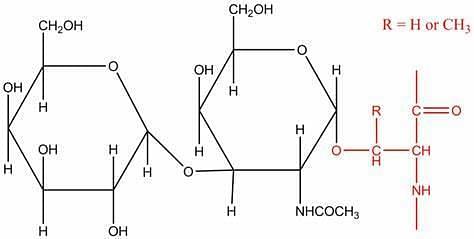
Structure of Oligosaccharides
Oligosaccharides that are formed by combining two monosaccharide units are known as disaccharides. Some oligosaccharides are absorbed and hydrolyzed in the intestine, for example maltotriose. Nearly all the oligosaccharides enter the intact (non digestible oligosaccharide). Sucrose, lactose, and maltose are examples of oligosaccharides containing two sugar units.
Read More:
Properties of Oligosaccharides
[Click Here for Sample Questions]
- Like all other carbohydrates, oligosaccharides comprise hydrogen, carbon, and oxygen.
- In polysaccharides, the ratio of hydrogen to oxygens atoms is 2:1, hence they are carbohydrates.
- Since oligosaccharides contain carbon, C-C, and C-H bonds they are considered organic substances. Oligosaccharide consists of a long chain of saccharide units.
Glycosylation
[Click Here for Sample Questions]
A Glycosylation is a chemical reaction in which glycan gets combined with a lipid, protein, or with another molecule by the enzyme action. There are two types of glycosylation processes: N-linked glycosylation and O-linked glycosylation. These two processes differ as per the type of atom attached with the glycan. For example, in the N-linked glycosylation process glycan makes a bond with nitrogen atoms in an arginine residue. While in the O-linked glycosylation process, O-linked glycans attach with hydroxyl oxygen of protein’s serine, threonine, tyrosine, hydroxylysine, or hydroxyproline side chains.
Glycosylation can also be defined as a process in which lipid oxygen connects with O-linked glycans. Some other glycosylation includes P-linked (glycan connects with phosphorus), C-linked (glycan connects with carbon), and S-linked (glycan connects with sulphur).
Oligosaccharides function as glycan, there are two types of oligosaccharides: N-linked oligosaccharide, and O-linked oligosaccharide.
Those oligosaccharides that participate in the O-linked oligosaccharide are either attached to threonine or serine on the hydroxyl group. The O-Linked oligosaccharides can be found in the Golgi apparatus. In the apparatus, monosaccharides can be added to a polypeptide chain. Proteins like cell surface and extracellular are O-glycosylated. In the N-linked oligosaccharides, the glycosylation site can be determined by secondary and tertiary structures of polypeptides.
Types of Oligosaccharides
[Click Here for Sample Questions]
Based on the number of monosaccharides present in oligosaccharides, they are divided into four subclasses:
Disaccharides
These are the types of oligosaccharides that are formed by combining two units of monosaccharides. Sucrose, Lactose, and Maltose are examples of disaccharides. Sucrose on hydrolysis yields glucose and fructose in the same amount. Lactose in reaction yields galactose and glucose. Maltose yields 2 units of glucose in the action with an enzyme.
Trisaccharides
Trisaccharides are a type of oligosaccharides formed by the three units of monosaccharides combined with two glycosidic linkages. Examples of Trisaccharides are- raffinose, maltotriose, nigerotriose, melezitose, and maltotriose.
Tetrasaccharides
Tetrasaccharides are formed by linking four monosaccharides with each other. Some examples of tetrasaccharides are - maltotetraose, nigerotetroase, nystose, lychnose, and sesame.
Pentasaccharides
Polysaccharides are composed of five monosaccharides units. Most of the N-linked oligosaccharides are pentasaccharides.
Functions of Oligosaccharides
[Click Here for Sample Questions]
Oligosaccharides show many functions in many fields. The functions of oligosaccharides are given below.
Cell Recognition
Cells are either coated in glycoproteins or glycolipids. Both these help in determining the cell type. Oligosaccharides can be determined by the lectins or proteins which combine the carbohydrates. These proteins or lectins provide some information that can be used in cell recognition.
An example of an oligosaccharide when it acts as a cell recognition is blood type determining. All the types of blood are differentiated with the modification of glycan present on the blood cell surface. Blood types can be seen using mass spectrometry. There are three types of antigens in mass spectrometry - A, B, and H. The H antigen indicates an O blood type. All those oligosaccharides found on all three antigens (A, B, and H) take place on the non-reducing side of an oligosaccharide.
Cell Adhesion
Some cells produce carbohydrate-binding proteins known as lectins. These lectins mediate cell adhesion with oligosaccharides. Selectins (known as a family of lectins) mediate cell to cell adhesion. In the immune system, the endothelial cells can express some selections in response to the damage or injury to the cells.
Also, reciprocal selection oligosaccharides interaction between the two molecules will take place that helps white blood cells to recover the infection or damage that happened. Also, Protein Carbohydrate bonding is arbitrated by hydrogen bonding and intermolecular forces.
Benefits of Oligosaccharides
[Click Here for Sample Questions]
Oligosaccharides have many benefits in biological studies. Some of the benefits have been discussed below.
Oligosaccharide helps in promoting the growth of microflora (healthy gut). When the gut bacteria break down into oligosaccharides they produce SCFAs. Some studies state that bacteria can help in promoting the absorption of minerals, calcium, and magnesium.
In the research, it is evidenced that SCFAs have many benefits in the colon and also in the body. For example, butyrate protects colon tissue caused by ulcerative colitis and colon cancer. Some other benefits of SCFAs are:
- Lower triglycerides
- Lower cholesterol
- Improved immune system
- Improved glucose metabolism
- Improved insulin sensitivity
Examples of Oligosaccharides
[Click Here for Sample Questions]
Two prevalent oligosaccharides are raffinose and stachyose.
Raffinose is a trisaccharide. It is made up of three monomers- glucose, fructose, and galactose. The chemical formula of Raffinose is C18H32O16. Raffinose when hydrolyzed leads to the production of sucrose and D-galactose by the action of the galactosidase enzyme. Raffinose is usually found in whole grains, cabbage, legumes, broccoli, sprouts, beetroot molasses, asparagus, cottonseed, and many other foods.
Raffinose is a member of the Raffinose family of oligosaccharides (RFO). Some other members are tetrasaccharide stachyose, pentasaccharide verbascose, and many others. RFOs are frequent in plants. It acts as a desiccant in seeds, storage sugar, and transport sugar in phloem sap.
Fructooligosaccharide is a plant storage oligosaccharide. It is also known as oligofructose. Fructooligosaccharide is referred to as the short chain of fructose found in many plants. In plants like blue Agave, yacon, and Jerusalem. In the food industry, all these plants are used as food additives and sweeteners.
Things to Remember
- Oligosaccharides are polymers that contain very few numbers of monosaccharides units connected through glycosidic linkage.
- Most of the oligosaccharides are found in plants.
- Oligosaccharides can be divided into disaccharides, trisaccharides, tetrasaccharides and pentasaccharides.
- The main functions of oligosaccharides are cell recognition and cell adhesion.
- Examples of Oligosaccharides include Raffinose and Fructooligosaccharide.
Read More:
| Chapter Related Concepts | ||
|---|---|---|
| Polysaccharides | Glycogen | Biomolecules |
| Calorific value | Hydrolysis | Sucrose |
Sample Questions
Ques: Give any four examples of oligosaccharides. (2 Marks)
Ans: Some examples of oligosaccharides are
- Raffinose
- Stachyose
- Fructo-oligosaccharides (FOS)
- Arabinoxylan-oligosaccharides
Ques: What is the difference between sugar and oligosaccharides? (2 Marks)
Ans: Oligosaccharide is a polymer consisting of more than 2 units of sugars joined through glycosidic linkage. Sugar is a monosaccharide found in the form of glucose, sucrose, oligosaccharides.
Ques: Are oligosaccharides organic substances? If yes then tell the reason. (2 Marks)
Ans: Yes, the oligosaccharides are organic substances. Because oligosaccharides contain carbon, C-C, and C-H bonds they are considered organic substances. Oligosaccharide consists of a long chain of saccharide units.
Ques: What are disaccharide oligosaccharides? Give an example. (2 Marks)
Ans: Those oligosaccharides are formed by combining two units of monosaccharides through glycosidic linkage. Sucrose, Maltose, and Lactose are examples of disaccharides oligosaccharides.
Ques: What is the difference between the O-linked and N-linked glycosylation processes? (2 Marks)
Ans: In the O-linked glycosylation process, O-linked glycans attach with hydroxyl oxygen of protein’s serine, threonine, tyrosine, hydroxylysine, or hydroxyproline side chains. While in the N-linked glycosylation process, glycan makes a bond with nitrogen atoms in an arginine residue.
Ques: Why is blood type O known as a Universal donor? (2 Marks)
Ans: There are three types of antigens in mass spectrometry - A, B, and H. The presence of H-antigen indicates the blood type O in the human body. Thus the persons with any of the blood groups - A, B, AB, and O will have H-antigens. That is why blood type O is considered a universal donor.
Ques: What is SCFA? Also, write its benefits. (2 Marks)
Ans: SCFA stands for Short-chain fatty acids. They are fatty acids consisting of a few numbers of carbon atoms. When the microflora (healthy) gut breaks down into oligosaccharides they produce SCFAs. SCFAs have many benefits in the colon.
Some benefits of SCFAs are
- Improve immune system
- Improve insulin sensitivity
- Lower cholesterol
- Lower triglycerides
Ques: What all the oligosaccharides are found in our diet? (3 Marks)
Ans: Many oligosaccharides that have a high nutritional value are found in our diet. Some of them are:
- Fructo-oligosaccharides: This oligosaccharide is found in the fruits and vegetables of our daily diet.
- Fructan-oligosaccharides: They are found in foods like banana, wheat, oats, garlic, onion, and many other foods.
- Galacto-oligosaccharides: It is an important component of human milk important for infants' survival.
For Latest Updates on Upcoming Board Exams, Click Here: https://t.me/class_10_12_board_updates
Check-Out:



Comments