



Education Journalist | Study Abroad Lead
Parasitic symbiosis is defined as the close and long term symbiotic relationship between two organisms, where one lives in the body of the host causing it some harm. In biology, symbiosis is defined as a mutual beneficial relationship between two different species, including commensalism, mutualism, and parasitism. Both good and harmful associations are mentioned; these members are called symbionts.
| Table of Content |
Key terms: Parasitic Symbiosis, Symbiosis, Parasitism, Symbionts, Organisms, Commensalism, Mutualism, Symbionts, Endoparasites
Parasitic Symbiosis
[Click Here for Sample Questions]
Parasitic symbiosis is defined as the close and long term symbiotic interaction between two organisms, where one lives in the body of the host causing it some harm.
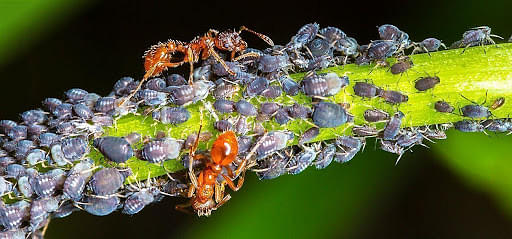
Parasitic symbiosis
Examples of Parasitic Symbiosis
[Click Here for Sample Questions]
Some examples of Parasitic Symbiosis are:
Fasciola hepatica
Fasciola hepatica also known as liver fluke. It attaches itself onto the liver and makes way to the tissue and bile.

Fasciola hepatica
Plasmodium
There are many species of Plasmodium that are taken up by mosquitoes and transferred to different people causing malaria.

Plasmodium
Hirudinea
Leeches depend on different organisms to complete their life cycle. The organisms that leeches depend on include freshwater fish, slugs, snails, mice, bears, etc.

Hirudinea/ Leeches
Taenia solium
It may live in the human gastrointestinal tract for years. It spreads when consuming under-cooked pork. They could be more than three metres long.

Taenia solium
Symbiosis
[Click Here for Sample Questions]
It is a mutual relationship between organisms of different species. It benefits one or both the organisms. Symbiosis can also be compelled when the connection between the two species is very interdependent.
Each one of the organisms would be unable to survive without the other organism, if the two species have a symbiotic relationship through choice or would survive individually. They often evolve over a period of time. On the other hand, optional symbiosis could be more modern, behavioural adaptations; given time, this kind of symbiosis may turn into compelled symbiosis.

Symbiosis
Types of Symbiosis
[Click Here for Sample Questions]
There are different types of symbiosis, which are listed below:
Commensalism
Commensalism is a type of relationship where only one among other organisms benefits more from symbiosis. The other does not benefit nor harmed within the connection. In other words, this is usually a one-sided symbiotic relationship.
Example: A decapod crustacean living inside in an empty seashell.
Parasitism
In parasitism, one organism benefits the most but the other has to suffer or is damaged. A plant may live in another body or on its surface. In many parasitic relationships, the host dies, and in others, the host may live.
Example: Mosquitoes or leeches suck blood from other organisms.
Mutualism
Mutualism is a close mutual relationship where both organisms benefit. Both species depend on each other, and many of those relationships last for a long time.
Example: The connection between goby fish and shrimp.
Endosymbiosis
Endosymbiosis is when one organism lives inside another one.
Example: Lice take advantage of the skin, blood, or oil secretions of the host.
Parasitism
[Click Here for Sample Questions]
Parasitism is a long-term mutual relationship between two species / organisms. Here, the parasite gains more benefits, and causes harm to the host.
The word ‘parasite’ is derived from the Greek word parásito, “which means the one that eats at the table of others”, and is approximately from around 5900 BC.
Parasites are a varied group of organisms that live within cells of hosts. They are tiny and reproduce faster, resulting in more damage to the host. They obtain food, water and shelter from the host. They range from tiny, singular-celled organisms to worms that are over 20- 30 metres long.
Example: Tapeworms live in the intestines of animals (like cows) by absorbing the nutrients from the host.
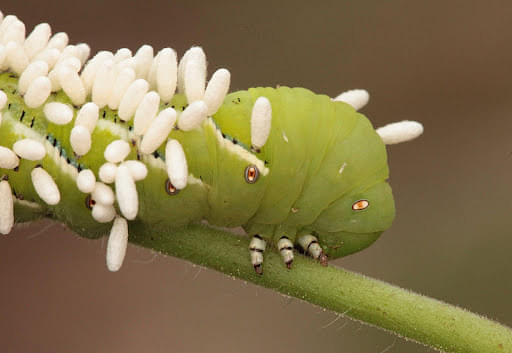
Parasitism
Types of Parasitism
[Click Here for Sample Questions]
There are various types of parasitism, and parasites which belong to different classifications which depend on their size, characteristics, and relationship with the host.
Obligate Parasitism
Obligate parasites are wholly dependent on the host to complete their life cycle. It can be found in many organisms like plants, animals, fungi, bacteria, and viruses. Head lice are obligate parasites; if they die when they fall off from the human scalp.
Facultative Parasitism
Facultative parasites do not depend on the host to complete their life cycle; they can survive without the host, and occasionally become parasites. Some plants, fungi, animals, and microbes are often facultative parasites. An example is the nematode species Strongyloides stercoralis.
Ectoparasites, Endoparasites, and Mycoparasitism
Ectoparasites are parasites that live on the skin of the host's body, like lice and ticks. Endoparasites, like nematodes and hookworms, live inside the body of the host. Meso Parasites enter the host's external openings, like the external organ or the cloaca.
Macroparasitism Versus Micro Parasitism
Macroparasites are parasites that are big enough to be seen with the oculus. Microparasites are very small and can be seen only under a microscope. They are usually unicellular, like protozoa.
Necrotrophic Versus Biotrophic
Necrotrophic parasites, also called parasitoids, mostly eat a part of the host organism's tissue until it dies from the loss of muscle or nutrient loss. Biotrophic parasites do not cause enough damage to kill their host; they have to make the host alive because they cannot survive with a dead host.
Monogenic Versus Digenetic
Monogenic parasites complete their life cycle in one individual host. Digenetic pests need more than one host to finish their life cycle. Plasmodium, the protozoa that carries malaria, is digenetic. It must be a parasite of both people and mosquitos and complete the cycle.
Epi Parasitism
An epiparasite could be a parasite that parasitizes another organism that's also a parasite. Epiparasites also are called hyperparasites or secondary parasites. One example would be a protozoan living off a flea that's living off a dog.
Social Parasitism
Social parasites benefit from social insects like ants, bees, and termites. They use mimicry to invade the hive. Some bees invade the colonies / hives of other species of bees, making that species raise the parasite's young.
Brood Parasitism
Brood parasitism involves the raising of the young. Bird species that practice brood parasitism, including crows and cuckoos, lay their eggs in another species' nest rather than building their nests. It is a kind of dependency because the species which lay their eggs in other nests gain benefits while the different species are harmed.
Things to Remember
[Click Here for Sample Questions]
- Parasitic symbiosis is defined as the close and long term symbiotic interaction between two organisms, where one lives in the body of the host causing it some harm.
- Symbiosis is defined as a mutual beneficial relationship between two different species, including commensalism, mutualism, and parasitism.
- Parasites are a varied group of organisms that live within cells of hosts. They are tiny and reproduce faster, resulting in more damage to the host.
- Types of symbiosis include commensalism, mutualism, parasitism and endosymbiosis.
- There are various types of parasitism, and parasites which belong to different classifications which depend on their size, characteristics, and relationship with the host.
Also Read:
Sample Questions
Ques. Give examples of parasitic animals. (3 Marks)
Ans.
- Humans: There are over thousands of various organisms that could be parasitic which includes fungi, leeches, lice, ticks, mites, viruses, worms.
- Insects: Entomophilous parasites are insects that live off other insects. Some insects keep their eggs within the body of another insect species’s caterpillar; when the eggs hatch, the parasitic young kill and eat the worm, gaining nutrients from it.
- Fish: Parasites like copepods, nematodes and leeches attach to the fish’s gills and live there. Cymothoa exigua is an isopod (another form of small crustacean) that parasitizes fish.
Ques. Give some of the most common symbiotic plant examples? (2 Marks)
Ans. Symbiotic plants are when two plants live mutually closely together of one kind or another. There are four forms of symbiosis - mutualism, parasitism, commensalism, and endosymbiosis/ectosymbiosis. They describe a relationship between two species or organisms, which will often be beneficial for both parties. Example. Foxgloves, Marigolds, Rosemary, Orange Nasturtium, Lavender, Tomatoes.
Ques. What are viroids? (2 Marks)
Ans. In 1971, T.O. Diener discovered a new infectious agent that was smaller than viruses and caused potato spindle tuber disease. It was found to be a free RNA; it lacked the protein coat that is found in viruses, hence the name viroid. The RNA of the viroid was of low molecular weight.
Ques. What are lichens? Why are they good pollution indicators? (3 Marks)
Ans. Lichens are a symbiotic association between algae and fungi. The algal component is known as phycobiont and fungal component as mycobiont, which are autotrophic and heterotrophic, respectively.
Algae prepares food for fungi and fungi provides shelter and absorb mineral nutrients and water for its partner. So close is their association that if one saw a lichen in nature one would never imagine that they had two different organisms within them. Lichens are very good pollution indicators as they do not grow in polluted areas.
Ques. Explain alternation of generation in plants. (2 Marks)
Ans. Life cycle of plants has two distinct phases – the diploid sporophytic and the haploid gametophyte – that alternate with each other. The lengths of the haploid and diploid phases, and whether these phases are free– living or dependent on others, vary among different groups in plants. This phenomenon is called alternation of generation.
Ques. How does reproduction take place in fungi? (3 Marks)
Ans. Reproduction in fungi can take place by vegetative means – fragmentation, fission and budding. Asexual reproduction is by spores called conidia or sporangiospores or zoospores, and sexual reproduction is by oospores, ascospores and basidiospores. The various spores are produced in distinct structures called fruiting bodies.
The sexual cycle involves the following three steps:
(i) Fusion of protoplasms between two motile or non-motile gametes called plasmogamy.
(ii) Fusion of two nuclei called karyogamy.
(iii) Meiosis in zygote resulting in haploid spores.
Ques. What are Chrysophytes? (3 Marks)
Ans. This group includes diatoms and golden algae (desmids). They are found in fresh water as well as in marine environments. They are microscopic and float passively in water currents (plankton). Most of them are photosynthetic. In diatoms the cell walls form two thin overlapping shells, which fit together as in a soap box.
The walls are embedded with silica and thus the walls are indestructible. Thus, diatoms have left behind large amounts of cell wall deposits in their habitat; this accumulation over billions of years is referred to as ‘diatomaceous earth’. Being gritty this soil is used in polishing, filtration of oils and syrups. Diatoms are the chief ‘producers’ in the oceans.
Ques. What are the different kinds of bacteria? (3 Marks)
Ans. There are thousands of different eubacteria or ‘true bacteria’. They are characterised by the presence of a rigid cell wall, and if motile, a flagellum. The cyanobacteria (also referred to as blue-green algae) have chlorophyll similar to green plants and are photosynthetic autotrophs. The cyanobacteria are unicellular, colonial or filamentous, freshwater or marine or terrestrial algae.
Colonies are generally surrounded by a gelatinous layer. They often form blooms in polluted water bodies. Some of these organisms can fix atmospheric nitrogen in specialised cells called heterocysts, e.g., Nostoc and Anabaena. Chemosynthetic autotrophic bacteria oxidise various inorganic substances such as nitrates, nitrites and ammonia and use the released energy for their ATP production. They play a great role in recycling nutrients like nitrogen, phosphorus, iron and sulphur.
For Latest Updates on Upcoming Board Exams, Click Here: https://t.me/class_10_12_board_updates
Check-Out:



Comments