



Exams Prep Master
Aryl halide is referred to as a chemical compound containing arenes, where one or more hydrogen atoms bonded to the aromatic ring are replaced with halogens. Nucleophilic substitution reactions are relatively unreactive with aryl halides. Several factors contribute to this lack of responsiveness. The aryl halide's benzene ring acts as a steric barrier, preventing SN2 reactions. SN1 reactions are also impossible because phenyl cations are unstable. Let’s discuss more about reactions aryl halide along with some important questions.
| Table of Contents |
Key takeaways: Aryl halide, Electrophilic substitution reaction, Nucleophilic substitution, Friedel-Crafts acylation reaction, Nitration, Halogenation, Chemical reactions
What is Aryl Halide?
[Click Here for Sample Questions]
Aryl halide is an organically fragrant molecule in which the hydrogen atoms are directly linked to an aromatic ring and the halide is substituted. They're also known as halogenoarene or haloarene. The haloarene, on the other hand, differs from haloalkanes in that it has distinct characteristics and is made in a different way. This class of chemicals remains diverse and covers a wide range of uses. The two most prevalent procedures for preparing aryl halides are dizonium salts and direct halogenation.
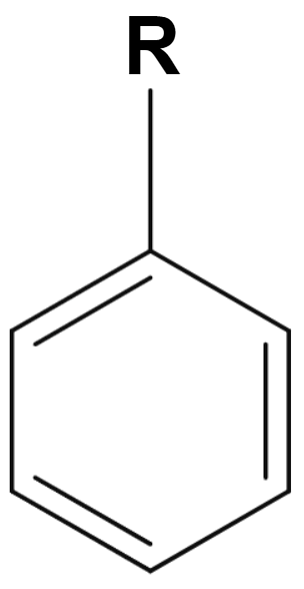
Aryl Halide
Furthermore, the carbonhalogen bond in aryl halides is shorter and hence stronger than in alkyl halides. The carbonhalogen bond in aryl halides is shortened for two reasons. First, unlike alkyl halides, the carbon atom in aryl halides is sp2 hybridised rather than sp3 hybridised. Second, due to resonance, the carbonhalogen bond possesses partial double bond properties.
Aryl Halide may cause a variety of reactions, which we'll go over in more detail later in this article. So you know what Aryl Halide is and what it does. You must now be curious to learn more about the other parts of this reaction, both for the sake of your score and to broaden your knowledge. In the following paragraphs, you will learn about several types of Aryl halide reactions, how they operate with metals, some entertaining facts to refresh your memory, and more preparatory advice.
Read More:-
| Chapter Related Concepts | ||
|---|---|---|
| Ester Hydrolysis | Fehling Test | Iodoform Test |
| Hell-Volhard-Zelinsky Reaction | Finkelstein reaction | Butyric Acid |
Aryl Halide Structure
[Click Here for Sample Questions]
An aryl halide is distinguished by the direct bonding of a halogen to a benzene ring, as we observed in the preceding section. One of the most essential structural considerations is the trend in bond lengths among the four aryl halides. It's probably not unexpected that in terms of bond length, the trend for atomic size is F Cl Br I (meaning fluorine is smaller than chlorine, which is smaller than bromine, and so on).

Aryl Halide Structure
As we're dealing with chemical bonding on a minuscule size, the bond lengths are measured in picometers, which is a miniscule unit of measurement. The bond lengths increase longer and longer as we progress from fluorine through chlorine, bromine, and iodine. This is because when the halogen's size increases, the connection must lengthen to accommodate the larger atom attached to the benzene ring.
Electrophilic Substitution Reaction
[Click Here for Sample Questions]
Despite the fact that aromatic compounds are made up of numerous bonds, they do not undergo a second reaction. The low reactivity of these compounds is due to the ring system's stability. This stability results in full electron delocalization, also known as resonance. As a result, electrophilic substitution reactions occur in aromatic compounds, preserving the aromaticity of the ring system. When benzene combines with bromine, for example, bromobenzene is formed. Numerous functional units can be added to aromatic compounds via the electrophilic substitution procedure. A functional group is a kind of substituent that produces chemical reactions that aromatic compounds do not.

Electrophilic Substitution Reaction
We'll go through each one individually, but first, let's look at how aryl halide reacts to an electrophile attack.
- The benzene ring is considerably deactivated towards electrophilic substitution reactions due to the –I effect (electron withdrawing nature) of halogen.
- The ring's ortho- and para-positions have more electrons or negative charge than the meta-position due to its multiple resonant patterns. As a result, the aryl halide acts as an o- and p-directive in electrophilic substitution reactions.
Because of the aforementioned factors, an aryl halide is less active in the electrophilic substitution process than a regular benzene ring. As a result, these reactions are slower and need more extreme conditions than those in benzene.
Aryl Halide Reactions
[Click Here for Sample Questions]
The many types of reactions in aryl halides are listed below. Electrophilic substitution reactions may be found in all of them.
- Halogenation
When aryl halide gets close to chlorine in the presence of ferric chloride as a solvent, the chlorine molecule develops polarity, and the chlorine molecule with the tiny positive charge acts as an electron seeker or electrophile. This electrophile would target the aryl halide's ortho, which is electron-rich, and para positions. The para compounds and ortho compounds are combined to produce a product in which the para isomer is the primary product and the ortho isomer is the minor product. The process is known as aryl halide halogenation.
NO2 is produced during the nitration of aryl halides from nitric acid, which is begun with H2SO44 because the molecule contains two electronegative oxygen atoms, the electrophilic centre of nitrogen dioxide is above N. When Nitrogen dioxide attacks the electron-rich ortho and para locations, we get the para isomer as the primary product and the ortho isomer as the minor result. Another type of aryl halide reaction is this one.
With the aid of sulphuric acid, sulphur trioxide is formed, which works as an electrophile in the sulphonation of aryl halide. Sulfur trioxide attacks the electron-rich ortho and para locations in an aryl halide, yielding para isomers as the major product. The ortho isomer, on the other hand, is the reaction's minor product. This is an electrophilic substitution process once more.
- Friedel - Crafts Reaction
Due to the presence of a positive charge over the carbon atom, the alkyl or carbonyl group functions as an electrophile in the Friedel-Crafts process. These groups target the aryl halides' electron-rich para and ortho locations. In the Friedel-Crafts reaction, the para isomer is the principal product, while the ortho isomer is the minor product. F.C. alkylation is the reaction that takes place with alkyl chloride, while F.C. acylation is the reaction that takes place with acyl halide.

Friedel - Crafts Reaction
Reaction of Aryl Halide With Metals
[Click Here for Sample Questions]
The Wurtz-Fittig reaction is the first aryl halide reaction that occurs with metals. Aryl halides combine with alkyl halides and the metal sodium with dry ether present in the Wurtz-Fittig reaction to produce substituted aromatic compounds. Charles Adolphe Wurtz discovered this approach in 1855 when he used the process of combining two alkyl halides to generate a new C-C bond.
When the chemical reactivities of the halide reactants are separated, this reaction is best for producing asymmetrical products. This may be accomplished by utilising reactants made up of halogens from various times. This process is commonly used for alkylation of aryl halides, but it may also be utilised to create biphenyl compounds with the assistance of ultrasound. When haloarenes are treated with dry ether and salt, two aryl groups merge in a Fittig reaction. The fittig reaction is the name for this reaction.
Things to Remember
- The process of nuclear halogenation can be used to make aryl chlorides and bromides. This is accomplished by treating arene with chlorine or bromine at low temperatures in the absence of sunlight and in the presence of a halogen carrier such as AlCl3, FeCl3, etc. It's a substitution that's electrophilic.
- Diazonium salts are extremely reactive chemicals used to create arene derivatives in the Sandmeyer reaction. The synthesis of equivalent haloarene occurs when diazonium salt is treated with copper (I) chloride (Cu2Cl2) or copper (I) bromide (Cu2Br2). The Sandmeyer reaction is the name for this reaction.
- Haloarenes may also be made via the Gattermann reaction, which involves reacting benzene diazonium chloride with copper powder in the presence of a halogen acid. The Gattermann response is the name given to this reaction.
- The term aryl refers to aromatic or benzene forms, whereas the term halide refers to halogen kinds. Only four halogen atoms are bonded together and directly to a benzene ring in an aryl halide.
- Aryl halides can undergo nucleophilic substitution reactions if strong electron-withdrawing groups (deactivators) are situated ortho and/or para to the carbon atom linked to the halogen. (The carbon is vulnerable to nucleophilic attack because of this configuration.)
Read More:-
Sample Questions
Ques: What are aryl halides with example? (2 marks)
Ans - Aryl halides, like other organic halides, are frequently used as synthetic intermediates in the creation of other valuable compounds. Chlorobenzene, for example, is the beginning aryl halide in the production of DDT, as well as a source of benzenol (phenol), which has several applications.
Ques: What reactions do aryl halides undergo? (2 marks)
Ans - The electrophilic reactions of the benzene ring, such as halogenation, nitration, sulphonation, and Friedel-Crafts reactions, occur in aryl halide.
Ques: What is the formula of aryl halide? (2 marks)
Ans - Aryl halides have the generic chemical formula ArX, where Ar is the substituted aryl group and X is a halogen atom. An aryl chloride is formed when chlorine is linked to an aryl group.
Ques: What are aryl halides and alkyl halides? (2 marks)
Ans - The two categories of substituted hydrocarbons are alkyl halides and aryl halides (compounds composed of hydrogen and carbon). One or more hydrogen atoms are replaced by a halogen in these hydrocarbons (group 17 elements).
Ques: Do aryl halides undergo SN1 or SN2 reactions? (2 marks)
Ans - Although aryl halides do not conduct nucleophilic substitution reactions through the SN1 and SN2 mechanisms, aryl halides with one or more nitro groups ortho or para to the halogen do so under very moderate circumstances.
Ques: Do aryl halides show SN2 reaction? (2 marks)
Ans - Nucleophilic substitution processes are largely unresponsive to aryl halides. Several variables contribute to this lack of response. SN2 reactions are prevented due to steric hindrance produced by the aryl halide's benzene ring. SN1 reactions are also impossible due to the instability of phenyl cations.
Ques: How is aryl halide prepared? (2 marks)
Ans - Mix a solution of freshly made diazonium salt from the main aromatic amine with cuprous chloride or cuprous bromide to make aryl halides. A diazonium salt is reacted with copper (I) bromide, copper (I) chloride, or potassium iodide (KI) to generate the appropriate aryl halide in a Sandmeyer reaction.
Ques: What is the functional group of aryl halide? (1 marks)
Ans - Aryl halide (haloarene, halogenoarene) is a functional group or molecule that has one or more halogen atoms attached to a benzene or other aromatic ring.
Ques: Why are aryl halides less reactive? (2 marks)
Ans - Because of resonance stabilization in aryl halides, they are less reactive towards nucleophilic substitution reactions than alkyl halides. The CCl bond grows shorter and stronger as a result of resonance, and nucleophiles cannot easily replace it.
Ques: What is the physical properties of aryl halide? (2 marks)
Ans - Aryl halides have features that are comparable to alkyl halides. When compared to comparable hydrocarbons, the polar link forms a molecular dipole, which elevates the melting and boiling temperatures. Alkyl halides are more polar than aryl halides (since an sp2 C is more electronegative than an sp3 C)
For Latest Updates on Upcoming Board Exams, Click Here: https://t.me/class_10_12_board_updates
Check-Out:



Comments