



Content Curator
Botany is the branch of biology that deals with the study of plants, including their structure, characteristics, and metabolic processes. Plant taxonomy, a study of plant diseases and their relationship with the environment is also covered in botany. Its ideas & conclusions have served as the foundation for practical sciences such as horticulture, agriculture & forestry. Botany, Plant Biology, Plant Science & Phytology, all are similar terms and used for the study of plants.
| Table of Content |
Read Also: Taxonomic Hierarchy of Plants and Animals
Key terms: Phytology, Theophrastus, Microscope, Photosynthesis, Biotic, Biomass, Crop Yield, Botany, Taxonomy, Plant, Plant Biology, Plant Science
What is Botany?
[Click Here for Sample Questions]
It comprises flowering plants, algae, fungi, & vascular plants like ferns, as well as anything else that could be called a plant. It typically comprises trees, however, this is gradually becoming a specialised field. Today, it is a component of a larger study of ecology, which includes all of the natural scientific characteristics that entail.
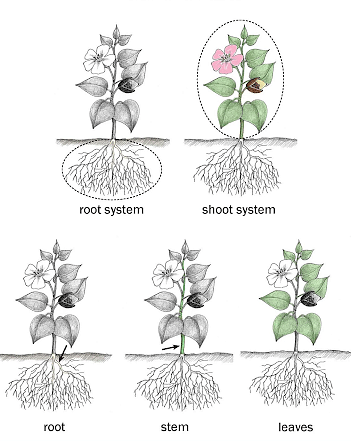
Parts of Plants
Botany is surprisingly beneficial in places where we might not expect it to be. Many of our early medicines were derived from plant extracts; for example, aspirin was discovered by studying rotting tree bark, while penicillin was discovered by studying mould. With the consequences of climate change predicted to have a significant impact on our environment, particularly on plants, which we rely on for carbon sinks and other functions, botany is as vital today as it has ever been.
Historical background
[Click Here for Sample Questions]
Botany is assigned to Theophrastus, a Greek philosopher who studied with Plato before becoming an Aristotelian student. Theophrastus' essential notions of morphology, categorization, and natural history of plants, which were accepted without question for many centuries, are today of significance chiefly because of his autonomous and philosophical standpoint.
Robert Hooke's creation of the compound microscope in 1665 was a watershed moment in Botany's scientific understanding. It aided research into plant anatomy & physiology. Chlorophyll's discovery aided in the knowledge of photosynthesis. Stephen Hales published his studies on the transport of water in plants under the title Vegetable Sticks, which launched experimental plant physiology (1727).
The advancement of radioactive-carbon dating of plant samples as old as 50,000 years is beneficial to paleobotanists, ecologists, archaeologists, and, most importantly, climatologists, who now have a firmer foundation on which to anticipate temperatures in future generations.
Read Also: CBSE Class 12 Biology Notes
Branches of Botany
[Click Here for Sample Questions]
Botany is a branch of natural science that studies plants. Any branch of science that requires systematic research must be divided into several divisions. Botany in the early eighteenth century was primarily concerned with the description & classification of plants. Plant knowledge grew over time, and numerous sections of the field were developed. The following are the main branches:
Plant Pathology
Plant pathology is a branch of botany that deals with the studies of causes of plant diseases and infection, the processes by which diseases develop in individual plants and populations, and the methods for managing and controlling plant diseases.
Plant Ecology
Plant ecology is the study of the interactions between plants & their physical and biotic surroundings. Plants are generally sessile and photosynthetic organisms that rely on their local surroundings for water, light, and nutrient resources.
Palaeobotany
Paleobotany is the study of long-extinct plants. It is one part of the palaeontology field of science, which explores how life has developed on Earth over millions of years. Paleobotanists examine fossilised plant life to learn about the types of plants that existed at various times in history.
Archaeobotany
The study of ancient plant remains is known as archaeobotany. We can learn about how people utilised plants in the past by researching archaeobotanical remains: for medicine, food, fuel, or ritual purposes, or for building & crafts.
Forensic Botany
The application of plant sciences to the judicial process is referred to as forensic botany. As a result, forensic botany entails gathering clues from plants in order to piece together evidence that will aid in the investigation of serious crimes such as death, kidnapping, and murder.
The importance of Botany
[Click Here for Sample Questions]
Plants is essential for humans as they completely depend on them. They are useful in various aspects so this is our responsibility to care for them. The following are the reasons that satisfied the importance of Botany.
- It helps in medicine and cosmetic.
- Botany is essential for the creation of biofuels such as biomass & methane gas, which can be used to replace fossil fuels.
- It helps farmers to increase crop yield.
- The Study of Plant is important for environmental protection.
Read Also: Important MCQs in Biology
Things to remember
- Plants are the biggest and best source of life. They provide oxygen, food, and a wide range of raw resources for industrial and home use.
- Algae, lichens, ferns, fungi, mosses, and other plant-like creatures were included in botany, as were actual plants.
- This is the branch of botany concerned with the recovery and identification of plant fossils for the purpose of studying plant evolution.
- Botany is the study of various types of plants, their uses, and qualities in order to affect science, medicine, and cosmetics.
- These are the only living entities capable of capturing the sun's energy in the form of heat and light and transferring it to other species in the form of food.
Sample Questions
Ques. What does Botany mean?
Ans. Botany is the study of plants, including how they work, how they look, how they are connected to one another, where they grow, how people utilise plants, and how they evolved.
Ques. Who is called Botanist?
Ans. Botany, often known as plant science(s), plant biology, or phytology, is a discipline of biology that studies plants. A botanist, phytologist or plant scientist is a specialist in this subject of science.
Ques. Is Botany a good career?
Ans. Botany is an excellent career choice for students interested in flora and plant life. They can work in plant analysis, research, & environmental studies, among other things, because they have a variety of professional opportunities.
Ques. Who is known as the father of Botany?
a.Aristotle
b.Linnaeus
c.Theophrastus
d.Darwin
Ans. (3) Theophrastus
Ques. What is the role of botany in human welfare?
Ans. Plants have long been utilised in medicine, producing a variety of medications, and as a feedstock for a variety of industrial products, including timber and paper, as well as a variety of chemicals. Plants provide enjoyment to millions of people through gardening.
Ques. How useful is botany to the existence of humankind?
Ans. Plant knowledge is essential for the development of human societies because it helps us: Feed the globe. Recognize the essential processes of life. Use medicine and materials to your advantage.
Ques. What is the scope of Botany?
Ans. The aspirants can make their careers as Conservationist, Botanist, Biological Technician, Ecologist, EthnoBotanist, Farming consultants, Environment consultants, Florist, Forester, horticulturists, Molecular biologists, Forest Ranger, Geneticists, mycologists, Nursery Managers
Ques. What are the chapters covered in class 12th Botany?
Ans. There are 10 chapters in Class XII Botany which are mentioned below:
- Reproduction in organisms.
- Sexual reproduction in flower plants.
- Theory of Inheritance and Difference.
- Molecular basis of inheritance.
- Strategies to Increase Food Production
- Microbial in human welfare
- Creatures and populations.
- Ecosystem
- Biodiversity and protection.
- Environmental issues
Ques. What is a botanist's salary?
Ans. Based on 6 incomes, a fresher Botanist can expect to make an average total salary of 508,682 (including tips, bonus, and overtime pay). Based on 10 incomes, an experienced Botanist receives a total pay of Rs. 5,00,000/-.
Ques. What is the job of a botanist?
Ans. A botanist is a scientist who examines plant kingdoms and how plant species affect the environment. He is in charge of producing herbal medications, herbal goods, perfumes, and beauty items, among other things. They also aid in the conservation of plant species and the ecosystem.
For Latest Updates on Upcoming Board Exams, Click Here:https://t.me/class_10_12_board_updates
Check-Out:



Comments