




These class 11 biology handwritten notes chapter 3 Plant Kingdom run to 34 neat pages built for one-shot revision before Boards, NEET and CUET in 2026-27. They walk the five plant groups in NCERT order, from algae to angiosperms, with every definition boxed and every life cycle drawn by hand.
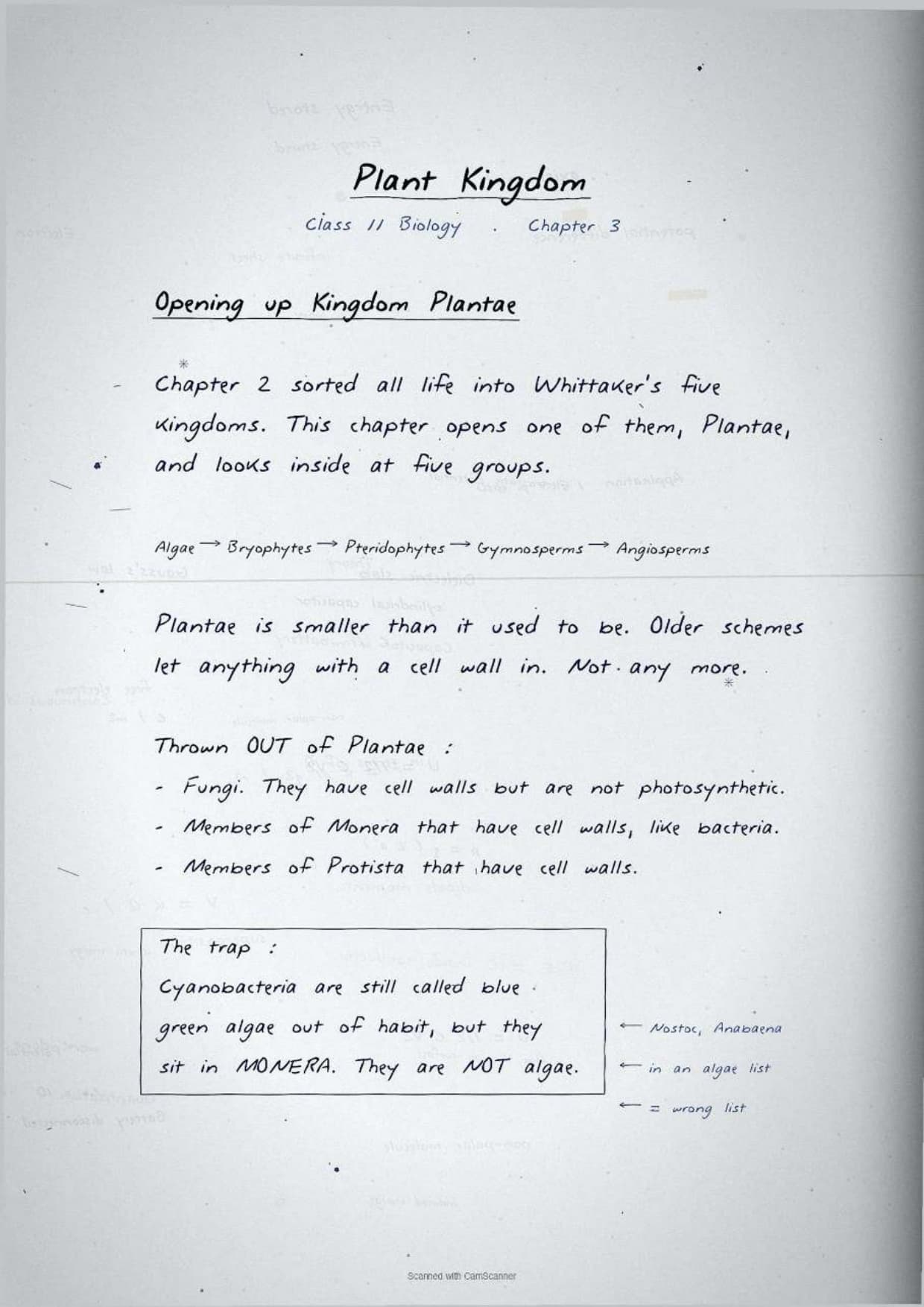
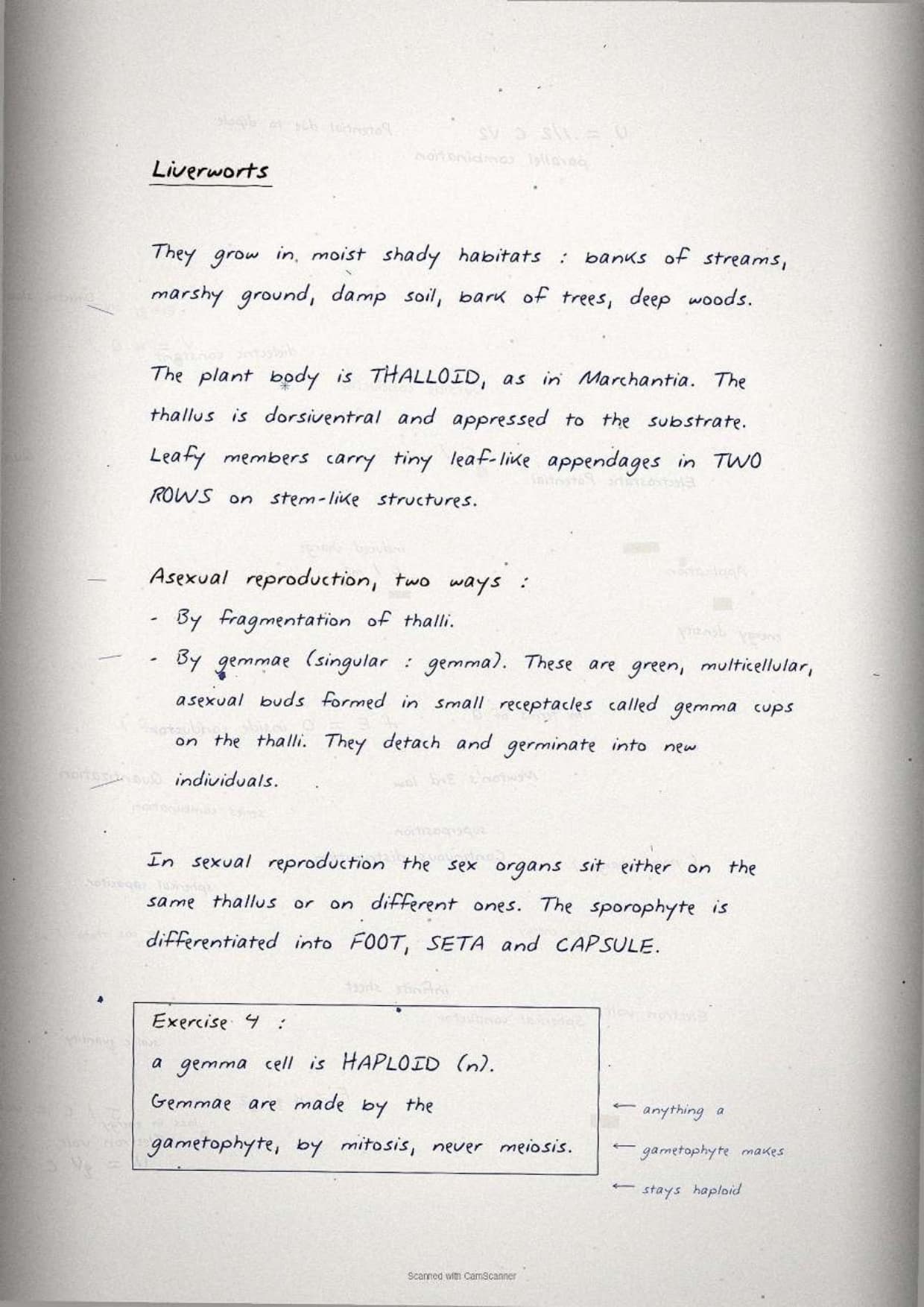
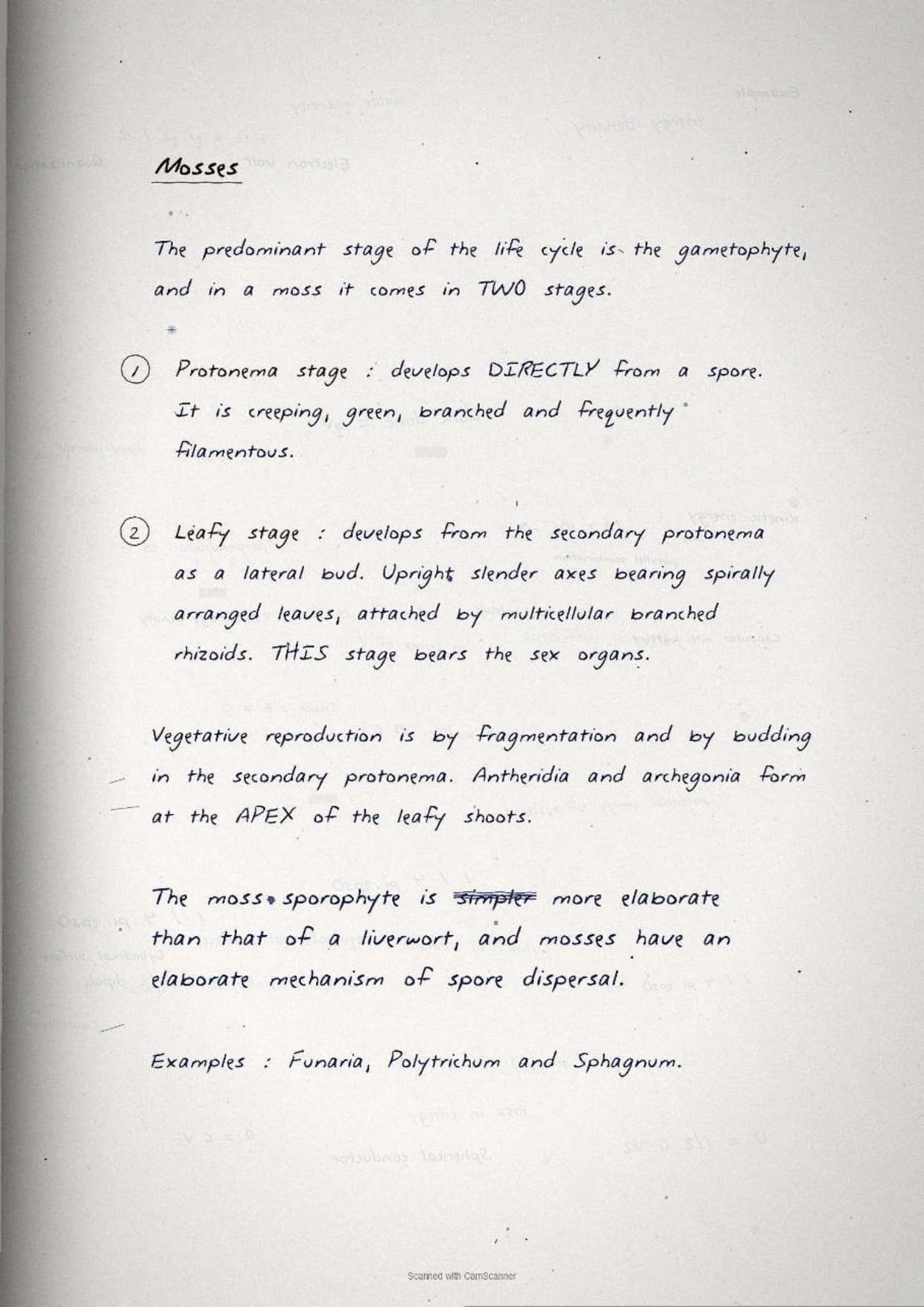
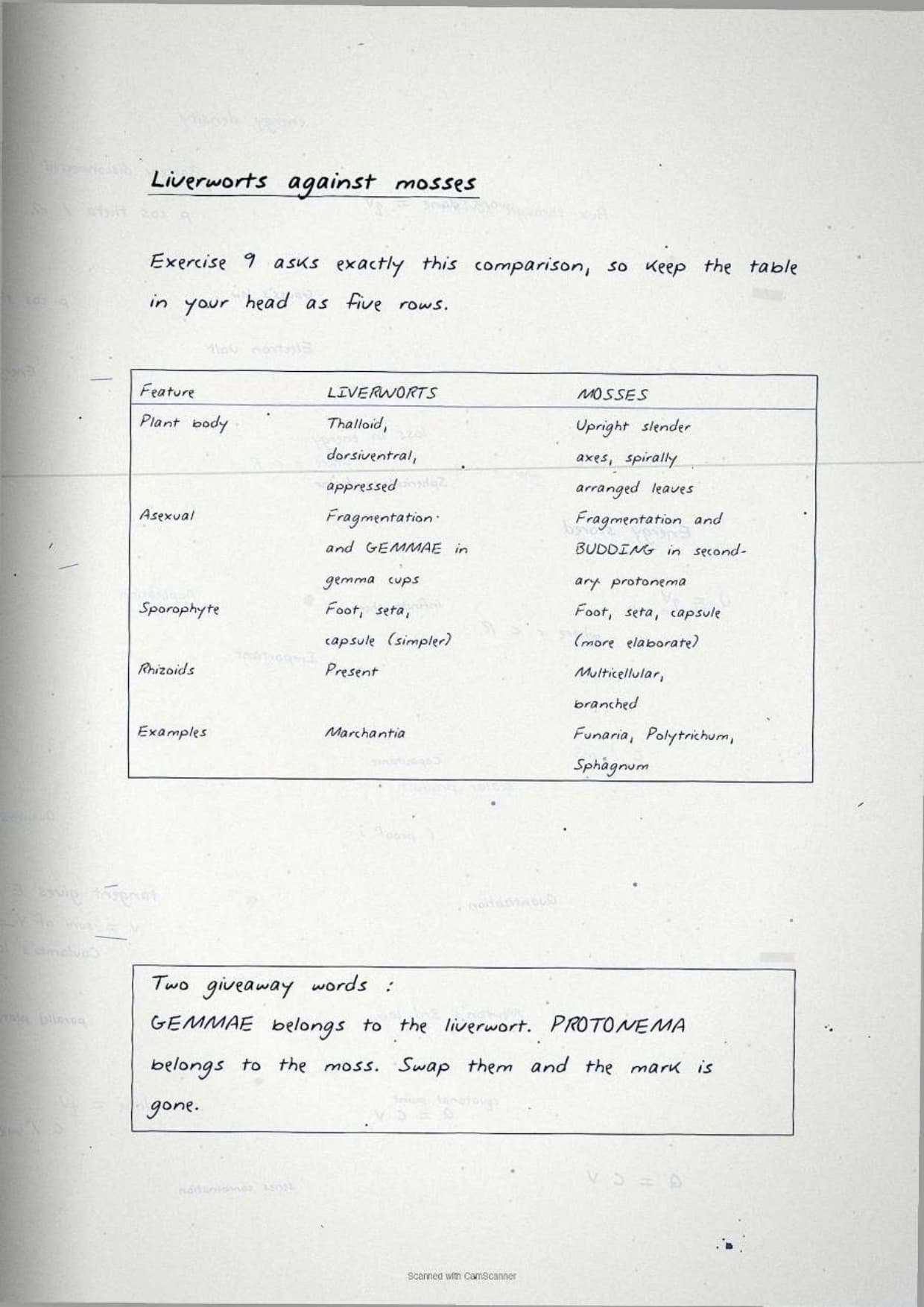
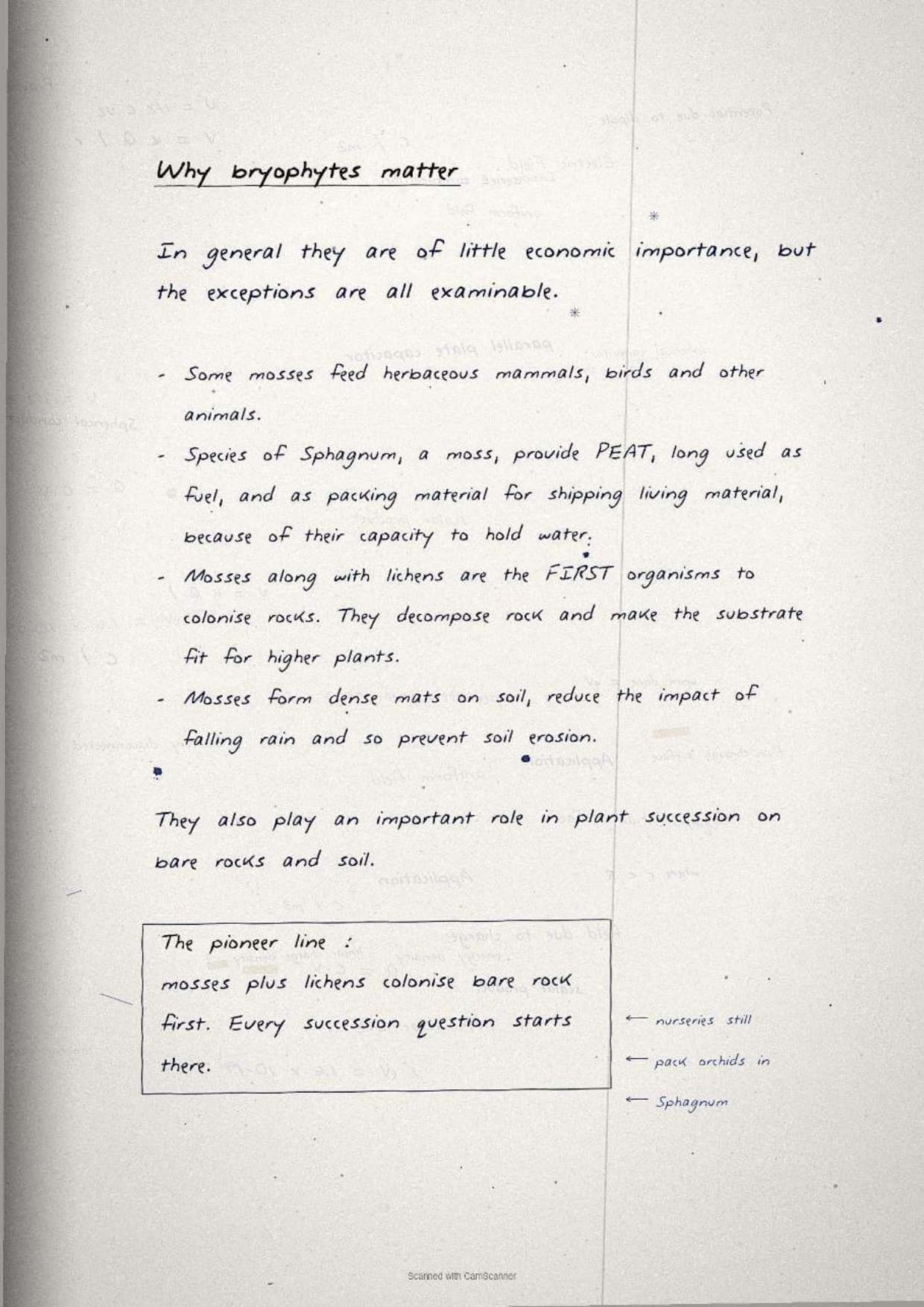
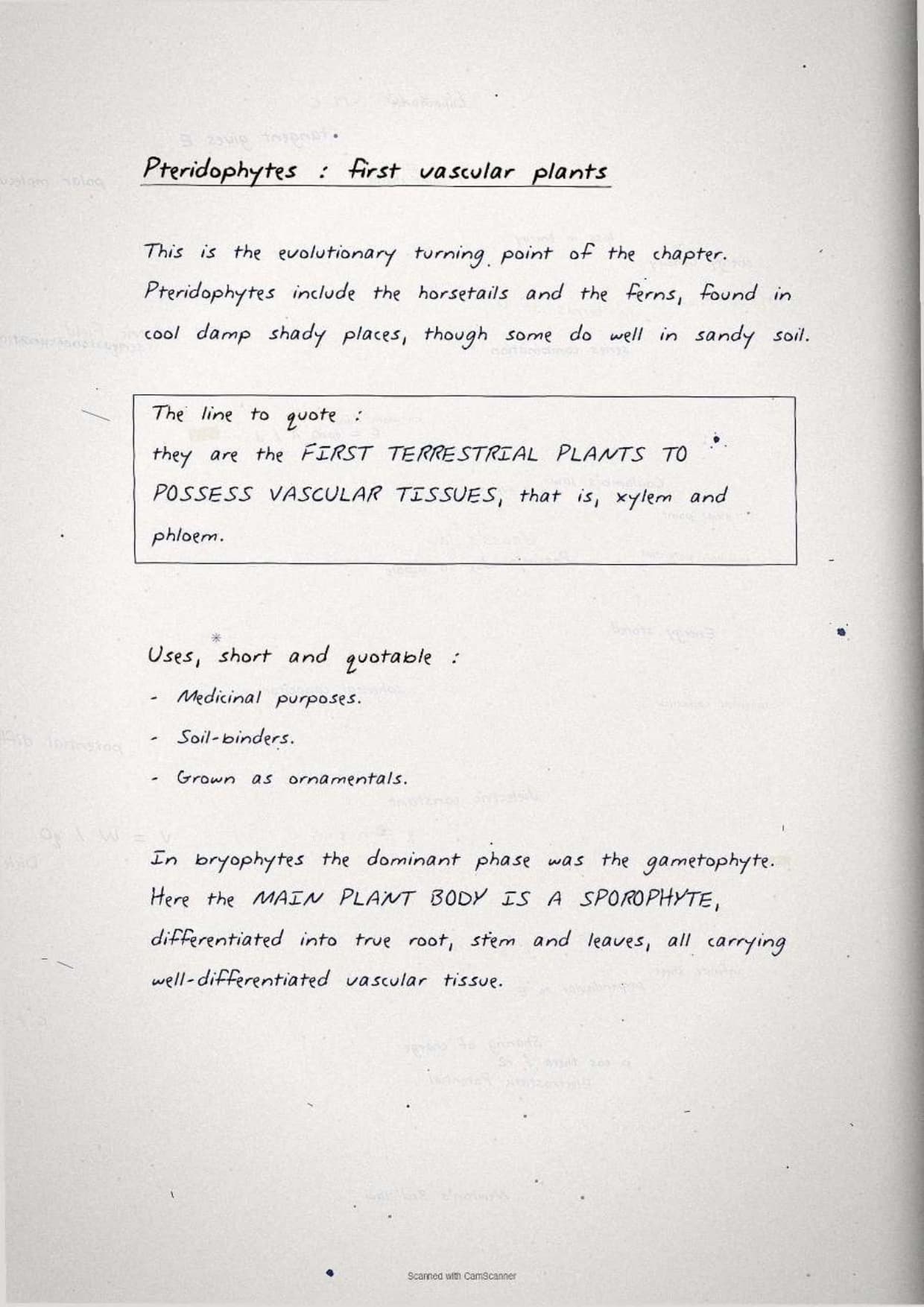
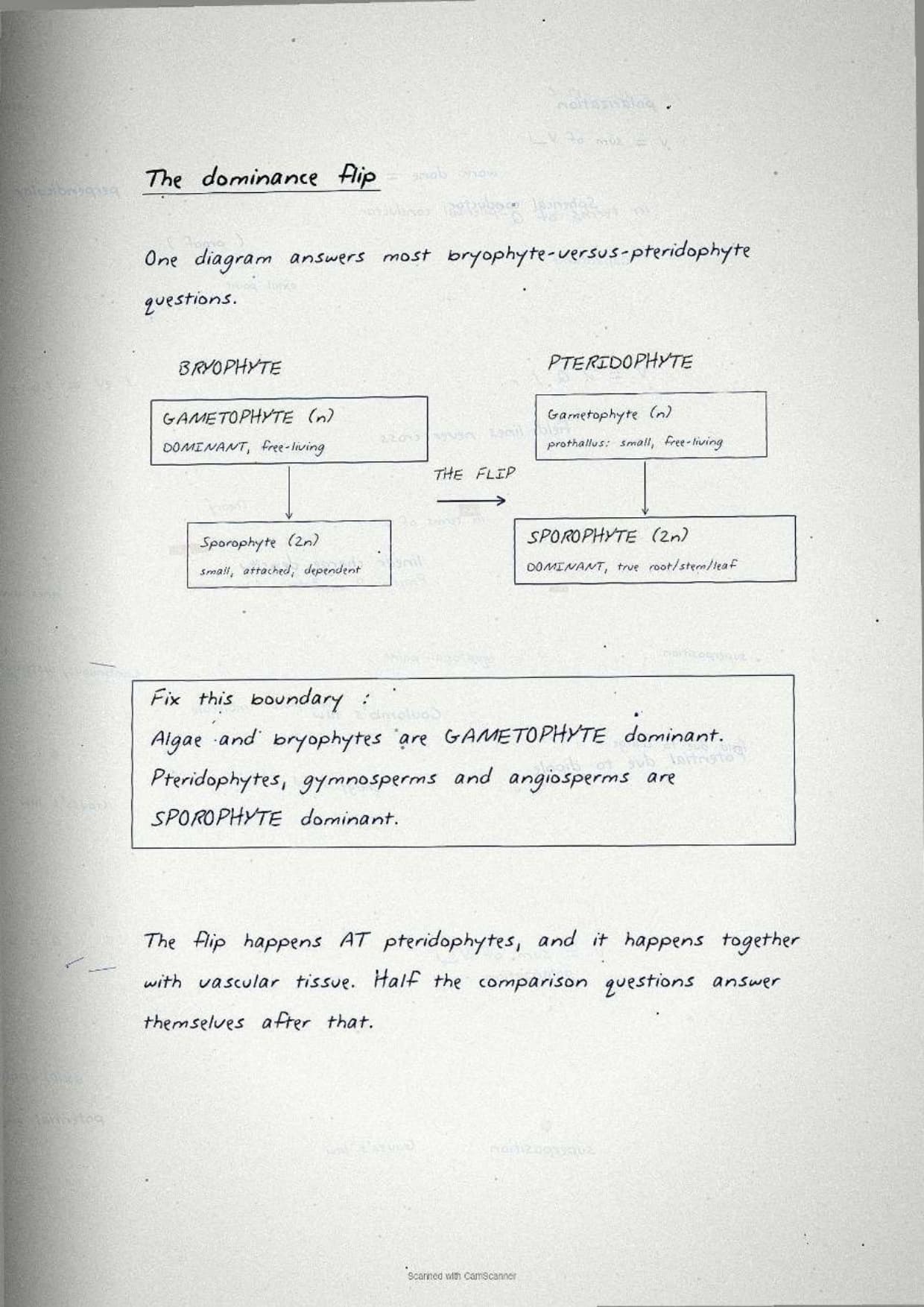
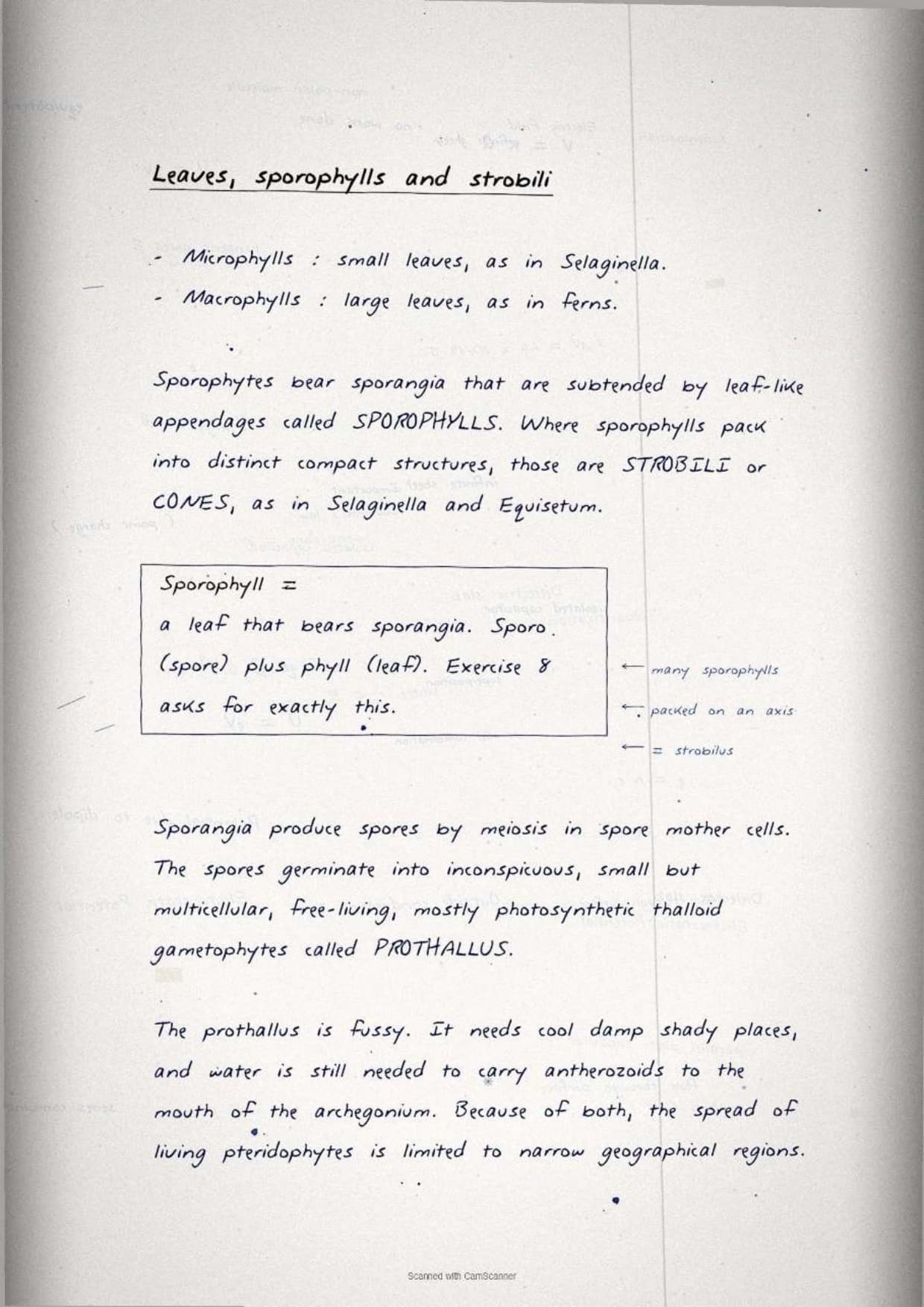
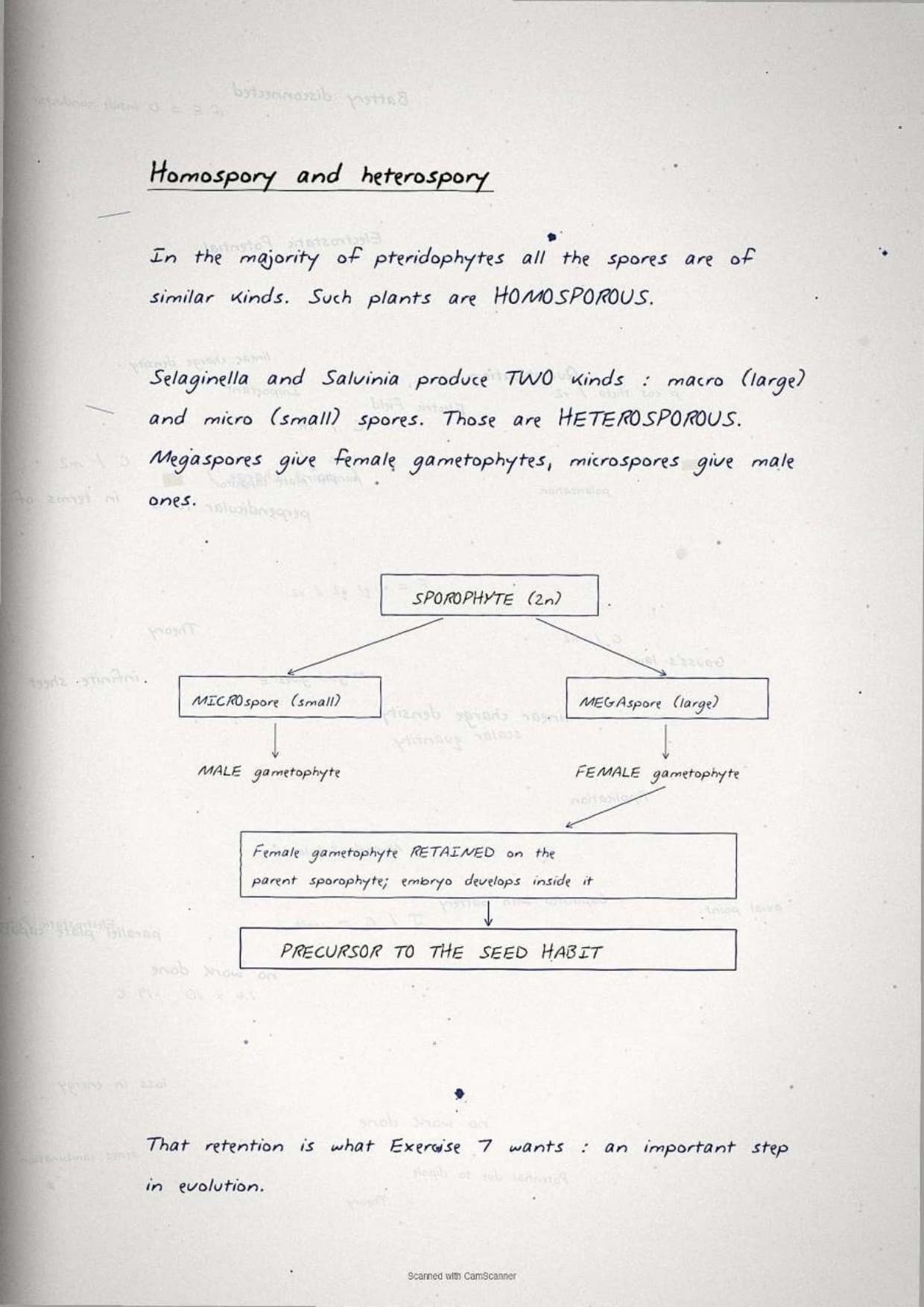
Chapter 3 is the chapter students lose marks on for mixing up group names, so these pages keep each group on its own spread.
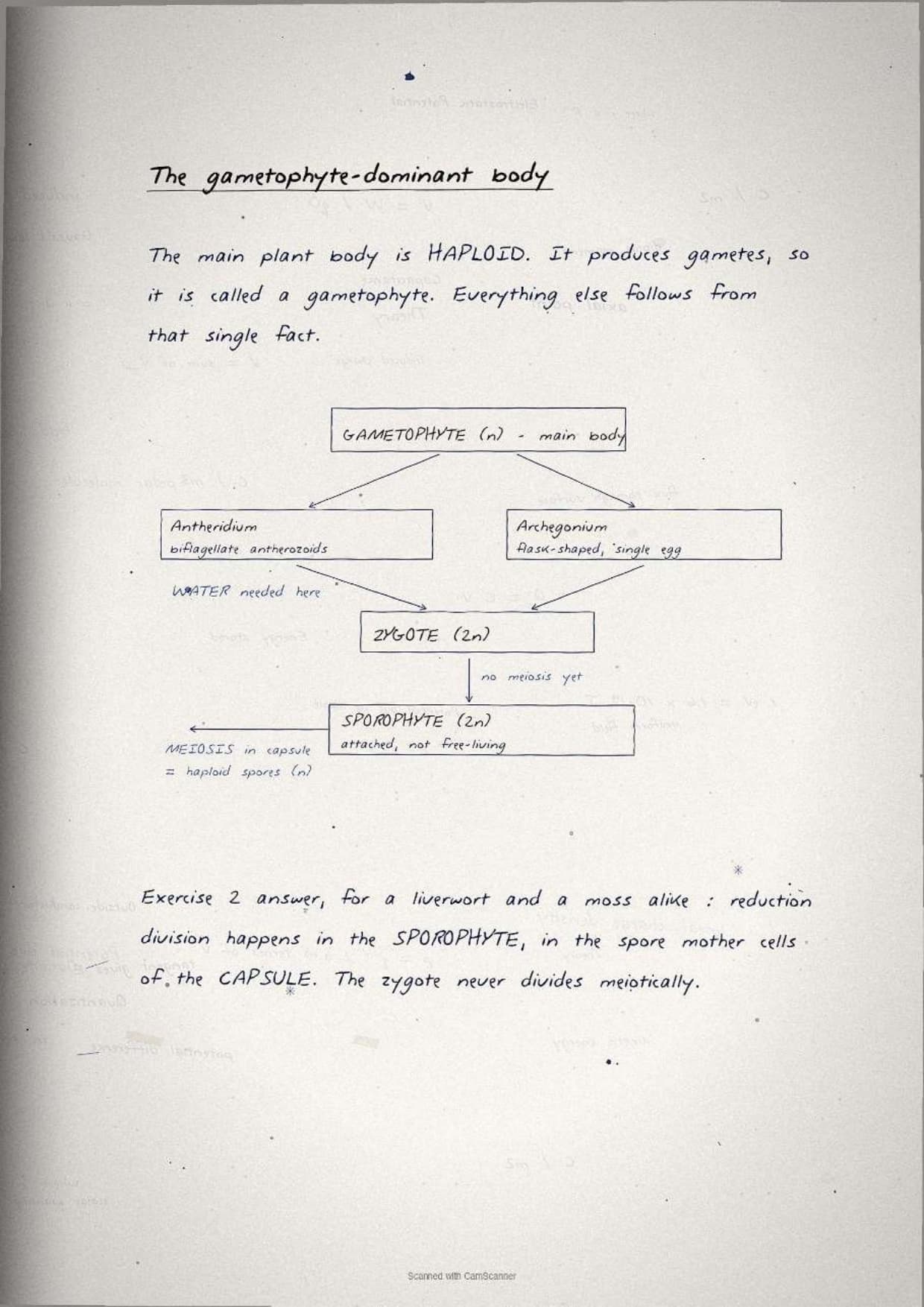
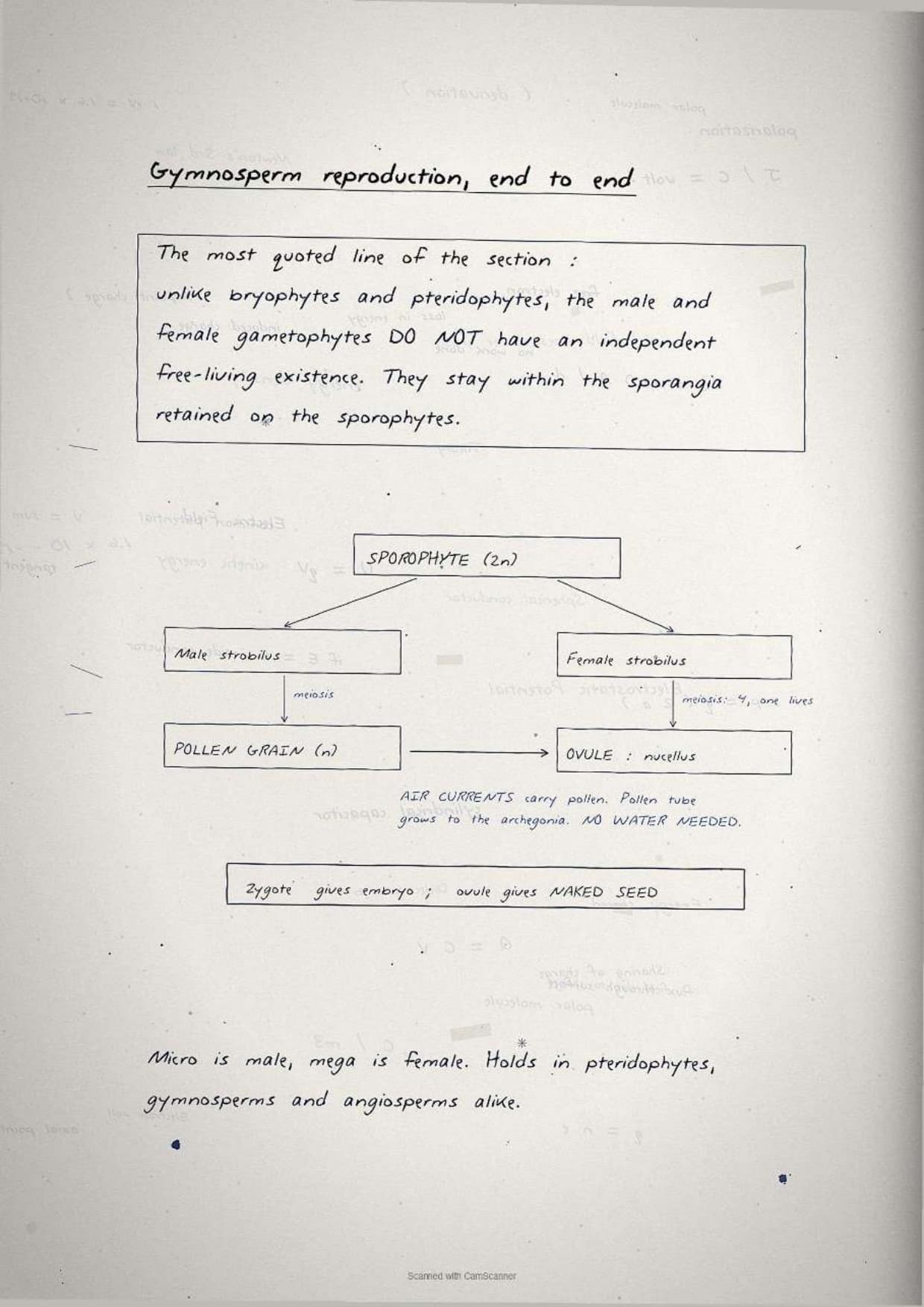
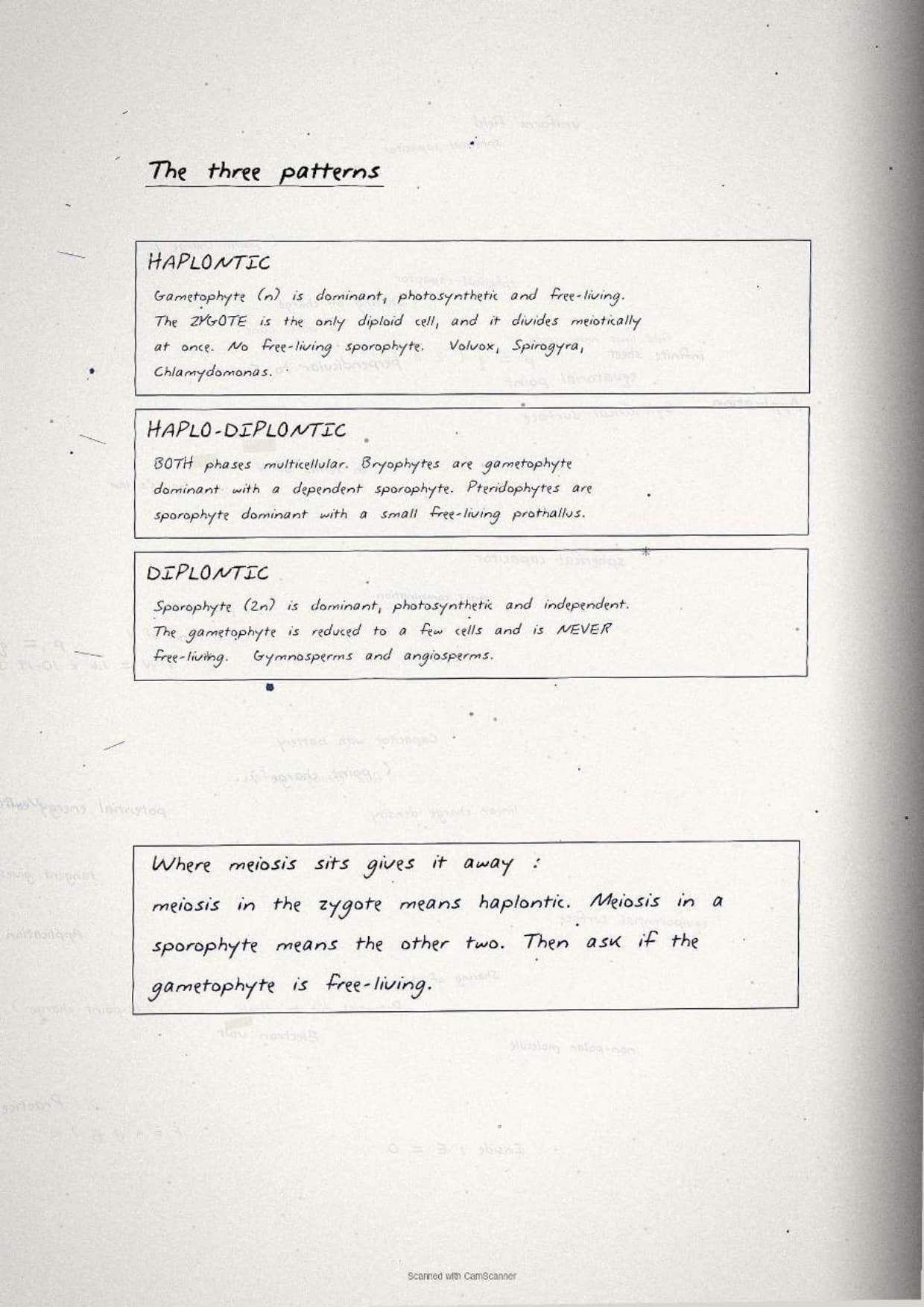
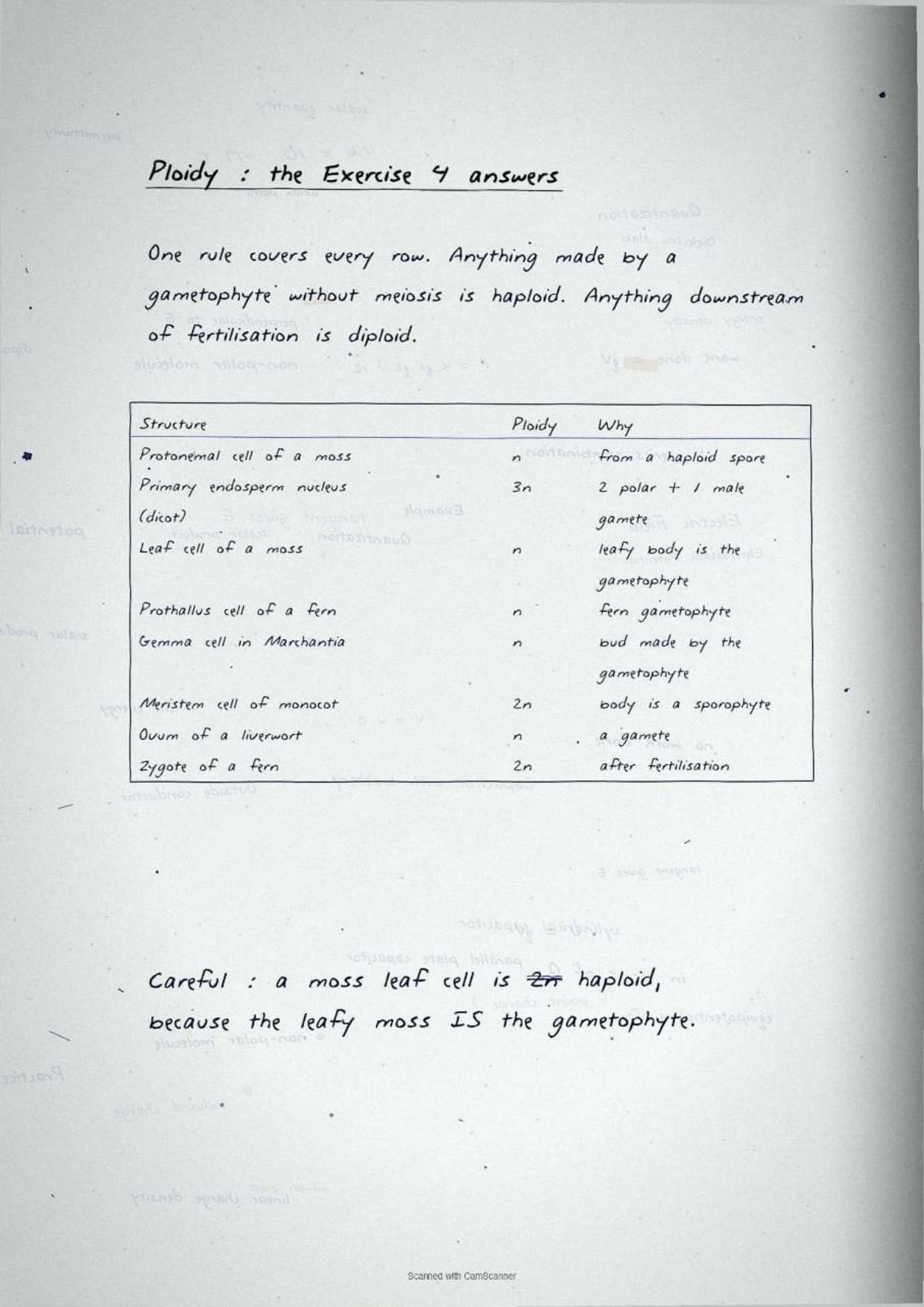
- Hand-drawn life cycles for bryophytes, pteridophytes and gymnosperms, each with the meiosis point marked.
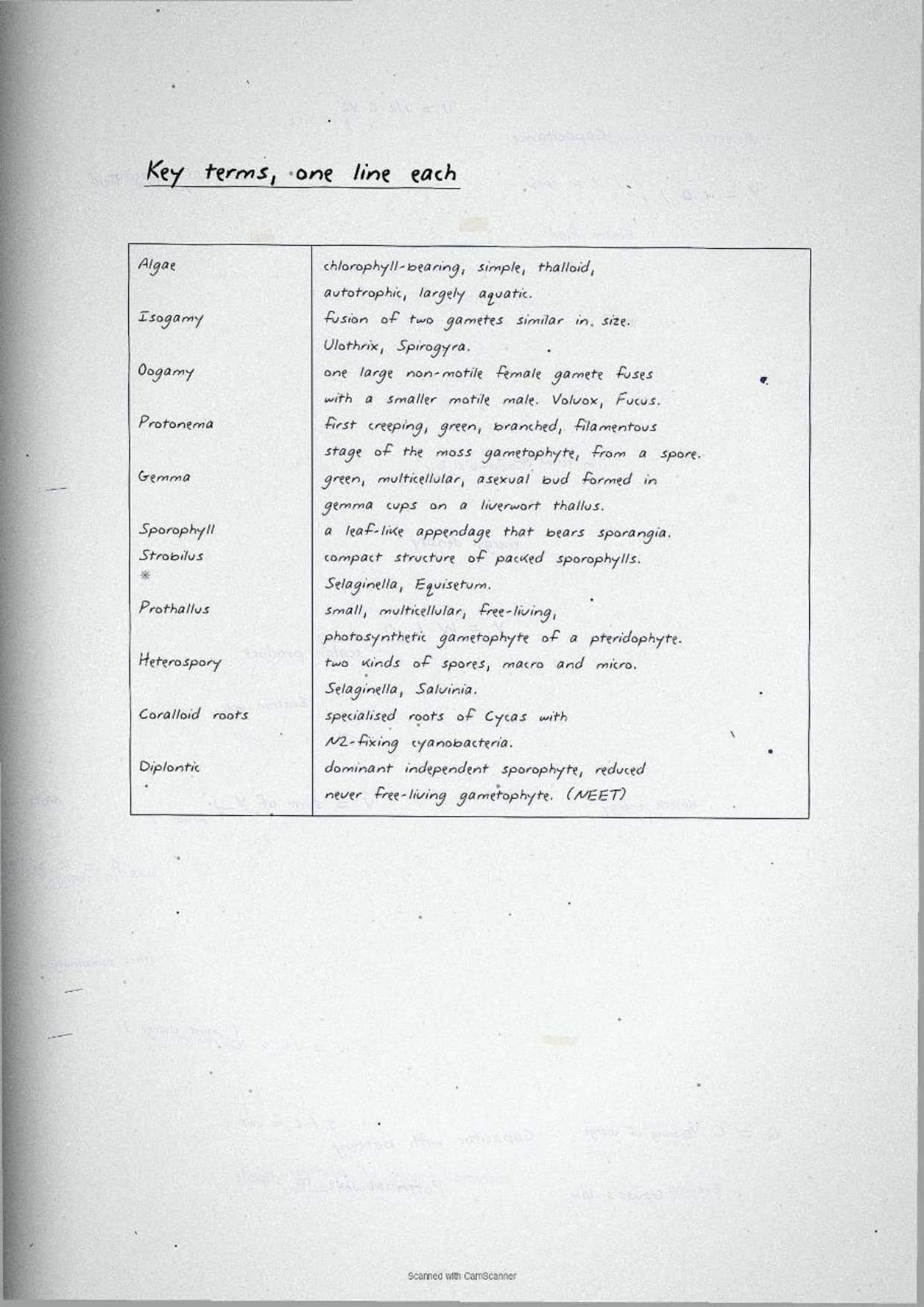
- Boxed definitions of algae, thalloid, homospory and heterospory in exact NCERT wording.
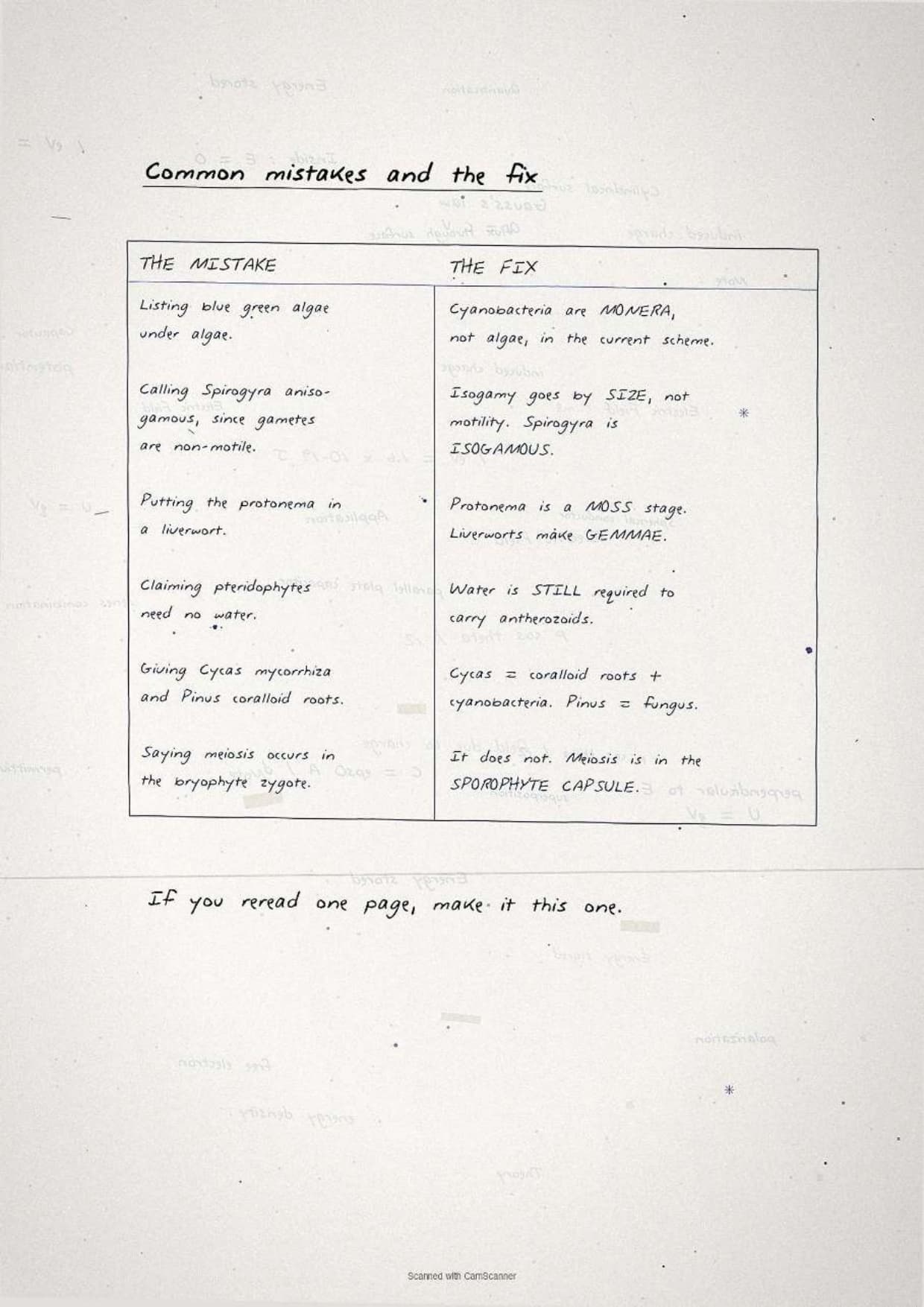
- A two-column mistakes-and-fixes table on page 32 that settles the usual traps.
What the Plant Kingdom Handwritten Notes Cover
The notes open with how plants are classified and then move group by group, in the same order as the NCERT chapter. New sub-topics are written in red, and every term the exam can ask for a definition of sits inside a hand-drawn box.
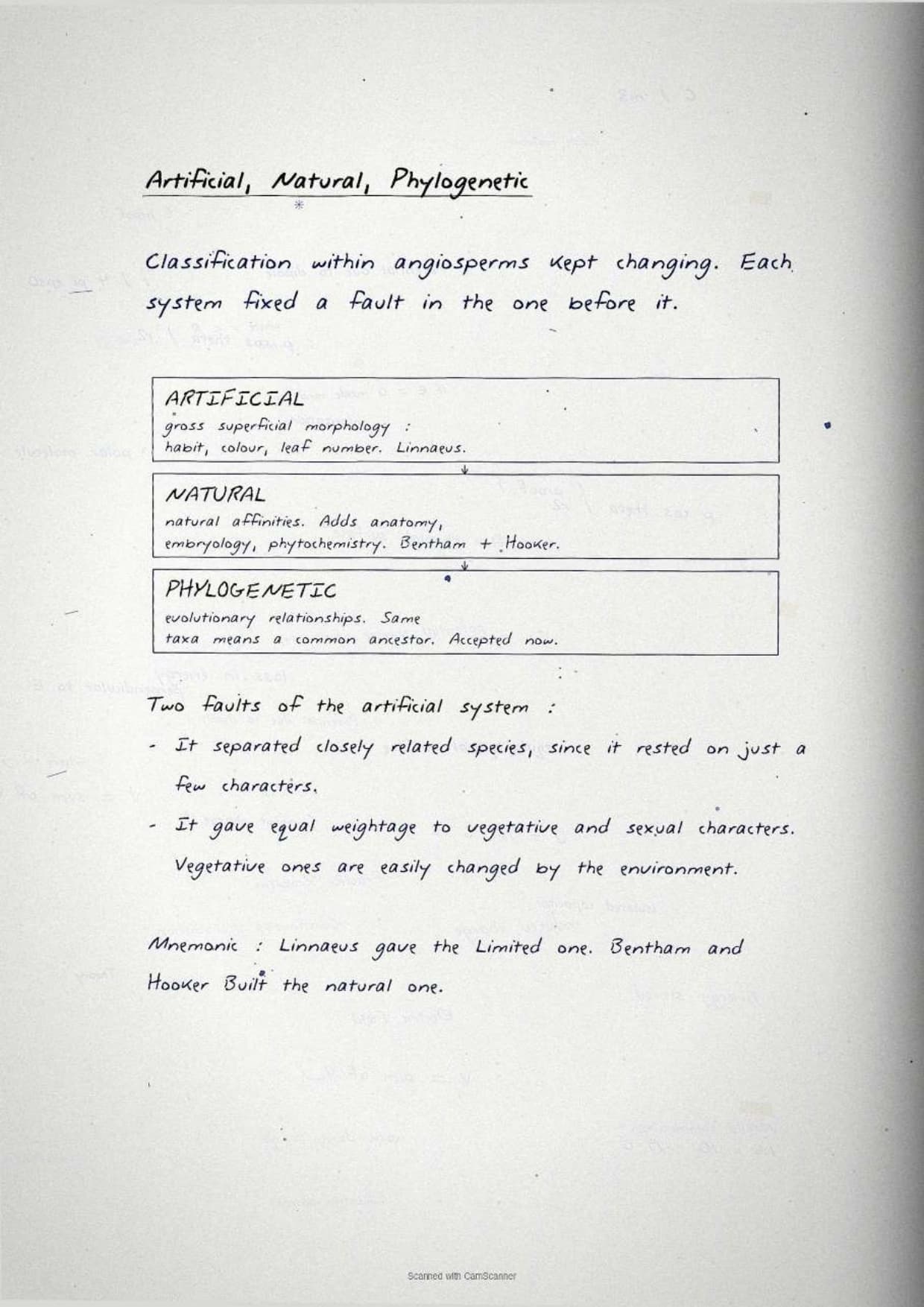
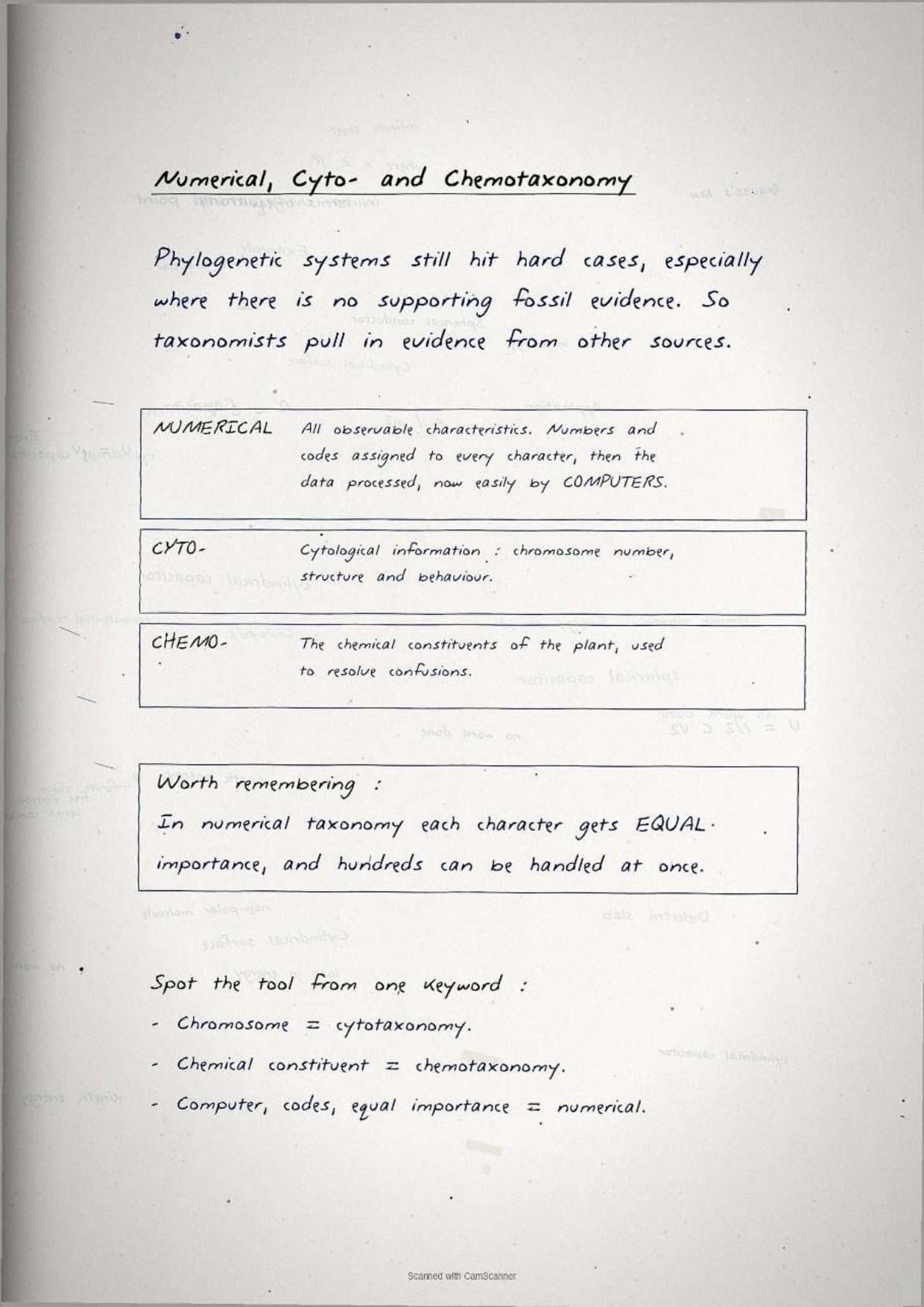
- Classification systems: artificial, natural and phylogenetic, plus numerical, cyto and chemotaxonomy.
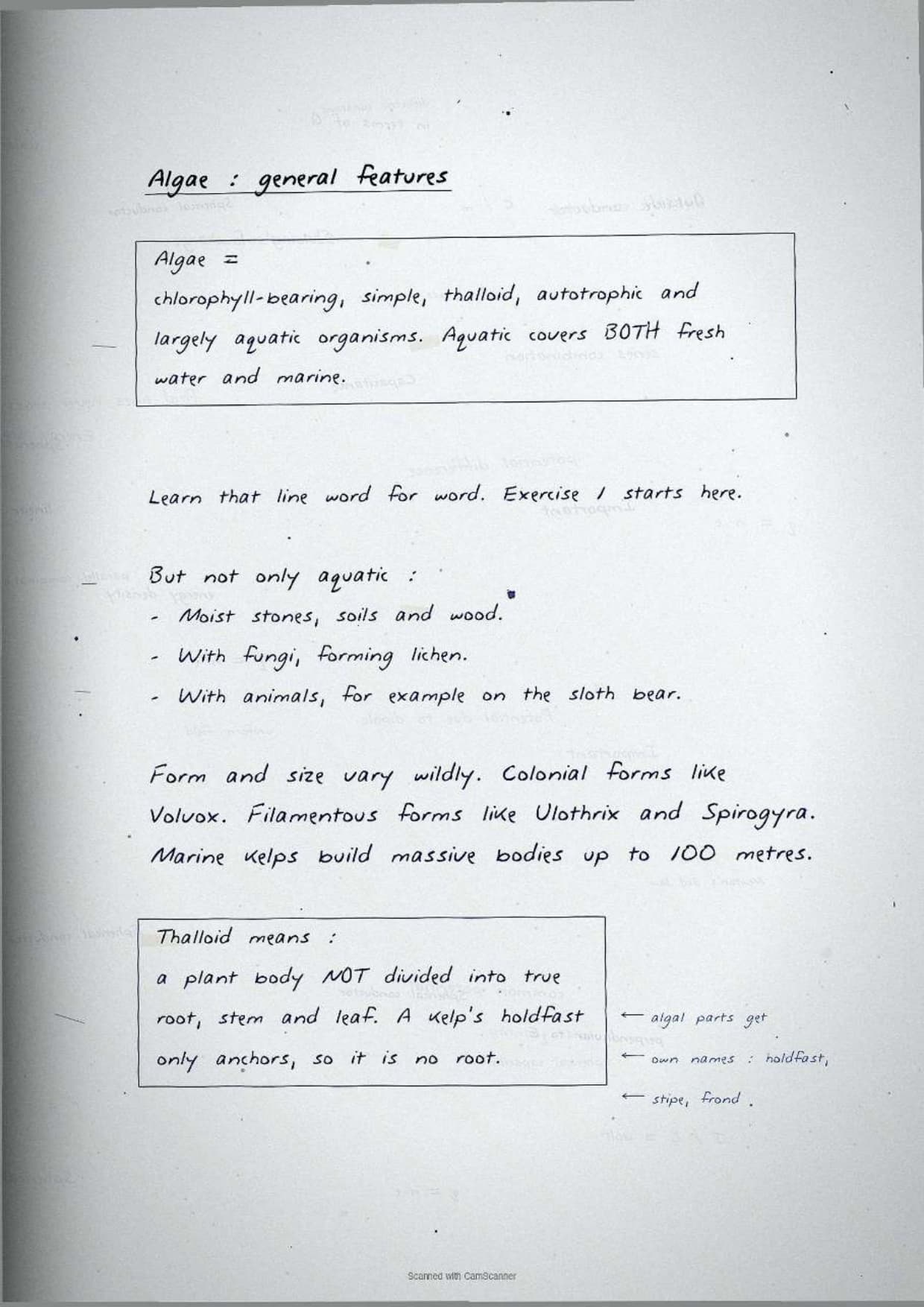
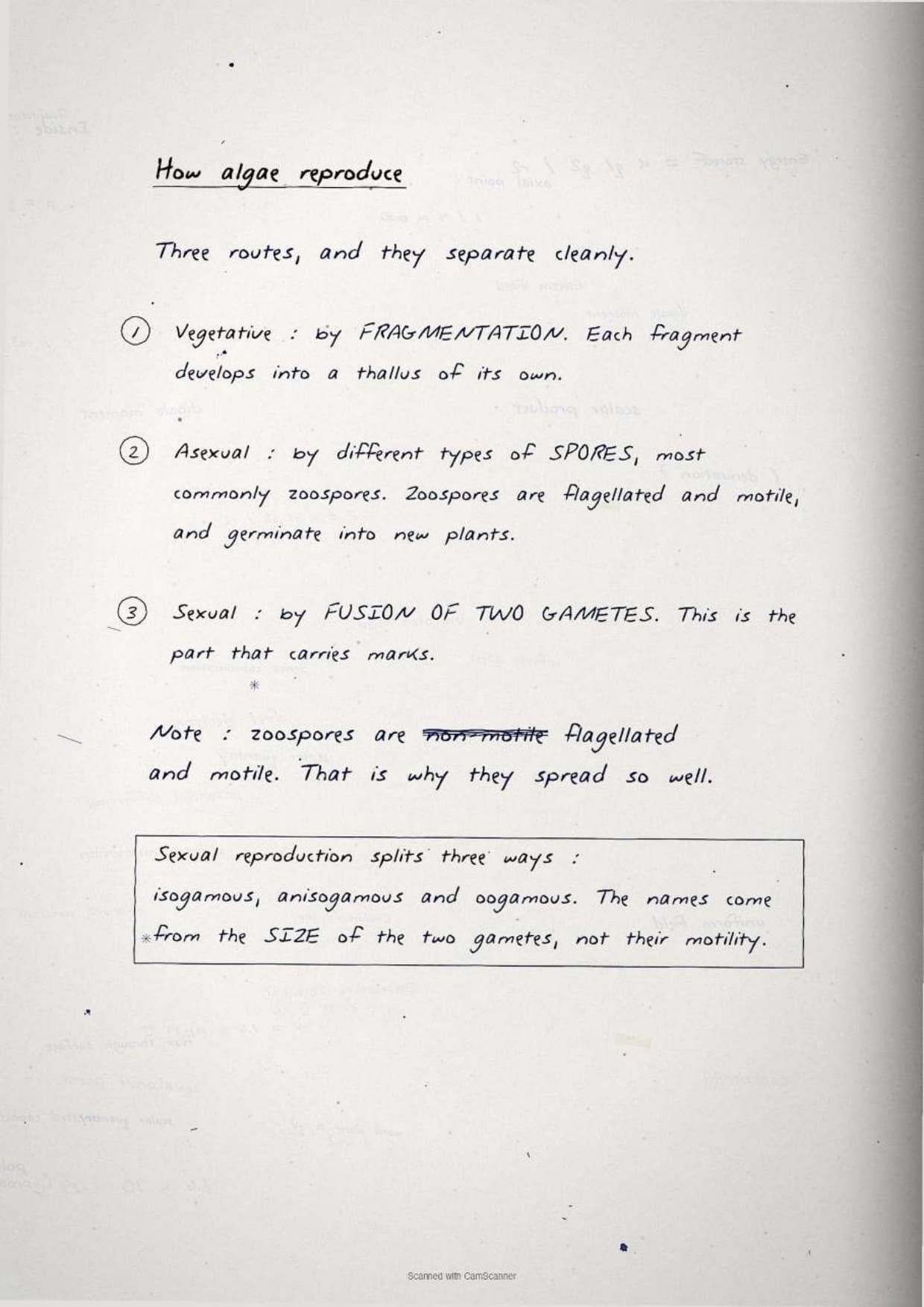
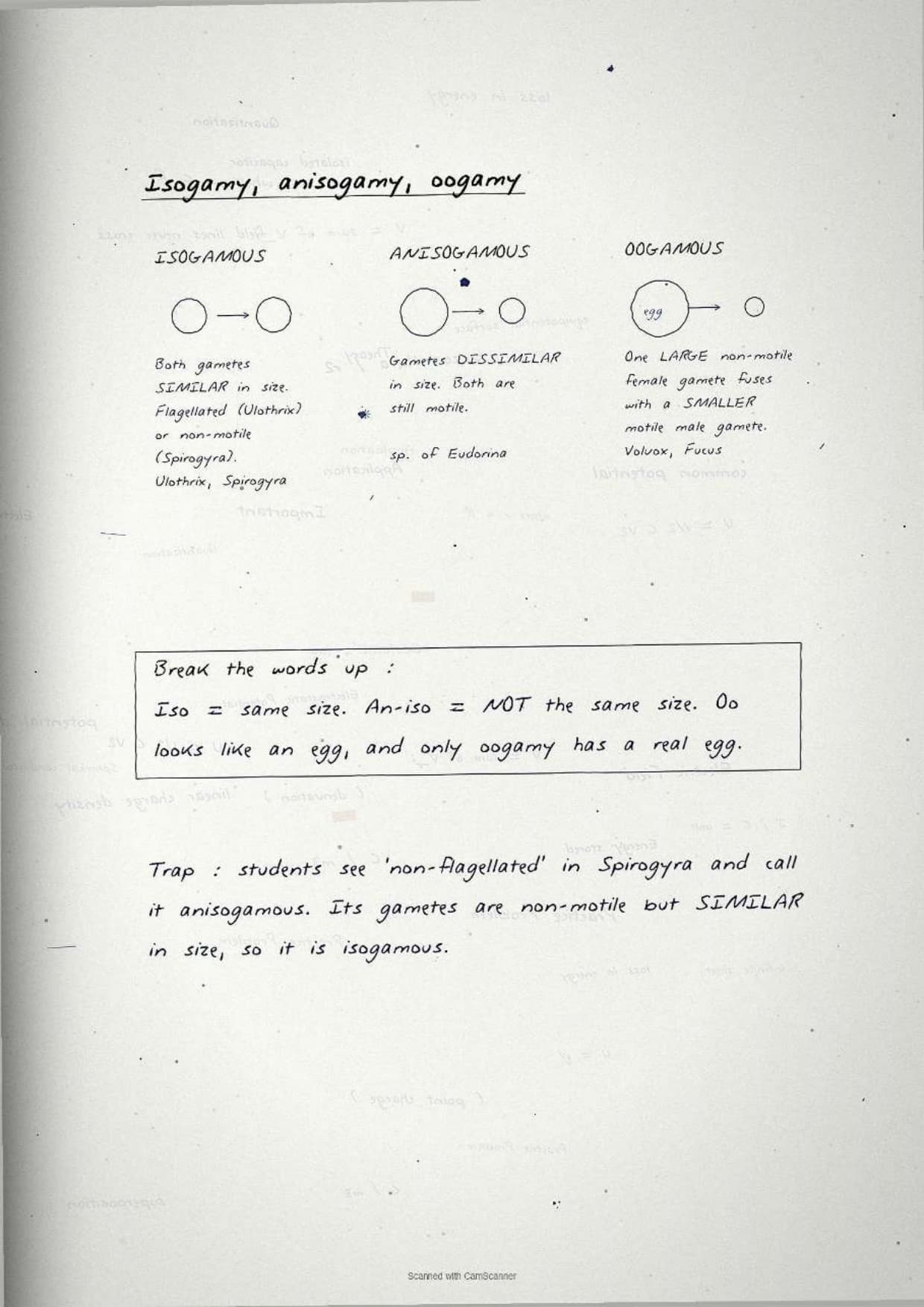
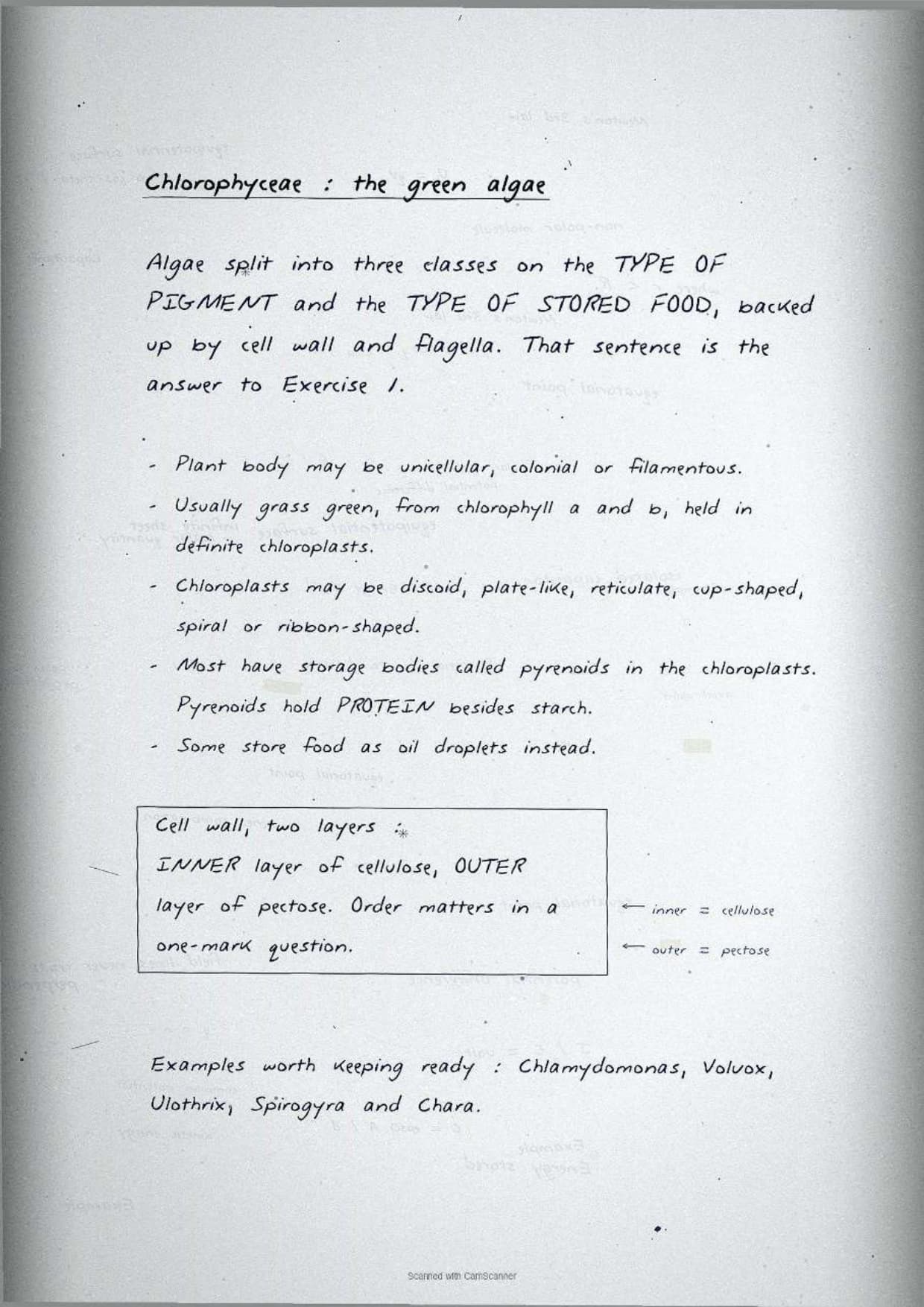
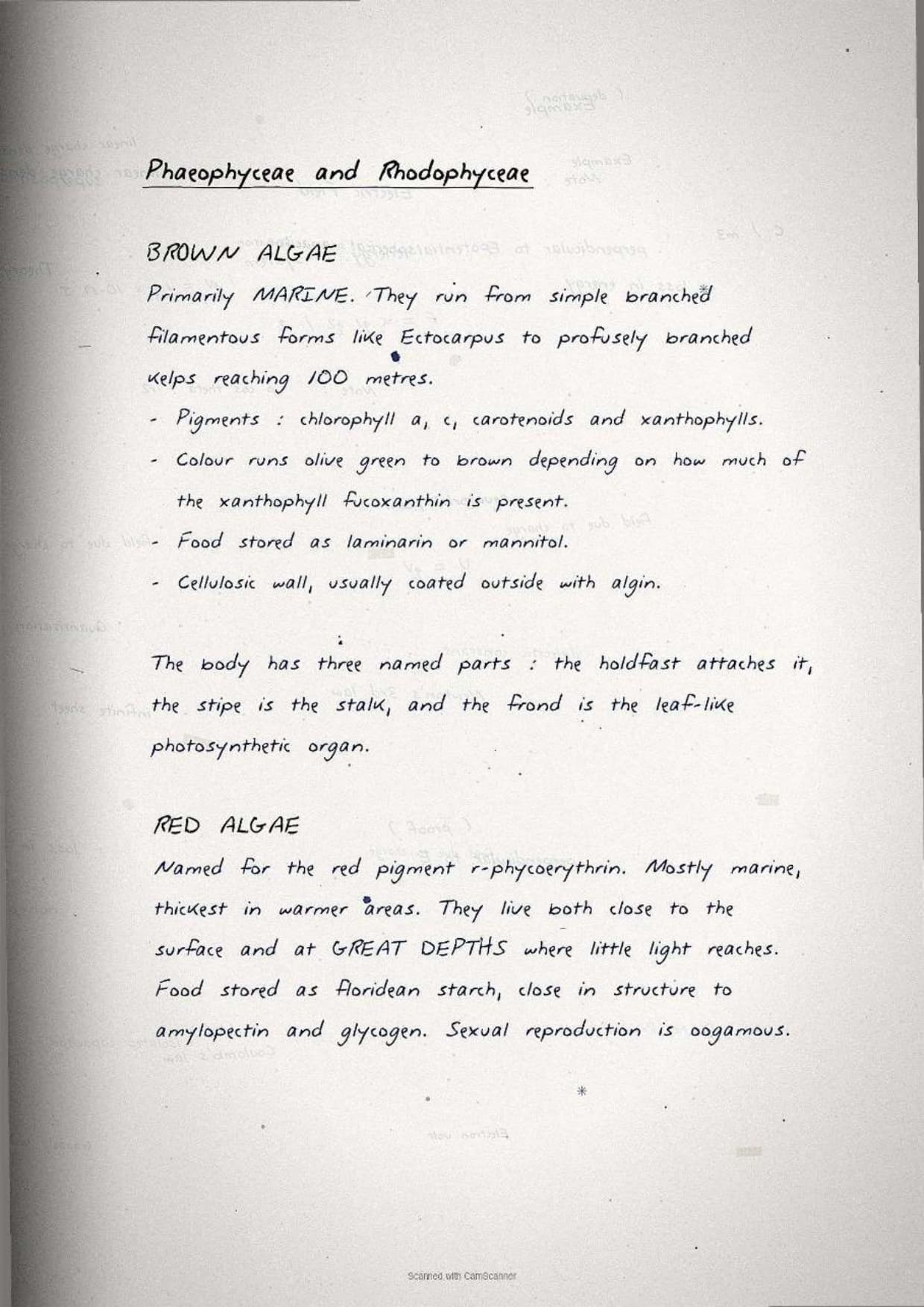
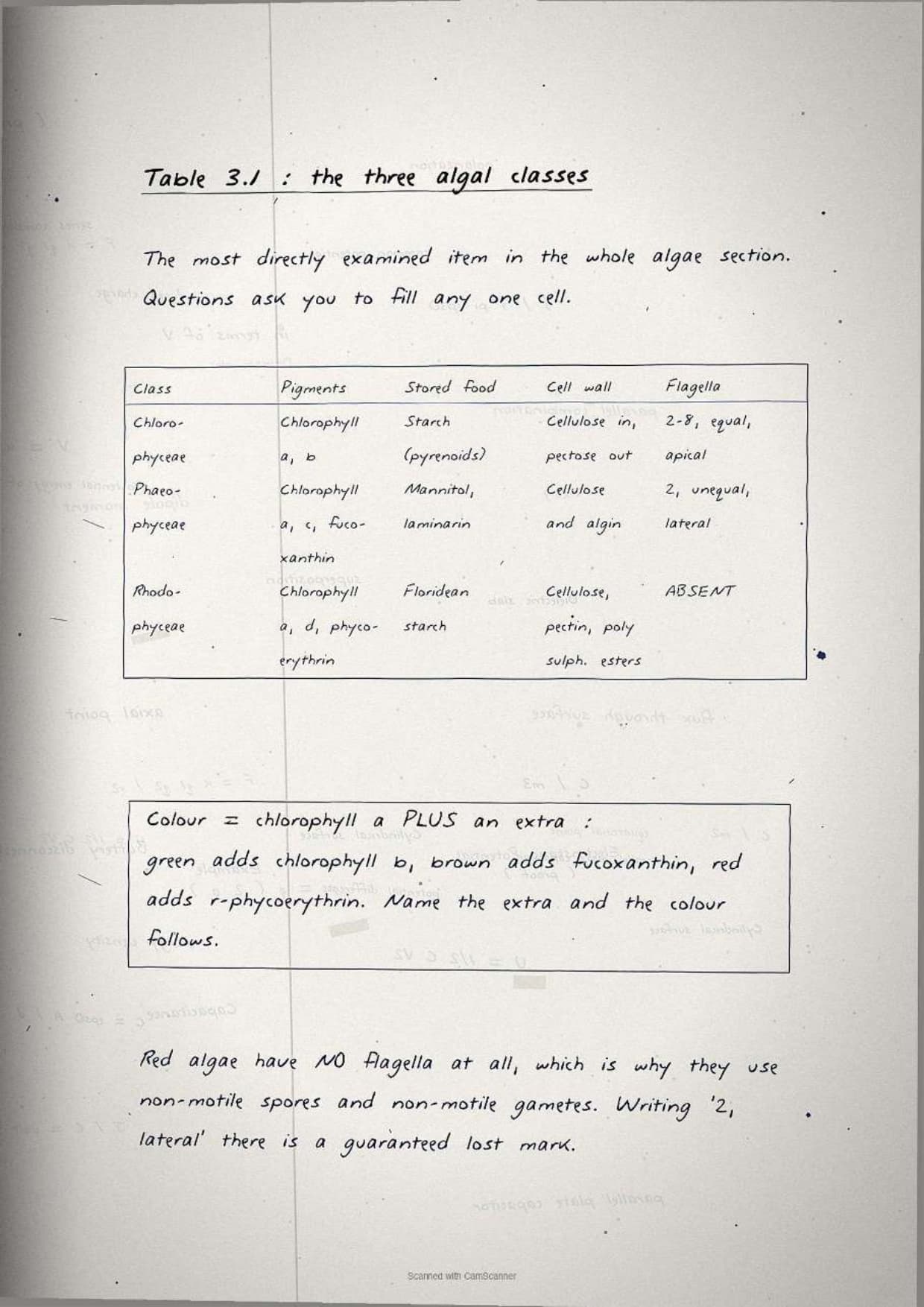
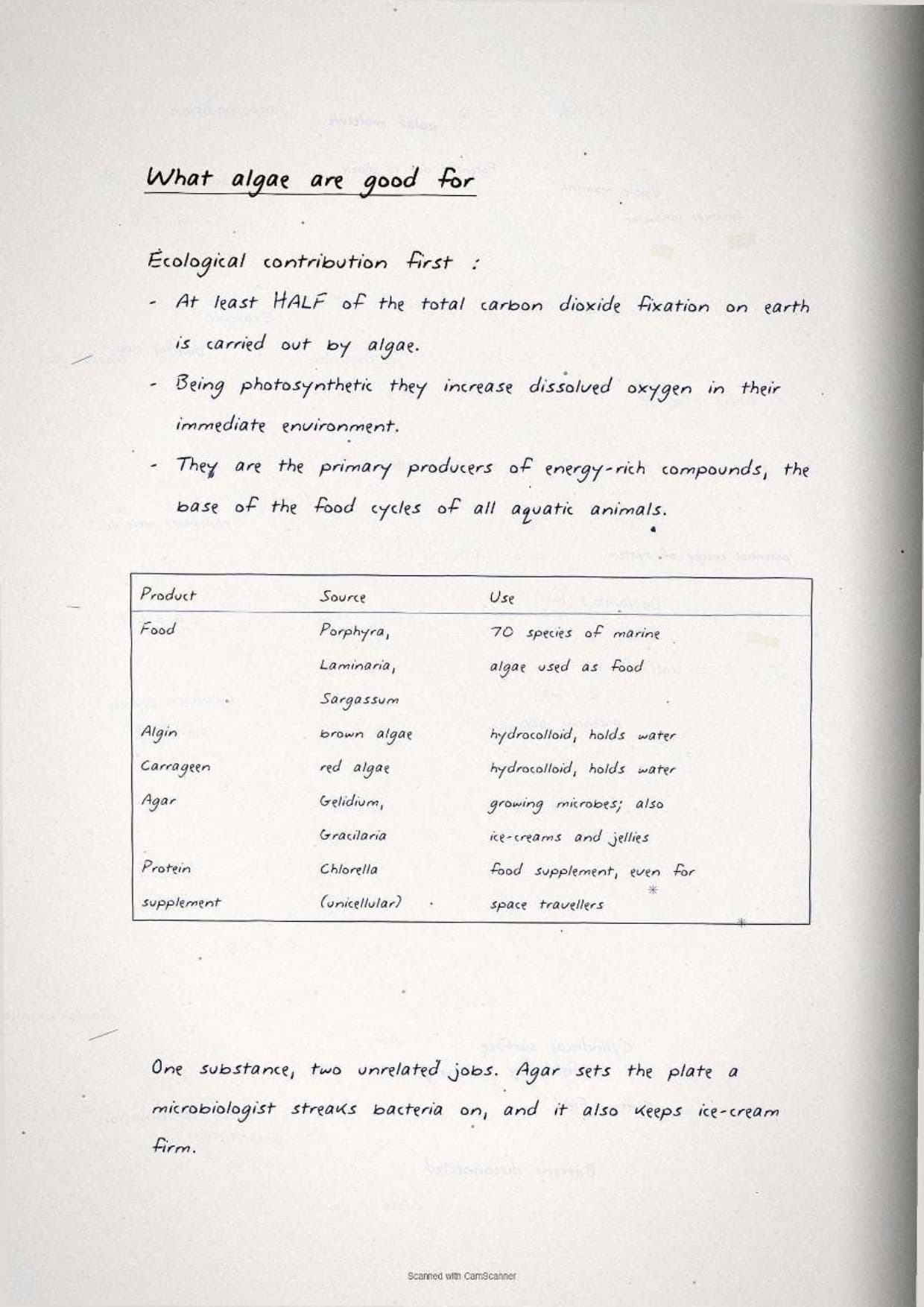
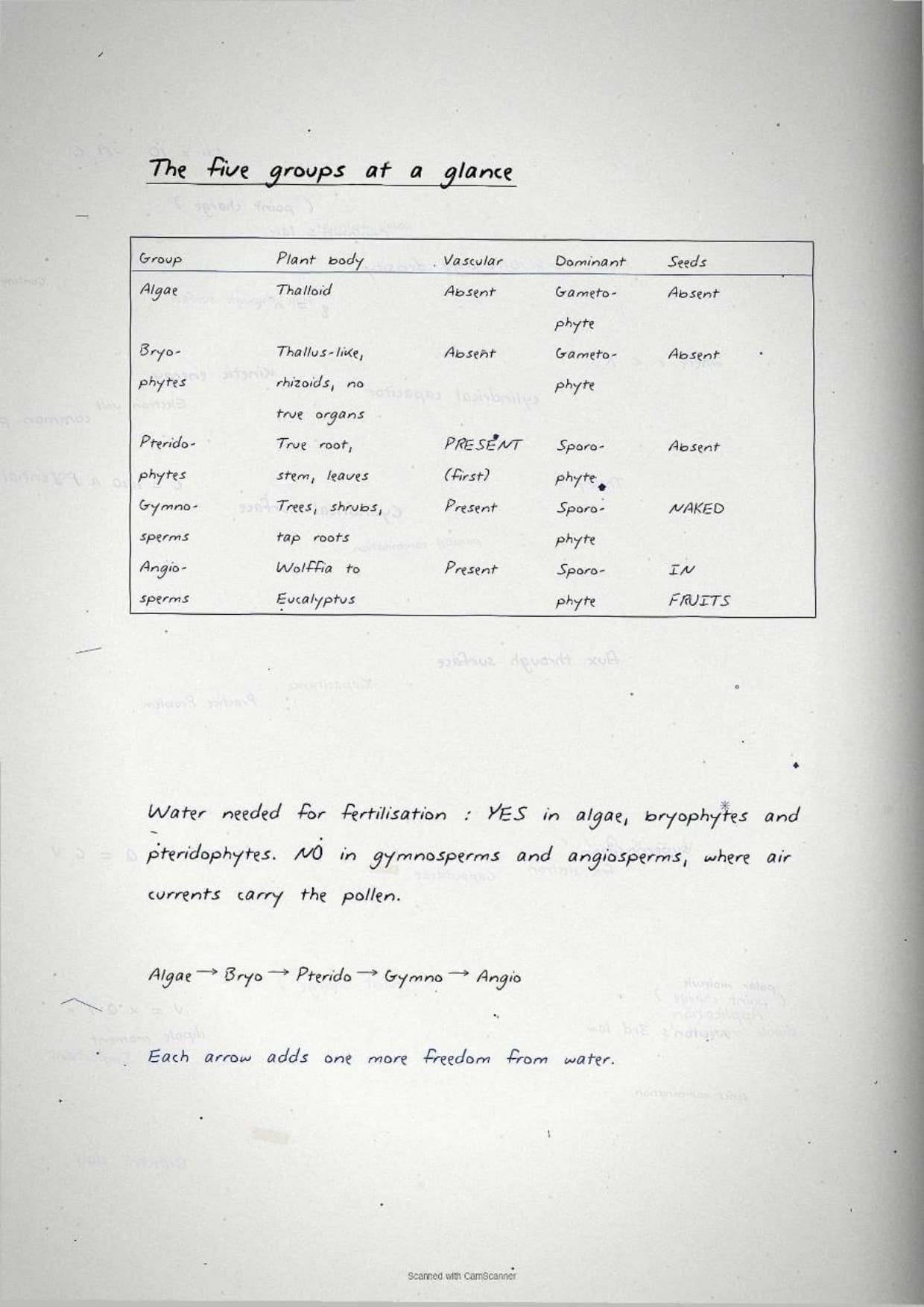
- Algae: general features, the three classes, reproduction and economic importance.
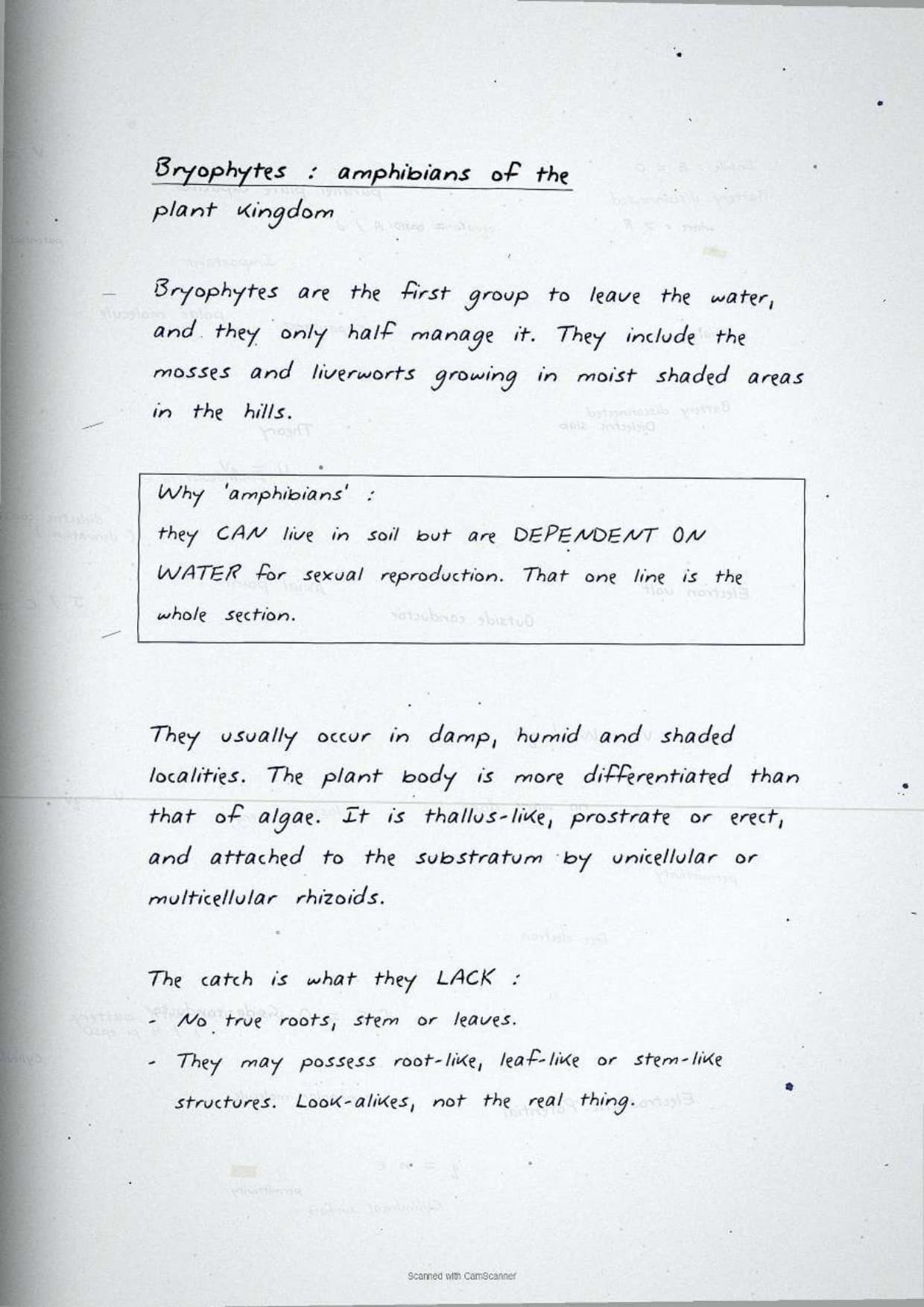
- Bryophytes: the amphibian habit, liverworts and mosses.
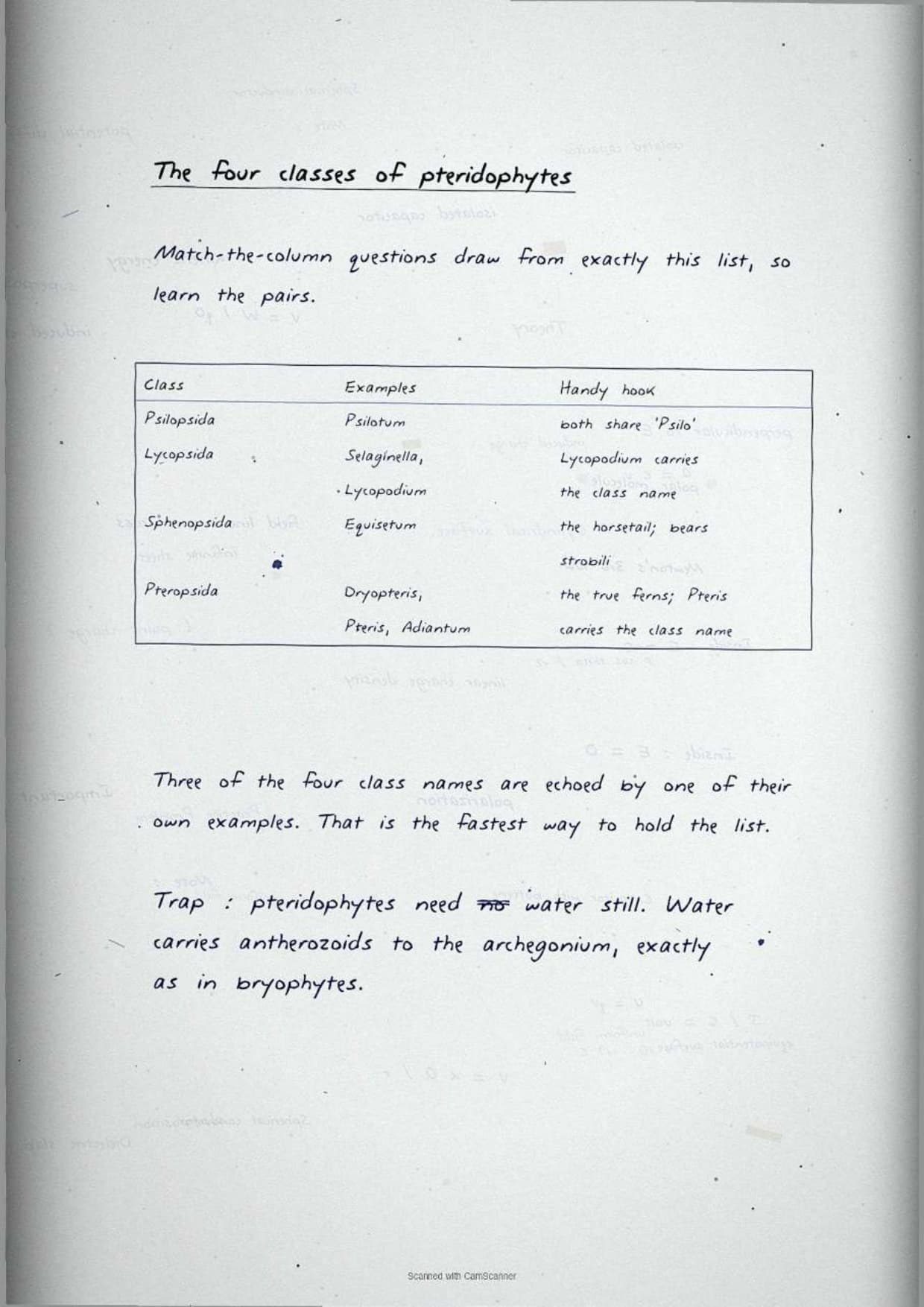
- Pteridophytes: sporophylls, homospory against heterospory, and the four classes.
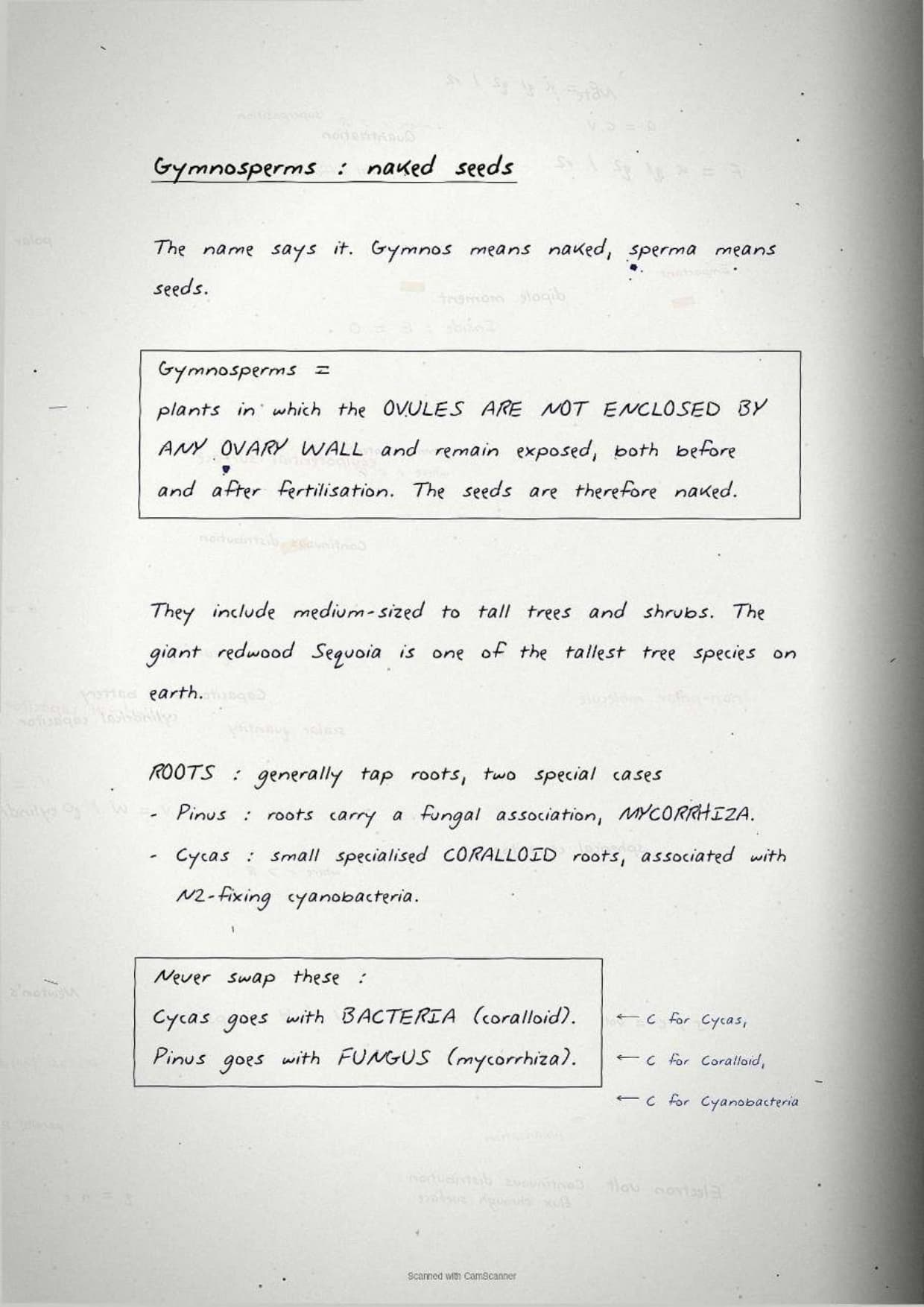
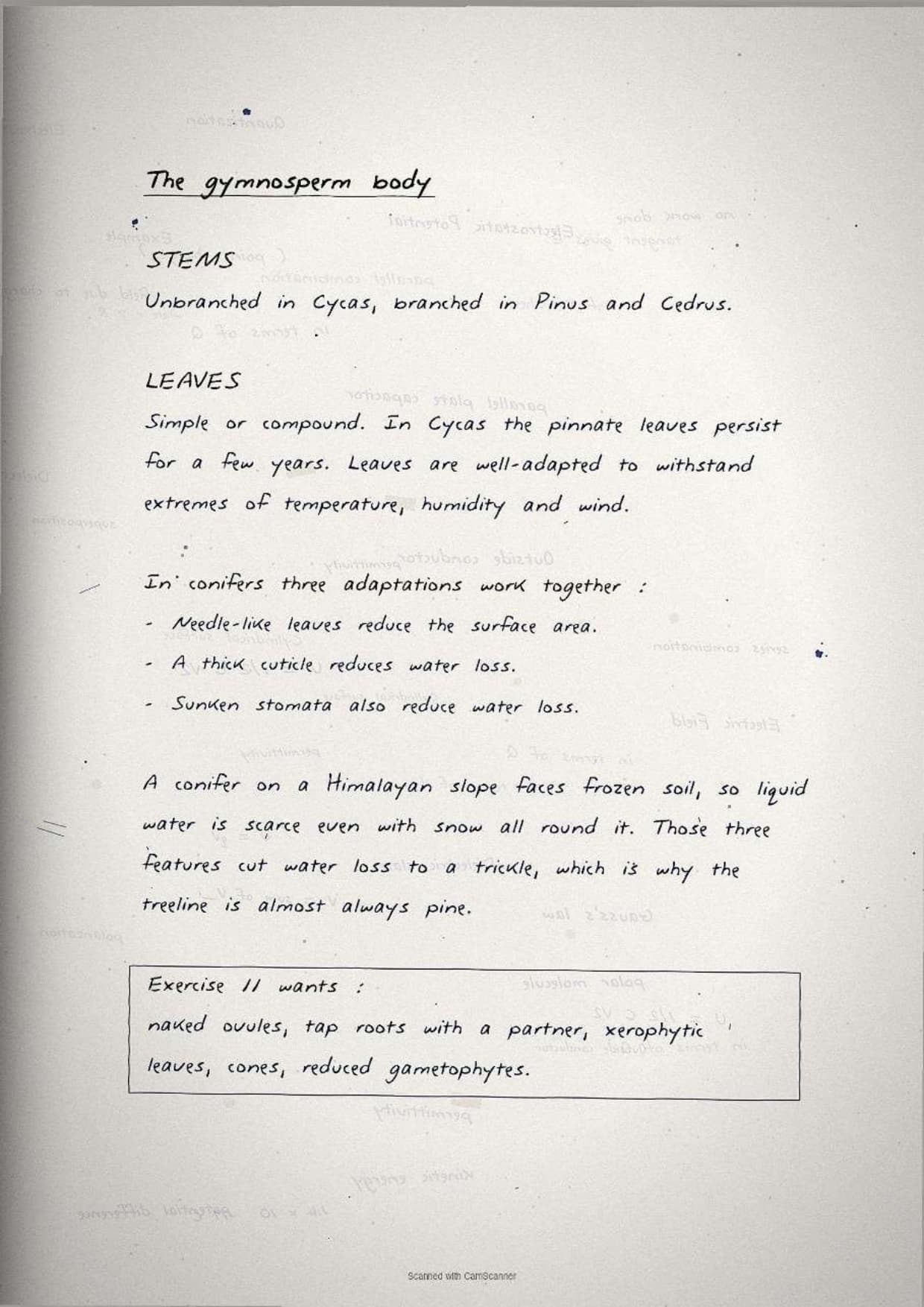
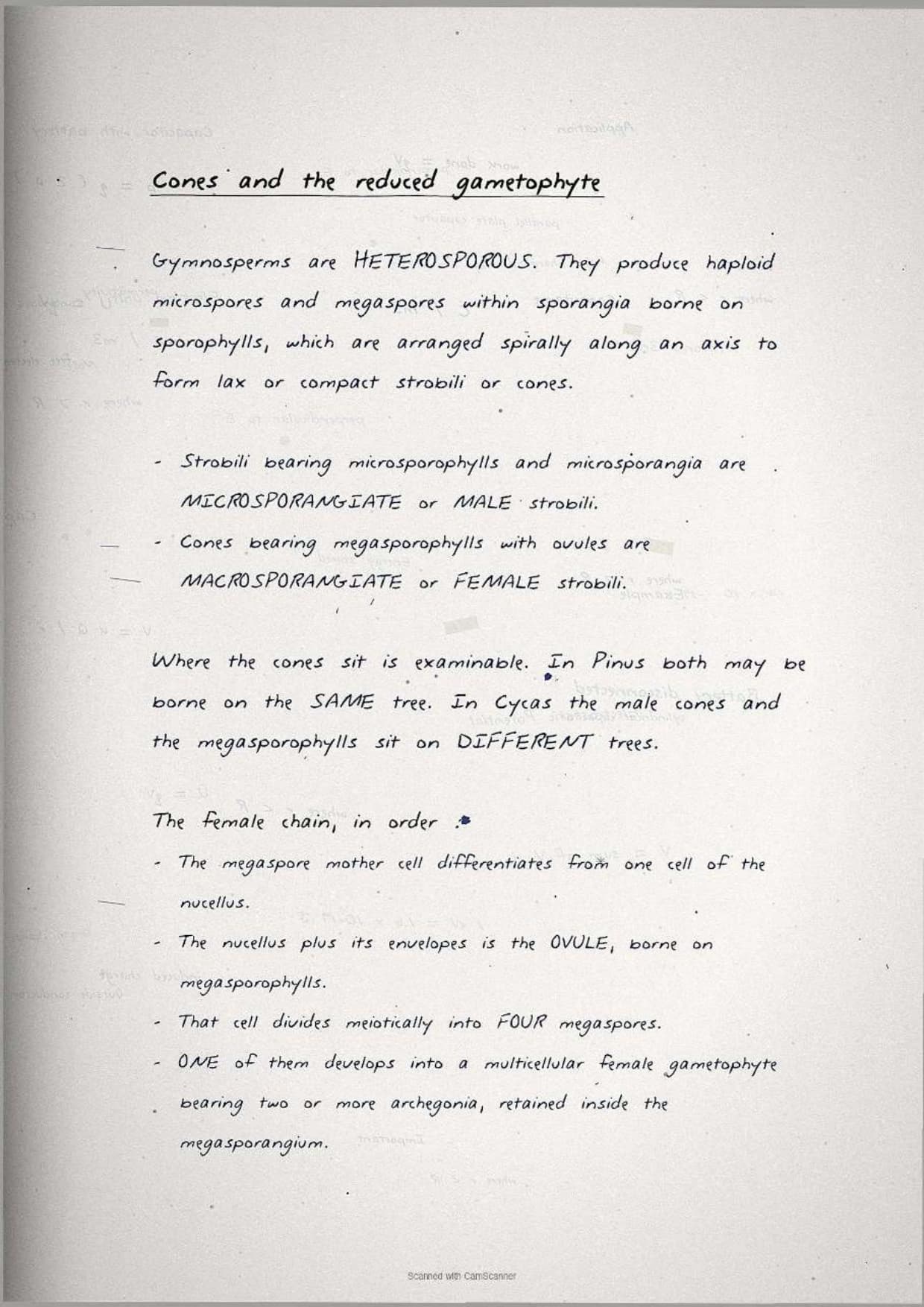
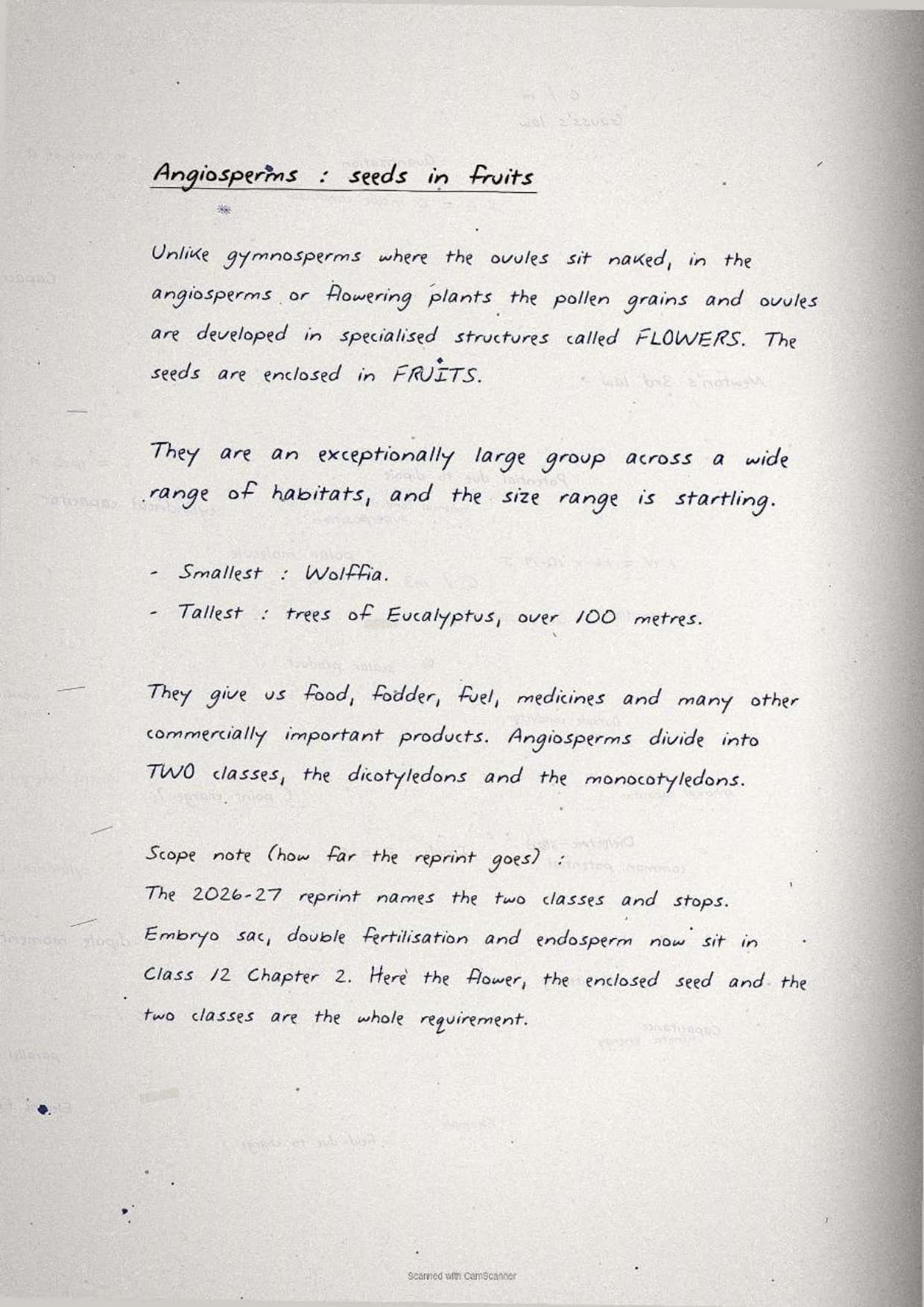
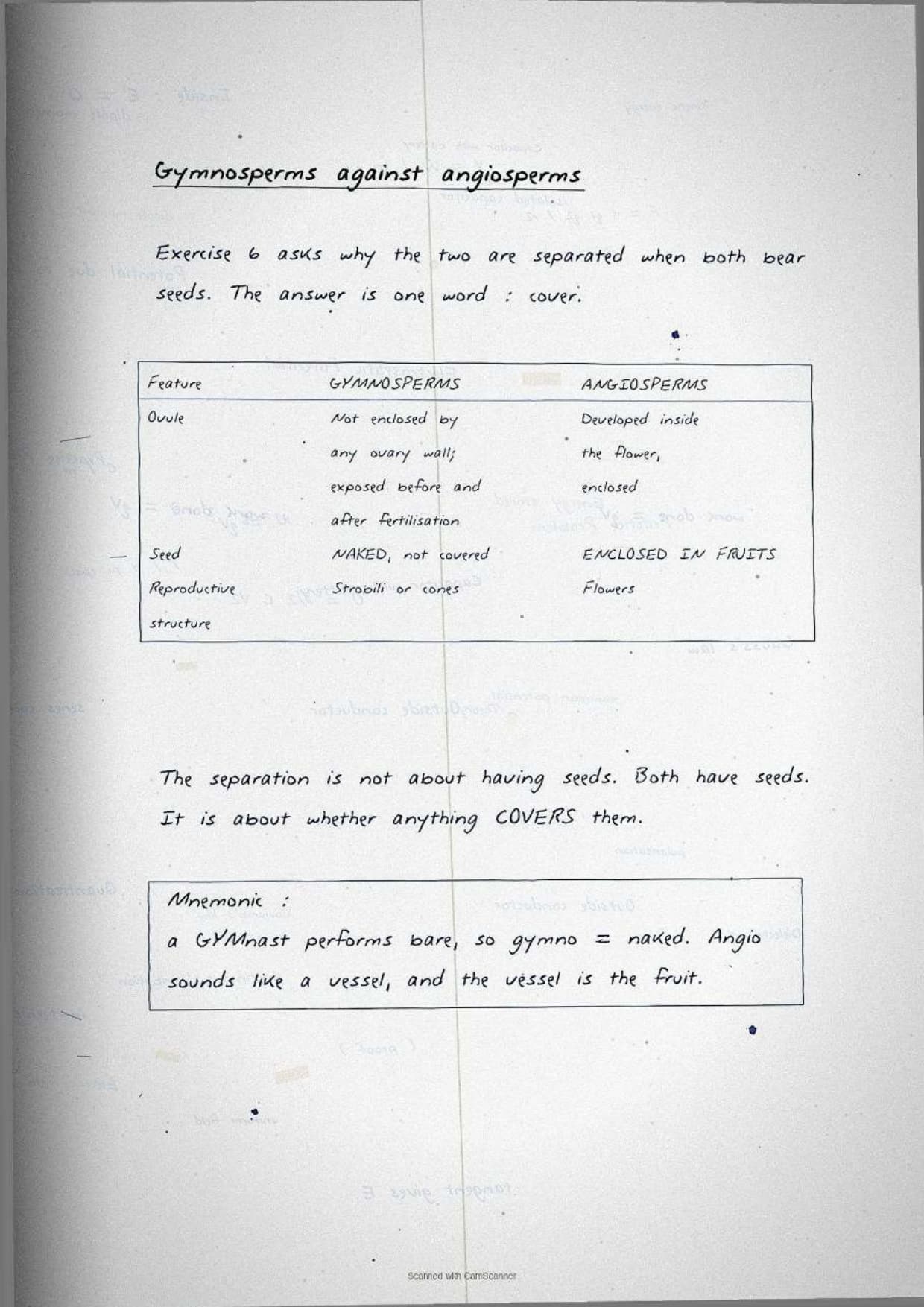
- Gymnosperms and angiosperms: naked seeds, cones, the reduced gametophyte, then seeds in fruits.
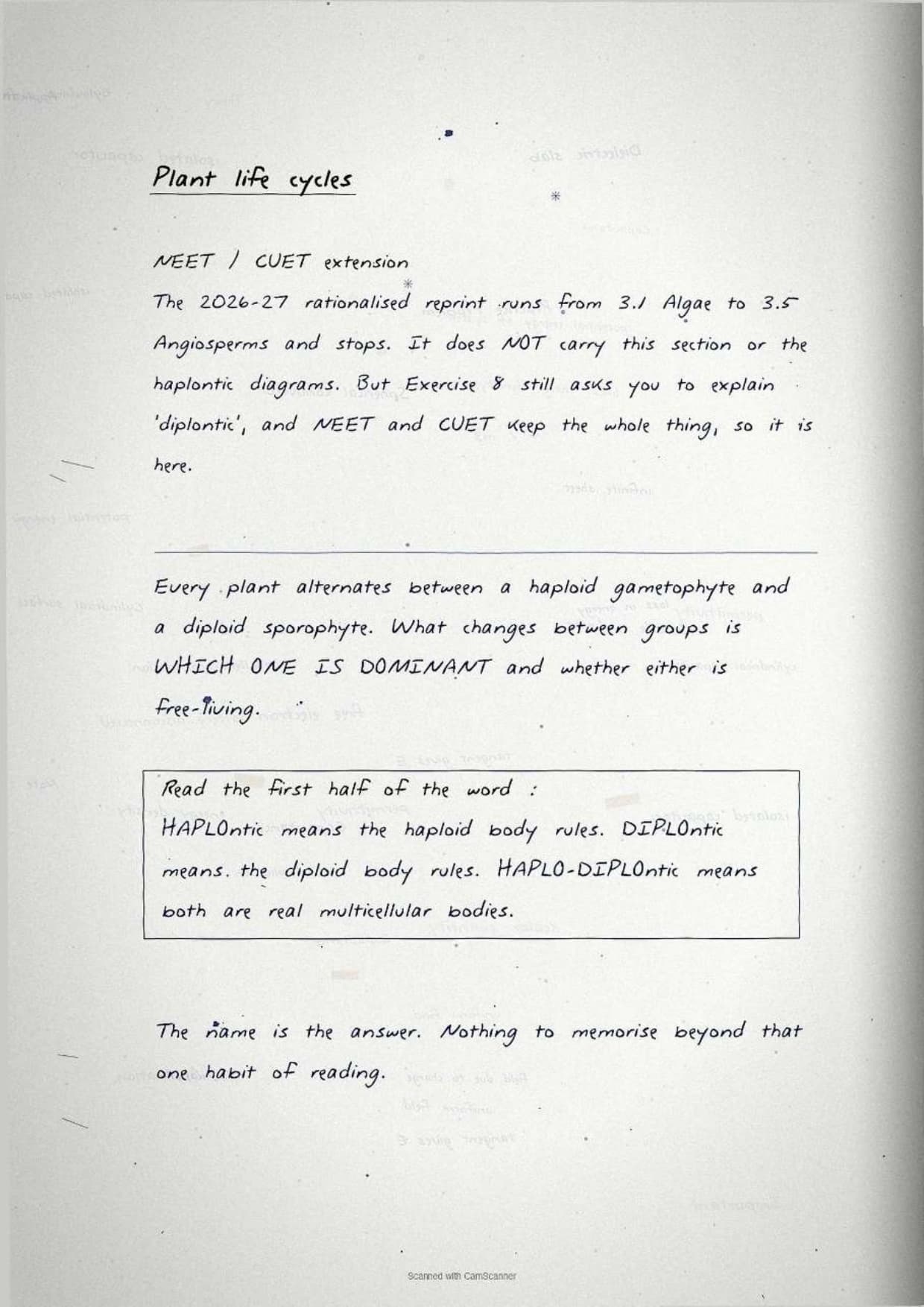
Inside these class 11 biology handwritten notes chapter 3 Plant Kingdom, plant life cycles and a little angiosperm embryology are marked as NEET and CUET extensions. The current 2026-27 syllabus moved them out, but both exams still ask for them.
Key Diagrams and Terms in the Plant Kingdom Notes
The boxed terms are what make these pages quick to revise. Each definition is written in NCERT wording with the trap noted beside it. The table below lists the boxes students return to most.
| Term | How the notes fix it |
|---|---|
| Algae | Chlorophyll-bearing, simple, thalloid, autotrophic, largely aquatic |
| Thalloid | A body not divided into true root, stem and leaf |
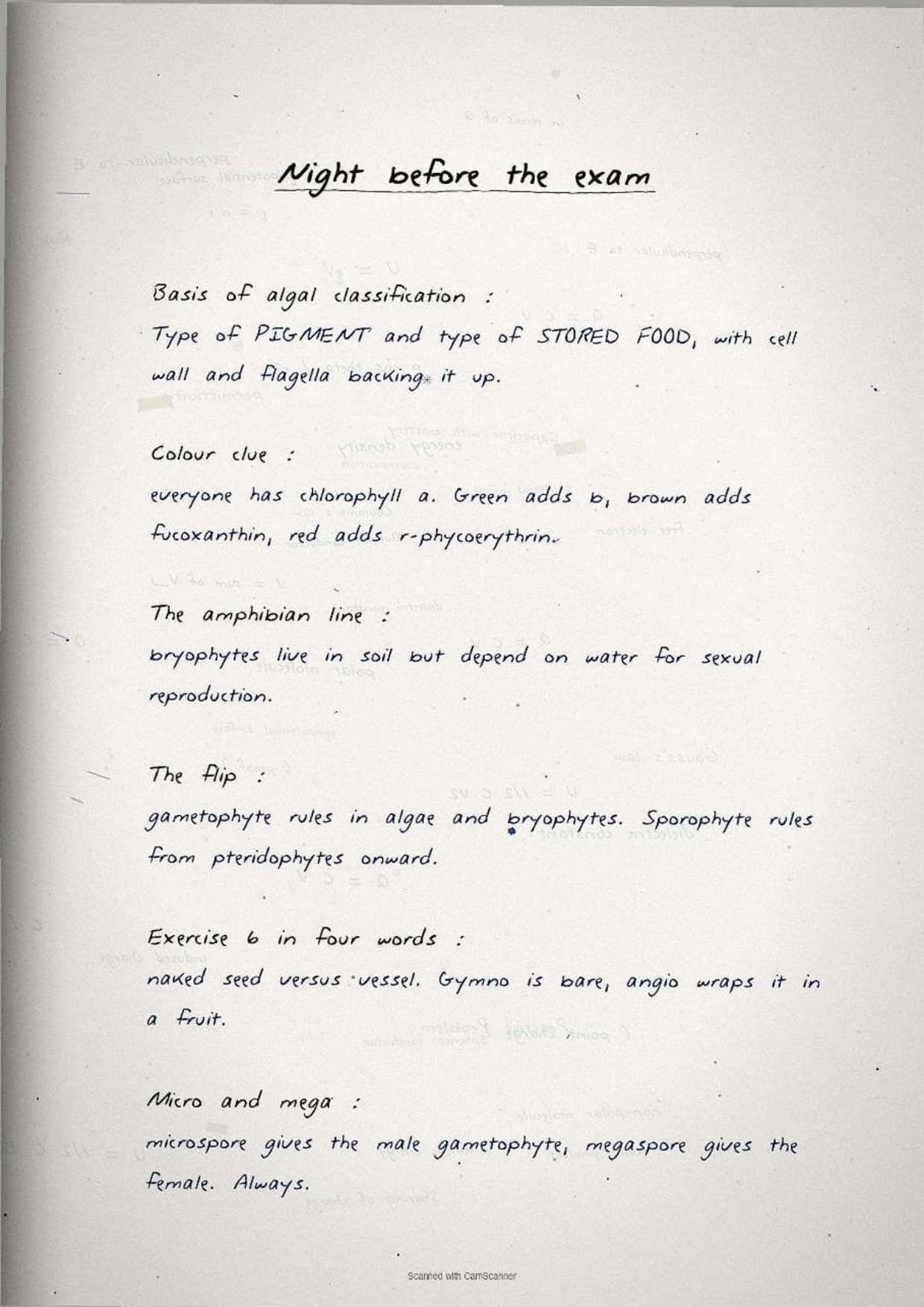
| Amphibian habit | Bryophytes live on soil but need water to fertilise |
| Heterospory | Two spore sizes; Selaginella and Salvinia |
| Cyanobacteria | Sit in Monera, not with the algae |
Colour clues are drawn alongside the algal classes: every alga has chlorophyll a, green adds b, brown adds fucoxanthin and red adds r-phycoerythrin. The bryophyte life-cycle sketch marks meiosis inside the sporophyte capsule, which is the exact point Exercise 2 tests.
How to Use These Handwritten Notes for Revision
Work the pages in three short passes. Read a group spread, cover the boxed definition and say it back, then redraw its life cycle from memory. That recall loop fixes the group names far faster than re-reading the textbook.
- Redraw the bryophyte and pteridophyte life cycles until the meiosis point lands in the right place.
- Read page 32, the mistakes-and-fixes table, the night before any test.
- Keep the class 11 biology handwritten notes chapter 3 Plant Kingdom open beside the NCERT Solutions while practising.
Around 50 minutes covers one full pass of all 34 pages, which makes them practical in the last week before an exam.
Student Feedback on the Plant Kingdom Handwritten Notes
Students rate the group-comparison pages as the part that saves the most time. The figures below come from a Collegedunia poll run before the 2026 boards.
- In a Collegedunia survey of 9,860 students, 71% said the hand-drawn life cycles were their most-used revision page.
- Most-confused pair before the poll: homospory against heterospory, named by about 4 in 10 students.
Source: 2026-27 Class 11 Biology student poll. Sample of 9,860 students from CBSE schools across 12 states.
Where to Use These Notes Alongside Other Resources
The class 11 biology handwritten notes chapter 3 Plant Kingdom work best next to the point-wise Solutions and the summary Notes for the same chapter. Revise from the notes first, then check your answers against the solutions.
| Resource | Best used for |
|---|---|
| Plant Kingdom NCERT Solutions | Step-by-step answers to every back-exercise question |
| Plant Kingdom Class 11 Notes | Quick chapter summary with all key terms in one place |
| Plant Kingdom Exemplar Solutions | Harder MCQ and long-answer practice for NEET |
| Plant Kingdom NCERT Book PDF | The original chapter text and exercises |
All Class 11 Biology Handwritten Notes by Chapter
The table links the handwritten notes for every Class 11 Biology chapter, so students can move across the course in one click. Plant Kingdom is highlighted.
| Chapter | Handwritten Notes |
|---|---|
| Chapter 1 | The Living World |
| Chapter 2 | Biological Classification |
| Chapter 3 | Plant Kingdom |
| Chapter 4 | Animal Kingdom |
| Chapter 5 | Morphology of Flowering Plants |
| Chapter 6 | Anatomy of Flowering Plants |
| Chapter 7 | Structural Organisation in Animals |
| Chapter 8 | Cell The Unit of Life |
| Chapter 9 | Biomolecules |
| Chapter 10 | Cell Cycle and Cell Division |
| Chapter 11 | Photosynthesis in Higher Plants |
| Chapter 12 | Respiration in Plants |
| Chapter 13 | Plant Growth and Development |
| Chapter 14 | Breathing and Exchange of Gases |
| Chapter 15 | Body Fluids and Circulation |
| Chapter 16 | Excretory Products and their Elimination |
| Chapter 17 | Locomotion and Movement |
| Chapter 18 | Neural Control and Coordination |
| Chapter 19 | Chemical Coordination and Integration |
FAQs on Plant Kingdom Handwritten Notes
Ques. Are these class 11 biology handwritten notes chapter 3 Plant Kingdom free to download?
Ans. Yes. All 34 pages are free to download as a PDF from this page. They follow the 2026-27 NCERT and cover the full chapter in clear handwriting, so students can revise straight from them.
Ques. What topics do these handwritten notes cover?
Ans. They cover the classification systems, algae, bryophytes, pteridophytes, gymnosperms and angiosperms. Each group gets its own spread with boxed definitions, a hand-drawn life cycle and the economic importance points that Boards ask for.
Ques. Why are cyanobacteria not counted as algae here?
Ans. Blue-green algae is an old habit of naming. Cyanobacteria have no true nucleus, so they sit in Monera. The notes flag this on page 1 because listing them under algae is the most common error in this chapter.
Ques. Do the notes cover plant life cycles even though they were removed?
Ans. Yes. The 2026-27 reprint stops at angiosperms, but Exercise 8 still asks students to explain diplontic, and NEET and CUET keep the whole topic. The haplontic, diplontic and haplo-diplontic pages are marked as an extension.
Ques. How long do these notes take to revise?
Ans. About 50 minutes for one full pass of the 34 pages. Read each group spread, recall the boxed definition, then redraw the life cycle before moving to the next group.



Comments