




Photosynthesis carries 4 to 5 marks in the Class 11 Biology paper, and NEET picks 2 to 3 questions from it every year. These class 11 biology handwritten notes chapter 11 Photosynthesis in Higher Plants hold all 31 pages of that syllabus in one revision file, boxed and colour-coded for fast recall.
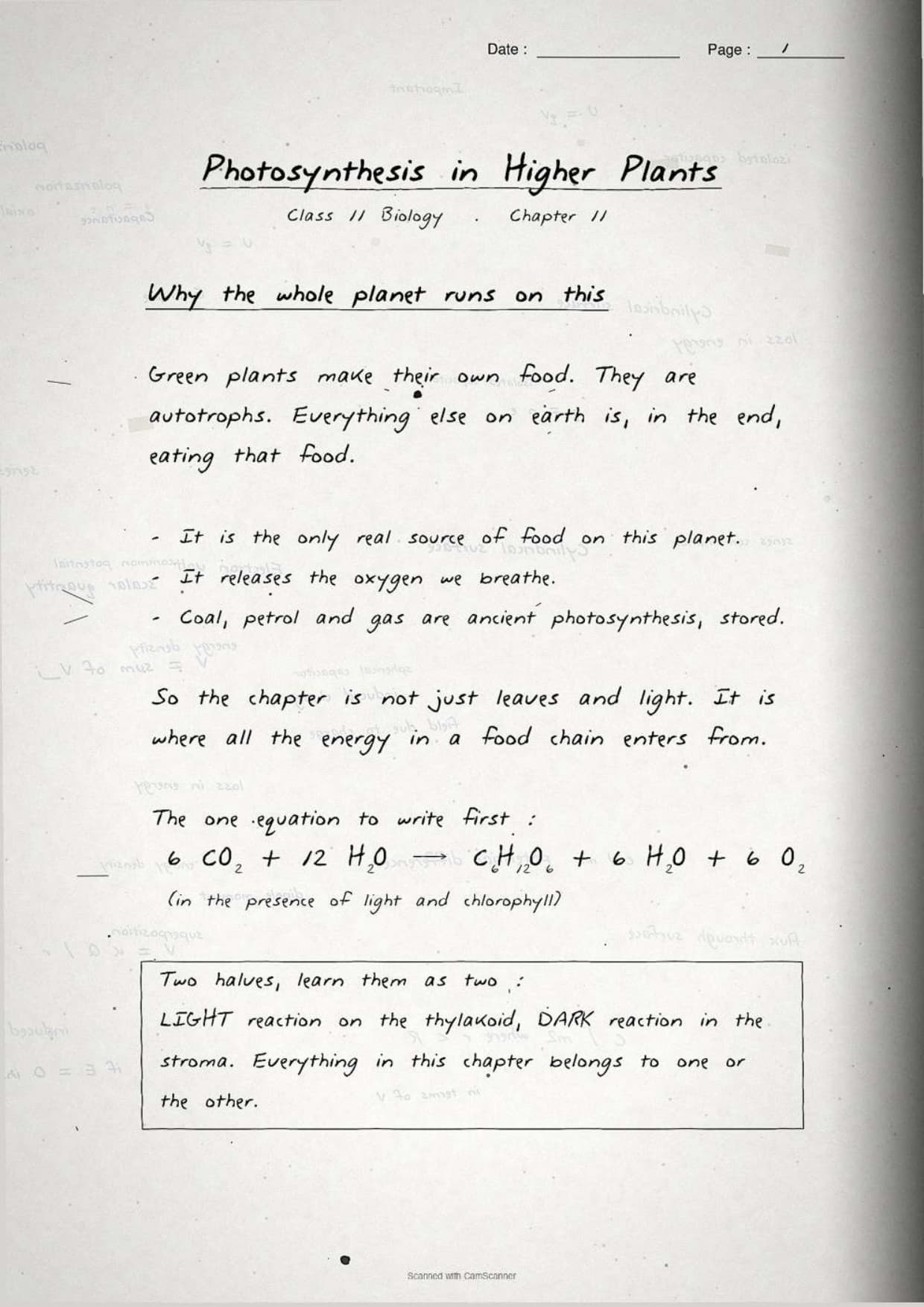
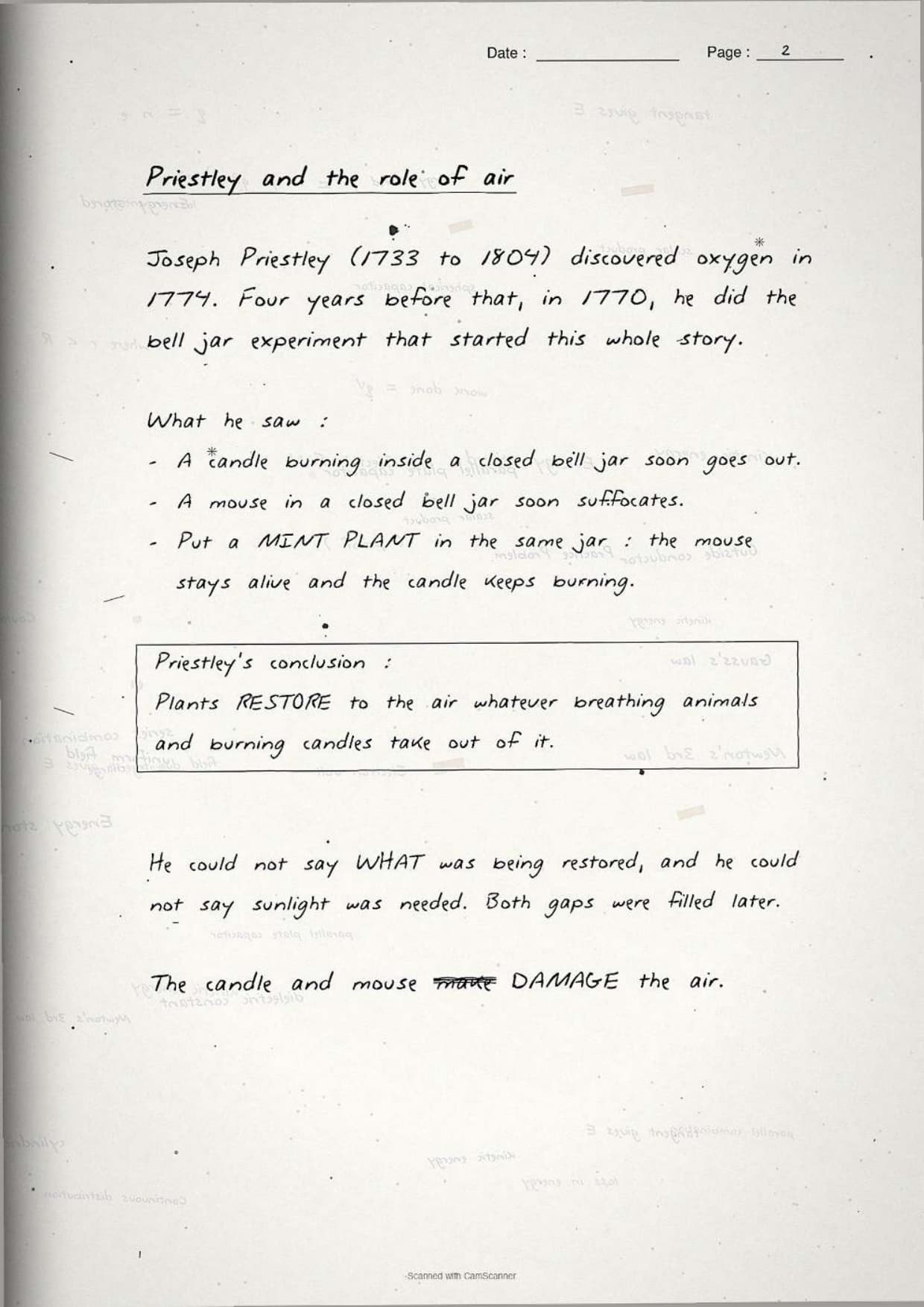
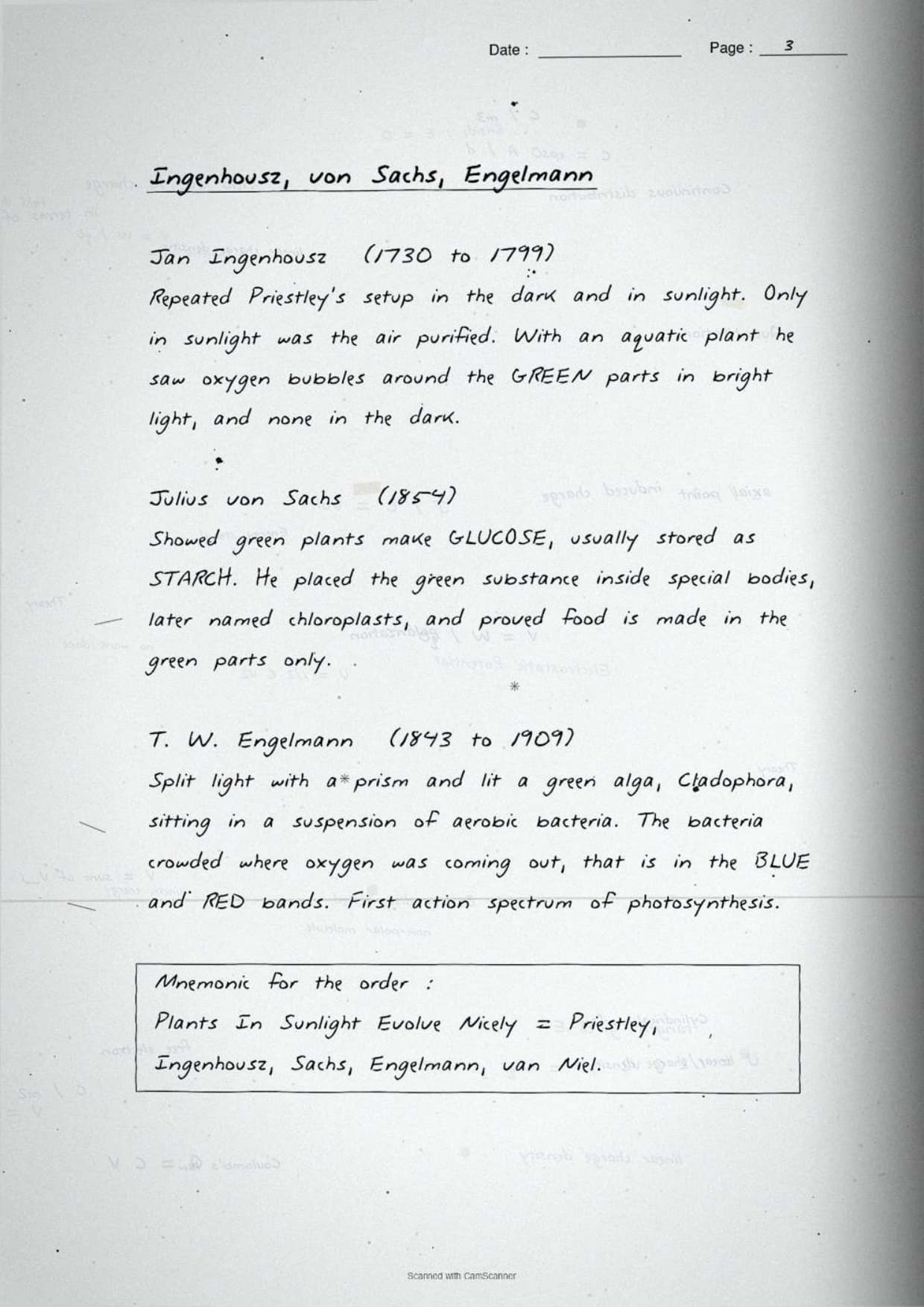
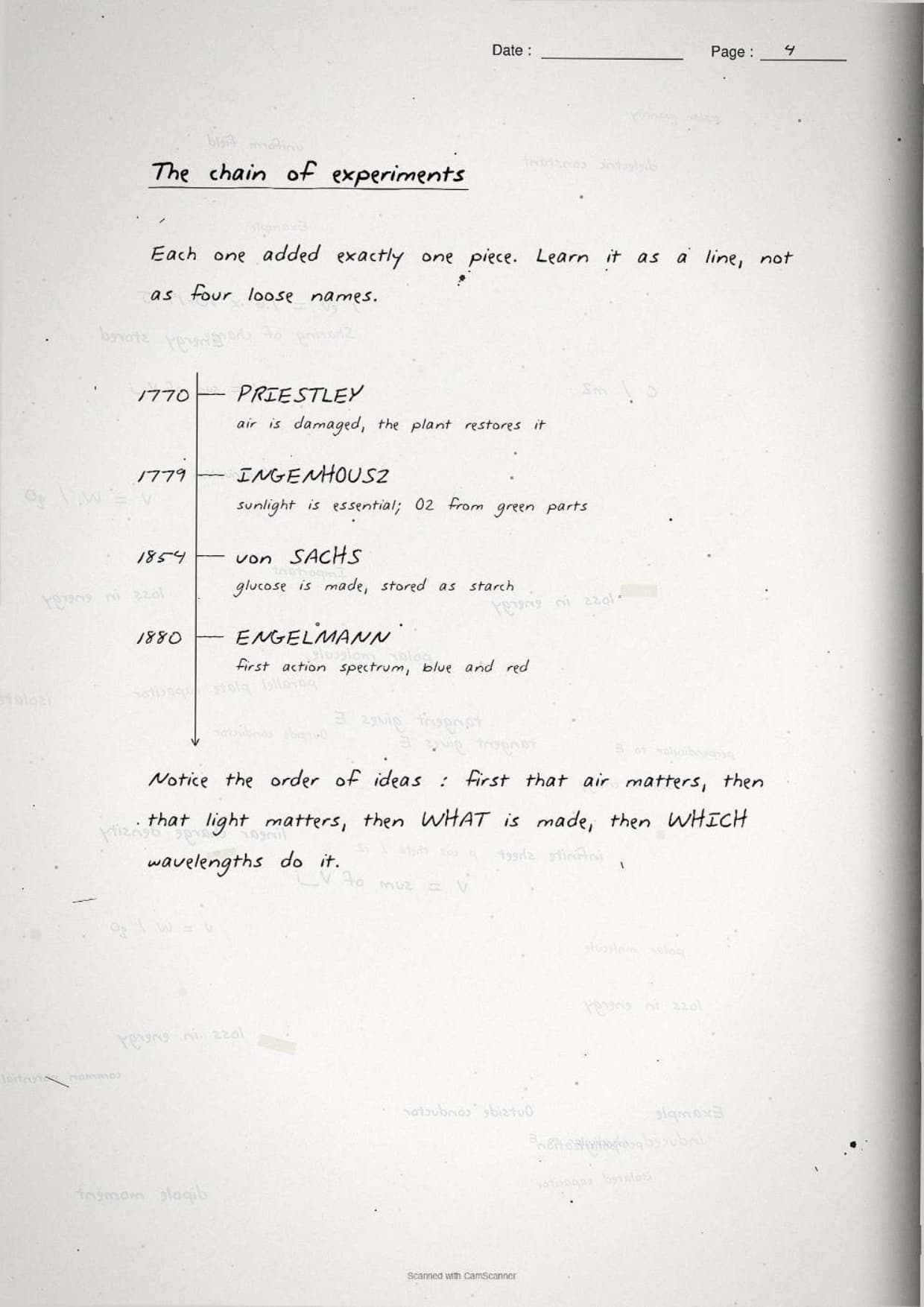
This chapter splits cleanly into two halves, and every question belongs to one of them.
- Hand-drawn Z-scheme and Calvin wheel, the two diagrams asked most often.
- Boxed numbers for 3 ATP and 2 NADPH per CO2, P680, P700 and the C3 vs C4 table.
- Pairs with the NCERT Solutions, Notes and Exemplar Solutions linked lower on this page.
What Photosynthesis in Higher Plants Handwritten Notes Cover
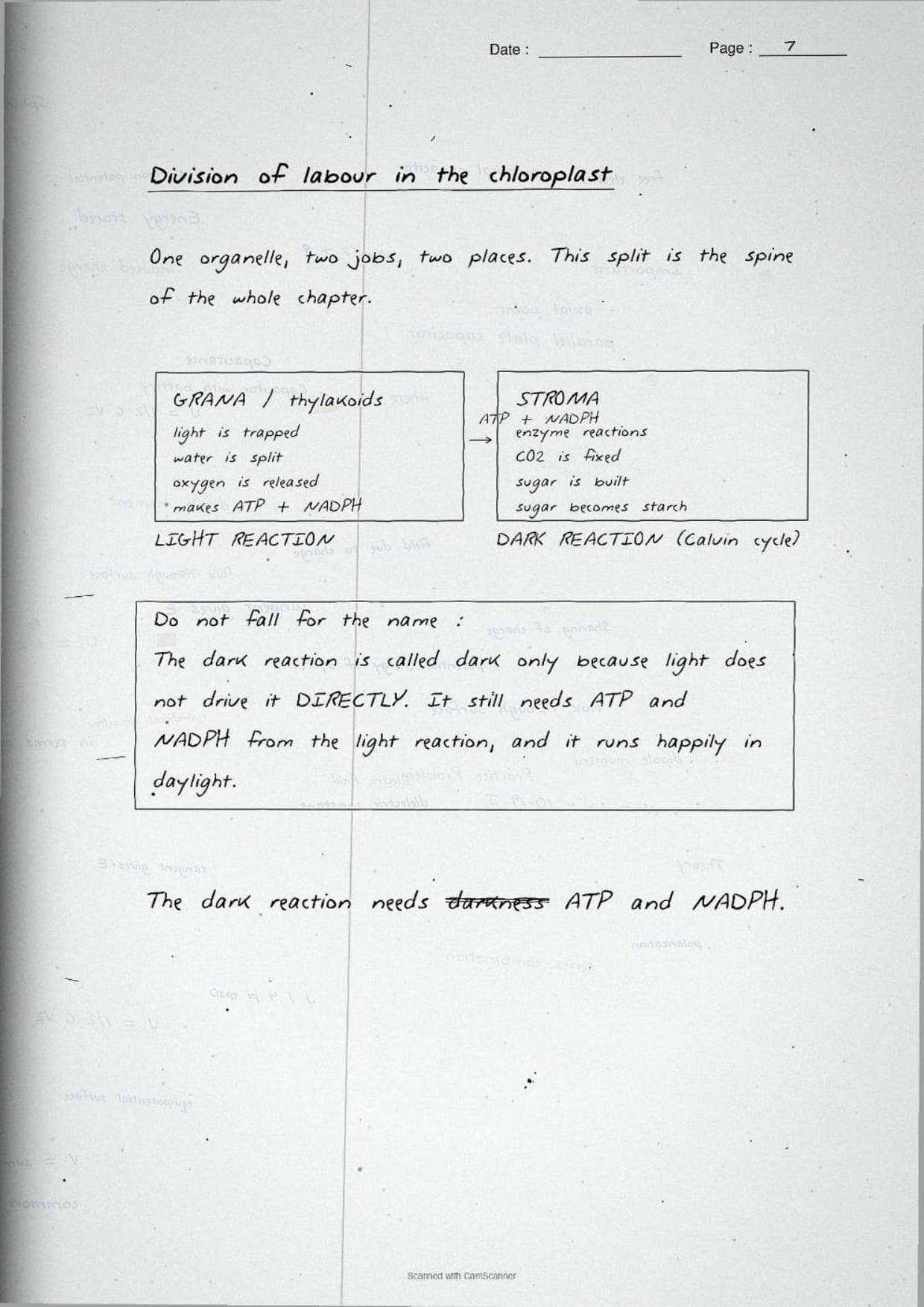
The 31 pages follow the NCERT order. Page 7 sets the frame students keep coming back to: the light reaction on the thylakoid, the dark reaction in the stroma. New sub-topics are written in red and every definition sits in a box.
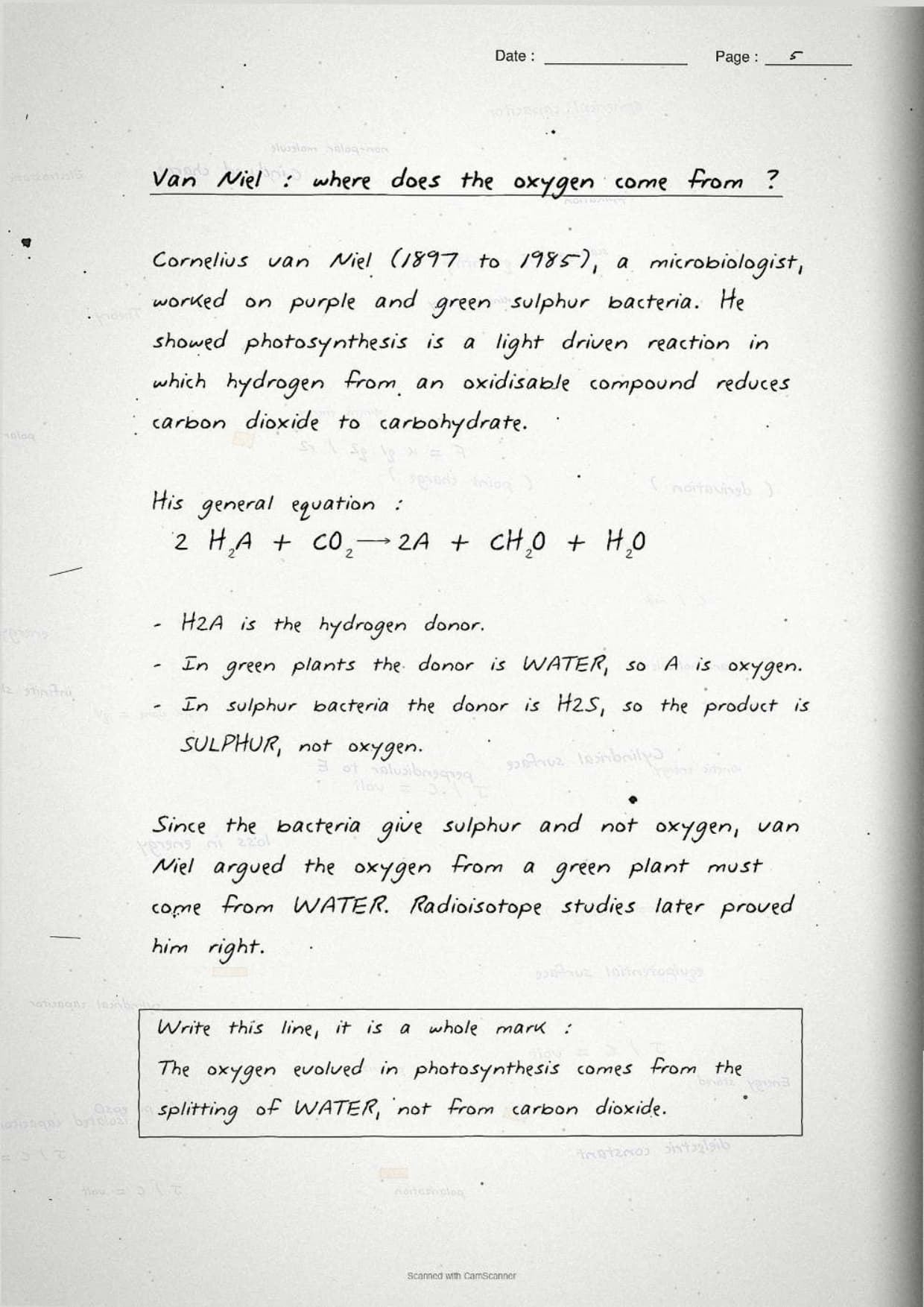
- Early experiments: Priestley 1770, Ingenhousz 1779, von Sachs 1854, Engelmann 1880 and van Niel, drawn as one dated timeline.
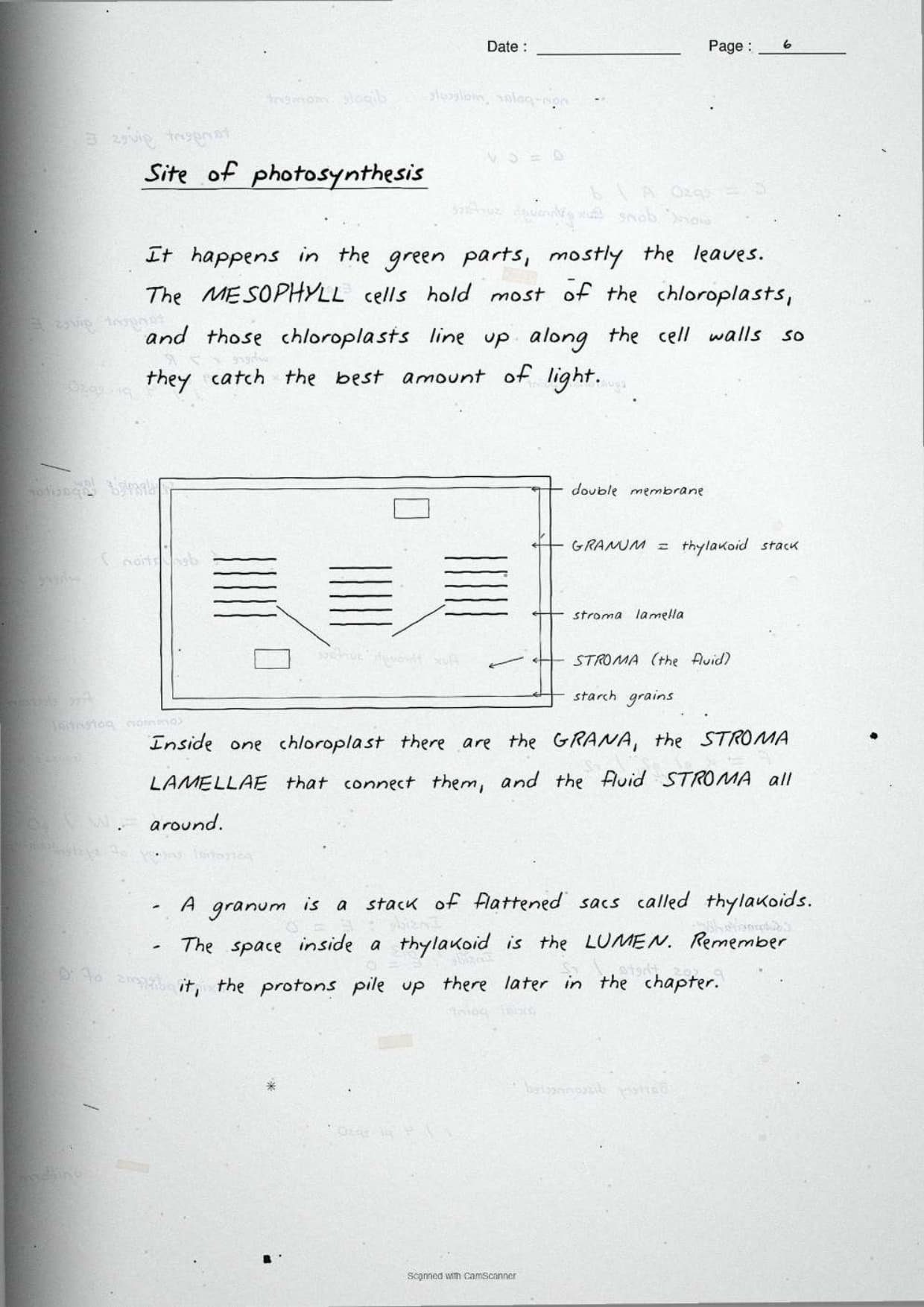
- Chloroplast: grana, stroma lamellae, thylakoid lumen and stroma, all labelled on one sketch.
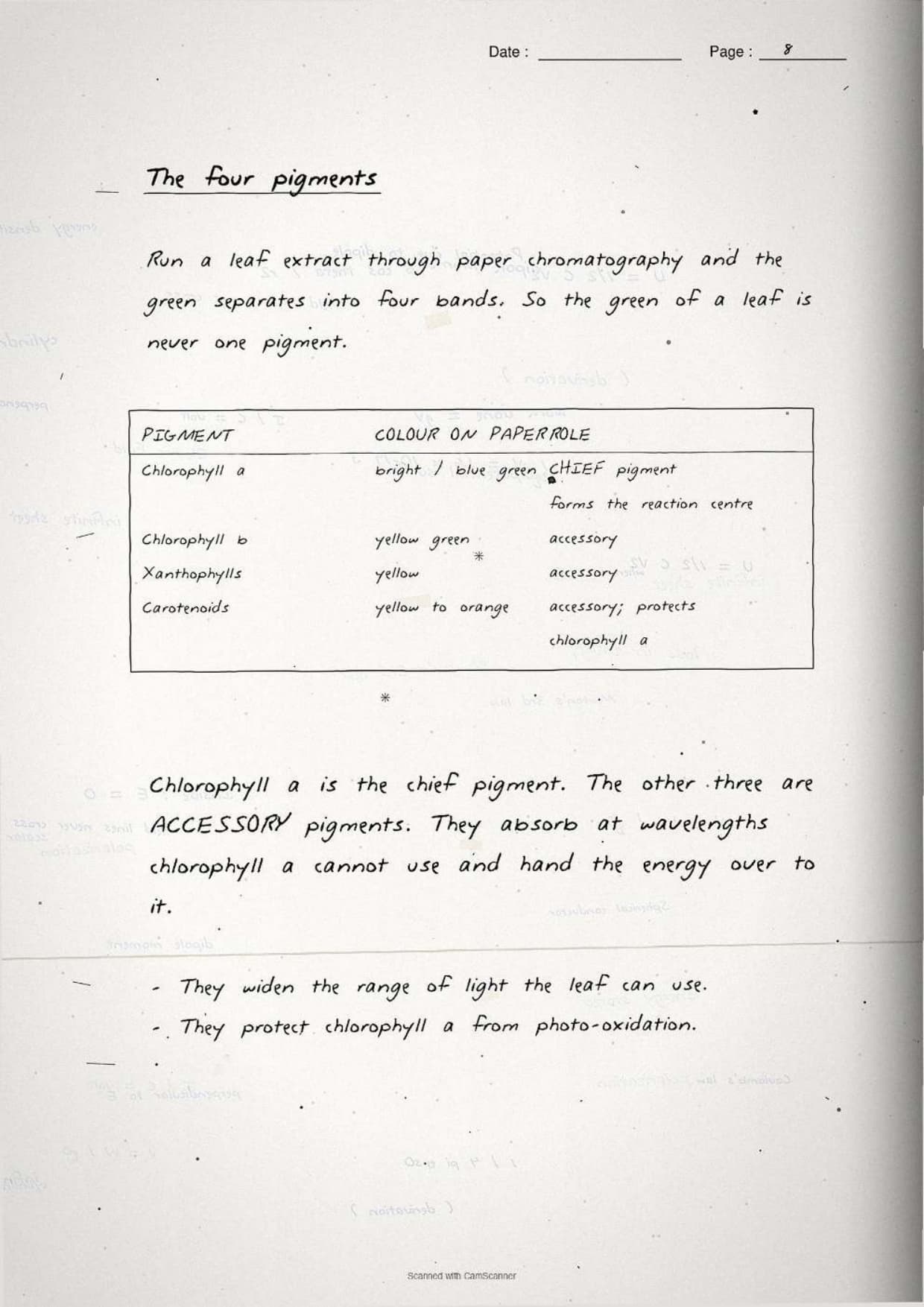
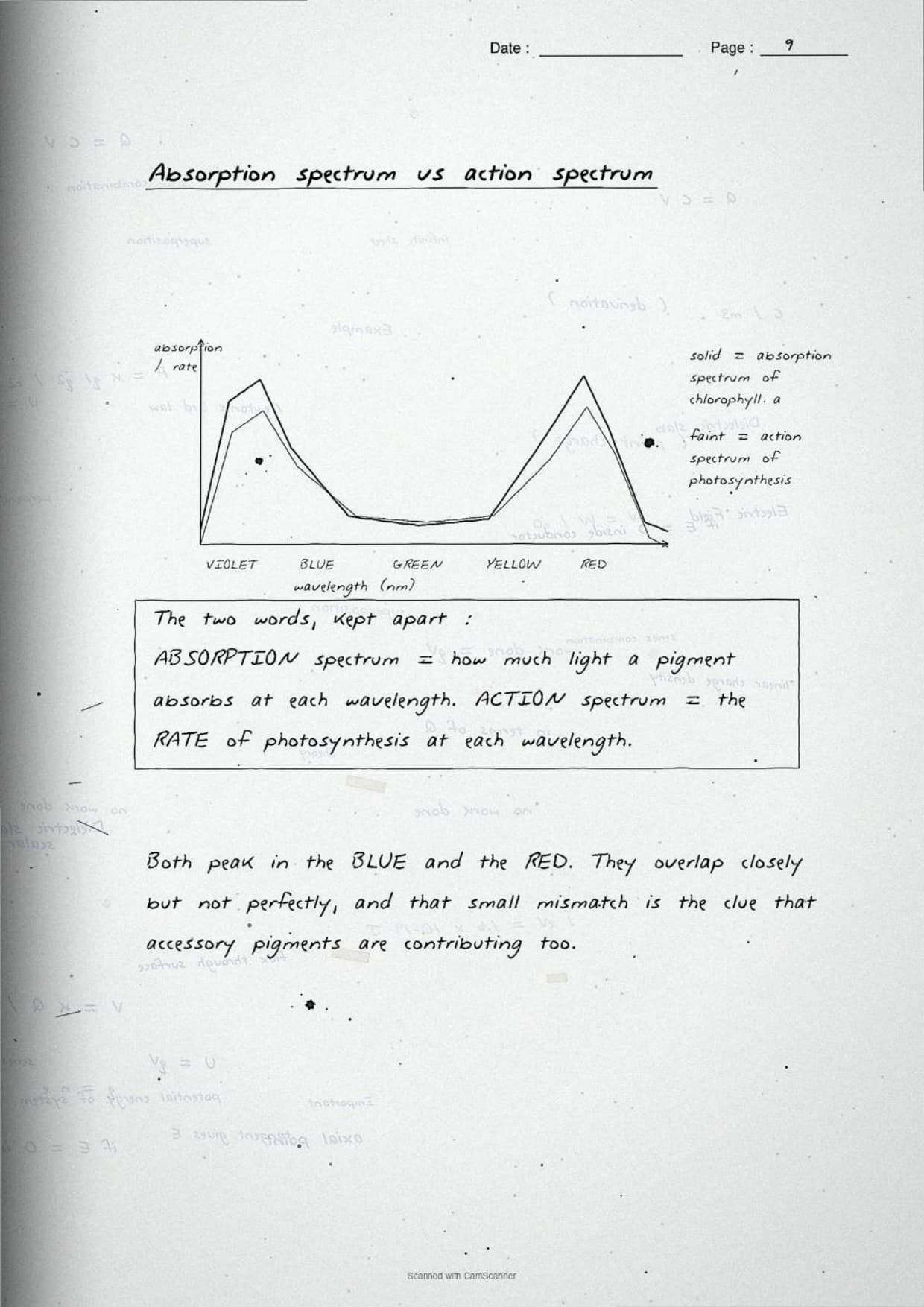
- Pigments: the four chromatography bands, plus absorption spectrum against action spectrum on a single graph.
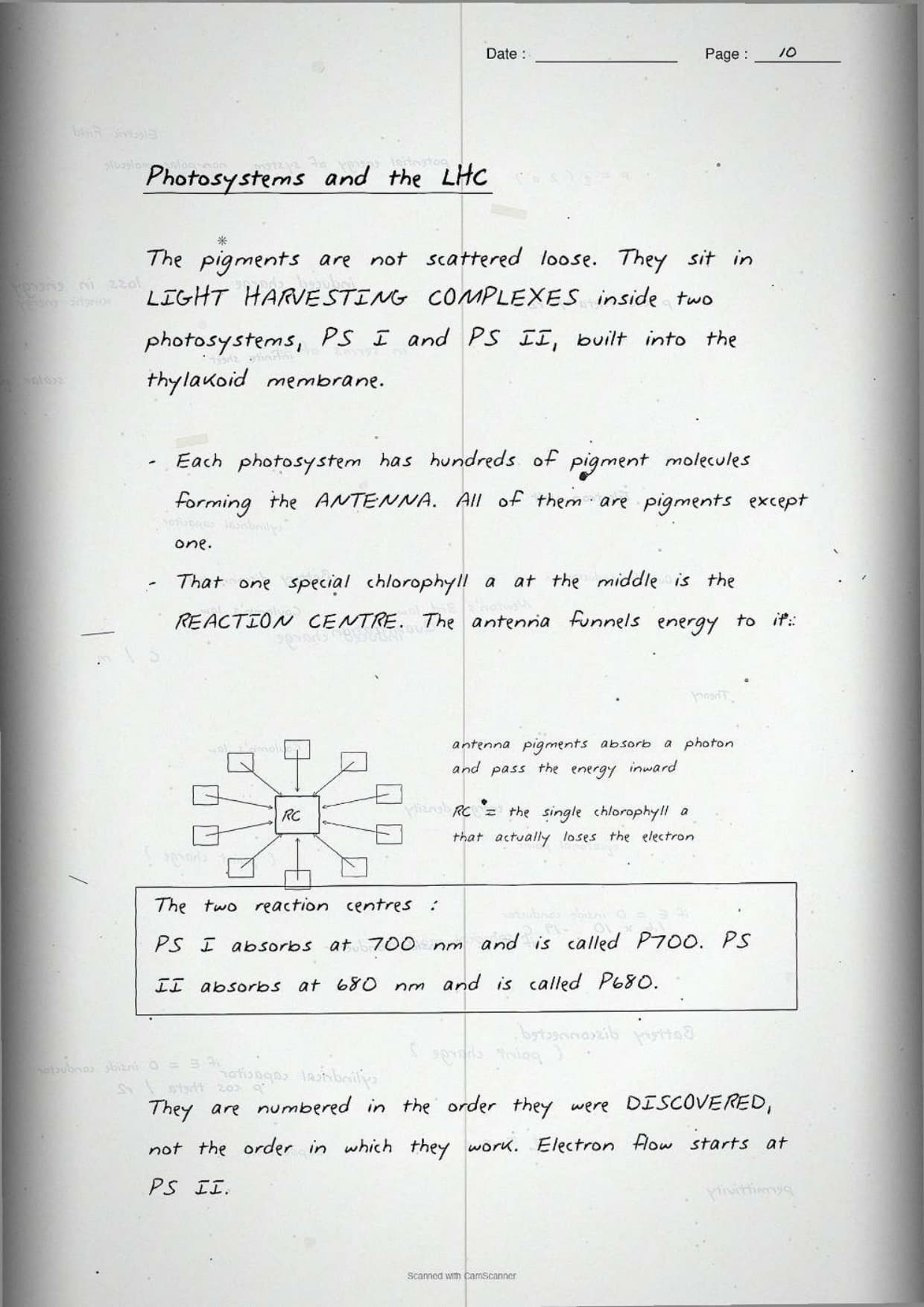
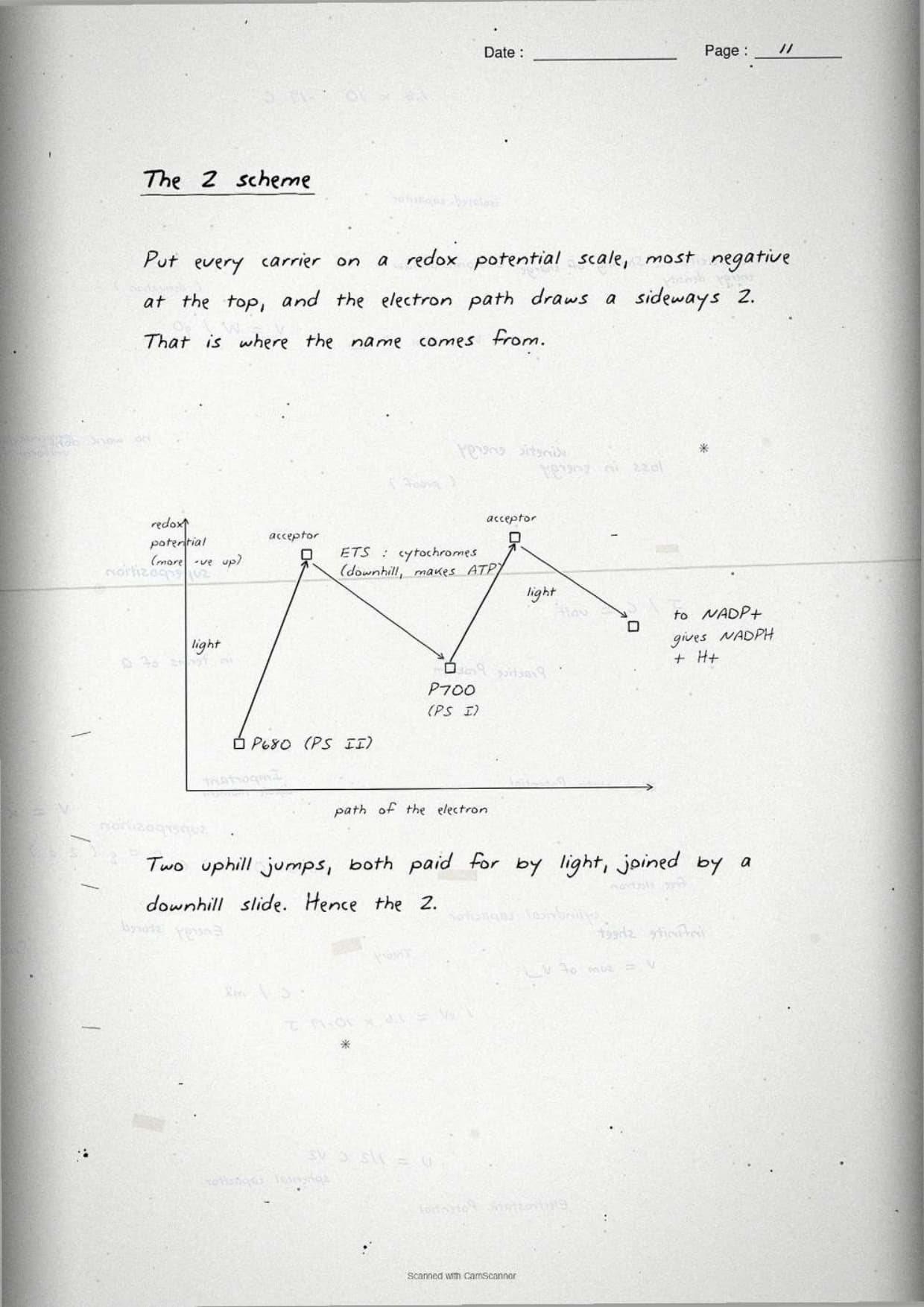
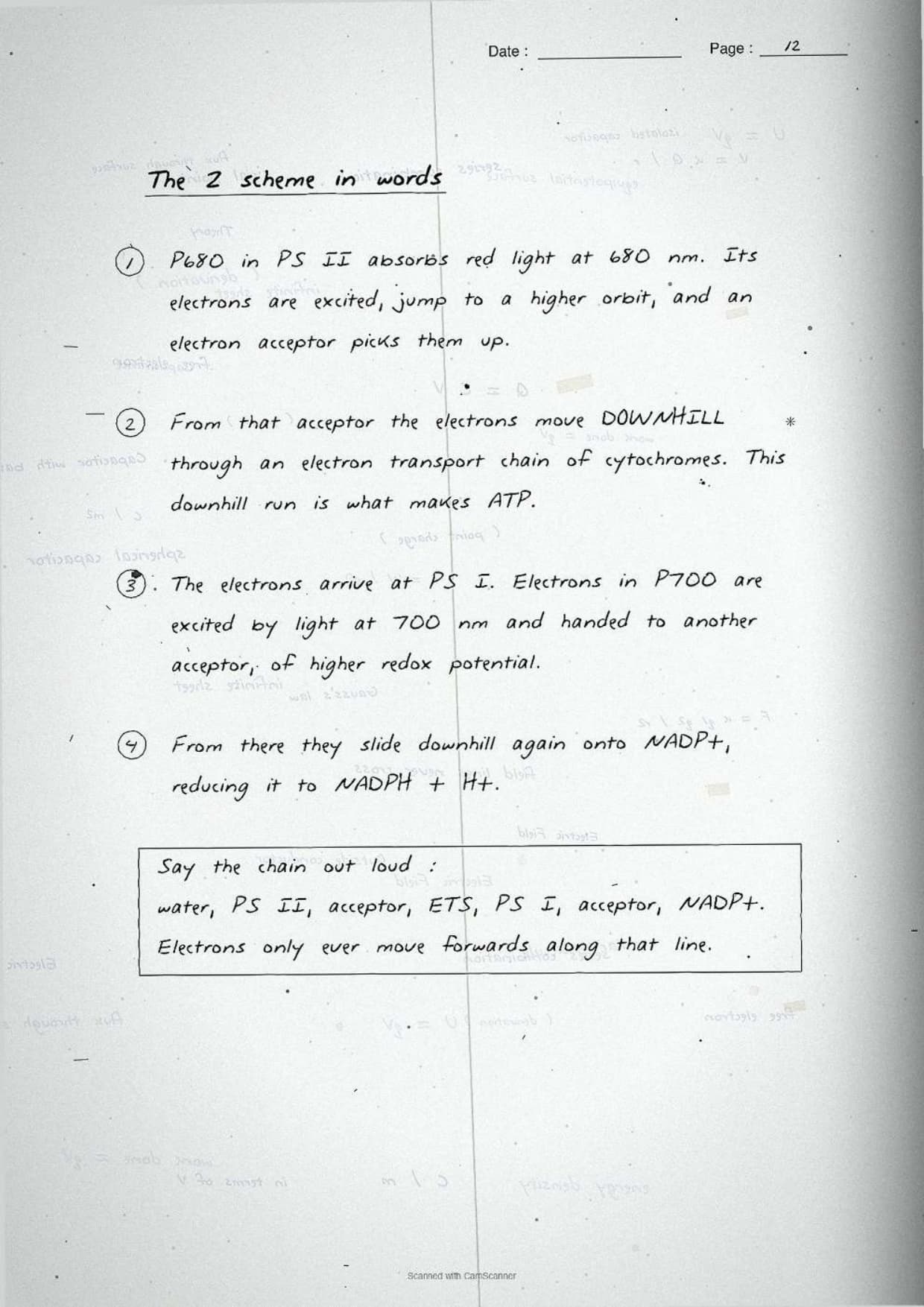
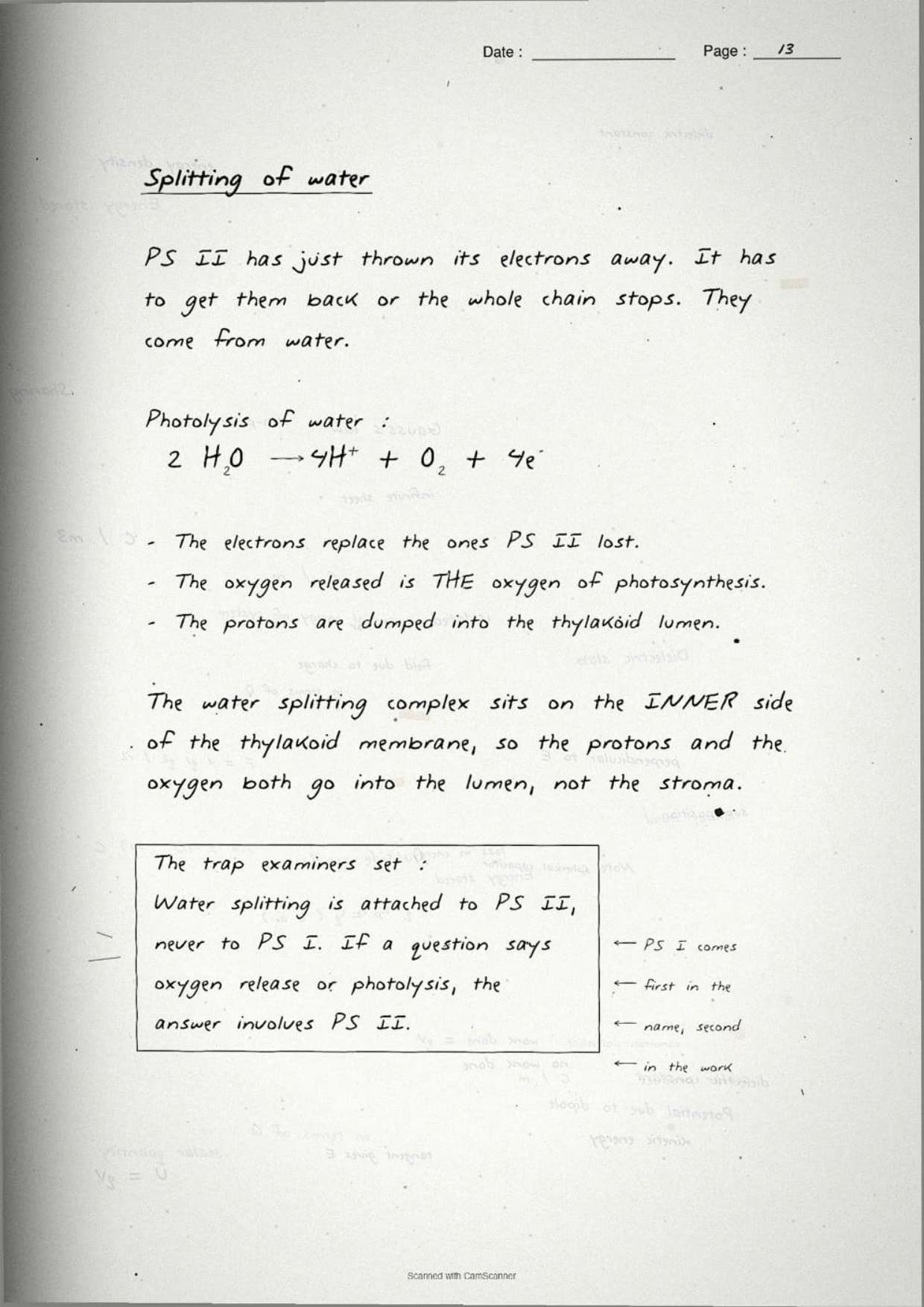
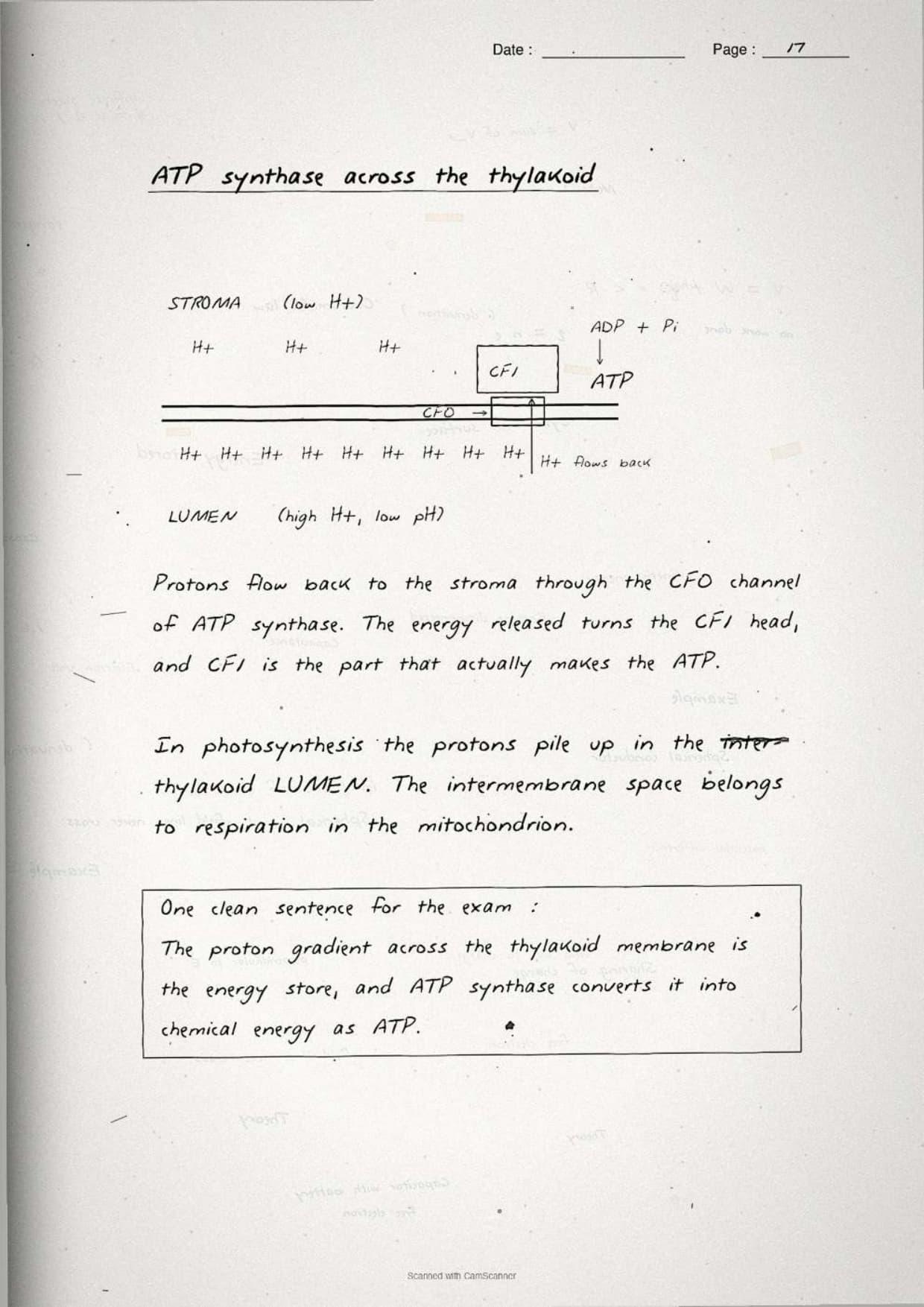
- Light reaction: PS I and PS II, the light harvesting complex, the Z-scheme, photolysis of water and chemiosmosis with a CF0 and CF1 sketch.
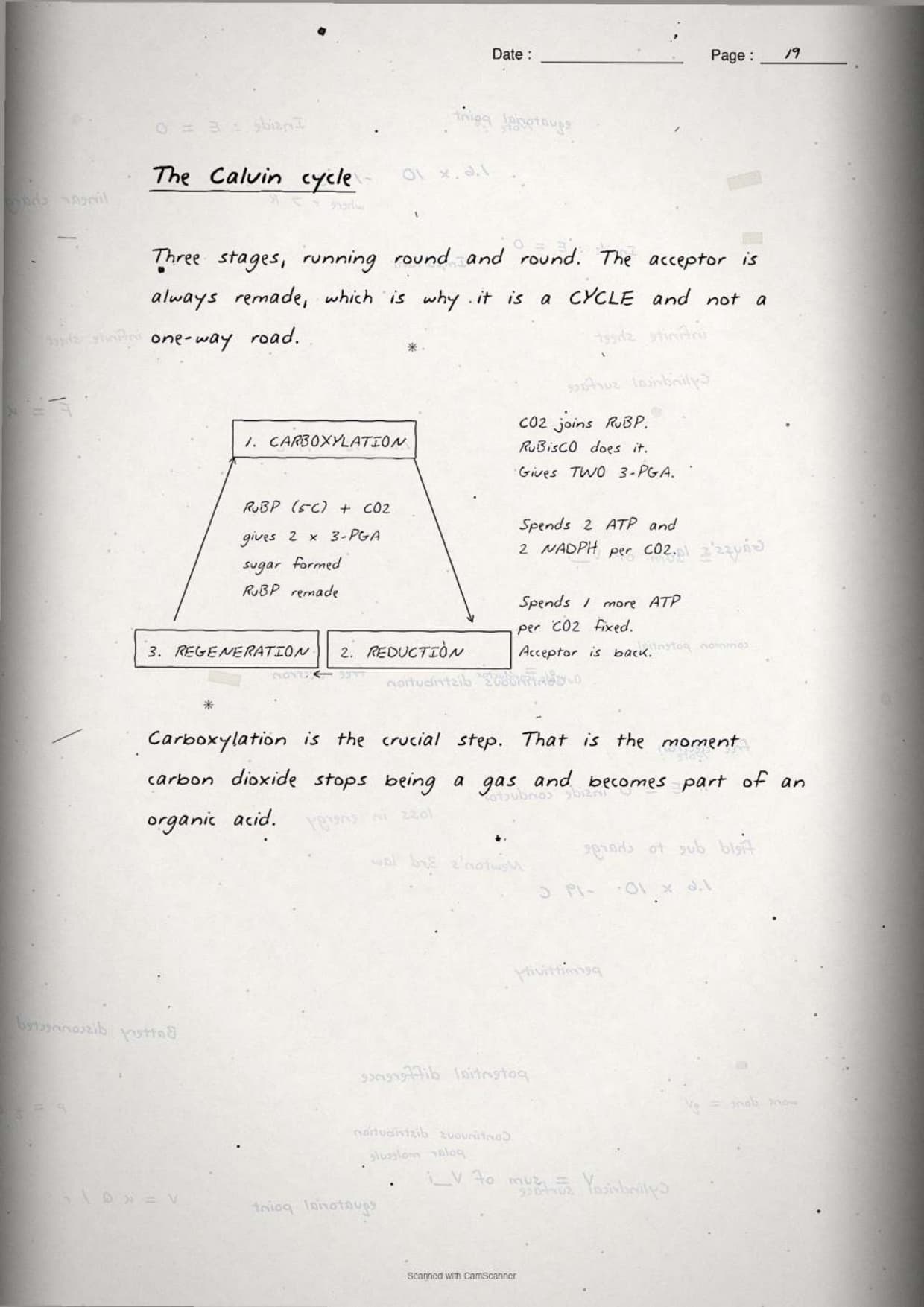
- Calvin cycle: the wheel diagram with carboxylation, reduction and regeneration, then the full ATP budget.
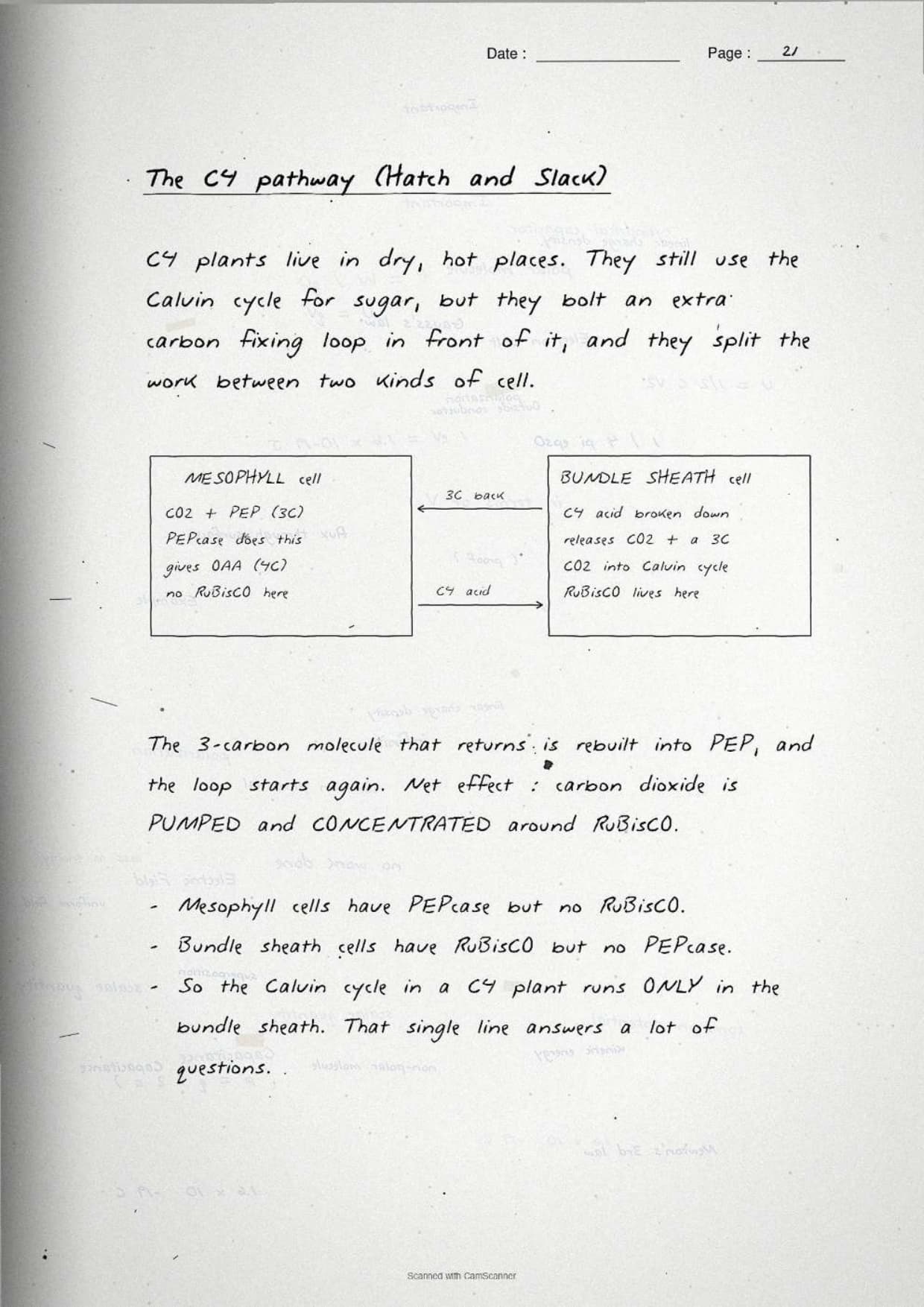
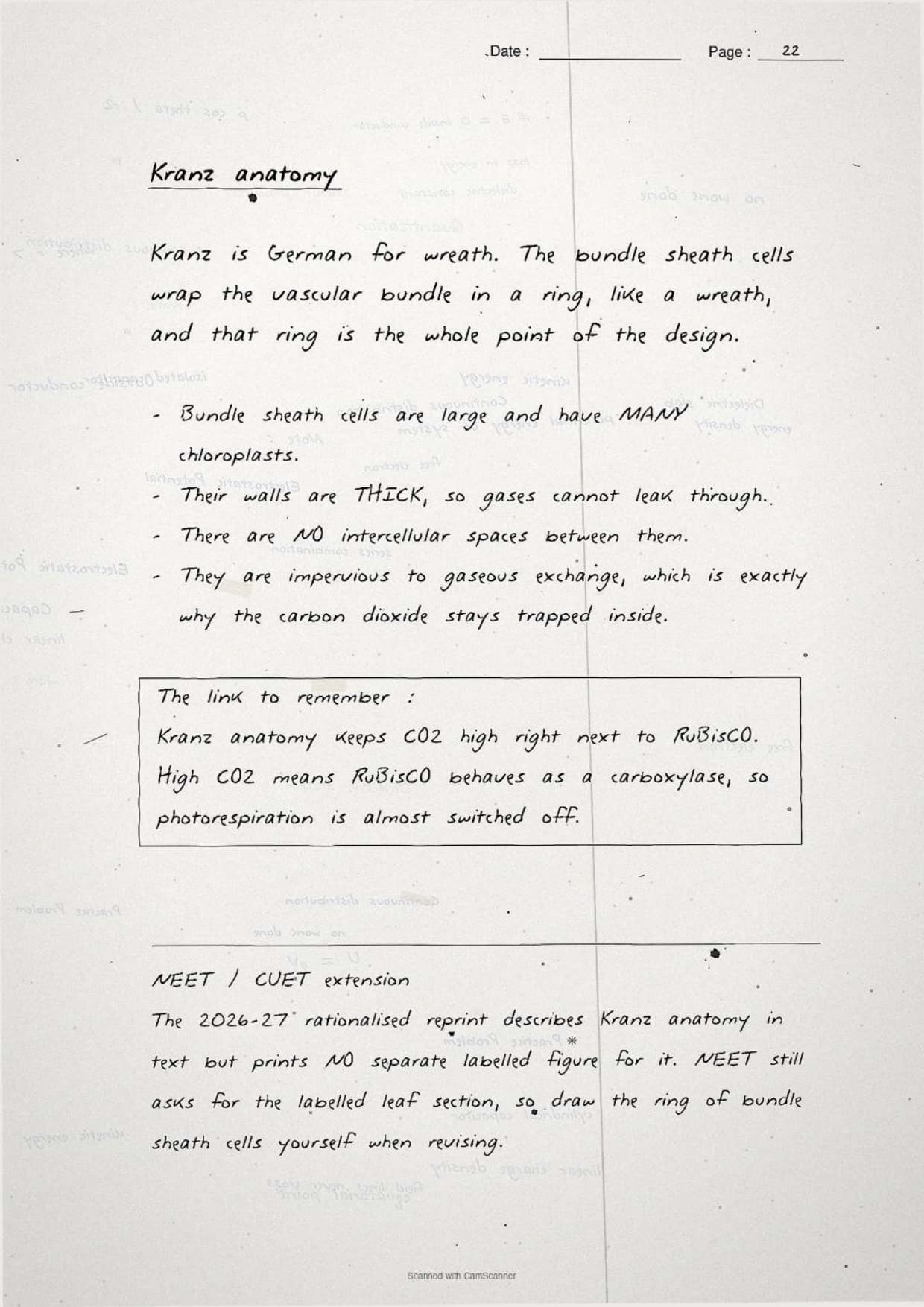
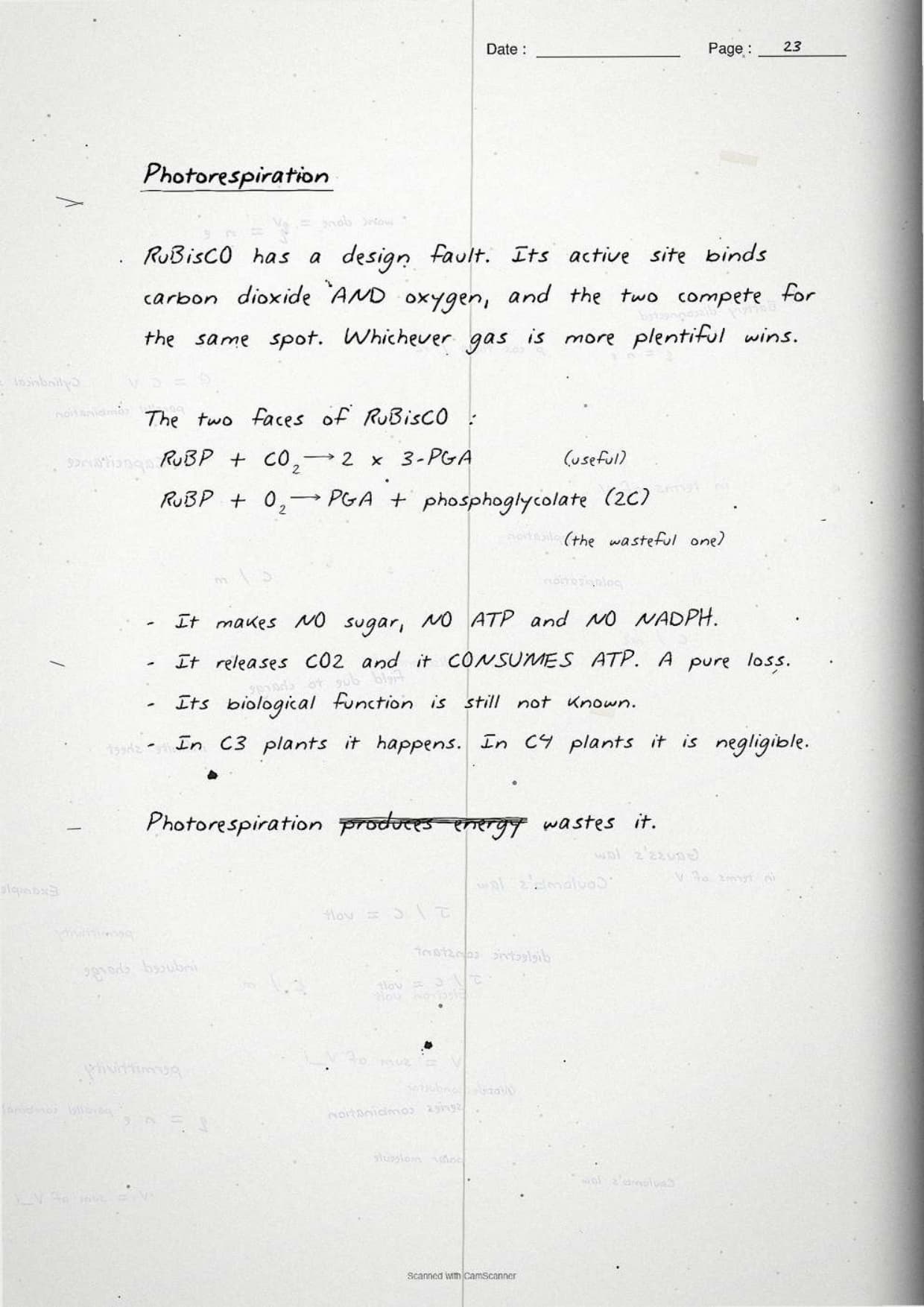
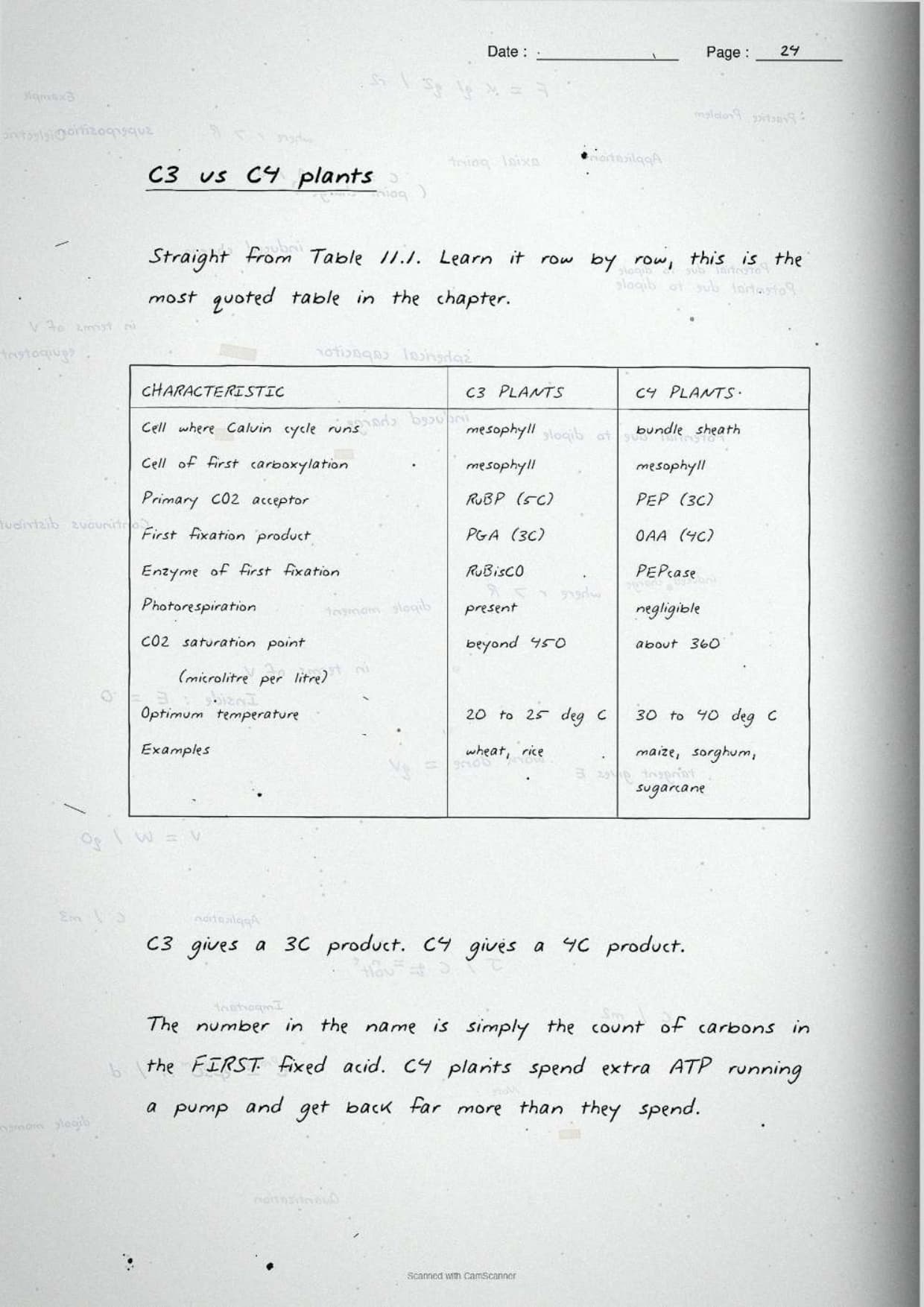
- C4 and beyond: the two-cell Hatch and Slack pathway, Kranz anatomy, photorespiration, the C3 vs C4 table and Blackman's law.
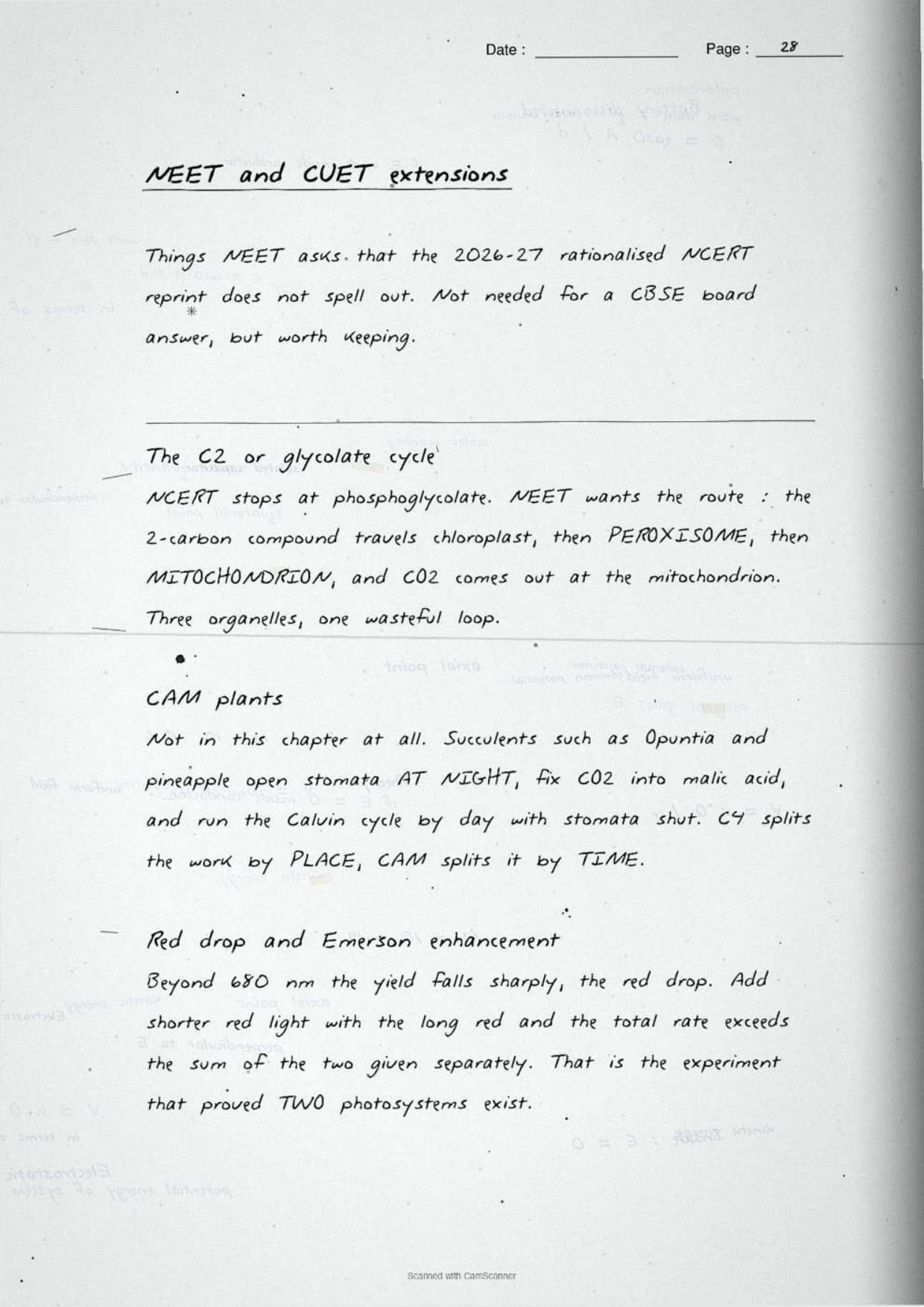
Page 28 is flagged as a NEET and CUET extension. It carries the C2 glycolate route across three organelles, CAM plants, and red drop with Emerson enhancement. Kranz anatomy is flagged too, since the current 2026-27 print describes it but prints no labelled figure.
Key Diagrams and Terms in Photosynthesis in Higher Plants Notes
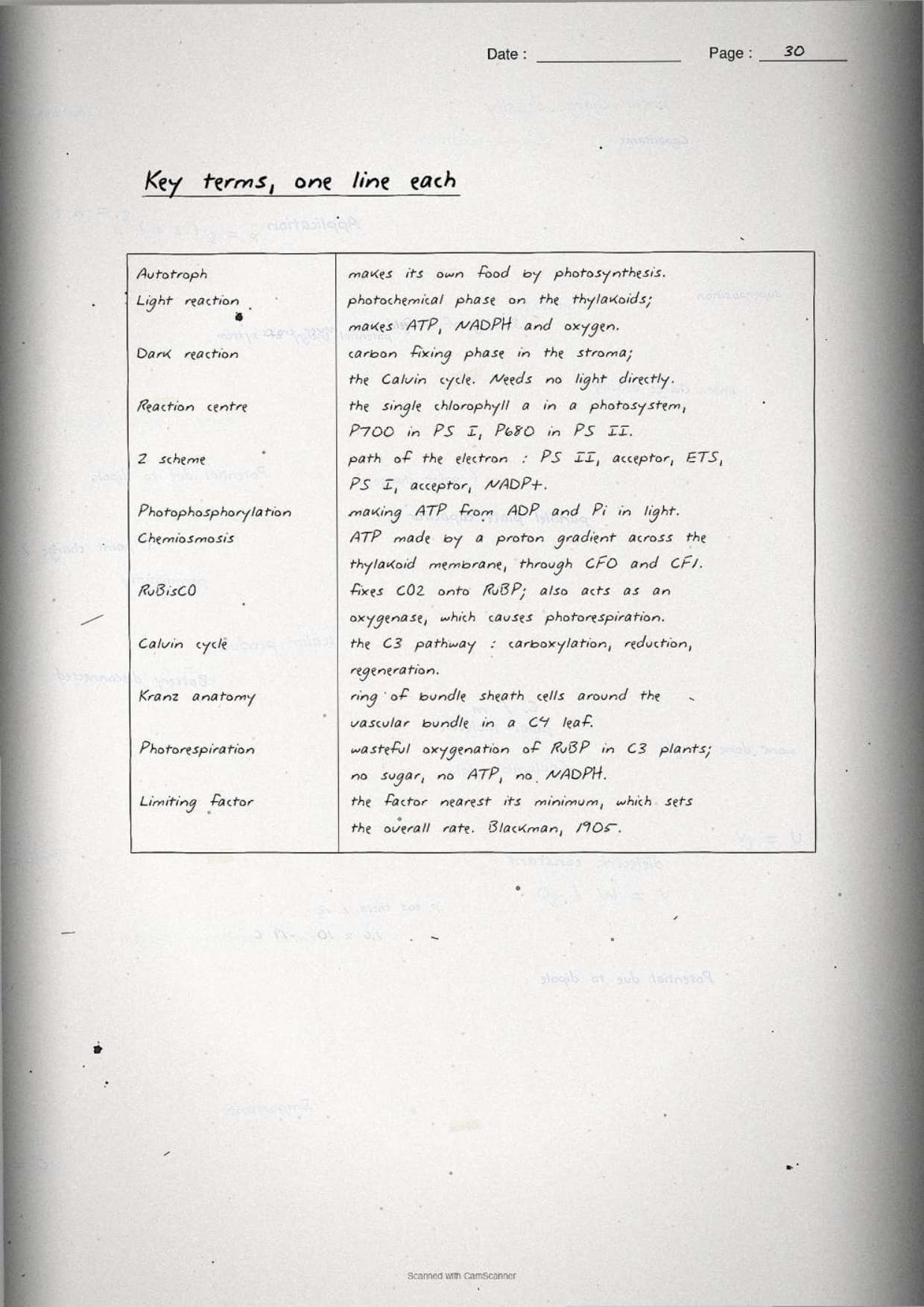
Most marks here are lost on terms that sound alike. The boxed set below is the block students swap around most, so page 30 defines each one in a single line.
| Term | How the notes define it |
|---|---|
| Reaction centre | The single chlorophyll a in a photosystem: P700 in PS I, P680 in PS II |
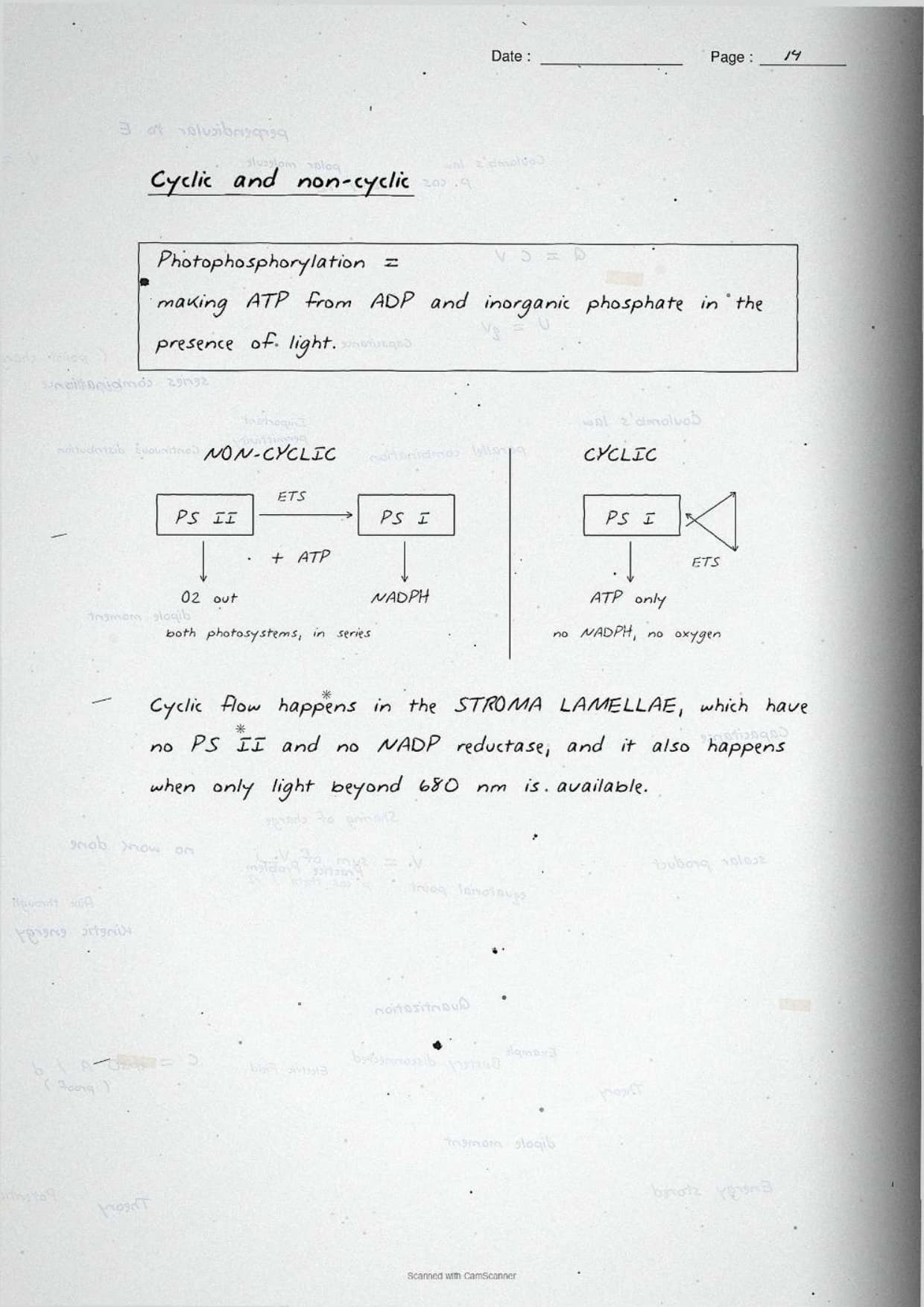
| Z-scheme | Path of the electron: PS II, acceptor, ETS, PS I, acceptor, NADP+ |
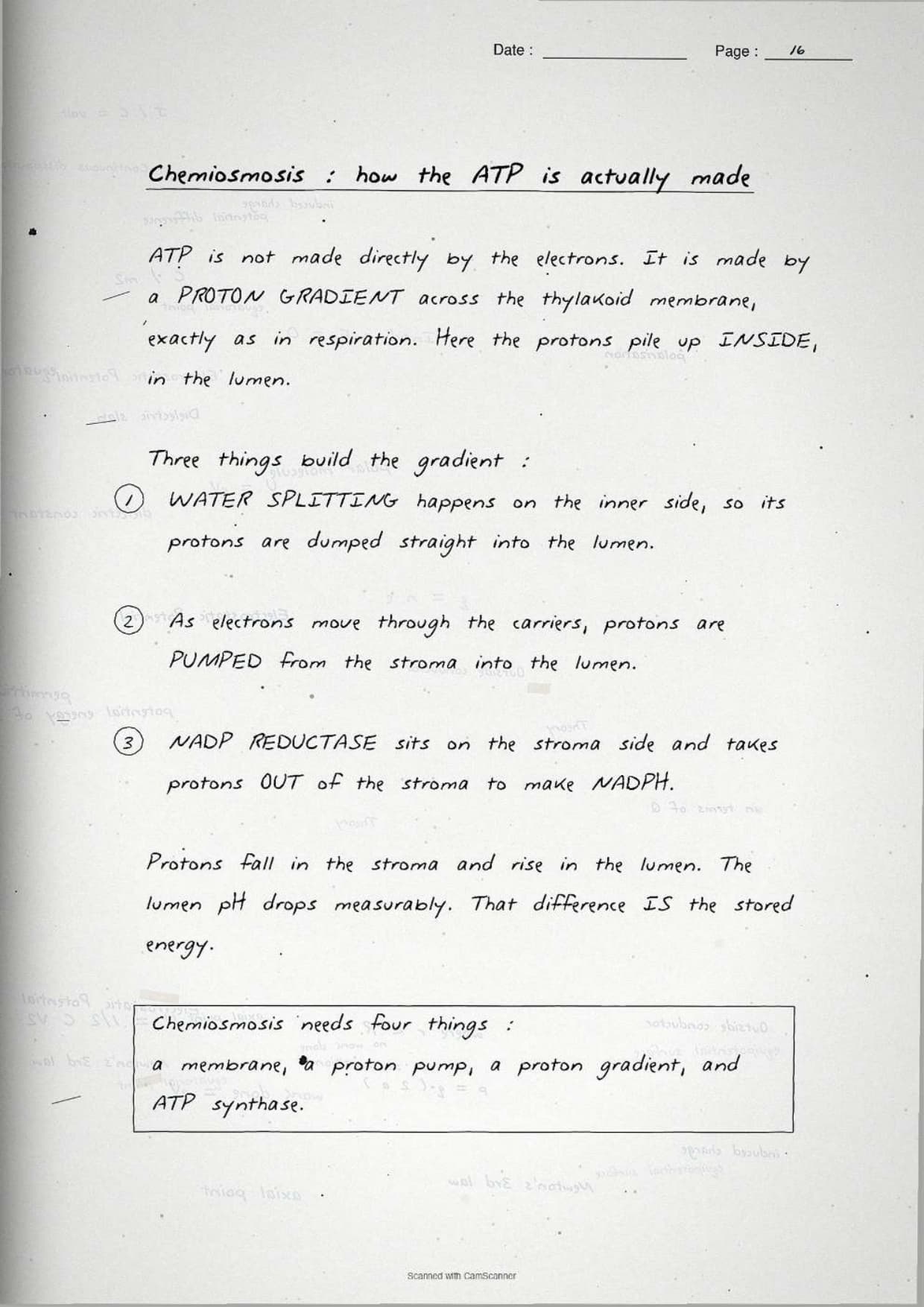
| Chemiosmosis | ATP made by a proton gradient across the thylakoid membrane, through CF0 and CF1 |
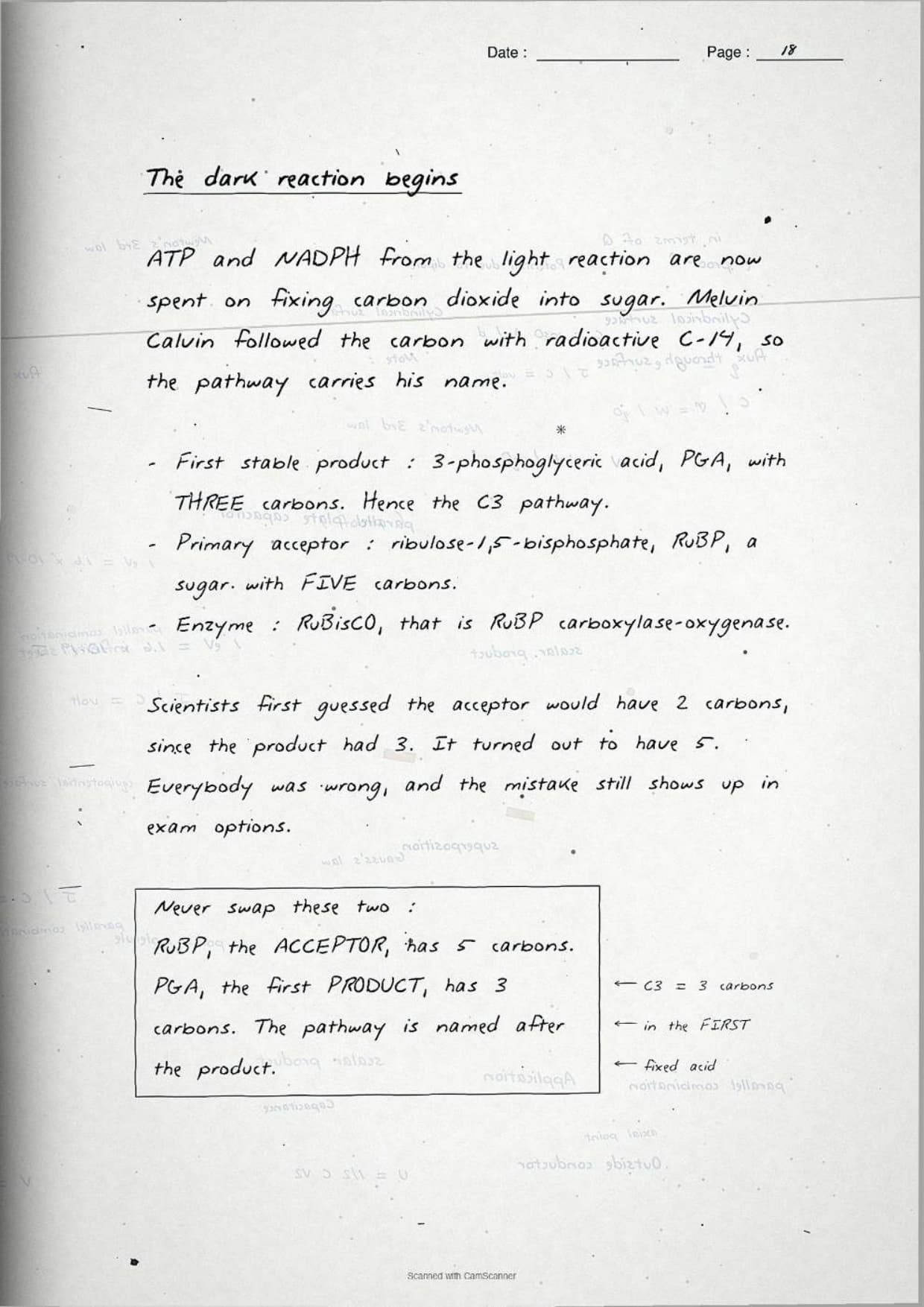
| RuBisCO | Fixes CO2 onto RuBP, and also acts as an oxygenase, which causes photorespiration |
| Kranz anatomy | Ring of bundle sheath cells around the vascular bundle in a C4 leaf |
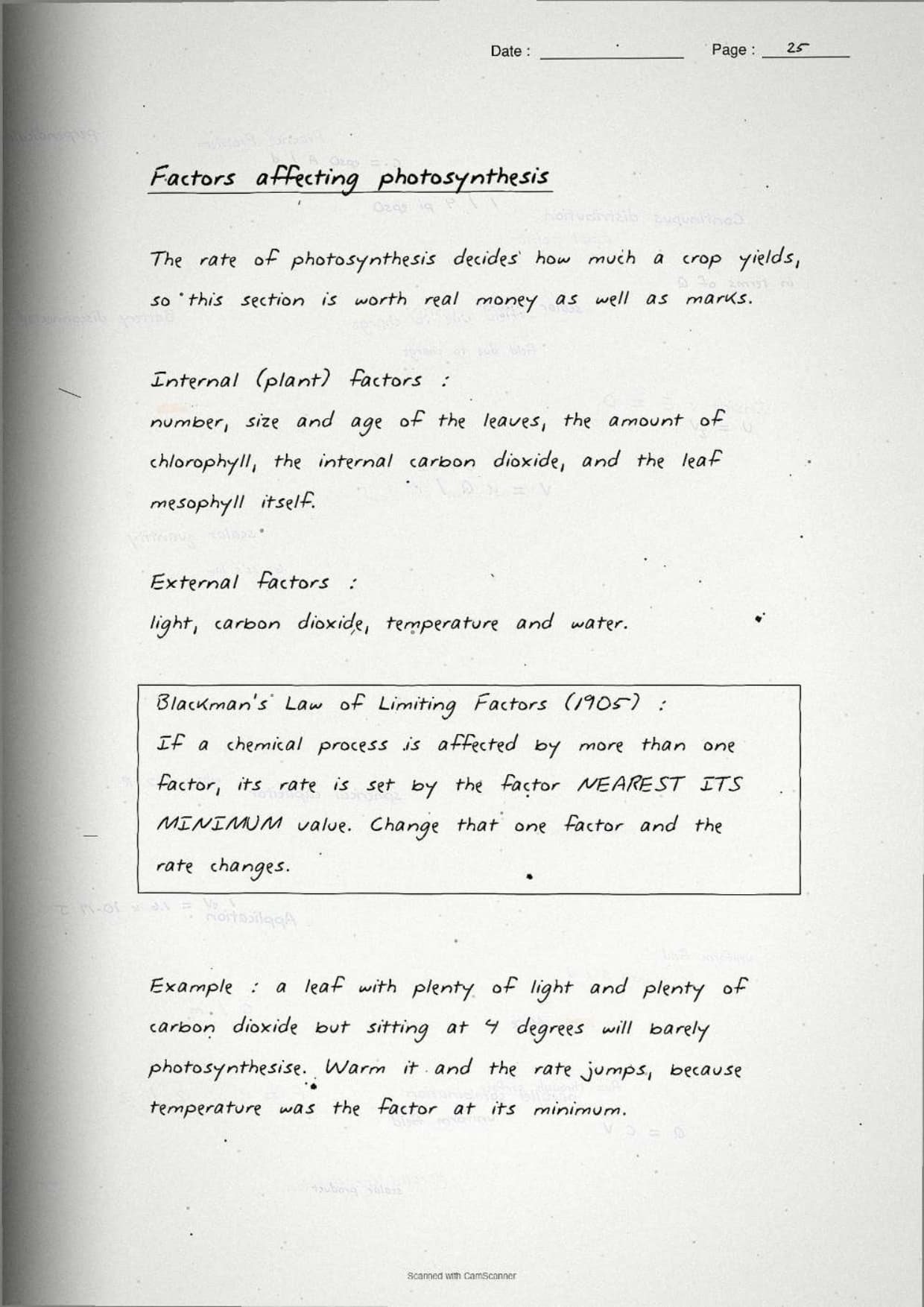
| Limiting factor | The factor nearest its minimum, which sets the overall rate. Blackman, 1905 |
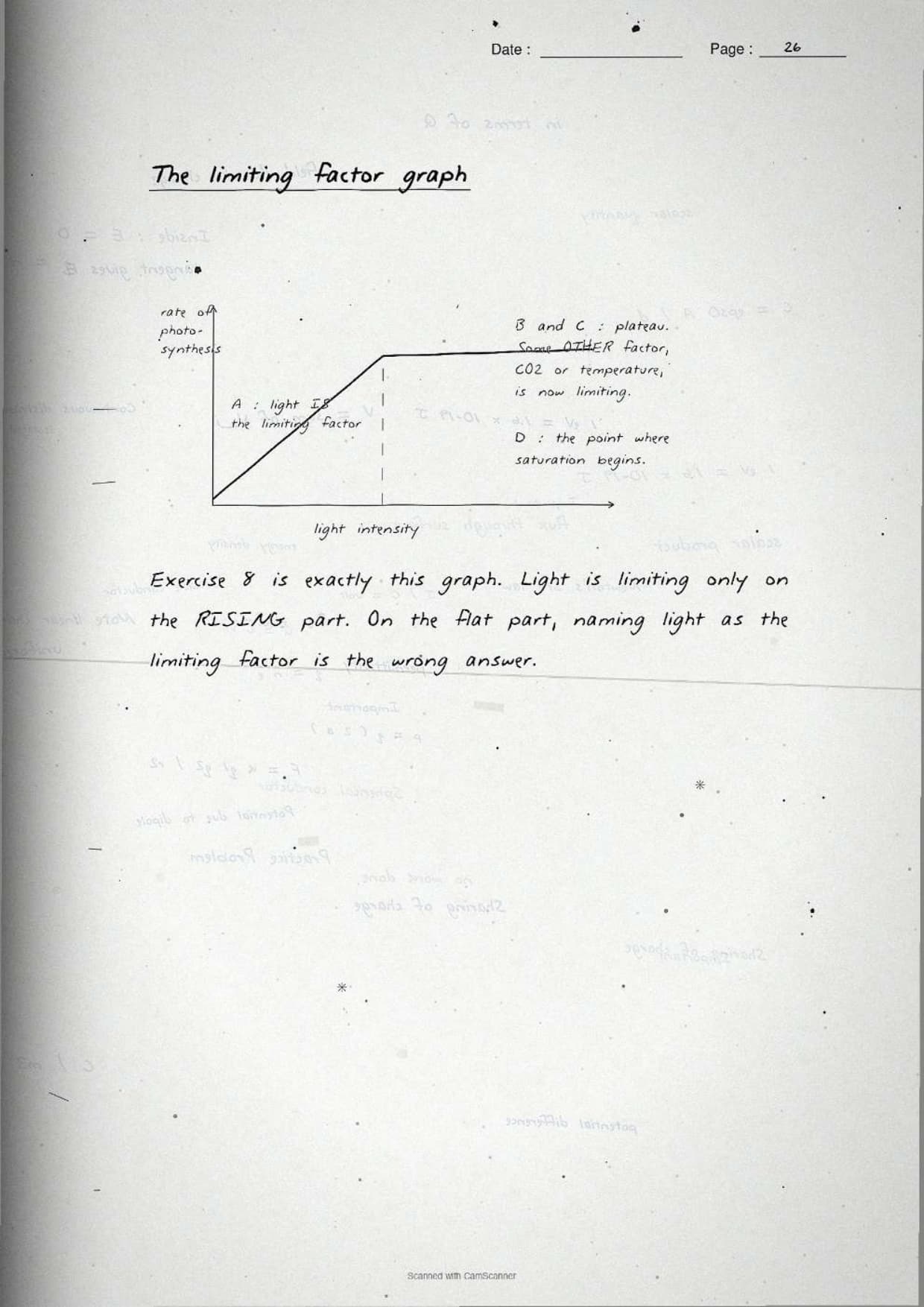
Three drawings do the heavy lifting. The Z-scheme on page 11 plots redox potential up the side, so the two uphill light jumps and the downhill slide show up as one sideways Z. The Calvin wheel on page 19 runs the three stages round in order. The limiting-factor graph on page 26 marks points A to D, the exact shape Exercise 8 asks about.
How to Use These Handwritten Notes for Revision
Work the pages in three short passes. Read a topic page, cover the boxed line and say it back, then answer two NCERT questions on it. Redrawing beats re-reading for every diagram in this chapter.
- Redraw the Z-scheme and the Calvin wheel from memory on rough paper until both come out clean.
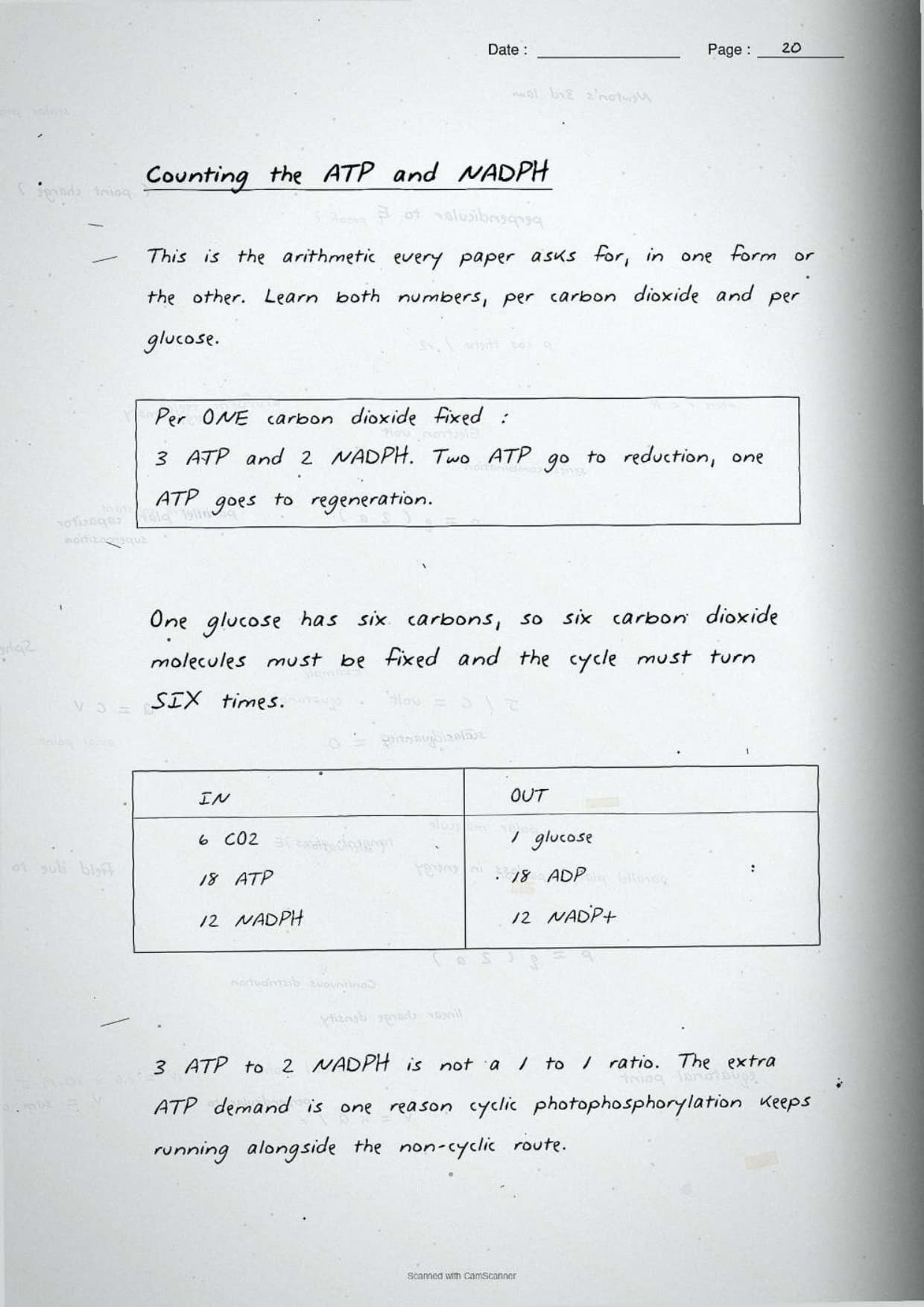
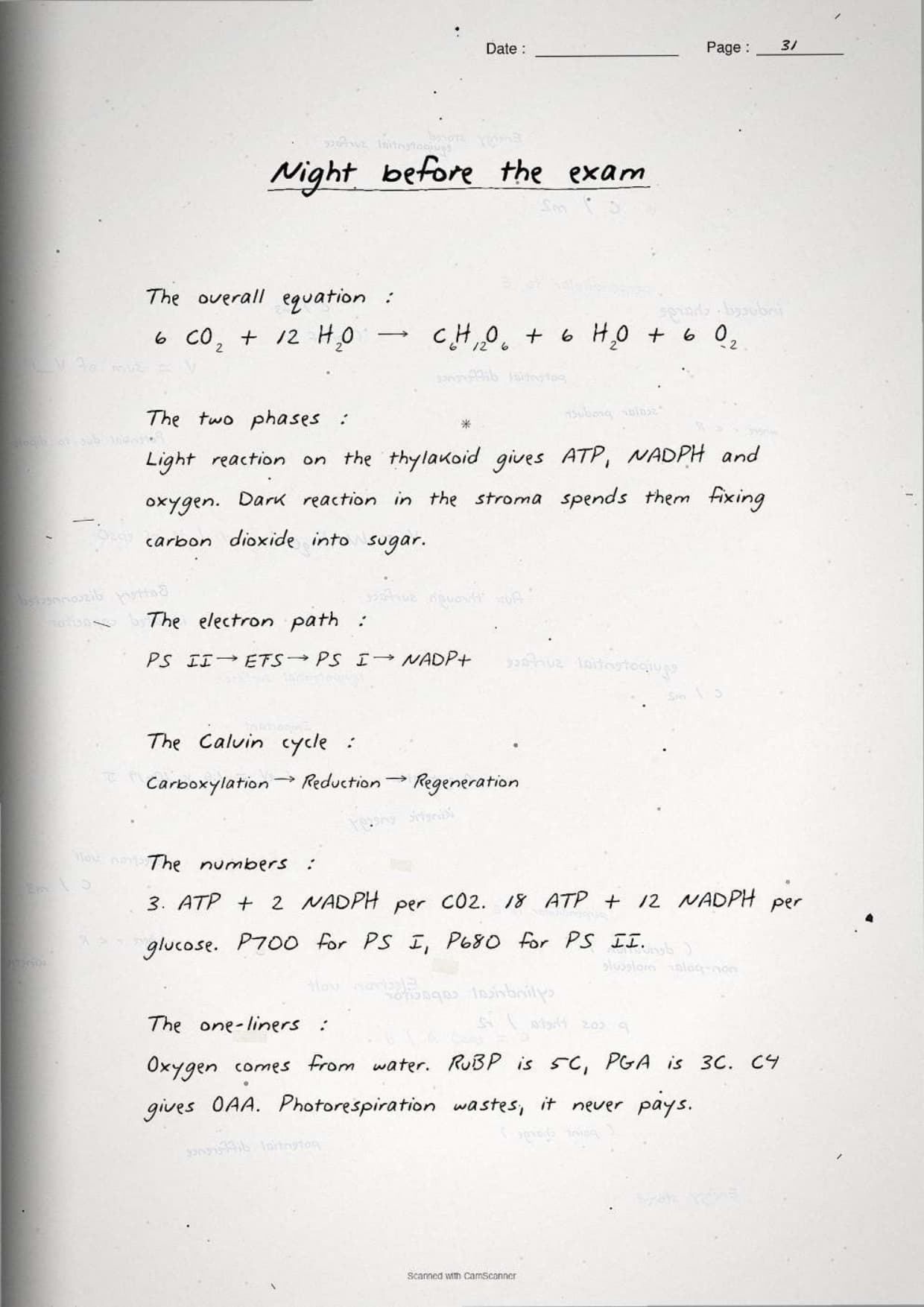
- Learn the ATP budget as two numbers: 3 ATP and 2 NADPH per CO2, 18 ATP and 12 NADPH per glucose.
- Keep the class 11 biology handwritten notes chapter 11 Photosynthesis in Higher Plants open beside the NCERT Solutions while practising.
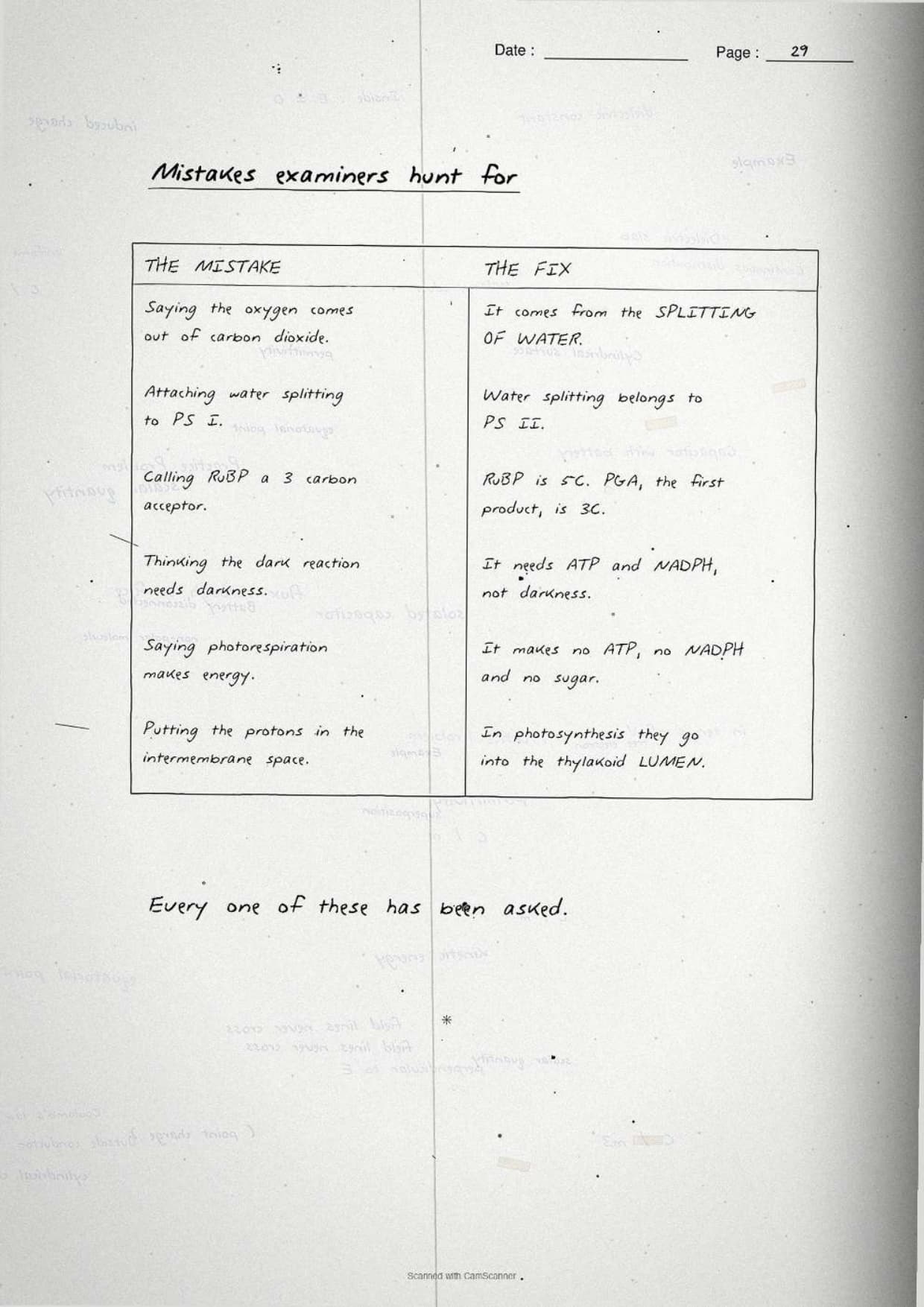
- Read the mistakes page on page 29 last, then the night-before recap on page 31.
Around 45 minutes is enough for one full pass, so the notes fit into the last week before an exam.
Student Feedback on Photosynthesis in Higher Plants Handwritten Notes
Students rate the diagram pages as the ones that save them the most time. The figures below come from a Collegedunia poll run before the 2026 boards.
- In a Collegedunia survey of 10,860 students, 68% named the Z-scheme page as their most-used revision page.
- Most-confused pair before the poll: RuBP against PGA, with about 4 in 10 students calling RuBP a 3-carbon acceptor.
Source: 2026-27 Class 11 Biology student poll. Sample of 10,860 students from CBSE schools across 12 states.
Where to Use These Notes Alongside Other Resources
These handwritten pages work best next to the step-wise Solutions, the summary Notes and the Exemplar Solutions for the same chapter. Read the notes first, then check the answers, and keep the Exemplar for extra practice.
| Resource | Best used for |
|---|---|
| Photosynthesis in Higher Plants NCERT Solutions | Step-by-step answers to every back-exercise question |
| Photosynthesis in Higher Plants Class 11 Notes | Quick chapter summary with all key terms in one place |
| Photosynthesis in Higher Plants Exemplar Solutions | Every Exemplar question solved for NEET-level practice |
| Photosynthesis in Higher Plants NCERT Book PDF | The original chapter text and exercises |
All Class 11 Biology Handwritten Notes by Chapter
The table links the handwritten notes for every Class 11 Biology chapter, so students can move across the course in one click. Photosynthesis in Higher Plants is highlighted.
| Chapter | Handwritten Notes |
|---|---|
| Chapter 1 | The Living World |
| Chapter 2 | Biological Classification |
| Chapter 3 | Plant Kingdom |
| Chapter 4 | Animal Kingdom |
| Chapter 5 | Morphology of Flowering Plants |
| Chapter 6 | Anatomy of Flowering Plants |
| Chapter 7 | Structural Organisation in Animals |
| Chapter 8 | Cell The Unit of Life |
| Chapter 9 | Biomolecules |
| Chapter 10 | Cell Cycle and Cell Division |
| Chapter 11 | Photosynthesis in Higher Plants |
| Chapter 12 | Respiration in Plants |
| Chapter 13 | Plant Growth and Development |
| Chapter 14 | Breathing and Exchange of Gases |
| Chapter 15 | Body Fluids and Circulation |
| Chapter 16 | Excretory Products and their Elimination |
| Chapter 17 | Locomotion and Movement |
| Chapter 18 | Neural Control and Coordination |
| Chapter 19 | Chemical Coordination and Integration |
FAQs on Photosynthesis in Higher Plants Handwritten Notes
Ques. Are these class 11 biology handwritten notes chapter 11 Photosynthesis in Higher Plants free to download?
Ans. Yes. The Photosynthesis in Higher Plants handwritten notes are free to download as a PDF from this page. All 31 pages follow the 2026-27 NCERT and cover the full chapter in clear handwriting for quick revision.
Ques. Where does the oxygen released in photosynthesis come from?
Ans. From the splitting of water, not from carbon dioxide. Page 5 boxes van Niel's reasoning: sulphur bacteria use H2S and give sulphur, so green plants using H2O must give O2. Radioisotope studies later confirmed it.
Ques. How much ATP and NADPH does the Calvin cycle need?
Ans. Three ATP and two NADPH for every CO2 fixed. Two ATP go to reduction and one to regeneration. For one glucose the cycle turns six times, so the totals are 18 ATP and 12 NADPH.
Ques. What is the difference between cyclic and non-cyclic photophosphorylation?
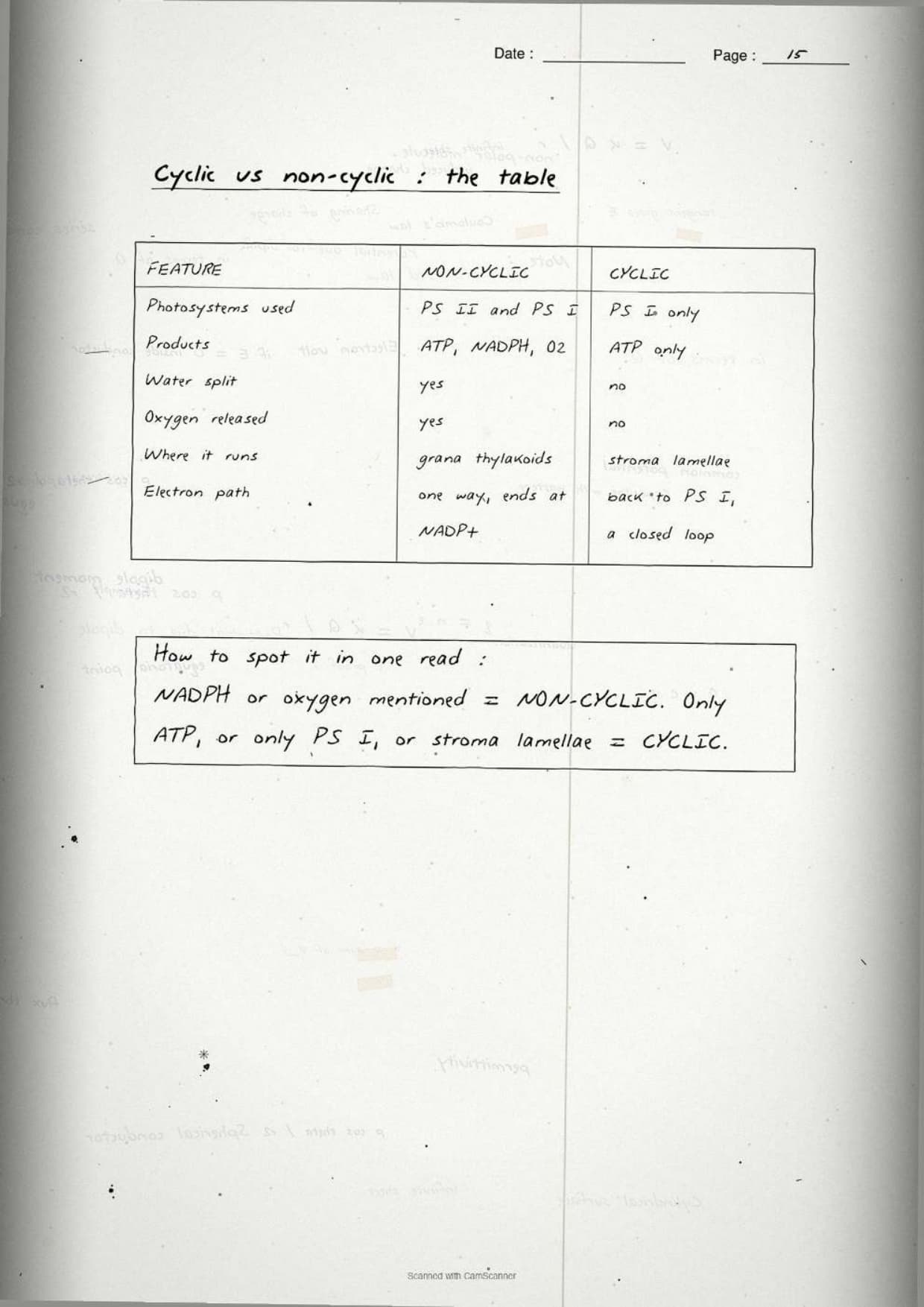
Ans. Non-cyclic flow uses PS II and PS I in series, splits water, and gives ATP, NADPH and O2. Cyclic flow uses PS I alone in the stroma lamellae and gives ATP only, with no water split and no oxygen.
Ques. Do these notes cover the NEET topics outside the NCERT chapter?
Ans. Yes. Page 28 is a marked NEET and CUET extension. It covers the C2 glycolate route through chloroplast, peroxisome and mitochondrion, CAM plants, and the red drop with Emerson enhancement. Kranz anatomy carries the same flag.



Comments