




The five plant growth regulators alone carry the biggest share of marks here. These class 11 biology handwritten notes chapter 13 Plant Growth and Development put all 32 pages of growth rates, the sigmoid curve and every hormone into one revision pass for Boards, NEET and CUET in 2026-27.
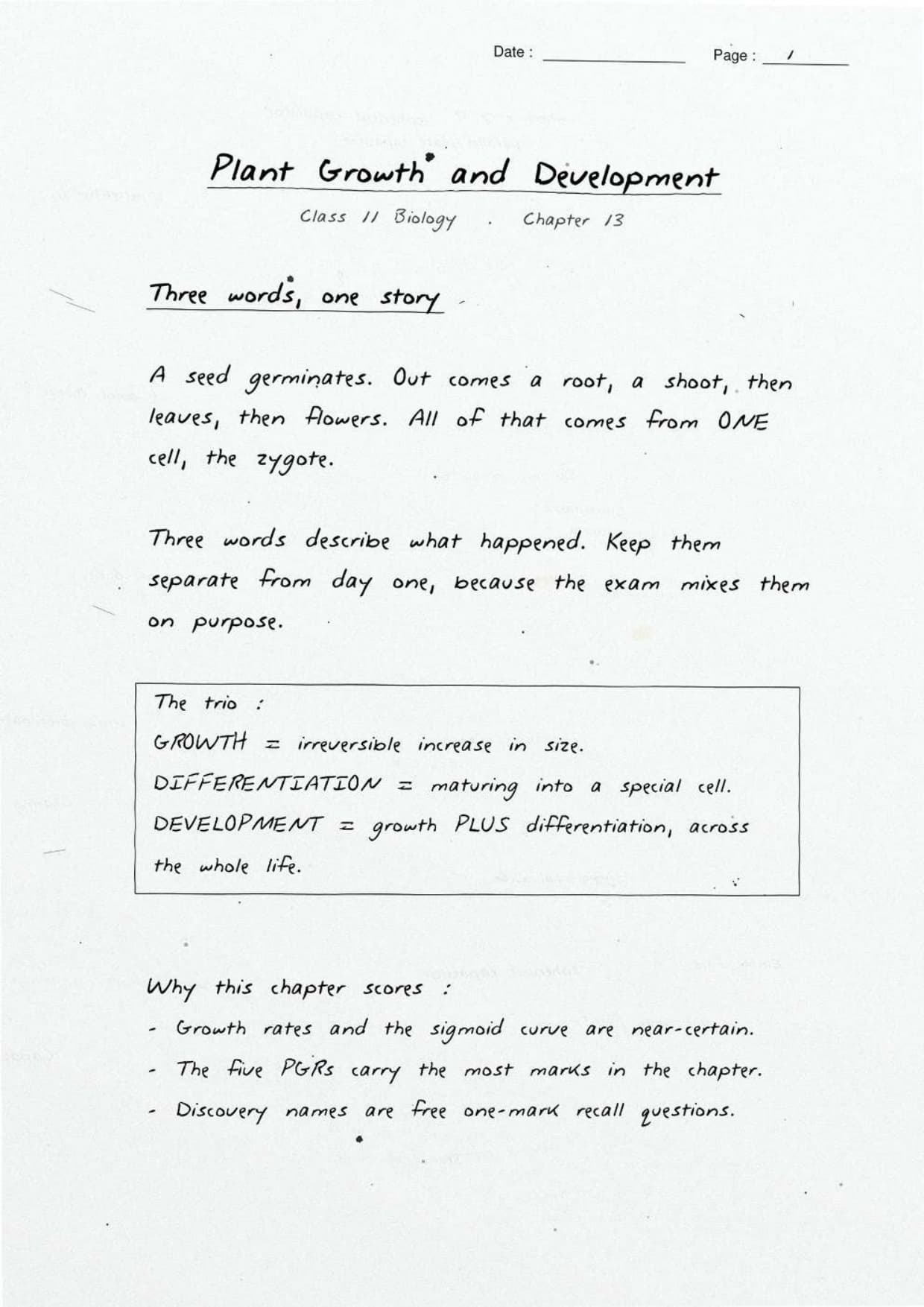
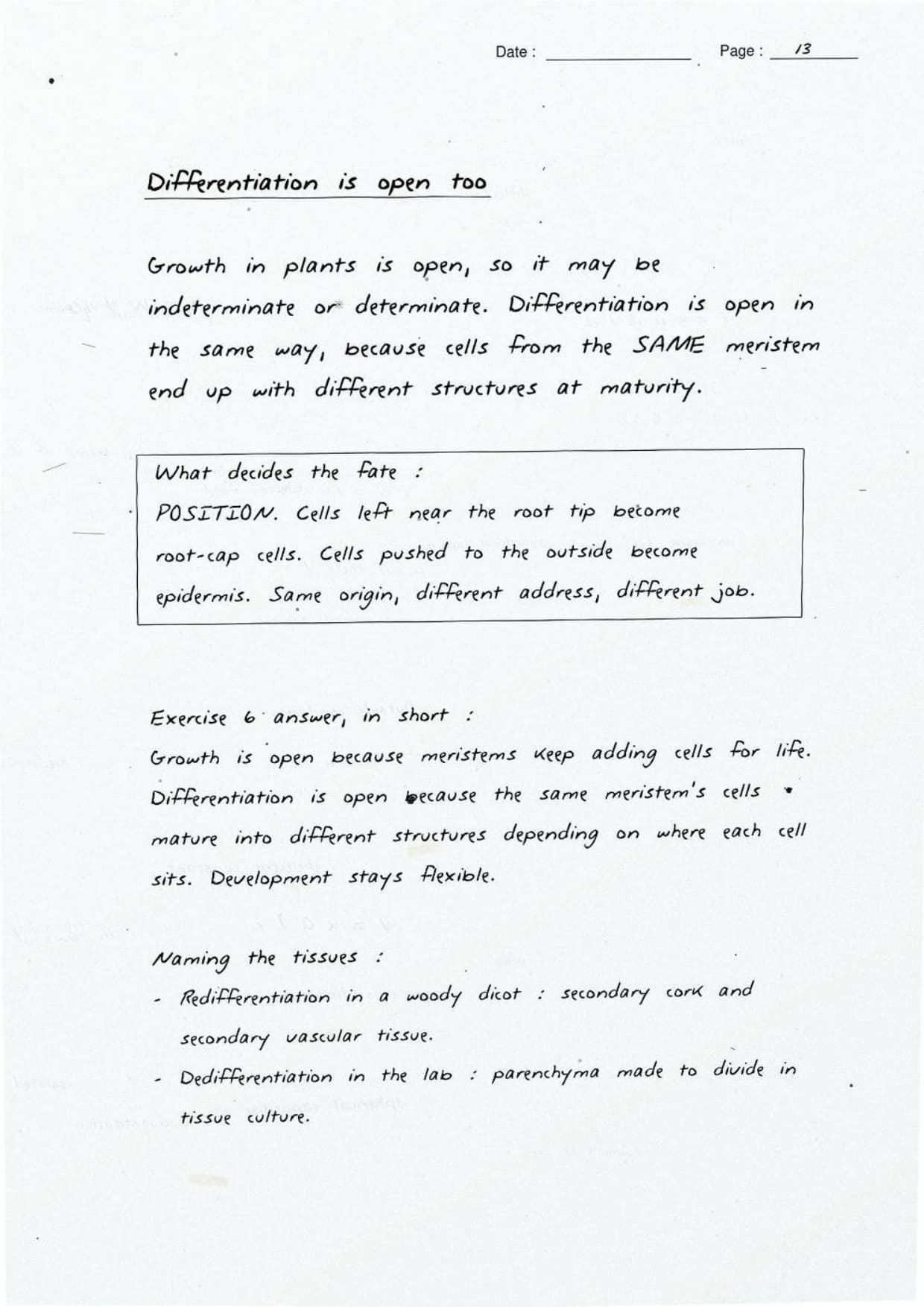
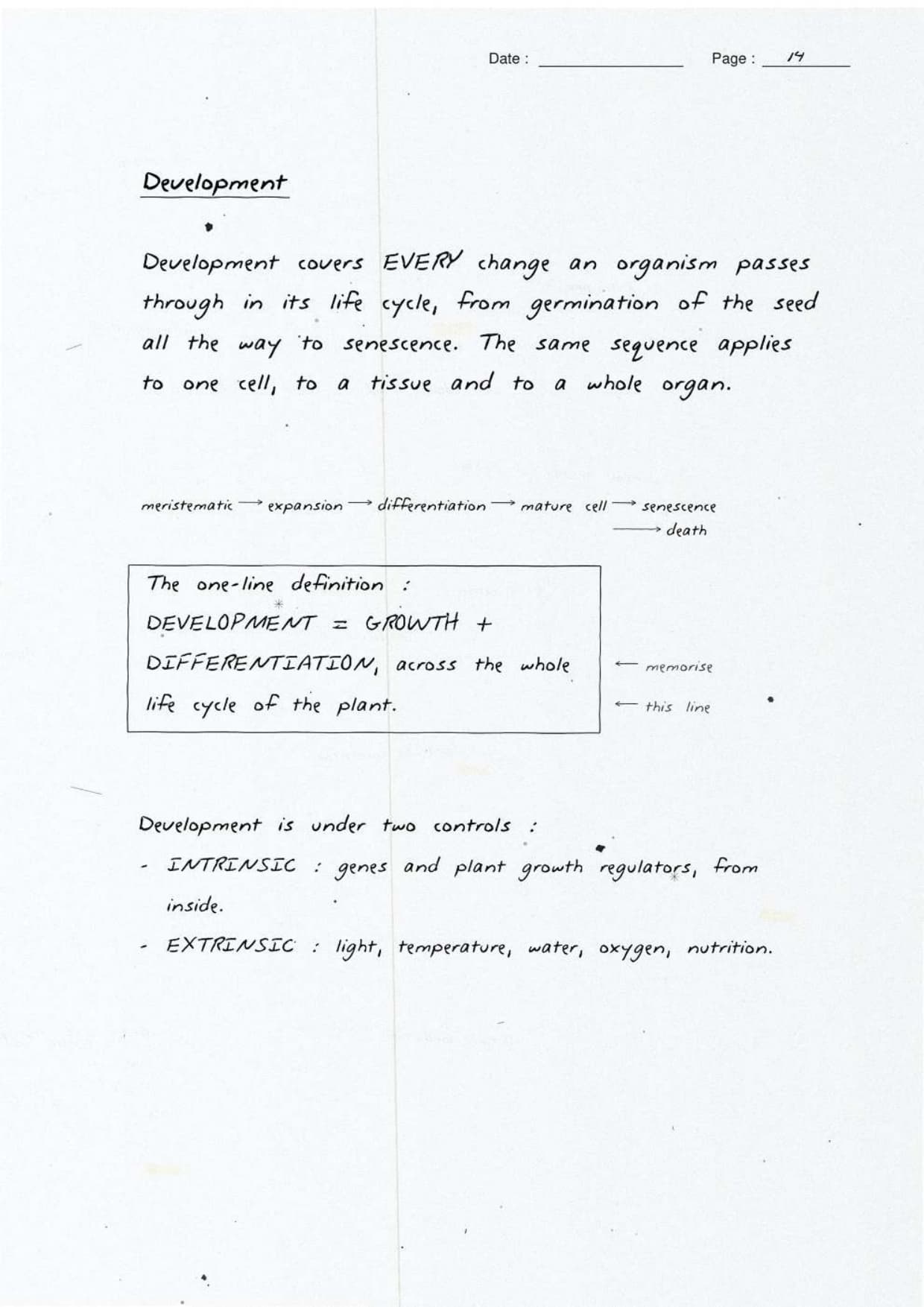
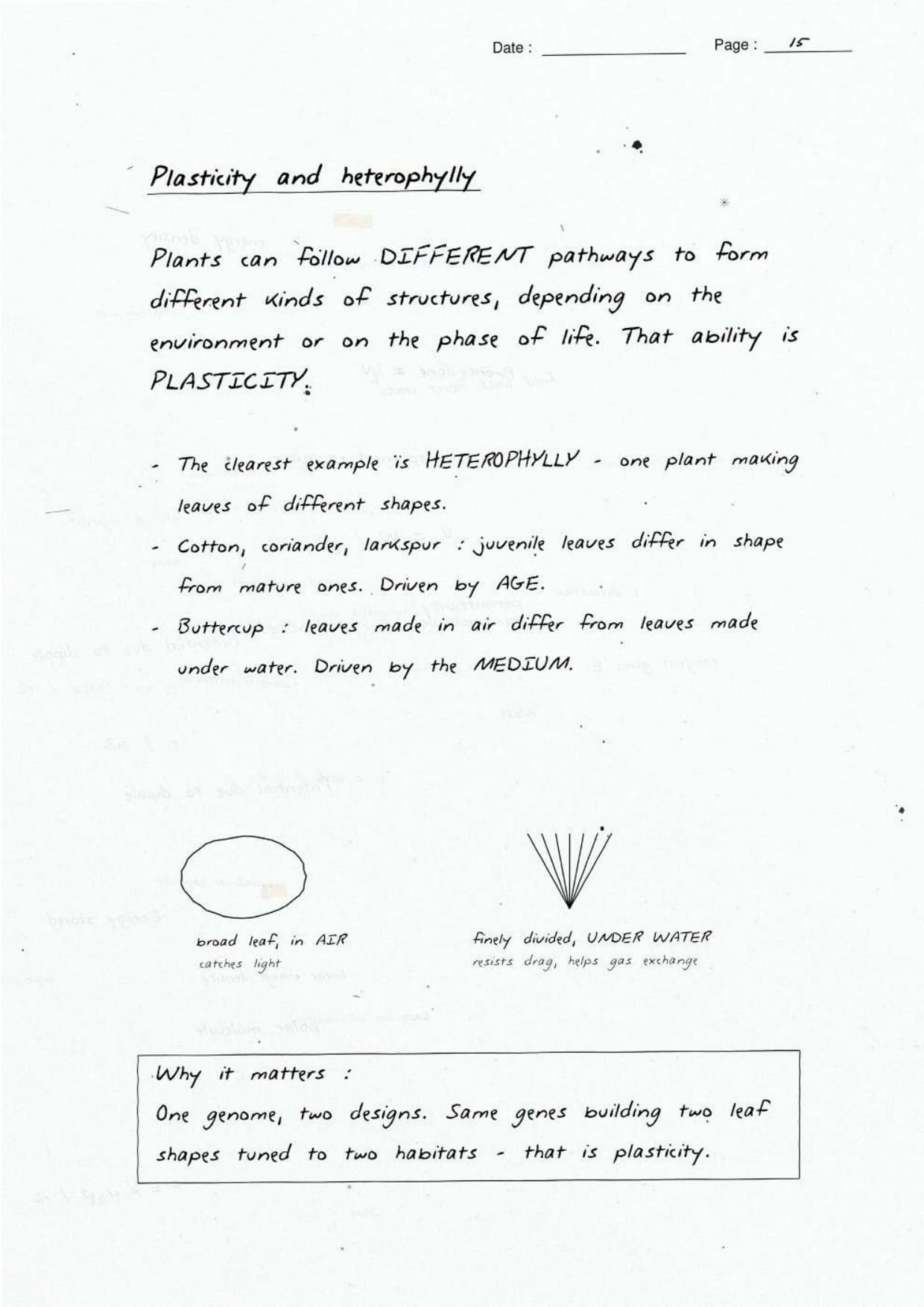
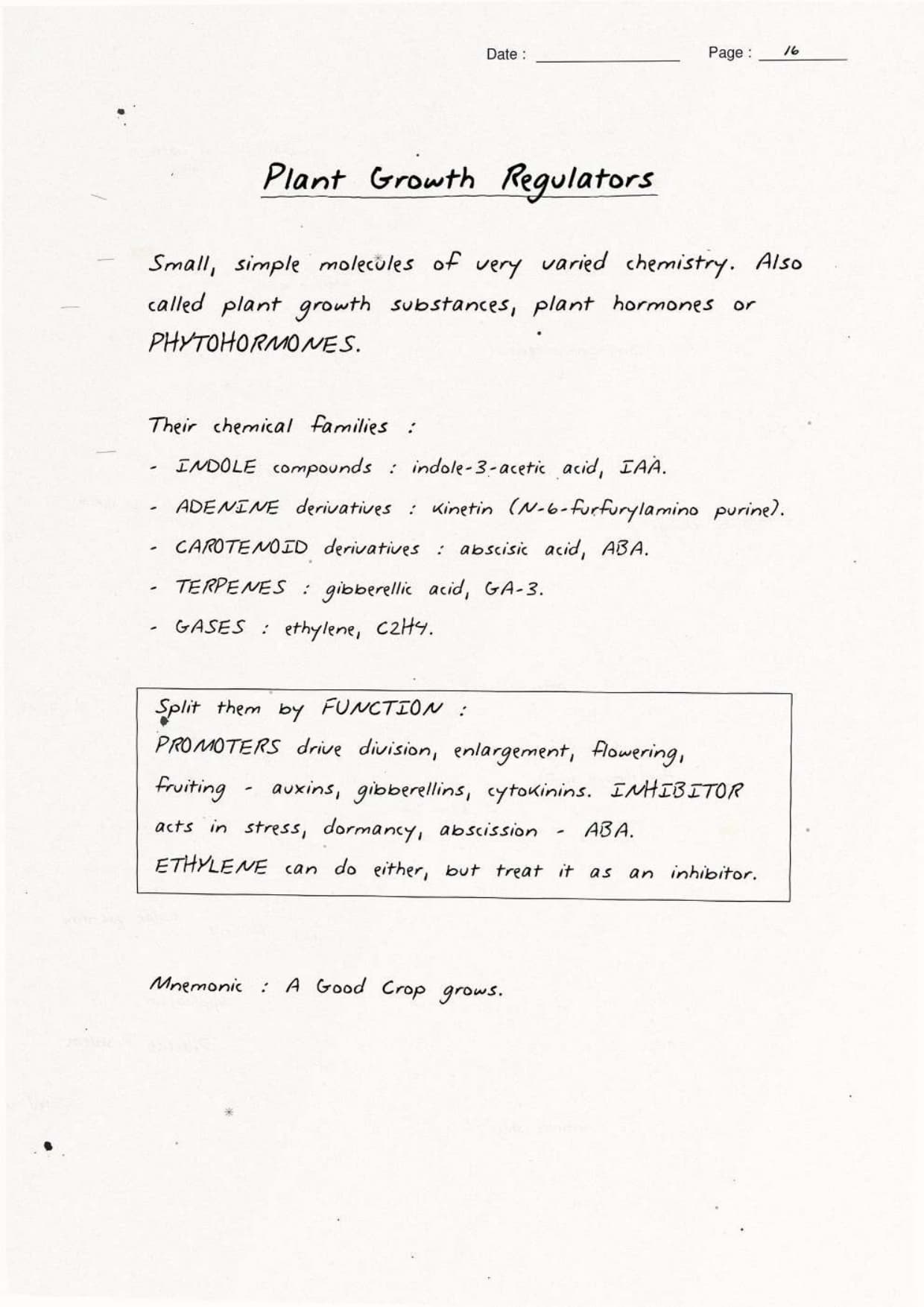
Chapter 13 mixes three words that sound alike, and the exam swaps them on purpose. The notes split them on page 1 and keep them apart.
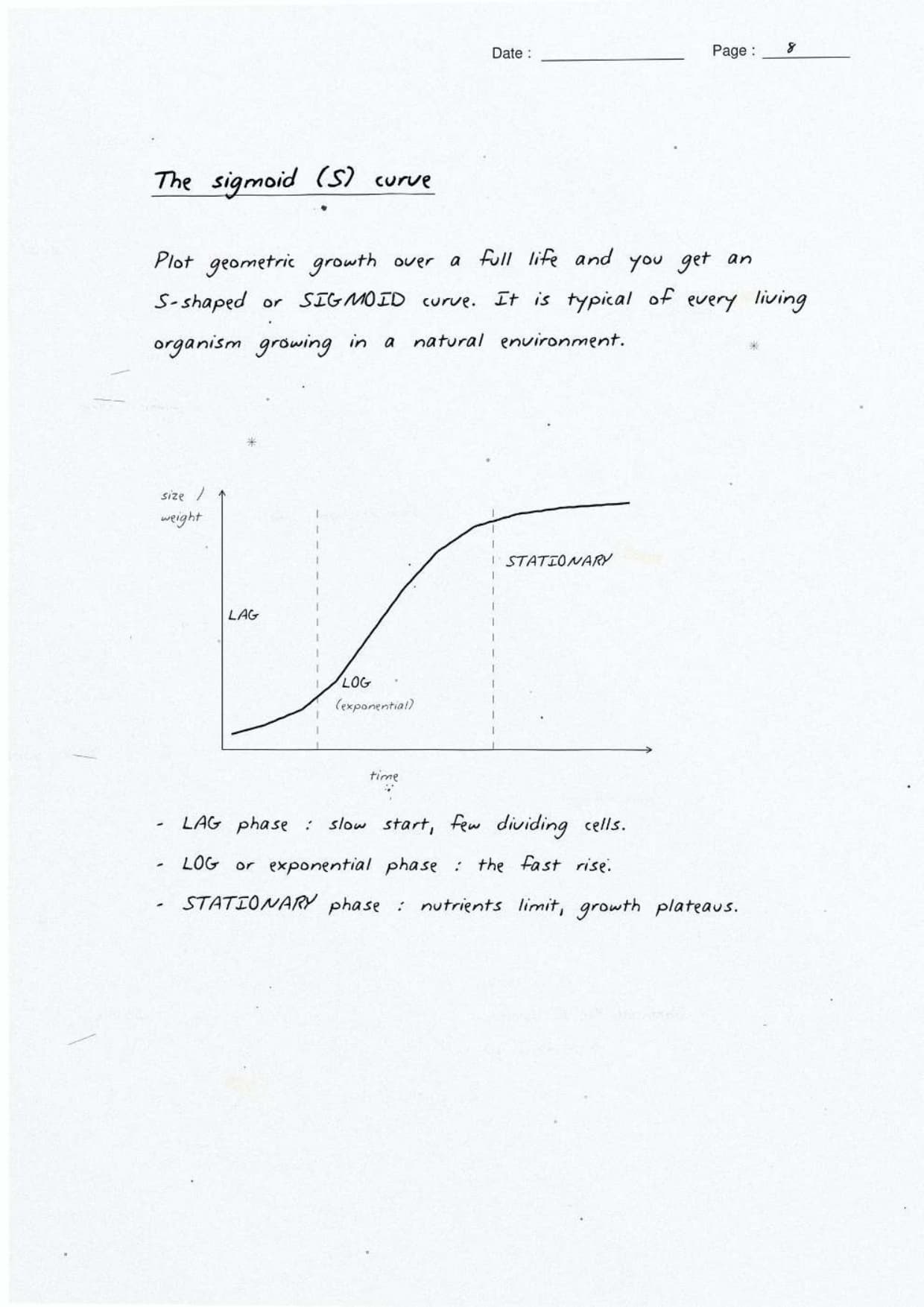
- Hand-drawn sigmoid curve with the lag, log and stationary phases marked on the plot.
- Boxed definitions for growth, differentiation, dedifferentiation, redifferentiation and development in exam wording.
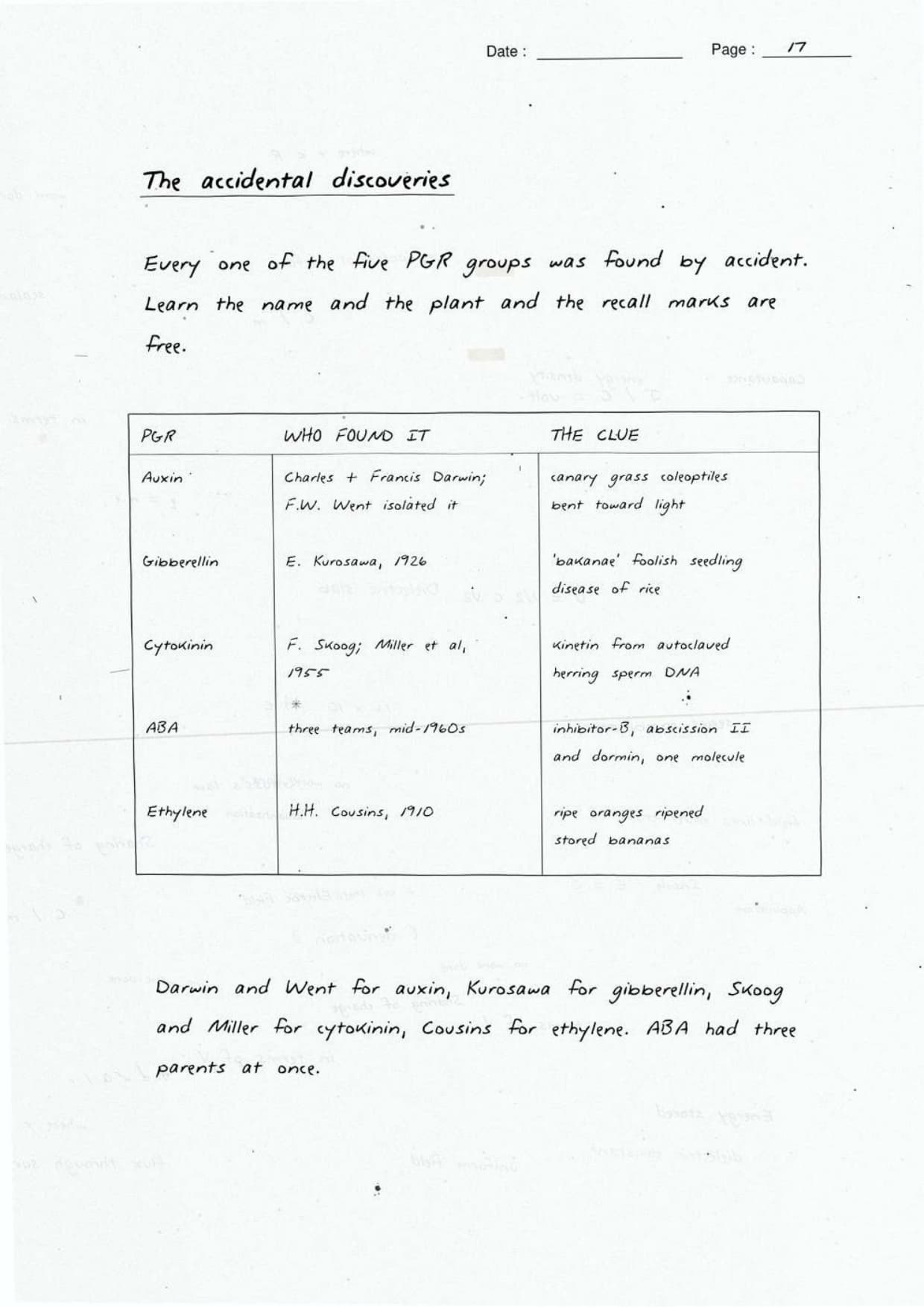
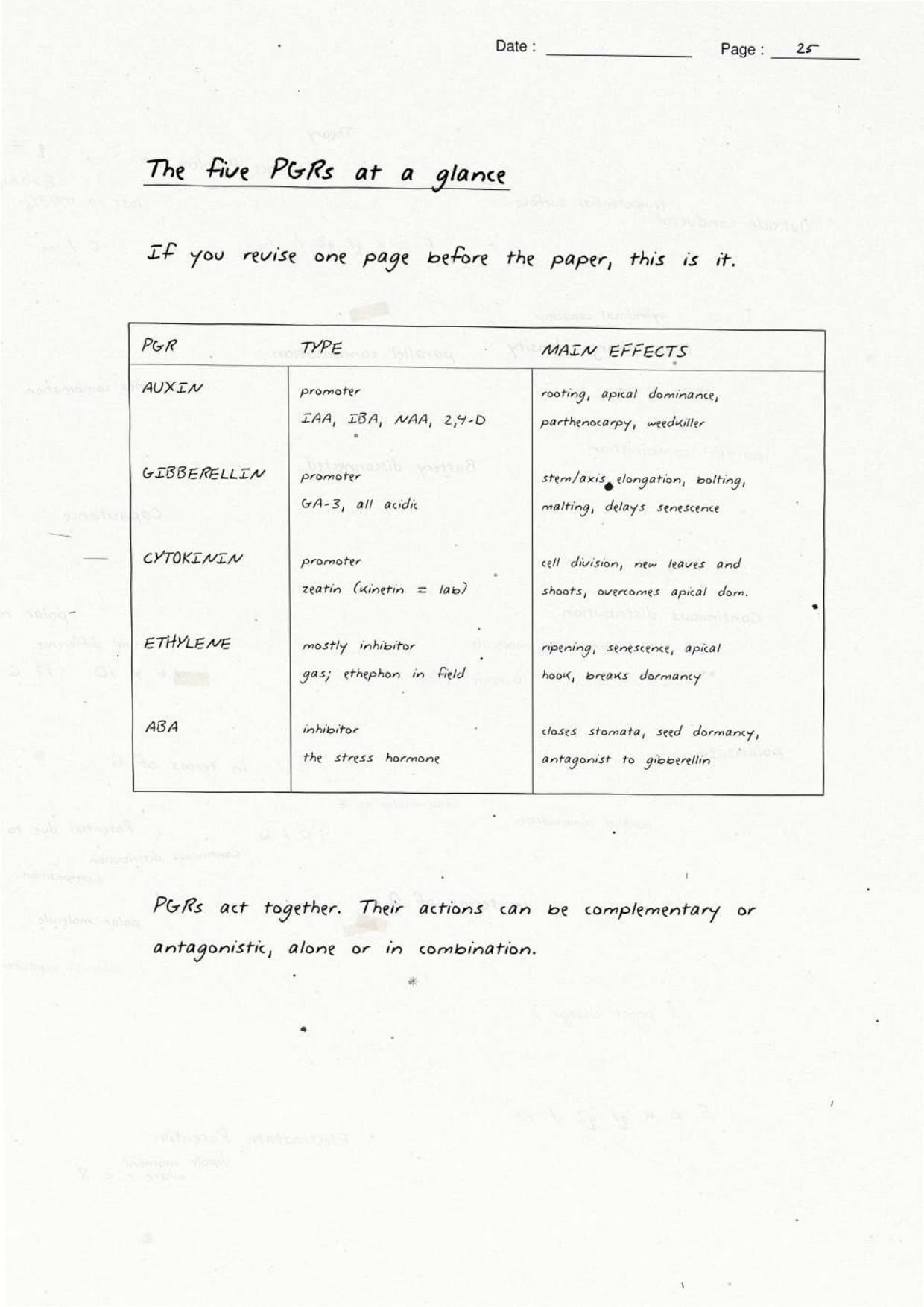
- A single glance table for all five plant growth regulators, their type and their main effects.
What Plant Growth and Development Handwritten Notes Cover
The 32 pages run in NCERT order, from the definition of growth to a night-before recap. Each topic gets its own page so students revise one idea at a time. New sub-headings are written in red and every definition sits inside a hand-drawn box.
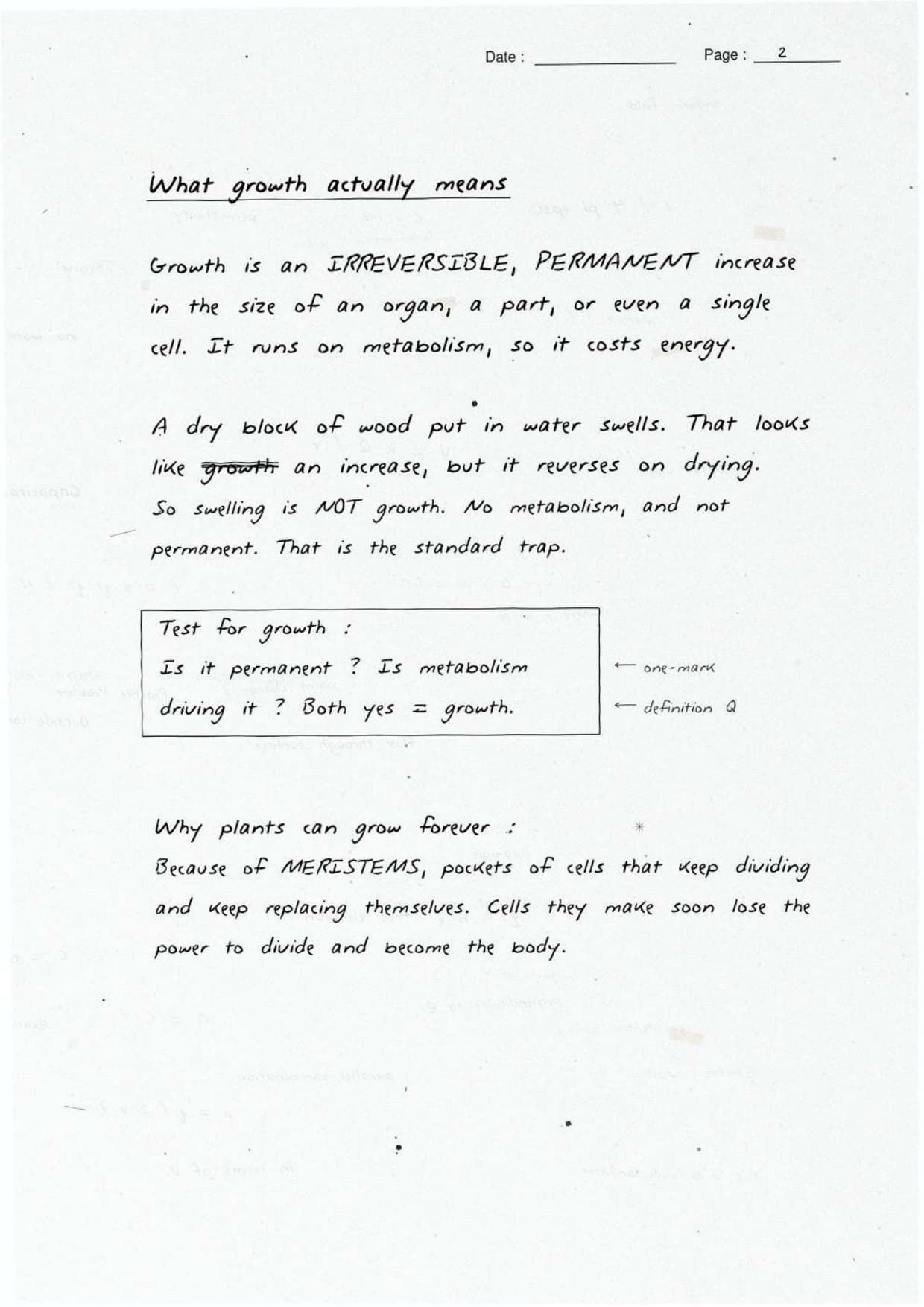
- Growth and the open form: irreversible permanent increase in size, and why meristems keep the plant body unfinished for life.
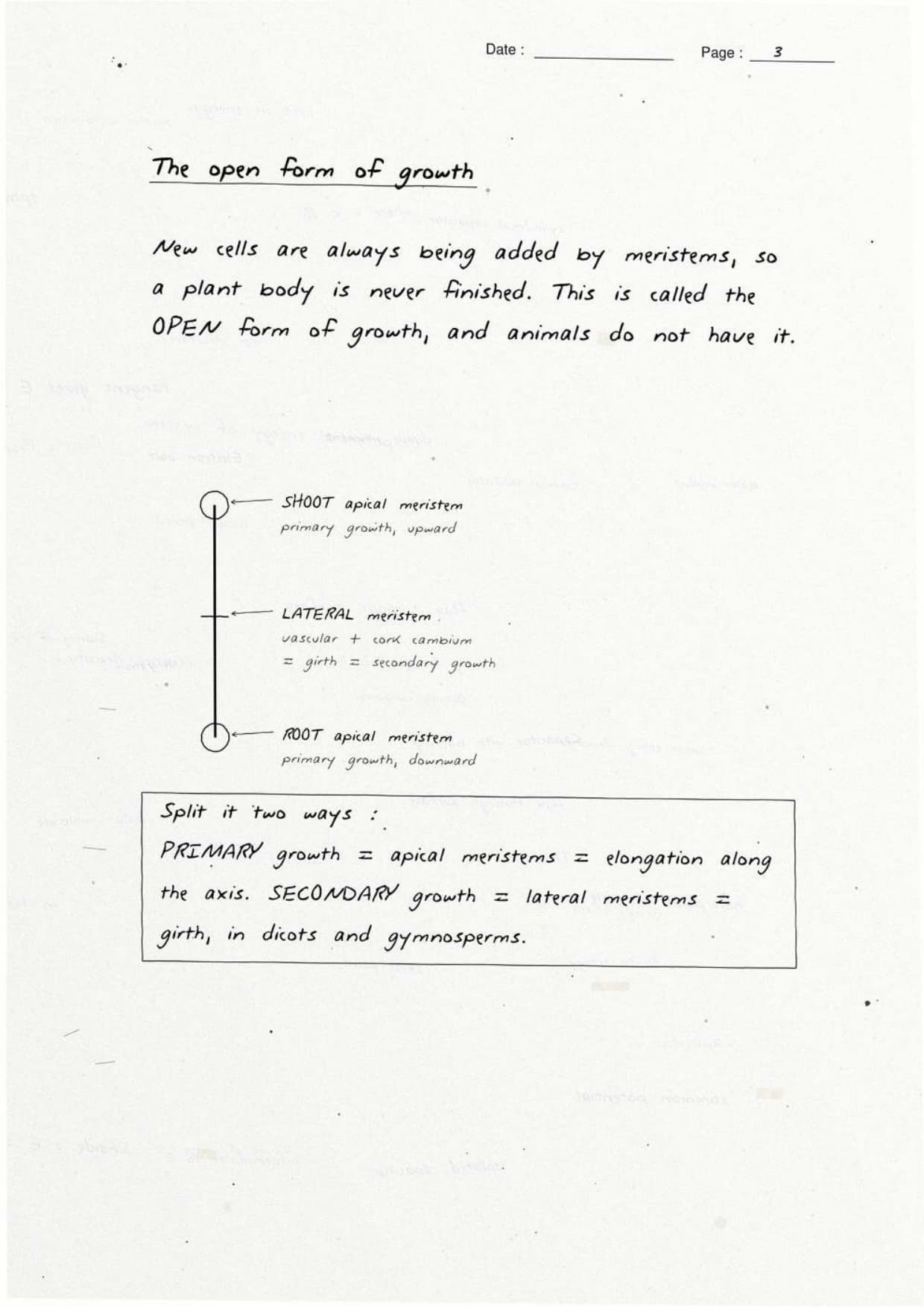
- Meristems: shoot and root apical meristems for primary growth, lateral meristems for girth in dicots and gymnosperms.
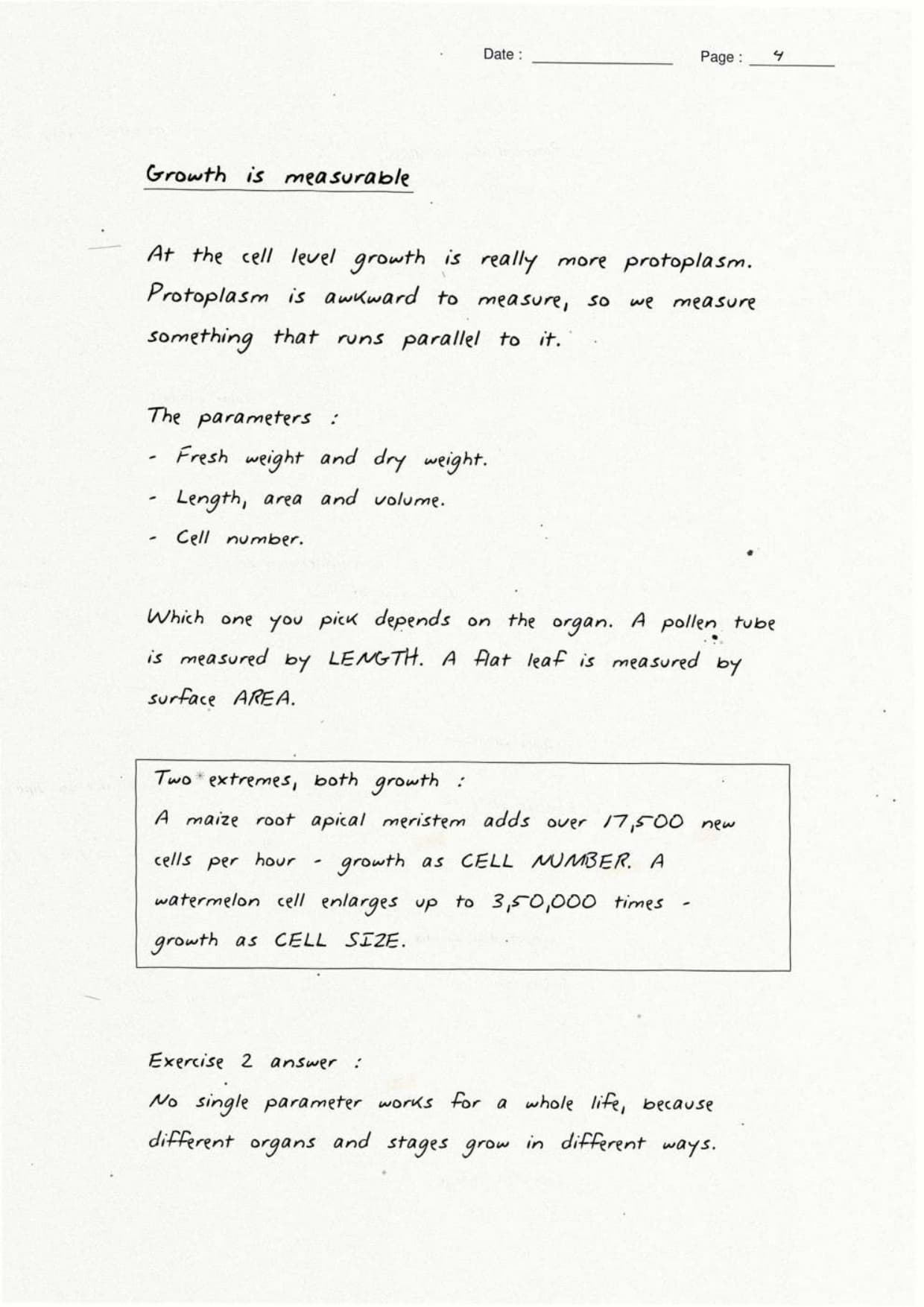
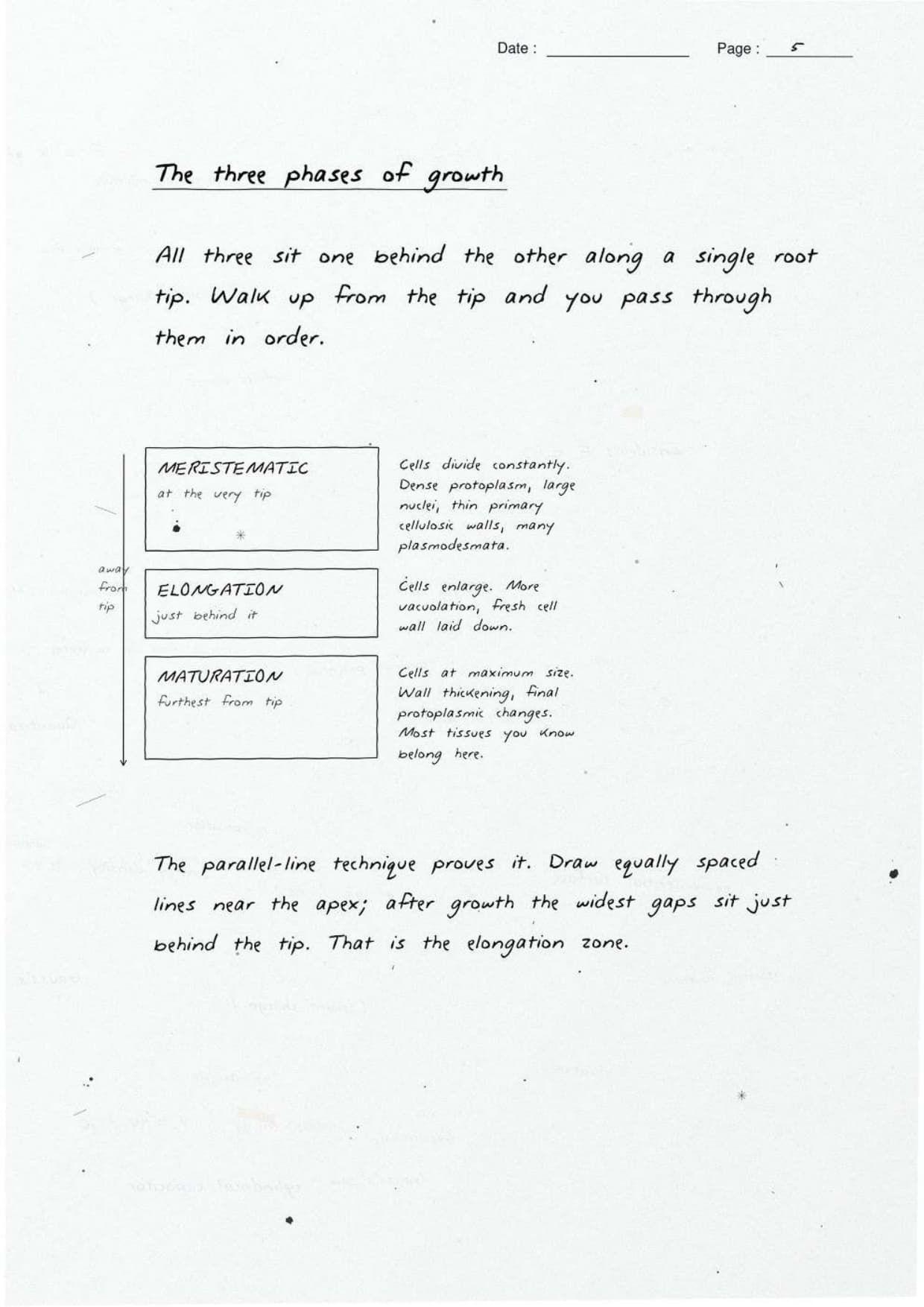
- Measuring growth: the parameters used, plus the three phases along a root tip, which are meristematic, elongation and maturation.
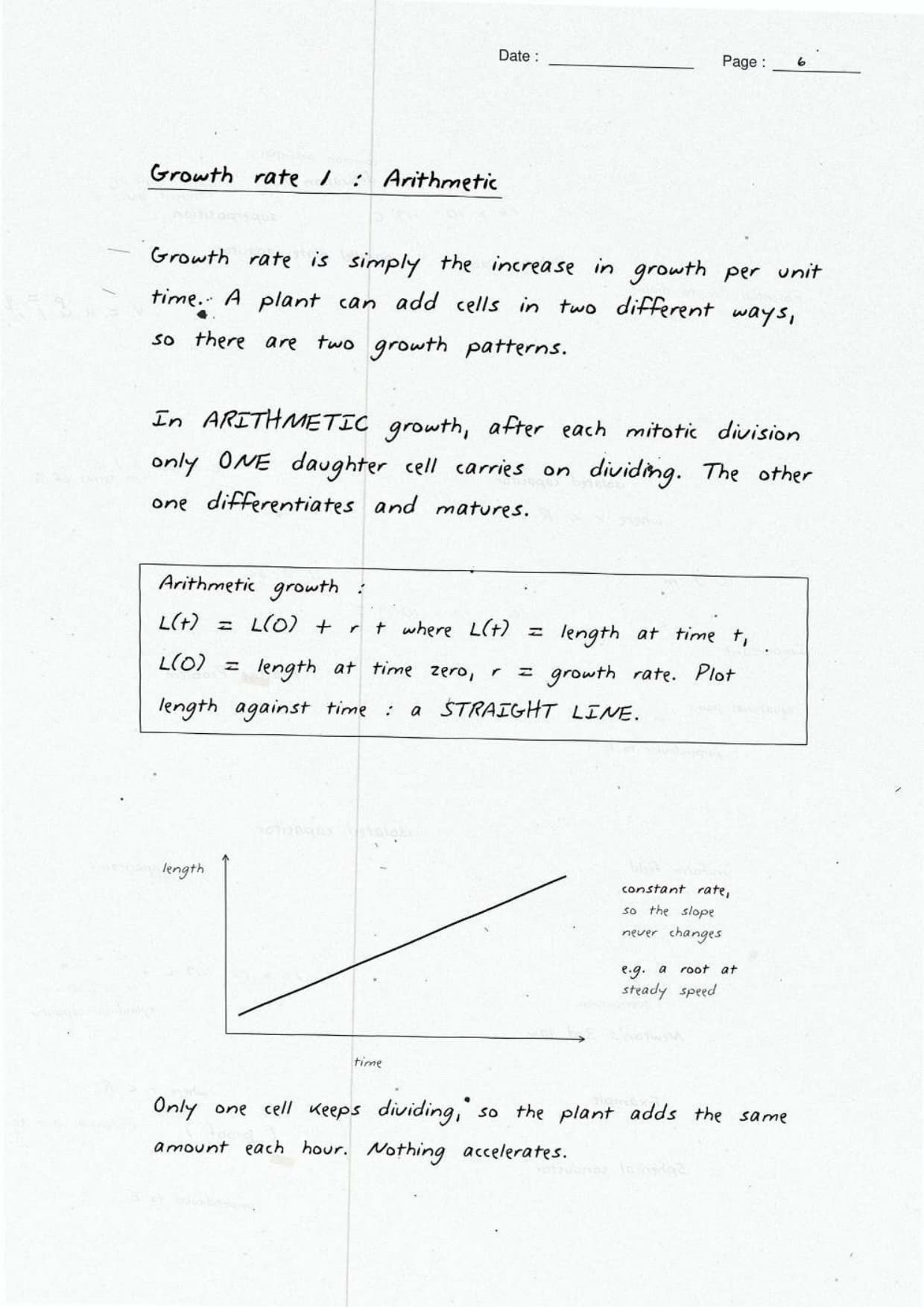
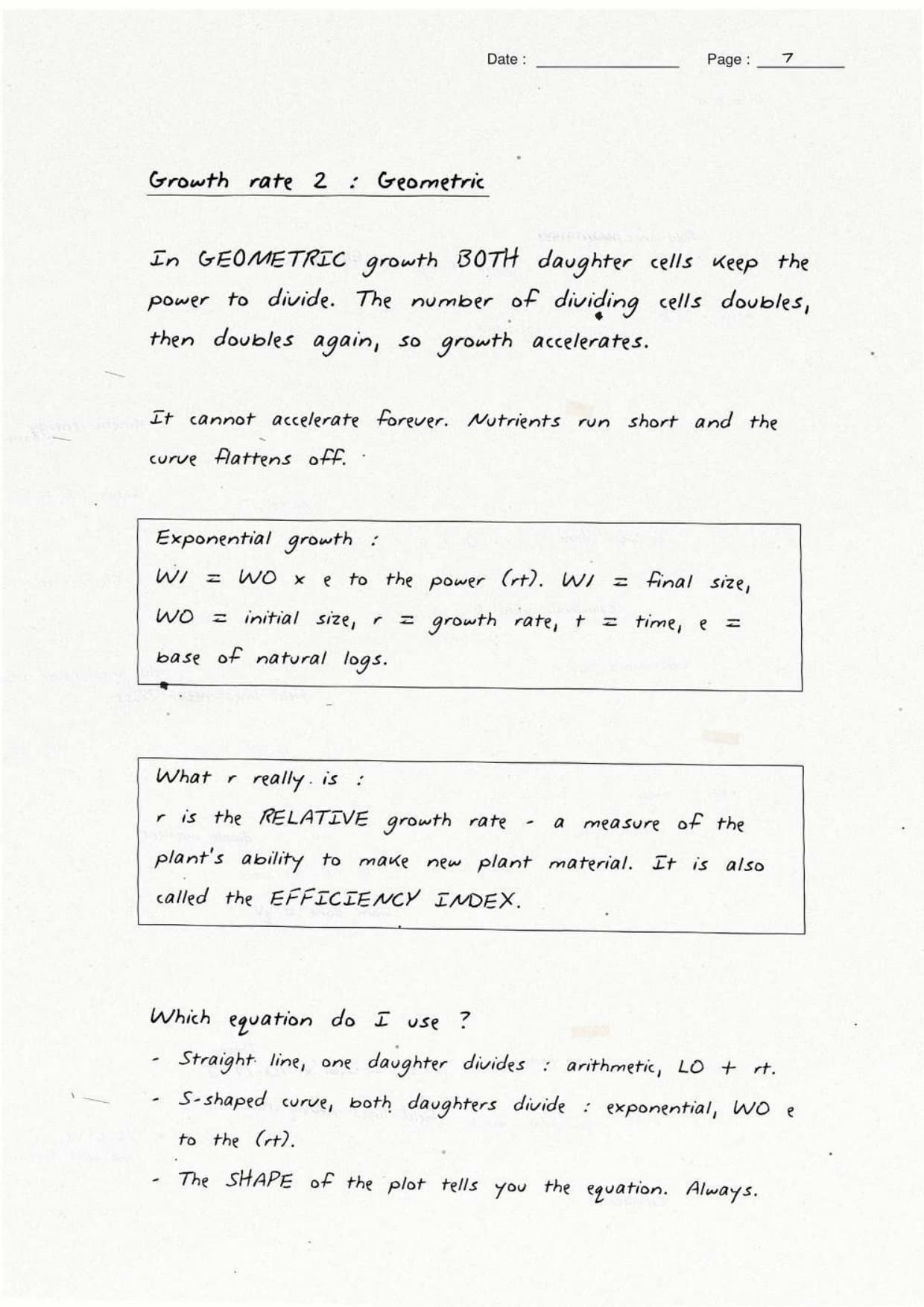
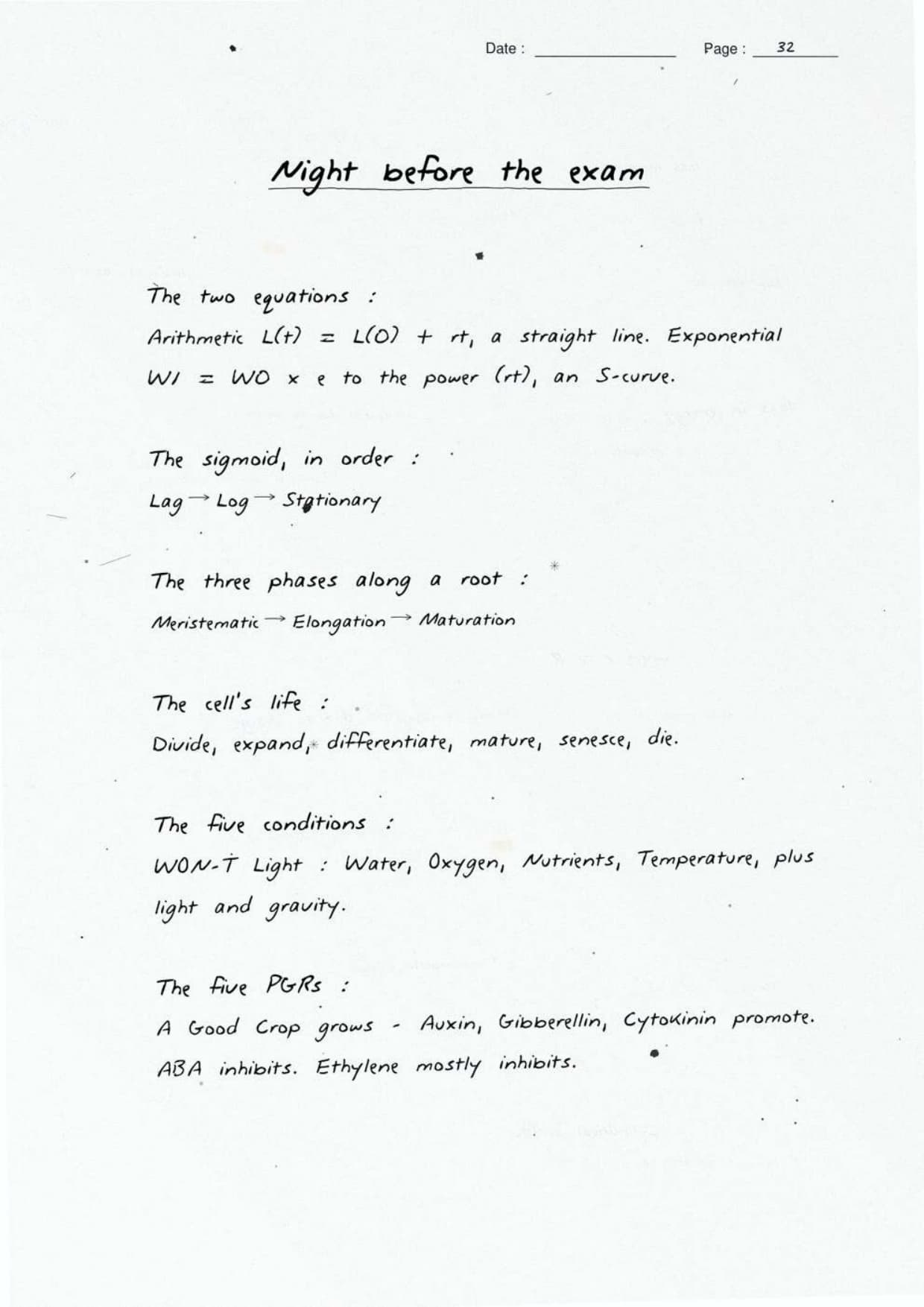
- Growth rates: arithmetic growth as L(t) = L(0) + rt, and geometric growth as W1 = W0 e to the power rt, with r as the efficiency index.
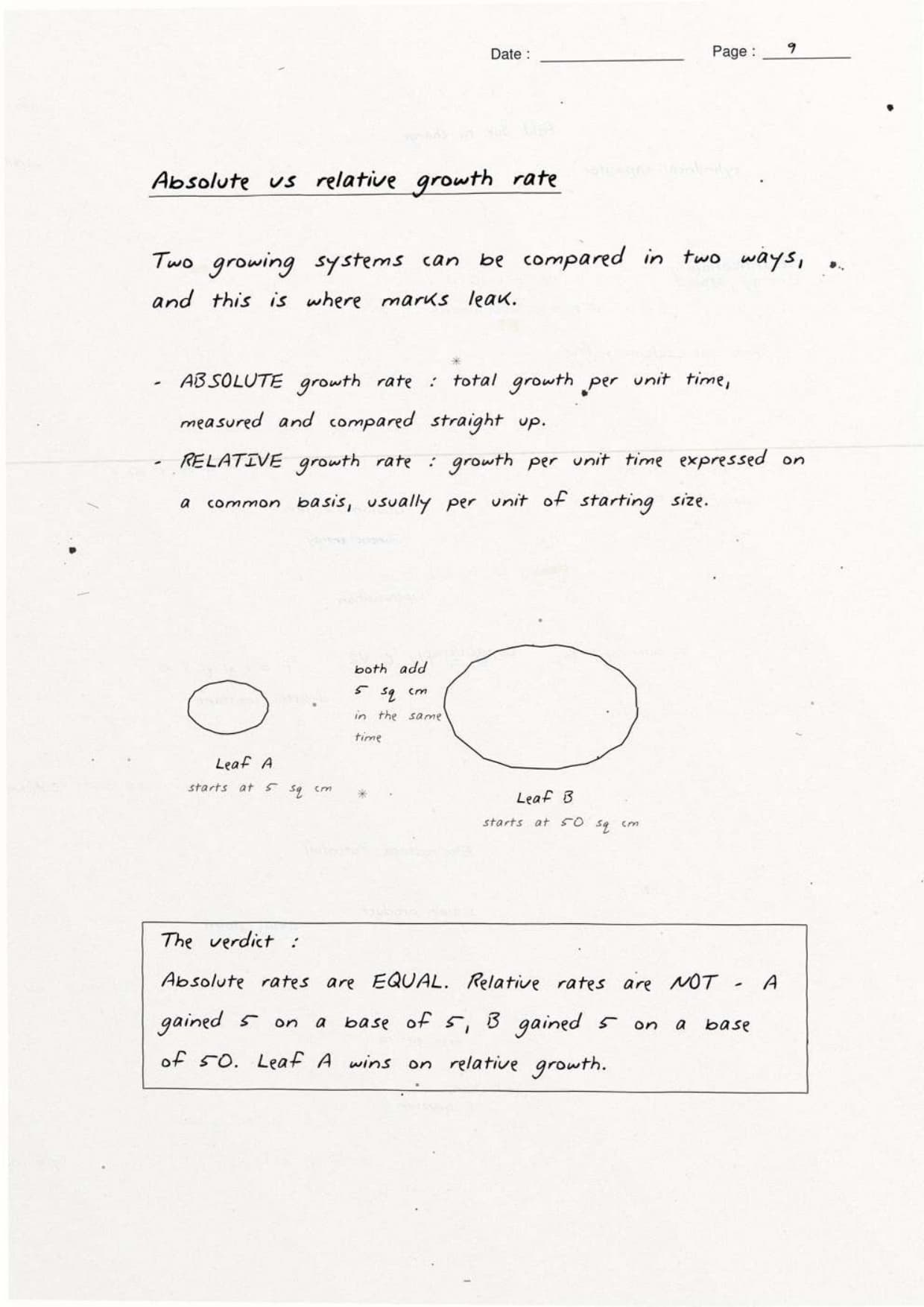
- Absolute against relative growth: the two-leaf comparison that shows equal absolute rates but unequal relative rates.
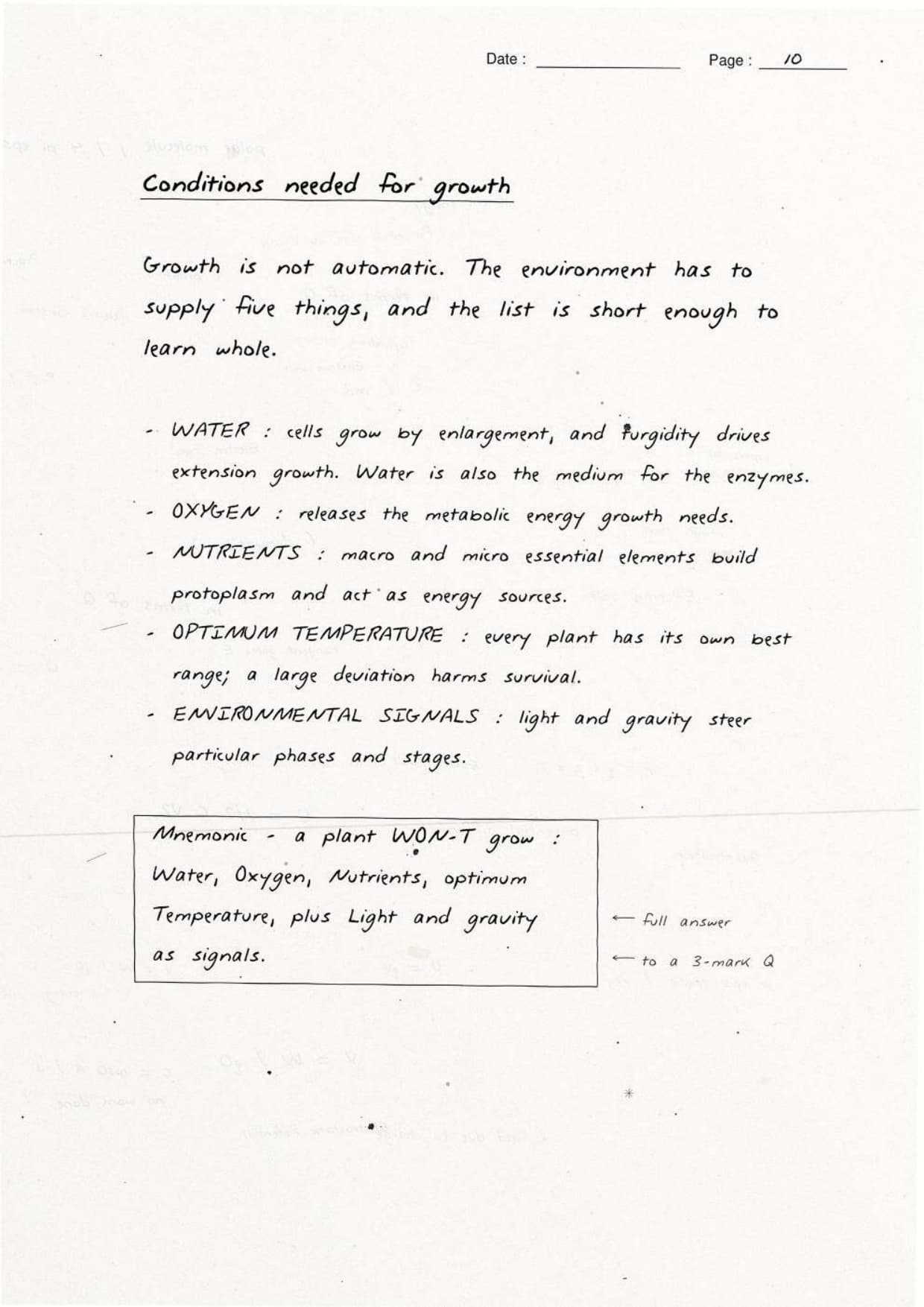
- Conditions for growth: water, oxygen, nutrients, optimum temperature, plus light and gravity as signals.
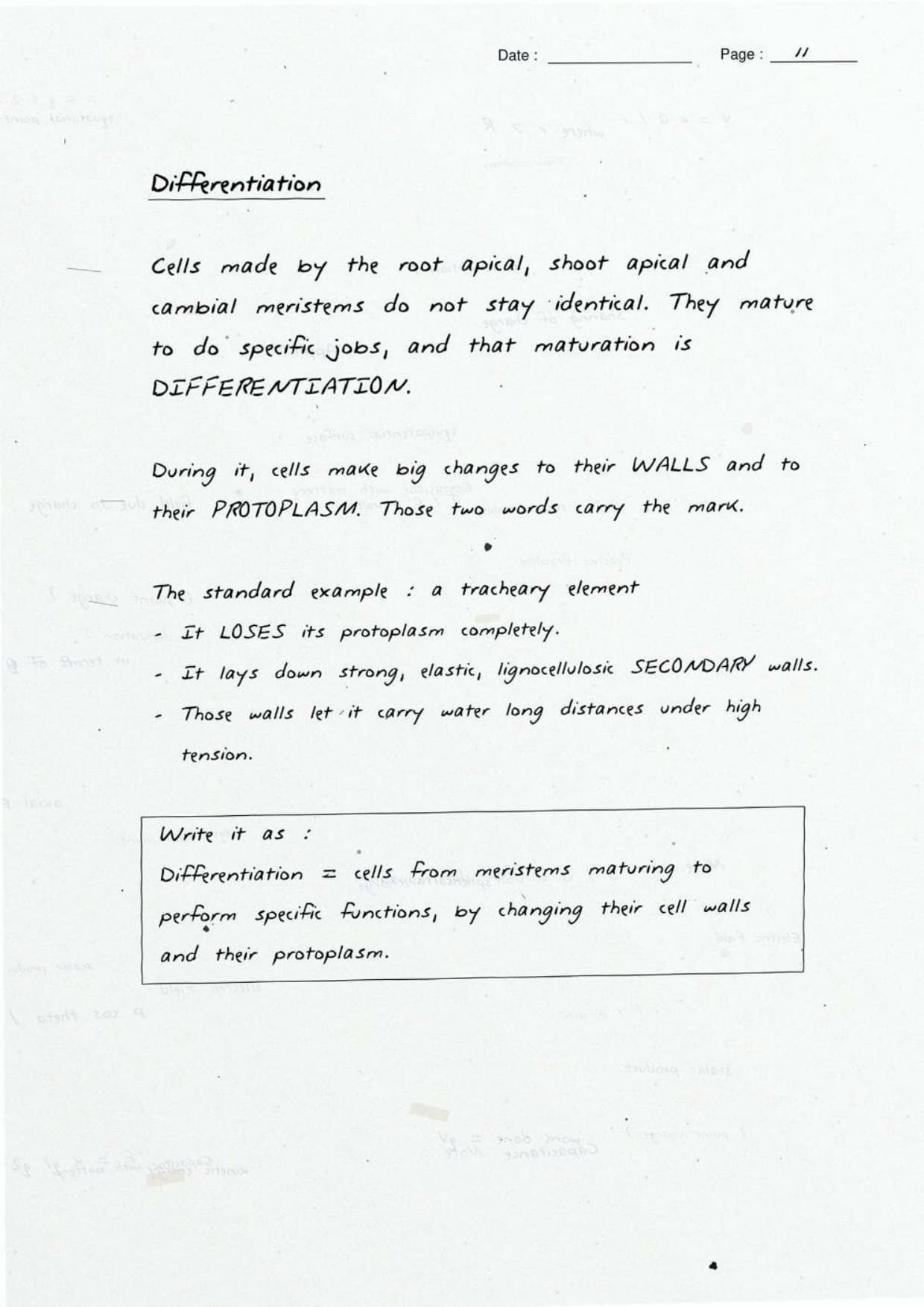
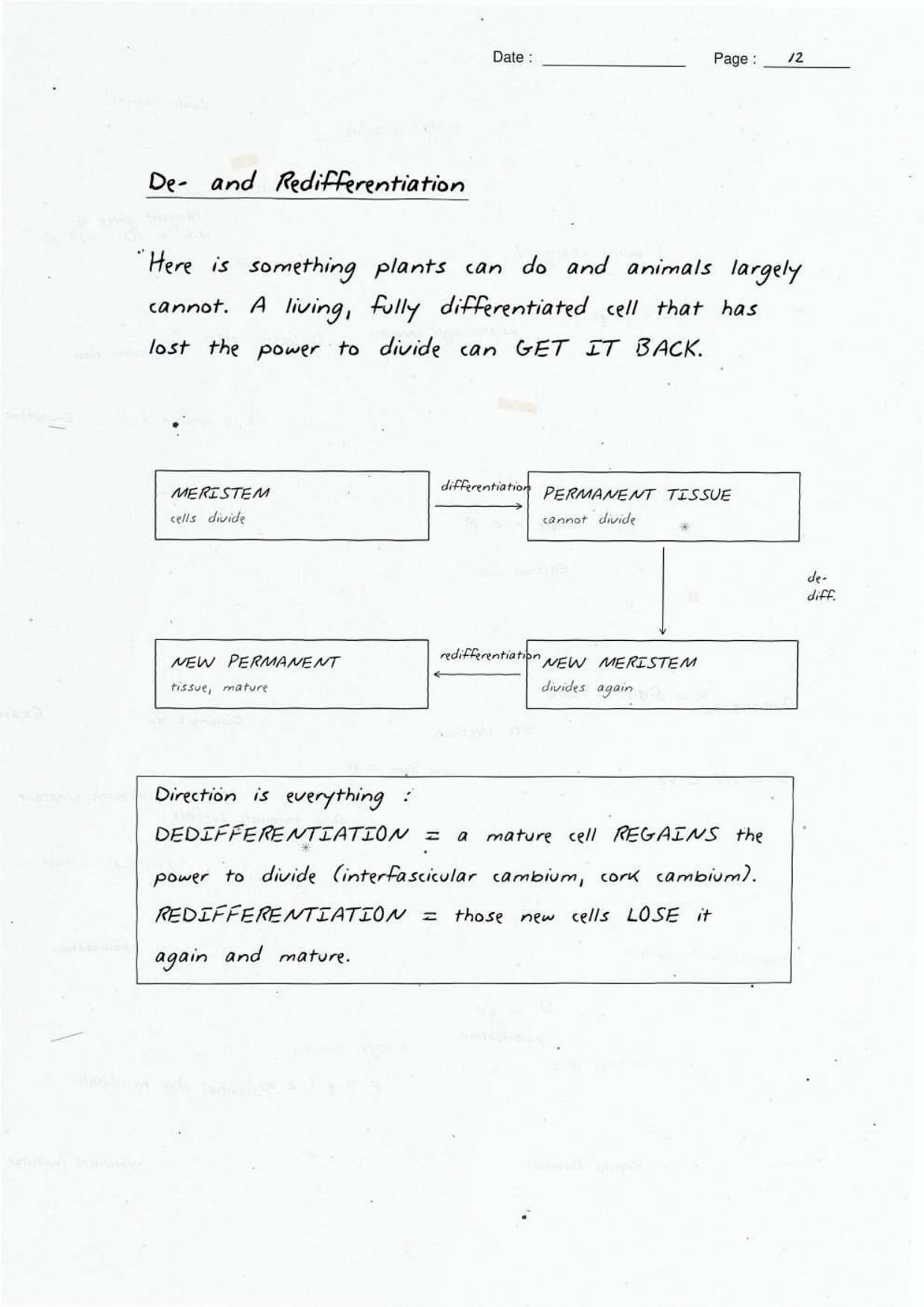
- Differentiation and development: dedifferentiation, redifferentiation, plasticity and heterophylly in cotton, coriander and buttercup.
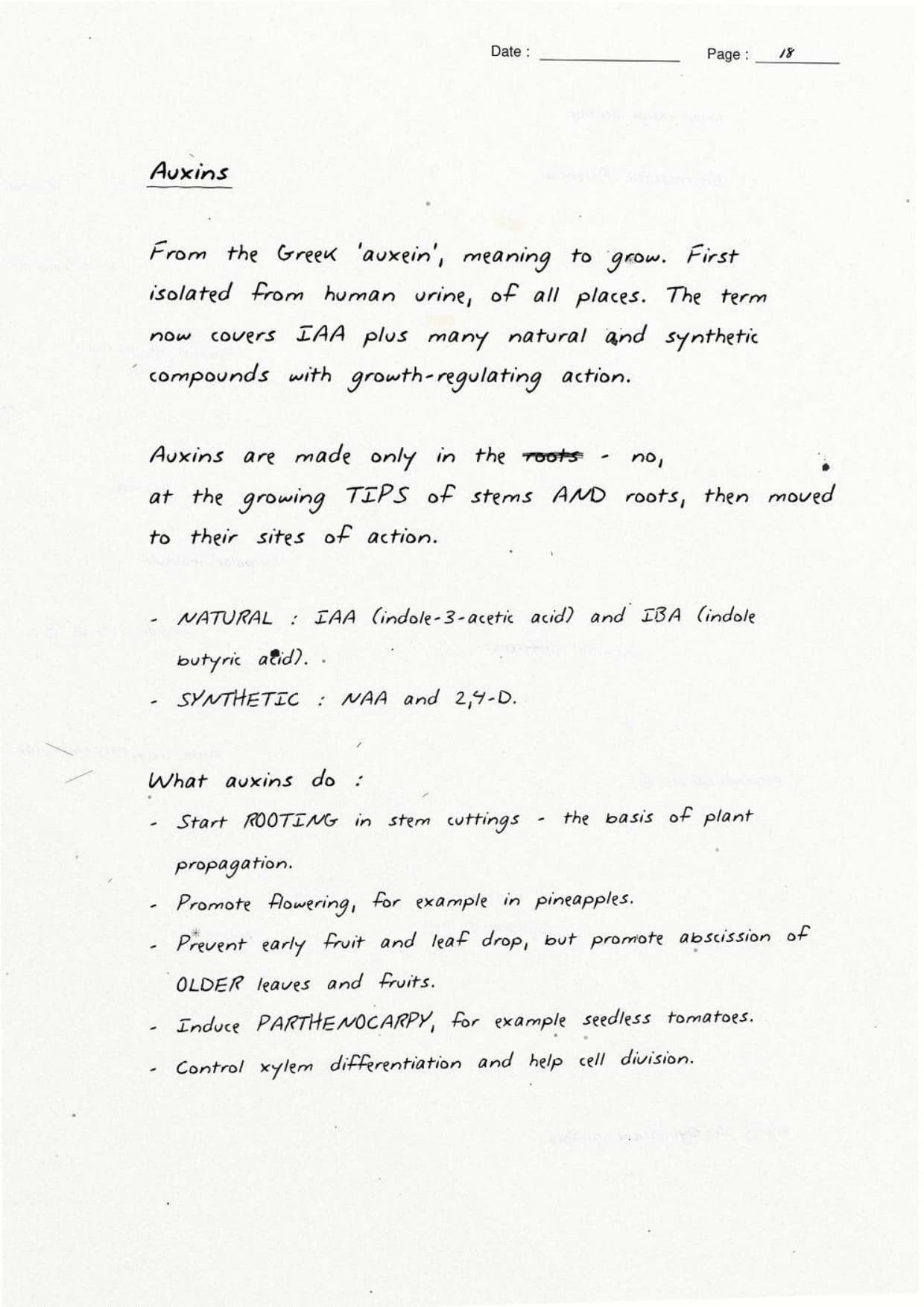
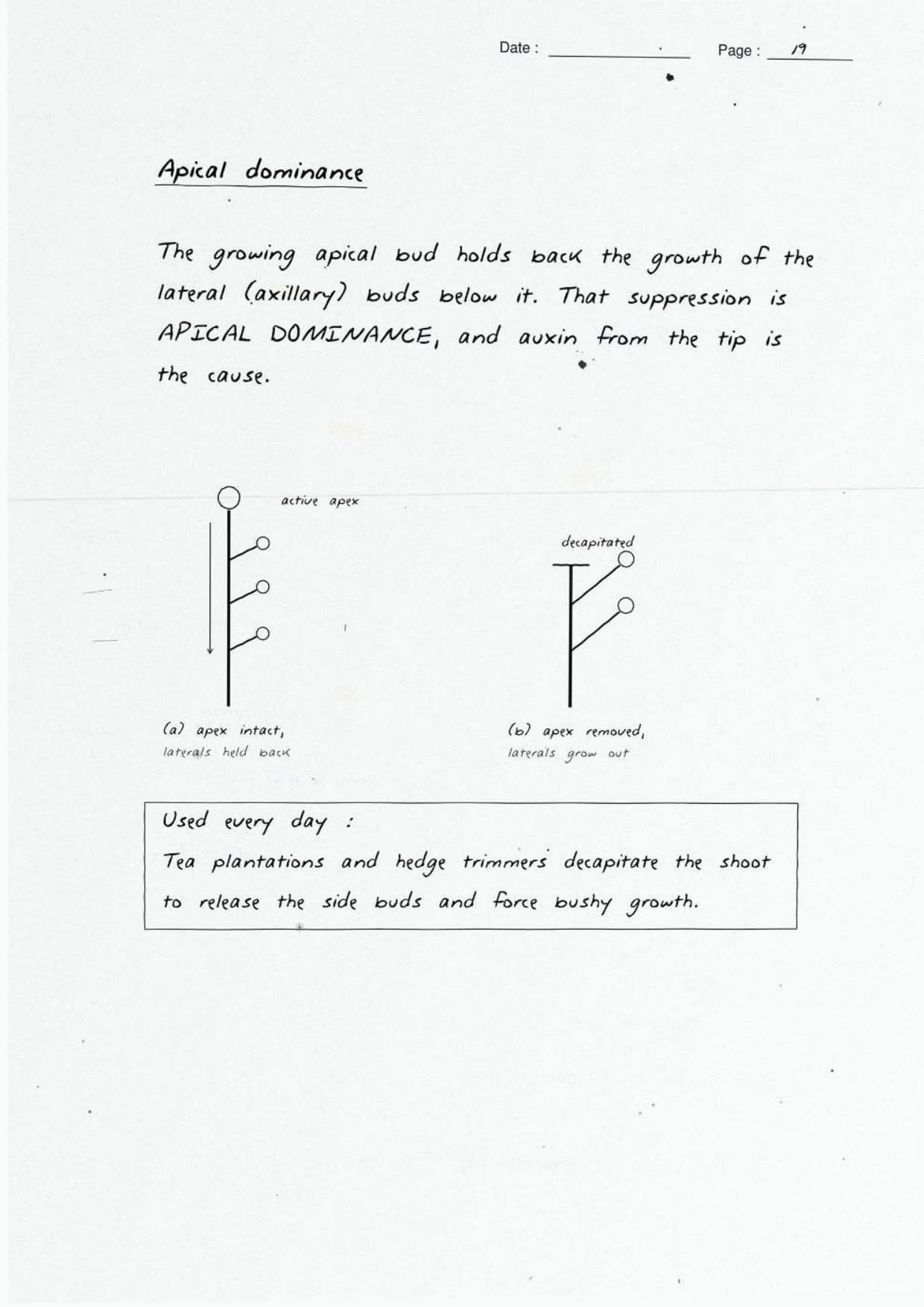
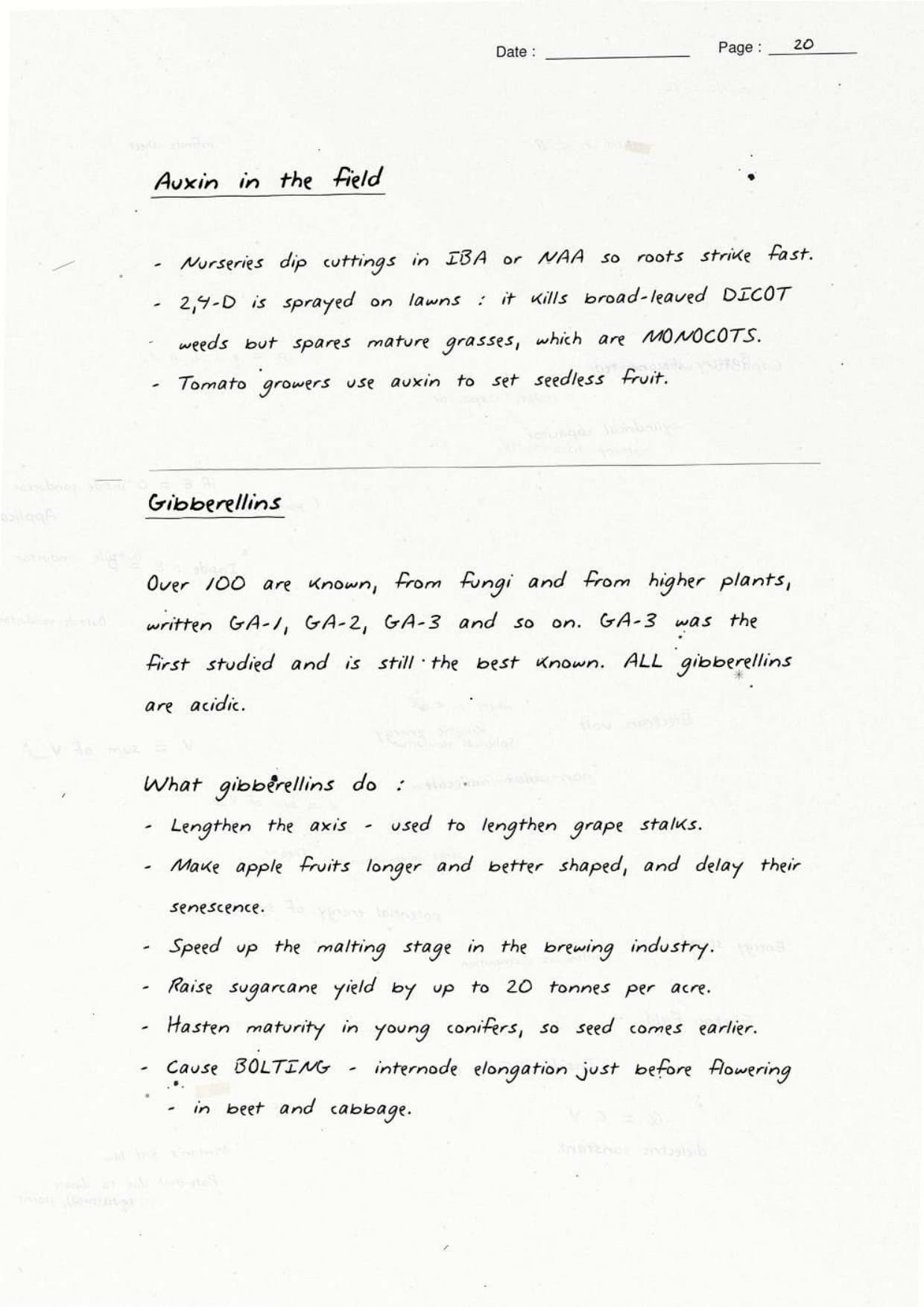
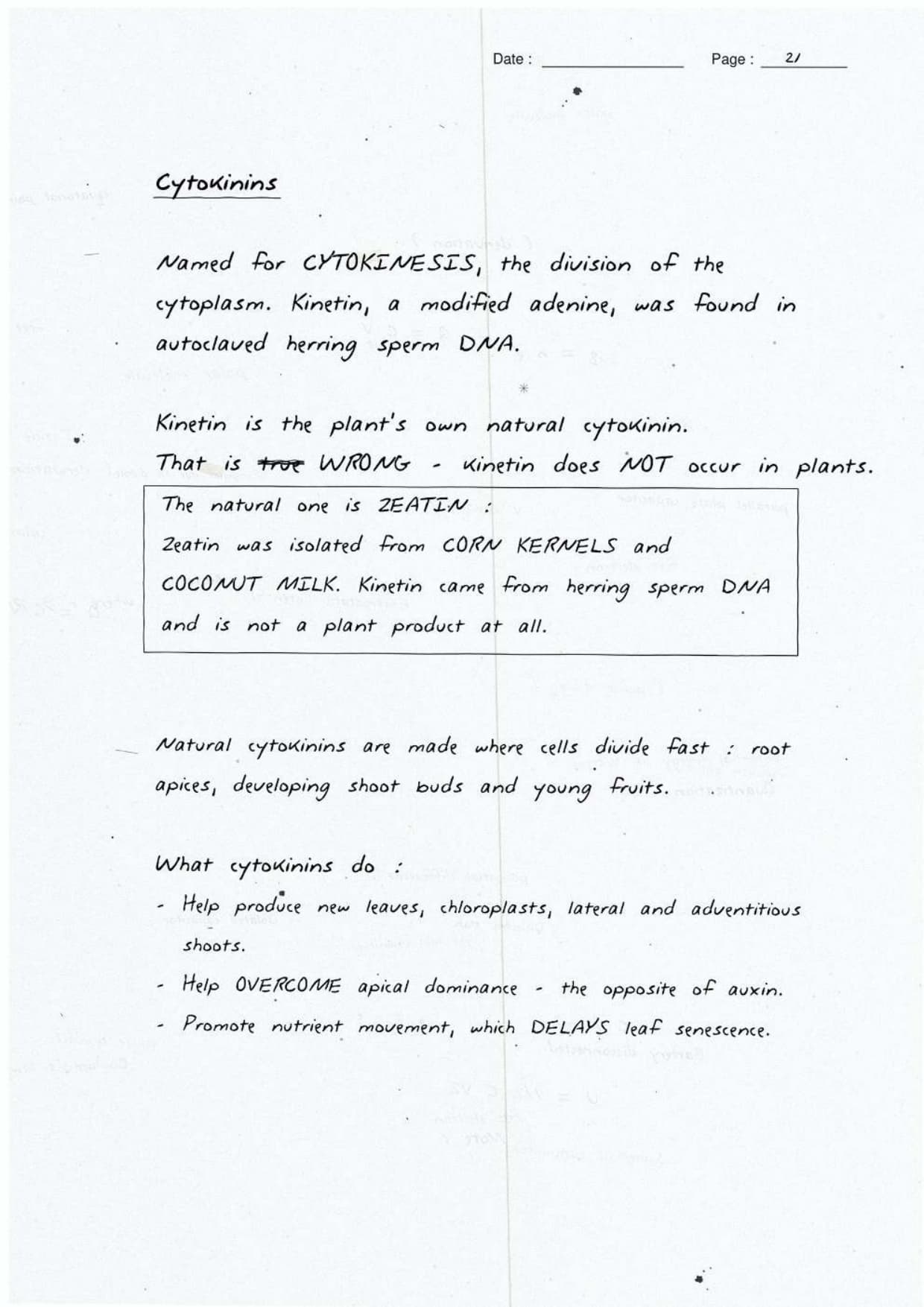
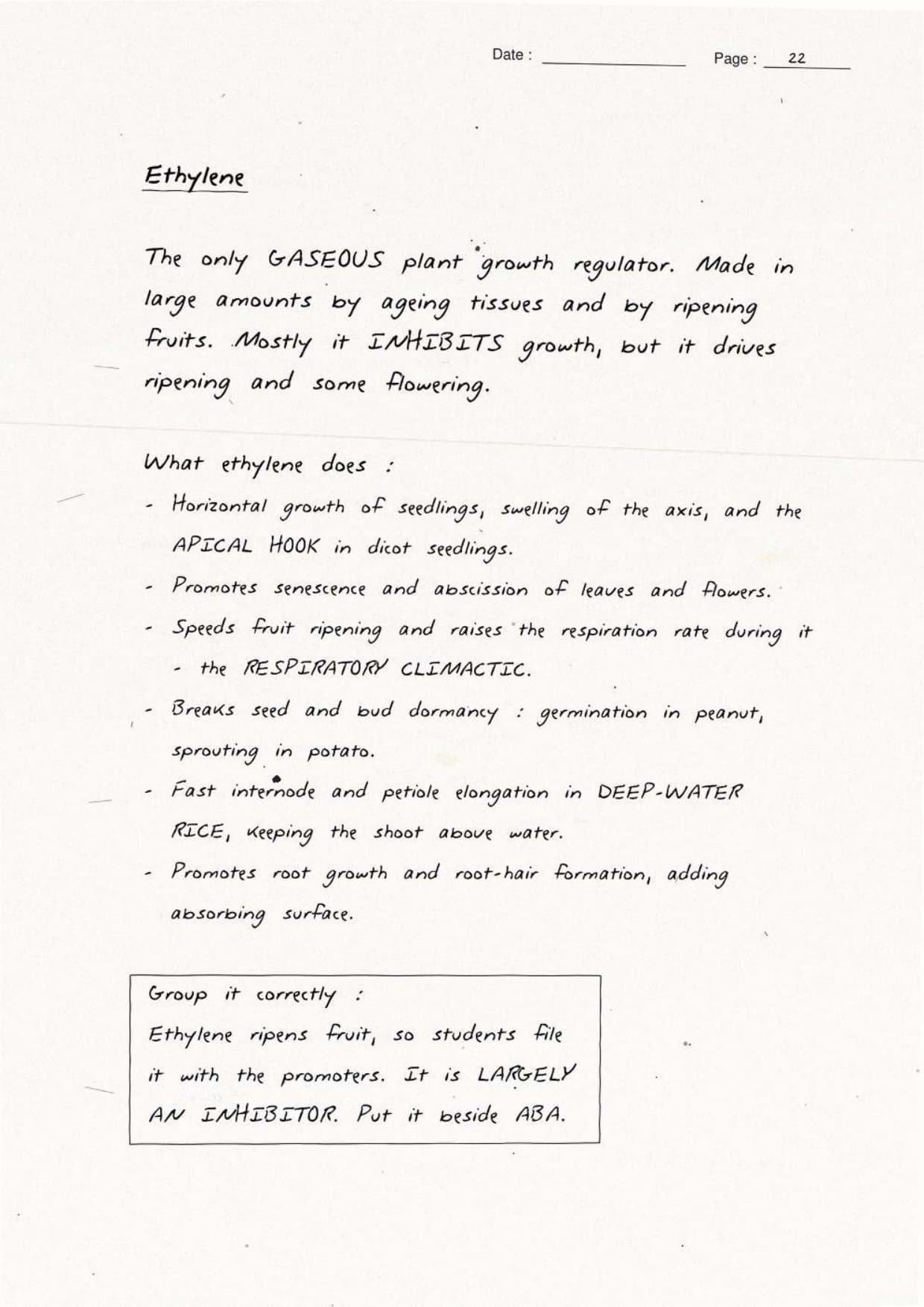
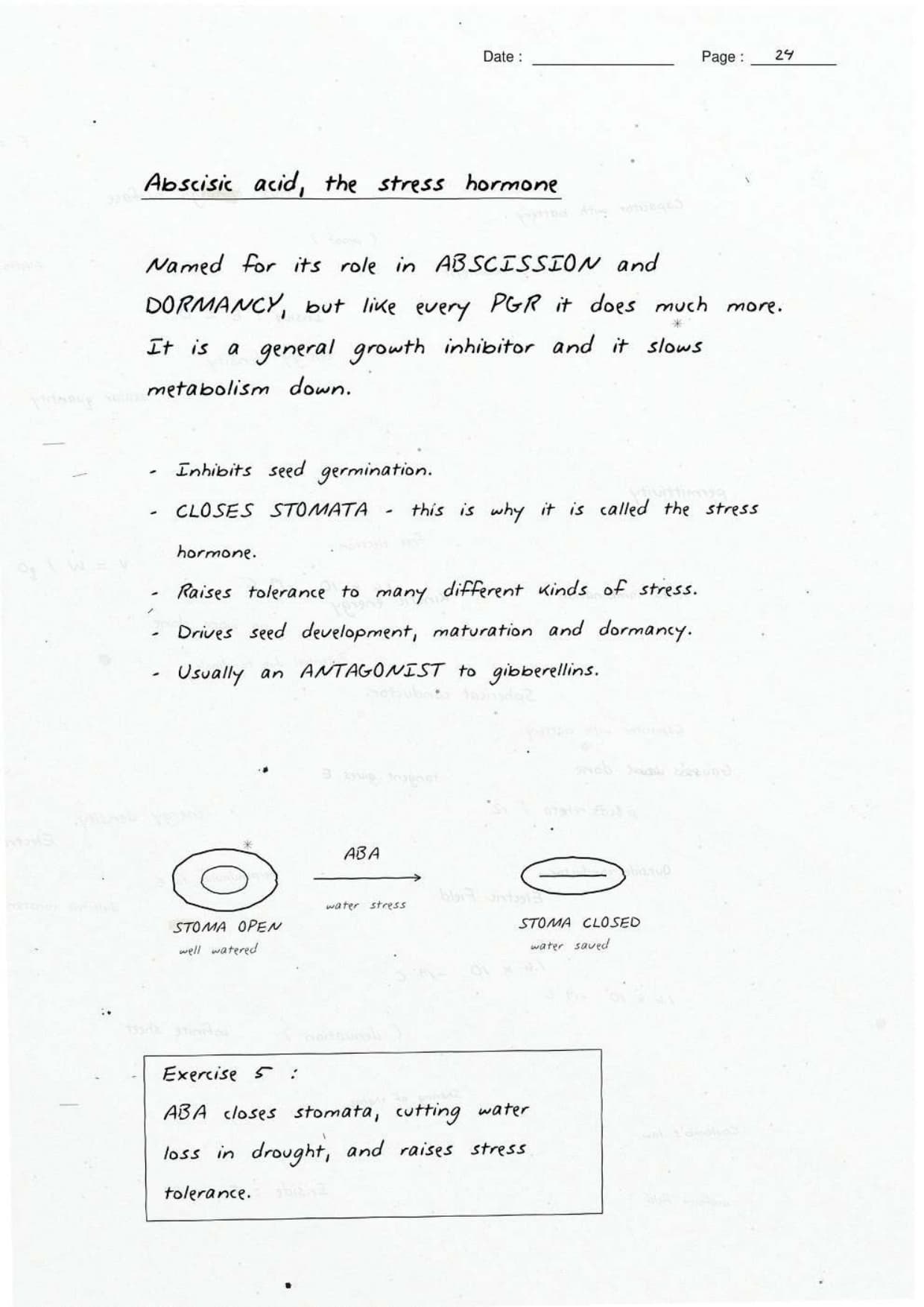
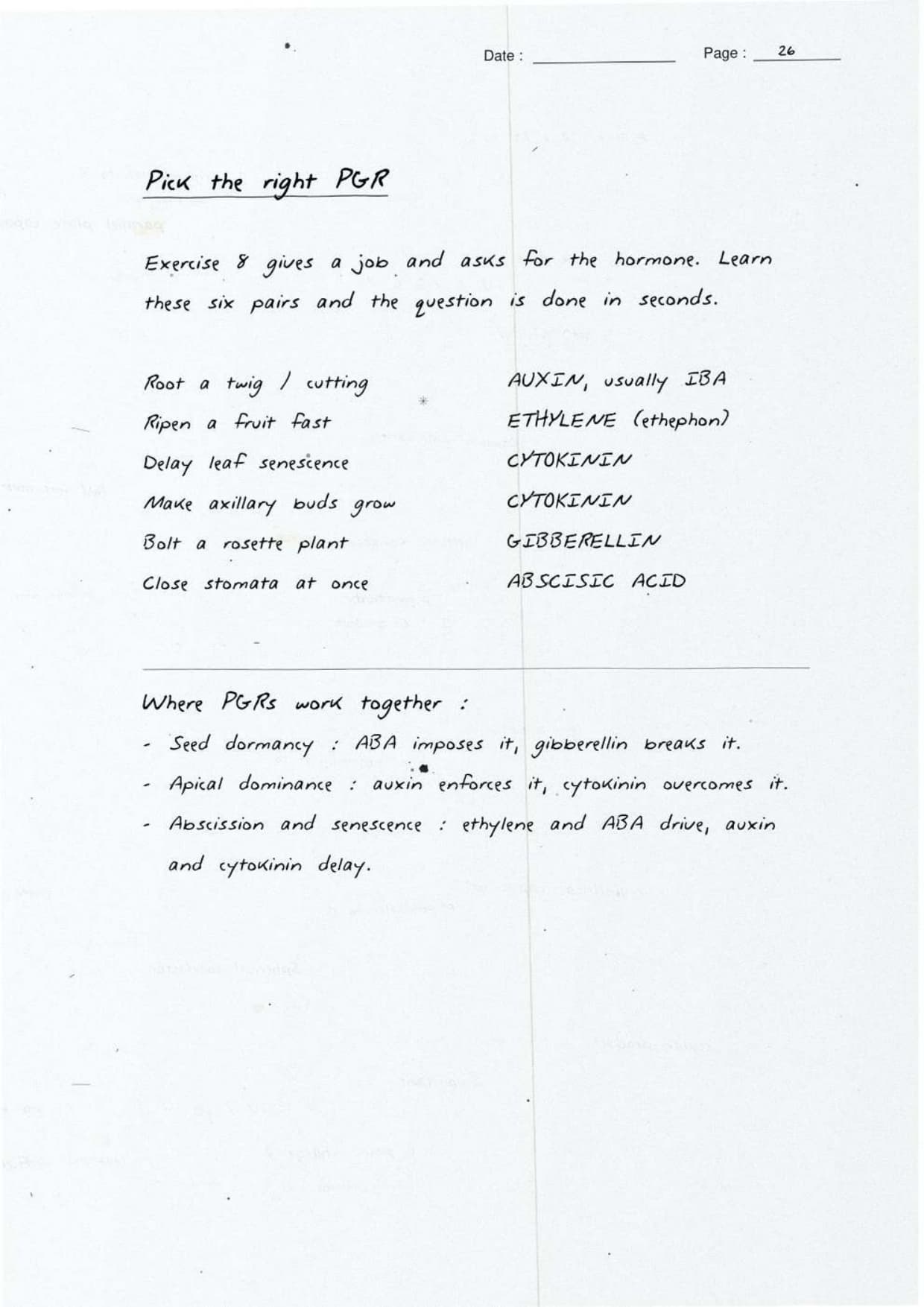
- All five regulators: auxins, gibberellins, cytokinins, ethylene and abscisic acid, with discovery, effects and field uses.
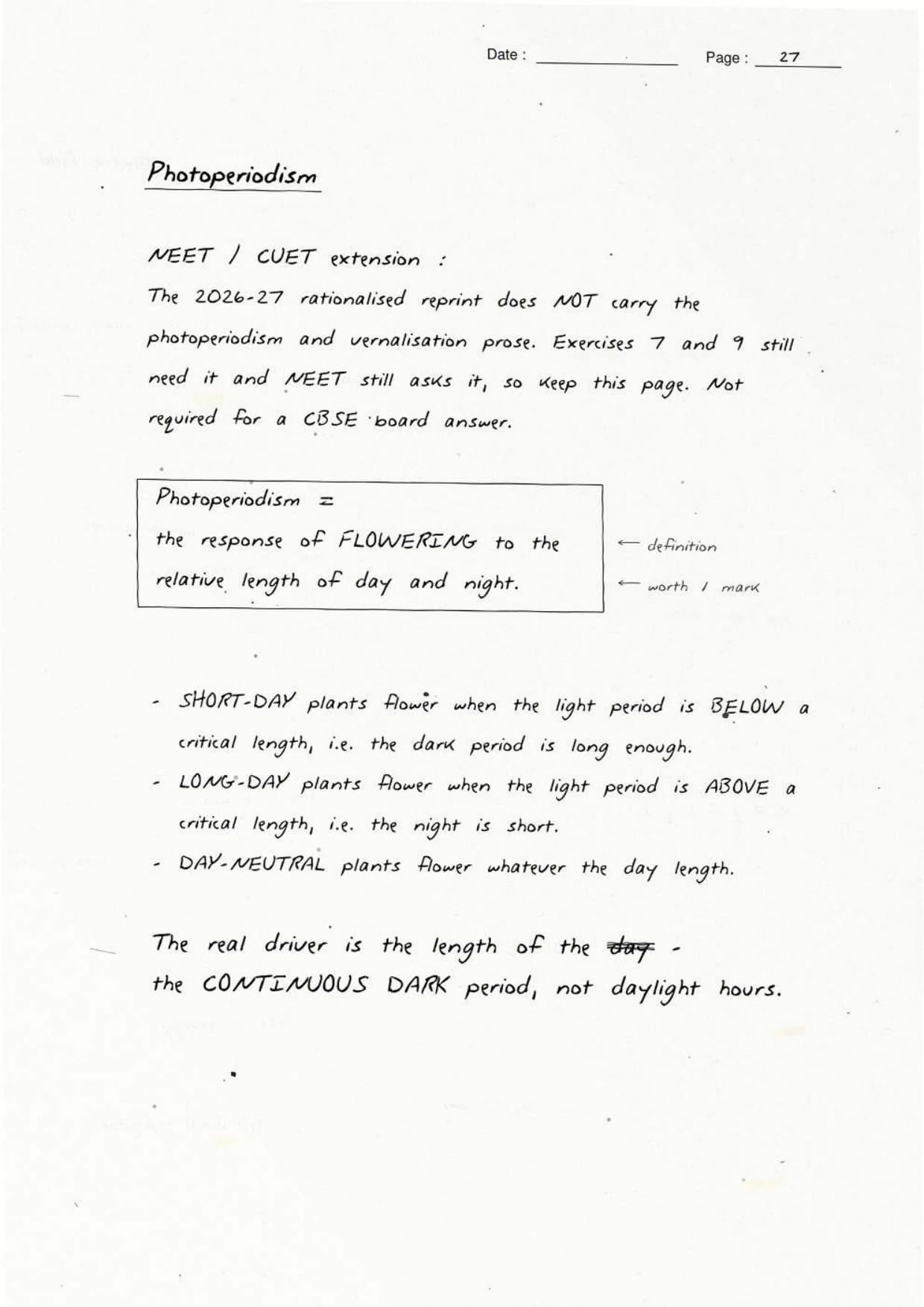
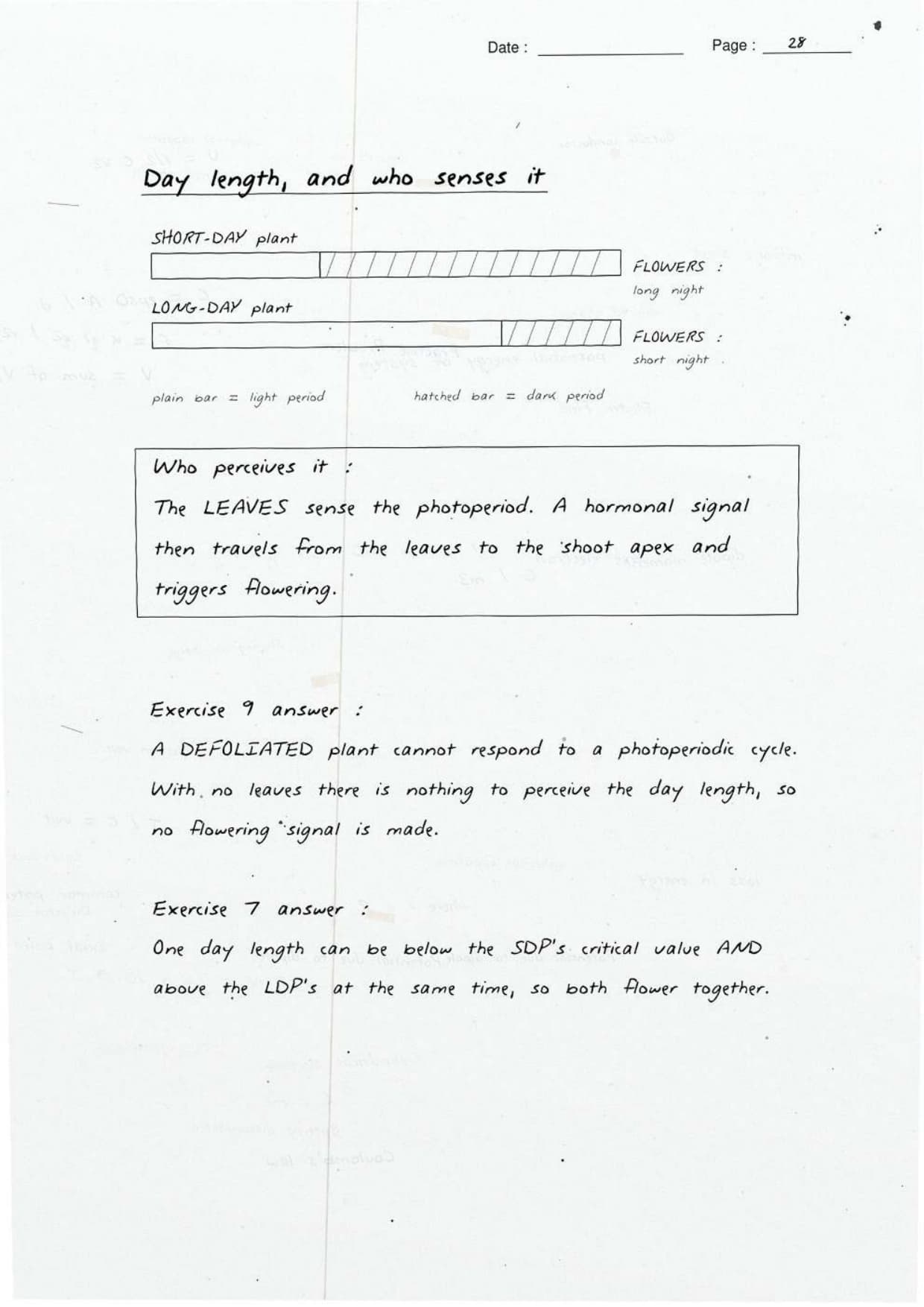
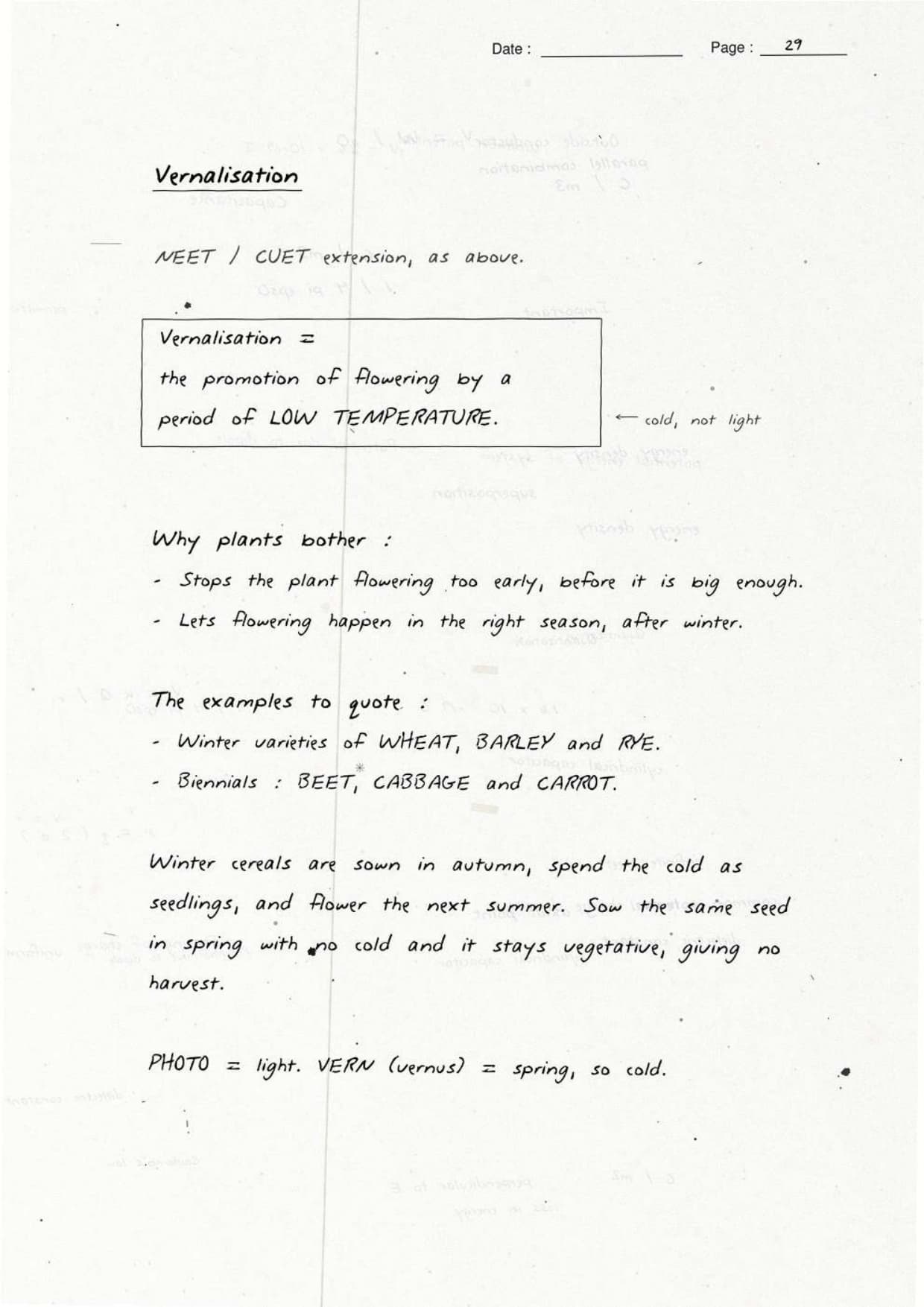
Photoperiodism and vernalisation are marked as a NEET and CUET extension, since the current 2026-27 NCERT print drops that prose from the board syllabus. Exercises 7 and 9 still need those two pages.
Key Diagrams and Terms in Plant Growth and Development Notes
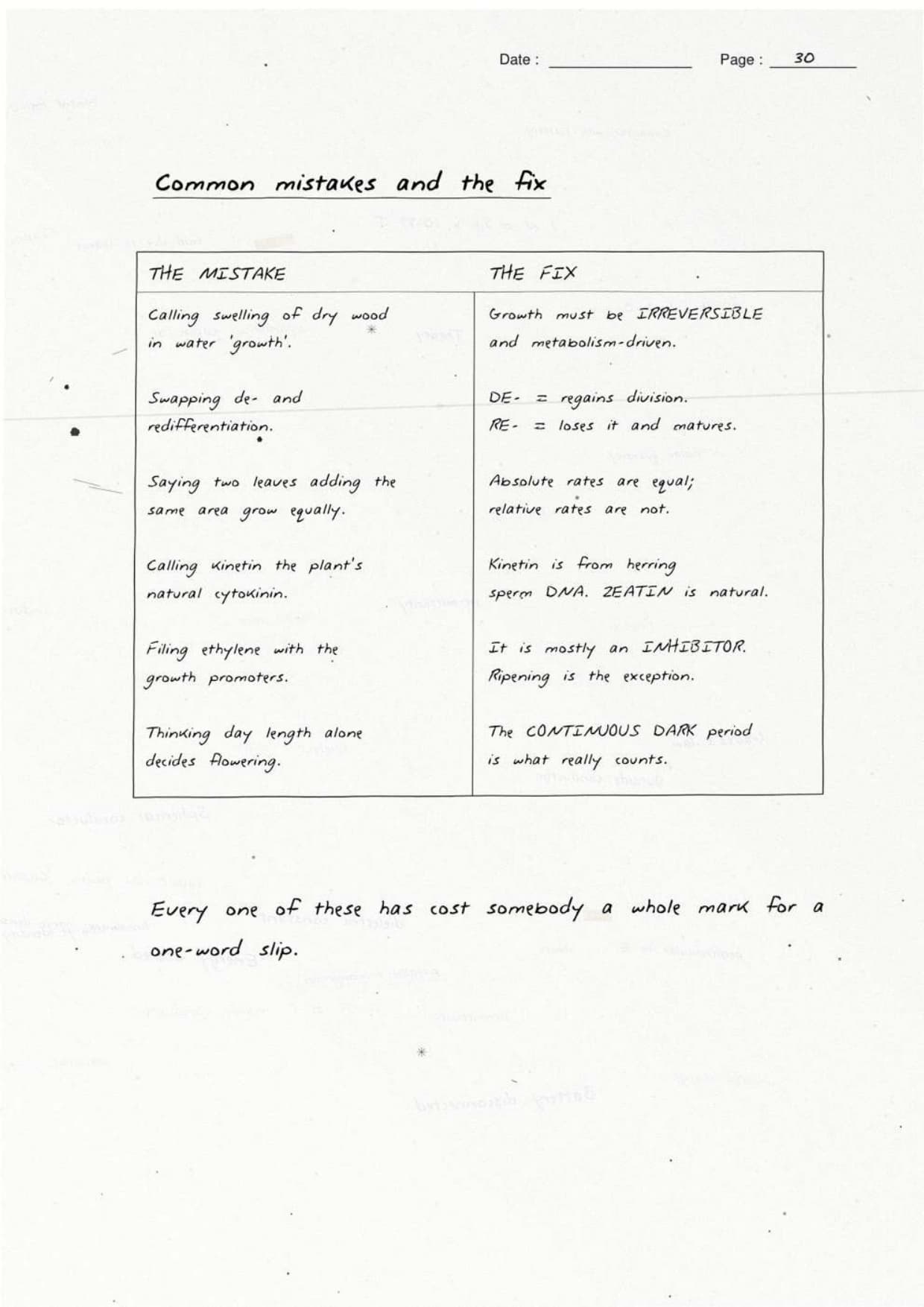
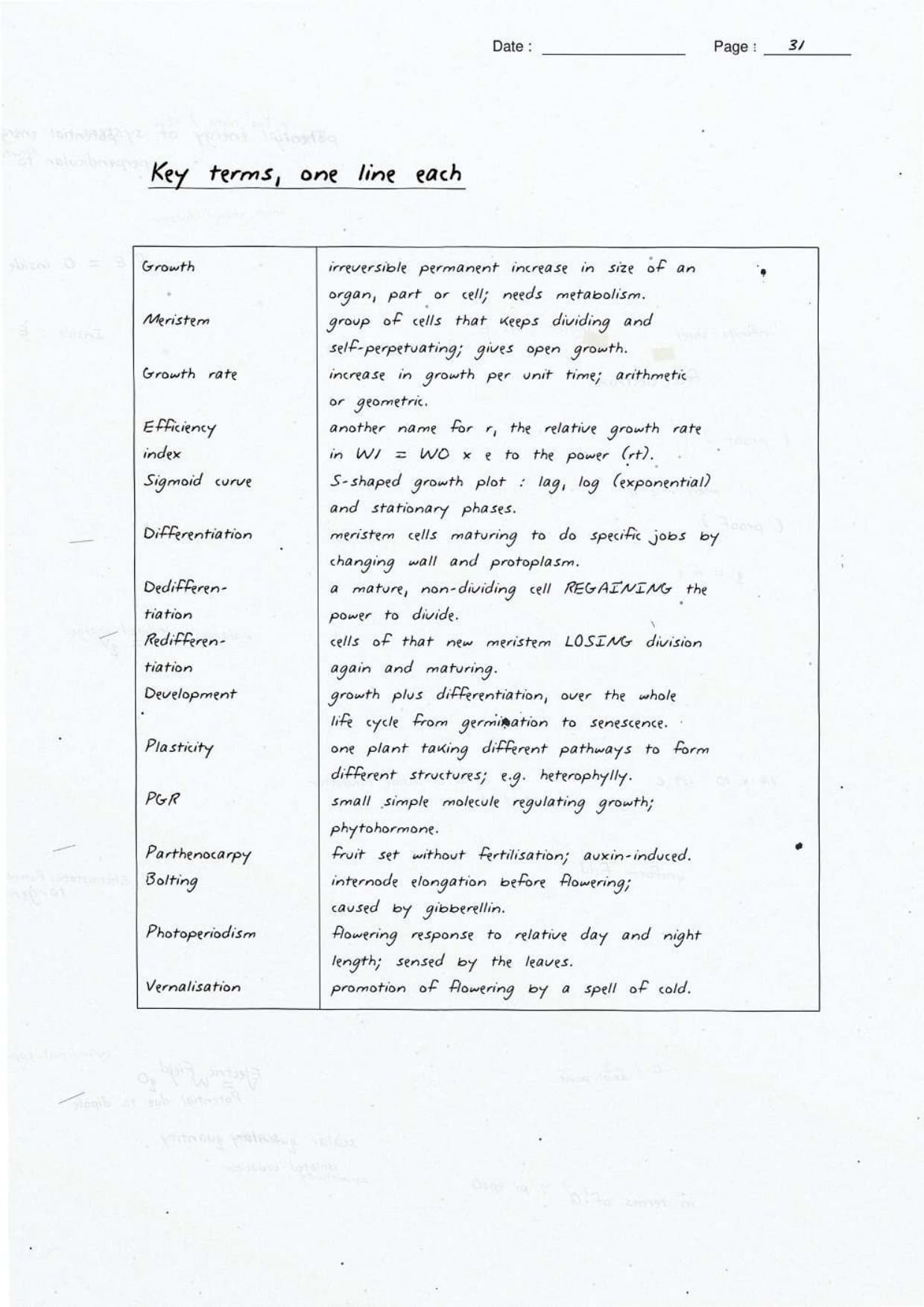
Most marks leak on terms that differ by one prefix. The boxed table below is the block students get wrong most often, because the meanings sit so close together.
| Term | How the notes define it |
|---|---|
| Growth | Irreversible permanent increase in size of an organ, part or cell; needs metabolism |
| Efficiency index | Another name for r, the relative growth rate in the exponential equation |
| Differentiation | Meristem cells maturing to do specific jobs by changing wall and protoplasm |
| Dedifferentiation | A mature, non-dividing cell regaining the power to divide |
| Redifferentiation | Cells of that new meristem losing division again and maturing |
| Plasticity | One plant taking different pathways to form different structures, as in heterophylly |
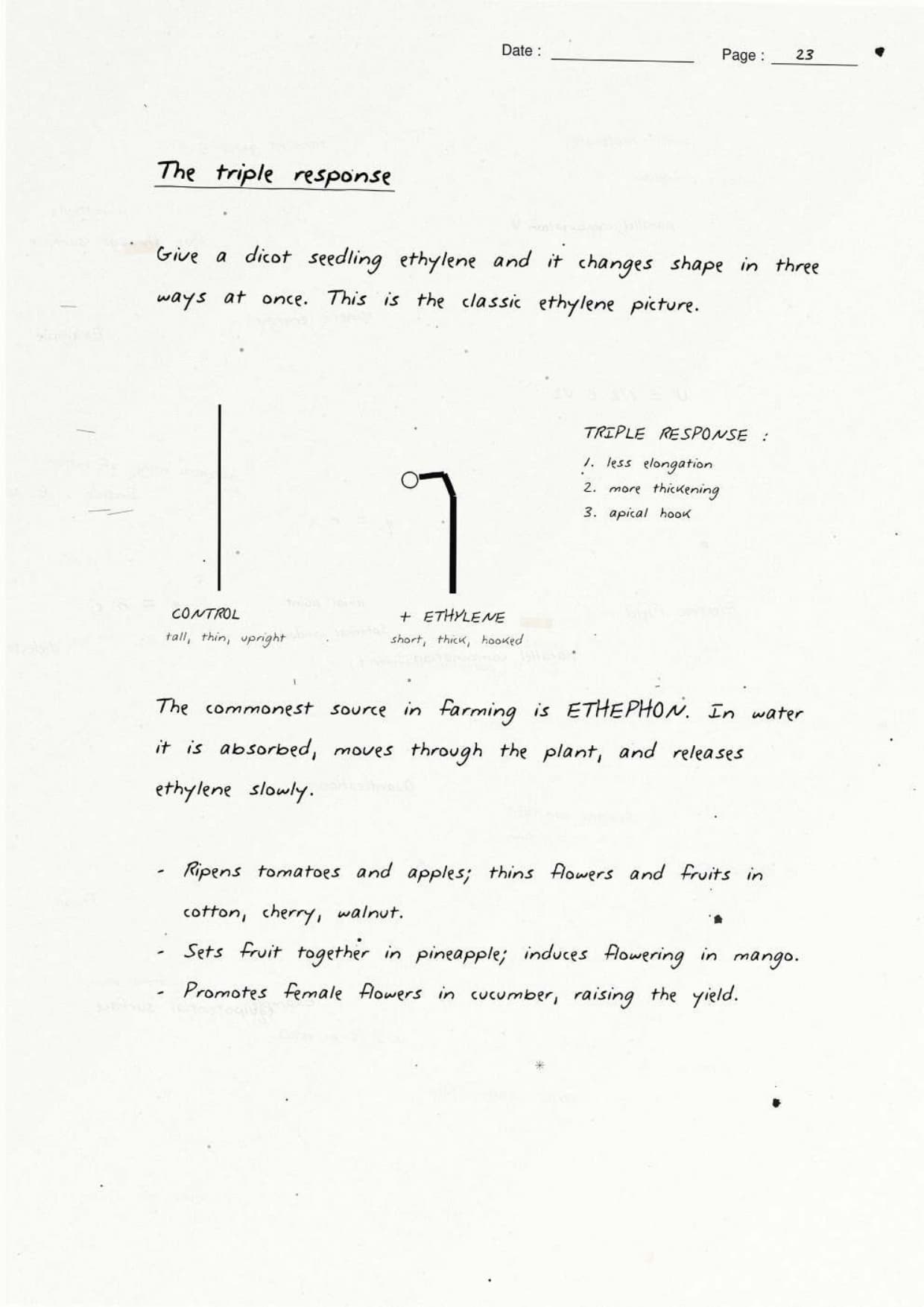
Four hand-drawn figures carry the chapter. The sigmoid plot marks lag, log and stationary in order. A meristem sketch runs shoot apical, lateral and root apical down one axis. The two-leaf figure proves the absolute against relative point, and the triple response sketch shows a control seedling beside an ethylene-treated one.
How to Use These Handwritten Notes for Revision
Work through the pages in three short passes. Read a topic page, cover the boxed definition and say it back, then answer two NCERT questions on it. This loop fixes exact wording faster than re-reading the textbook.
- Learn both growth equations and the shape each one plots, since the plot shape tells you which equation to use.
- Redraw the sigmoid curve from memory and label all three phases on rough paper.
- Keep the class 11 biology handwritten notes chapter 13 Plant Growth and Development open beside the NCERT Solutions while practising.
- Use the WON-T mnemonic on page 10 for the five conditions, and the six PGR job pairs on page 26 for Exercise 8.
- Read the common-mistakes page last, on page 30, before you shut the file.
Around 45 minutes is enough for one full pass, so the notes fit into the last week before an exam.
Student Feedback on Plant Growth and Development Handwritten Notes
Students rate the five-regulator summary table as the page that saves them the most time. The figures below come from a Collegedunia poll run before the 2026 boards.
- In a Collegedunia survey of 10,860 students, 74% said the PGR glance table was their most-used revision page.
- Most-confused pair before the poll: dedifferentiation against redifferentiation, mixed up by about 5 in 10 students.
Source: 2026-27 Class 11 Biology student poll. Sample of 10,860 students from CBSE schools across 12 states.
Where to Use These Notes Alongside Other Resources
These handwritten pages work best next to the step-wise Solutions, the summary Notes and the Exemplar Solutions for the same chapter. Read the notes first, then check the answers, and keep the Exemplar for extra practice.
| Resource | Best used for |
|---|---|
| Plant Growth and Development NCERT Solutions | Step-by-step answers to every back-exercise question |
| Plant Growth and Development Class 11 Notes | Quick chapter summary with all key terms in one place |
| Plant Growth and Development Exemplar Solutions | Every Exemplar question solved for NEET-level practice |
| Plant Growth and Development NCERT Book PDF | The original chapter text and exercises |
All Class 11 Biology Handwritten Notes by Chapter
The table links the handwritten notes for every Class 11 Biology chapter, so students can move across the course in one click. Plant Growth and Development is highlighted.
| Chapter | Handwritten Notes |
|---|---|
| Chapter 1 | The Living World |
| Chapter 2 | Biological Classification |
| Chapter 3 | Plant Kingdom |
| Chapter 4 | Animal Kingdom |
| Chapter 5 | Morphology of Flowering Plants |
| Chapter 6 | Anatomy of Flowering Plants |
| Chapter 7 | Structural Organisation in Animals |
| Chapter 8 | Cell The Unit of Life |
| Chapter 9 | Biomolecules |
| Chapter 10 | Cell Cycle and Cell Division |
| Chapter 11 | Photosynthesis in Higher Plants |
| Chapter 12 | Respiration in Plants |
| Chapter 13 | Plant Growth and Development |
| Chapter 14 | Breathing and Exchange of Gases |
| Chapter 15 | Body Fluids and Circulation |
| Chapter 16 | Excretory Products and their Elimination |
| Chapter 17 | Locomotion and Movement |
| Chapter 18 | Neural Control and Coordination |
| Chapter 19 | Chemical Coordination and Integration |
FAQs on Plant Growth and Development Handwritten Notes
Ques. Are these class 11 biology handwritten notes chapter 13 Plant Growth and Development free to download?
Ans. Yes. The Plant Growth and Development handwritten notes are free to download as a PDF from this page. All 32 pages follow the 2026-27 NCERT and cover the full chapter in clear handwriting for quick revision.
Ques. What topics do these handwritten notes cover?
Ans. They cover growth and its open form, meristems, the three phases of growth, arithmetic and geometric growth rates, the sigmoid curve, absolute against relative growth, conditions for growth, differentiation and development, plasticity, and all five plant growth regulators. Each topic sits on its own page with boxed definitions and hand-drawn figures.
Ques. What is the difference between arithmetic and geometric growth?
Ans. In arithmetic growth only one daughter cell keeps dividing, so the plot is a straight line, written as L(t) = L(0) + rt. In geometric growth both daughter cells keep dividing, so growth speeds up and the plot is an S-shaped curve, written as W1 = W0 e to the power rt. The notes box both equations side by side.
Ques. Are photoperiodism and vernalisation still in the syllabus?
Ans. The current 2026-27 NCERT print drops that prose, so it is not needed for a CBSE board answer. The notes keep both pages and flag them as a NEET and CUET extension, because Exercises 7 and 9 still need them and NEET still asks them.
Ques. How long do these notes take to revise?
Ans. About 45 minutes for one full pass. Read each topic page, recall the boxed definition, then answer two NCERT questions on it. Finish with the common-mistakes page on page 30 so the exact wording stays fresh.



Comments