




These class 11 biology handwritten notes chapter 17 Locomotion and Movement pull all 32 pages into one full revision pass for Boards, NEET and CUET in 2026-27. The sarcomere diagram, the cross bridge cycle and every bone count sit on their own page, boxed for fast recall.
Chapter 17 is a numbers chapter. Bone counts, band changes and disorder causes are all asked as direct one-mark questions.
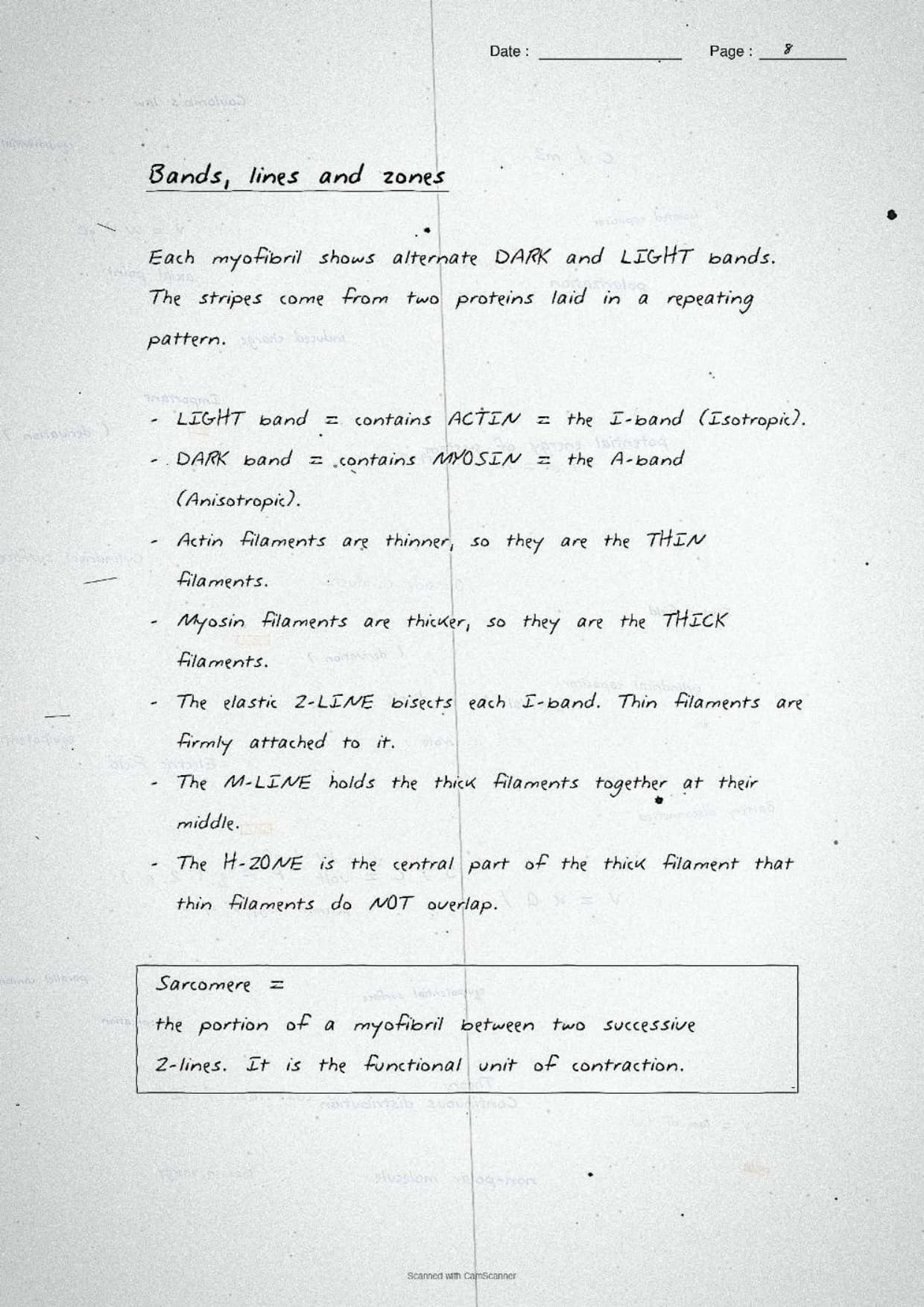
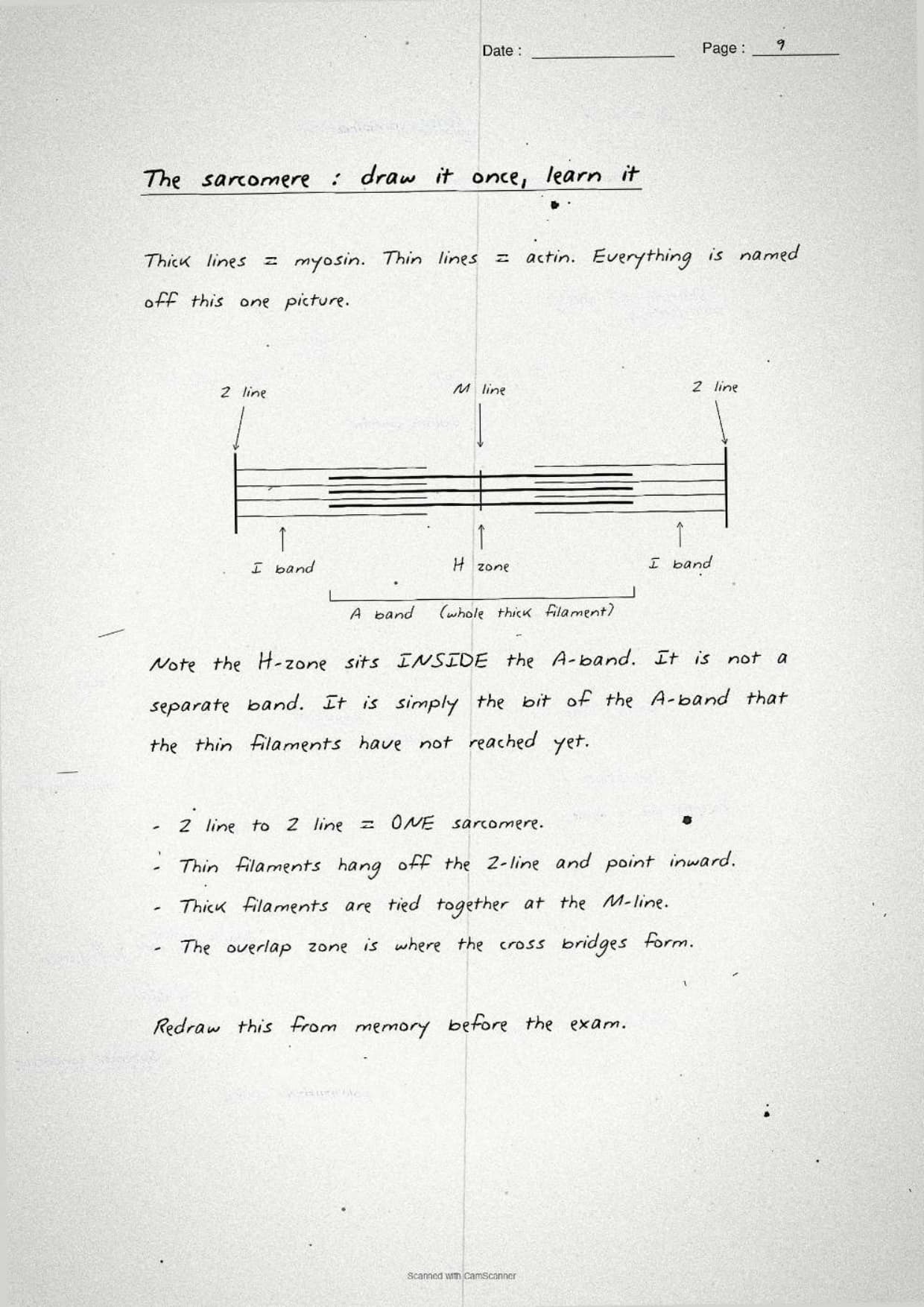
- Hand-drawn sarcomere labelled with the Z-line, M-line, I-band, A-band and H-zone.
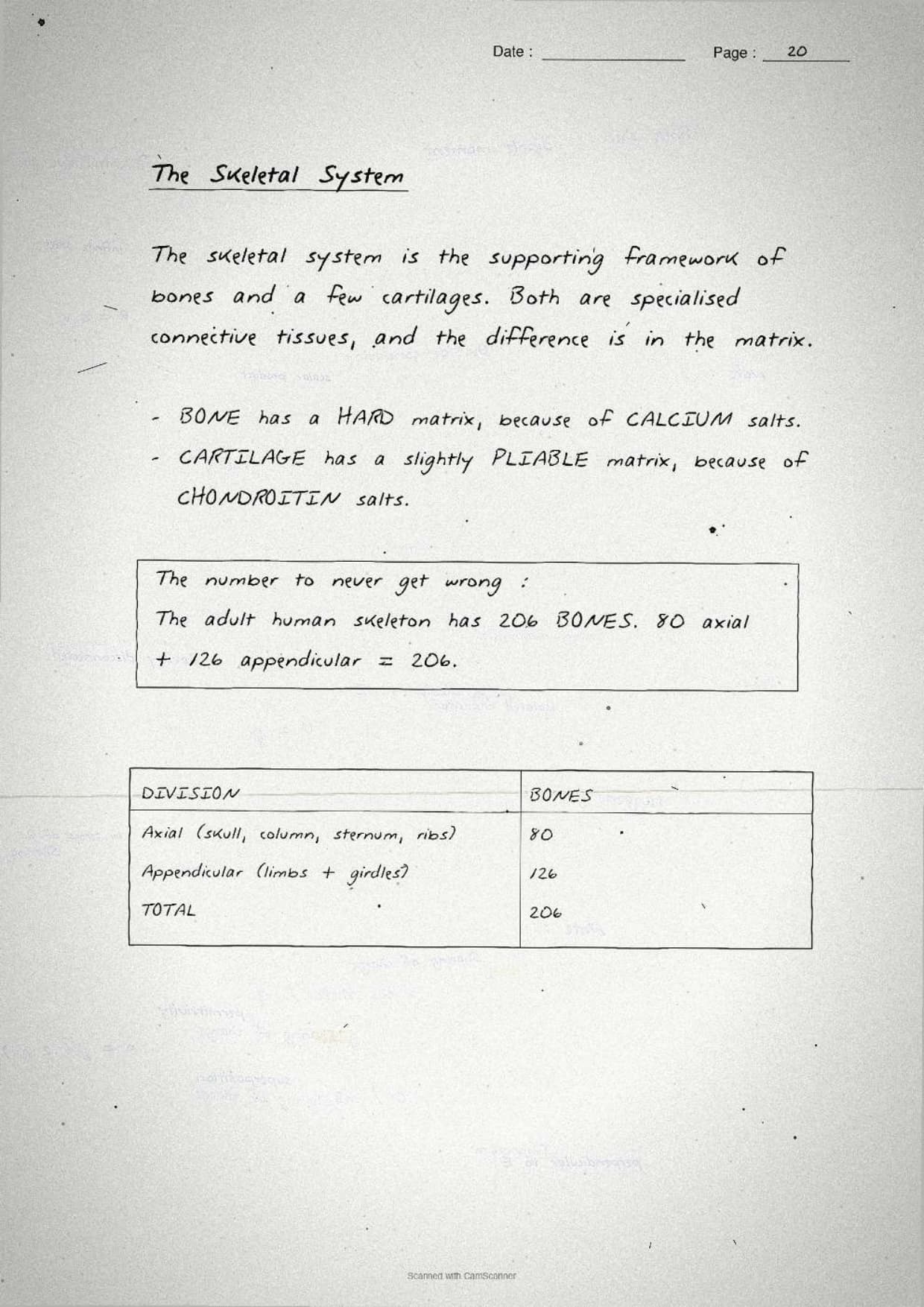
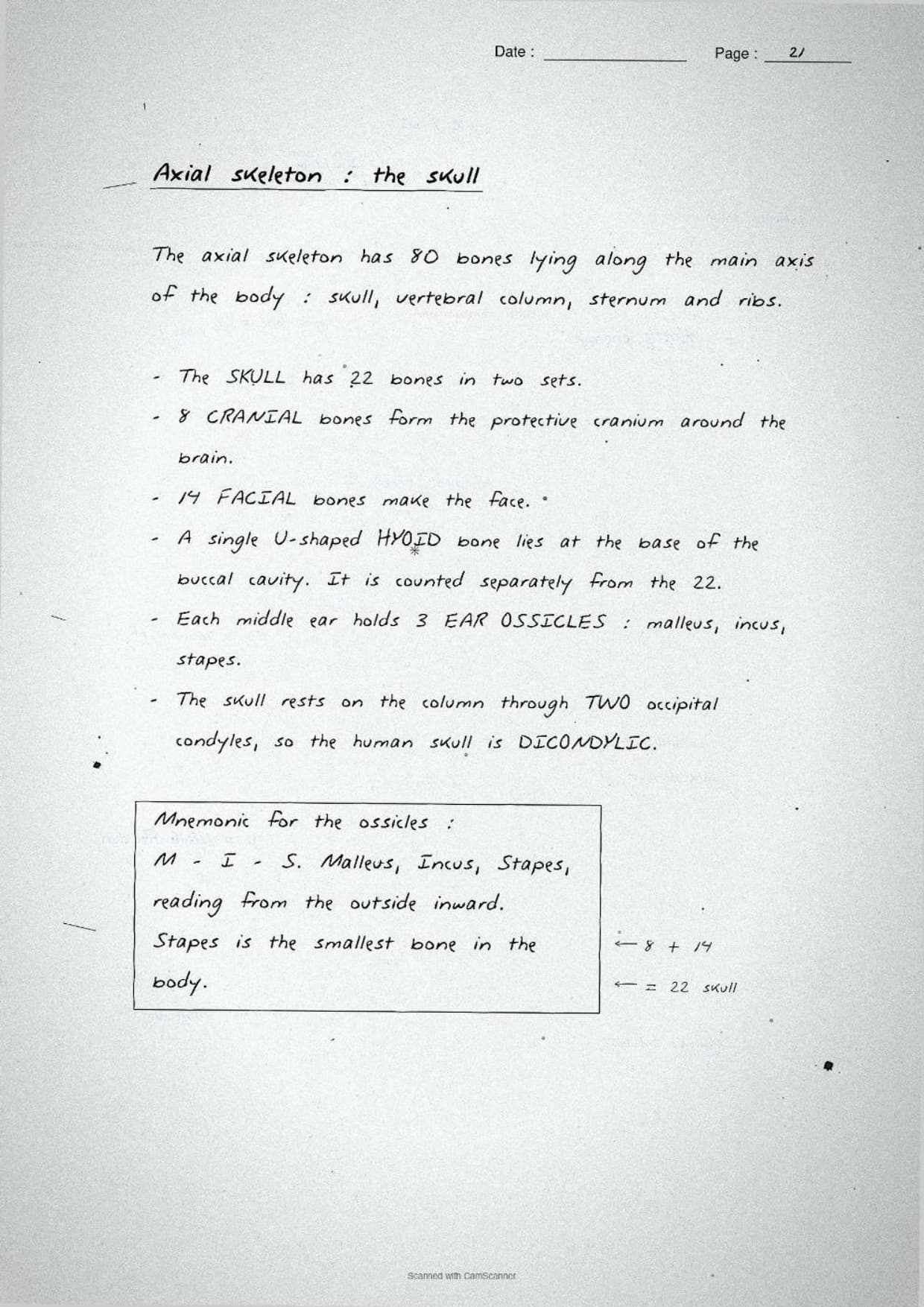
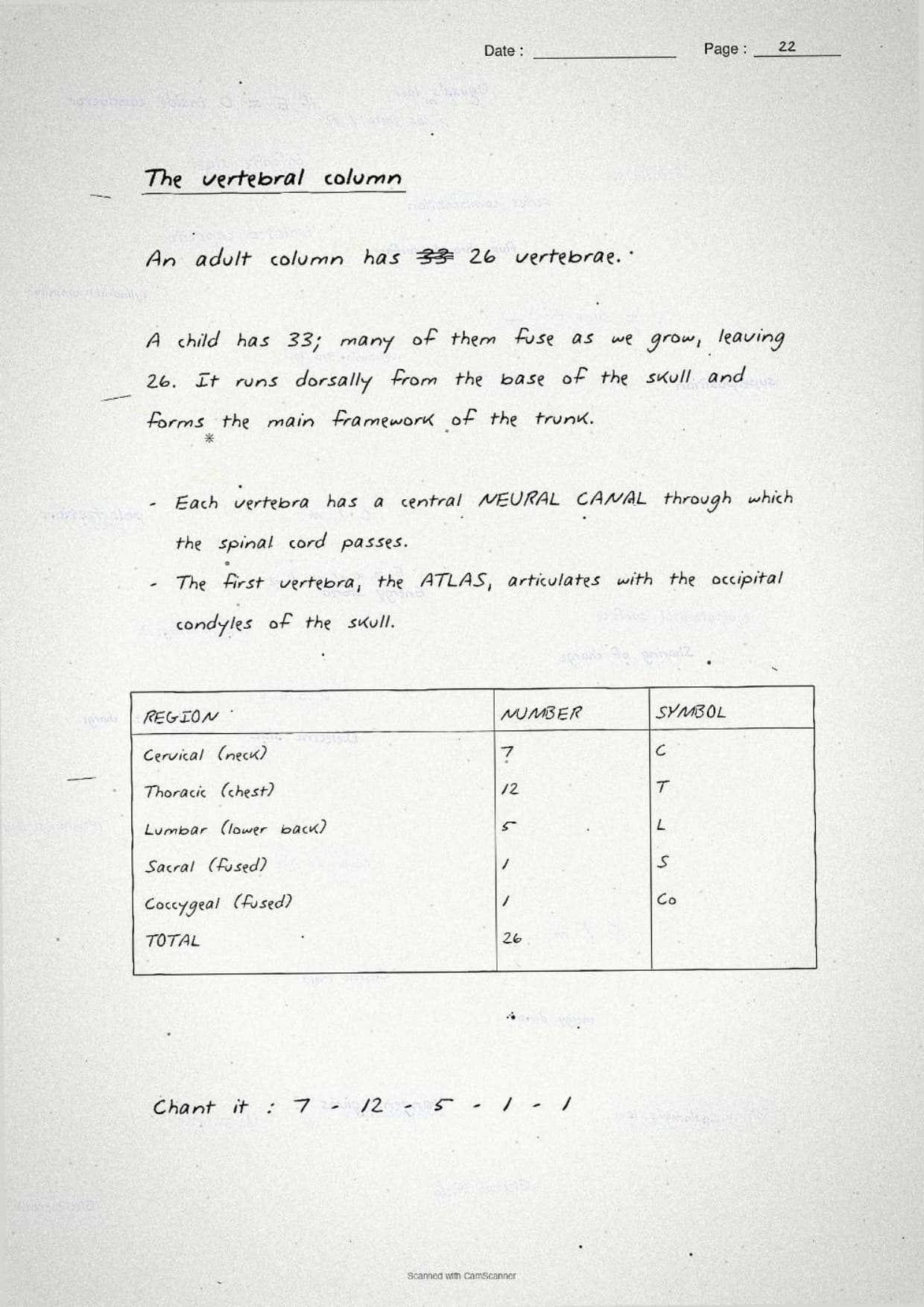
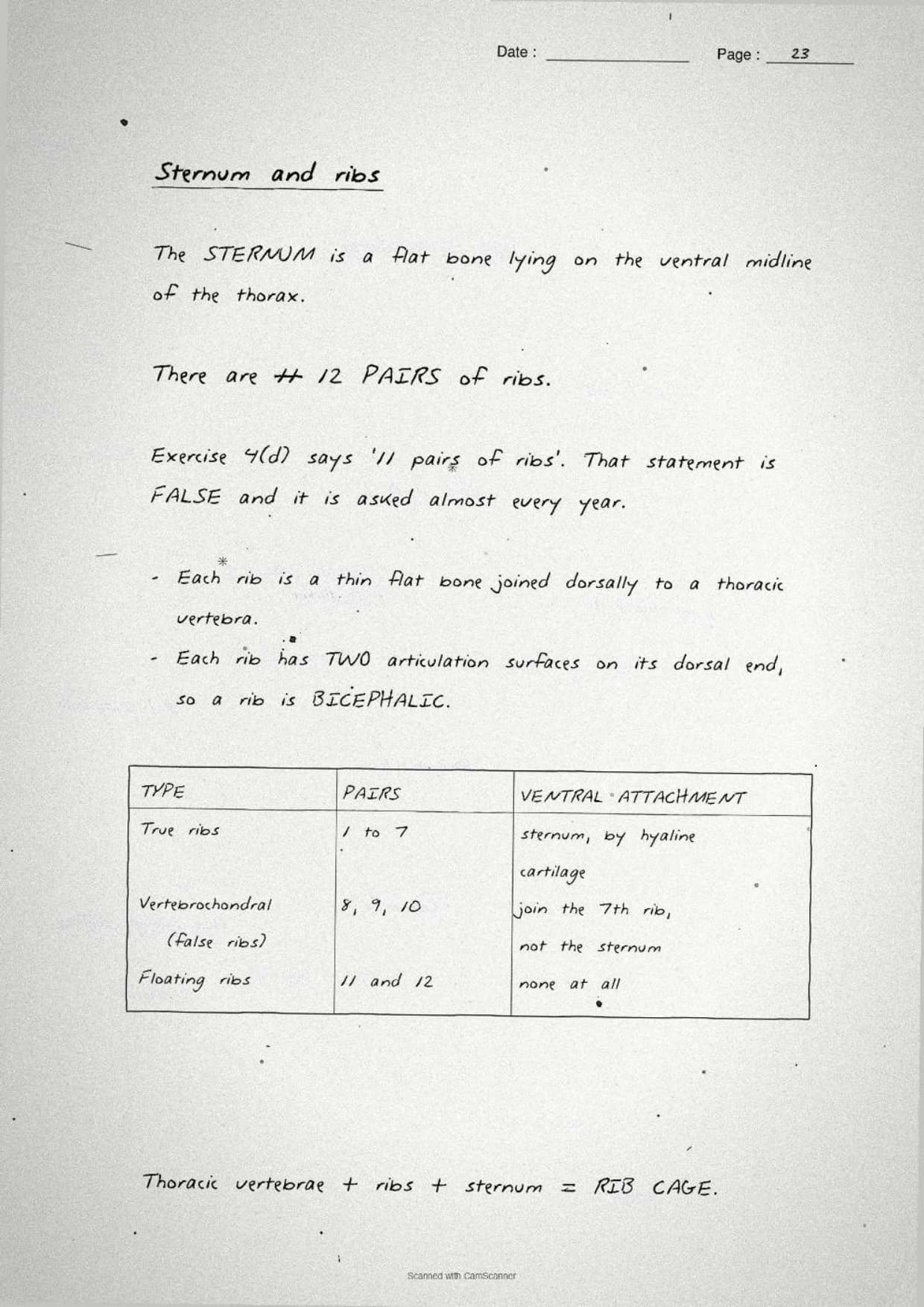
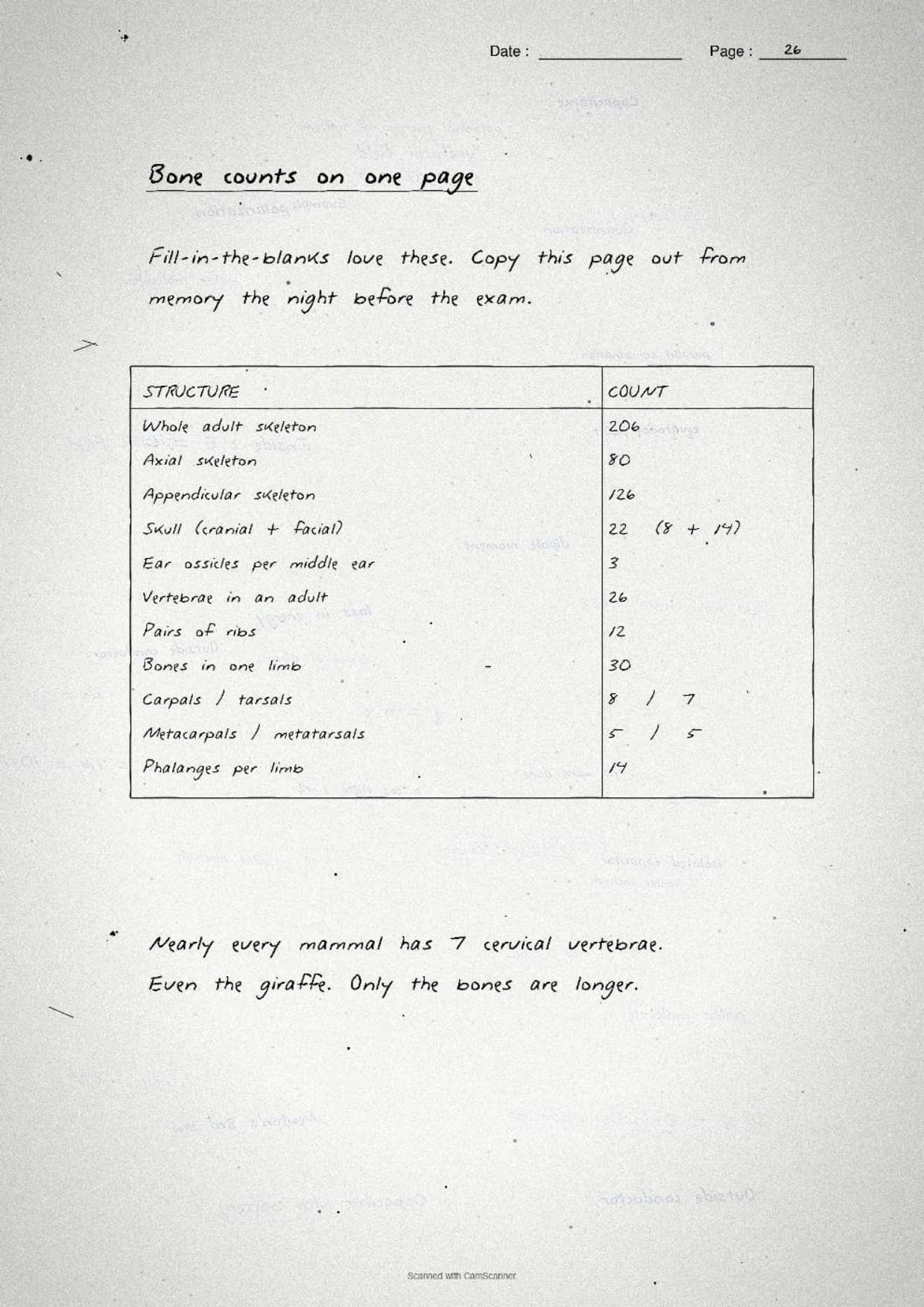
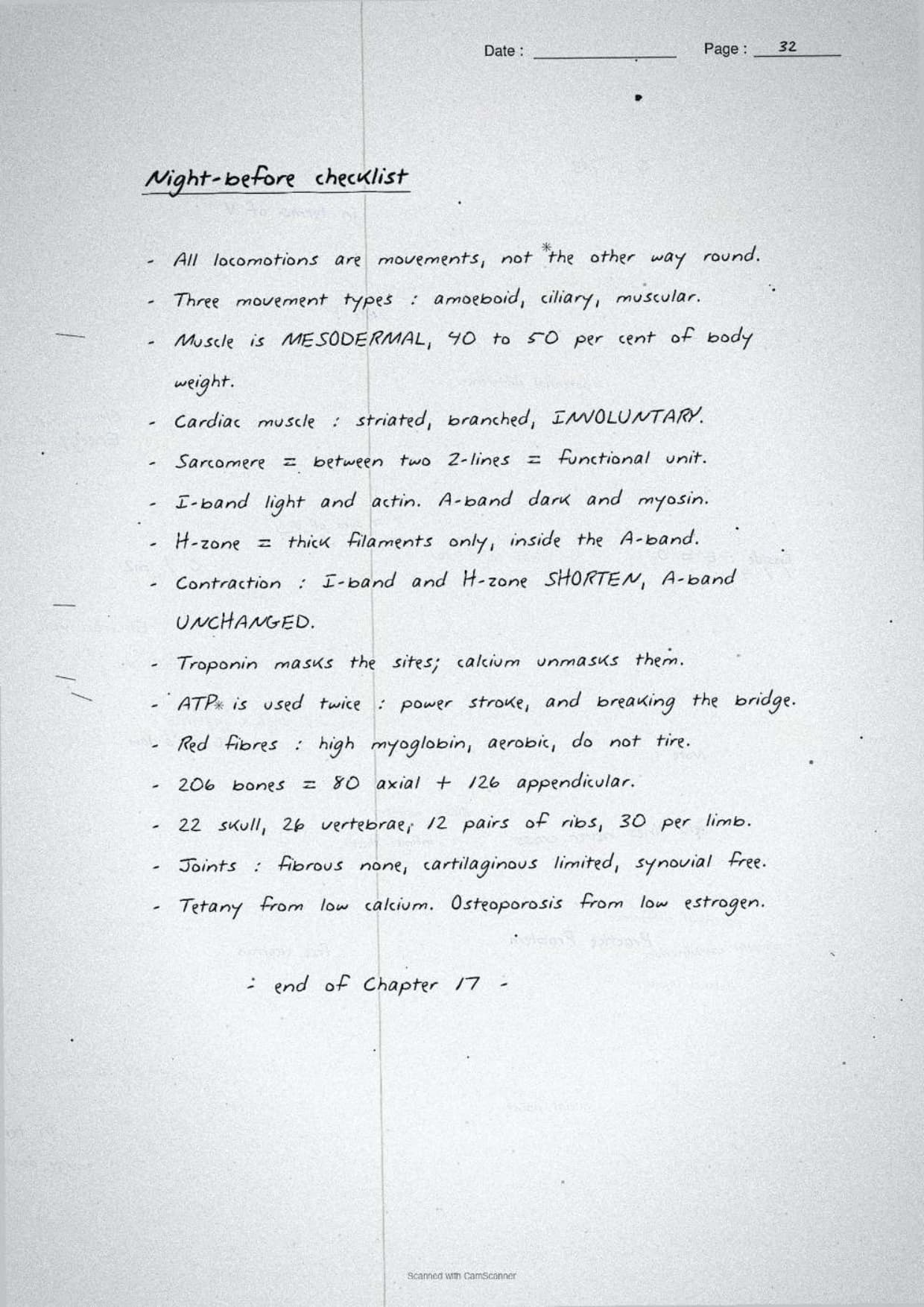
- Boxed counts for 206 bones, 22 skull bones, 26 vertebrae and 12 pairs of ribs on one page.
- Pairs with the NCERT Solutions, Notes and Exemplar Solutions linked lower on this page.
What Locomotion and Movement Handwritten Notes Cover
The 32 pages follow the NCERT order. They open with the difference between movement and locomotion and close with a night-before checklist. New sub-topics are written in red and every definition is boxed.
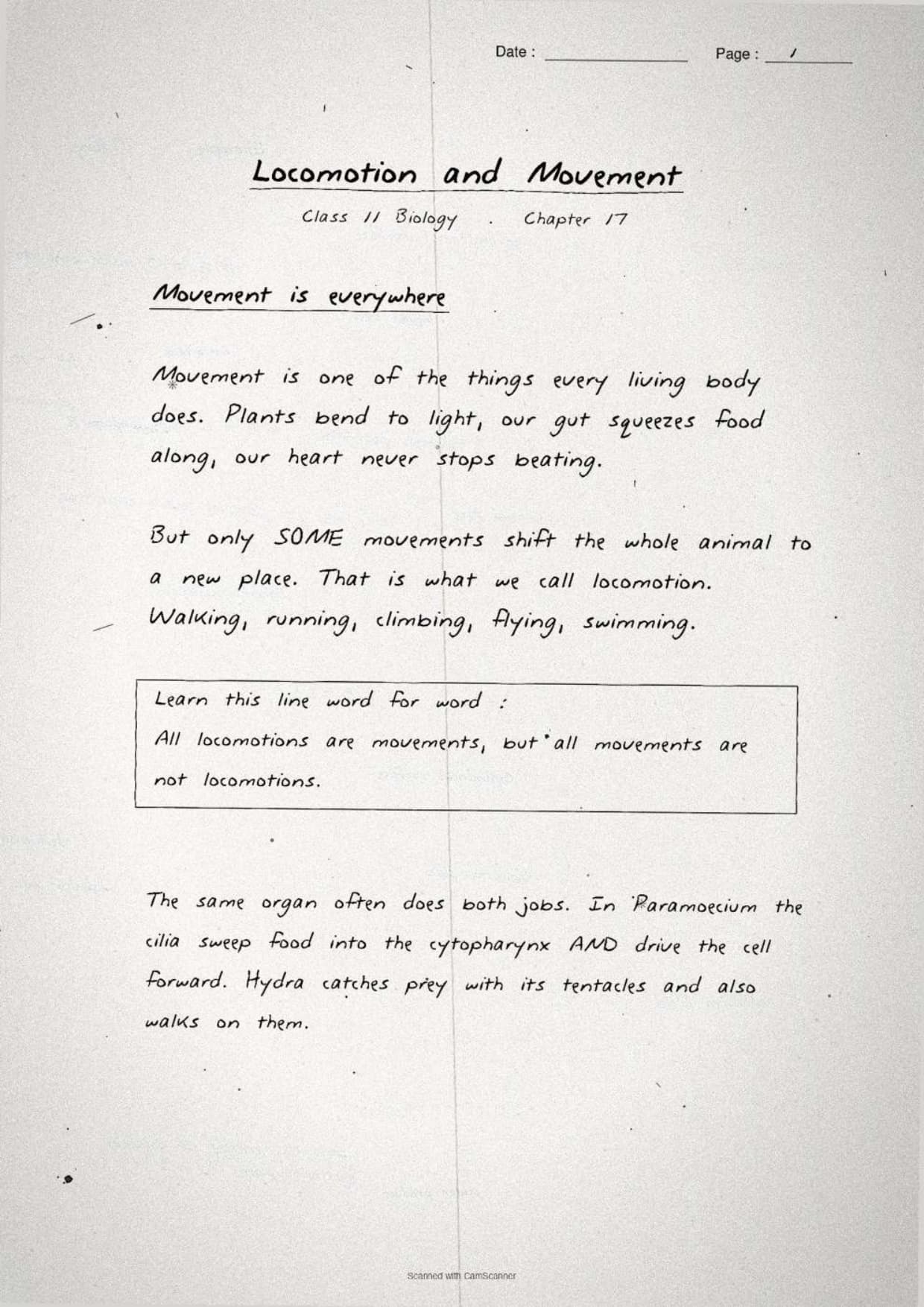
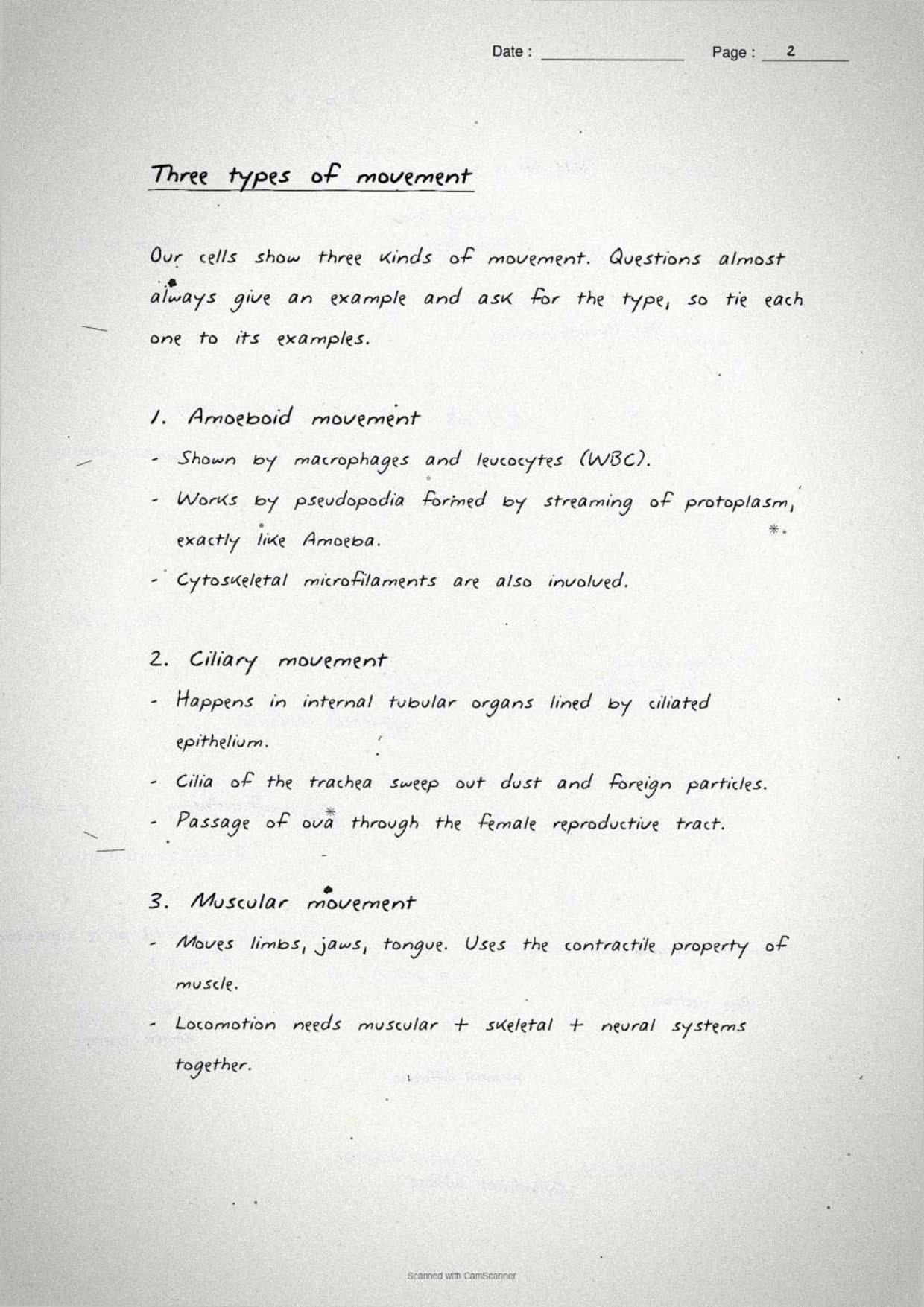
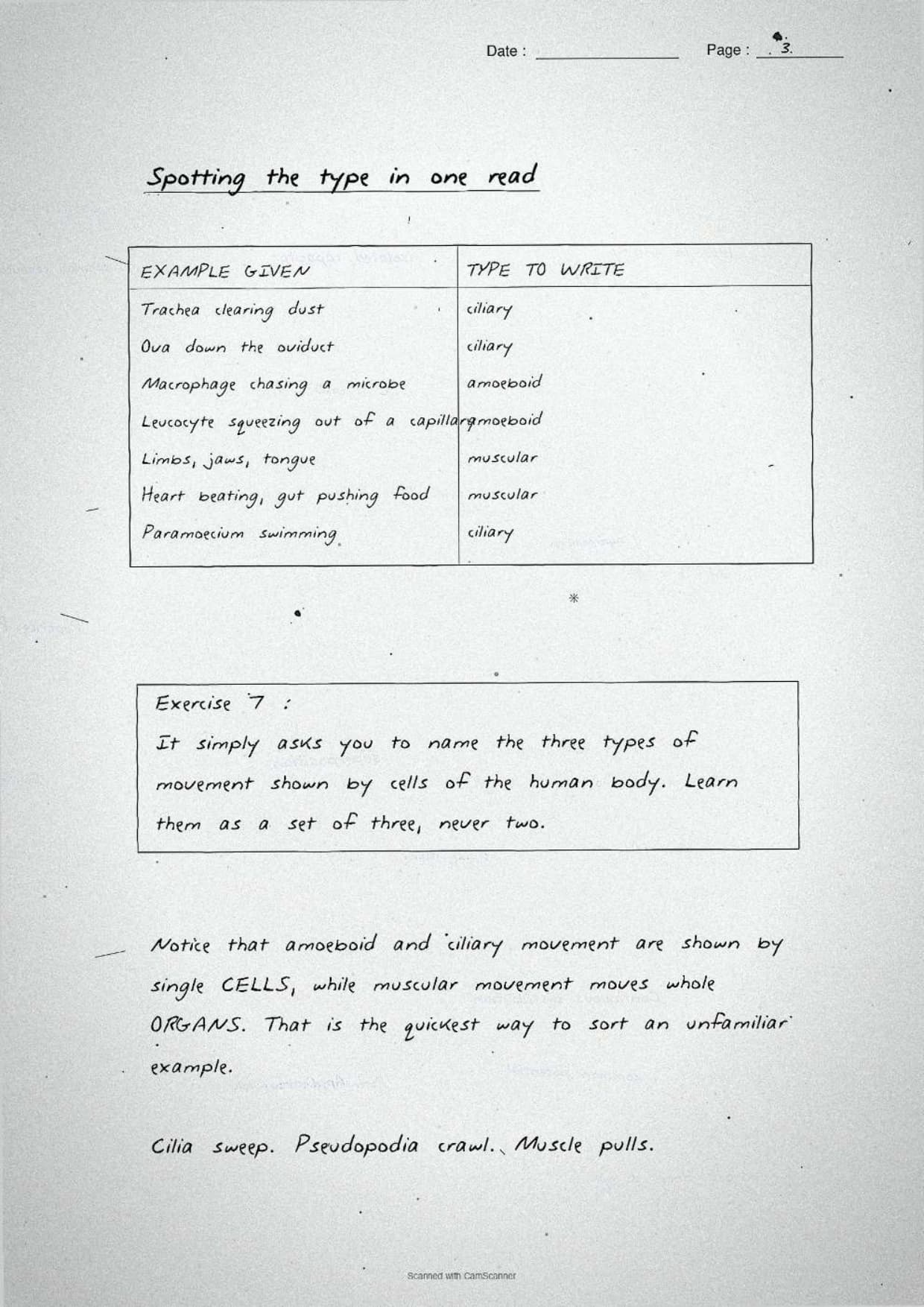
- Three movement types: amoeboid, ciliary and muscular, each tied to the examples examiners reuse.
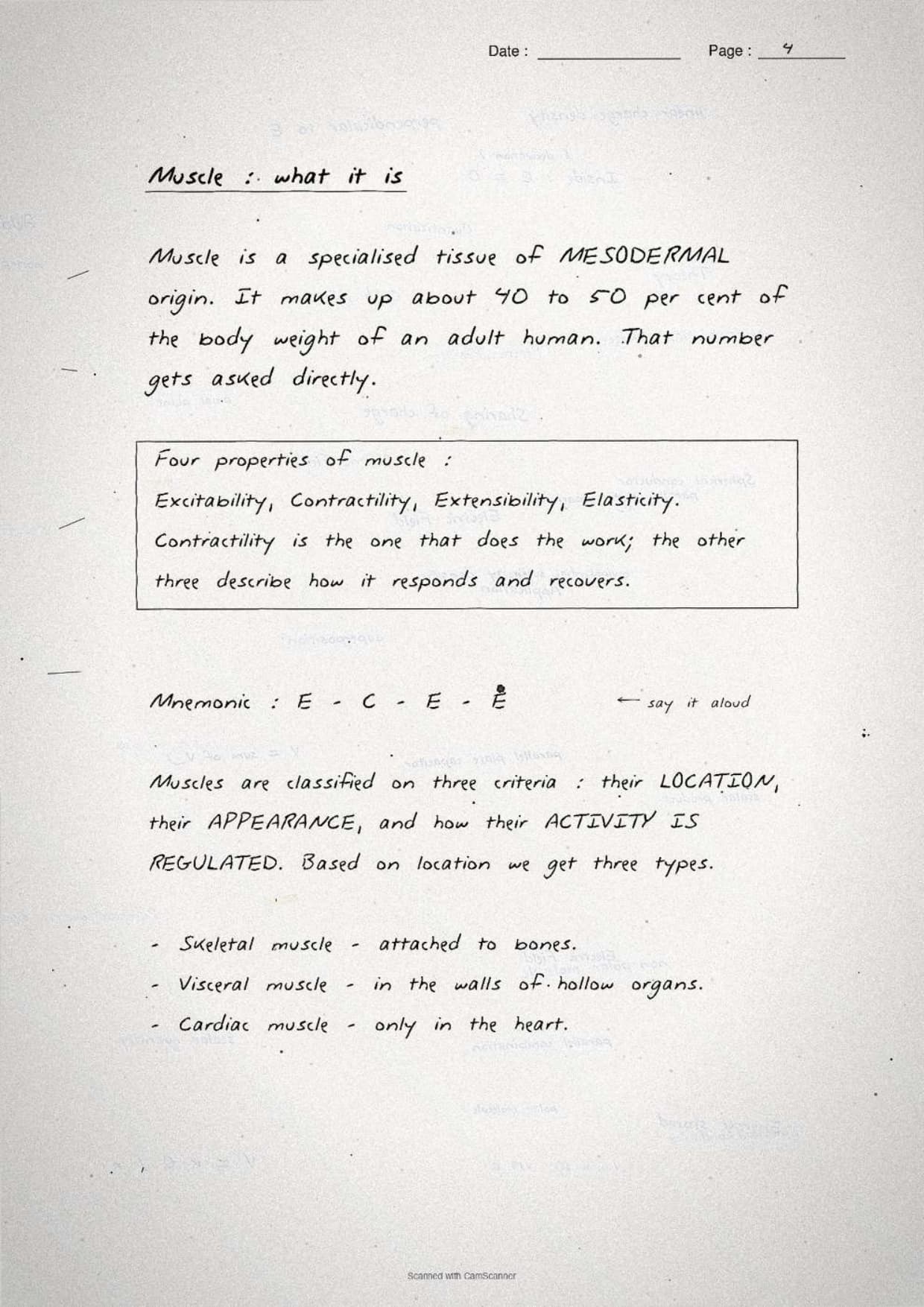
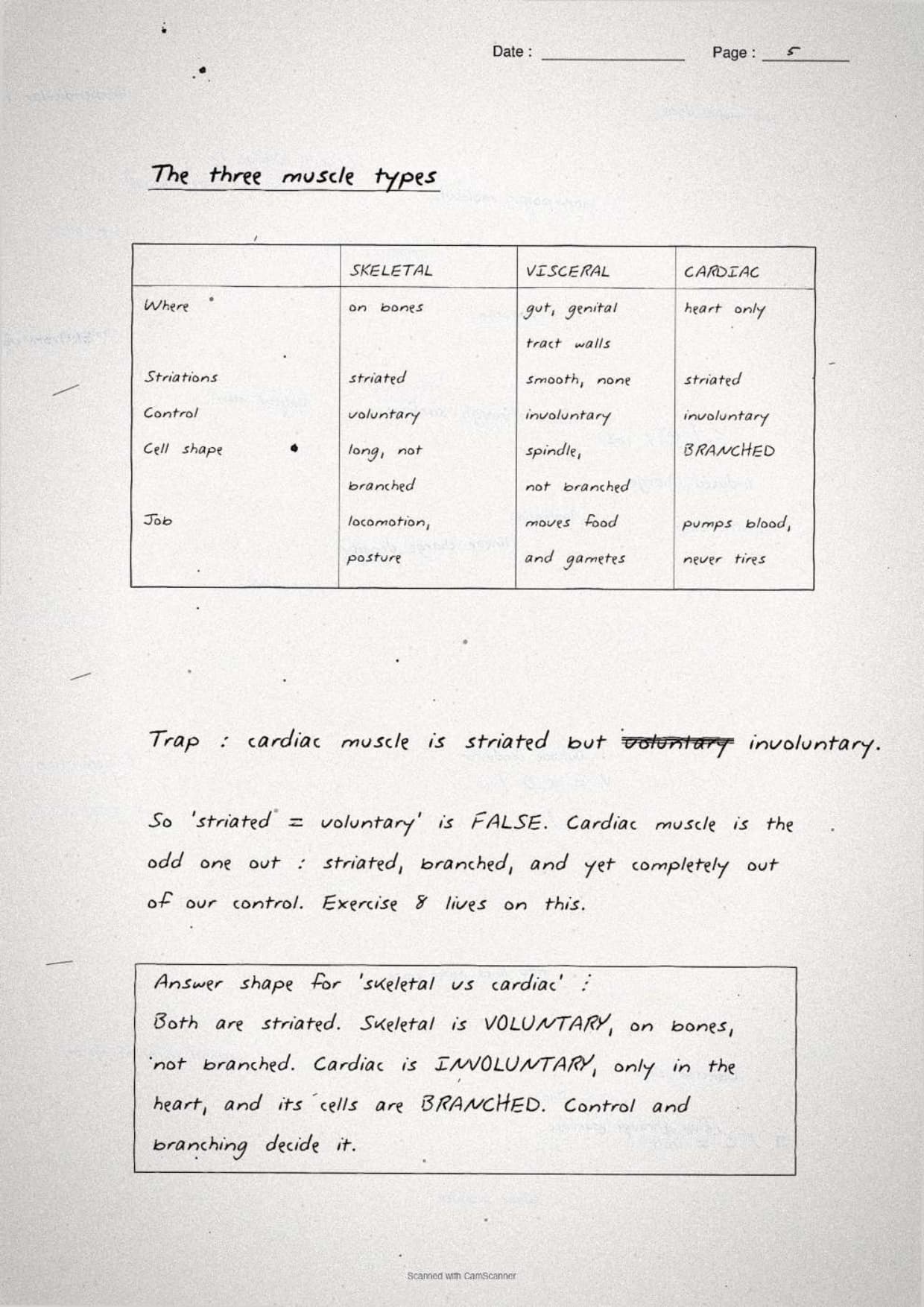
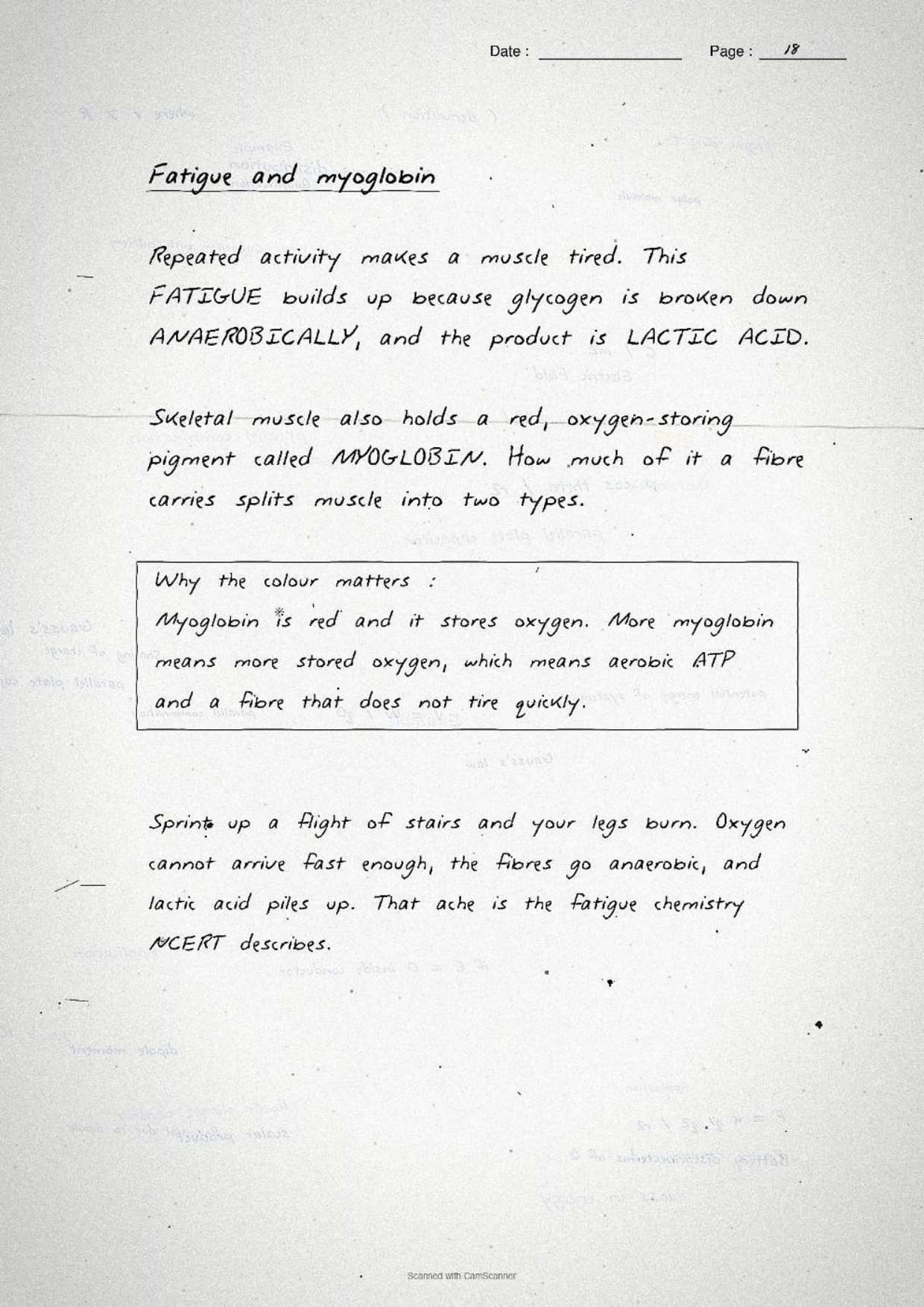
- Muscle types: skeletal, visceral and cardiac compared on location, striations, control, cell shape and job.
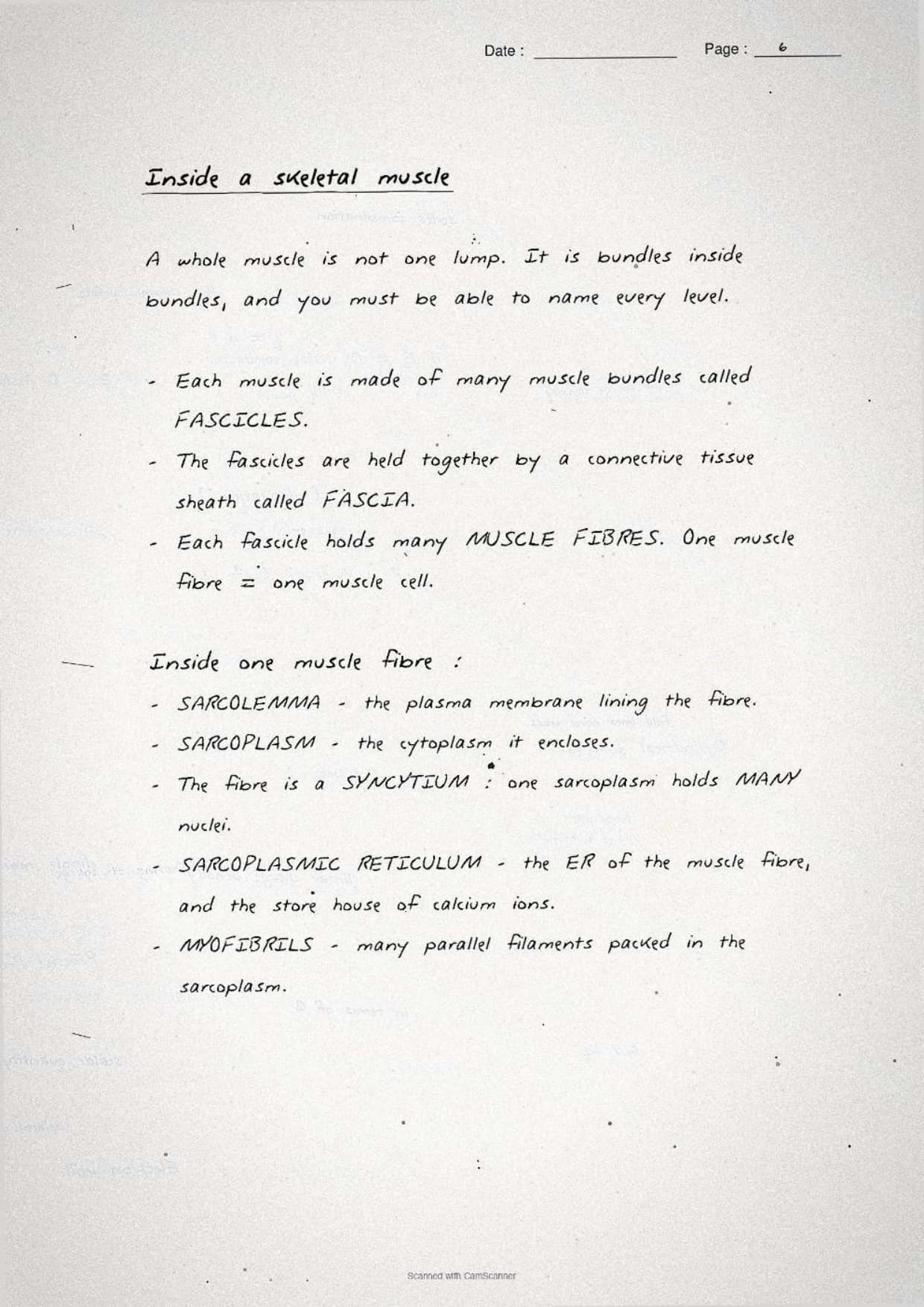
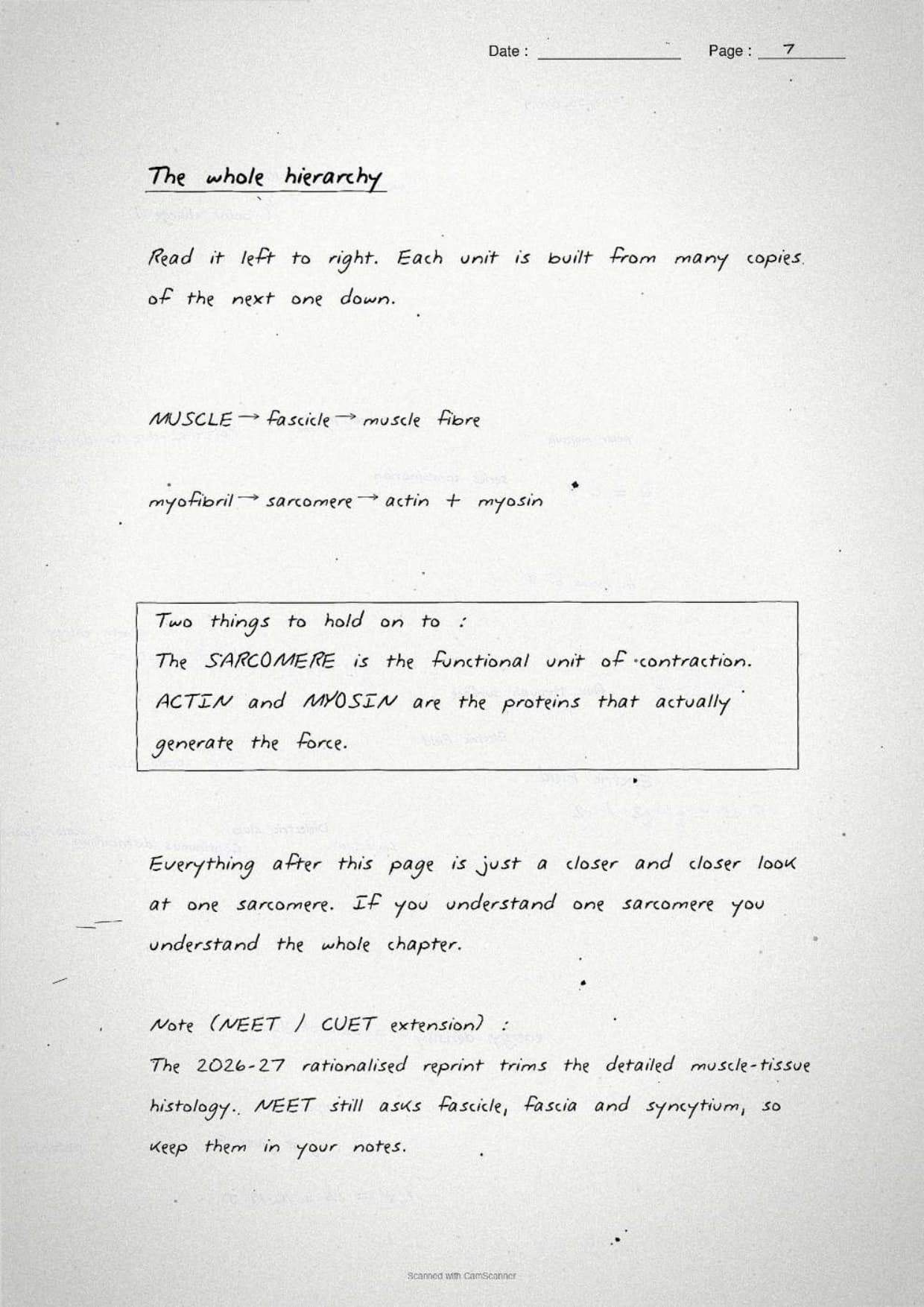
- Muscle structure: fascicle, fascia, muscle fibre, sarcolemma, sarcoplasm, sarcoplasmic reticulum and myofibril.
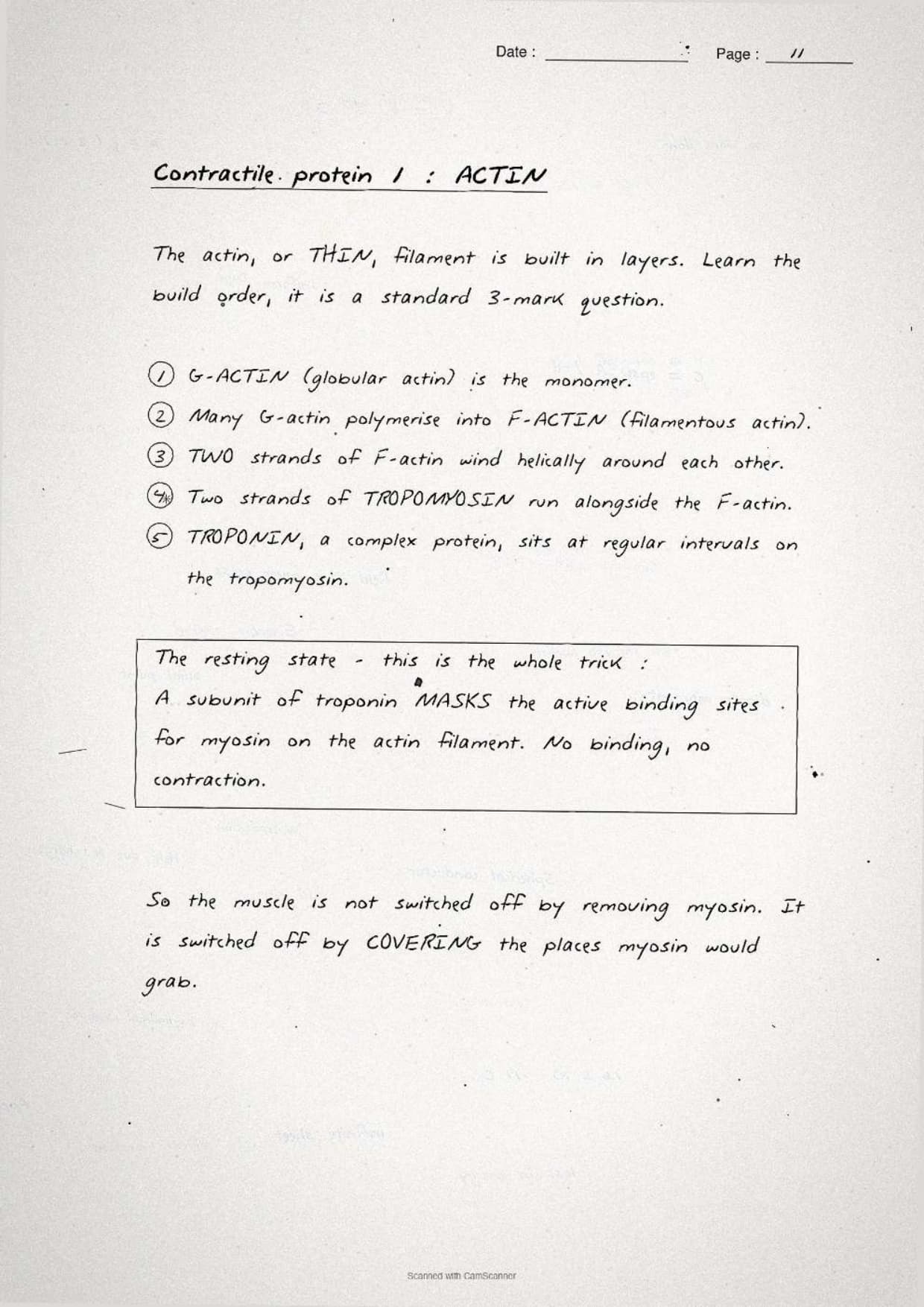
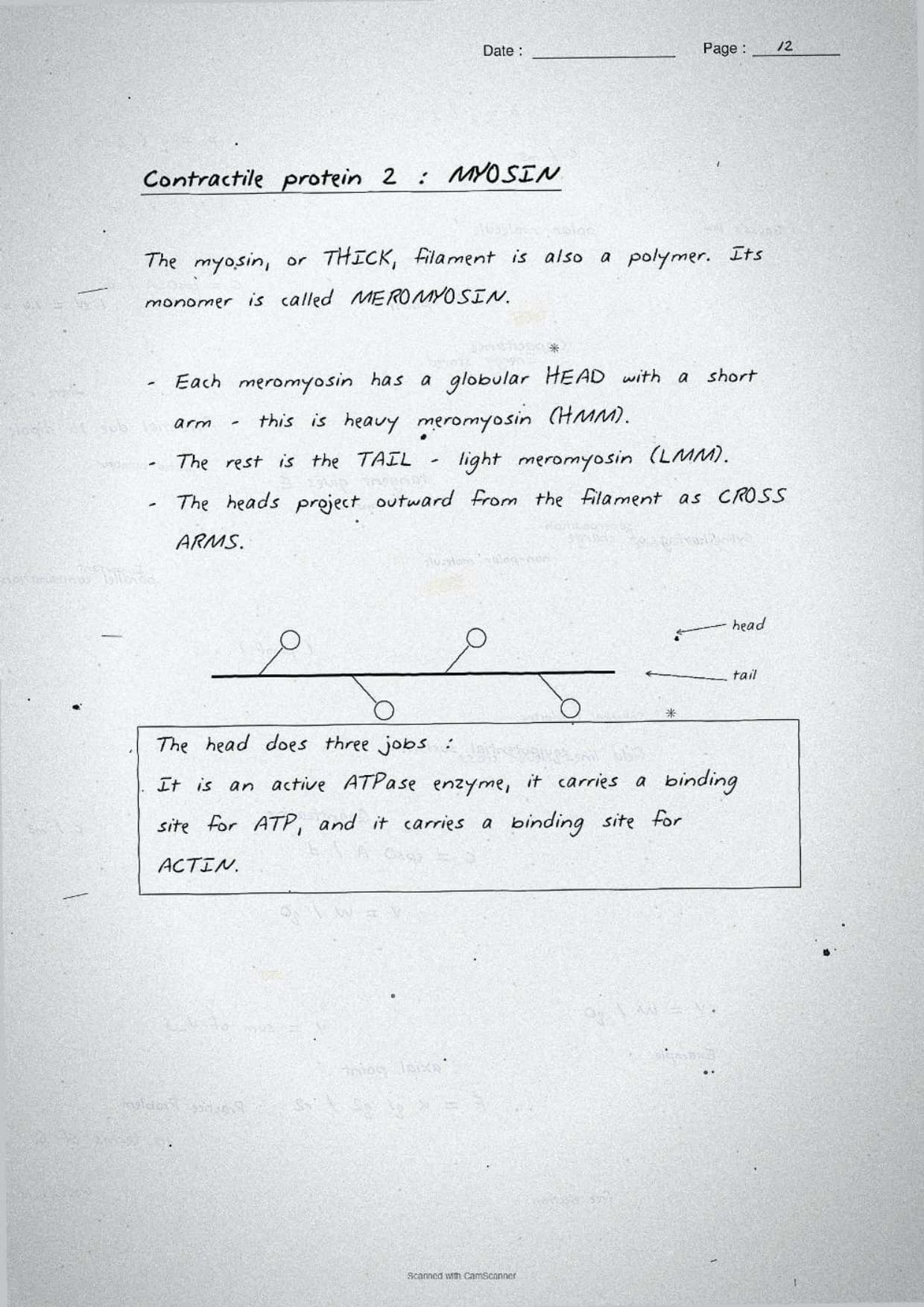
- Contractile proteins: the five-step build of actin, and meromyosin with its head and tail.
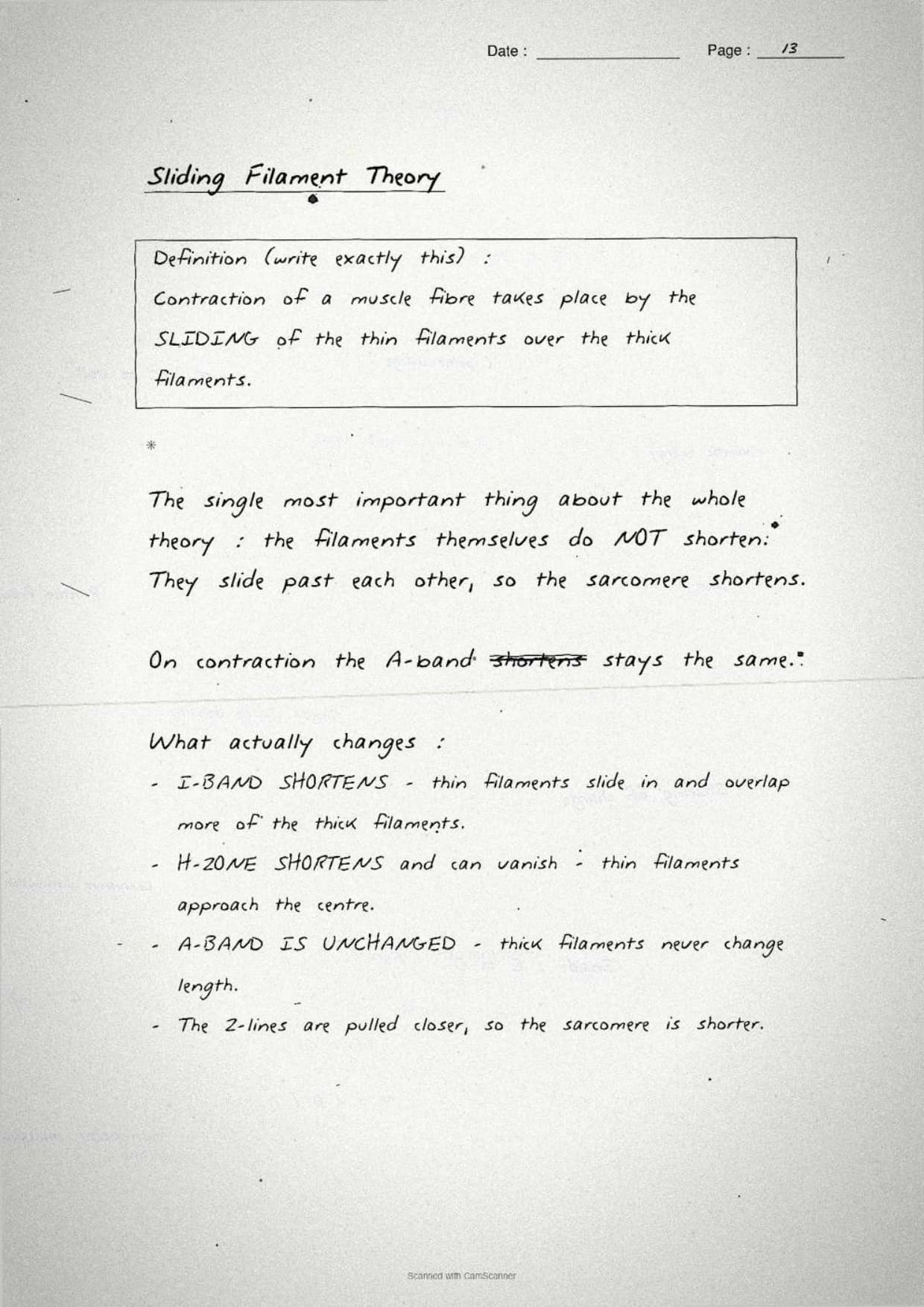
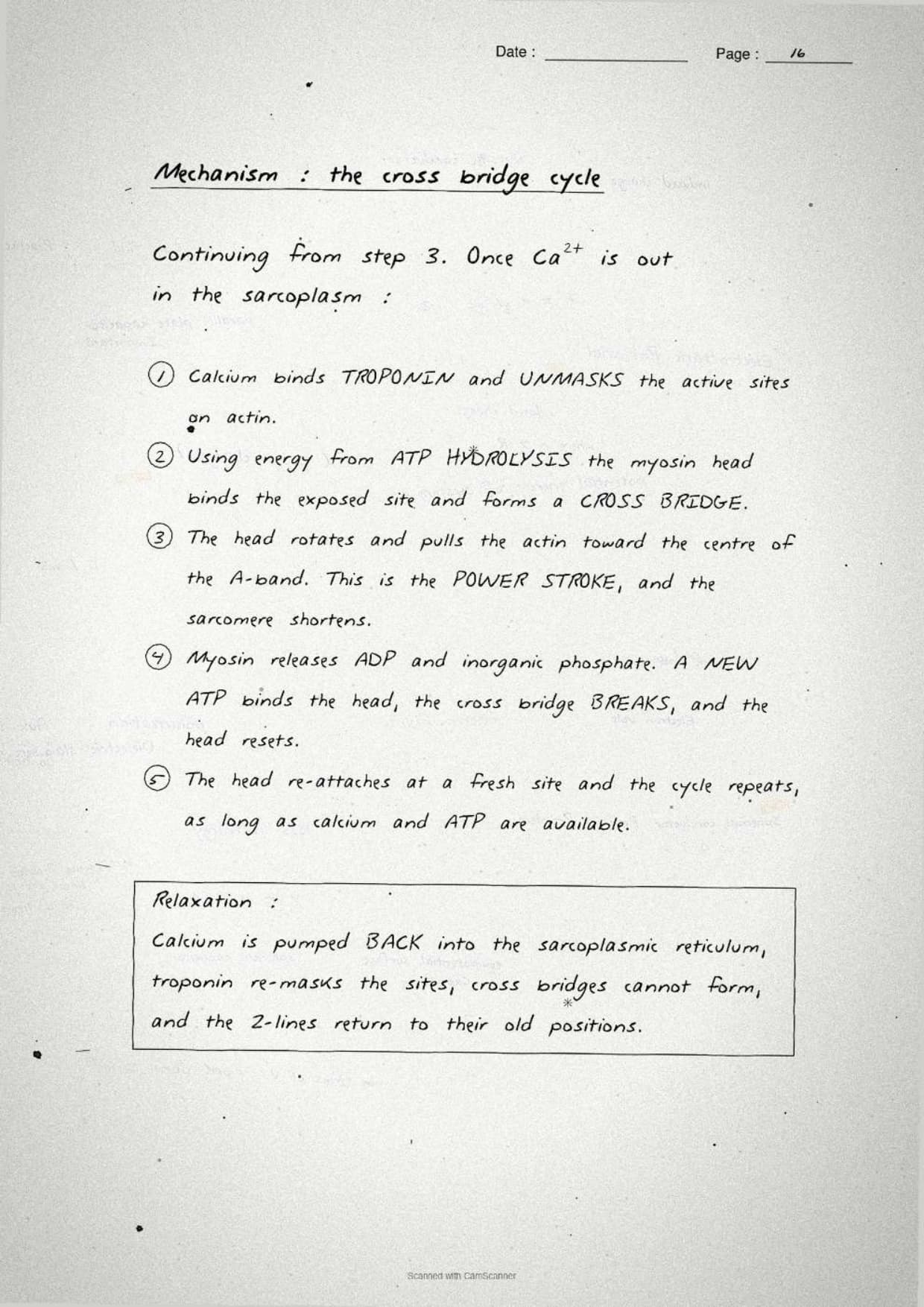
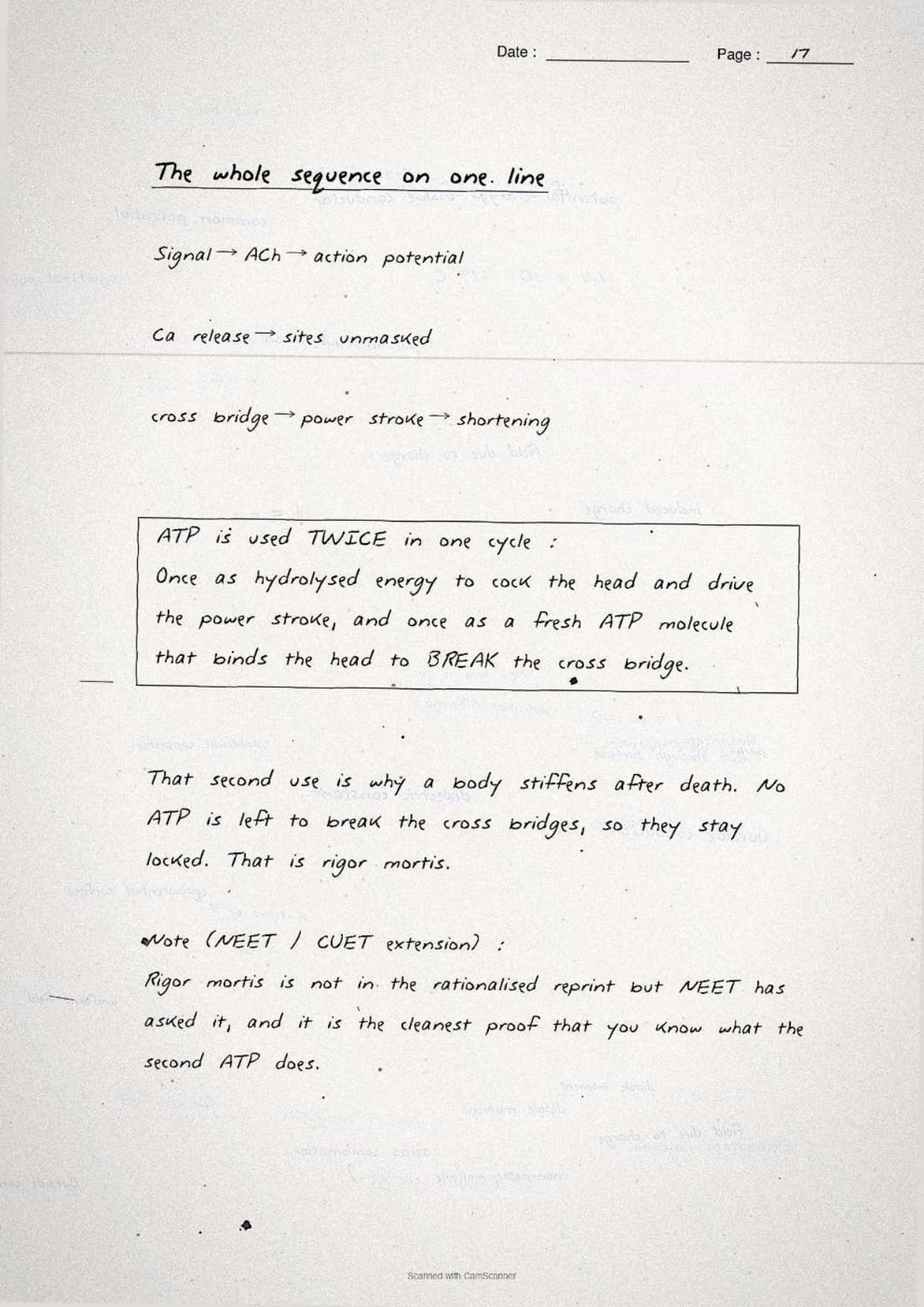
- Sliding filament theory: what shortens, what never changes, and the full cross bridge cycle.
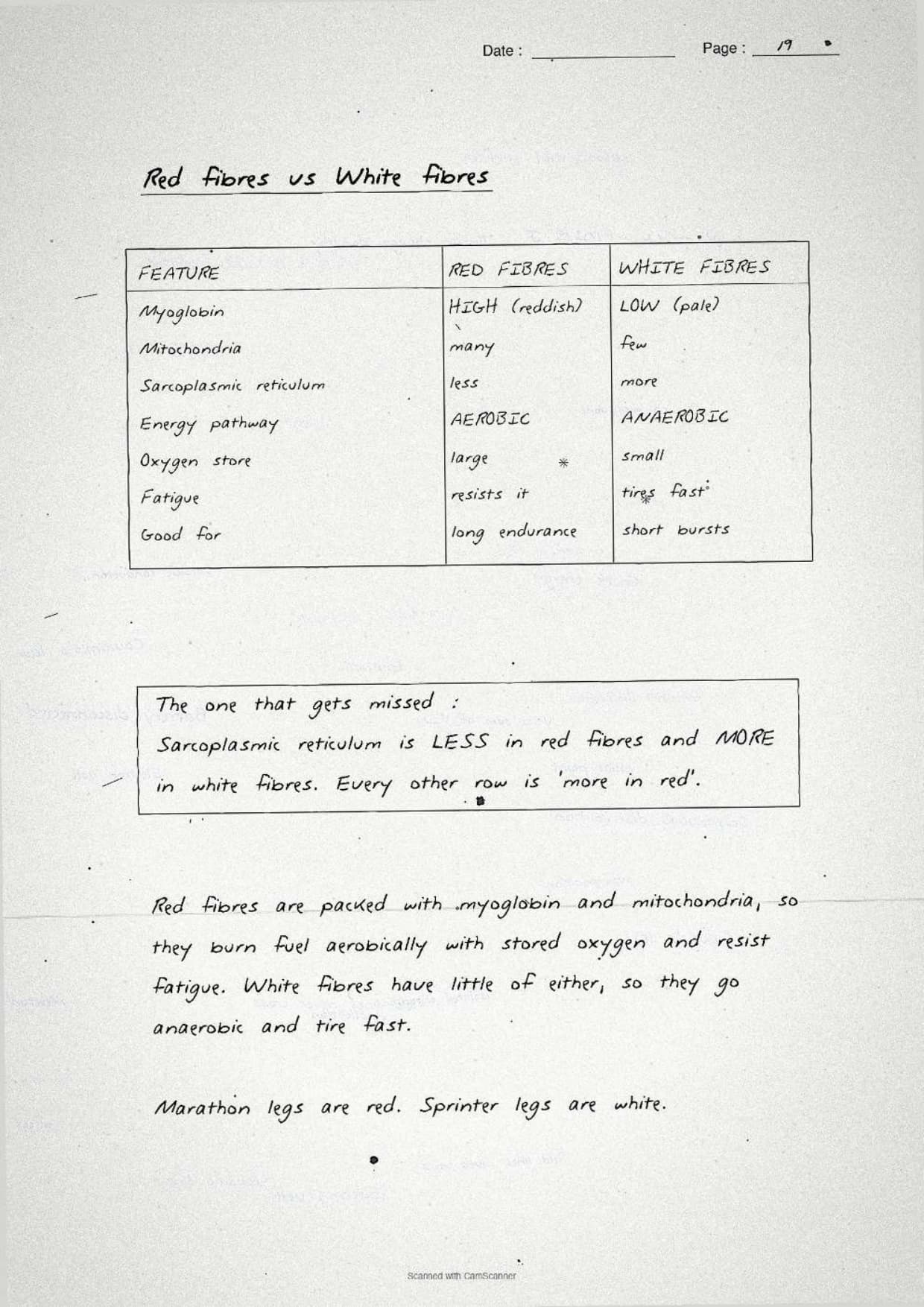
- Red and white fibres: a seven-row comparison, with the sarcoplasmic reticulum row that most students reverse.
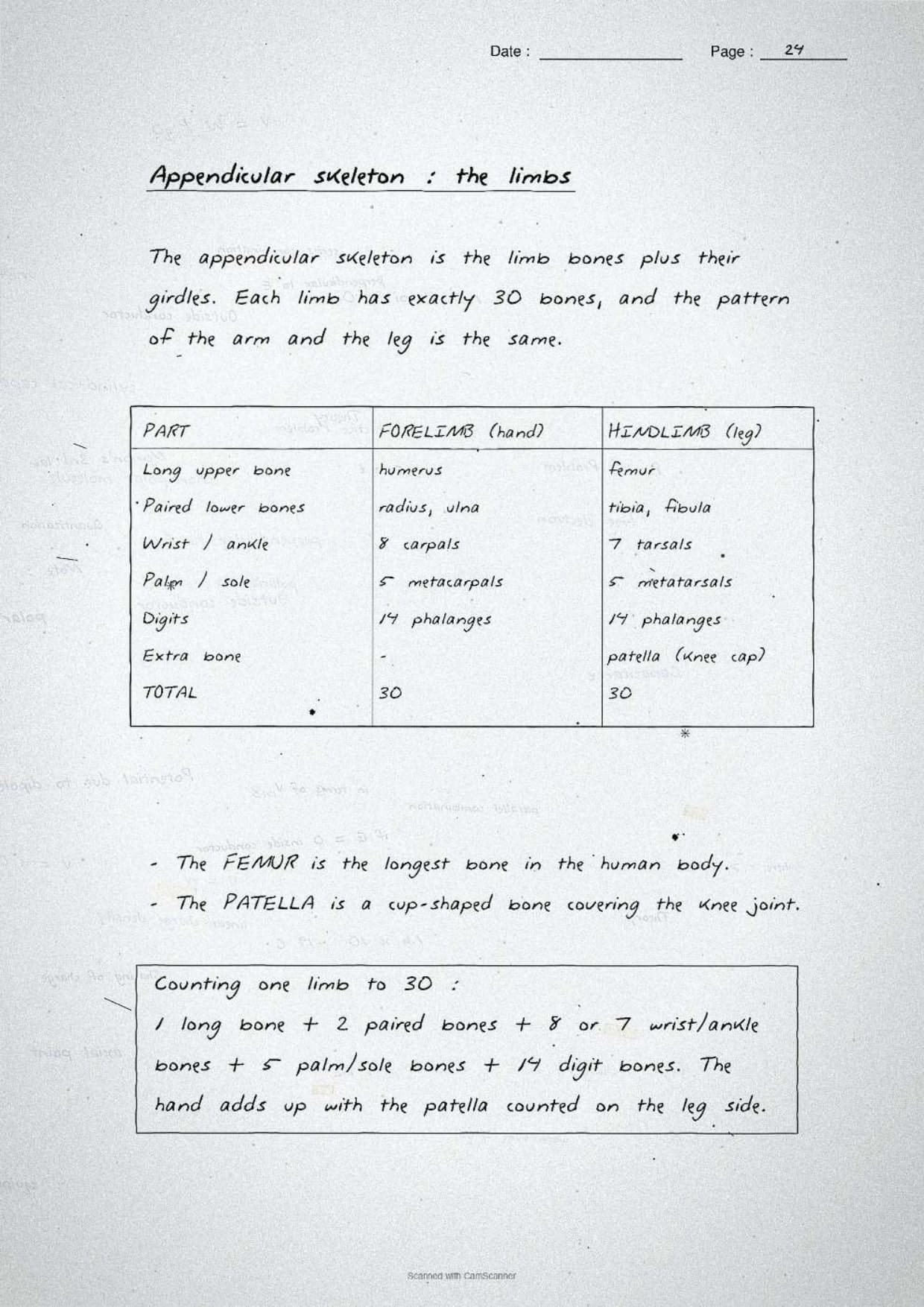
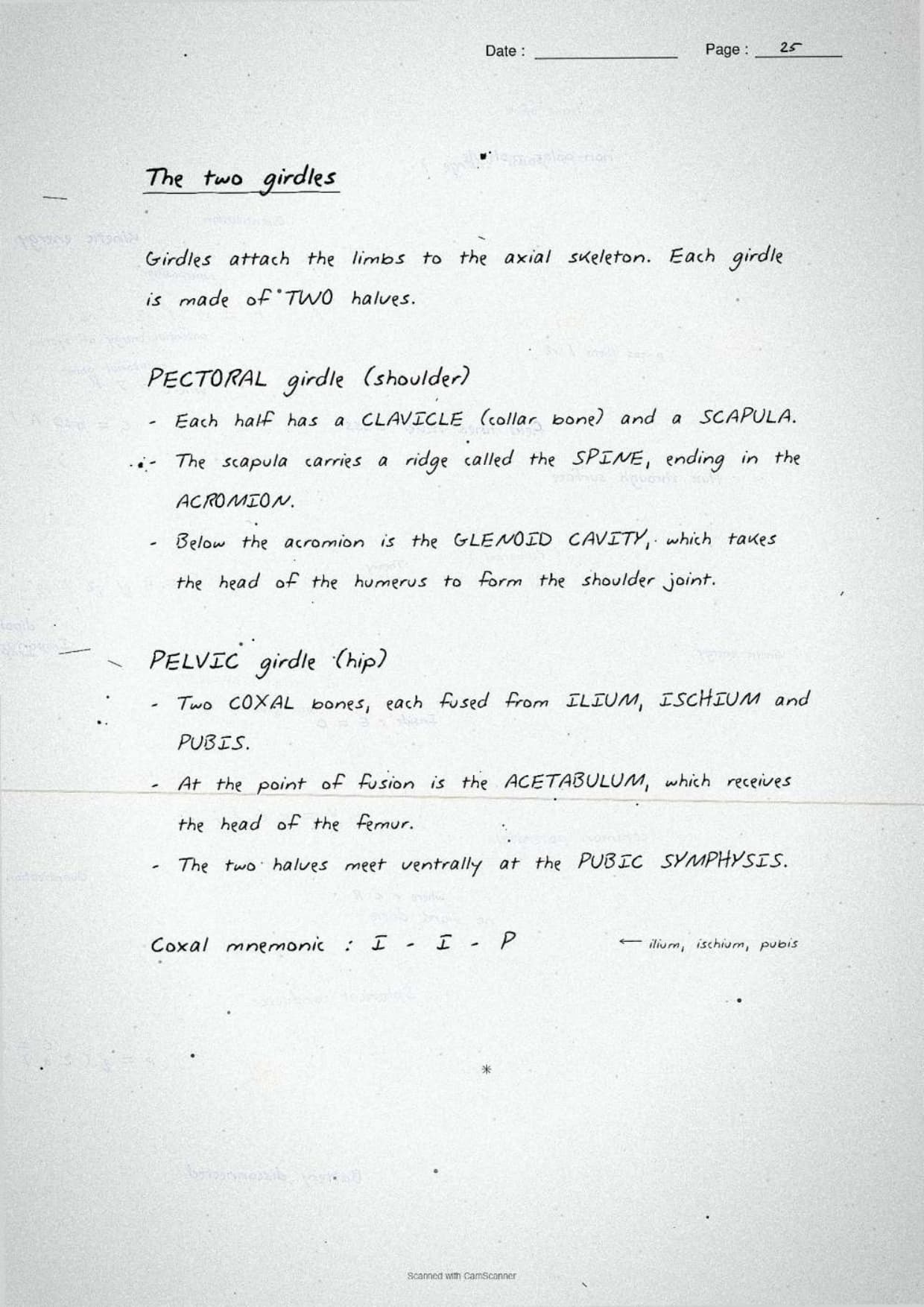
- Skeletal system: 80 axial plus 126 appendicular bones, both girdles, and all bone counts on one page.
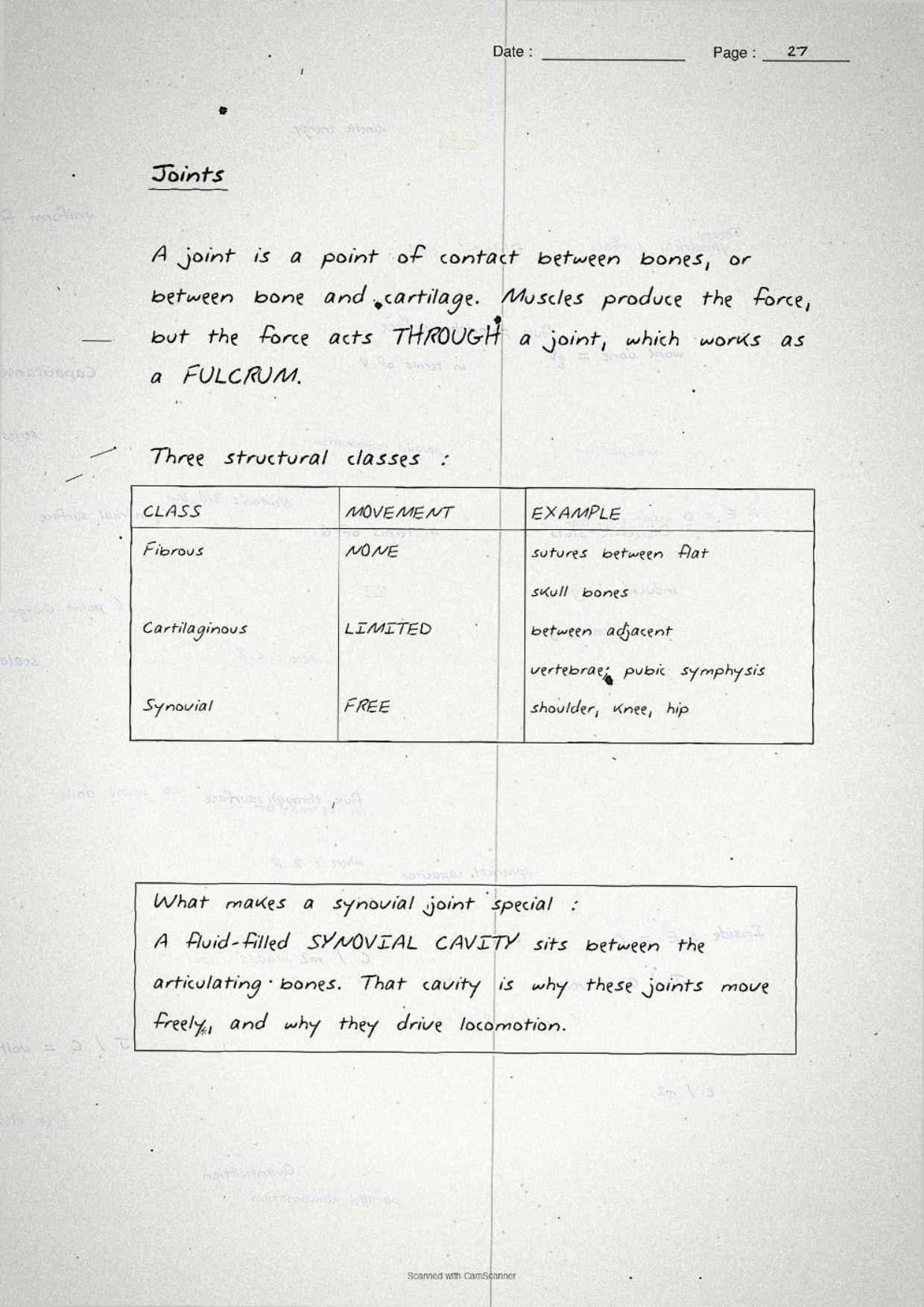
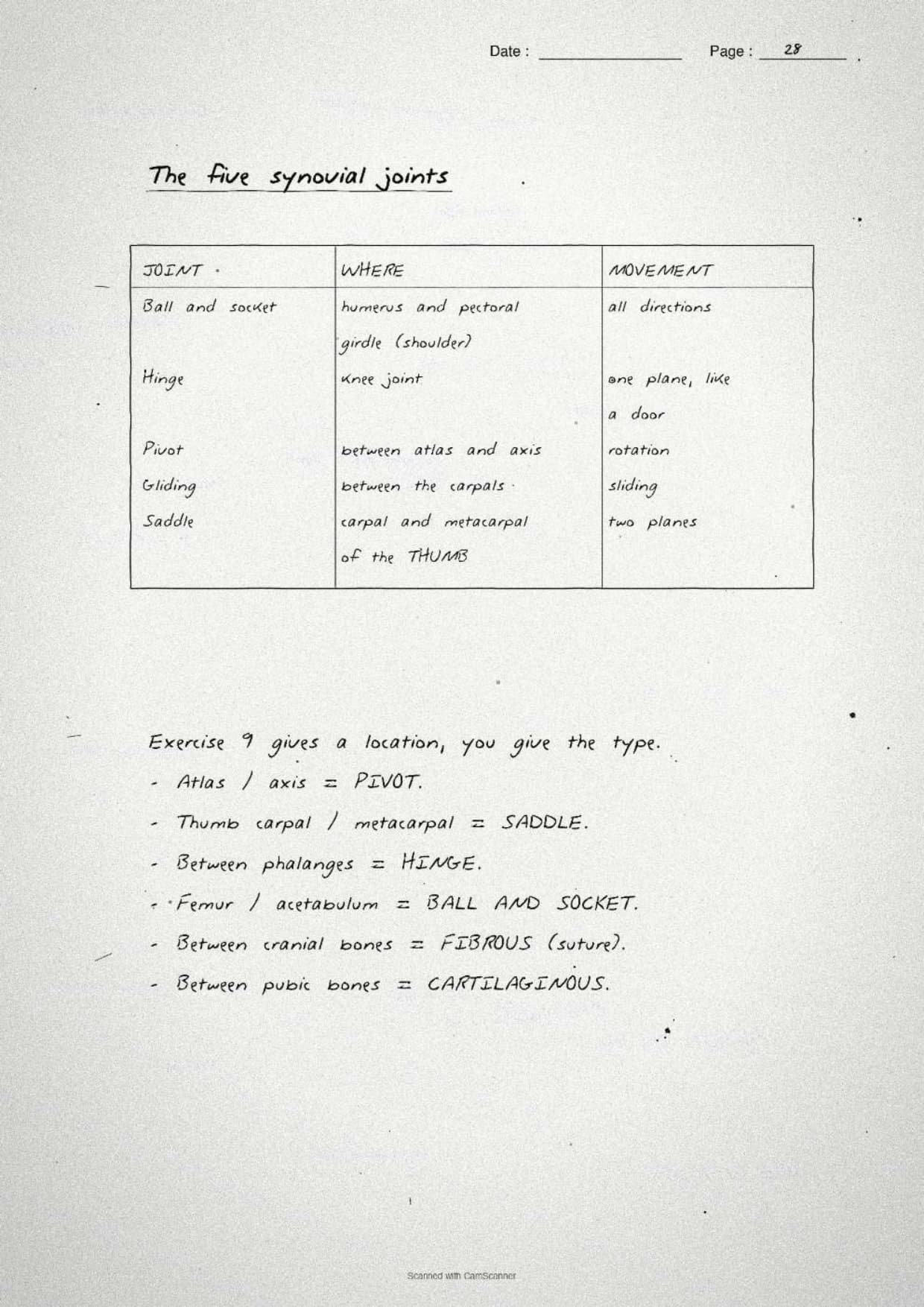
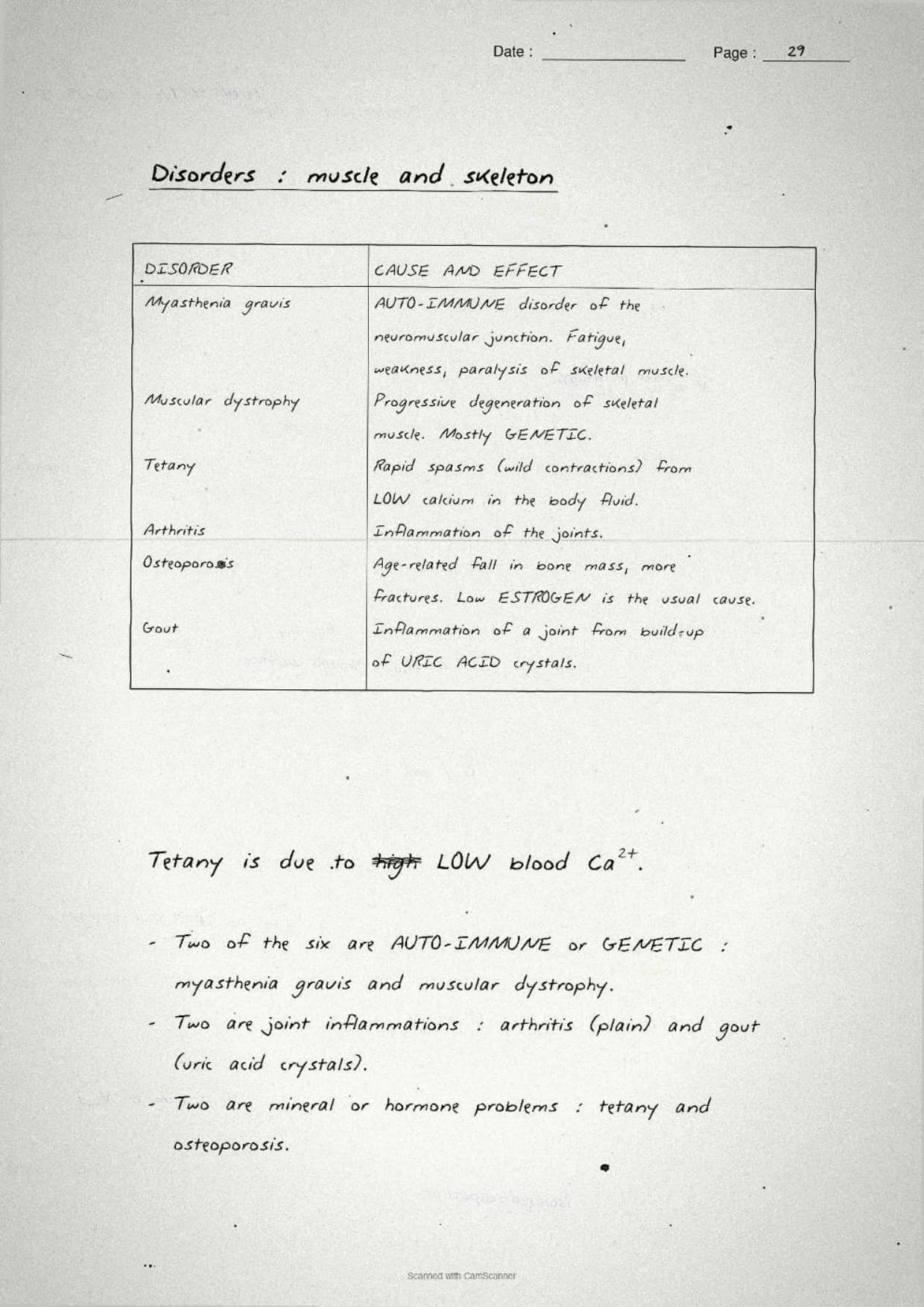
- Joints and disorders: three structural classes, five synovial subtypes, and six disorders with their causes.
Fascicle, fascia and syncytium are marked as a NEET and CUET extension, since the current 2026-27 NCERT print trims the detailed muscle histology. Rigor mortis carries the same tag.
Key Diagrams and Terms in Locomotion and Movement Notes
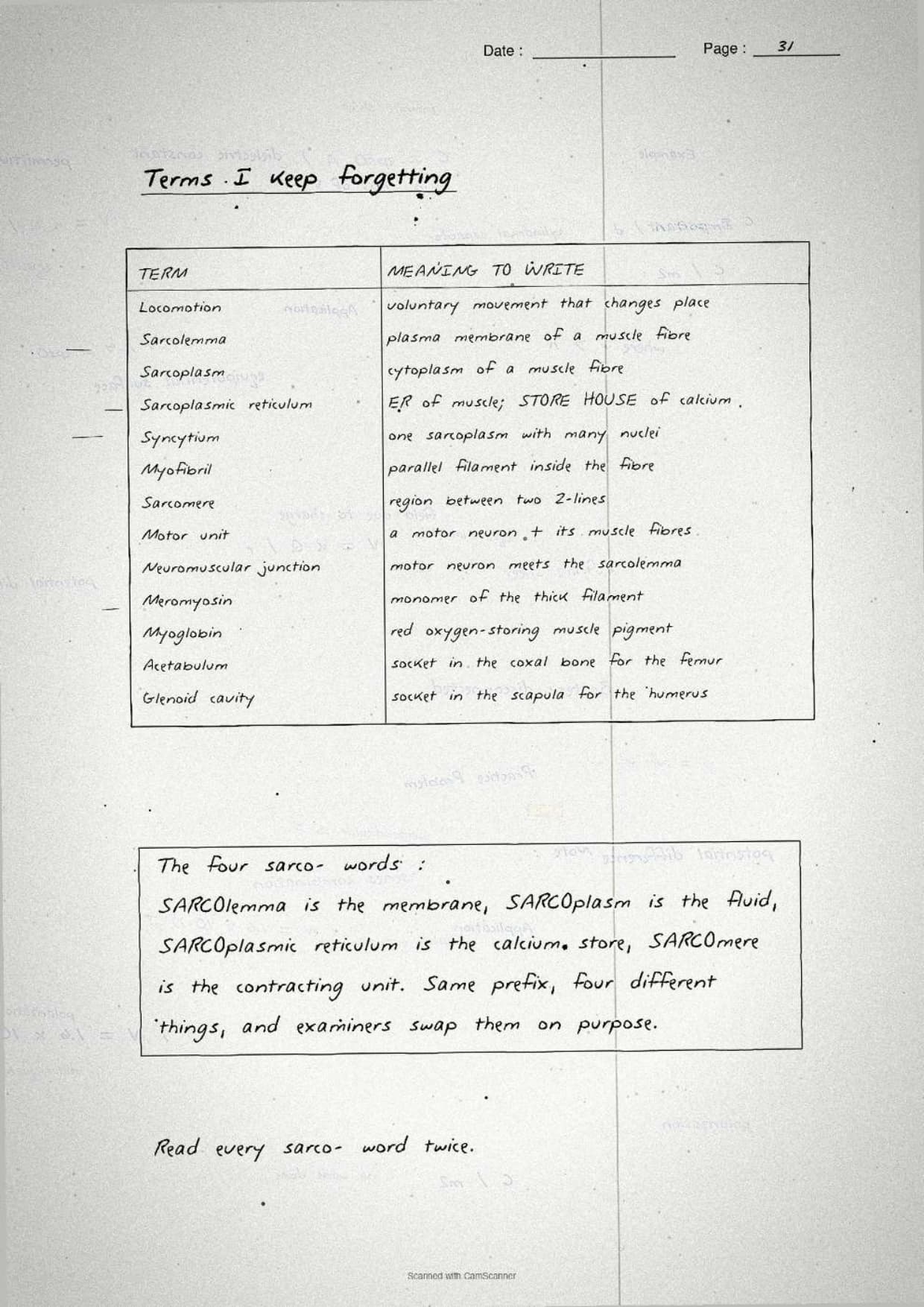
Most marks here are lost on four words that begin with the same prefix. The boxed table below is the block students get wrong most often, because examiners swap the meanings on purpose.
| Term | How the notes define it |
|---|---|
| Sarcolemma | Plasma membrane of a muscle fibre |
| Sarcoplasm | Cytoplasm of a muscle fibre |
| Sarcoplasmic reticulum | ER of the muscle fibre, and the store house of calcium ions |
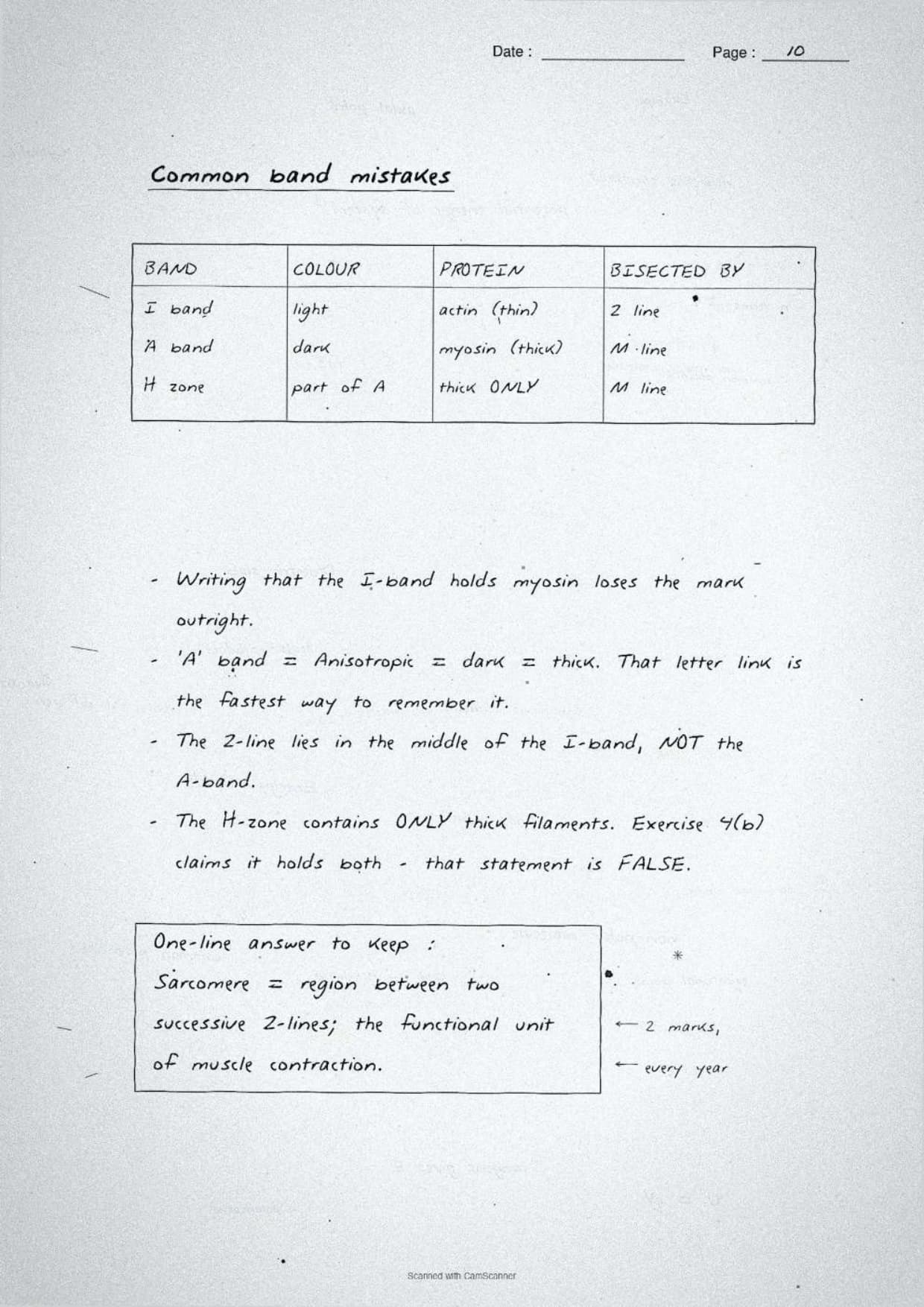
| Sarcomere | Region between two successive Z-lines, the functional unit of contraction |
| Syncytium | One sarcoplasm holding many nuclei |
| Meromyosin | Monomer of the thick filament, with a head and a tail |
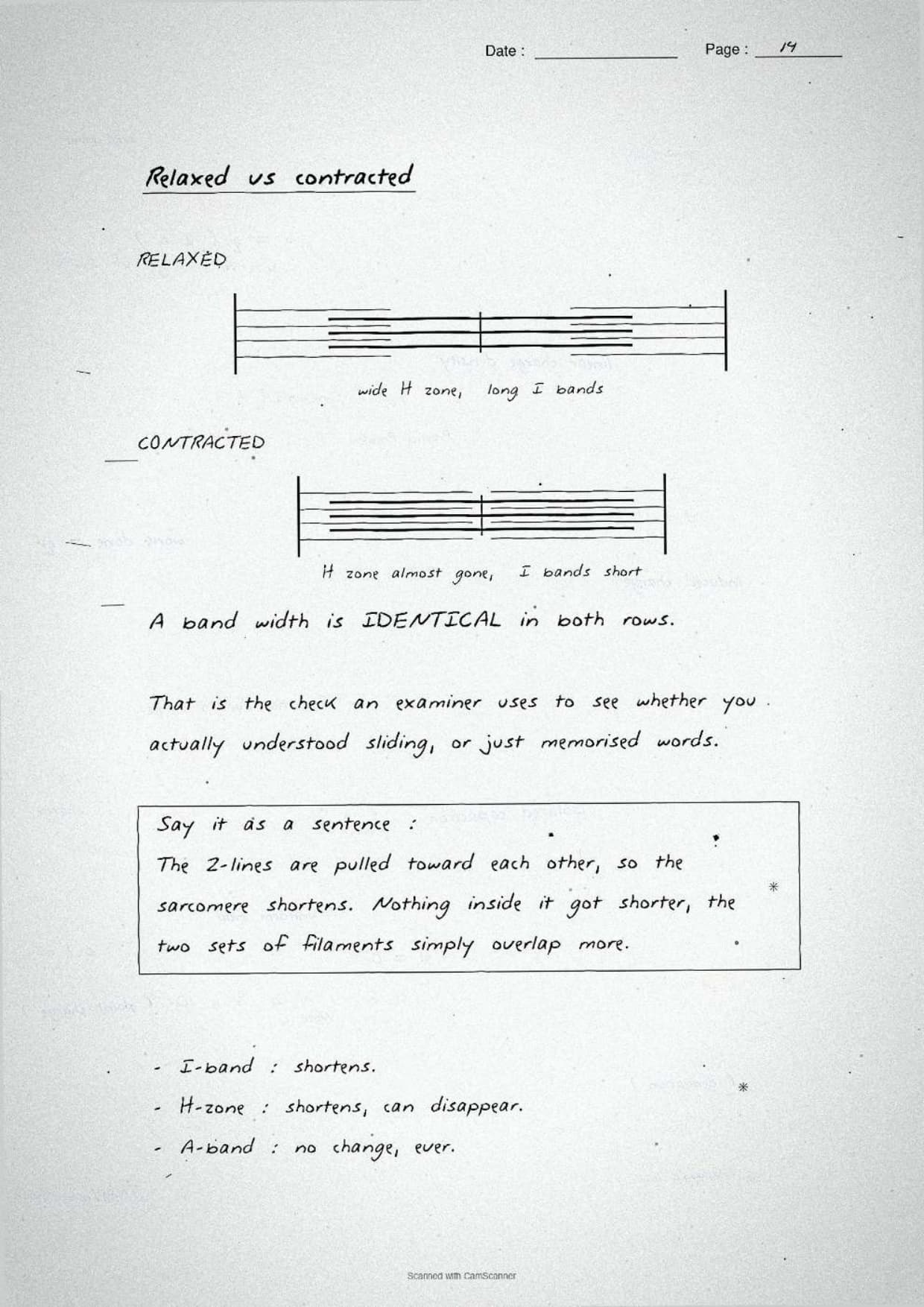
The sarcomere is drawn twice. The first sketch labels the Z-line, M-line, I-band, A-band and H-zone off one picture. The second stacks a relaxed sarcomere above a contracted one, so students see the I-band and H-zone shrink while the A-band width stays identical.
How to Use These Handwritten Notes for Revision
Work through the pages in three short passes. Read a topic page, cover the boxed line and say it back, then answer two NCERT questions on it. This loop fixes exact wording faster than re-reading the textbook.
- Redraw the sarcomere from memory before you write anything about contraction.
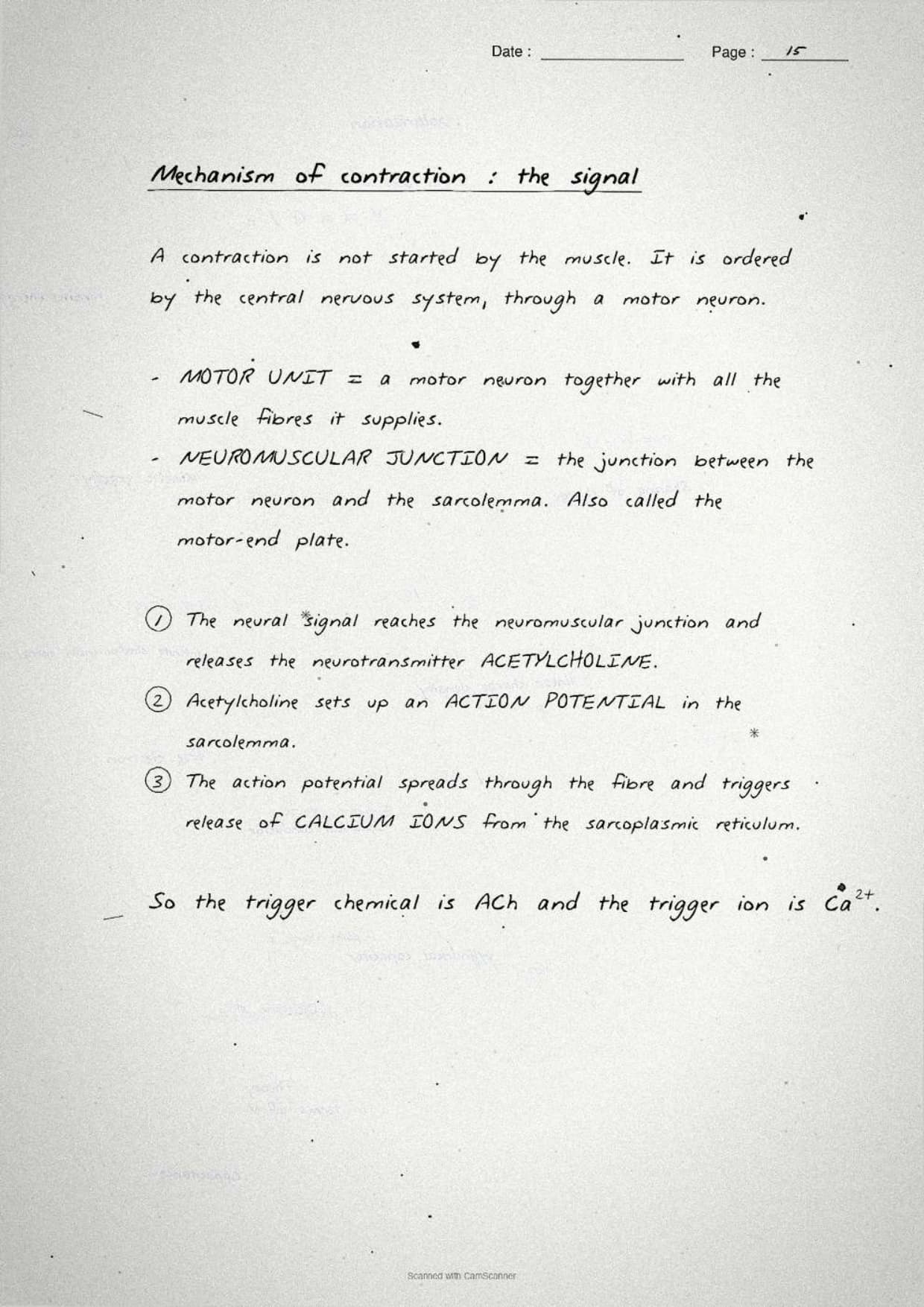
- Say the cross bridge cycle as one line: signal, acetylcholine, calcium release, cross bridge, power stroke, shortening.
- Chant the vertebral count as 7, 12, 5, 1, 1 until it needs no thought.
- Keep the class 11 biology handwritten notes chapter 17 Locomotion and Movement open beside the NCERT Solutions while practising.
- Read the night-before checklist on page 32 last, before you shut the file.
Around 45 minutes is enough for one full pass, so the notes fit into the last week before an exam.
Student Feedback on Locomotion and Movement Handwritten Notes
Students rate the sarcomere pages as the ones that save them the most time. The figures below come from a Collegedunia poll run before the 2026 boards.
- In a Collegedunia survey of 10,420 students, 74% named the relaxed against contracted sarcomere sketch their most-used revision page.
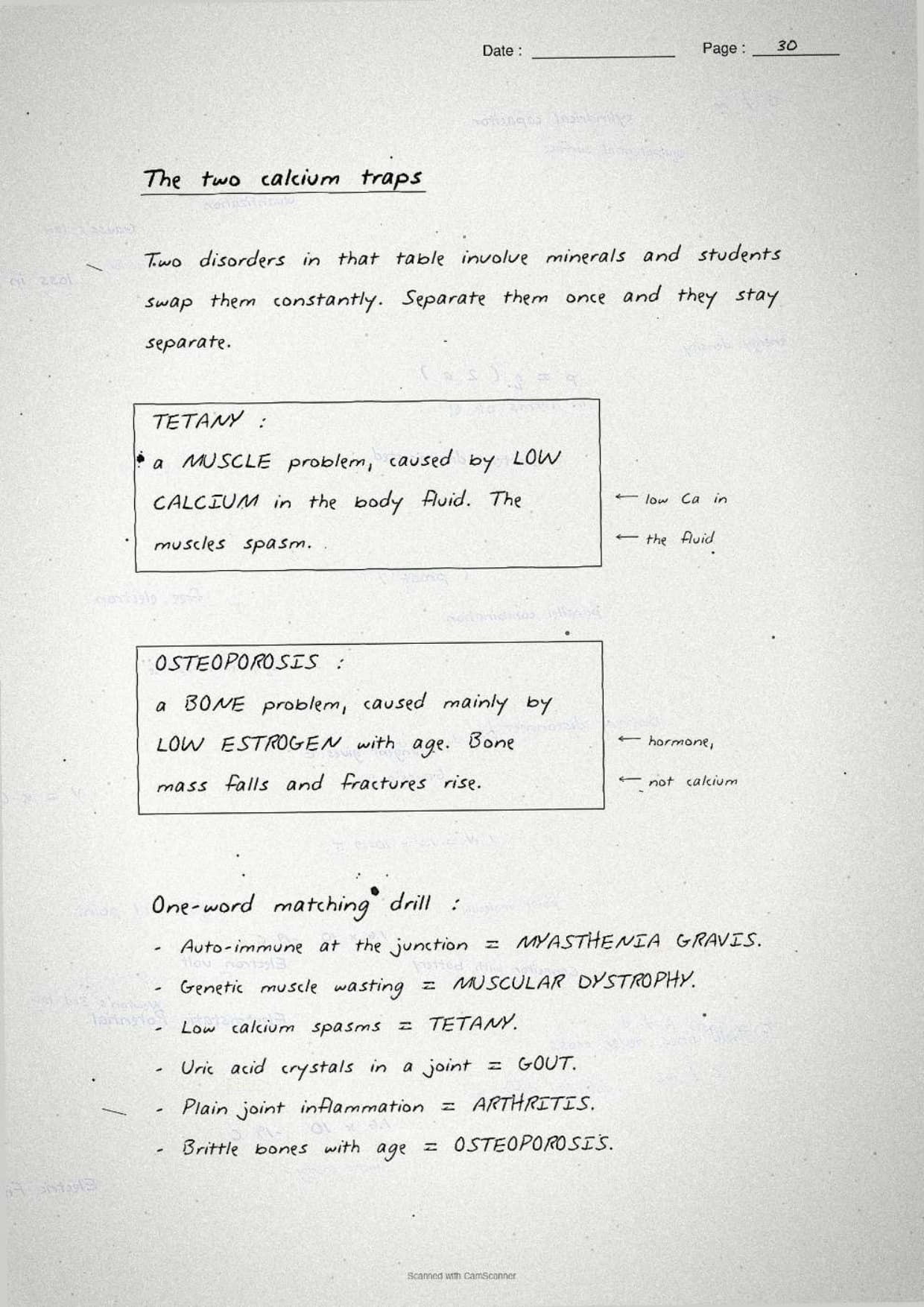
- Most-confused pair before the poll: tetany against osteoporosis, mixed up by about 5 in 10 students.
Source: 2026-27 Class 11 Biology student poll. Sample of 10,420 students from CBSE schools across 12 states.
Where to Use These Notes Alongside Other Resources
These handwritten pages work best next to the step-wise Solutions, the summary Notes and the Exemplar Solutions for the same chapter. Read the notes first, then check the answers, and keep the Exemplar for extra practice.
| Resource | Best used for |
|---|---|
| Locomotion and Movement NCERT Solutions | Step-by-step answers to every back-exercise question |
| Locomotion and Movement Class 11 Notes | Quick chapter summary with all key terms in one place |
| Locomotion and Movement Exemplar Solutions | Every Exemplar question solved for NEET-level practice |
| Locomotion and Movement NCERT Book PDF | The original chapter text and exercises |
All Class 11 Biology Handwritten Notes by Chapter
The table links the handwritten notes for every Class 11 Biology chapter, so students can move across the course in one click. Locomotion and Movement is highlighted.
| Chapter | Handwritten Notes |
|---|---|
| Chapter 1 | The Living World |
| Chapter 2 | Biological Classification |
| Chapter 3 | Plant Kingdom |
| Chapter 4 | Animal Kingdom |
| Chapter 5 | Morphology of Flowering Plants |
| Chapter 6 | Anatomy of Flowering Plants |
| Chapter 7 | Structural Organisation in Animals |
| Chapter 8 | Cell The Unit of Life |
| Chapter 9 | Biomolecules |
| Chapter 10 | Cell Cycle and Cell Division |
| Chapter 11 | Photosynthesis in Higher Plants |
| Chapter 12 | Respiration in Plants |
| Chapter 13 | Plant Growth and Development |
| Chapter 14 | Breathing and Exchange of Gases |
| Chapter 15 | Body Fluids and Circulation |
| Chapter 16 | Excretory Products and their Elimination |
| Chapter 17 | Locomotion and Movement |
| Chapter 18 | Neural Control and Coordination |
| Chapter 19 | Chemical Coordination and Integration |
FAQs on Locomotion and Movement Handwritten Notes
Ques. Are these class 11 biology handwritten notes chapter 17 Locomotion and Movement free to download?
Ans. Yes. The Locomotion and Movement handwritten notes are free to download as a PDF from this page. All 32 pages follow the 2026-27 NCERT and cover the full chapter in clear handwriting for quick revision.
Ques. What topics do these handwritten notes cover?
Ans. They cover the three movement types, the three muscle types, muscle structure, actin and myosin, the sarcomere, sliding filament theory, the cross bridge cycle, red and white fibres, the axial and appendicular skeleton, joints and six disorders. Each topic sits on its own page with boxed definitions and hand-drawn diagrams.
Ques. Which band changes during muscle contraction?
Ans. The I-band shortens and the H-zone shortens, and the H-zone can vanish. The A-band never changes width, because the thick filaments do not shorten. The Z-lines are pulled closer, so the sarcomere gets shorter while the filaments only slide past each other.
Ques. How many bones are in the human skeleton, and how do the notes split them?
Ans. The adult human skeleton has 206 bones: 80 axial and 126 appendicular. The axial set is the skull, vertebral column, sternum and ribs. The appendicular set is the limbs and the two girdles. One page carries every count, including 22 skull bones, 26 vertebrae, 12 pairs of ribs and 30 bones per limb.
Ques. Are these notes useful for NEET, not just Boards?
Ans. Yes. NEET picks two to three questions a year from this chapter, mostly on the sarcomere, the contraction steps and bone counts. Fascicle, fascia, syncytium and rigor mortis are tagged as a NEET and CUET extension, since the board syllabus no longer carries them.



Comments