




These class 11 biology handwritten notes chapter 5 Morphology of Flowering Plants pack 31 pages of pure terminology into one revision pass for Boards, NEET and CUET in 2026-27. Every root, stem, leaf and flower term is boxed, with the floral formula symbols and family Solanaceae written out in full.
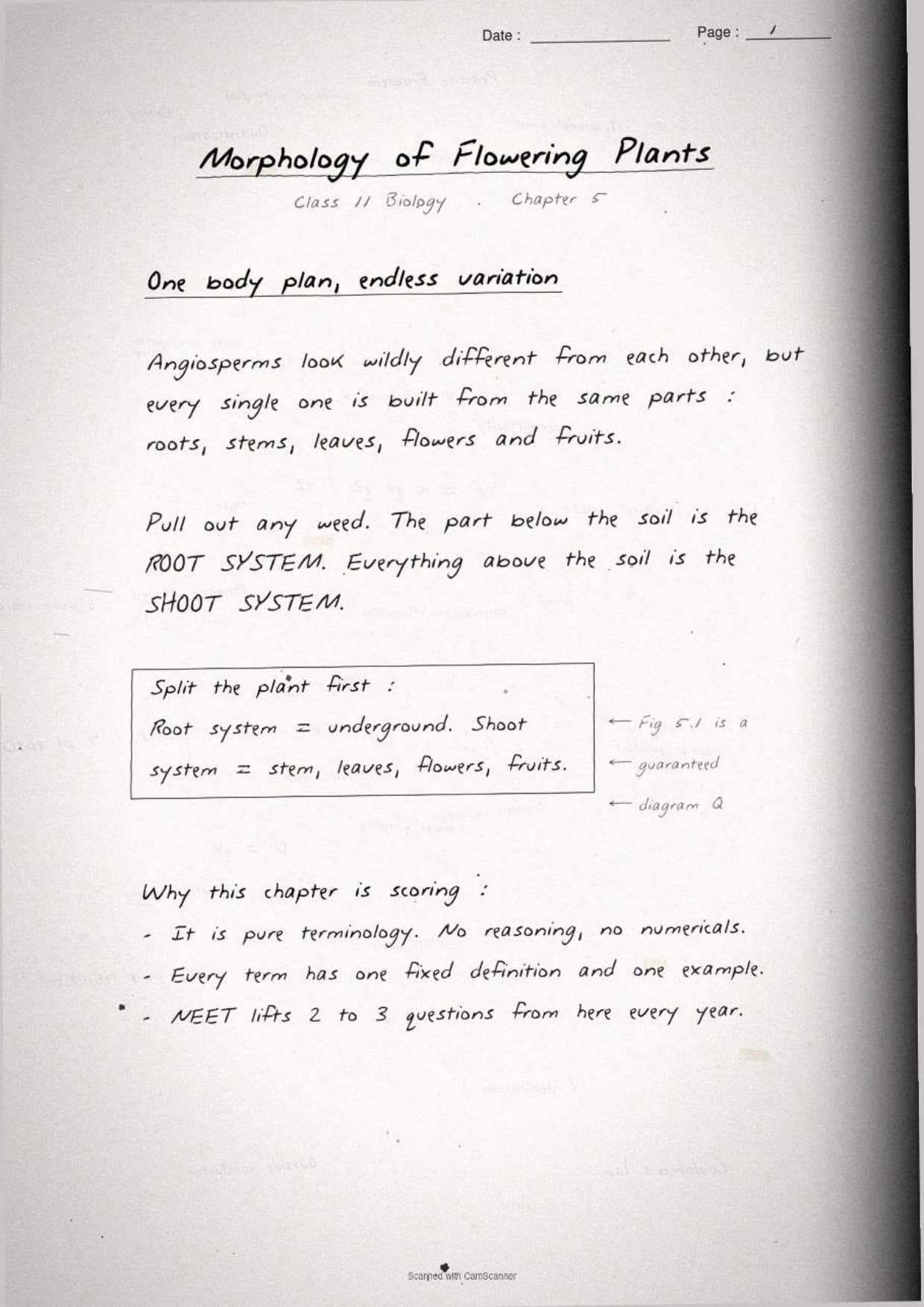
Chapter 5 carries no reasoning and no numericals. It is a list of fixed definitions, and NEET lifts two to three questions from it every year.
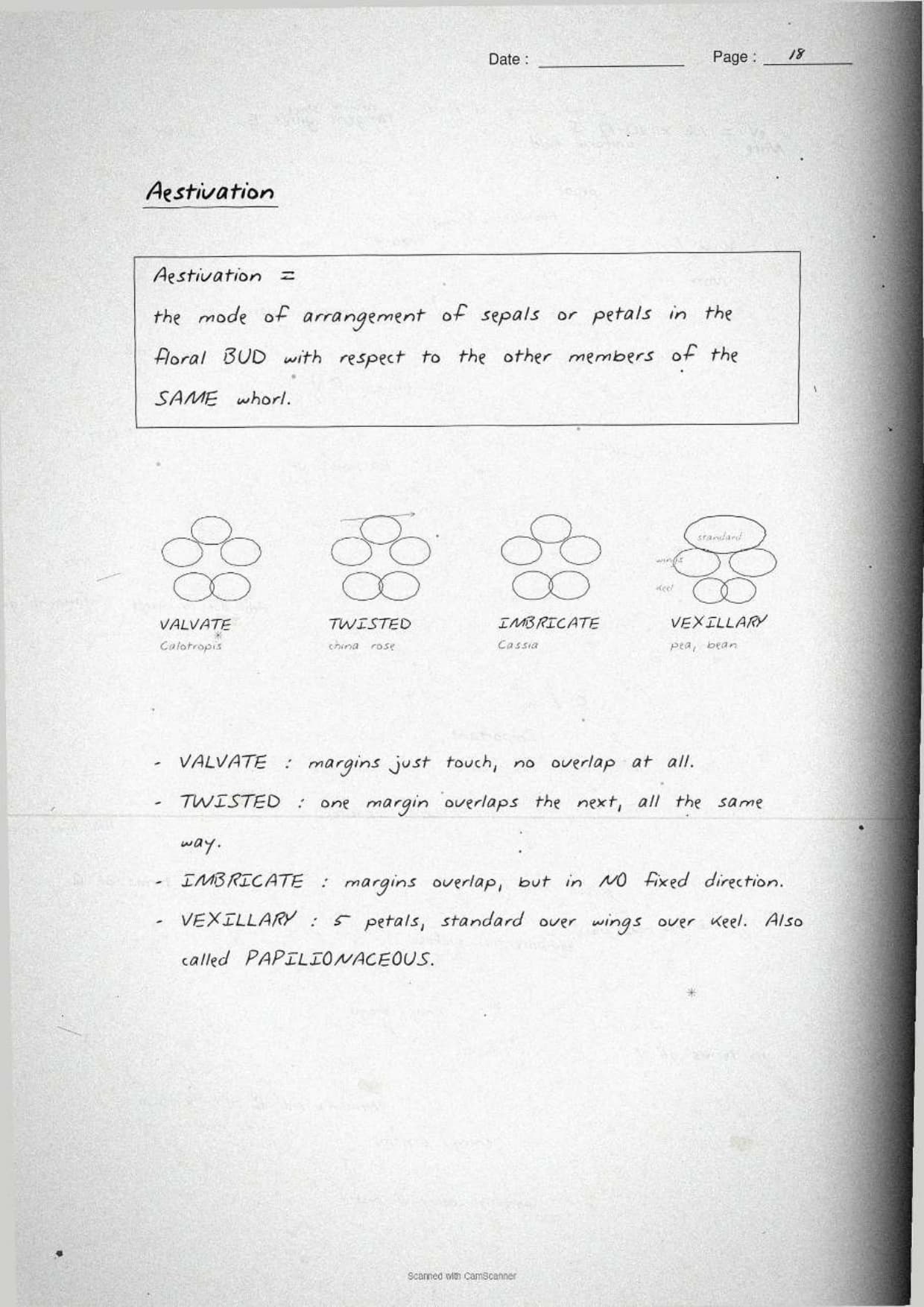
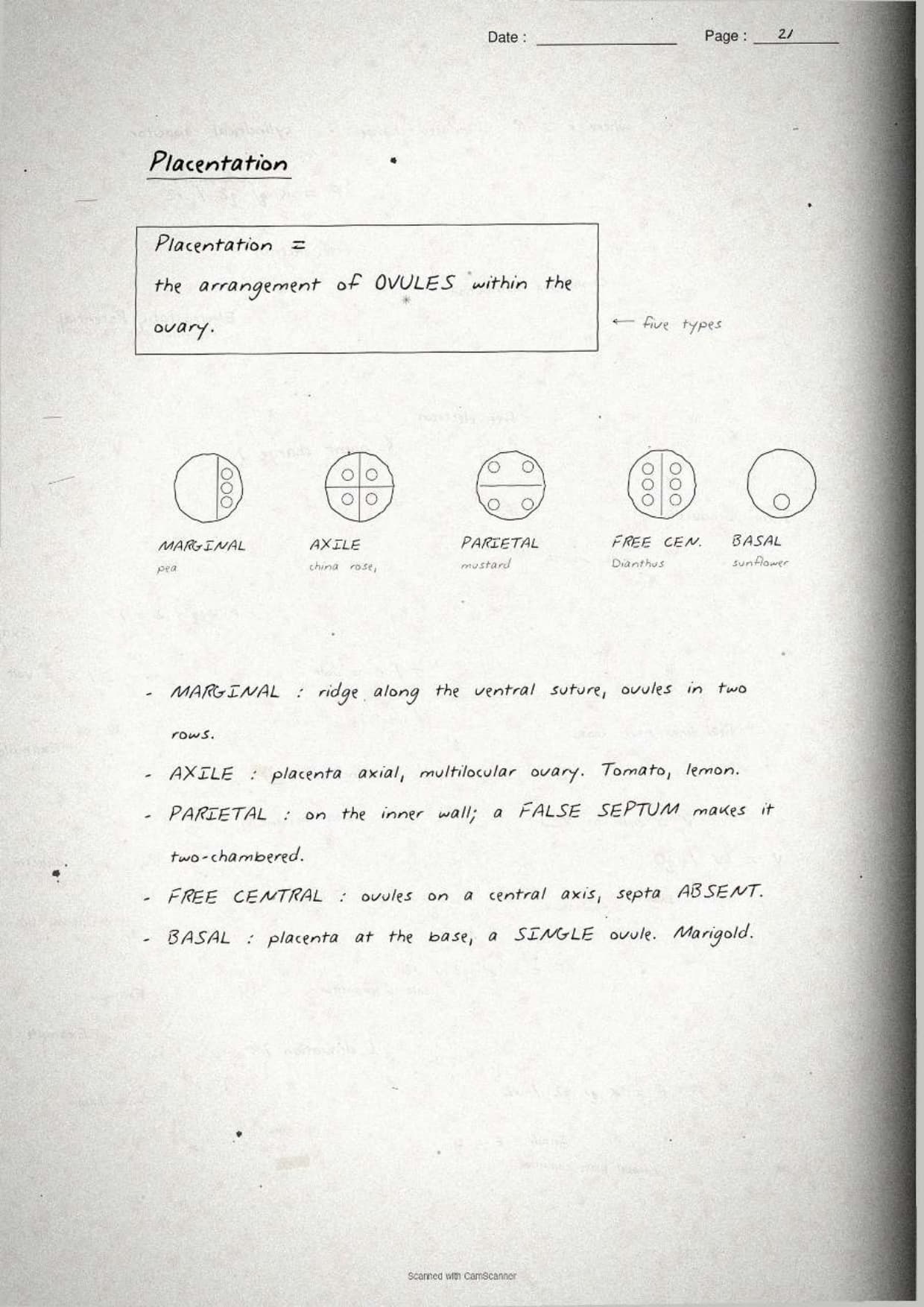
- Hand-drawn plates for venation, phyllotaxy, aestivation and the five placentations.
- Boxed one-line meanings for acropetal, basipetal, epipetalous, staminode and pericarp.
- Pairs with the NCERT Solutions, Notes and Exemplar Solutions linked lower on this page.
What Morphology of Flowering Plants Handwritten Notes Cover
The 31 pages run in NCERT order, from the root system on page 2 to a night-before recap on page 31. One topic sits on one page, so students revise a single idea at a time. New sub-topics are written in red and every definition sits inside a box.
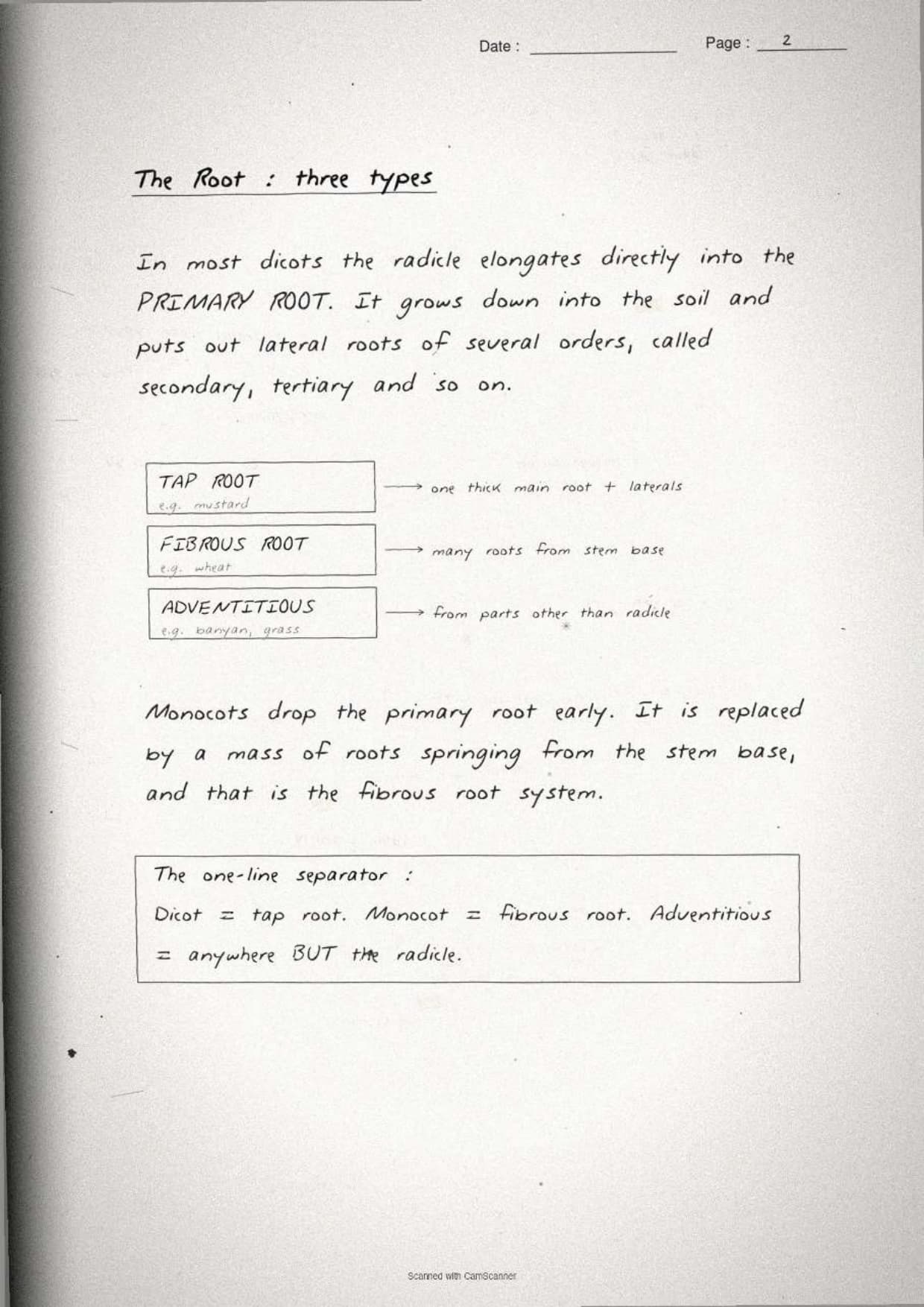
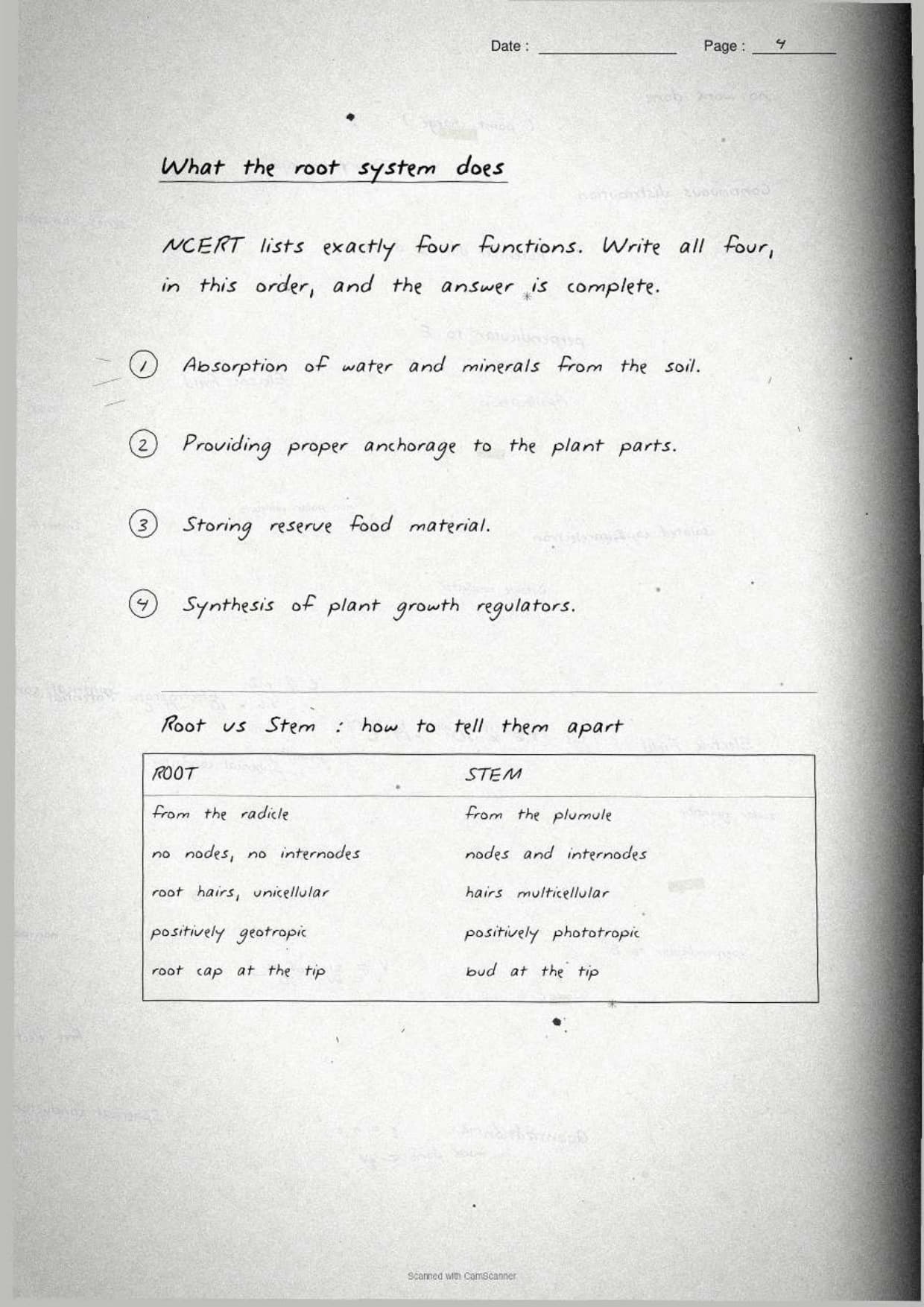
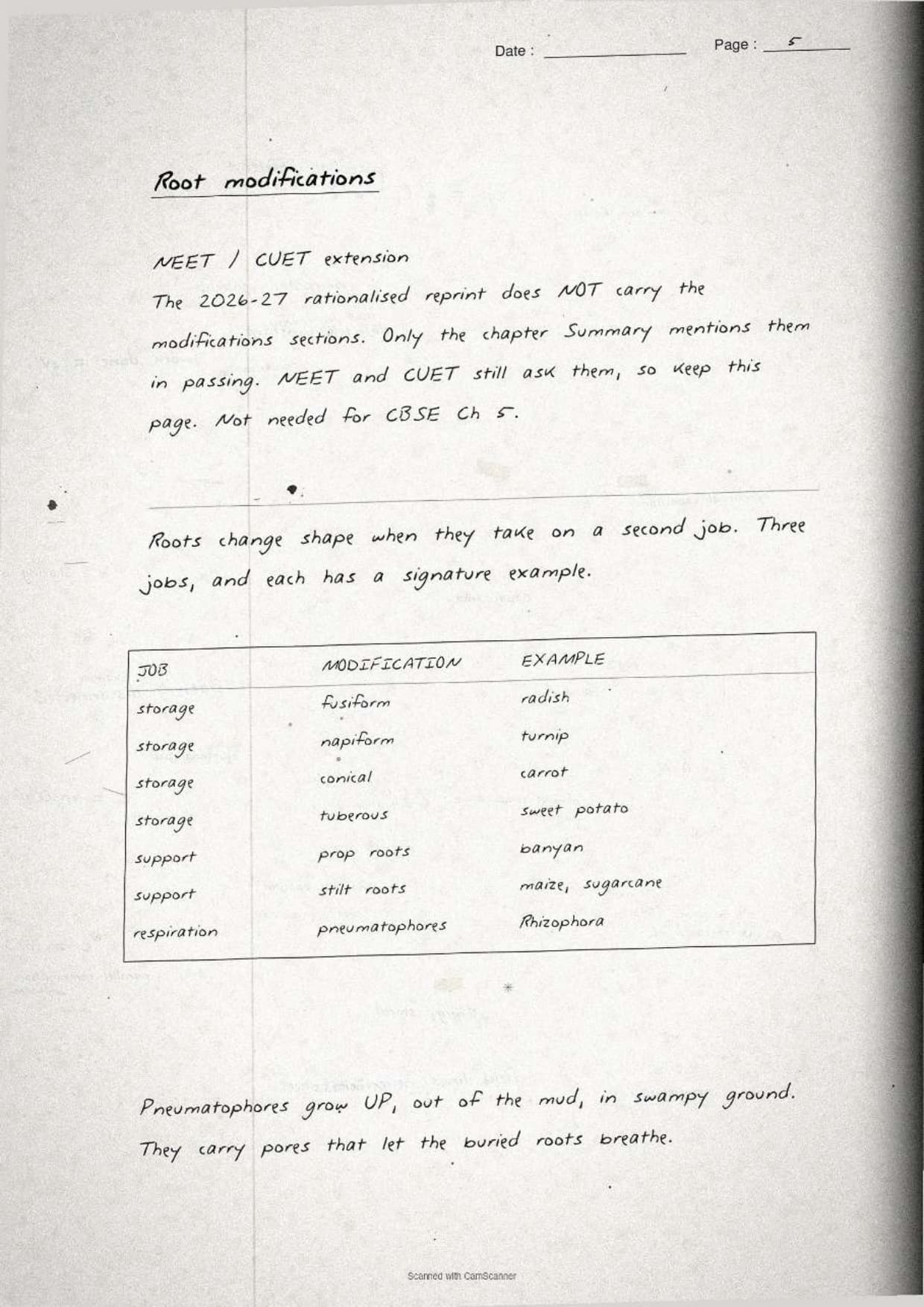
- Root: tap, fibrous and adventitious types, the four root-tip zones and a root versus stem table.
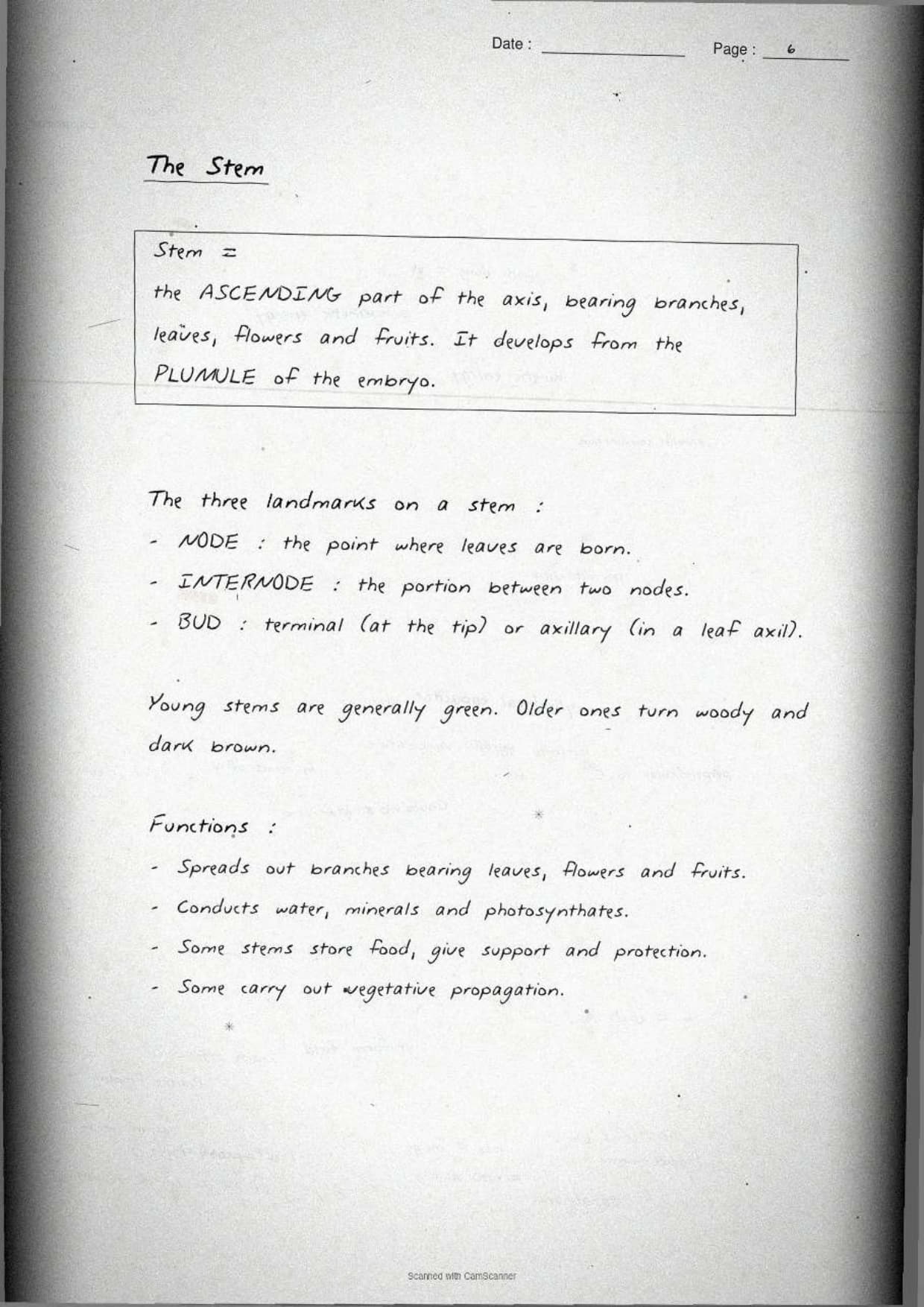
- Stem: what counts as a node, and the four functions NCERT lists.
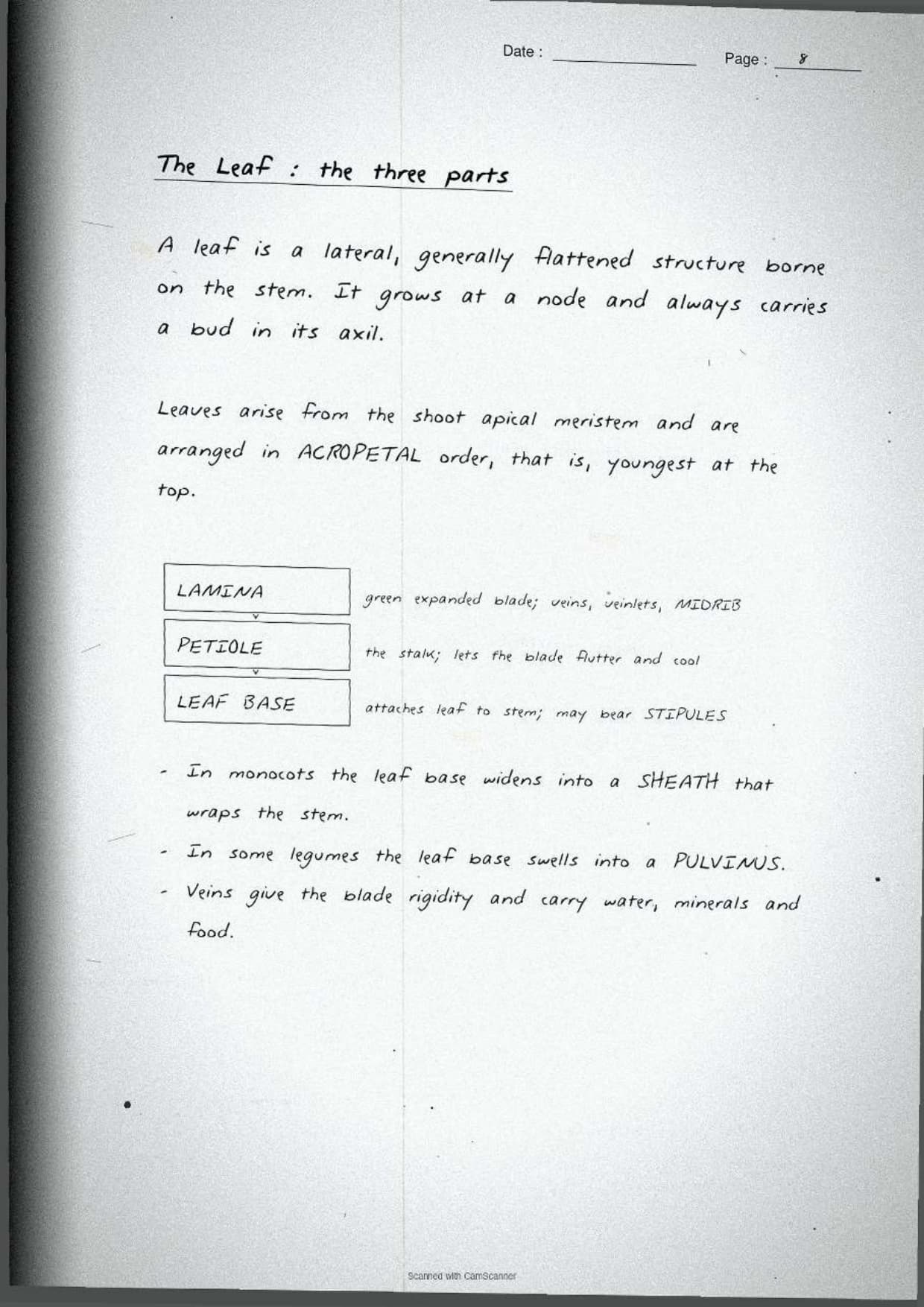
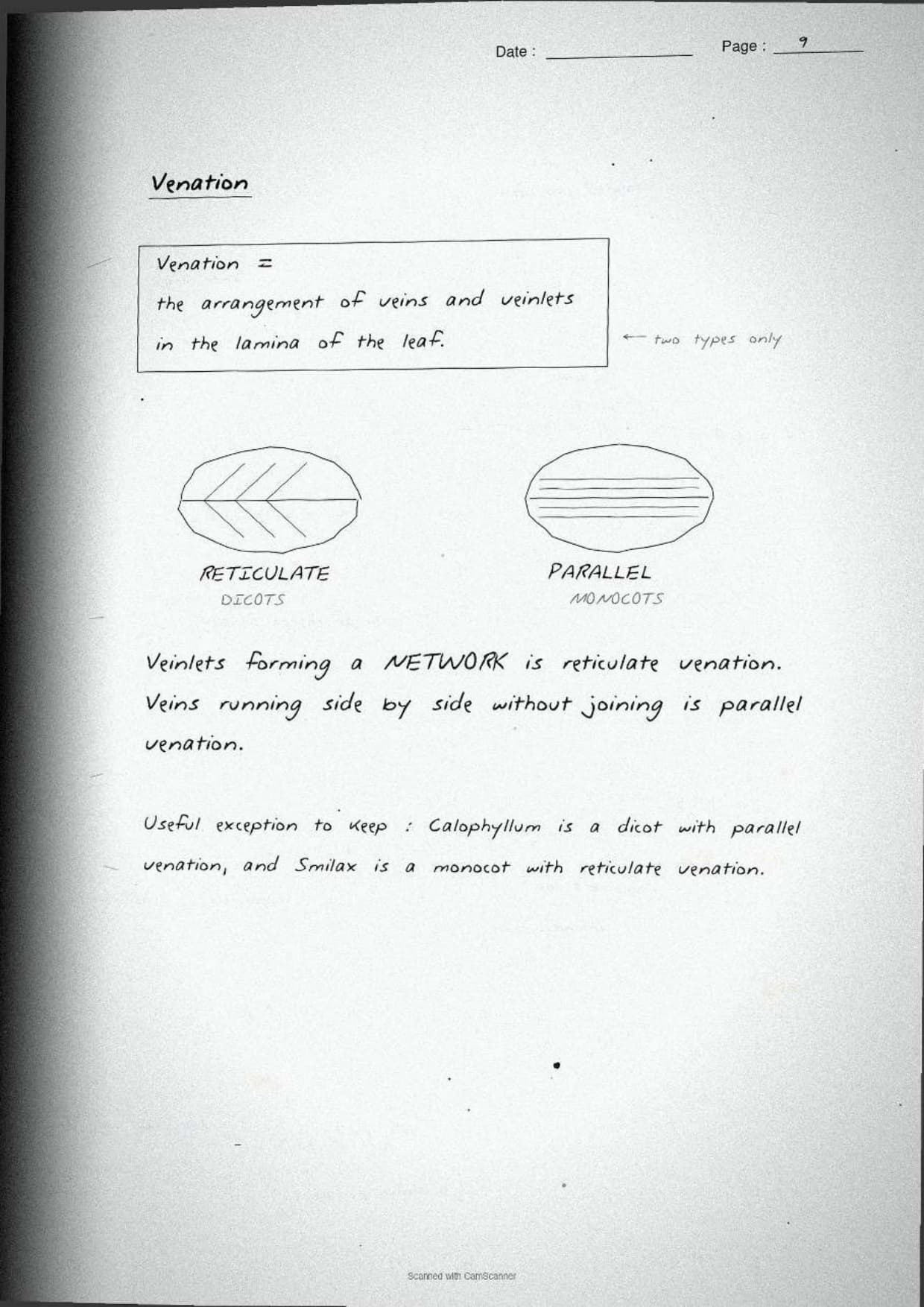
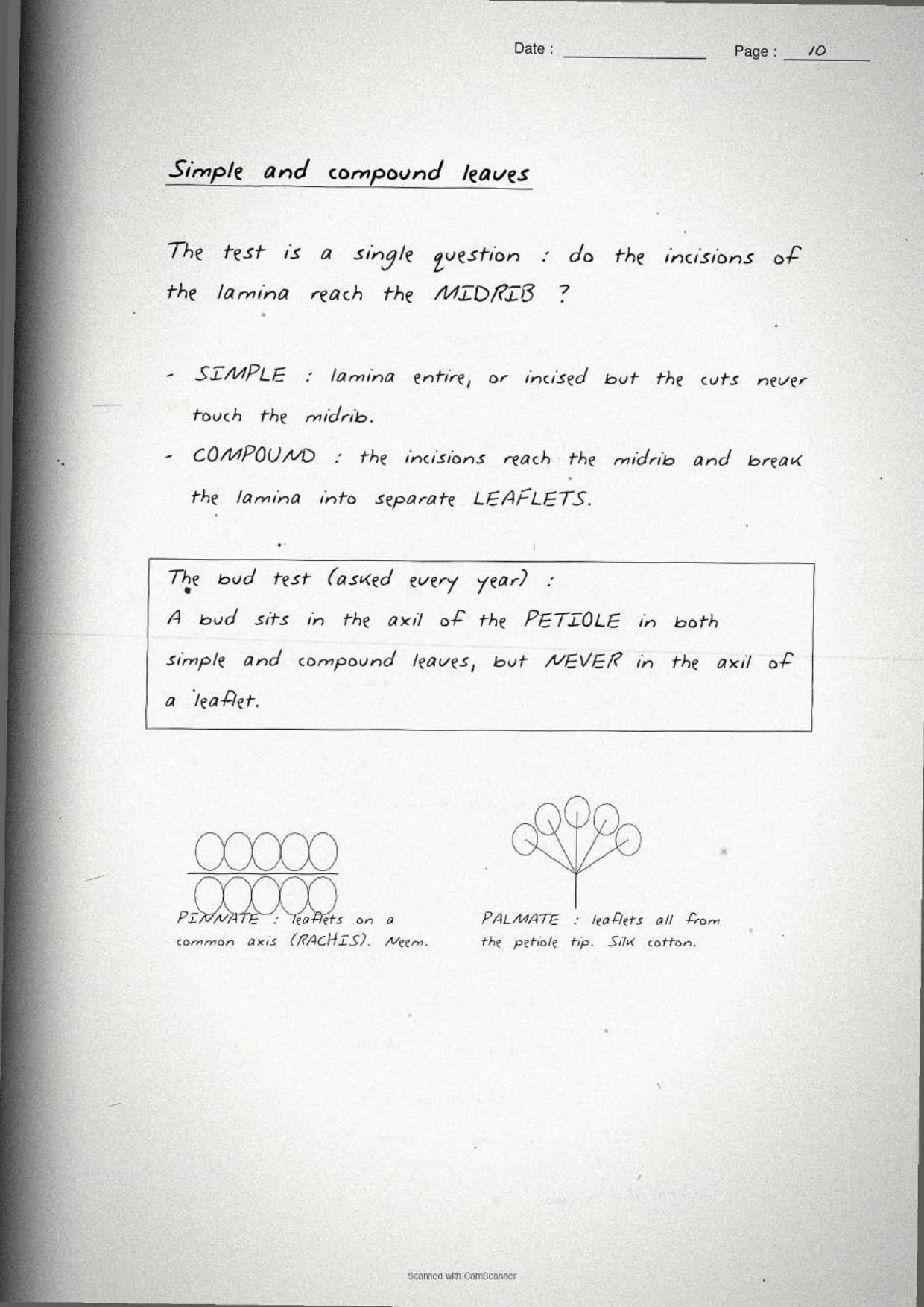
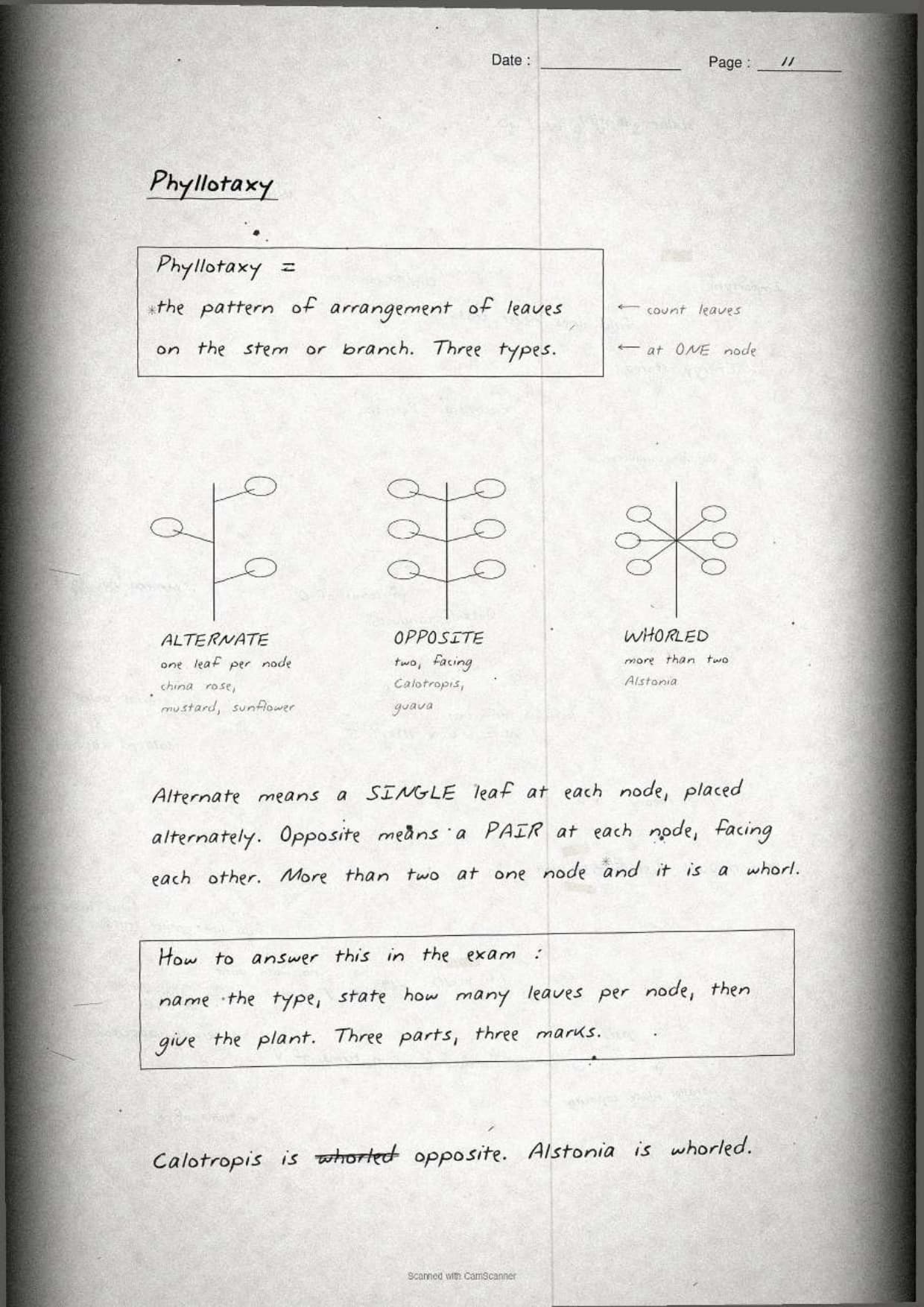
- Leaf: reticulate against parallel venation, the simple versus compound bud test, and the three phyllotaxy patterns.
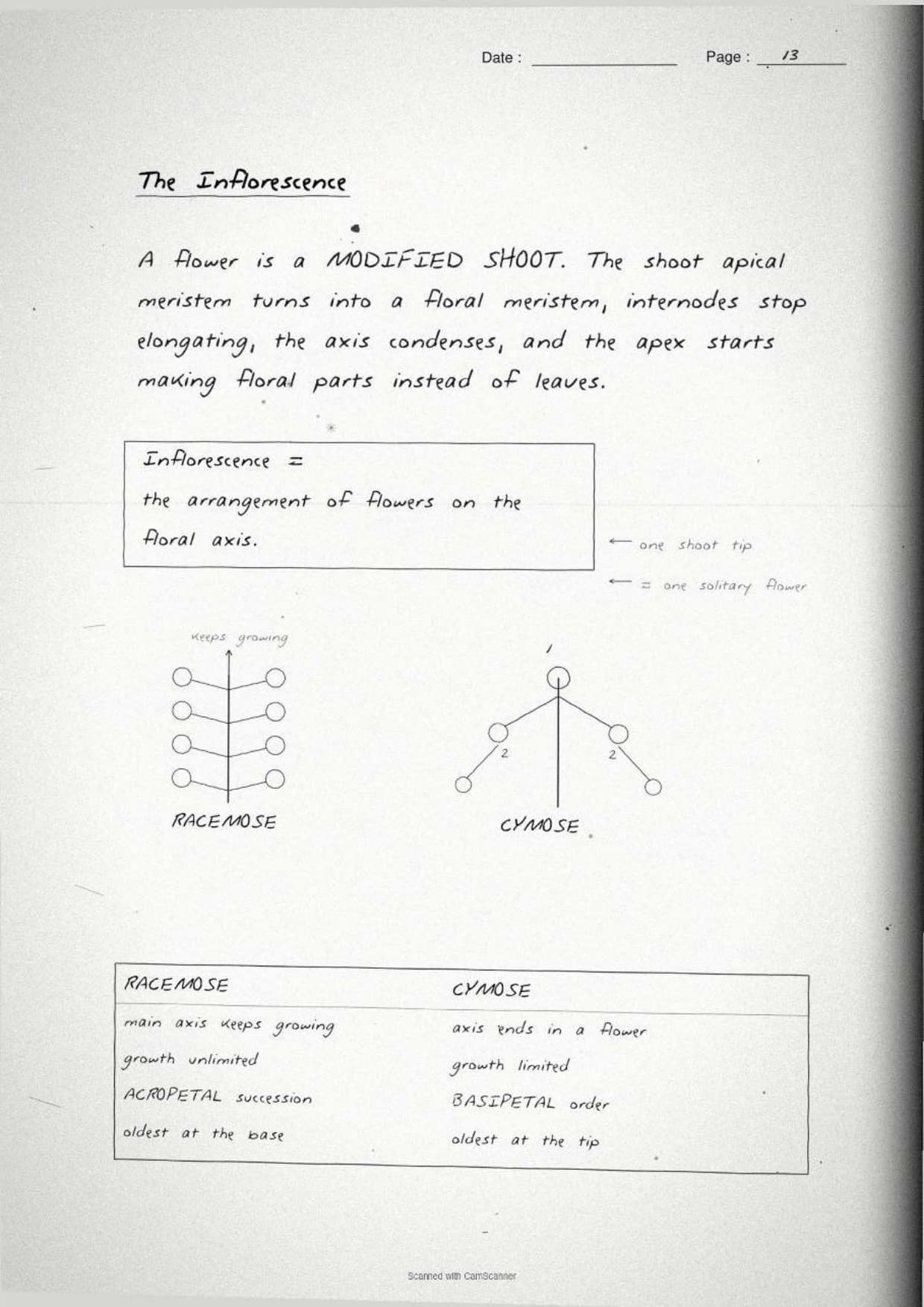
- Inflorescence: racemose against cymose, with acropetal and basipetal succession.
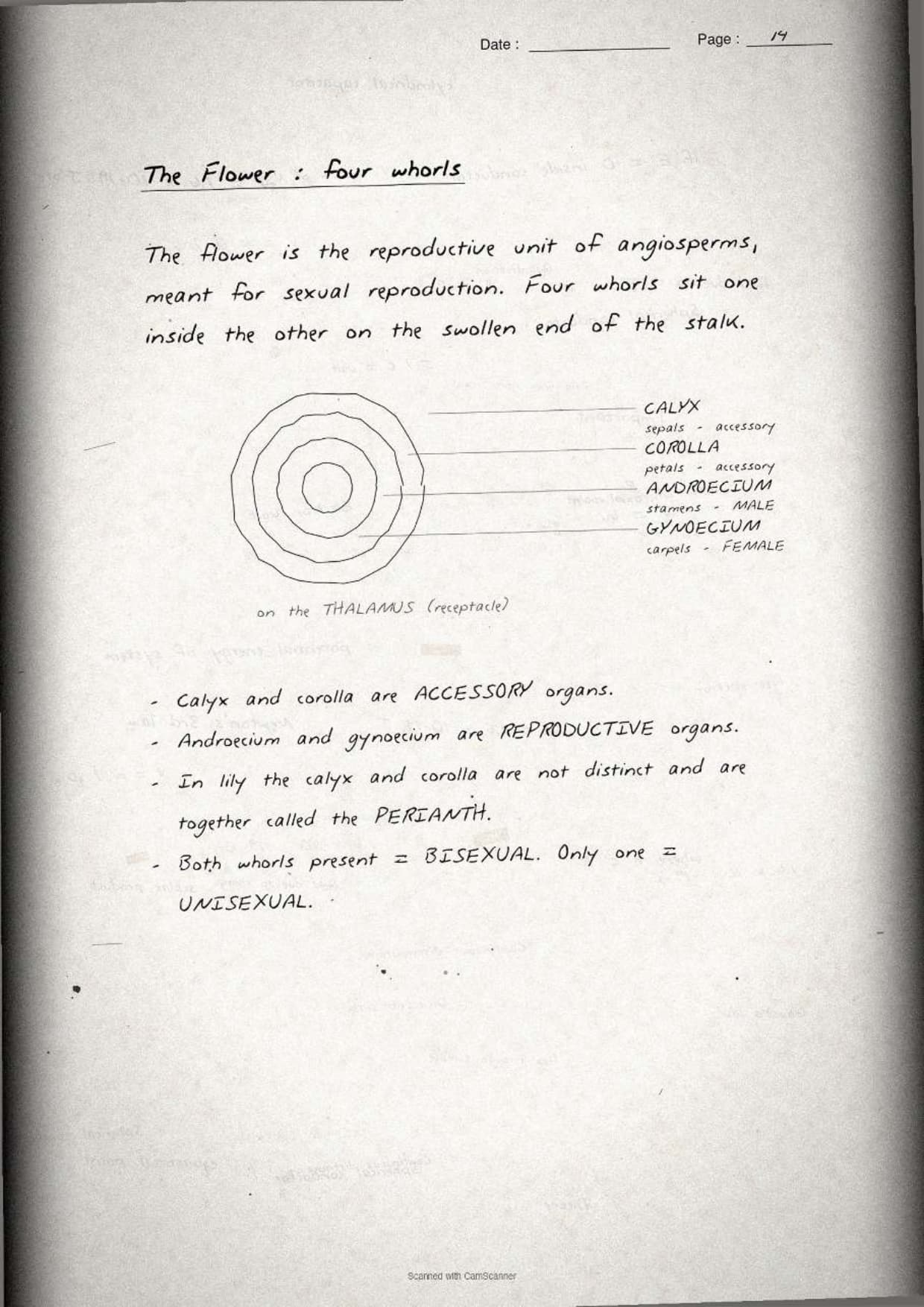
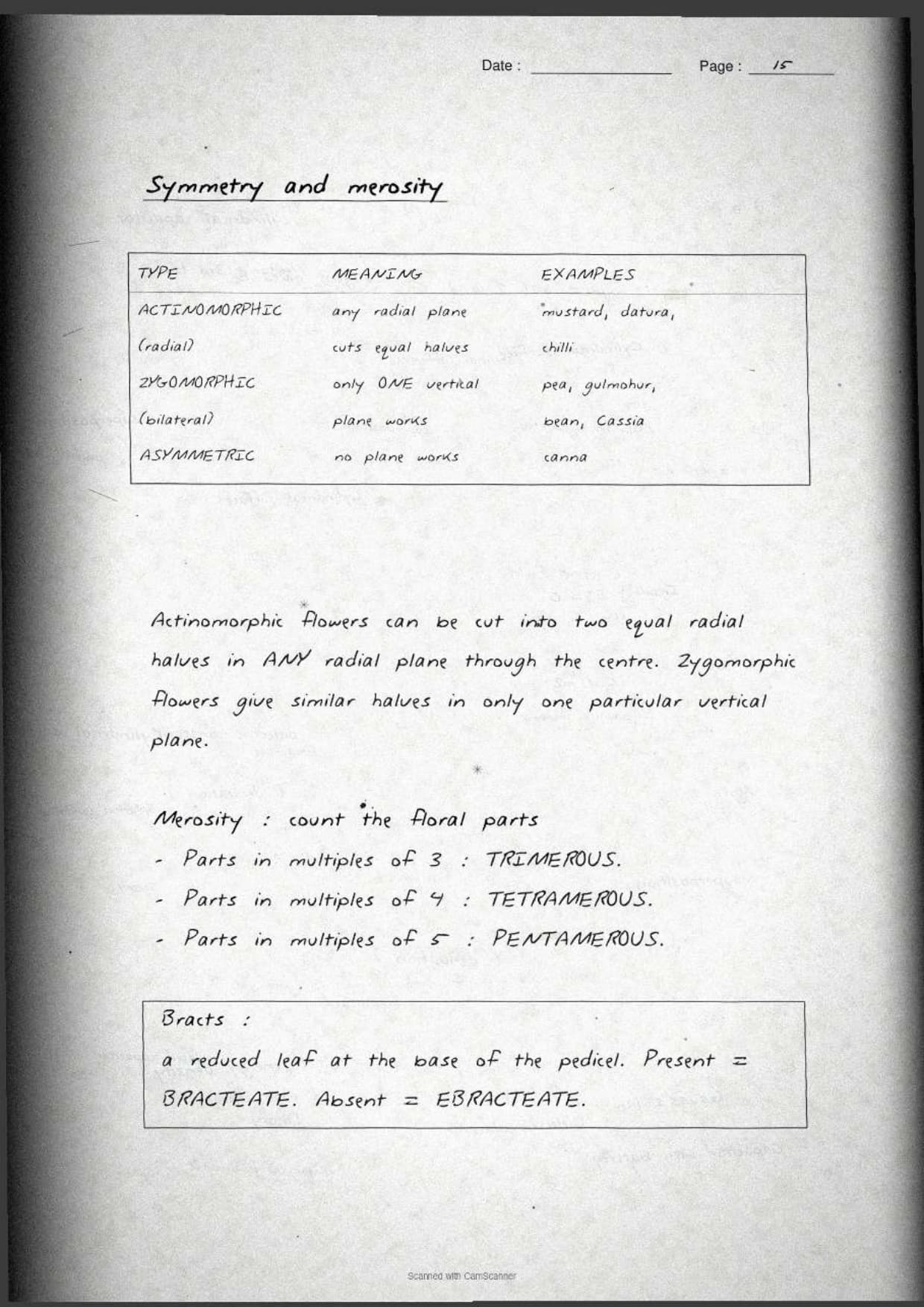
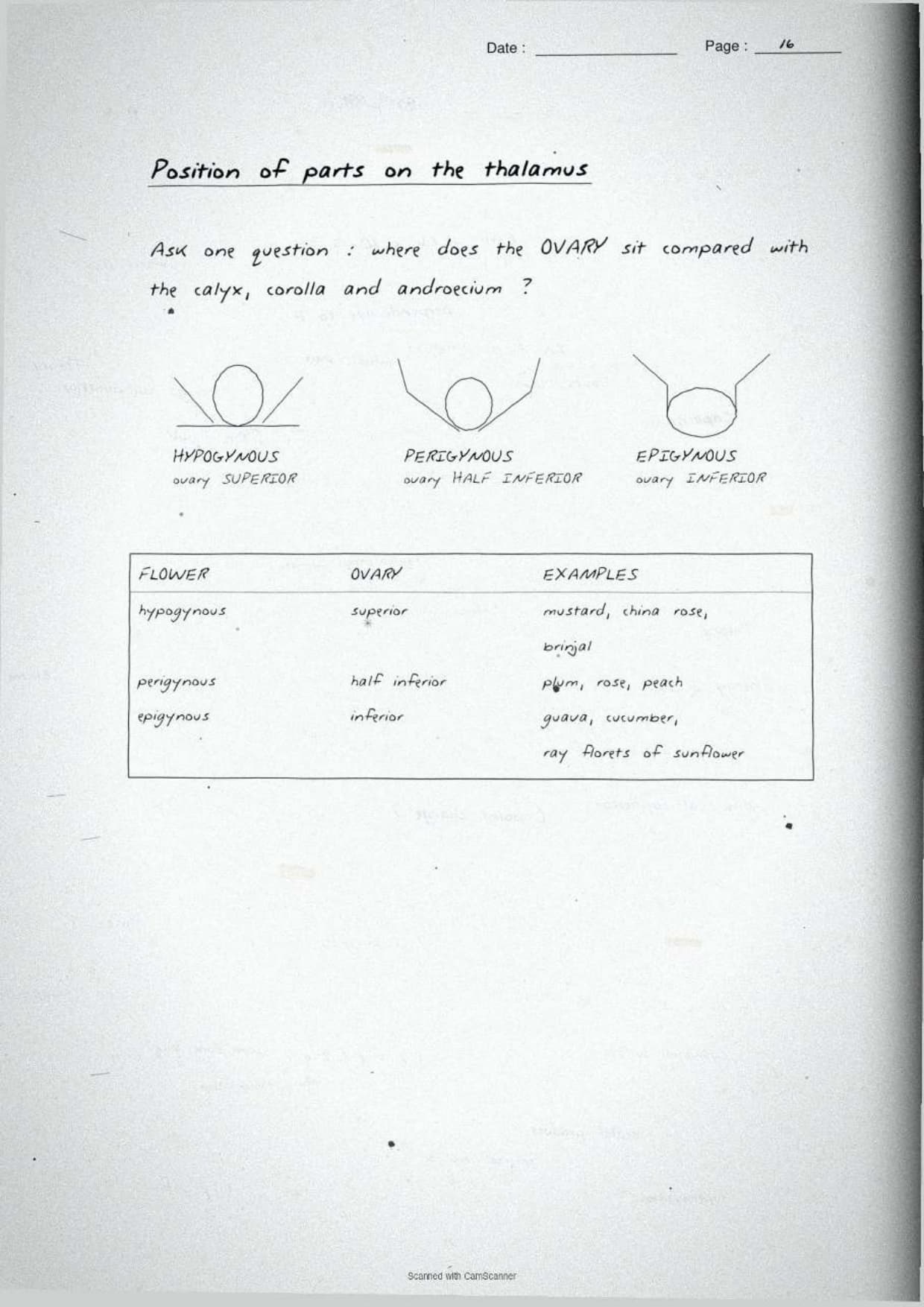
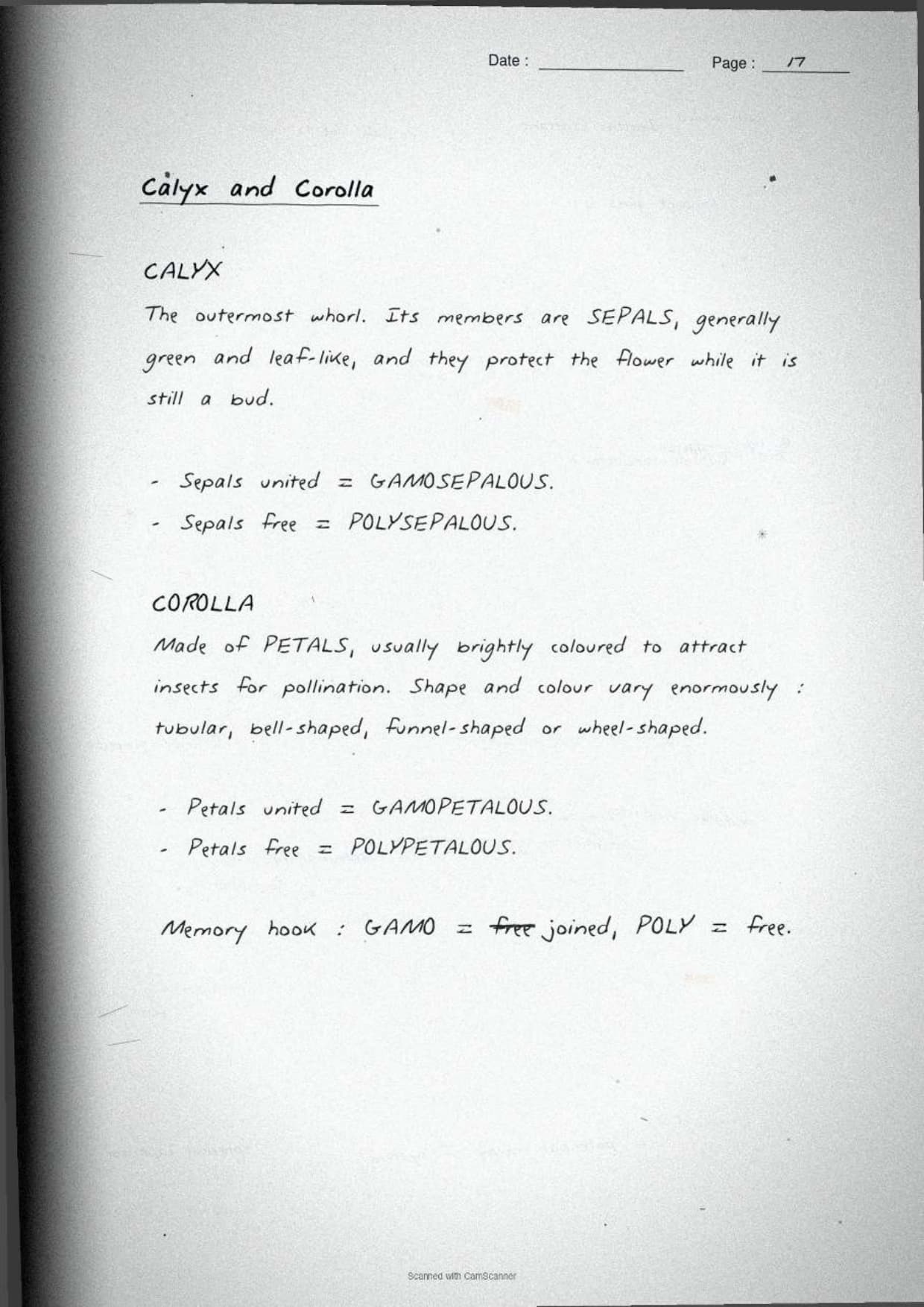
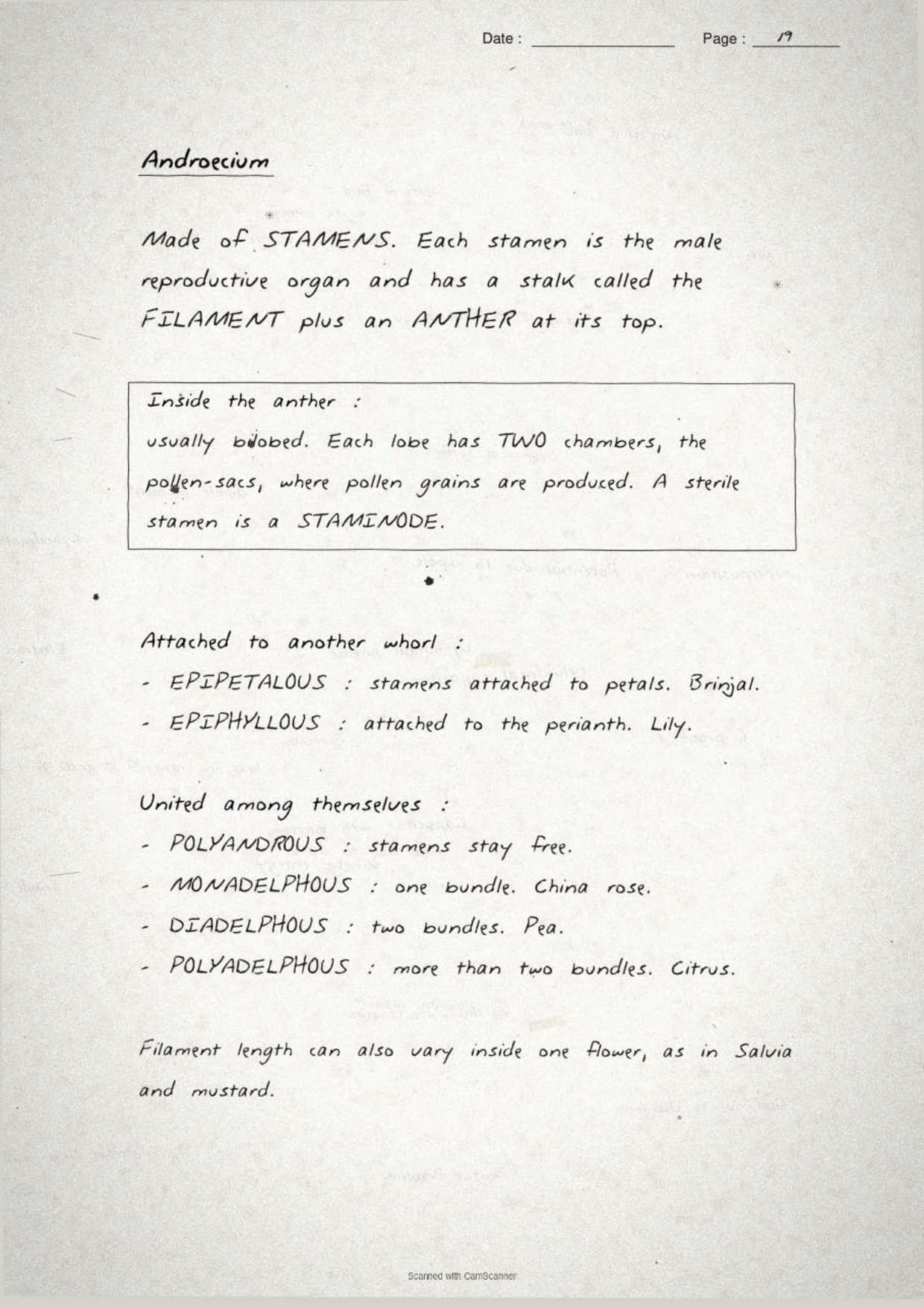
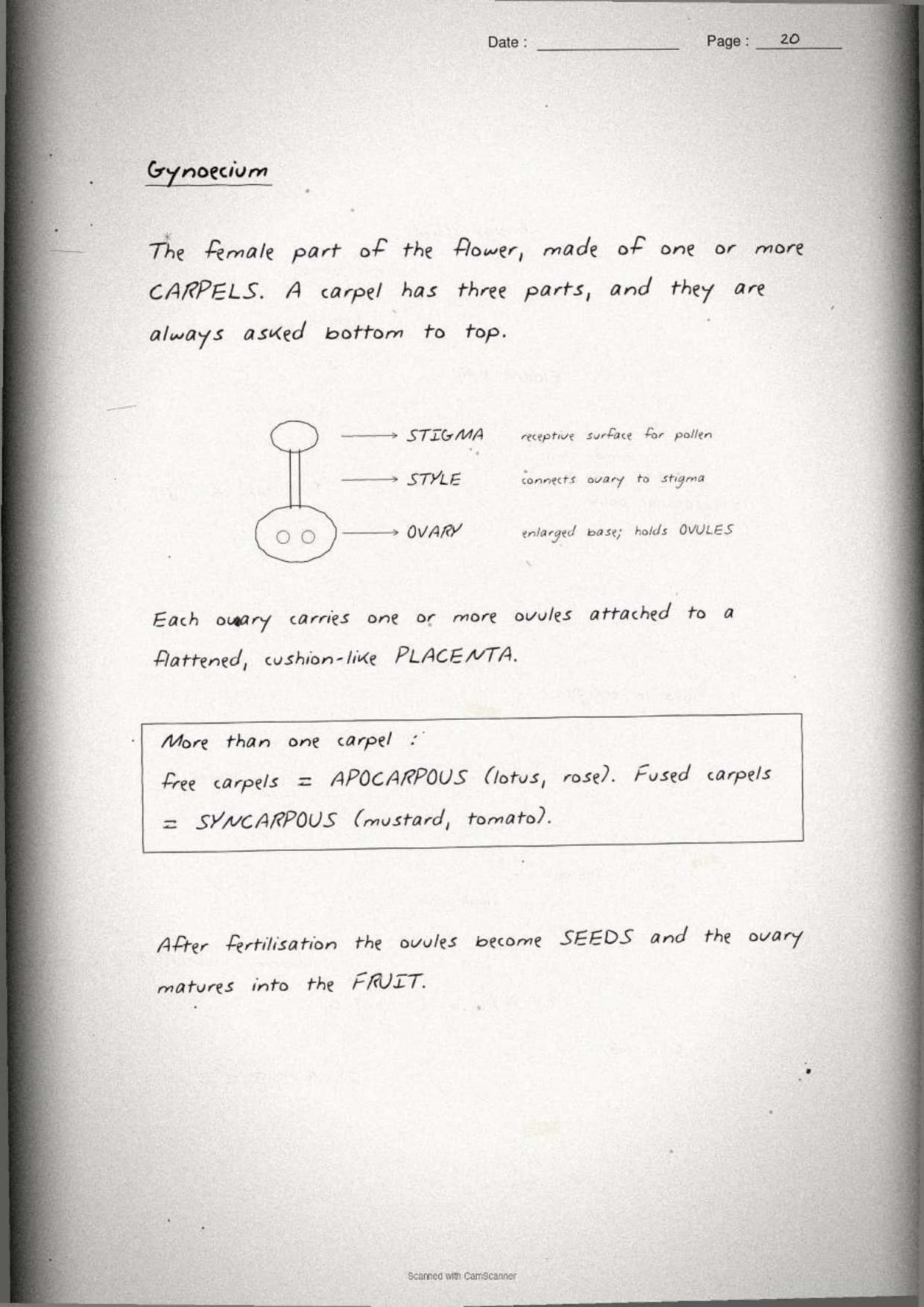
- Flower: the four whorls, symmetry, merosity, aestivation, androecium, gynoecium and placentation.
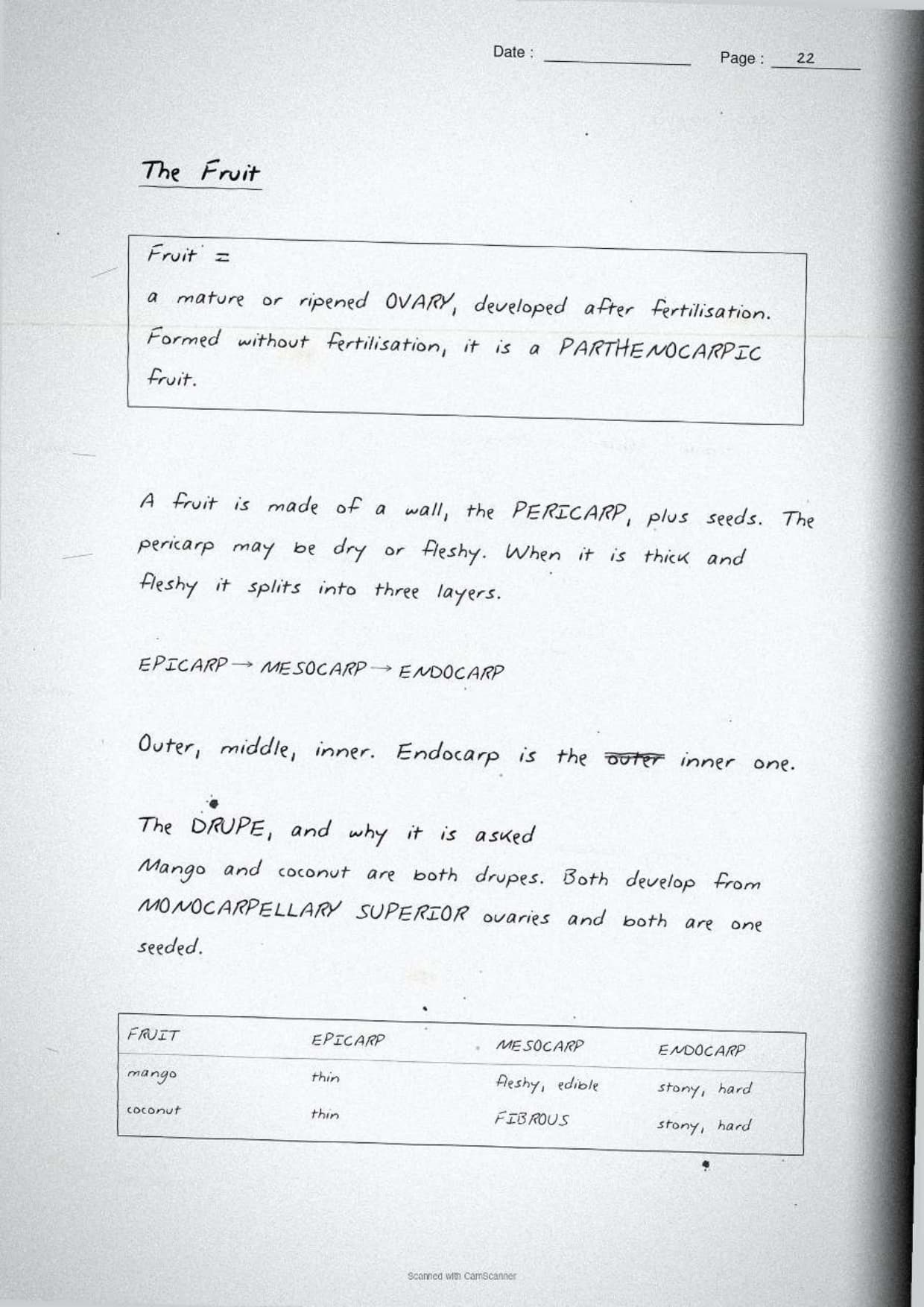
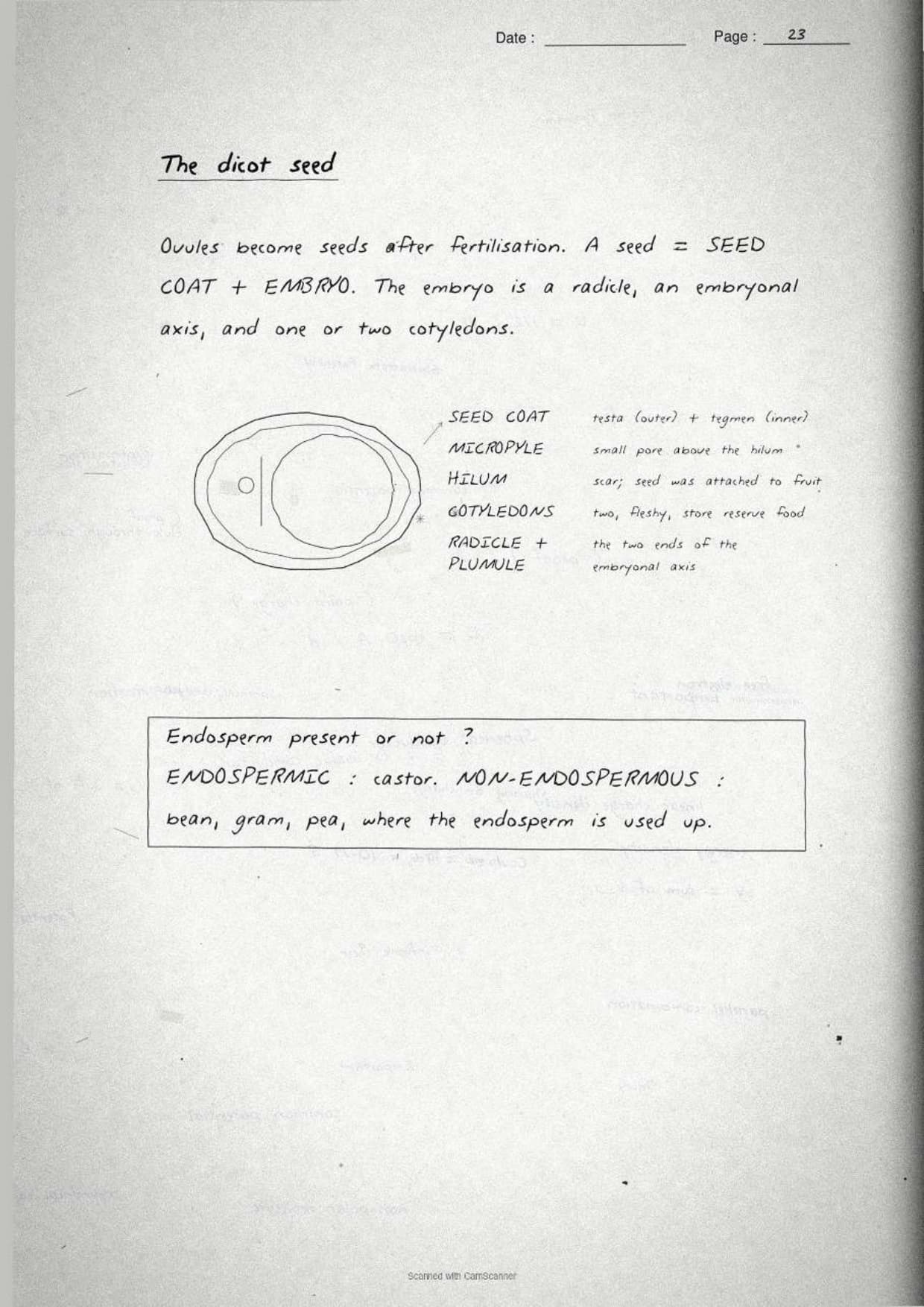
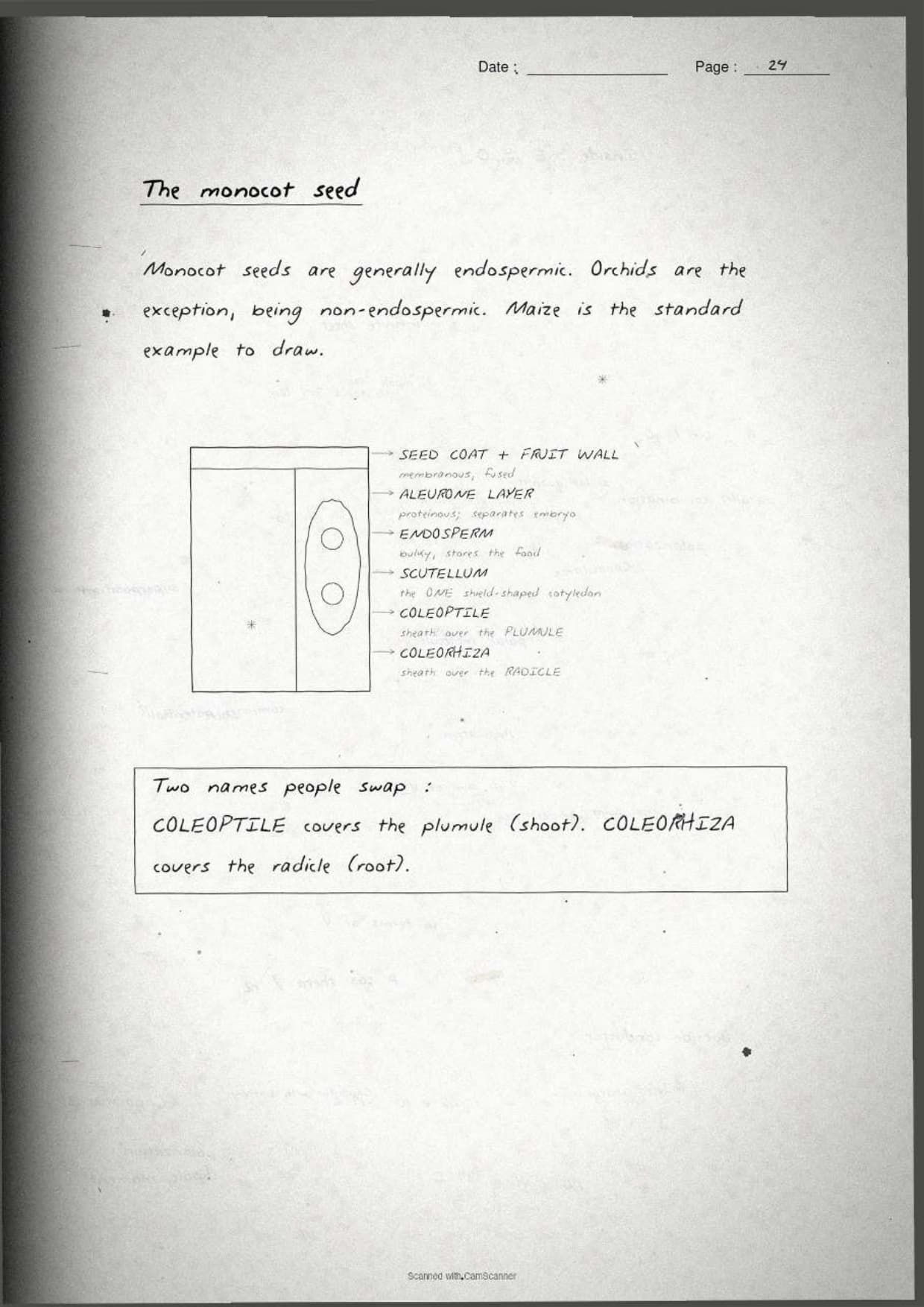
- Fruit and seed: the three pericarp layers, the drupe, plus dicot and monocot seed plates.
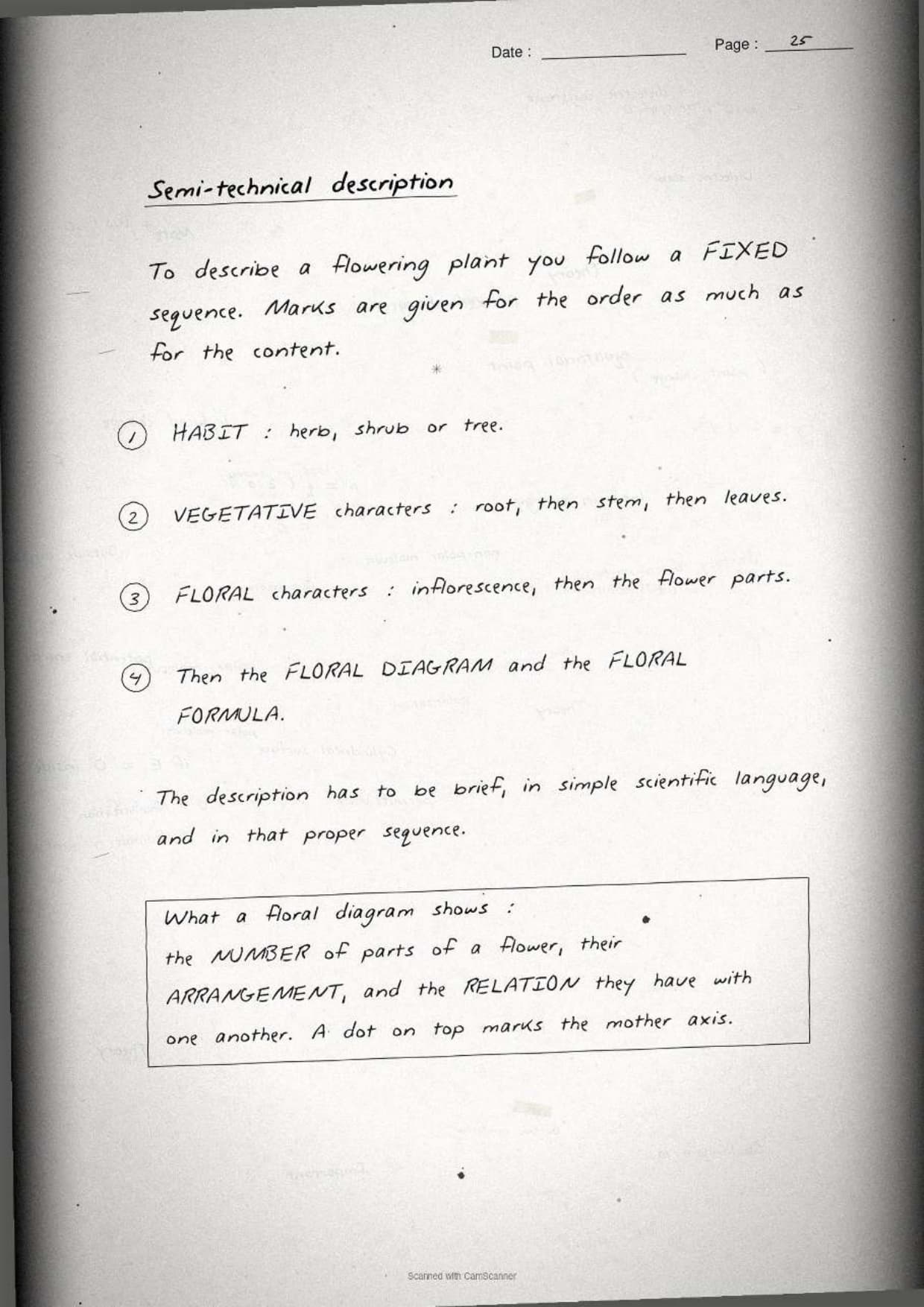
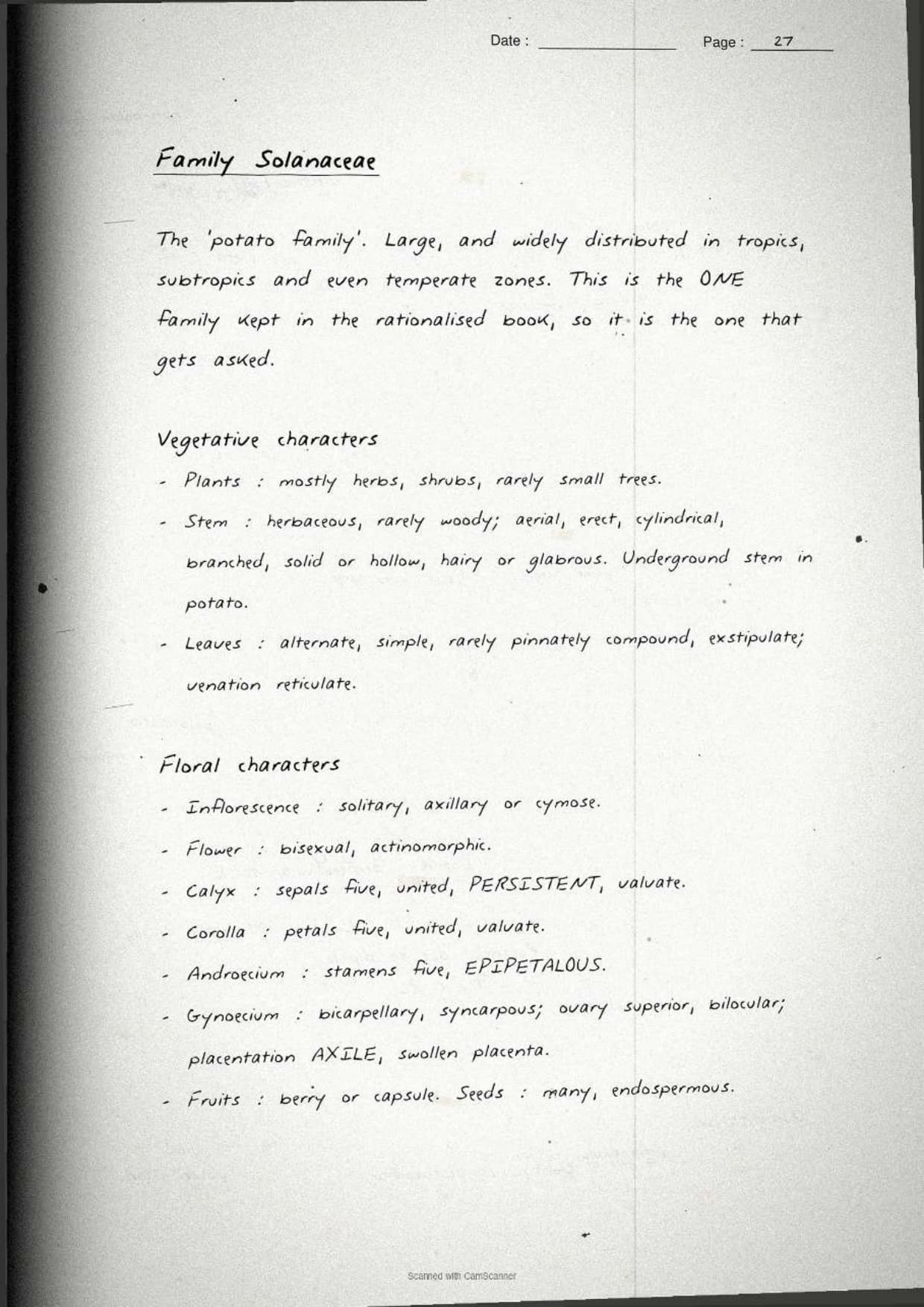
- Description: the semi-technical sequence, the floral formula symbol table, and family Solanaceae.
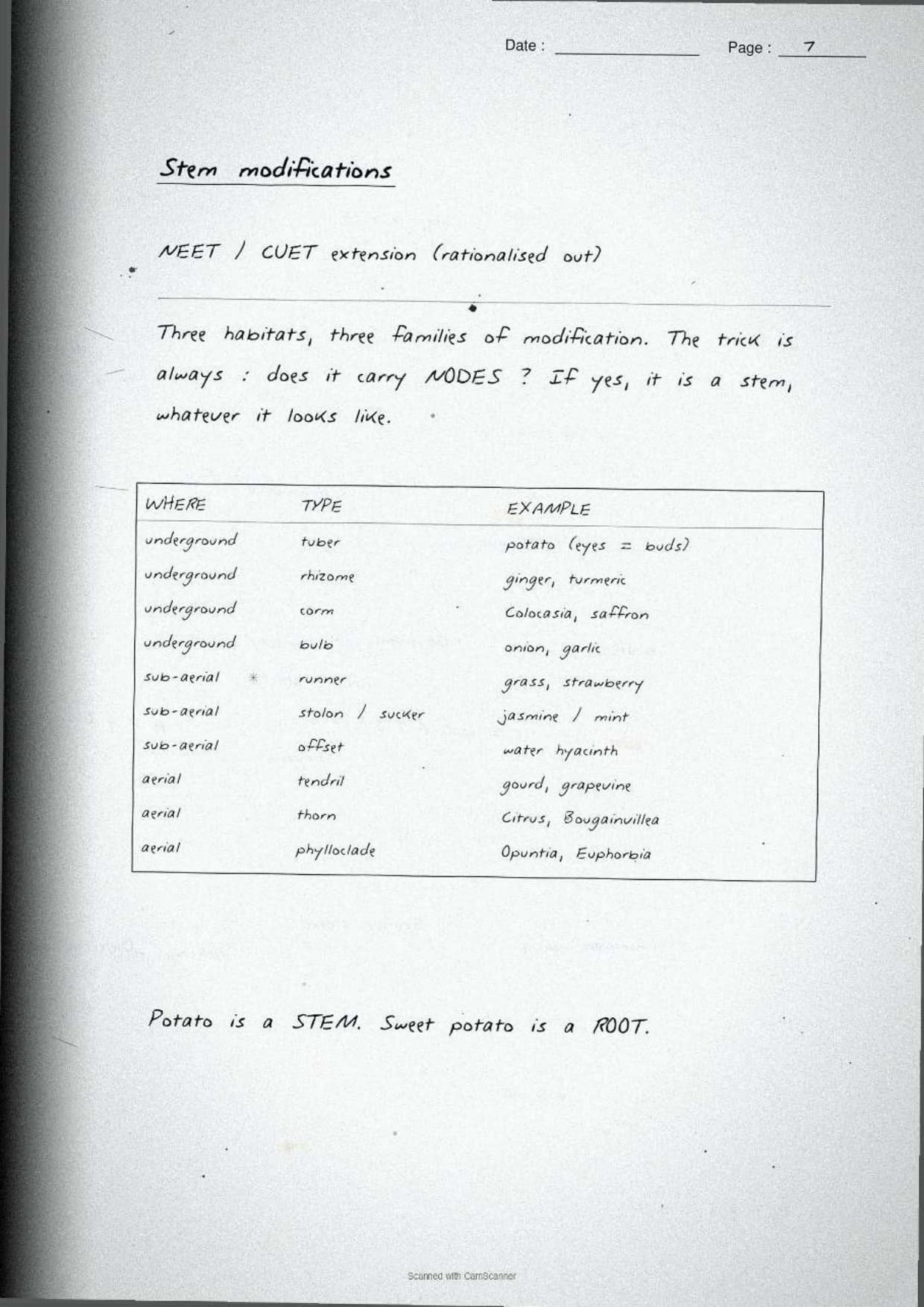
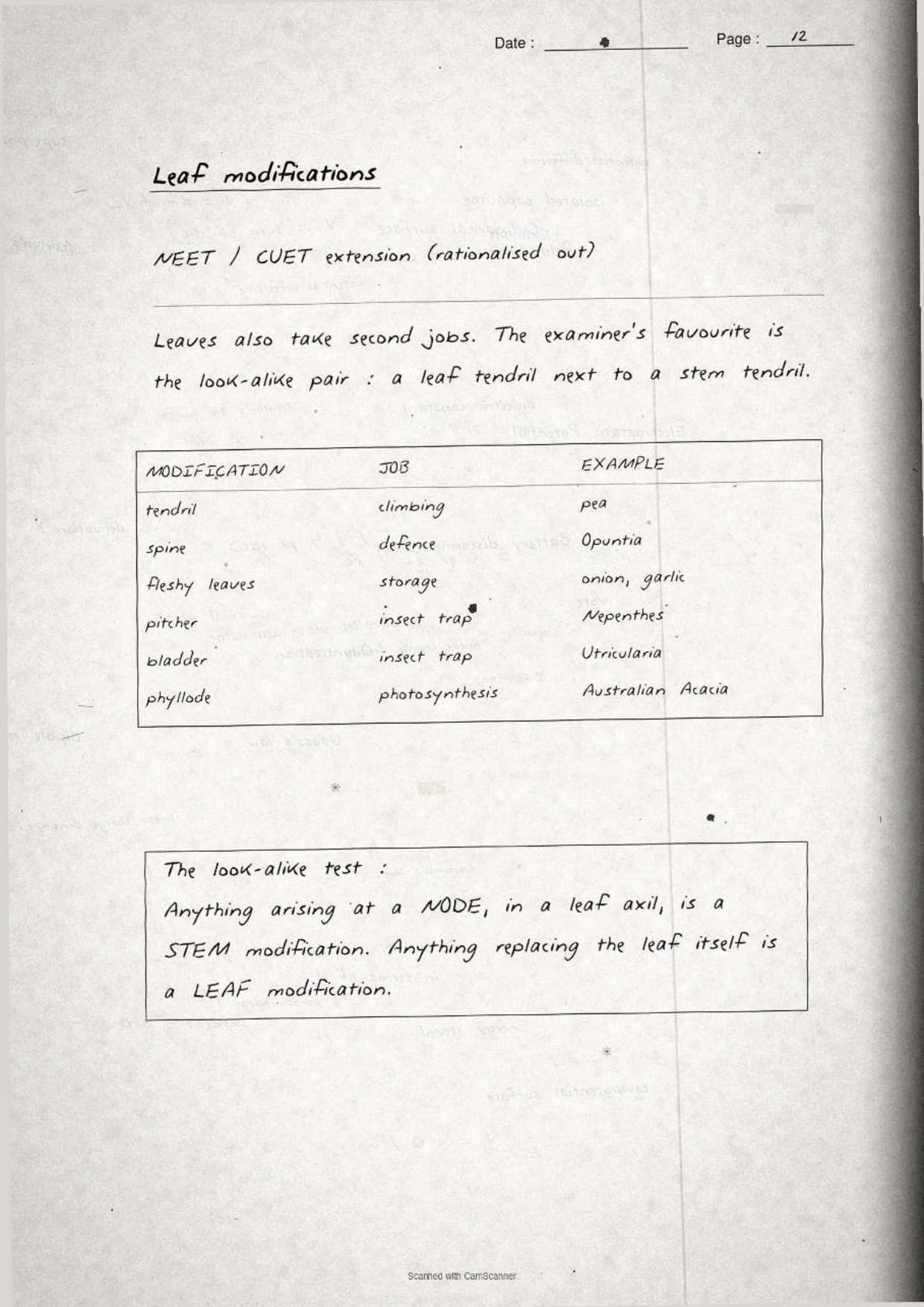
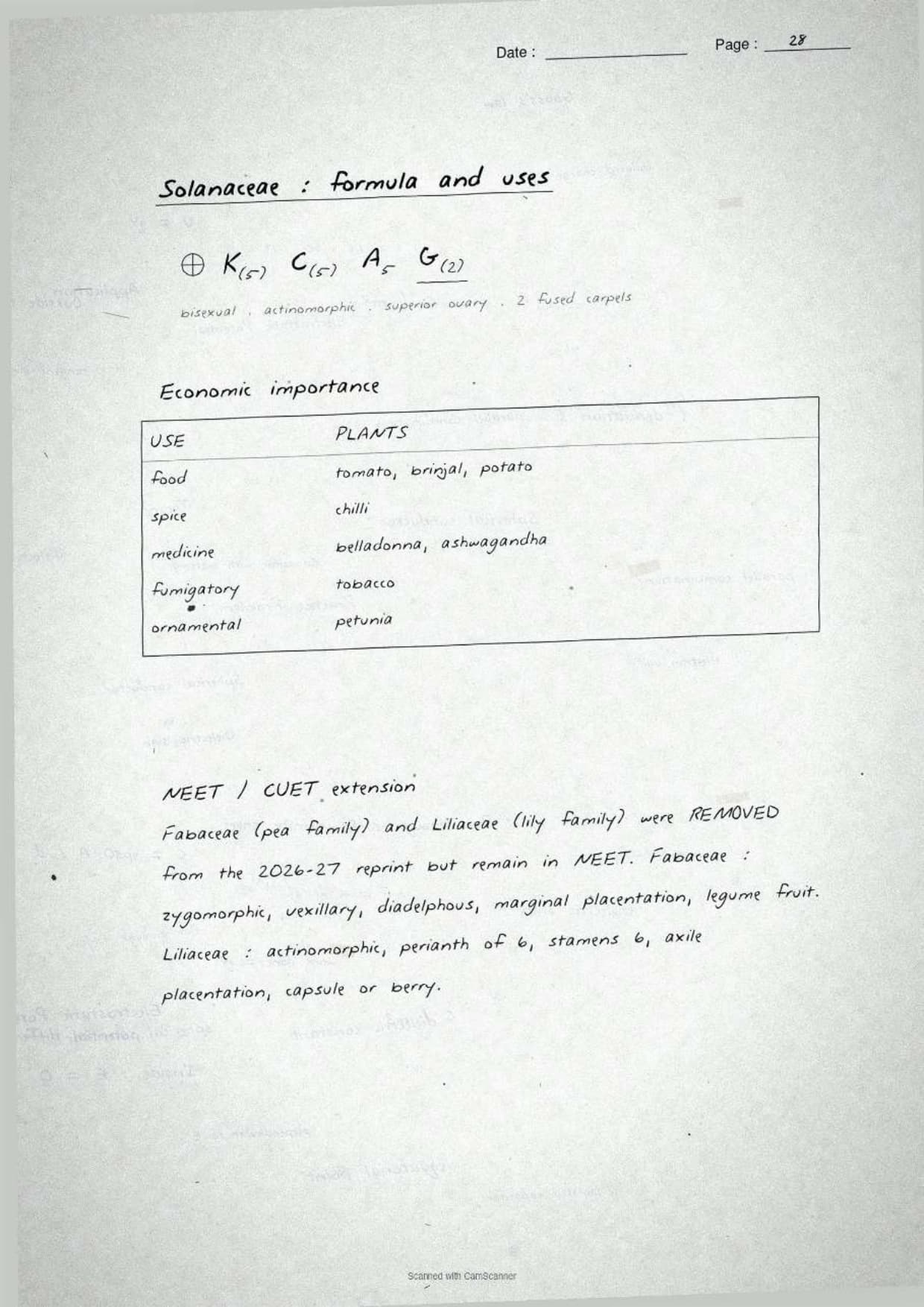
Root, stem and leaf modifications sit on their own pages, marked as a NEET and CUET extension. The 2026-27 NCERT print drops those sections, and it keeps only Solanaceae out of the three families. Fabaceae and Liliaceae are carried on page 28 for the same reason.
Key Diagrams and Terms in Morphology of Flowering Plants Notes
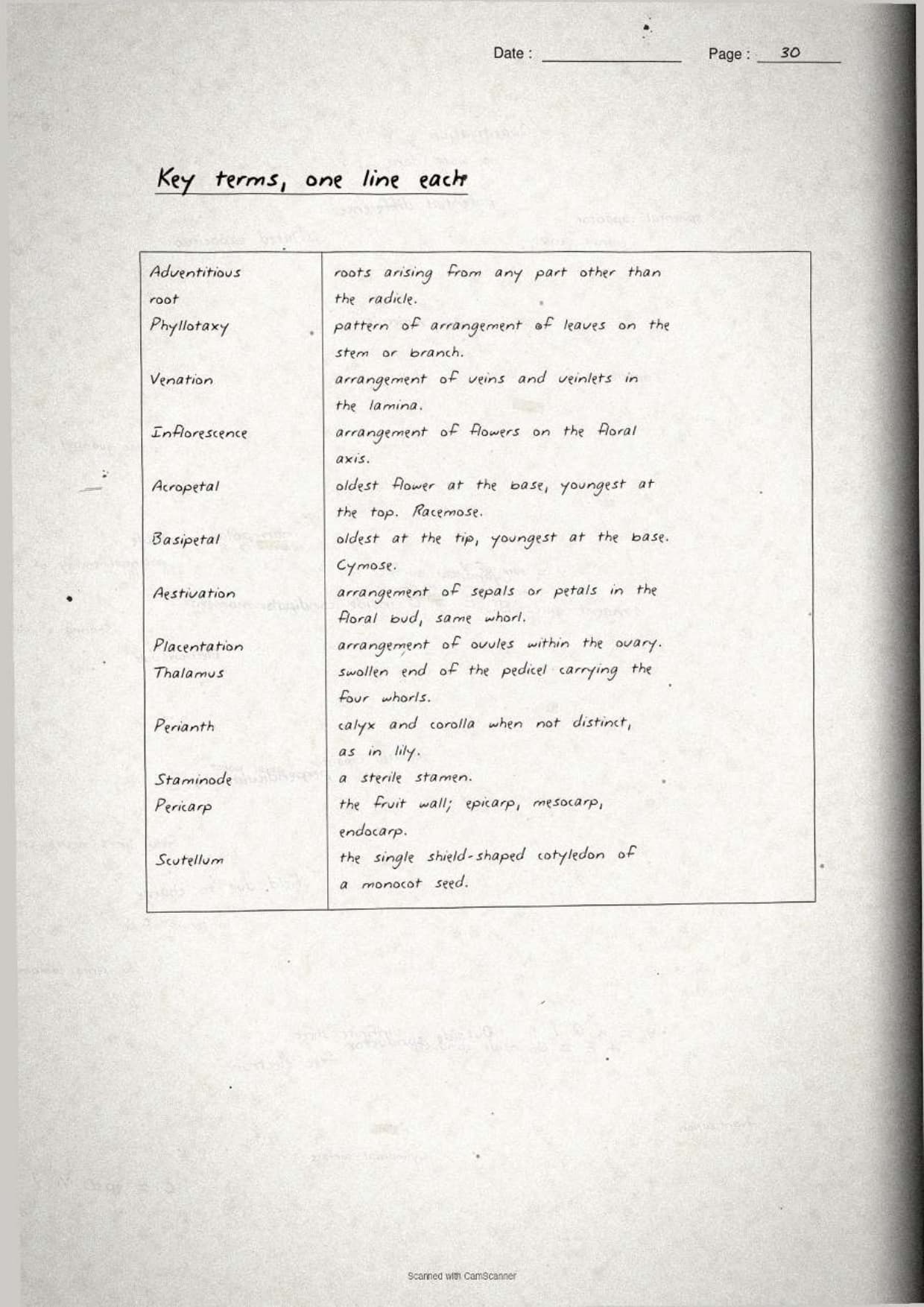
Most marks here go on terms that sound alike. The boxed table below is the block students mix up most, because examiners swap the pairs around in one-mark questions.
| Term | How the notes define it |
|---|---|
| Acropetal | Oldest flower at the base, youngest at the top. Racemose |
| Basipetal | Oldest at the tip, youngest at the base. Cymose |
| Aestivation | Arrangement of sepals or petals in the floral bud, same whorl |
| Placentation | Arrangement of ovules inside the ovary |
| Coleoptile | Sheath covering the plumule of a monocot seed |
| Coleorhiza | Sheath covering the radicle of a monocot seed |
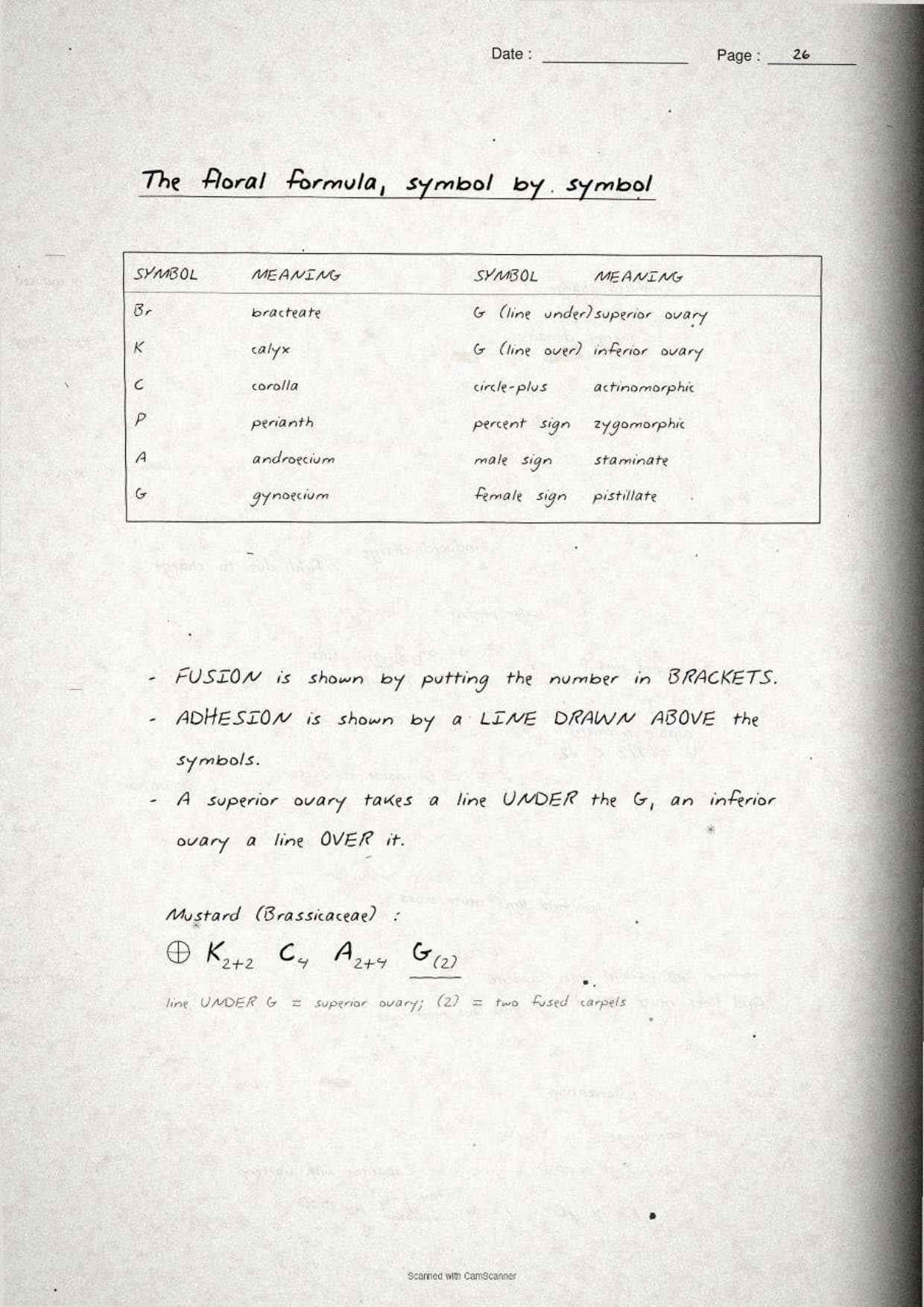
Page 26 sets out the floral formula symbol by symbol, then works two of them: mustard as Br K2+2 C4 A2+4 G(2), and Solanaceae as K(5) C(5) A5 G(2). A line under the G marks a superior ovary, a line over it an inferior one, and brackets mark fusion.
How to Use These Handwritten Notes for Revision
Work the pages in three short passes. Read a topic page, cover the boxed definition and say it back, then answer two NCERT questions on it. This loop fixes the exact wording faster than re-reading the chapter.
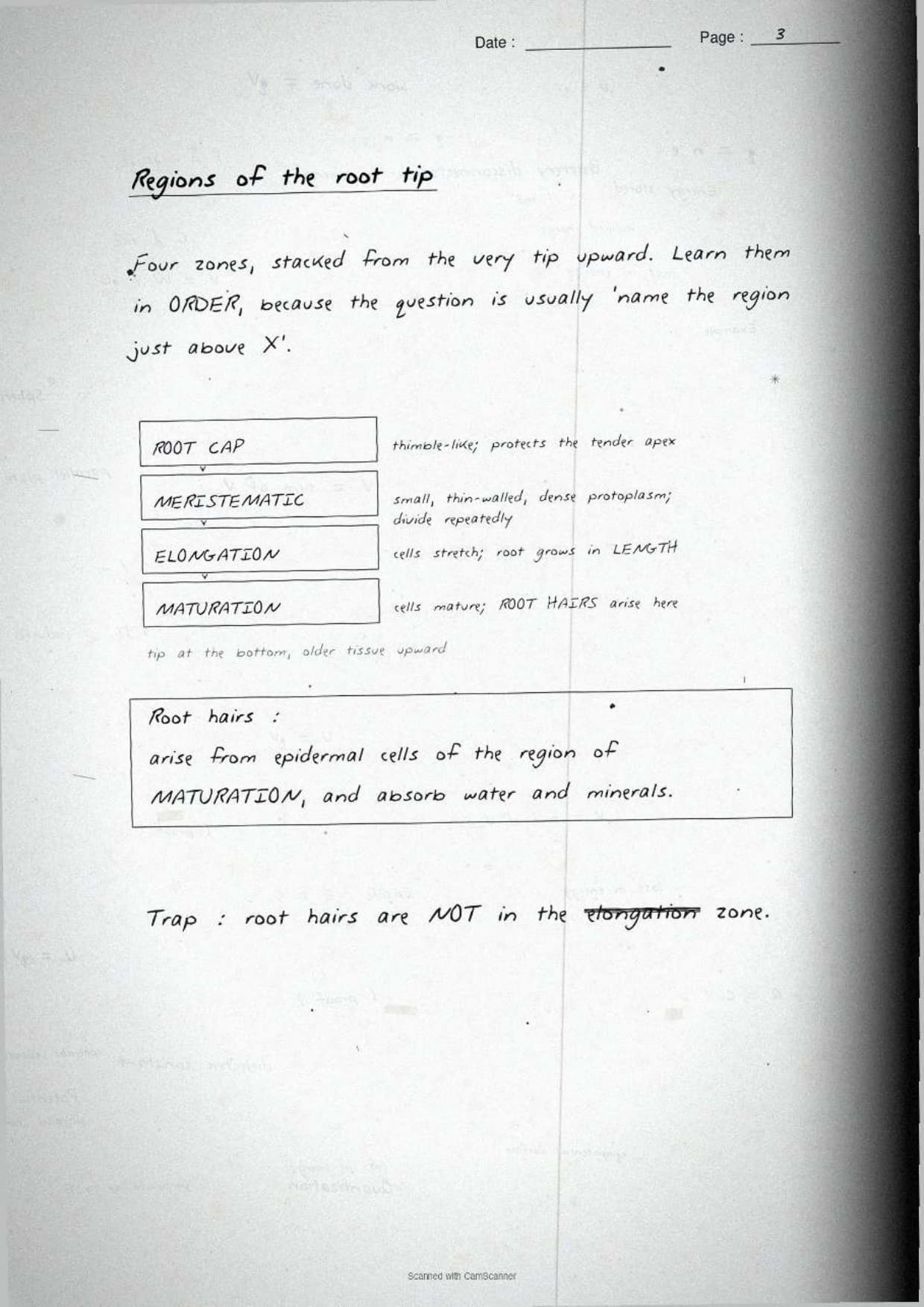
- Learn the four root-tip zones in order, since the question is always about the region above or below one of them.
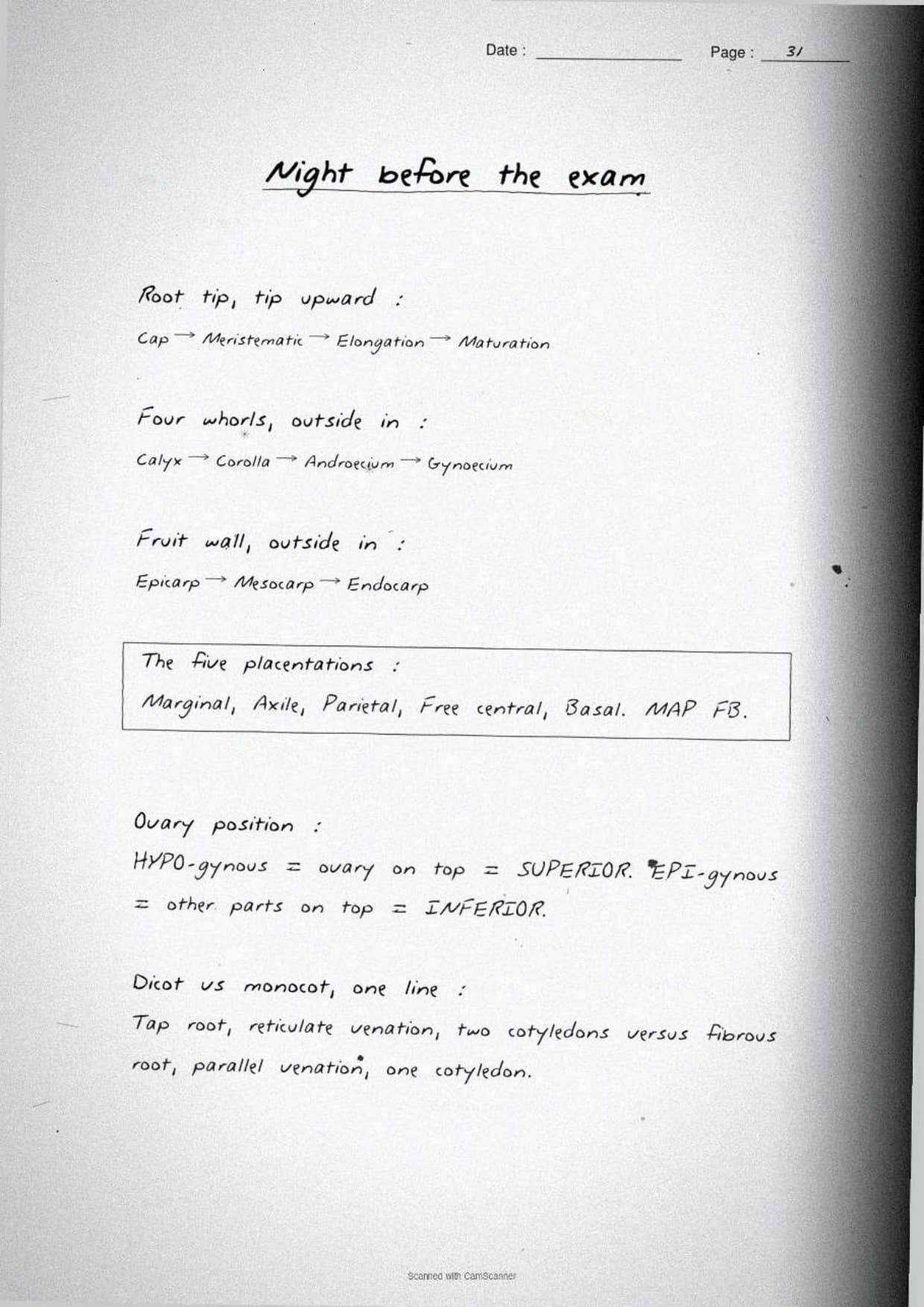
- Redraw the five placentation circles from memory, using the MAP FB hook on page 31.
- Keep the class 11 biology handwritten notes chapter 5 Morphology of Flowering Plants open beside the NCERT Solutions while practising.
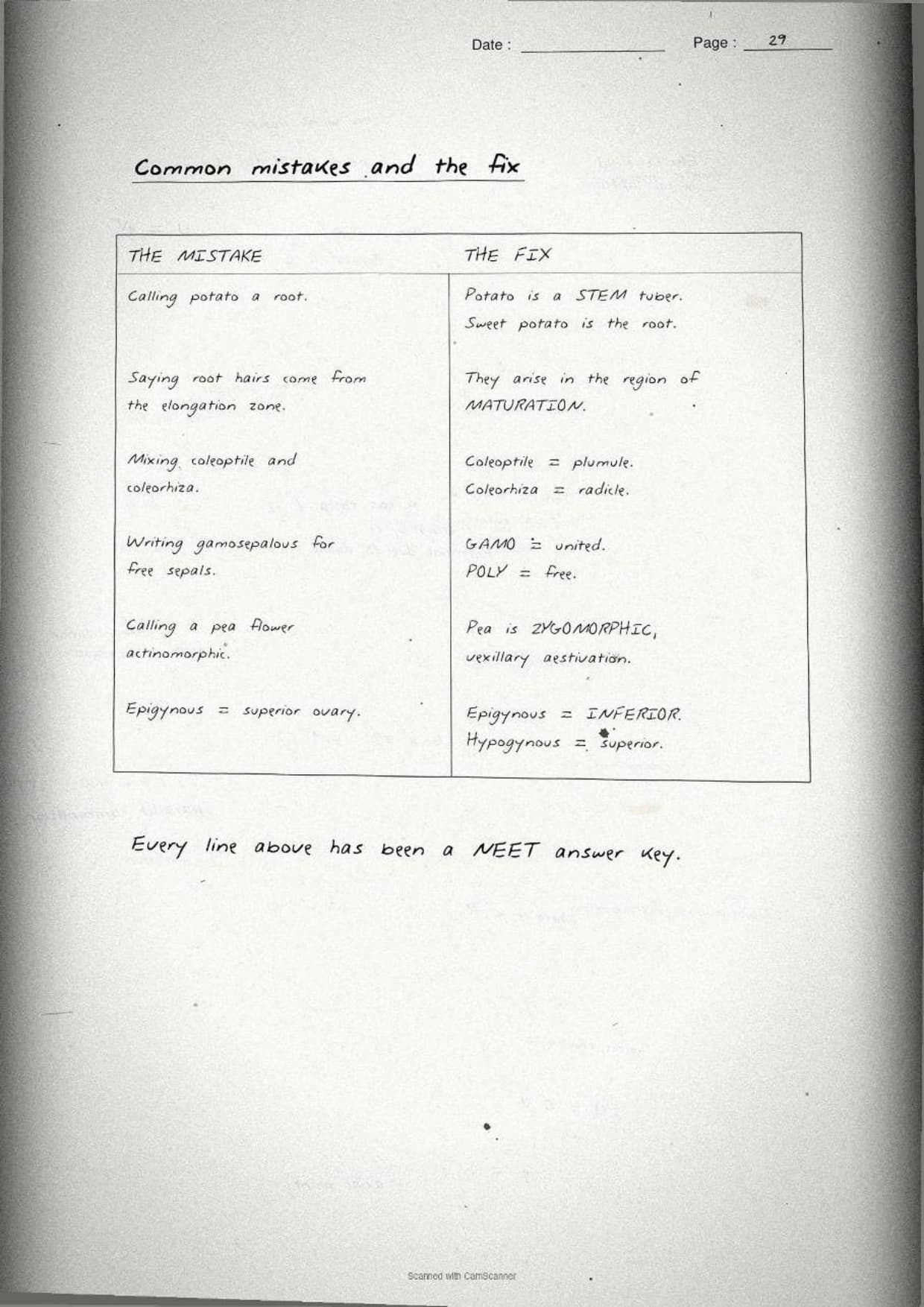
- Read the common-mistakes page last, on page 29, before you shut the file.
Around 45 minutes covers one full pass, so the notes fit inside the last week before an exam.
Student Feedback on Morphology of Flowering Plants Handwritten Notes
Students rate the floral formula page as the one that saves them the most time. The figures below come from a Collegedunia poll run before the 2026 boards.
- In a Collegedunia survey of 10,860 students, 68% named the placentation plate their most-used revision page.
- Most-confused pair before the poll: coleoptile against coleorhiza, swapped by about 5 in 10 students.
Source: 2026-27 Class 11 Biology student poll. Sample of 10,860 students from CBSE schools across 12 states.
Where to Use These Notes Alongside Other Resources
These handwritten pages work best next to the step-wise Solutions, the summary Notes and the Exemplar Solutions for the same chapter. Read the notes first, then check the answers, and keep the Exemplar for extra practice.
| Resource | Best used for |
|---|---|
| Morphology of Flowering Plants NCERT Solutions | Step-by-step answers to every back-exercise question |
| Morphology of Flowering Plants Class 11 Notes | Quick chapter summary with all key terms in one place |
| Morphology of Flowering Plants Exemplar Solutions | Exemplar questions solved for NEET-level practice |
| Morphology of Flowering Plants NCERT Book PDF | The original chapter text and exercises |
All Class 11 Biology Handwritten Notes by Chapter
The table links the handwritten notes for every Class 11 Biology chapter, so students can move across the course in one click. Morphology of Flowering Plants is highlighted.
| Chapter | Handwritten Notes |
|---|---|
| Chapter 1 | The Living World |
| Chapter 2 | Biological Classification |
| Chapter 3 | Plant Kingdom |
| Chapter 4 | Animal Kingdom |
| Chapter 5 | Morphology of Flowering Plants |
| Chapter 6 | Anatomy of Flowering Plants |
| Chapter 7 | Structural Organisation in Animals |
| Chapter 8 | Cell The Unit of Life |
| Chapter 9 | Biomolecules |
| Chapter 10 | Cell Cycle and Cell Division |
| Chapter 11 | Photosynthesis in Higher Plants |
| Chapter 12 | Respiration in Plants |
| Chapter 13 | Plant Growth and Development |
| Chapter 14 | Breathing and Exchange of Gases |
| Chapter 15 | Body Fluids and Circulation |
| Chapter 16 | Excretory Products and their Elimination |
| Chapter 17 | Locomotion and Movement |
| Chapter 18 | Neural Control and Coordination |
| Chapter 19 | Chemical Coordination and Integration |
FAQs on Morphology of Flowering Plants Handwritten Notes
Ques. Are these class 11 biology handwritten notes chapter 5 Morphology of Flowering Plants free to download?
Ans. Yes. The Morphology of Flowering Plants handwritten notes are free to download as a PDF from this page. All 31 pages follow the 2026-27 NCERT and cover the full chapter in clear handwriting for quick revision.
Ques. What topics do these handwritten notes cover?
Ans. They cover the root, stem and leaf, inflorescence, the four floral whorls, aestivation and placentation, the fruit, the dicot and monocot seed, the semi-technical description, the floral formula and family Solanaceae. Each topic sits on its own page with boxed definitions and hand-drawn plates.
Ques. Where do root hairs arise from?
Ans. From epidermal cells in the region of maturation, not the elongation zone. The notes box this on page 3, along with the order of the four root-tip zones: root cap, meristematic, elongation and maturation, counted from the tip upward.
Ques. Which plant families are still in the syllabus?
Ans. Only Solanaceae, the potato family, is kept in the 2026-27 NCERT print. Fabaceae and Liliaceae were dropped from the book but are still asked in NEET, so both sit on page 28 as a NEET and CUET extension.
Ques. How long do these notes take to revise?
Ans. About 45 minutes for one full pass. Read each topic page, recall the boxed definition, then answer two NCERT questions on it. Finish with the common-mistakes page so the exact wording stays fresh.



Comments