




These class 11 biology handwritten notes chapter 10 Cell Cycle and Cell Division take the full cycle from G1 to telophase II in 36 handwritten pages. Every phase, every substage and every labelled sketch sits on its own page, boxed and colour-coded for a fast revision pass before Boards, NEET and CUET in 2026-27.
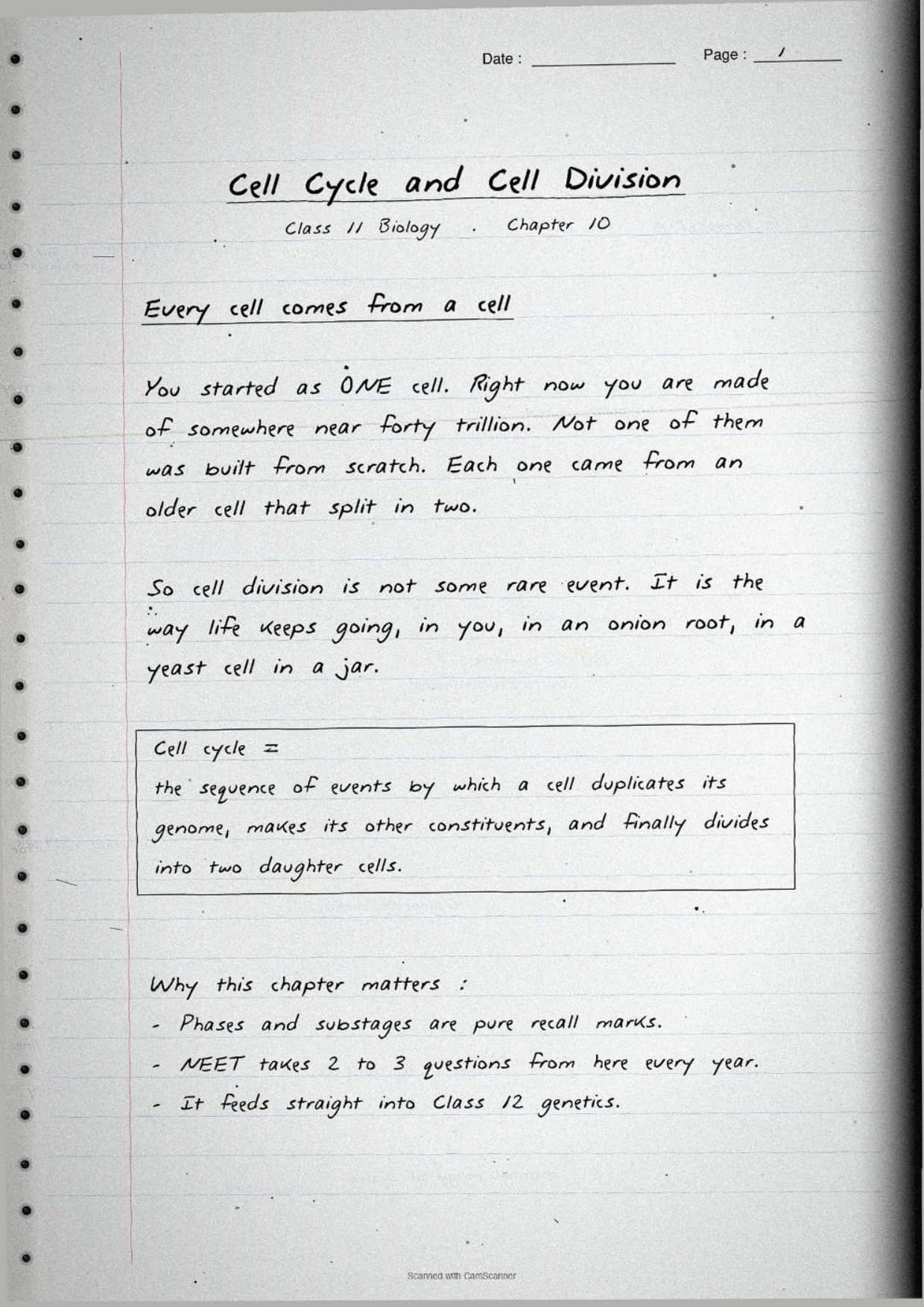
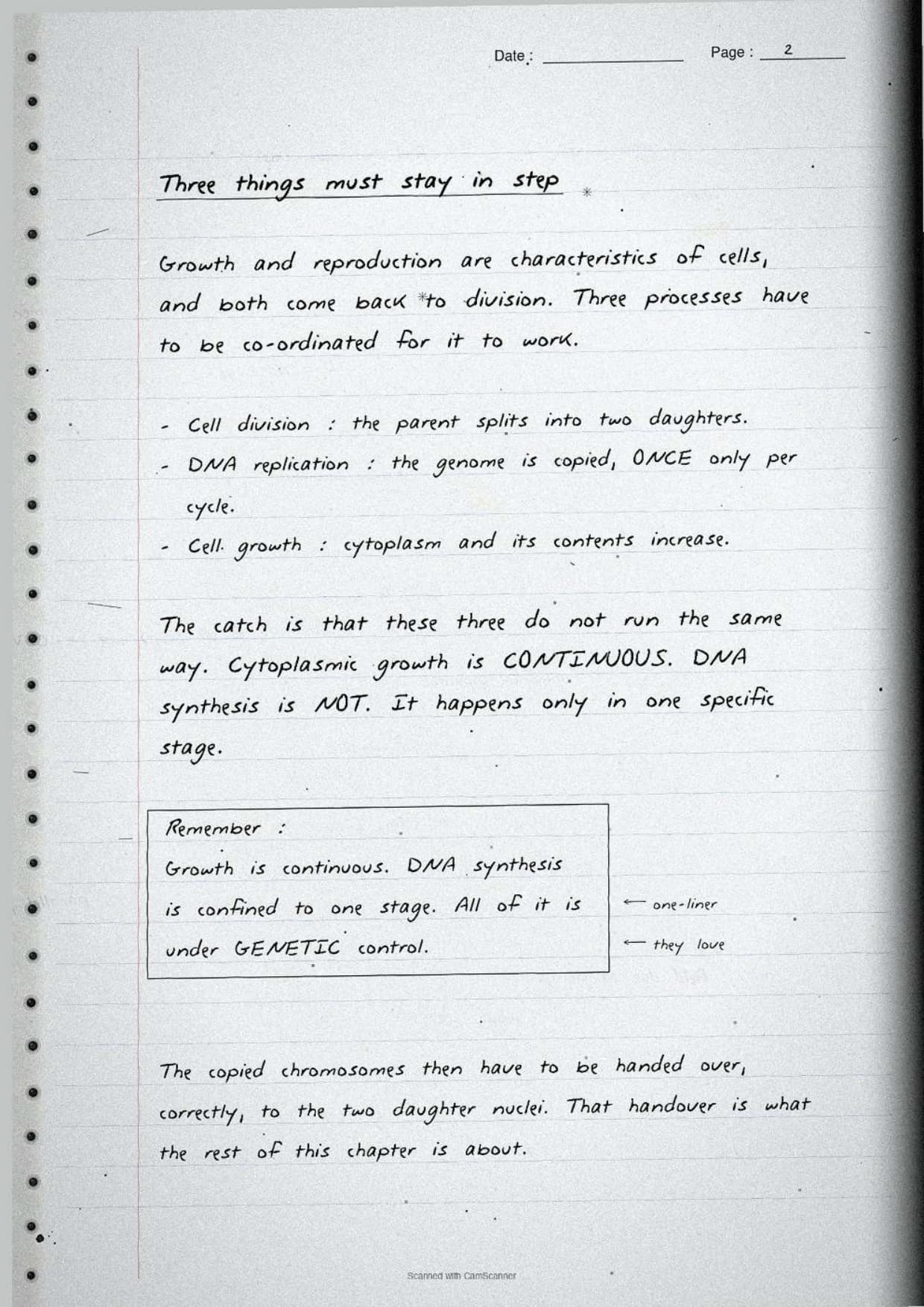
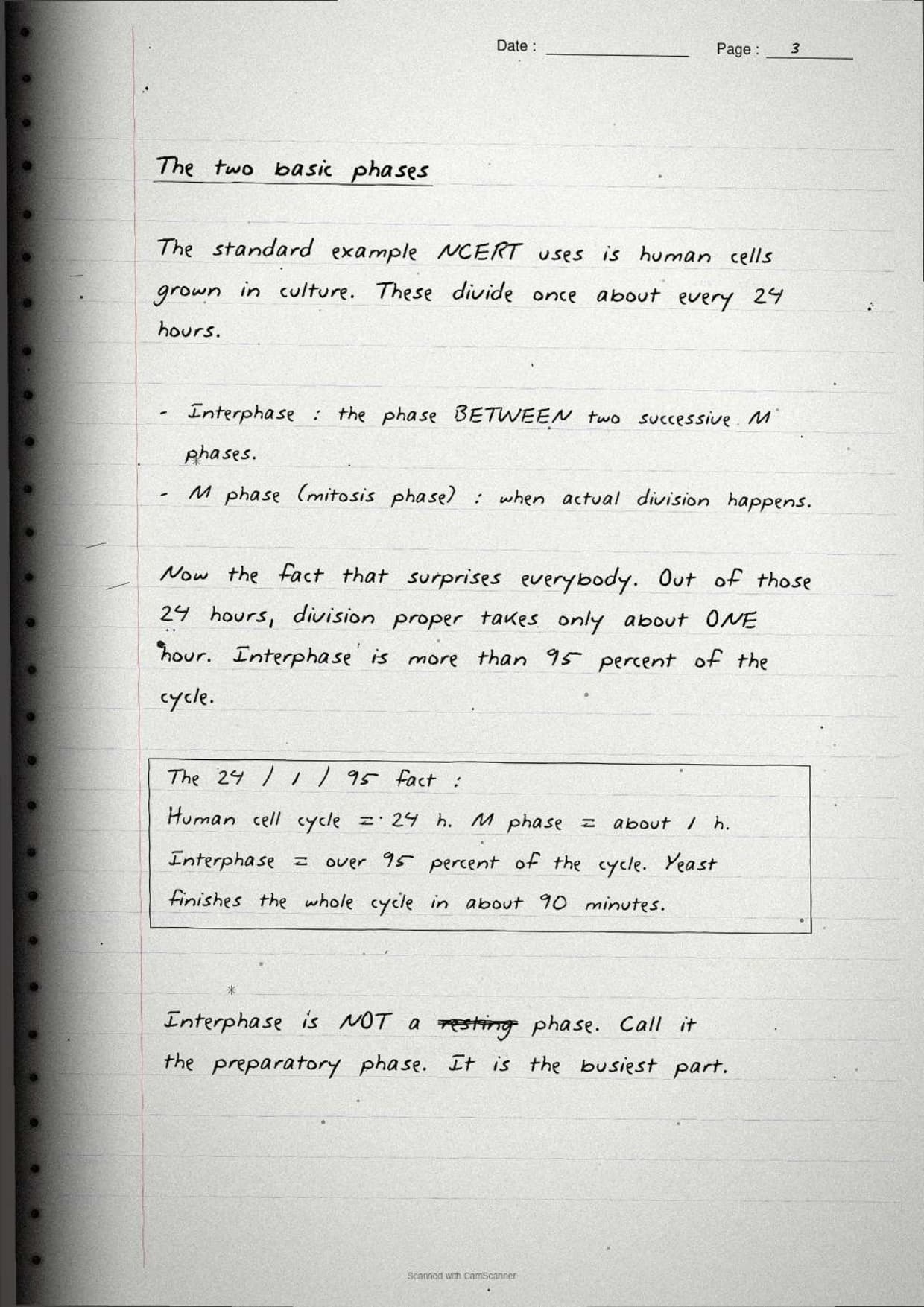
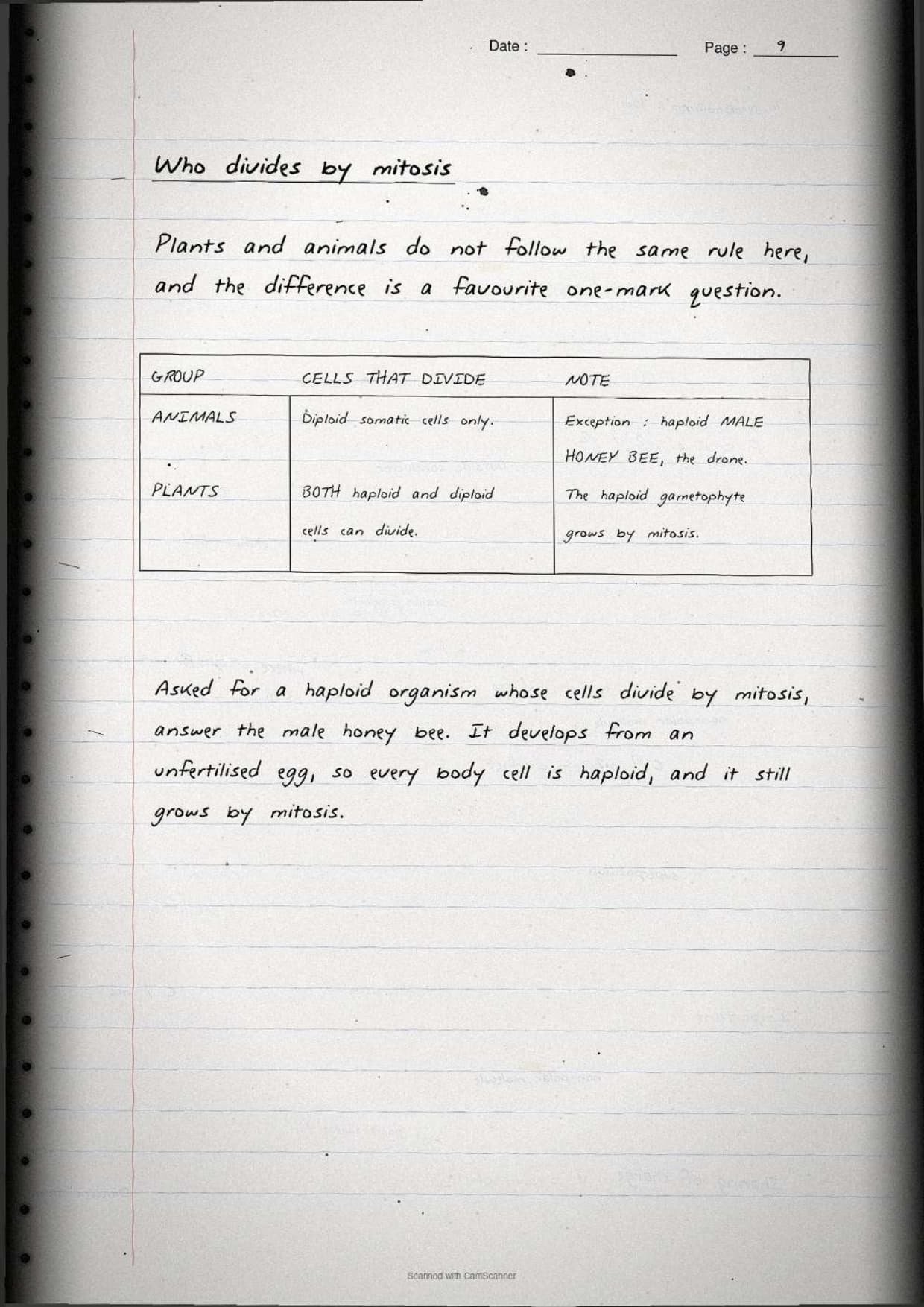
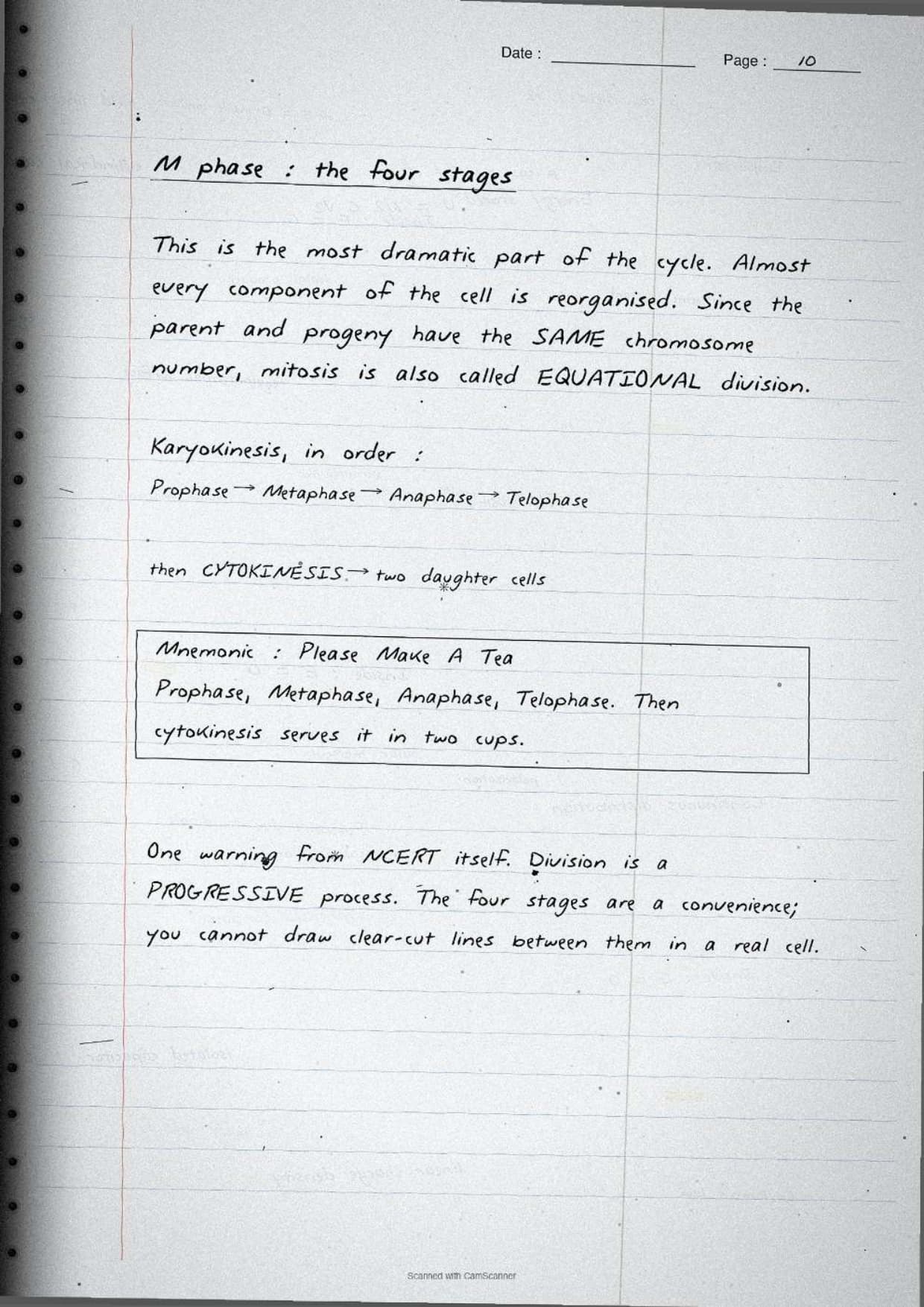
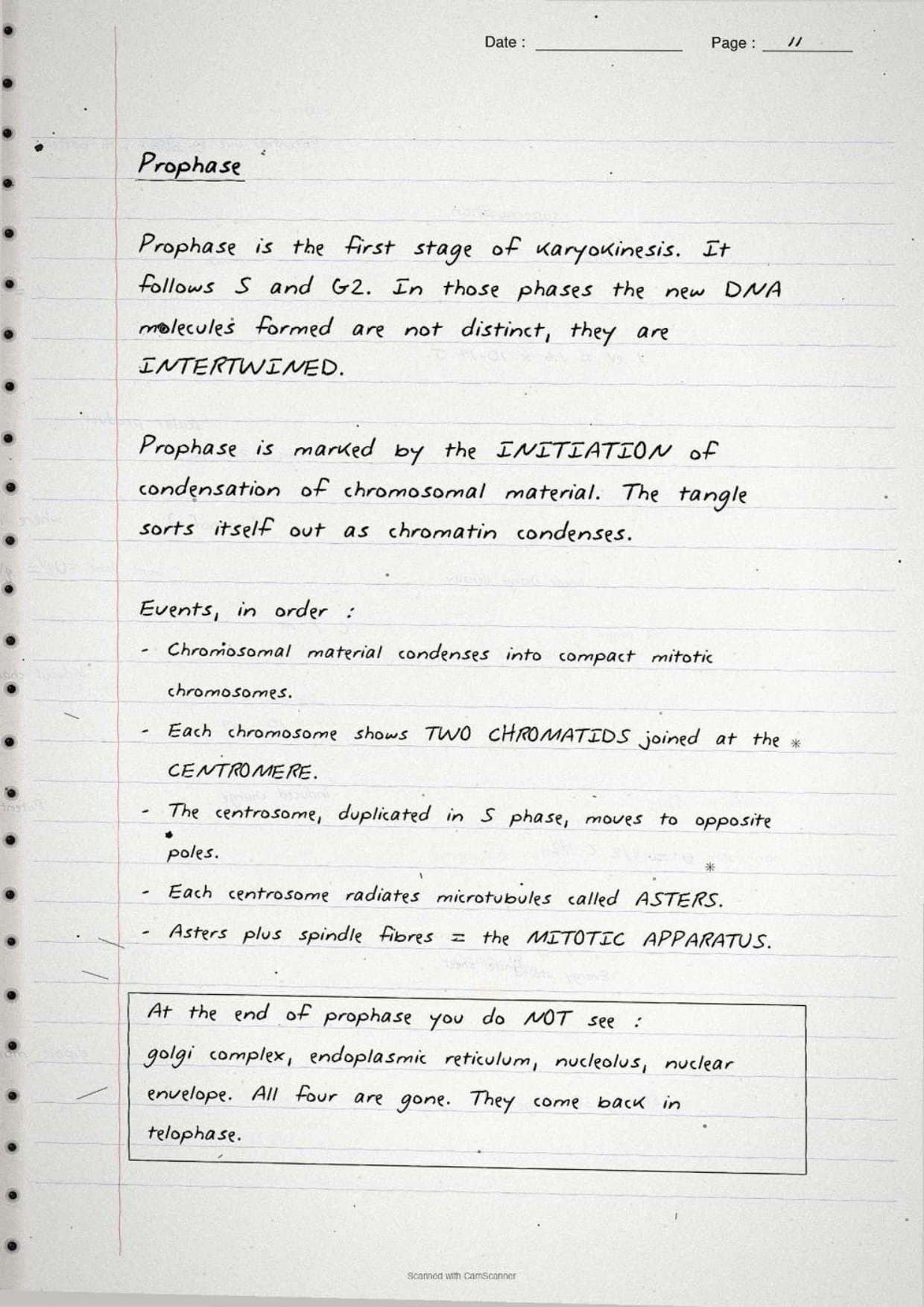
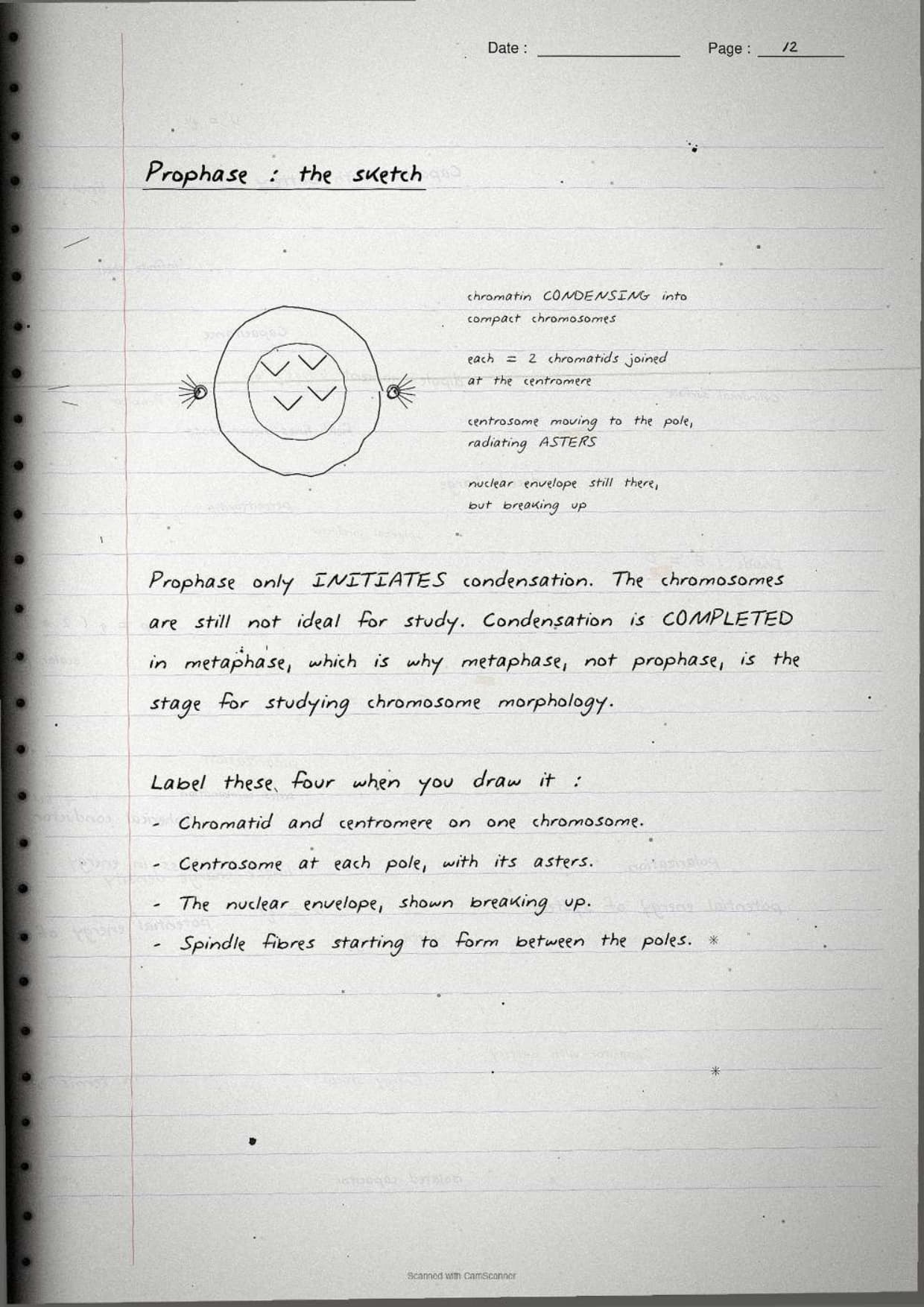
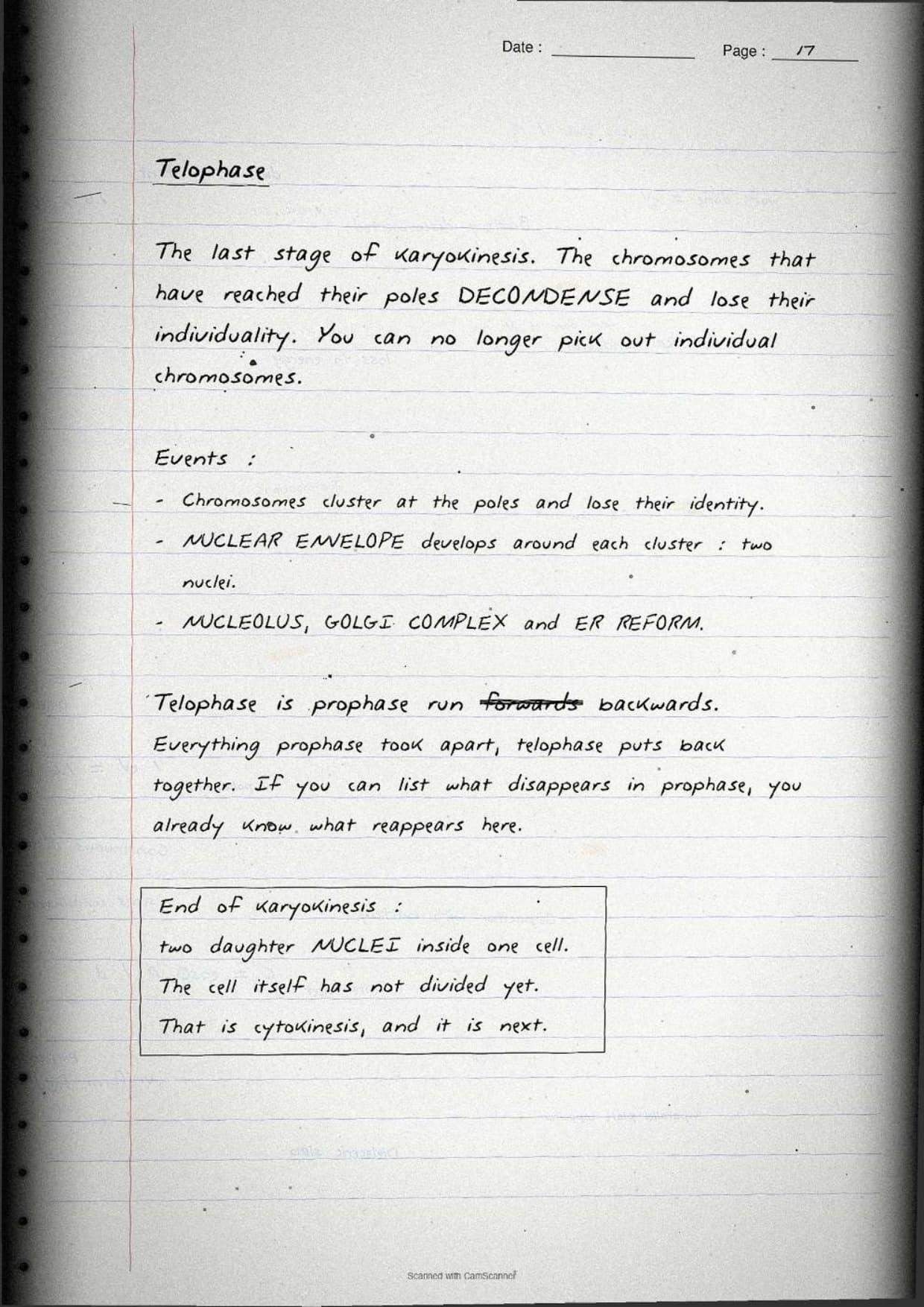
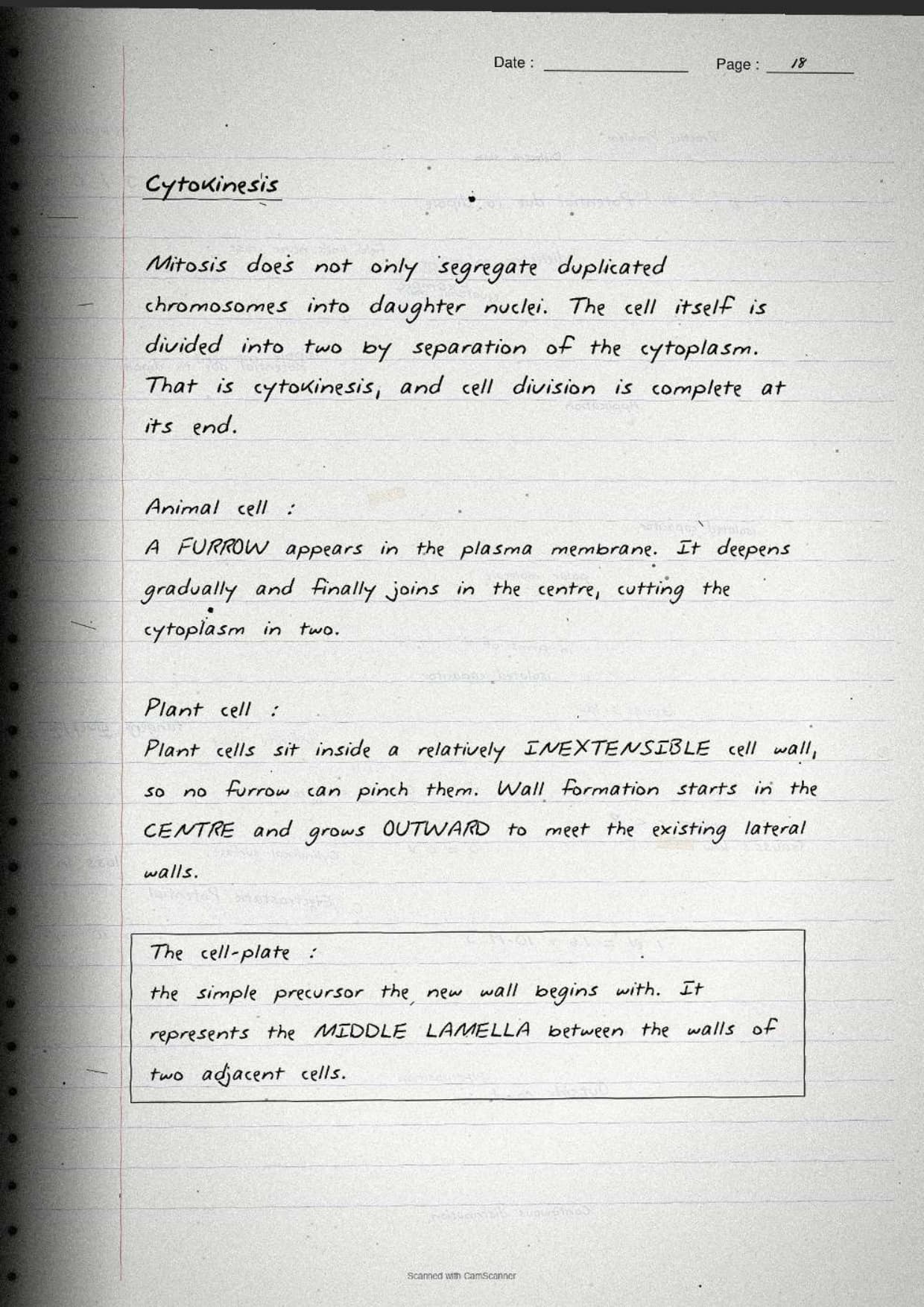
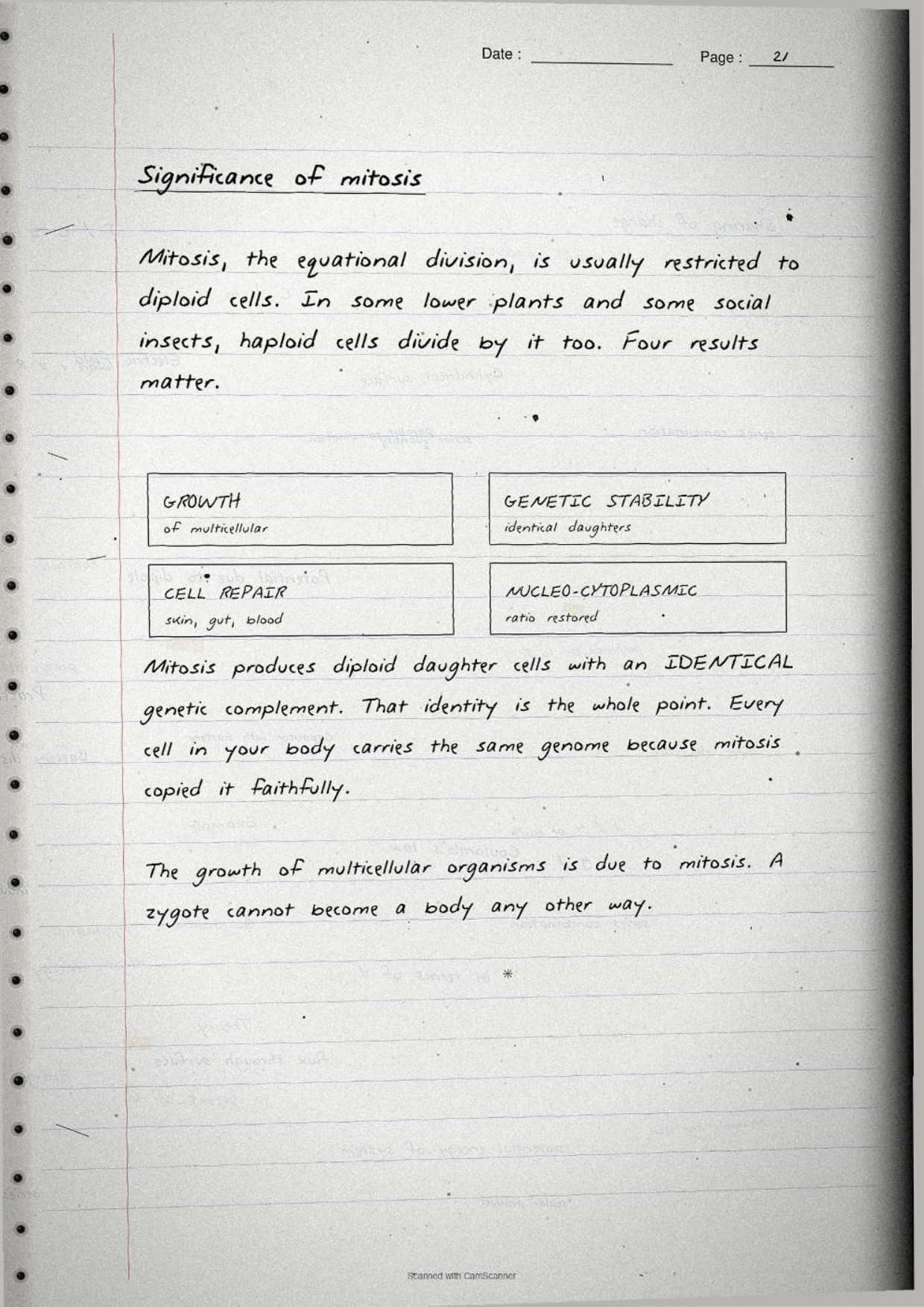
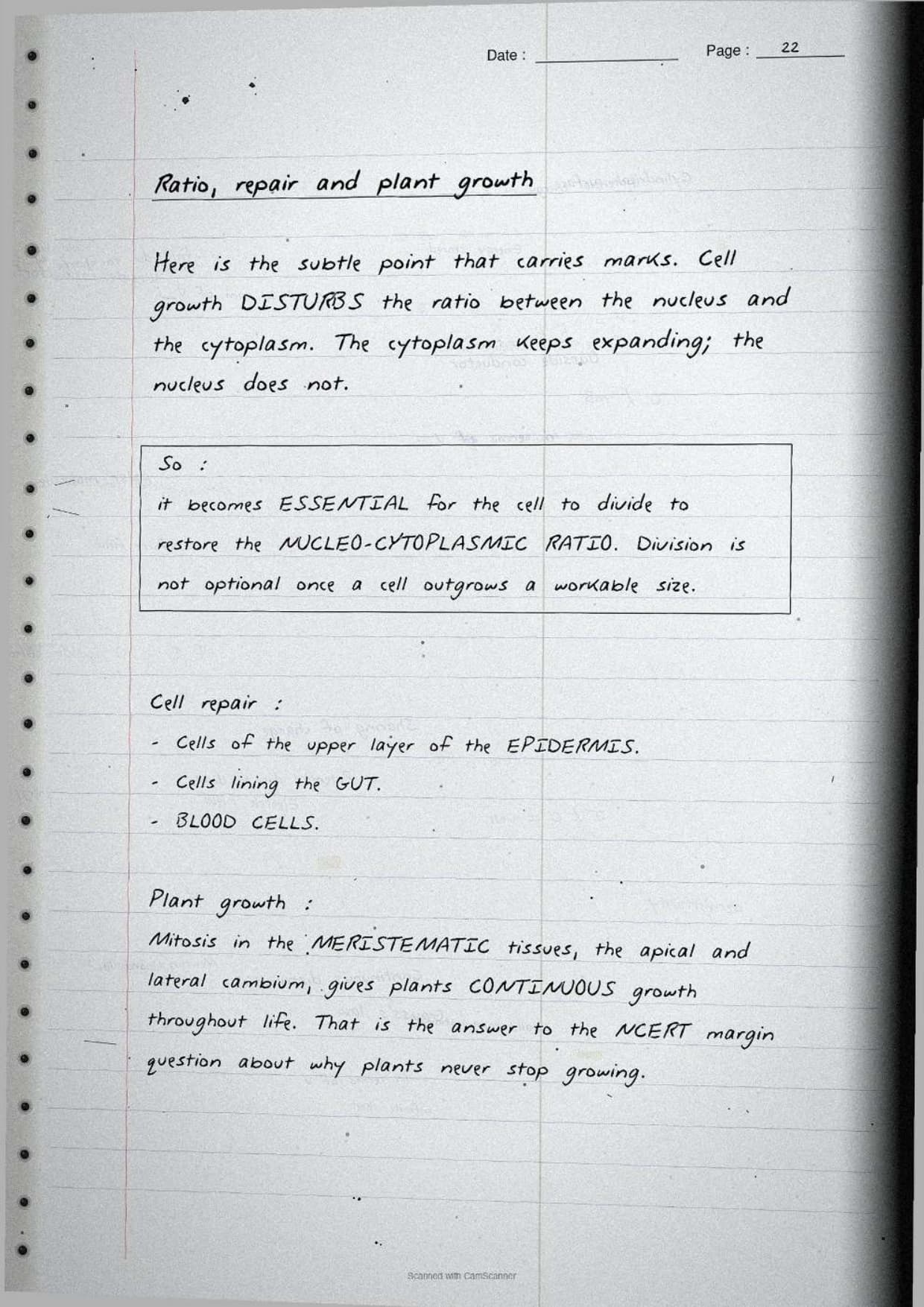
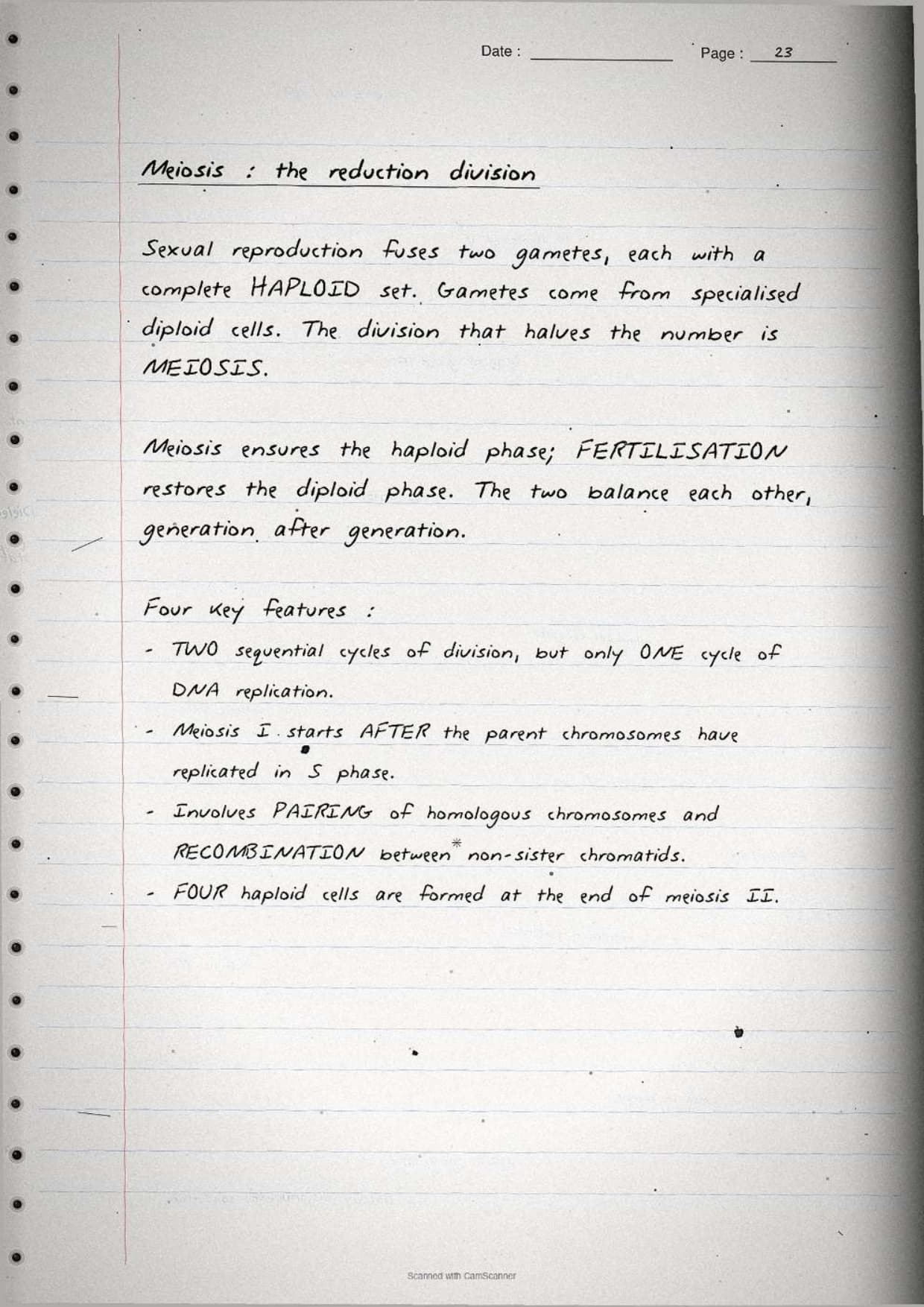
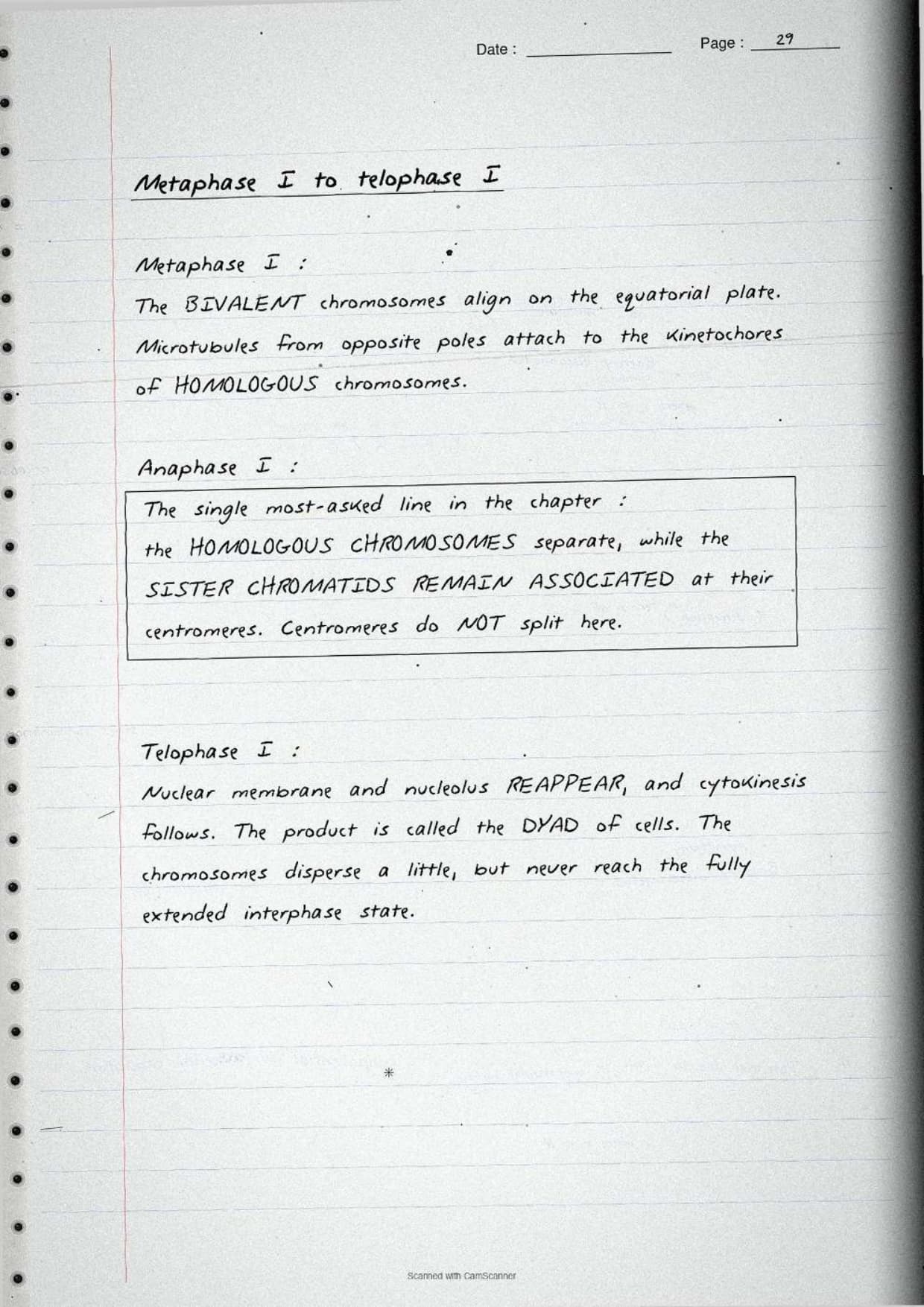
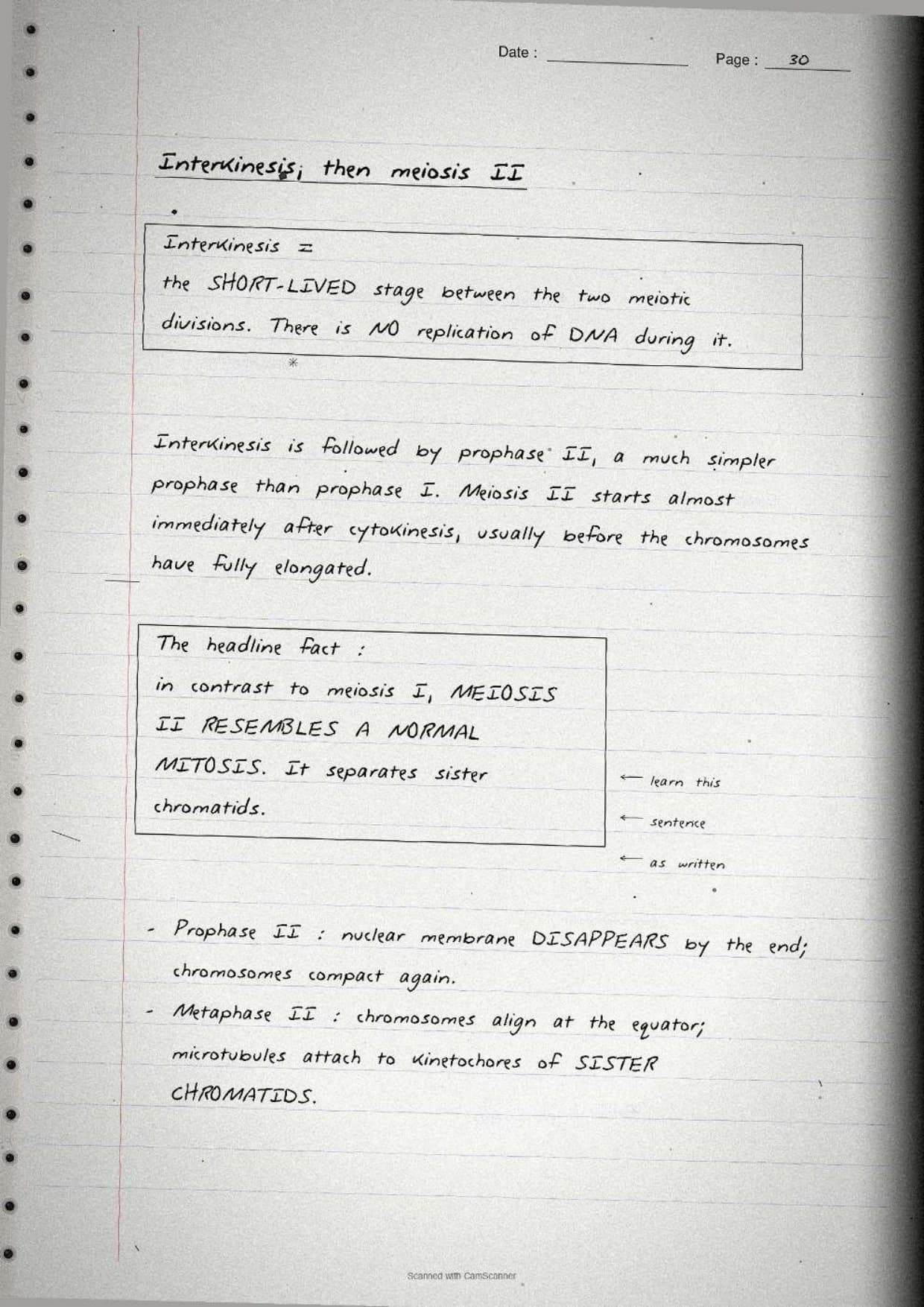
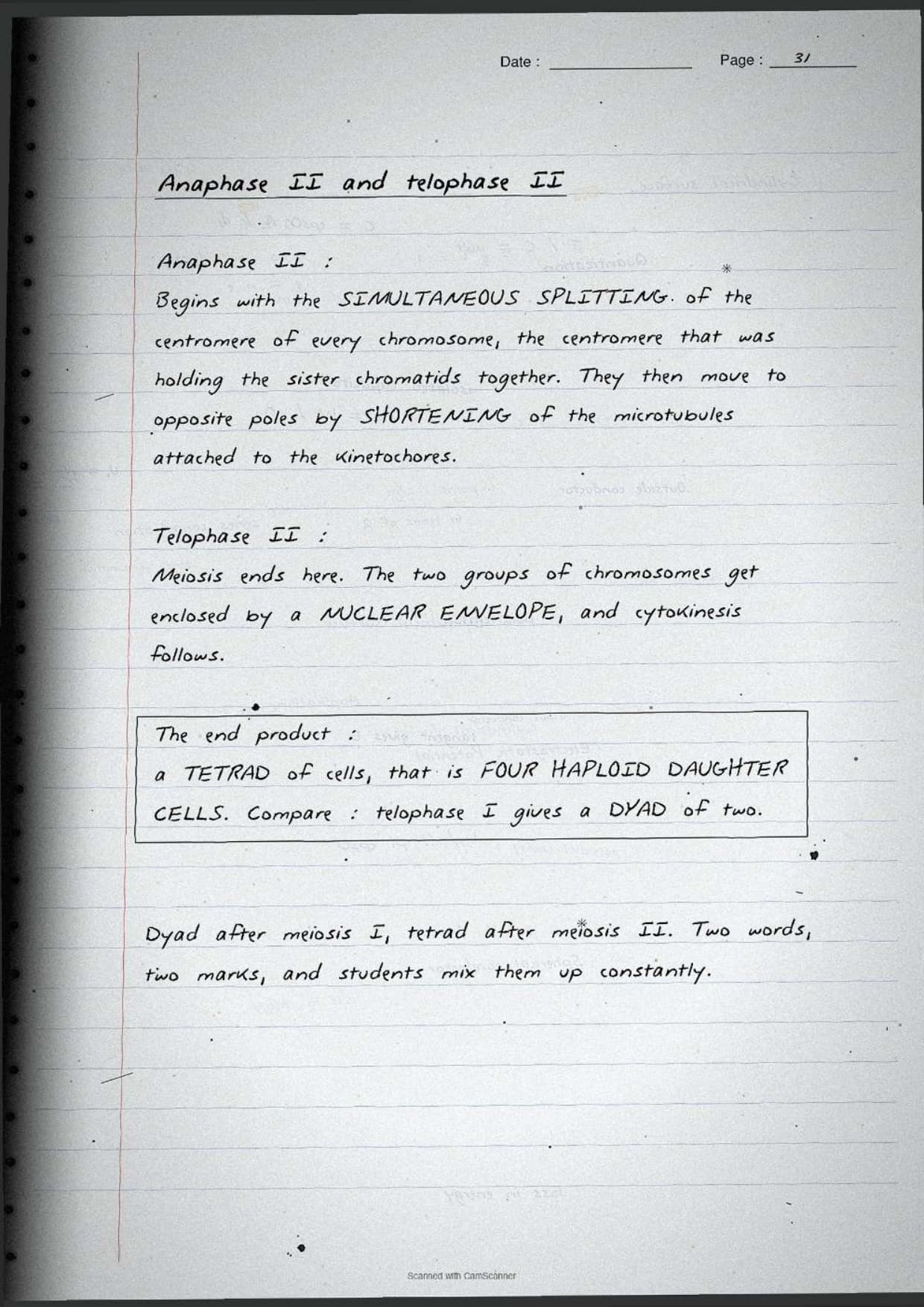
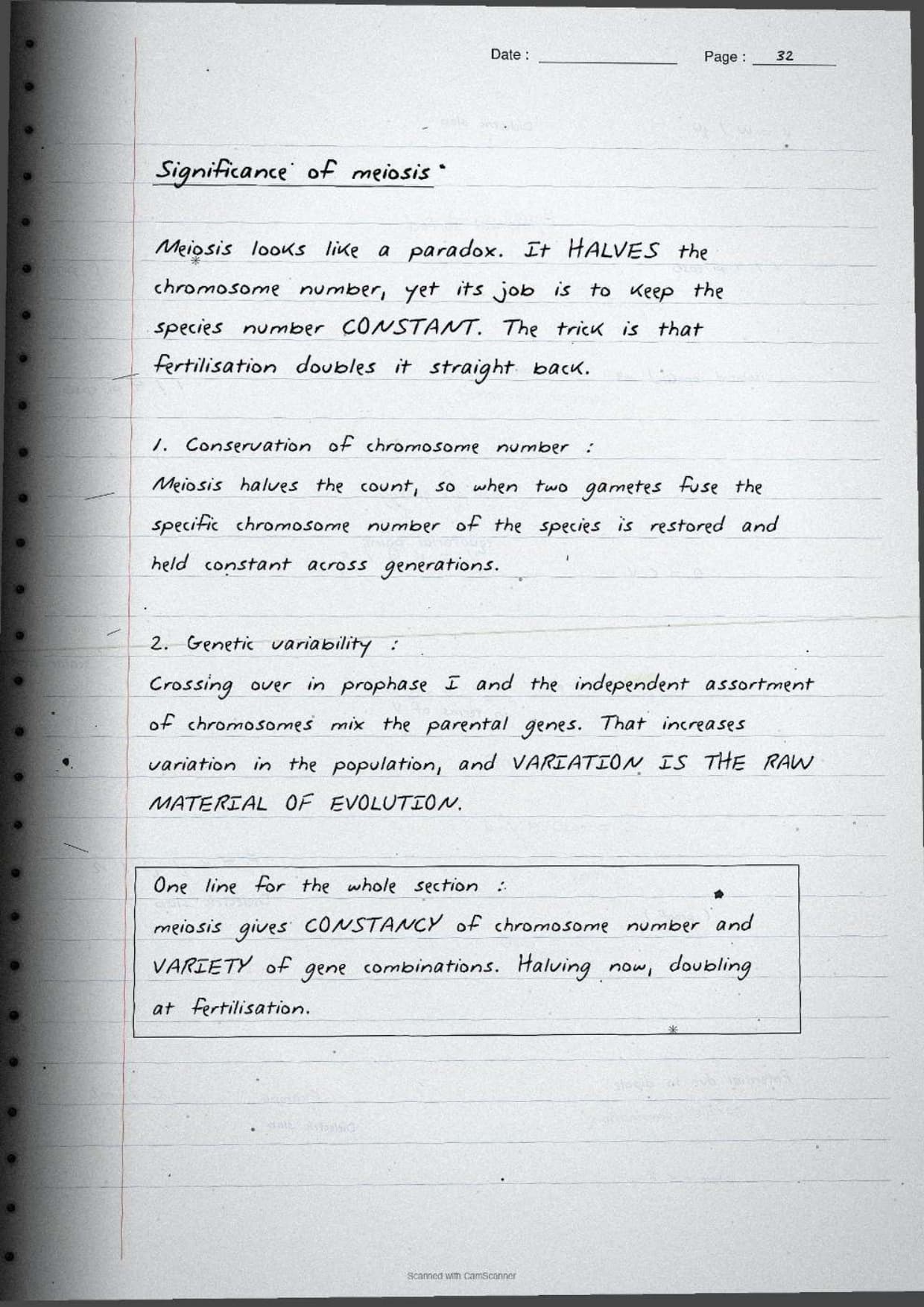
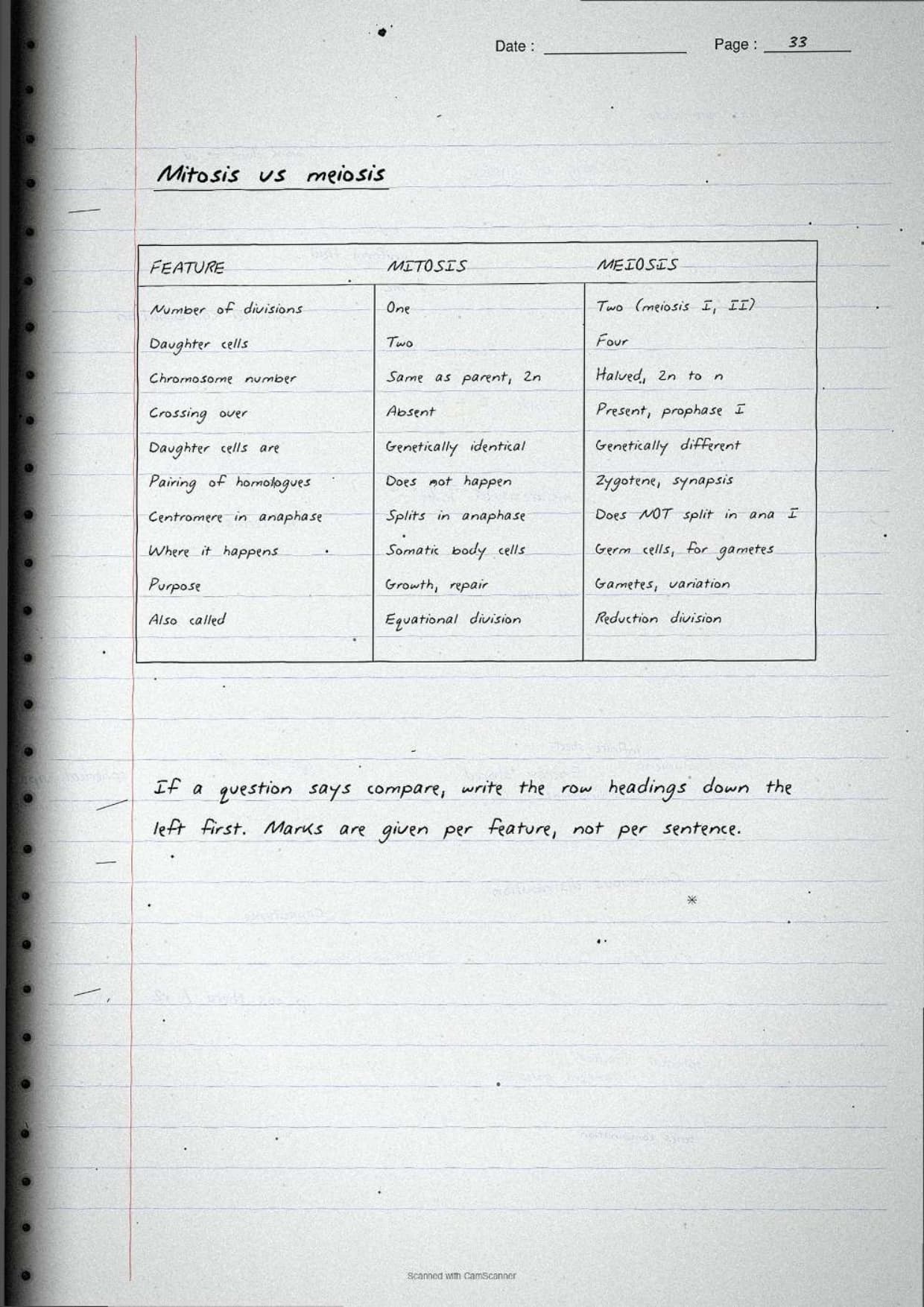
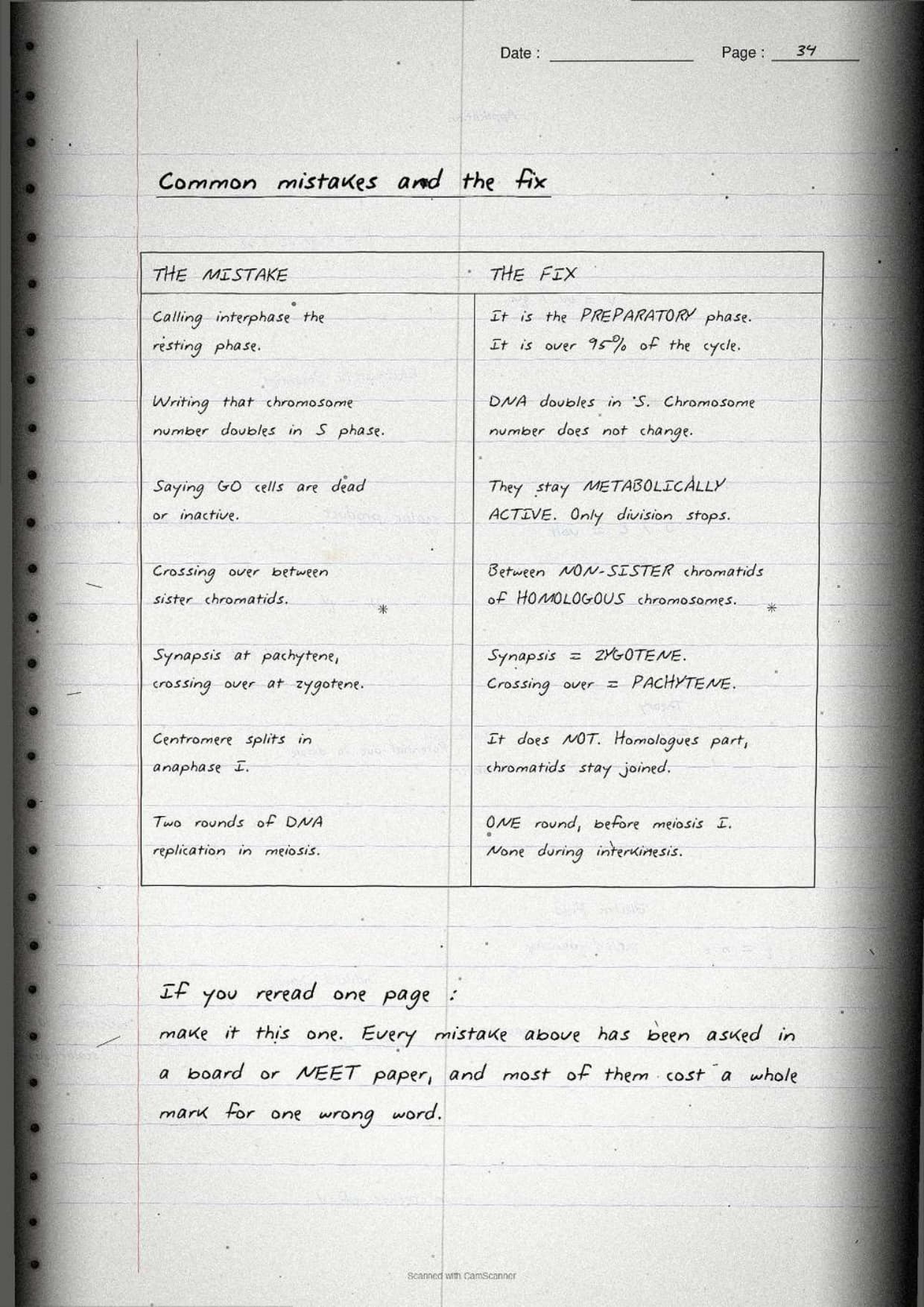
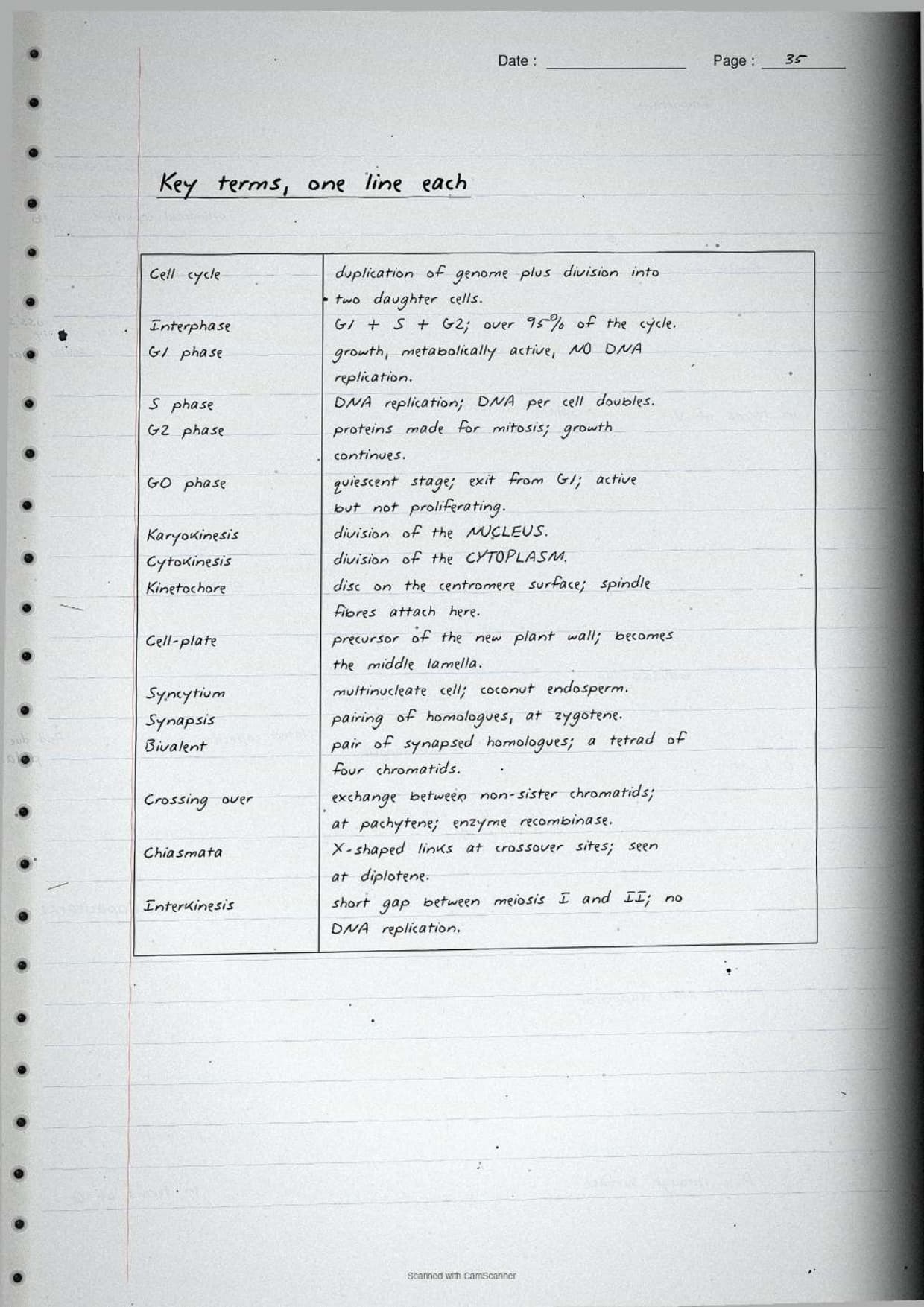
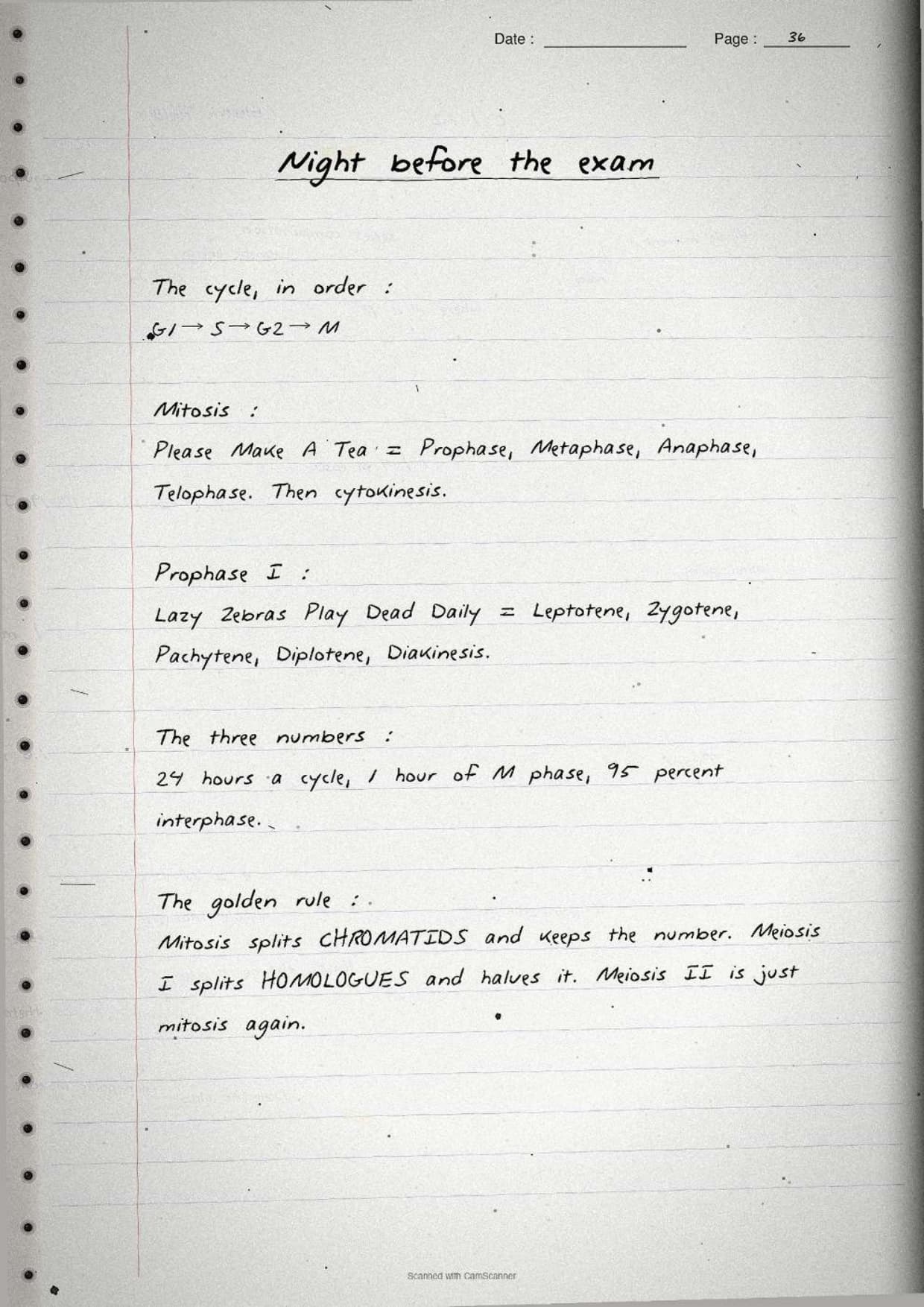
Chapter 10 is a diagram chapter. Marks come from labelled sketches and from getting one word right, not from long answers.
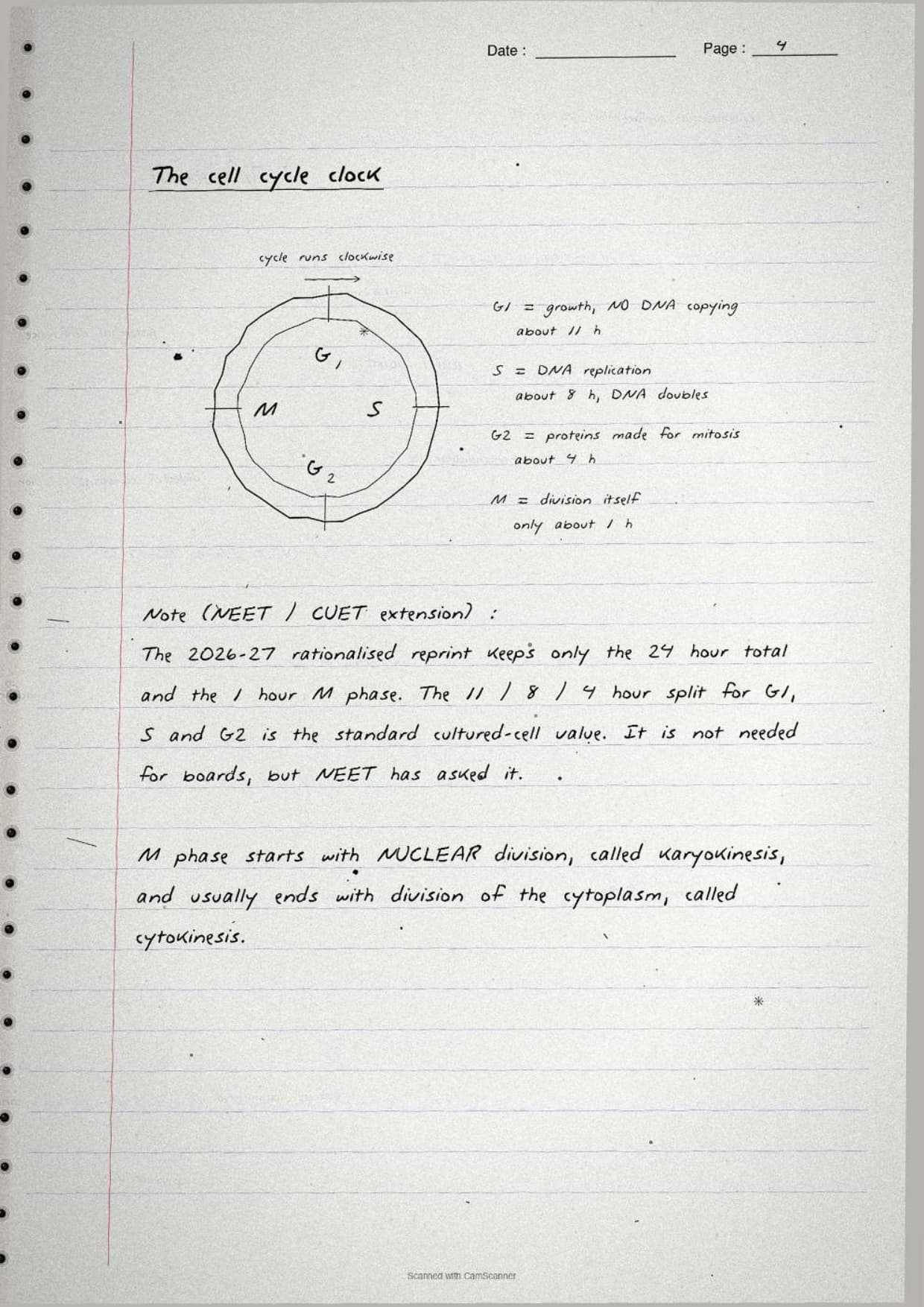
- Hand-drawn cell cycle clock with G1, S, G2 and M marked in order around the circle.
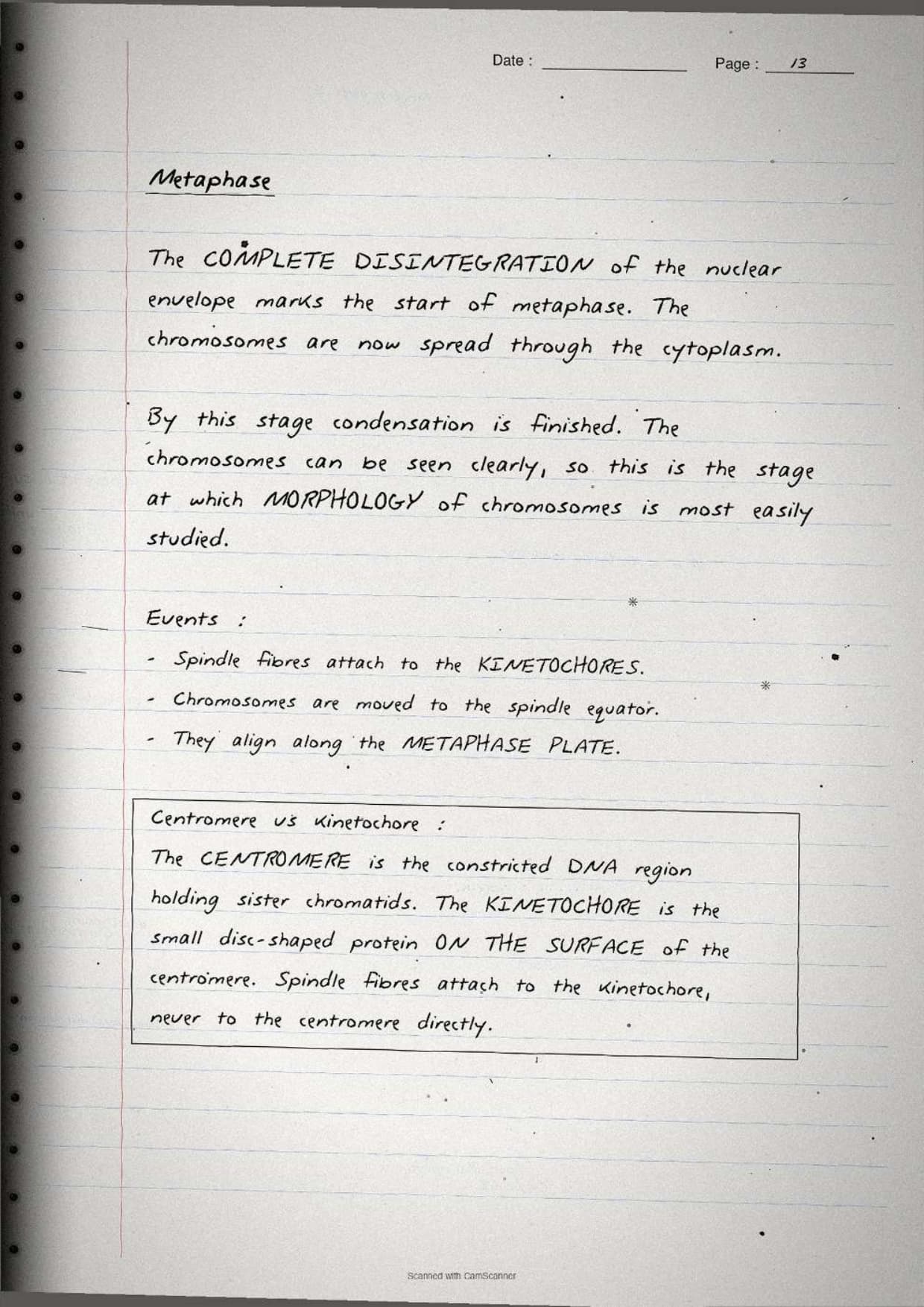
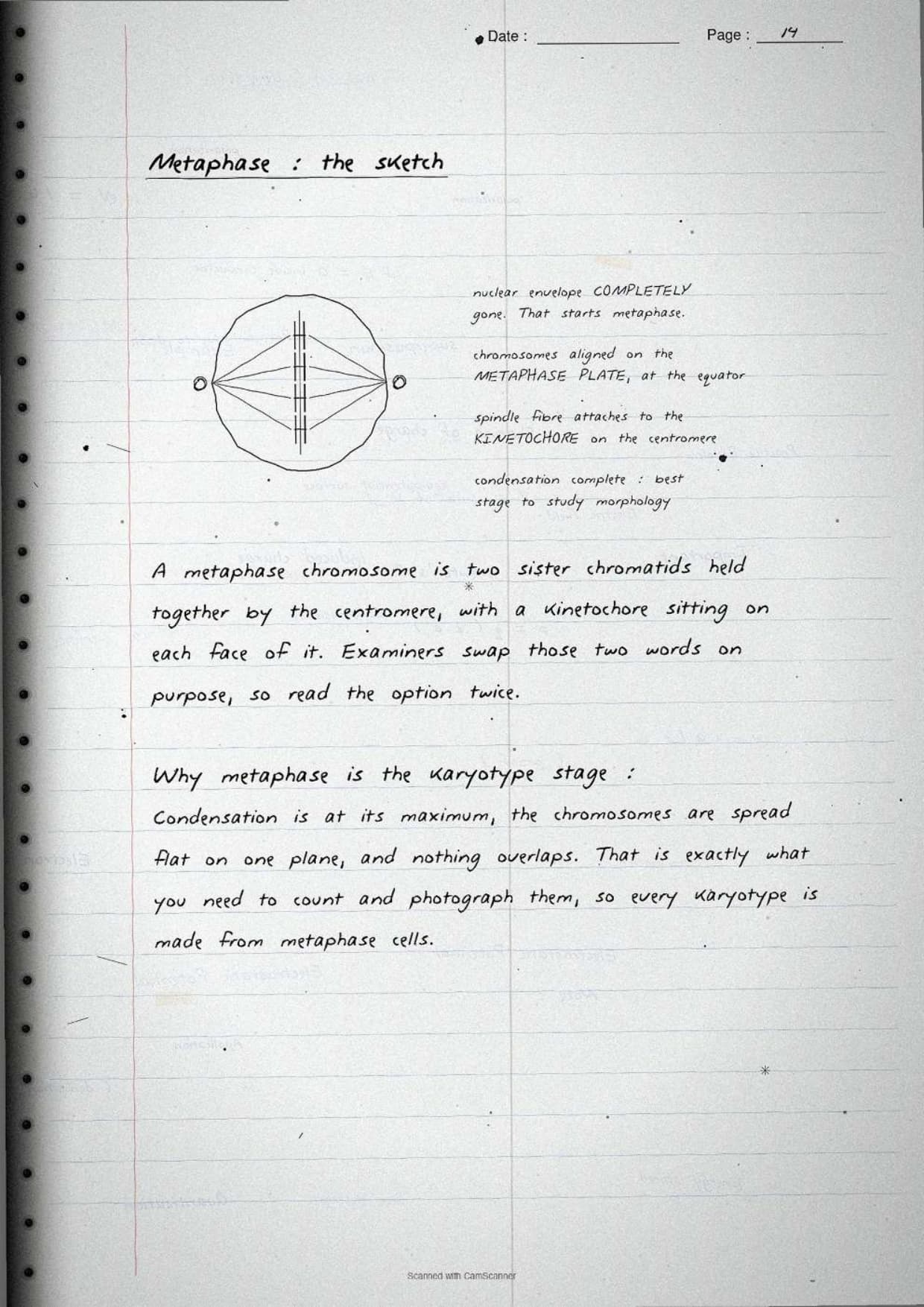
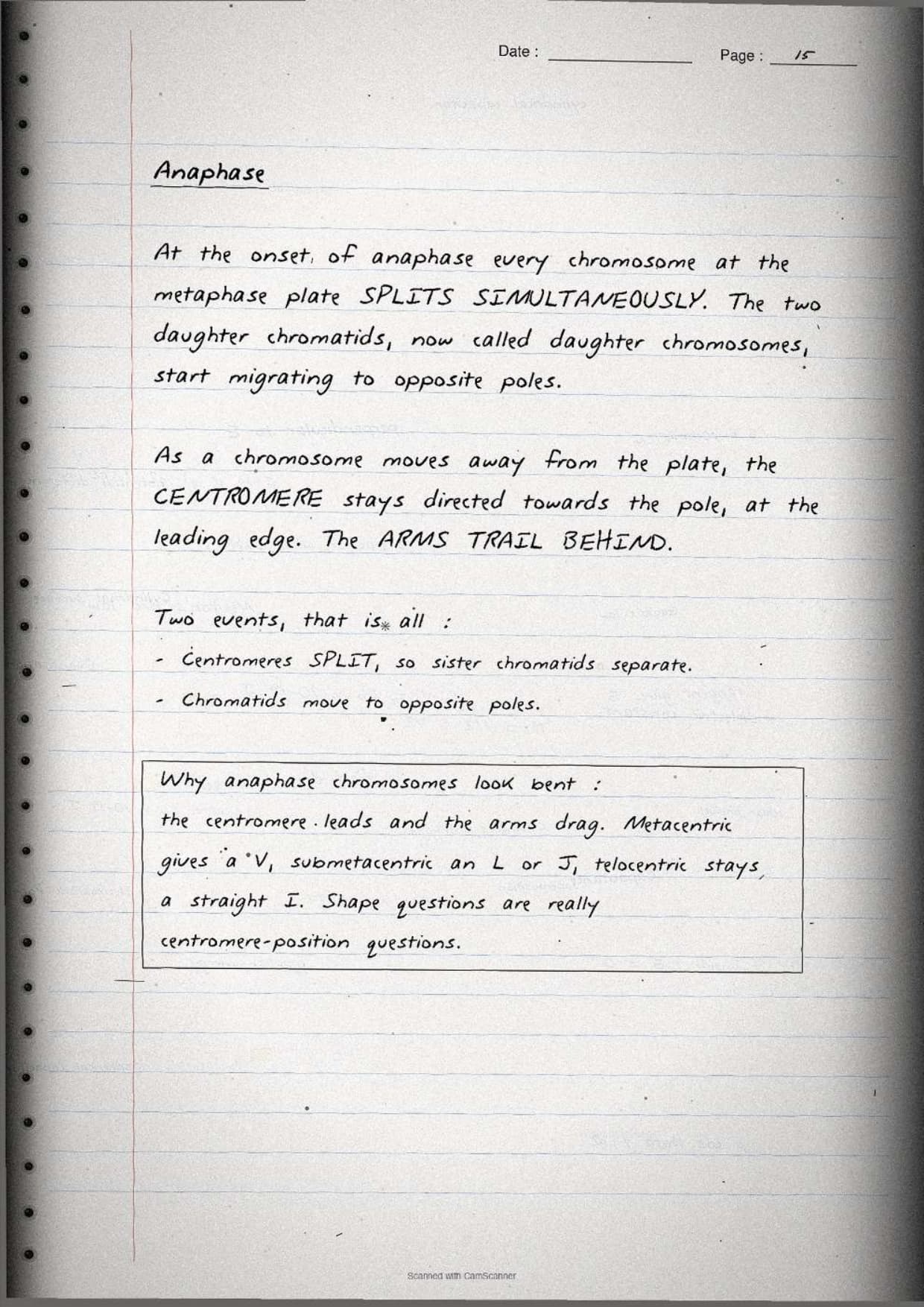
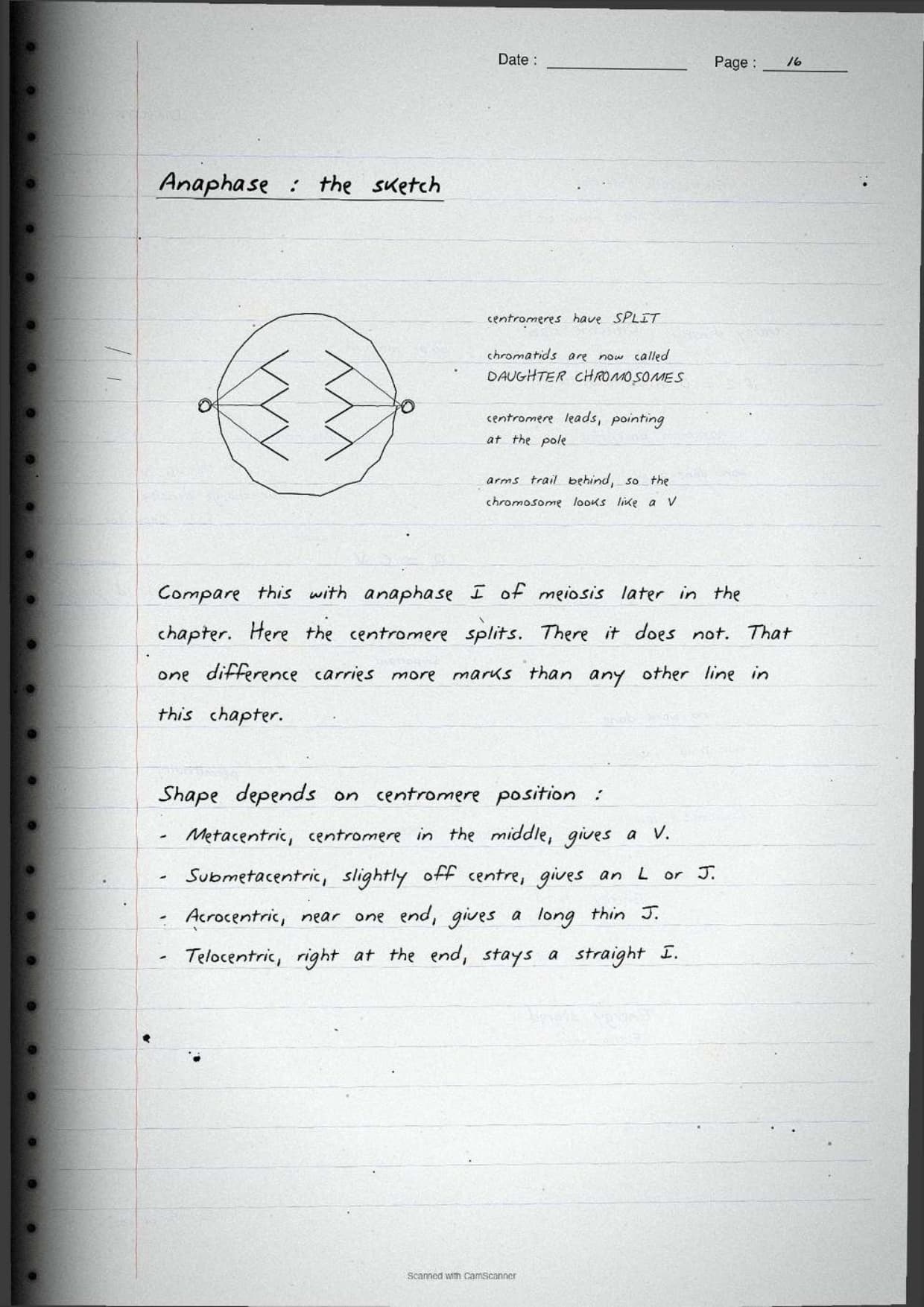
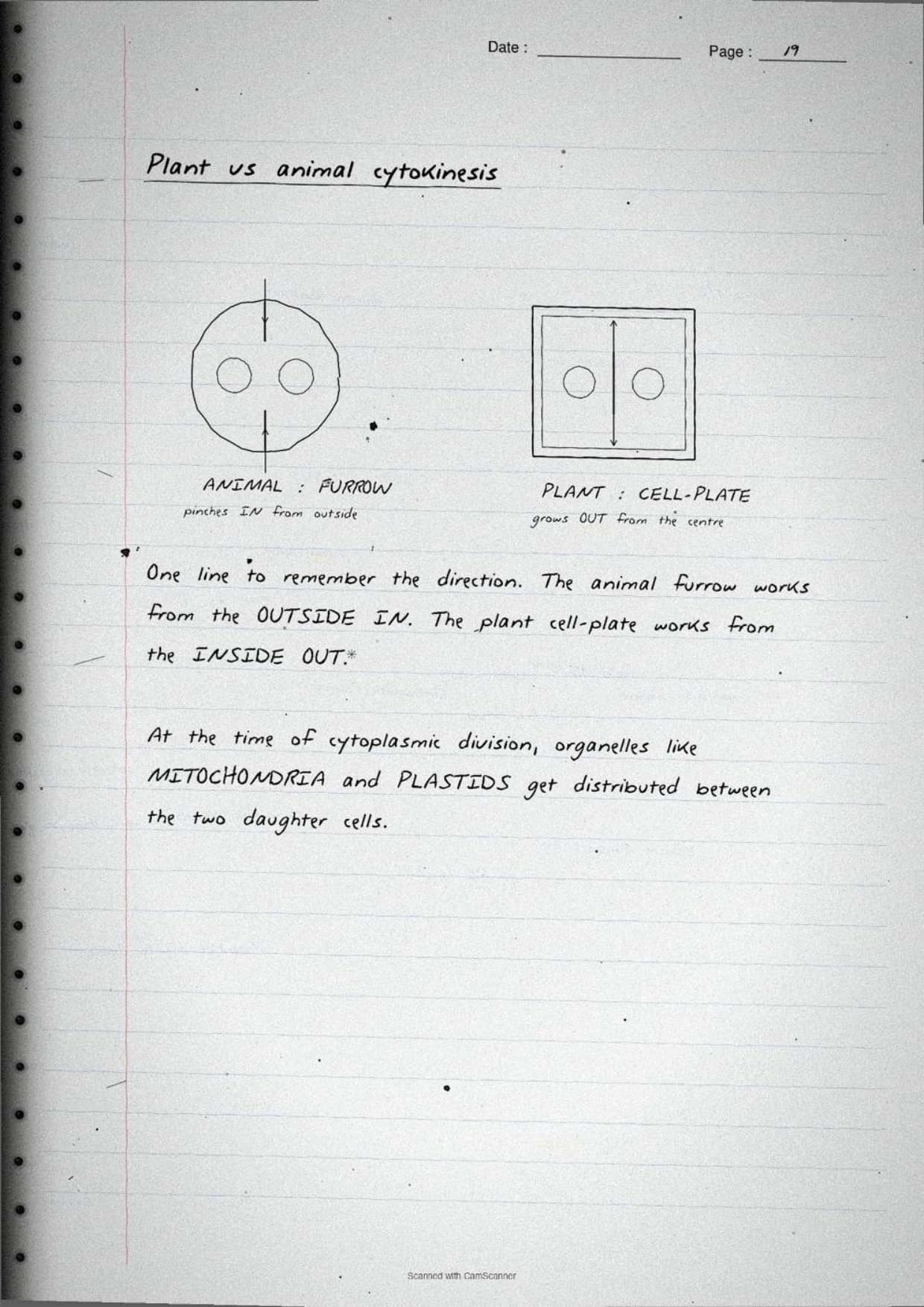
- Labelled prophase, metaphase and anaphase sketches, plus plant and animal cytokinesis drawn side by side.
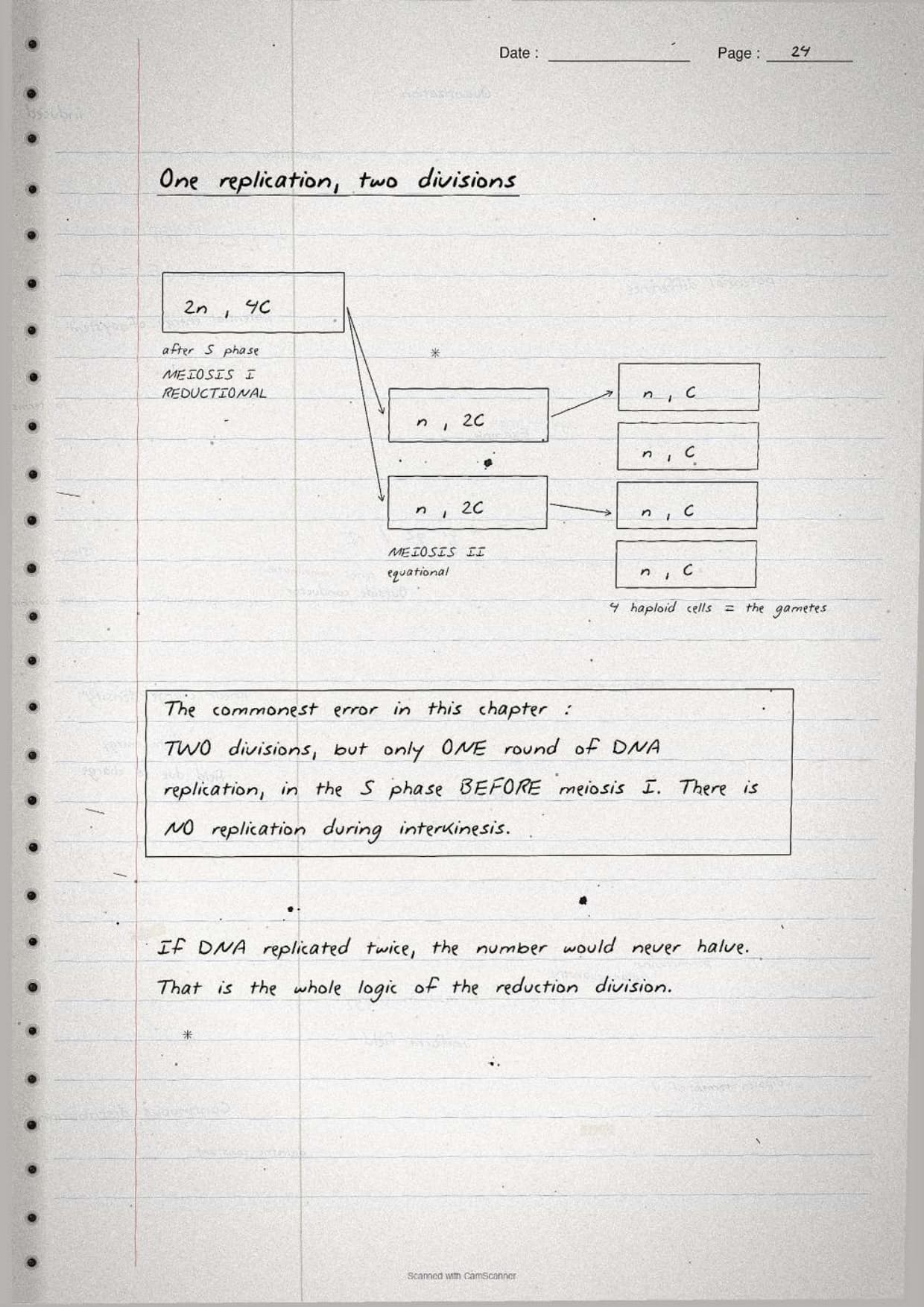
- A 2n4C to n2C to nC flow diagram that settles the meiosis counting question for good.
What Cell Cycle and Cell Division Handwritten Notes Cover
The 36 pages run in NCERT order, one topic to a page. New sub-topics are written in red and every definition sits inside a box, so students can cover the box and recall the wording.
- The cell cycle: the three processes that must stay in step, and why growth is continuous while DNA synthesis is not.
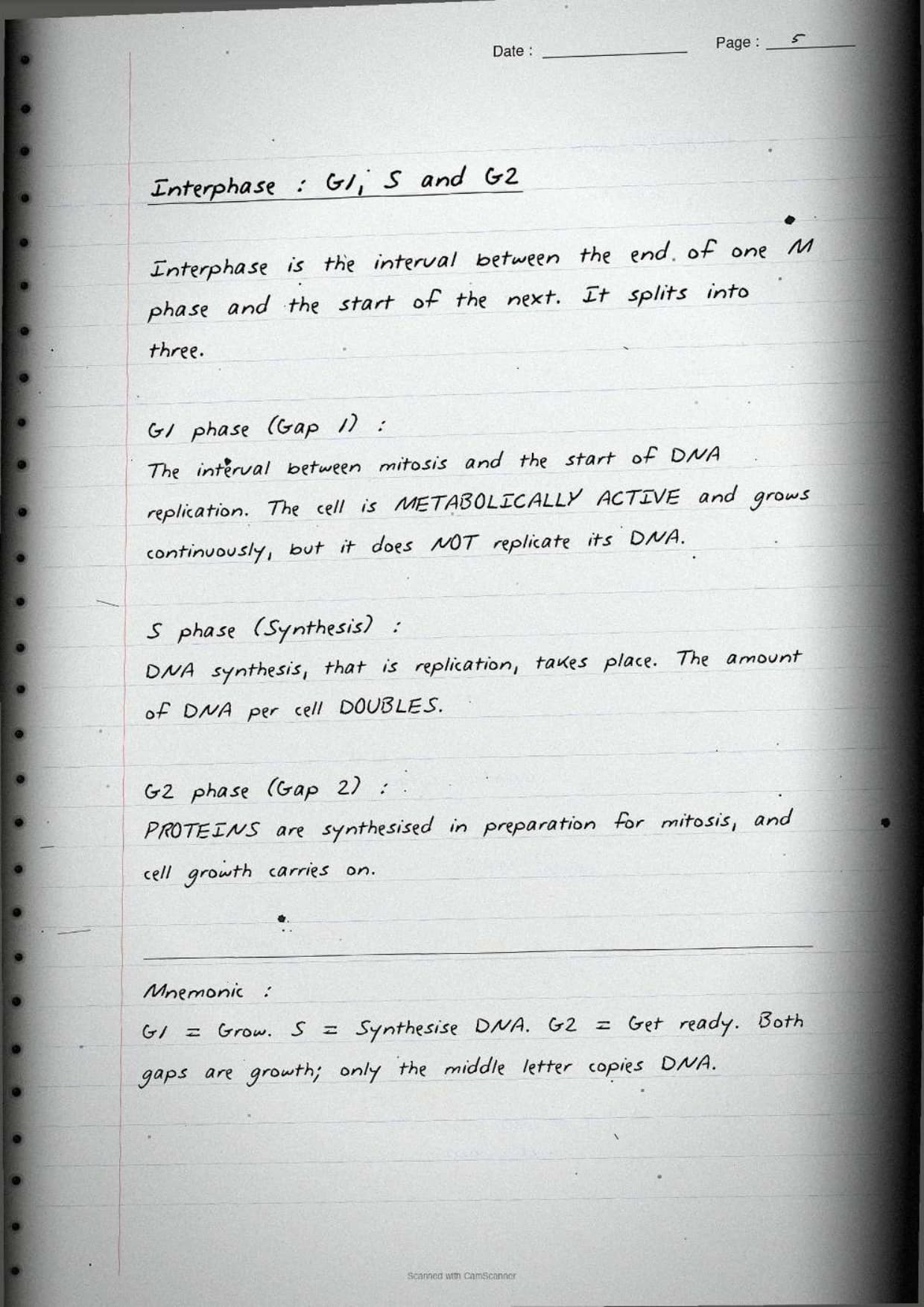
- Interphase: G1, S and G2 defined separately, with the Grow, Synthesise, Get ready mnemonic.
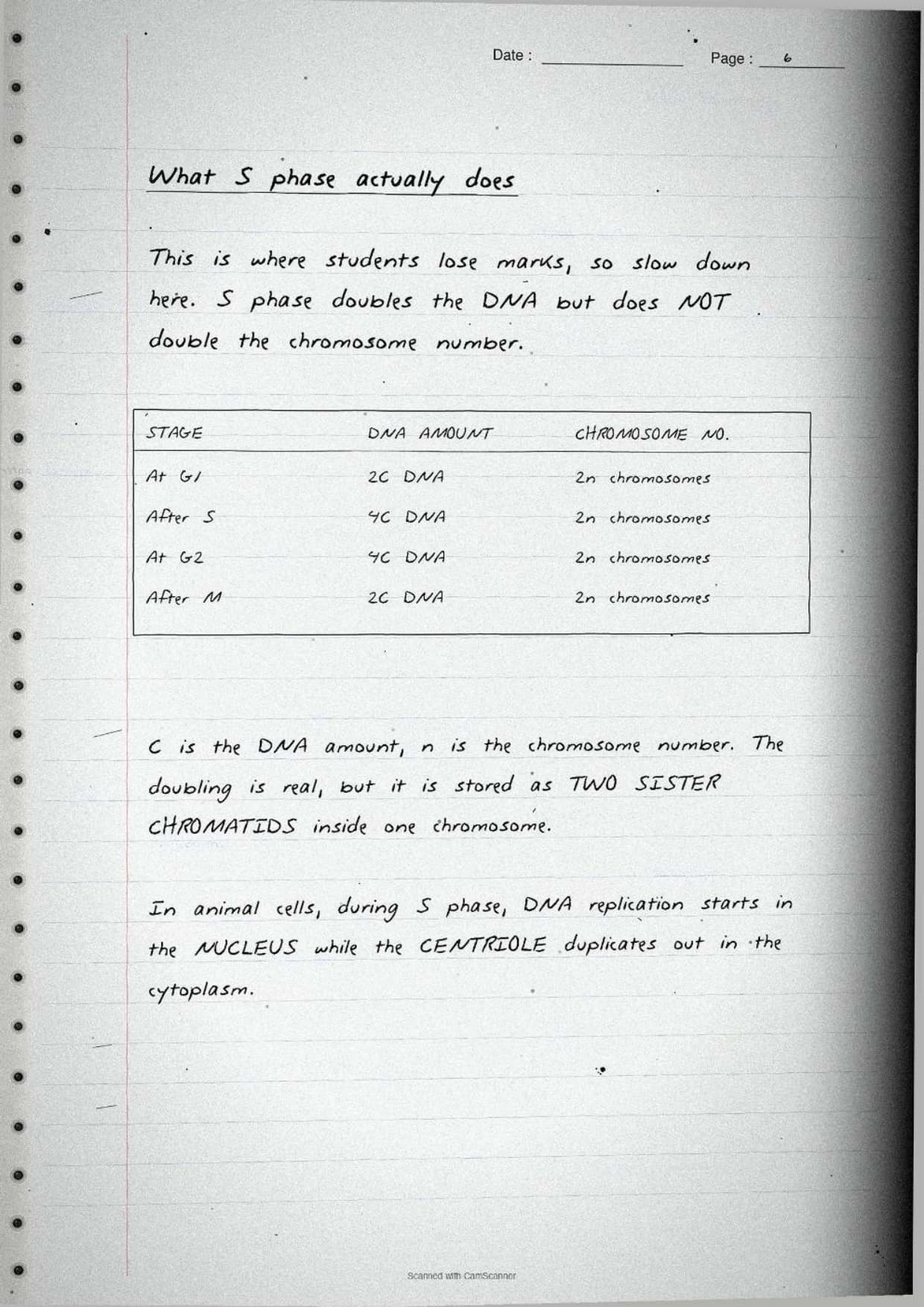
- DNA against chromosome number: a four-row table showing 2C to 4C while the number stays 2n throughout.
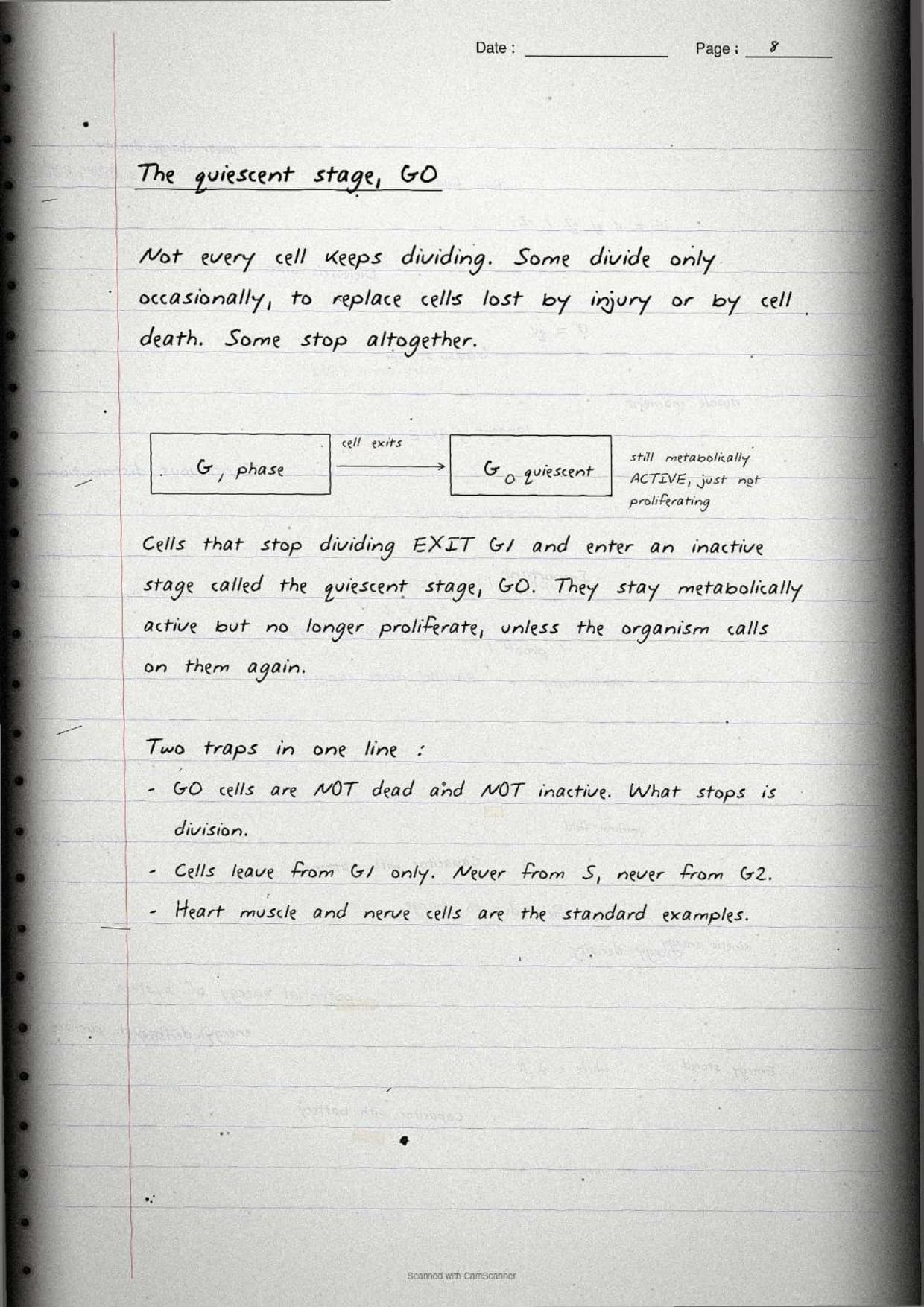
- G0 phase: a sketch of the exit from G1, with heart muscle and nerve cells as the examples.
- Mitosis: prophase, metaphase, anaphase and telophase, each with its own labelled drawing.
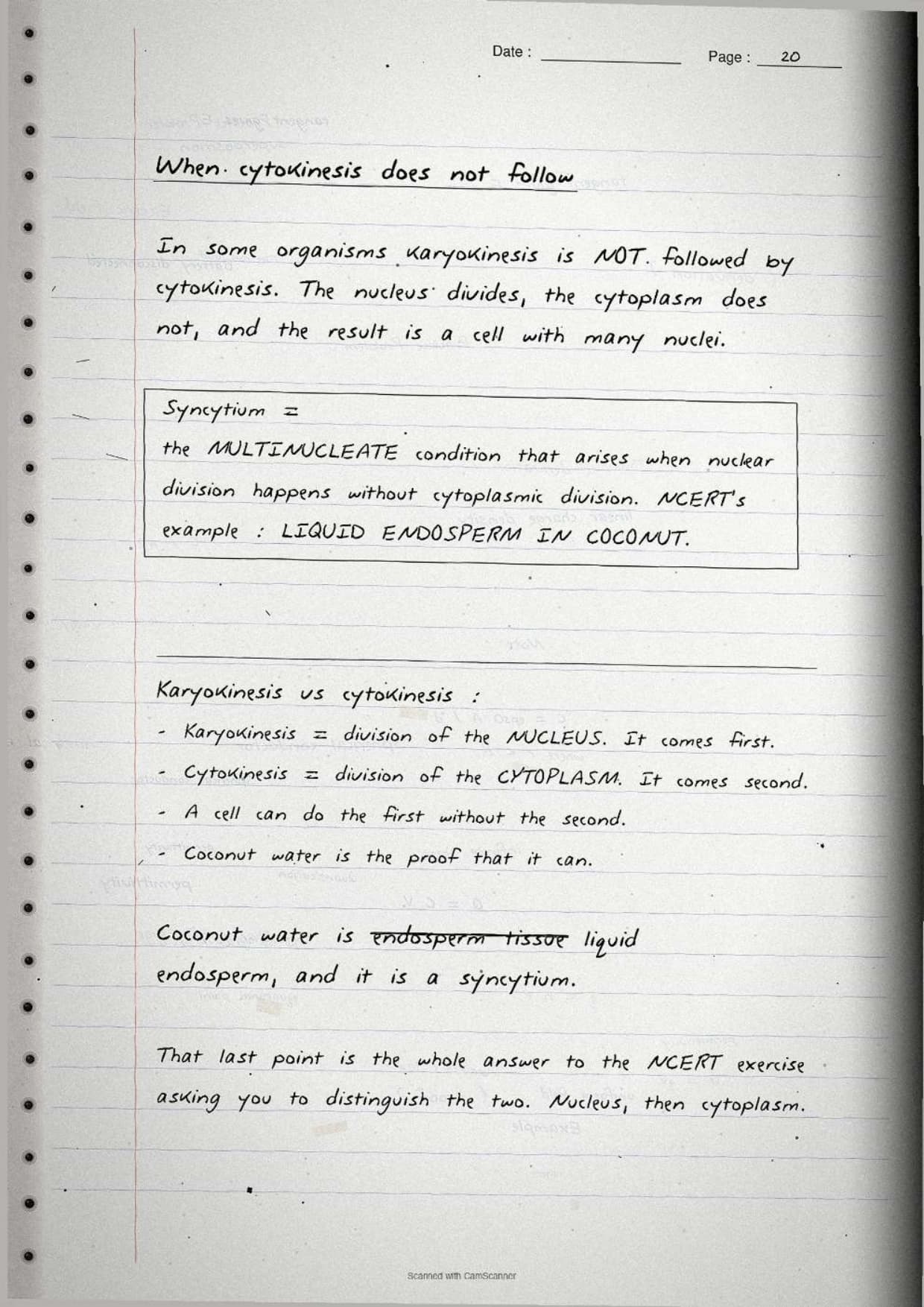
- Cytokinesis: the animal furrow against the plant cell-plate, plus syncytium and coconut endosperm.
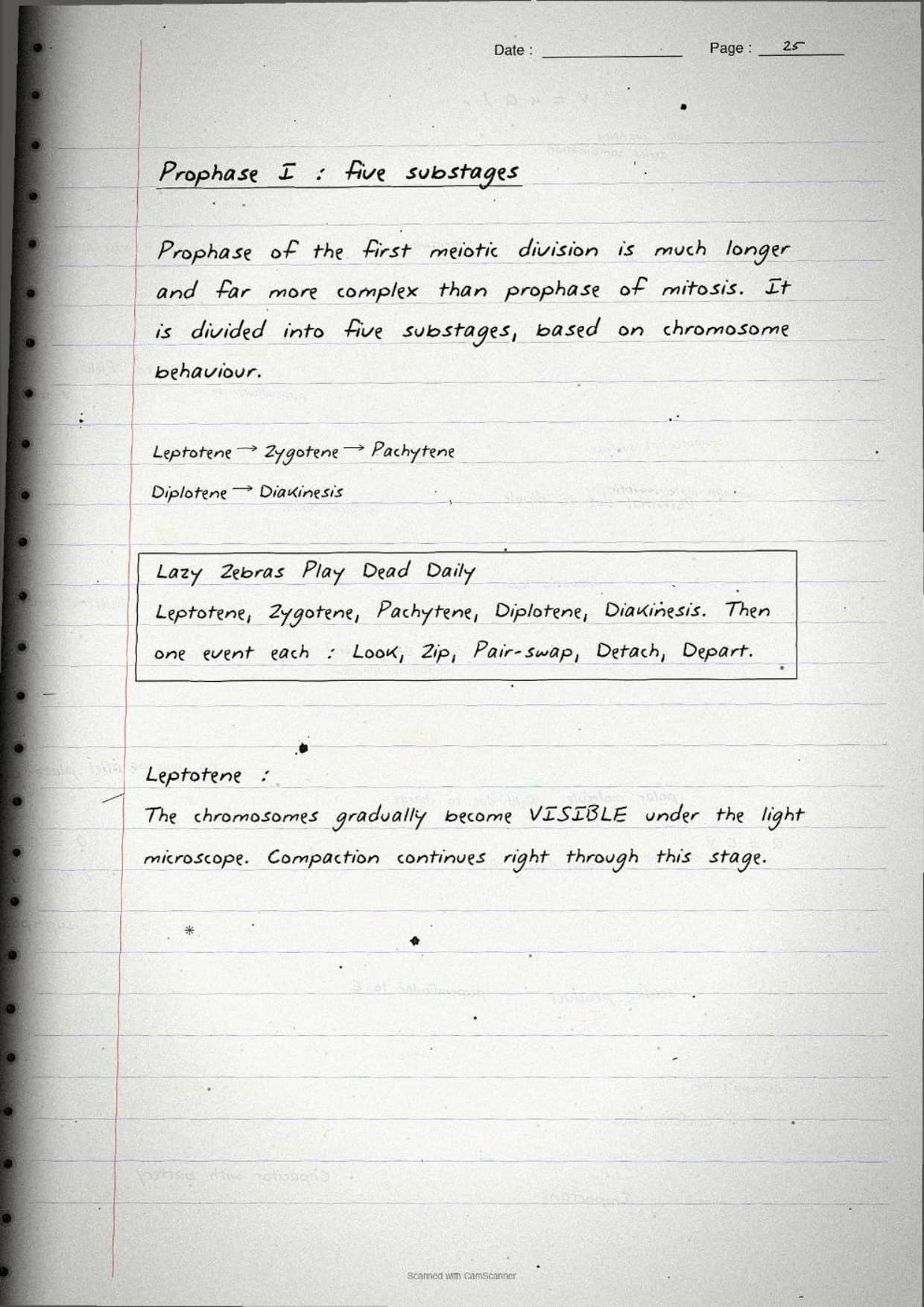
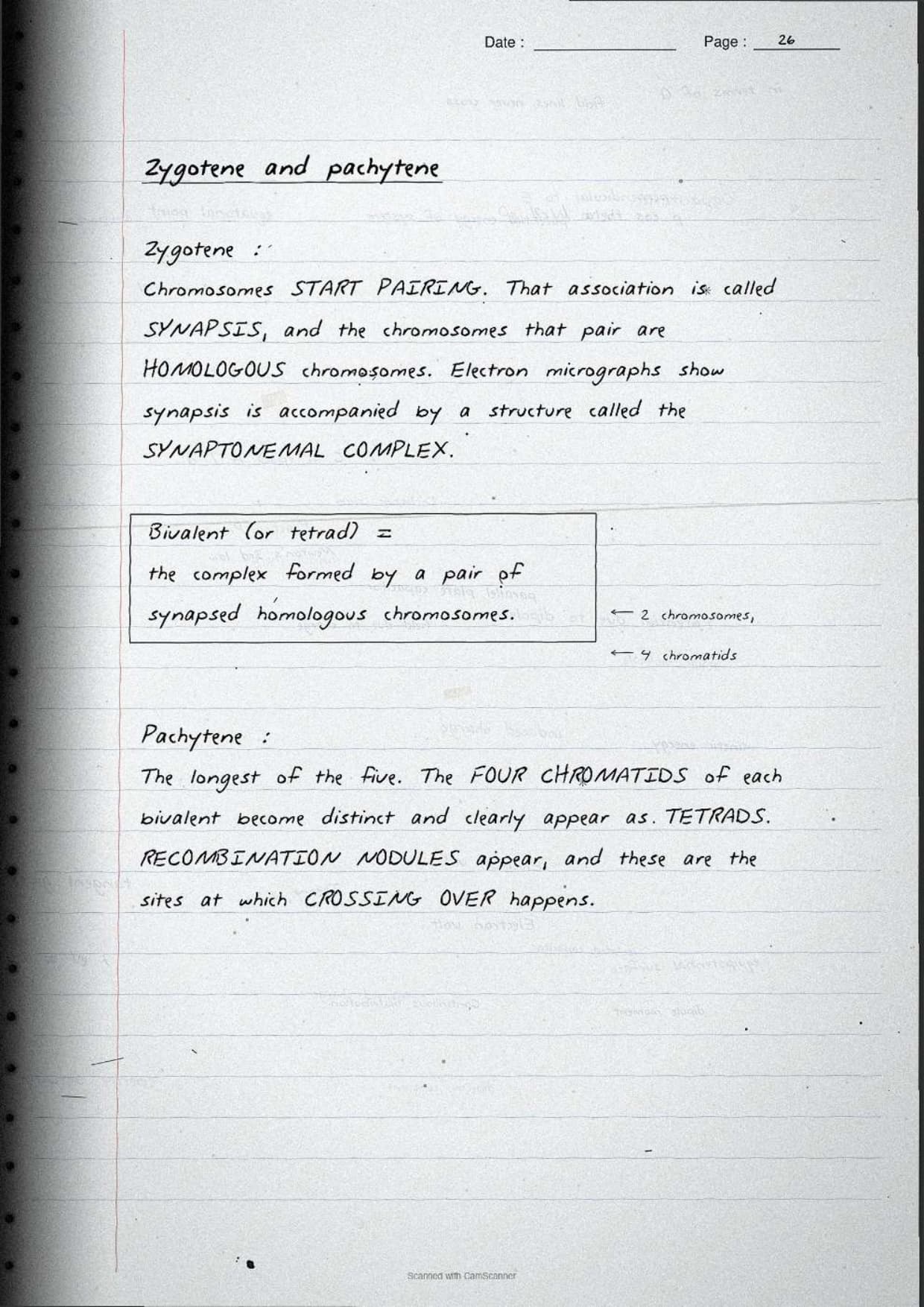
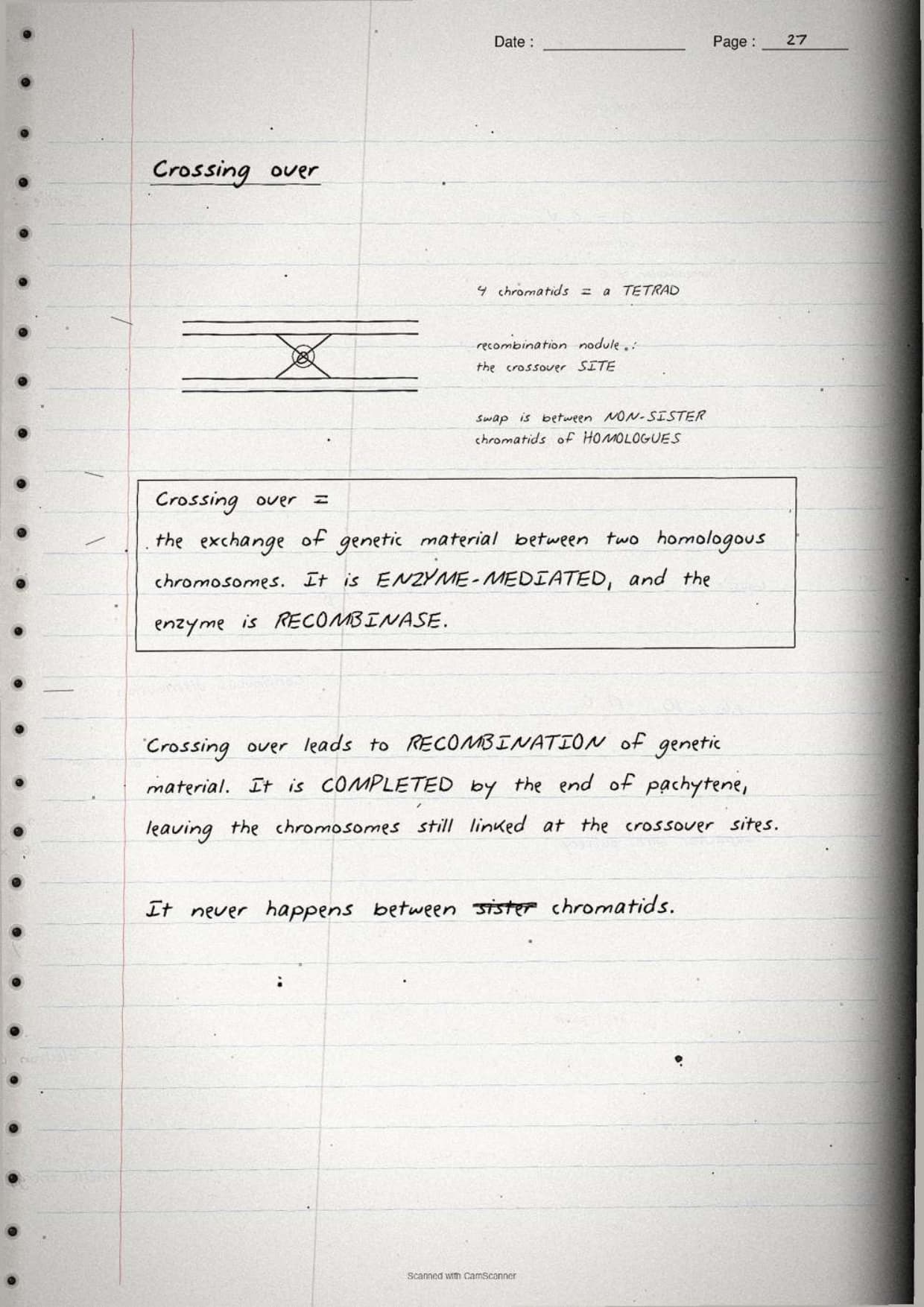
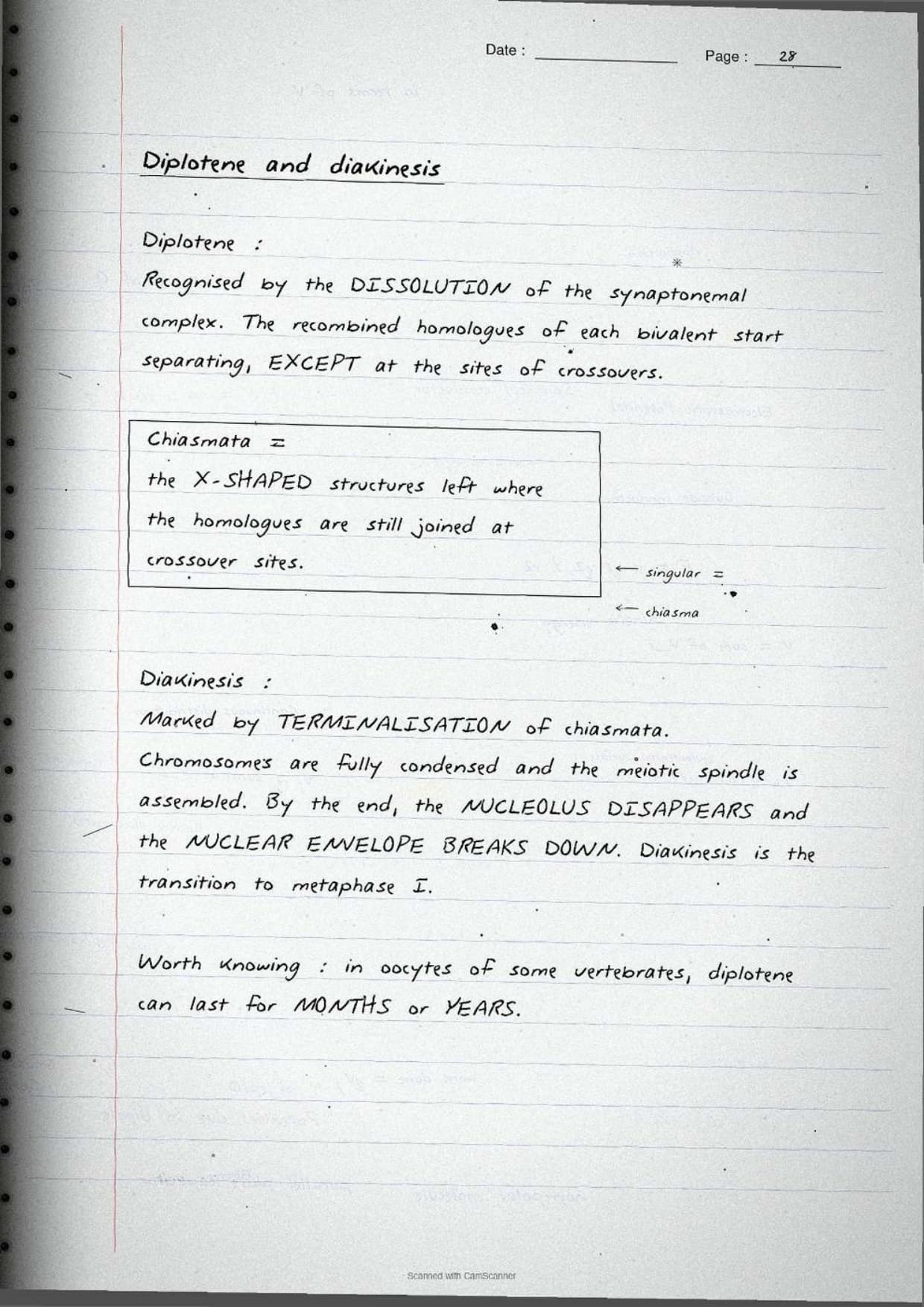
- Meiosis: all five prophase I substages, crossing over, meiosis II and the significance of both divisions.
The 11, 8 and 4 hour split for G1, S and G2 is marked as a NEET and CUET extension. The current 2026-27 print keeps only the 24 hour cycle and the 1 hour M phase, but NEET has asked the split.
Key Diagrams and Terms in Cell Cycle and Cell Division Notes
Most lost marks here come from six terms that students swap for each other. Examiners build whole MCQs on that swap, so the notes box these six on one page.
| Term | How the notes define it |
|---|---|
| Karyokinesis | Division of the nucleus, and it comes first |
| Cytokinesis | Division of the cytoplasm, and it comes second |
| Kinetochore | Disc on the surface of the centromere where spindle fibres attach |
| Cell-plate | Precursor of the new plant wall, which becomes the middle lamella |
| Synapsis | Pairing of homologous chromosomes, at zygotene |
| Chiasmata | X-shaped links at the crossover sites, seen at diplotene |
Four sketches carry this chapter. The cell cycle clock puts the four phases in order with their hour values. The prophase and metaphase drawings label the chromatid, centromere, aster and metaphase plate. The cytokinesis pair shows the furrow pinching inward against the cell-plate growing outward. The crossing-over sketch draws four chromatids as a tetrad with the recombination nodule at the centre.
How to Use These Handwritten Notes for Revision
Work in three short passes. Read a page, cover the boxed definition, then redraw the sketch from memory on rough paper. Drawing beats re-reading in this chapter.
- Learn the golden rule on the last page: mitosis splits chromatids and keeps the number, meiosis I splits homologues and halves it.
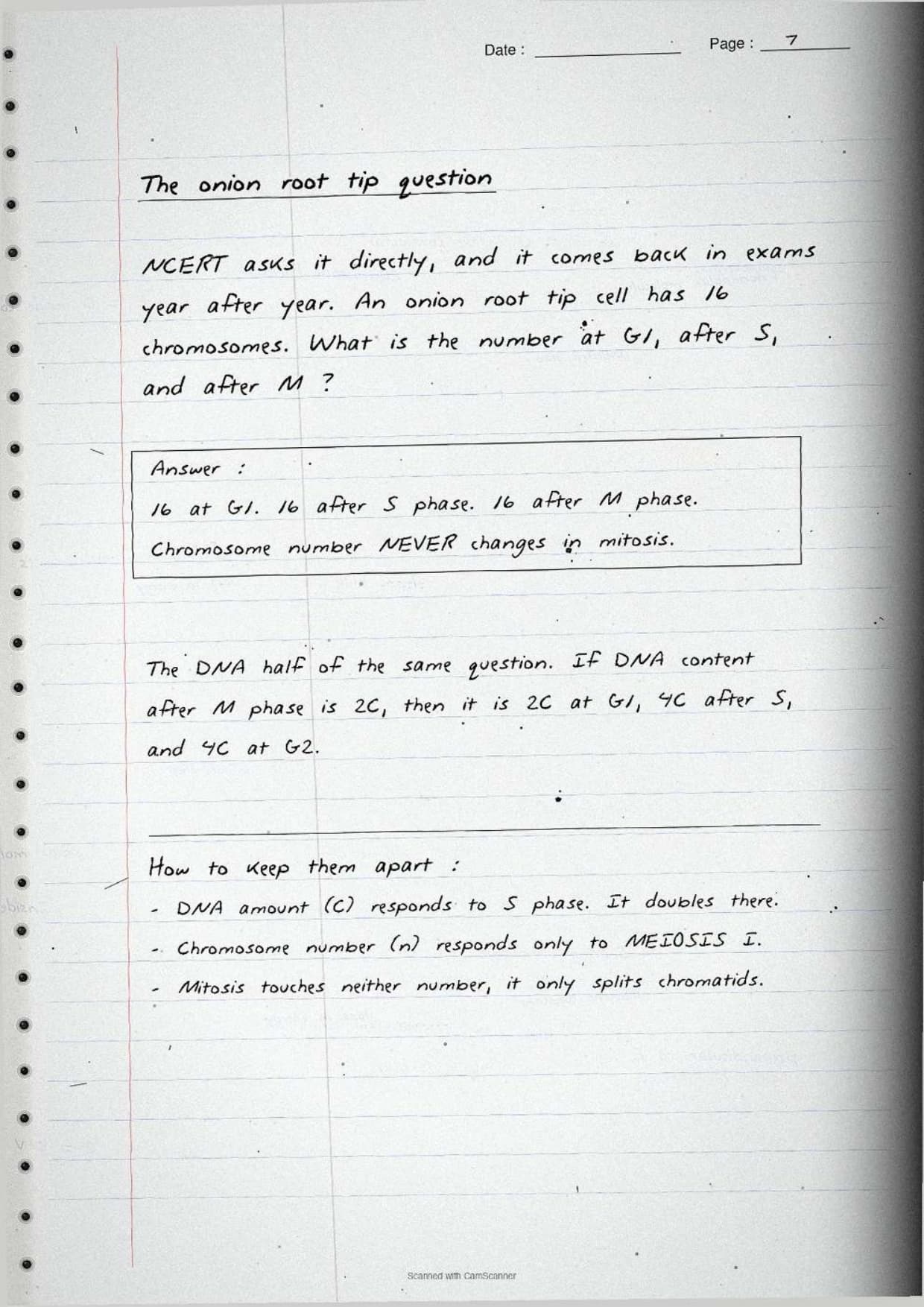
- Practise the onion root tip question until the answer 16, 16, 16 comes without thinking.
- Say the two mnemonics out loud: Please Make A Tea for mitosis, Lazy Zebras Play Dead Daily for prophase I.
- Keep the class 11 biology handwritten notes chapter 10 Cell Cycle and Cell Division open beside the NCERT Solutions while answering.
- Read the common-mistakes page last, on page 34, before you shut the file.
Around 45 minutes covers one full pass, so the notes fit into the final week of revision.
Student Feedback on Cell Cycle and Cell Division Handwritten Notes
Students rate the labelled sketches and the comparison table as the pages that save them the most time. The figures below come from a Collegedunia poll run before the 2026 boards.
- In a Collegedunia survey of 11,240 students, 76% said the 10-row mitosis against meiosis table was their most-used revision page.
- Most-confused pair before the poll: synapsis against crossing over, placed in the wrong substage by about 5 in 10 students.
Source: 2026-27 Class 11 Biology student poll. Sample of 11,240 students from CBSE schools across 12 states.
Where to Use These Notes Alongside Other Resources
These handwritten pages work best next to the step-wise Solutions, the summary Notes and the Exemplar Solutions for the same chapter. Read the notes first, then check the answers, and keep the Exemplar for extra practice.
| Resource | Best used for |
|---|---|
| Cell Cycle and Cell Division NCERT Solutions | Step-by-step answers to every back-exercise question |
| Cell Cycle and Cell Division Class 11 Notes | Quick chapter summary with all key terms in one place |
| Cell Cycle and Cell Division Exemplar Solutions | Exemplar questions solved for NEET-level practice |
| Cell Cycle and Cell Division NCERT Book PDF | The original chapter text and exercises |
All Class 11 Biology Handwritten Notes by Chapter
The table links the handwritten notes for every Class 11 Biology chapter, so students can move across the course in one click. Cell Cycle and Cell Division is highlighted.
| Chapter | Handwritten Notes |
|---|---|
| Chapter 1 | The Living World |
| Chapter 2 | Biological Classification |
| Chapter 3 | Plant Kingdom |
| Chapter 4 | Animal Kingdom |
| Chapter 5 | Morphology of Flowering Plants |
| Chapter 6 | Anatomy of Flowering Plants |
| Chapter 7 | Structural Organisation in Animals |
| Chapter 8 | Cell The Unit of Life |
| Chapter 9 | Biomolecules |
| Chapter 10 | Cell Cycle and Cell Division |
| Chapter 11 | Photosynthesis in Higher Plants |
| Chapter 12 | Respiration in Plants |
| Chapter 13 | Plant Growth and Development |
| Chapter 14 | Breathing and Exchange of Gases |
| Chapter 15 | Body Fluids and Circulation |
| Chapter 16 | Excretory Products and their Elimination |
| Chapter 17 | Locomotion and Movement |
| Chapter 18 | Neural Control and Coordination |
| Chapter 19 | Chemical Coordination and Integration |
FAQs on Cell Cycle and Cell Division Handwritten Notes
Ques. Are these class 11 biology handwritten notes chapter 10 Cell Cycle and Cell Division free to download?
Ans. Yes. The Cell Cycle and Cell Division handwritten notes are free to download as a PDF from this page. All 36 pages follow the 2026-27 NCERT and cover the full chapter in clear handwriting for quick revision.
Ques. What topics do these handwritten notes cover?
Ans. They cover the cell cycle, interphase with G1, S and G2, the G0 phase, all four stages of mitosis, cytokinesis in plant and animal cells, syncytium, meiosis I with its five prophase substages, crossing over, meiosis II and the significance of both divisions. Each topic sits on its own page with a boxed definition and a labelled sketch.
Ques. Does chromosome number double in S phase?
Ans. No, and this is the most common error in the chapter. S phase doubles the DNA from 2C to 4C, but the chromosome number stays at 2n. The extra DNA is held as two sister chromatids inside one chromosome. The notes box this in a four-row table.
Ques. How many rounds of DNA replication happen in meiosis?
Ans. Only one, in the S phase before meiosis I. There is no replication during interkinesis. Two divisions follow that single round, which is why the count drops from 2n4C to four cells of nC. The flow diagram on page 24 lays this out.
Ques. Are these notes useful for NEET, not just Boards?
Ans. Yes. NEET takes 2 to 3 questions from this chapter every year, mostly on the substages of prophase I and on centromere behaviour. The 11, 8 and 4 hour split for G1, S and G2 is marked as a NEET and CUET extension, since the board syllabus keeps only the 24 hour and 1 hour figures.



Comments