




These class 11 biology handwritten notes chapter 19 Chemical Coordination and Integration pull the whole endocrine system into one revision file for Boards, NEET and CUET in 2026-27. All 35 pages run gland by gland, with hormones, functions and disorders boxed in clear handwriting.
Chapter 19 is a naming chapter. Almost every mark rides on the right gland, the right hormone and the right direction of change.
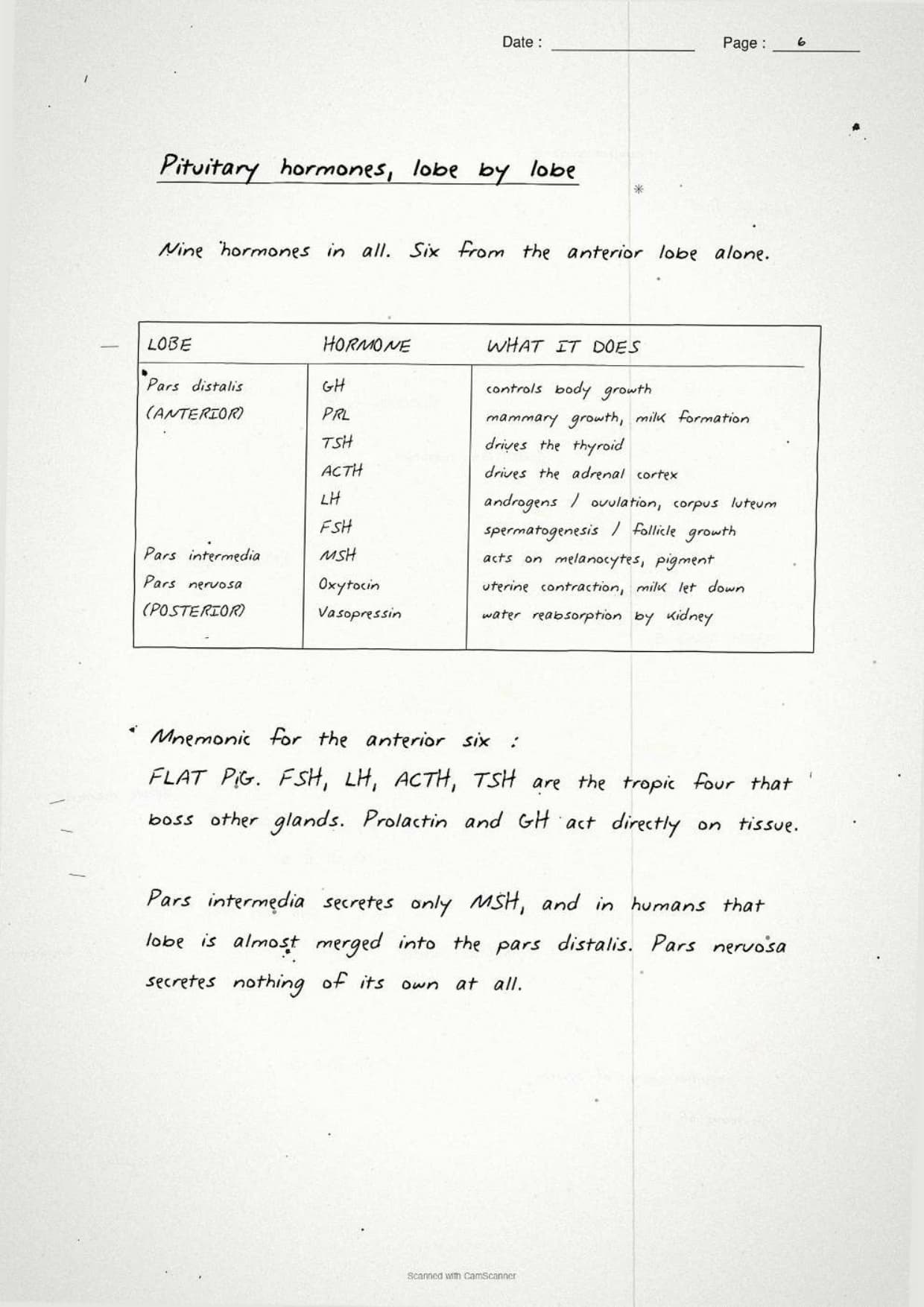
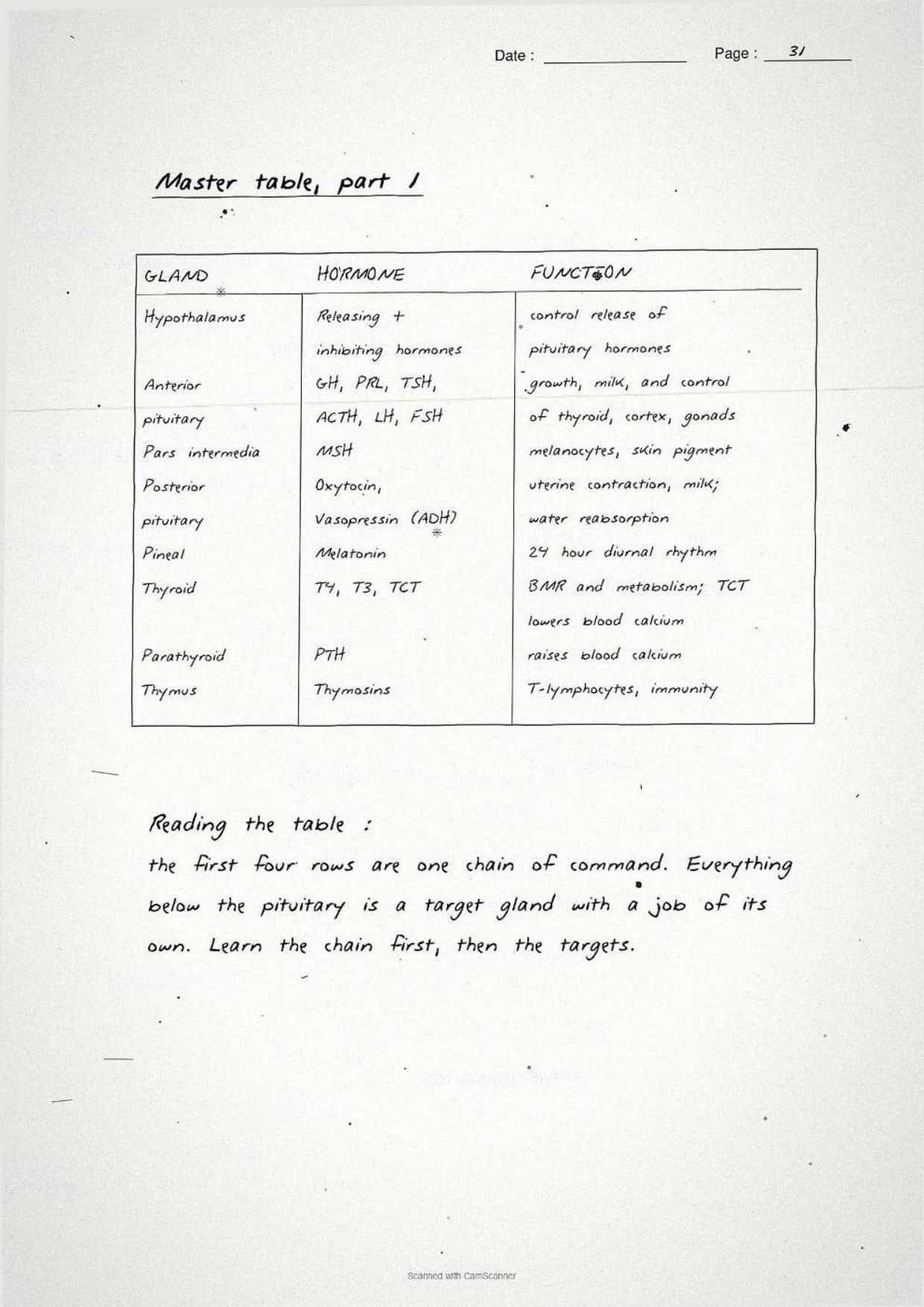
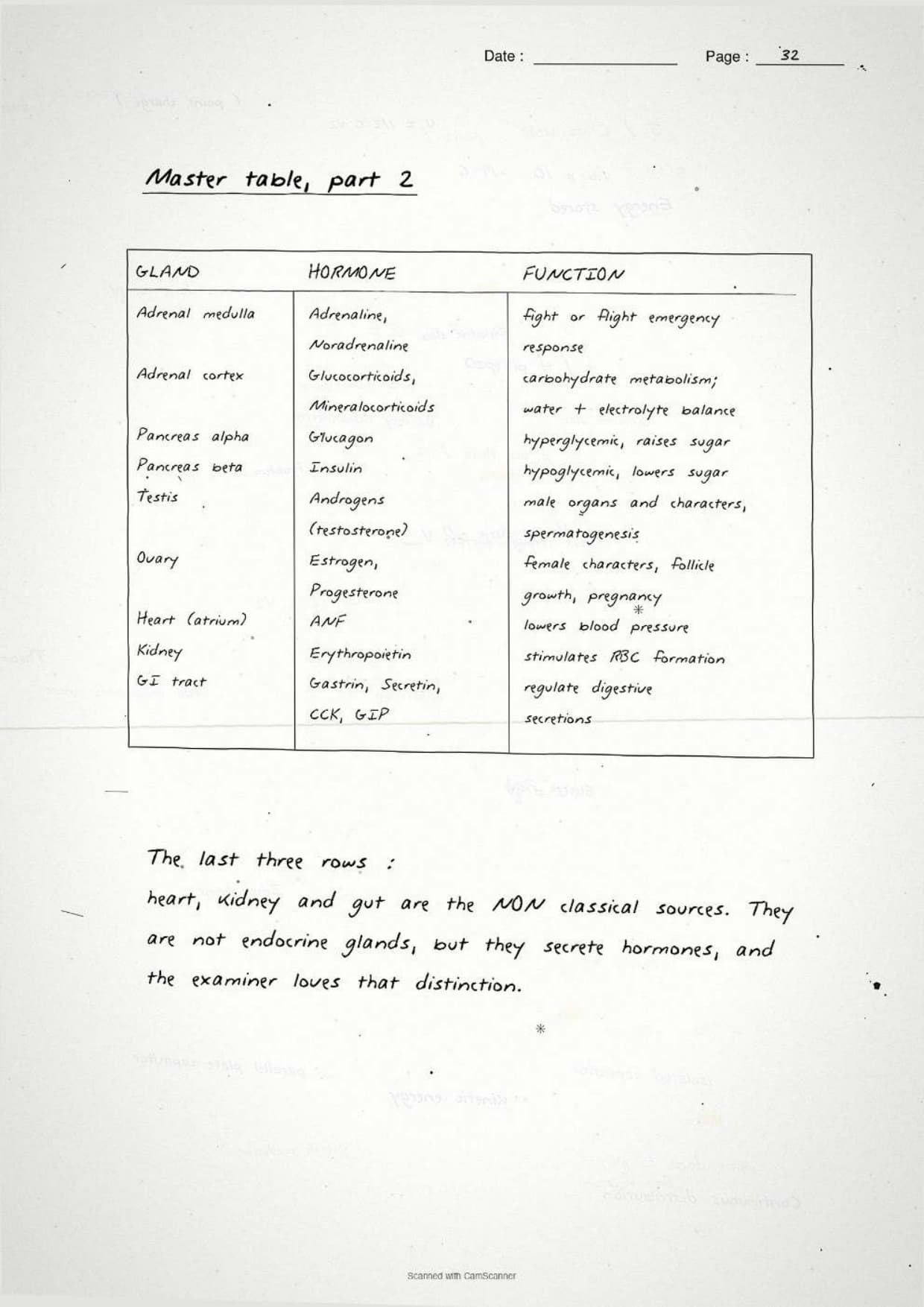
- Two full-page gland, hormone and function tables that cover the entire syllabus in one view.
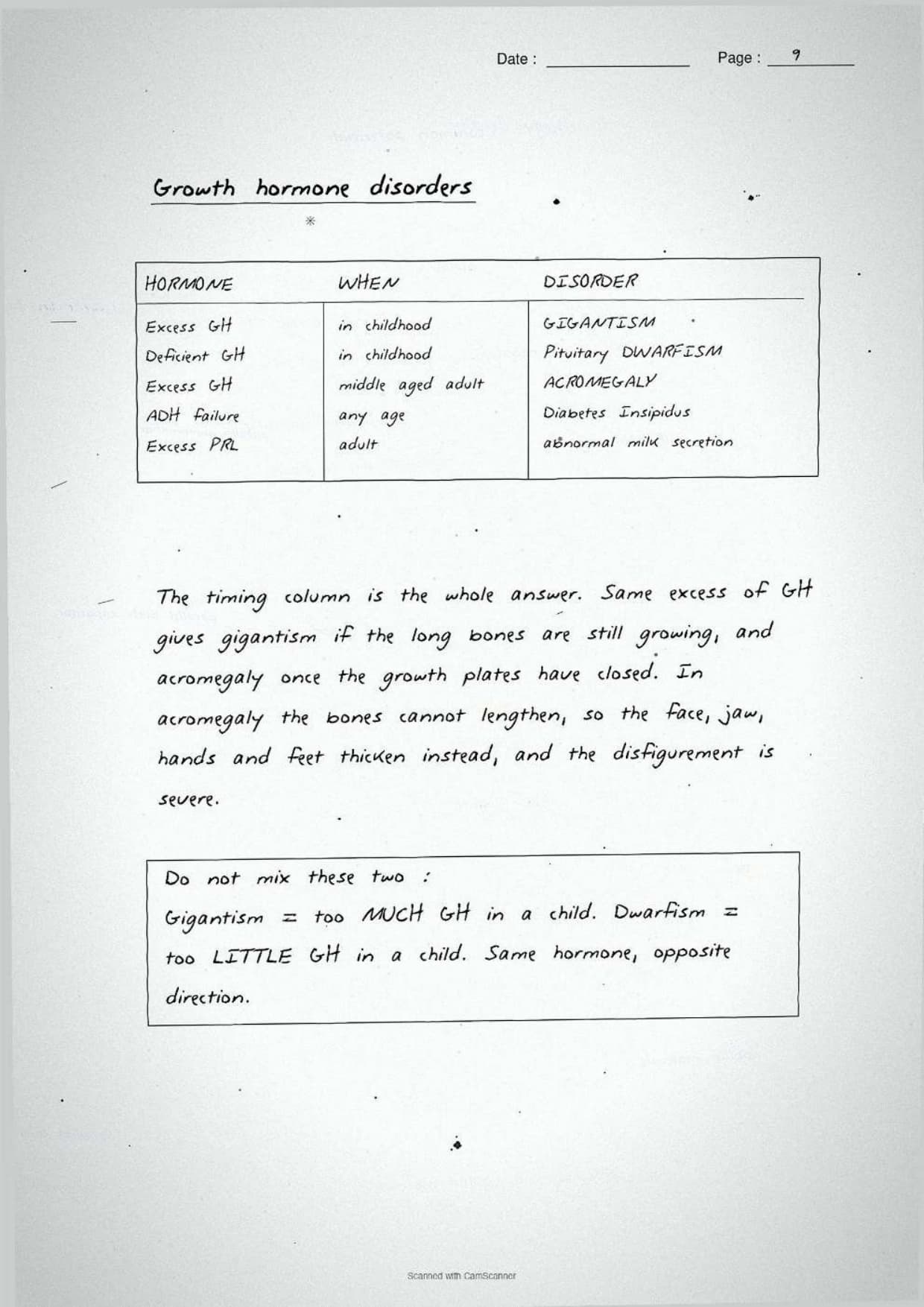
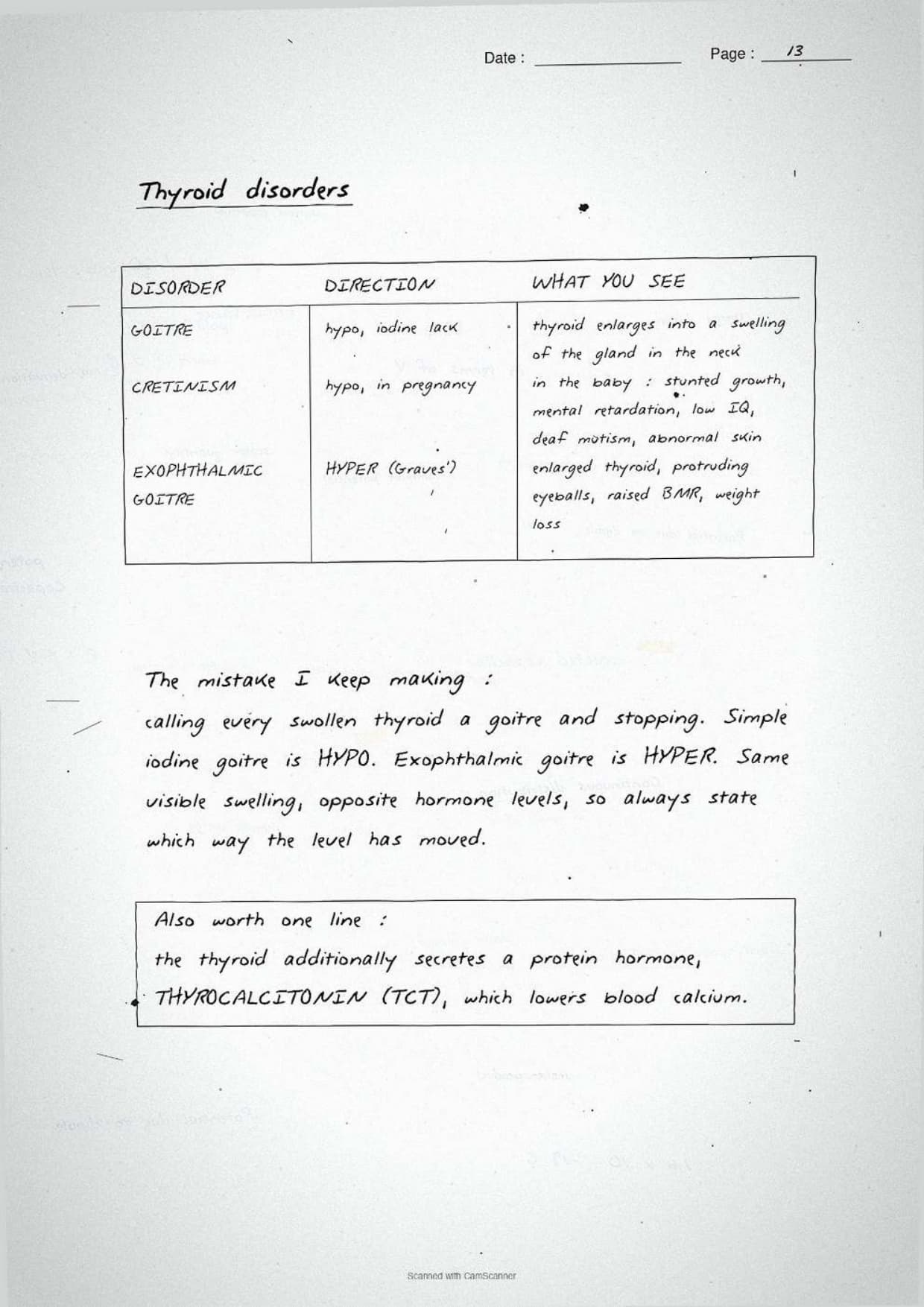
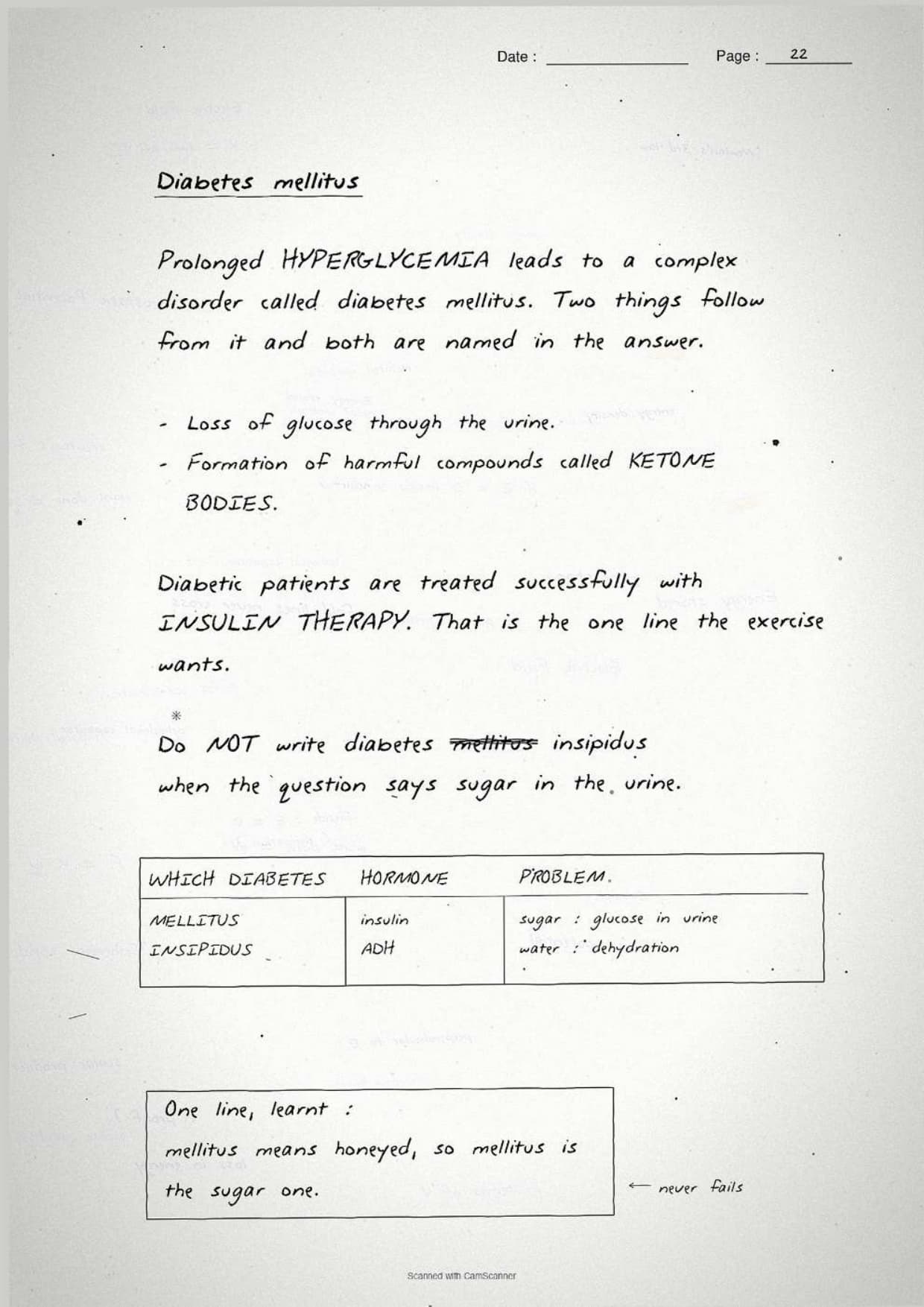
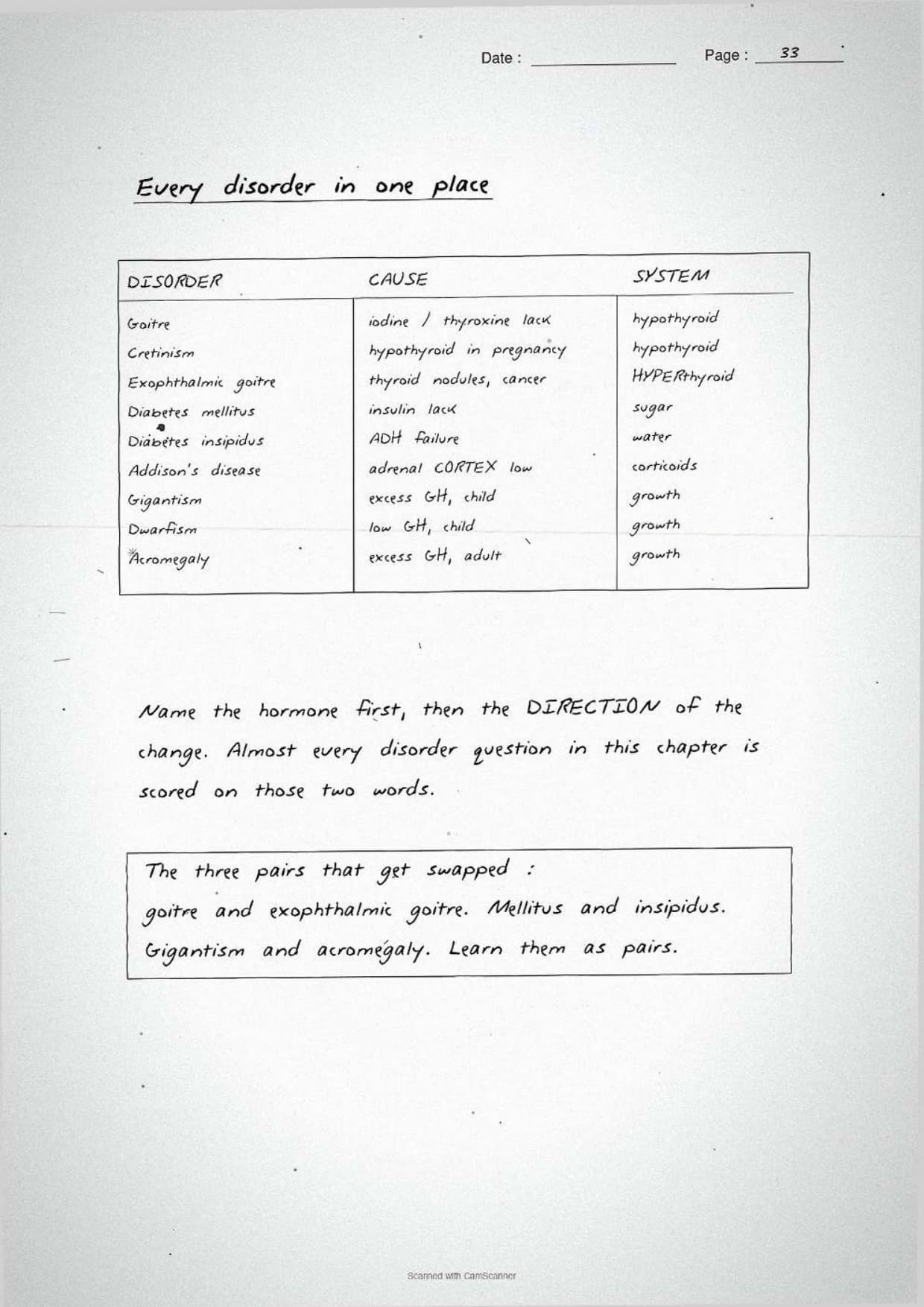
- A single disorder table listing goitre, cretinism, exophthalmic goitre, diabetes mellitus and insipidus, Addison's, gigantism, dwarfism and acromegaly.
- Pairs with the NCERT Solutions, Notes and Exemplar Solutions linked further down this page.
What Chemical Coordination and Integration Handwritten Notes Cover
The 35 pages follow the NCERT order and give each gland its own page, so students revise one gland at a time instead of scanning a wall of text. New terms are written in capitals, every definition is boxed, and the last three pages are pure recap.
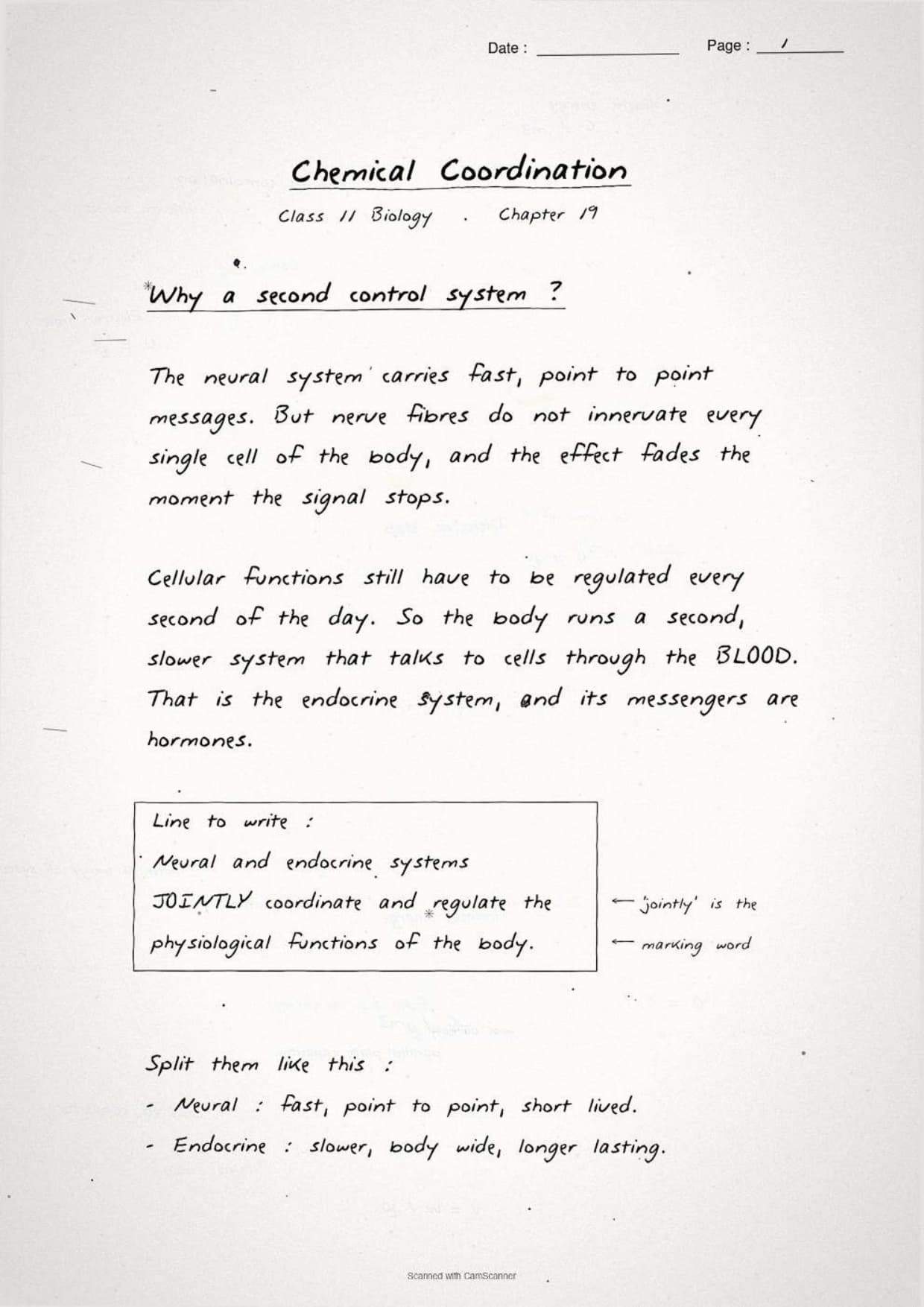
- Why a second system: the neural route is fast and point to point, the endocrine route is slower, body wide and longer lasting.
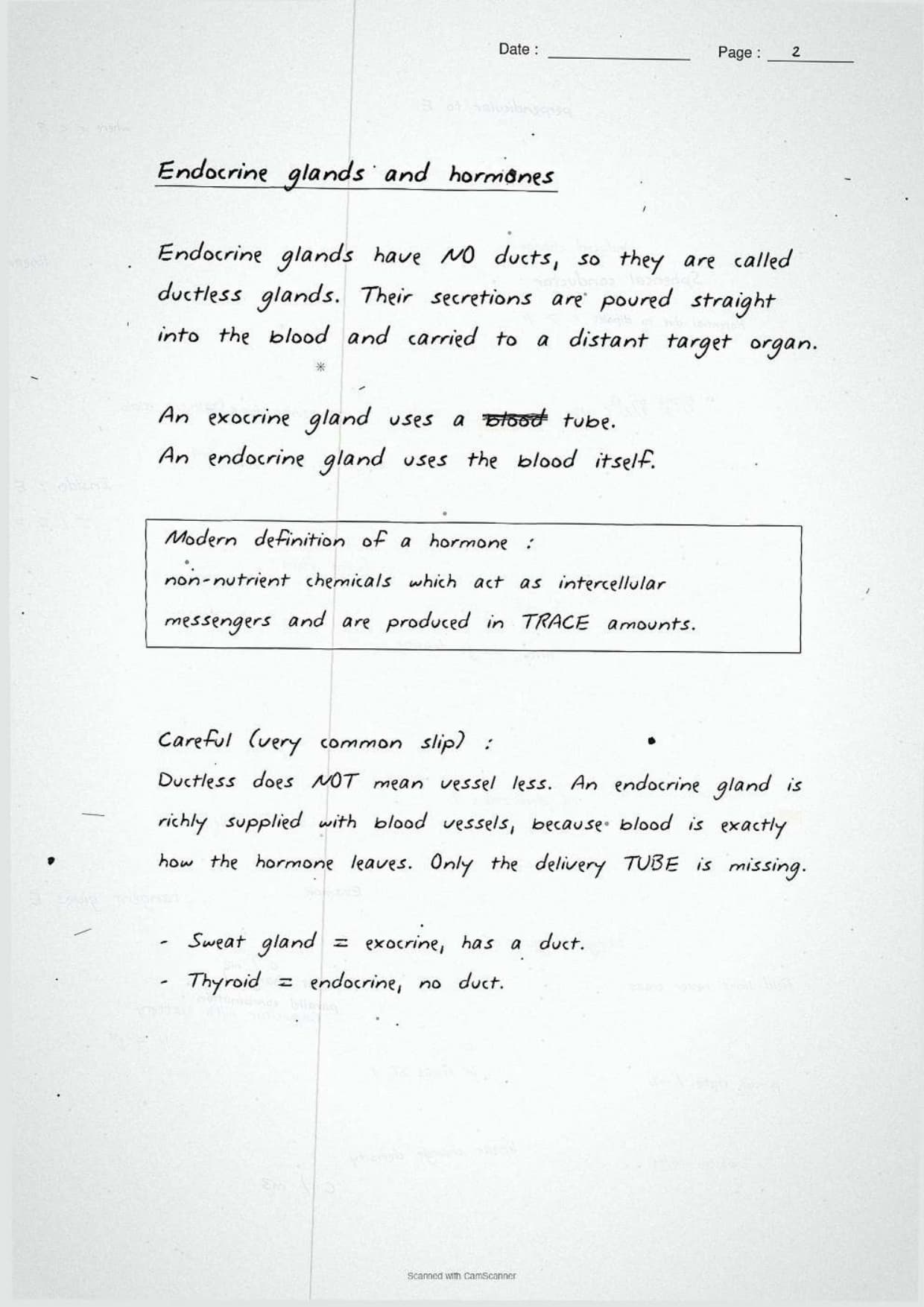
- Endocrine glands and hormones: ductless glands, and the modern definition of a hormone as a non-nutrient intercellular messenger made in trace amounts.
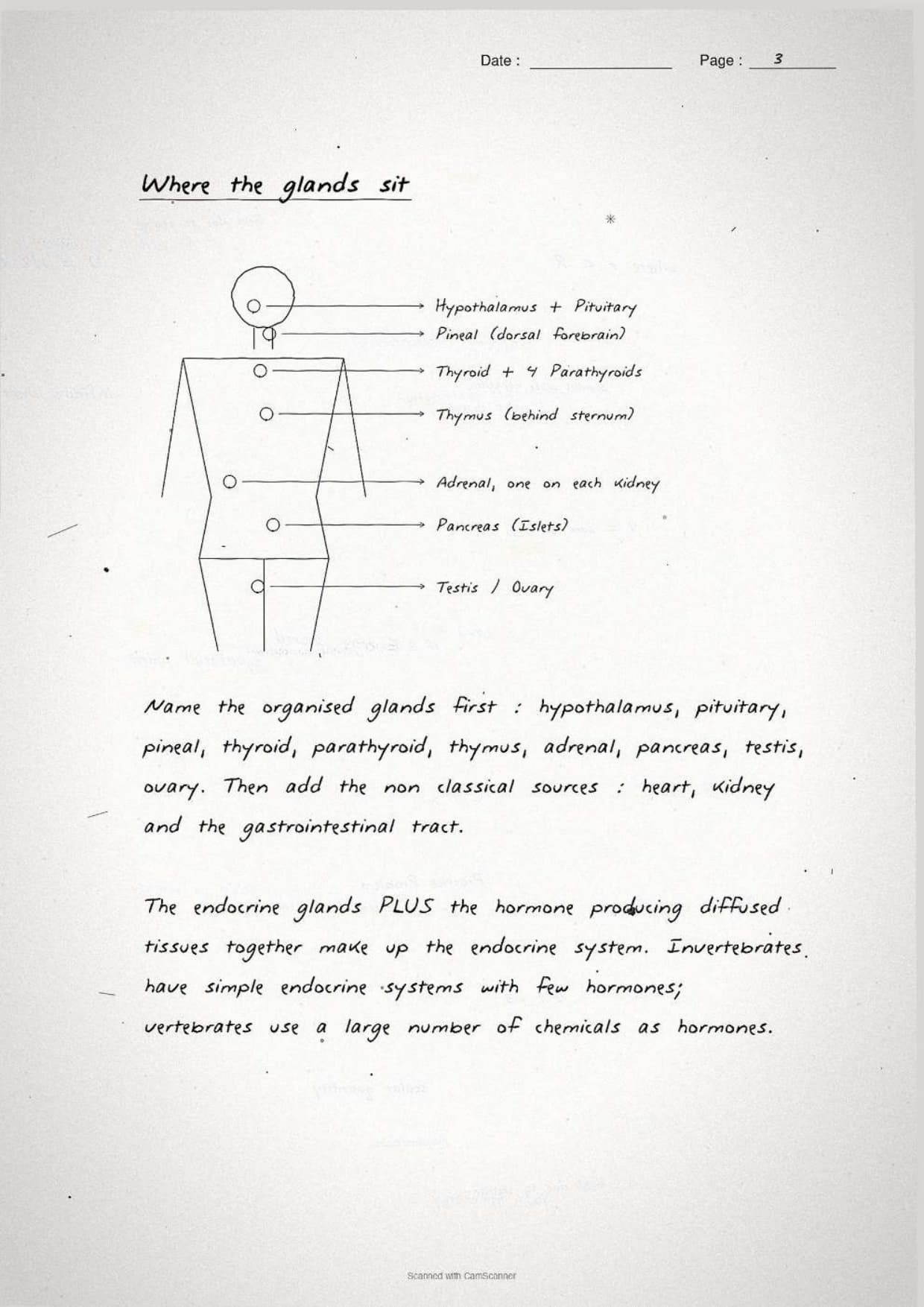
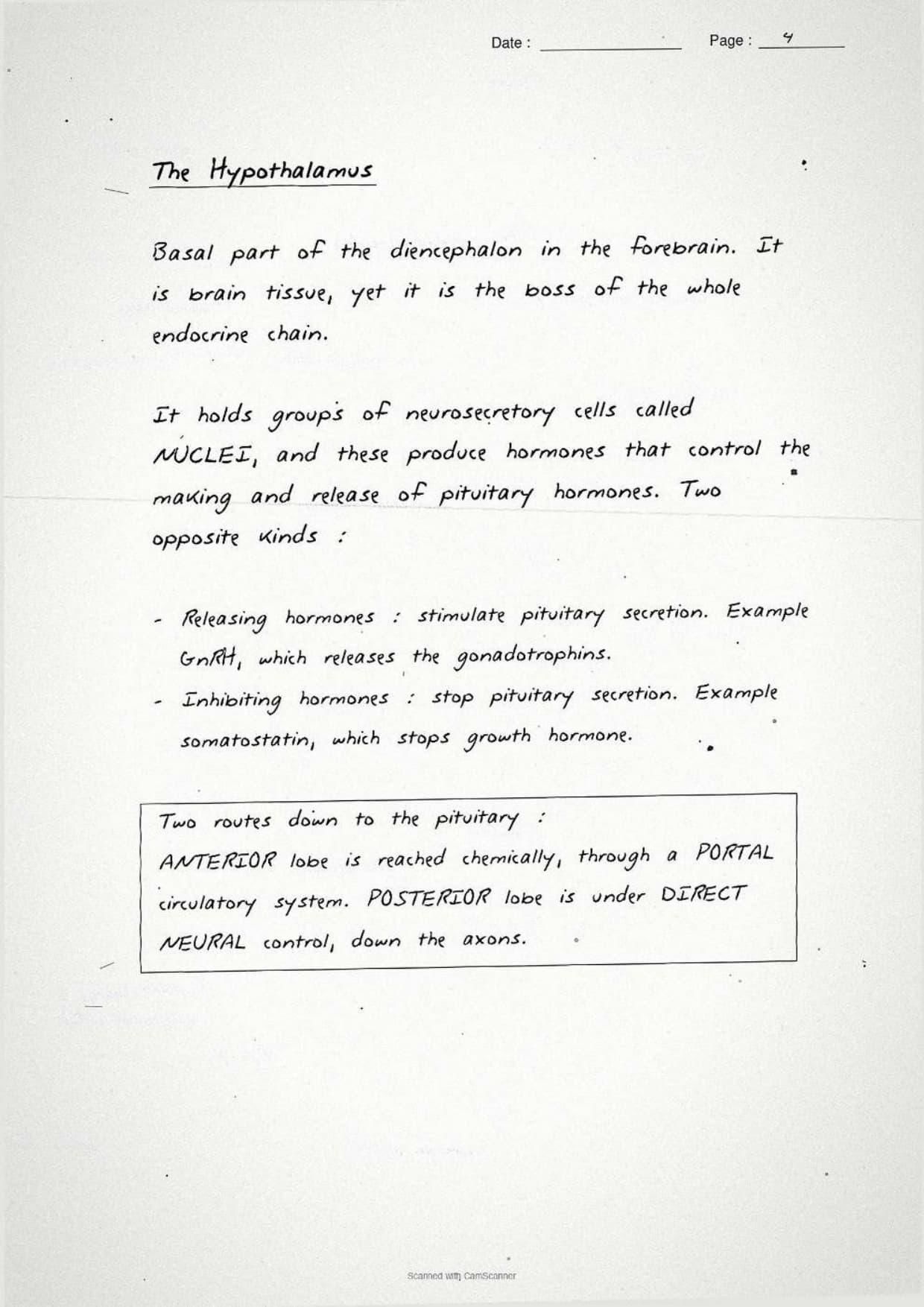
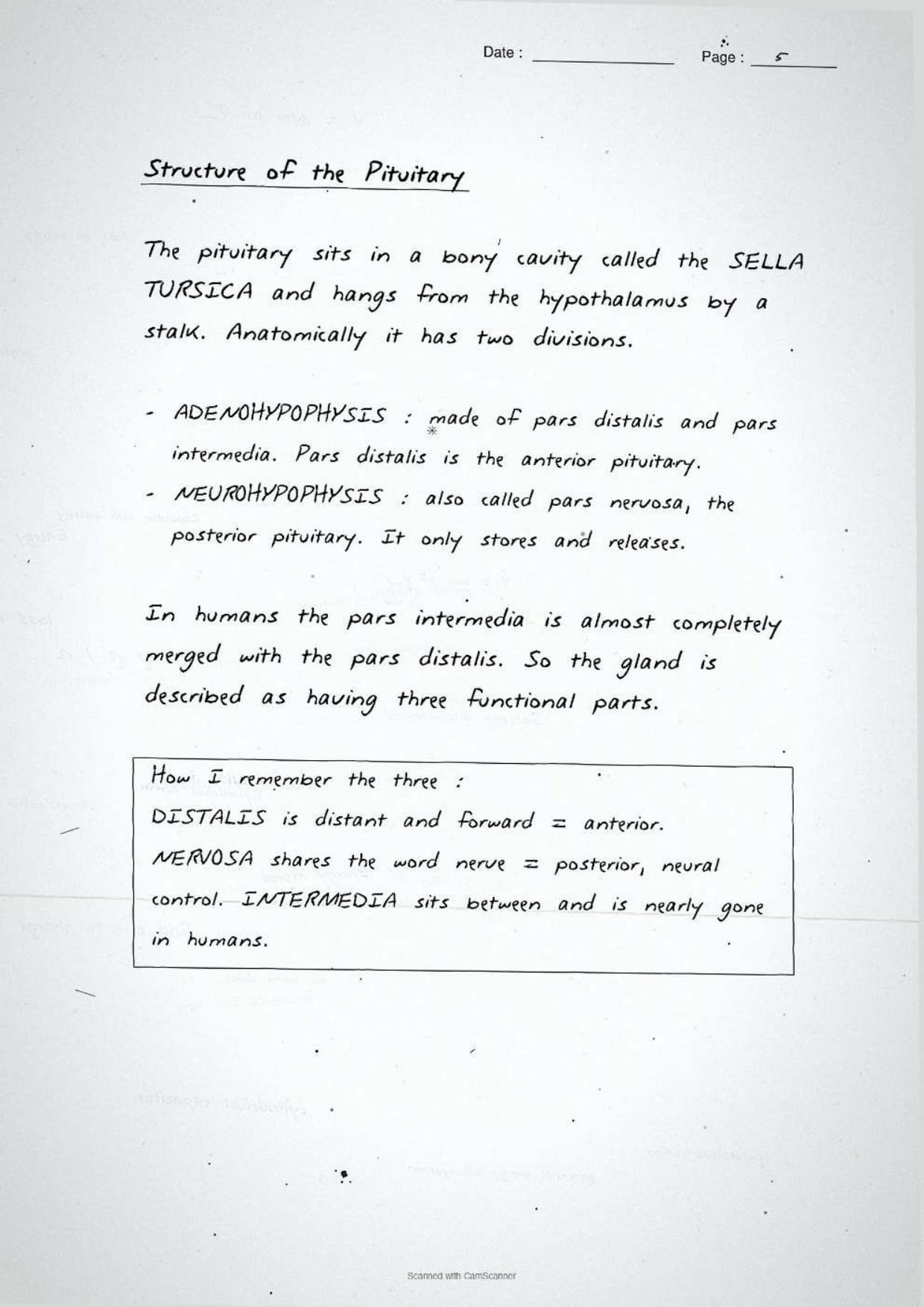
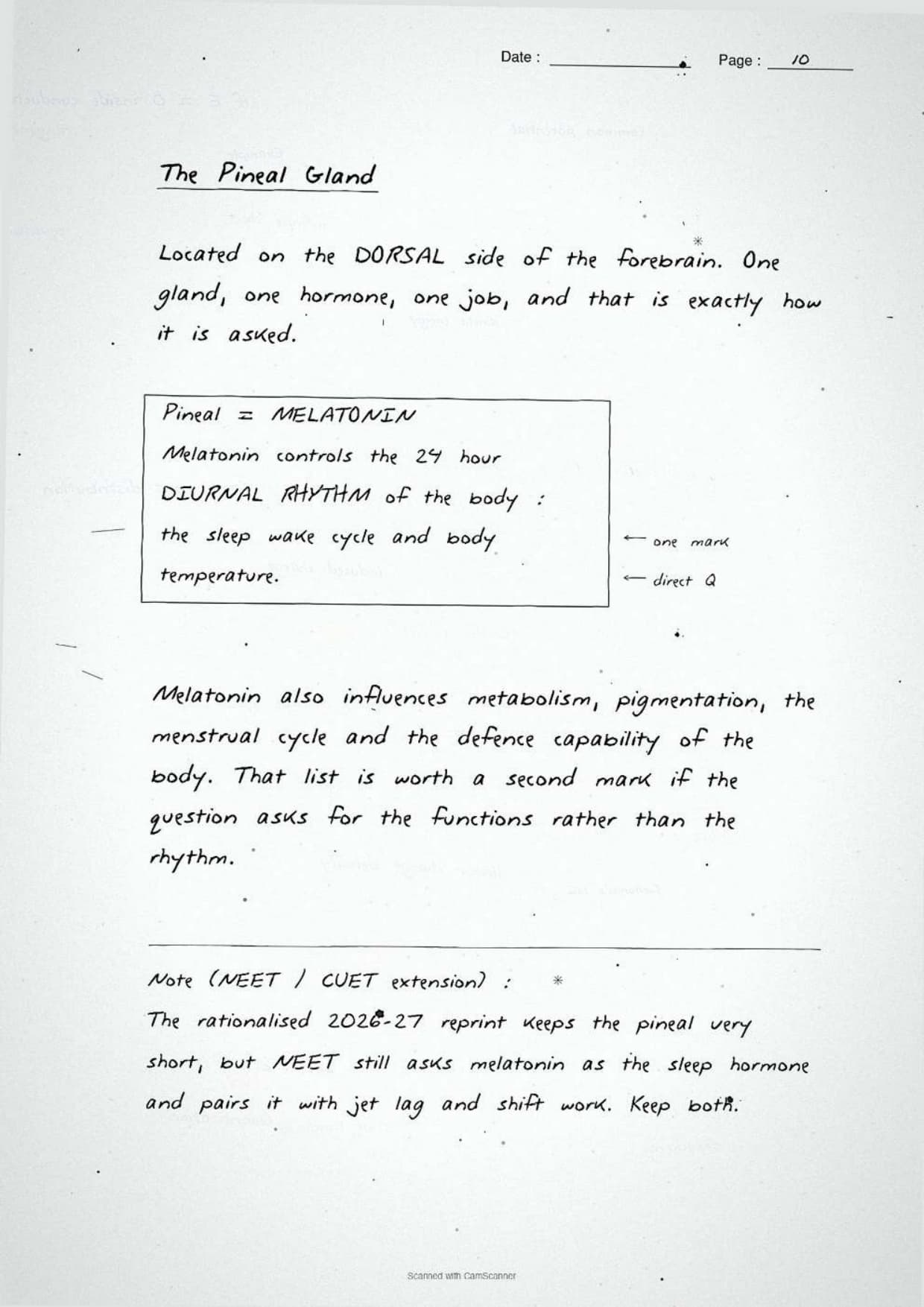
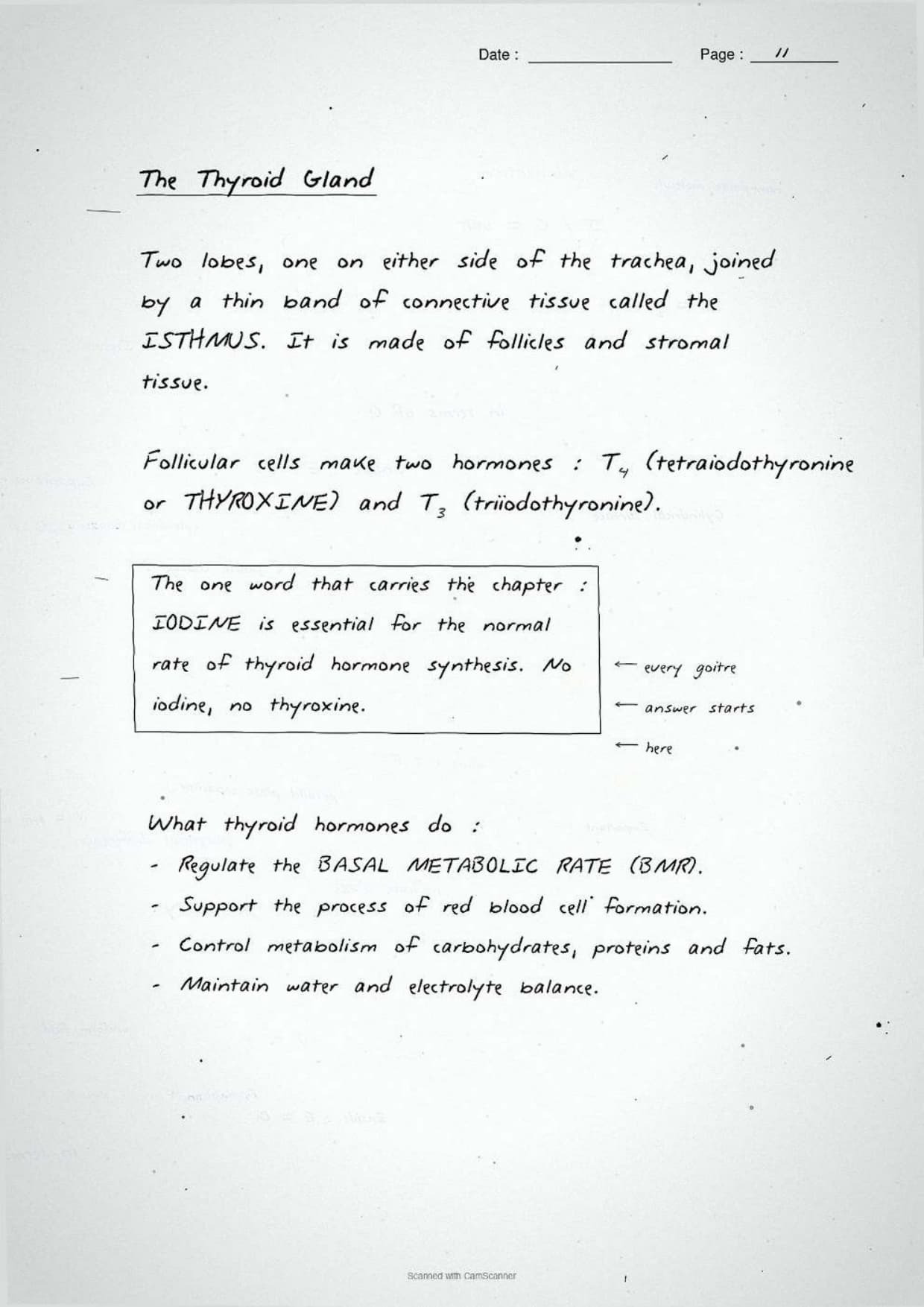
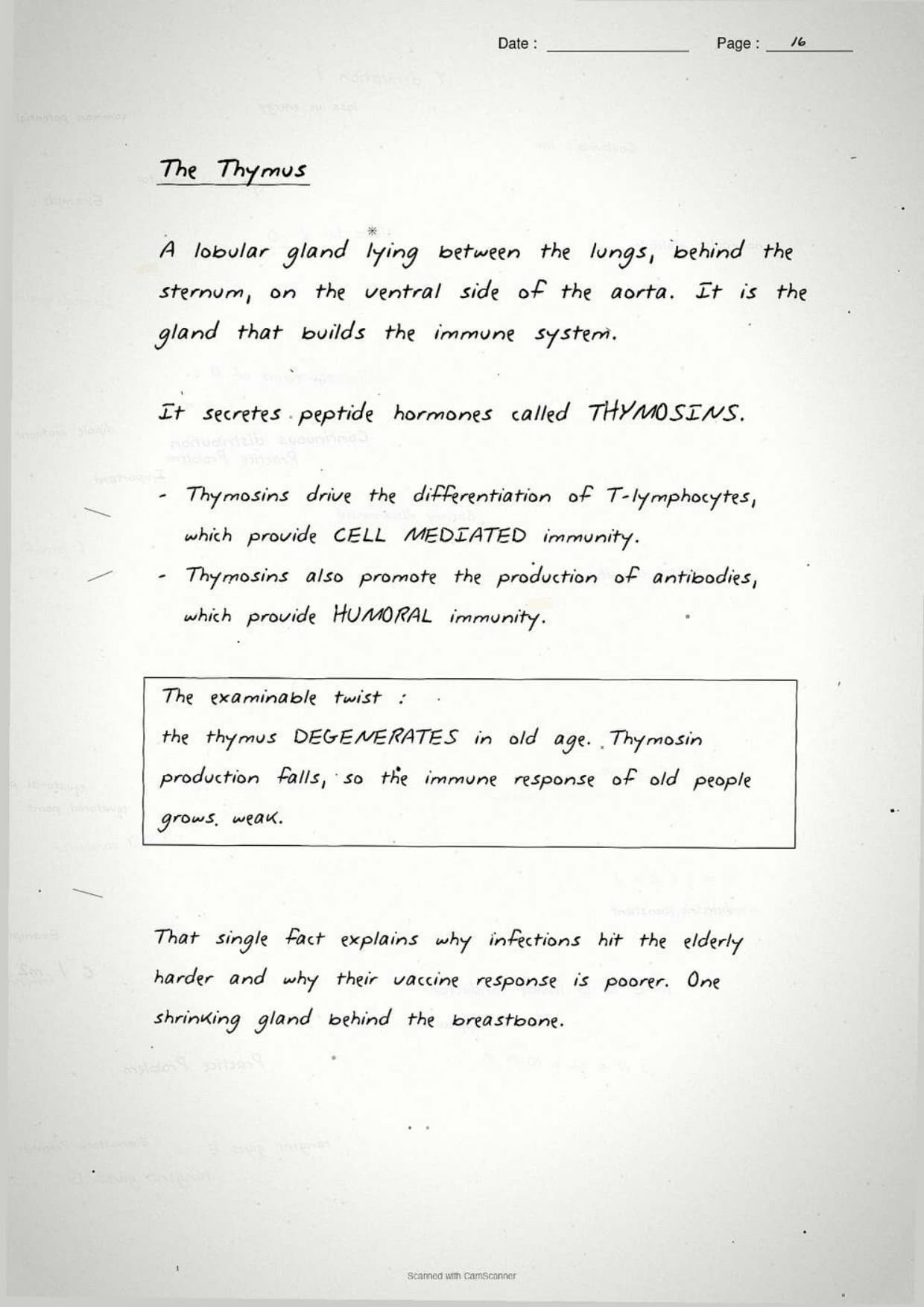
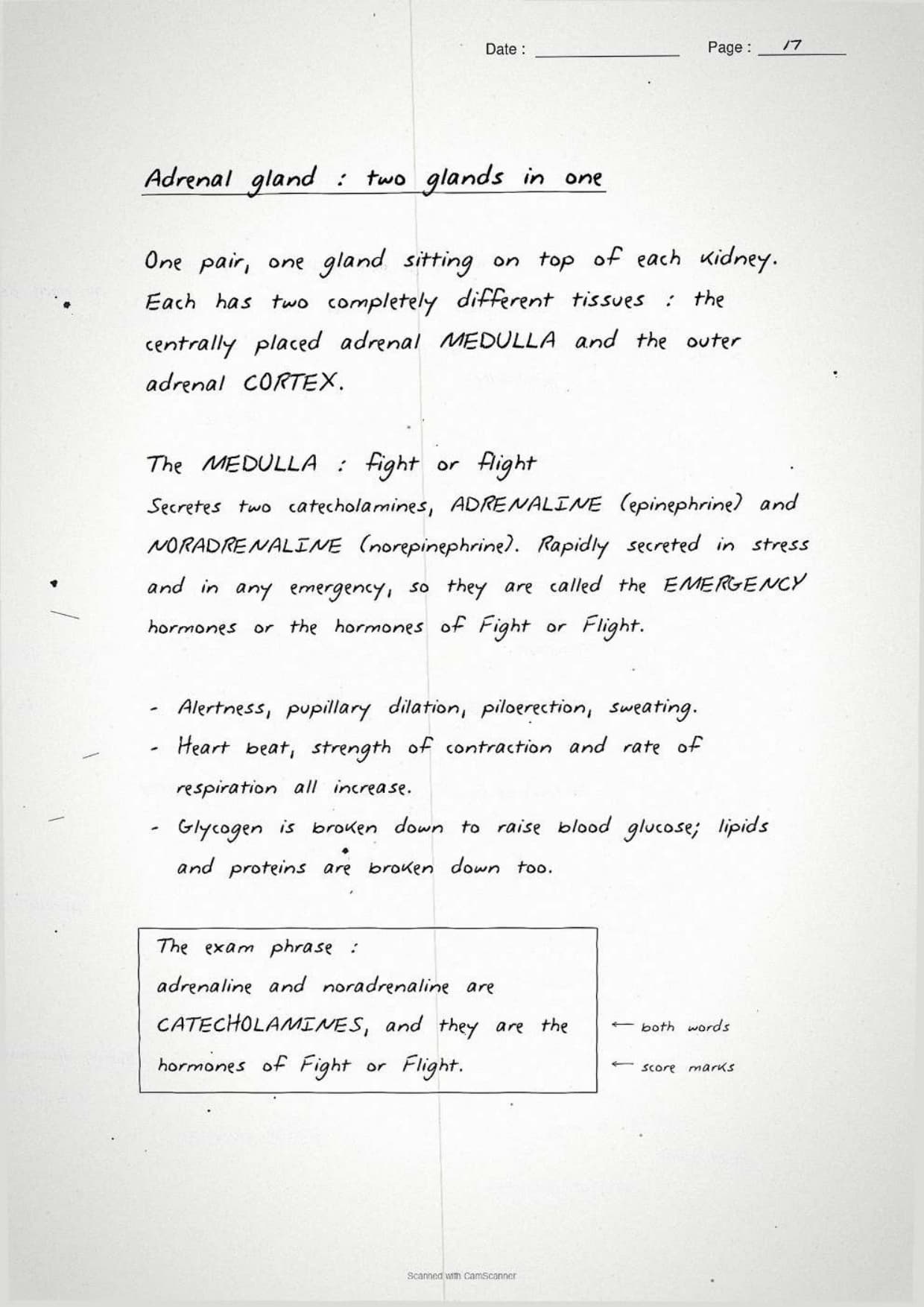
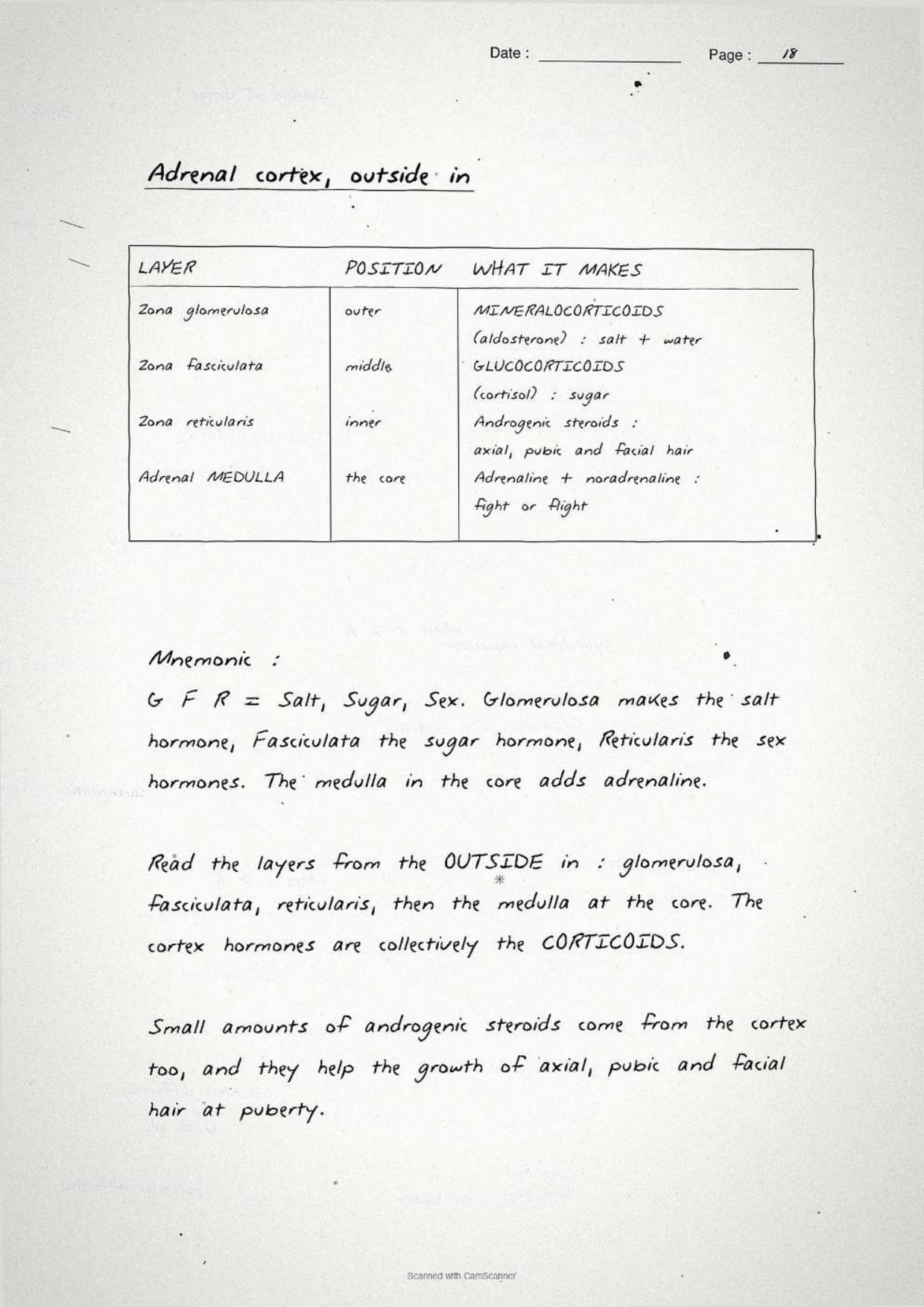
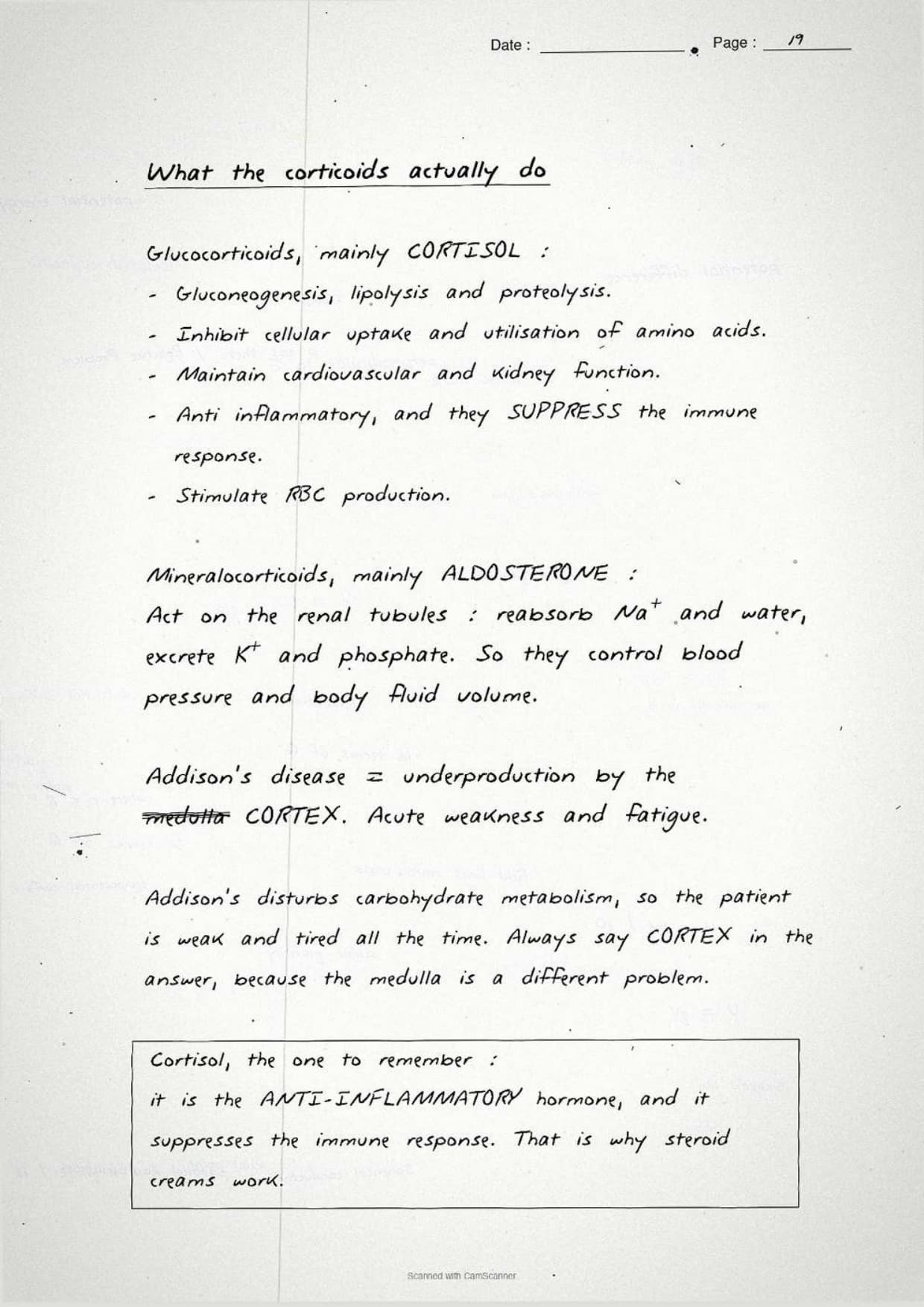
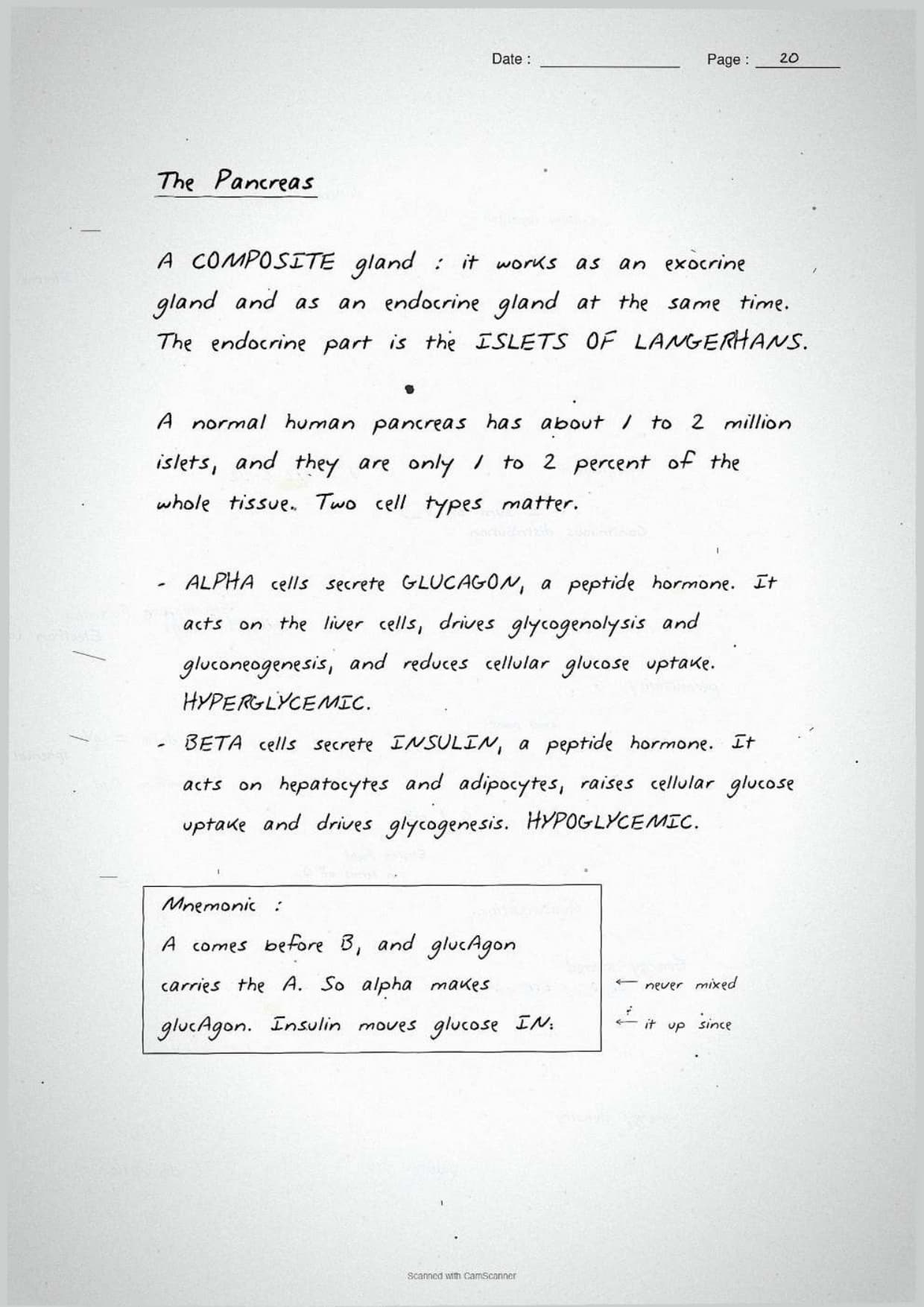
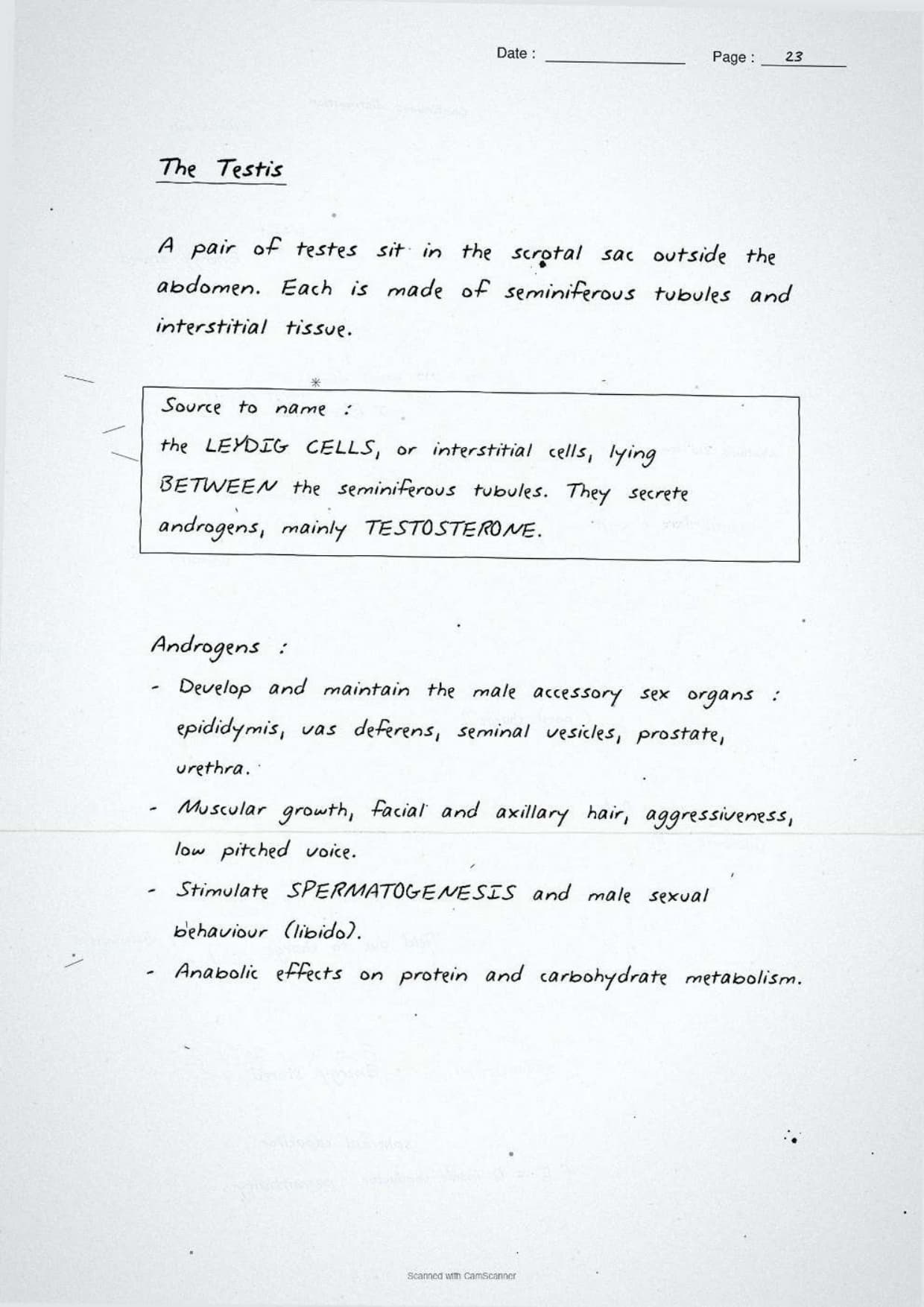
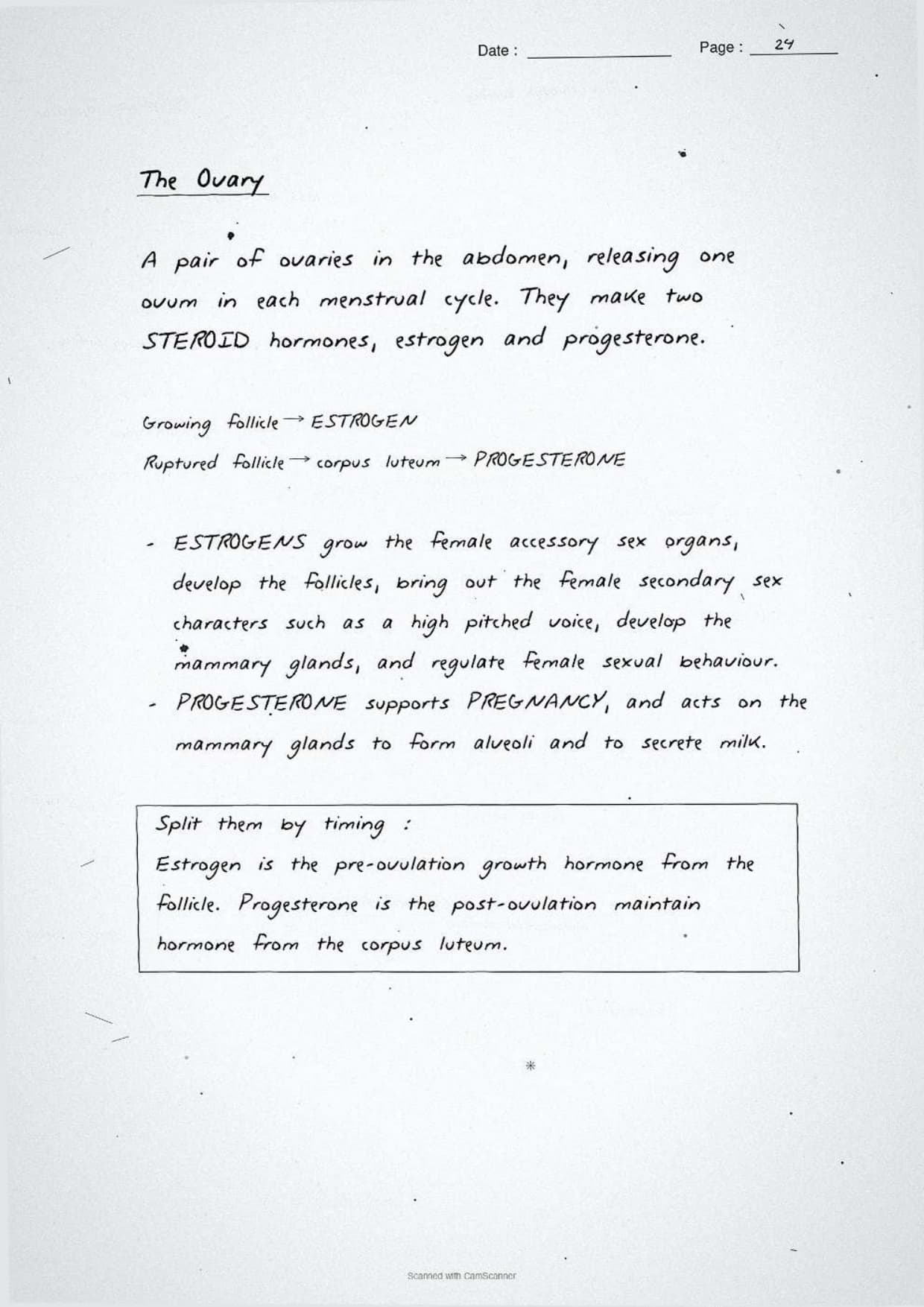
- Gland by gland: hypothalamus, pituitary with its adenohypophysis and neurohypophysis, pineal, thyroid, parathyroid, thymus, adrenal cortex and medulla, pancreas, testis and ovary.
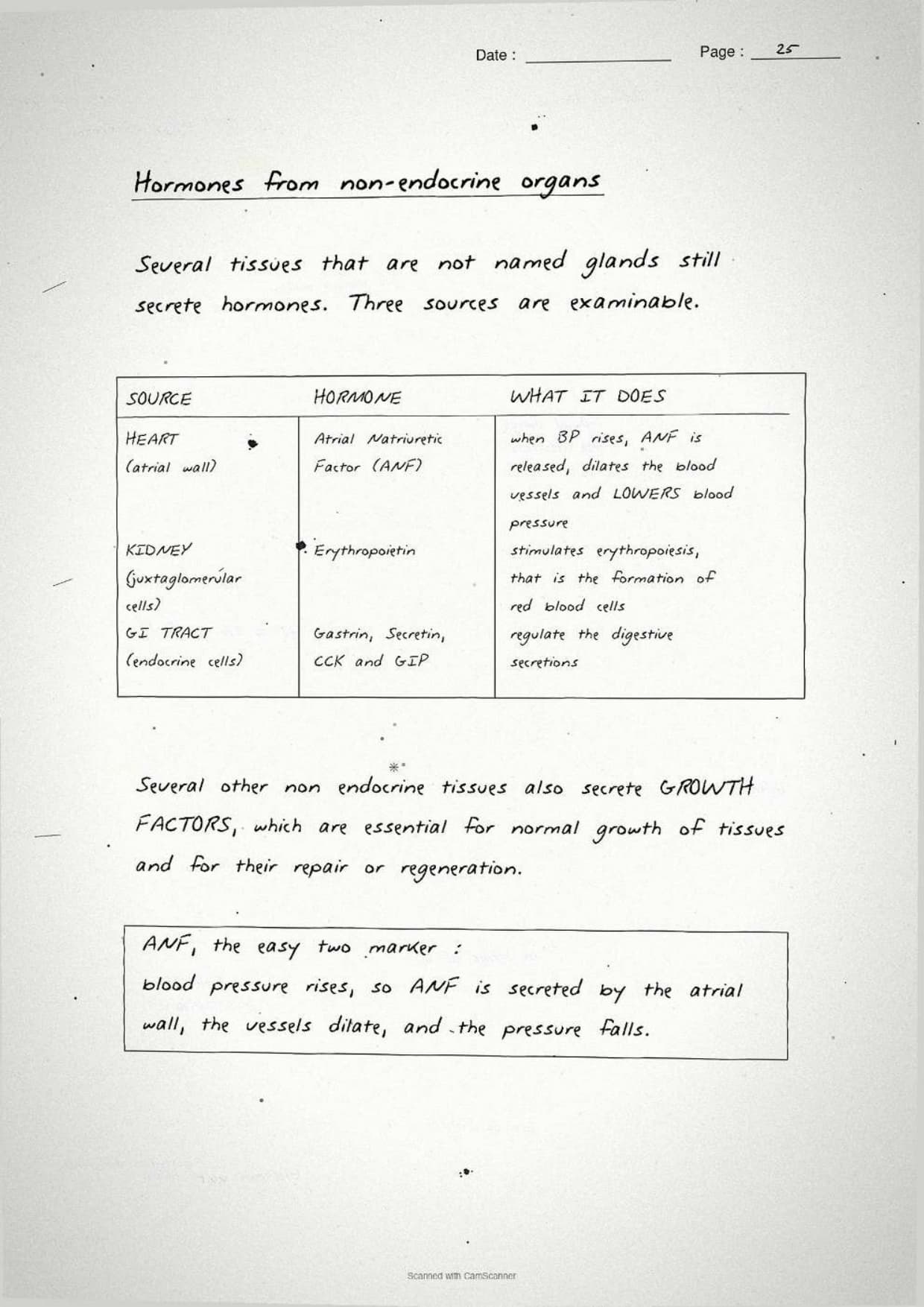
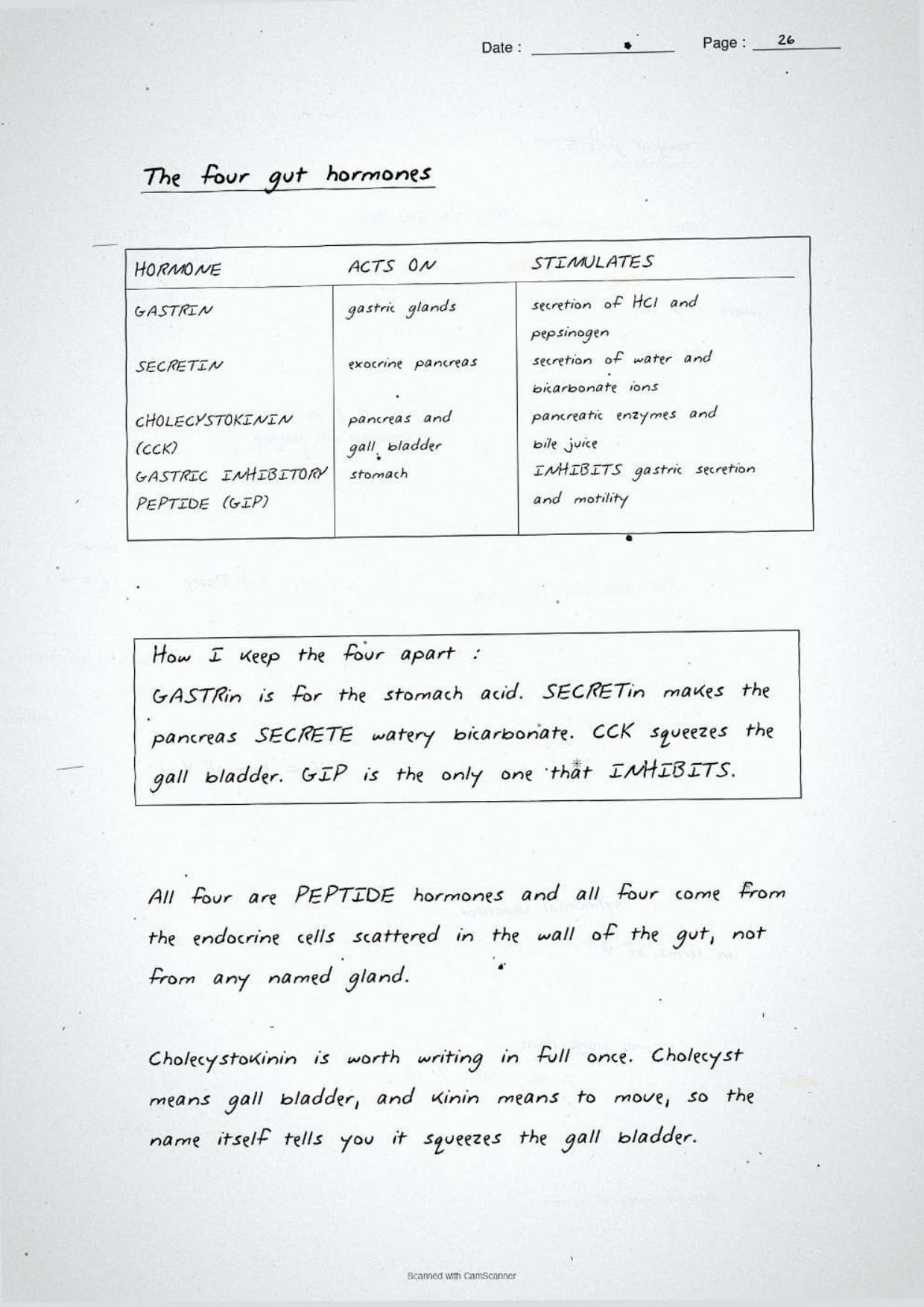
- Non-classical sources: atrial natriuretic factor from the heart, erythropoietin from the kidney, and the four gut hormones gastrin, secretin, CCK and GIP.
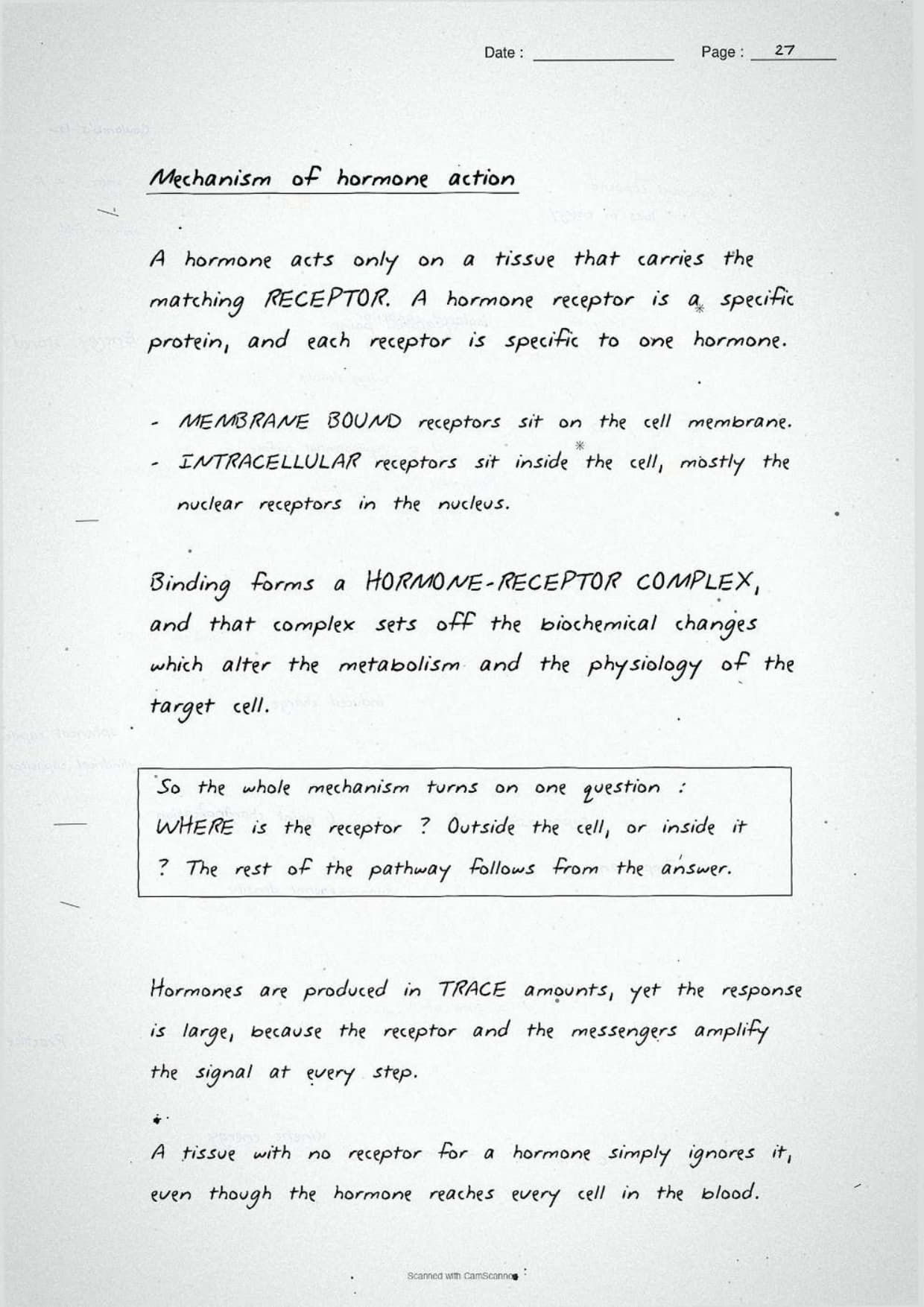
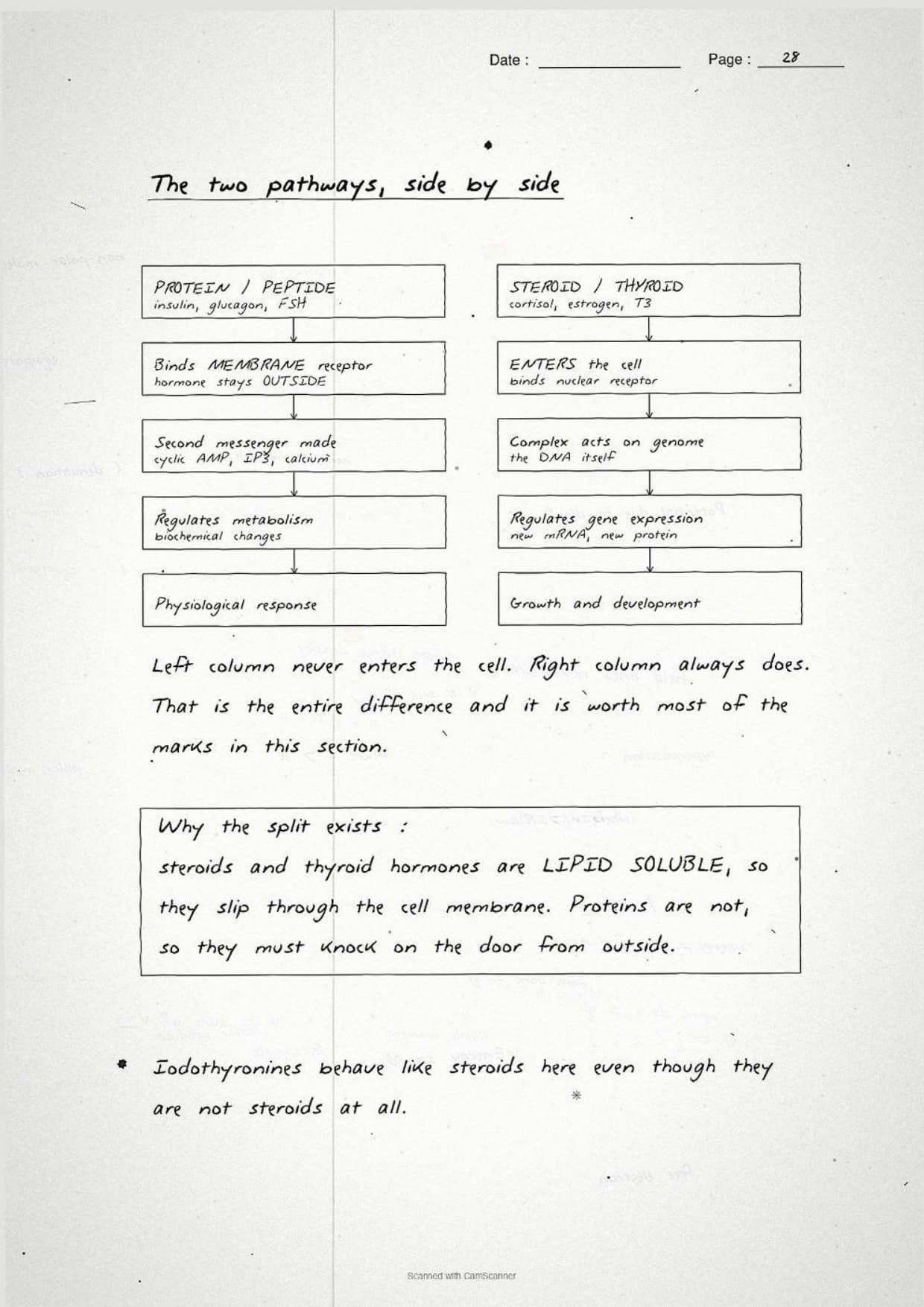
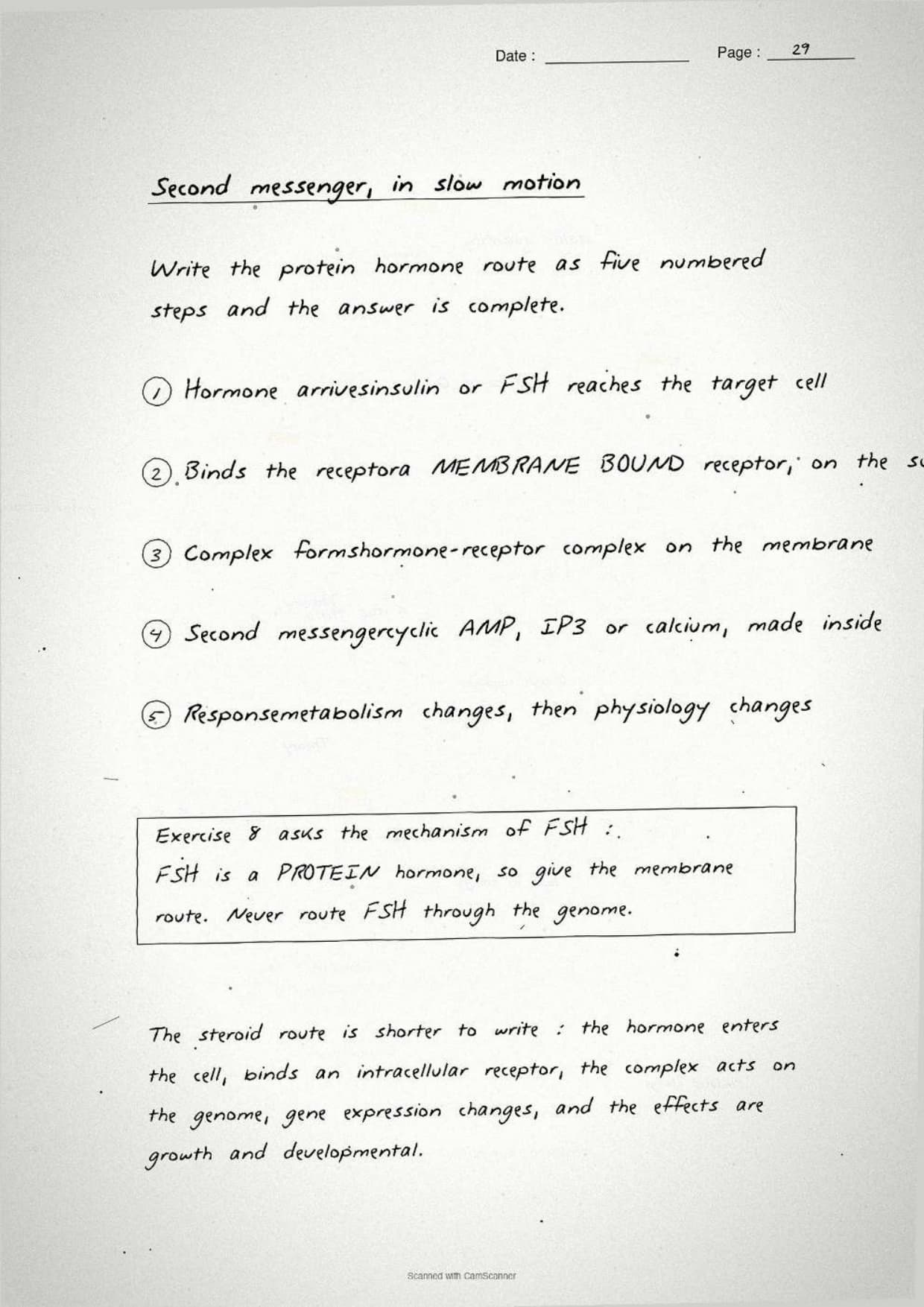
- Mechanism of hormone action: the membrane and second messenger route for protein hormones, the genomic route for steroids.
- Disorders: one page listing every disorder with its cause and its direction.
The pituitary and adrenal detail carries a NEET and CUET extension flag, since those papers push further into the layers and the feedback loop than the board paper does.
Key Diagrams and Terms in Chemical Coordination and Integration Notes
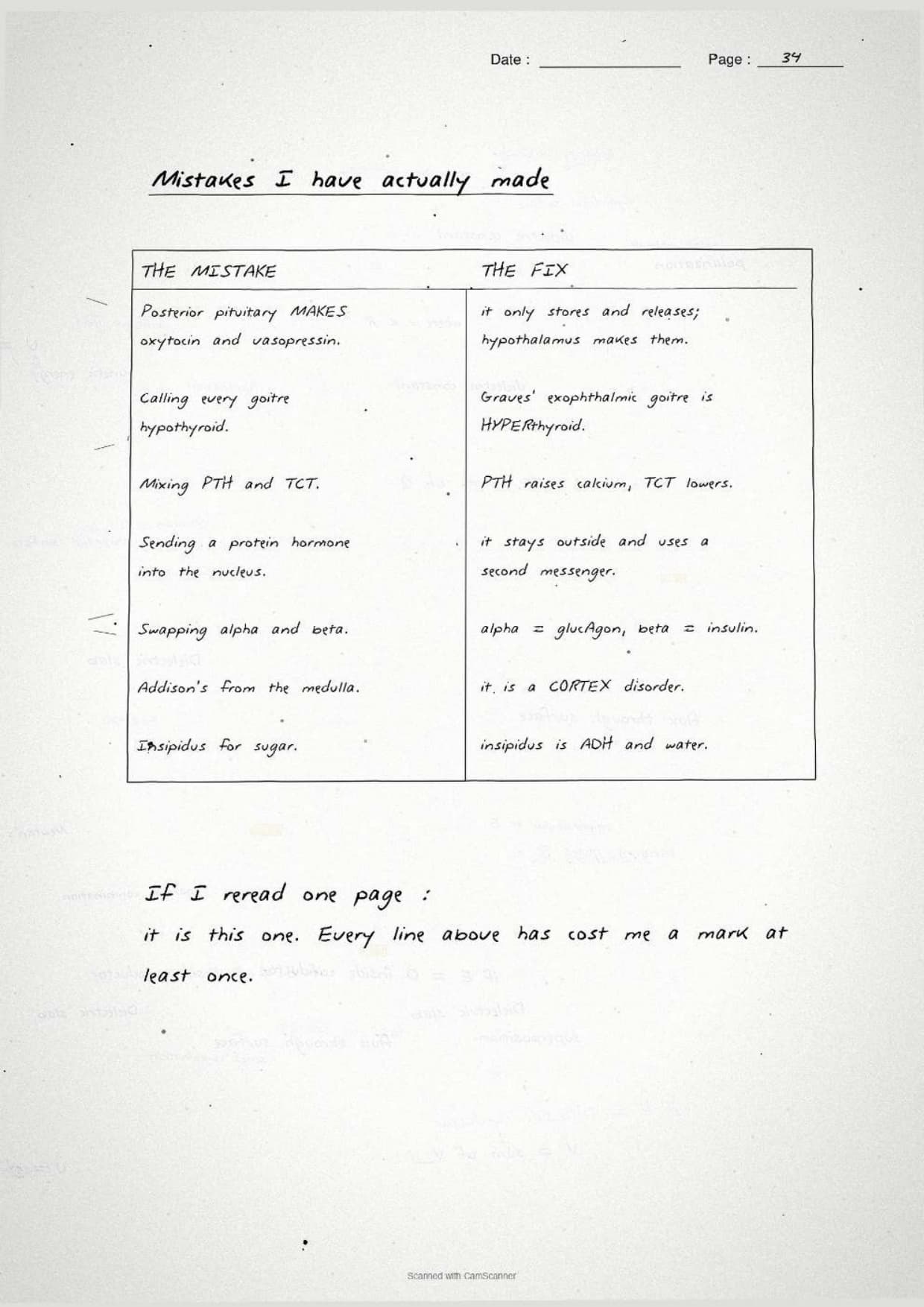
Most of the lost marks here come from lookalike pairs. The boxed table below is the block the notes call the swap trap, because examiners rewrite these as one-mark questions every year.
| Term | How the notes define it |
|---|---|
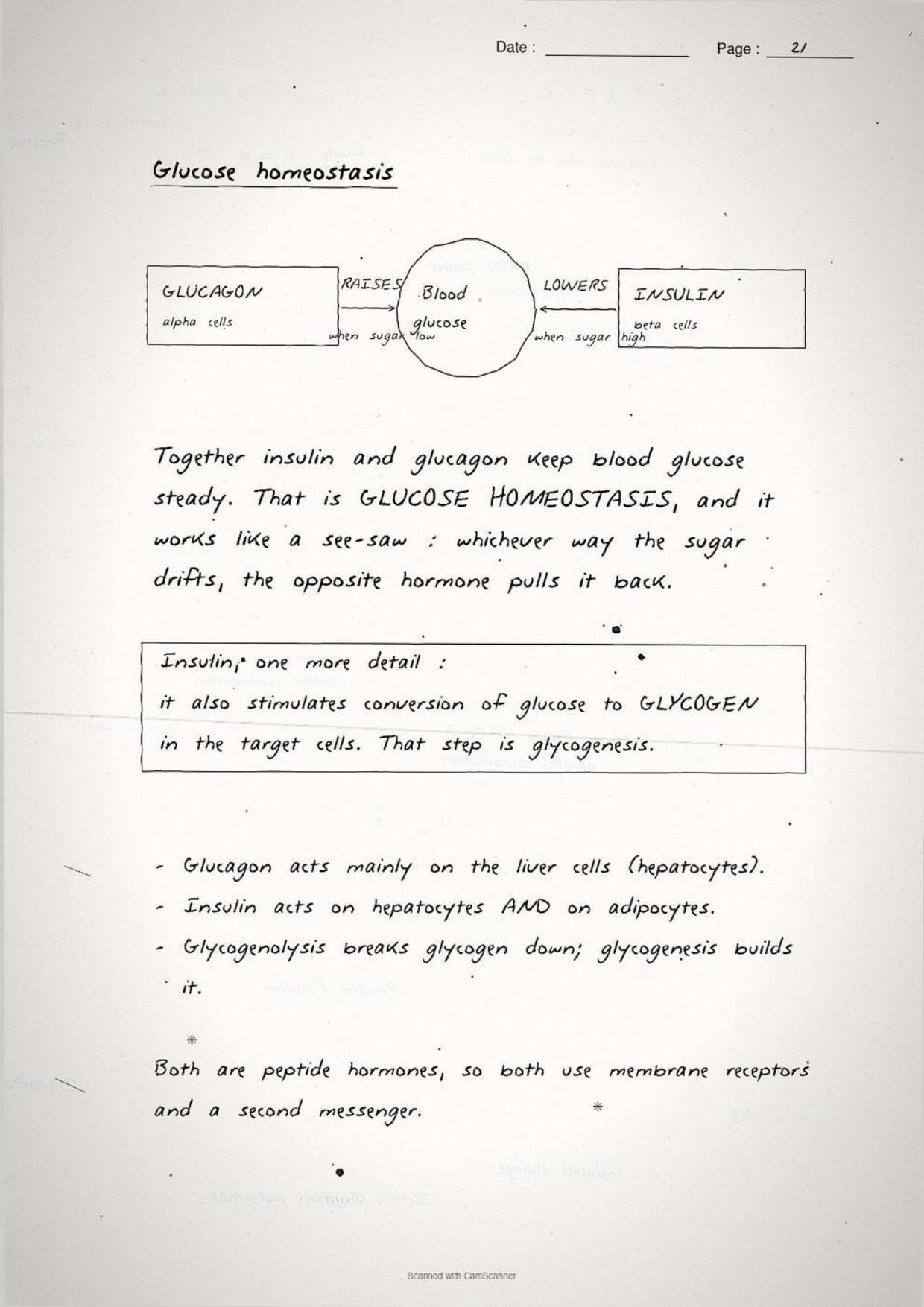
| Islets of Langerhans | The endocrine part of the pancreas; alpha cells make glucagon, beta cells make insulin |
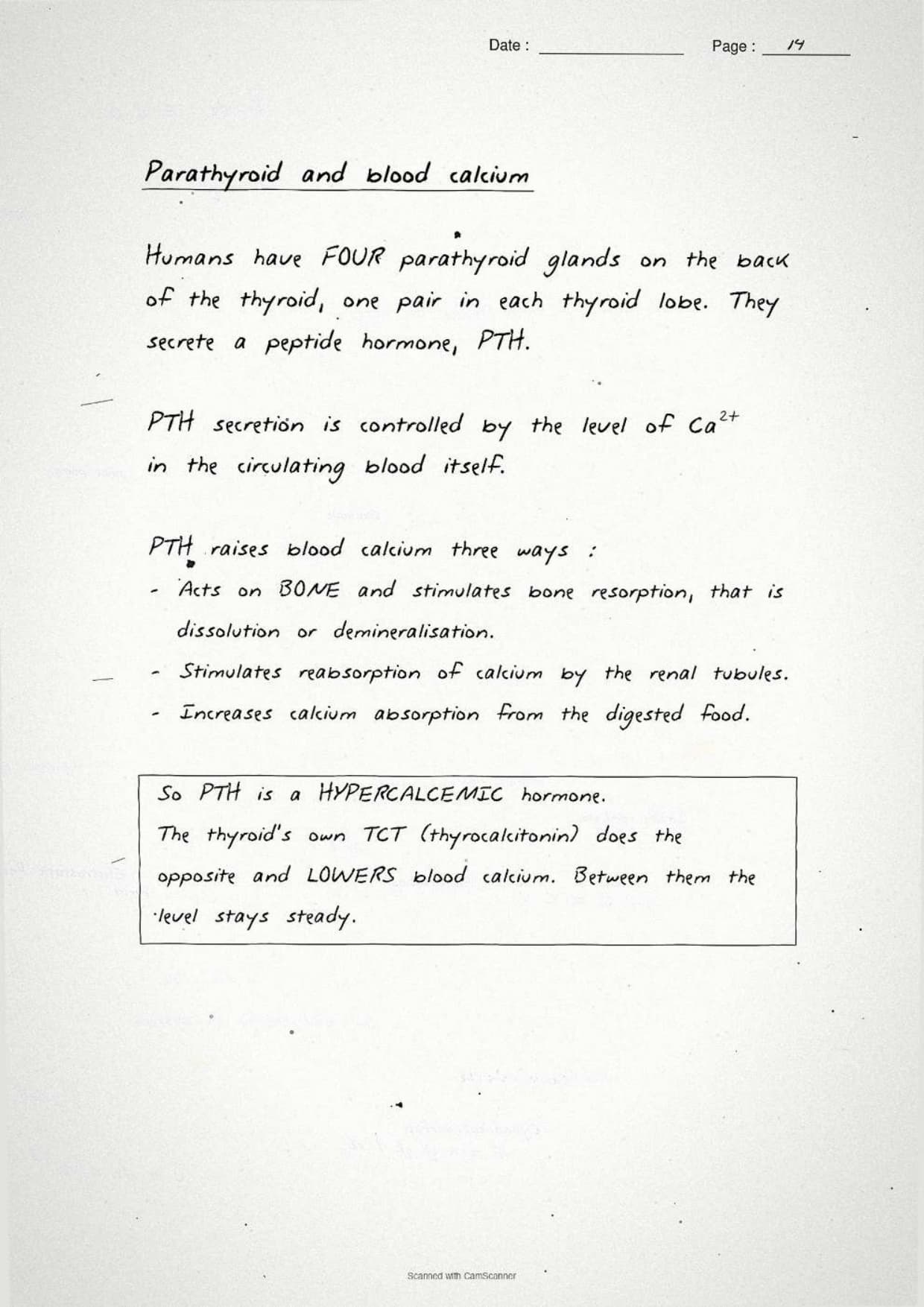
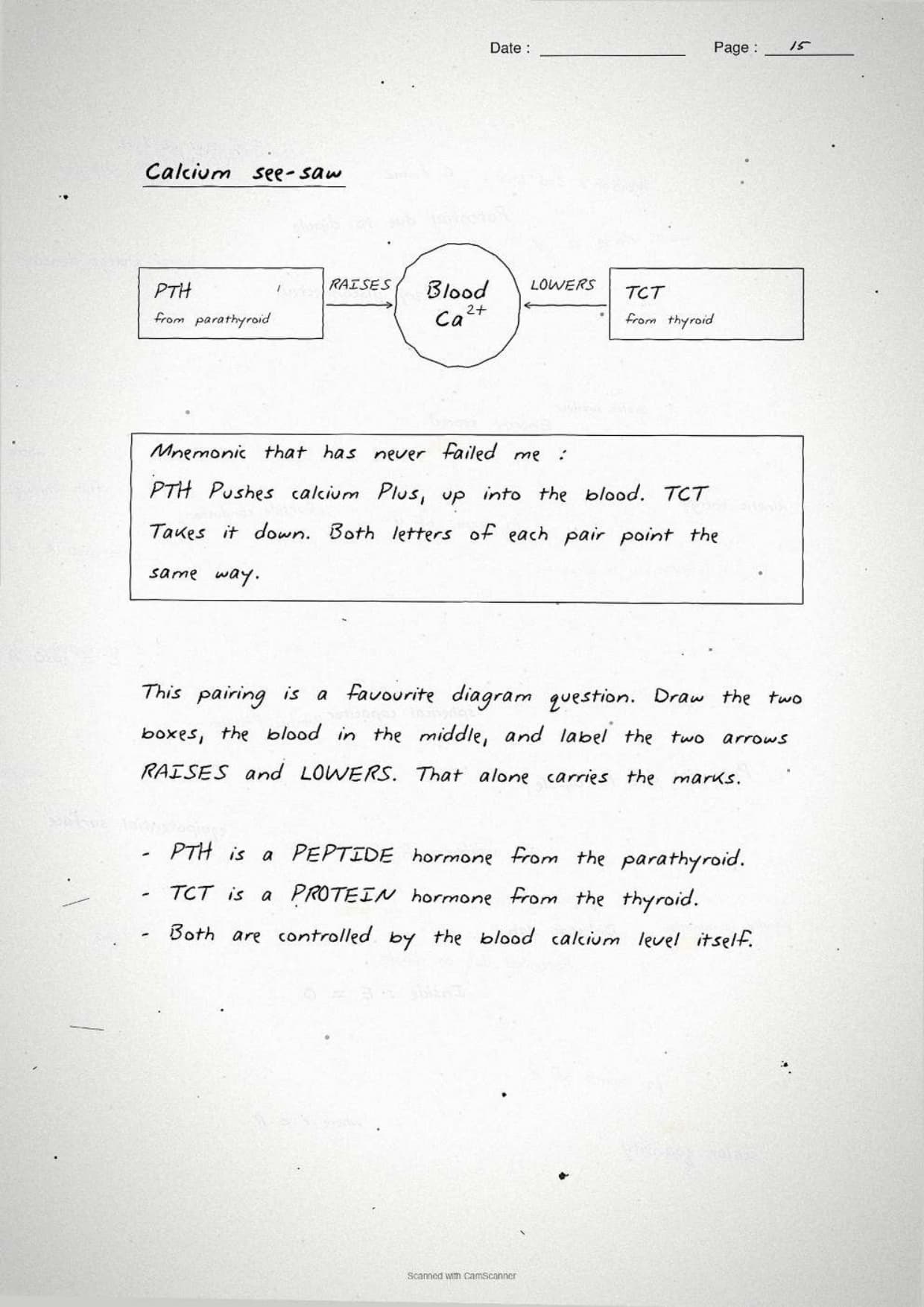
| PTH | Hypercalcemic hormone from the parathyroid; raises blood Ca2+ from bone, tubules and food |
| TCT | Thyrocalcitonin from the thyroid; lowers blood Ca2+, the exact opposite of PTH |
| Catecholamines | Adrenaline and noradrenaline from the adrenal medulla, the fight or flight hormones |
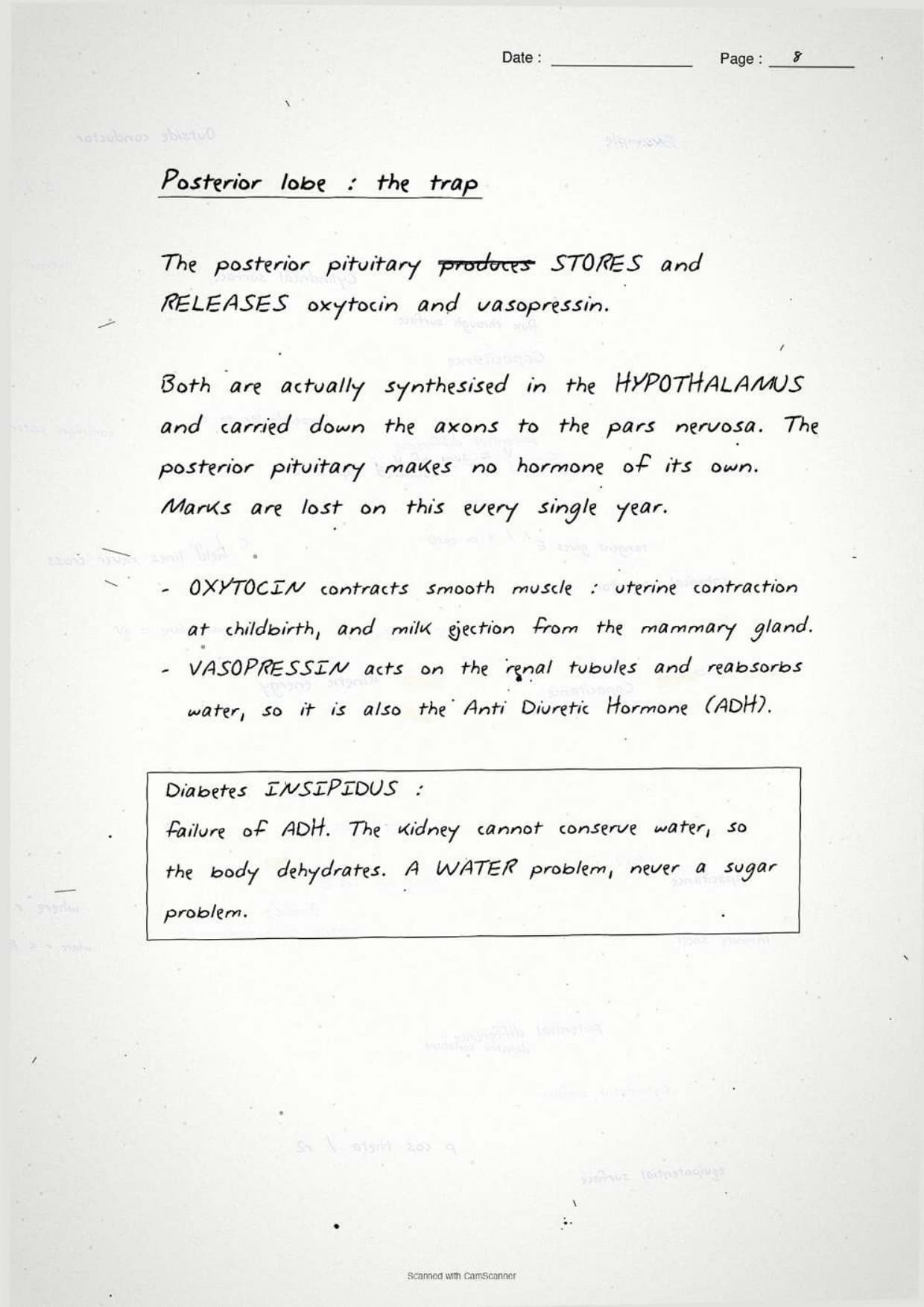
| Diabetes mellitus | Insulin lack, a sugar problem |
| Diabetes insipidus | ADH failure, a water problem |
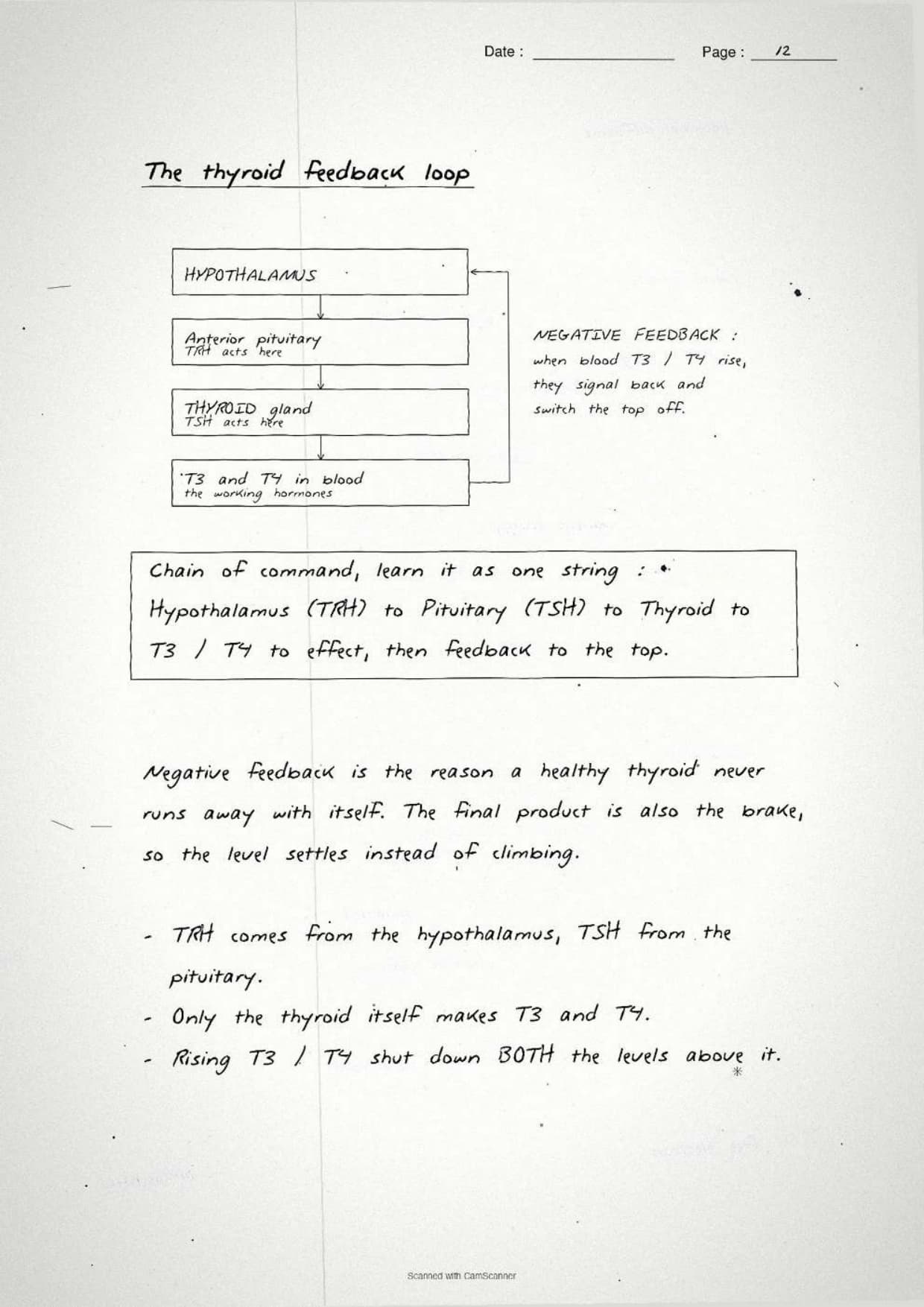
A hand-drawn body outline on page 3 marks where each gland sits, from the hypothalamus down to the gonads. Page 12 draws the thyroid feedback loop as four stacked boxes with the arrow running back to the top, so students can see how rising T3 and T4 switch off both levels above them.
How to Use These Handwritten Notes for Revision
Work the file in three passes. Read a gland page, cover it and name the hormone plus its one-line function, then answer two NCERT questions on that gland. Naming before writing is what fixes this chapter.
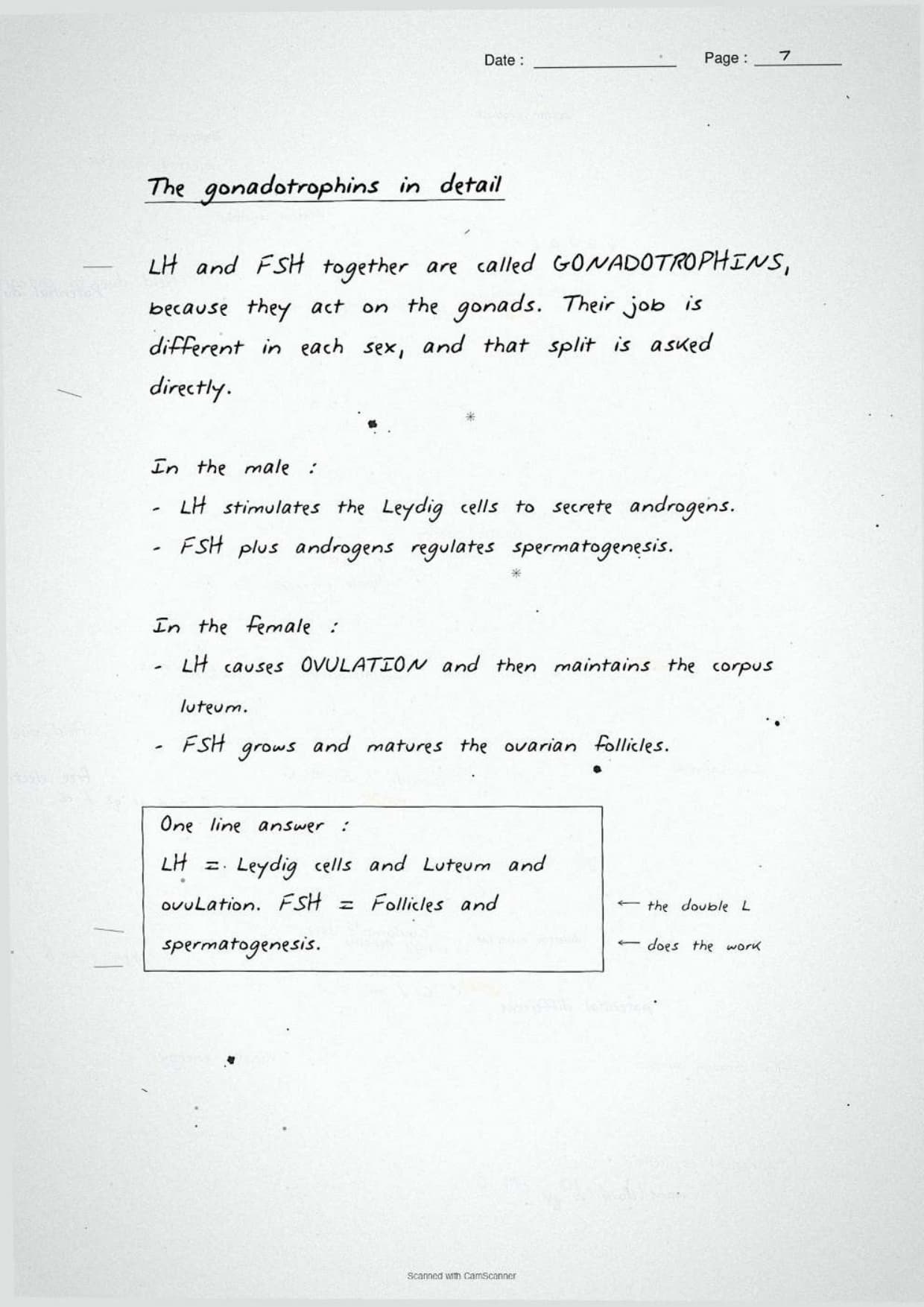
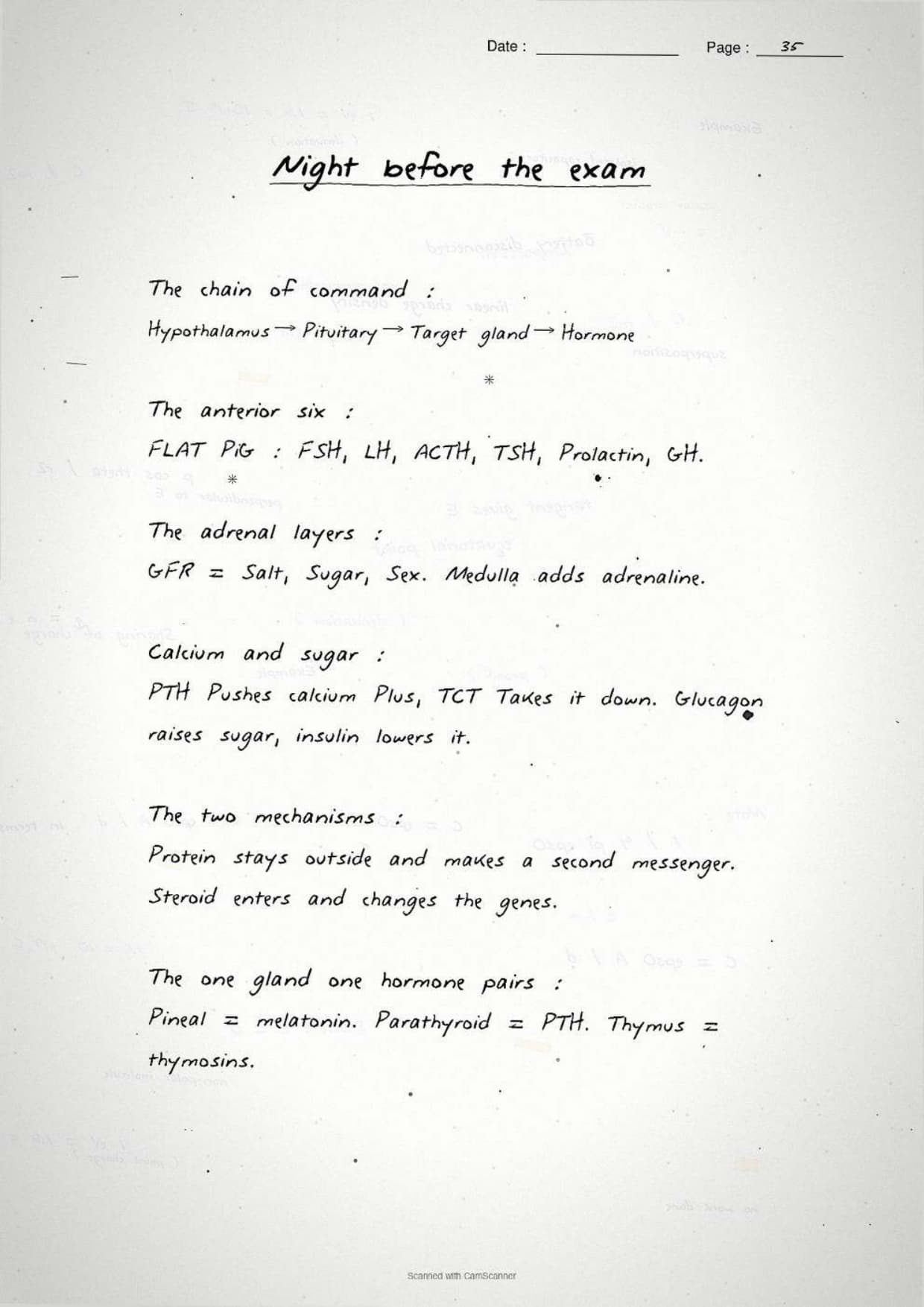
- Learn the chain of command as a single string: hypothalamus, then pituitary, then target gland, then hormone.
- Use the two mnemonics on page 35, FLAT PiG for the anterior six and GFR for salt, sugar and sex in the adrenal cortex.
- Keep the class 11 biology handwritten notes chapter 19 Chemical Coordination and Integration open beside the NCERT Solutions while practising.
- Read the mistakes page on page 34 last, just before you shut the file.
Around 45 minutes covers one full pass, so the notes fit comfortably into the final week before an exam.
Student Feedback on Chemical Coordination and Integration Handwritten Notes
Students rate the two gland tables as the pages that save them the most time. The figures below come from a Collegedunia poll run before the 2026 boards.
- In a Collegedunia survey of 11,240 students, 76% said the single disorder table was their most-used revision page in this chapter.
- Most-confused pair before the poll: diabetes mellitus against diabetes insipidus, mixed up by nearly 5 in 10 students.
Source: 2026-27 Class 11 Biology student poll. Sample of 11,240 students from CBSE schools across 12 states.
Where to Use These Notes Alongside Other Resources
These handwritten pages work best next to the step-wise Solutions, the summary Notes and the Exemplar Solutions for the same chapter. Read the notes first, check the answers next, and keep the Exemplar for extra practice.
| Resource | Best used for |
|---|---|
| Chemical Coordination and Integration NCERT Solutions | Step-by-step answers to every back-exercise question |
| Chemical Coordination and Integration Class 11 Notes | Quick chapter summary with all key terms in one place |
| Chemical Coordination and Integration Exemplar Solutions | Exemplar questions solved for NEET-level practice |
| Chemical Coordination and Integration NCERT Book PDF | The original chapter text and exercises |
All Class 11 Biology Handwritten Notes by Chapter
The table links the handwritten notes for every Class 11 Biology chapter, so students can move across the course in one click. Chemical Coordination and Integration is highlighted.
| Chapter | Handwritten Notes |
|---|---|
| Chapter 1 | The Living World |
| Chapter 2 | Biological Classification |
| Chapter 3 | Plant Kingdom |
| Chapter 4 | Animal Kingdom |
| Chapter 5 | Morphology of Flowering Plants |
| Chapter 6 | Anatomy of Flowering Plants |
| Chapter 7 | Structural Organisation in Animals |
| Chapter 8 | Cell The Unit of Life |
| Chapter 9 | Biomolecules |
| Chapter 10 | Cell Cycle and Cell Division |
| Chapter 11 | Photosynthesis in Higher Plants |
| Chapter 12 | Respiration in Plants |
| Chapter 13 | Plant Growth and Development |
| Chapter 14 | Breathing and Exchange of Gases |
| Chapter 15 | Body Fluids and Circulation |
| Chapter 16 | Excretory Products and their Elimination |
| Chapter 17 | Locomotion and Movement |
| Chapter 18 | Neural Control and Coordination |
| Chapter 19 | Chemical Coordination and Integration |
FAQs on Chemical Coordination and Integration Handwritten Notes
Ques. Are these class 11 biology handwritten notes chapter 19 Chemical Coordination and Integration free to download?
Ans. Yes. The Chemical Coordination and Integration handwritten notes are free to download as a PDF from this page. All 35 pages follow the 2026-27 NCERT and cover the full chapter in clear handwriting for quick revision.
Ques. What topics do these handwritten notes cover?
Ans. They cover endocrine glands and hormones, the human endocrine system gland by gland from the hypothalamus to the gonads, the hormones of the heart, kidney and gut, the mechanism of hormone action, and every disorder in the chapter. Each gland sits on its own page with boxed terms and hand-drawn charts.
Ques. Does the posterior pituitary make oxytocin and vasopressin?
Ans. No, and this is the trap the notes flag on page 8. Both hormones are synthesised in the hypothalamus and carried down axons to the pars nervosa. The posterior pituitary only stores and releases them, so an answer that says it produces them loses the mark.
Ques. How do protein and steroid hormones act differently?
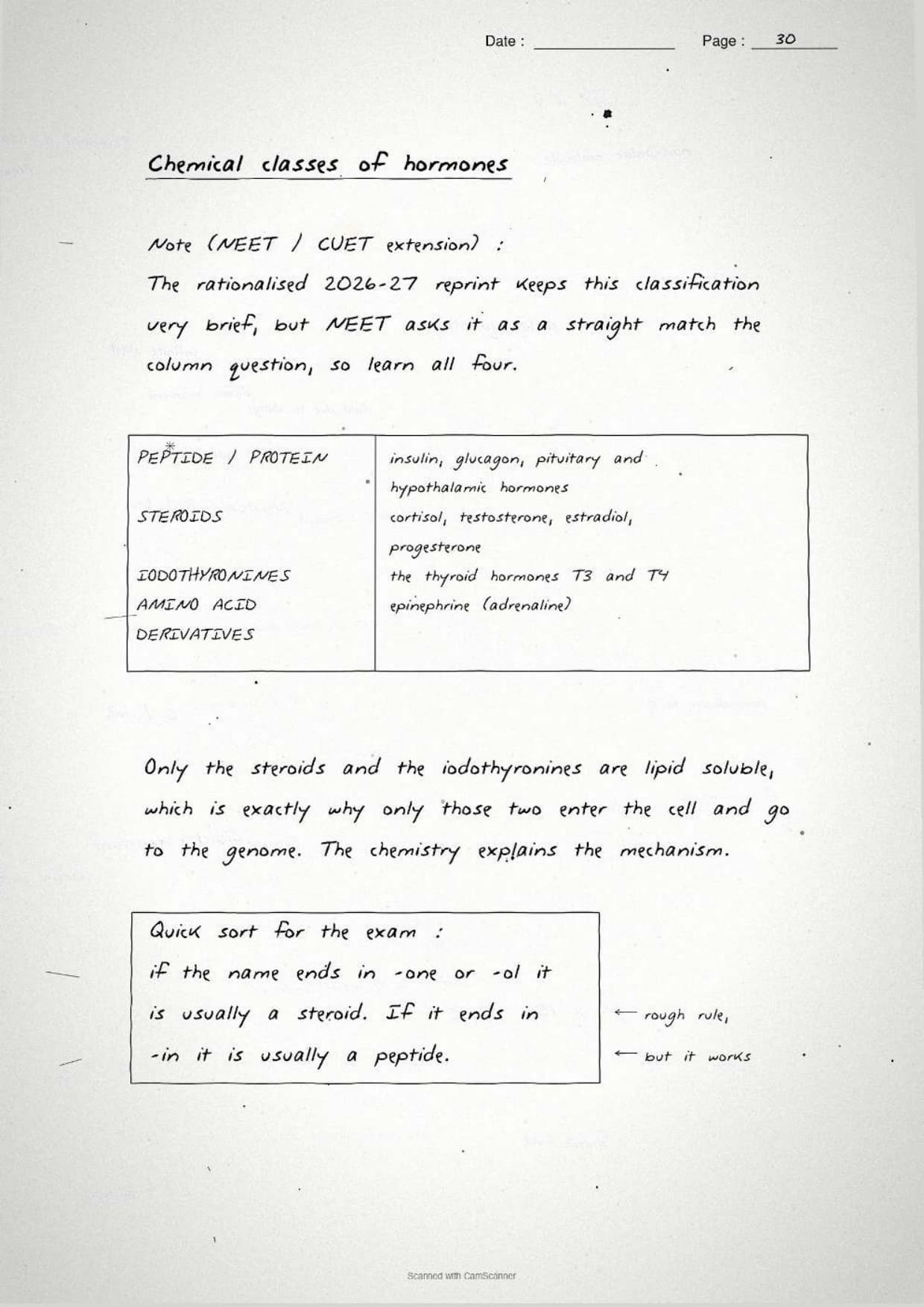
Ans. A protein hormone such as insulin or FSH binds a membrane-bound receptor, stays outside the cell and works through a second messenger like cyclic AMP, IP3 or calcium. A steroid hormone enters the cell, binds an intracellular receptor and acts on the genome, so its effects are growth and developmental.
Ques. Are these notes useful for NEET, not just Boards?
Ans. Yes. NEET picks two to three questions a year from this chapter, mostly on hormone sources and disorders. The pituitary lobes, the adrenal cortex layers and the thyroid feedback loop are marked as a NEET and CUET extension, since those papers go deeper than the board paper.



Comments