




These class 11 biology handwritten notes chapter 18 Neural Control and Coordination give students one fast revision pass before Boards, NEET and CUET in 2026-27. All 33 pages carry the impulse steps, the brain map and the boxed definitions in clear handwriting, colour-coded for last-minute recall.
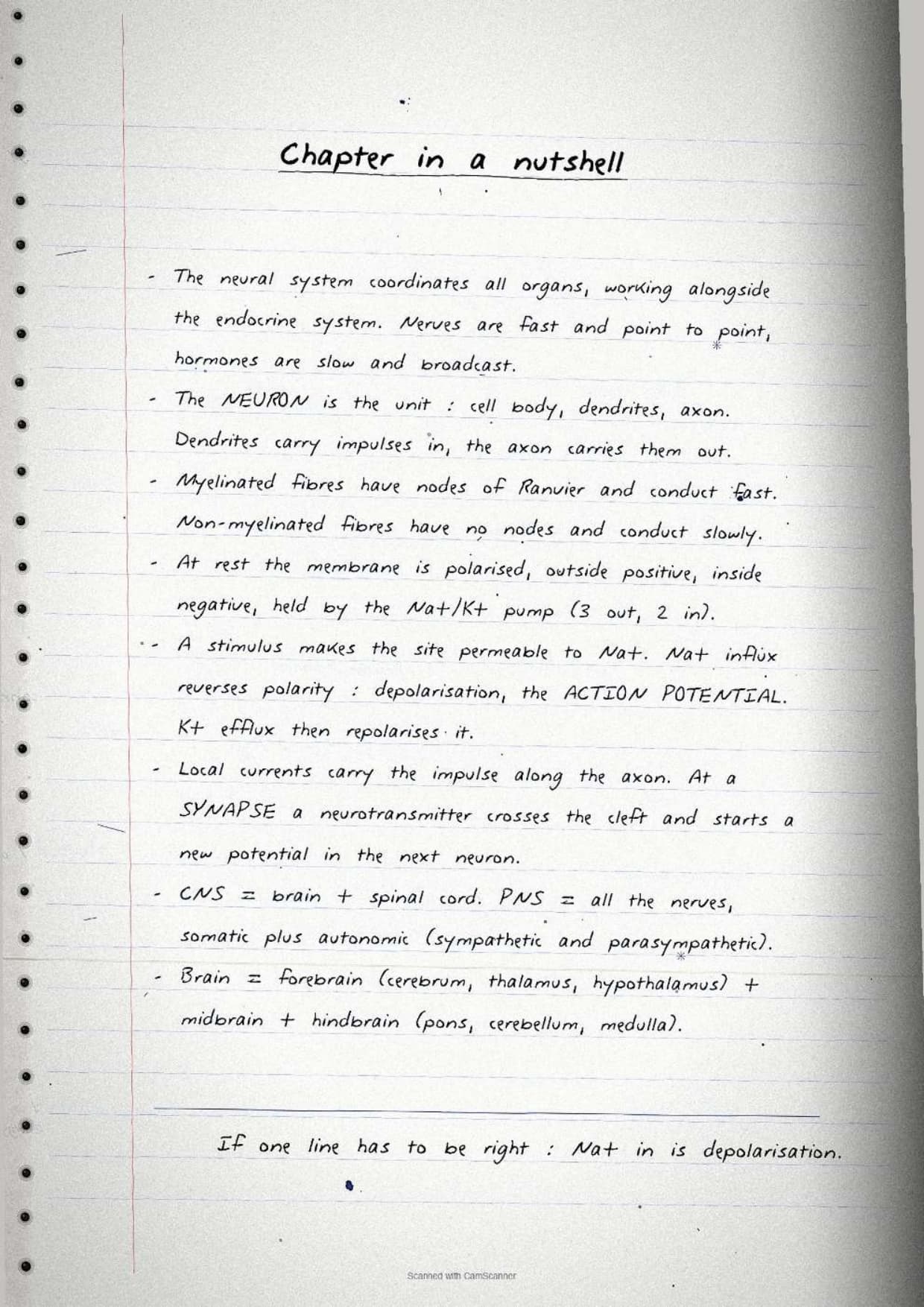
Chapter 18 is decided by direction. Which ion moves which way, and which fibre runs which way, is where most marks go.
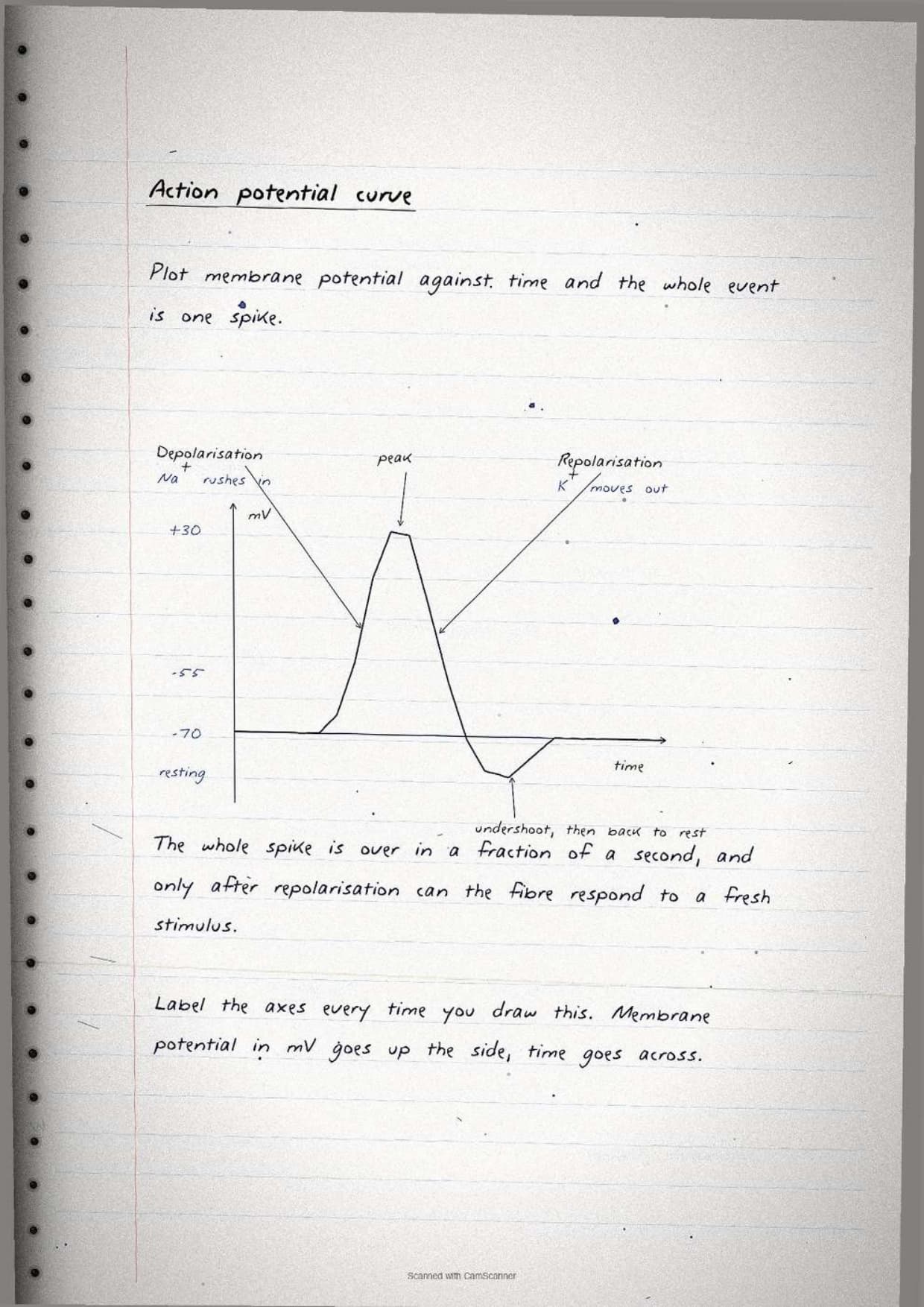
- Hand-drawn action potential curve with both axes labelled and every phase named.
- Boxed definitions for resting potential, action potential, synapse and neurotransmitter in exam wording.
- Pairs with the NCERT Solutions, Notes and Exemplar Solutions linked lower on this page.
What Neural Control and Coordination Handwritten Notes Cover
The 33 pages follow the NCERT order. They open with why the body needs coordination and close with a one-page recap. Each topic gets its own page, so students revise one idea at a time. New sub-topics are written in red and every definition is boxed.
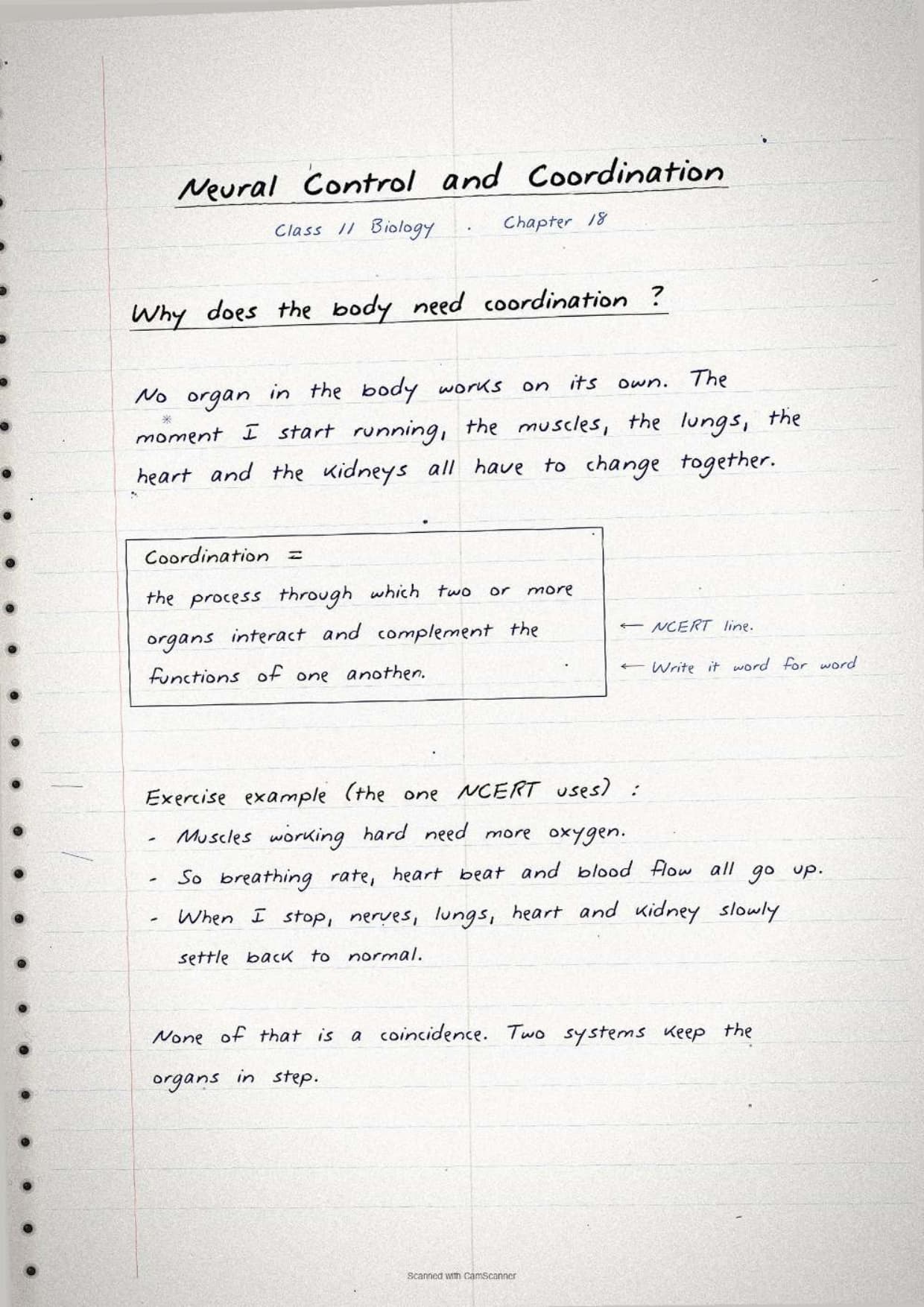
- Coordination: the NCERT definition word for word, plus the running example of muscles, lungs, heart and kidneys changing together.
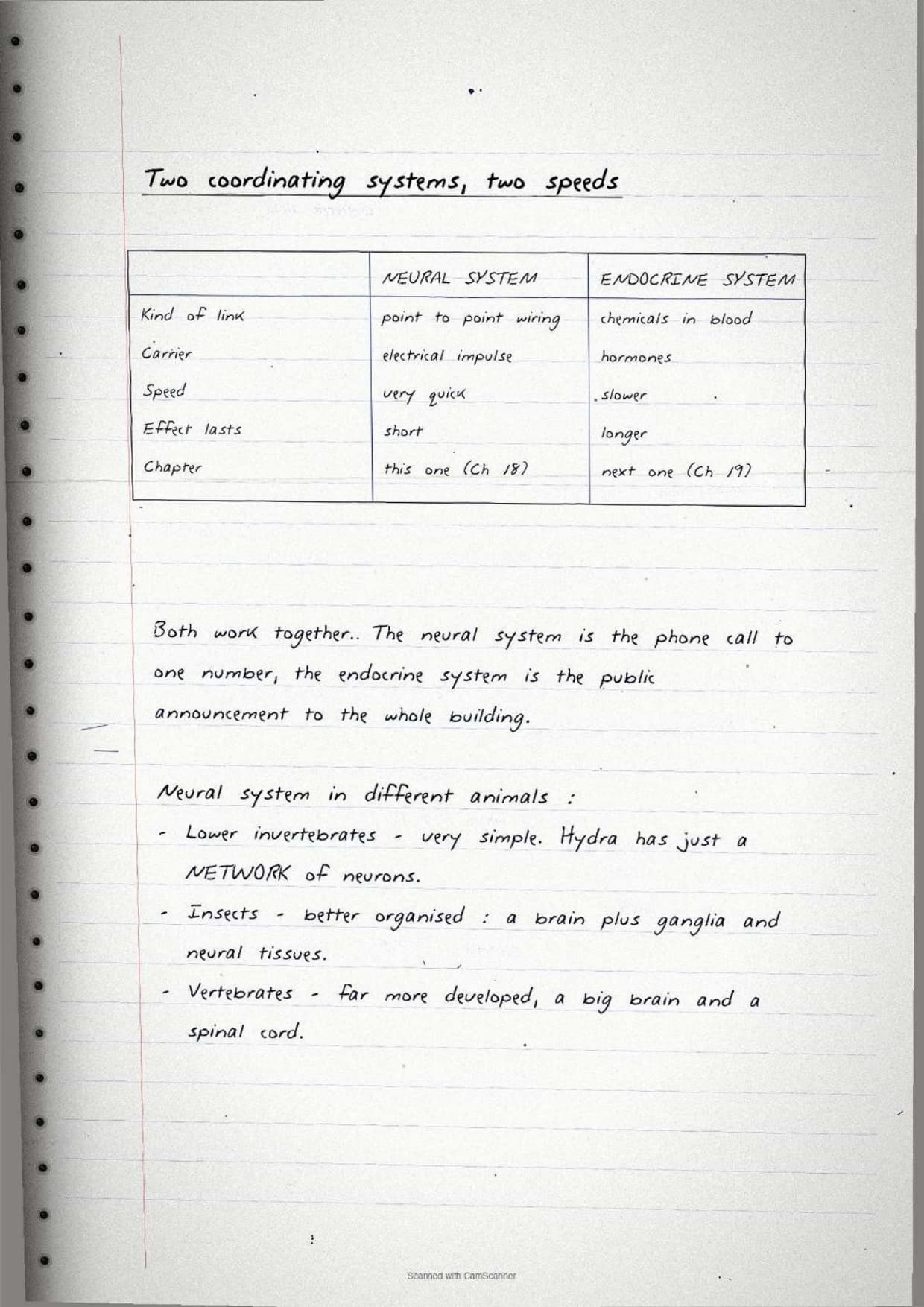
- Neural against endocrine: a five-row table on speed, carrier and how long the effect lasts.
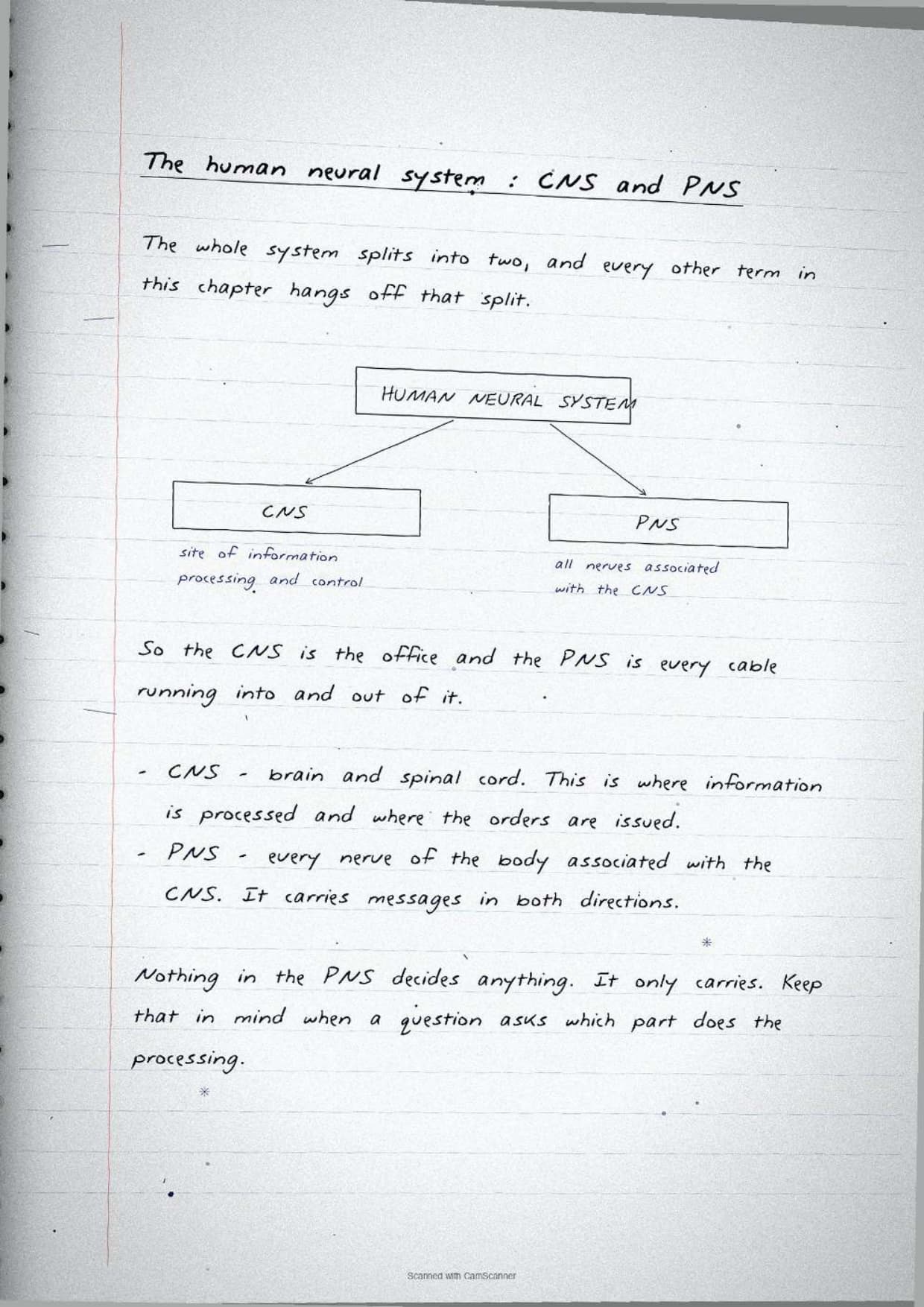
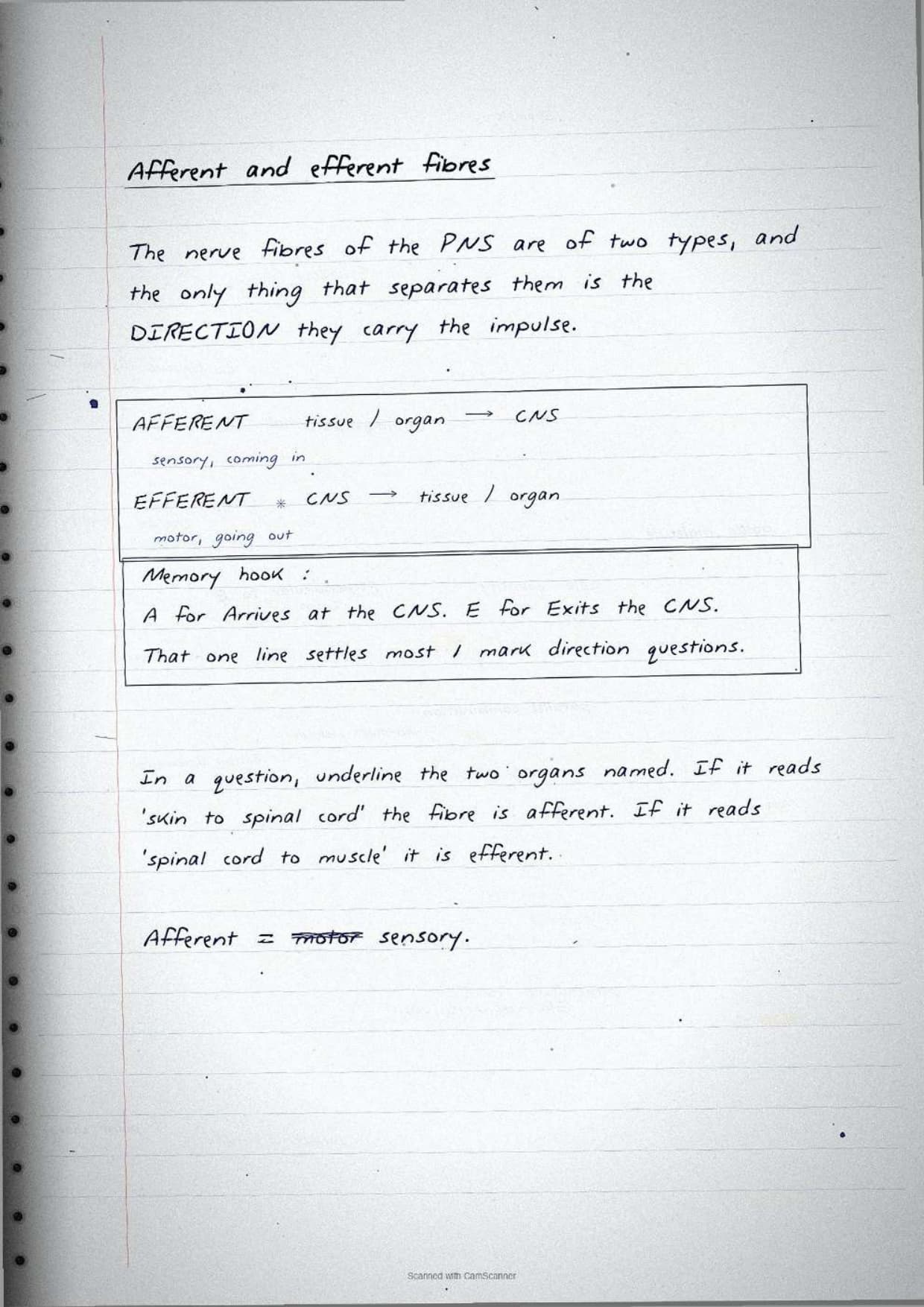
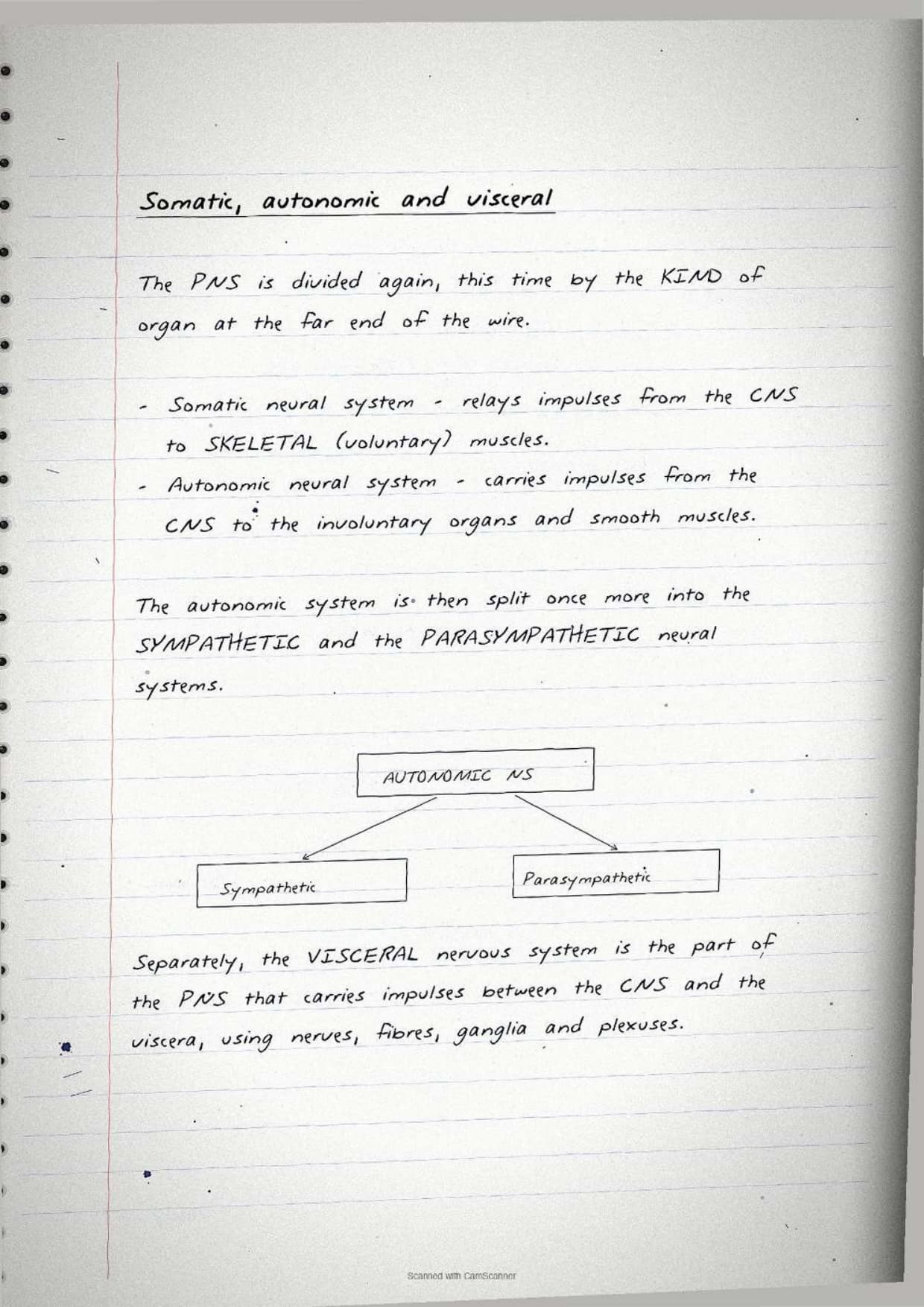
- Human neural system: the CNS and PNS split, afferent against efferent fibres, then somatic, autonomic and visceral.
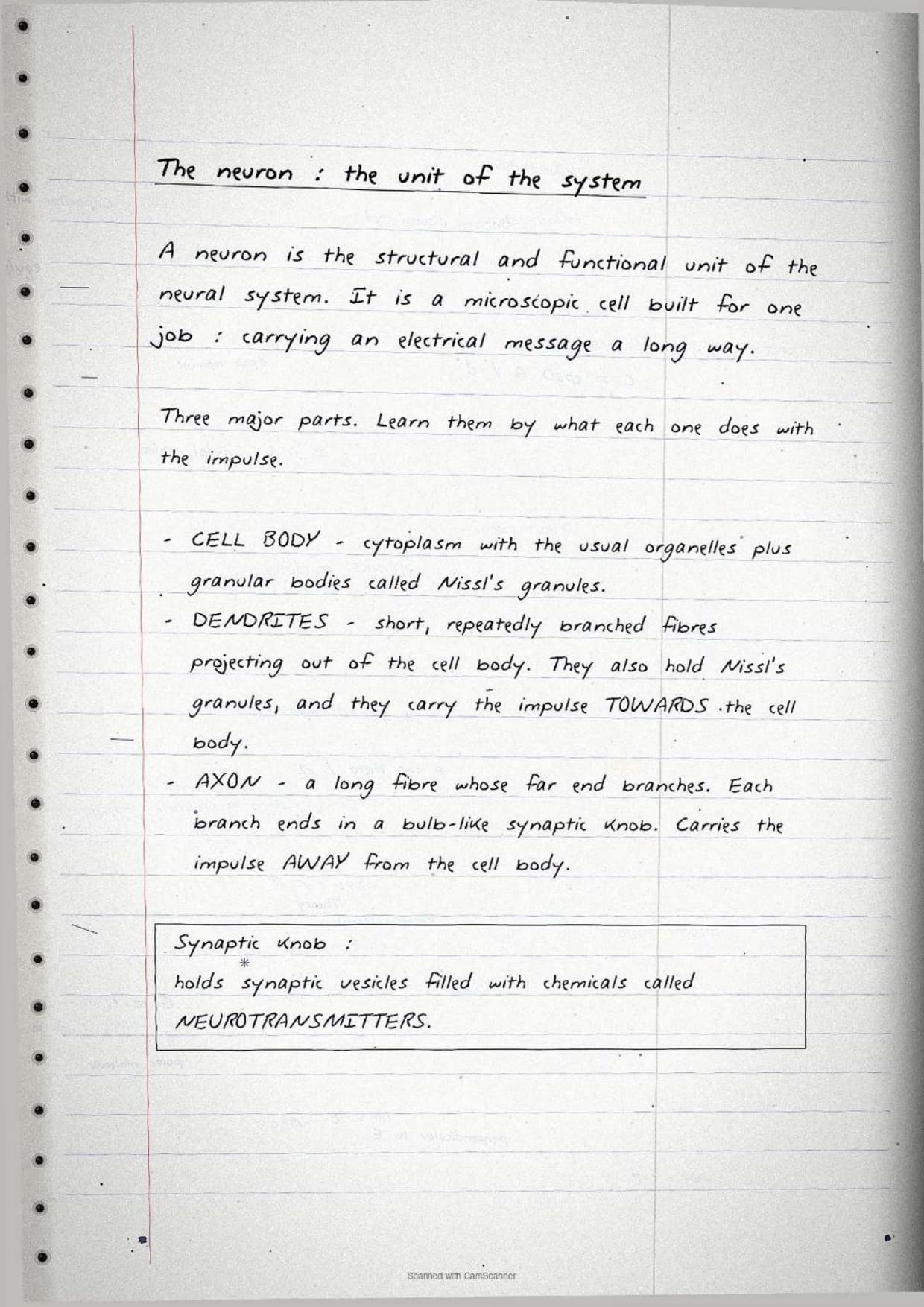
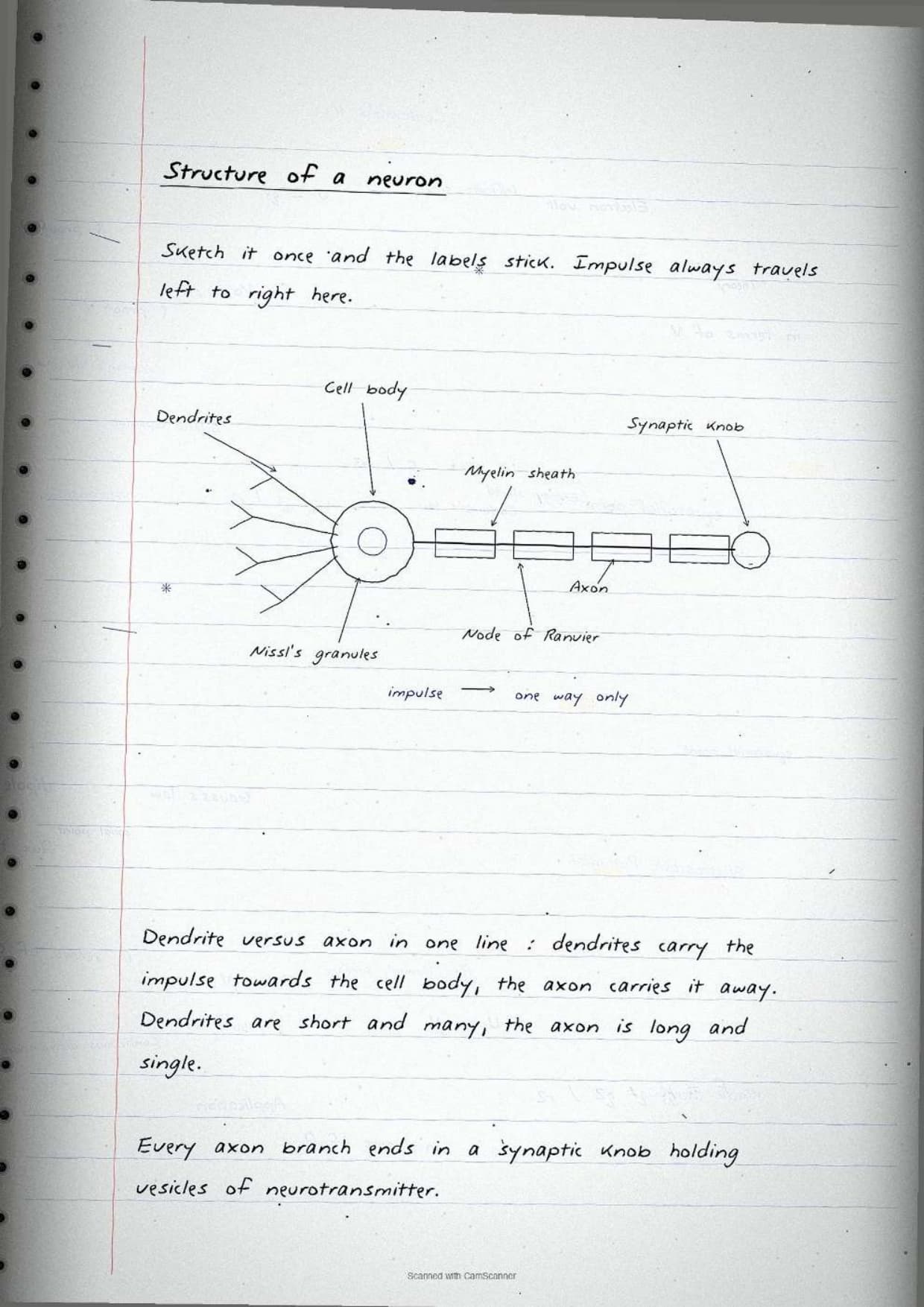
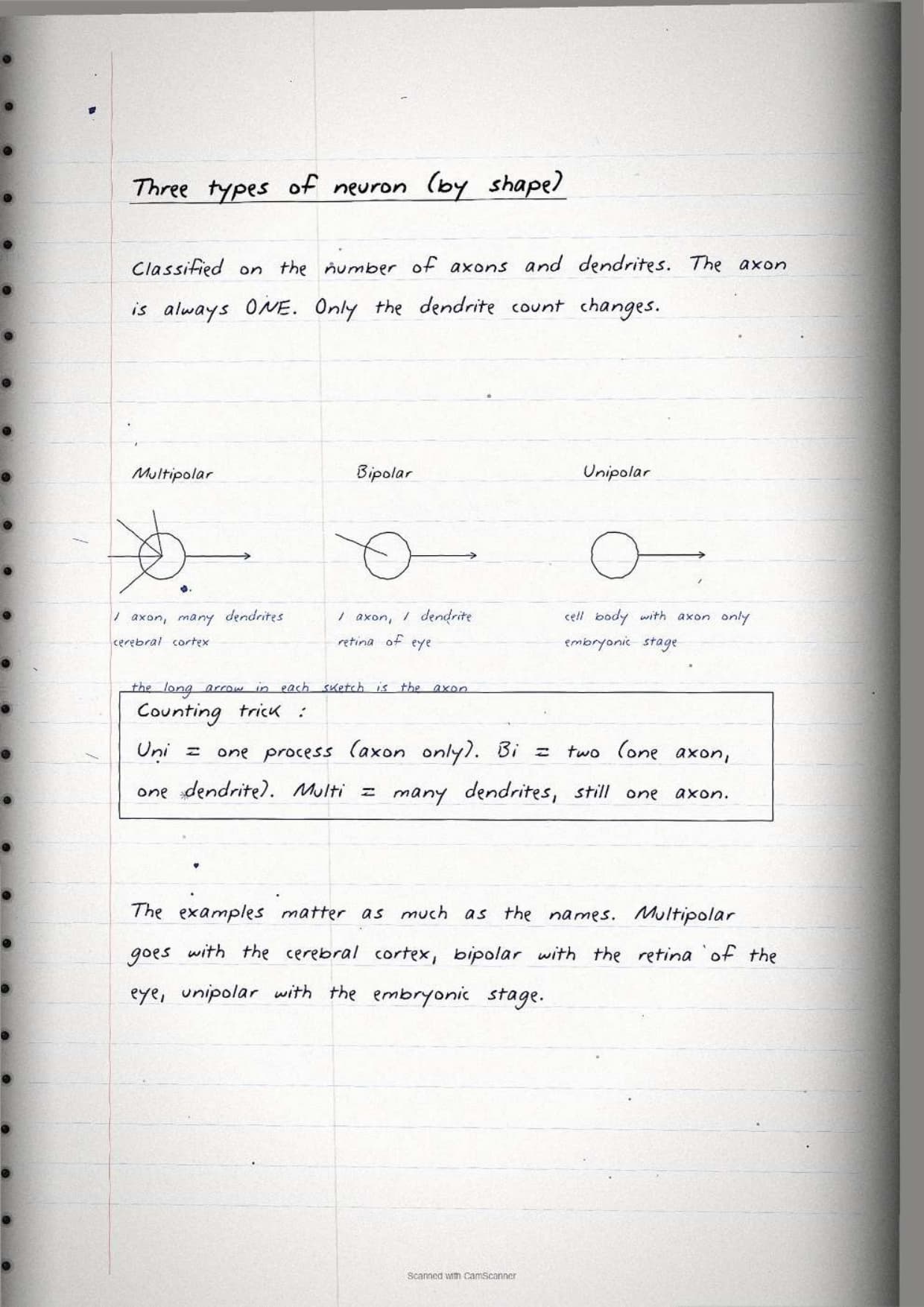
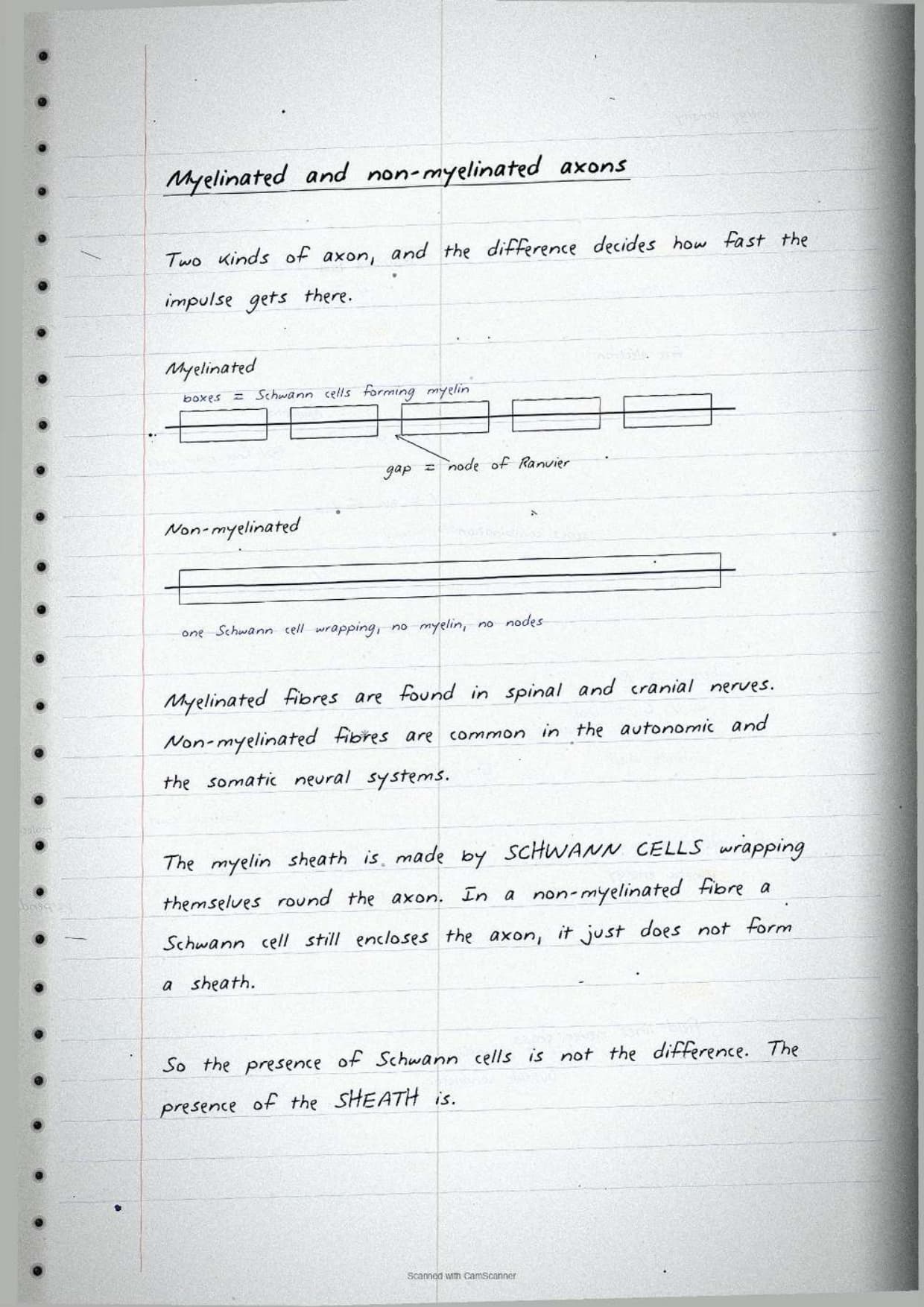
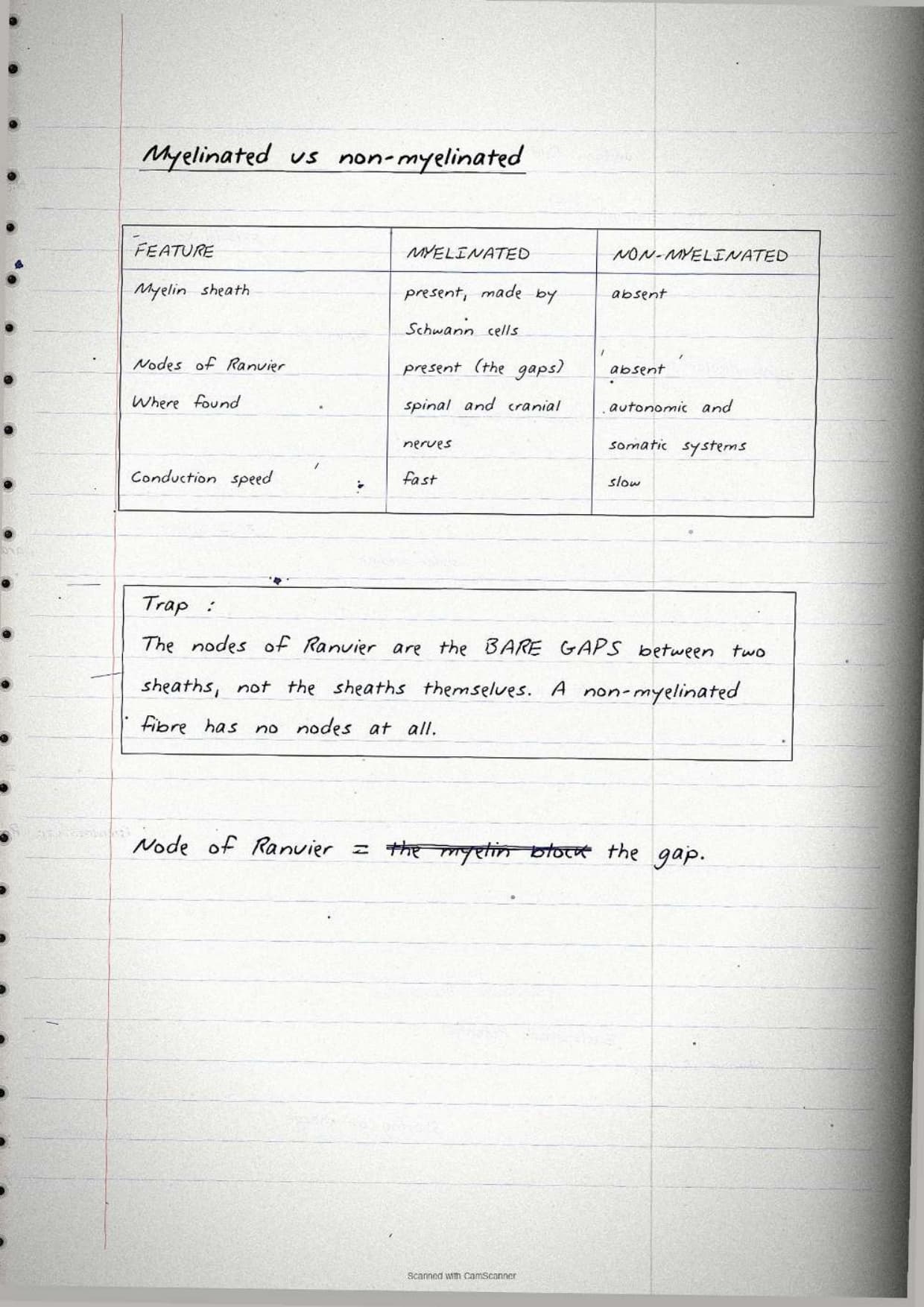
- The neuron: cell body, dendrites and axon, plus the three shapes, and myelinated against non-myelinated fibres.
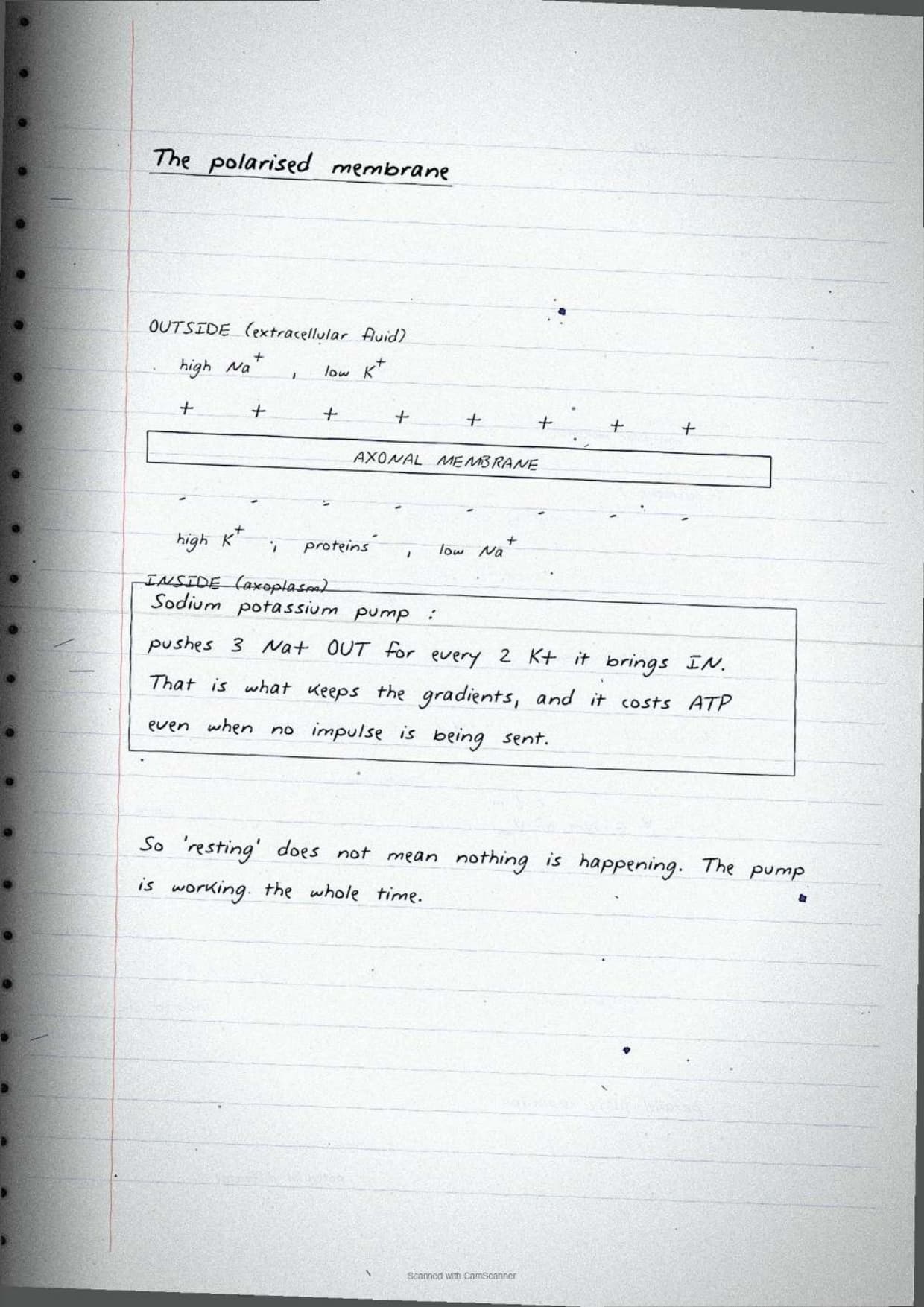
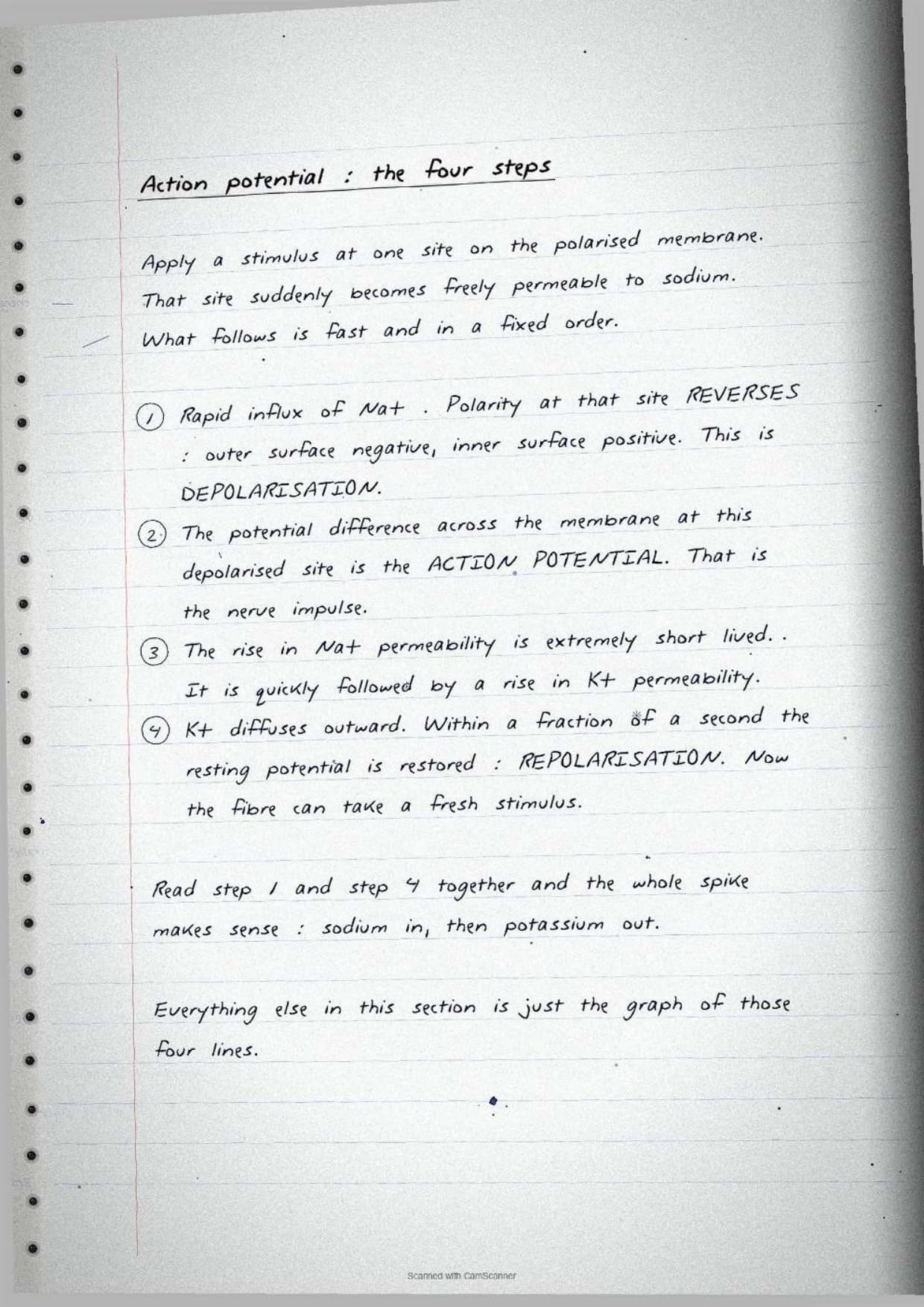
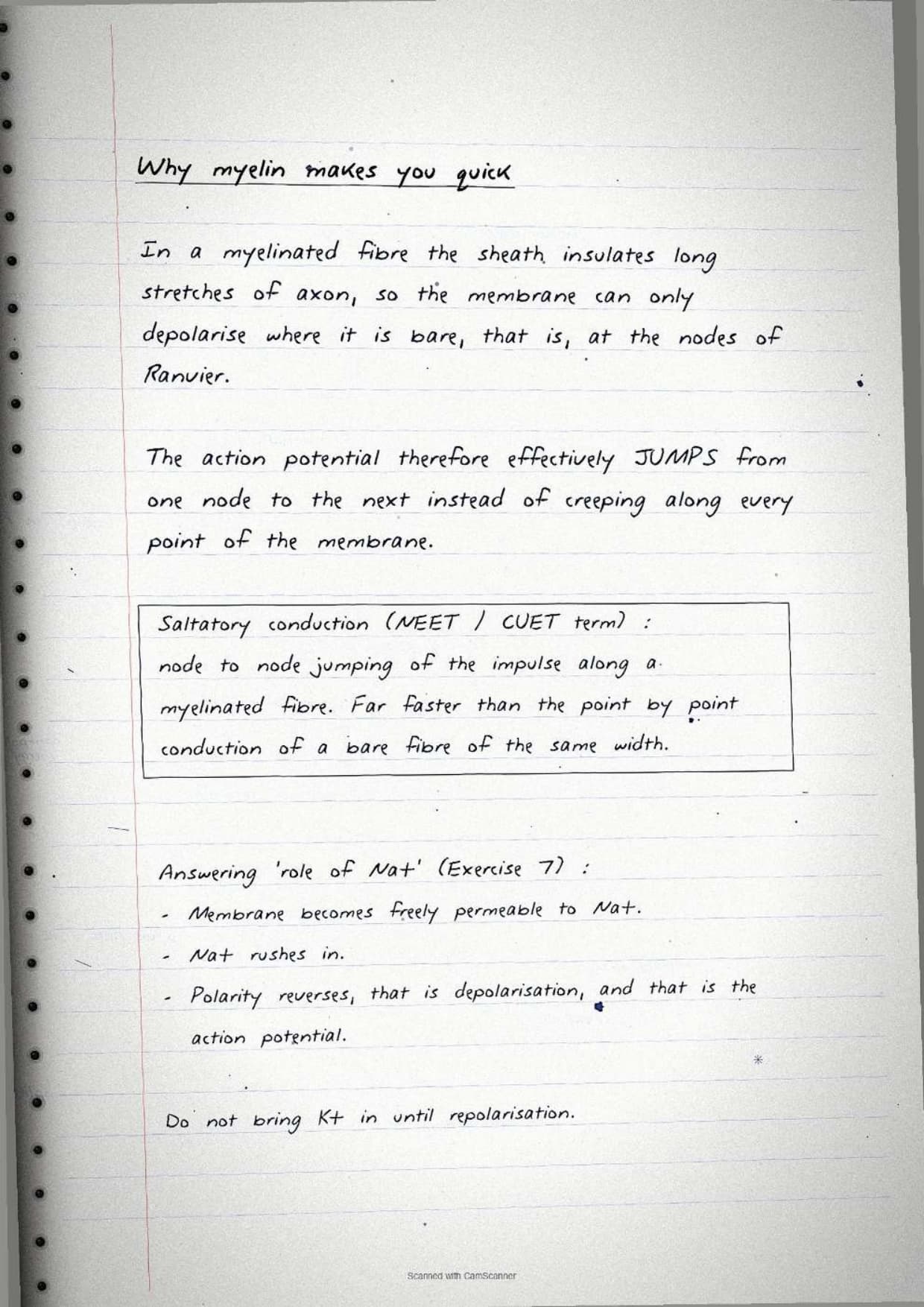
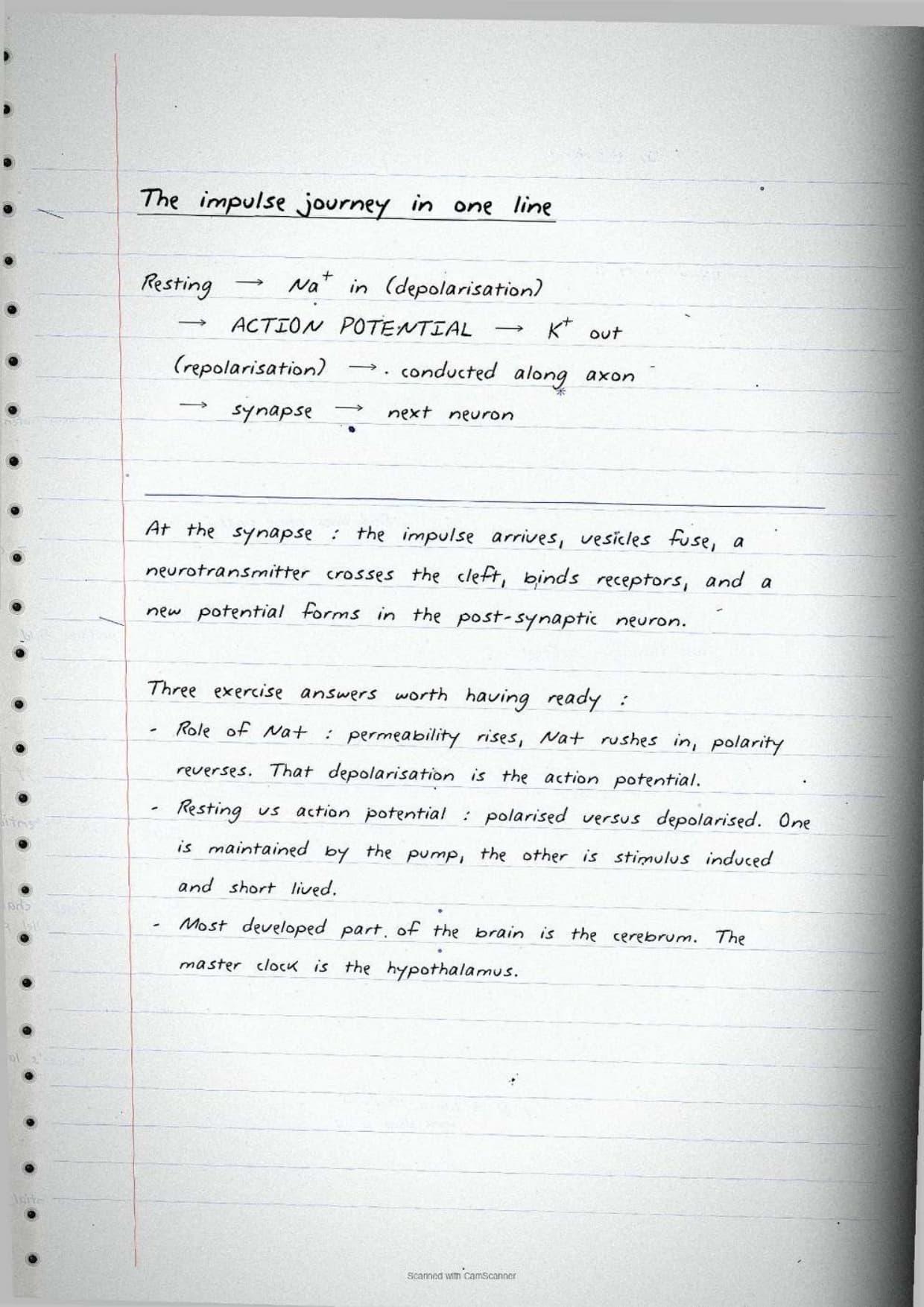
- Impulse generation: the polarised membrane, the sodium potassium pump, and the four steps of an action potential.
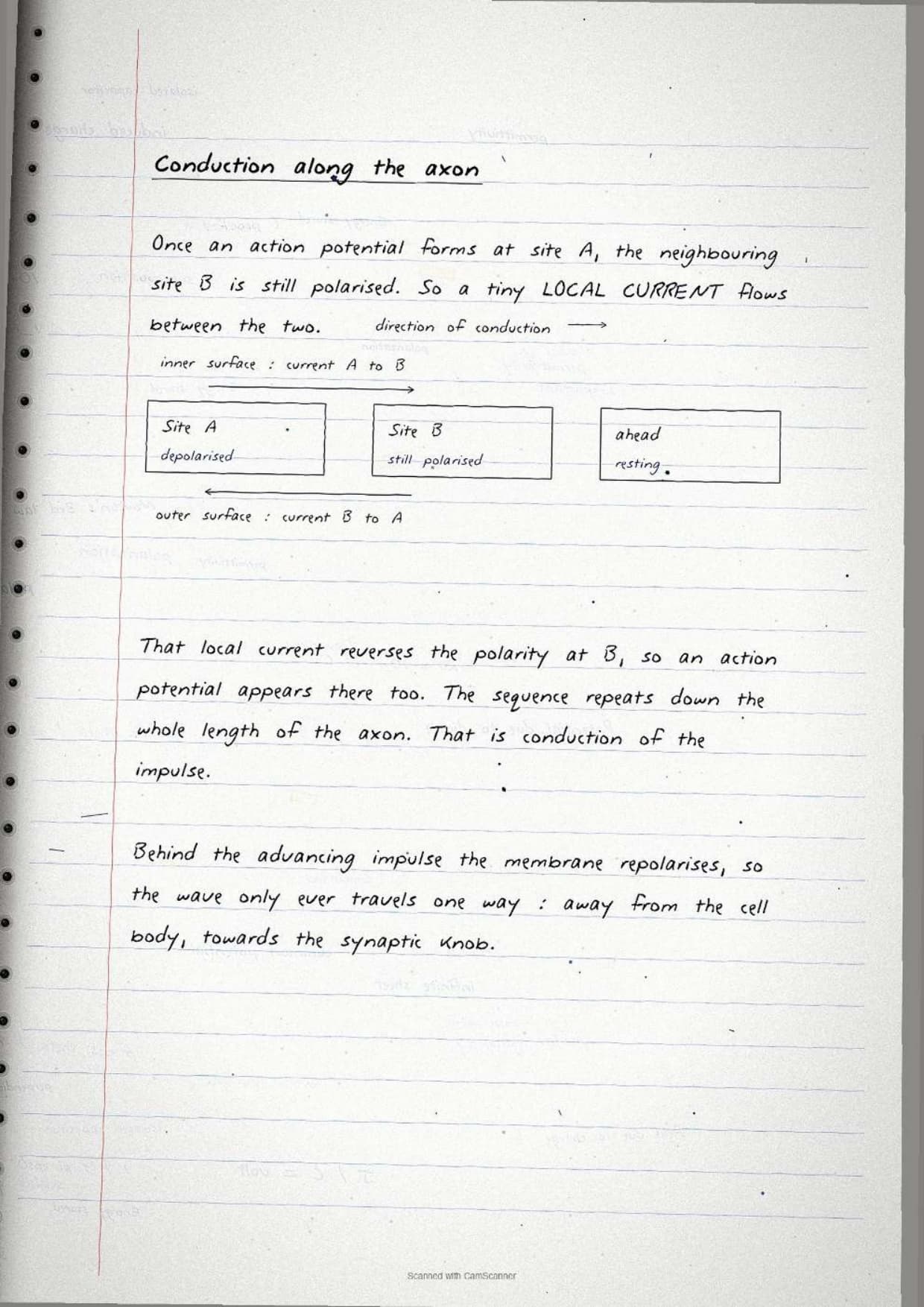
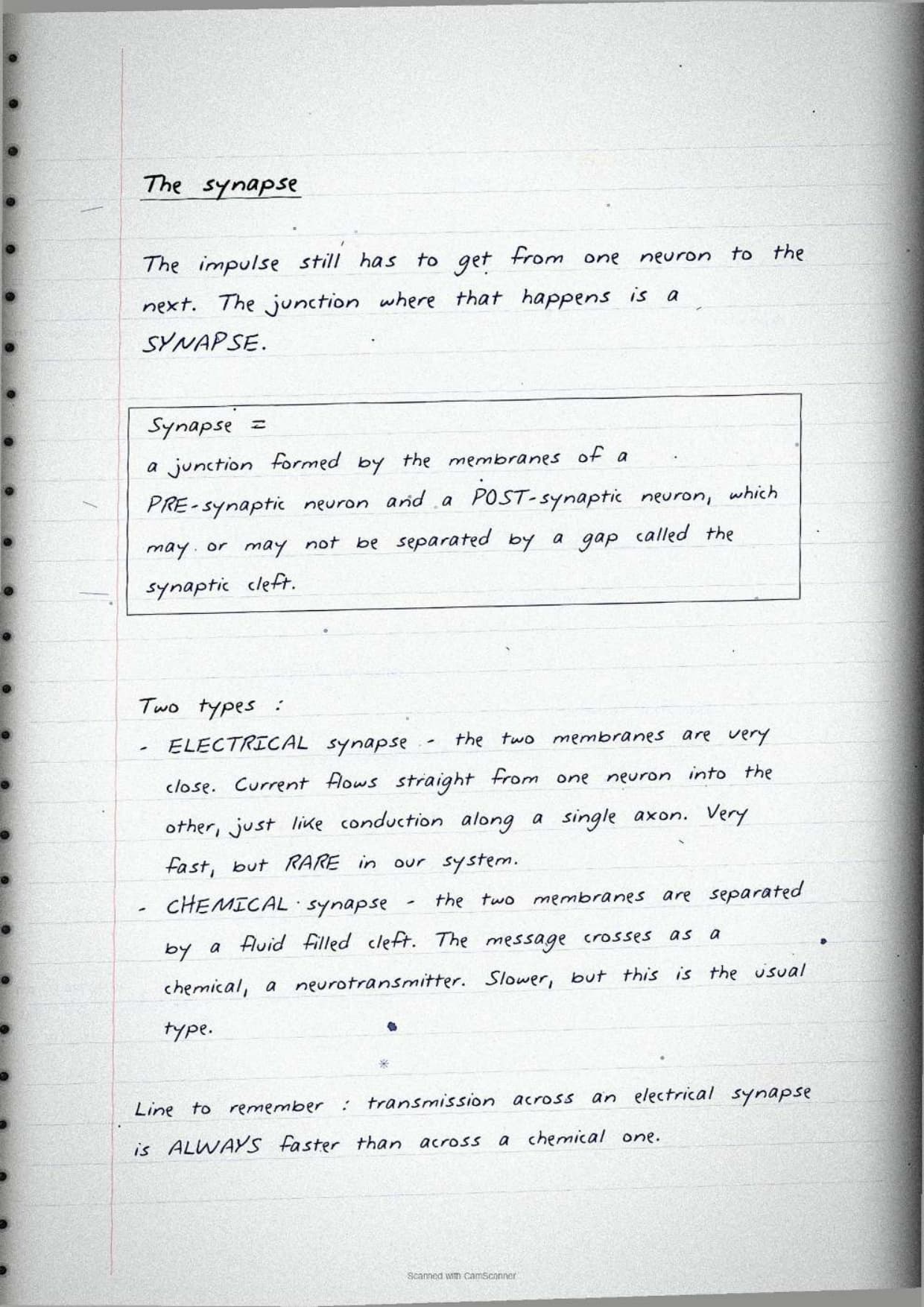
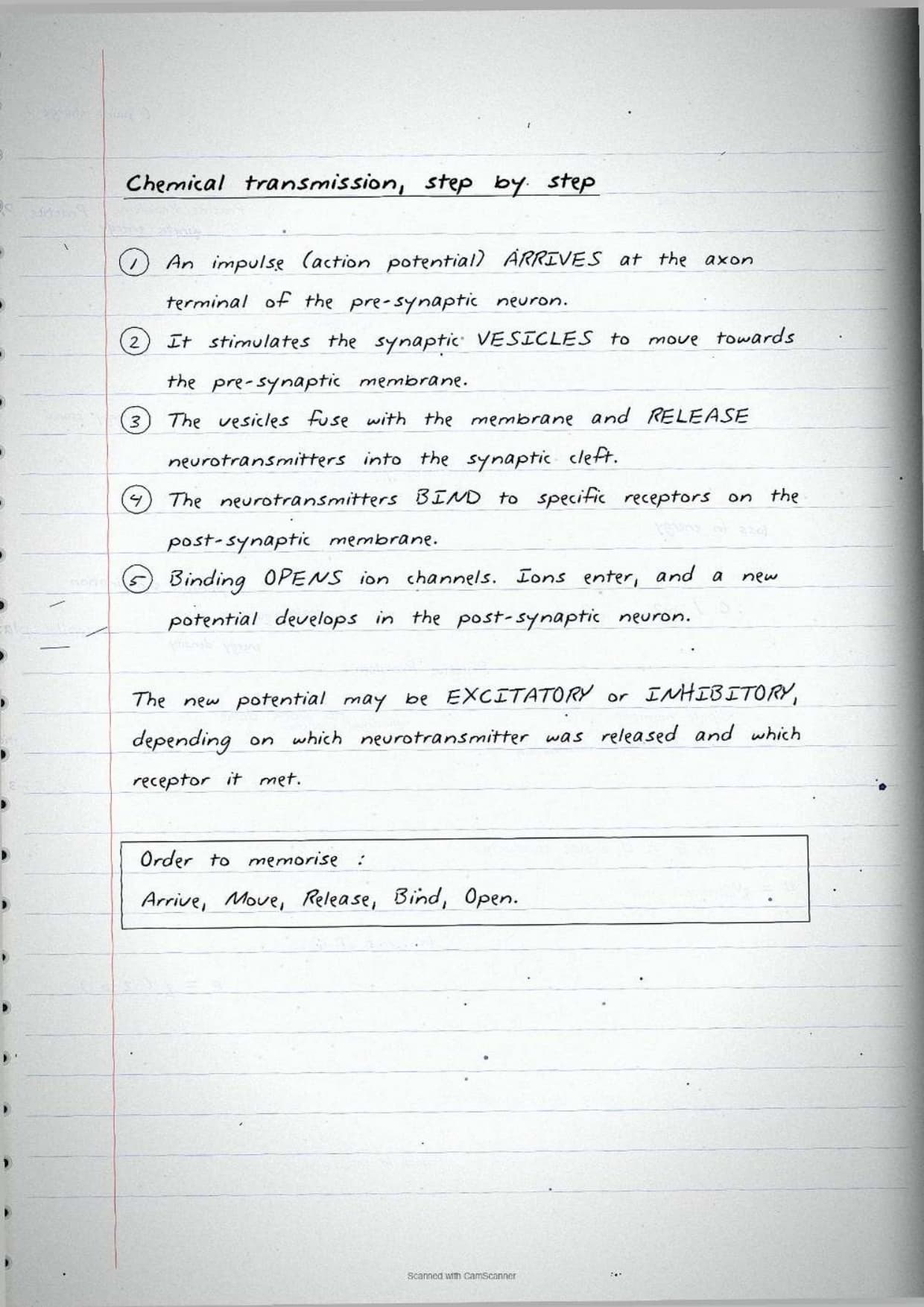
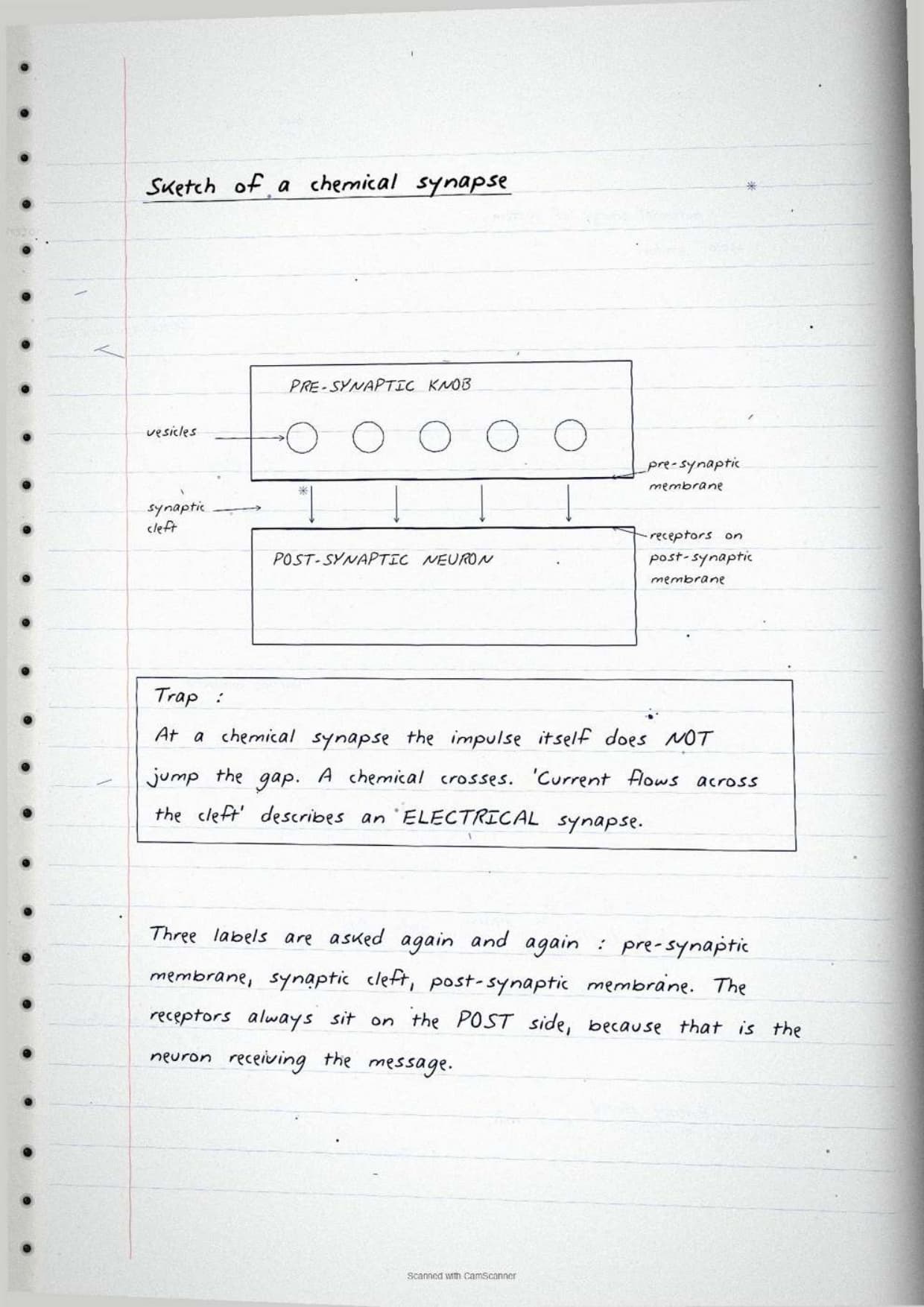
- Conduction and synapses: local currents along the axon, then electrical against chemical synapses.
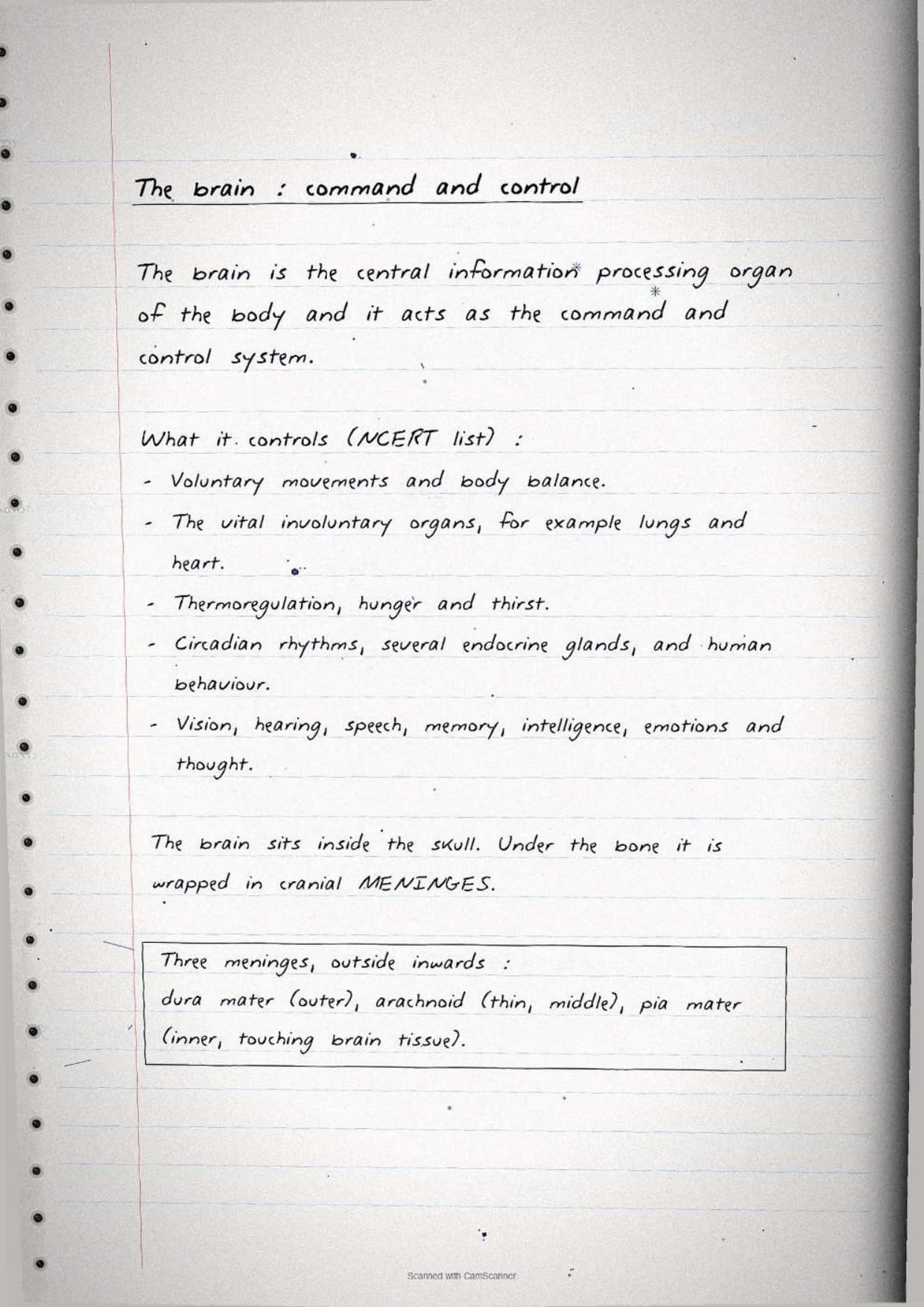
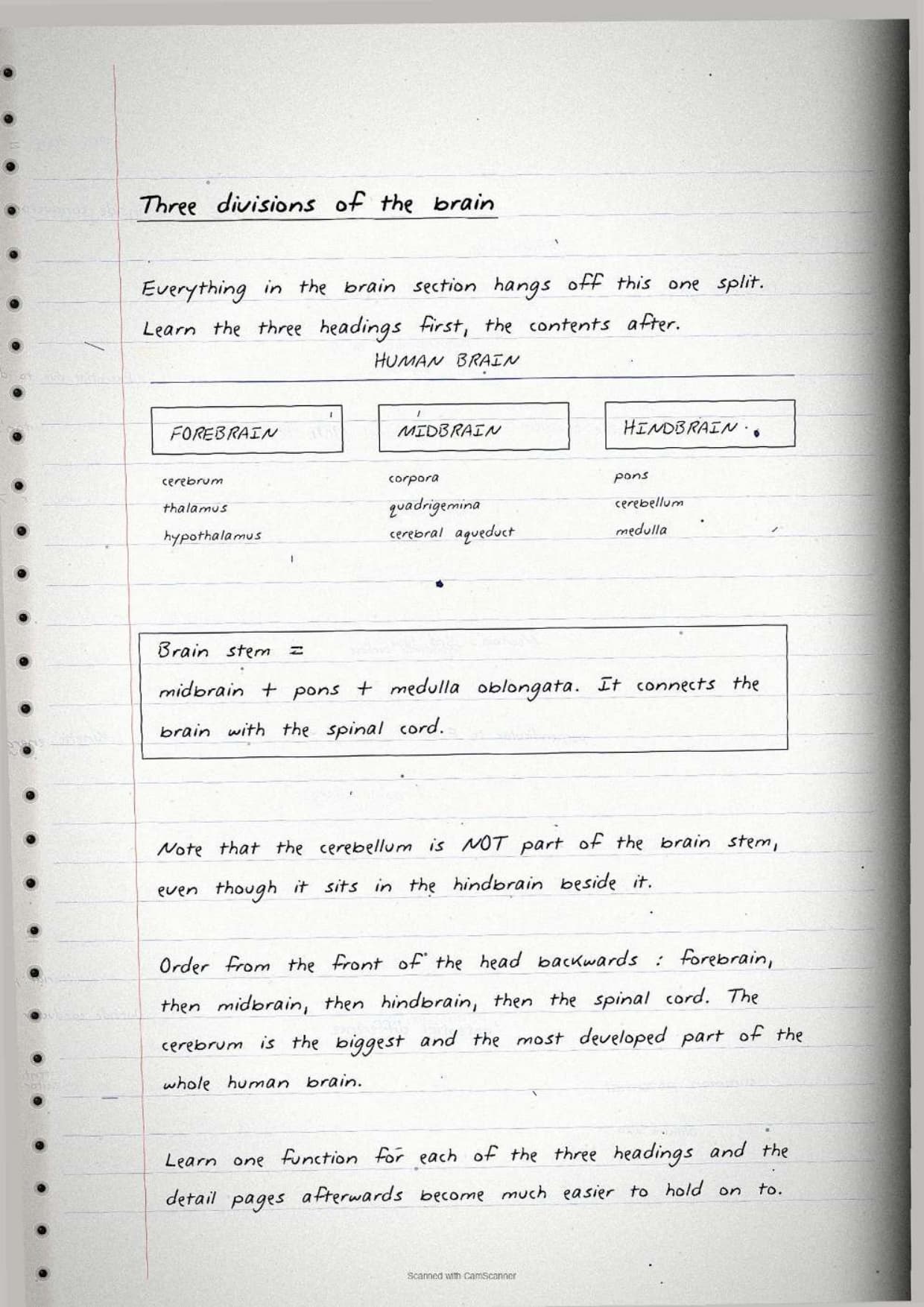
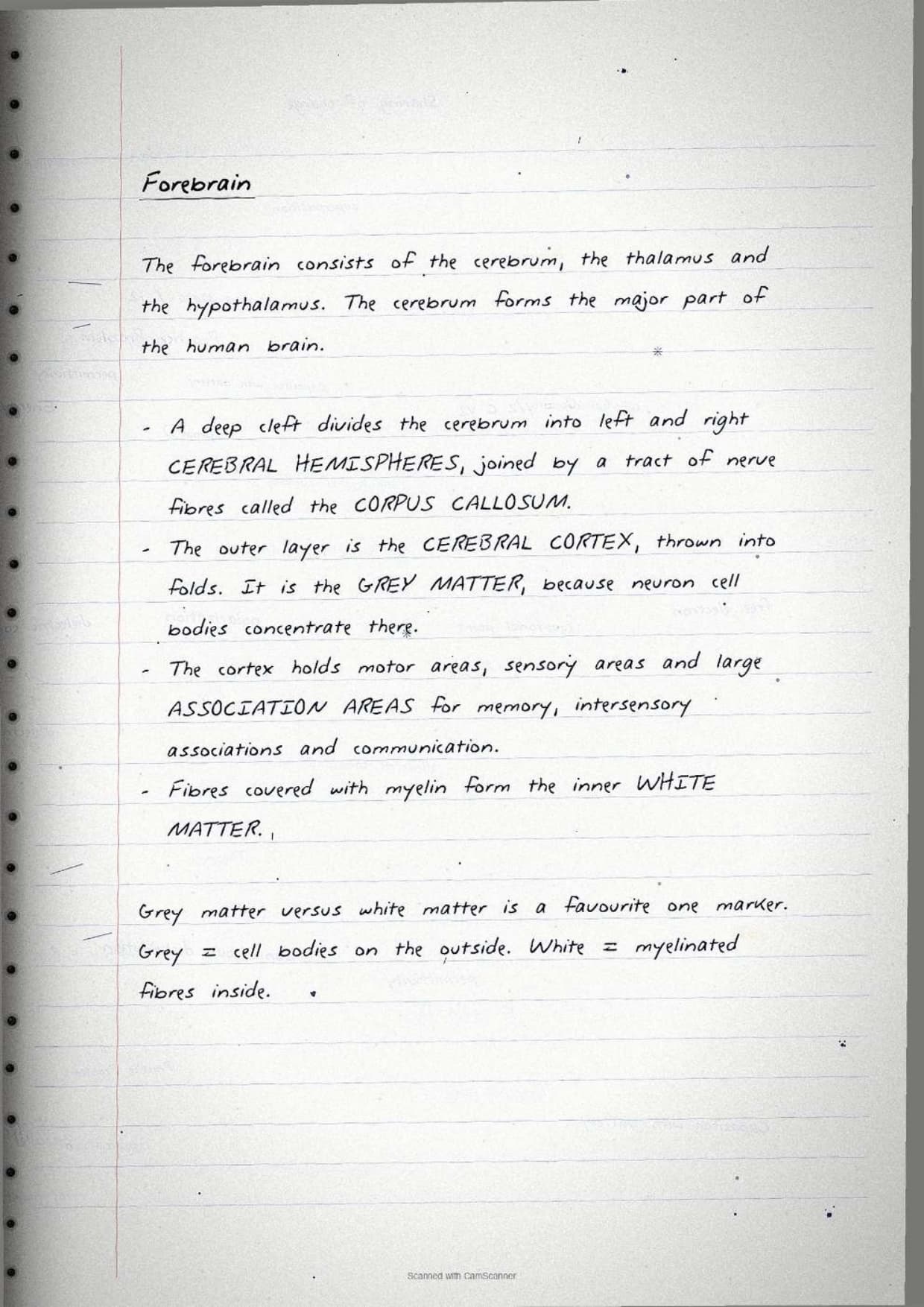
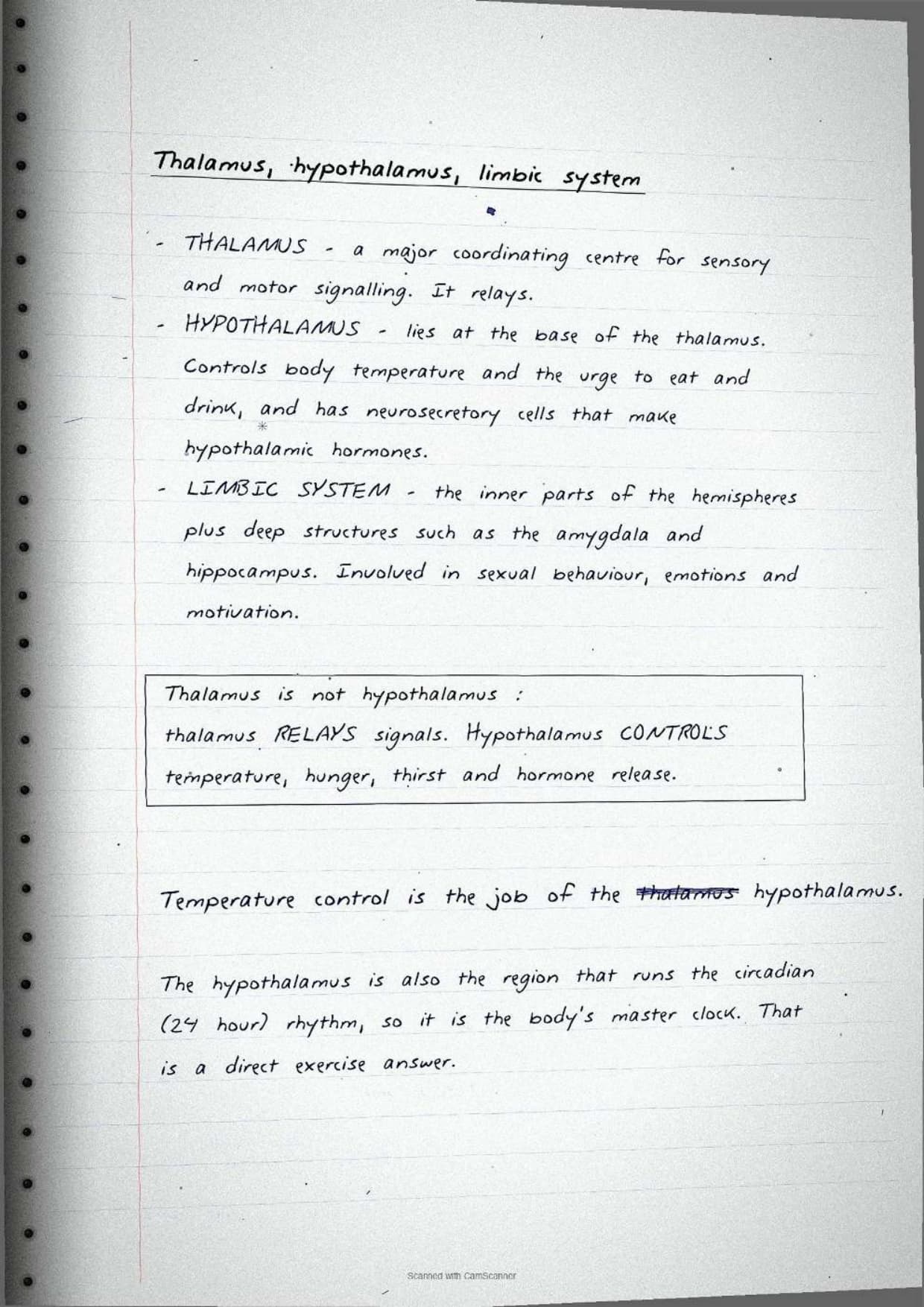
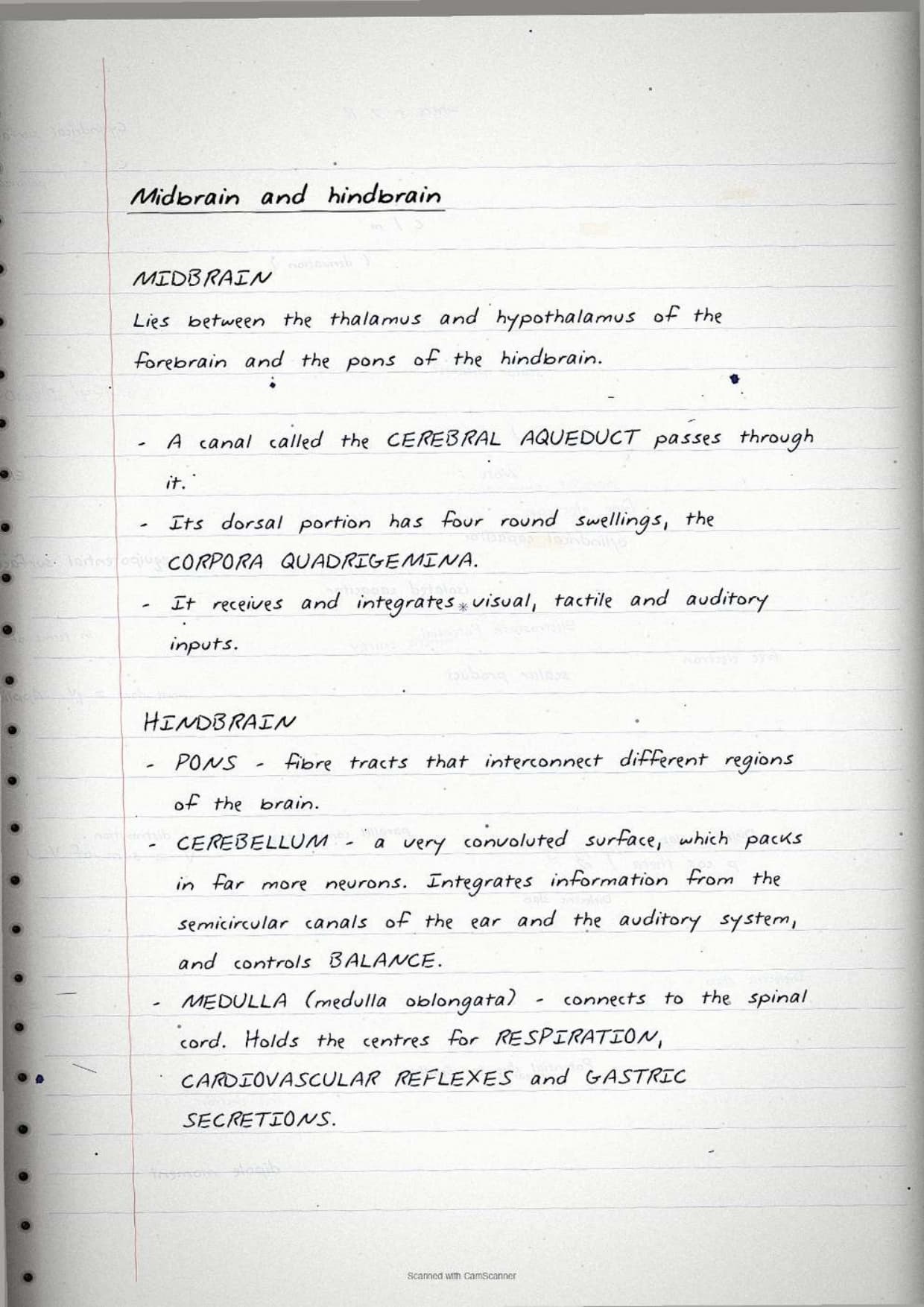
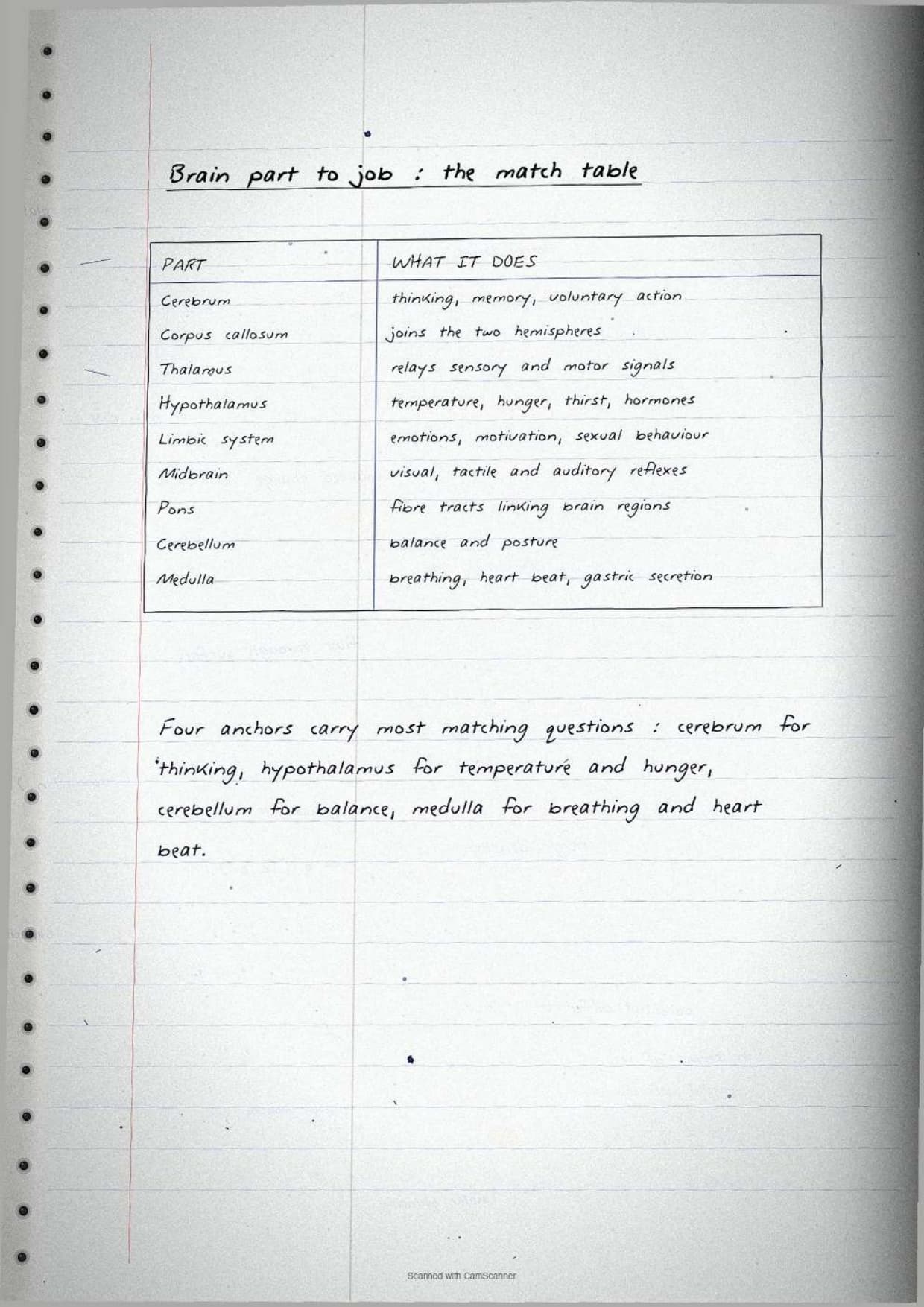
- The brain: forebrain, midbrain and hindbrain, with a nine-row part-to-job match table.
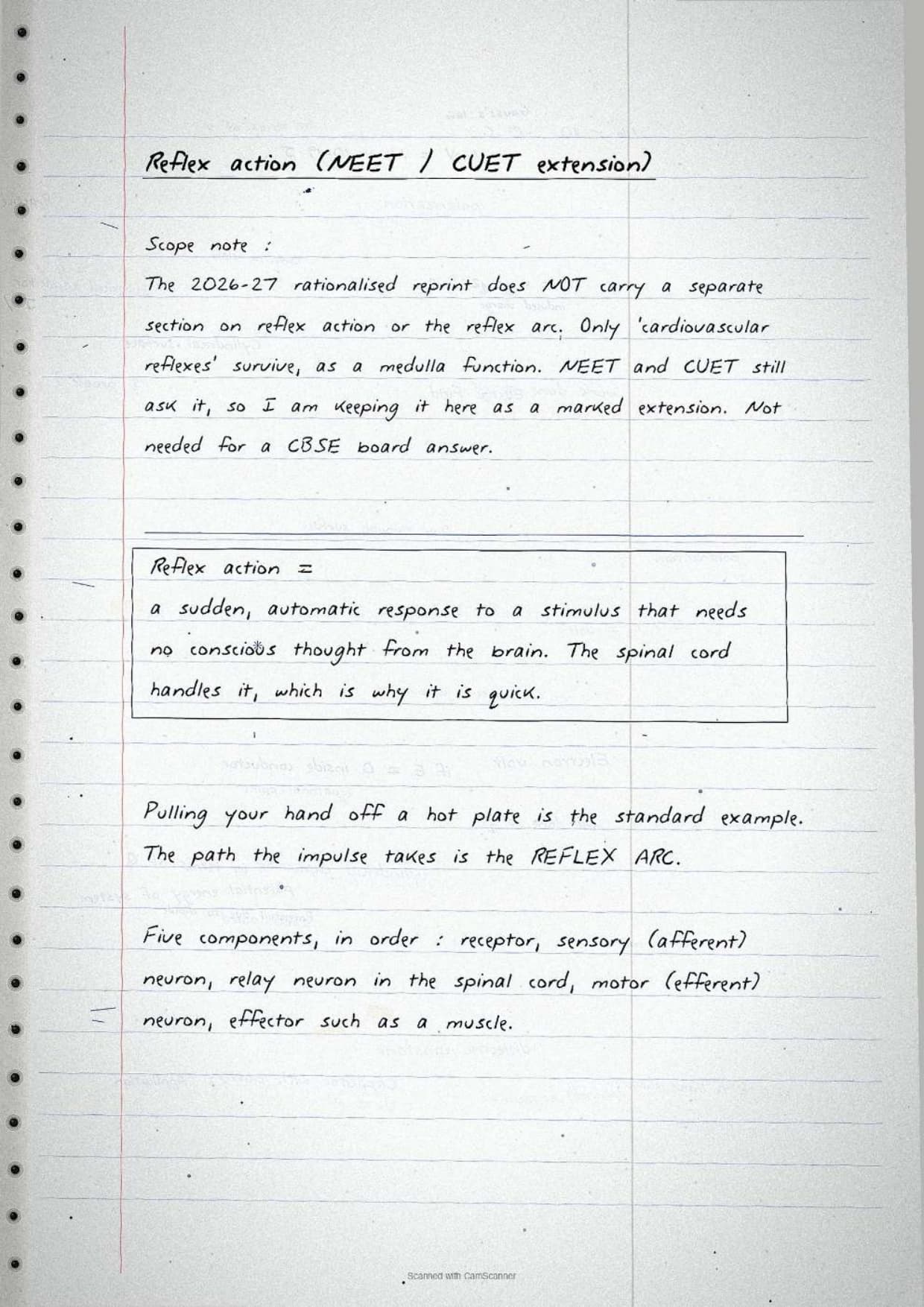
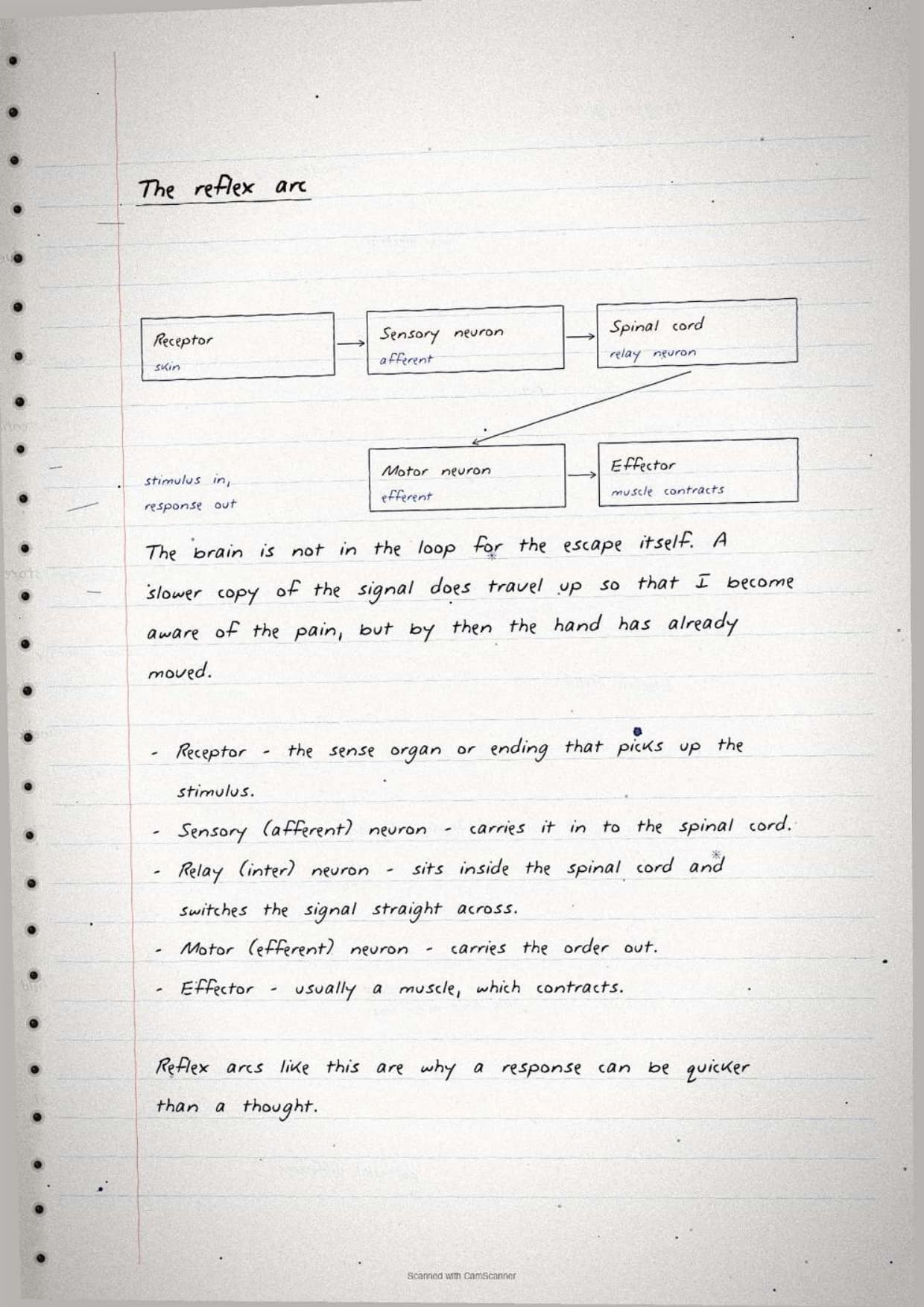
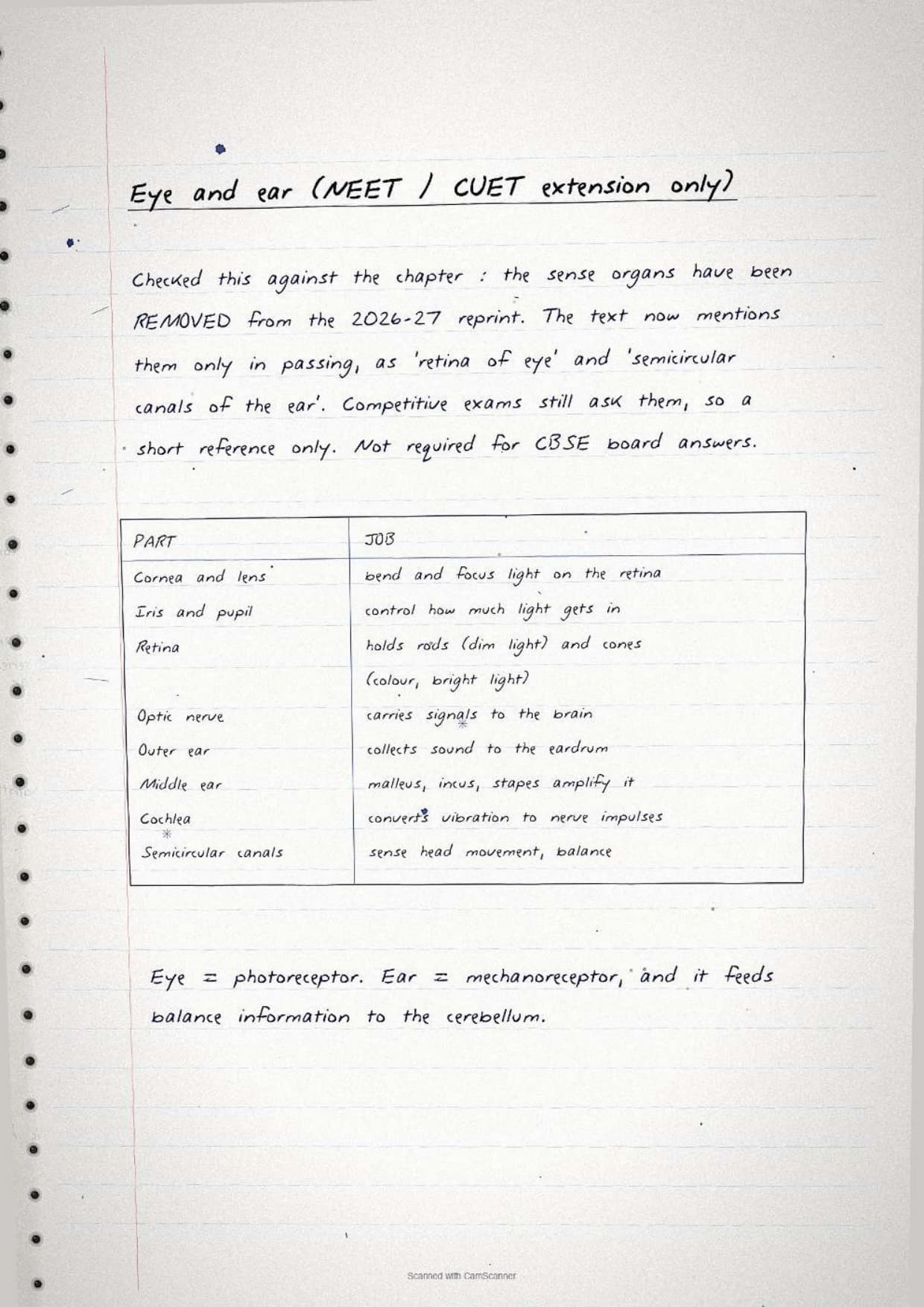
Saltatory conduction, reflex action and the reflex arc, and the eye and ear are all marked as NEET and CUET extensions. The current 2026-27 NCERT print drops them from the board syllabus, so the notes keep them short and flag them clearly.
Key Diagrams and Terms in Neural Control and Coordination Notes
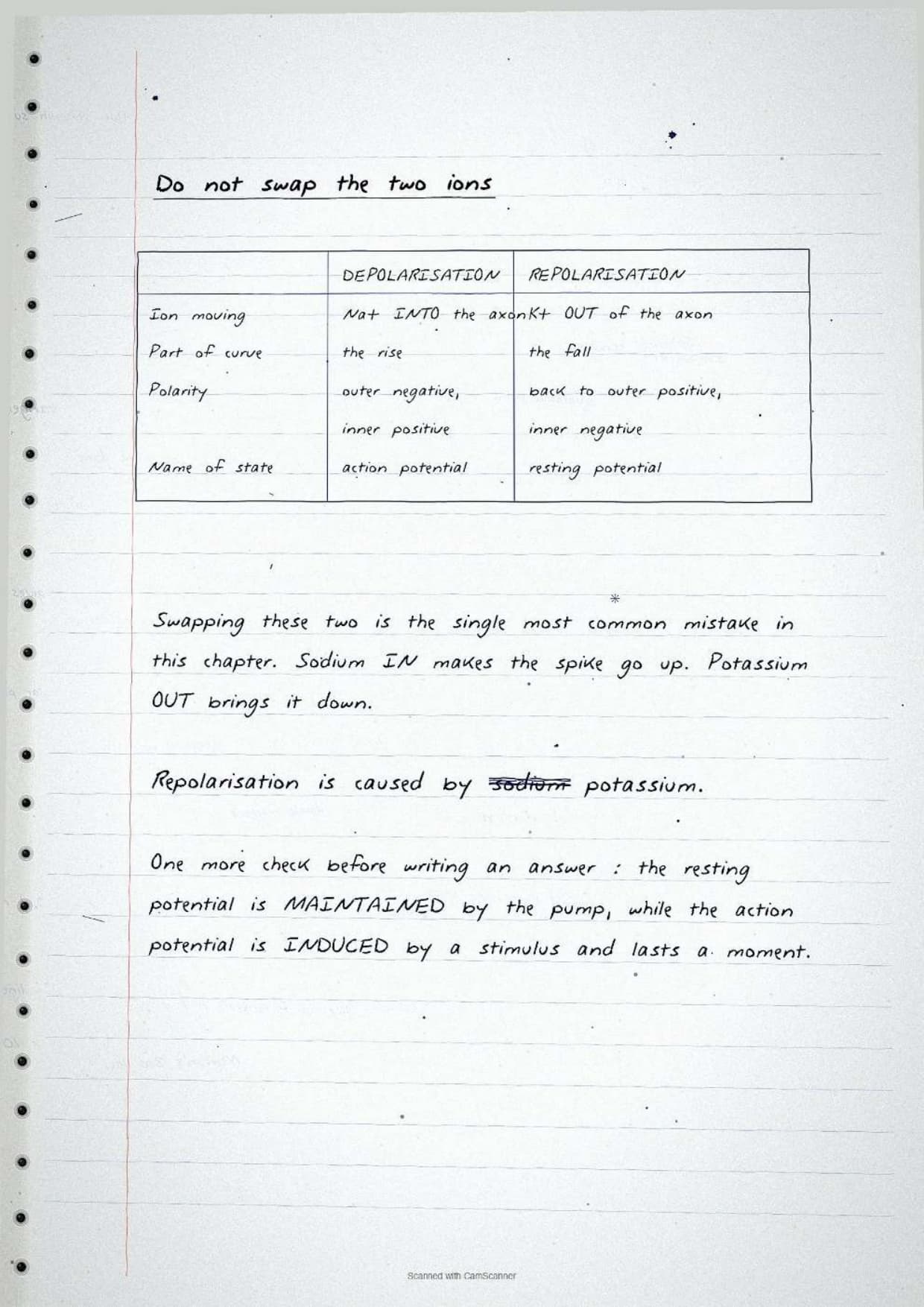
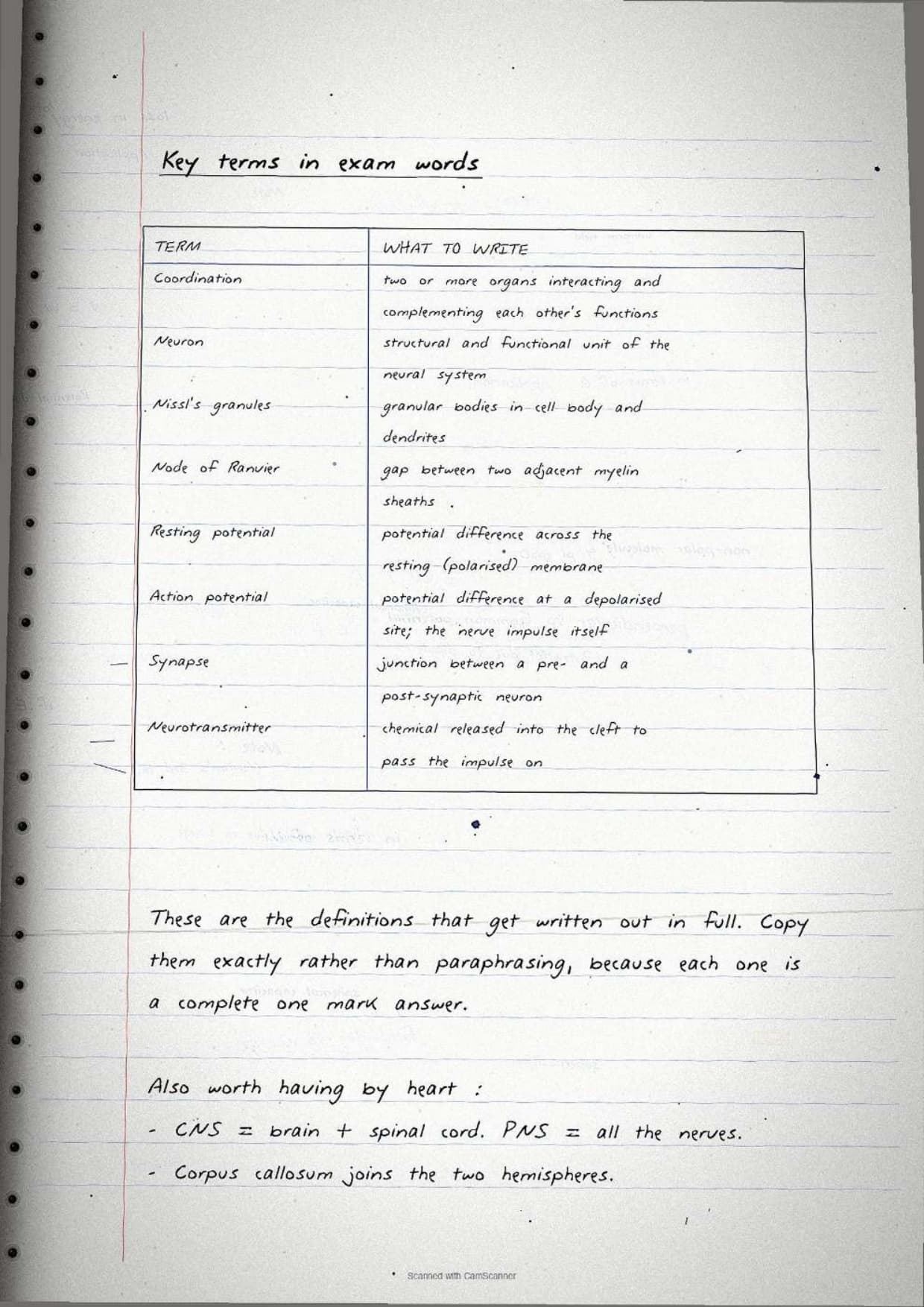
Most marks here are lost on definitions that sound alike. Page 30 holds the block students get wrong most often, because examiners swap the meanings around.
| Term | How the notes define it |
|---|---|
| Neuron | Structural and functional unit of the neural system |
| Nissl's granules | Granular bodies in the cell body and dendrites |
| Node of Ranvier | The gap between two adjacent myelin sheaths |
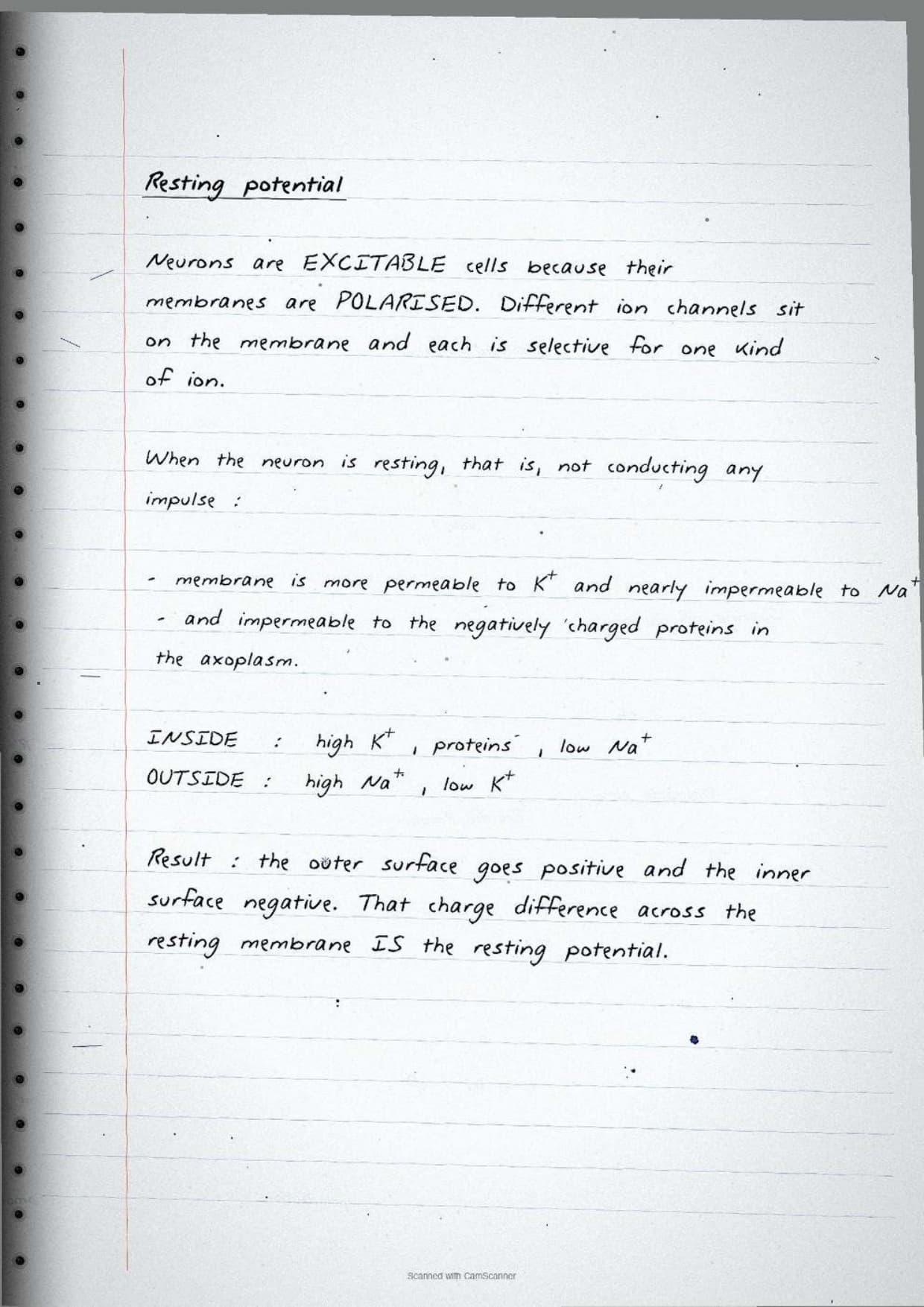
| Resting potential | Potential difference across the resting, polarised membrane |
| Action potential | Potential difference at a depolarised site, the nerve impulse itself |
| Synapse | Junction between a pre-synaptic and a post-synaptic neuron |
Four hand-drawn figures carry the chapter. The polarised membrane sketch shows high Na+ outside and high K+ inside, with the pump pushing 3 Na+ out for every 2 K+ in. The action potential curve runs from -70 mV up to +30 mV and back. A three-box strip shows local currents moving the impulse along the axon, and a labelled chemical synapse marks the pre-synaptic membrane, the cleft and the post-synaptic membrane.
How to Use These Handwritten Notes for Revision
Work through the pages in three short passes. Read a topic page, cover the boxed definition and say it back, then answer two NCERT questions on it. This loop fixes exact wording faster than re-reading the textbook.
- Redraw the action potential curve from memory, labelling both axes every single time.
- Learn the four impulse steps in order, since sodium in and potassium out is a direct exercise answer.
- Keep the class 11 biology handwritten notes chapter 18 Neural Control and Coordination open beside the NCERT Solutions while practising.
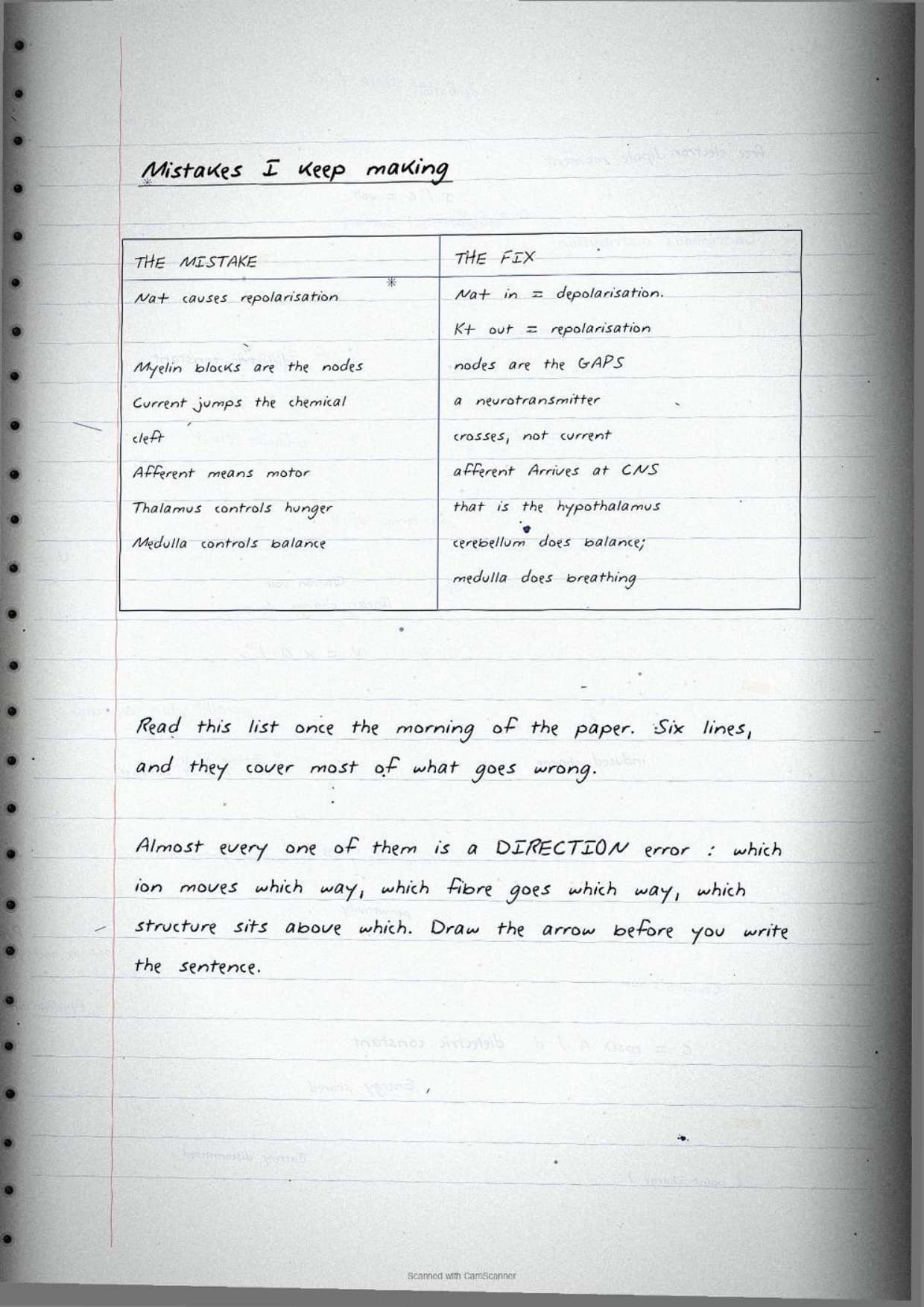
- Read the mistakes page last, on page 32, before you shut the file.
Around 45 minutes is enough for one full pass of this chapter, so the notes fit into the last week before an exam.
Student Feedback on Neural Control and Coordination Handwritten Notes
Students rate the impulse pages as the ones that save them the most time. The figures below come from a Collegedunia poll run before the 2026 boards.
- In a Collegedunia survey of 10,860 students, 74% said the action potential curve was their most-used revision page.
- Most-confused pair before the poll: thalamus against hypothalamus, mixed up by about 4 in 10 students.
Source: 2026-27 Class 11 Biology student poll. Sample of 10,860 students from CBSE schools across 12 states.
Where to Use These Notes Alongside Other Resources
These handwritten pages work best next to the step-wise Solutions, the summary Notes and the Exemplar Solutions for the same chapter. Read the notes first, then check the answers, and keep the Exemplar for extra practice.
| Resource | Best used for |
|---|---|
| Neural Control and Coordination NCERT Solutions | Step-by-step answers to every back-exercise question |
| Neural Control and Coordination Class 11 Notes | Quick chapter summary with all key terms in one place |
| Neural Control and Coordination Exemplar Solutions | Exemplar questions solved for NEET-level practice |
| Neural Control and Coordination NCERT Book PDF | The original chapter text and exercises |
All Class 11 Biology Handwritten Notes by Chapter
The table links the handwritten notes for every Class 11 Biology chapter, so students can move across the course in one click. Neural Control and Coordination is highlighted.
| Chapter | Handwritten Notes |
|---|---|
| Chapter 1 | The Living World |
| Chapter 2 | Biological Classification |
| Chapter 3 | Plant Kingdom |
| Chapter 4 | Animal Kingdom |
| Chapter 5 | Morphology of Flowering Plants |
| Chapter 6 | Anatomy of Flowering Plants |
| Chapter 7 | Structural Organisation in Animals |
| Chapter 8 | Cell The Unit of Life |
| Chapter 9 | Biomolecules |
| Chapter 10 | Cell Cycle and Cell Division |
| Chapter 11 | Photosynthesis in Higher Plants |
| Chapter 12 | Respiration in Plants |
| Chapter 13 | Plant Growth and Development |
| Chapter 14 | Breathing and Exchange of Gases |
| Chapter 15 | Body Fluids and Circulation |
| Chapter 16 | Excretory Products and their Elimination |
| Chapter 17 | Locomotion and Movement |
| Chapter 18 | Neural Control and Coordination |
| Chapter 19 | Chemical Coordination and Integration |
FAQs on Neural Control and Coordination Handwritten Notes
Ques. Are these class 11 biology handwritten notes chapter 18 Neural Control and Coordination free to download?
Ans. Yes. The Neural Control and Coordination handwritten notes are free to download as a PDF from this page. All 33 pages follow the 2026-27 NCERT and cover the full chapter in clear handwriting for quick revision.
Ques. What topics do these handwritten notes cover?
Ans. They cover coordination, the CNS and PNS split, afferent and efferent fibres, the somatic and autonomic systems, neuron structure, resting and action potentials, conduction along the axon, synapses and neurotransmitters, and the three divisions of the brain. Each topic sits on its own page with boxed definitions and hand-drawn figures.
Ques. What is the role of sodium ions in an action potential?
Ans. The membrane becomes freely permeable to Na+ at the stimulated site. Na+ rushes in and the polarity reverses, which is depolarisation, and that is the action potential. K+ only moves out later, during repolarisation. The notes box this as a direct exercise answer.
Ques. Do these notes cover the eye and the ear?
Ans. Only as a short NEET and CUET reference on page 29. The sense organs were removed from the 2026-27 NCERT print, so they are not needed for a CBSE board answer. Reflex action and the reflex arc are flagged the same way.
Ques. How long do these notes take to revise?
Ans. About 45 minutes for one full pass. Read each topic page, recall the boxed definition, then answer two NCERT questions on it. Finish with the mistakes page, which fixes the six direction errors students repeat most.



Comments