




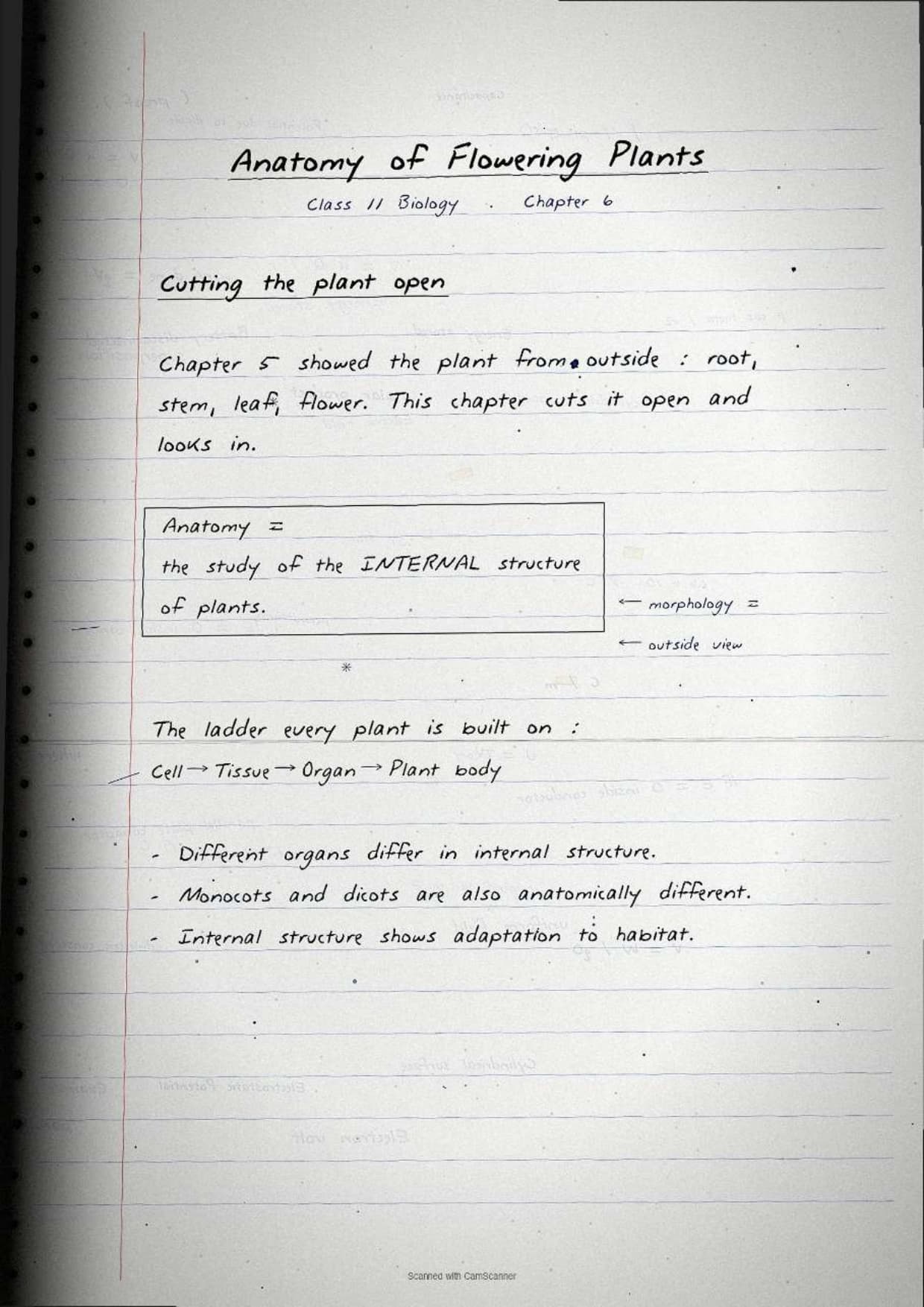
These class 11 biology handwritten notes chapter 6 Anatomy of Flowering Plants cut the plant open and follow the tissue ladder from cell to plant body. All 40 pages carry the T.S. diagrams, the dicot and monocot tables and the secondary growth steps in clear handwriting for the 2026-27 exams.
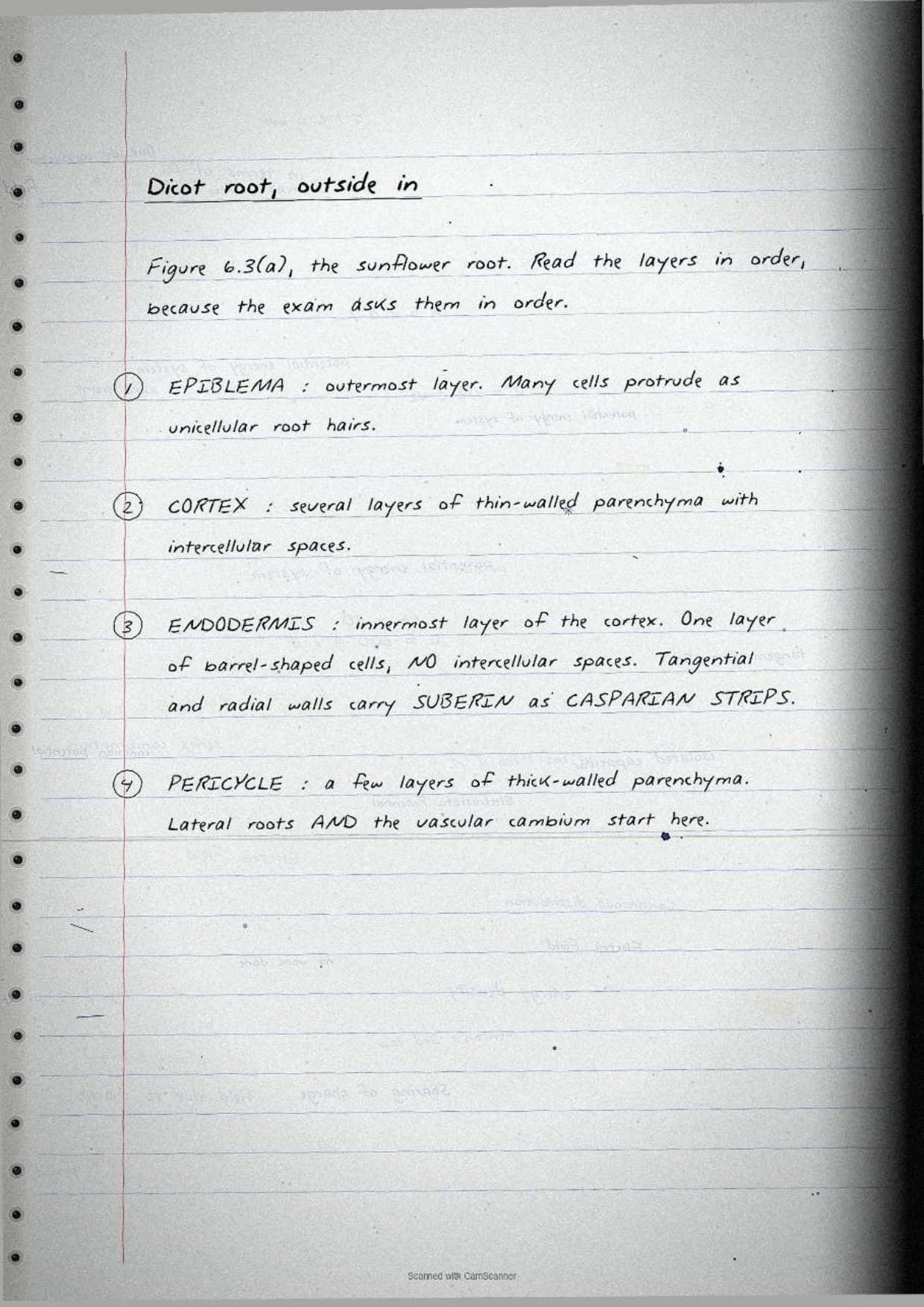
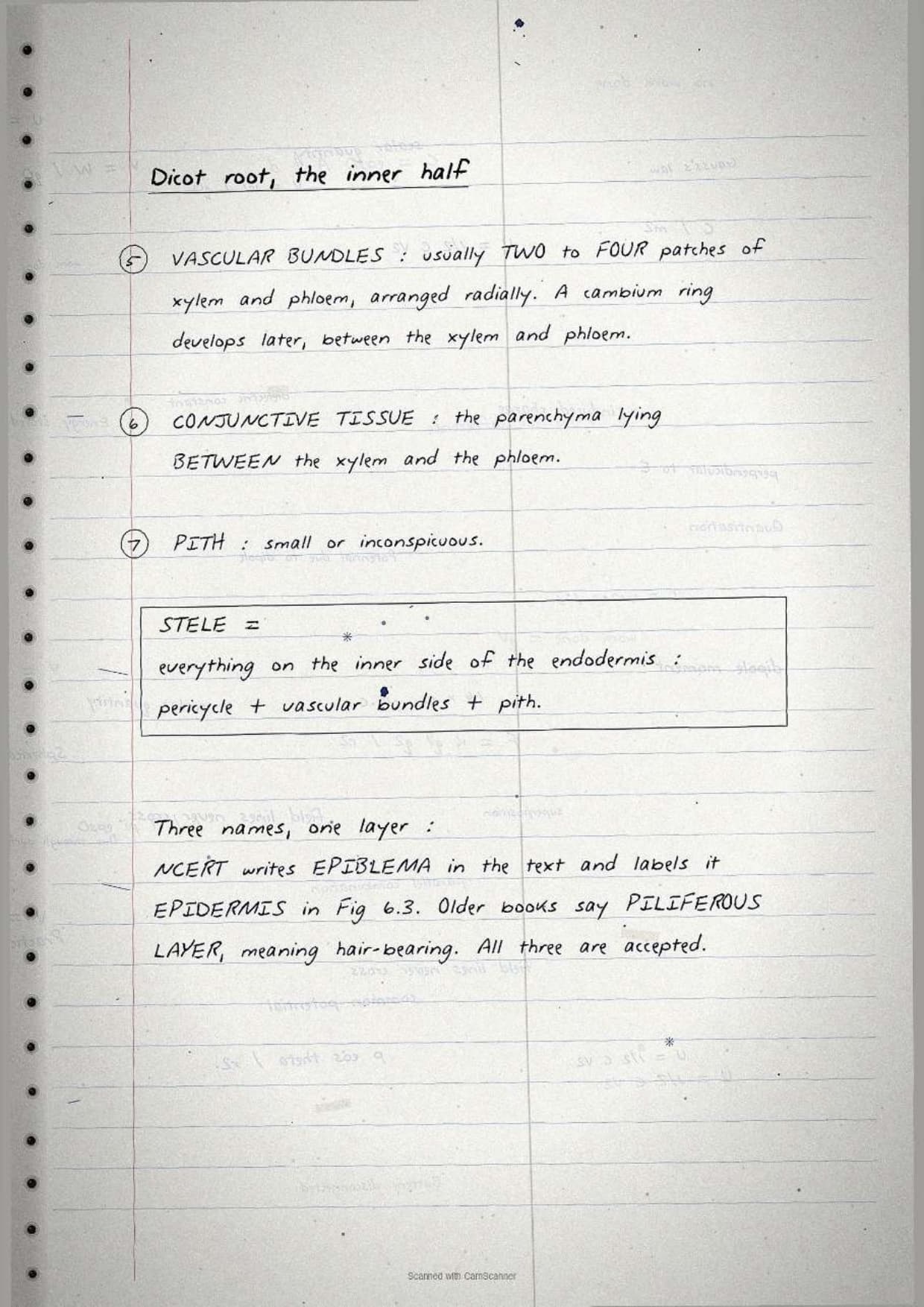
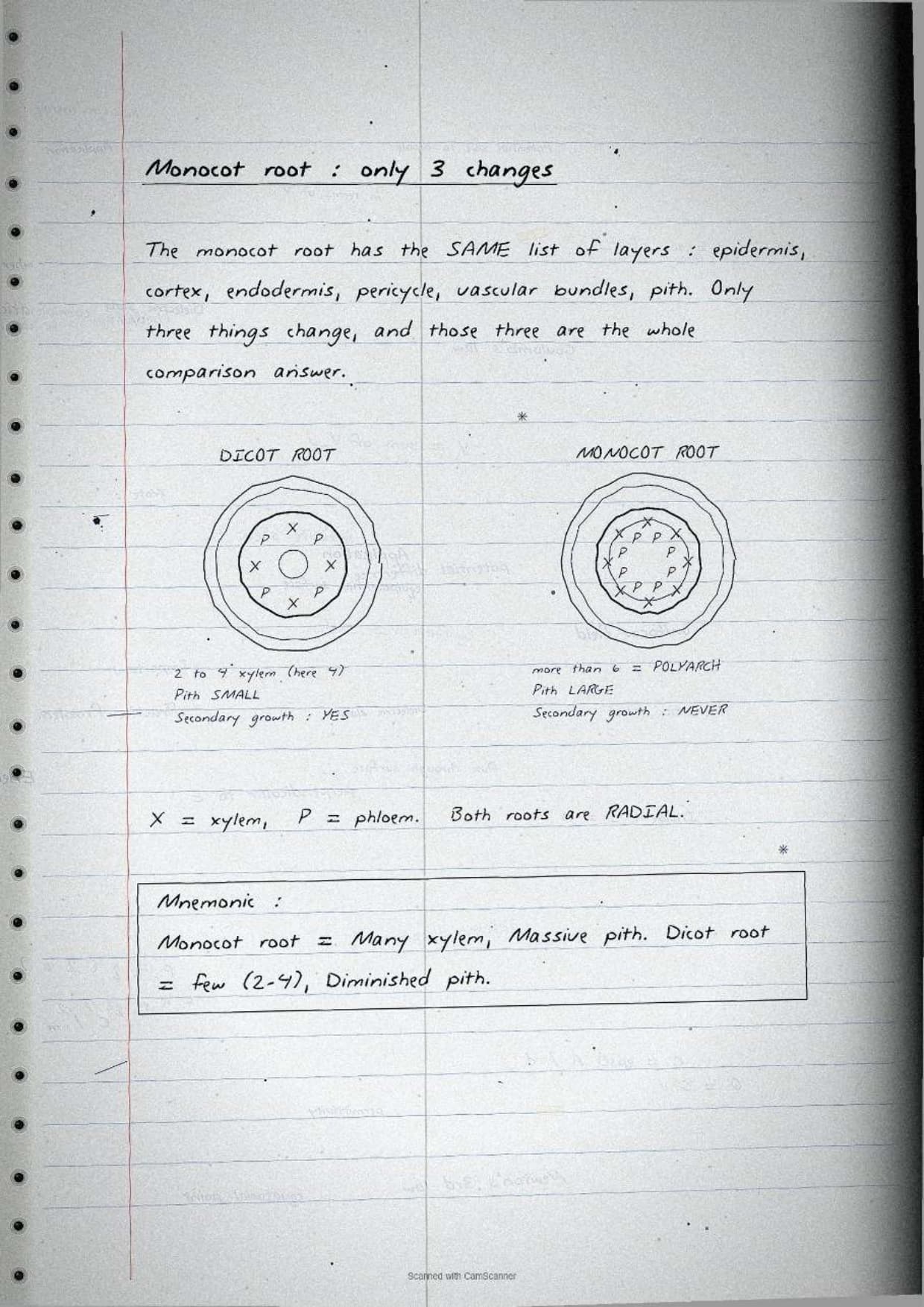
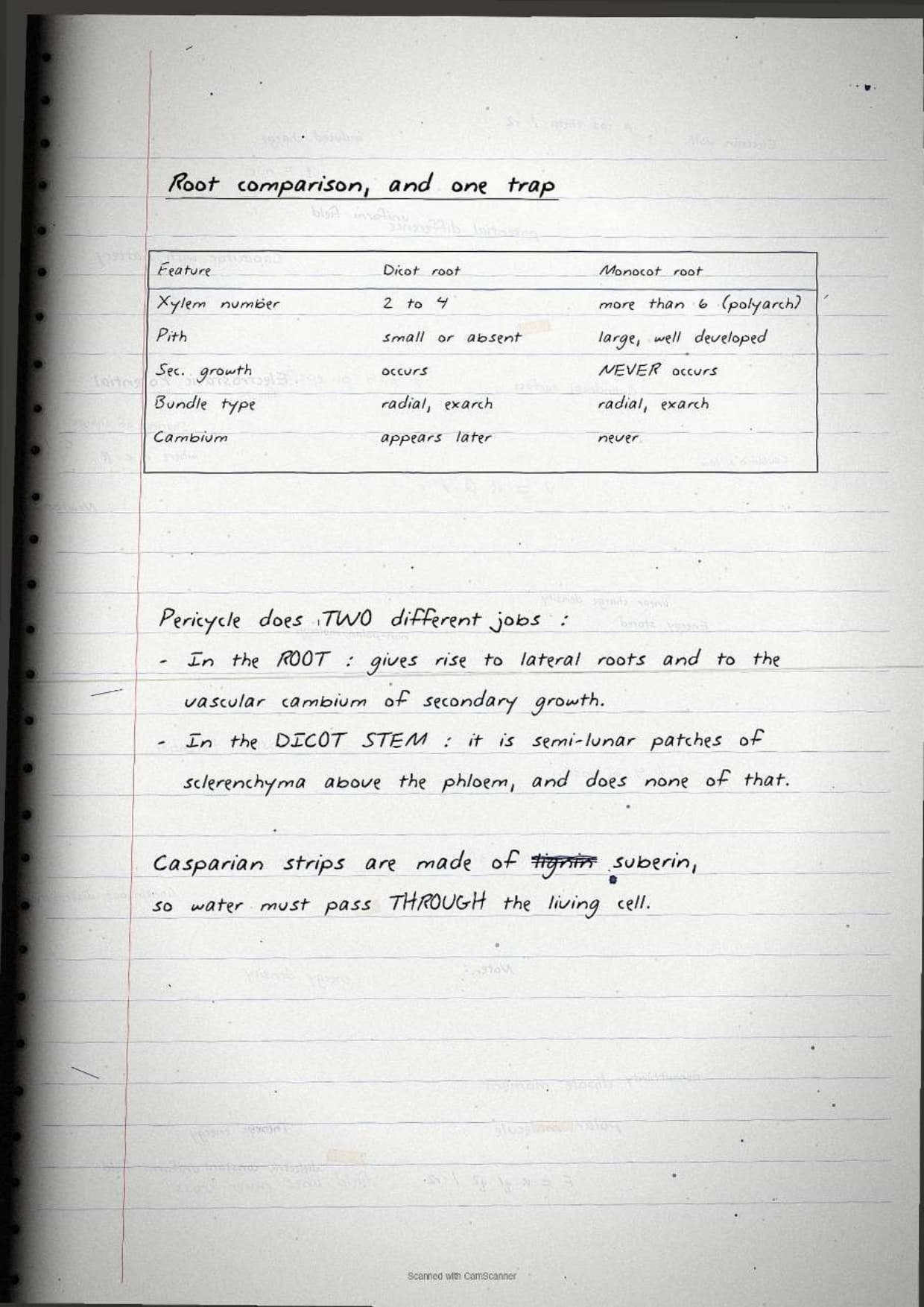
Chapter 6 is a diagram chapter. Most marks here come from labelled sections and from one comparison table.
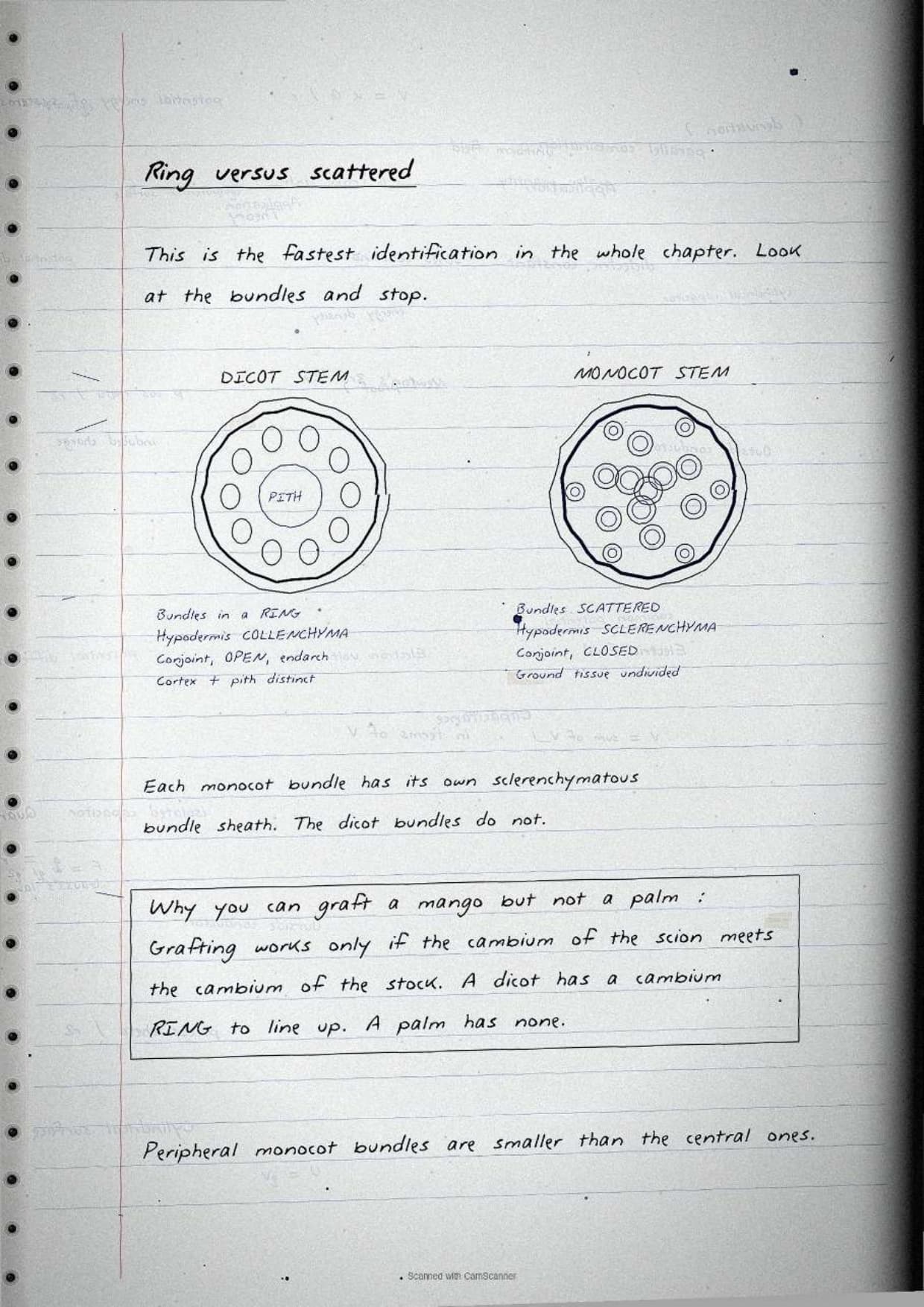
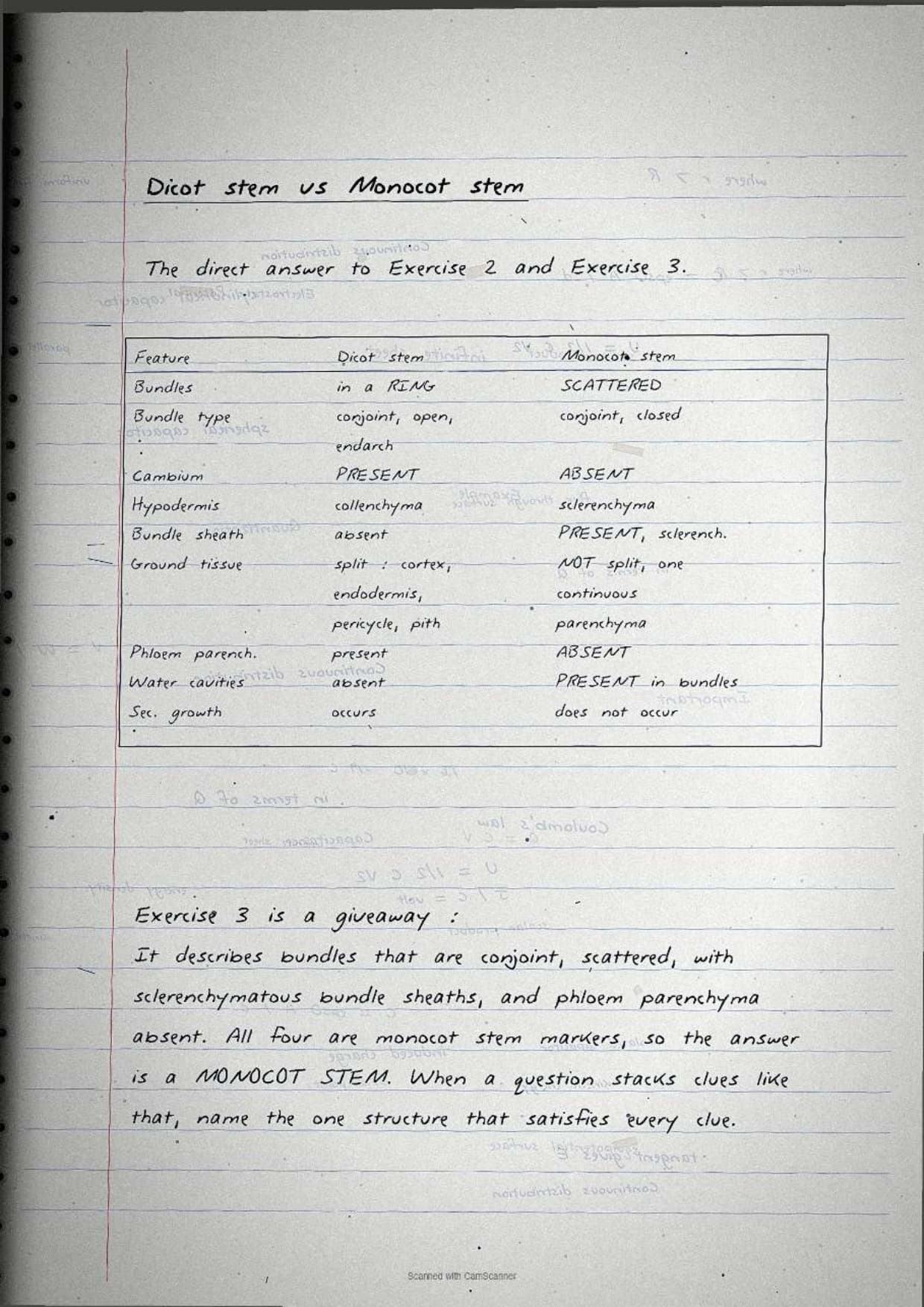
- Hand-drawn ring-versus-scattered sketch that separates a dicot stem from a monocot stem at a glance.
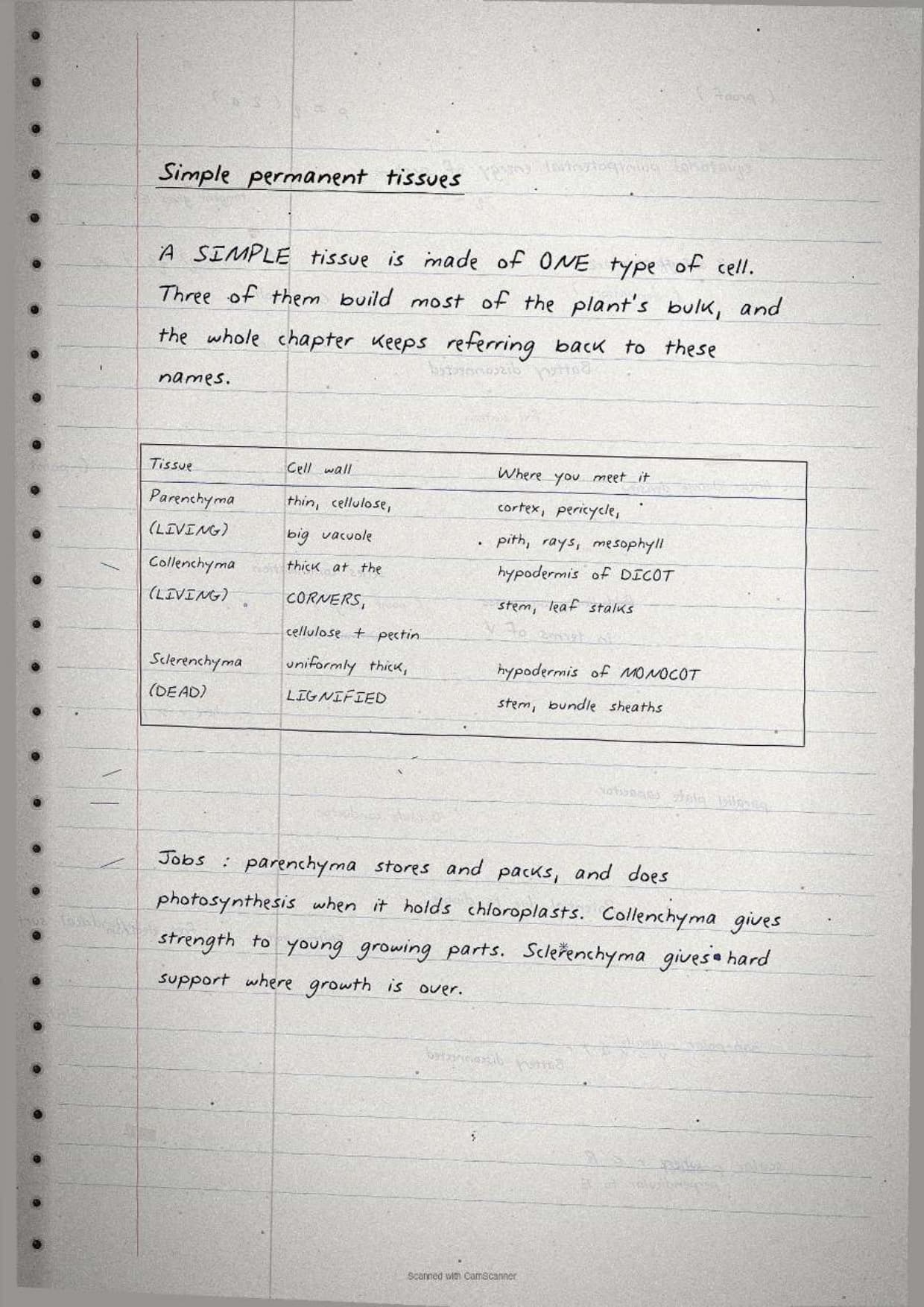
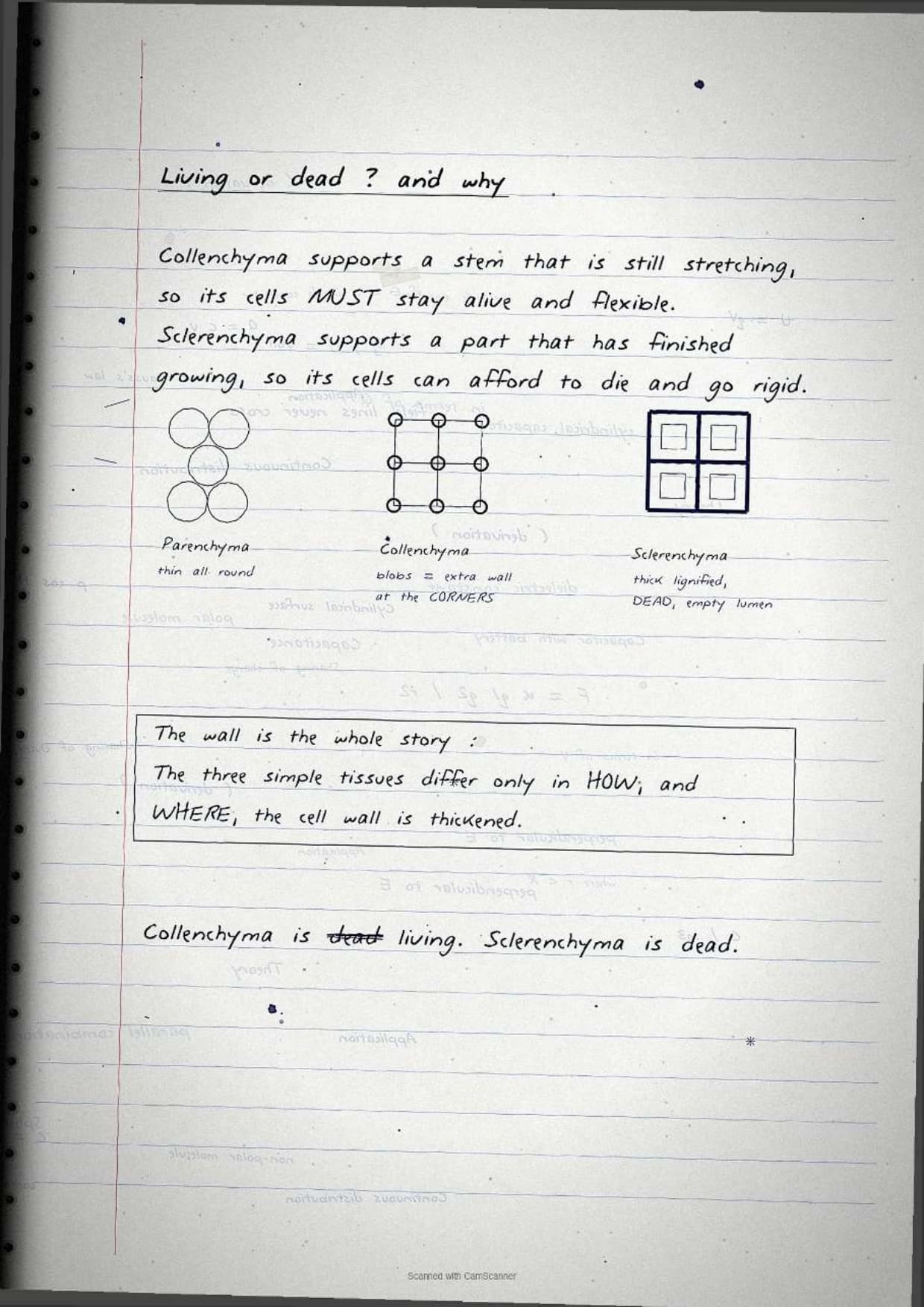
- Boxed wall-thickening diagram for parenchyma, collenchyma and sclerenchyma side by side.
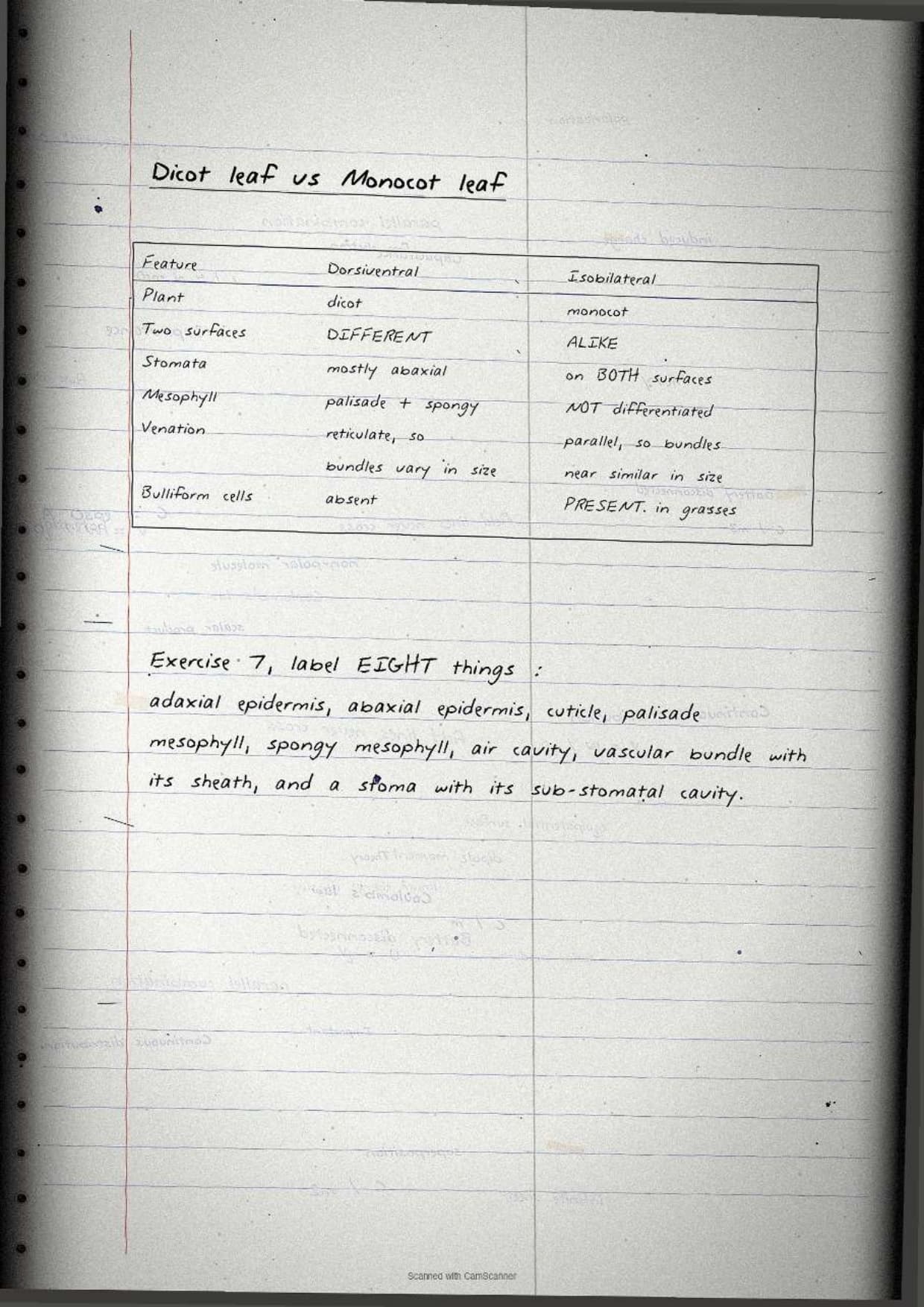
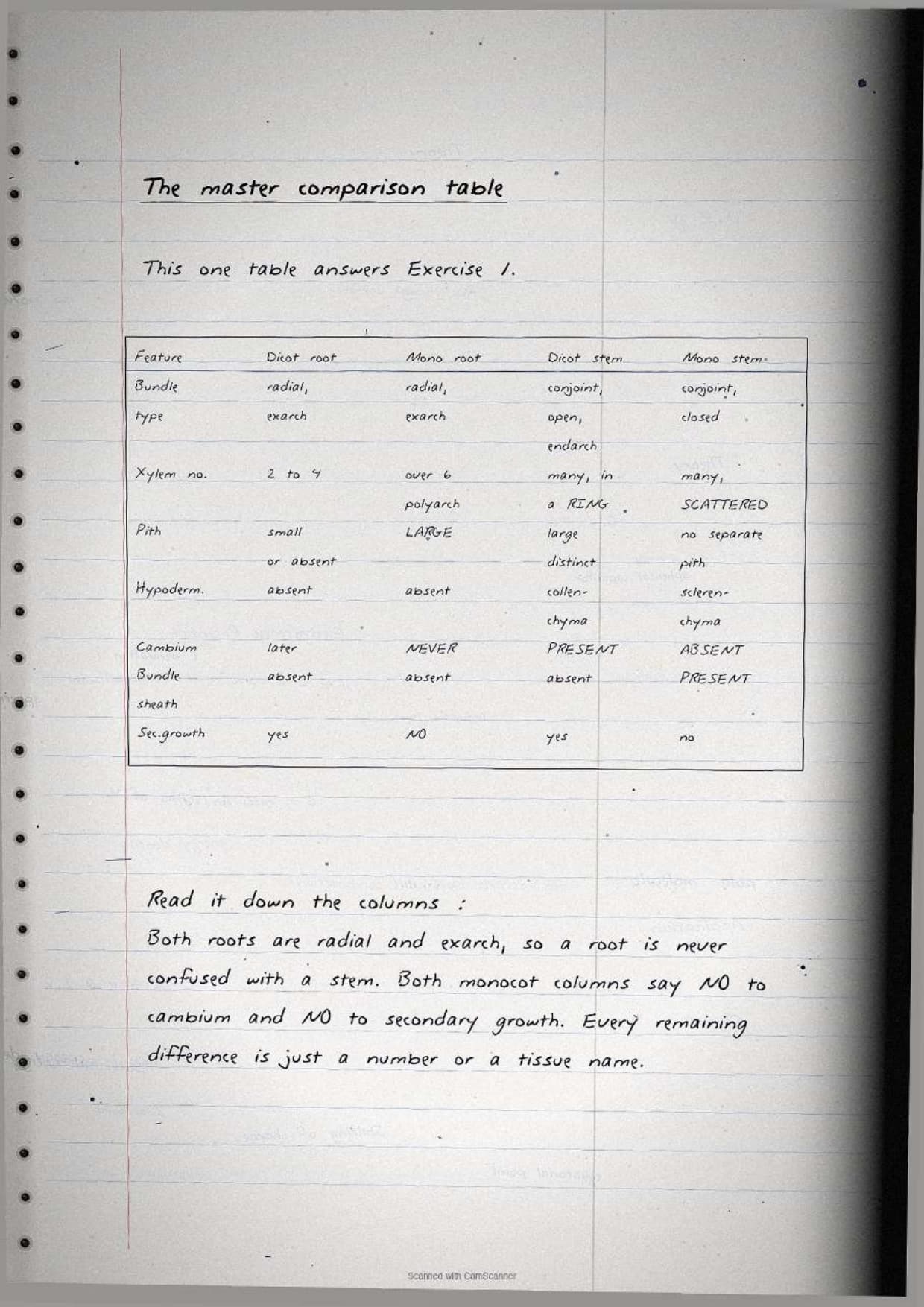
- A 12-row dicot stem against monocot stem table, plus a 5-column summary table covering both roots and both stems.
What Anatomy of Flowering Plants Handwritten Notes Cover
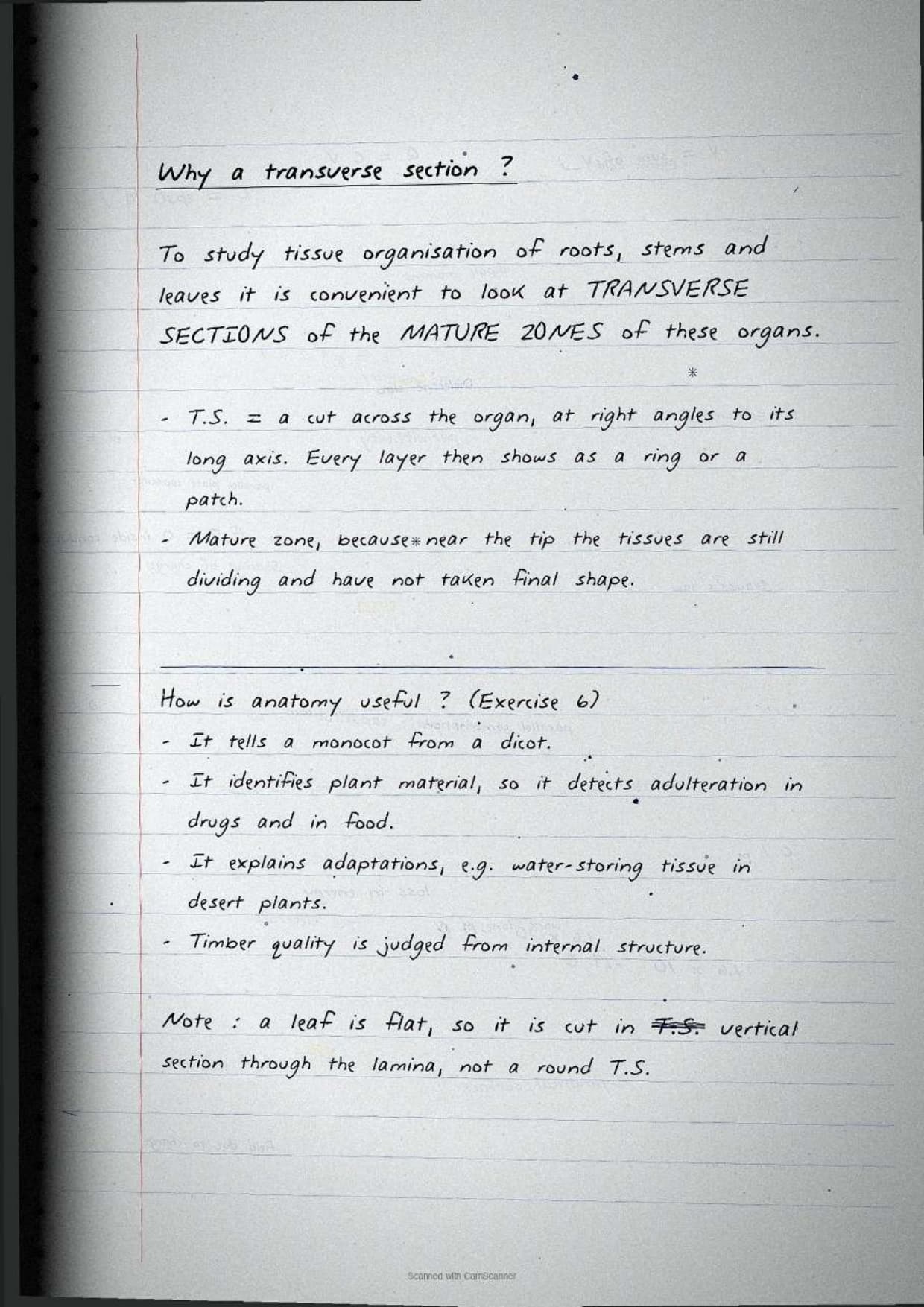
The 40 pages follow the NCERT order. They open with the tissue ladder of cell, tissue, organ and plant body, then explain why a transverse section of the mature zone is the cut students study. Each topic sits on its own page, and every definition is boxed.
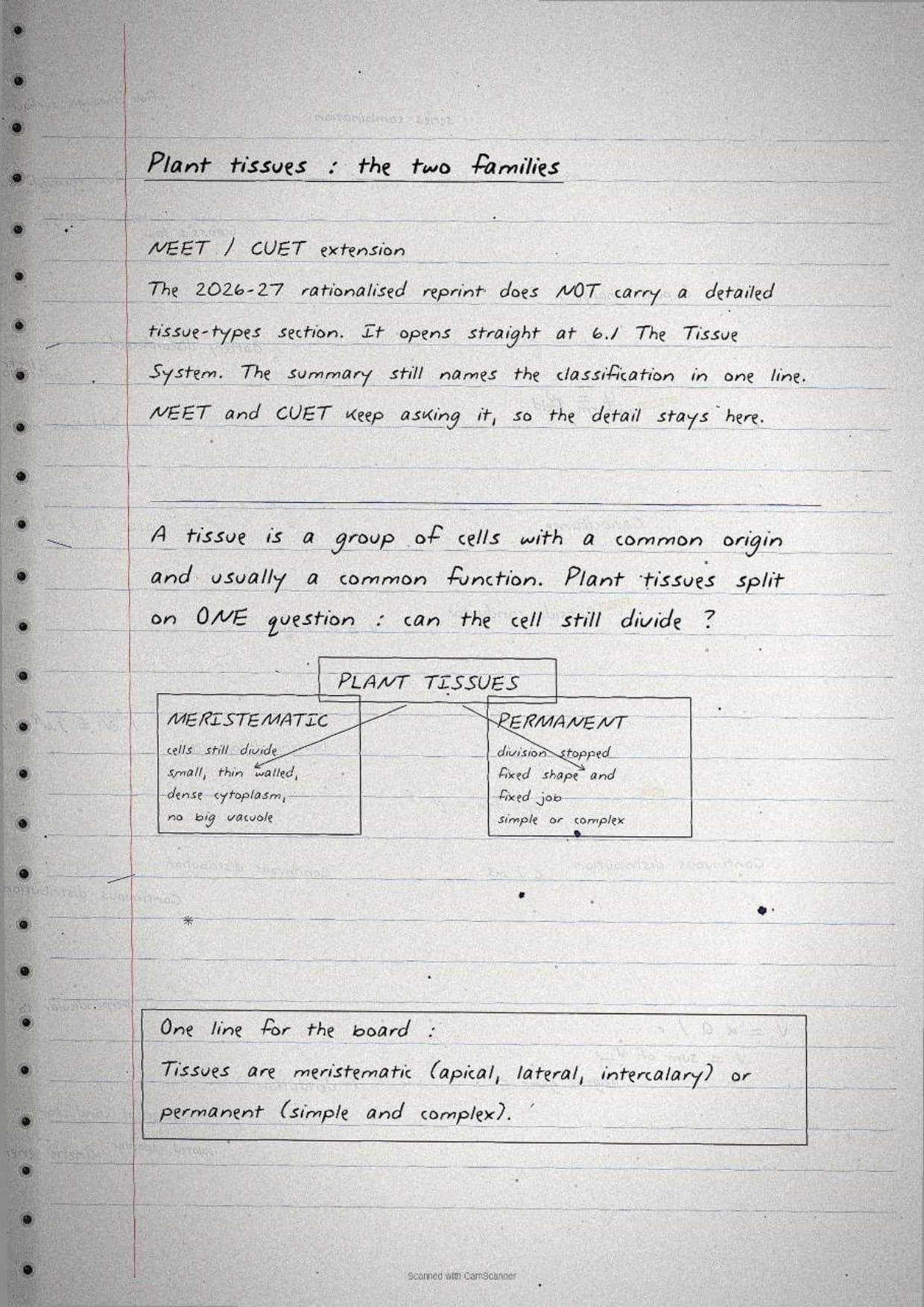
- Tissue families: meristematic against permanent, split on the single question of whether the cell can still divide.
- Simple tissues: parenchyma, collenchyma and sclerenchyma, with which are living and where each one is found.
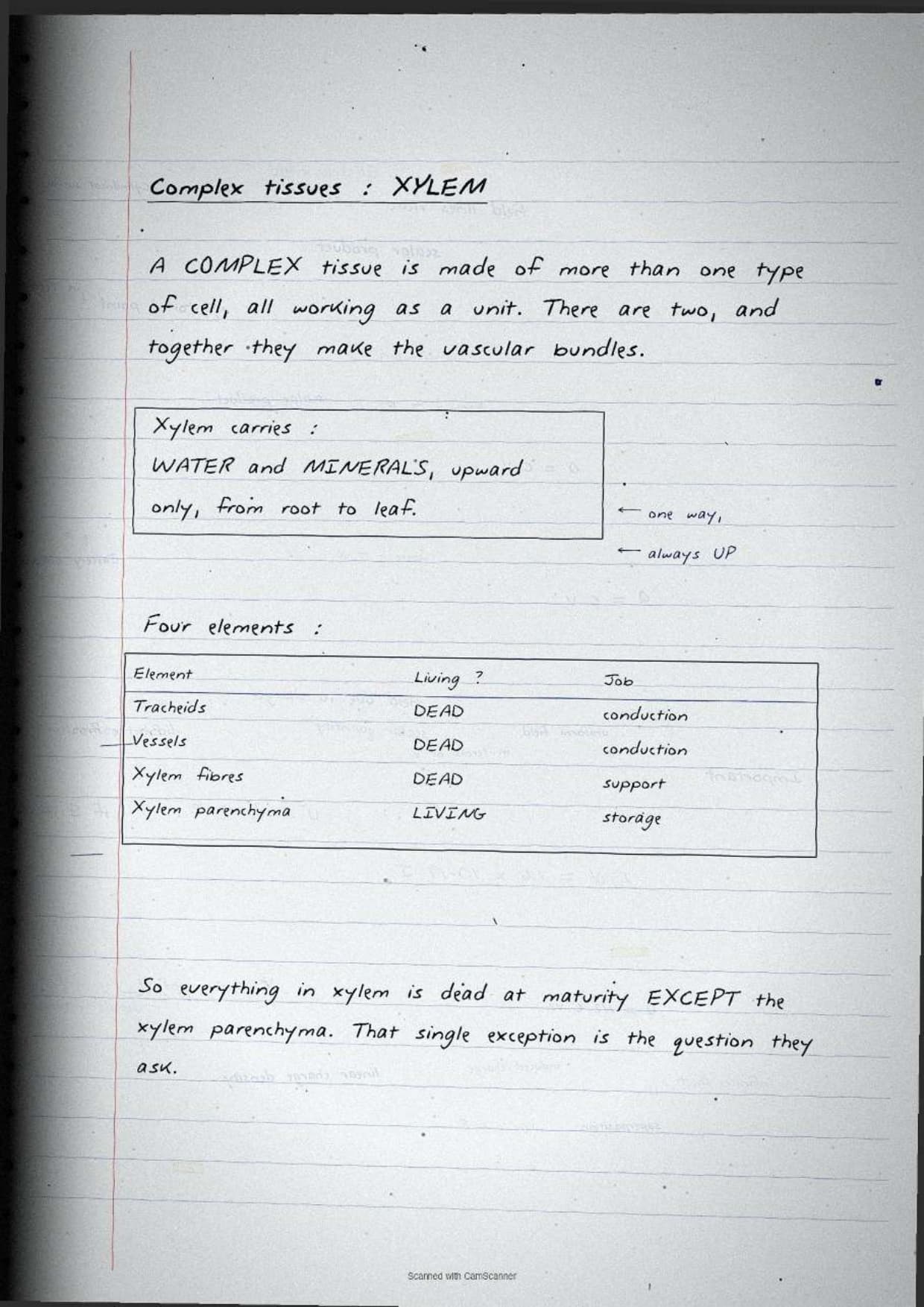
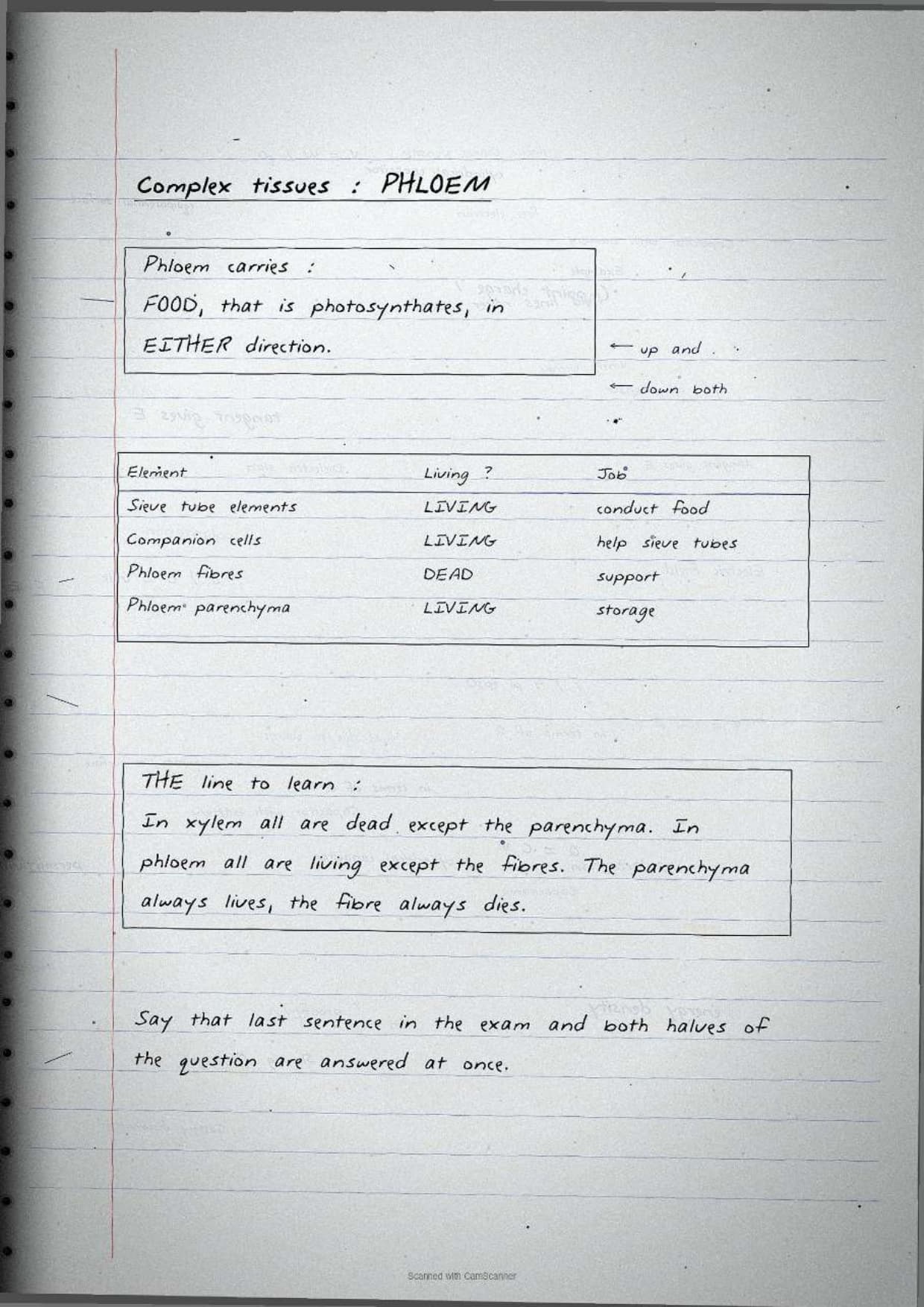
- Complex tissues: xylem and phloem elements, each marked living or dead in a small table.
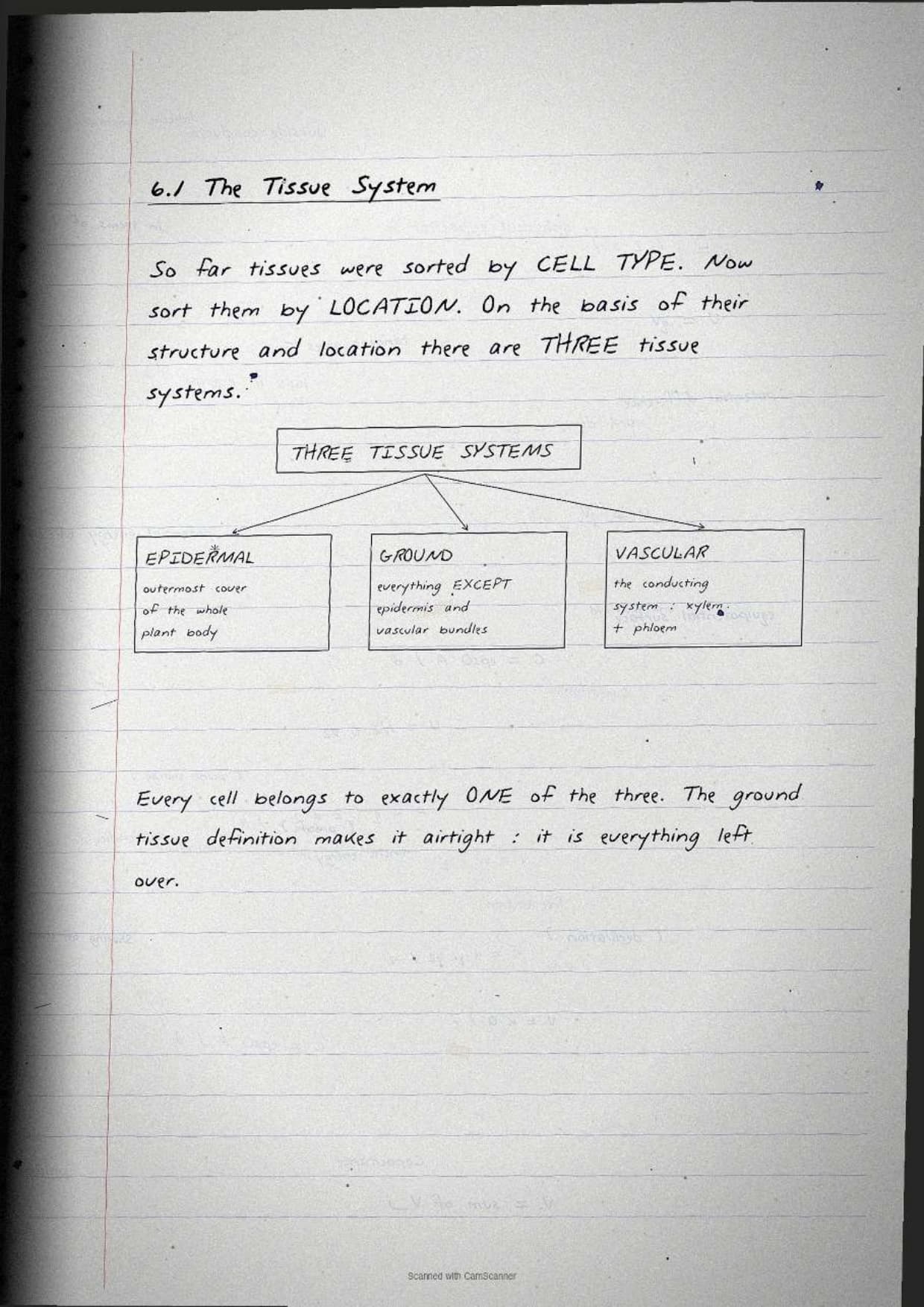
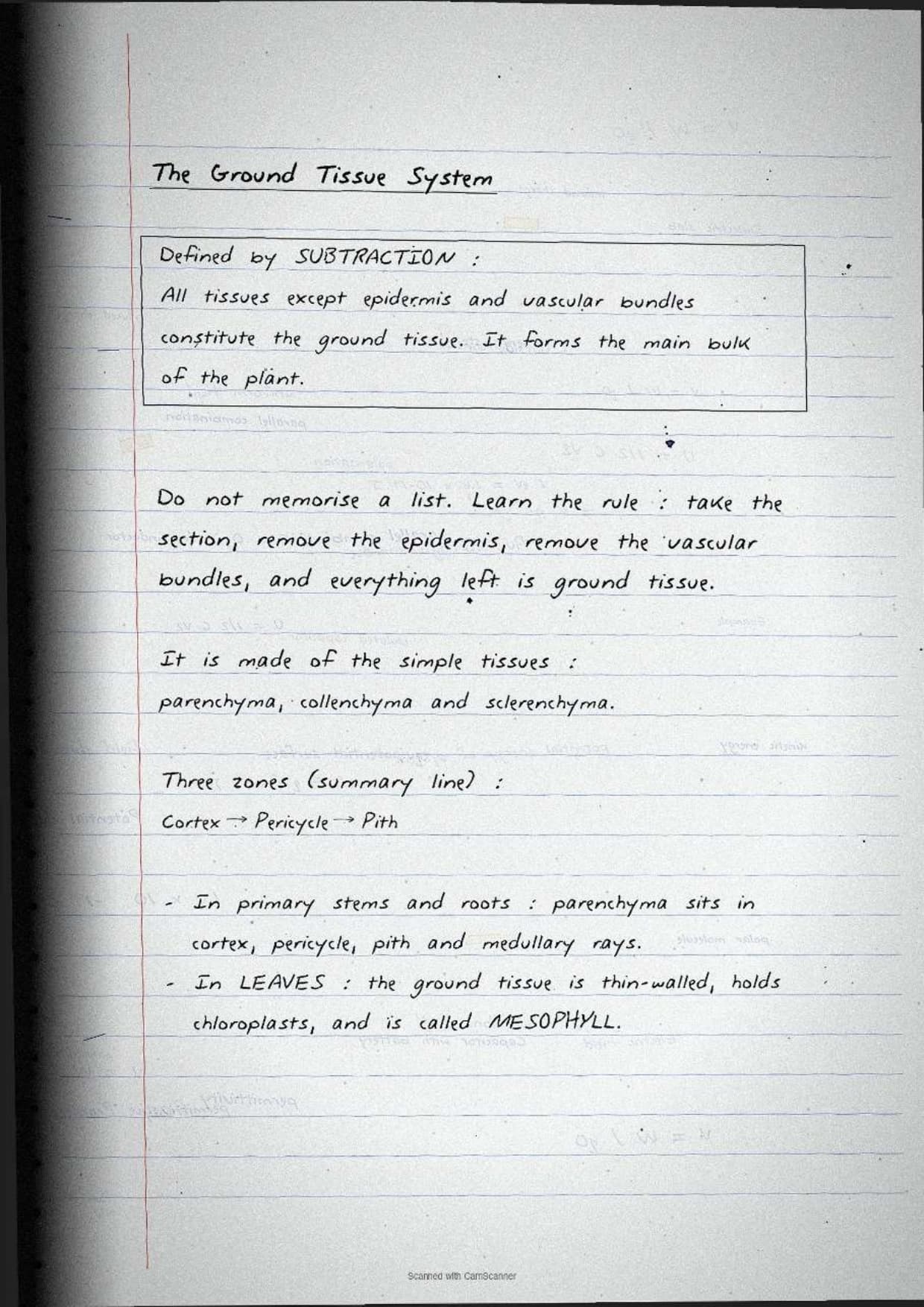
- Tissue systems: the epidermal, ground and vascular systems, grouped by location.
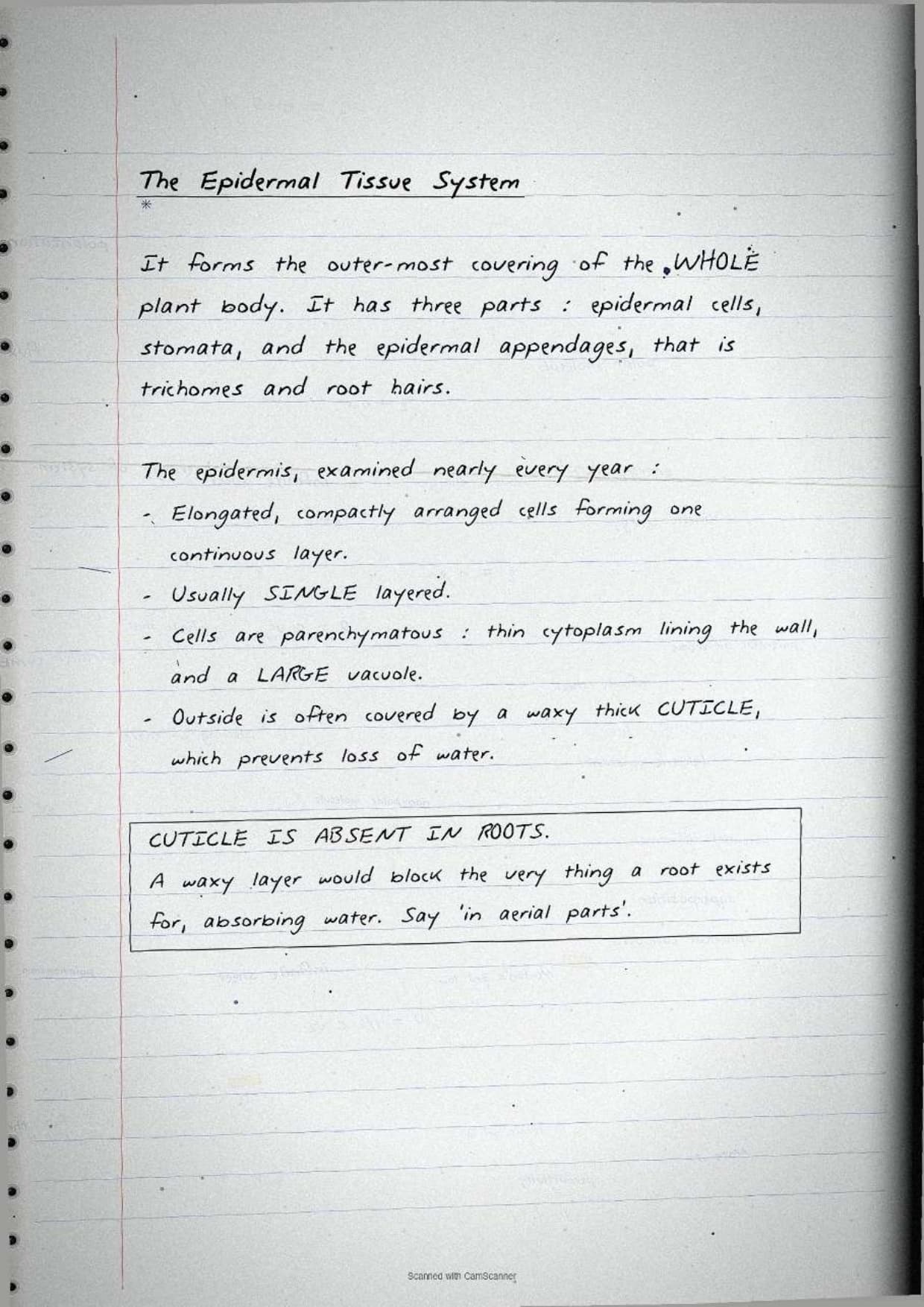
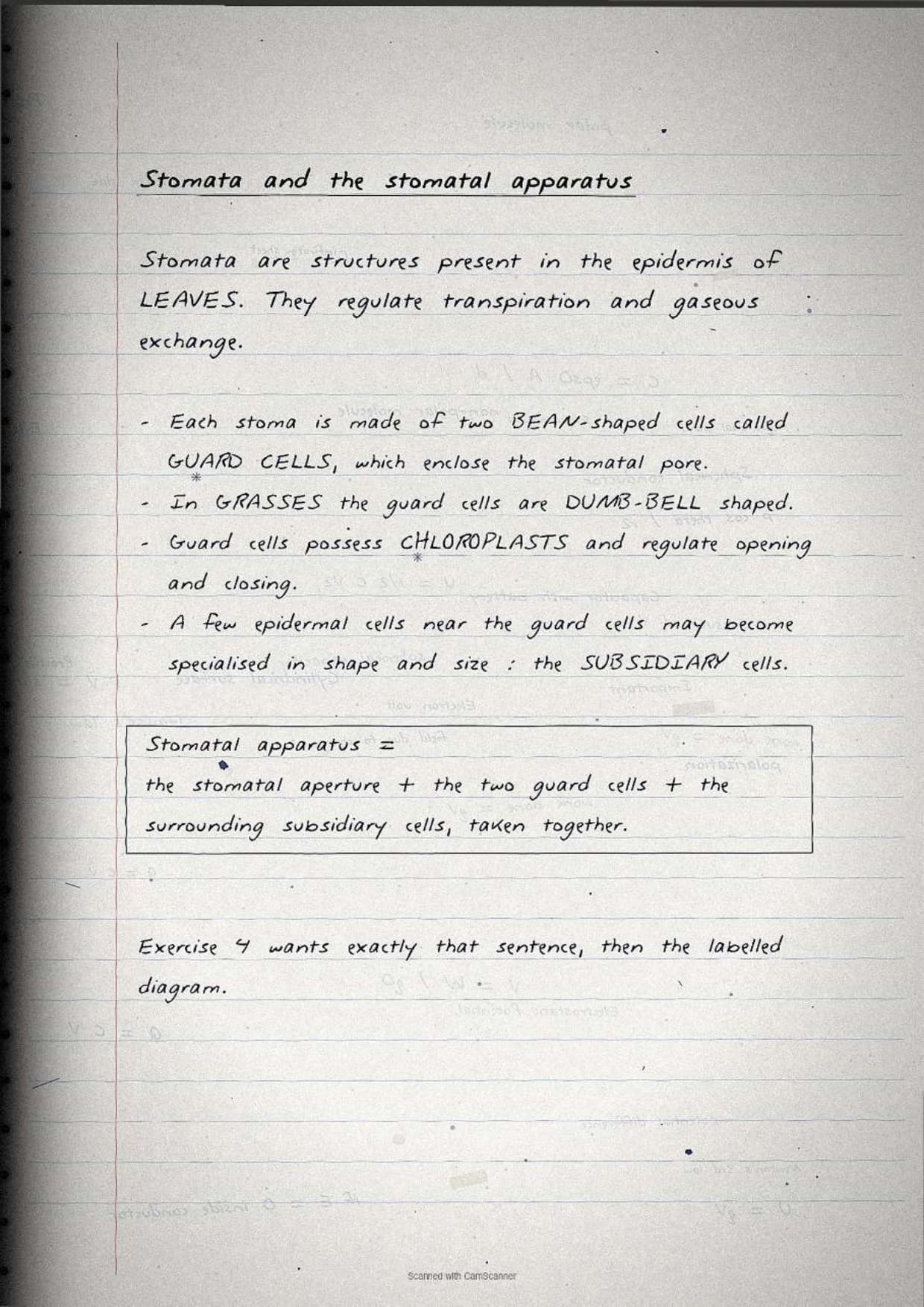
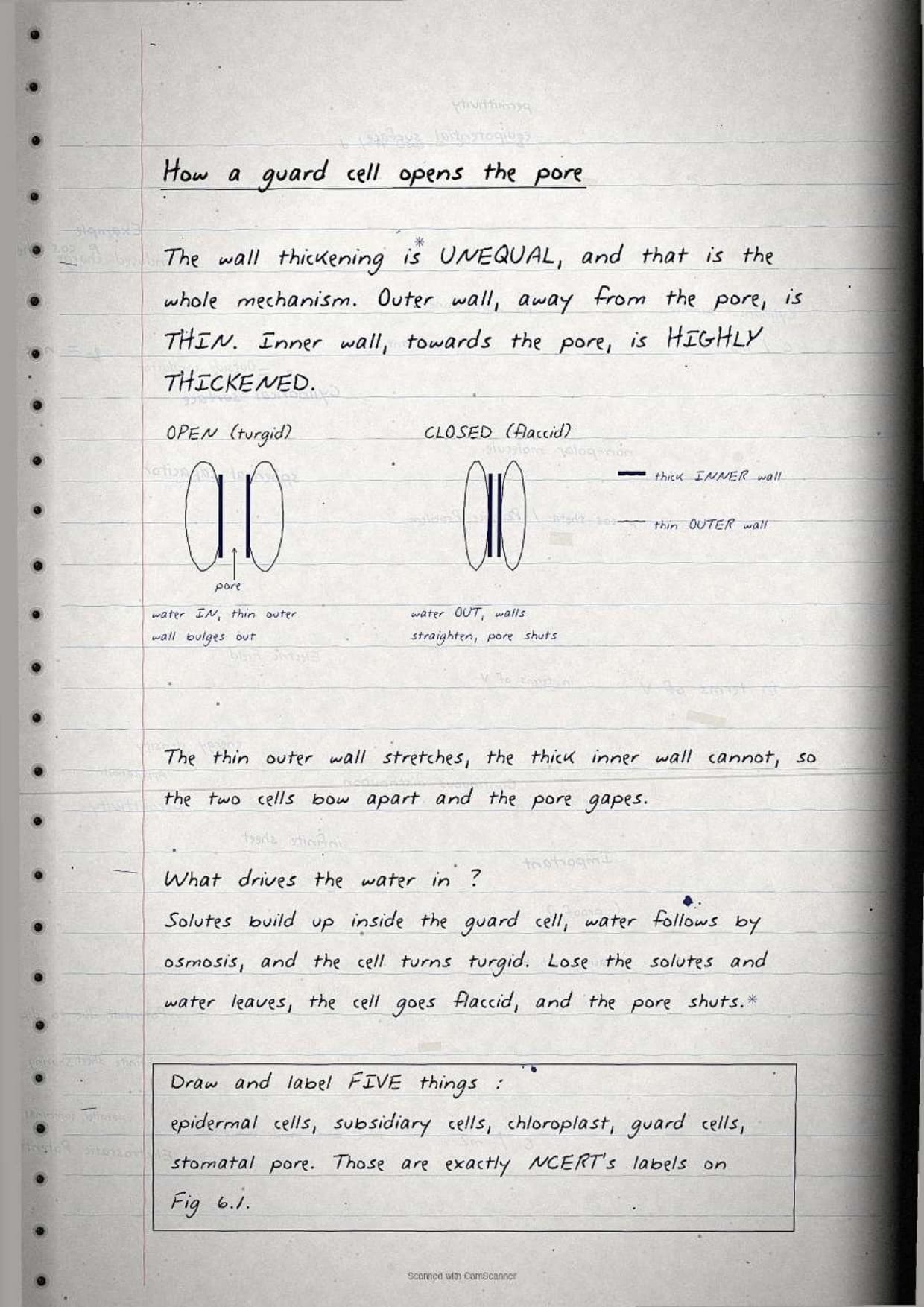
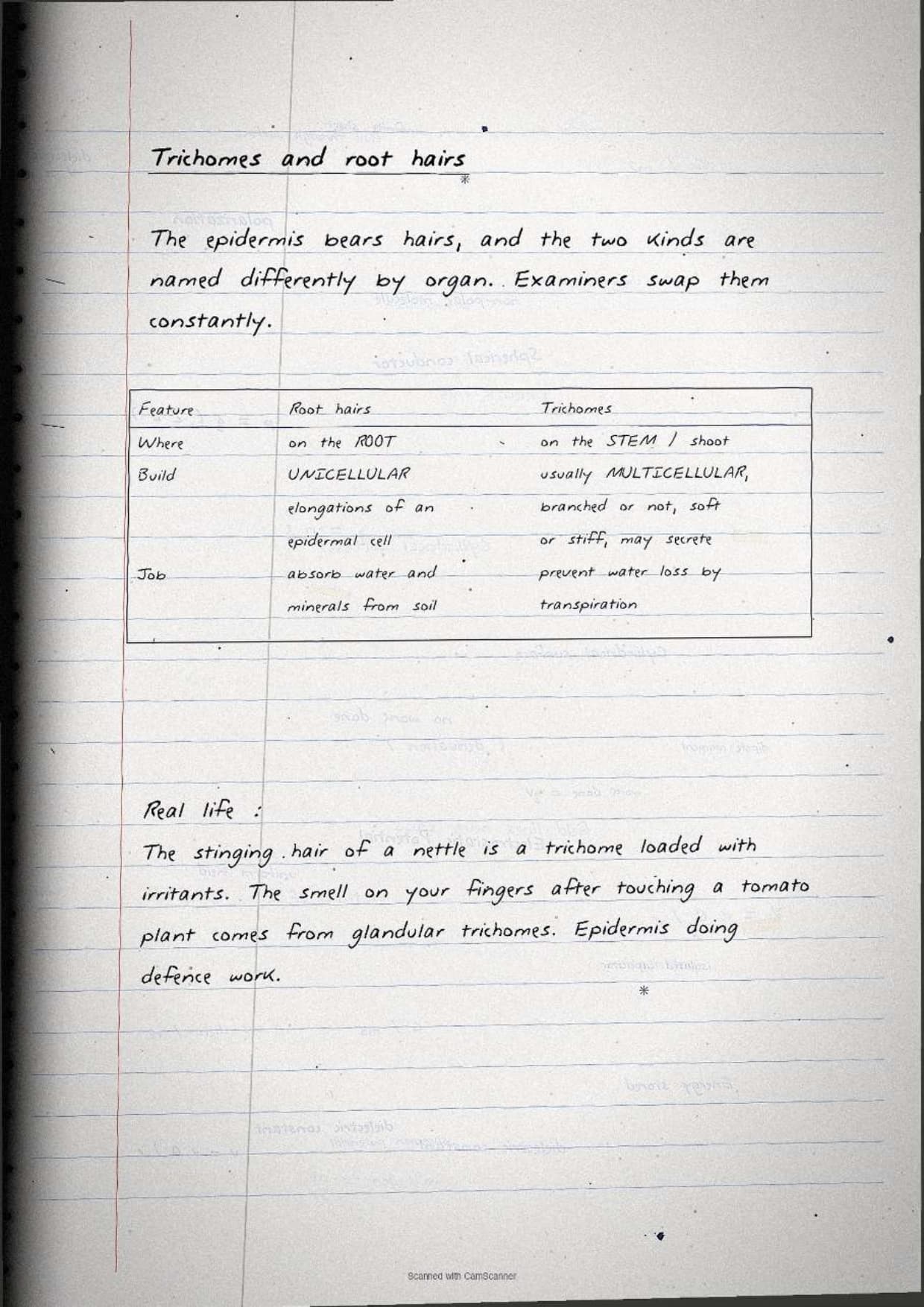
- Epidermis: cuticle, stomata and the guard-cell mechanism, plus trichomes against root hairs.
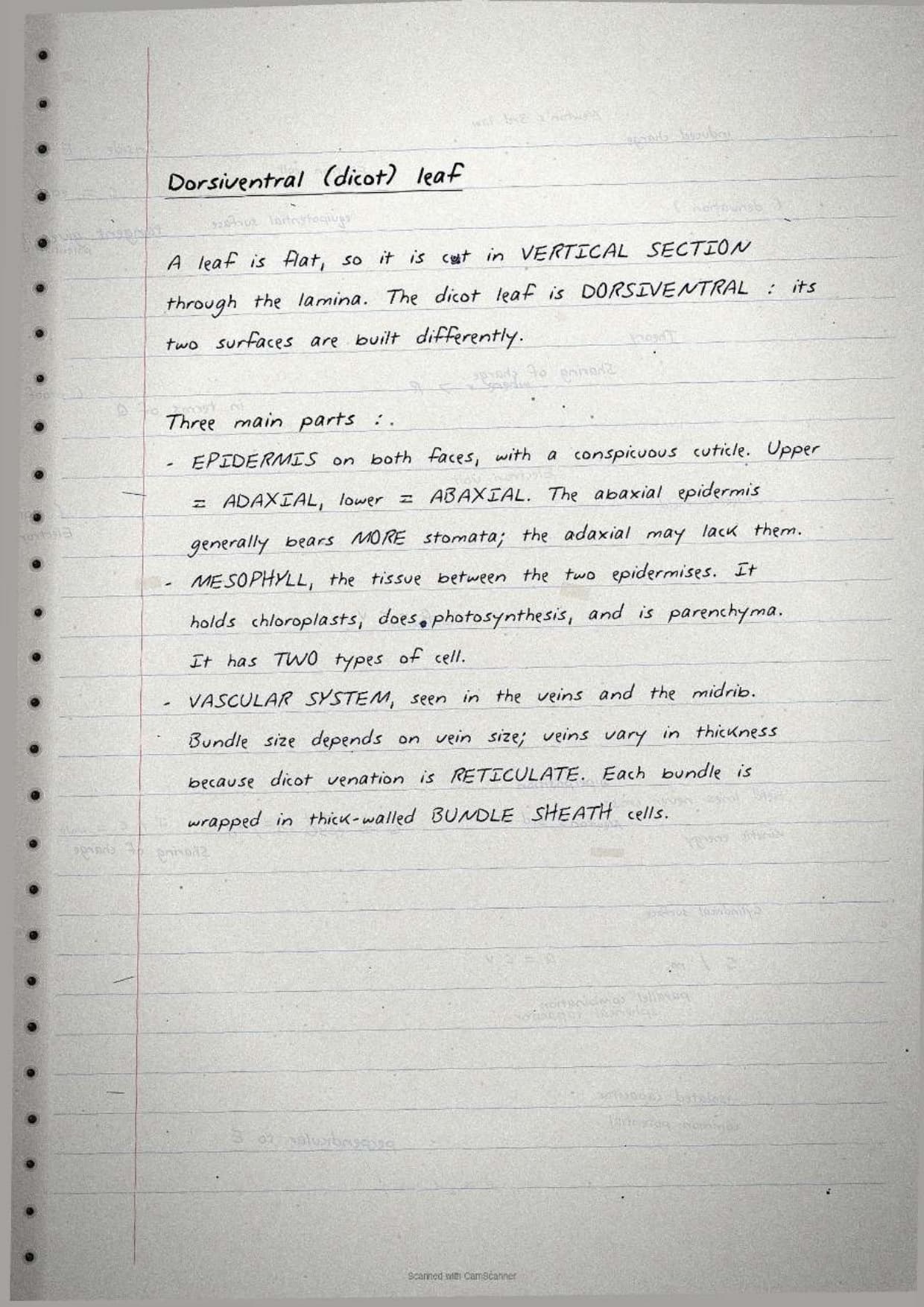
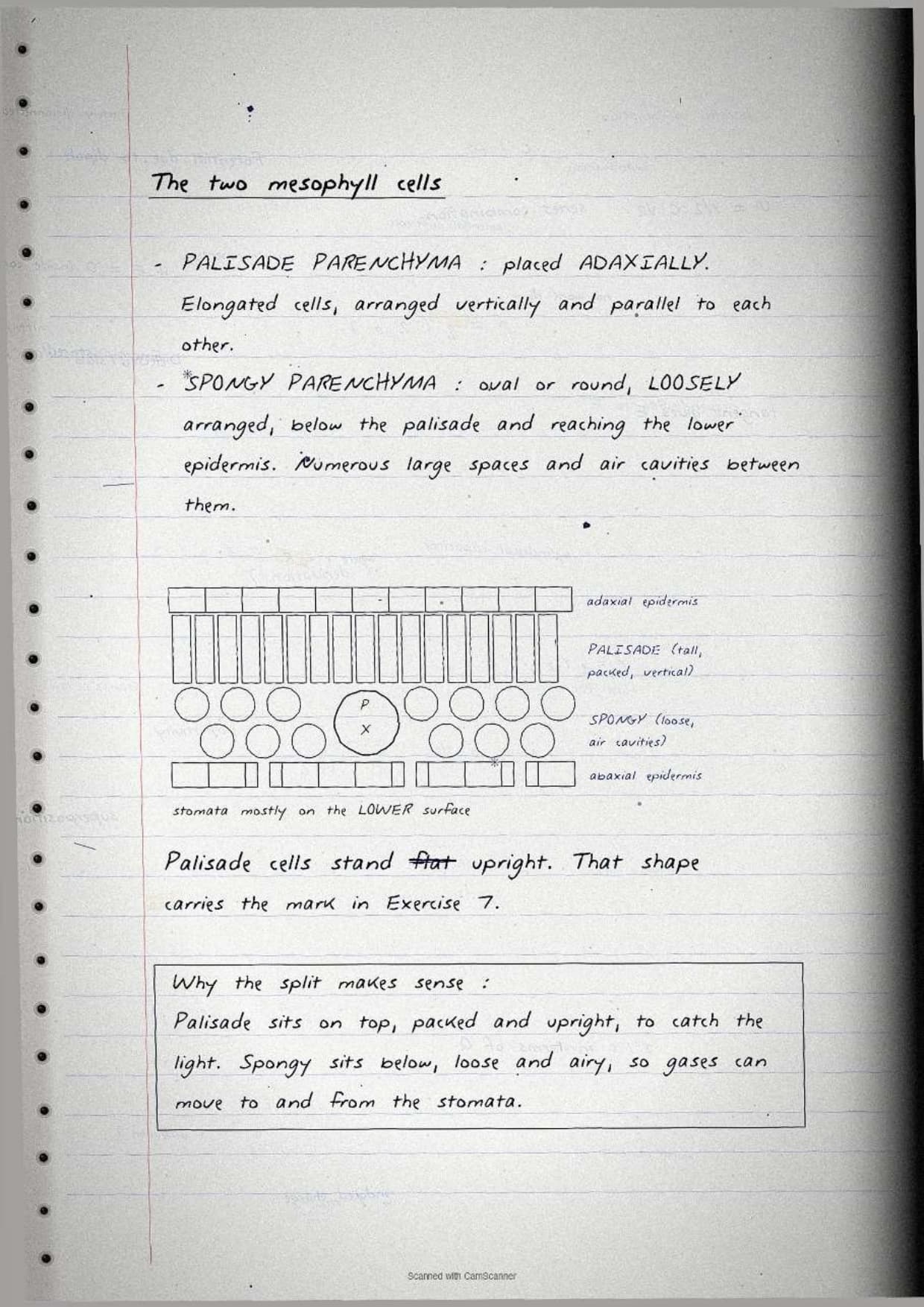
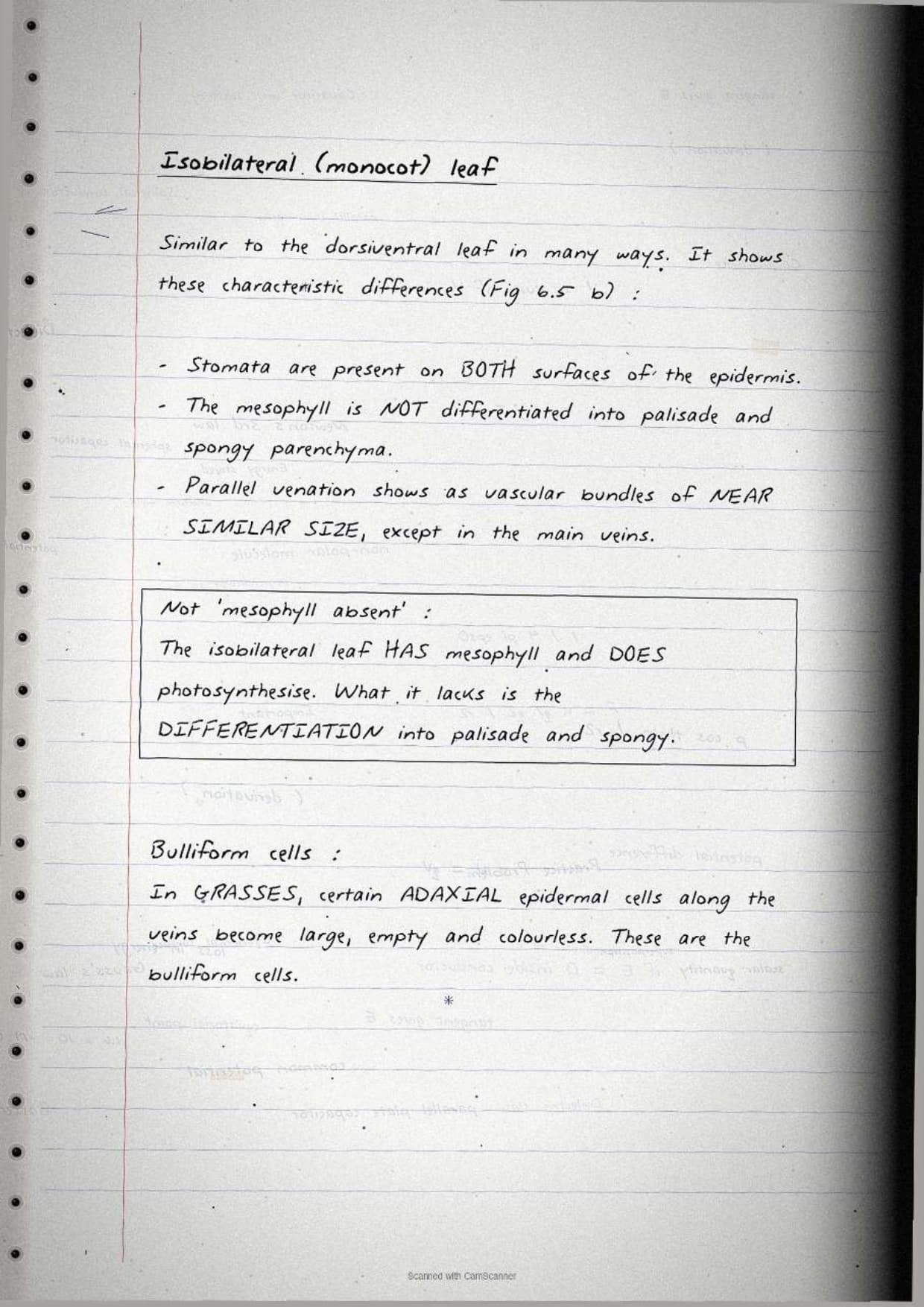
- Anatomy of organs: dicot and monocot root, dicot and monocot stem, dorsiventral and isobilateral leaf.
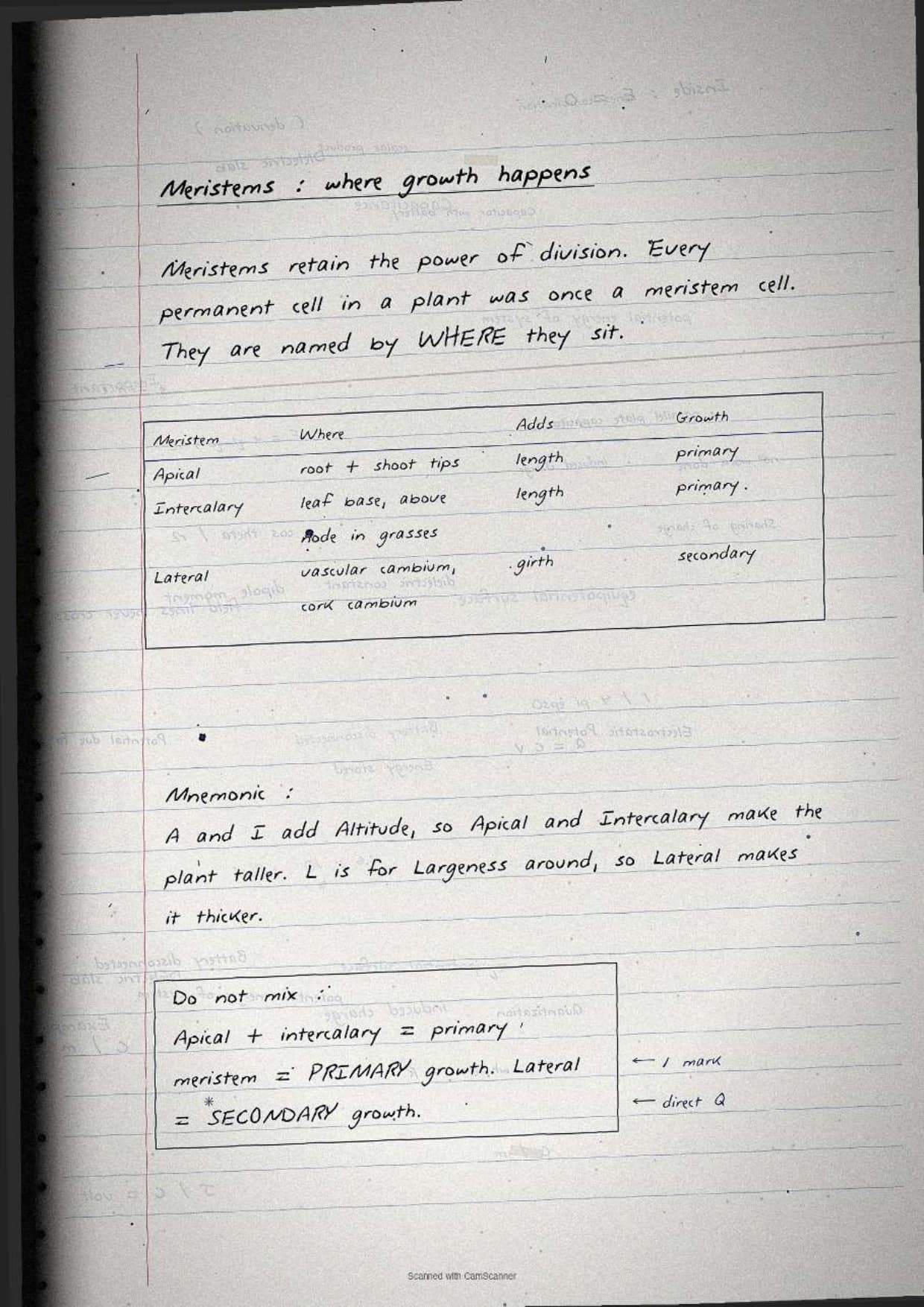
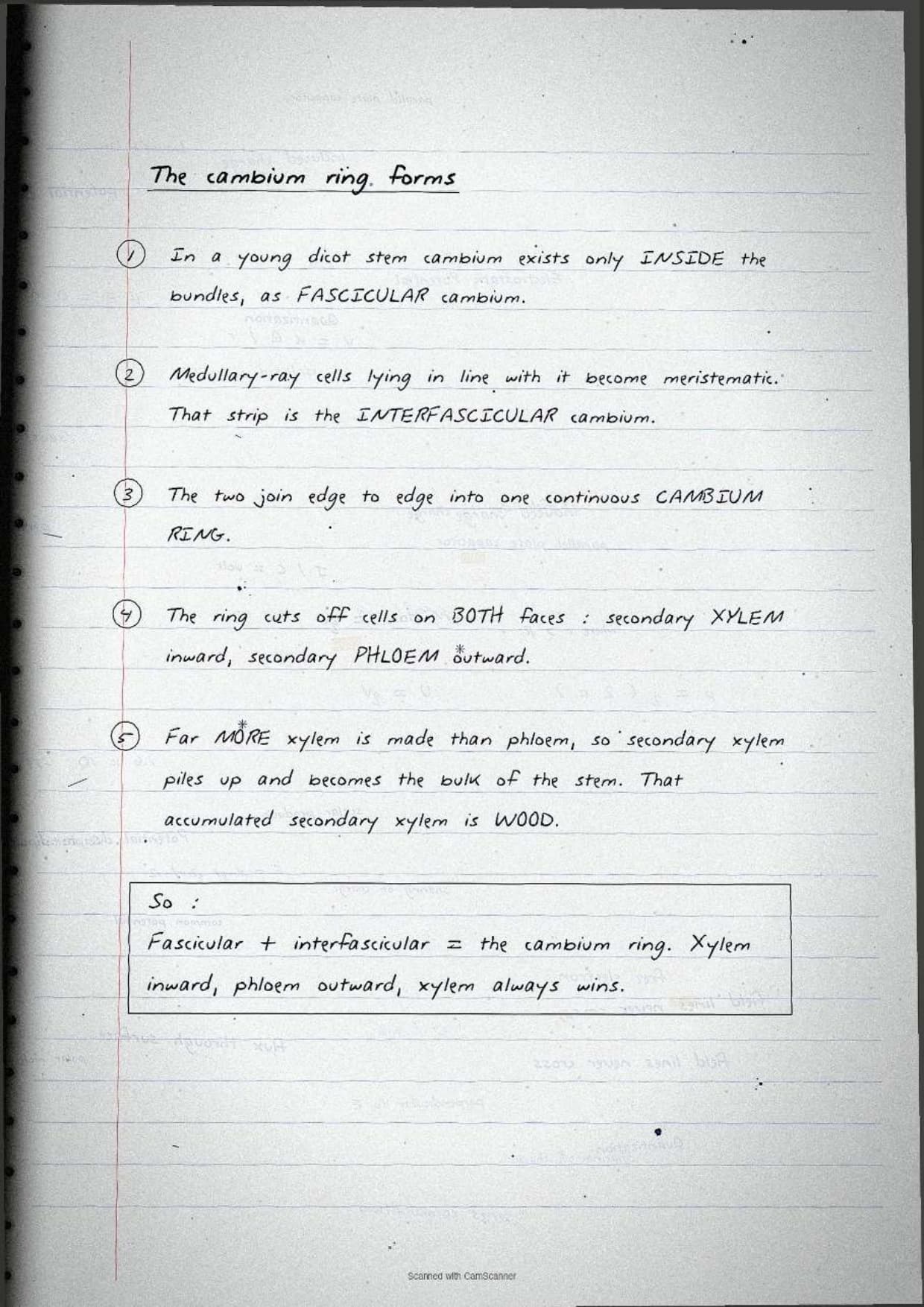
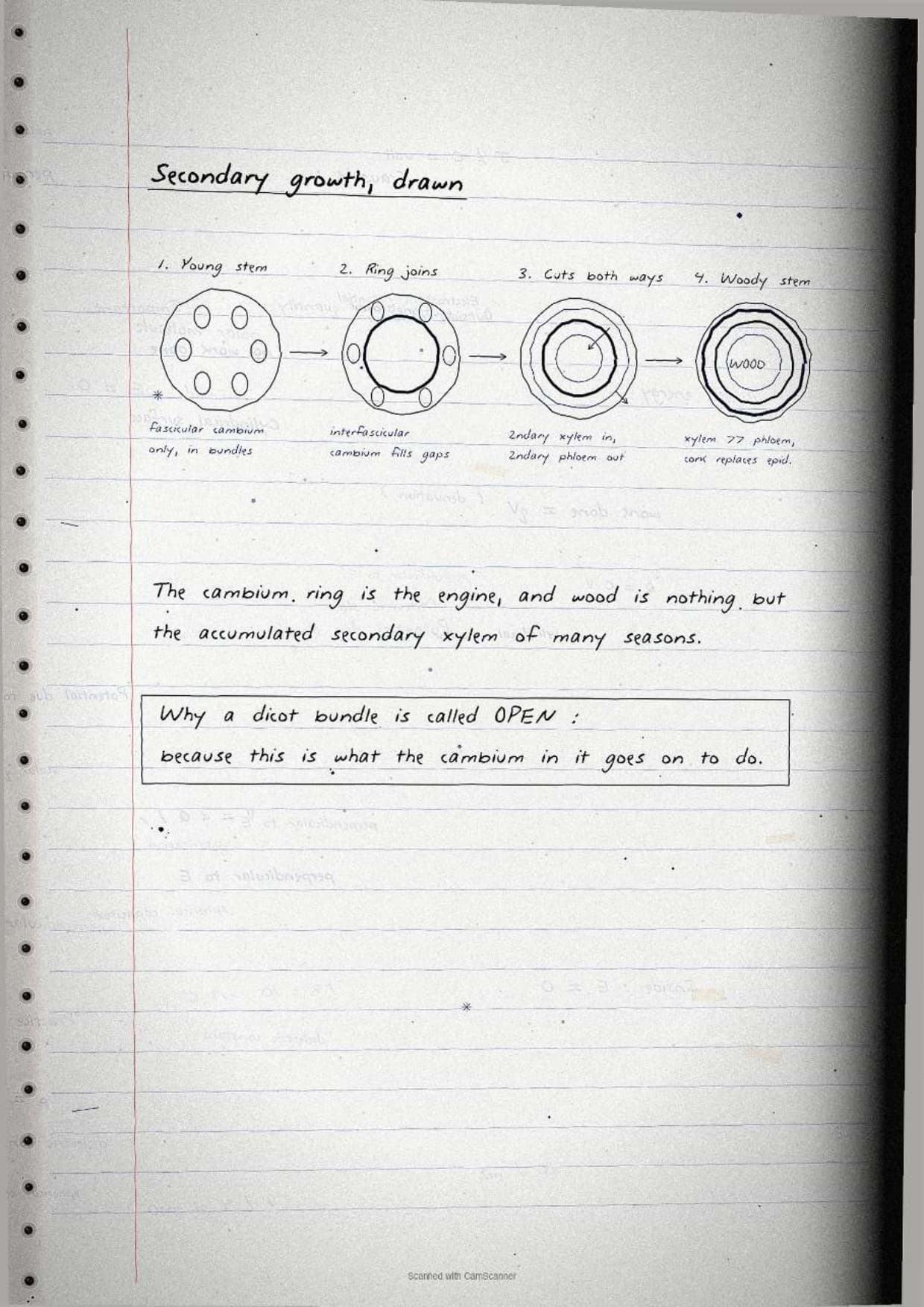
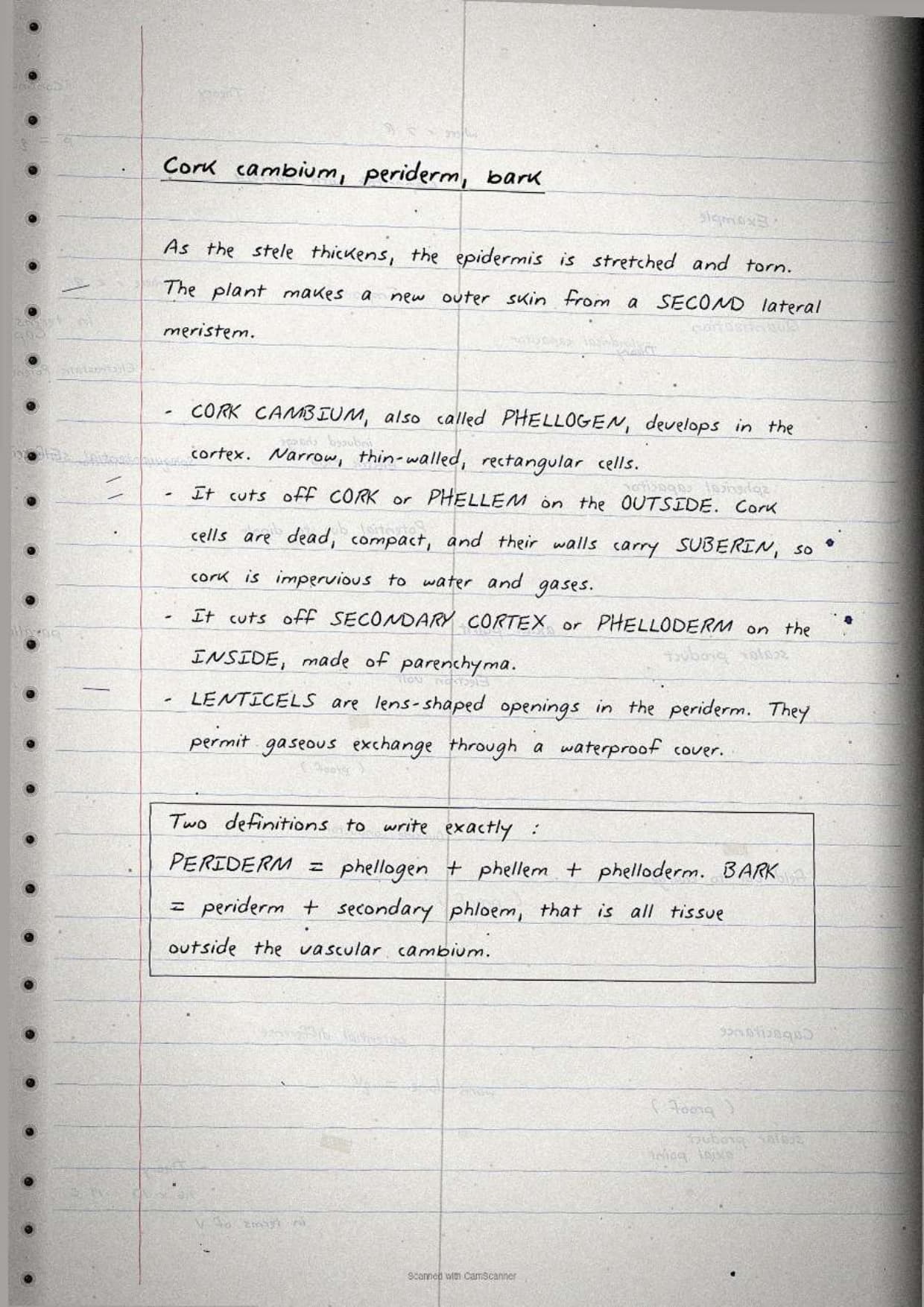
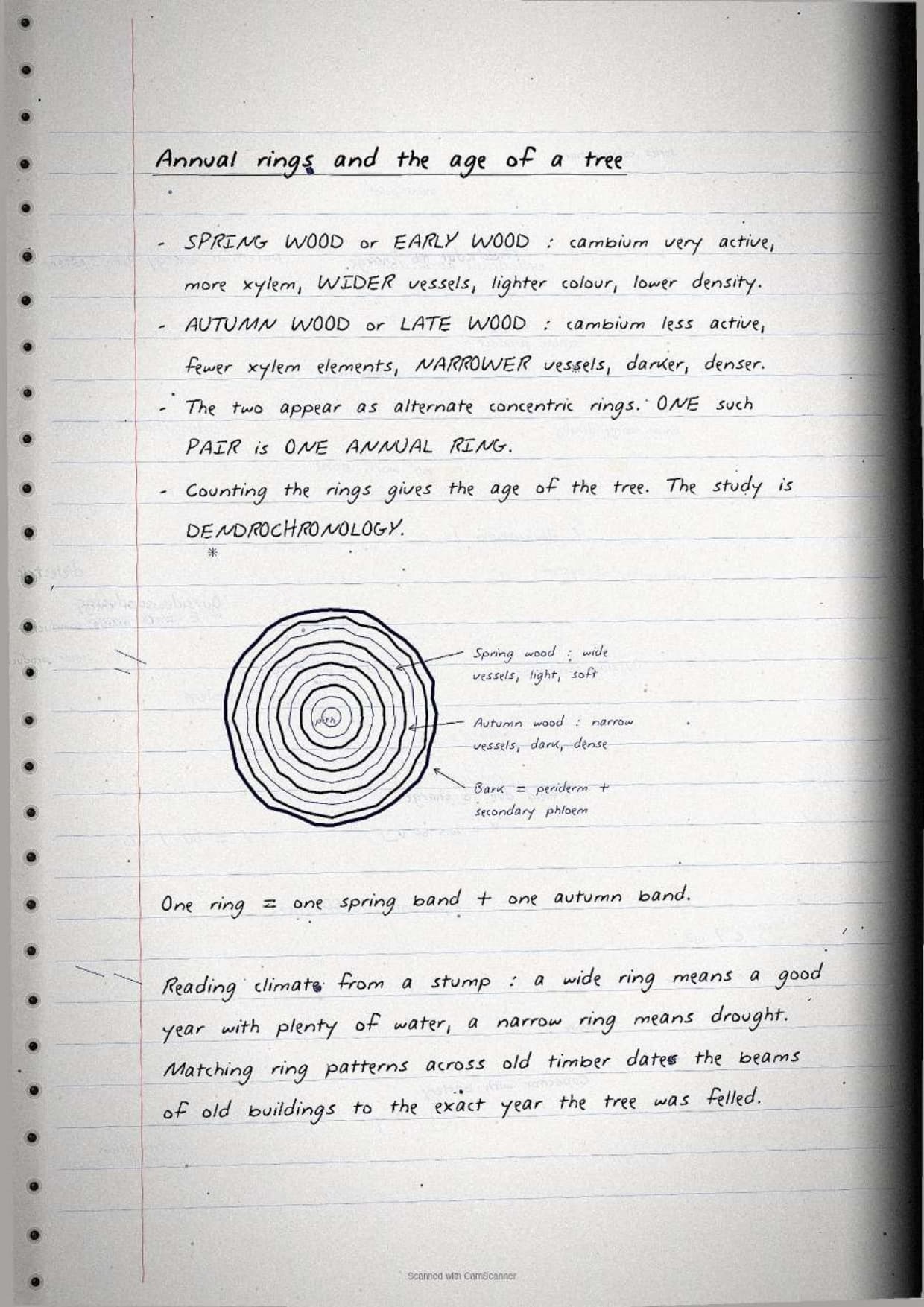
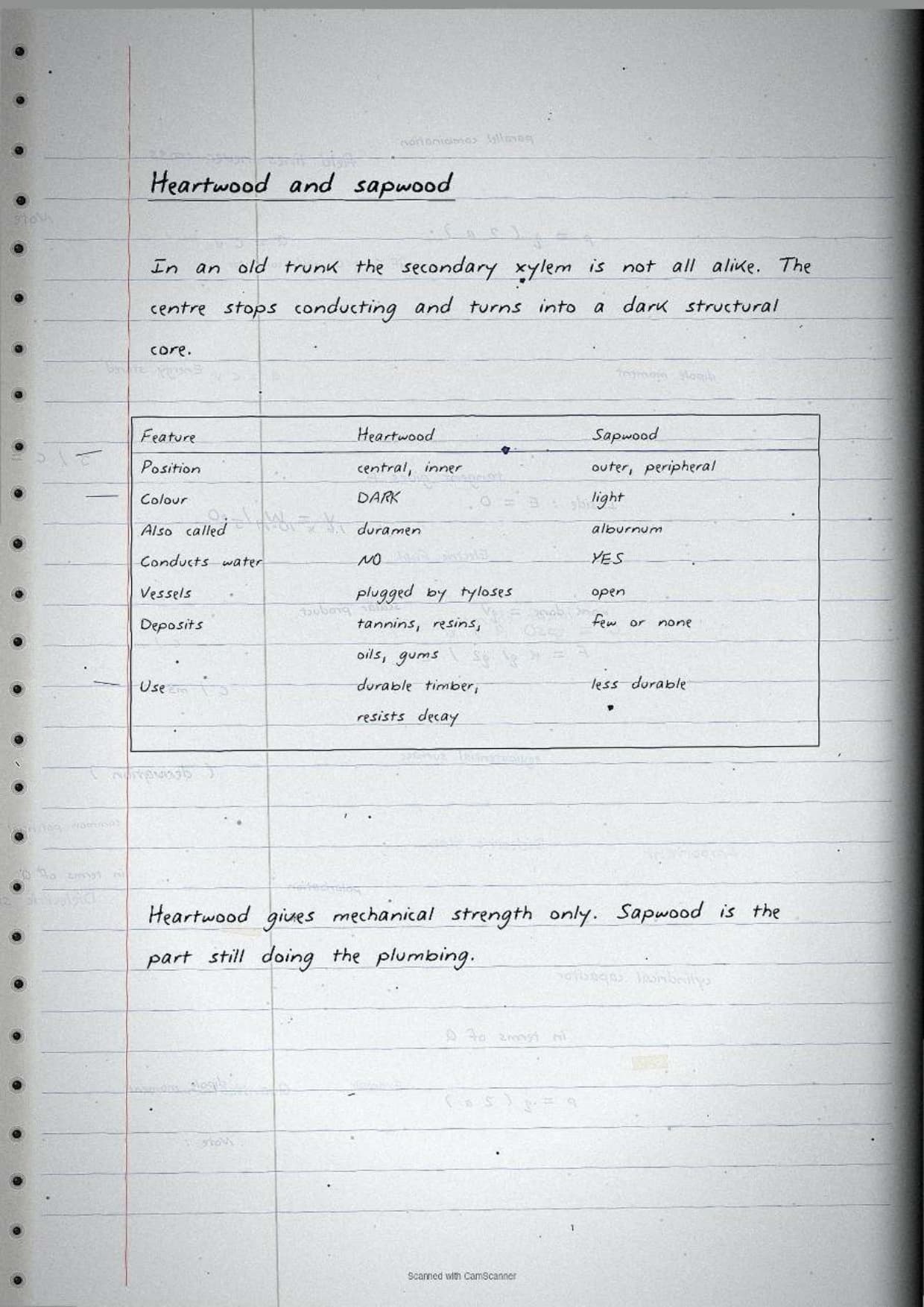
- Secondary growth: cambium stages, cork cambium, periderm, bark, annual rings and heartwood against sapwood.
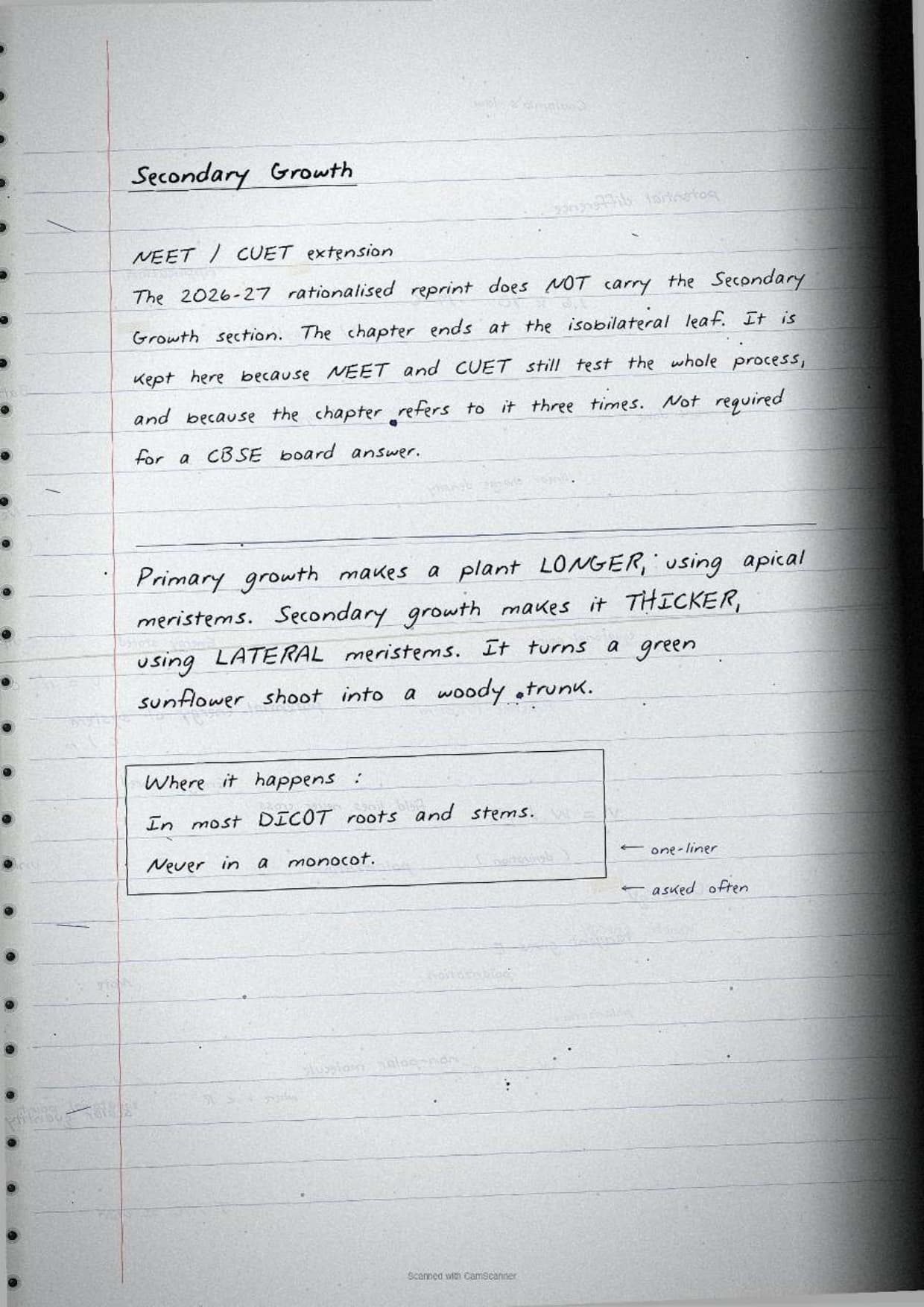
Two blocks are marked as a NEET and CUET extension. The detailed tissue-types section and the whole of secondary growth are outside the 2026-27 board syllabus, but both are still tested in the entrance papers, so the pages stay in.
Key Diagrams and Terms in Anatomy of Flowering Plants Notes
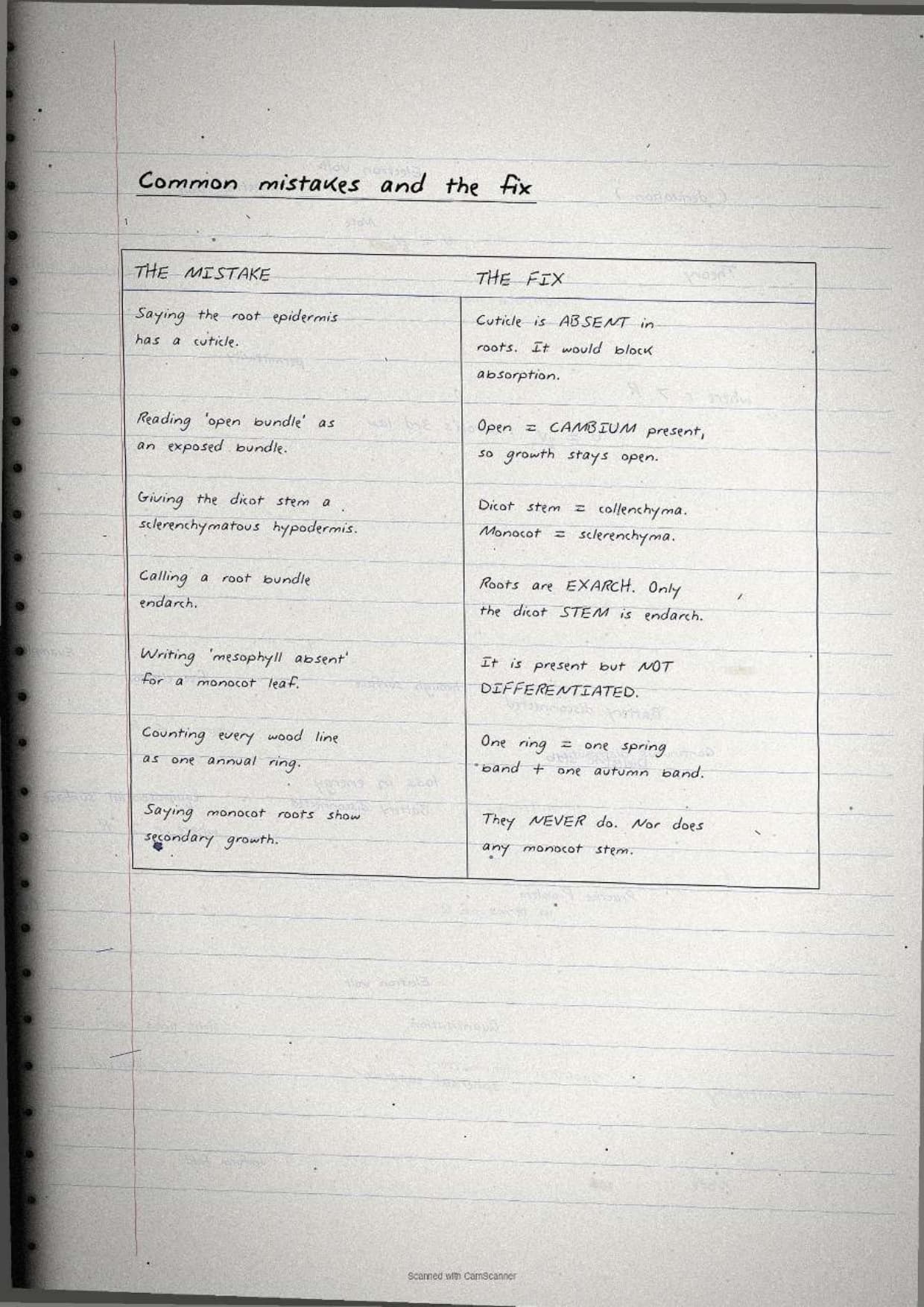
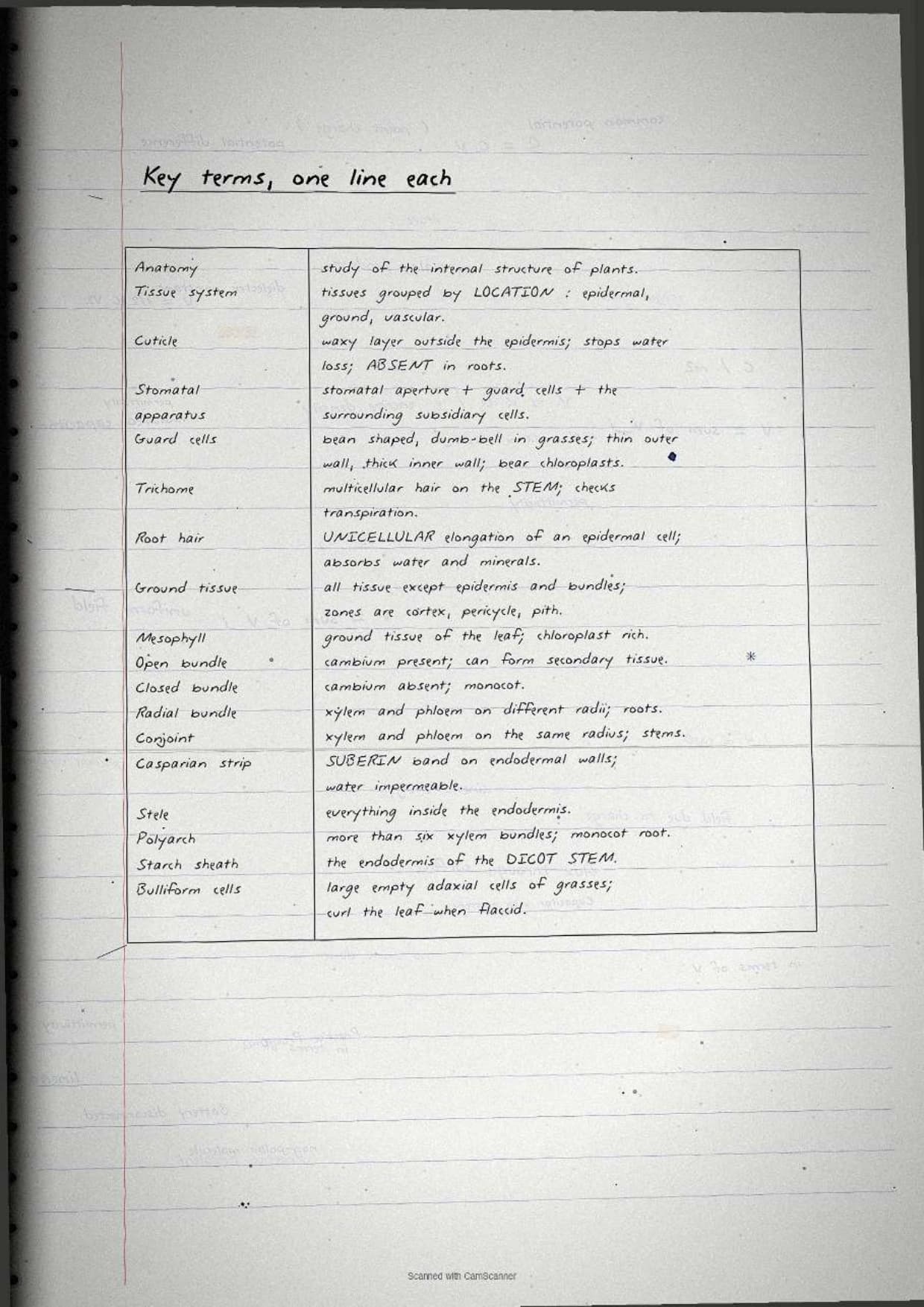
Marks in this chapter are lost on terms that sound alike. The boxed table below holds the six that examiners swap most often.
| Term | How the notes define it |
|---|---|
| Stomatal apparatus | The stomatal aperture, the two guard cells and the surrounding subsidiary cells taken together |
| Trichome | Usually multicellular hair on the stem that checks water loss by transpiration |
| Root hair | Unicellular elongation of an epidermal cell that absorbs water and minerals |
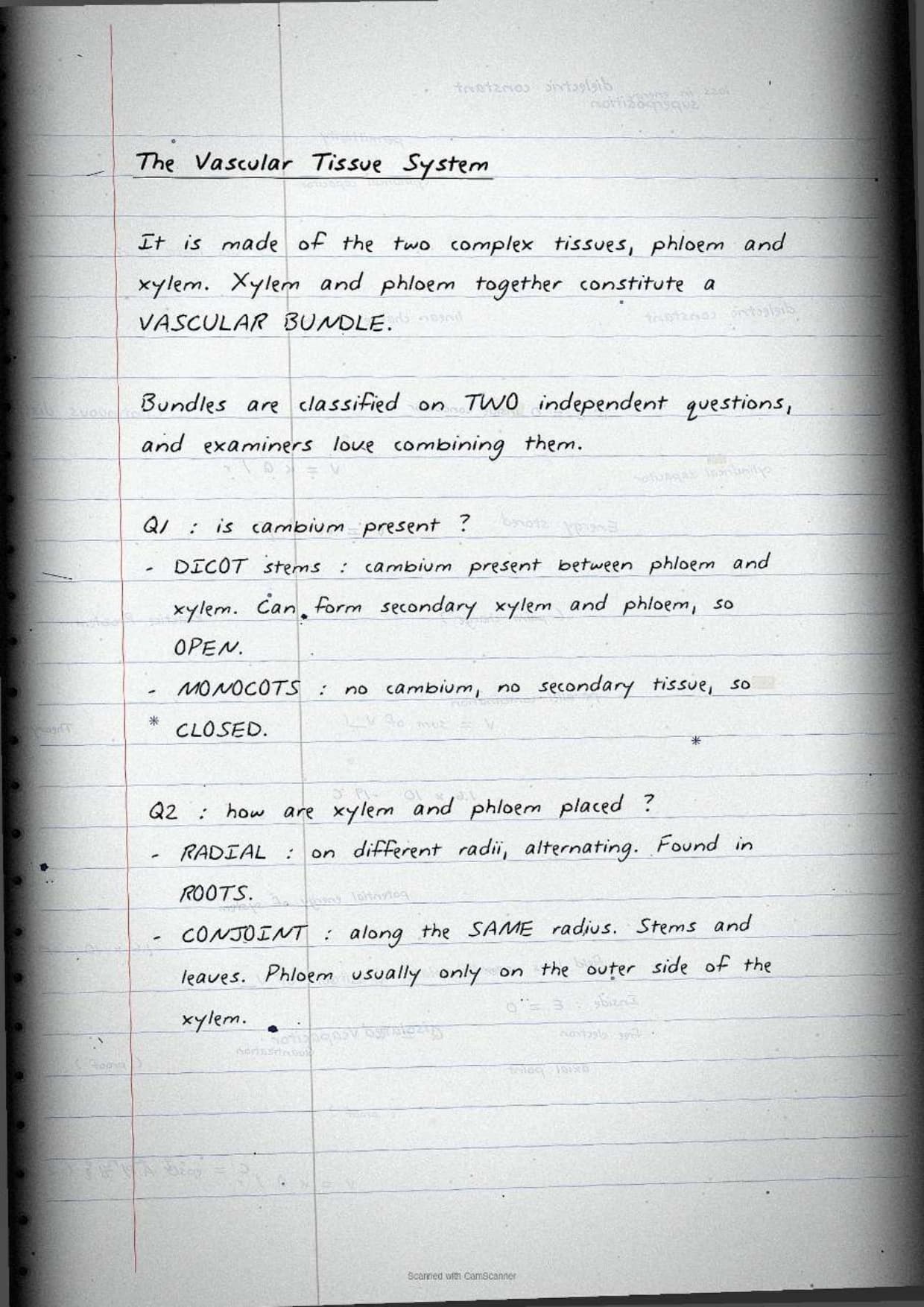
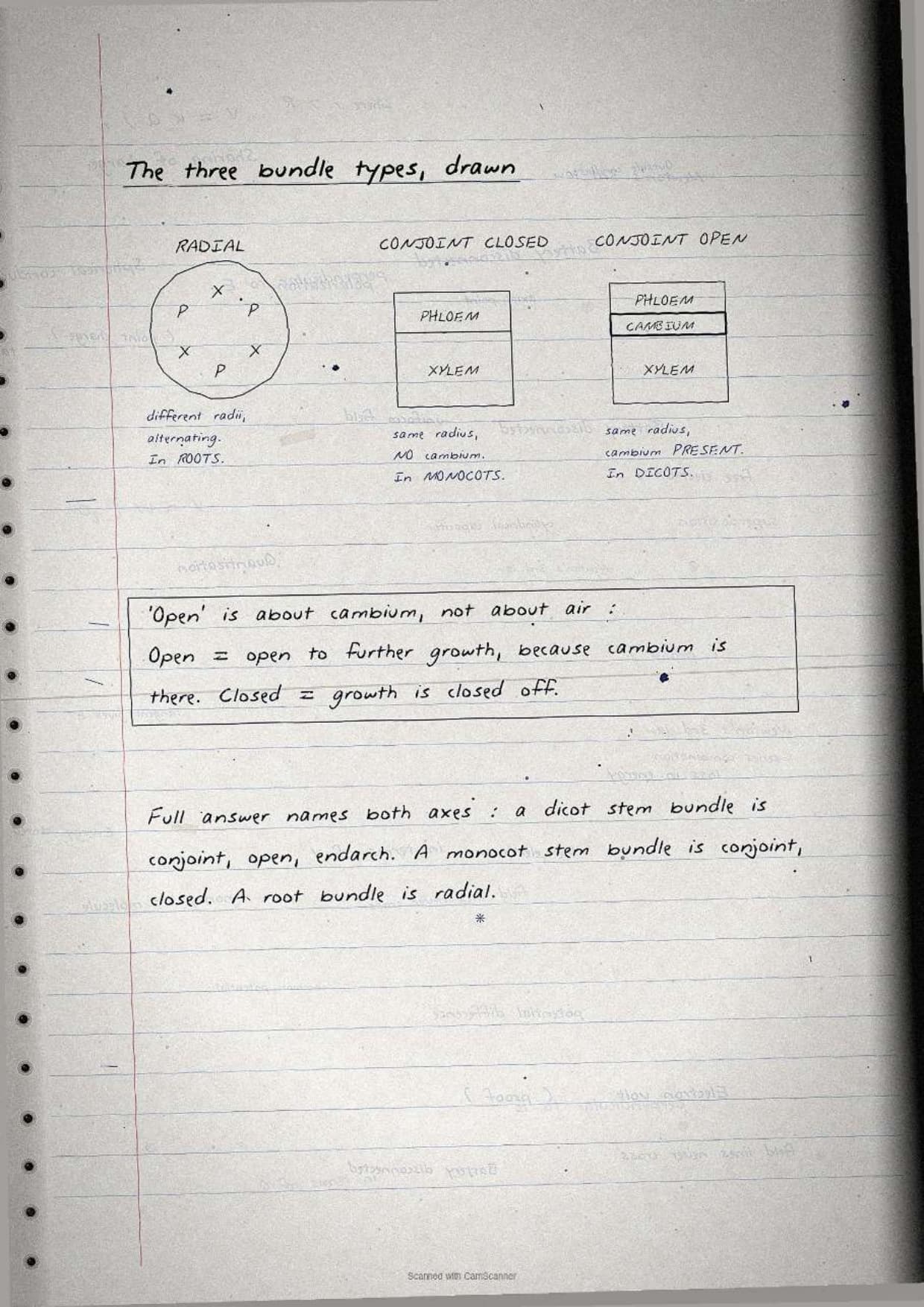
| Open bundle | Cambium present, so the bundle can still form secondary tissue |
| Radial bundle | Xylem and phloem on different radii, alternating, found in roots |
| Bark | Periderm plus secondary phloem, meaning all tissue outside the vascular cambium |
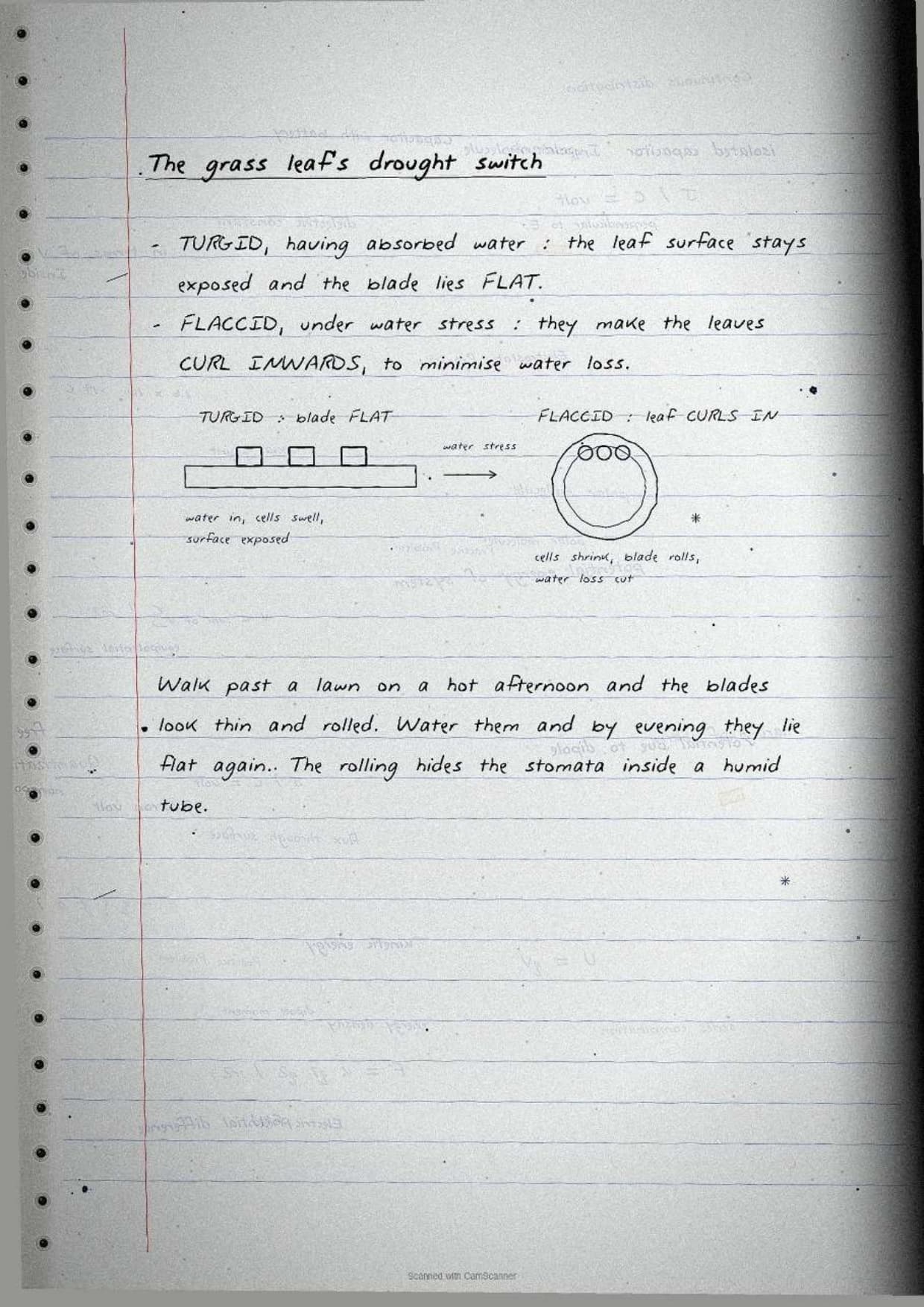
A hand-drawn pair of stem sections shows bundles in a ring against bundles scattered, with the hypodermis labelled collenchyma on one and sclerenchyma on the other. A second sketch runs the guard cells through turgid and flaccid, so students see how the pore opens and how a grass blade rolls inwards under water stress.
How to Use These Handwritten Notes for Revision
Work through the pages in three short passes. Read a topic page, cover the diagram and redraw it, then answer two NCERT questions on it. Drawing beats re-reading in a chapter built on sections.
- Redraw the dicot and monocot stem sections from memory, then label the hypodermis on both.
- Learn the one line that settles half the questions: in xylem all are dead except the parenchyma, in phloem all are living except the fibres.
- Keep the class 11 biology handwritten notes chapter 6 Anatomy of Flowering Plants open beside the NCERT Solutions while practising.
- Read the common-mistakes page last, on page 38, before you shut the file.
Around 50 minutes is enough for one full pass, so the notes fit into the last week before an exam.
Student Feedback on Anatomy of Flowering Plants Handwritten Notes
Students rate the comparison tables as the pages that save them the most time. The figures below come from a Collegedunia poll run before the 2026 boards.
- In a Collegedunia survey of 10,860 students, 68% said the dicot stem against monocot stem table was their most-used revision page.
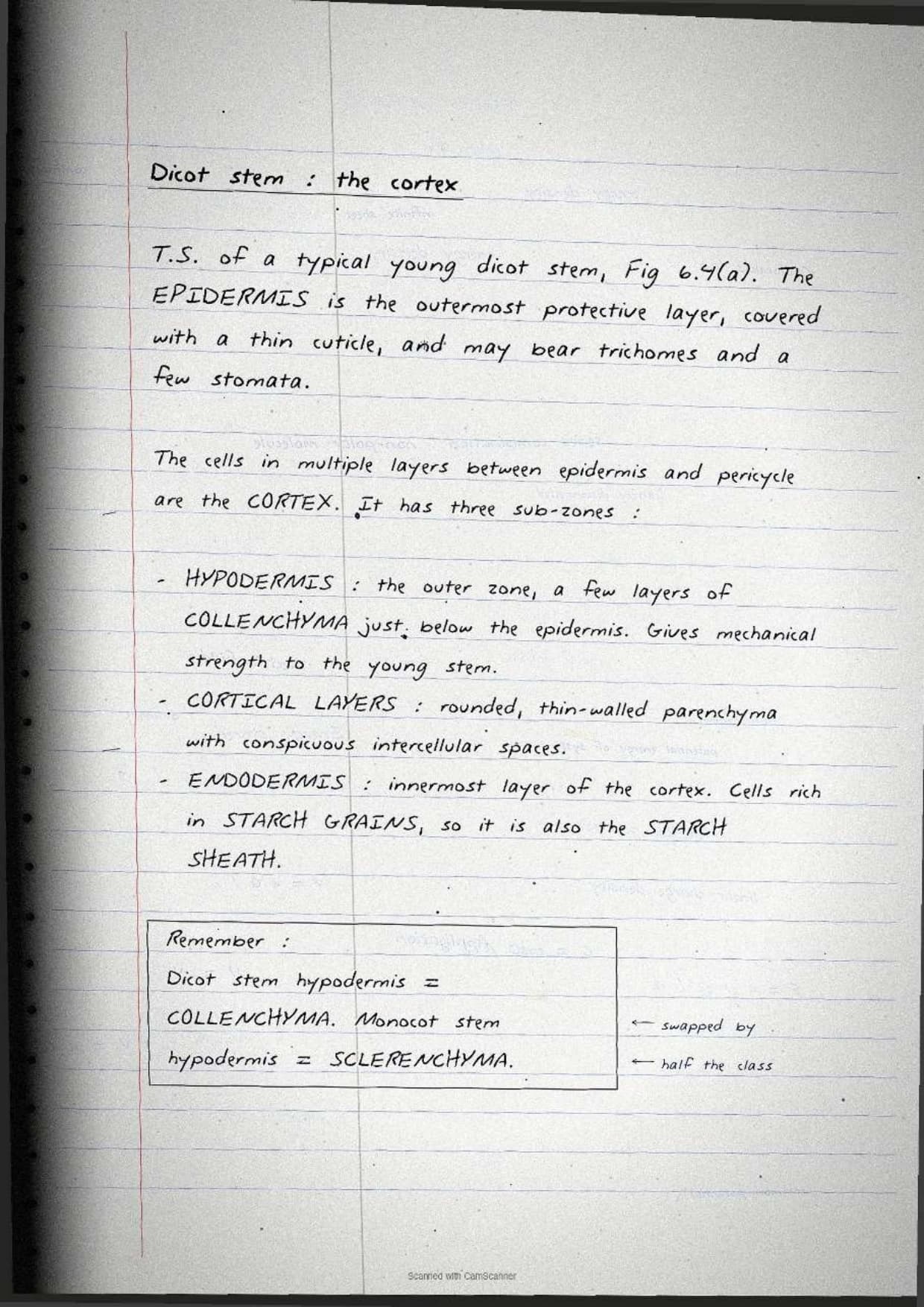
- Most-confused pair before the poll: the dicot stem hypodermis against the monocot stem hypodermis, swapped by about half the students.
Source: 2026-27 Class 11 Biology student poll. Sample of 10,860 students from CBSE schools across 12 states.
Where to Use These Notes Alongside Other Resources
These handwritten pages work best next to the step-wise Solutions, the summary Notes and the Exemplar Solutions for the same chapter. Read the notes first, then check the answers, and keep the Exemplar for extra practice.
| Resource | Best used for |
|---|---|
| Anatomy of Flowering Plants NCERT Solutions | Step-by-step answers to every back-exercise question |
| Anatomy of Flowering Plants Class 11 Notes | Quick chapter summary with all key terms in one place |
| Anatomy of Flowering Plants Exemplar Solutions | Exemplar questions solved for NEET-level practice |
| Anatomy of Flowering Plants NCERT Book PDF | The original chapter text and exercises |
All Class 11 Biology Handwritten Notes by Chapter
The table links the handwritten notes for every Class 11 Biology chapter, so students can move across the course in one click. Anatomy of Flowering Plants is highlighted.
| Chapter | Handwritten Notes |
|---|---|
| Chapter 1 | The Living World |
| Chapter 2 | Biological Classification |
| Chapter 3 | Plant Kingdom |
| Chapter 4 | Animal Kingdom |
| Chapter 5 | Morphology of Flowering Plants |
| Chapter 6 | Anatomy of Flowering Plants |
| Chapter 7 | Structural Organisation in Animals |
| Chapter 8 | Cell The Unit of Life |
| Chapter 9 | Biomolecules |
| Chapter 10 | Cell Cycle and Cell Division |
| Chapter 11 | Photosynthesis in Higher Plants |
| Chapter 12 | Respiration in Plants |
| Chapter 13 | Plant Growth and Development |
| Chapter 14 | Breathing and Exchange of Gases |
| Chapter 15 | Body Fluids and Circulation |
| Chapter 16 | Excretory Products and their Elimination |
| Chapter 17 | Locomotion and Movement |
| Chapter 18 | Neural Control and Coordination |
| Chapter 19 | Chemical Coordination and Integration |
FAQs on Anatomy of Flowering Plants Handwritten Notes
Ques. Are these class 11 biology handwritten notes chapter 6 Anatomy of Flowering Plants free to download?
Ans. Yes. The Anatomy of Flowering Plants handwritten notes are free to download as a PDF from this page. All 40 pages follow the 2026-27 NCERT and cover the full chapter in clear handwriting for quick revision.
Ques. What is the fastest way to tell a dicot stem from a monocot stem?
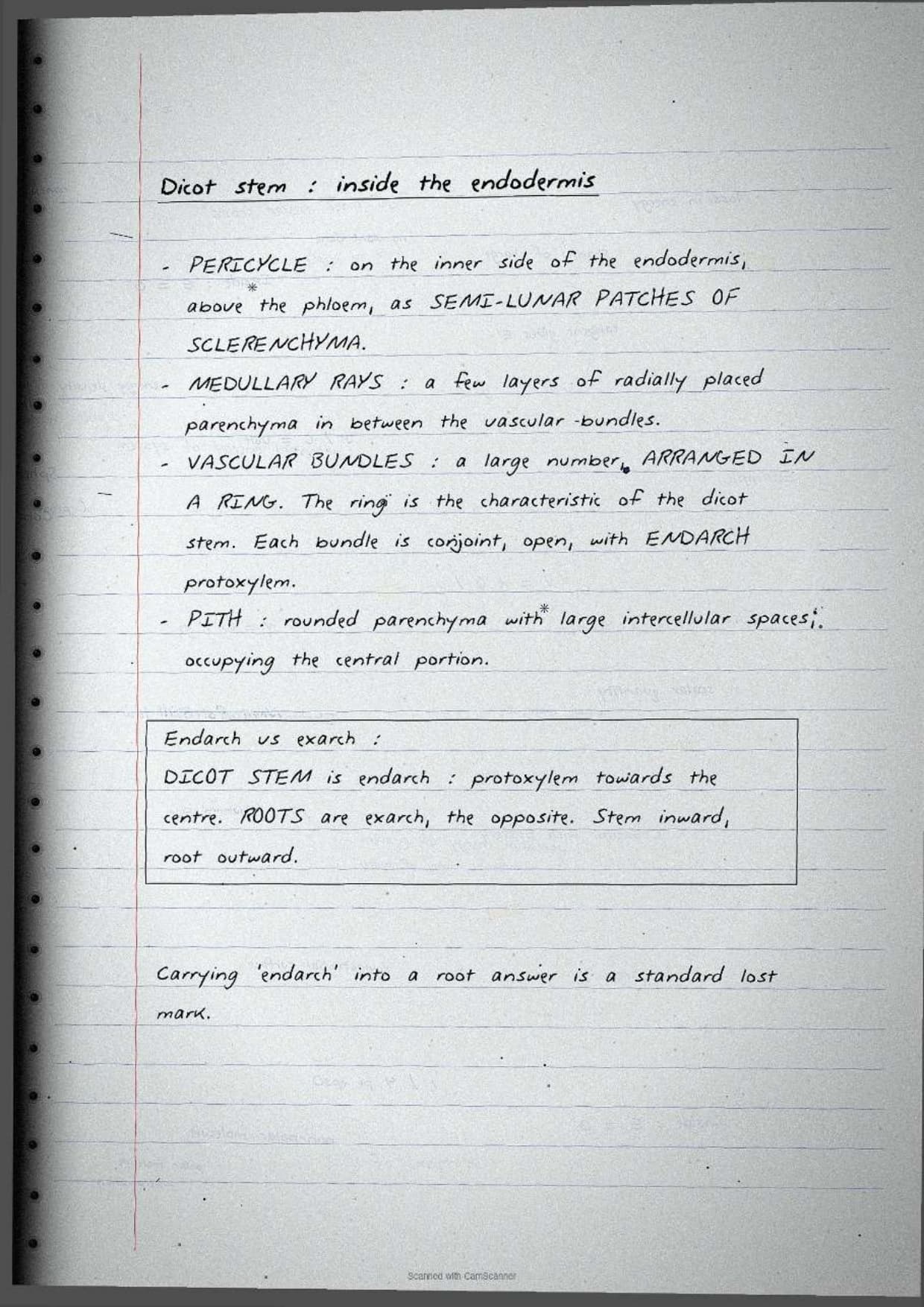
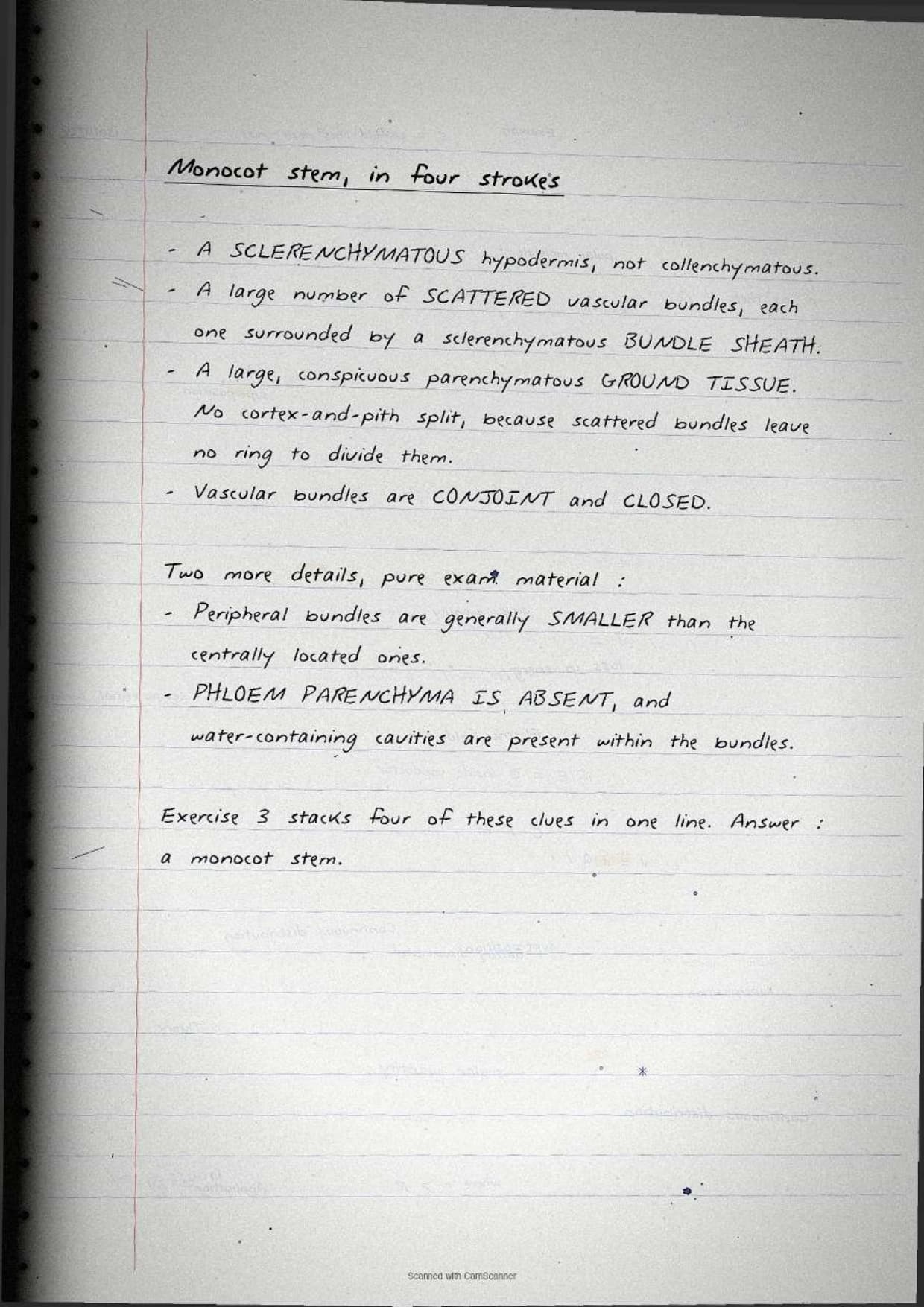
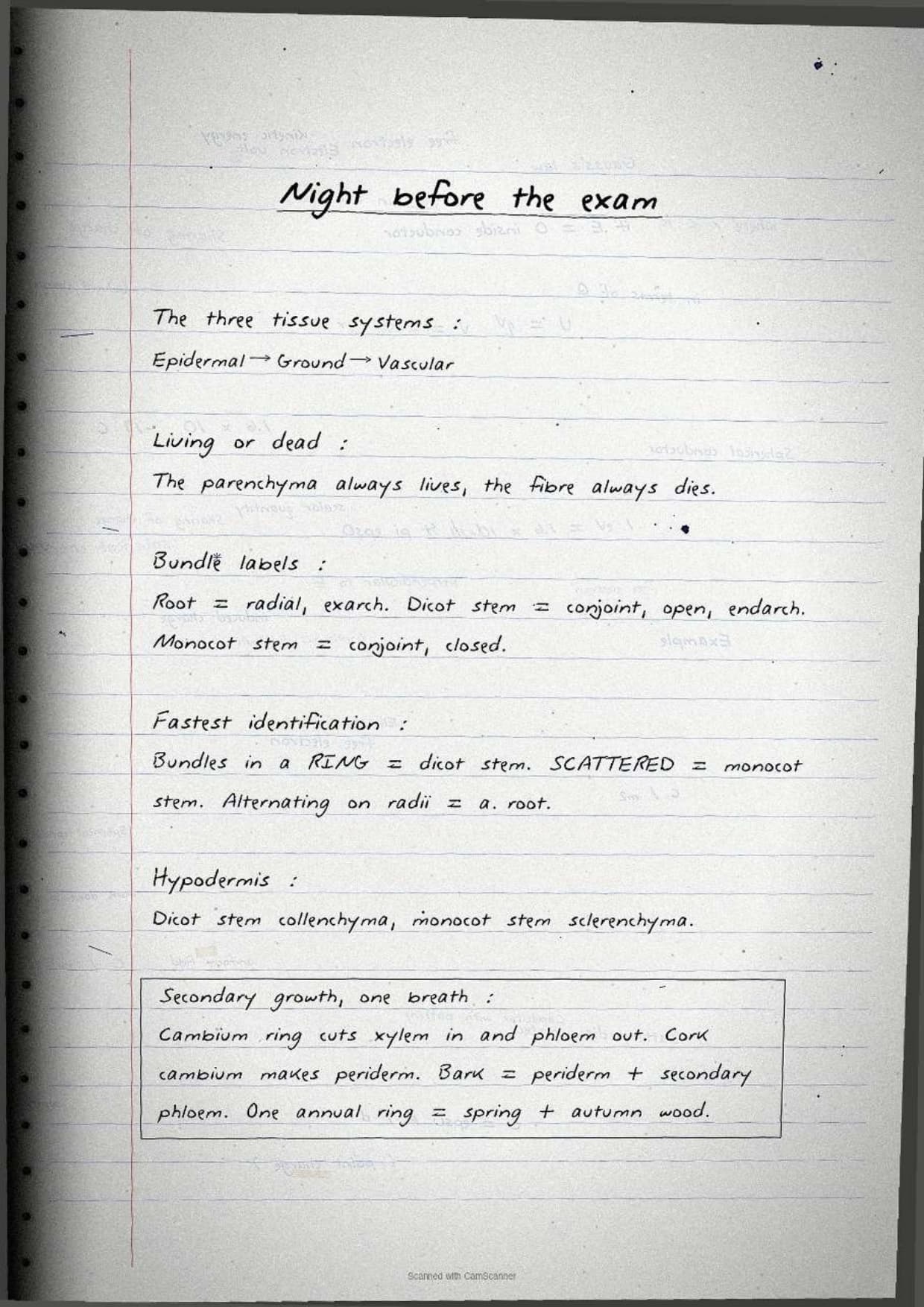
Ans. Look at the vascular bundles and stop. Bundles arranged in a ring mean a dicot stem, and scattered bundles mean a monocot stem. The notes back this with a drawn pair of sections, then add the hypodermis: collenchyma in the dicot stem, sclerenchyma in the monocot stem.
Ques. Which xylem and phloem elements are living and which are dead?
Ans. In xylem, only the xylem parenchyma is living. In phloem, only the phloem fibres are dead. The notes box one sentence for this: the parenchyma always lives, the fibre always dies. It answers both halves of the question at once.
Ques. Is secondary growth still in the Class 11 board syllabus?
Ans. No. The 2026-27 NCERT print ends the chapter at the isobilateral leaf, so secondary growth is not needed for a CBSE board answer. The pages stay in as a NEET and CUET extension, since both exams still test the cambium stages, periderm, bark and annual rings.
Ques. How long do these notes take to revise?
Ans. About 50 minutes for one full pass. Read each topic page, redraw the section from memory, then answer two NCERT questions on it. Finish with the common-mistakes page so the exact wording stays fresh.



Comments