




These class 11 biology handwritten notes chapter 1 The Living World are written for one fast revision pass before Boards, NEET and CUET in 2026-27. All 29 pages carry the definitions, the seven-step hierarchy and the naming rules in clear handwriting, boxed and colour-coded for last-minute recall.
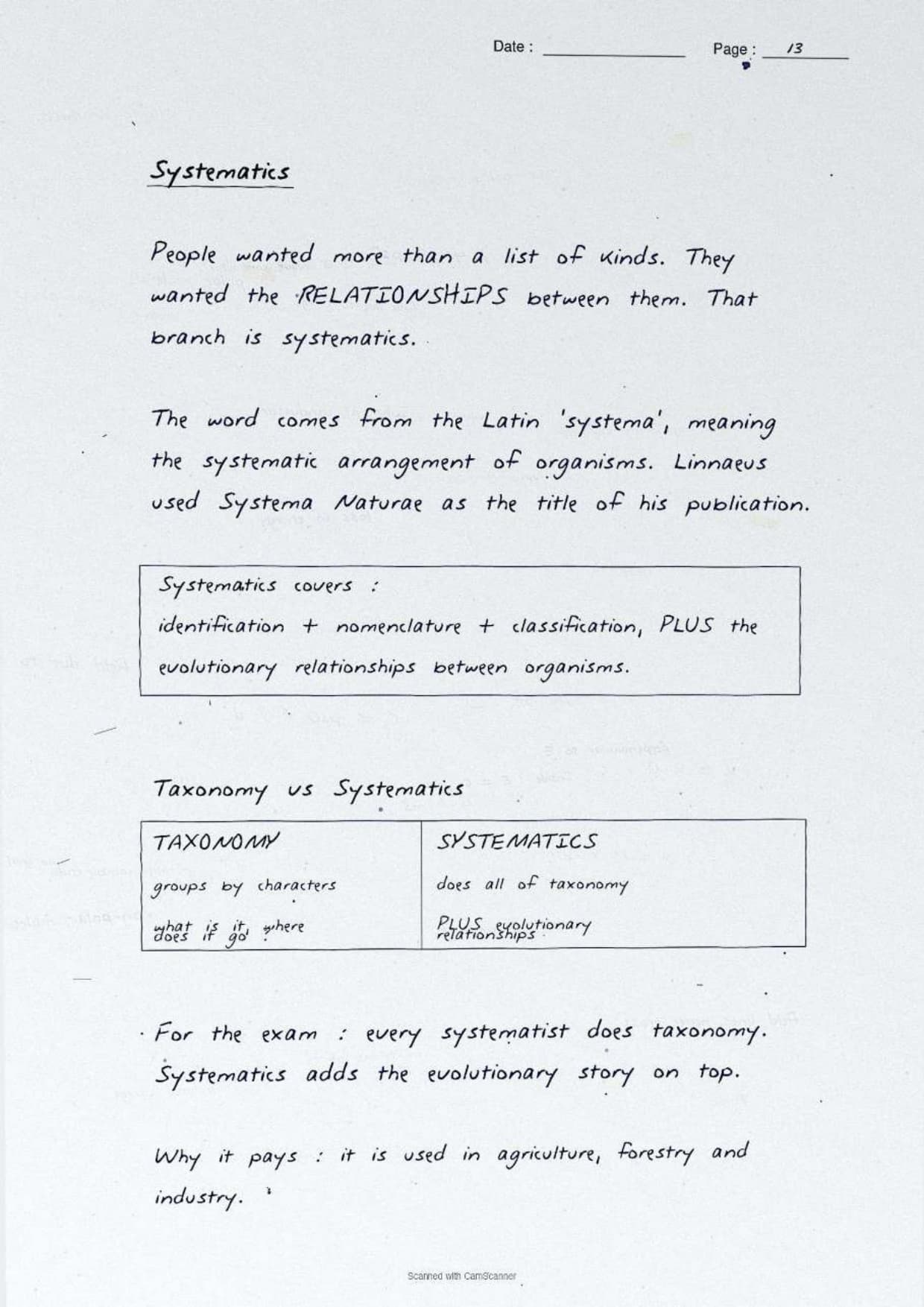
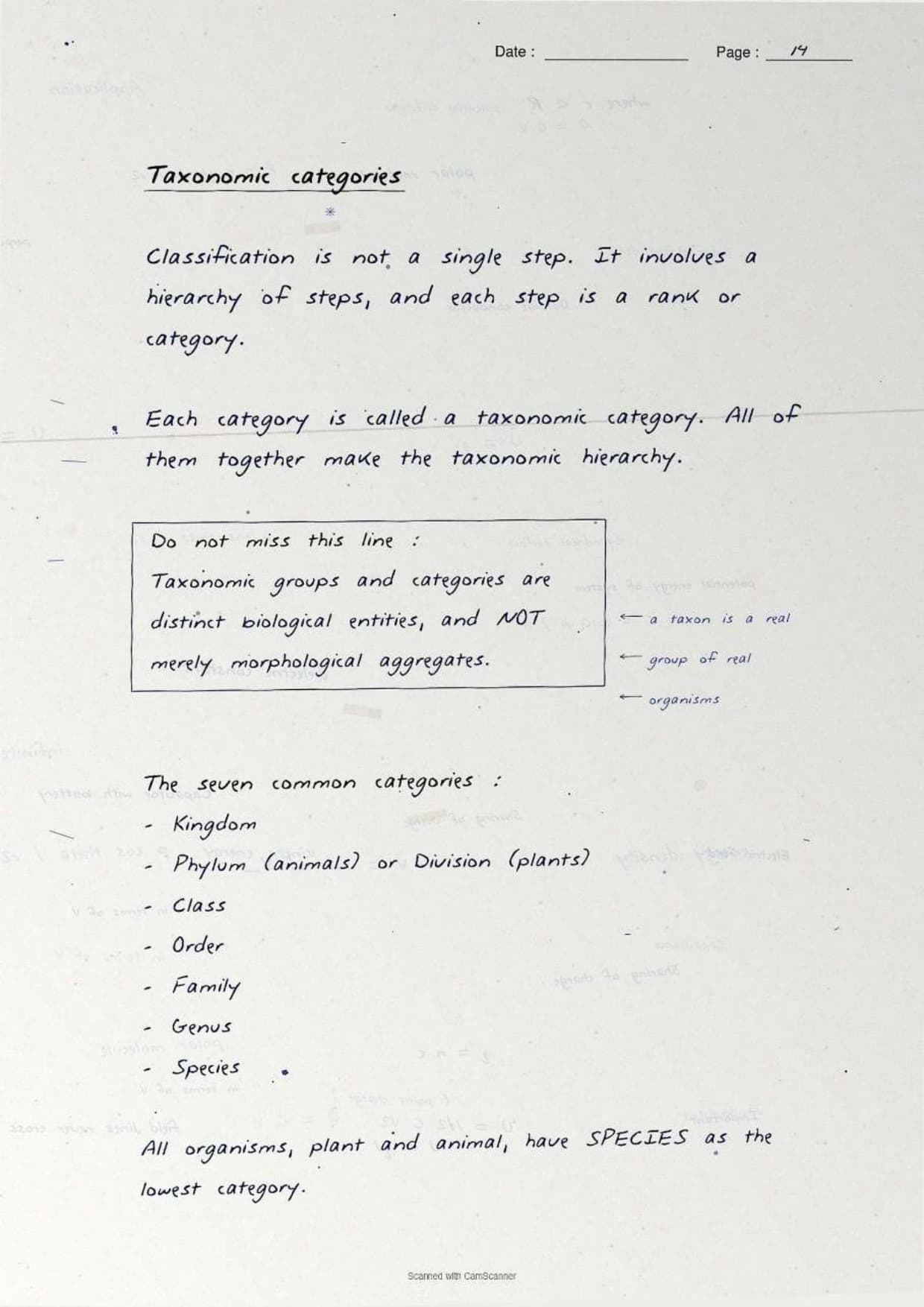
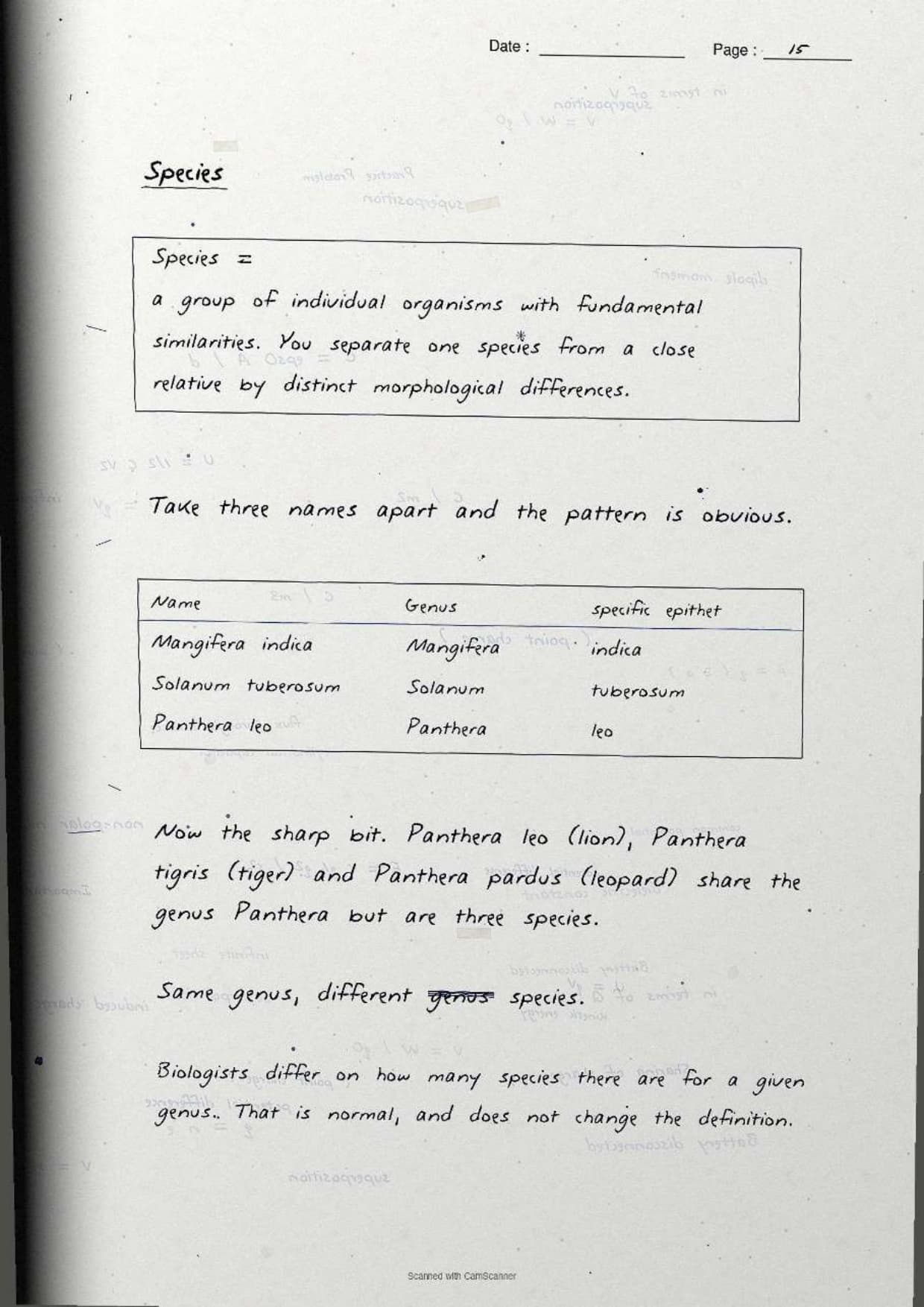
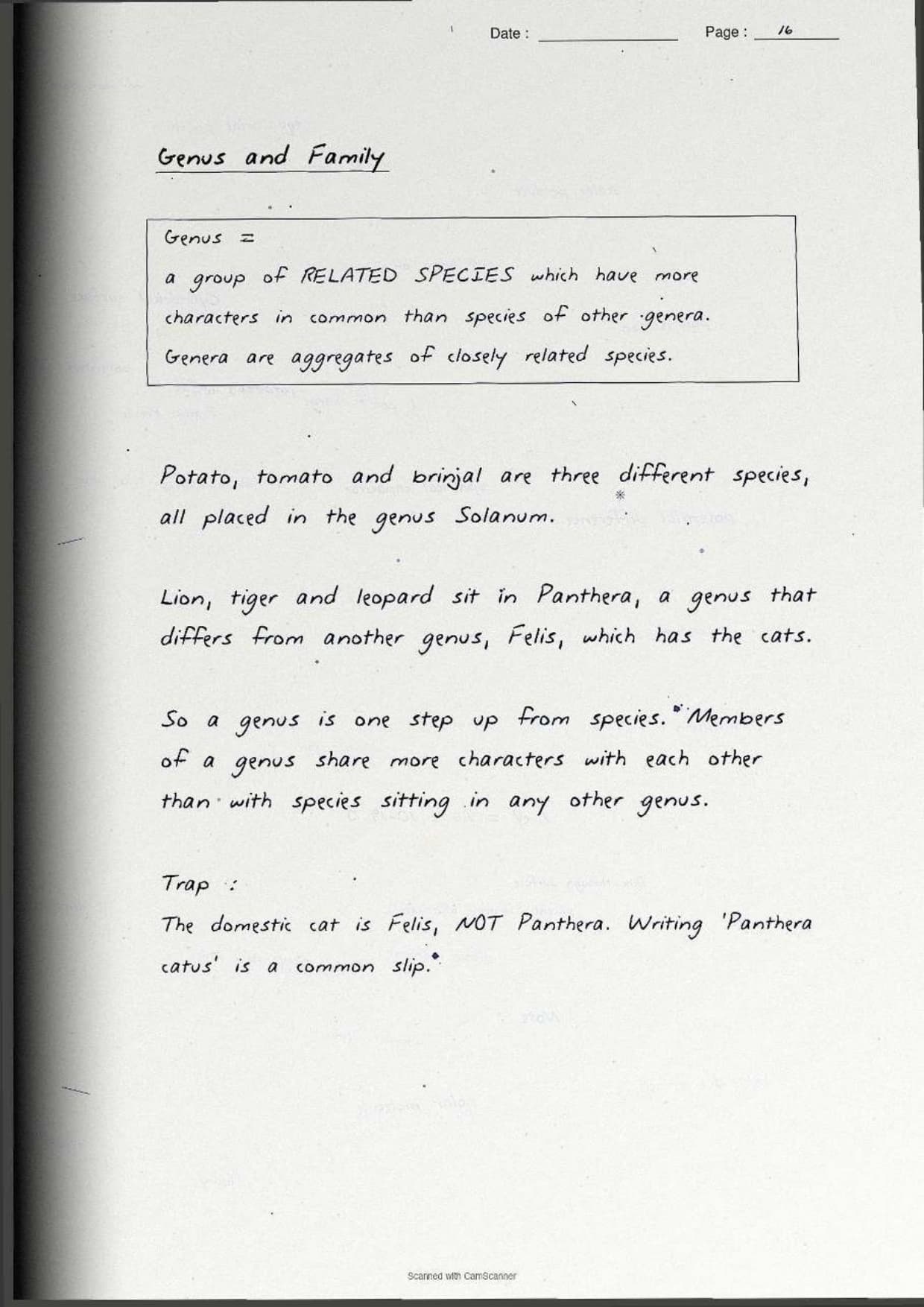
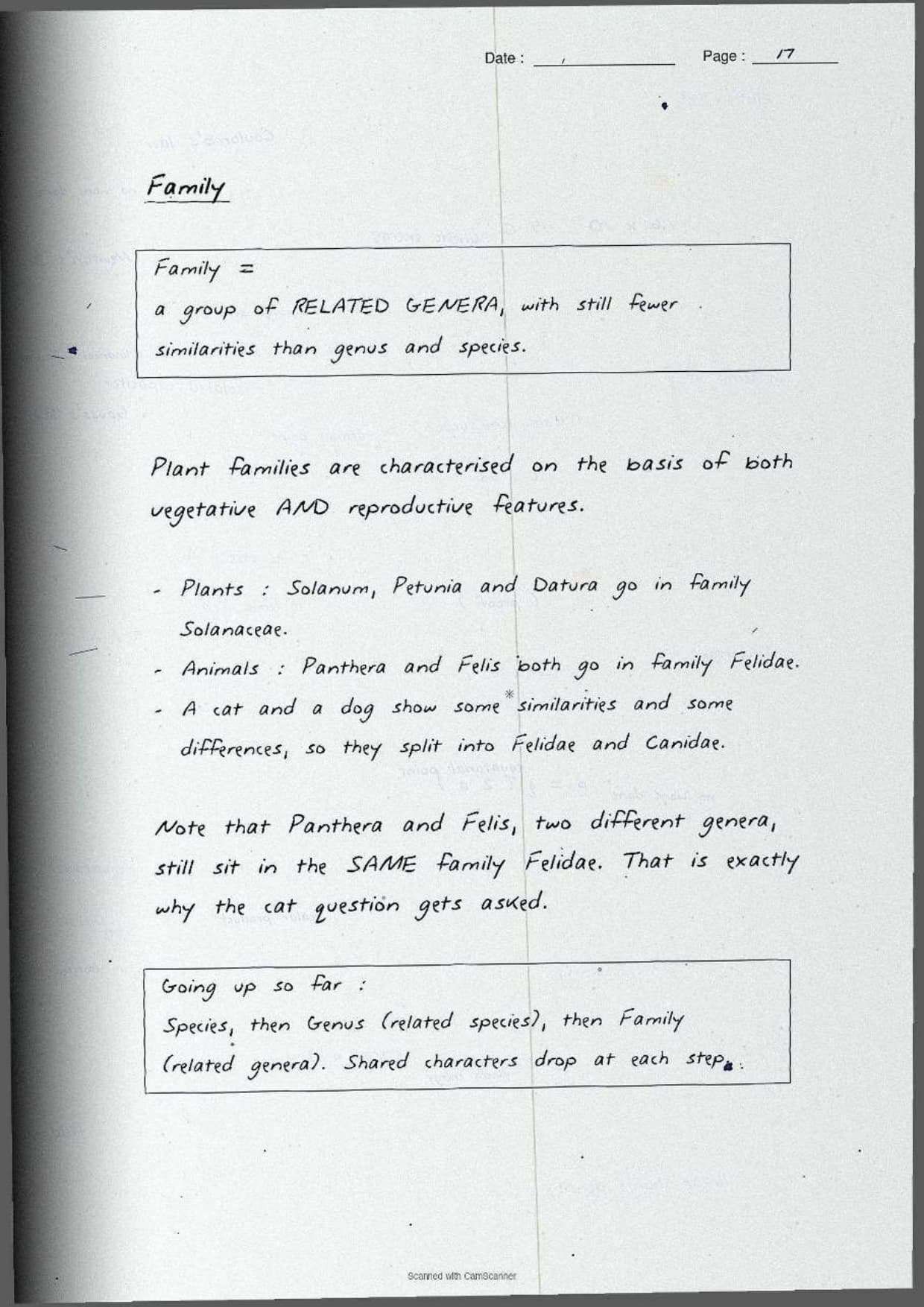
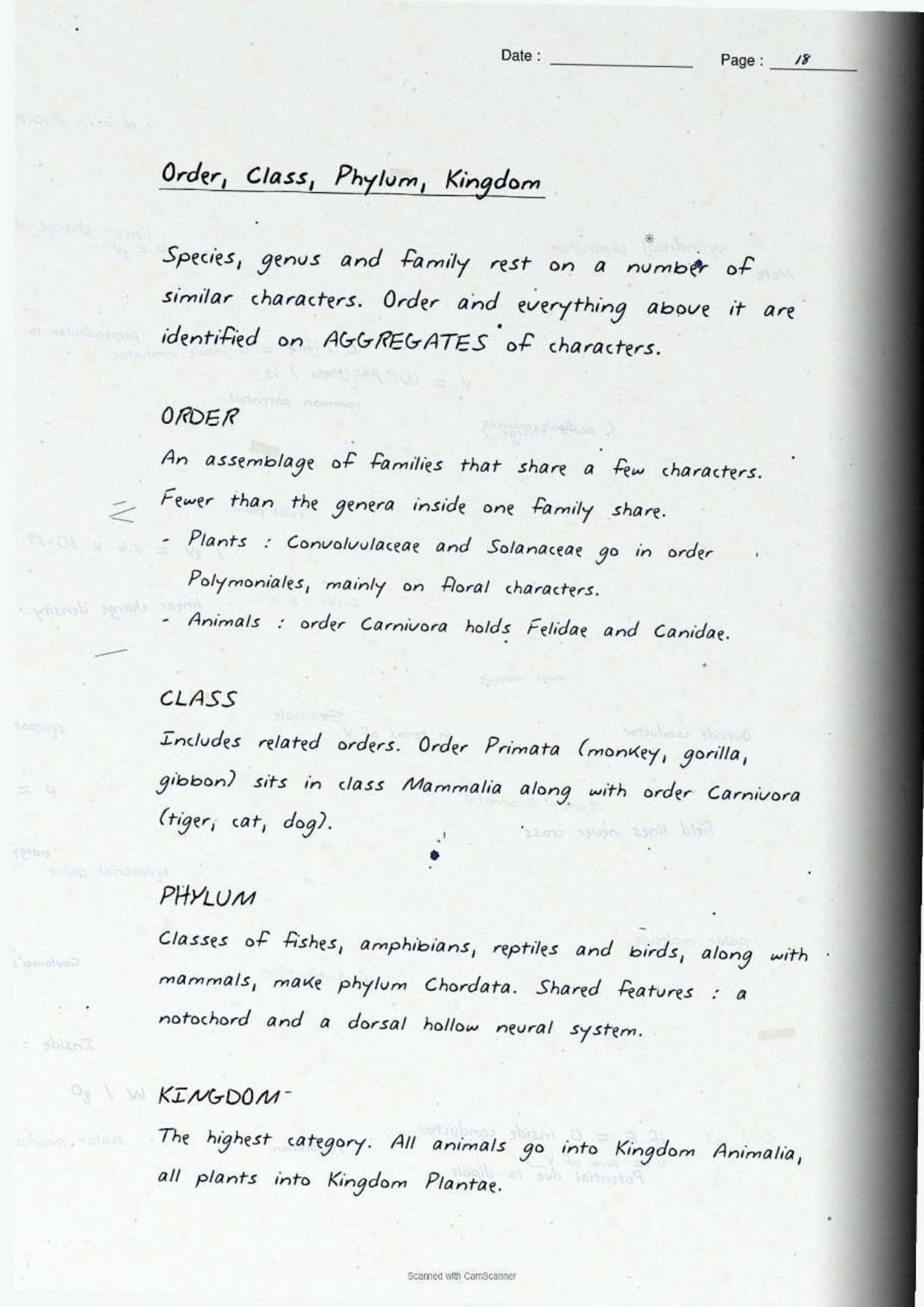
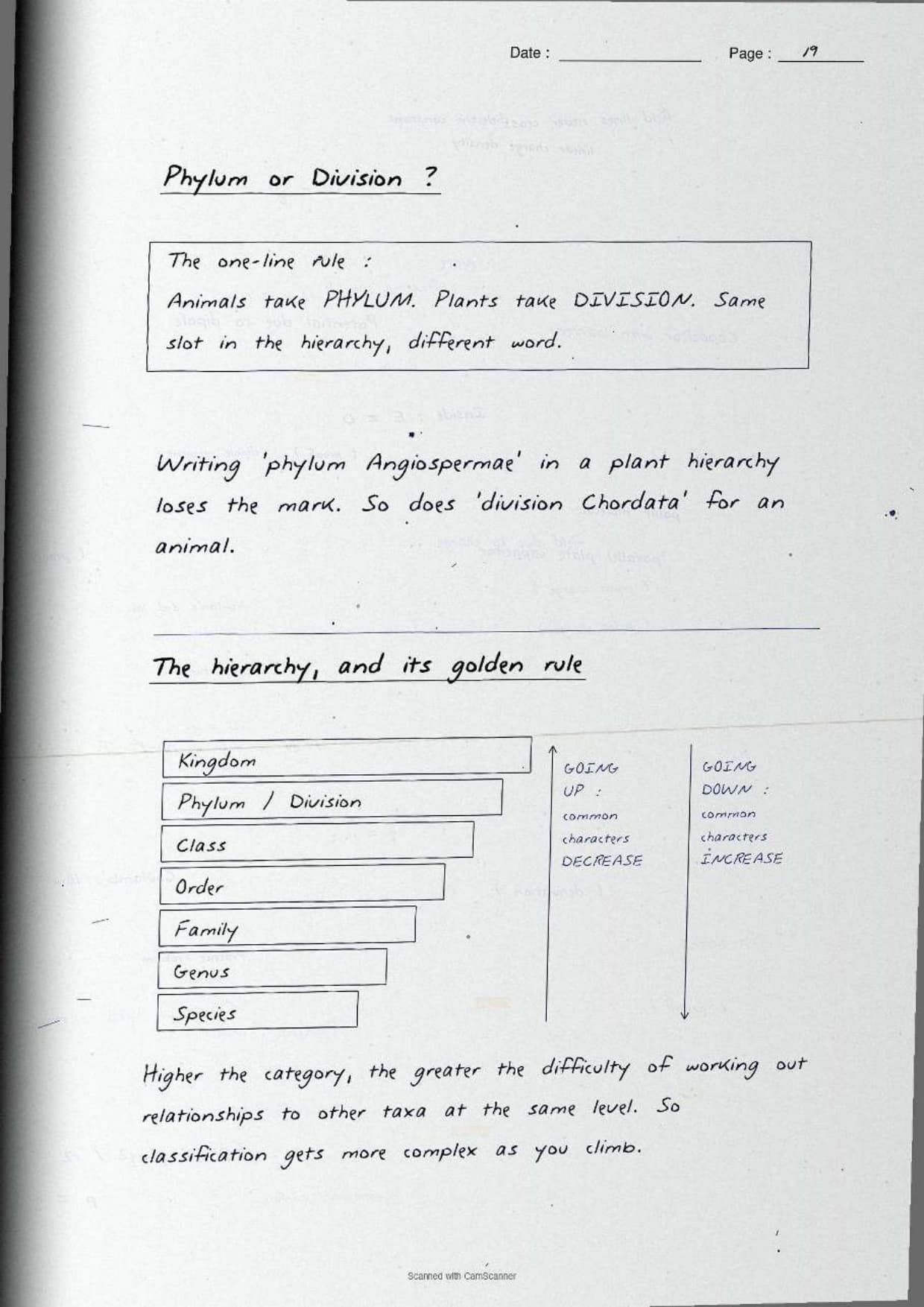
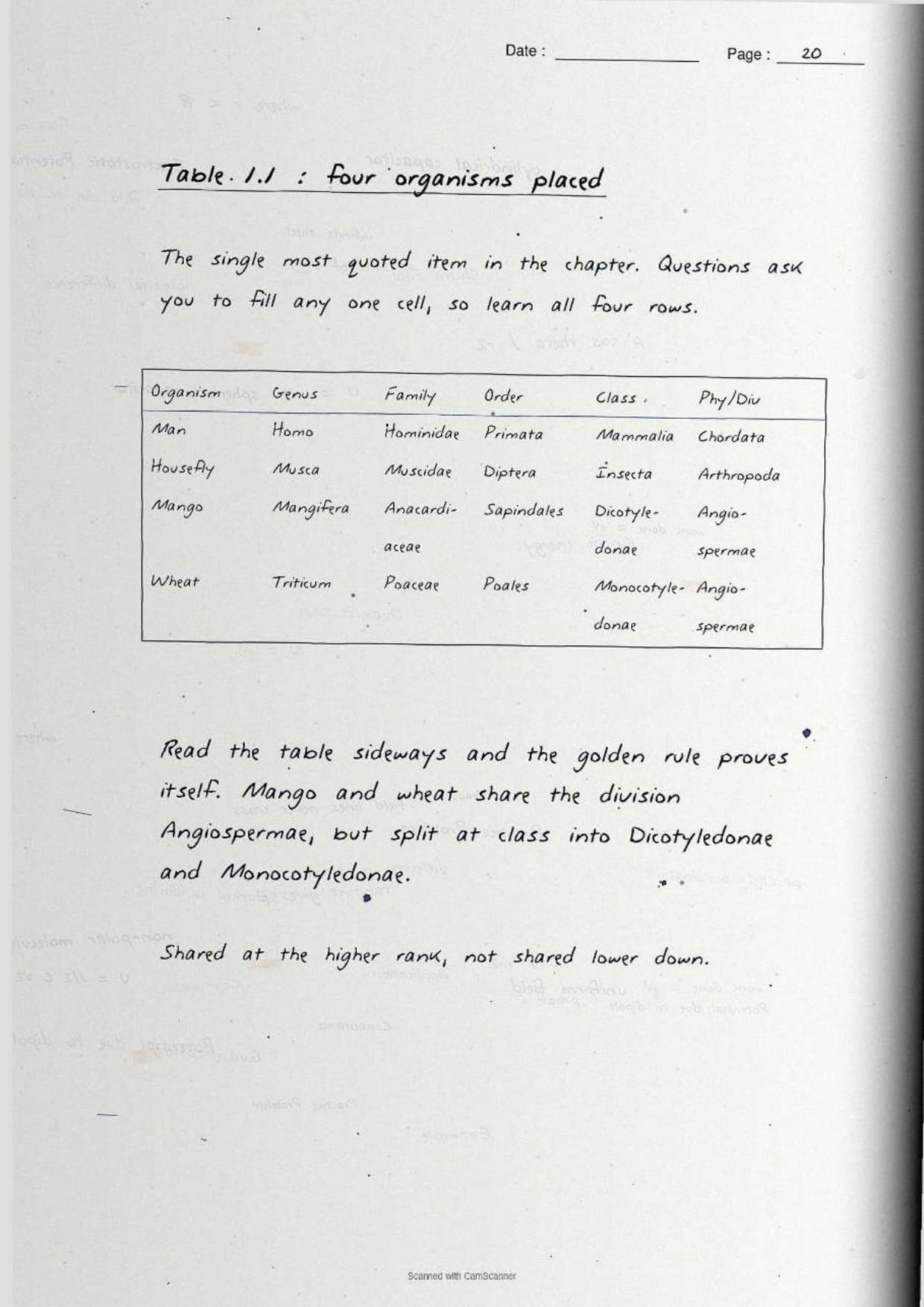
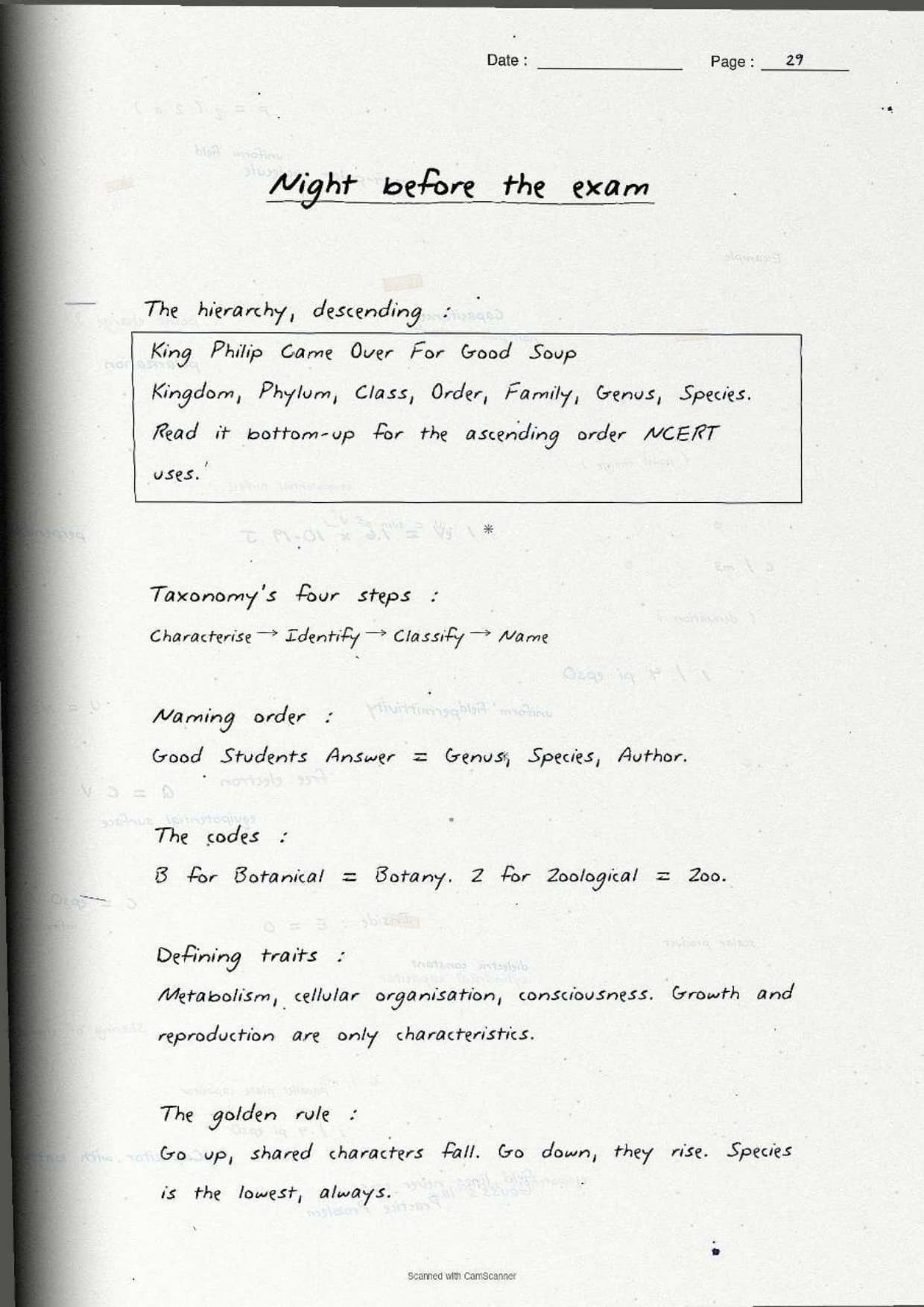
Chapter 1 is where the definitions and the naming rules are set, and both are asked as direct one-mark questions.
- Hand-drawn ladder of the seven taxonomic categories, from species up to kingdom.
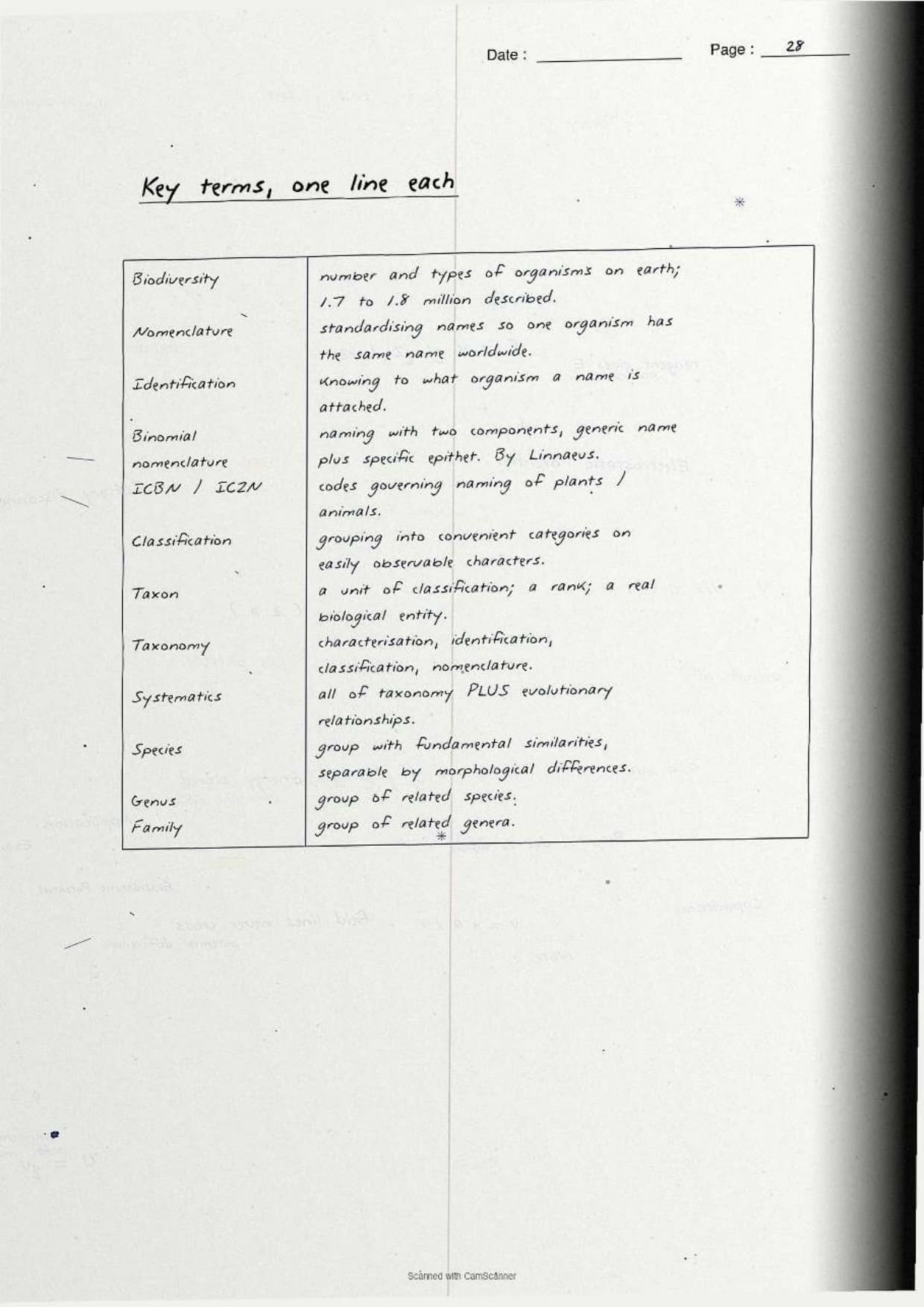
- Boxed definitions for biodiversity, nomenclature, taxonomy and systematics in exam wording.
- Pairs with the NCERT Solutions, Notes and Exemplar Solutions linked lower on this page.
What The Living World Handwritten Notes Cover
The 29 pages follow the NCERT order, starting from how much life exists on earth and ending at a night-before recap. Each topic gets its own page, so students revise one idea at a time. New sub-topics are written in red and every definition is boxed.
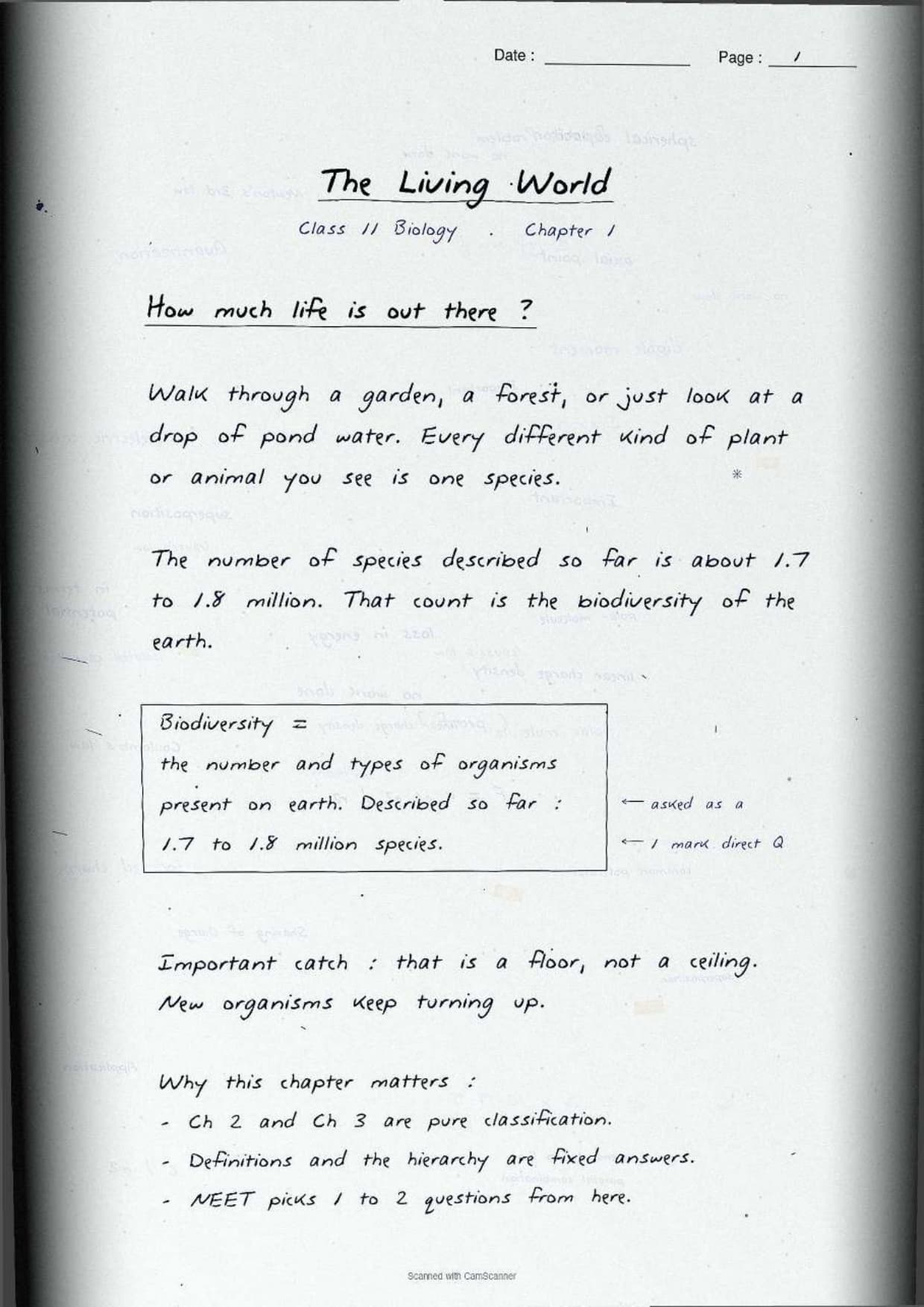
- Biodiversity: the 1.7 to 1.8 million described species, and why that number is a floor.
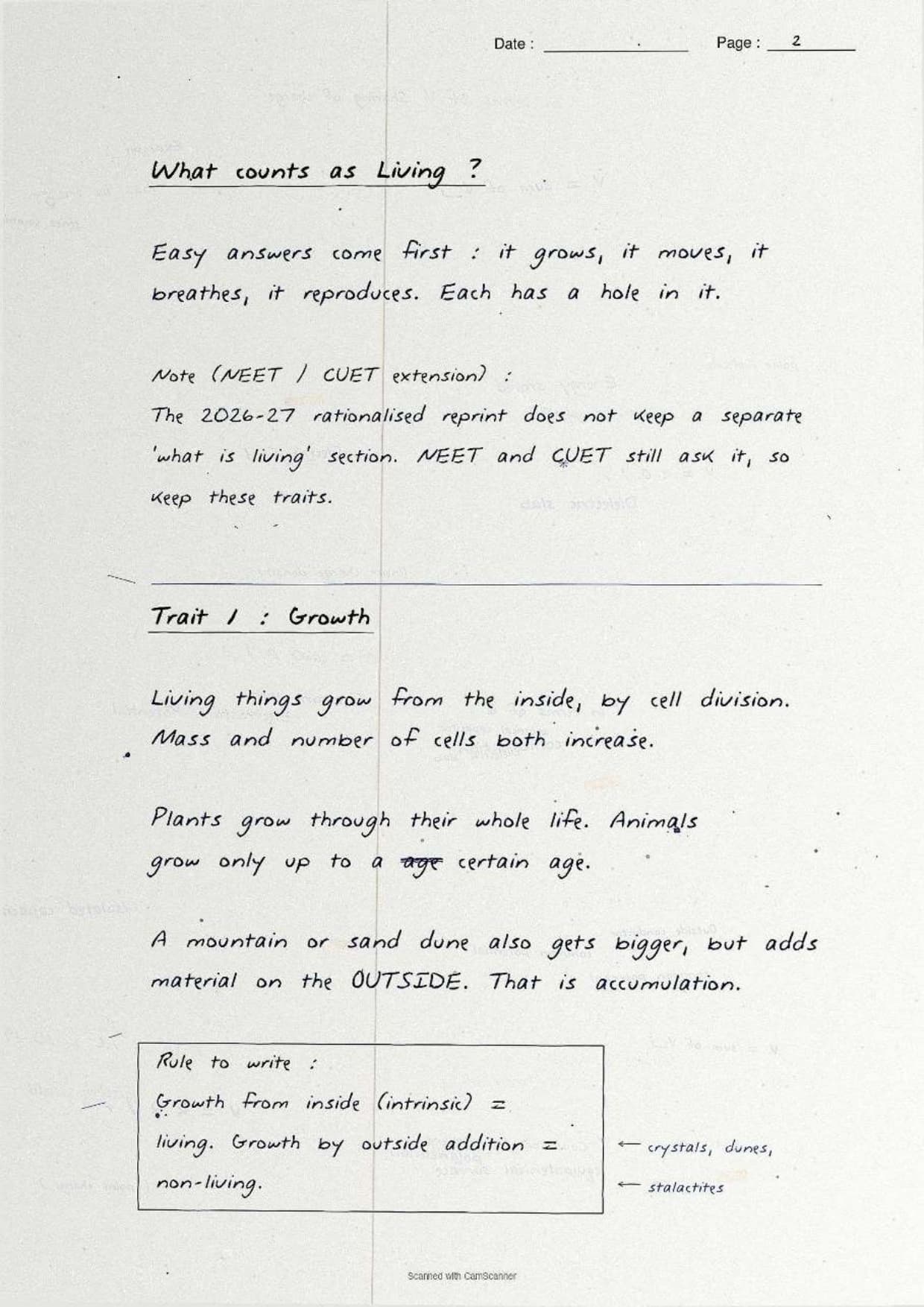
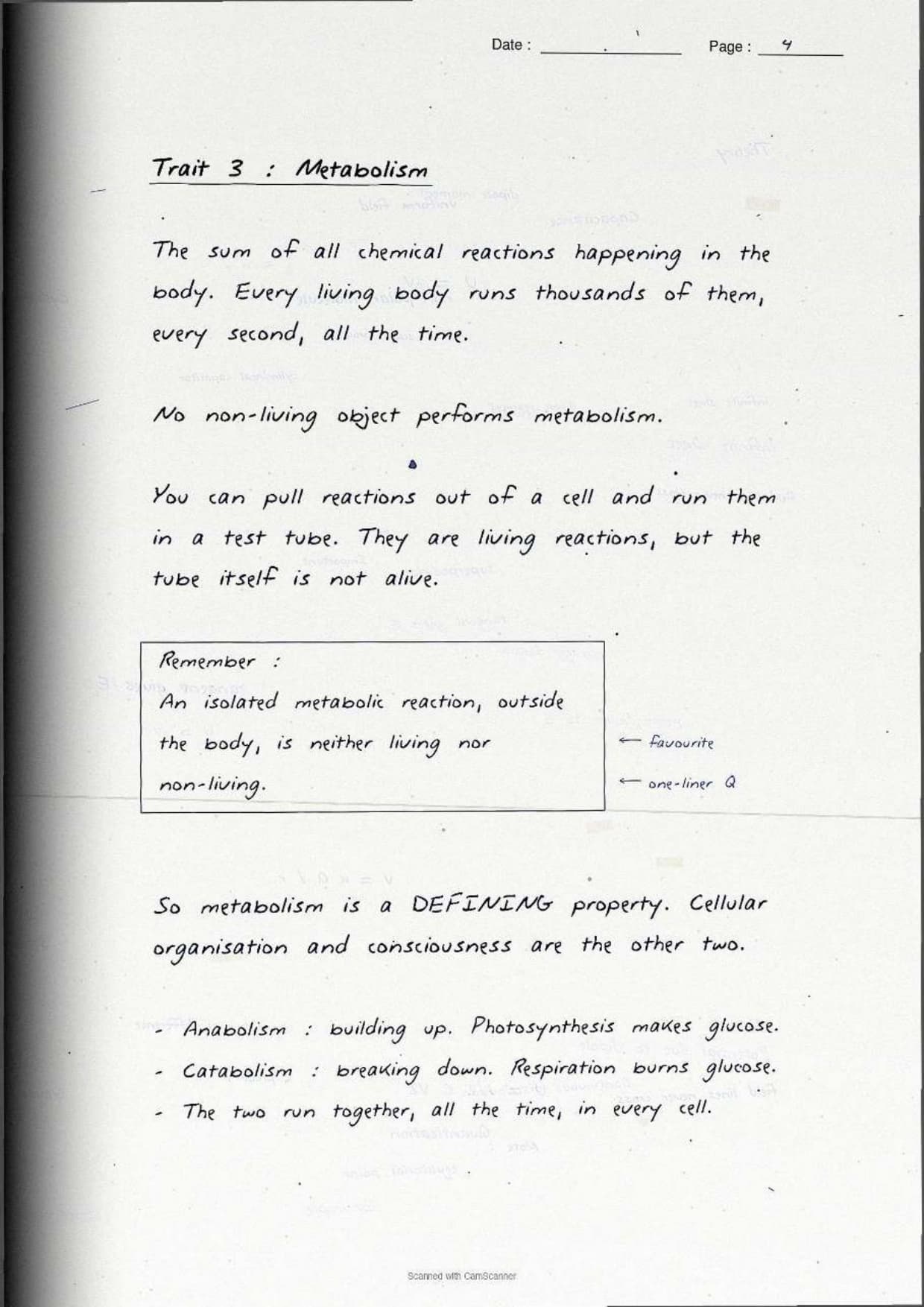
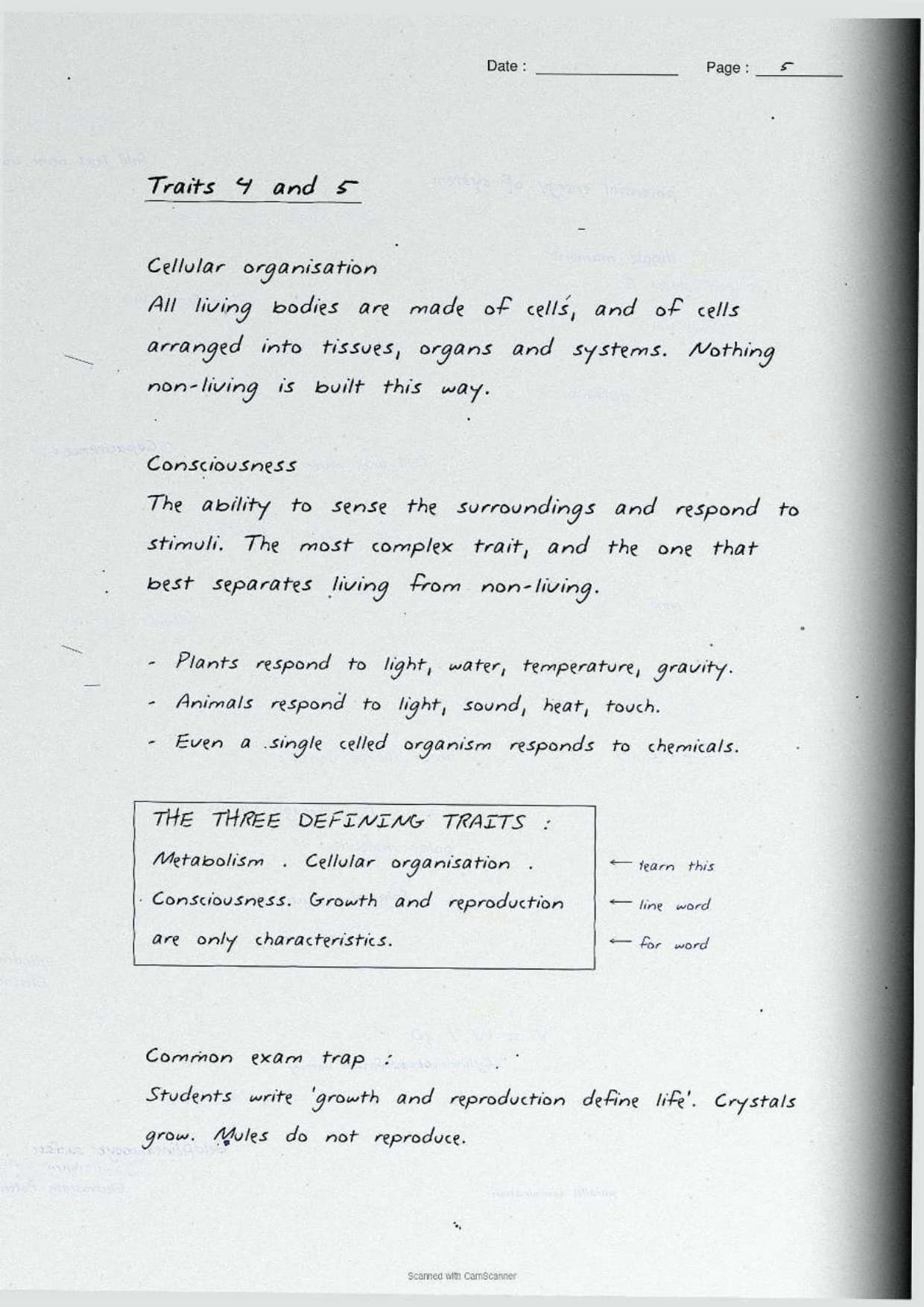
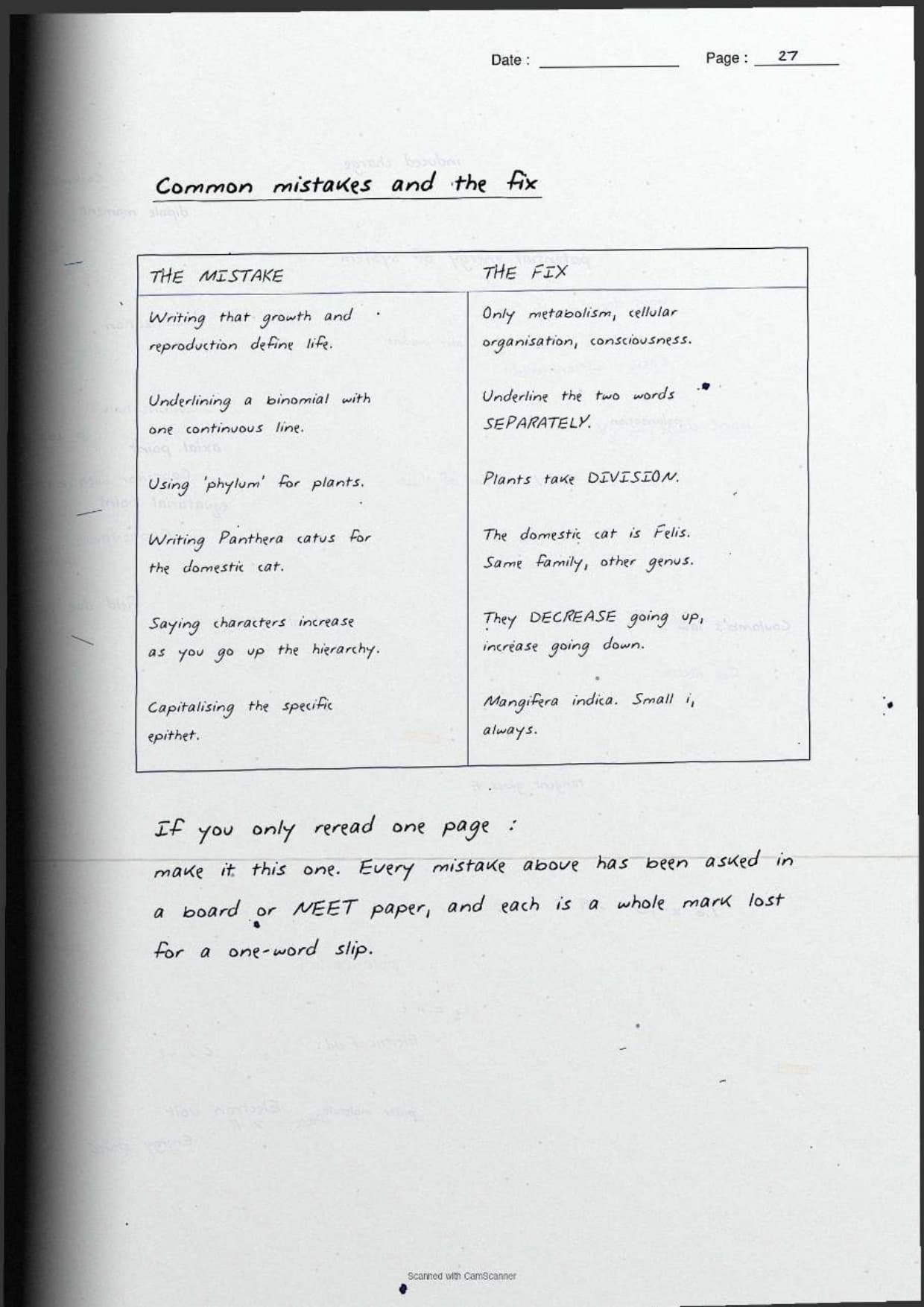
- Defining traits of life: metabolism, cellular organisation and consciousness, with the reason growth and reproduction fail the test.
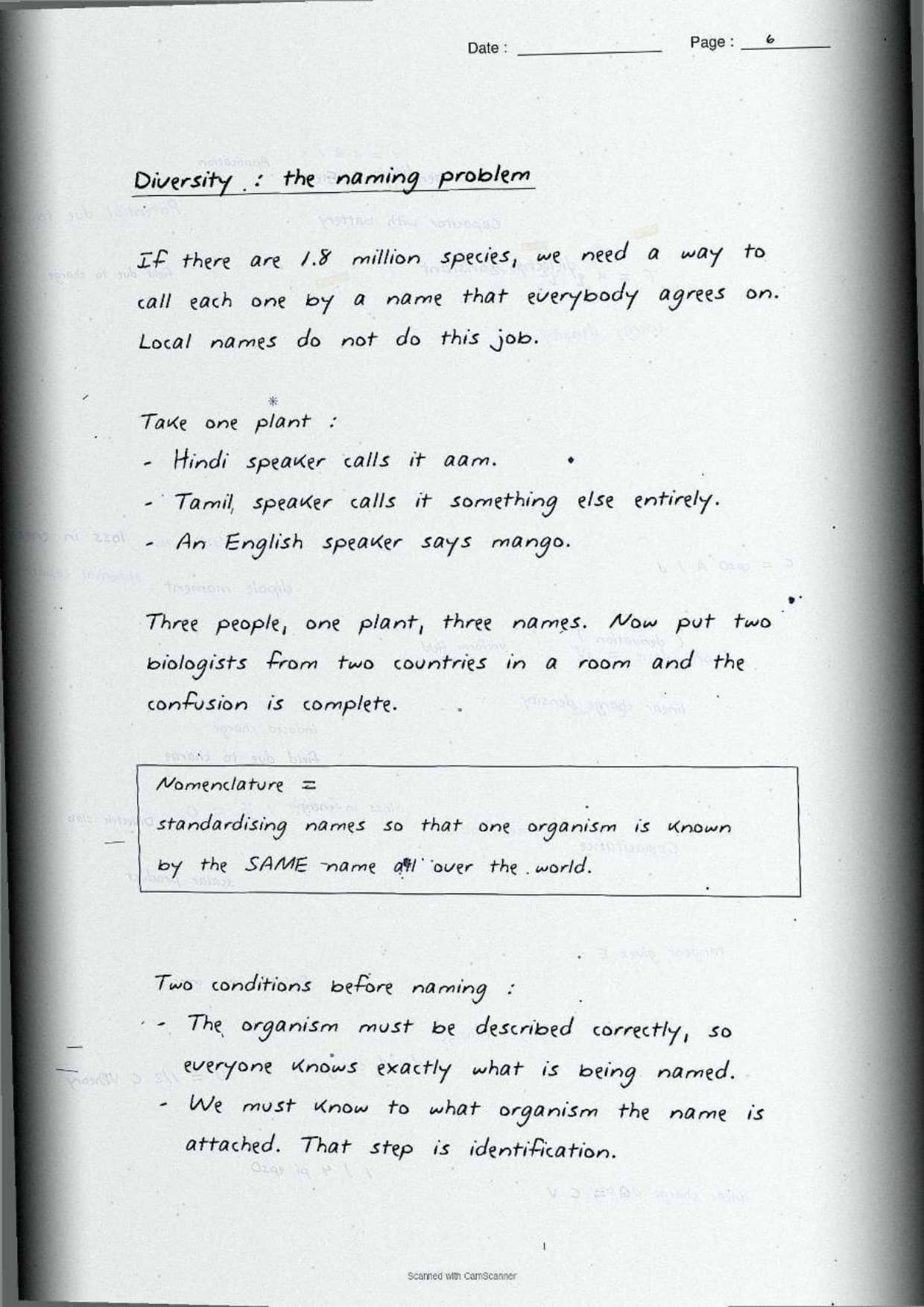
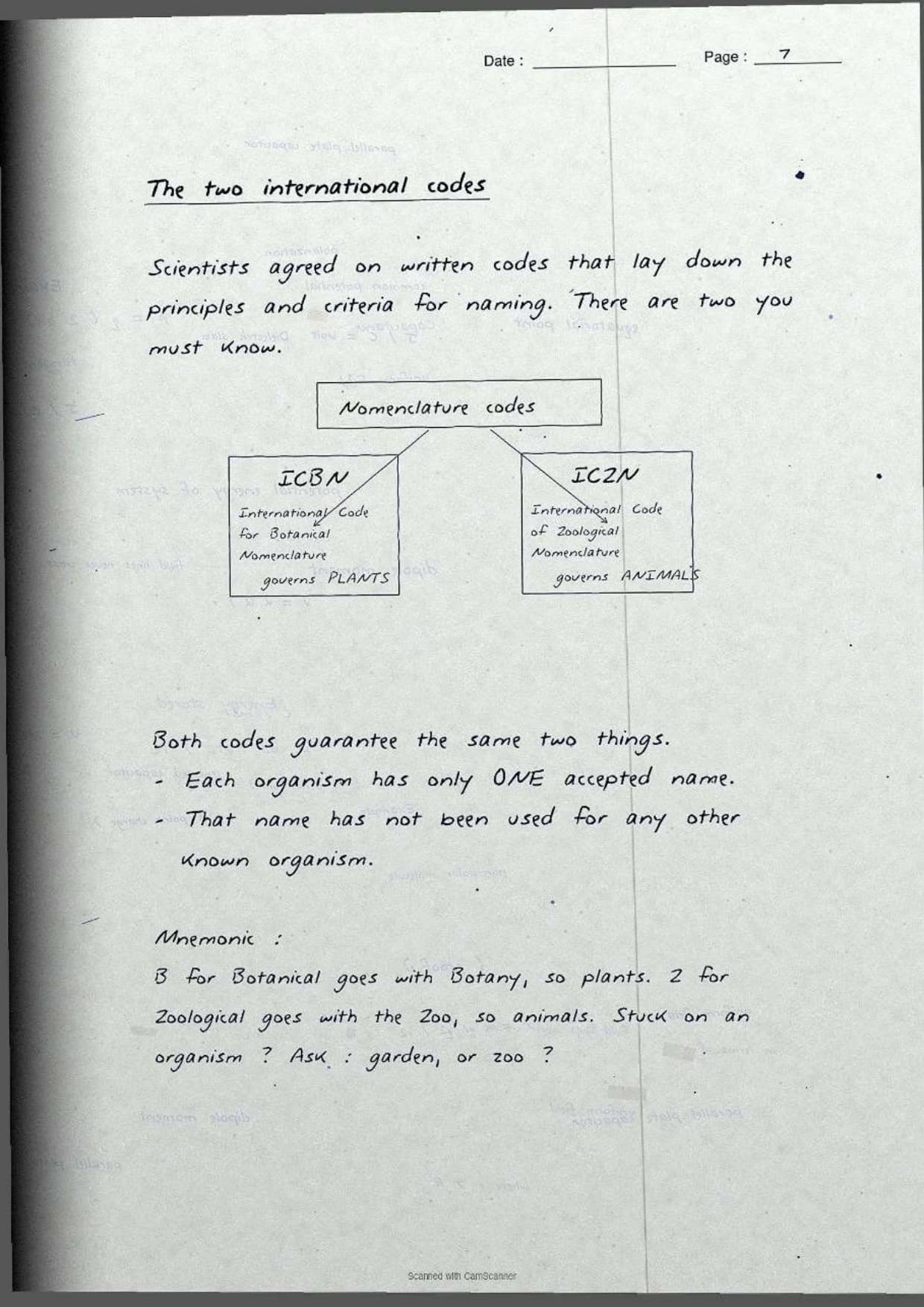
- Nomenclature: the naming problem, ICBN for plants and ICZN for animals.
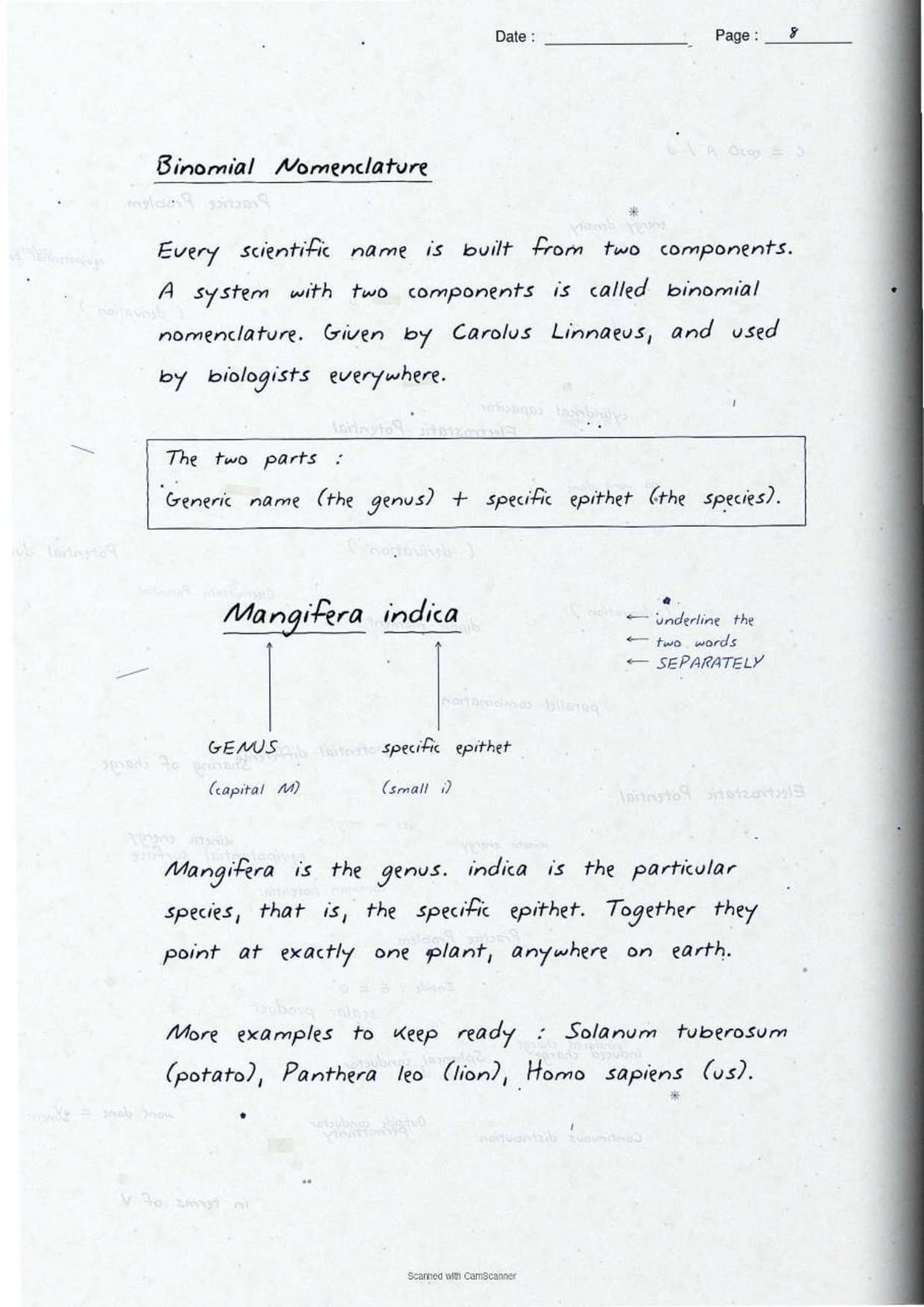
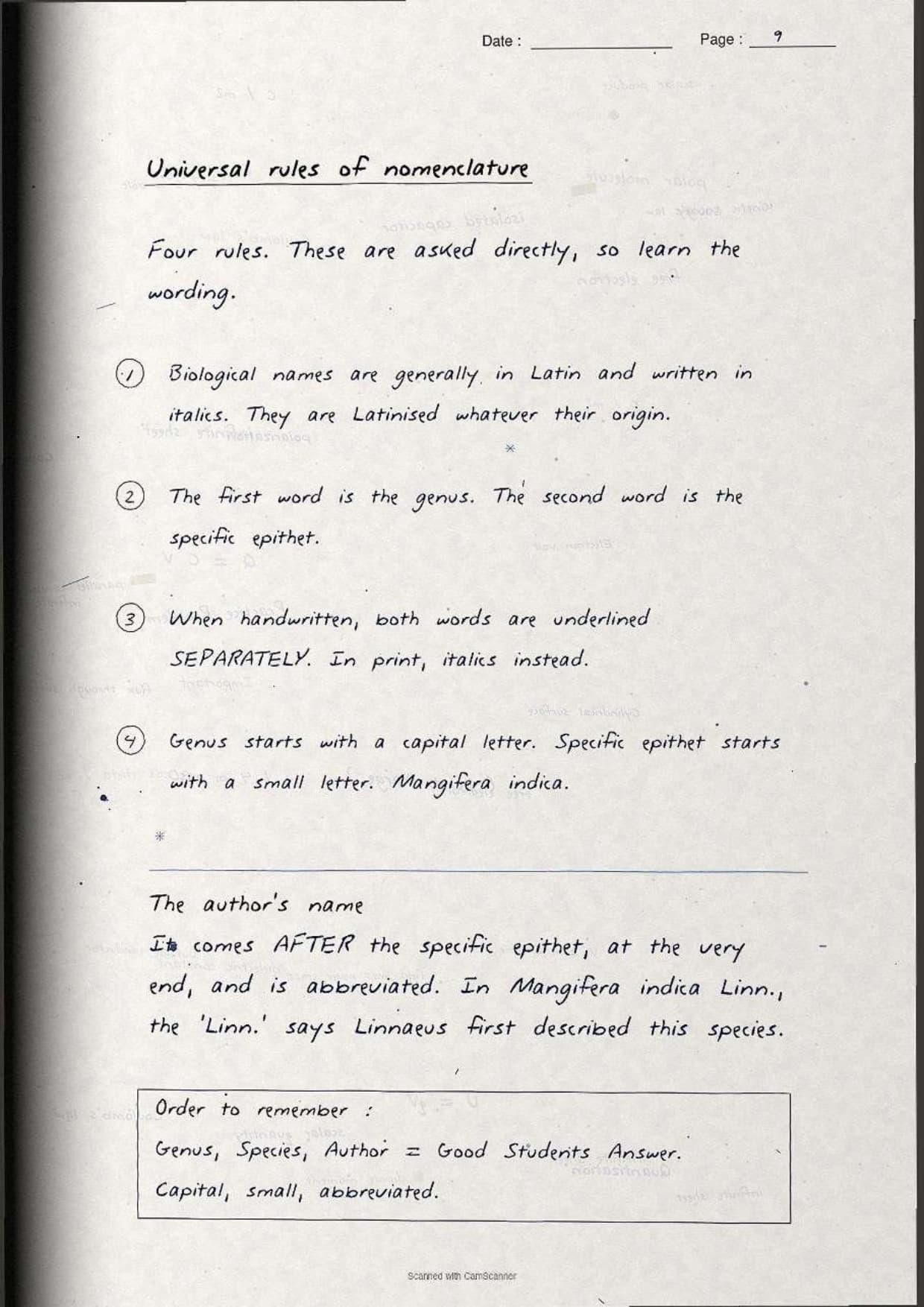
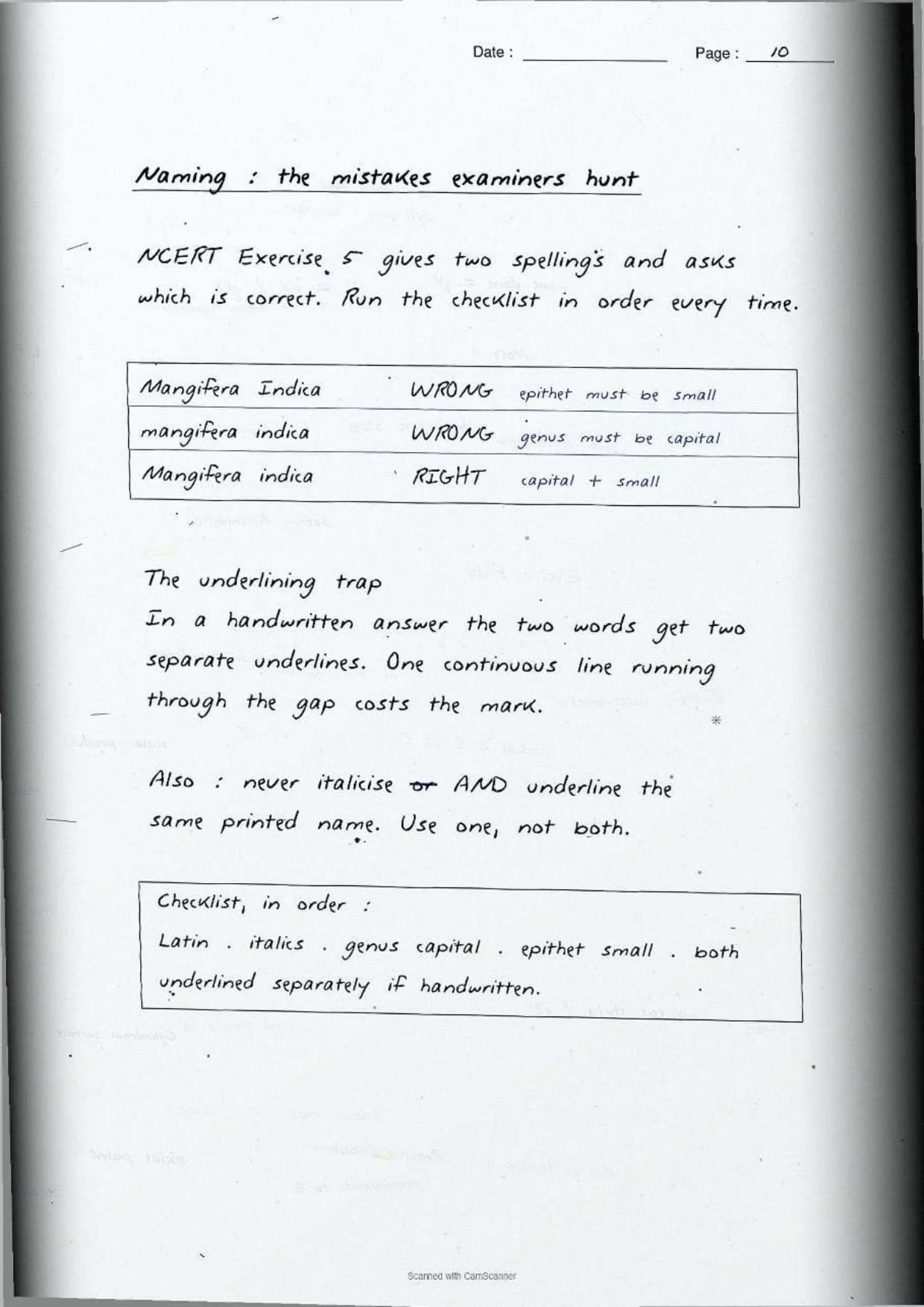
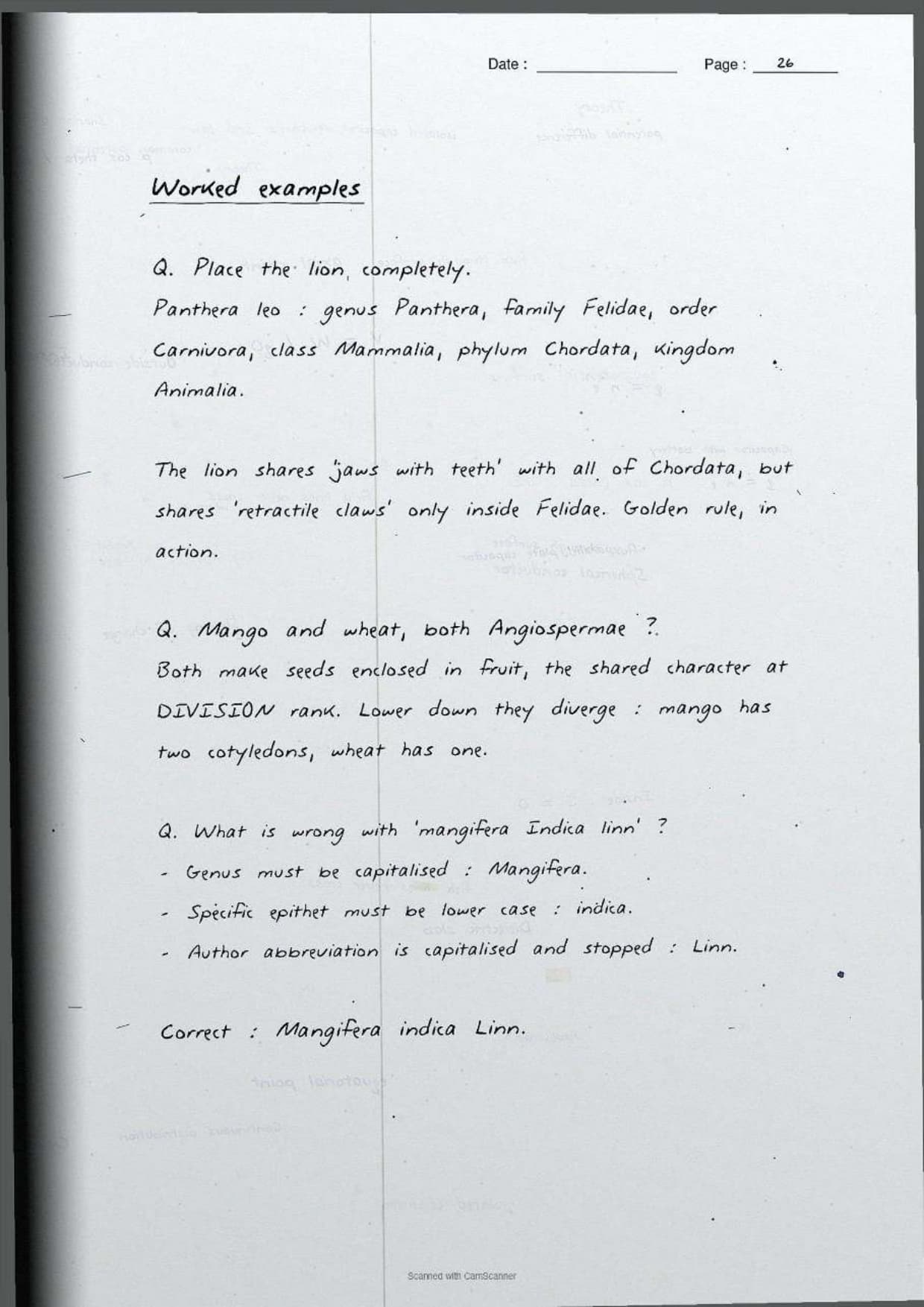
- Binomial rules: the four universal rules, plus where the author's name goes.
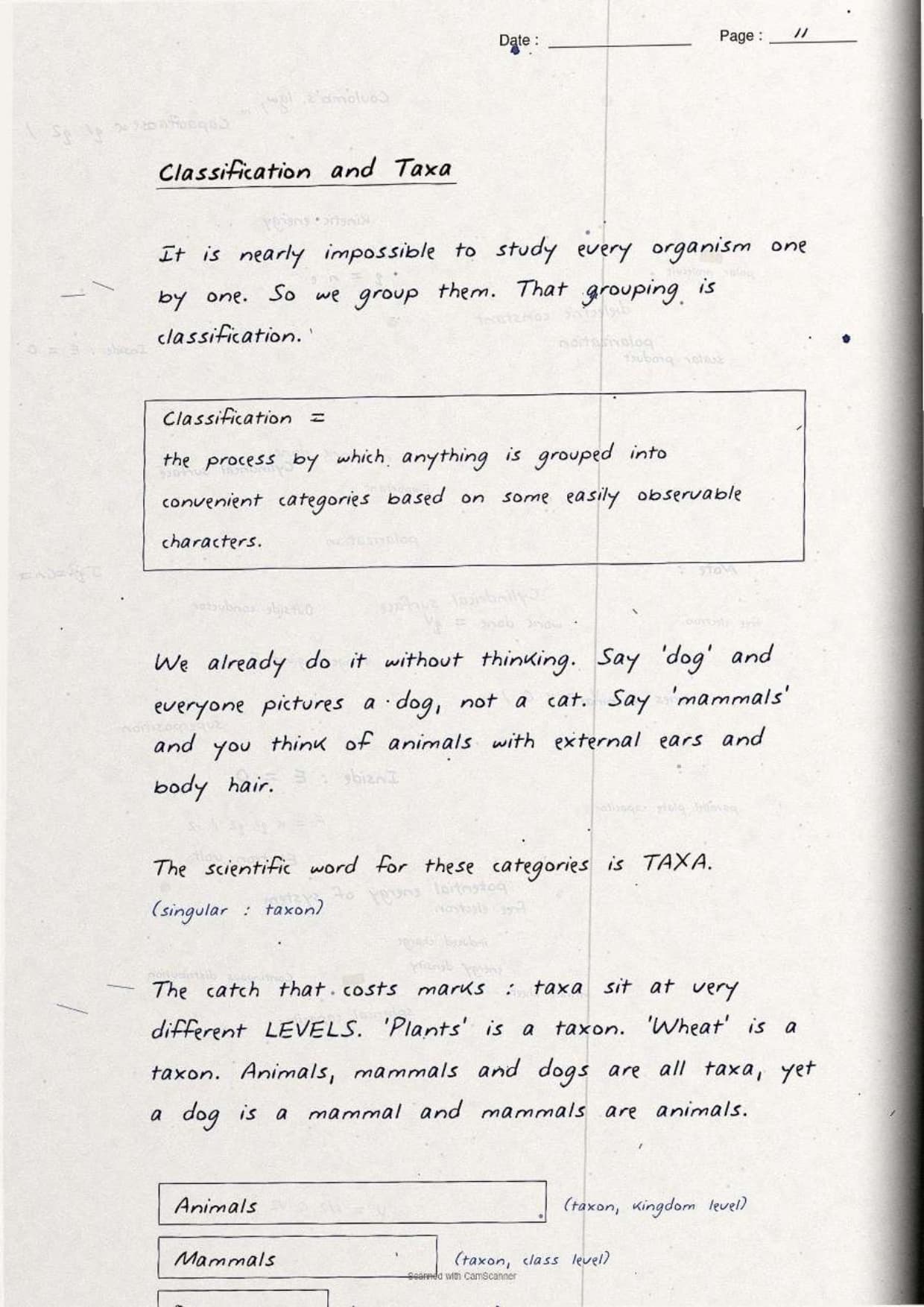
- Taxonomic hierarchy: all seven categories, from species to kingdom, with examples.
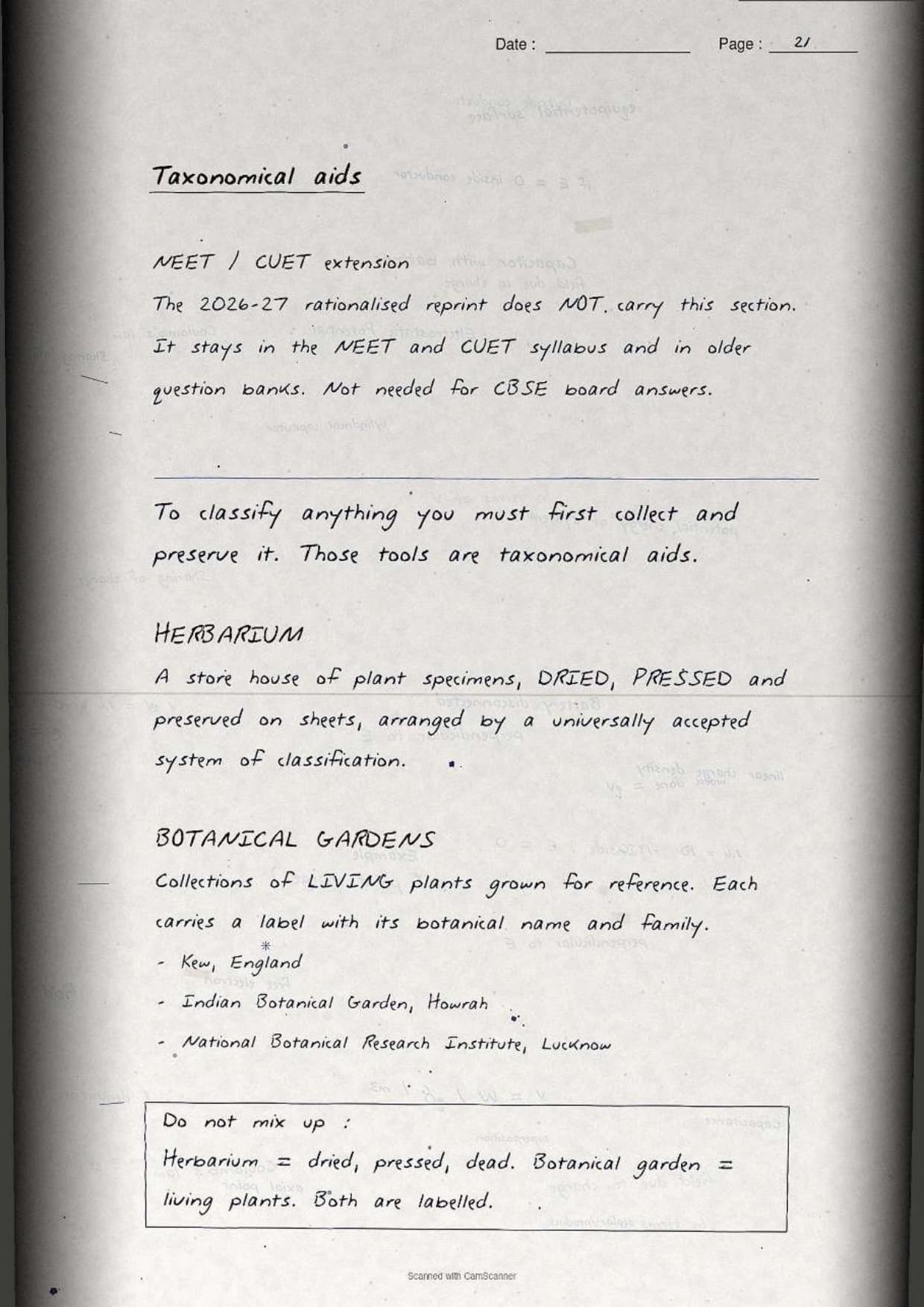
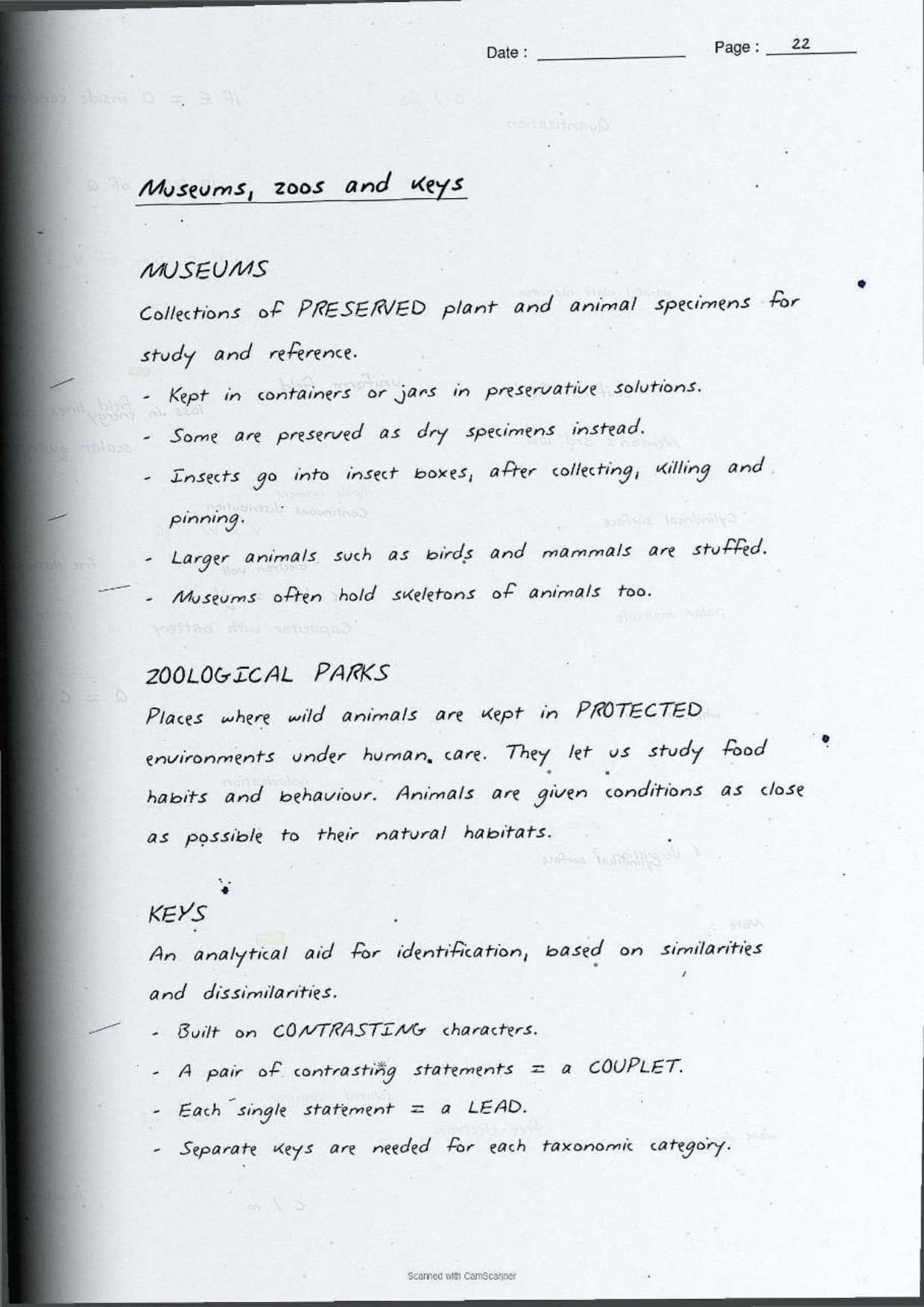
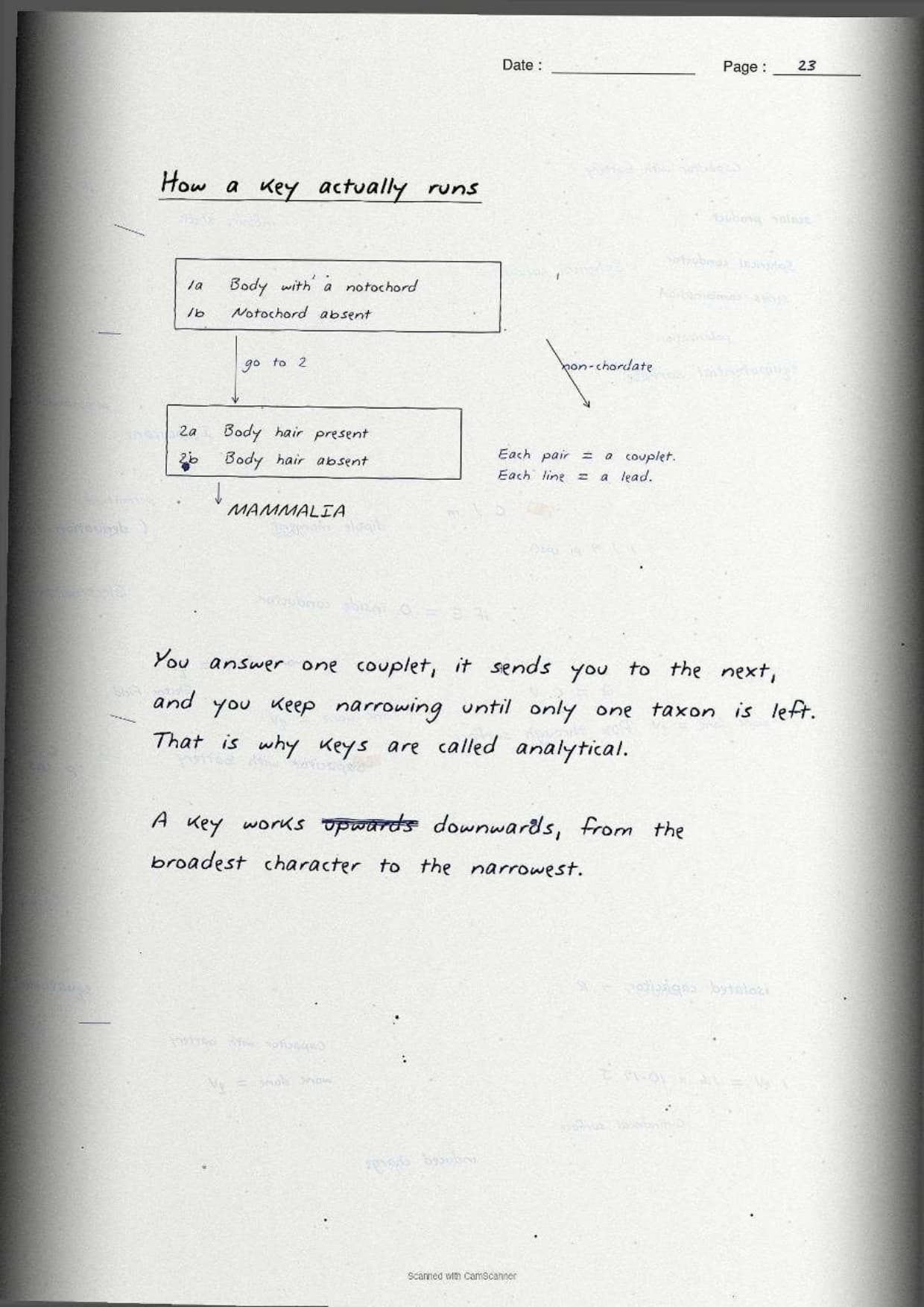
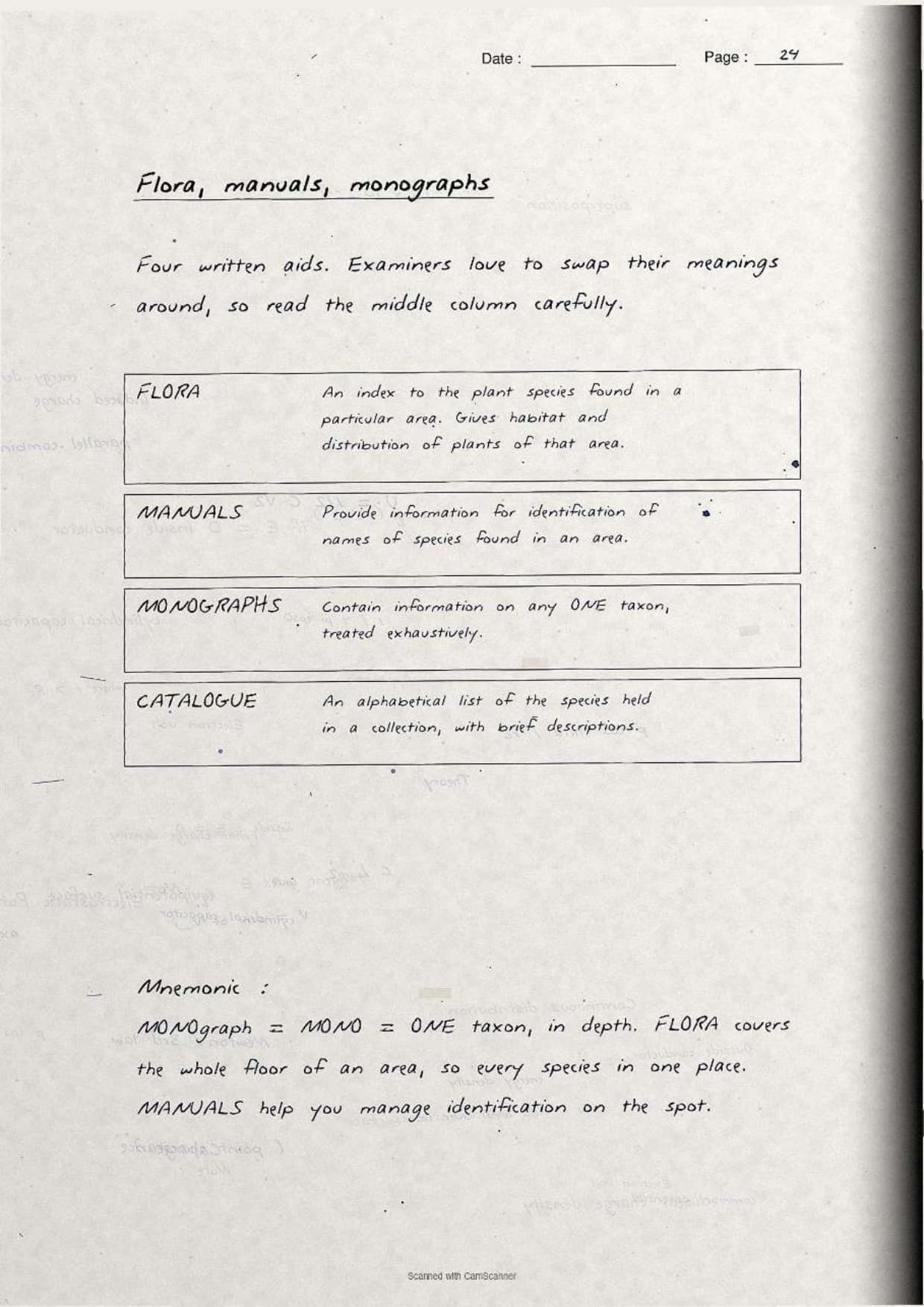
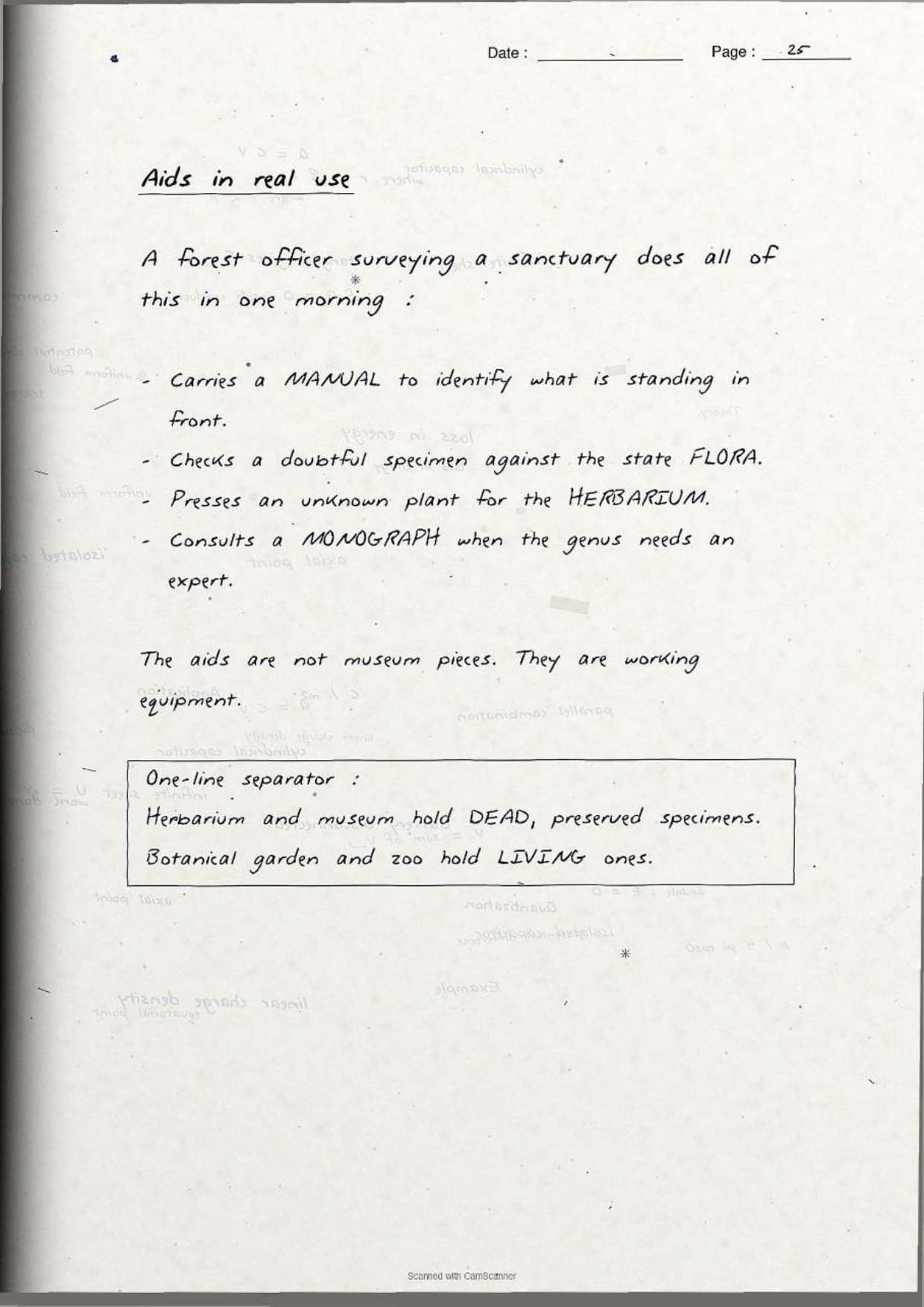
- Taxonomical aids: herbarium, botanical gardens, museums, zoological parks, keys, flora, manuals and monographs.
Taxonomical aids are marked as a NEET and CUET extension, since the current 2026-27 NCERT print drops that section from the board syllabus.
Key Diagrams and Terms in The Living World Notes
Most marks in this chapter are lost on definitions that look alike. The boxed table below is the block students get wrong most often, because examiners swap the meanings around.
| Term | How the notes define it |
|---|---|
| Herbarium | Plant specimens dried, pressed and preserved on labelled sheets |
| Botanical garden | Living plants grown for reference, each labelled with name and family |
| Museum | Preserved specimens for study and reference |
| Flora | An index of the plant species of a particular area |
| Manual | Information for identifying the species of an area |
| Monograph | All information on any one taxon, treated in full |
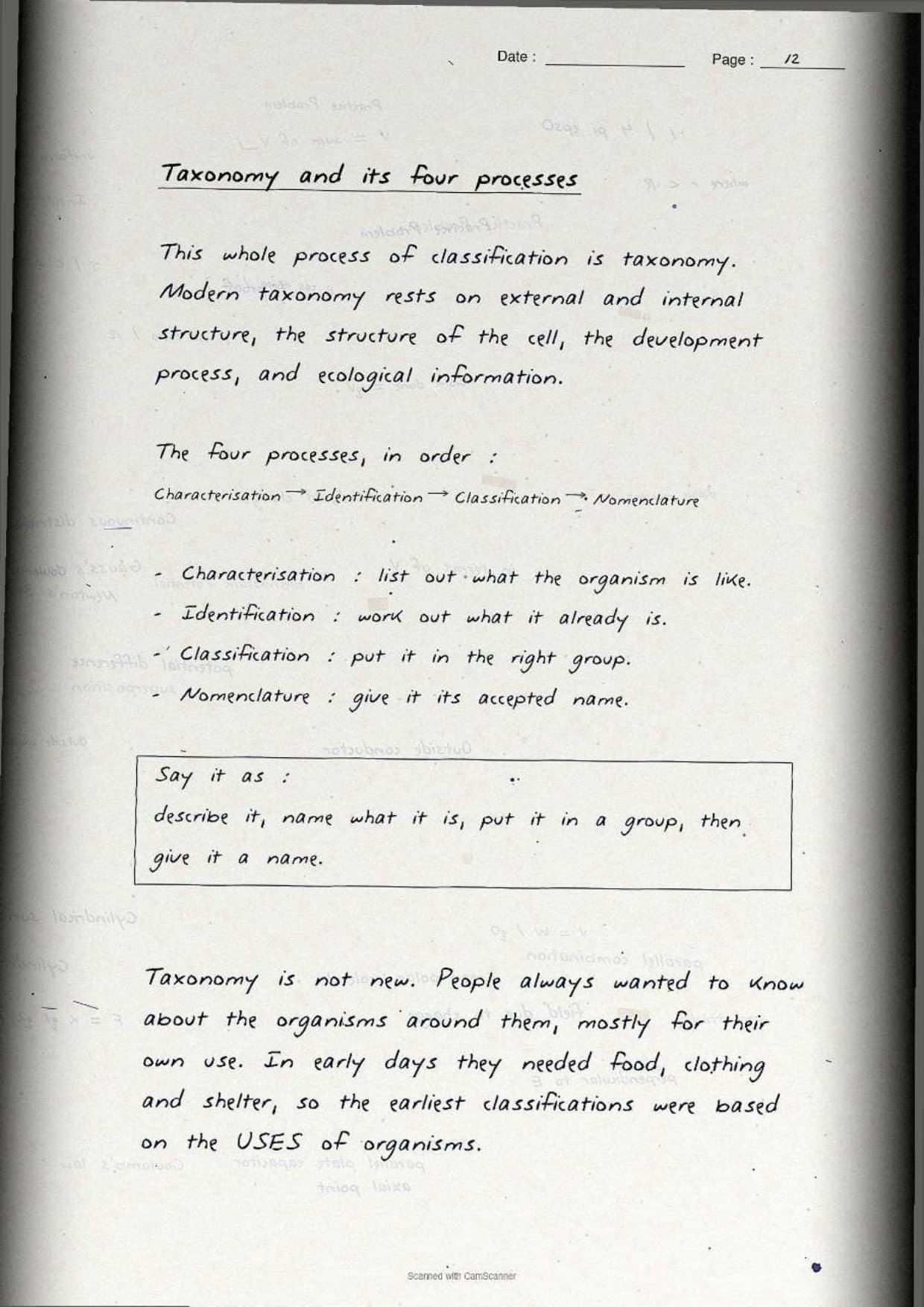
A hand-drawn flow chart shows taxonomy's four steps in order: characterisation, identification, classification and nomenclature. A second sketch runs the hierarchy ladder both ways, so students see that shared characters fall as they move up and rise as they move down.
How to Use These Handwritten Notes for Revision
Work through the pages in three short passes. Read a topic page, cover the boxed definition and say it back, then answer two NCERT questions on it. This loop fixes exact wording faster than re-reading the textbook.
- Learn the four rules of binomial nomenclature word for word, since they are quoted in answers.
- Redraw the seven-category ladder from memory on rough paper.
- Keep the class 11 biology handwritten notes chapter 1 The Living World open beside the NCERT Solutions while practising.
- Read the common-mistakes page last, on page 27, before you shut the file.
Around 35 minutes is enough for one full pass of this chapter, so the notes fit into the last week before an exam.
Student Feedback on The Living World Handwritten Notes
Students rate the boxed definitions as the pages that save them the most time. The figures below come from a Collegedunia poll run before the 2026 boards.
- In a Collegedunia survey of 10,860 students, 71% said the taxonomical aids table was their most-used revision page.
- Most-confused pair before the poll: herbarium against botanical garden, mixed up by about 4 in 10 students.
Source: 2026-27 Class 11 Biology student poll. Sample of 10,860 students from CBSE schools across 12 states.
Where to Use These Notes Alongside Other Resources
These handwritten pages work best next to the step-wise Solutions, the summary Notes and the Exemplar Solutions for the same chapter. Read the notes first, then check the answers, and keep the Exemplar for extra practice.
| Resource | Best used for |
|---|---|
| The Living World NCERT Solutions | Step-by-step answers to every back-exercise question |
| The Living World Class 11 Notes | Quick chapter summary with all key terms in one place |
| The Living World Exemplar Solutions | All 37 Exemplar questions solved for NEET-level practice |
| The Living World NCERT Book PDF | The original chapter text and exercises |
All Class 11 Biology Handwritten Notes by Chapter
The table links the handwritten notes for every Class 11 Biology chapter, so students can move across the course in one click. The Living World is highlighted.
| Chapter | Handwritten Notes |
|---|---|
| Chapter 1 | The Living World |
| Chapter 2 | Biological Classification |
| Chapter 3 | Plant Kingdom |
| Chapter 4 | Animal Kingdom |
| Chapter 5 | Morphology of Flowering Plants |
| Chapter 6 | Anatomy of Flowering Plants |
| Chapter 7 | Structural Organisation in Animals |
| Chapter 8 | Cell The Unit of Life |
| Chapter 9 | Biomolecules |
| Chapter 10 | Cell Cycle and Cell Division |
| Chapter 11 | Photosynthesis in Higher Plants |
| Chapter 12 | Respiration in Plants |
| Chapter 13 | Plant Growth and Development |
| Chapter 14 | Breathing and Exchange of Gases |
| Chapter 15 | Body Fluids and Circulation |
| Chapter 16 | Excretory Products and their Elimination |
| Chapter 17 | Locomotion and Movement |
| Chapter 18 | Neural Control and Coordination |
| Chapter 19 | Chemical Coordination and Integration |
FAQs on The Living World Handwritten Notes
Ques. Are these class 11 biology handwritten notes chapter 1 The Living World free to download?
Ans. Yes. The Living World handwritten notes are free to download as a PDF from this page. All 29 pages follow the 2026-27 NCERT and cover the full chapter in clear handwriting for quick revision.
Ques. What topics do these handwritten notes cover?
Ans. They cover biodiversity, the defining traits of life, nomenclature and the ICBN and ICZN codes, the four rules of binomial naming, the seven taxonomic categories and the taxonomical aids. Each topic sits on its own page with boxed definitions and hand-drawn charts.
Ques. Why are growth and reproduction not defining traits of life?
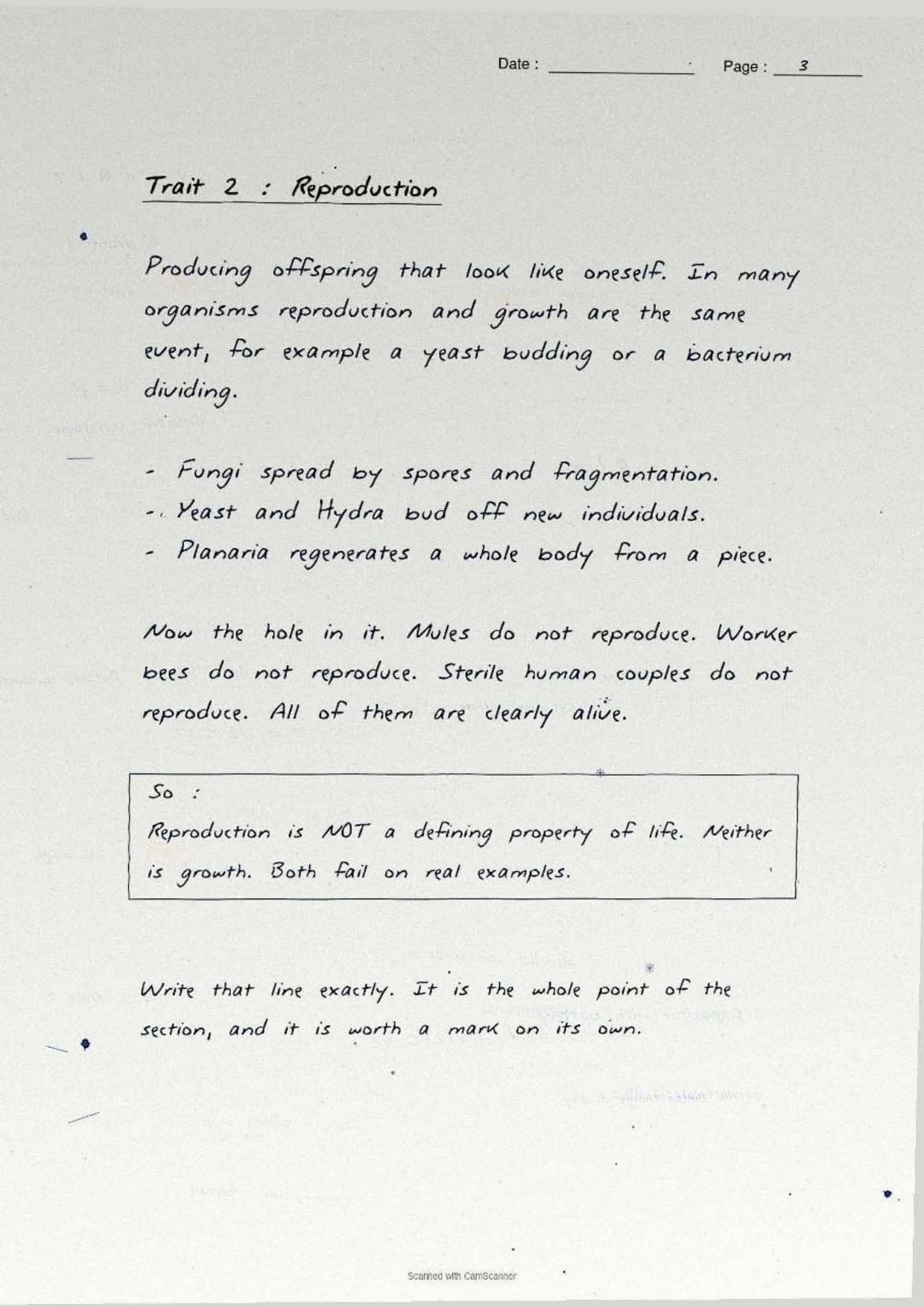
Ans. Both fail on real examples. Mules, worker bees and sterile human couples do not reproduce, yet they are alive, and non-living things like a snowball can grow. The notes box the correct answer: metabolism, cellular organisation and consciousness are the defining traits.
Ques. Are these notes useful for NEET, not just Boards?
Ans. Yes. NEET picks one to two questions a year from this chapter, mostly on nomenclature and taxonomical aids. The taxonomical aids pages are marked as a NEET and CUET extension, since the board syllabus no longer carries that section.
Ques. How long do these notes take to revise?
Ans. About 35 minutes for one full pass. Read each topic page, recall the boxed definition, then answer two NCERT questions on it. Finish with the common-mistakes page so the exact wording stays fresh.



Comments