




These class 11 biology handwritten notes chapter 12 Respiration in Plants are built for one fast revision pass before Boards, NEET and CUET in 2026-27. All 31 pages carry the pathway, the ATP numbers and the respiratory quotient in clear handwriting, boxed and colour-coded for last-minute recall.
Chapter 12 is a numbers chapter. Most lost marks come from ATP counts students already know.
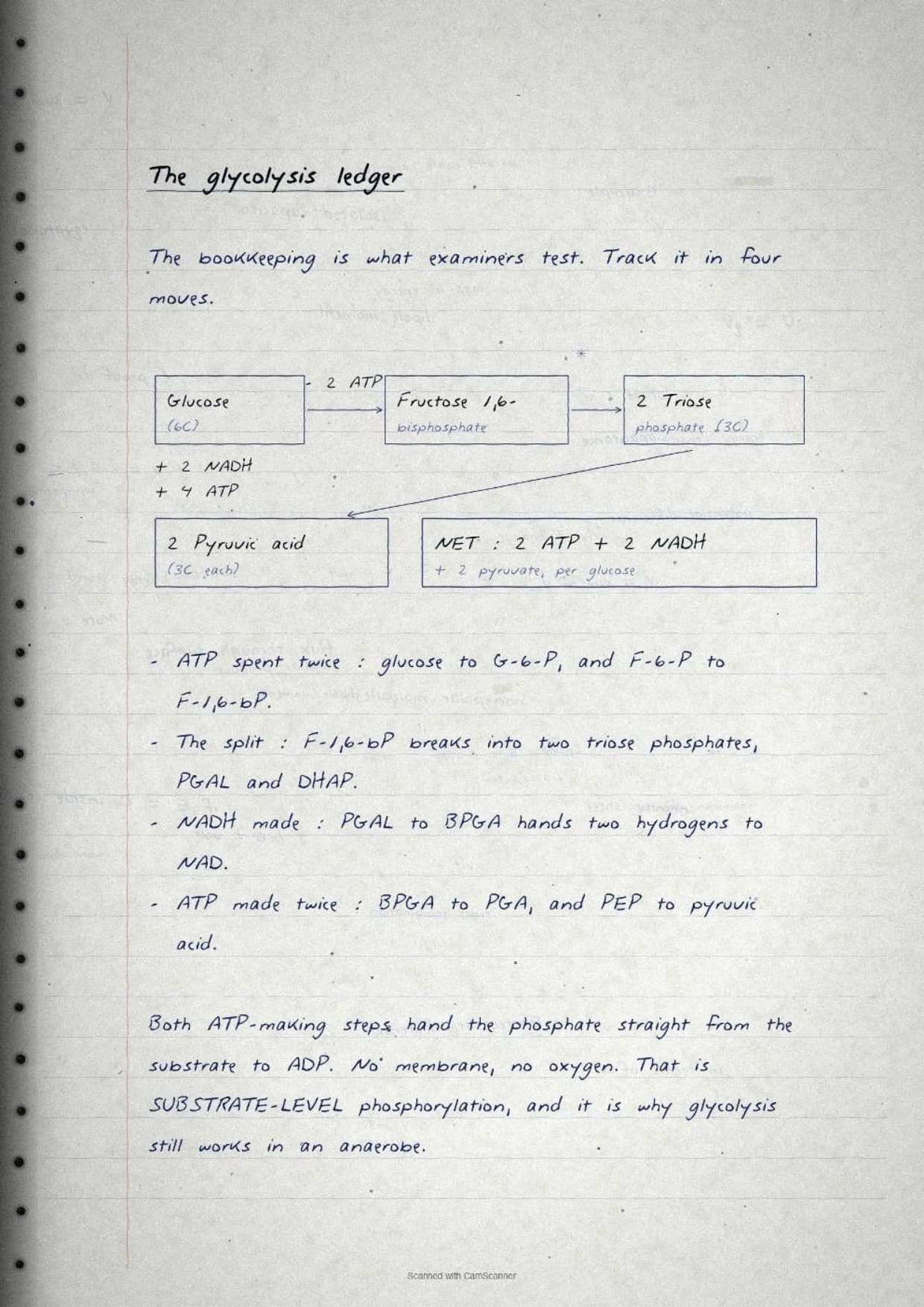
- Hand-drawn glycolysis ledger and a Krebs cycle wheel with the per-turn yield boxed beside it.
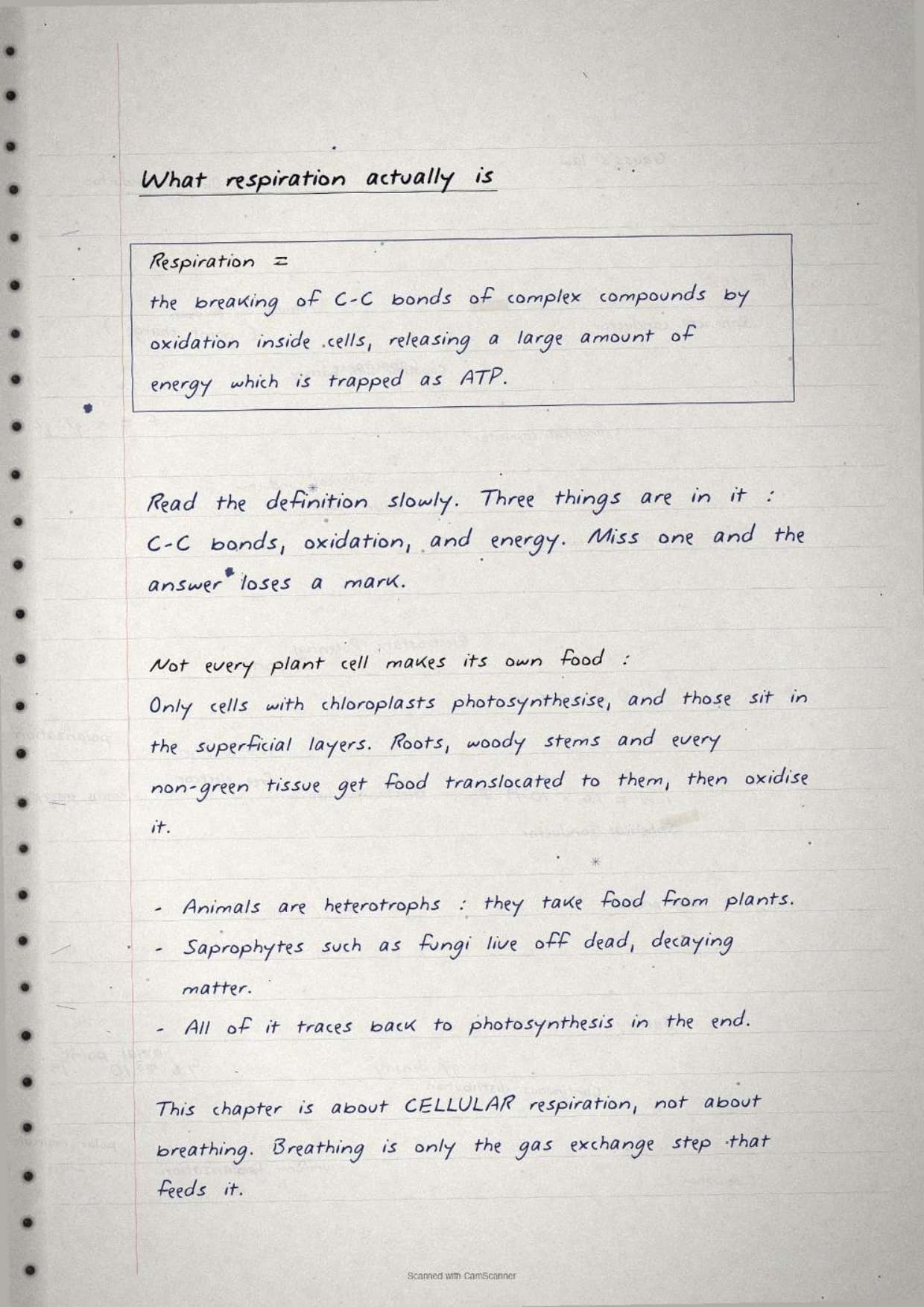
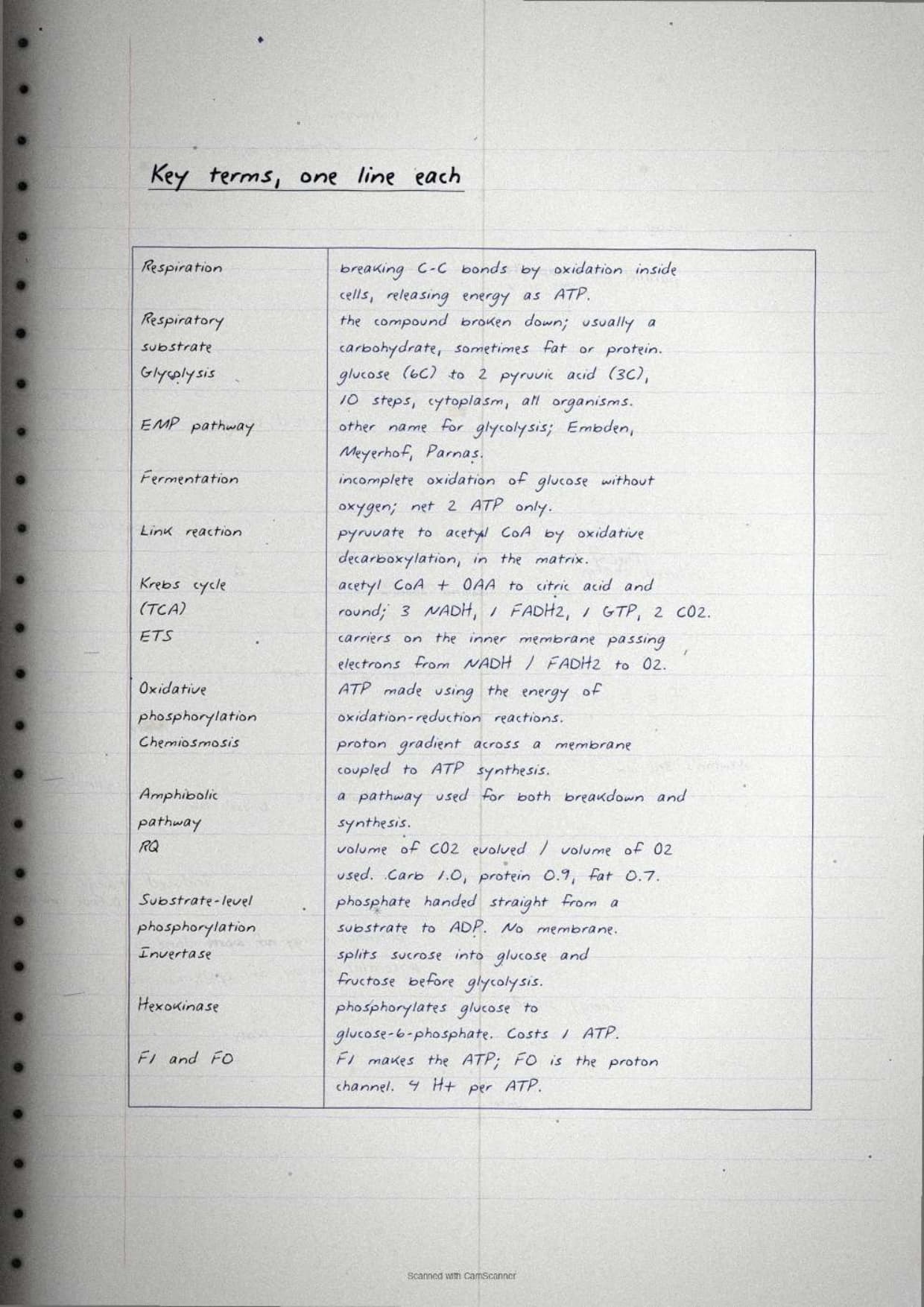
- Boxed definitions for respiration, glycolysis, fermentation and respiratory quotient in exam wording.
- Pairs with the NCERT Solutions, Notes and Exemplar Solutions linked lower on this page.
What Respiration in Plants Handwritten Notes Cover
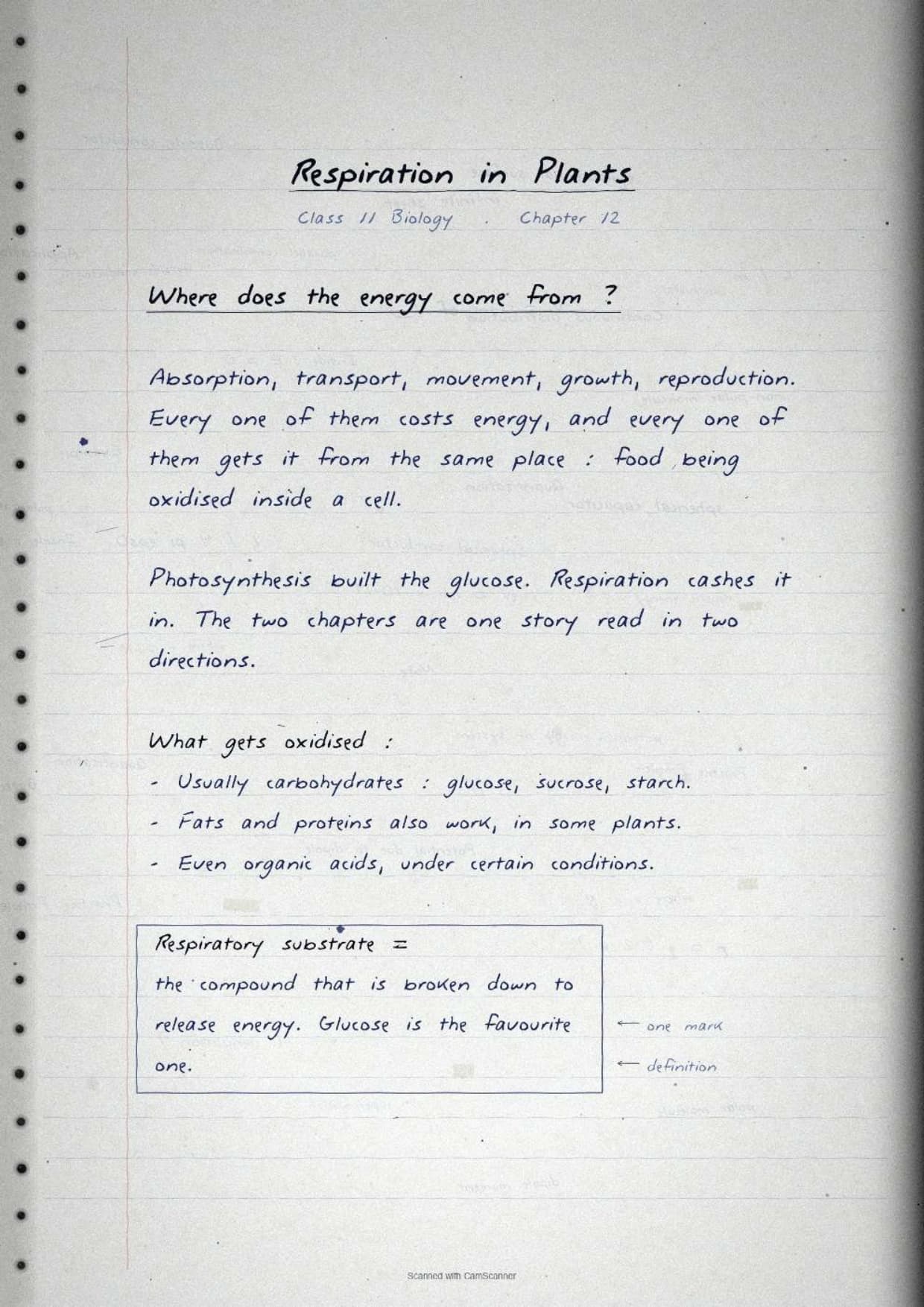
The 31 pages follow the NCERT order. They open with where a plant gets its energy and close with a night-before recap. Each topic sits on its own page, so students revise one idea at a time. New sub-topics are written in red and every definition is boxed.
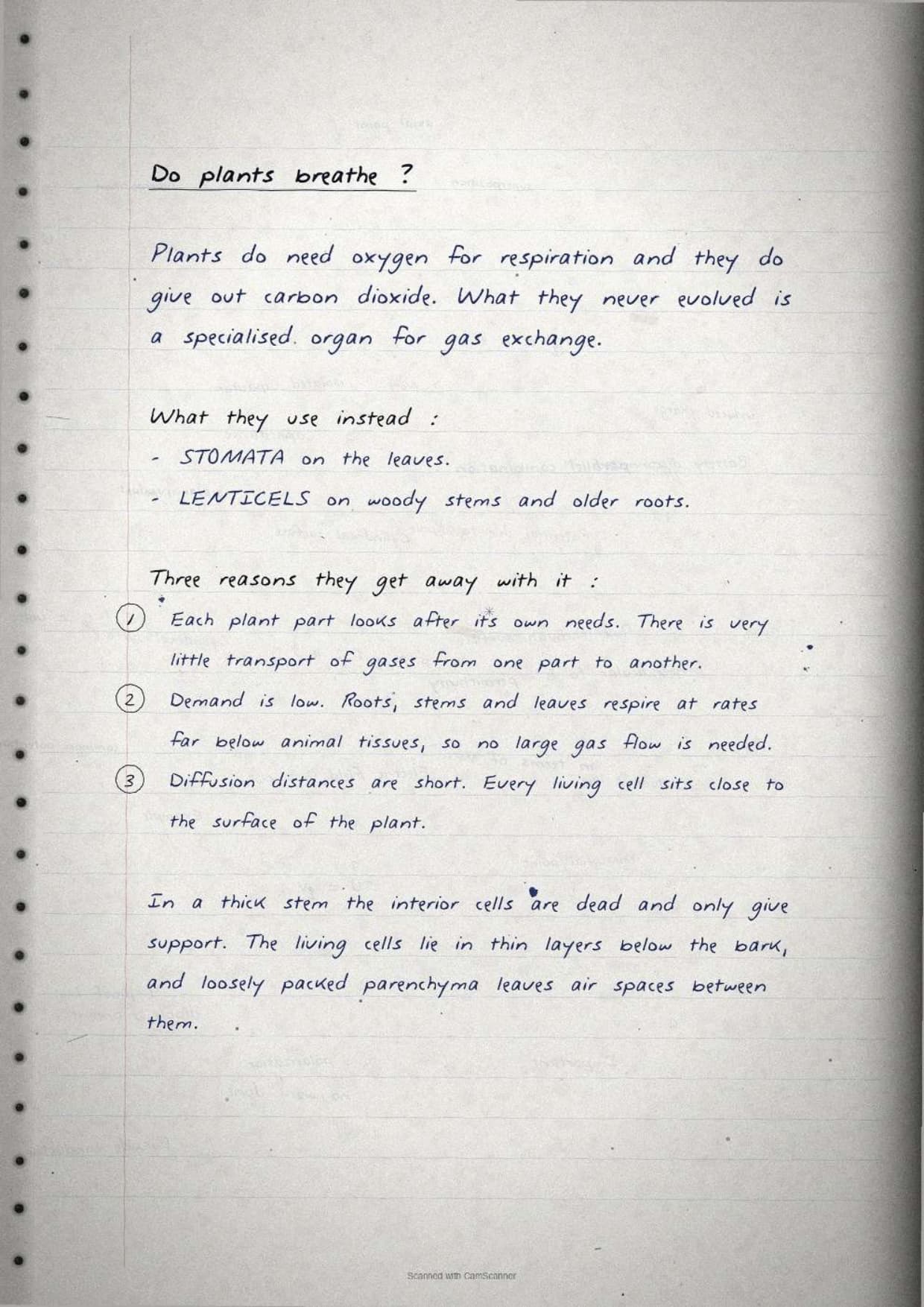
- Do plants breathe: stomata and lenticels, and the three reasons plants need no breathing organ.
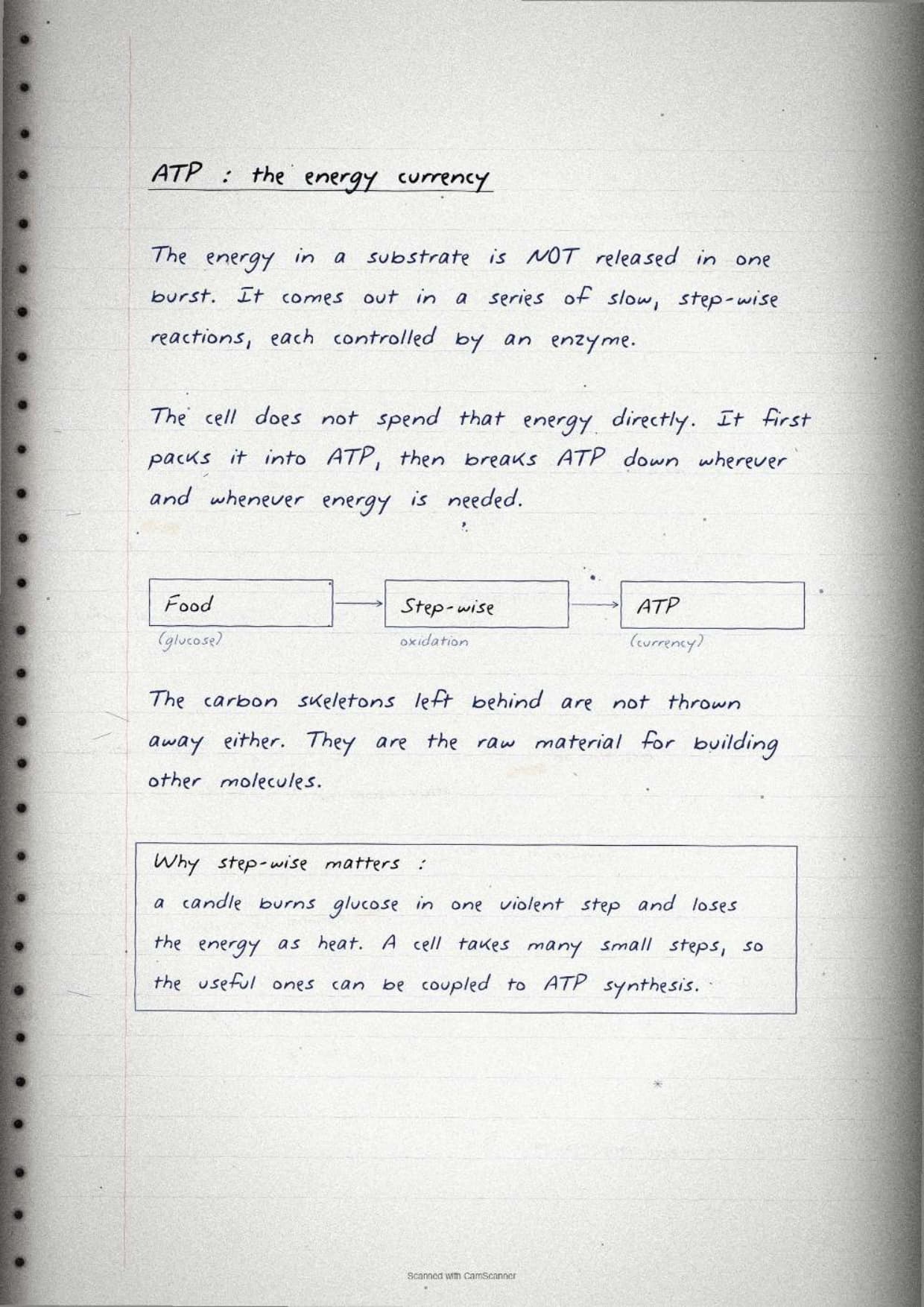
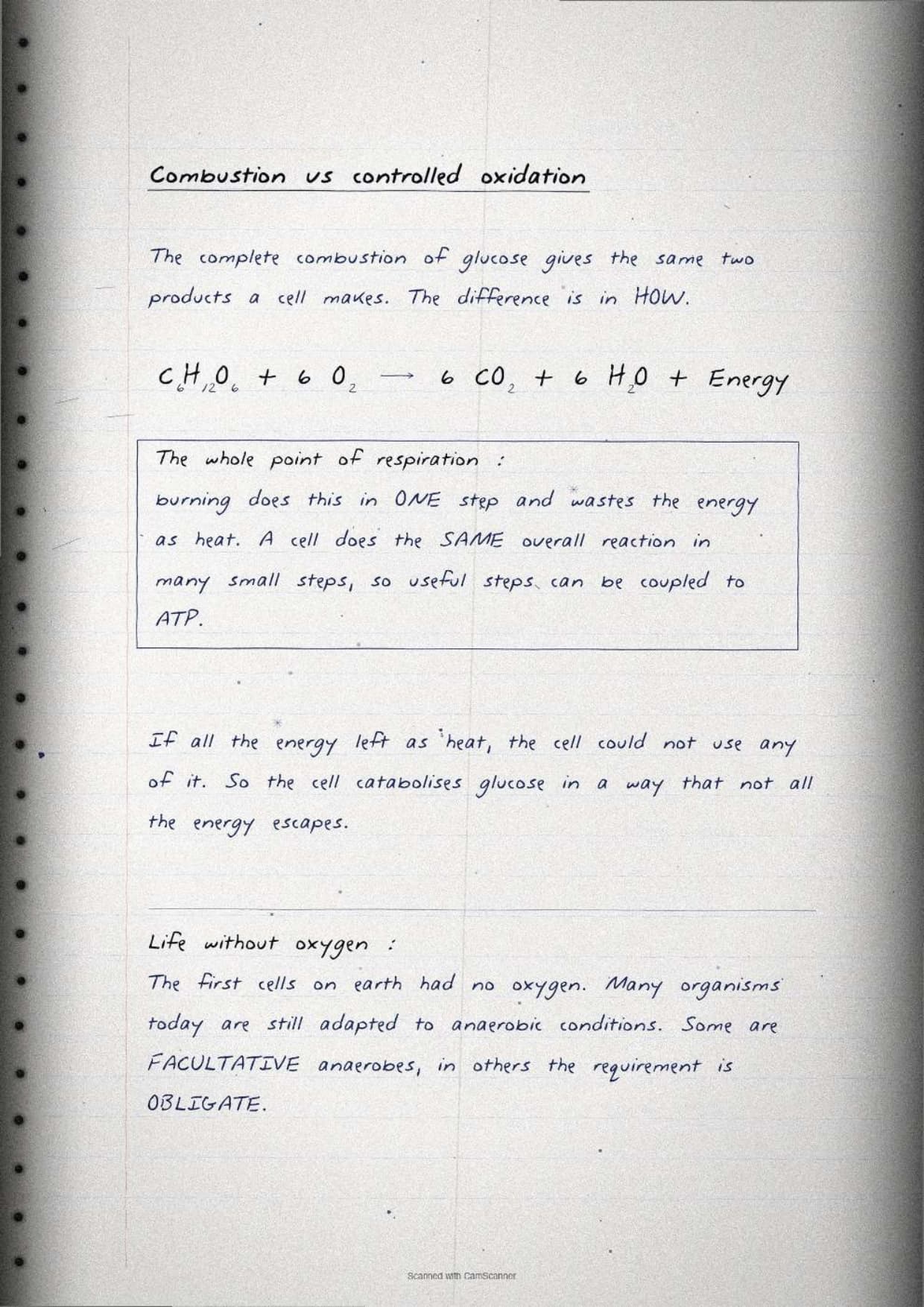
- Cellular respiration: the C-C bond definition, and why burning glucose is not the same as respiring it.
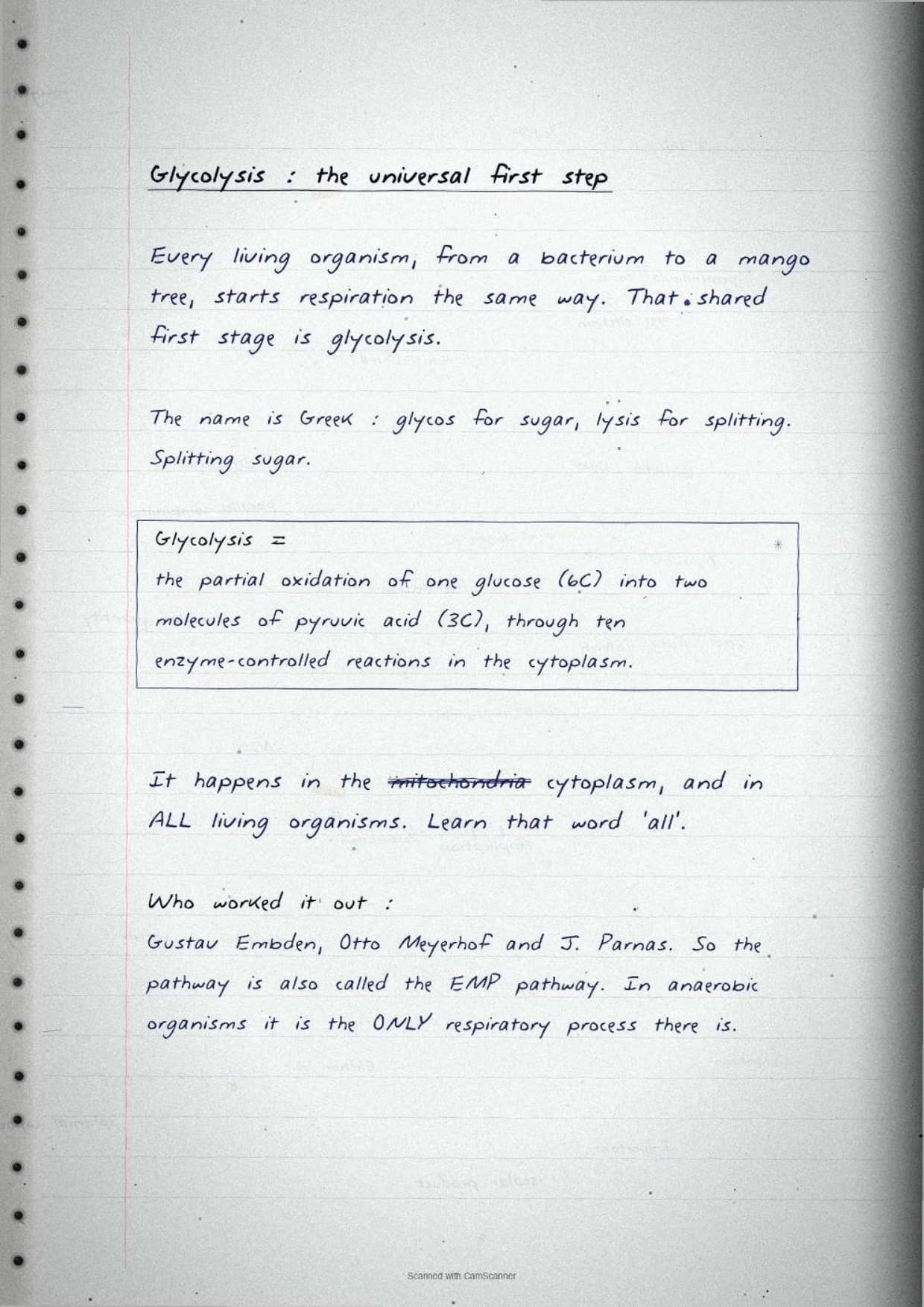
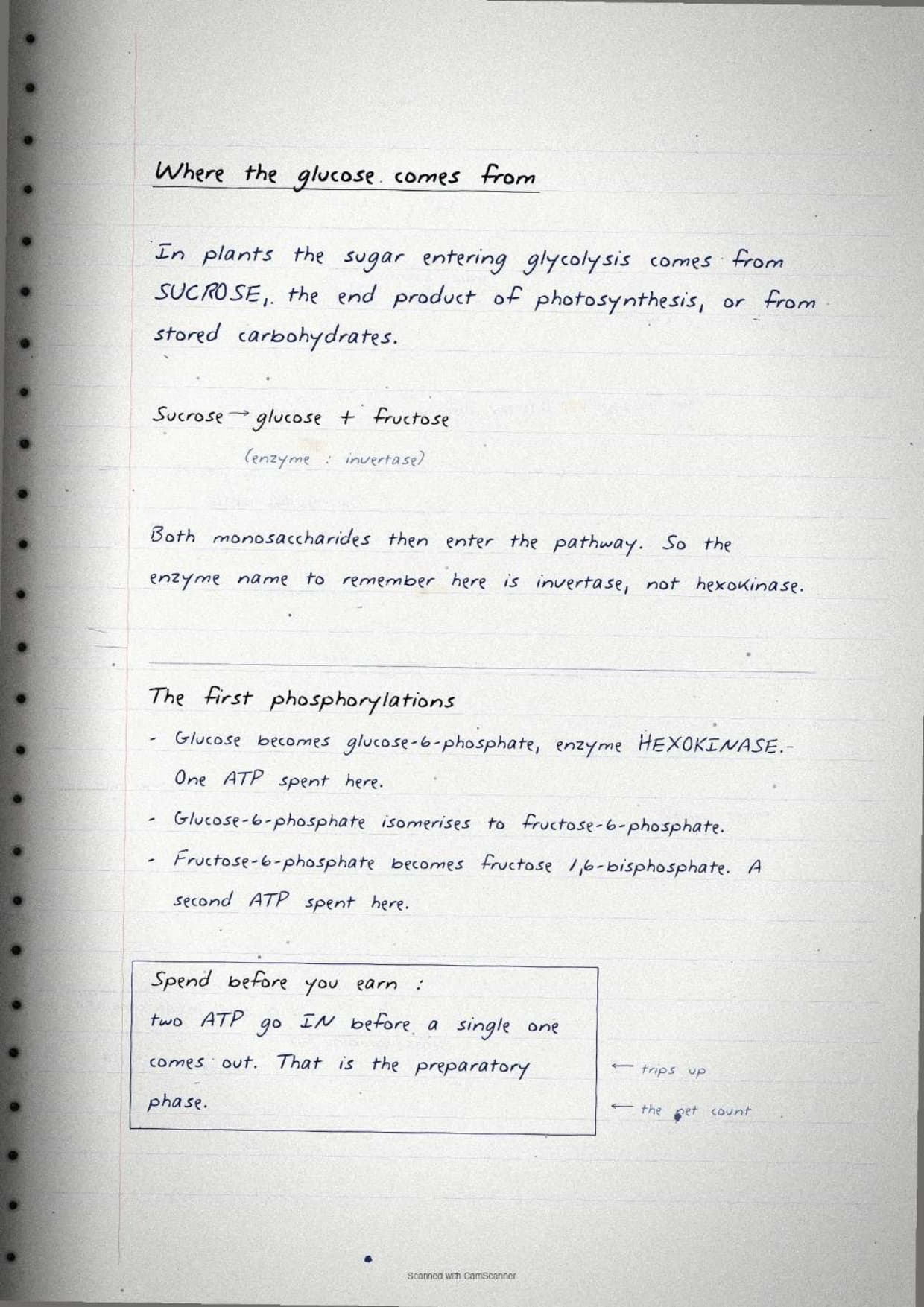
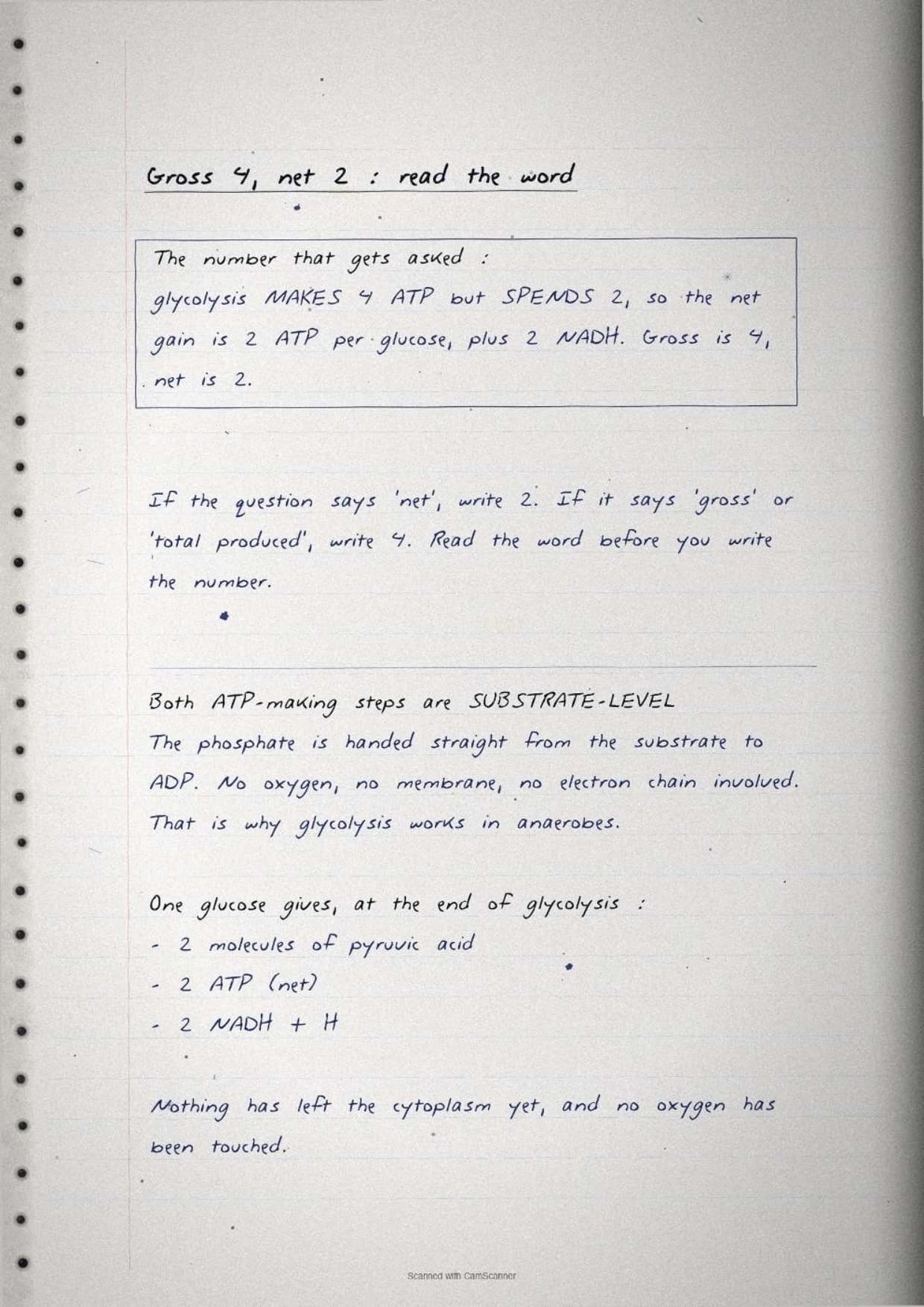
- Glycolysis: the ten-step EMP pathway in the cytoplasm, with the gross 4 against net 2 ATP split.
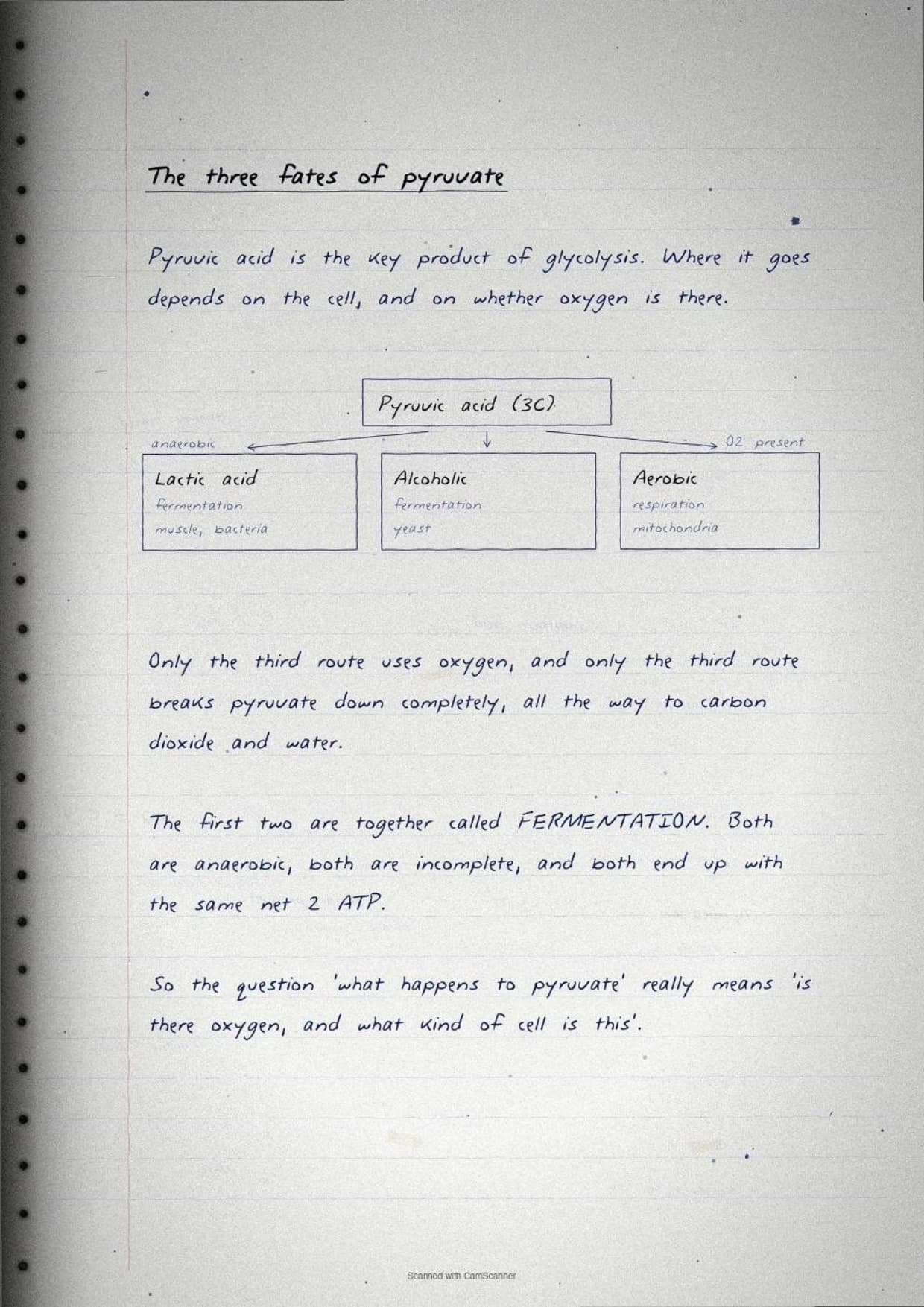
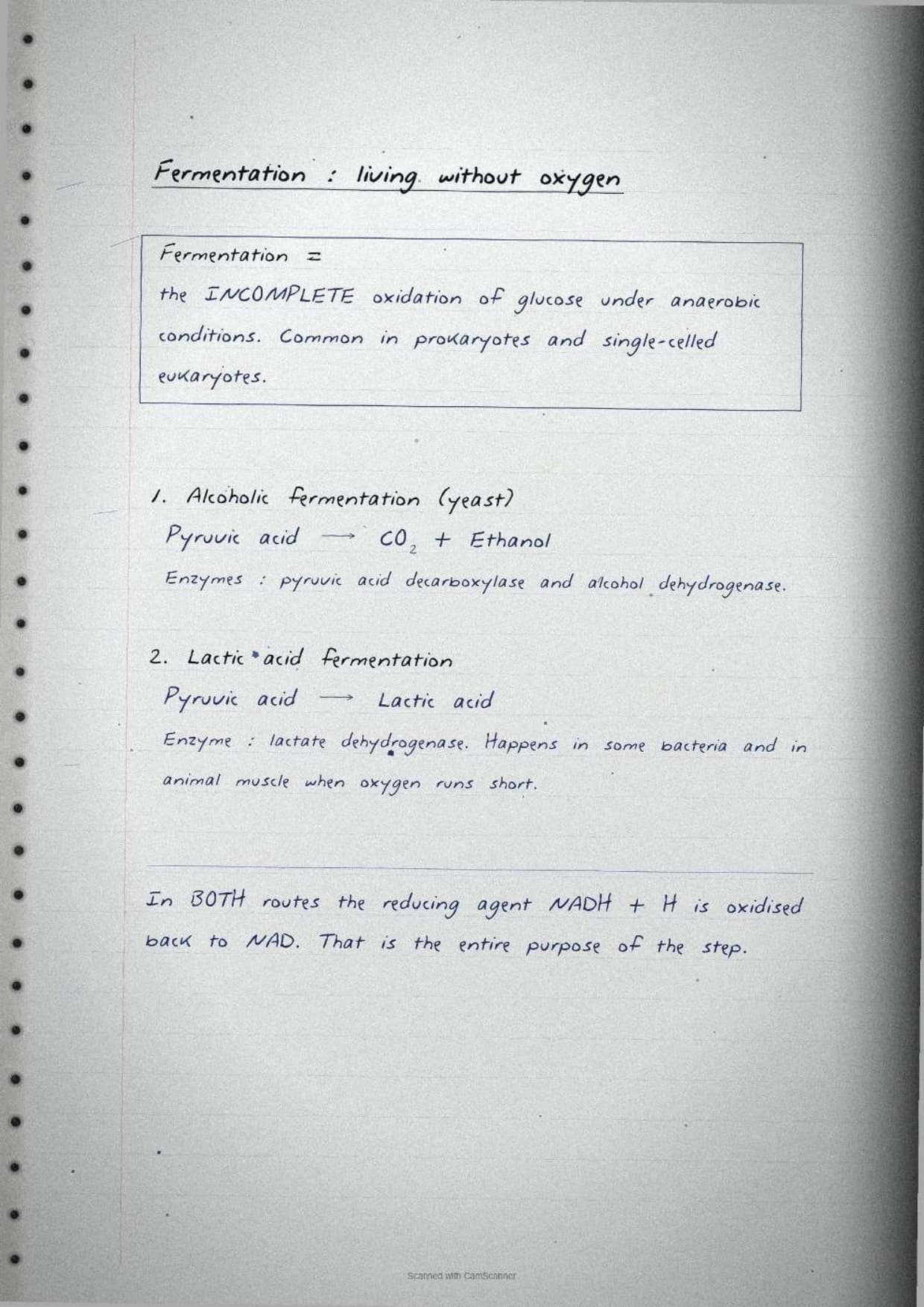
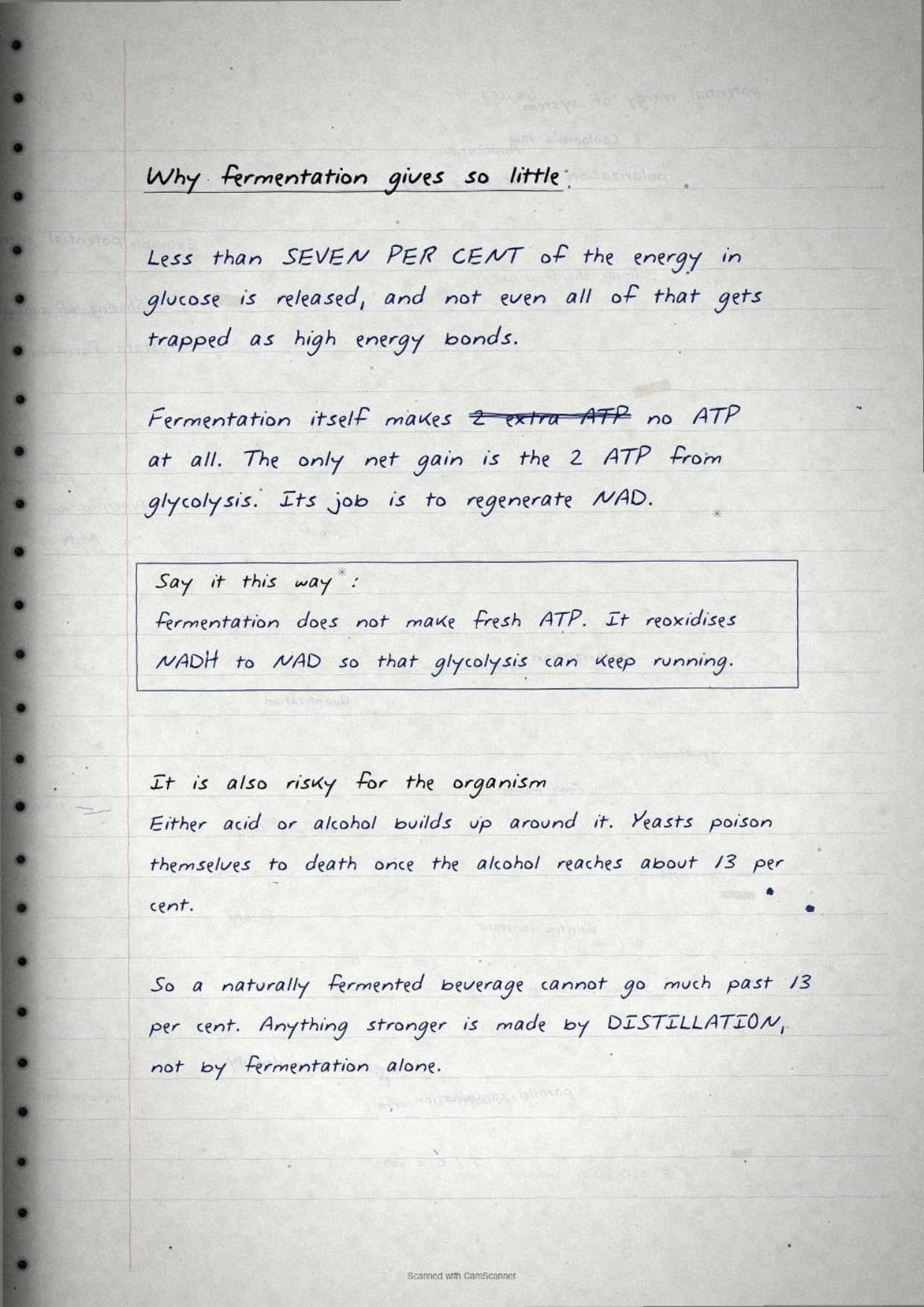
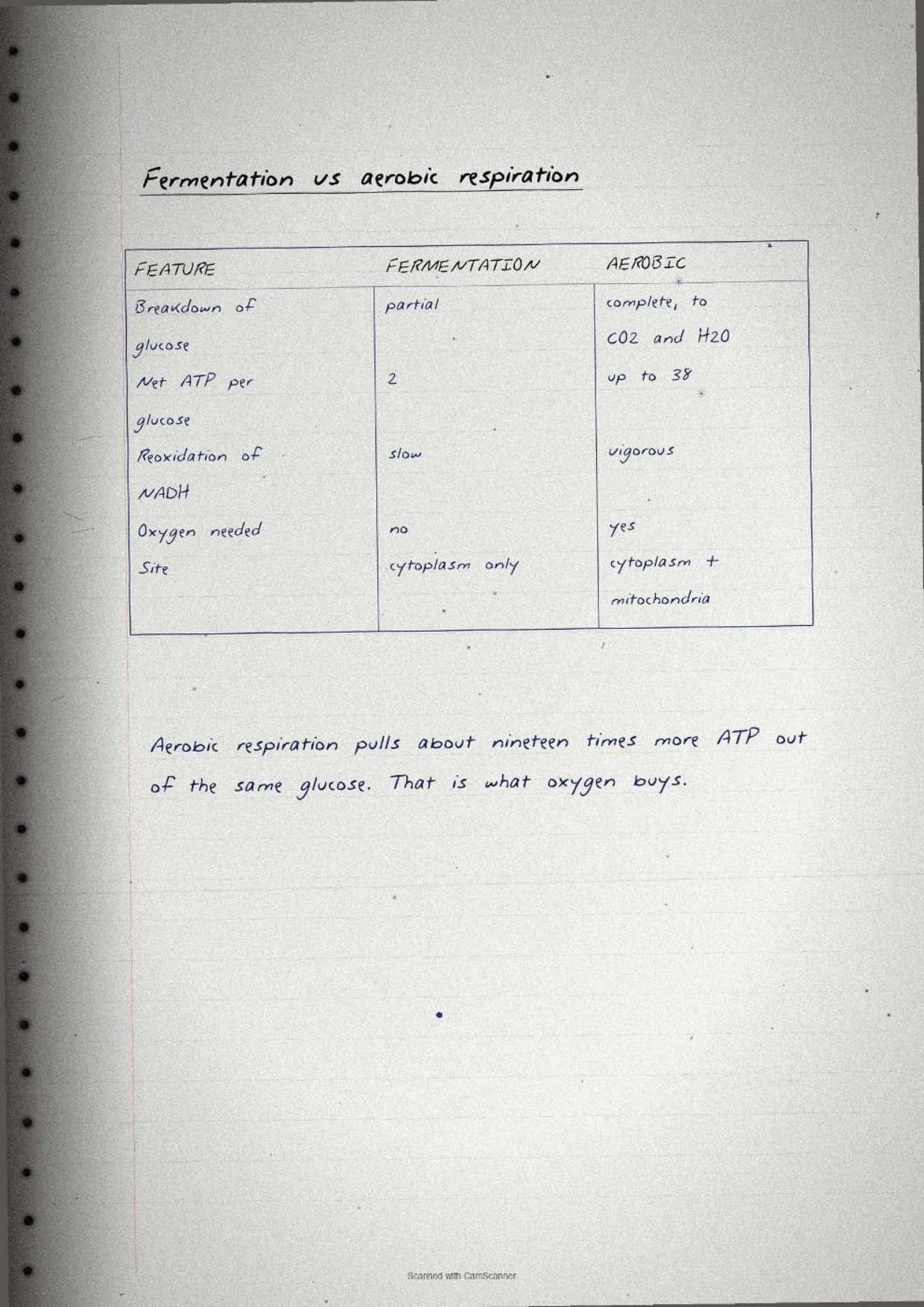
- Fermentation: the alcoholic and lactic acid routes, and why both exist only to reoxidise NADH.
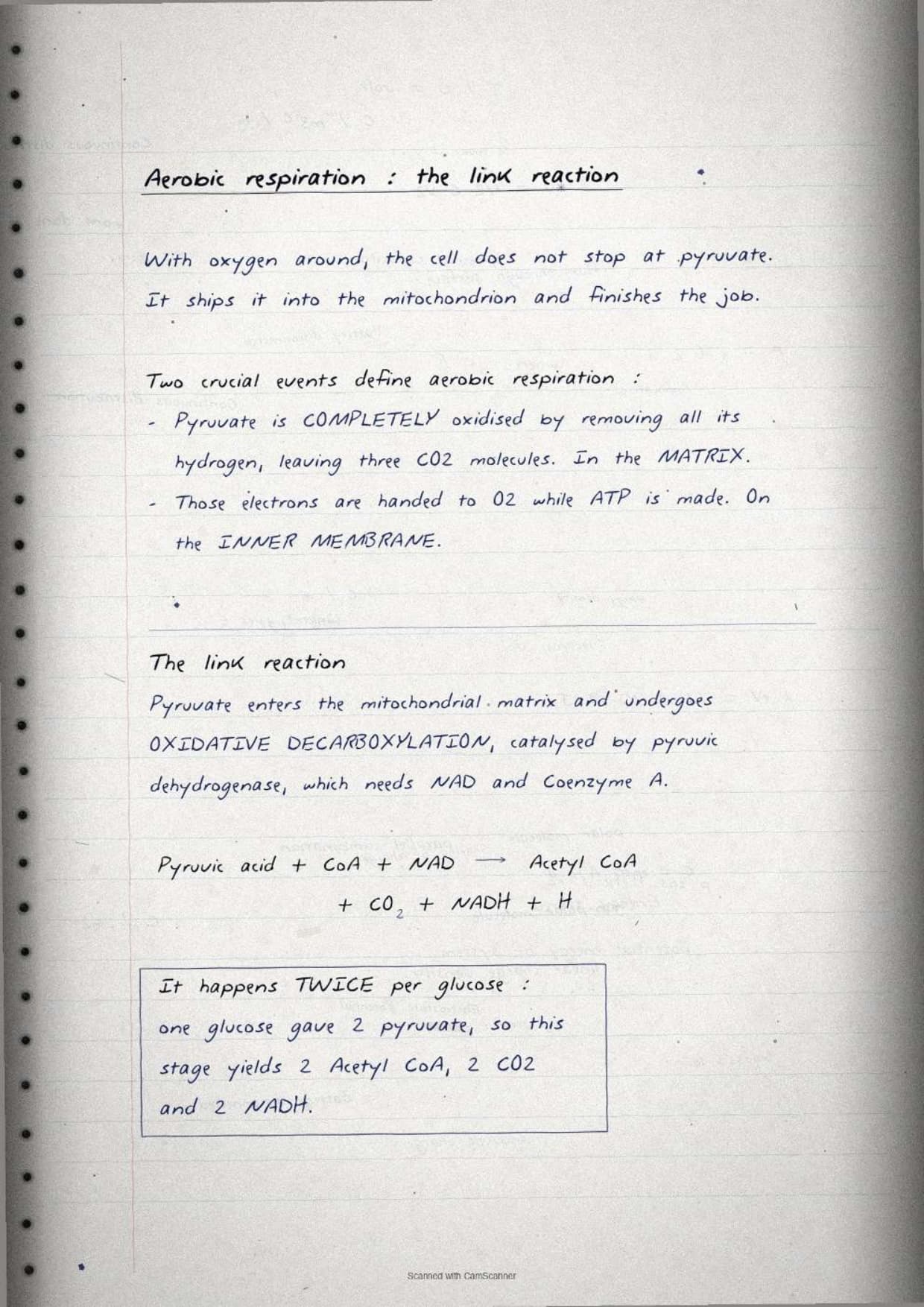
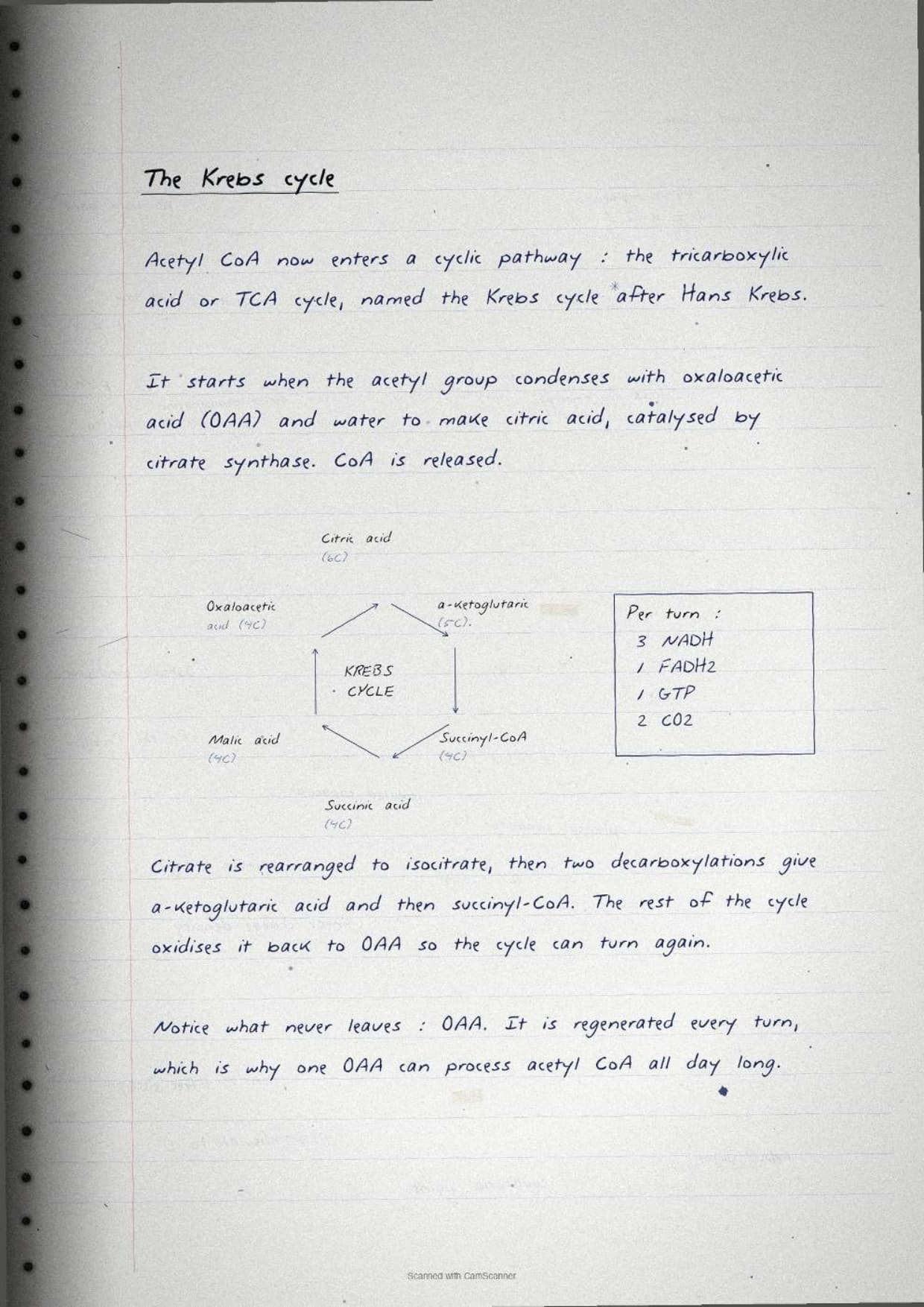
- Aerobic respiration: the link reaction, then the Krebs or TCA cycle in the mitochondrial matrix.
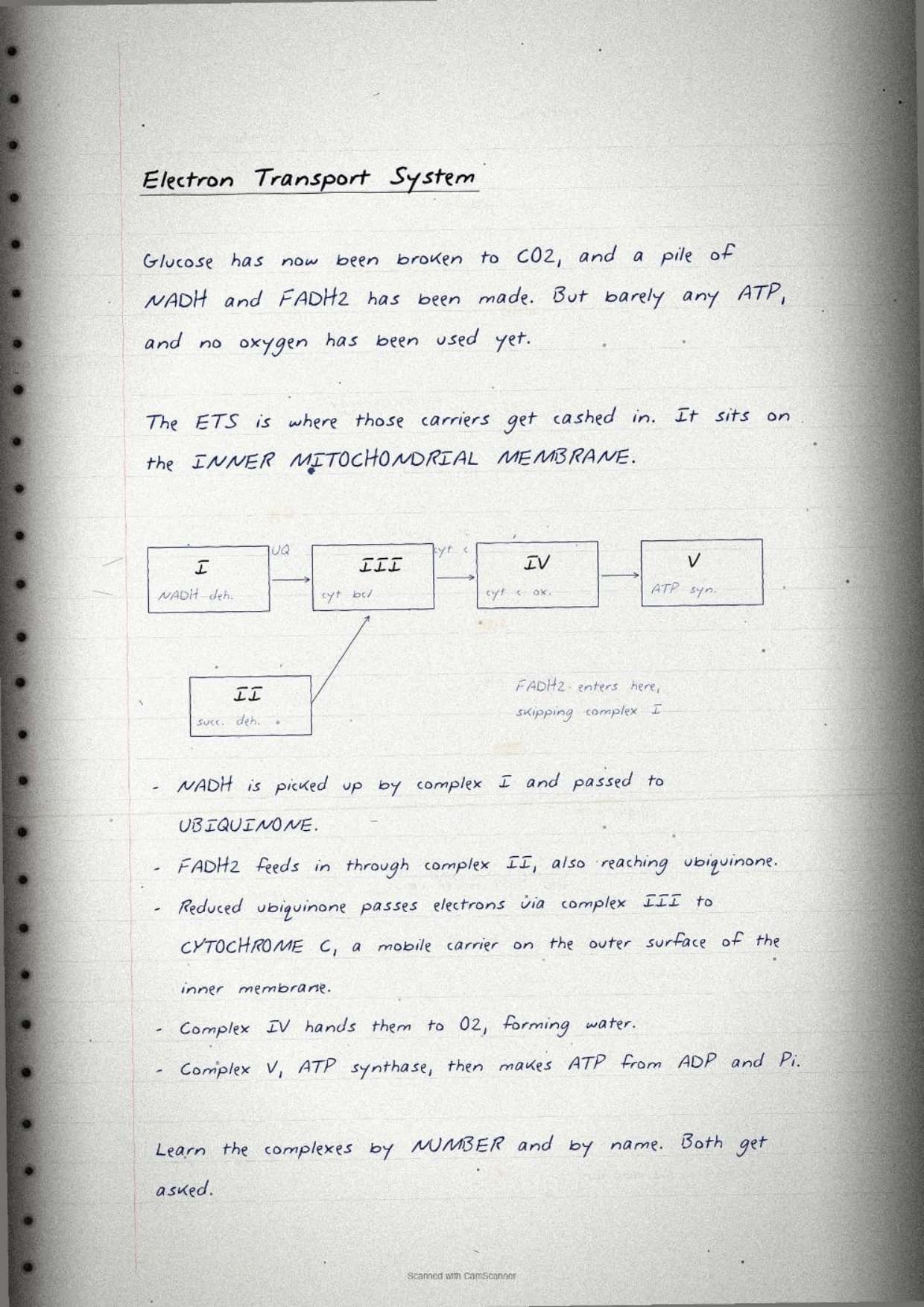
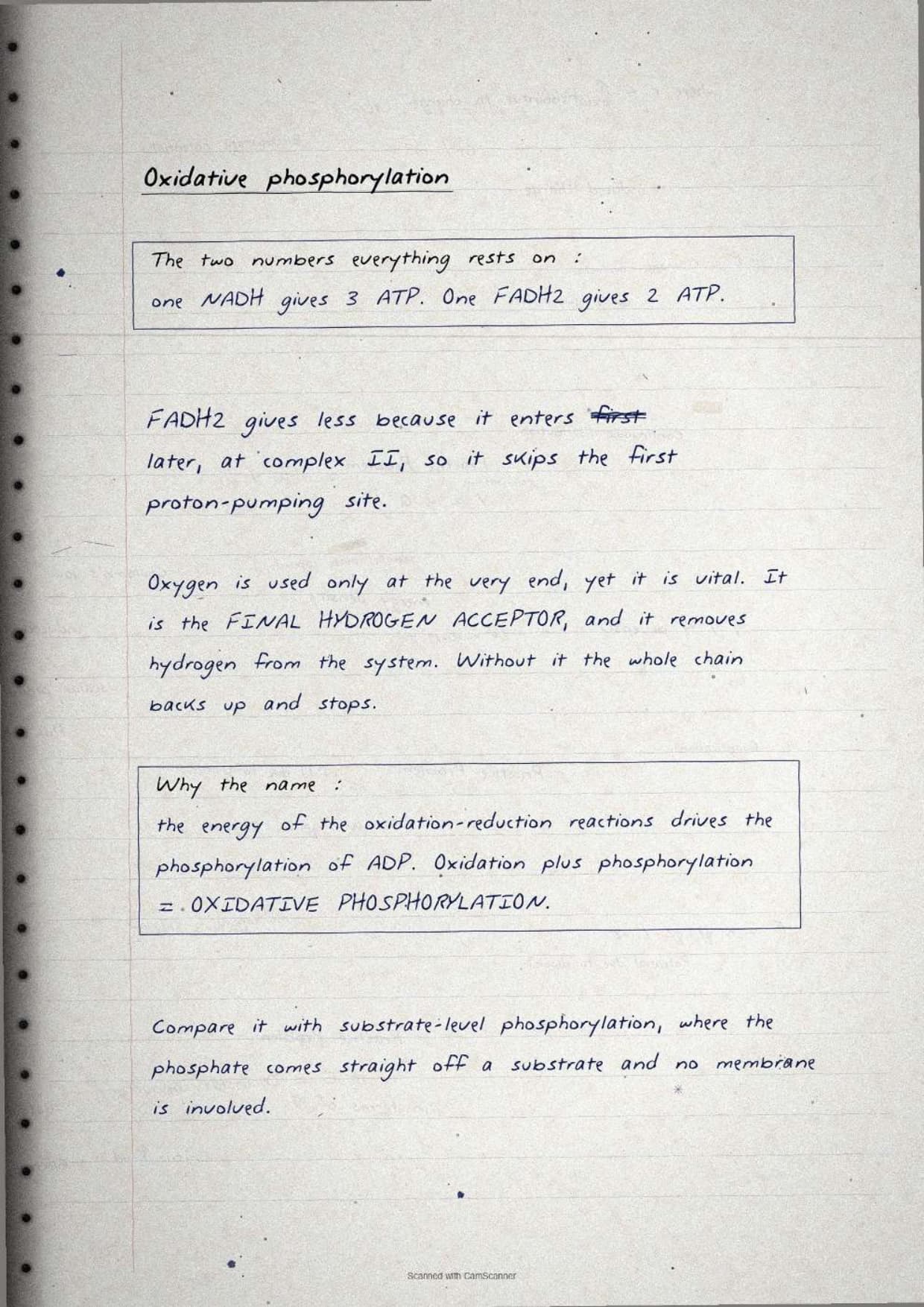
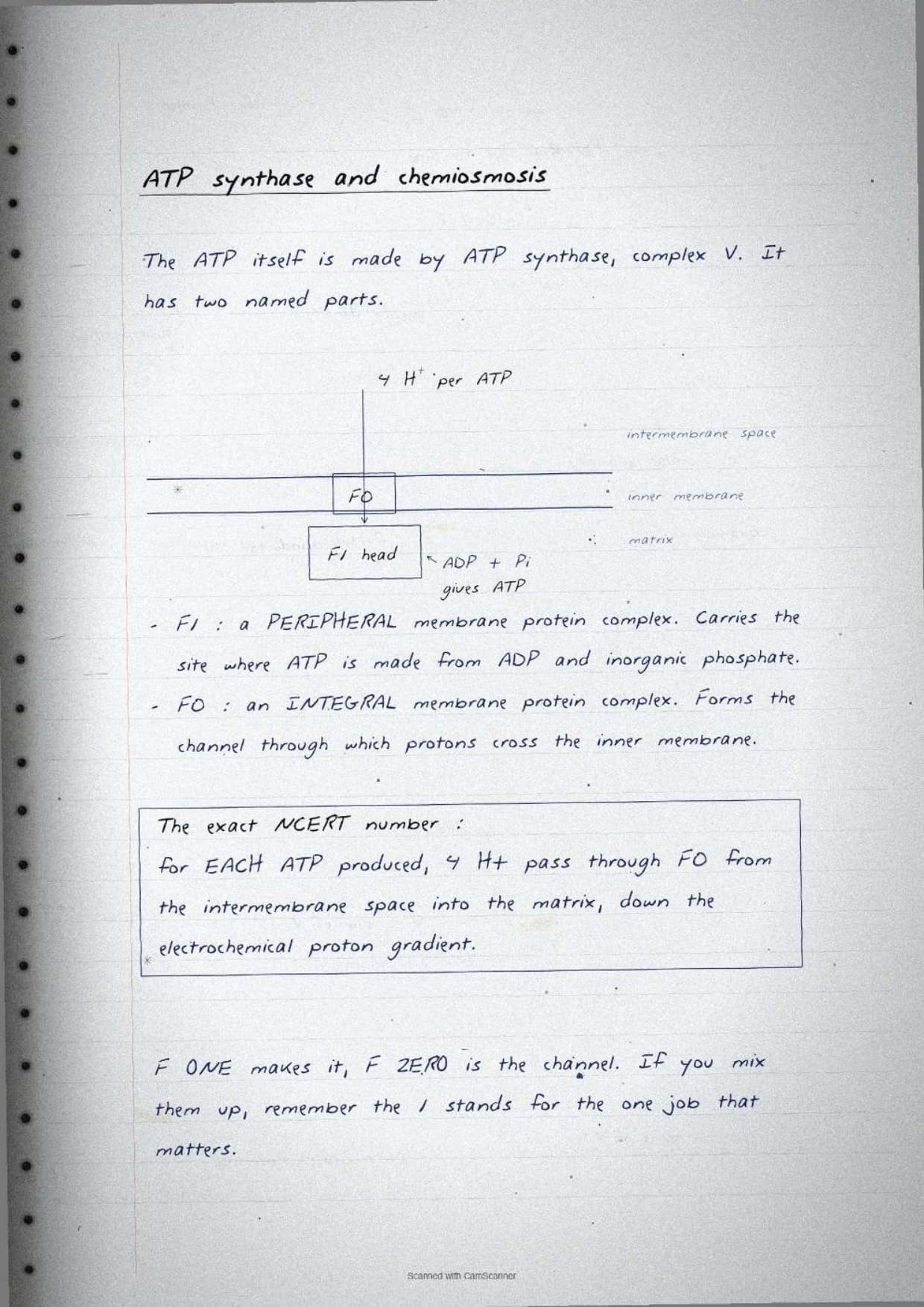
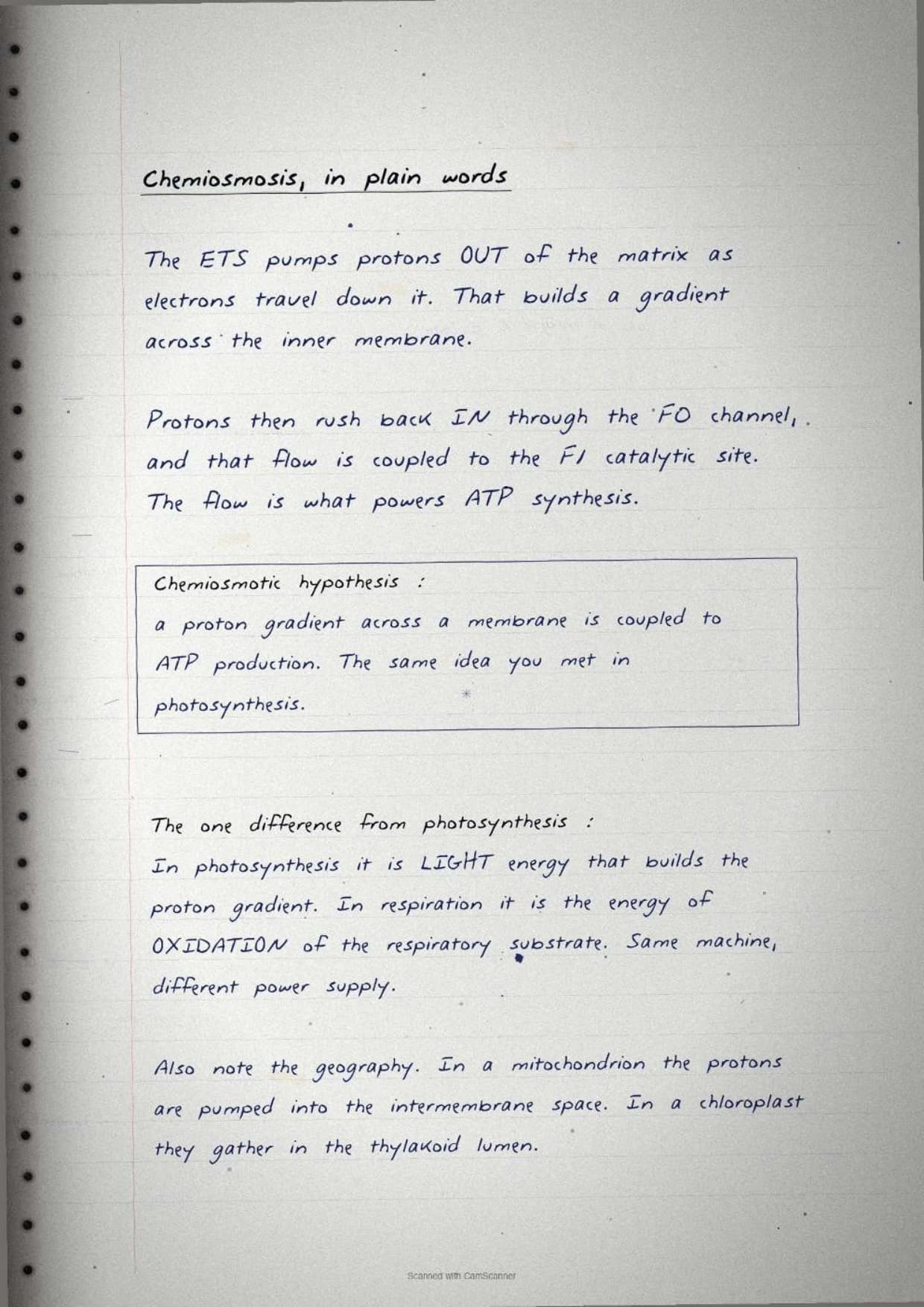
- ETS and oxidative phosphorylation: complexes I to V, chemiosmosis, and oxygen as the final hydrogen acceptor.
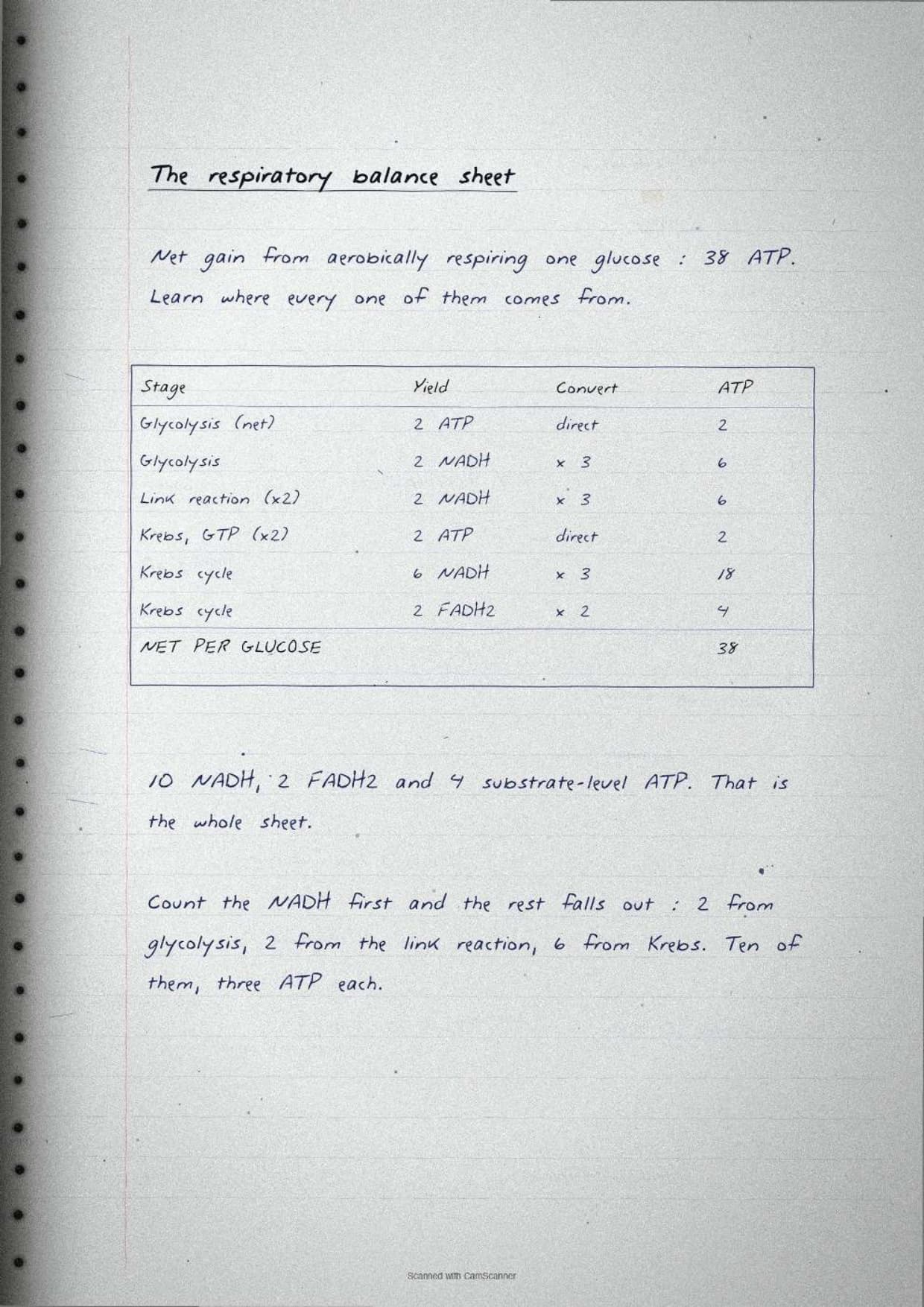
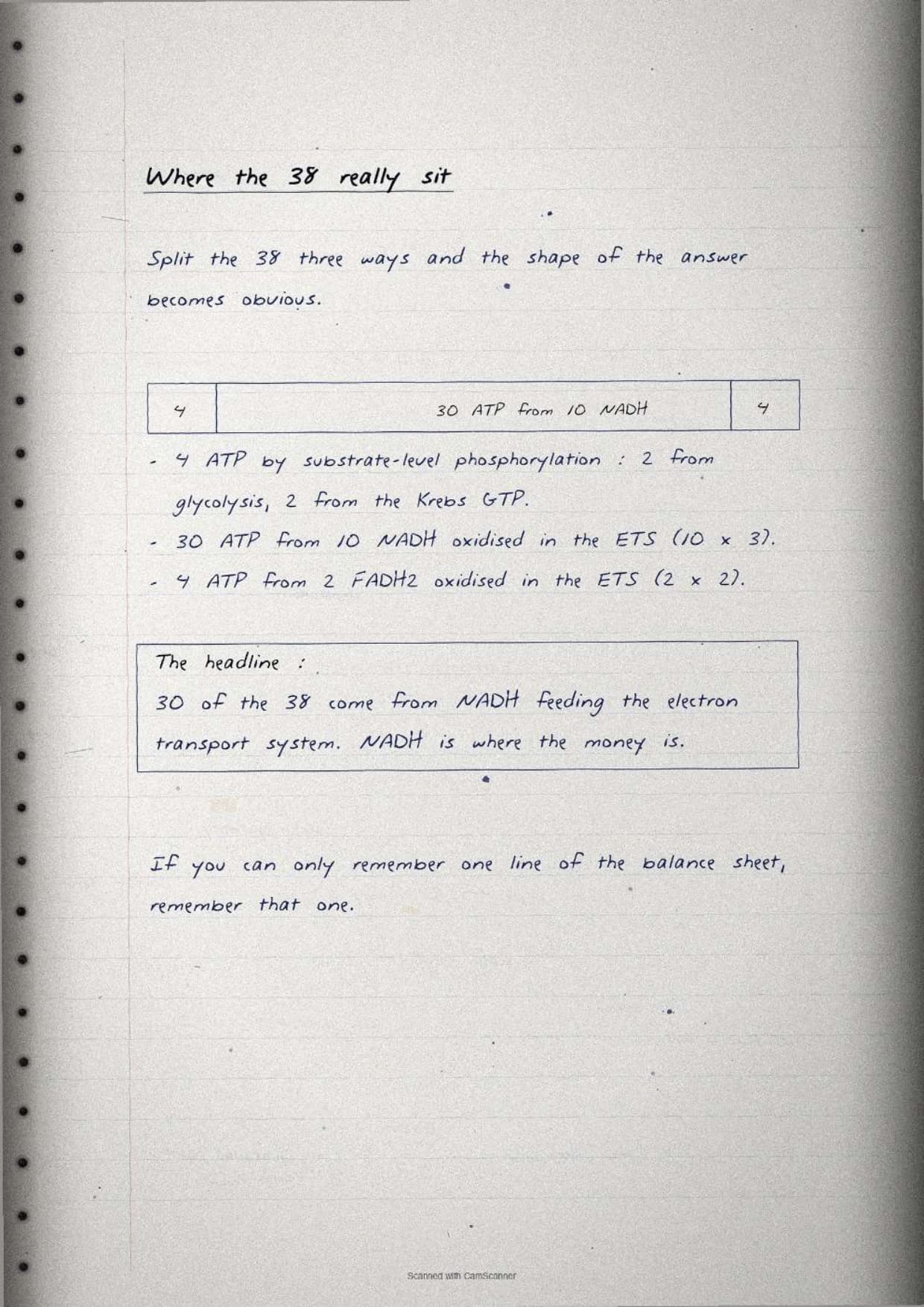
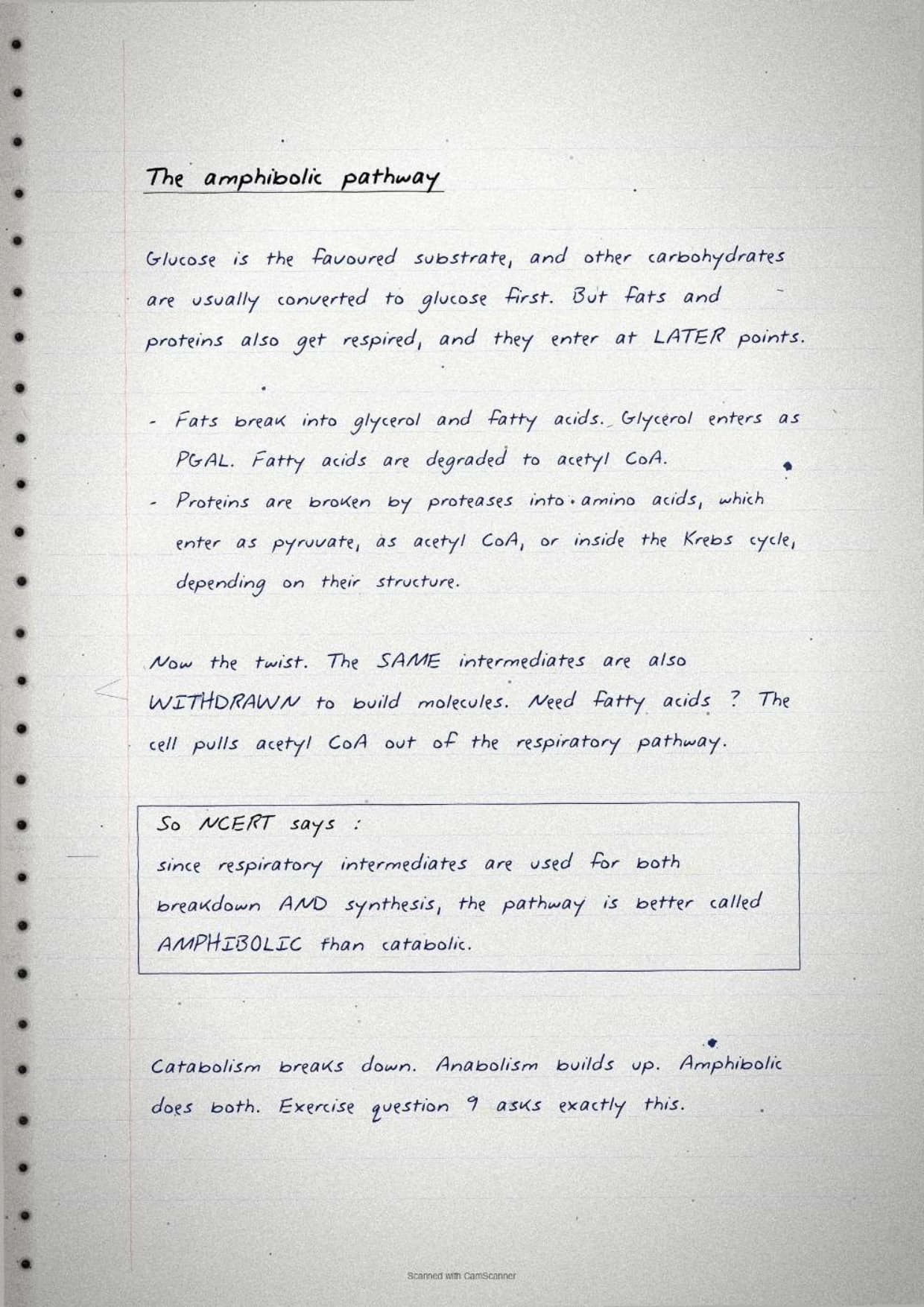
- Balance sheet and RQ: where the 38 ATP sit, the amphibolic pathway, and RQ values for each substrate.
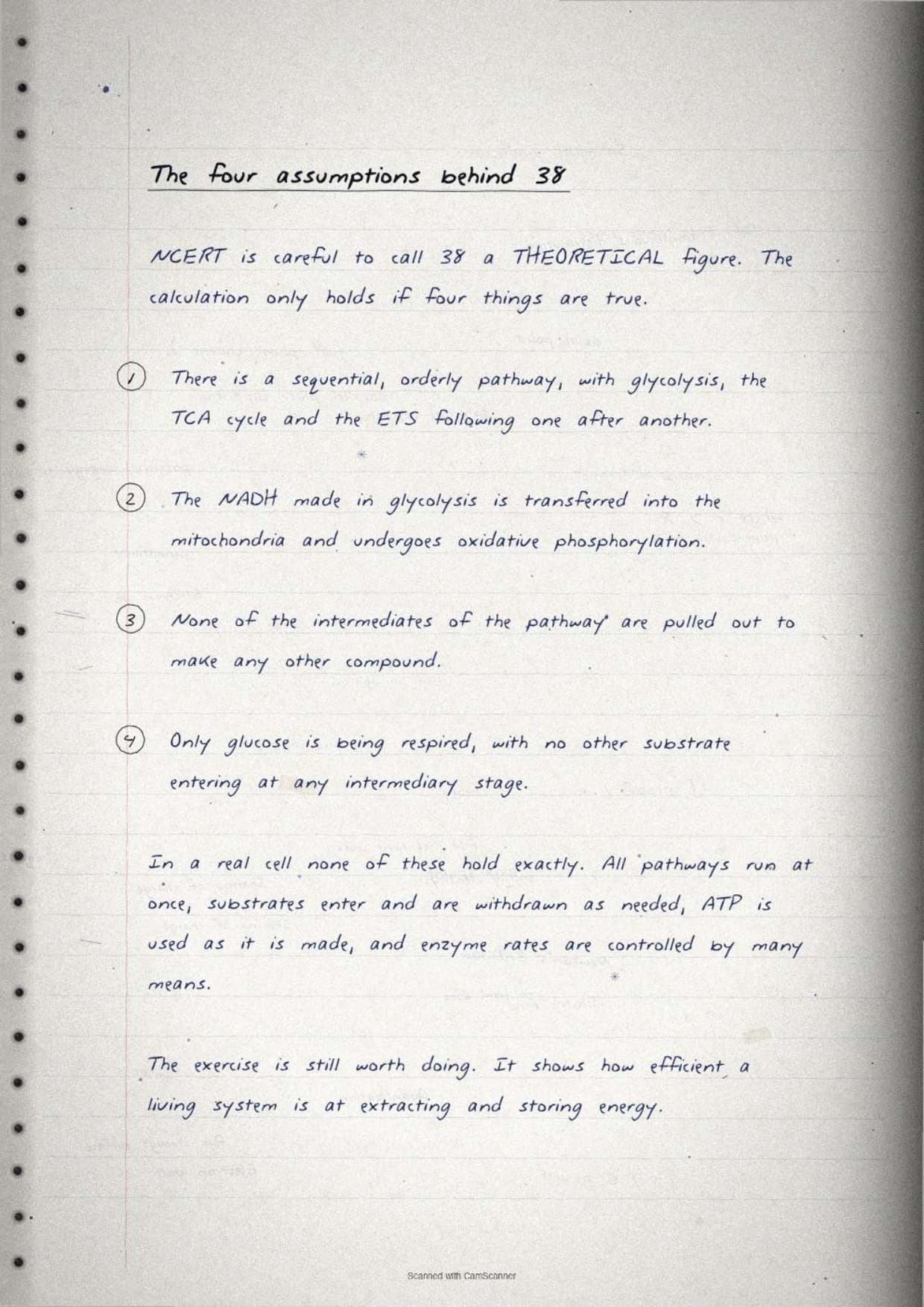
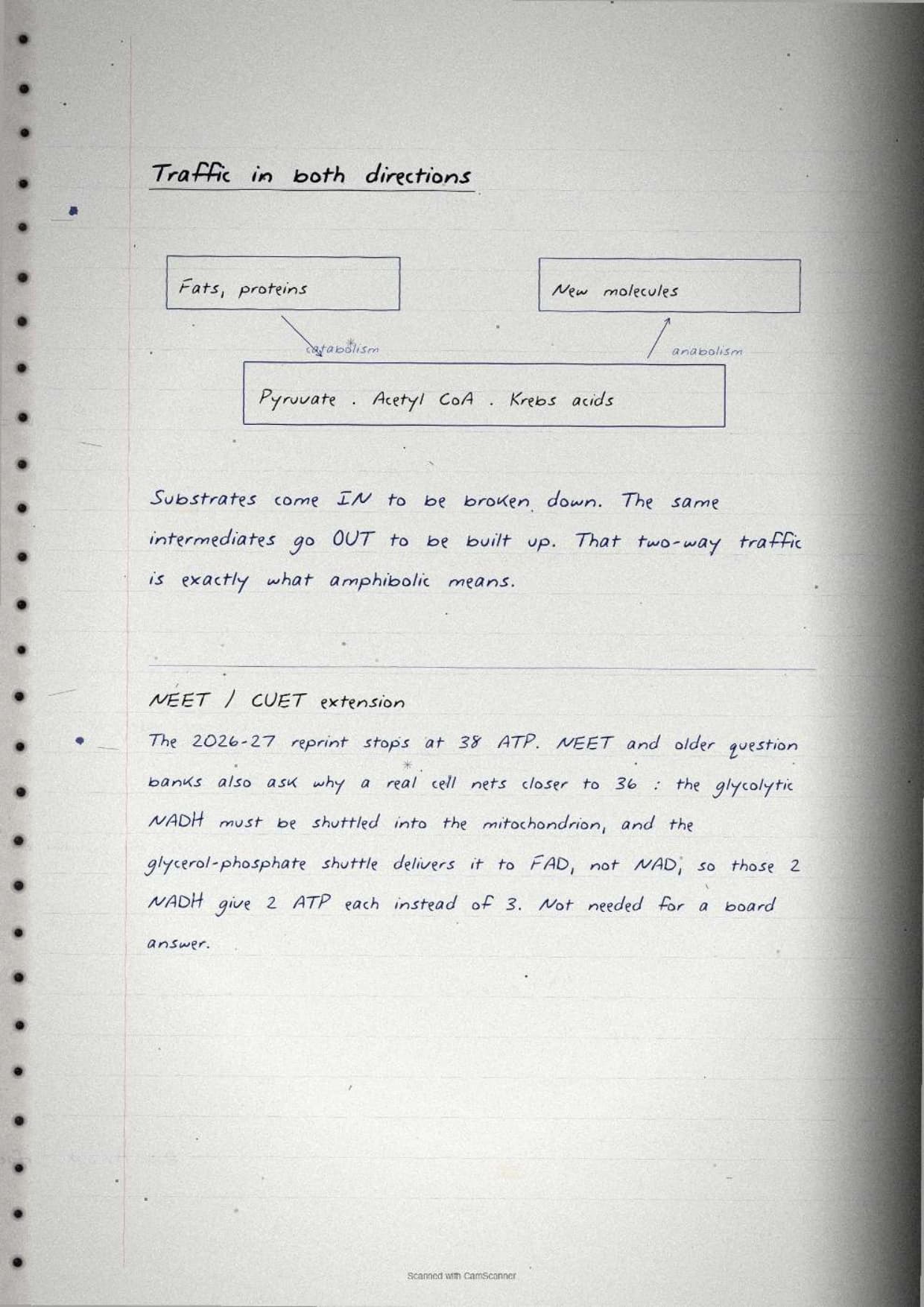
The shuttle explanation for the 36 against 38 ATP debate is marked as a NEET and CUET extension, since the 2026-27 NCERT print stops at 38.
Key Diagrams and Terms in Respiration in Plants Notes
Marks in this chapter go missing on numbers, not on theory. The summary table below is the block students get wrong most often, because the two ATP conversion rates look interchangeable and are not.
| Term | How the notes define it |
|---|---|
| Respiratory substrate | The compound broken down to release energy, usually glucose |
| Glycolysis | Partial oxidation of one glucose into two pyruvic acid molecules in the cytoplasm |
| Fermentation | Incomplete oxidation of glucose under anaerobic conditions |
| Link reaction | Oxidative decarboxylation of pyruvate to acetyl CoA in the matrix |
| Chemiosmosis | A proton gradient across a membrane coupled to ATP production |
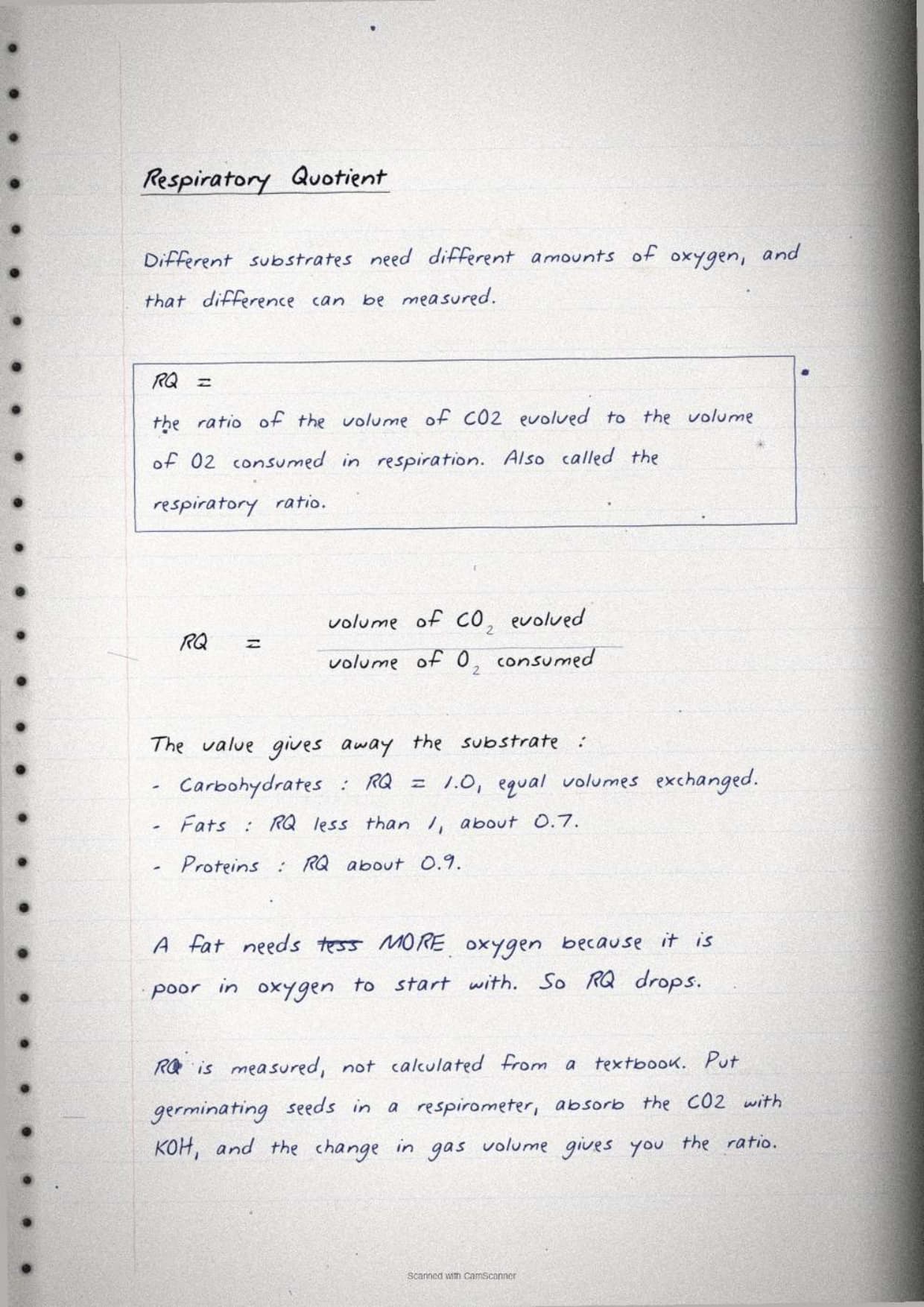
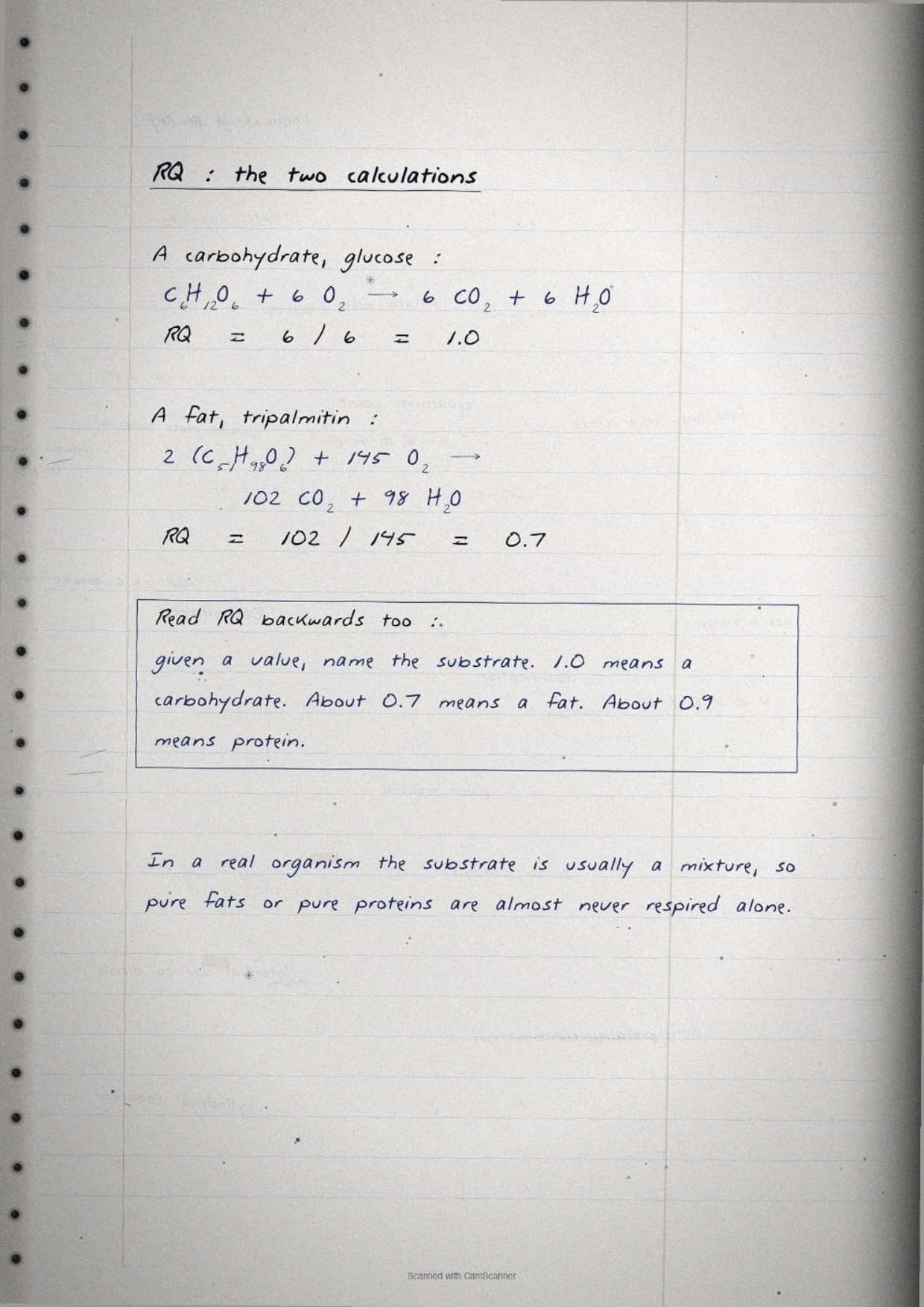
| Respiratory quotient | Volume of CO2 evolved divided by volume of O2 consumed |
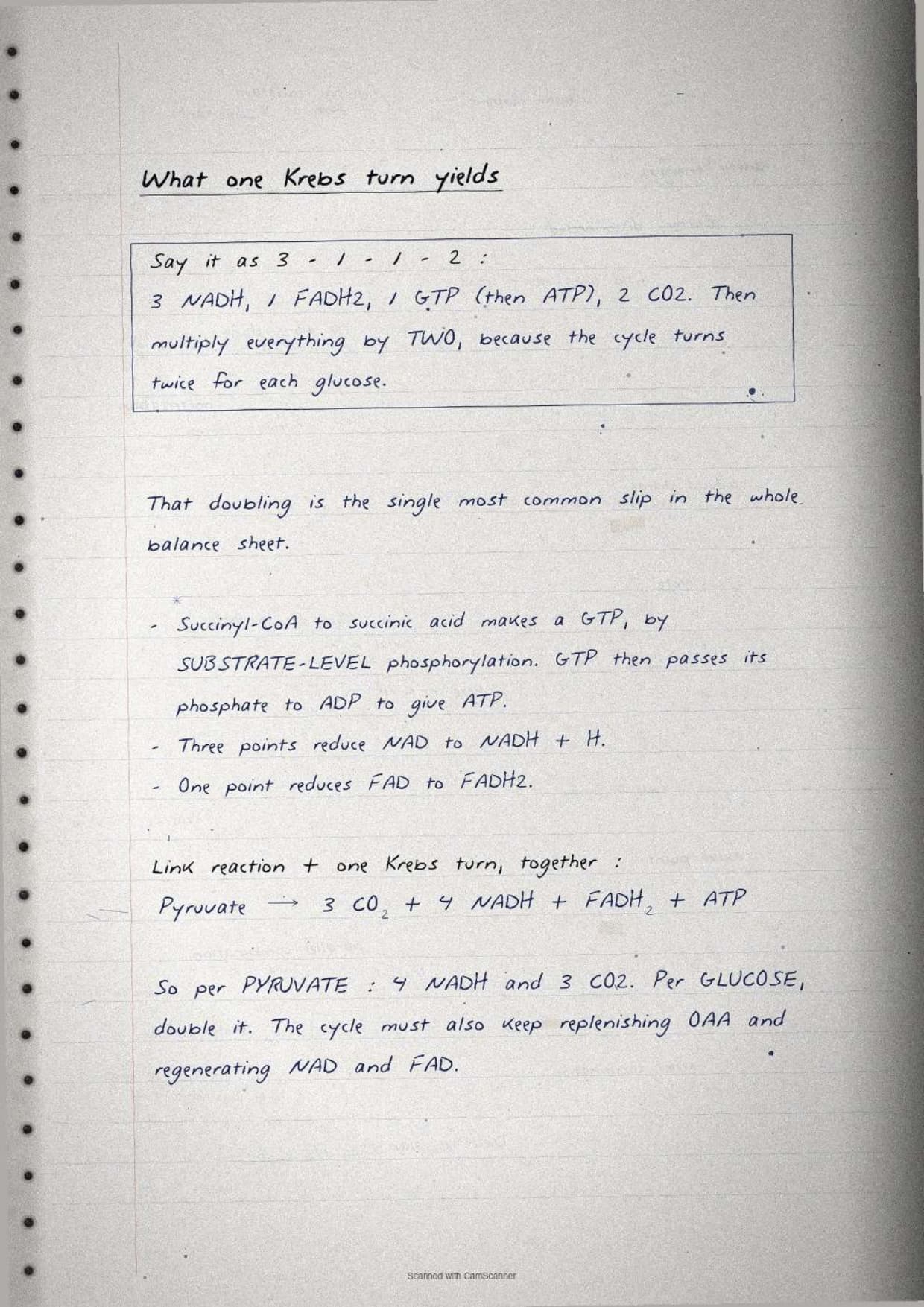
A hand-drawn Krebs wheel runs from oxaloacetic acid through citric acid and back, with the per-turn yield of 3 NADH, 1 FADH2, 1 GTP and 2 CO2 boxed beside it. A second sketch lays out complexes I to V in order and marks the point where FADH2 enters at complex II.
How to Use These Handwritten Notes for Revision
Work through the pages in three short passes. Read a topic page, cover the boxed number and say it back, then answer two NCERT questions on it. This loop fixes the ATP counts faster than re-reading the textbook.
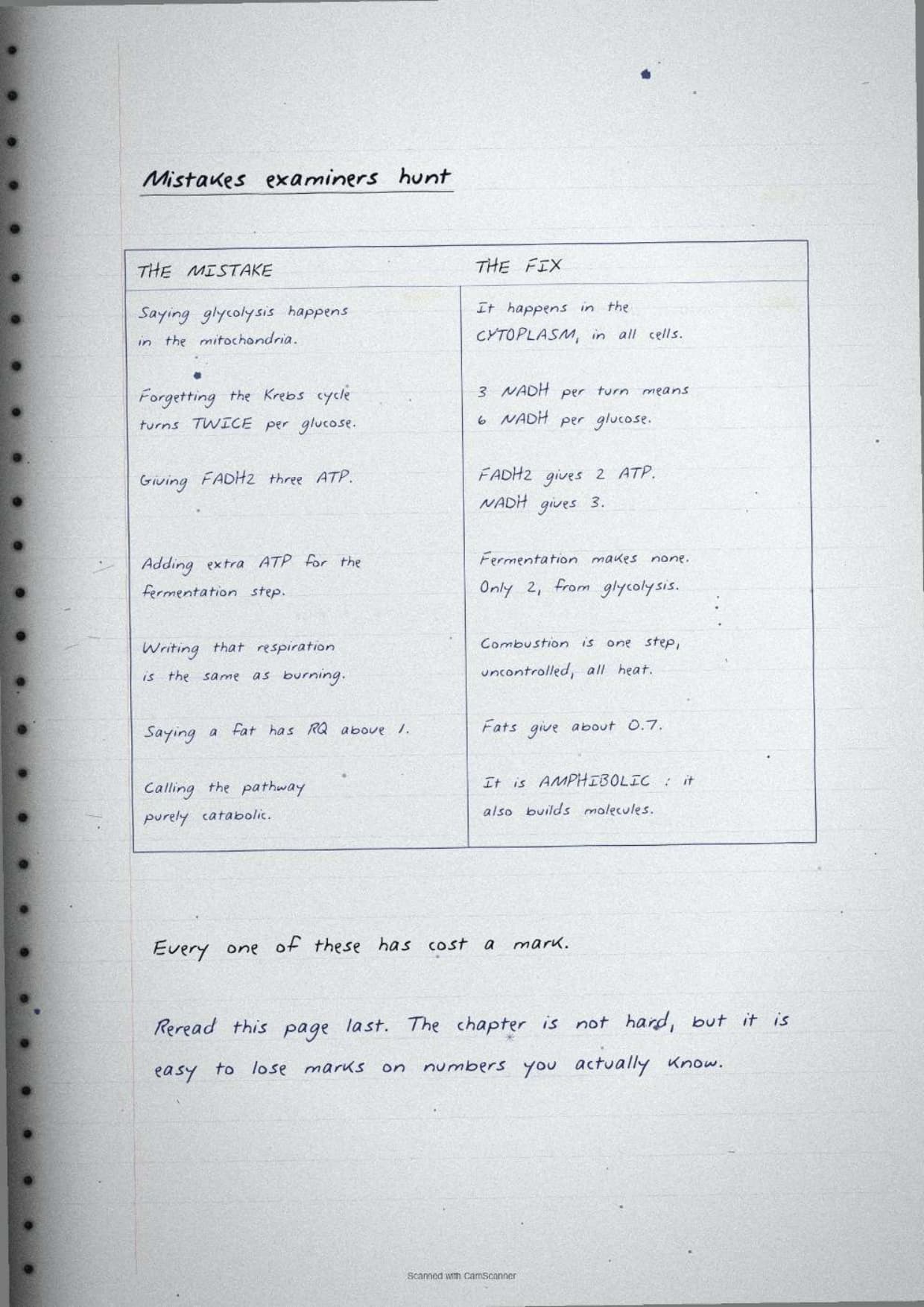
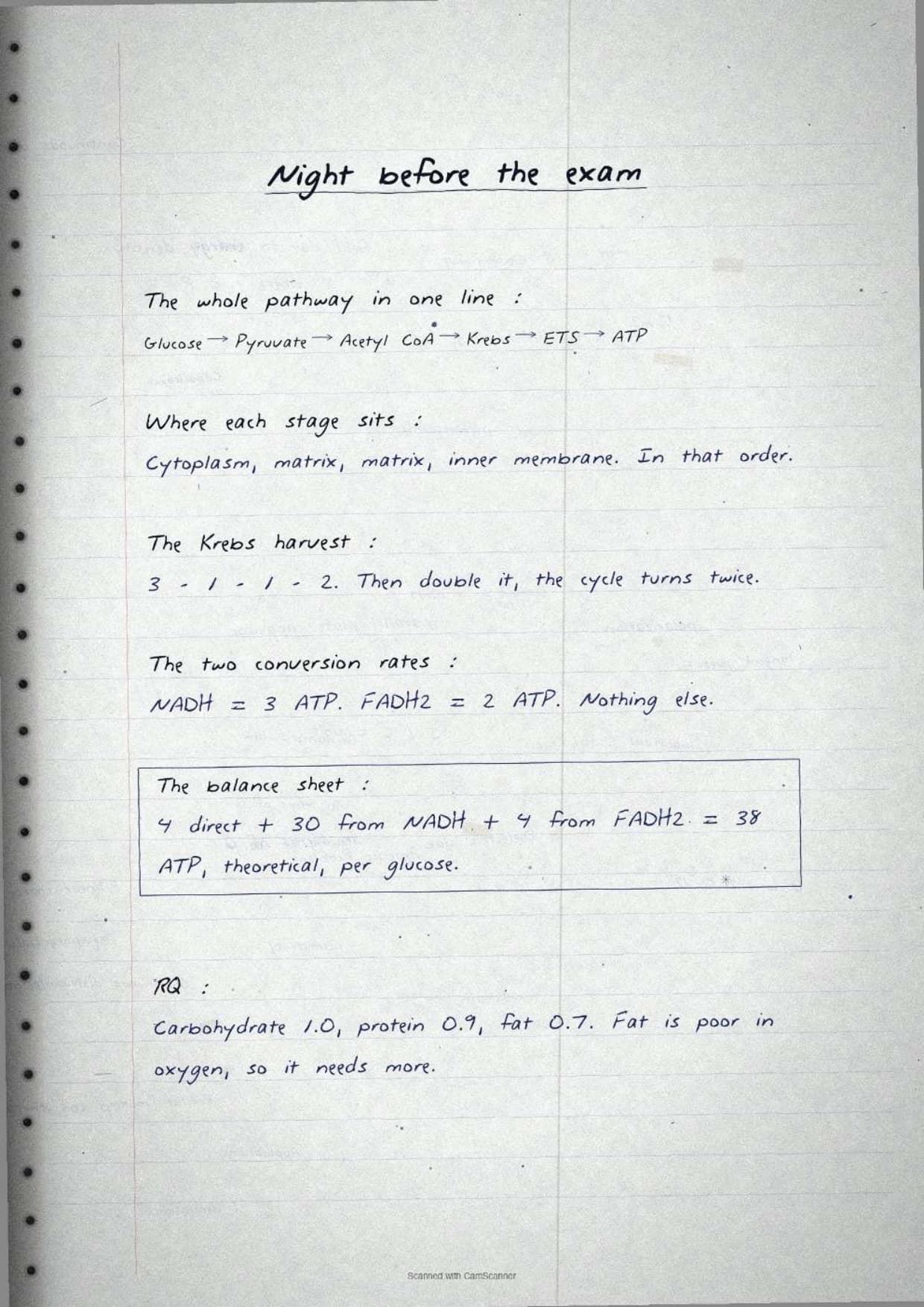
- Say the Krebs yield as 3-1-1-2, then double it, because the cycle turns twice per glucose.
- Learn only two conversion rates: NADH gives 3 ATP and FADH2 gives 2 ATP.
- Keep the class 11 biology handwritten notes chapter 12 Respiration in Plants open beside the NCERT Solutions while practising.
- Read the common-mistakes page last, on page 29, before you shut the file.
Around 40 minutes is enough for one full pass of this chapter, so the notes fit into the last week before an exam.
Student Feedback on Respiration in Plants Handwritten Notes
Students rate the balance sheet page as the one that saves them the most time. The figures below come from a Collegedunia poll run before the 2026 boards.
- In a Collegedunia survey of 10,860 students, 74% said the 38 ATP breakdown was their most-used revision page.
- Most-repeated slip before the poll: forgetting the Krebs cycle turns twice, made by about 5 in 10 students.
Source: 2026-27 Class 11 Biology student poll. Sample of 10,860 students from CBSE schools across 12 states.
Where to Use These Notes Alongside Other Resources
These handwritten pages work best next to the step-wise Solutions, the summary Notes and the Exemplar Solutions for the same chapter. Read the notes first, then check the answers, and keep the Exemplar for extra practice.
| Resource | Best used for |
|---|---|
| Respiration in Plants NCERT Solutions | Step-by-step answers to every back-exercise question |
| Respiration in Plants Class 11 Notes | Quick chapter summary with all key terms in one place |
| Respiration in Plants Exemplar Solutions | Every Exemplar question solved for NEET-level practice |
| Respiration in Plants NCERT Book PDF | The original chapter text and exercises |
All Class 11 Biology Handwritten Notes by Chapter
The table links the handwritten notes for every Class 11 Biology chapter, so students can move across the course in one click. Respiration in Plants is highlighted.
| Chapter | Handwritten Notes |
|---|---|
| Chapter 1 | The Living World |
| Chapter 2 | Biological Classification |
| Chapter 3 | Plant Kingdom |
| Chapter 4 | Animal Kingdom |
| Chapter 5 | Morphology of Flowering Plants |
| Chapter 6 | Anatomy of Flowering Plants |
| Chapter 7 | Structural Organisation in Animals |
| Chapter 8 | Cell The Unit of Life |
| Chapter 9 | Biomolecules |
| Chapter 10 | Cell Cycle and Cell Division |
| Chapter 11 | Photosynthesis in Higher Plants |
| Chapter 12 | Respiration in Plants |
| Chapter 13 | Plant Growth and Development |
| Chapter 14 | Breathing and Exchange of Gases |
| Chapter 15 | Body Fluids and Circulation |
| Chapter 16 | Excretory Products and their Elimination |
| Chapter 17 | Locomotion and Movement |
| Chapter 18 | Neural Control and Coordination |
| Chapter 19 | Chemical Coordination and Integration |
FAQs on Respiration in Plants Handwritten Notes
Ques. Are these class 11 biology handwritten notes chapter 12 Respiration in Plants free to download?
Ans. Yes. The Respiration in Plants handwritten notes are free to download as a PDF from this page. All 31 pages follow the 2026-27 NCERT and cover the full chapter in clear handwriting for quick revision.
Ques. What topics do these handwritten notes cover?
Ans. They cover gas exchange in plants, cellular respiration, glycolysis, fermentation, the link reaction, the Krebs cycle, the electron transport system, oxidative phosphorylation, the ATP balance sheet, the amphibolic pathway and respiratory quotient. Each topic sits on its own page with boxed definitions and hand-drawn charts.
Ques. How many ATP does one glucose give in aerobic respiration?
Ans. The notes box 38 ATP as the theoretical figure. It splits three ways: 4 ATP by substrate-level phosphorylation, 30 ATP from 10 NADH, and 4 ATP from 2 FADH2. Fermentation nets only 2 ATP from the same glucose.
Ques. Why is respiration called an amphibolic pathway?
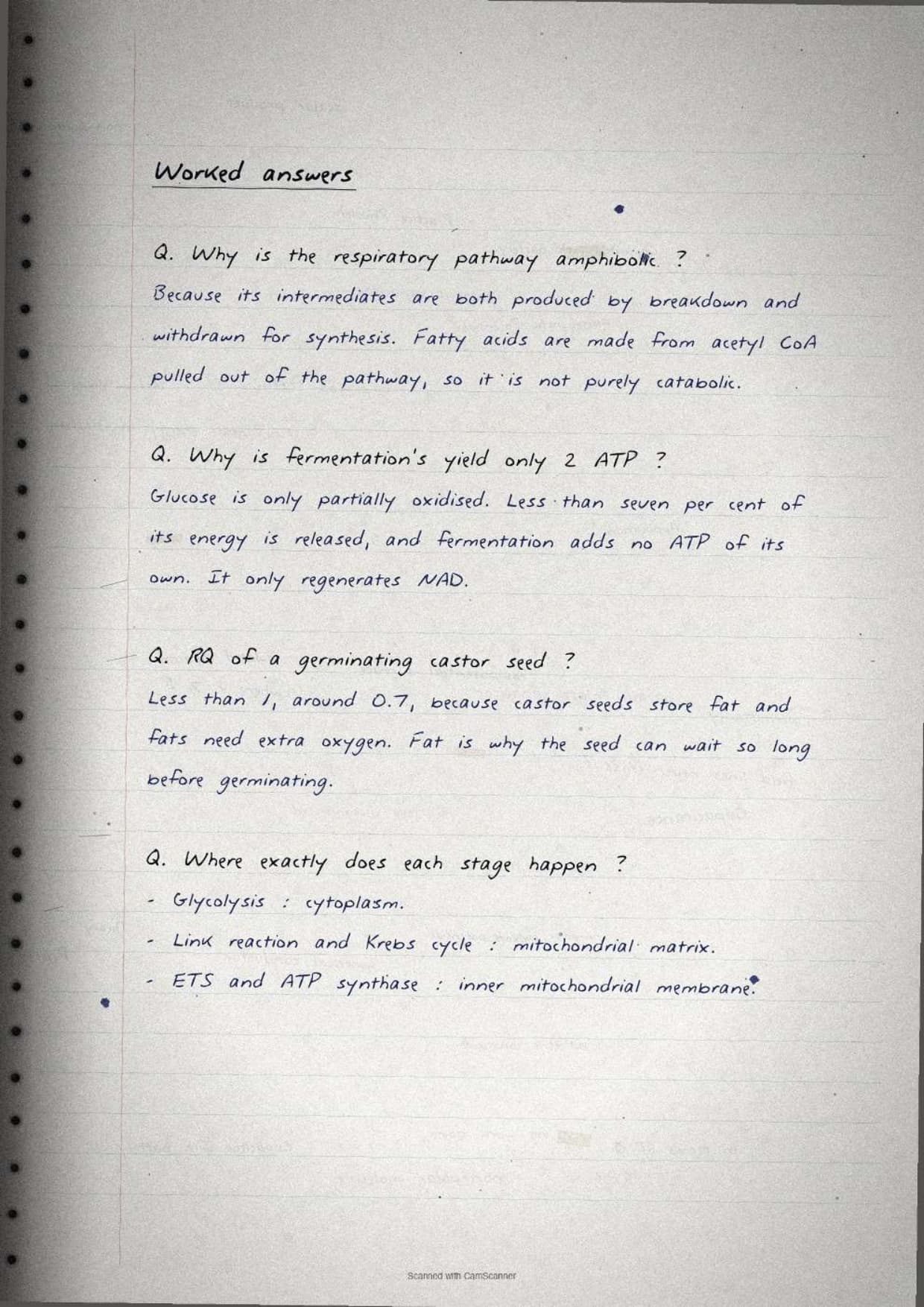
Ans. Its intermediates work both ways. Fats and proteins enter the pathway to be broken down, and the same intermediates are pulled out to build new molecules. So it is not purely catabolic. The notes give this as a boxed answer for exercise question 9.
Ques. Are these notes useful for NEET, not just Boards?
Ans. Yes. NEET picks two to three questions a year from this chapter, mostly on the ATP balance sheet and RQ values. The 36 against 38 ATP shuttle explanation is marked as a NEET and CUET extension, since the board print stops at 38.



Comments