




These class 11 biology handwritten notes chapter 2 Biological Classification cover the full 36-page chapter in neat, colour-coded pages for a fast recap before Boards, NEET and CUET in 2026-27. Every kingdom table, fungal class and virus definition is written out by hand for one-shot revision.
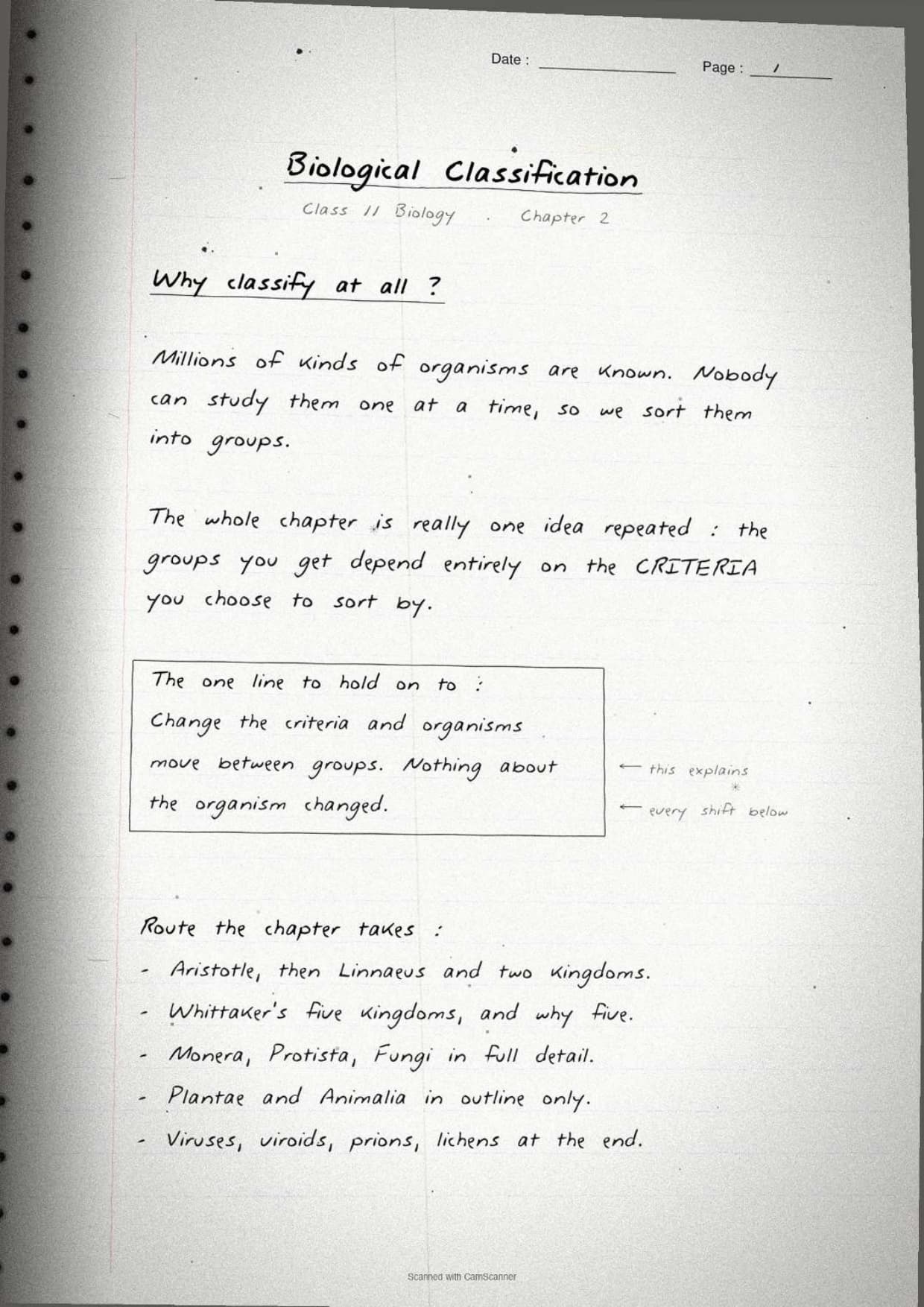
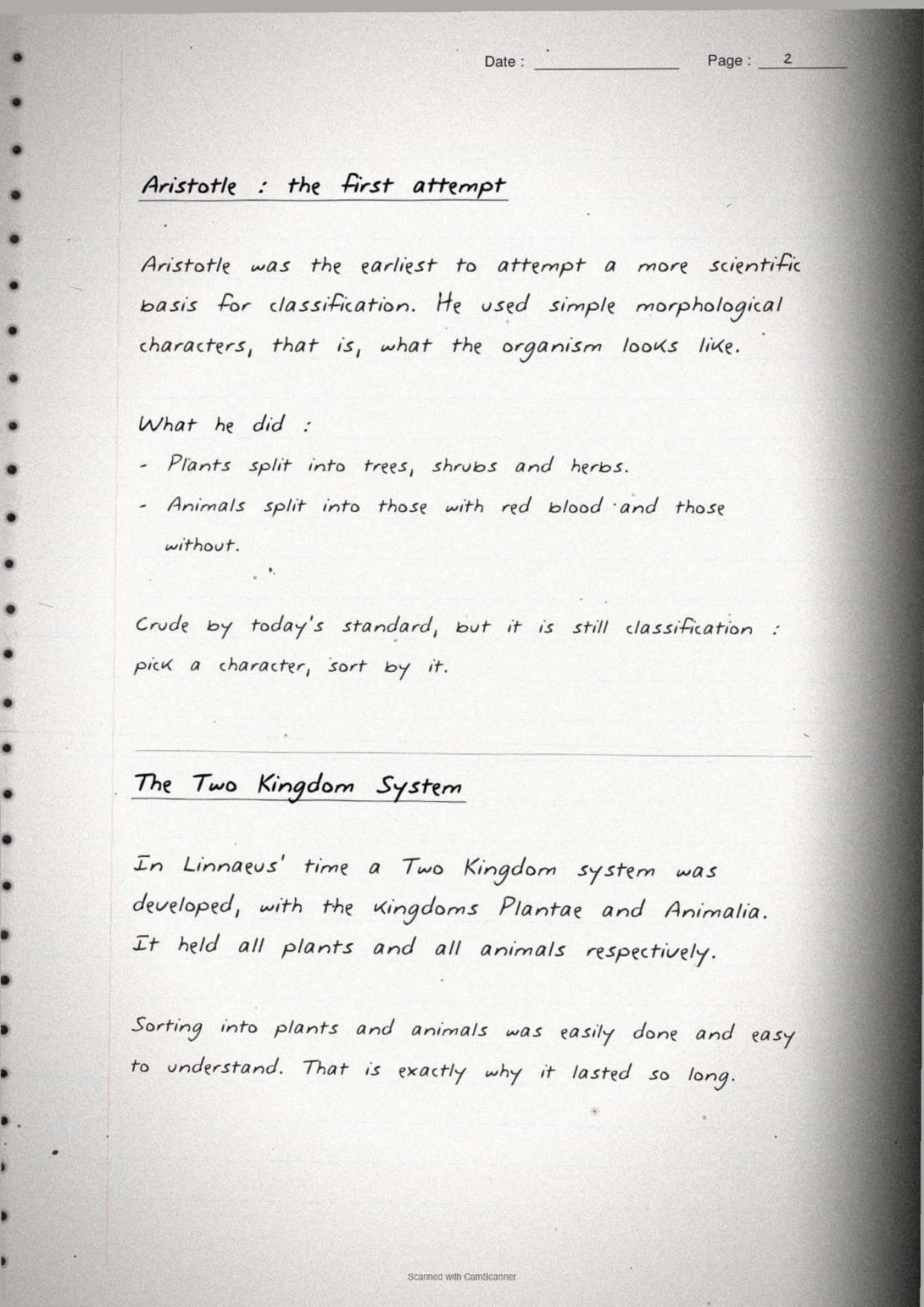
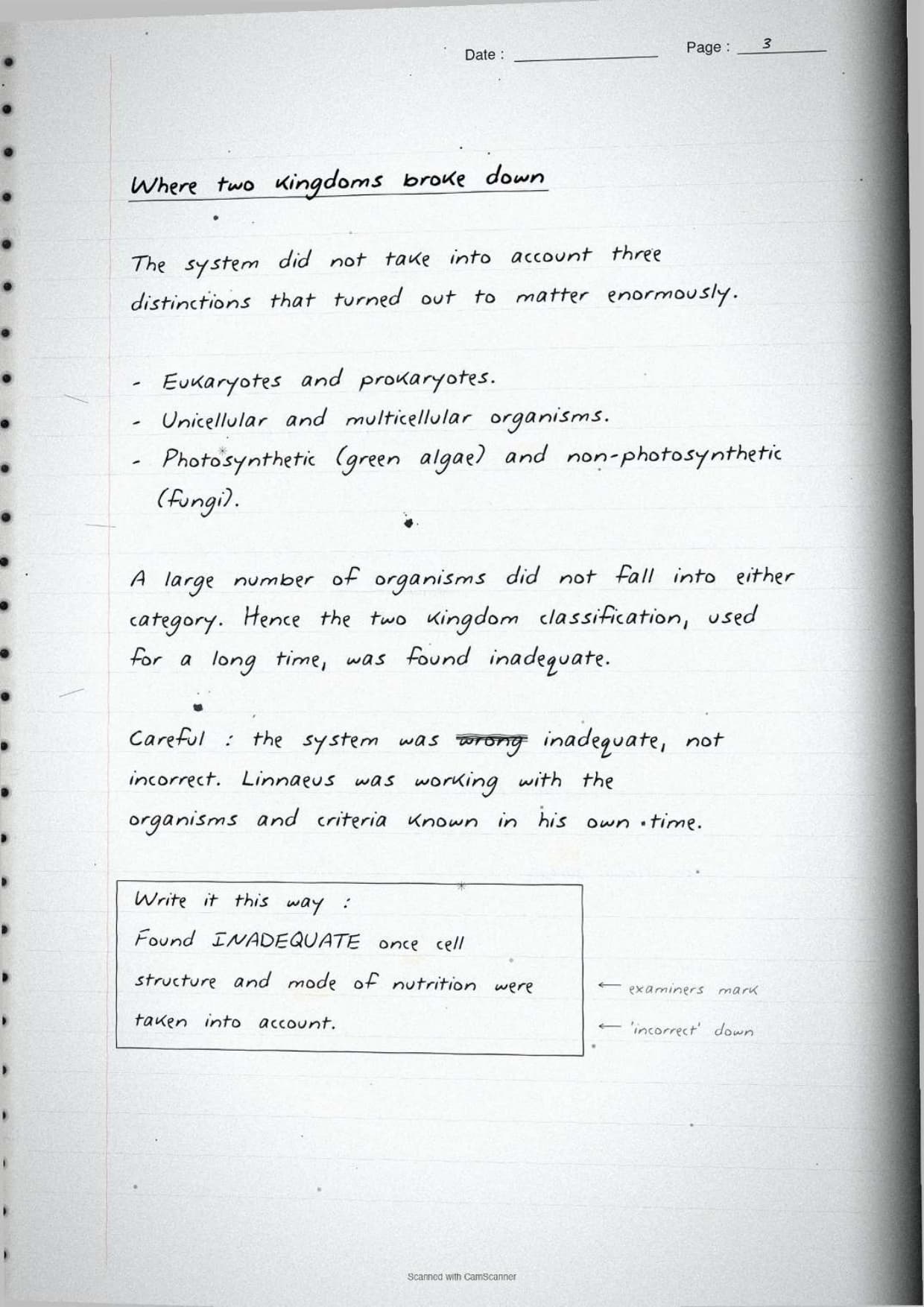
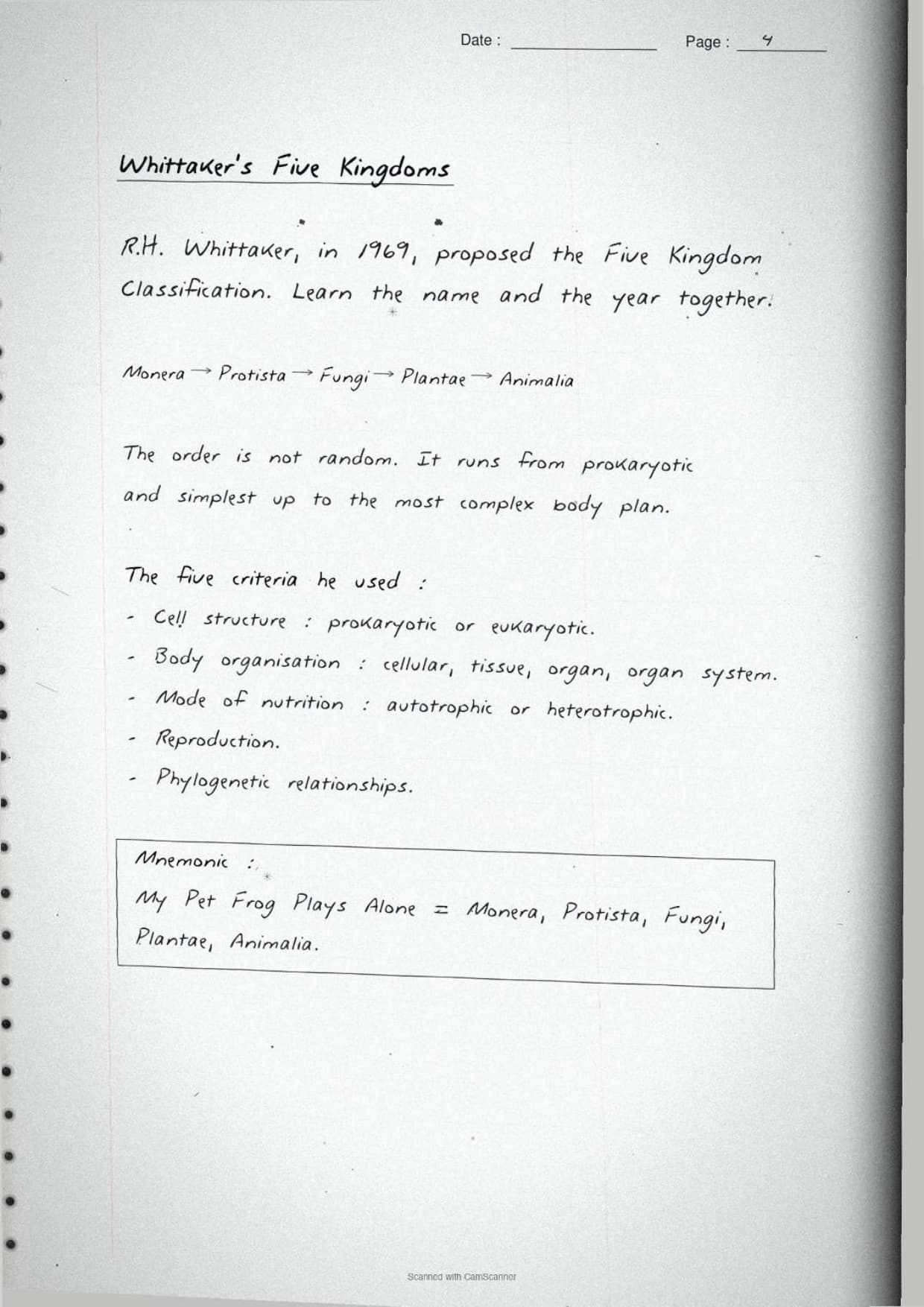
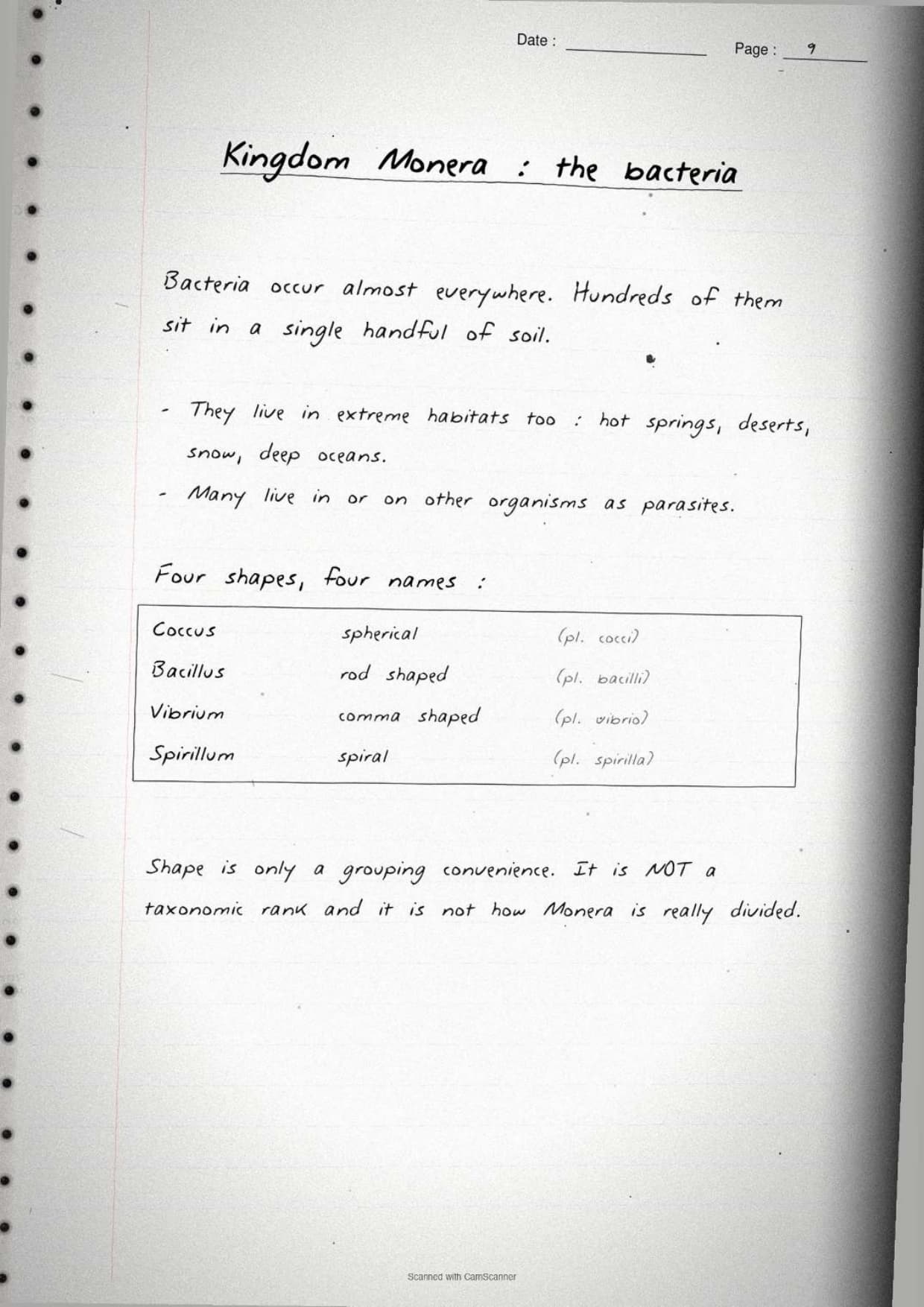
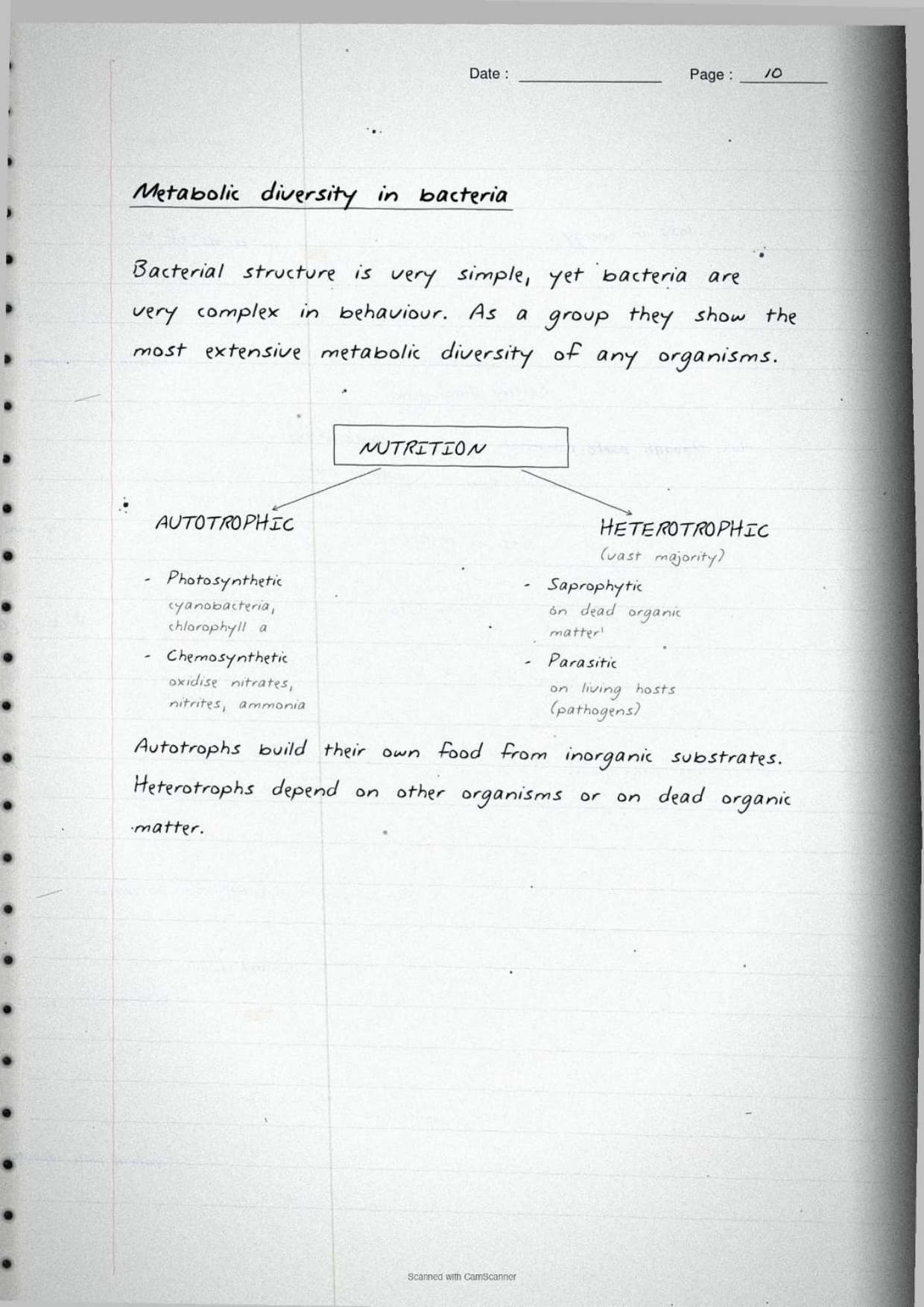
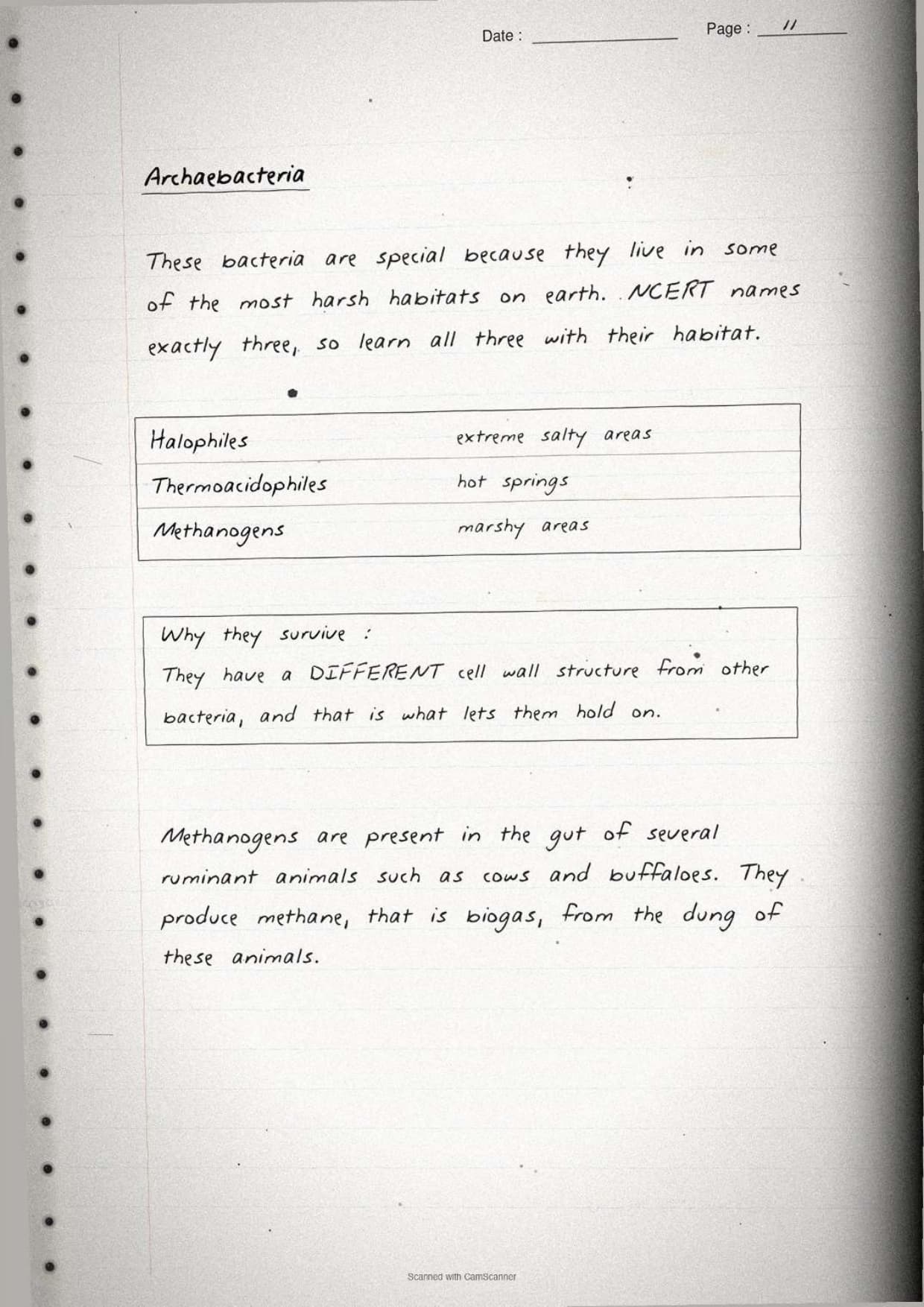
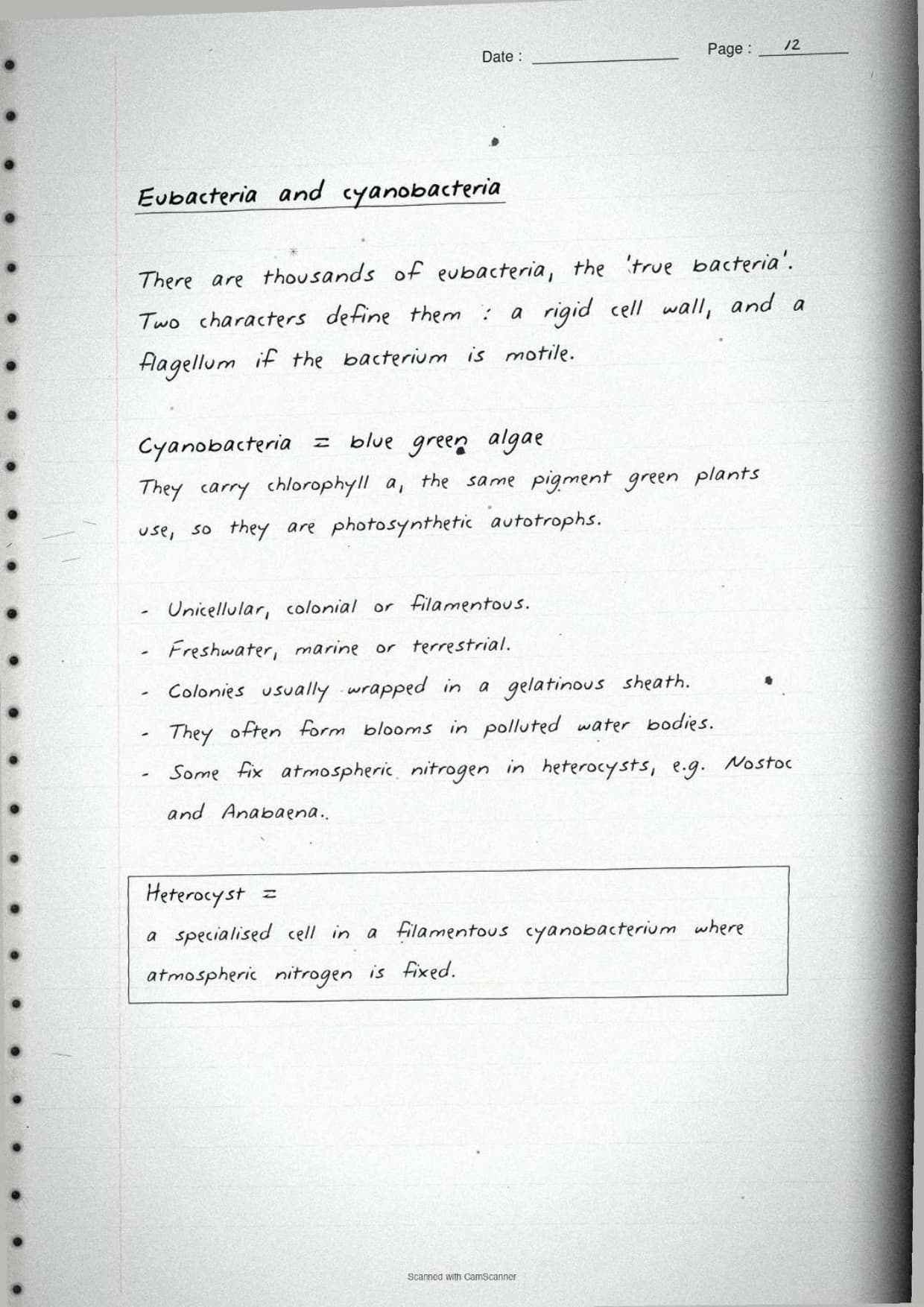
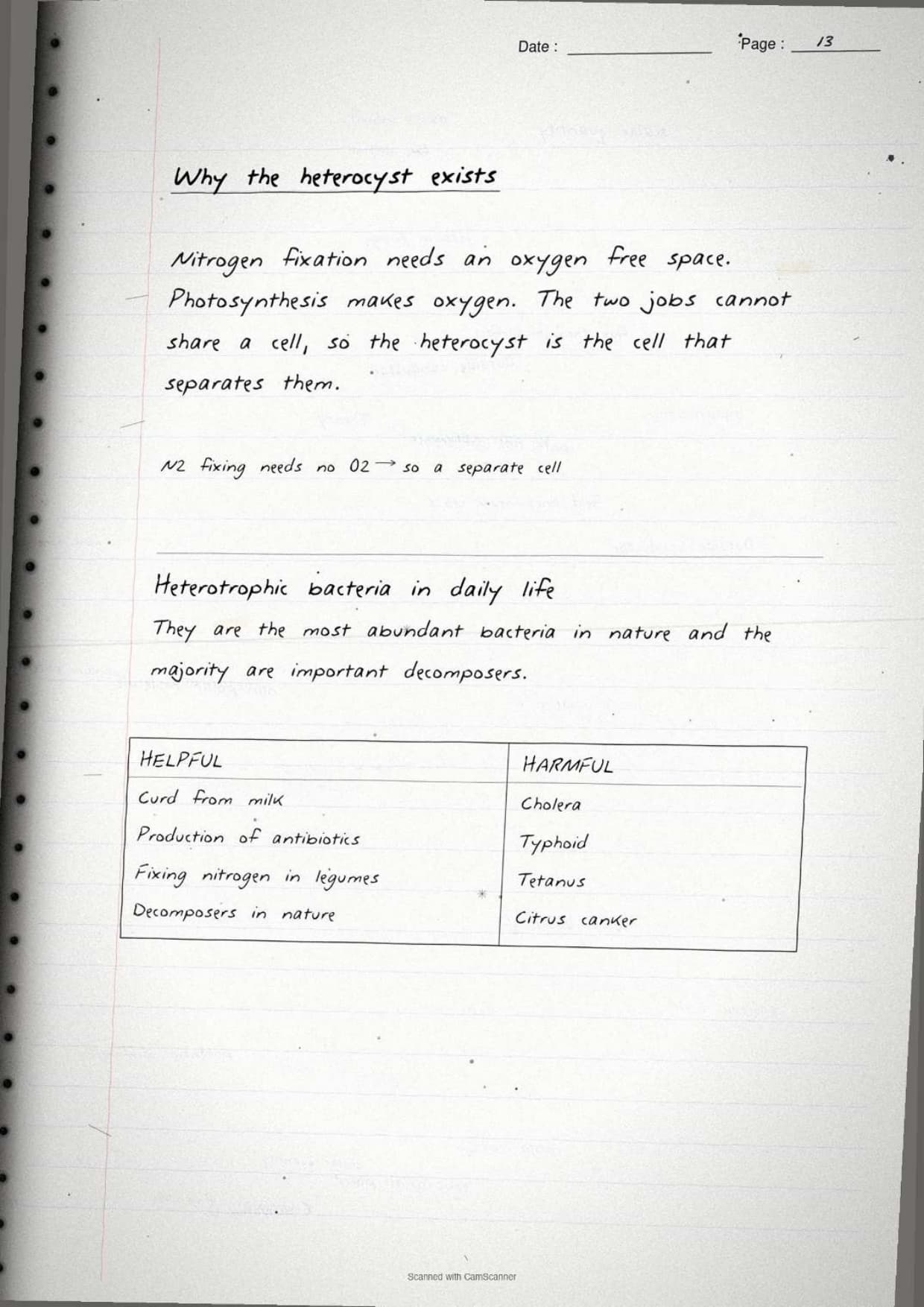
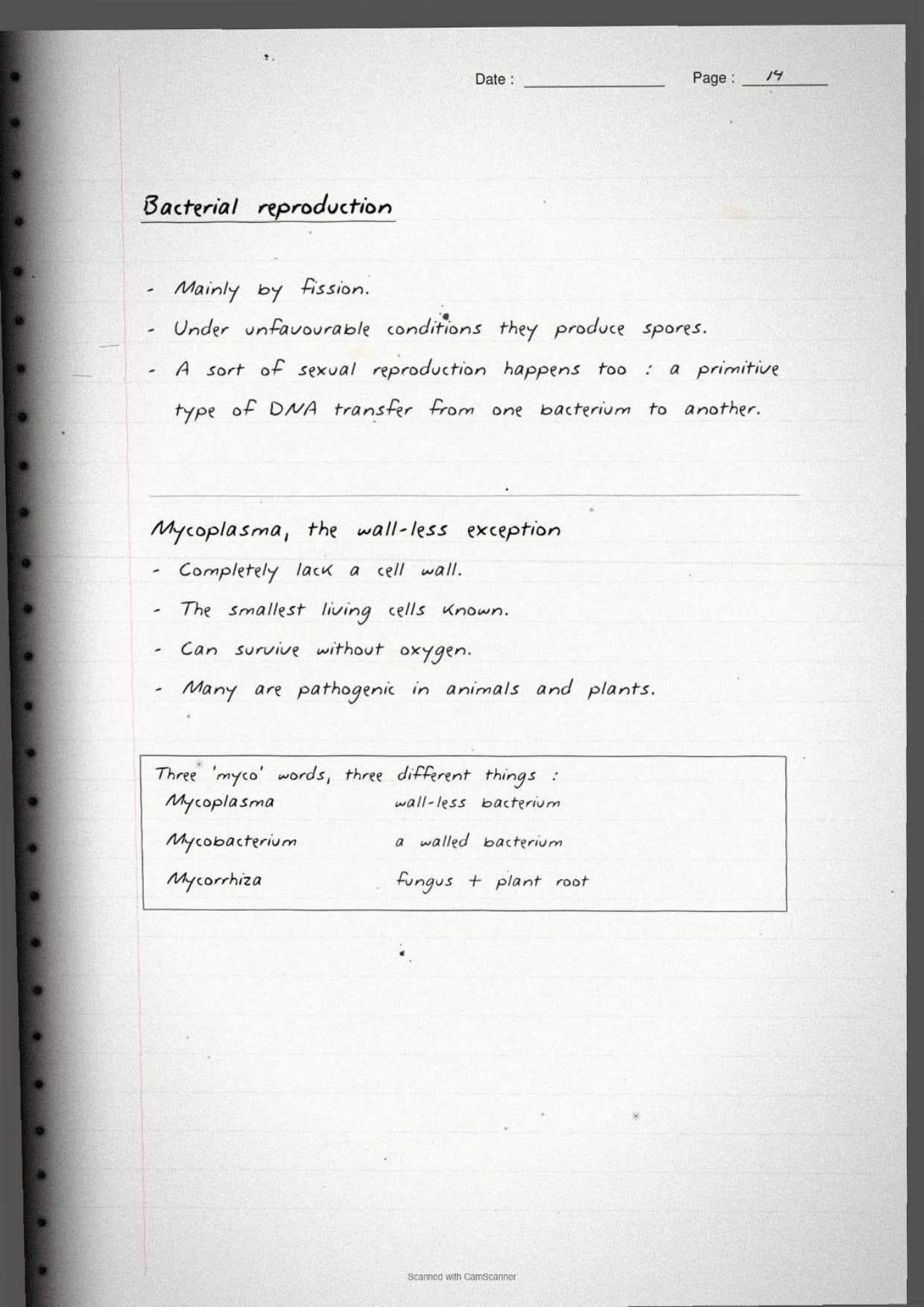
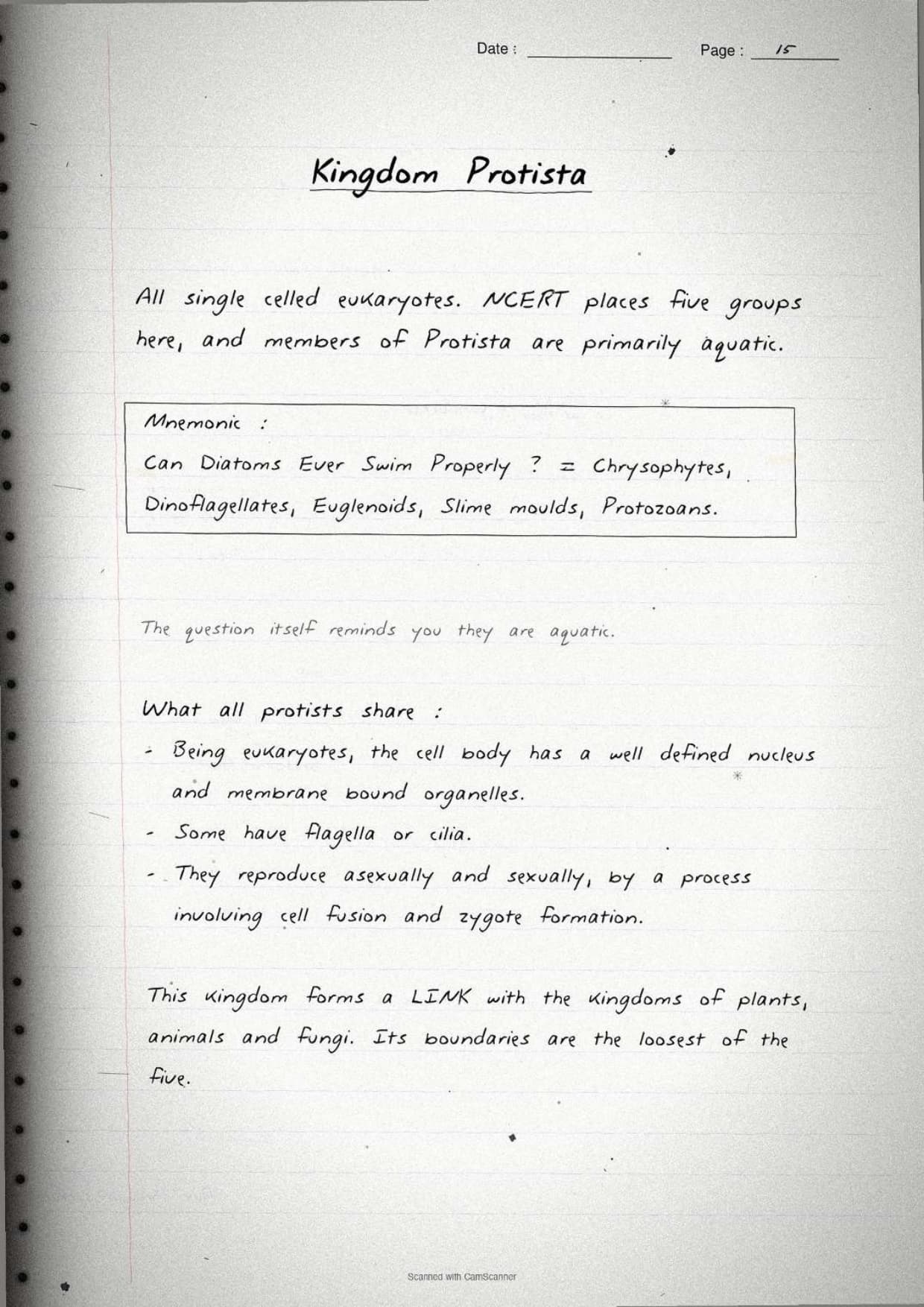
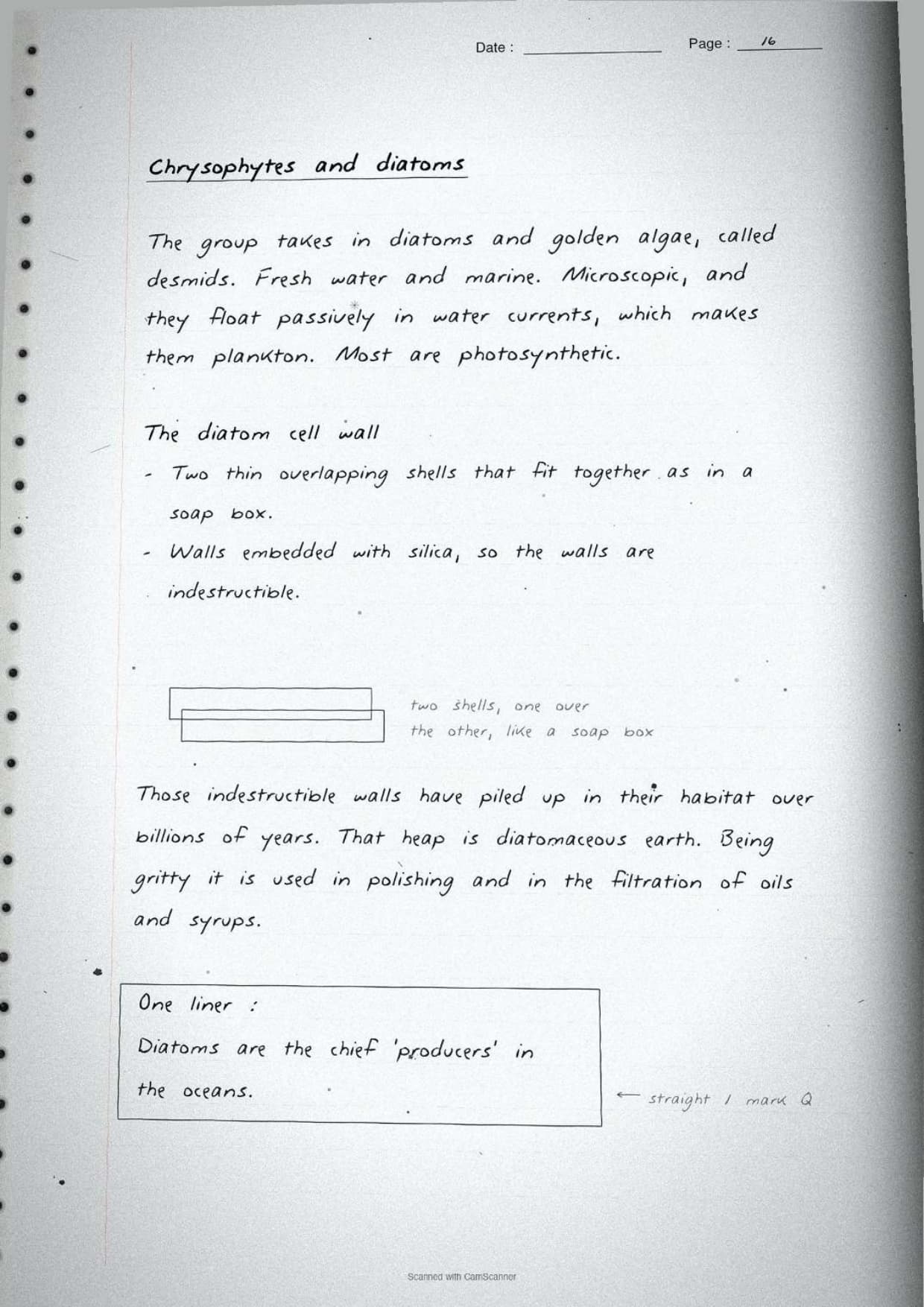
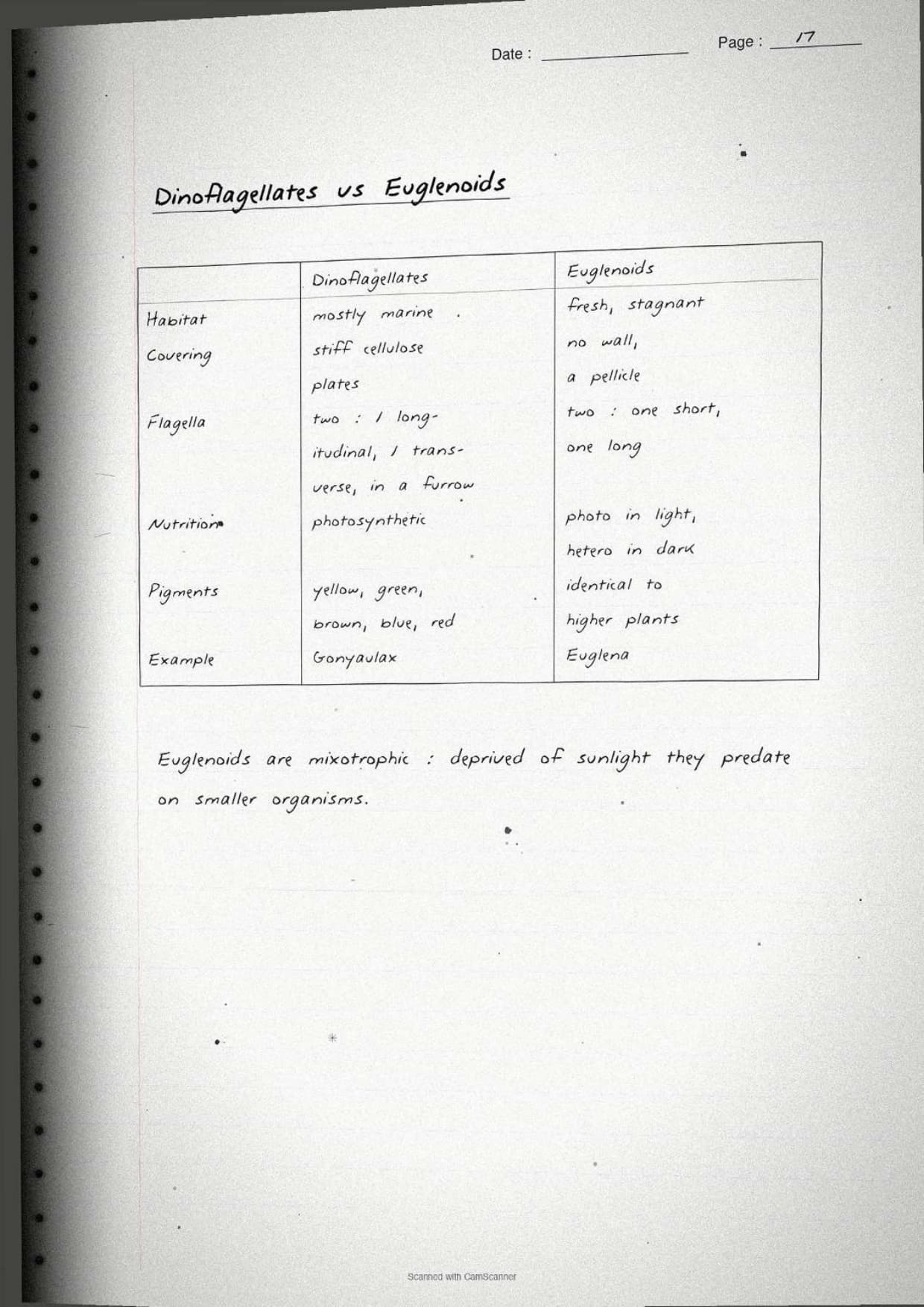
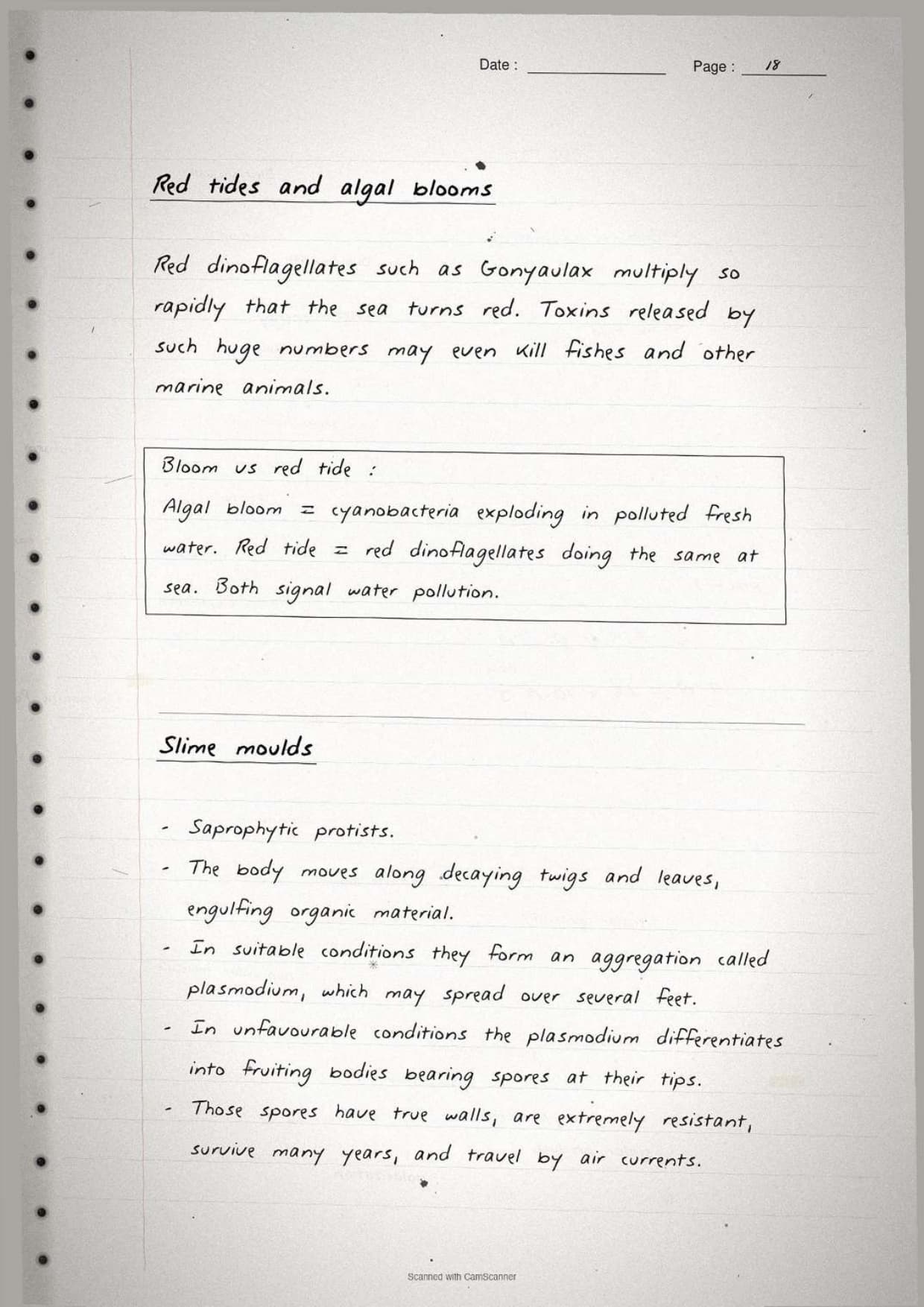
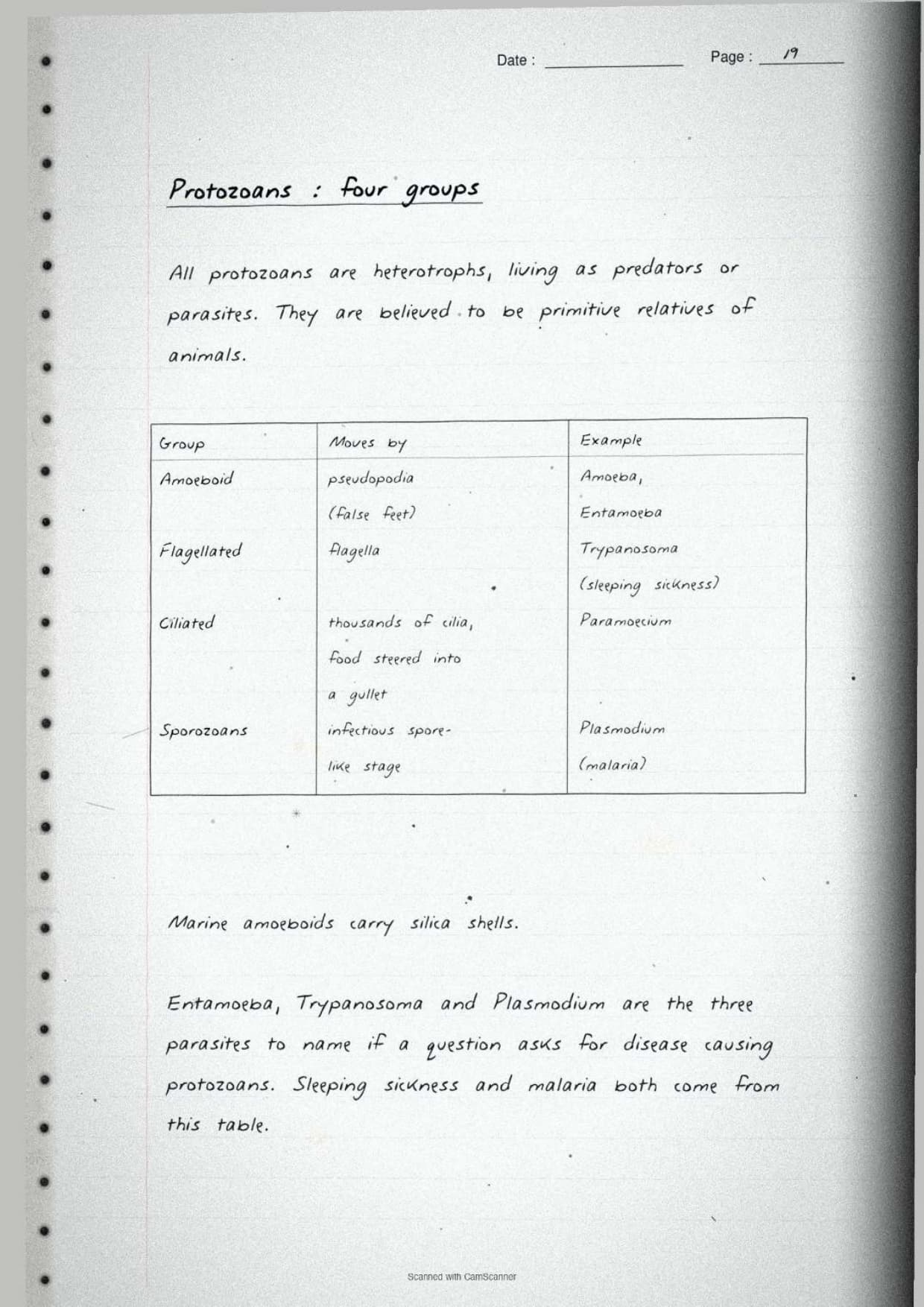
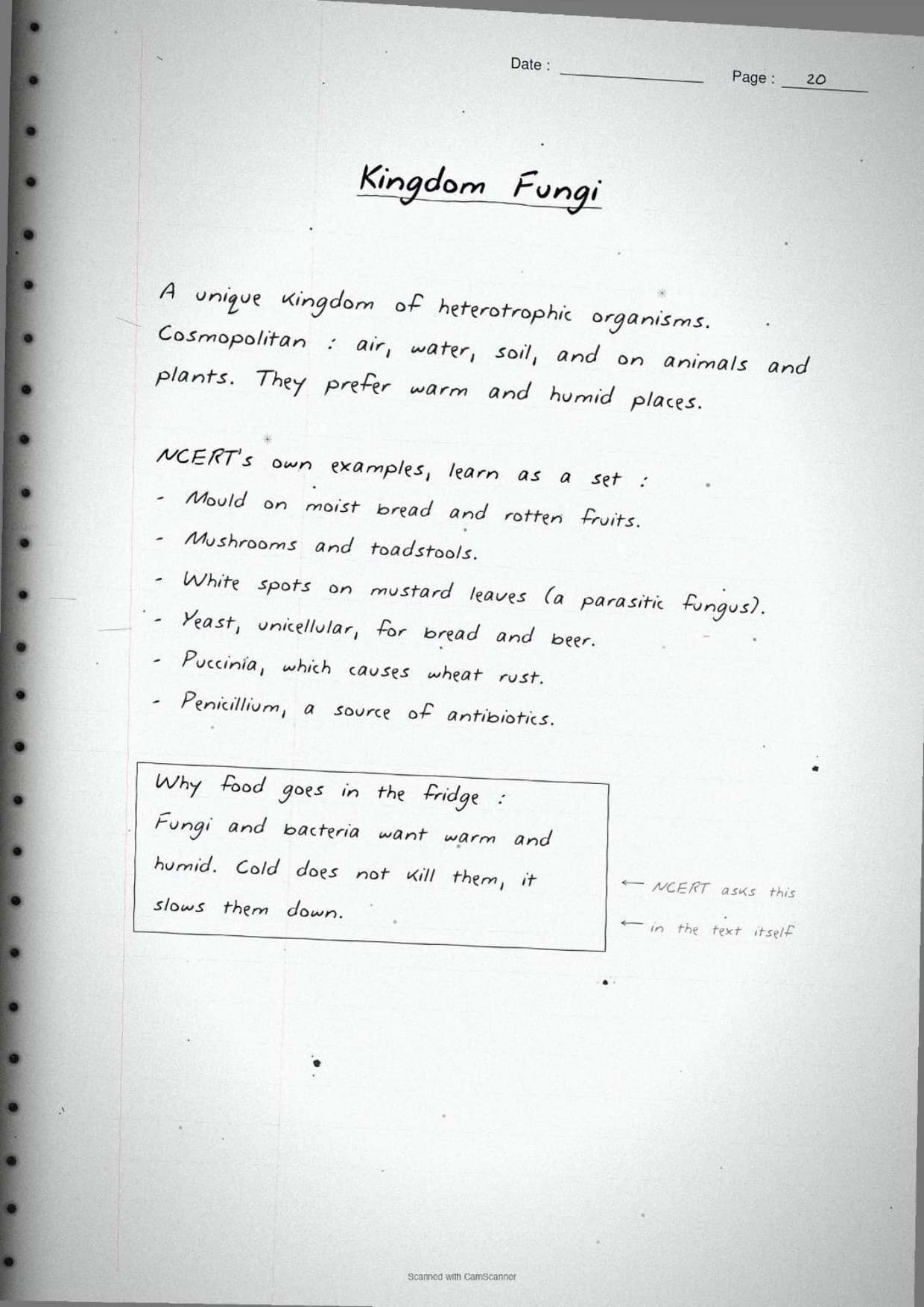
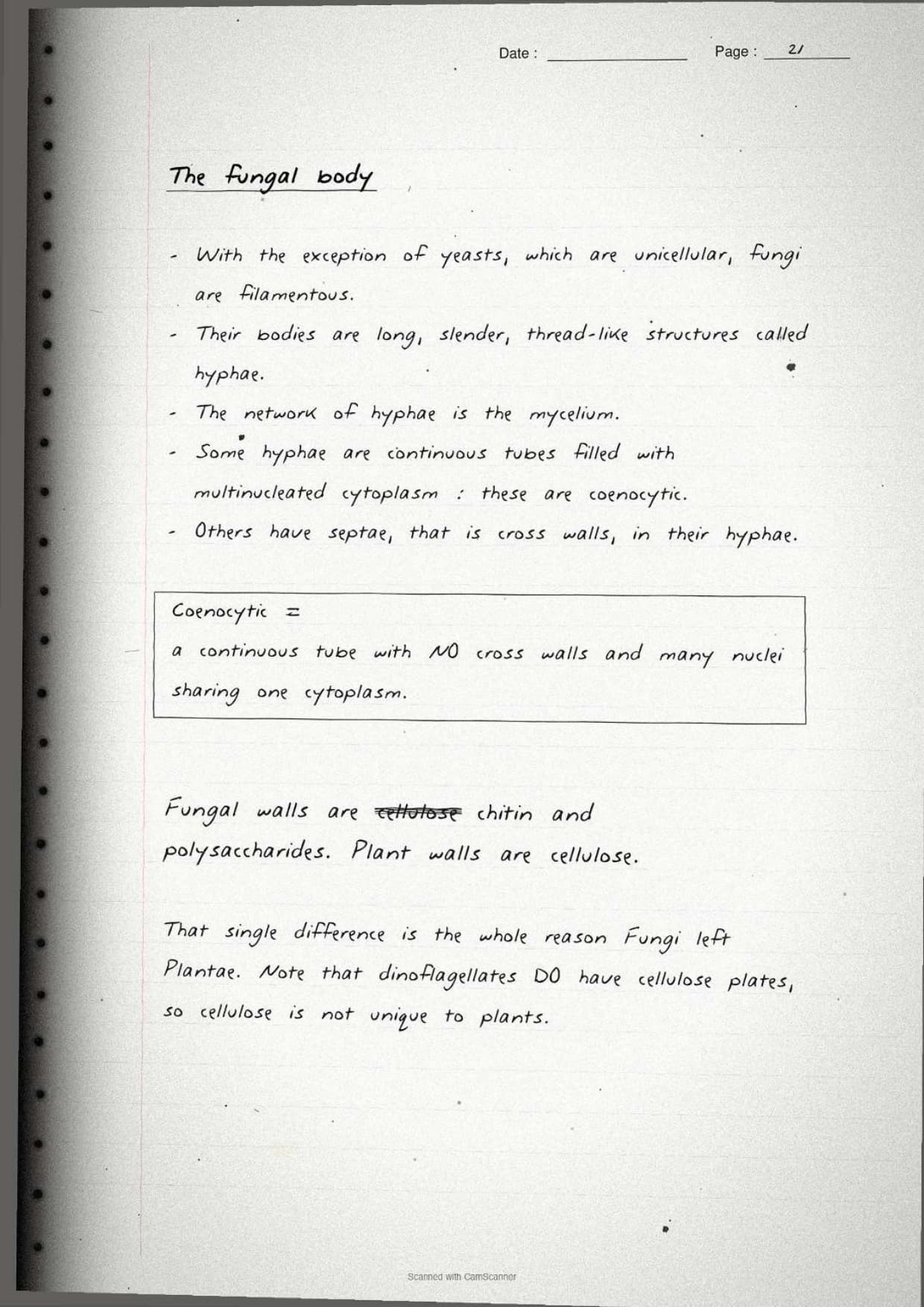
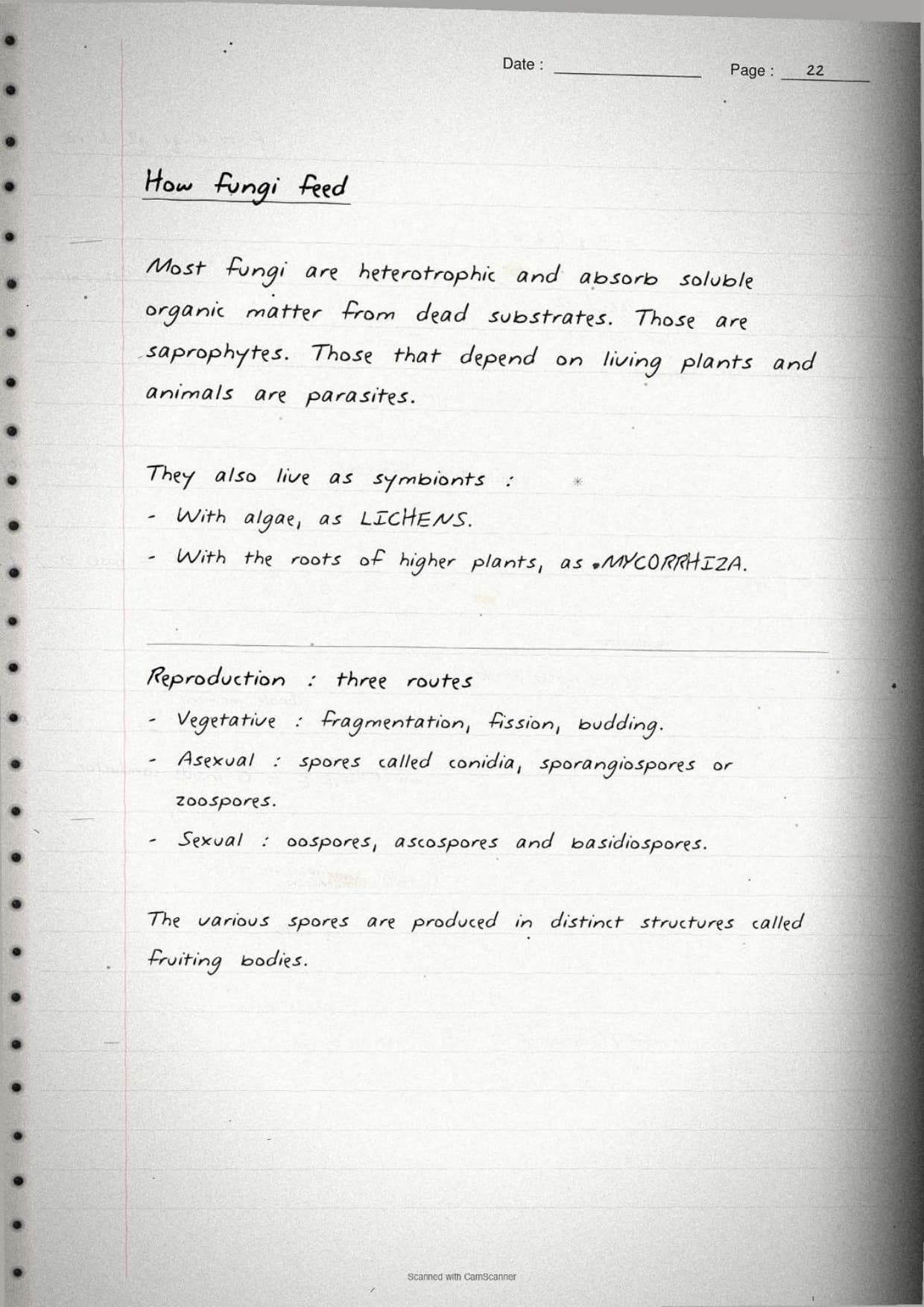
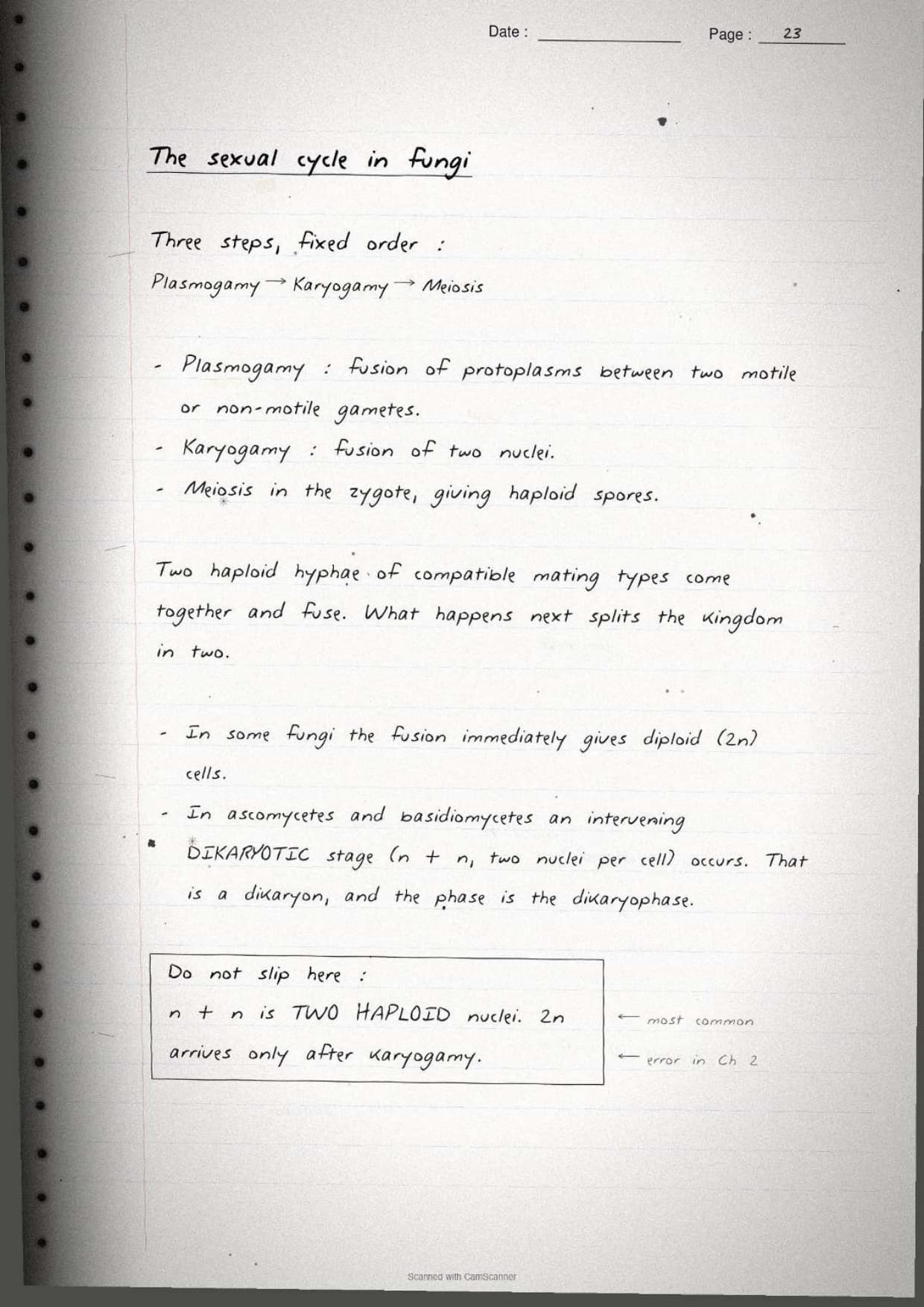
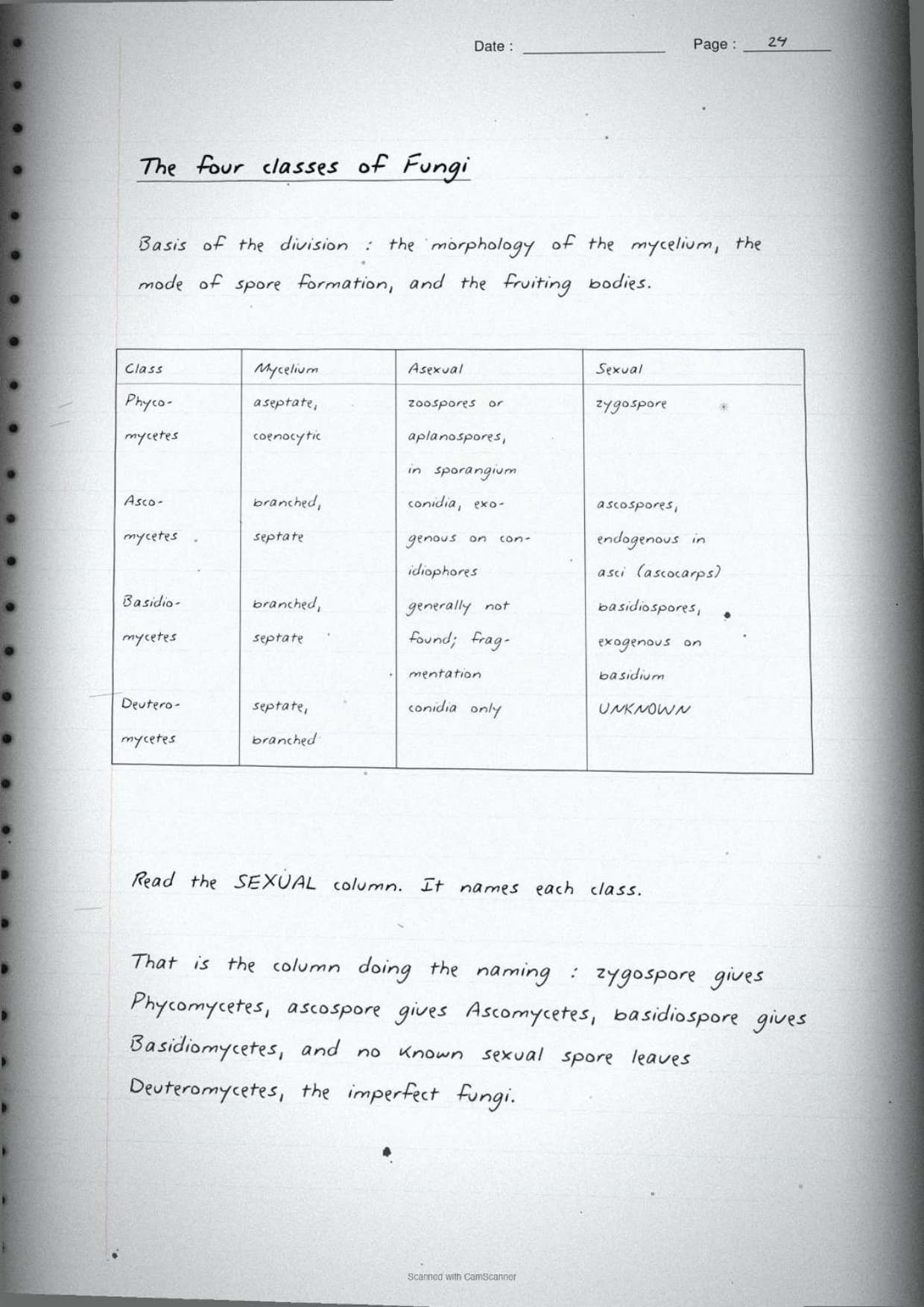
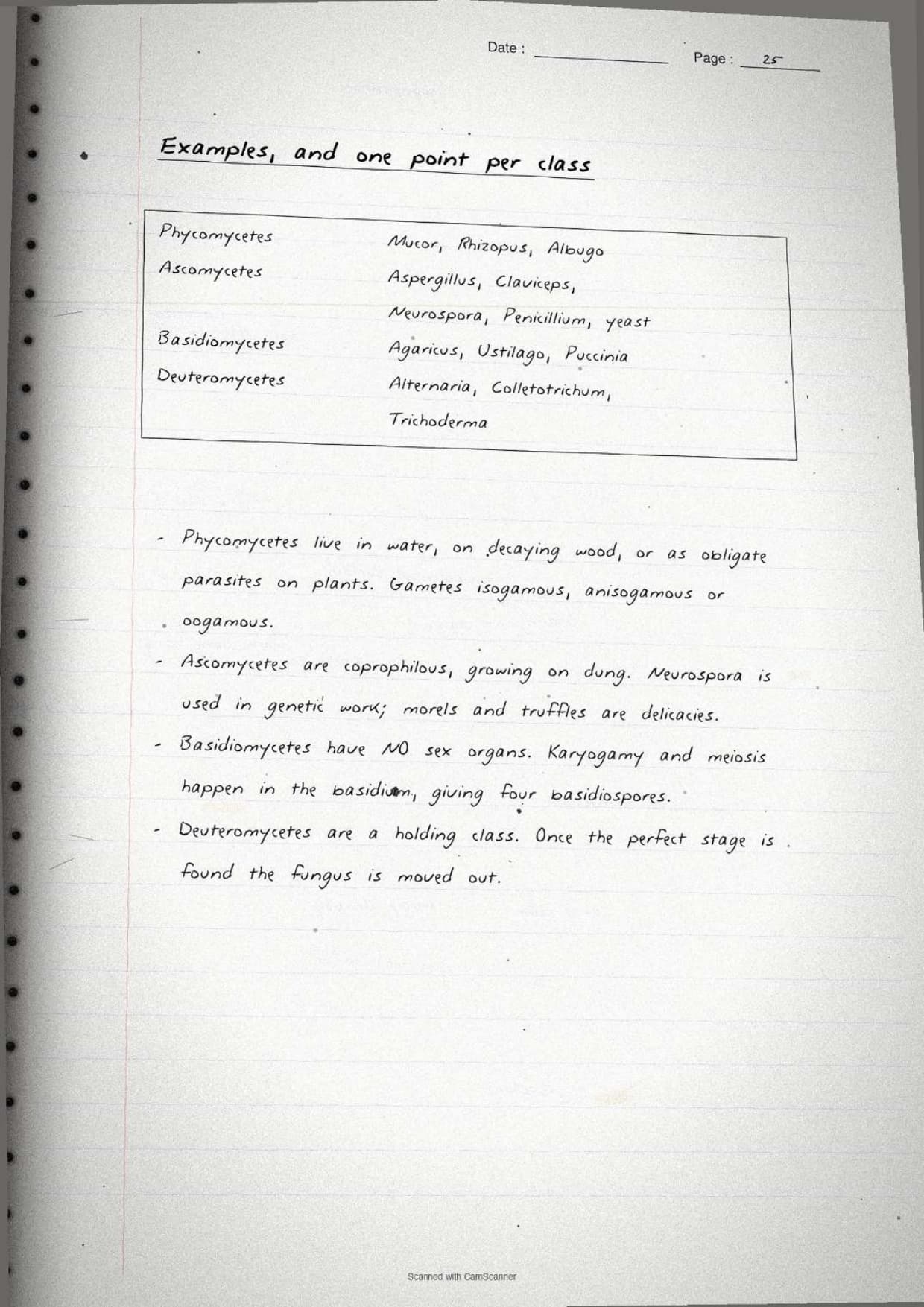
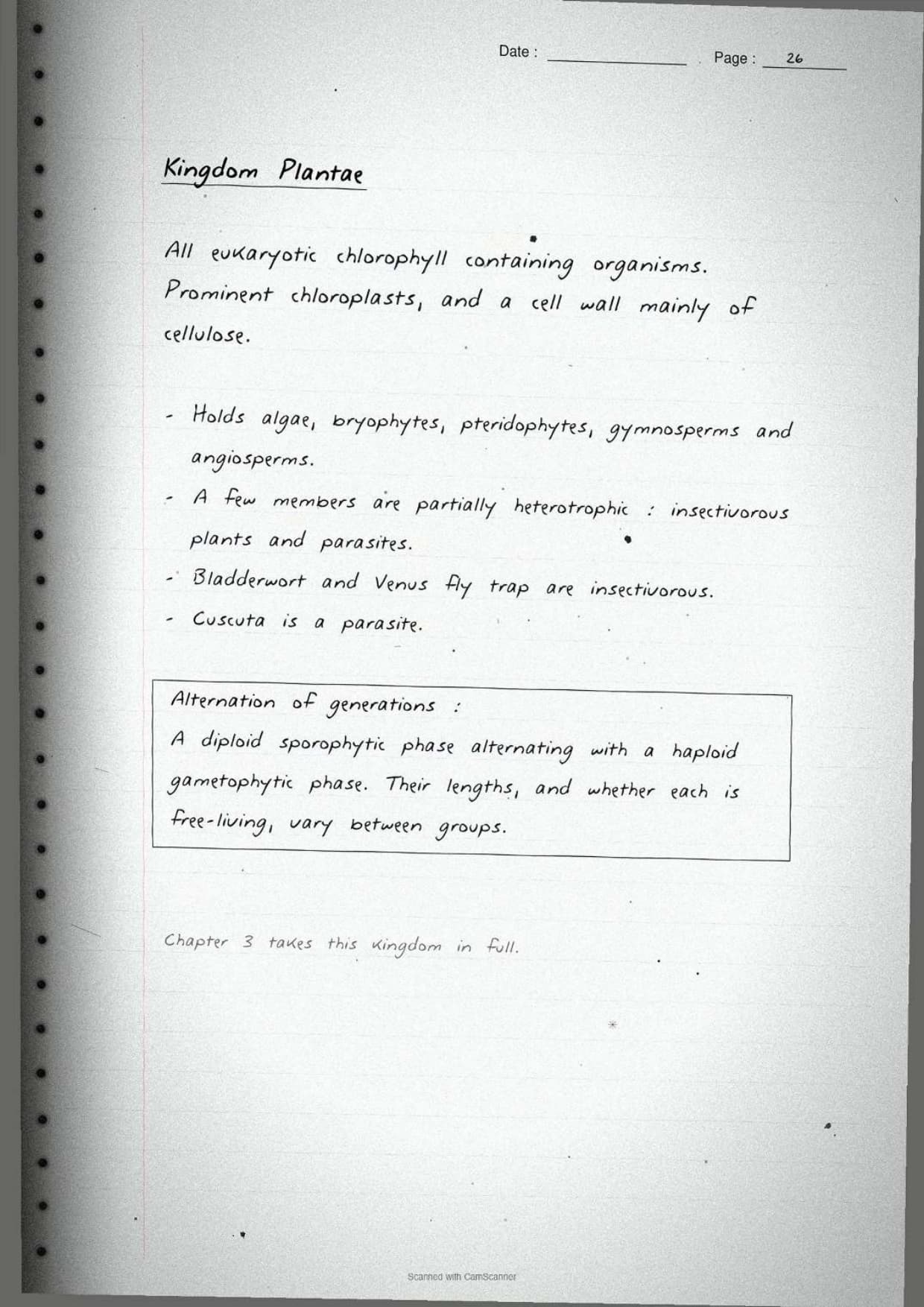
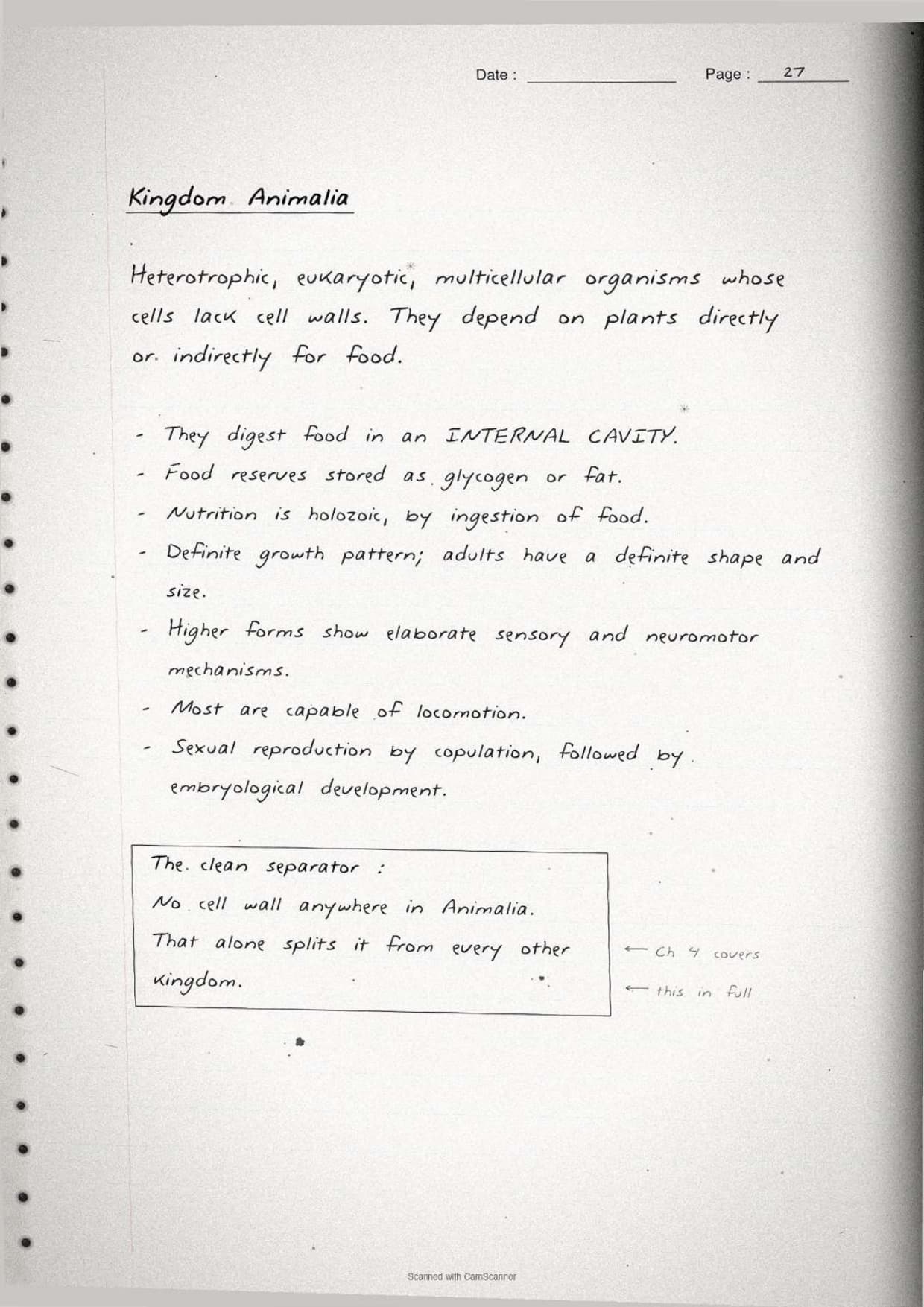
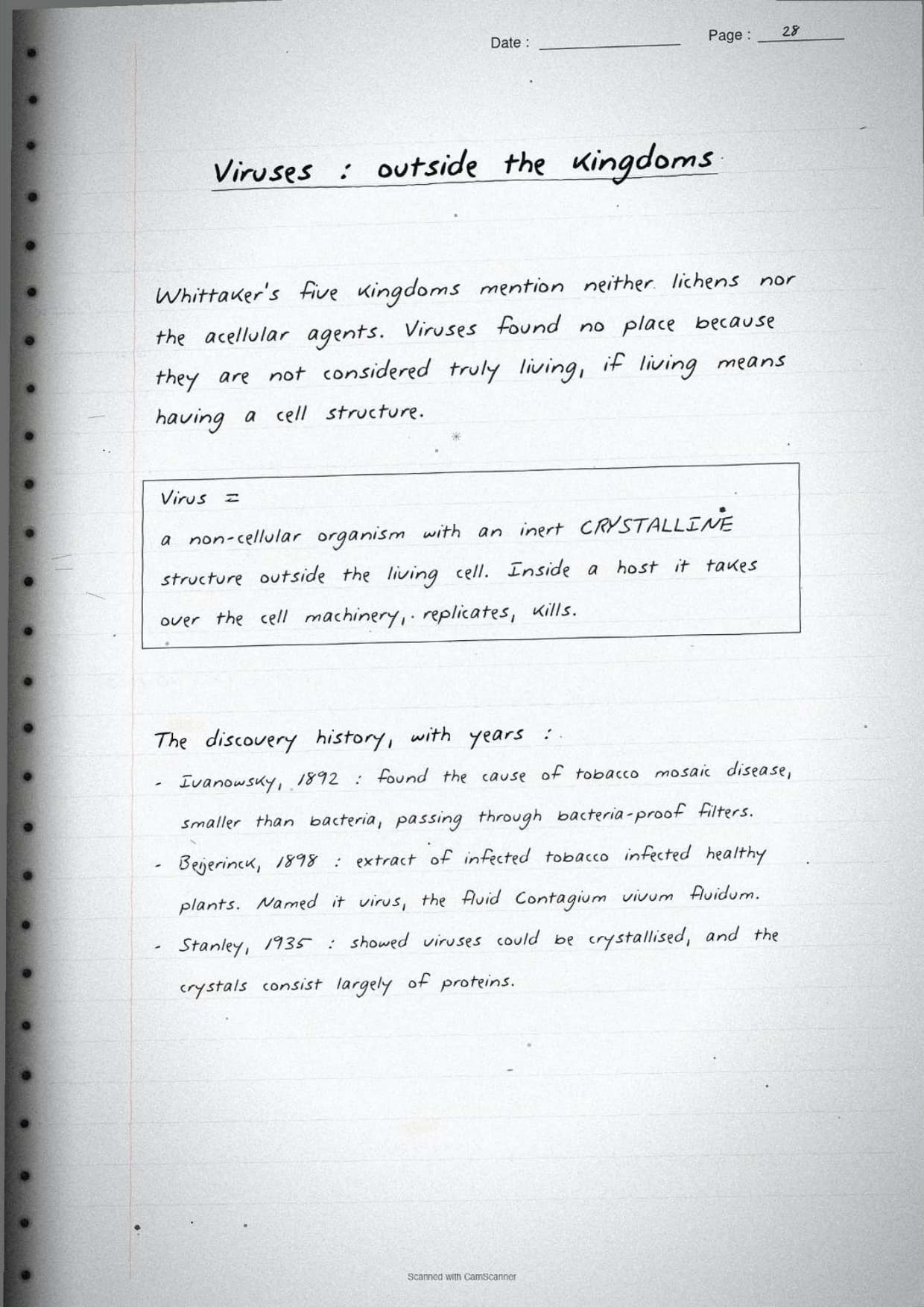
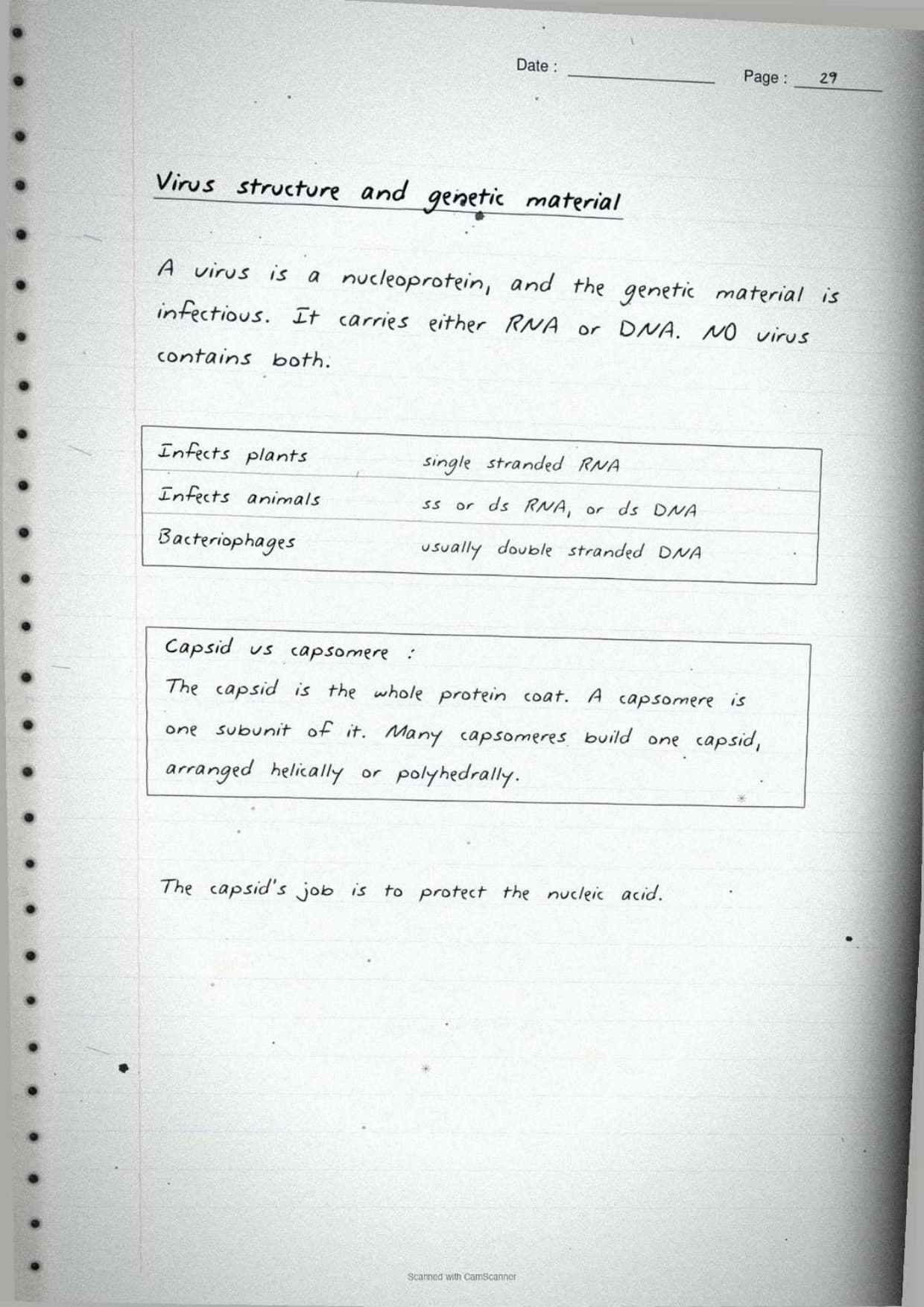
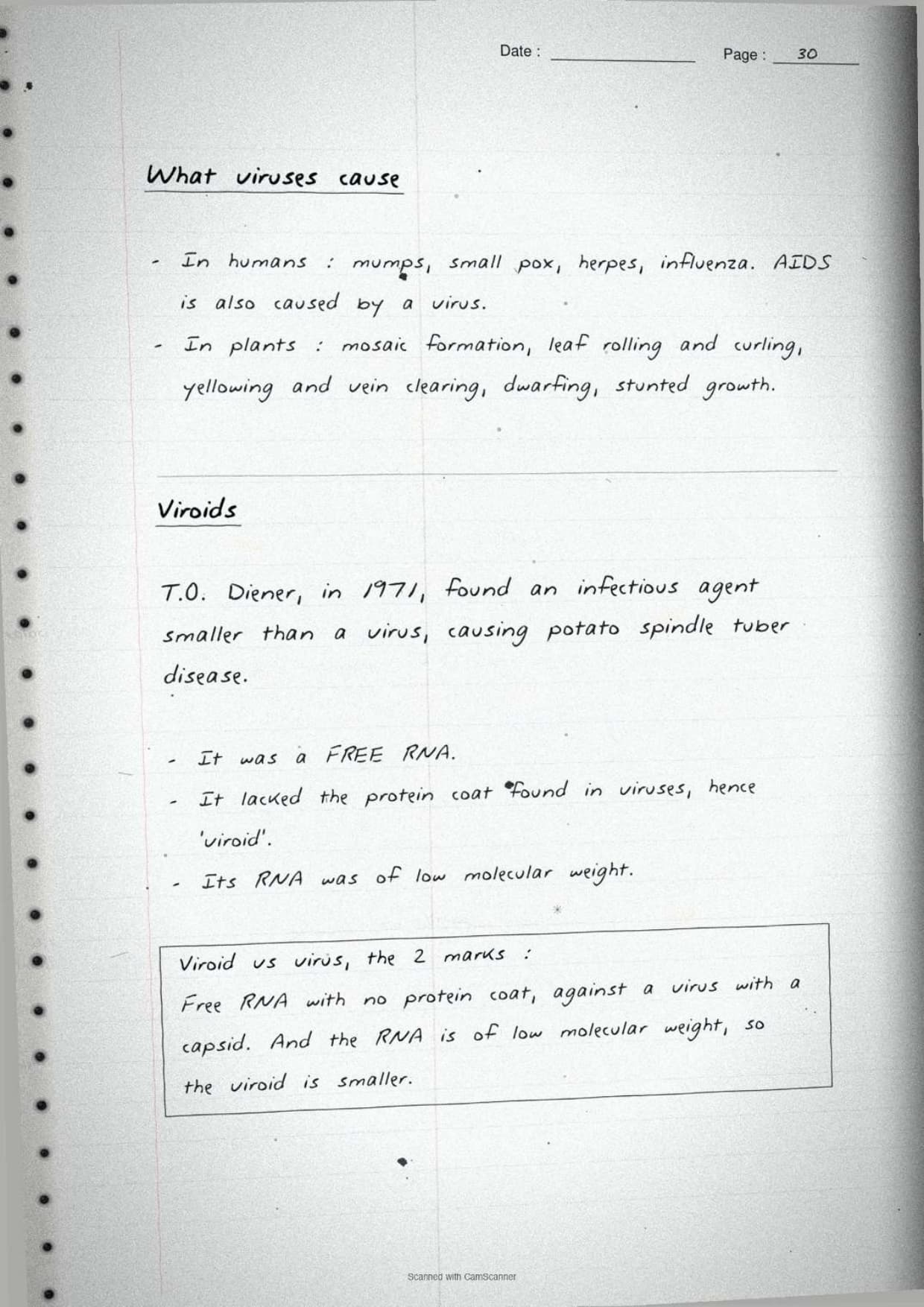
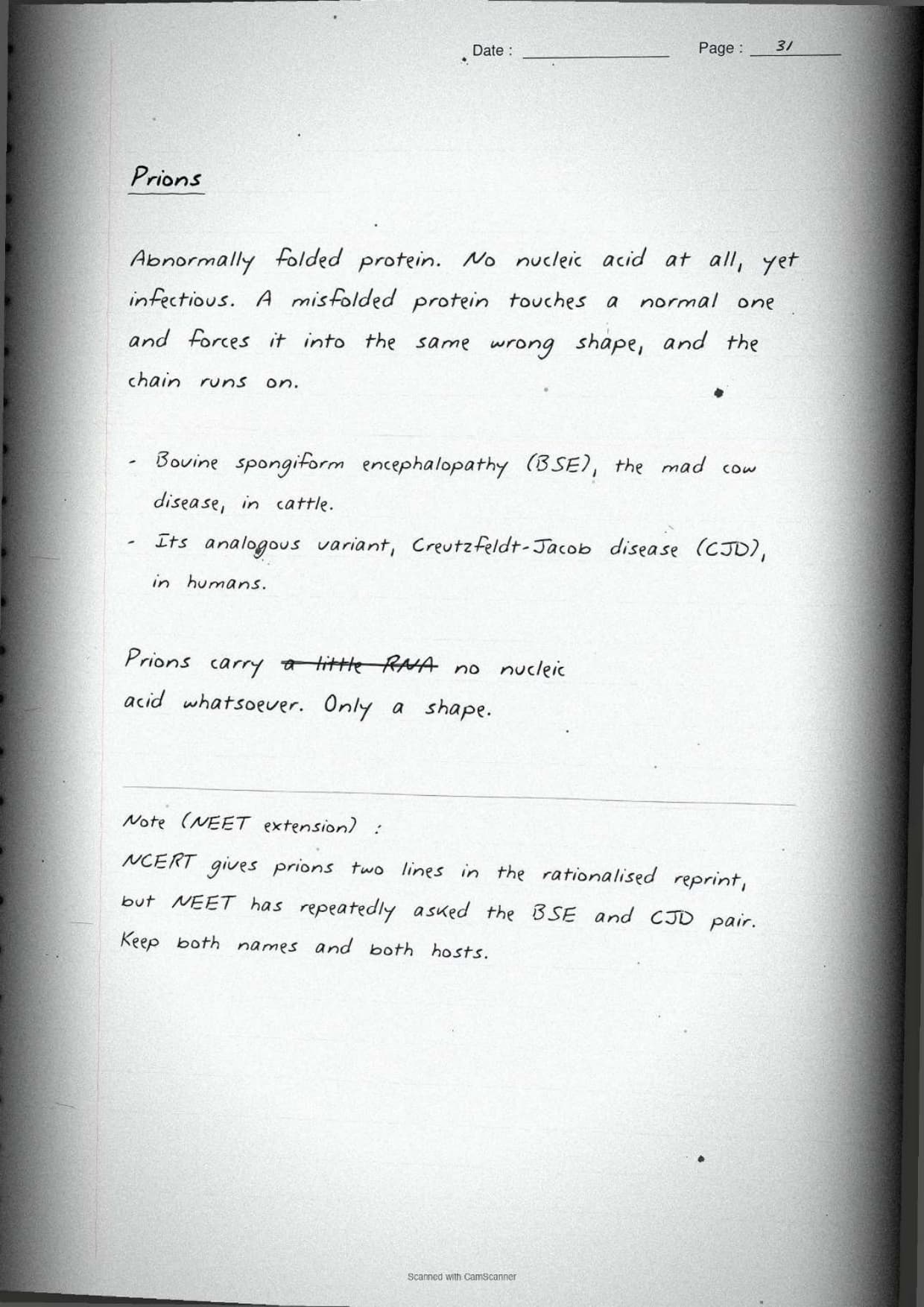
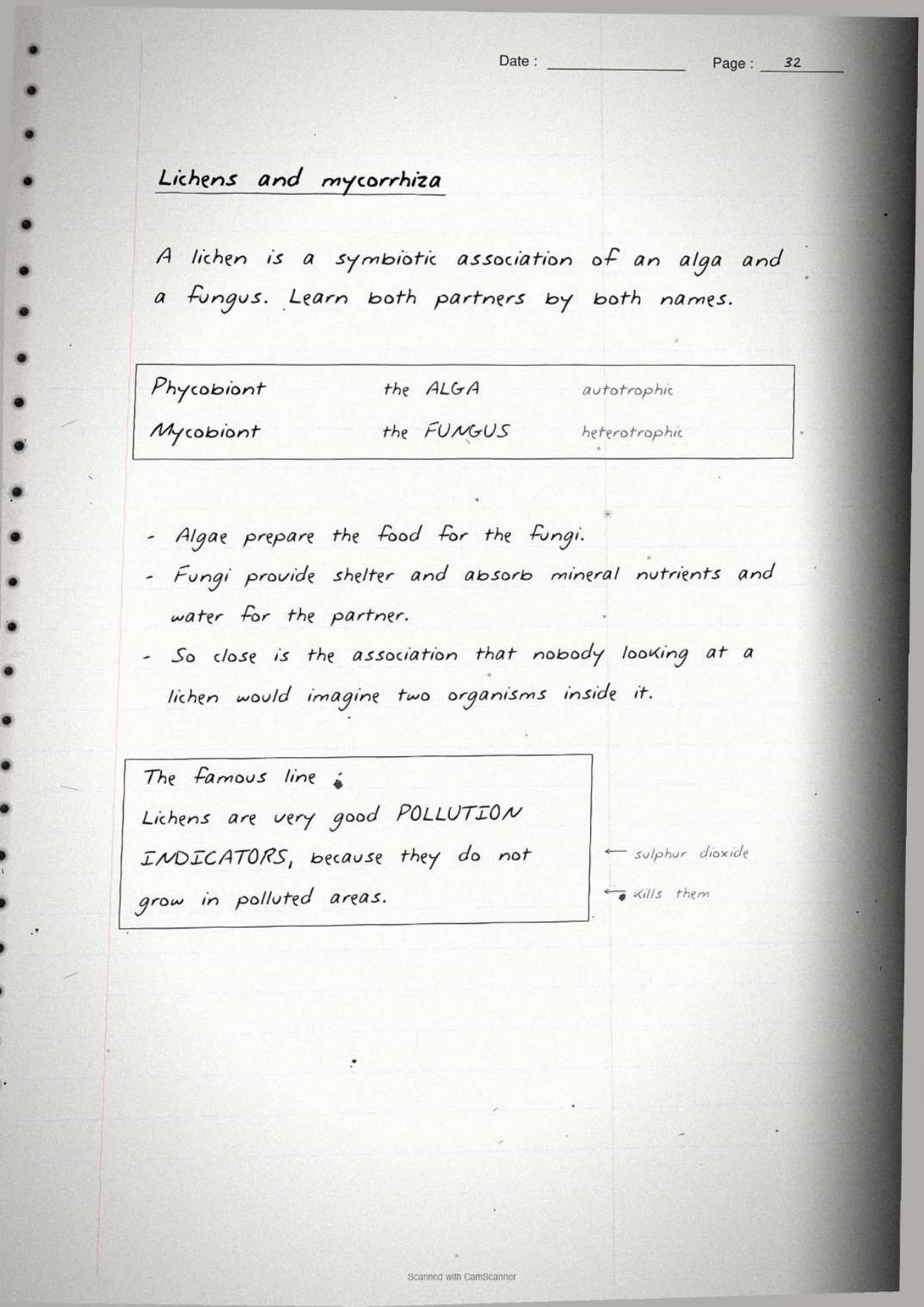
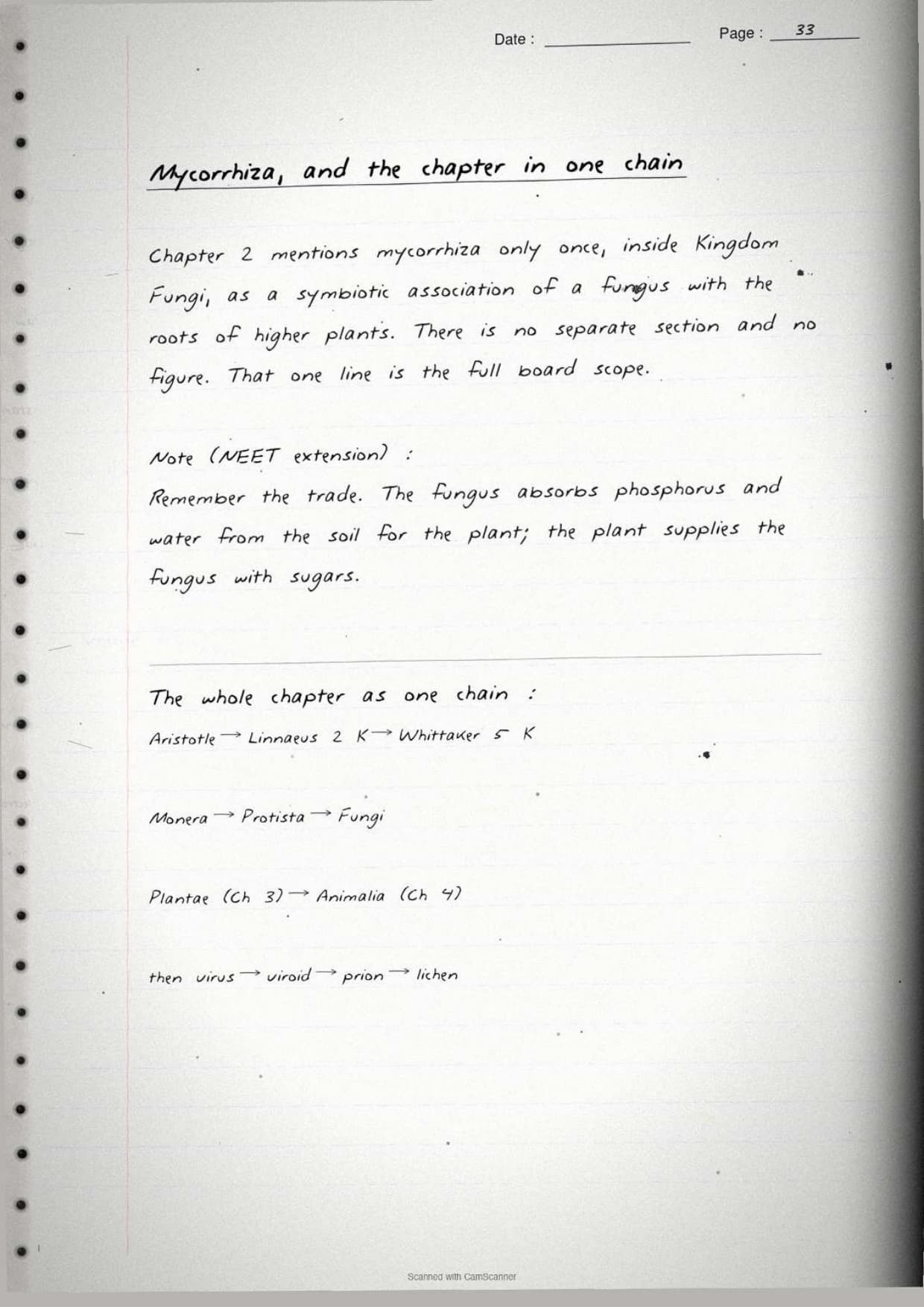
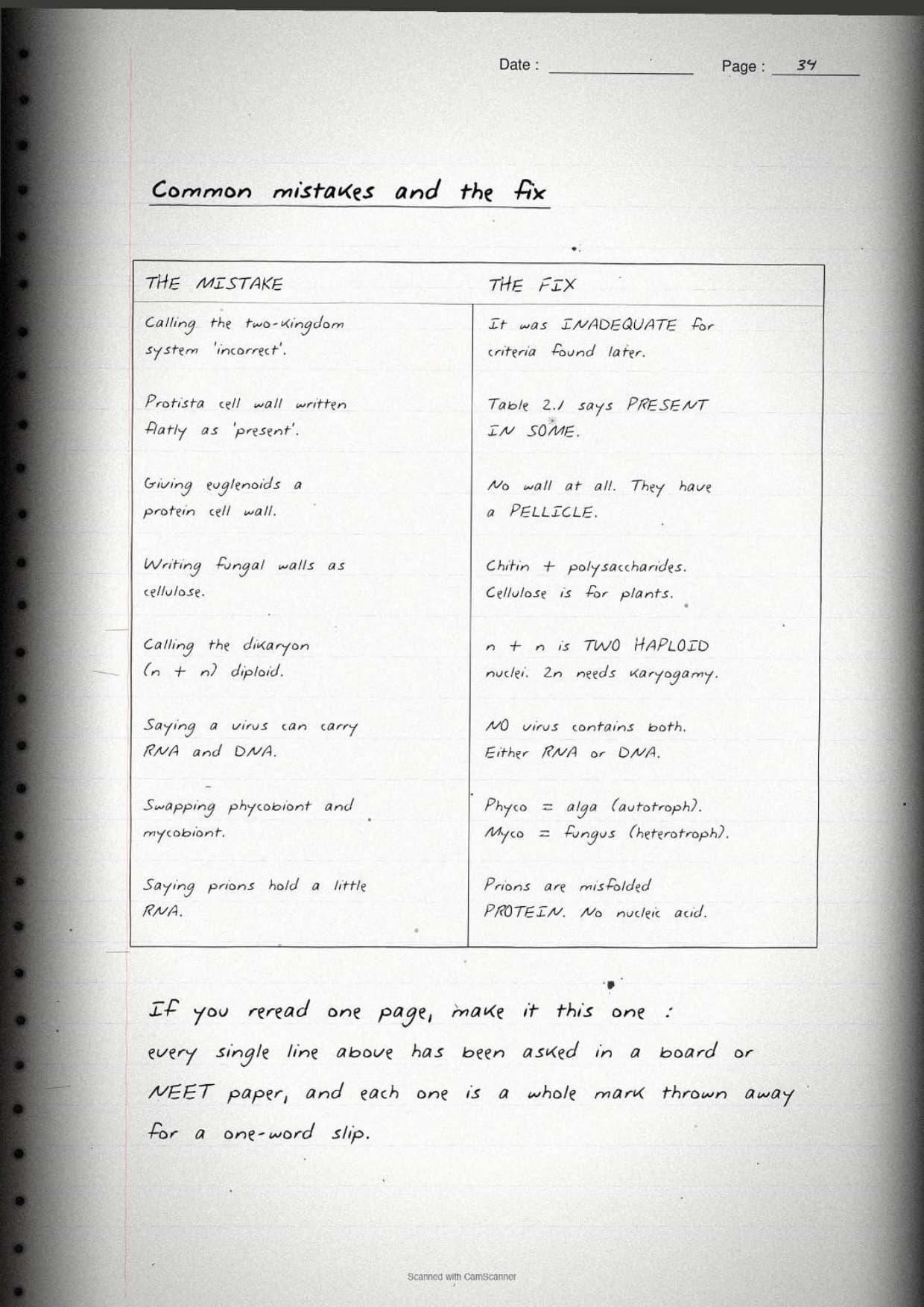
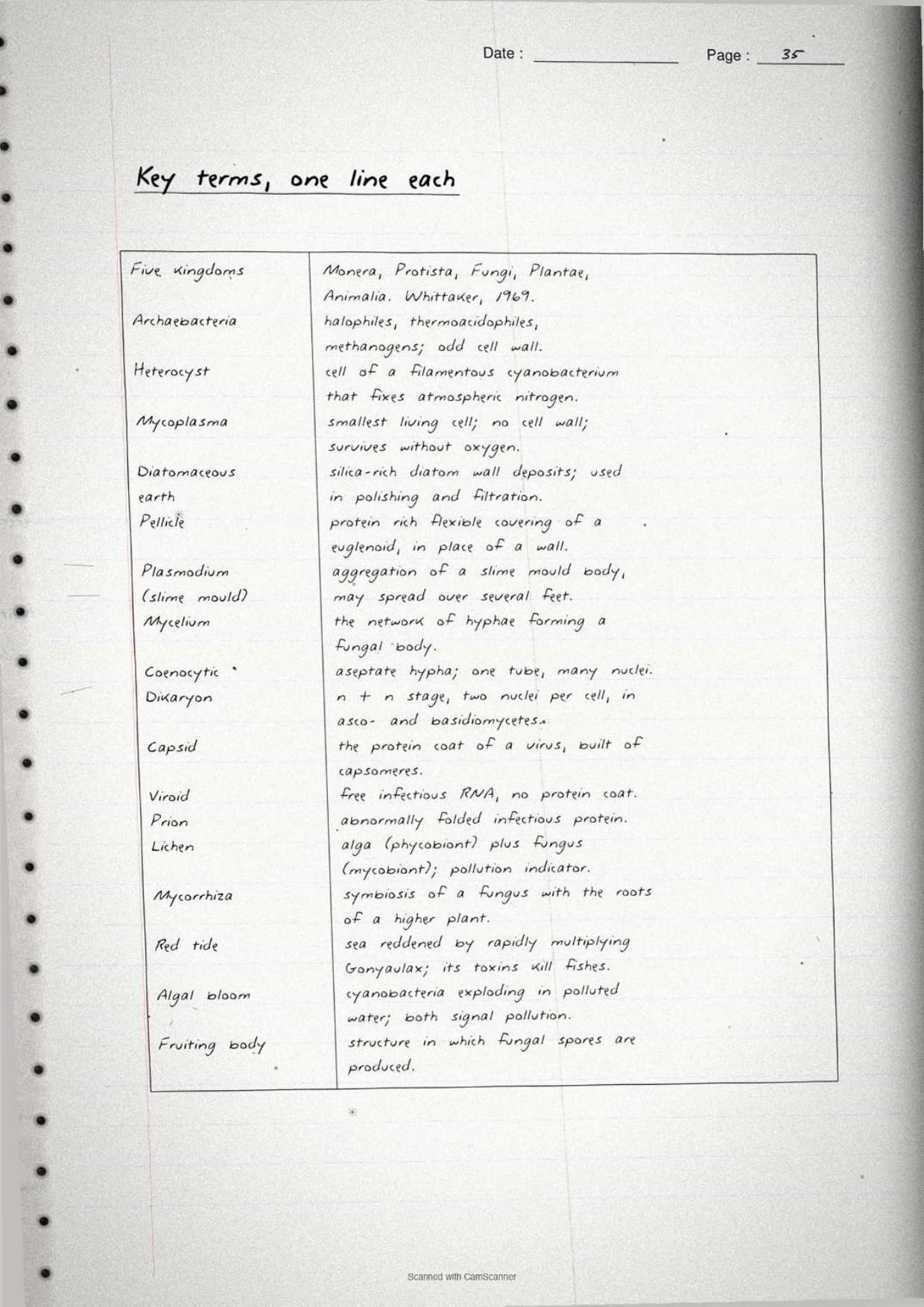
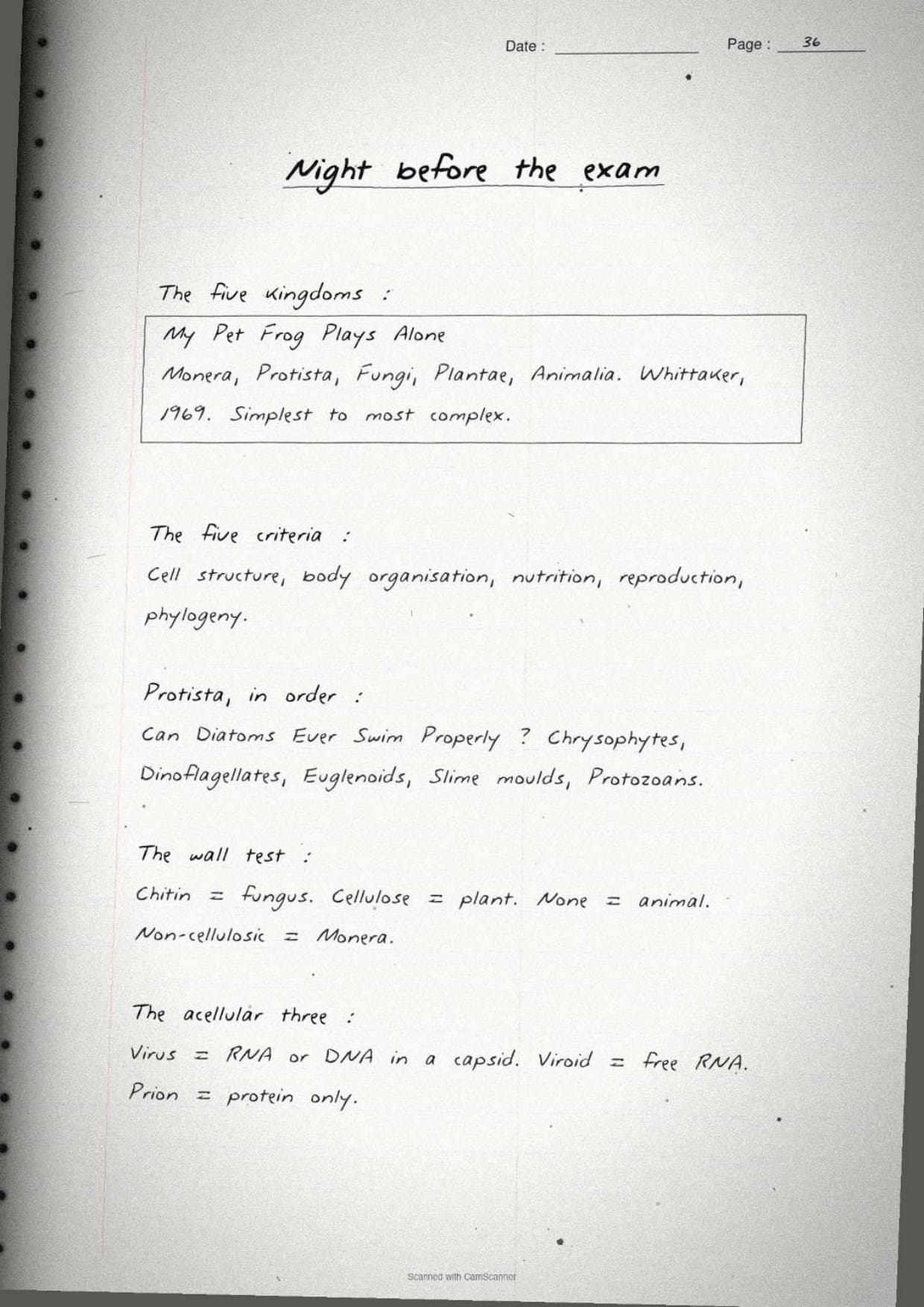
Chapter 2 is a naming-heavy chapter, so these handwritten pages keep every kingdom, class and example in one running sequence.
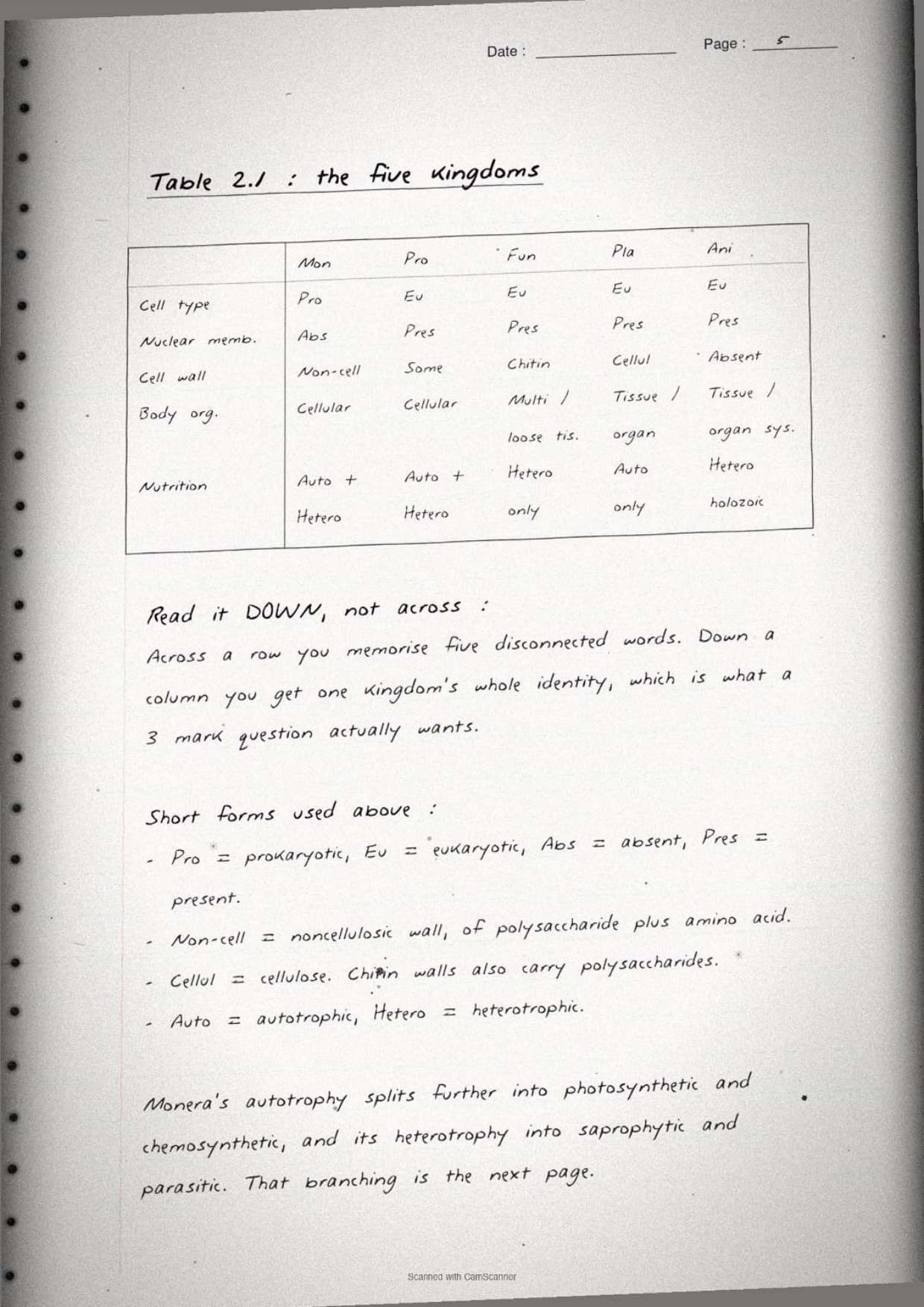
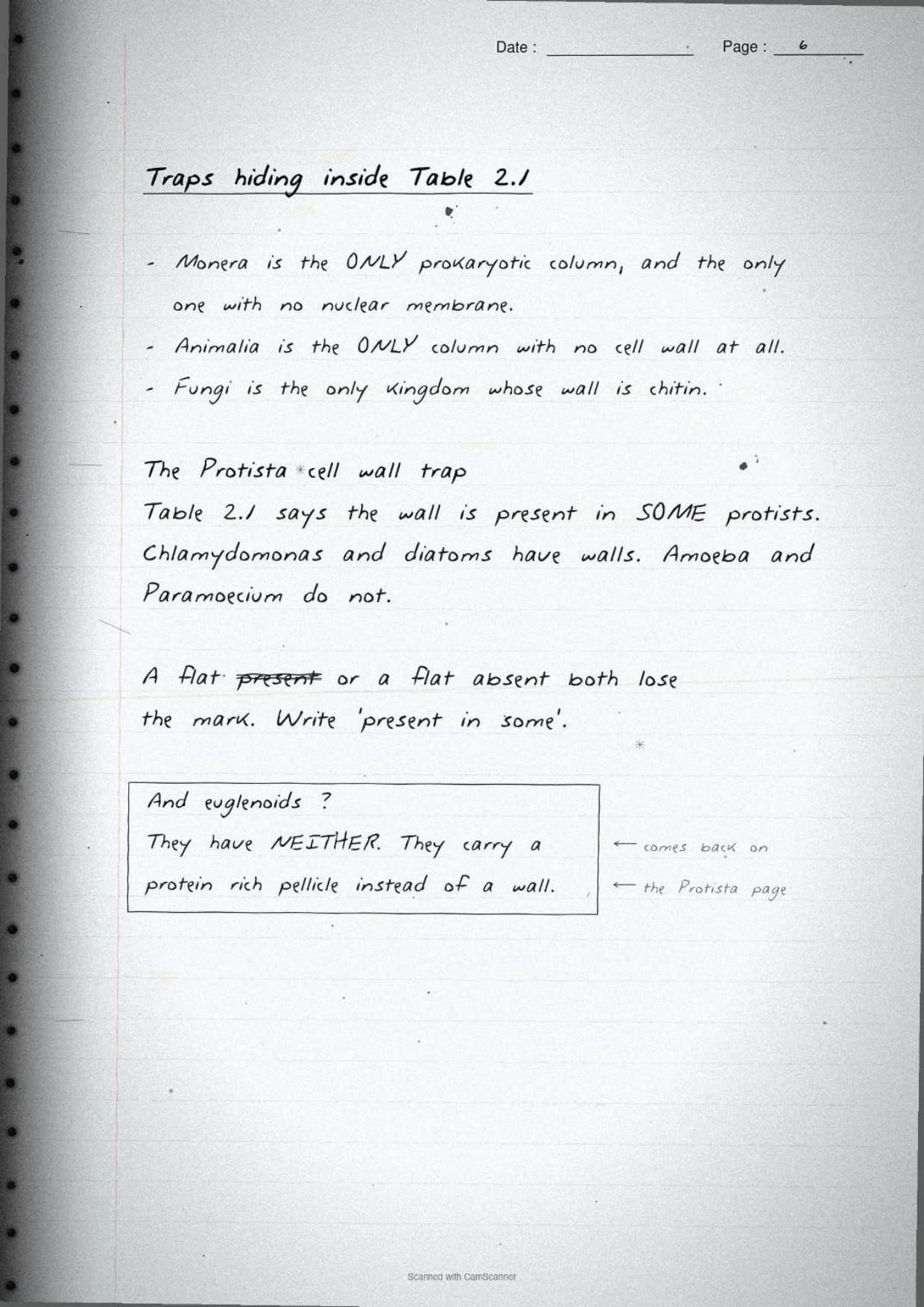
- The full Table 2.1 five-kingdom comparison drawn out by hand, with the traps under it.
- Boxed one-line definitions for heterocyst, coenocytic, dikaryon, capsid, viroid and prion.
- Pairs with the NCERT Solutions, Notes and Exemplar Solutions linked lower on this page.
What the Biological Classification Handwritten Notes Cover
The notes follow the NCERT order exactly, from Aristotle to the acellular agents at the end. Each topic sits on its own page, so students can revise one kingdom at a time. New sub-topics are written in red and key terms are boxed.
- Early systems: Aristotle sorting plants into trees, shrubs and herbs, then the Two Kingdom system and the three distinctions that made it inadequate.
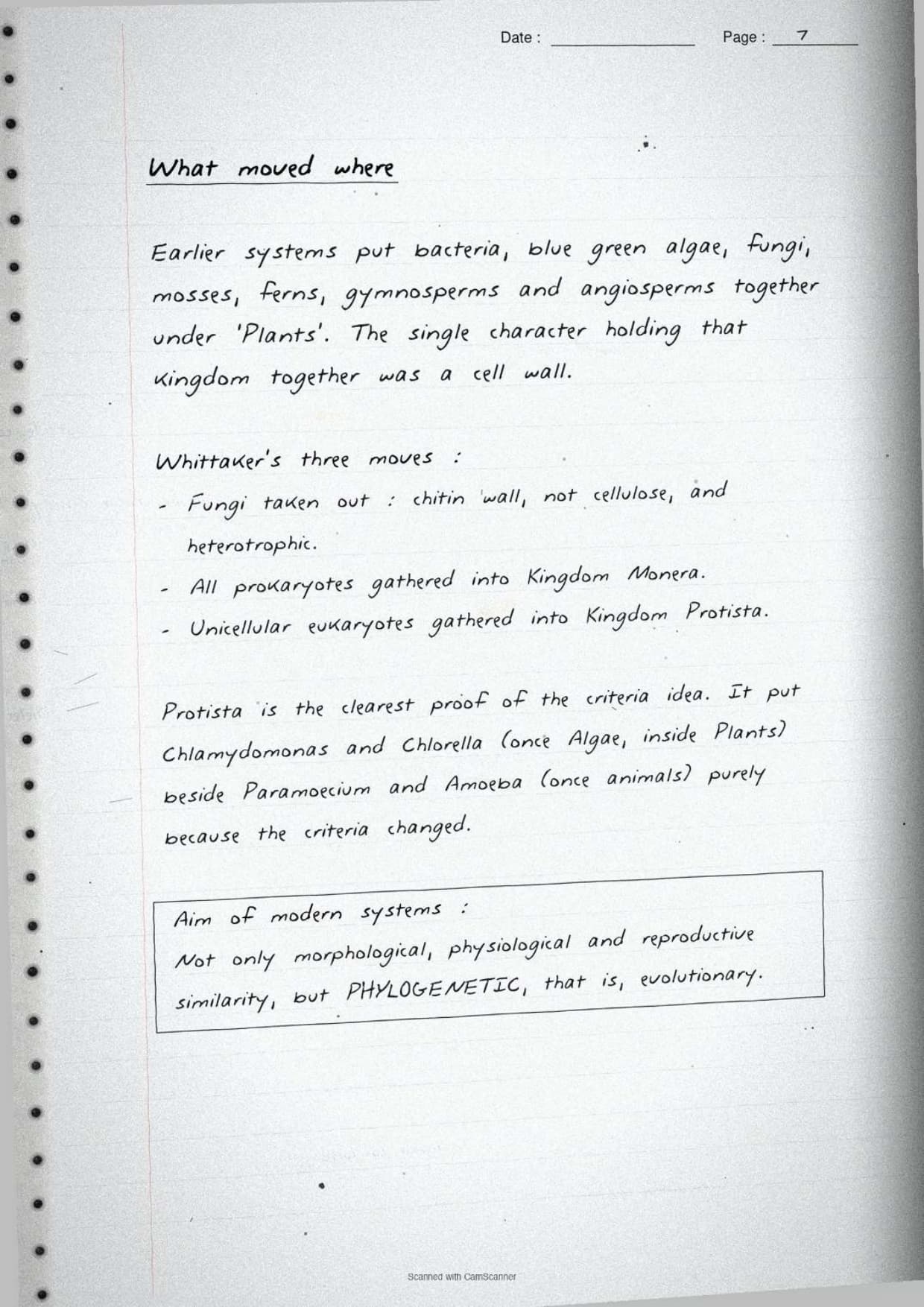
- Whittaker's five kingdoms (1969): the five criteria, the Monera to Animalia order, and the full Table 2.1 comparison.
- Monera: the four bacterial shapes, autotrophic and heterotrophic nutrition, archaebacteria, cyanobacteria and mycoplasma.
- Protista: all five groups, that is chrysophytes, dinoflagellates, euglenoids, slime moulds and protozoans.
- Fungi: hyphae and mycelium, modes of nutrition, the sexual cycle, and the four classes with examples.
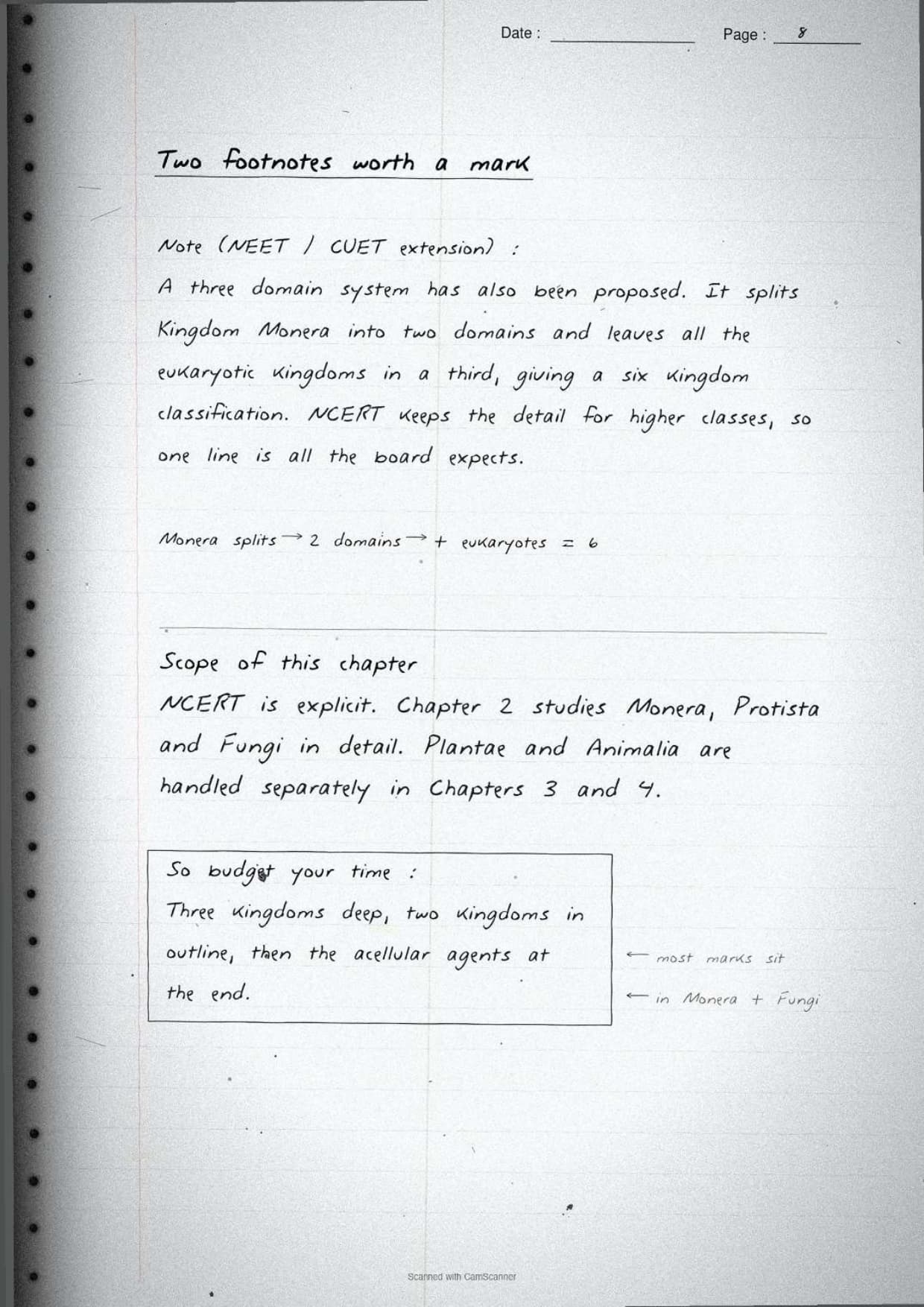
- Plantae and Animalia in outline, since Chapters 3 and 4 take them in full.
- Viruses, viroids, prions, lichens and mycorrhiza on the closing pages.
Because these class 11 biology handwritten notes chapter 2 Biological Classification follow the 2026-27 NCERT, students can revise straight from them without opening the textbook.
Key Diagrams and Terms in the Biological Classification Notes
The boxed terms are what this chapter is really tested on. One wrong word in a definition loses the whole mark, so each one is written in a single line beside its example. The table below lists the blocks students use most.
| Term or block | What the notes show |
|---|---|
| Table 2.1 | All five kingdoms compared on cell type, wall, body organisation and nutrition |
| Bacterial shapes | Coccus, bacillus, vibrium and spirillum with their plurals |
| Heterocyst | The cell in a filamentous cyanobacterium where nitrogen is fixed |
| Archaebacteria | Halophiles, thermoacidophiles and methanogens with their habitats |
| Protozoan groups | Amoeboid, flagellated, ciliated and sporozoan, with examples |
| Four fungal classes | Phycomycetes, Ascomycetes, Basidiomycetes and Deuteromycetes |
| Virus, viroid, prion | Nucleoprotein in a capsid, free RNA, and misfolded protein |
A hand-drawn chart splits bacterial nutrition into autotrophic and heterotrophic branches. A diatom sketch shows the two overlapping silica shells that fit like a soap box.
How to Use These Handwritten Notes for Revision
Read Table 2.1 down each column, not across a row. A column gives one kingdom's whole identity, which is what a three-mark question asks for. Then cover the boxed term and say it out loud before checking.
- Learn the mnemonic My Pet Frog Plays Alone for the five kingdoms in order.
- Use Can Diatoms Ever Swim Properly for the five groups of Protista.
- Keep the class 11 biology handwritten notes chapter 2 Biological Classification open beside the NCERT Solutions while practising.
About 50 minutes is enough for one full pass of this chapter, which makes these pages useful in the last week before an exam.
Student Feedback on the Biological Classification Handwritten Notes
Students rate the common-mistakes page as the part that saves them the most marks. The figures below come from a Collegedunia poll run before the 2026 boards.
- In a Collegedunia survey of 10,860 students, 71% said the five-kingdom comparison table was their most-used revision page.
- Most-confused pair before the poll: viroid against virus, mixed up by about 4 in 10 students.
Source: 2026-27 Class 11 Biology student poll. Sample of 10,860 students from CBSE schools across 13 states.
Where to Use These Notes Alongside Other Resources
These pages work best next to the step-wise Solutions, the summary Notes and the Exemplar Solutions for the same chapter. Read the notes first, then check the solutions, and keep the notes for the final recap.
| Resource | Best used for |
|---|---|
| Biological Classification NCERT Solutions | Point-wise answers to every back-exercise question |
| Biological Classification Class 11 Notes | Quick chapter summary with all key terms in one place |
| Biological Classification Exemplar Solutions | Harder MCQ and long-answer practice for NEET |
| Biological Classification NCERT Book PDF | The original chapter text and exercises |
All Class 11 Biology Handwritten Notes by Chapter
The table links the handwritten notes for every Class 11 Biology chapter, so students can move across the course in one click. Biological Classification is highlighted.
| Chapter | Handwritten Notes |
|---|---|
| Chapter 1 | The Living World |
| Chapter 2 | Biological Classification |
| Chapter 3 | Plant Kingdom |
| Chapter 4 | Animal Kingdom |
| Chapter 5 | Morphology of Flowering Plants |
| Chapter 6 | Anatomy of Flowering Plants |
| Chapter 7 | Structural Organisation in Animals |
| Chapter 8 | Cell The Unit of Life |
| Chapter 9 | Biomolecules |
| Chapter 10 | Cell Cycle and Cell Division |
| Chapter 11 | Photosynthesis in Higher Plants |
| Chapter 12 | Respiration in Plants |
| Chapter 13 | Plant Growth and Development |
| Chapter 14 | Breathing and Exchange of Gases |
| Chapter 15 | Body Fluids and Circulation |
| Chapter 16 | Excretory Products and their Elimination |
| Chapter 17 | Locomotion and Movement |
| Chapter 18 | Neural Control and Coordination |
| Chapter 19 | Chemical Coordination and Integration |
FAQs on Biological Classification Handwritten Notes
Ques. Are these class 11 biology handwritten notes chapter 2 Biological Classification free to download?
Ans. Yes. The Biological Classification handwritten notes are free to download as a PDF from this page. All 36 pages follow the 2026-27 NCERT and cover the full chapter in clear handwriting for quick revision.
Ques. What topics do these handwritten notes cover?
Ans. They cover the two-kingdom system, Whittaker's five kingdoms, Monera, Protista and Fungi in full detail. Plantae and Animalia are given in outline, and viruses, viroids, prions, lichens and mycorrhiza close the notes.
Ques. Why was the two kingdom classification found inadequate?
Ans. It ignored three distinctions that turned out to matter: eukaryote against prokaryote, unicellular against multicellular, and photosynthetic against non-photosynthetic. The notes stress that the system was inadequate, not incorrect, since Linnaeus worked with the criteria known in his own time.
Ques. Are these notes useful for NEET, not just Boards?
Ans. Yes. The archaebacteria, fungal class and prion pages carry short NEET extension notes, such as the BSE and CJD pair that NEET has asked repeatedly. The same pages serve both board and NEET revision.
Ques. How long do these notes take to revise?
Ans. About 50 minutes for one full pass. Read each kingdom page, recall the boxed term, then finish with the common-mistakes page so the exact wording stays fresh before the exam.



Comments