




These class 11 biology handwritten notes chapter 7 Structural Organisation in Animals are built for one fast revision pass before Boards, NEET and CUET in 2026-27. All 34 pages carry the four animal tissues and the full frog account in clear handwriting, boxed and colour-coded for last-minute recall.
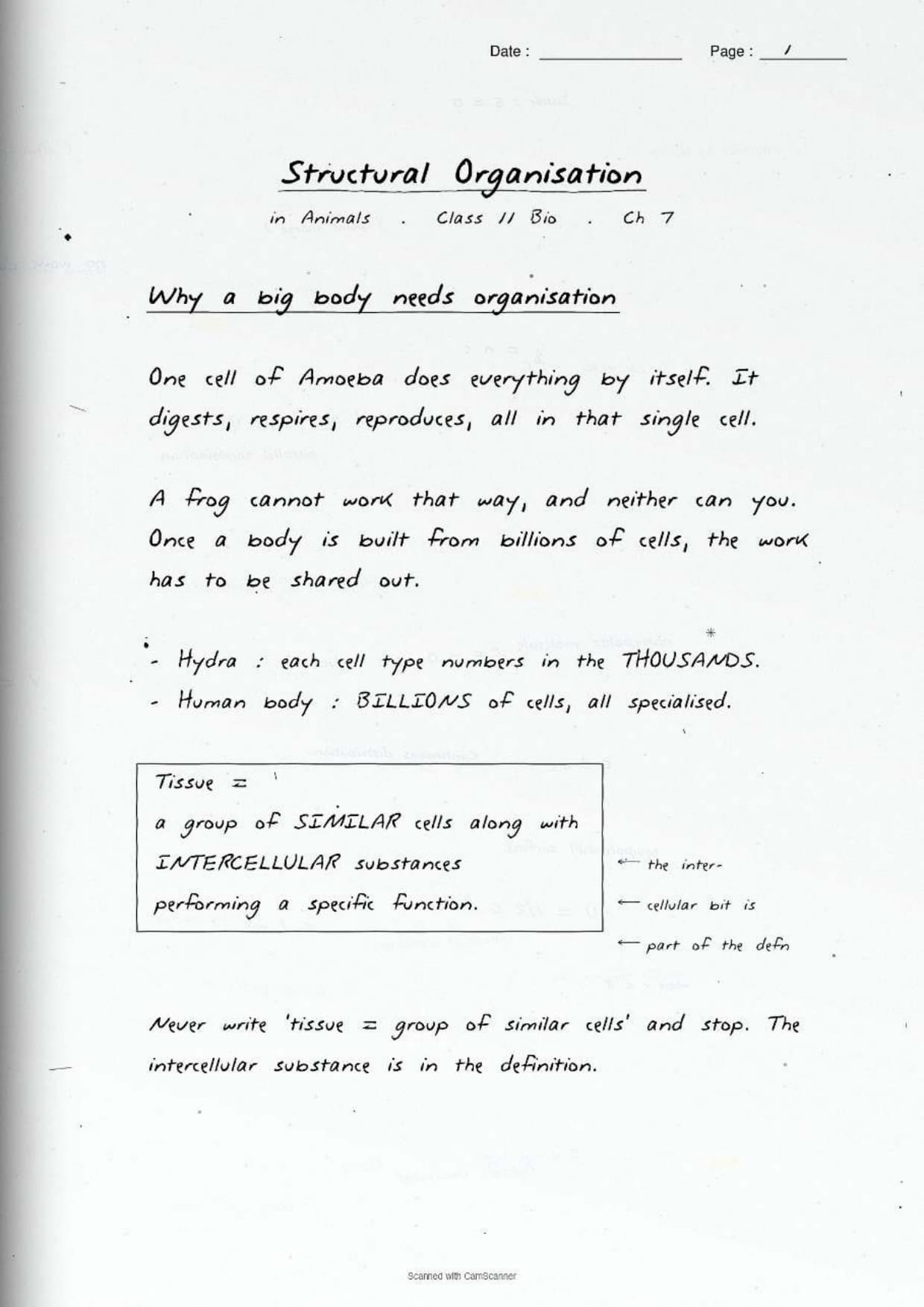
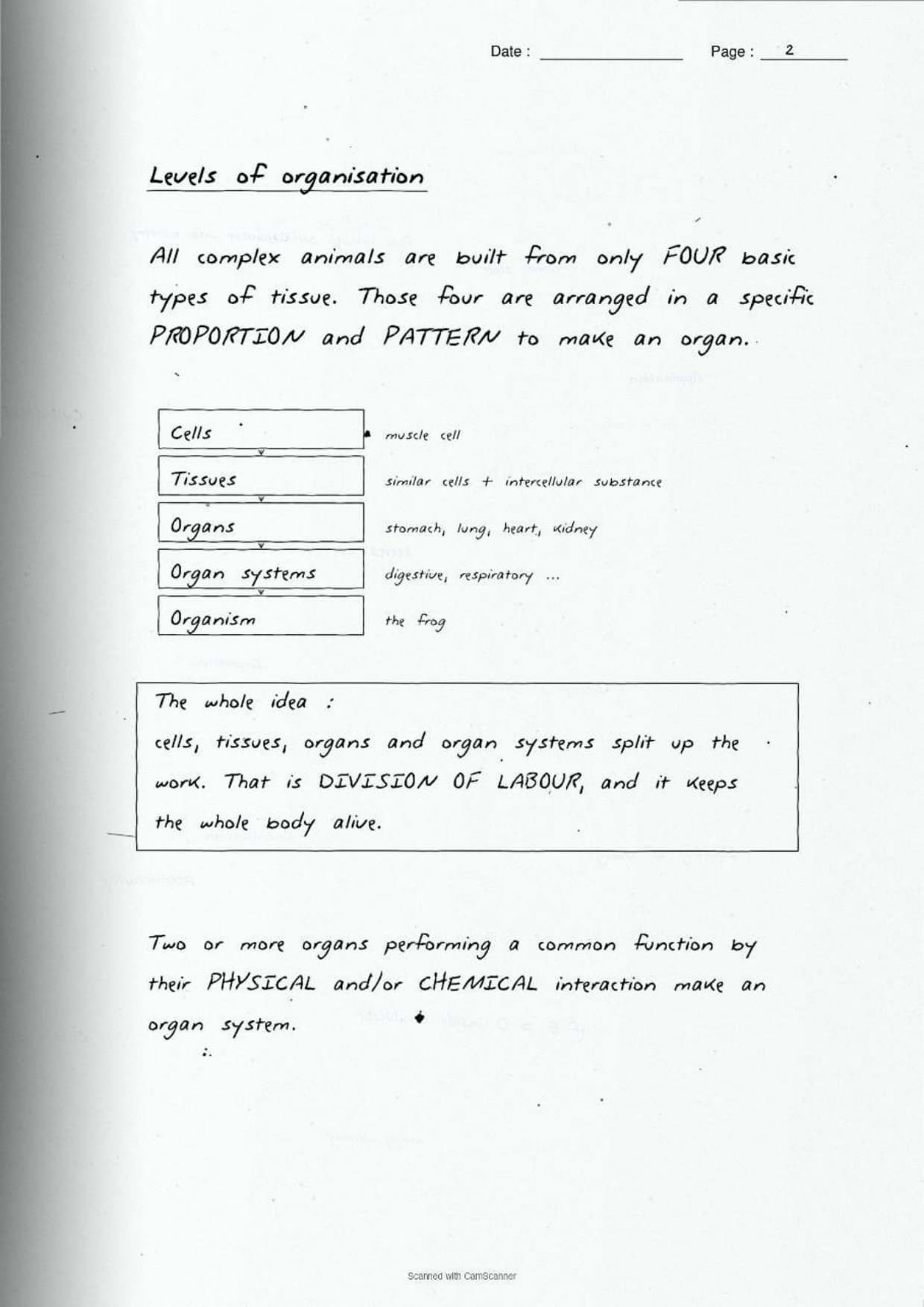
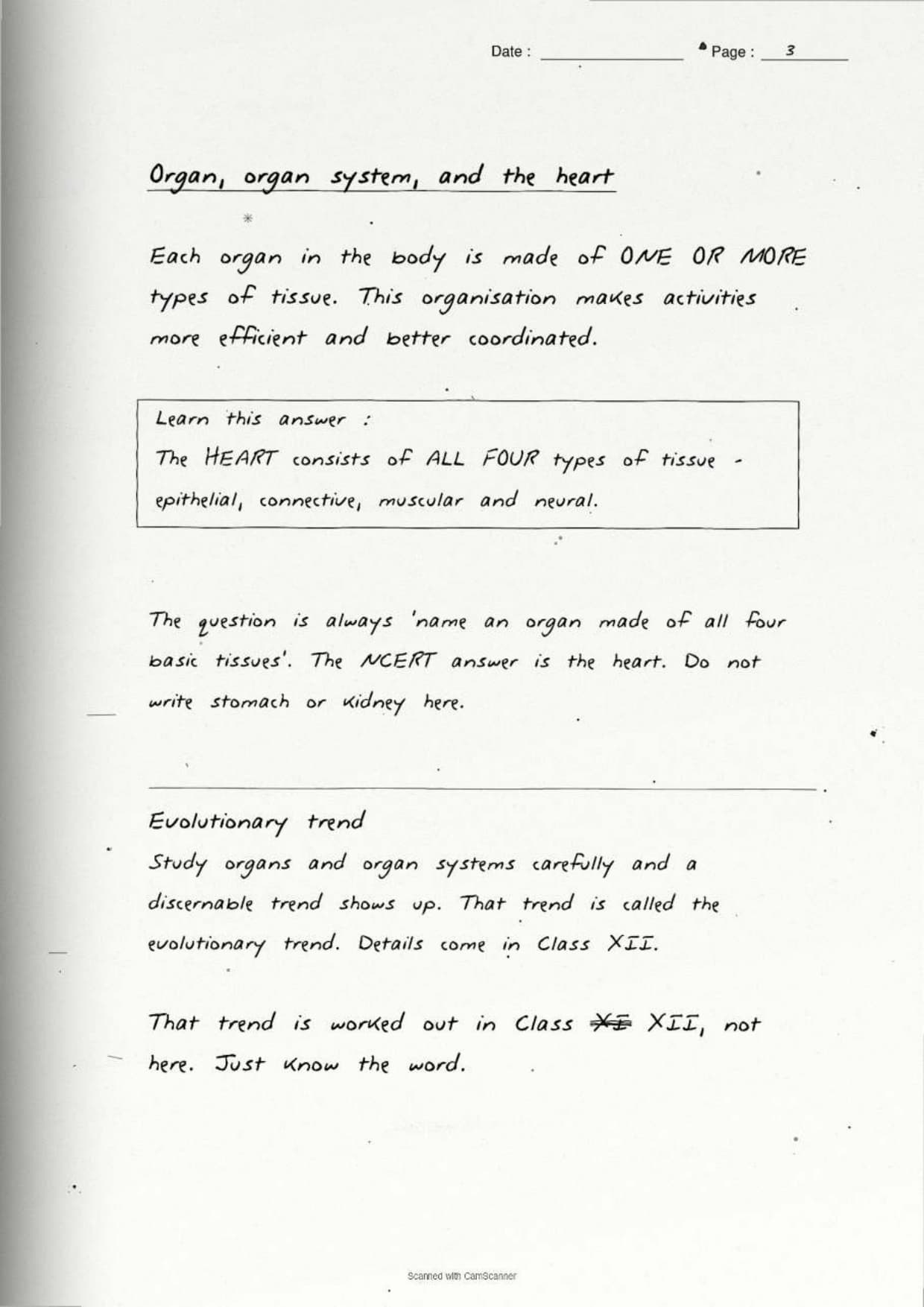
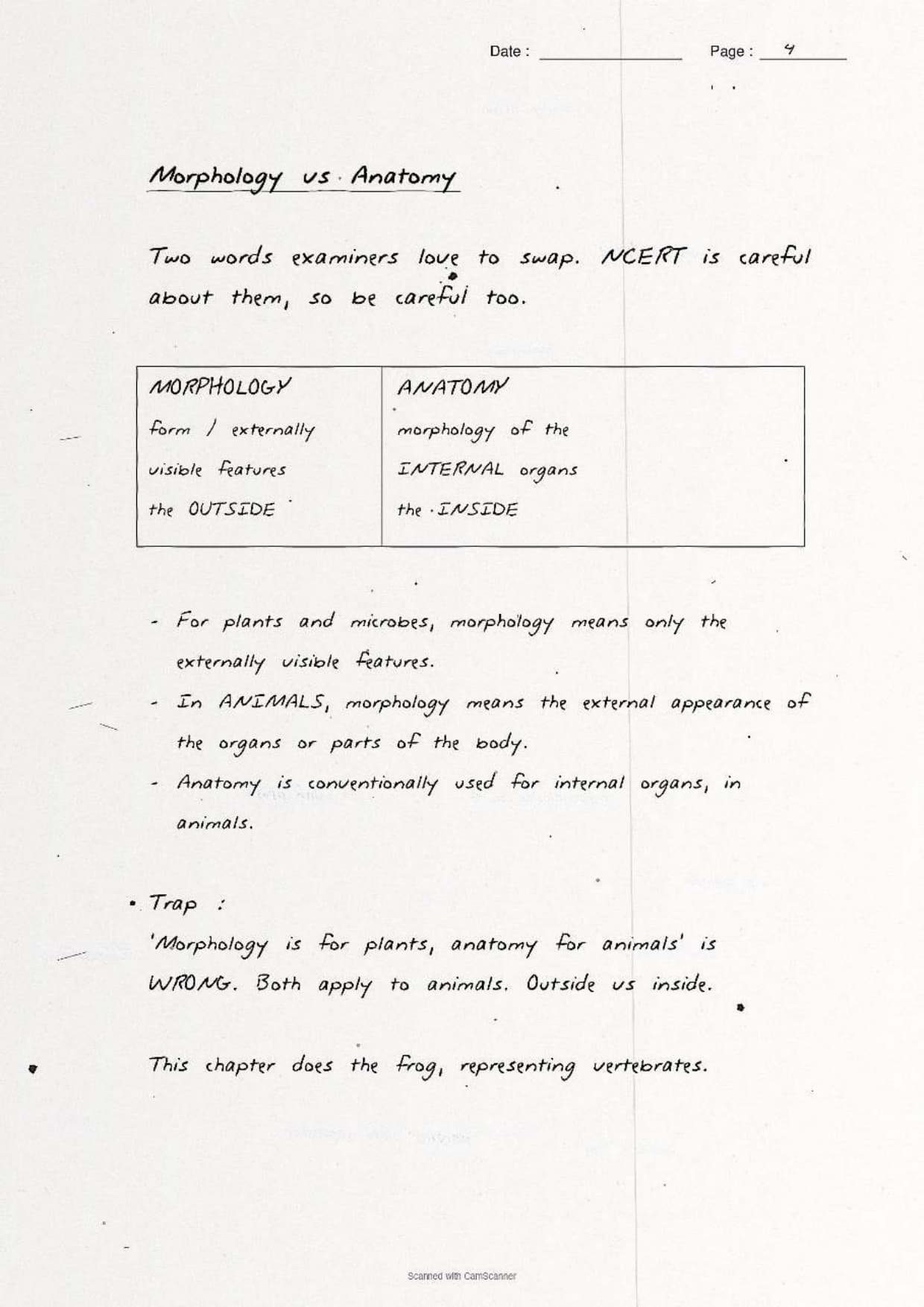
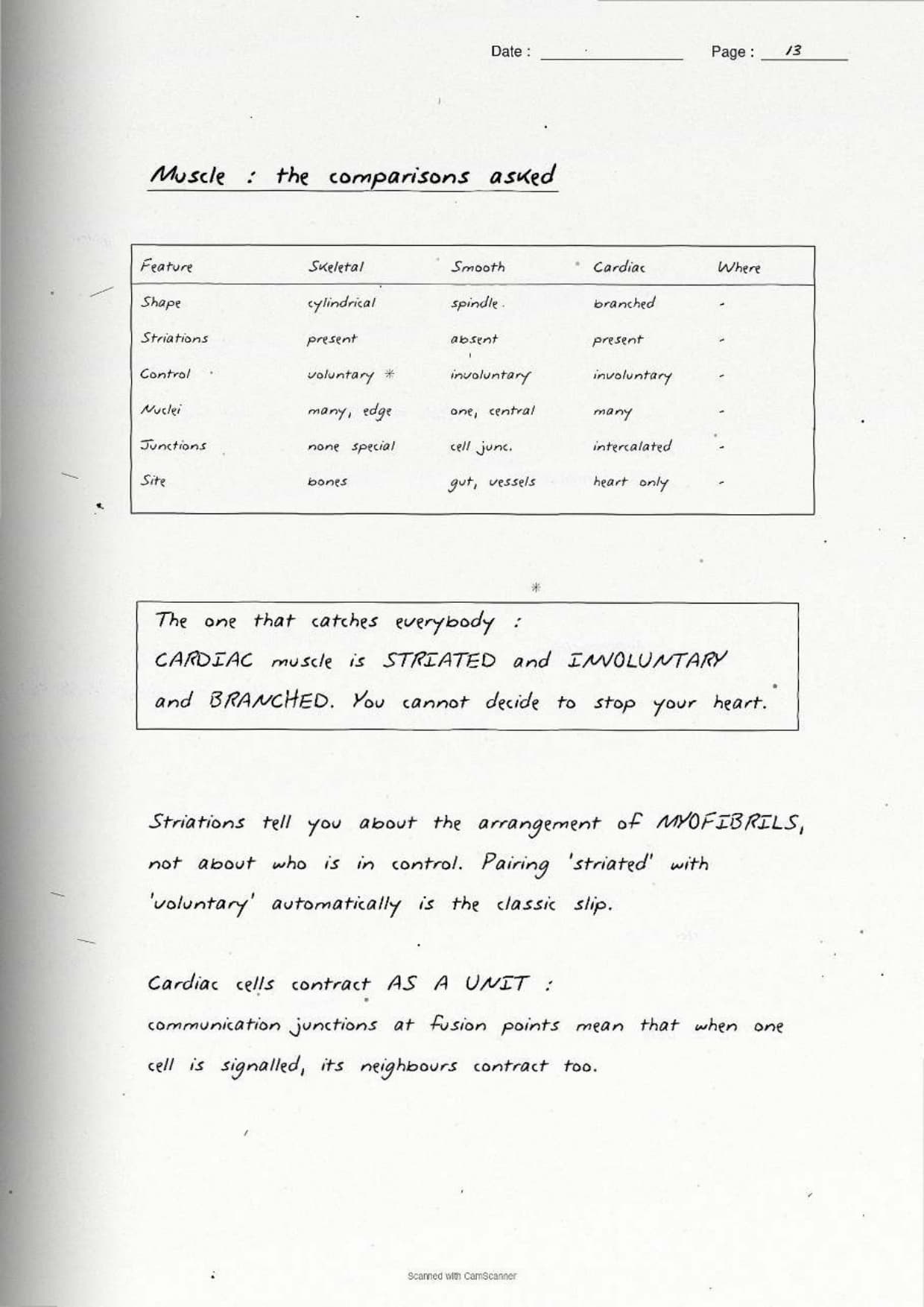
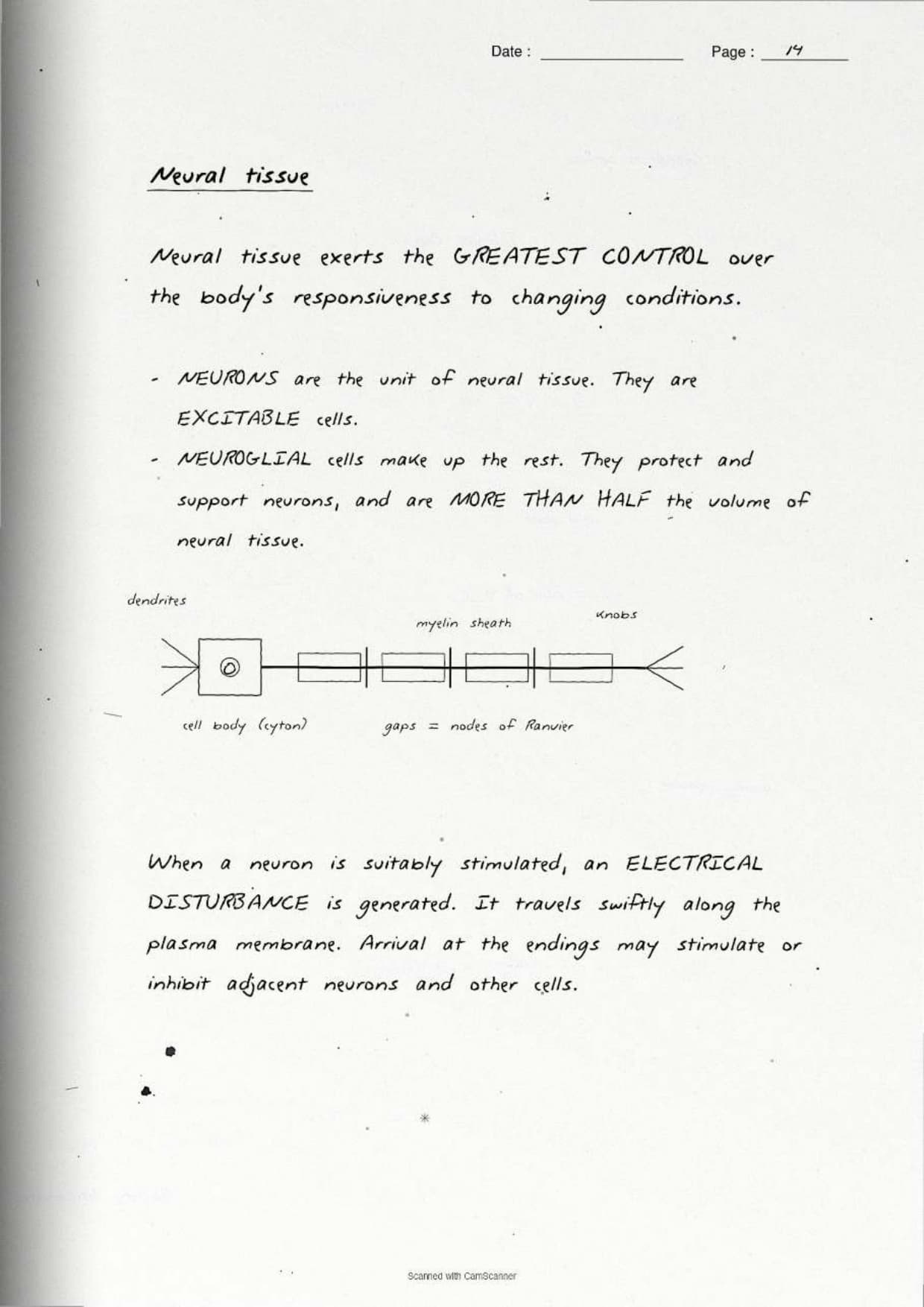
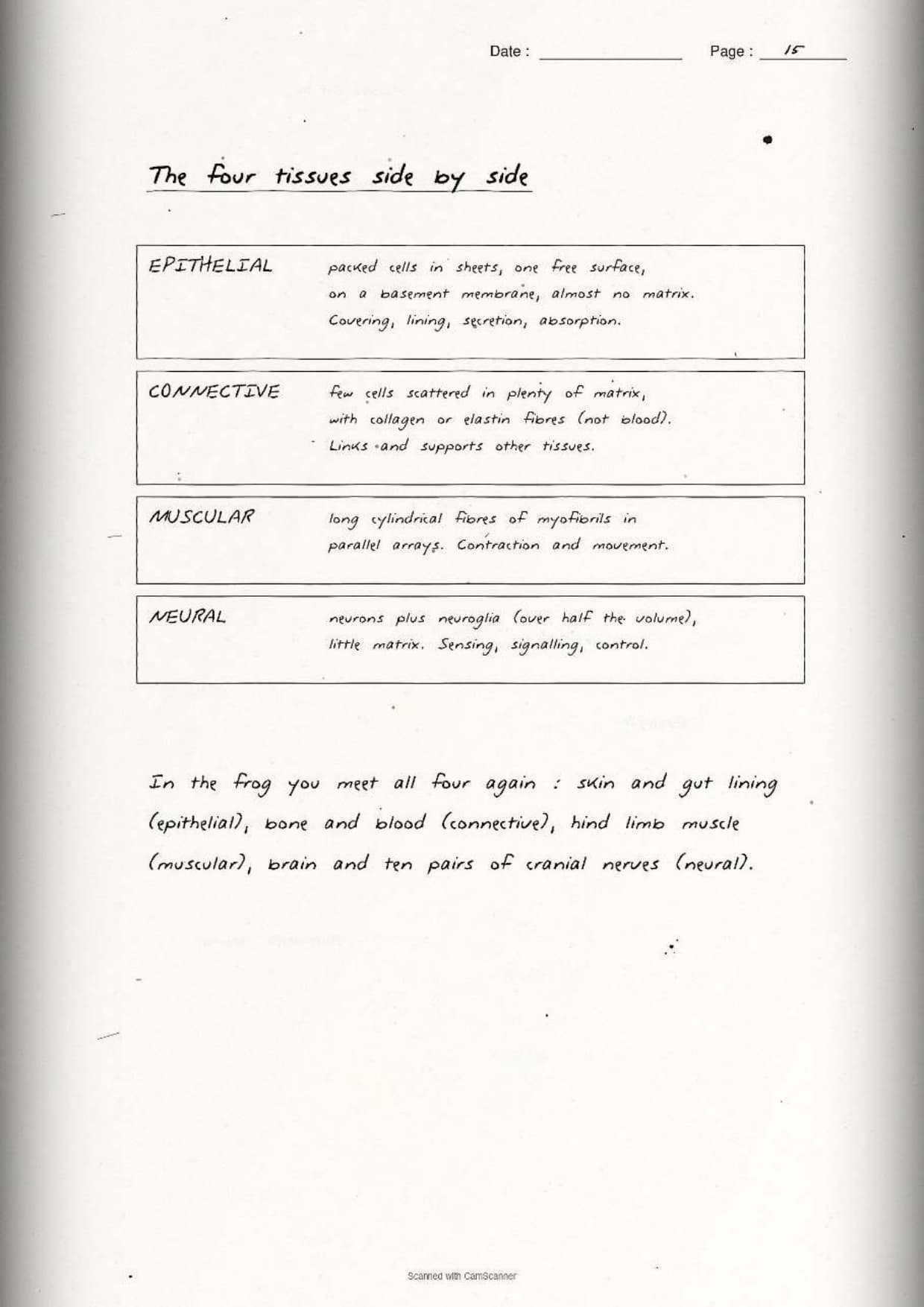
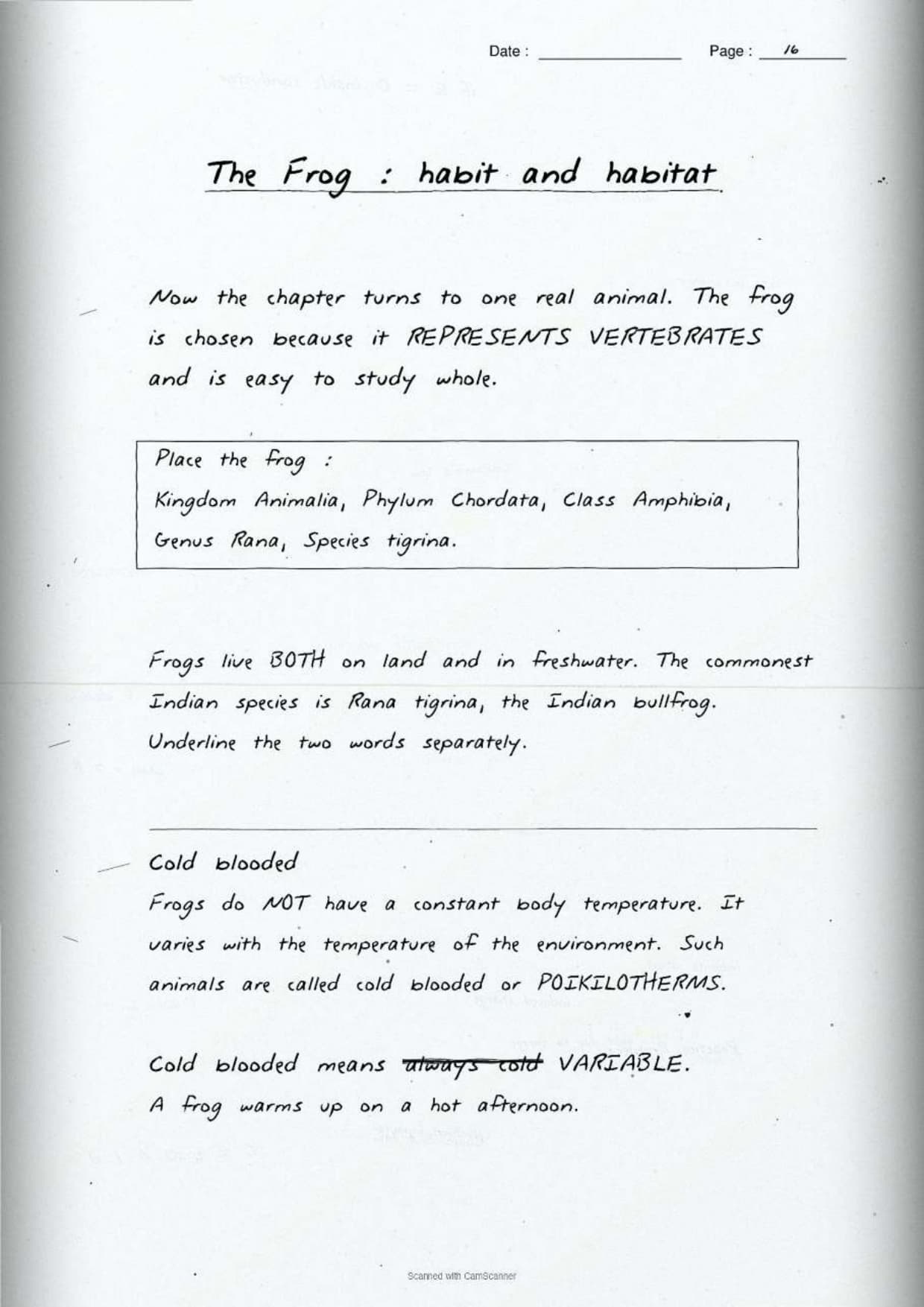
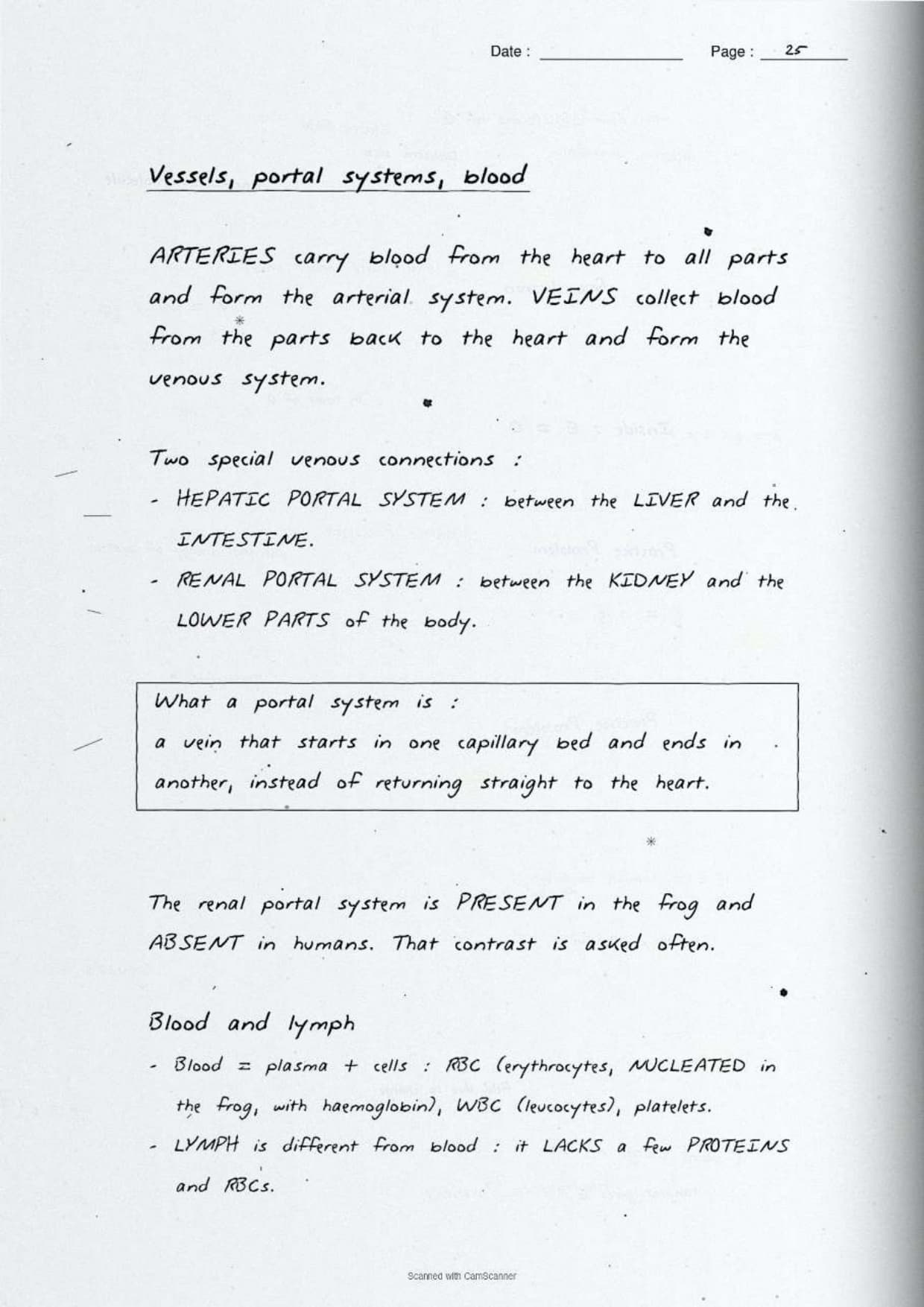
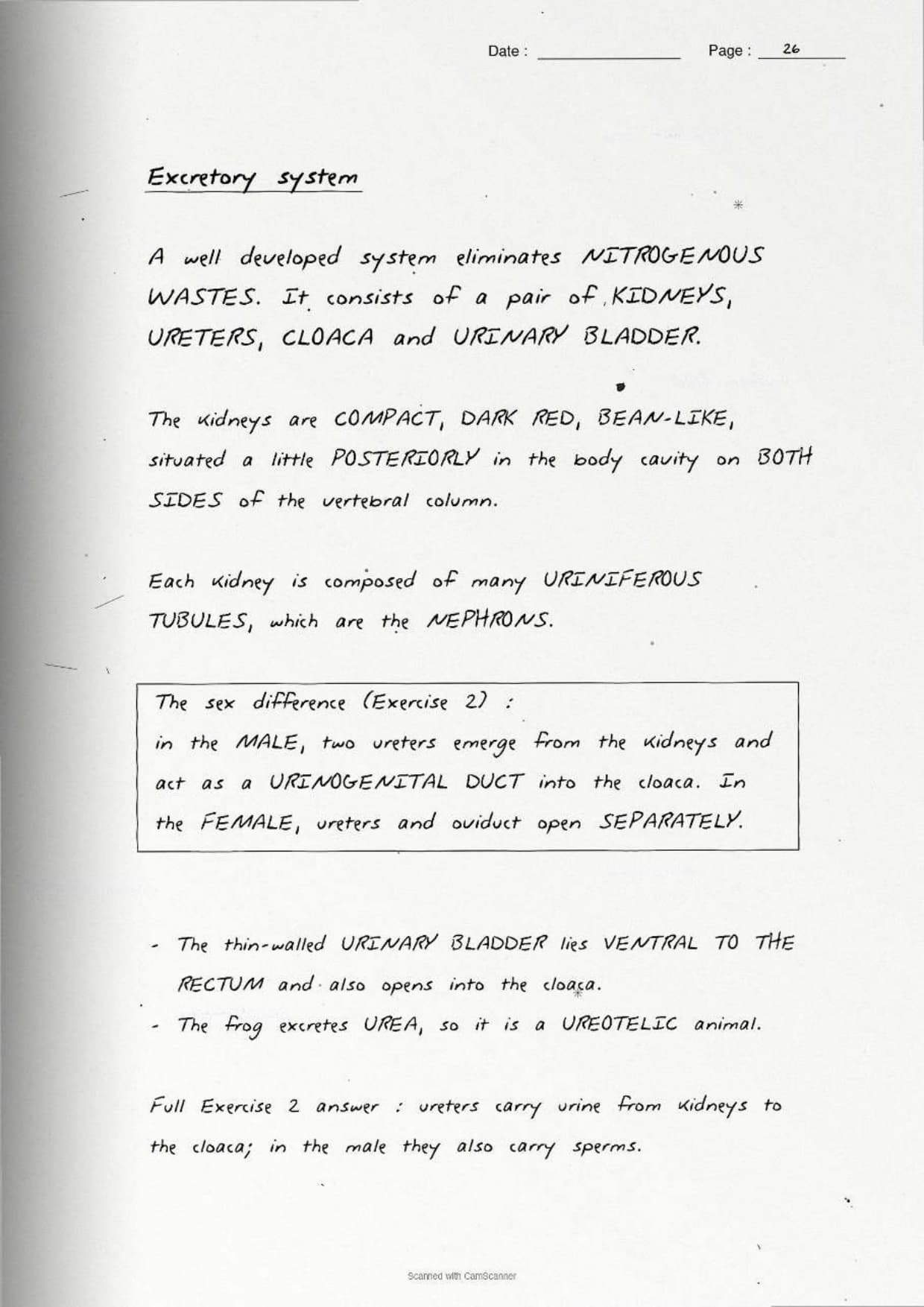
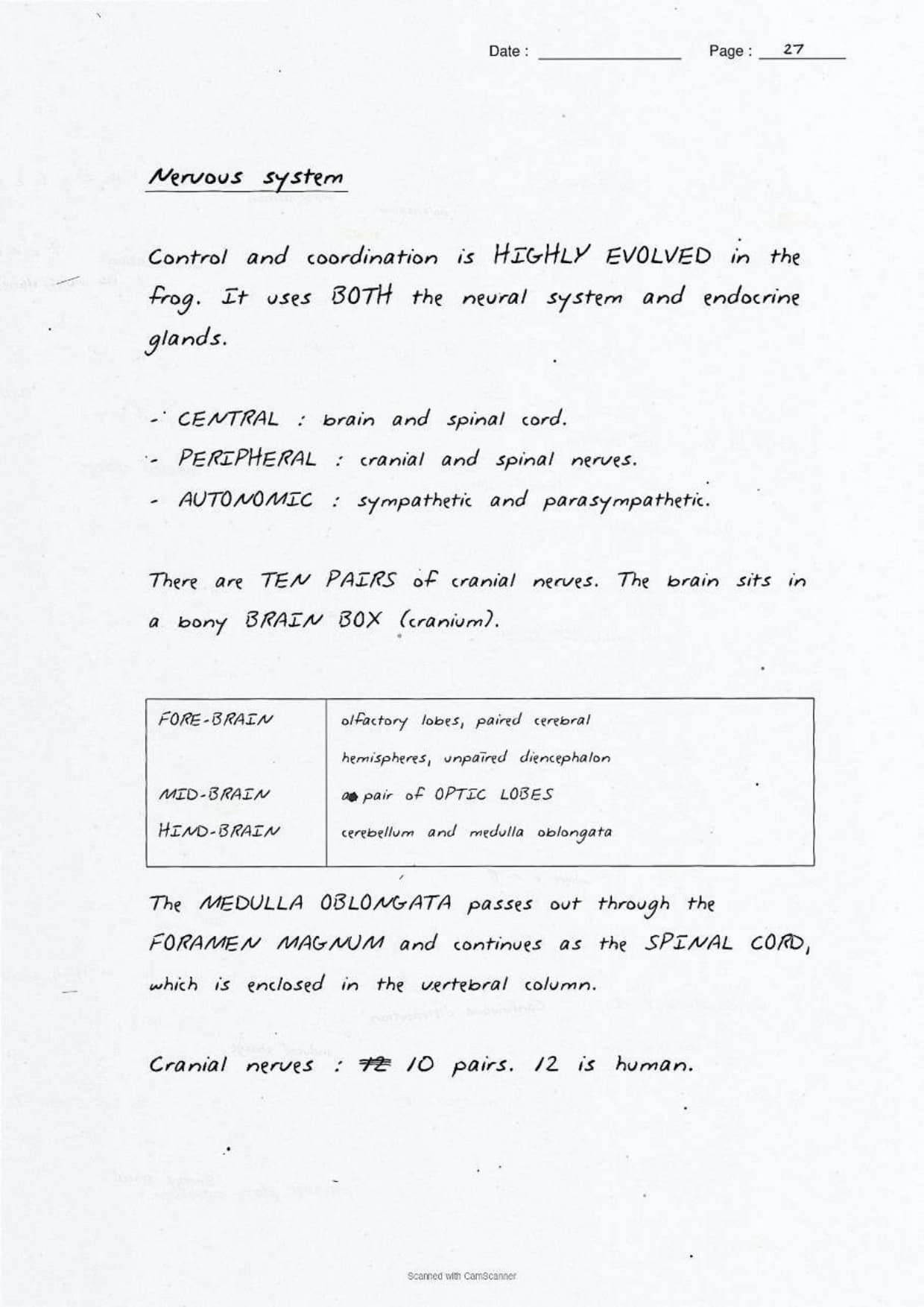
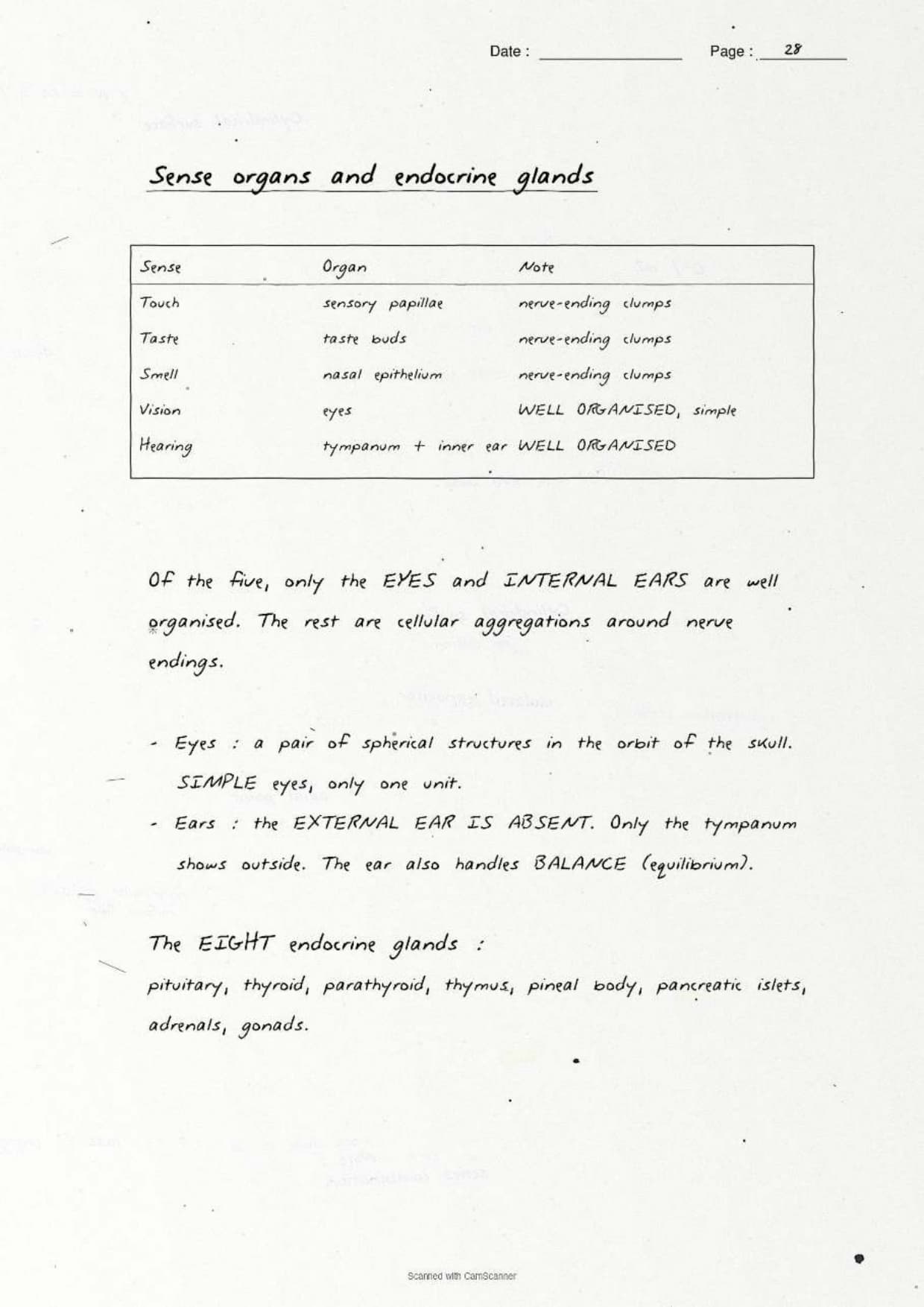
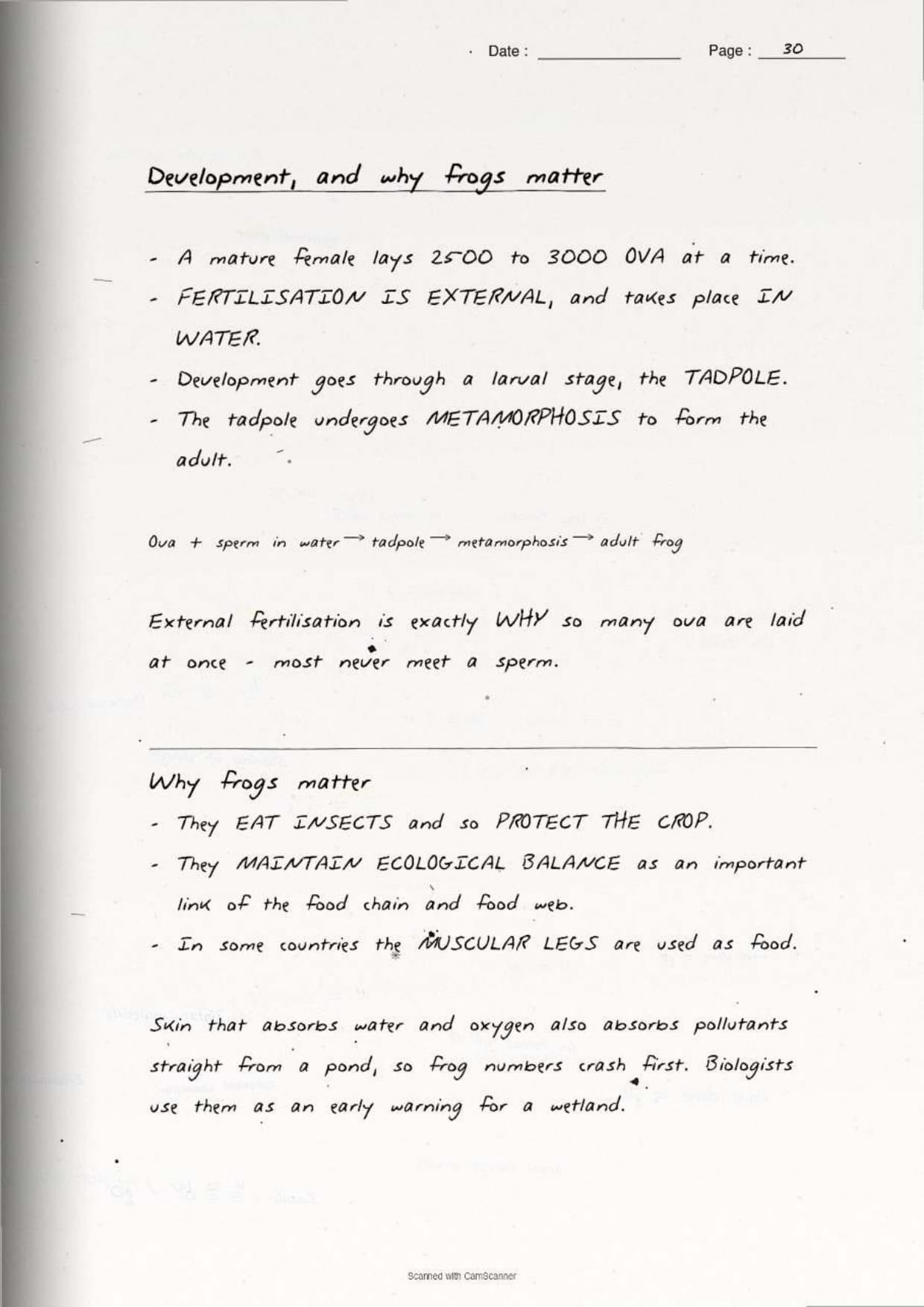
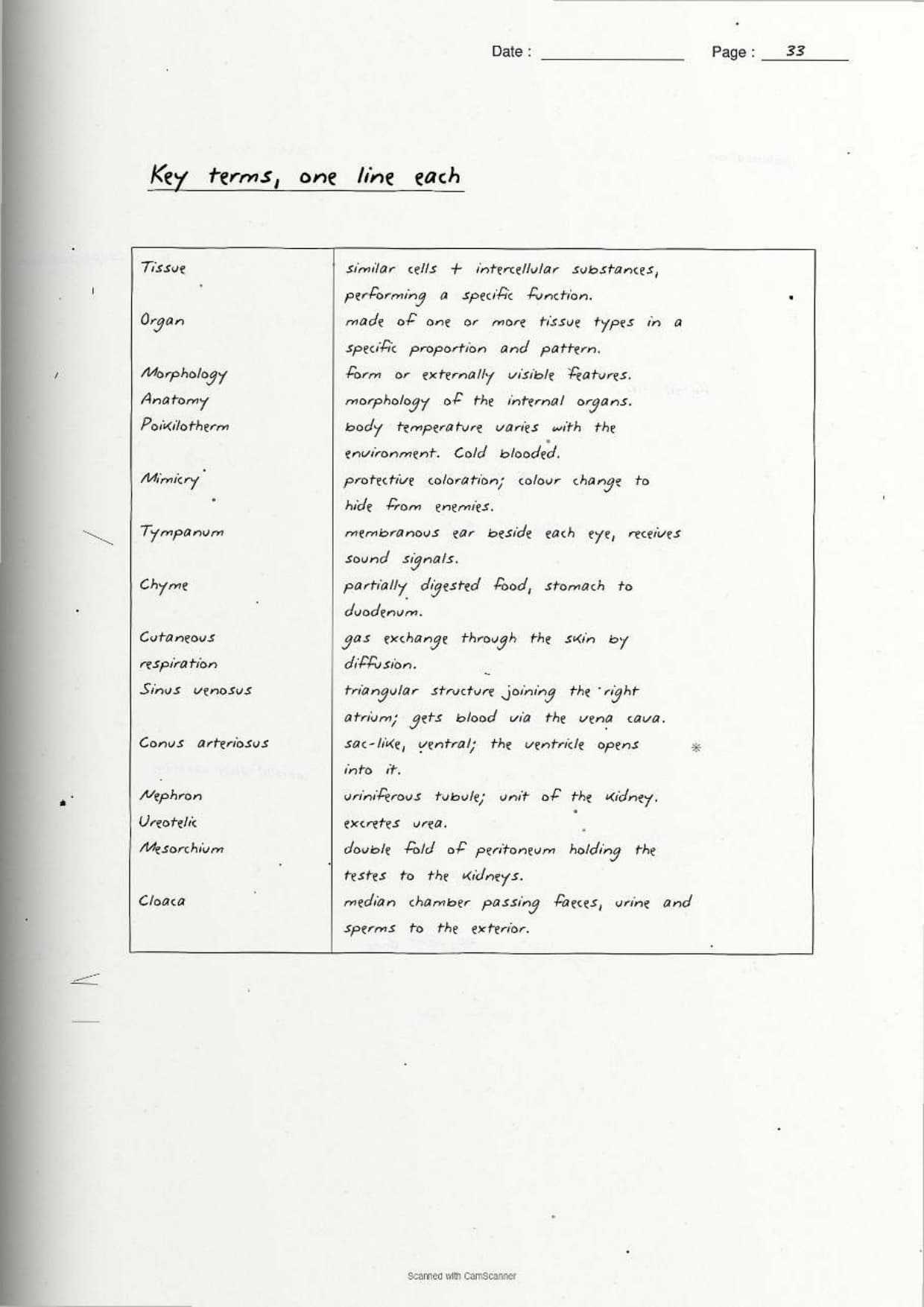
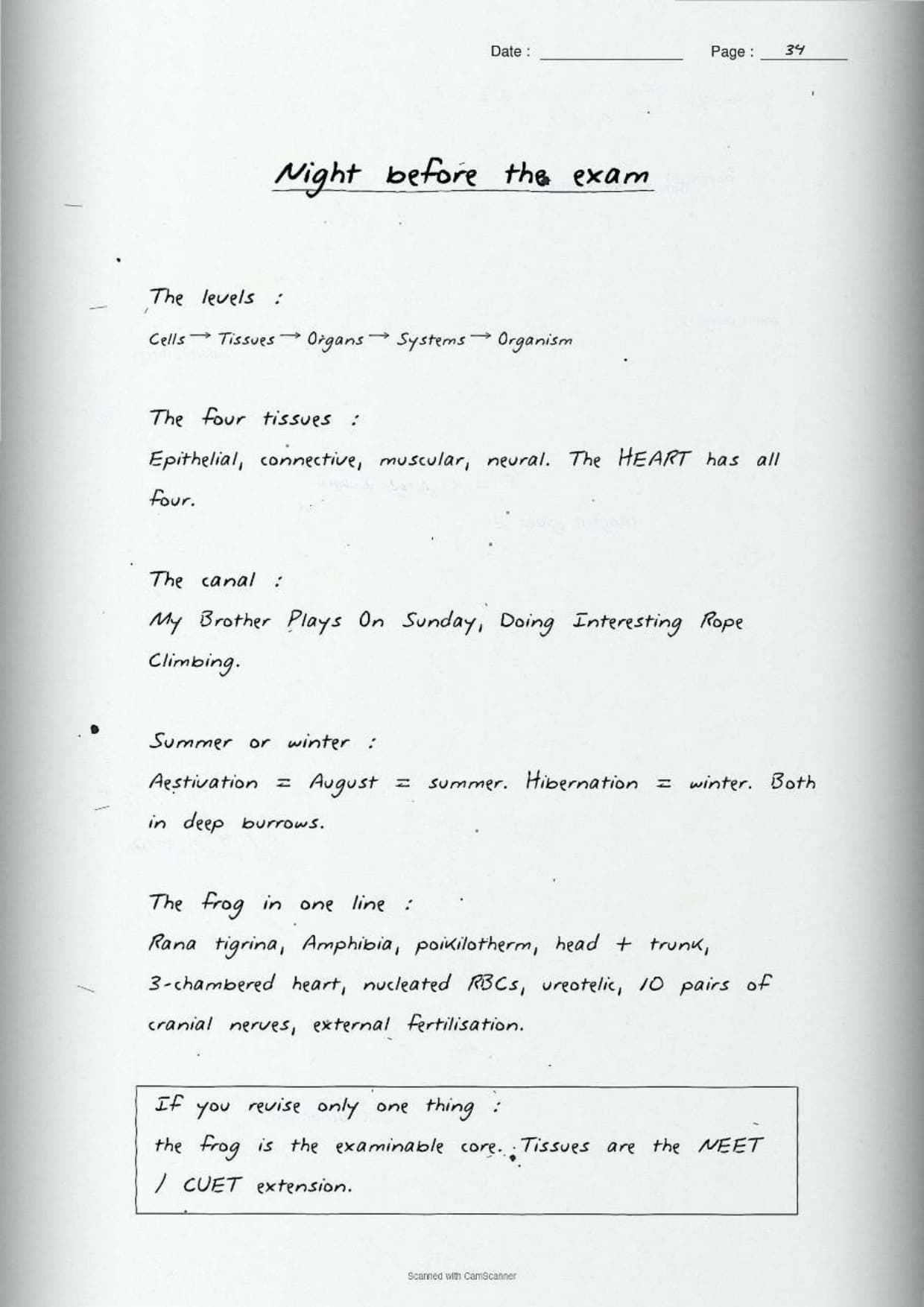
The frog is the examinable core here, and almost every one-mark question comes from a number or a name.
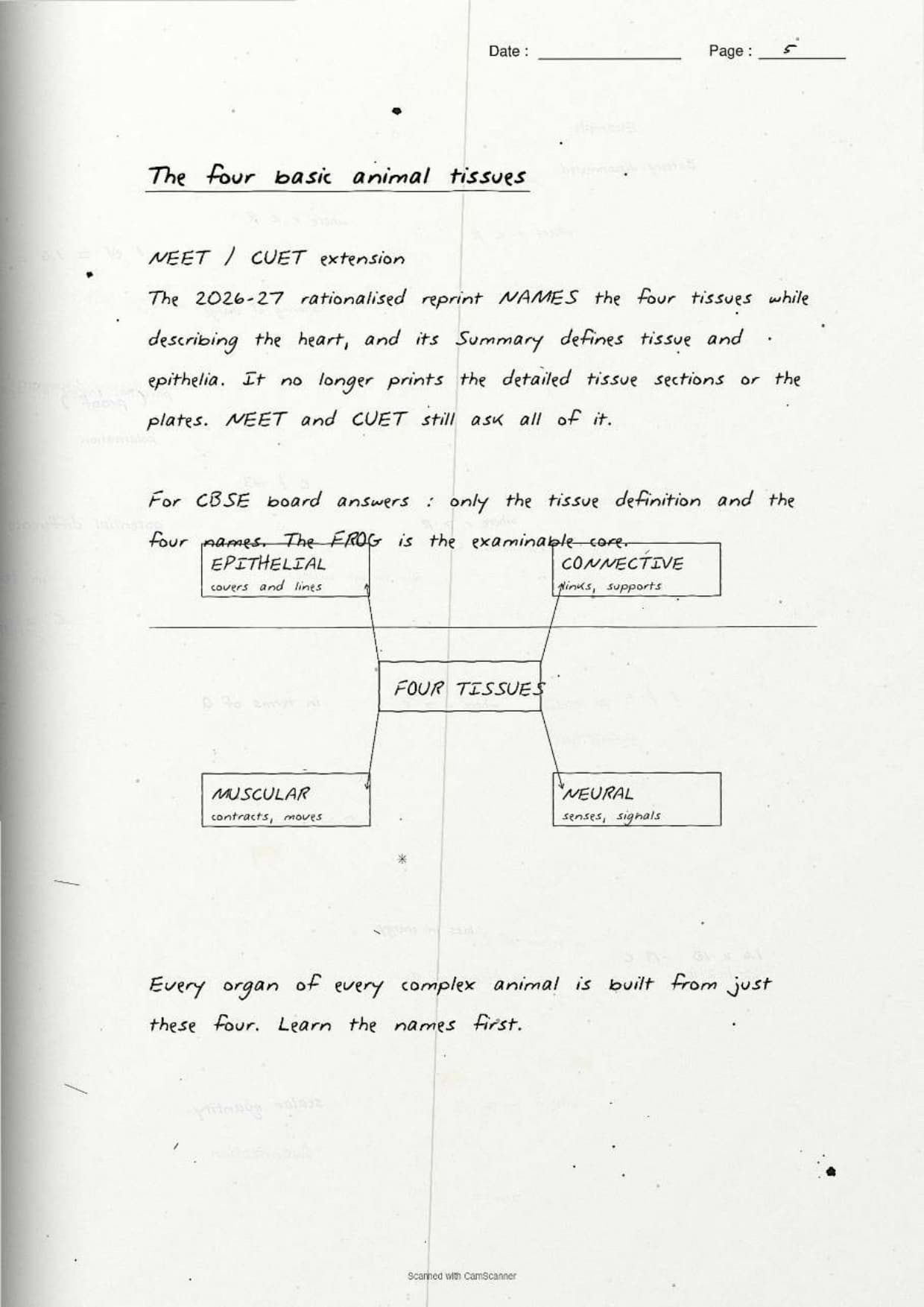
- Hand-drawn chart of the four basic animal tissues, with the heart marked as the organ that has all four.
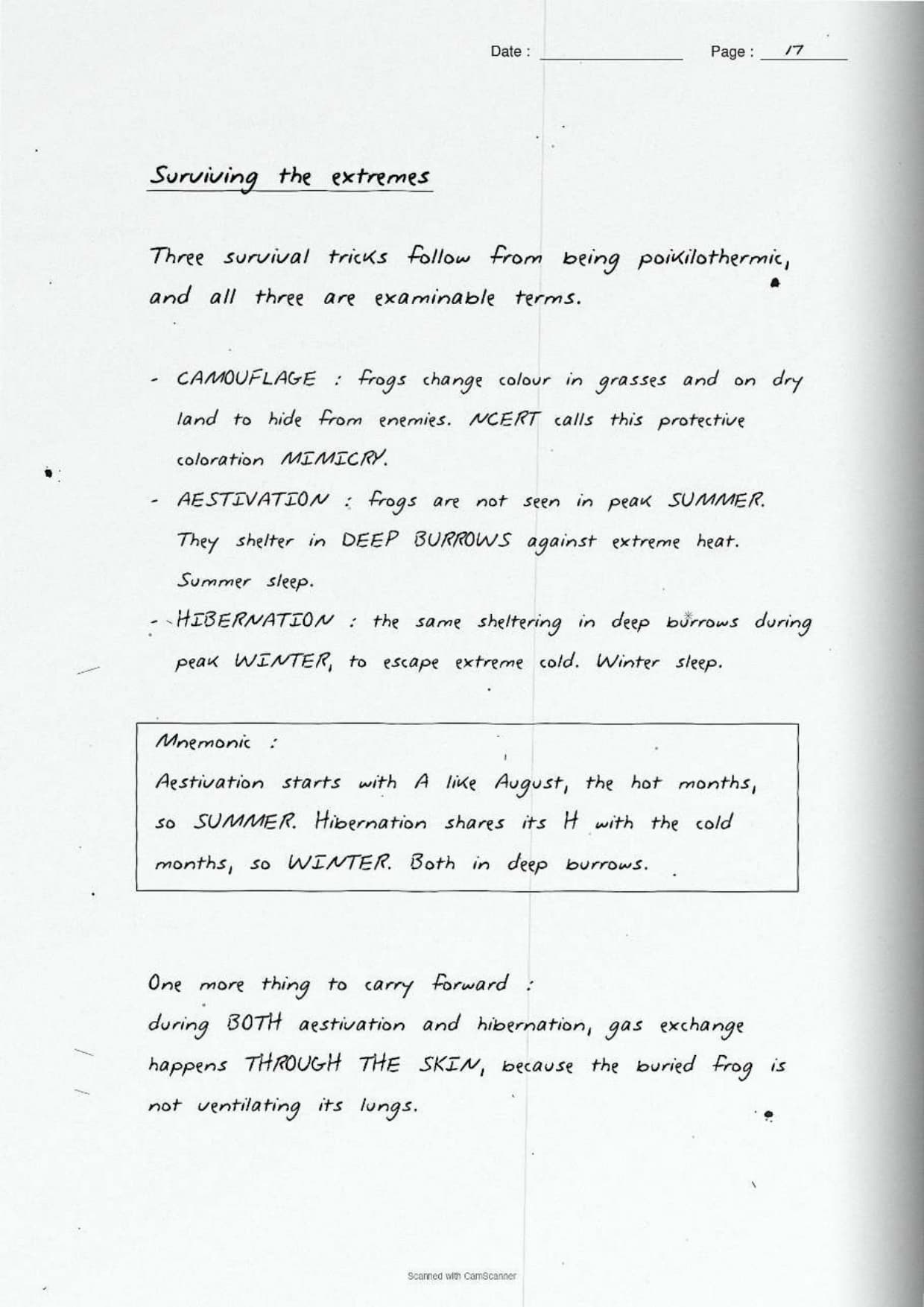
- Boxed frog facts for Rana tigrina, poikilothermy, aestivation and hibernation in exam wording.
- Pairs with the NCERT Solutions, Notes and Exemplar Solutions linked lower on this page.
What Structural Organisation in Animals Handwritten Notes Cover
The 34 pages follow the NCERT order. They open with why a large body needs division of labour, then run the tissues, then give the frog system by system. Each topic sits on its own page, so students revise one idea at a time.
- Levels of organisation: cells, tissues, organs, organ systems and organism, with division of labour explained.
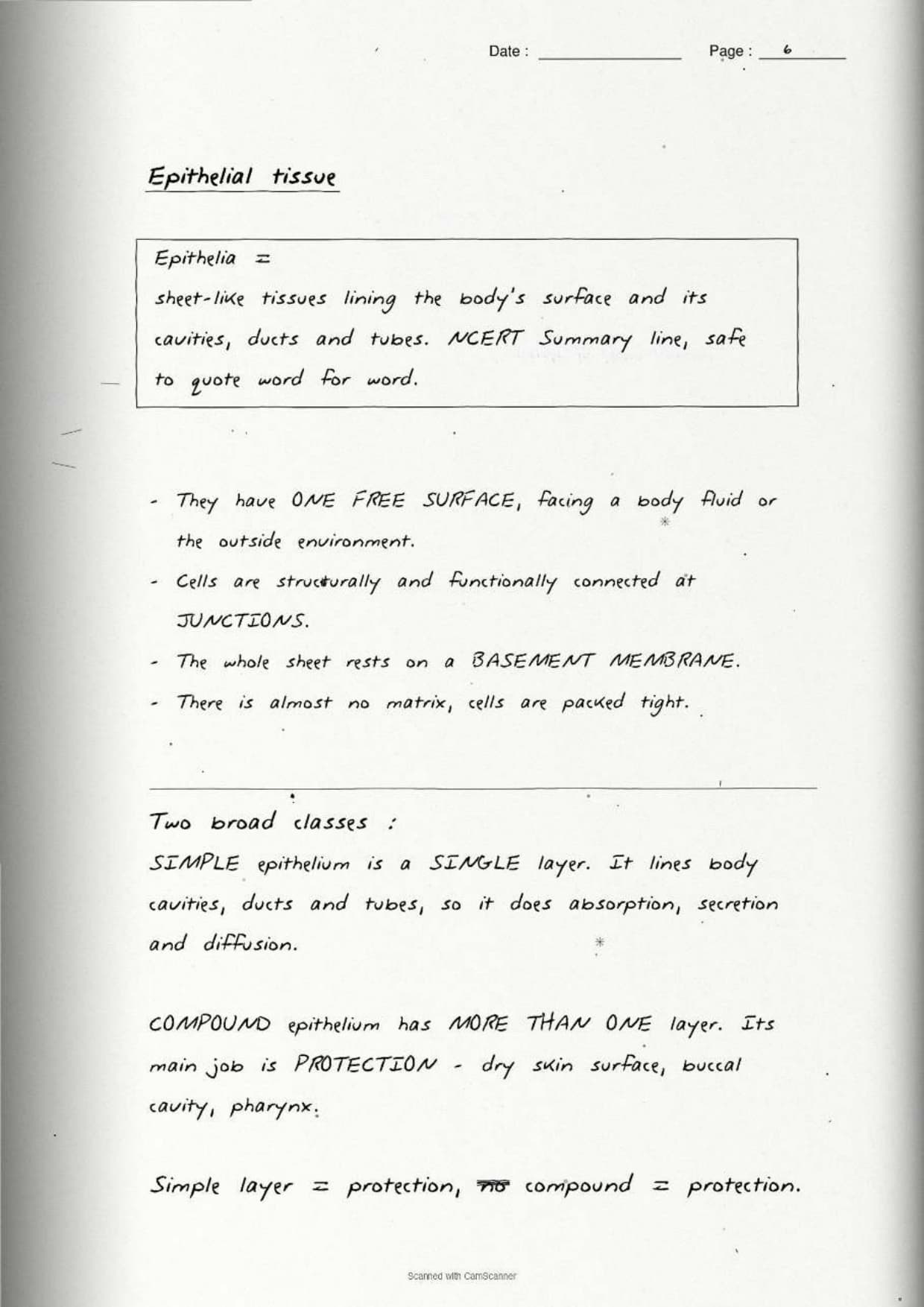
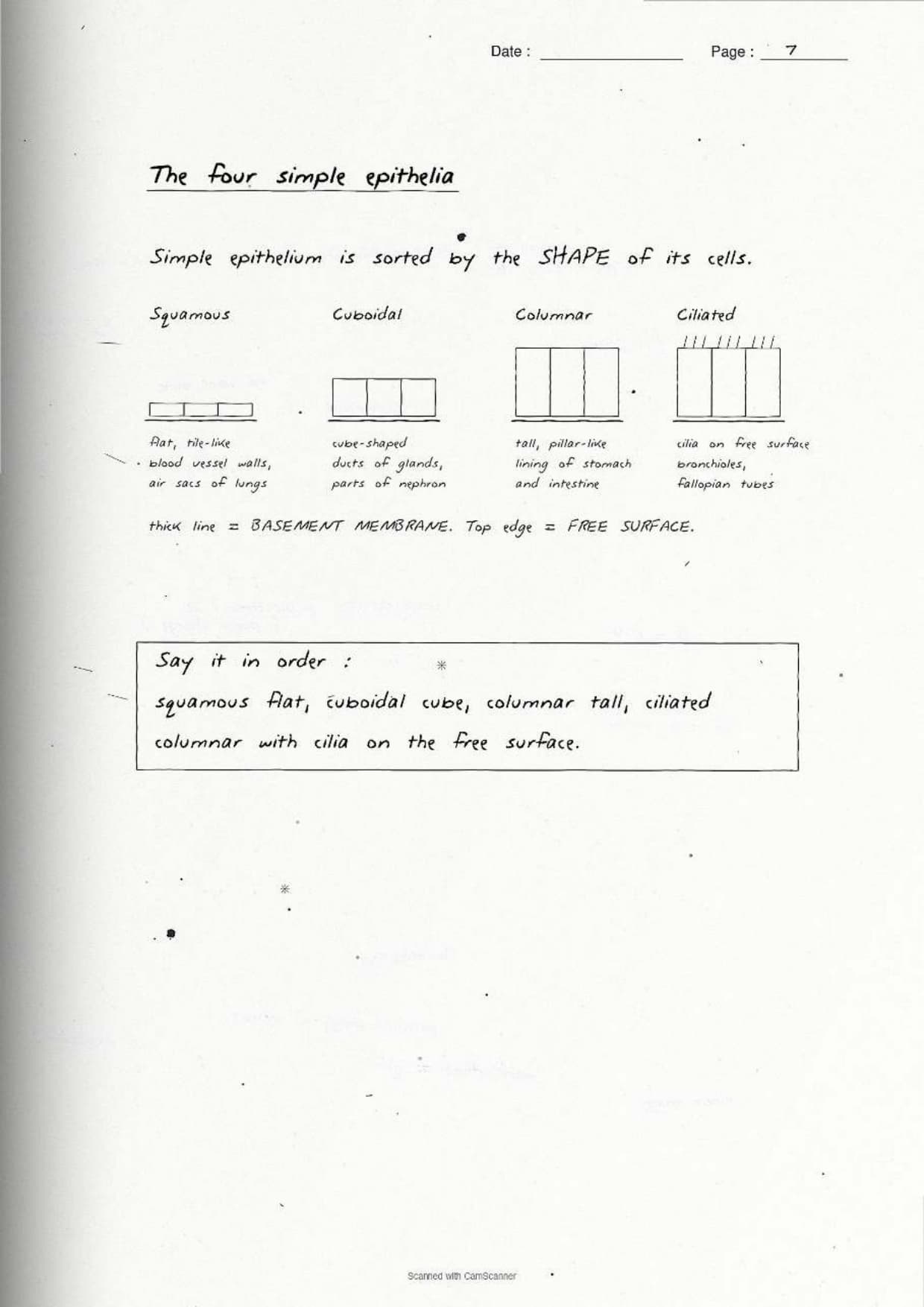
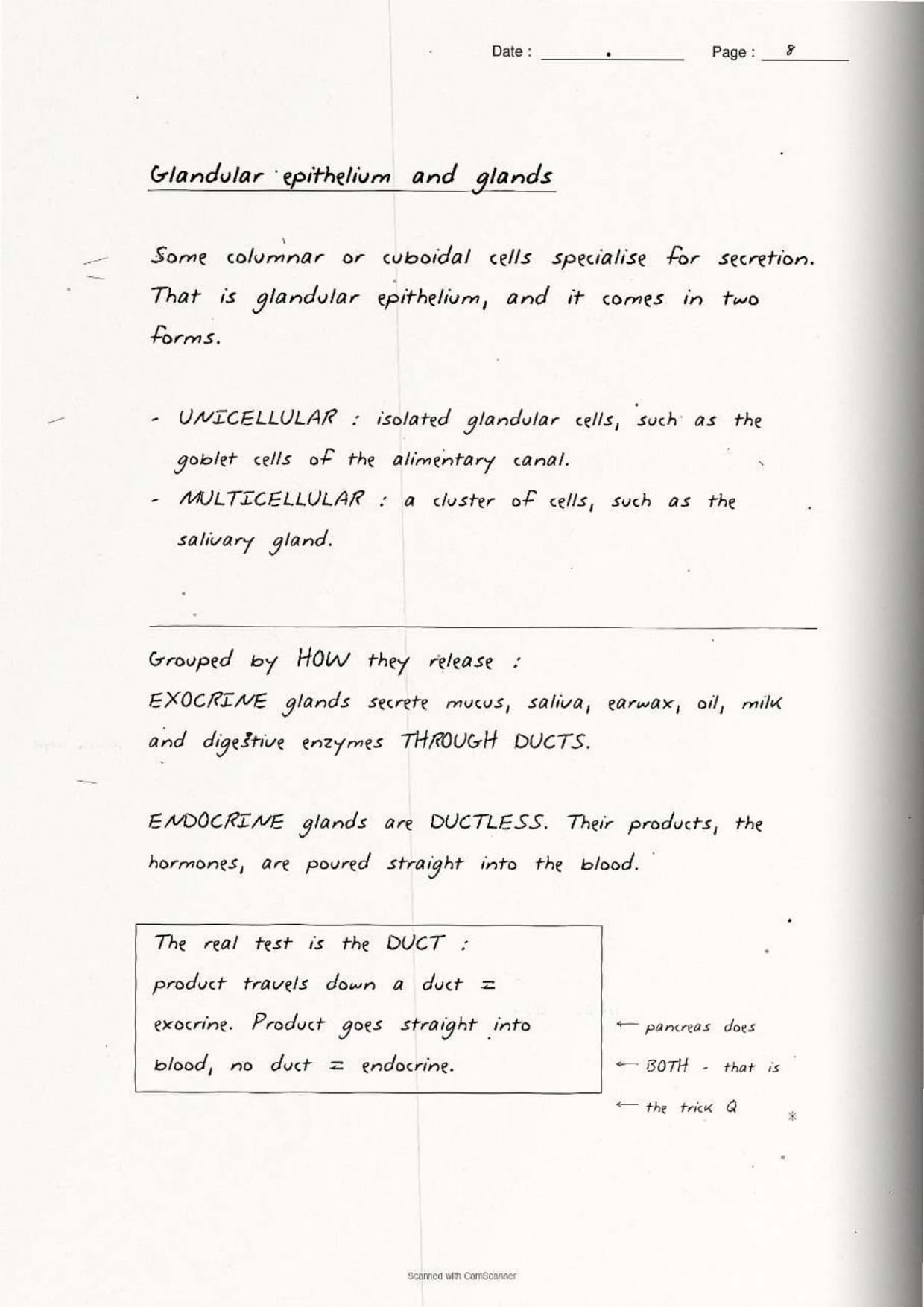
- Epithelial tissue: one free surface, a basement membrane, cell junctions, plus simple and compound types.
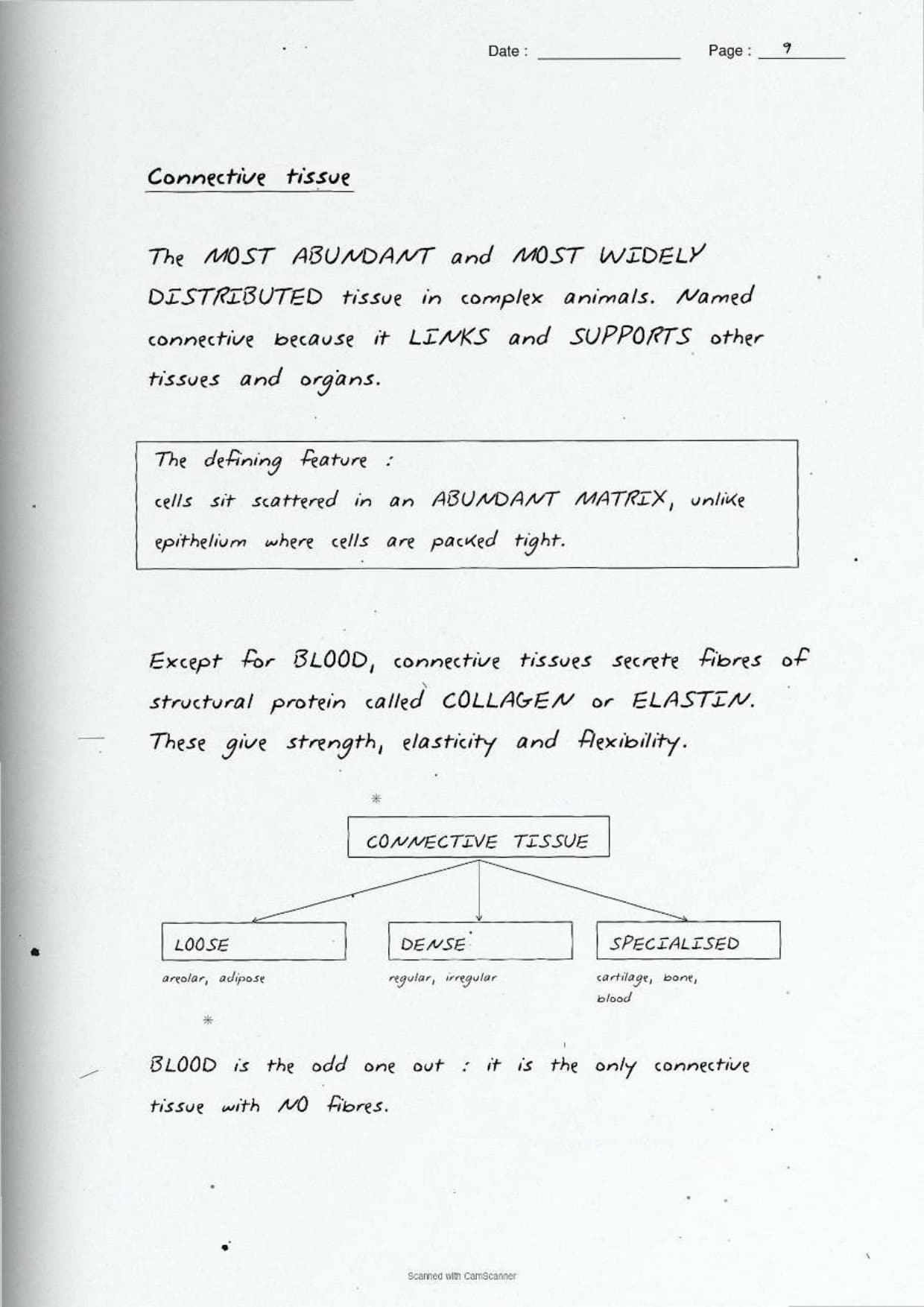
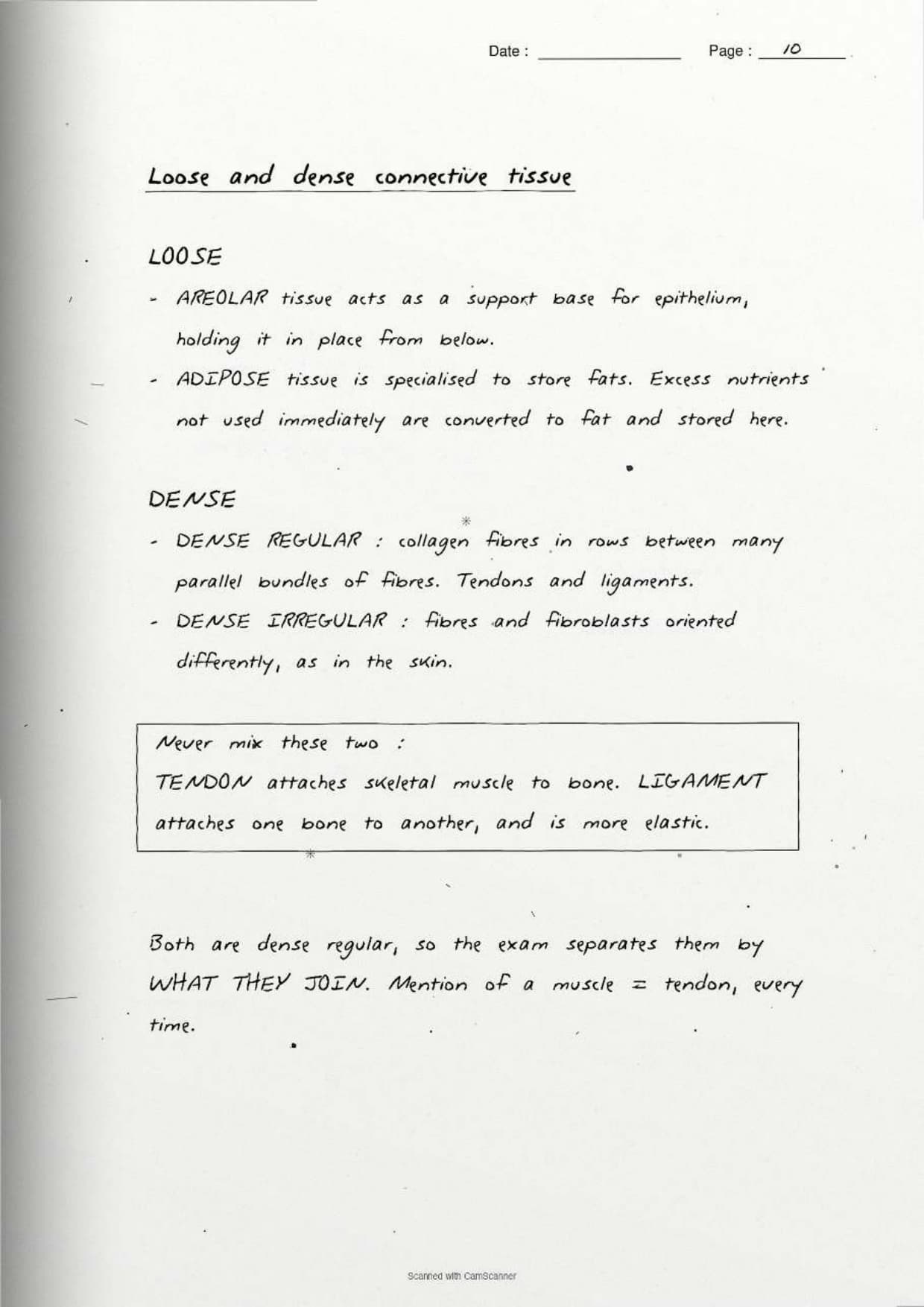
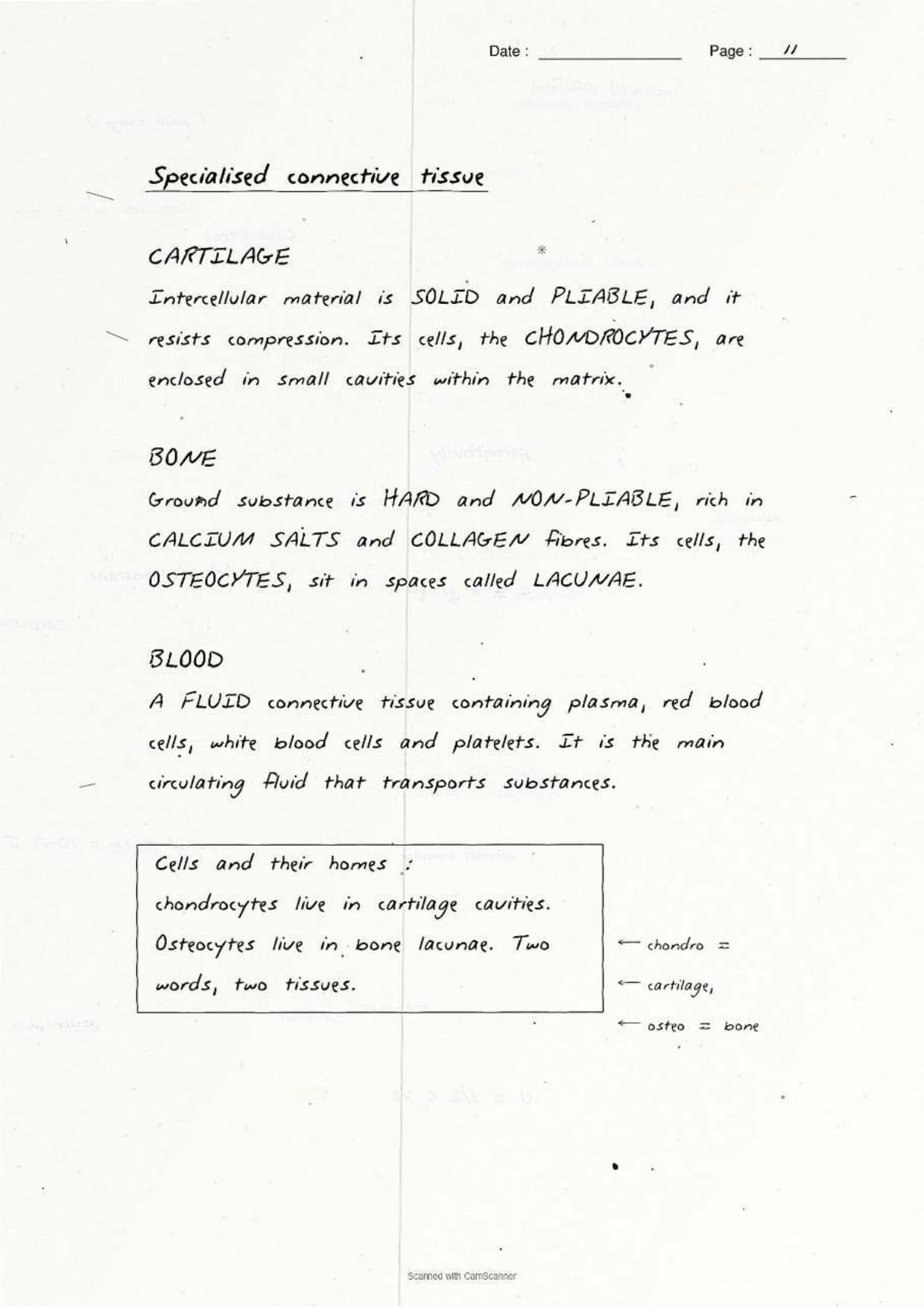
- Connective tissue: loose, dense and specialised, with cartilage, bone and blood separated out.
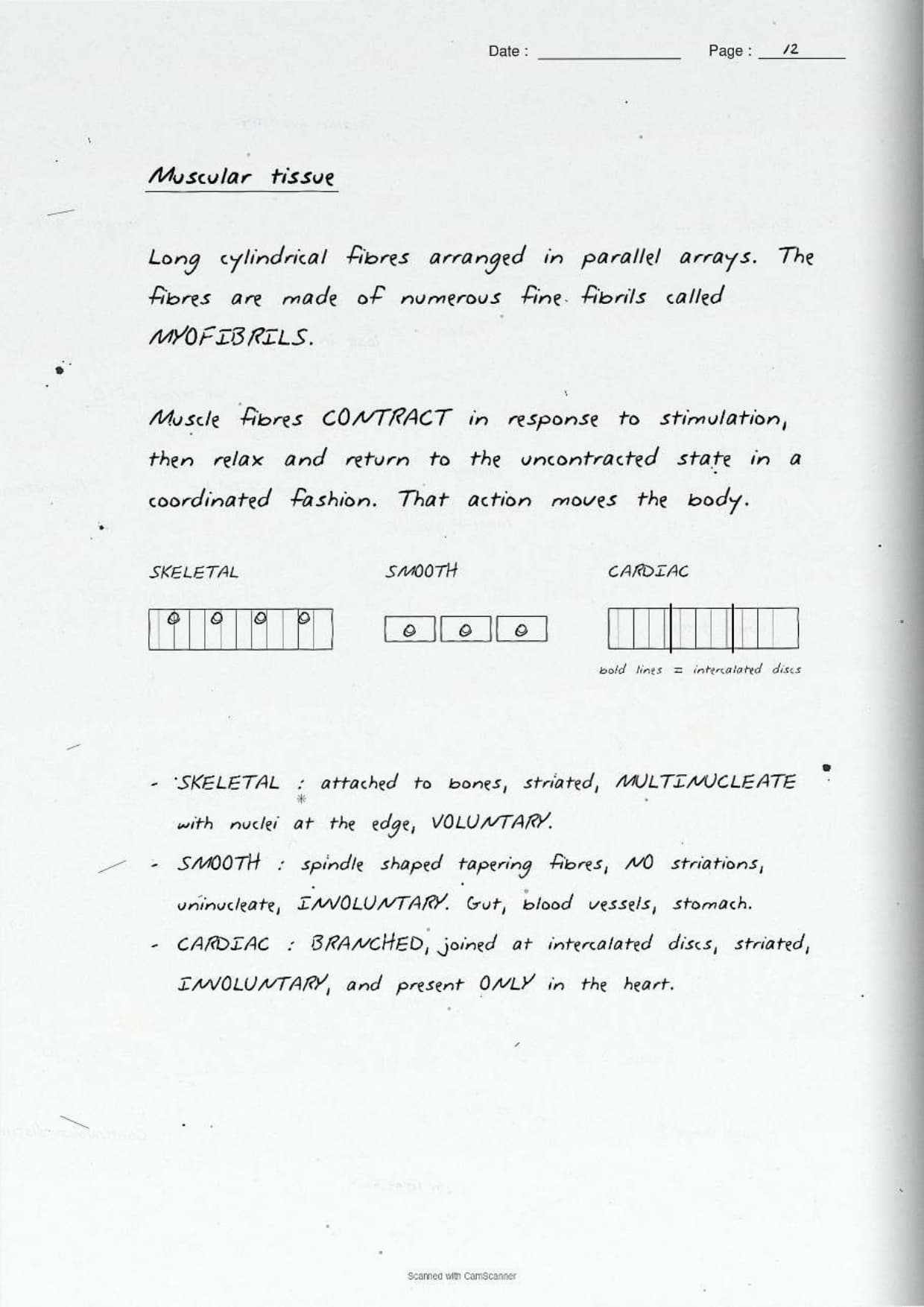
- Muscular and neural tissue: skeletal, smooth and cardiac compared side by side, then neurons and neuroglia.
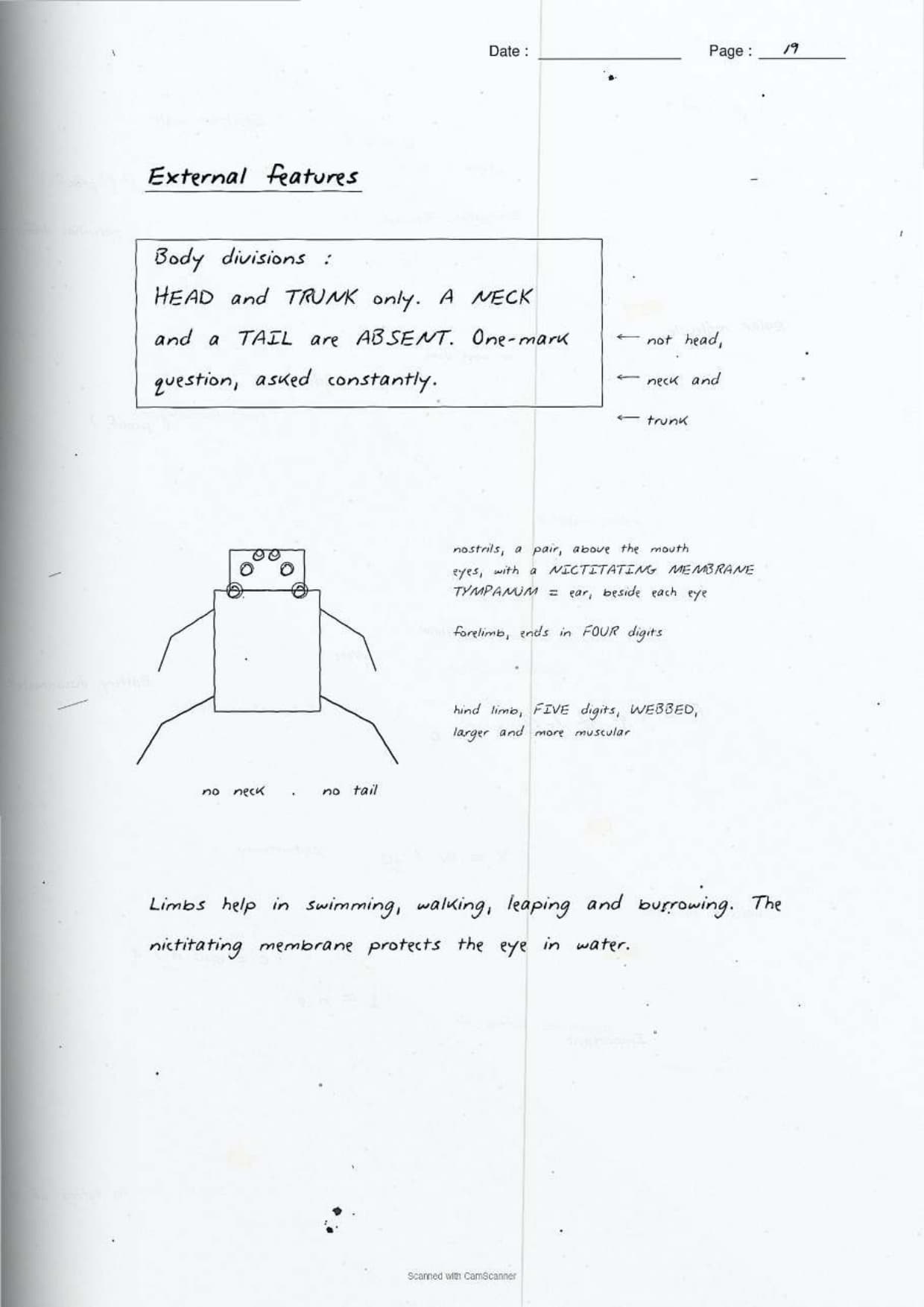
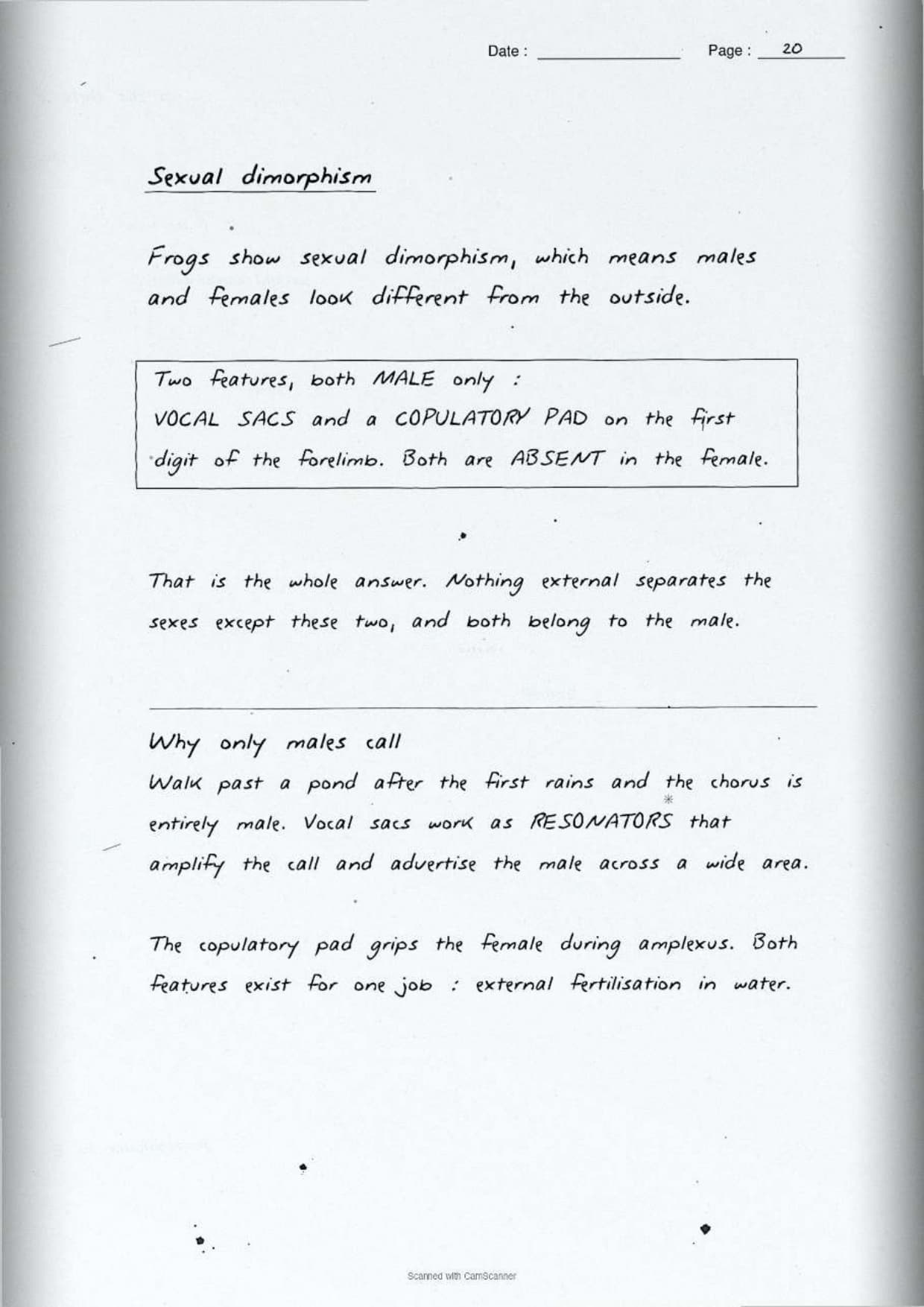
- The frog: habitat, poikilothermy, camouflage, aestivation, hibernation, skin and external features.
- Frog systems: digestive, respiratory, circulatory, excretory, nervous, sensory, endocrine and reproductive.
The tissue pages are marked as a NEET and CUET extension. The current 2026-27 NCERT print names the four tissues and defines epithelia, but drops the detailed sections, while both entrance exams still ask all of it.
Key Diagrams and Terms in Structural Organisation in Animals Notes
Most marks in this chapter go on terms that sound alike. The boxed table below is the block students get wrong most often, because examiners swap the meanings around.
| Term | How the notes define it |
|---|---|
| Poikilotherm | Body temperature varies with the environment, so cold blooded means variable |
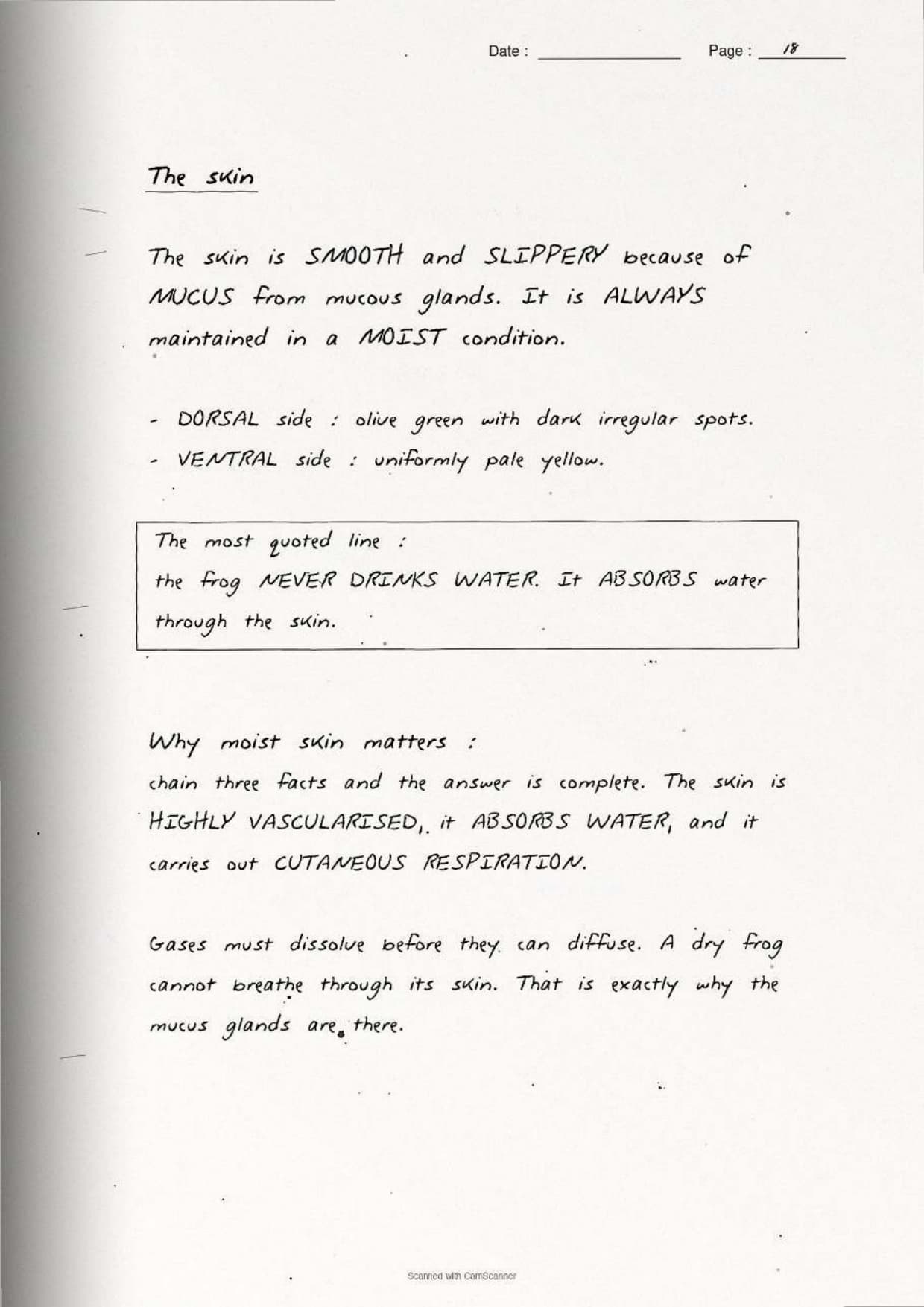
| Mimicry | Protective colouration, a colour change that hides the frog from enemies |
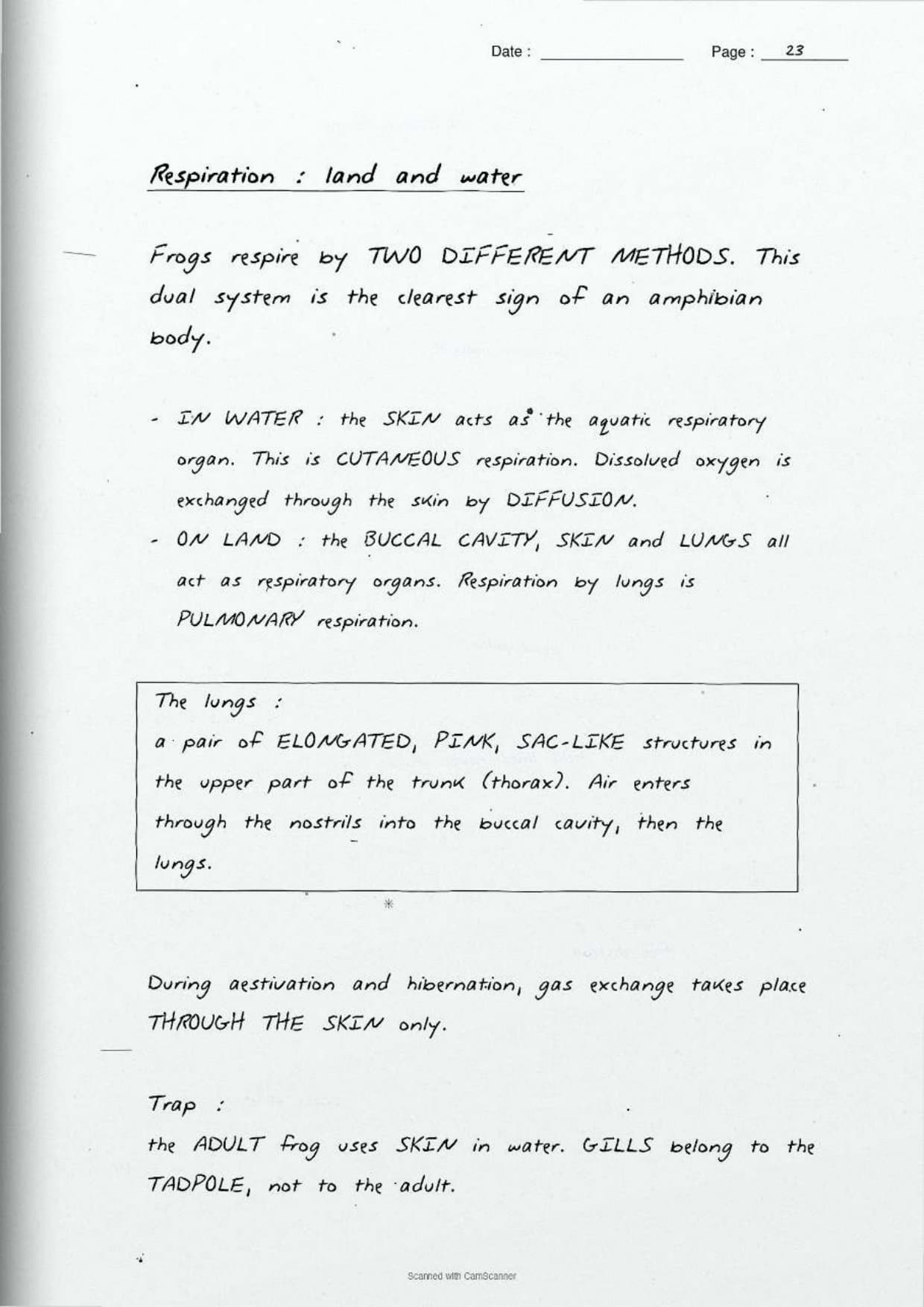
| Cutaneous respiration | Gas exchange through the skin by diffusion |
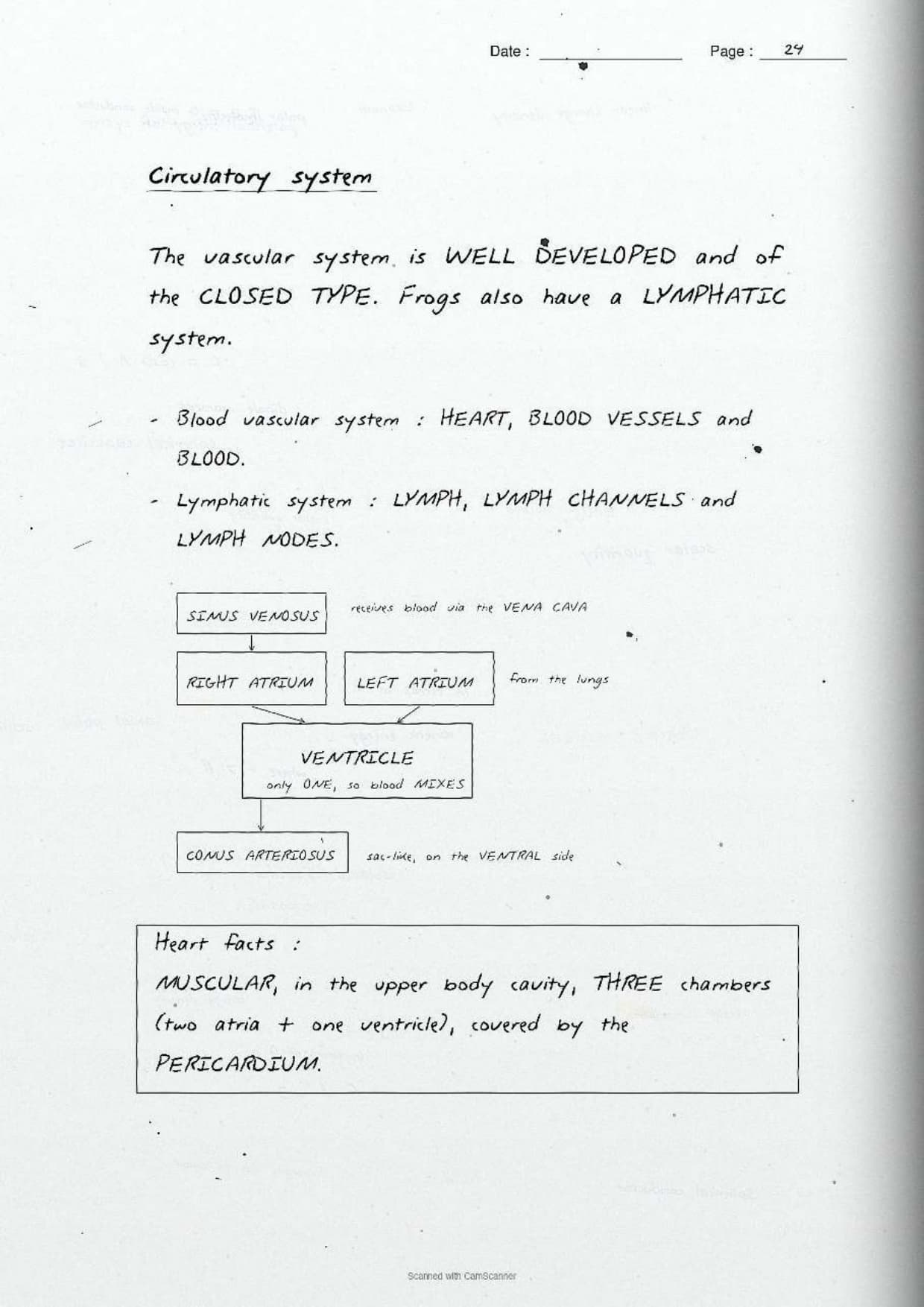
| Sinus venosus | Triangular structure joining the right atrium, gets blood via the vena cava |
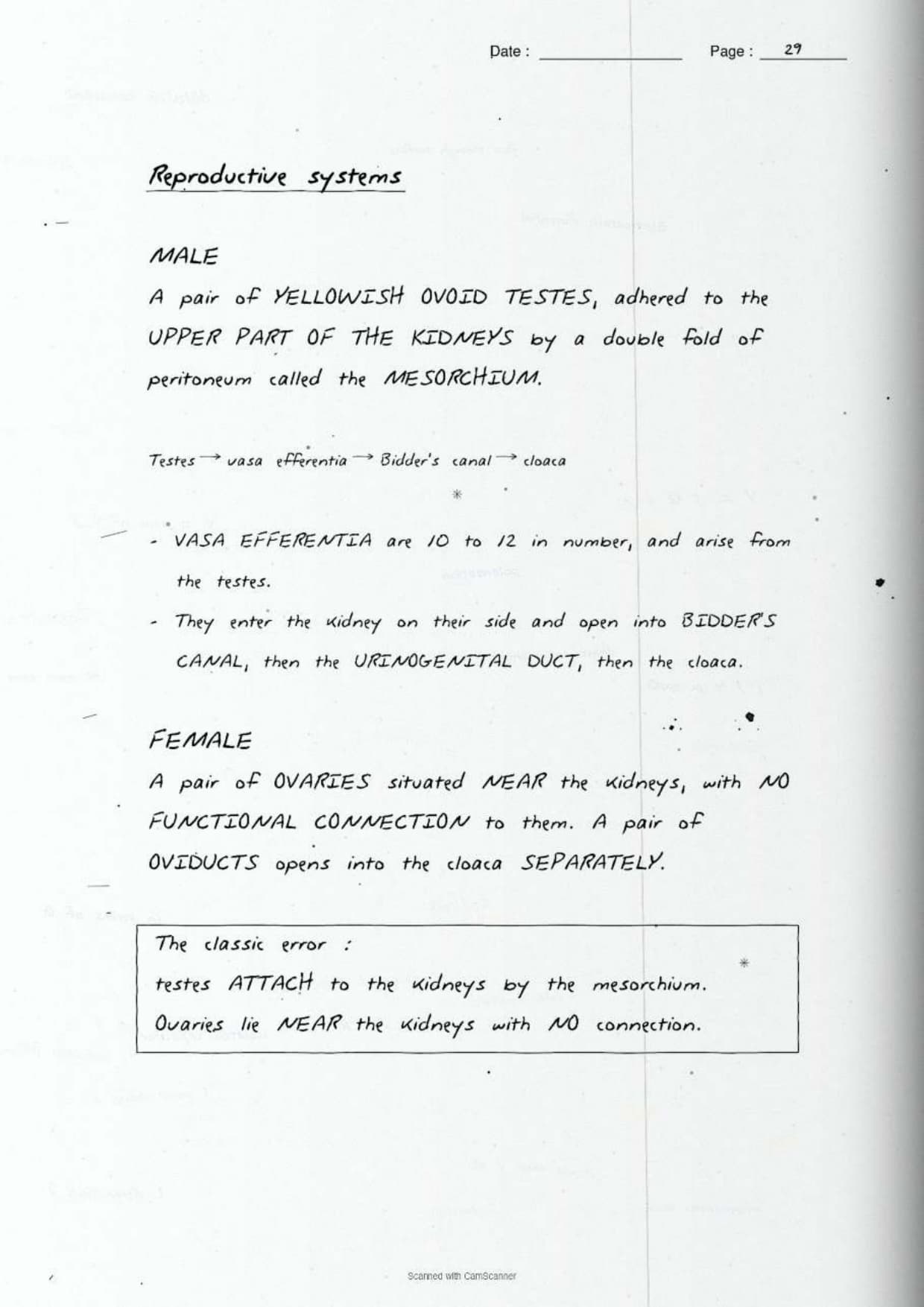
| Mesorchium | Double fold of peritoneum holding the testes to the kidneys |
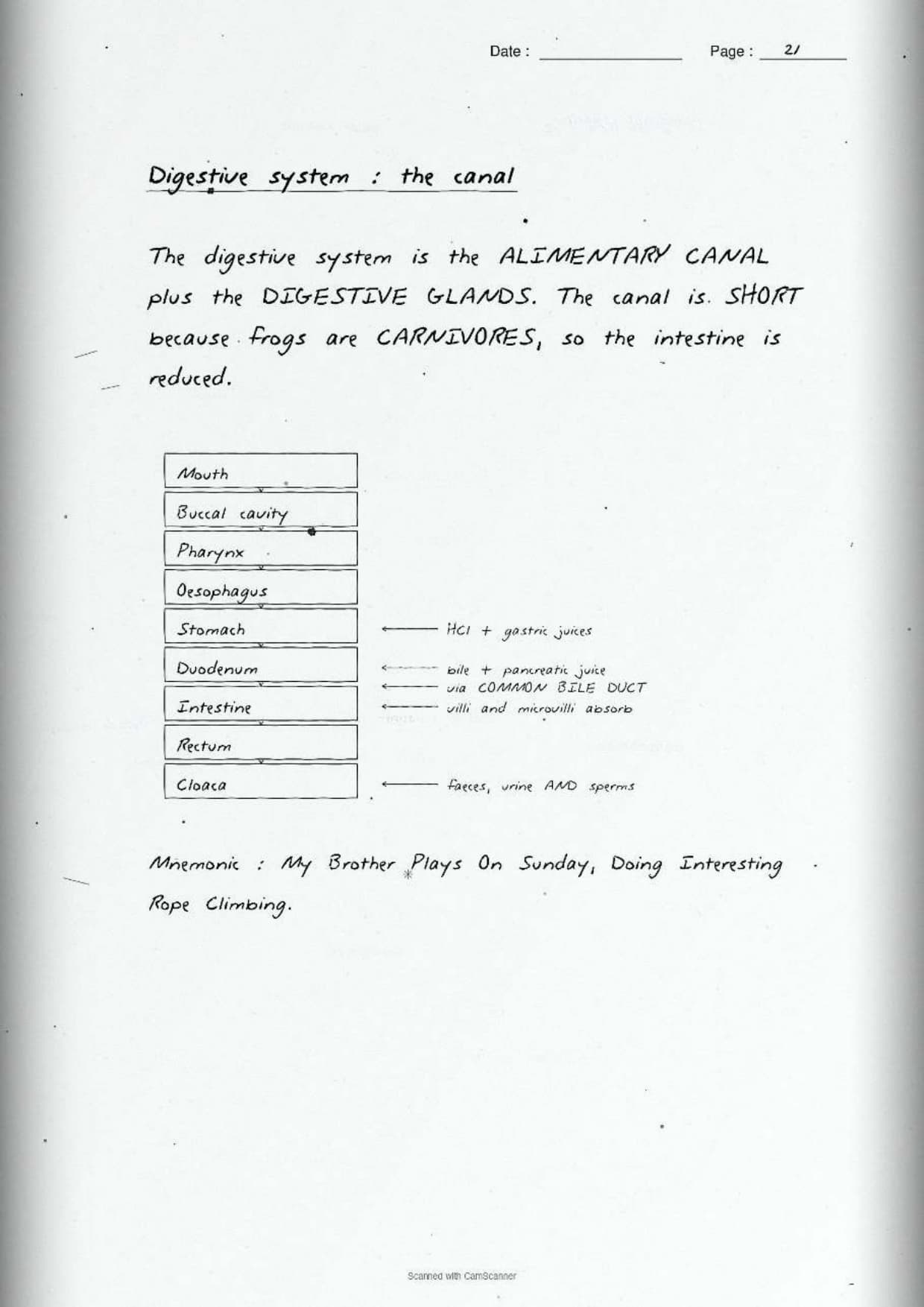
| Cloaca | Median chamber passing faeces, urine and sperms to the exterior |
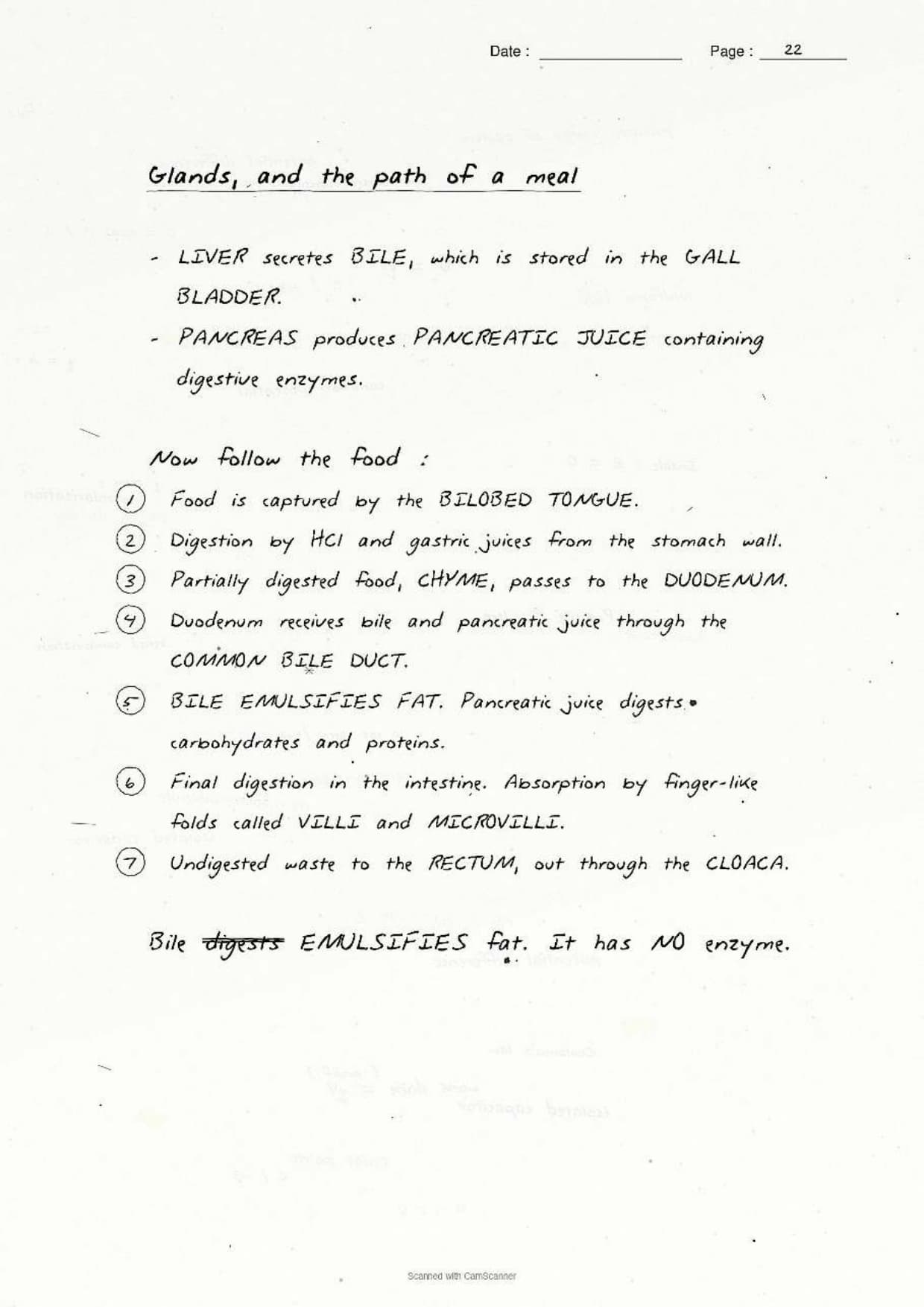
A hand-drawn flow chart runs the alimentary canal from mouth to cloaca, with the mnemonic written beside it. A second sketch traces blood through the sinus venosus, the two atria, the single ventricle and the conus arteriosus, so students see exactly where the blood mixes.
How to Use These Handwritten Notes for Revision
Work through the pages in three short passes. Read a topic page, cover the boxed fact and say it back, then answer two NCERT questions on it. This loop fixes exact wording faster than re-reading the textbook.
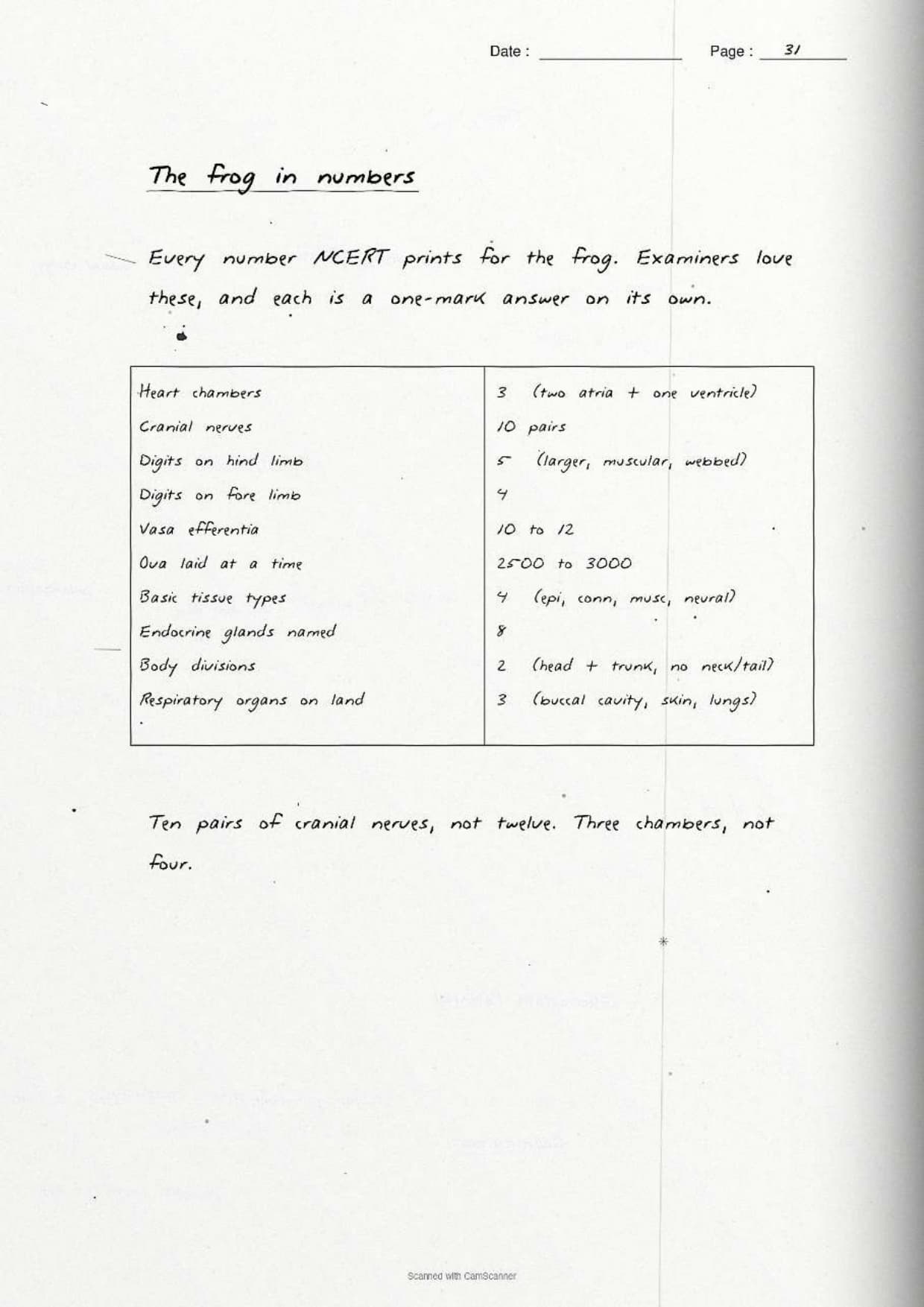
- Learn the frog in numbers page cold, since every row on it is a one-mark answer.
- Redraw the three-chambered heart and label the conus arteriosus from memory.
- Keep the class 11 biology handwritten notes chapter 7 Structural Organisation in Animals open beside the NCERT Solutions while practising.
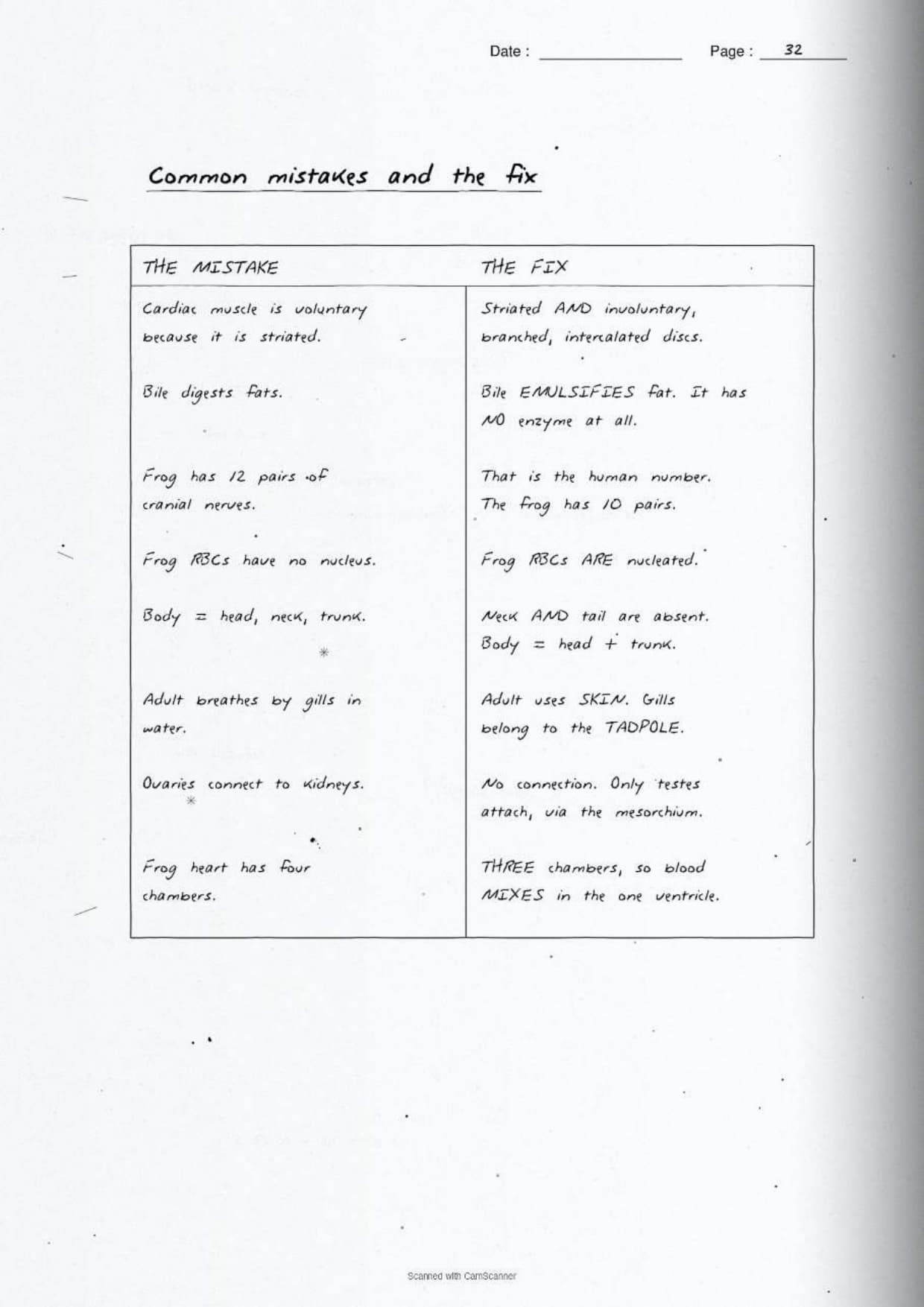
- Read the common-mistakes page last, on page 32, before you shut the file.
Around 45 minutes is enough for one full pass of this chapter, so the notes fit into the last week before an exam.
Student Feedback on Structural Organisation in Animals Handwritten Notes
Students rate the frog-in-numbers page as the one that saves them the most time. The figures below come from a Collegedunia poll run before the 2026 boards.
- In a Collegedunia survey of 10,860 students, 74% said the numbers page was their most-used revision page.
- Most-confused pair before the poll: aestivation against hibernation, mixed up by about 5 in 10 students.
Source: 2026-27 Class 11 Biology student poll. Sample of 10,860 students from CBSE schools across 12 states.
Where to Use These Notes Alongside Other Resources
These handwritten pages work best next to the step-wise Solutions, the summary Notes and the Exemplar Solutions for the same chapter. Read the notes first, then check the answers, and keep the Exemplar for extra practice.
| Resource | Best used for |
|---|---|
| Structural Organisation in Animals NCERT Solutions | Step-by-step answers to every back-exercise question |
| Structural Organisation in Animals Class 11 Notes | Quick chapter summary with all key terms in one place |
| Structural Organisation in Animals Exemplar Solutions | Every Exemplar question solved for NEET-level practice |
| Structural Organisation in Animals NCERT Book PDF | The original chapter text and exercises |
All Class 11 Biology Handwritten Notes by Chapter
The table links the handwritten notes for every Class 11 Biology chapter, so students can move across the course in one click. Structural Organisation in Animals is highlighted.
| Chapter | Handwritten Notes |
|---|---|
| Chapter 1 | The Living World |
| Chapter 2 | Biological Classification |
| Chapter 3 | Plant Kingdom |
| Chapter 4 | Animal Kingdom |
| Chapter 5 | Morphology of Flowering Plants |
| Chapter 6 | Anatomy of Flowering Plants |
| Chapter 7 | Structural Organisation in Animals |
| Chapter 8 | Cell The Unit of Life |
| Chapter 9 | Biomolecules |
| Chapter 10 | Cell Cycle and Cell Division |
| Chapter 11 | Photosynthesis in Higher Plants |
| Chapter 12 | Respiration in Plants |
| Chapter 13 | Plant Growth and Development |
| Chapter 14 | Breathing and Exchange of Gases |
| Chapter 15 | Body Fluids and Circulation |
| Chapter 16 | Excretory Products and their Elimination |
| Chapter 17 | Locomotion and Movement |
| Chapter 18 | Neural Control and Coordination |
| Chapter 19 | Chemical Coordination and Integration |
FAQs on Structural Organisation in Animals Handwritten Notes
Ques. Are these class 11 biology handwritten notes chapter 7 Structural Organisation in Animals free to download?
Ans. Yes. The Structural Organisation in Animals handwritten notes are free to download as a PDF from this page. All 34 pages follow the 2026-27 NCERT and cover the full chapter in clear handwriting for quick revision.
Ques. What topics do these handwritten notes cover?
Ans. They cover the levels of organisation, the four basic animal tissues and then the frog in full. The frog pages run habitat, external features and the digestive, respiratory, circulatory, excretory, nervous, sensory, endocrine and reproductive systems, each with boxed facts and hand-drawn charts.
Ques. Which organ is made of all four types of tissue?
Ans. The heart. It contains epithelial, connective, muscular and neural tissue, and the notes box this as the answer NCERT expects. Students who write stomach or kidney here lose the mark, so the boxed page states the heart plainly.
Ques. What is the difference between aestivation and hibernation in the frog?
Ans. Both are periods of shelter in deep burrows, but aestivation is summer sleep and hibernation is winter sleep. The notes carry a mnemonic for it: aestivation starts with A like August, so summer. Gas exchange happens through the skin during both.
Ques. Are the tissue pages needed for the Class 11 board exam?
Ans. Only in part. The current NCERT print names the four tissues and defines epithelia, so boards ask that much. The detailed tissue pages are marked as a NEET and CUET extension, since both entrance exams still ask the full tissue sections.



Comments