




These class 11 biology handwritten notes chapter 16 Excretory Products and their Elimination cover all 32 pages in one fast revision pass for Boards, NEET and CUET in 2026-27. The three modes of excretion, the nephron, the counter current mechanism and the hormone table are boxed and drawn by hand.
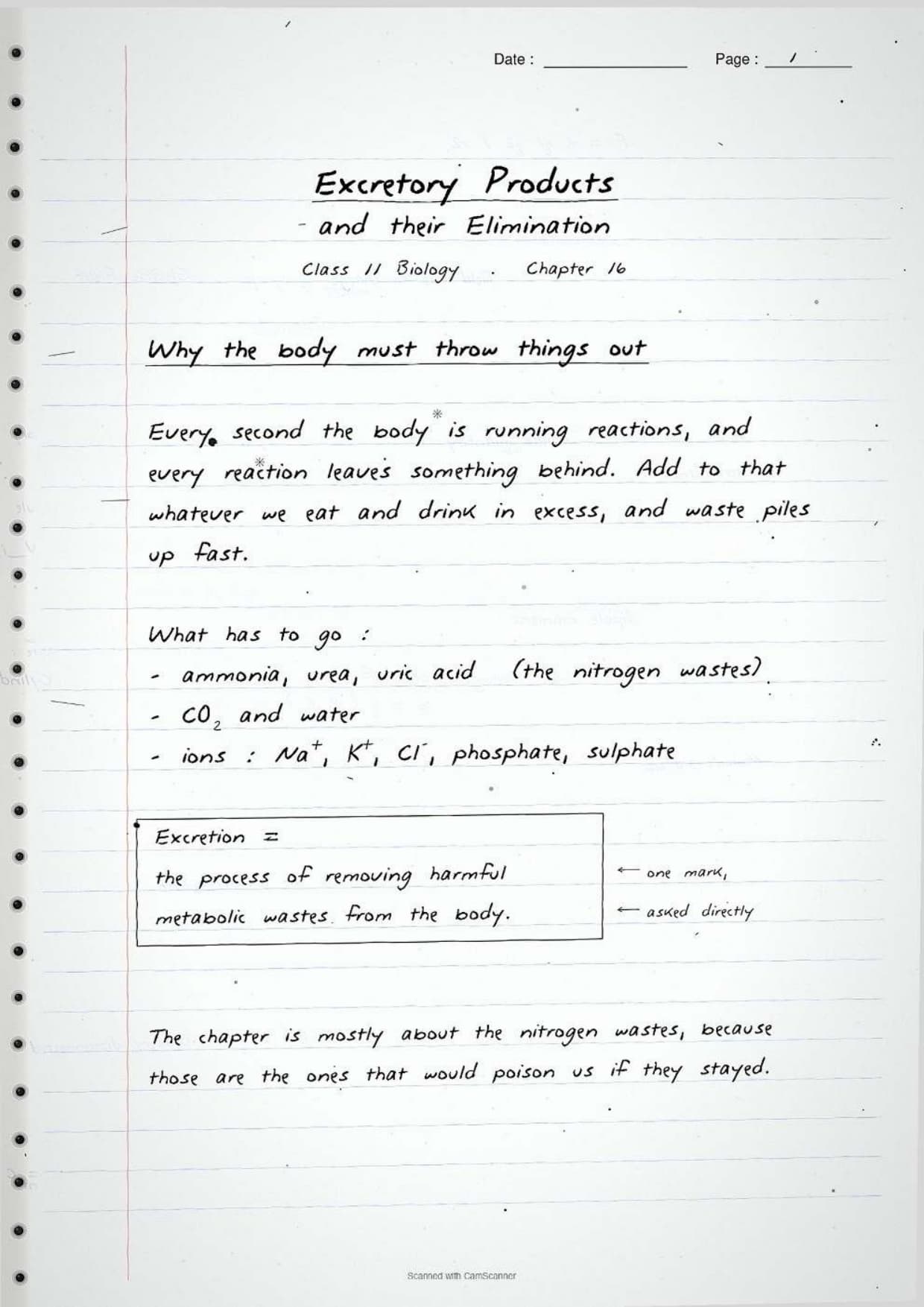
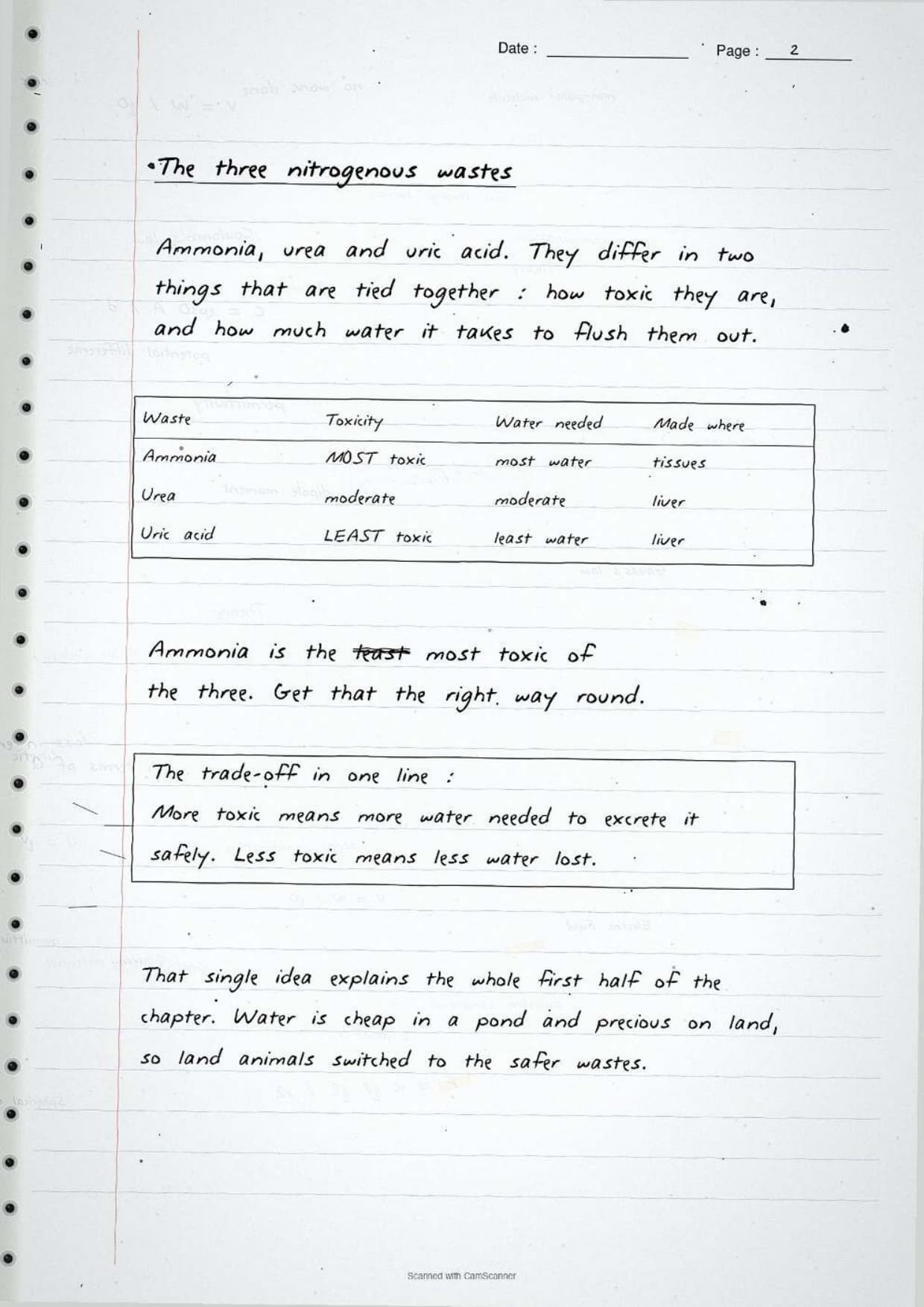
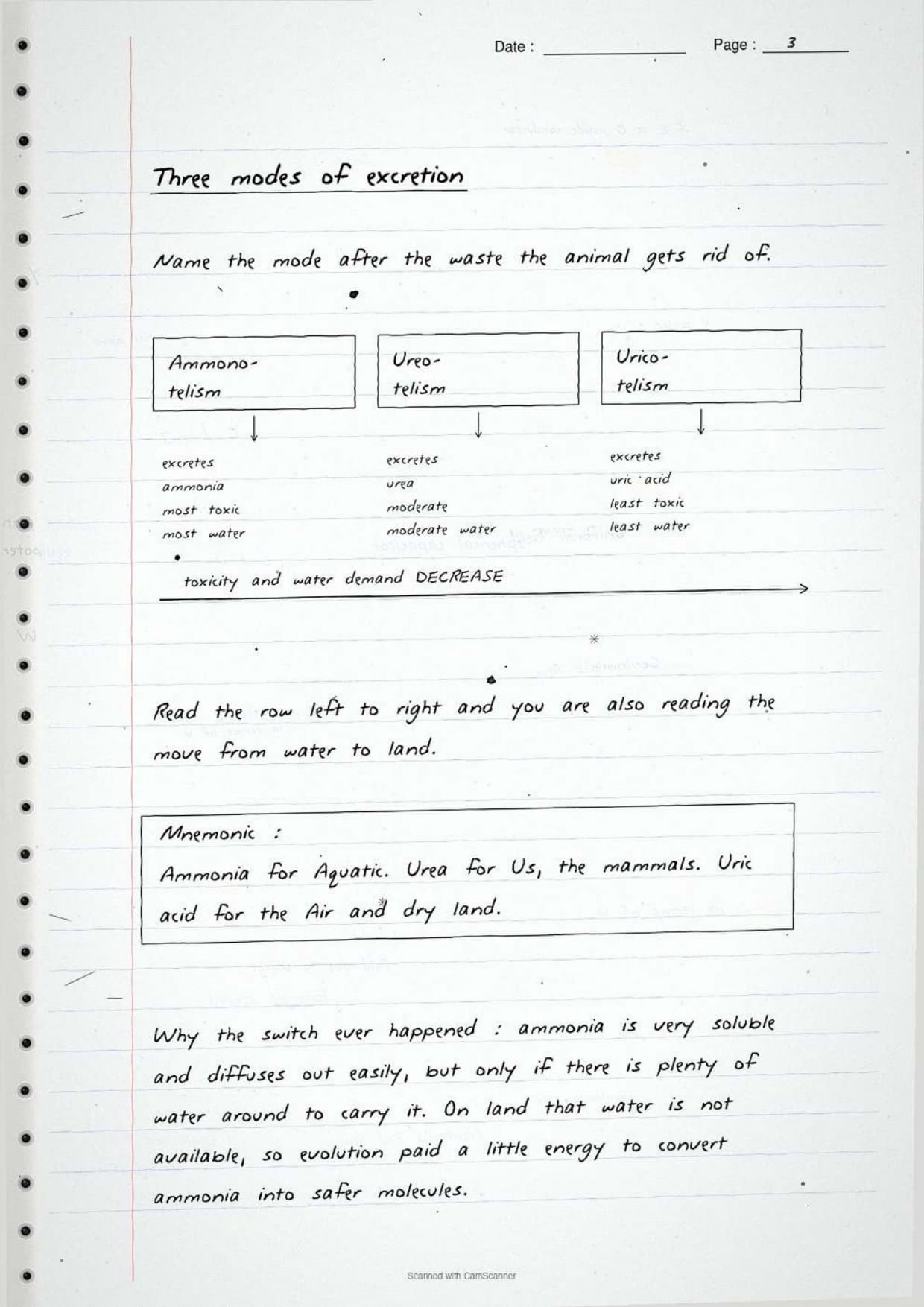
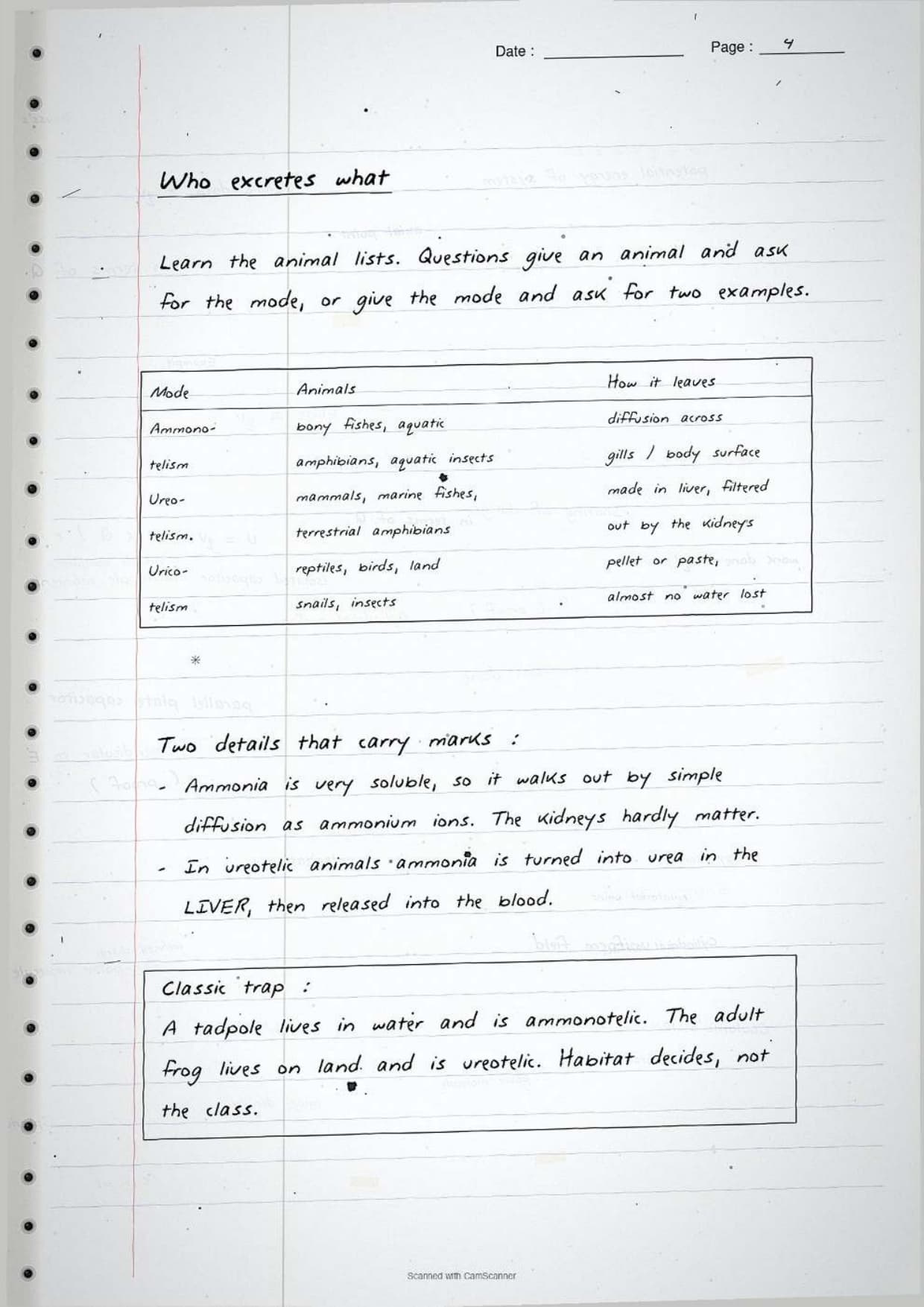
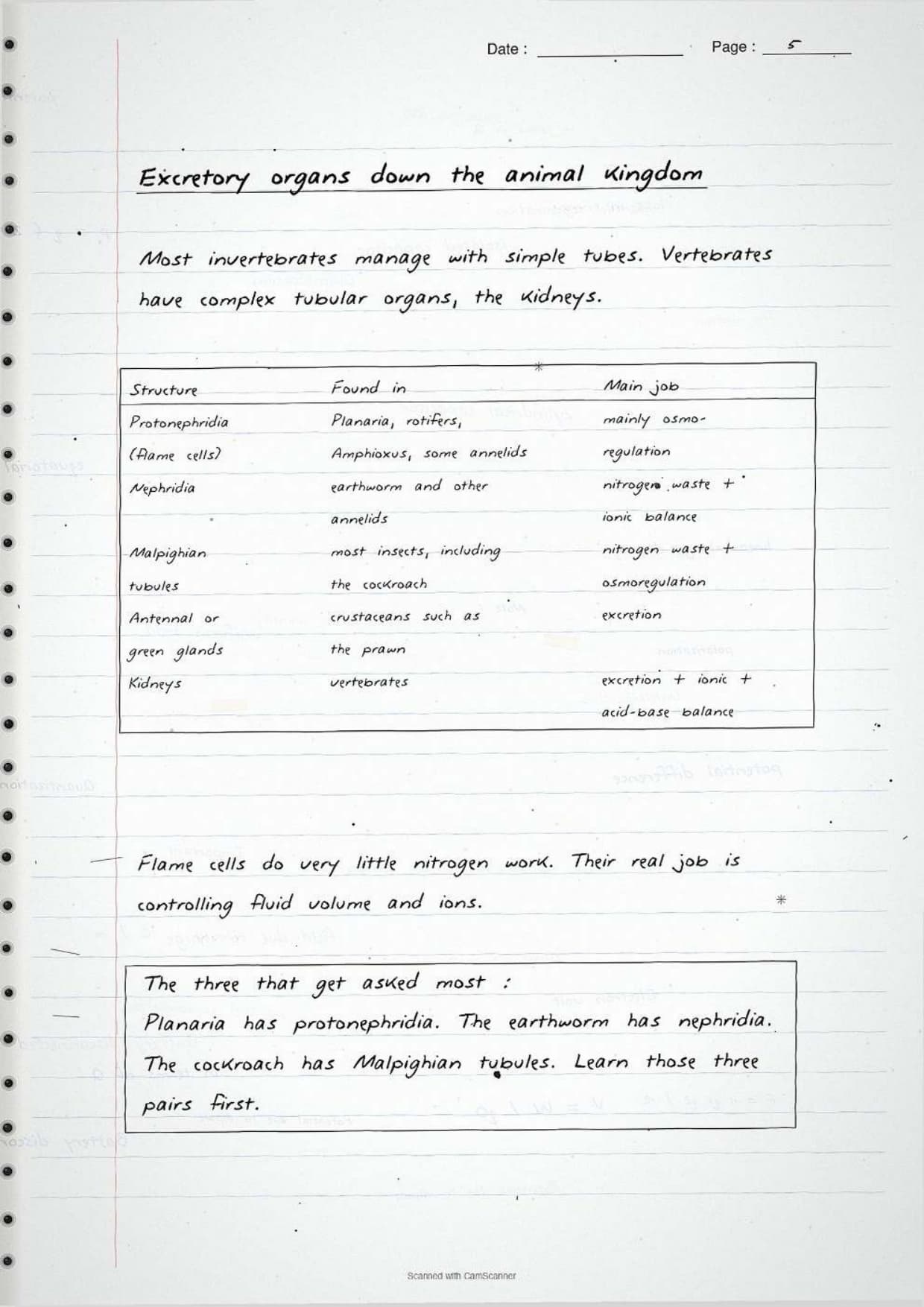
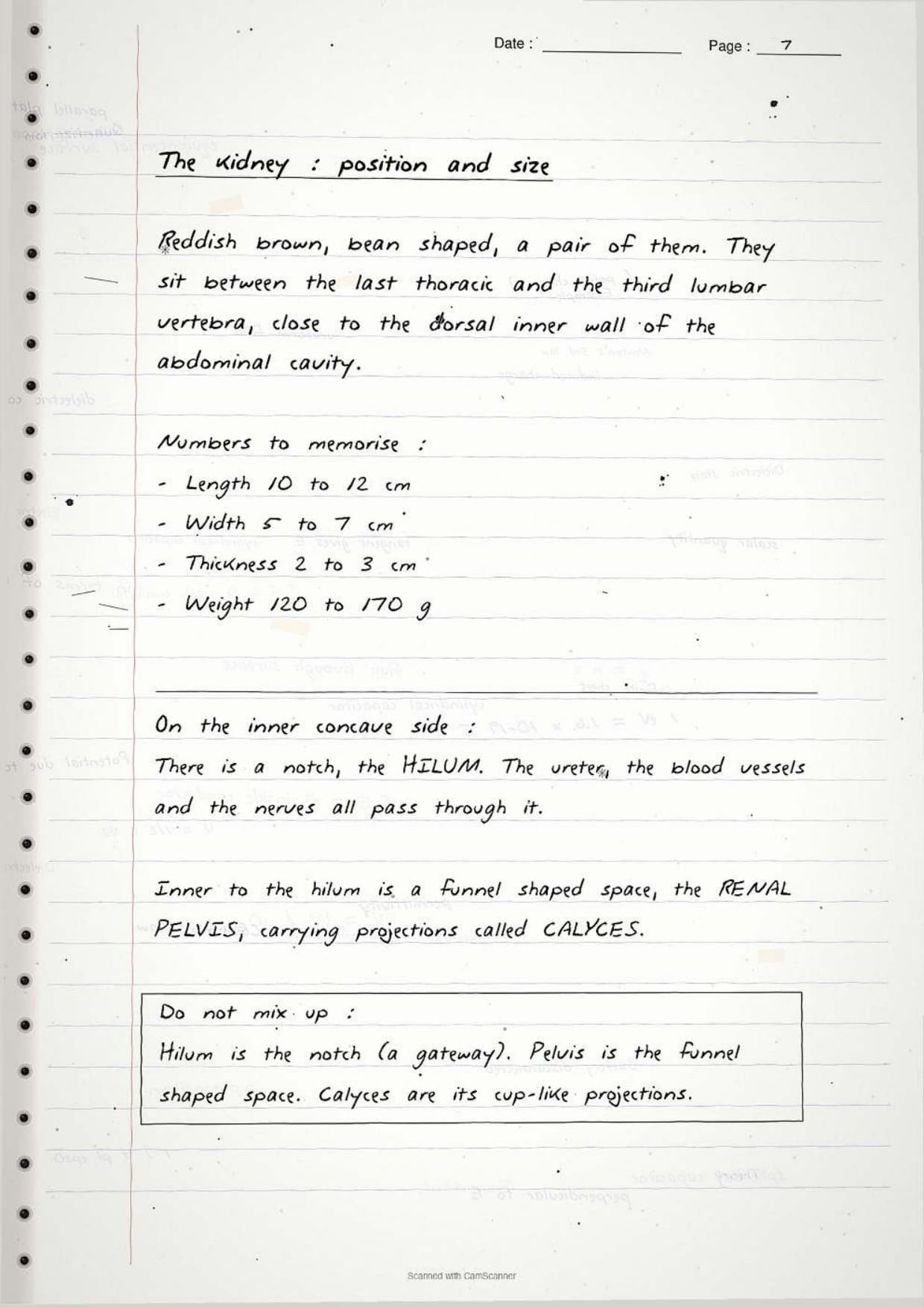
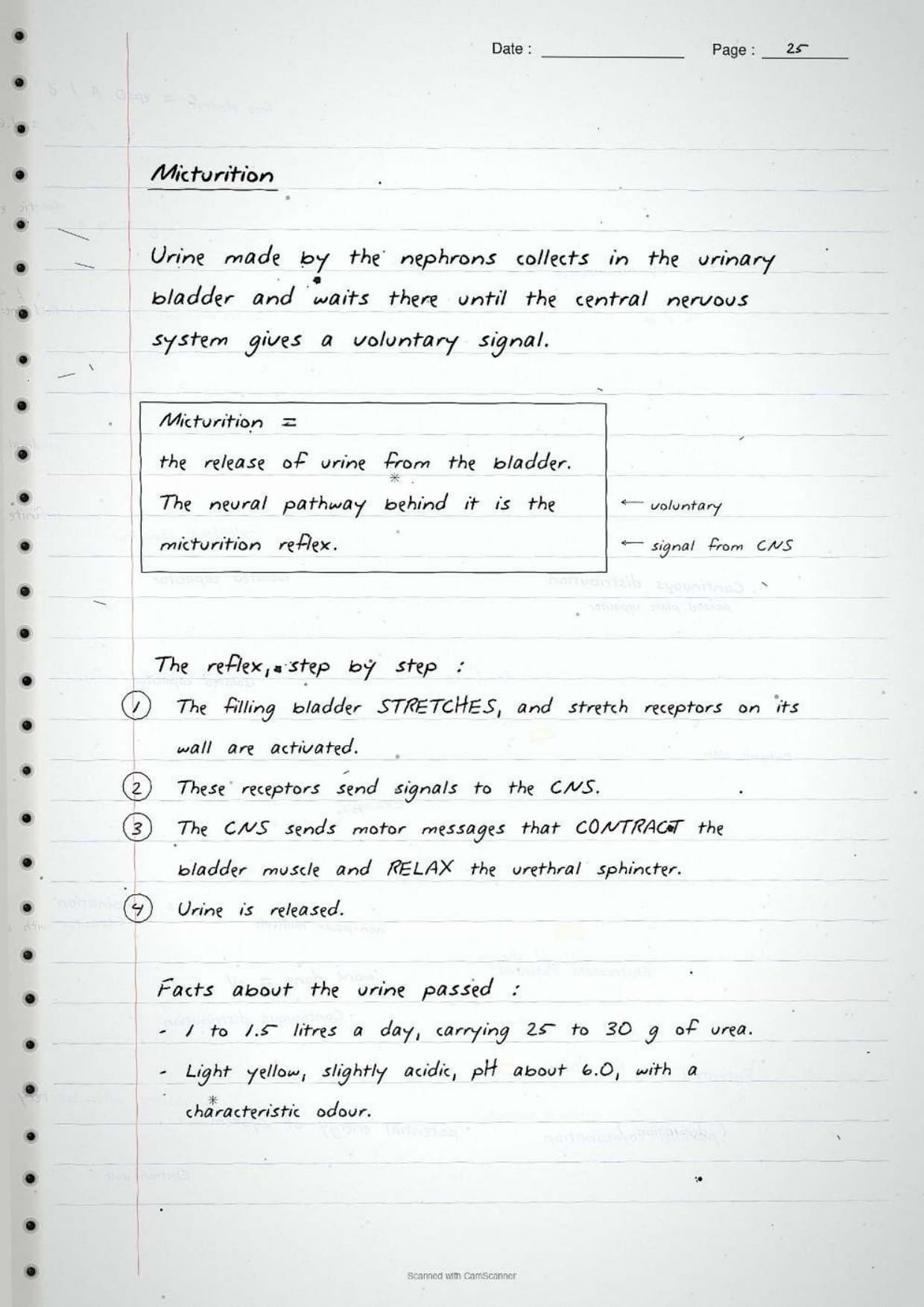
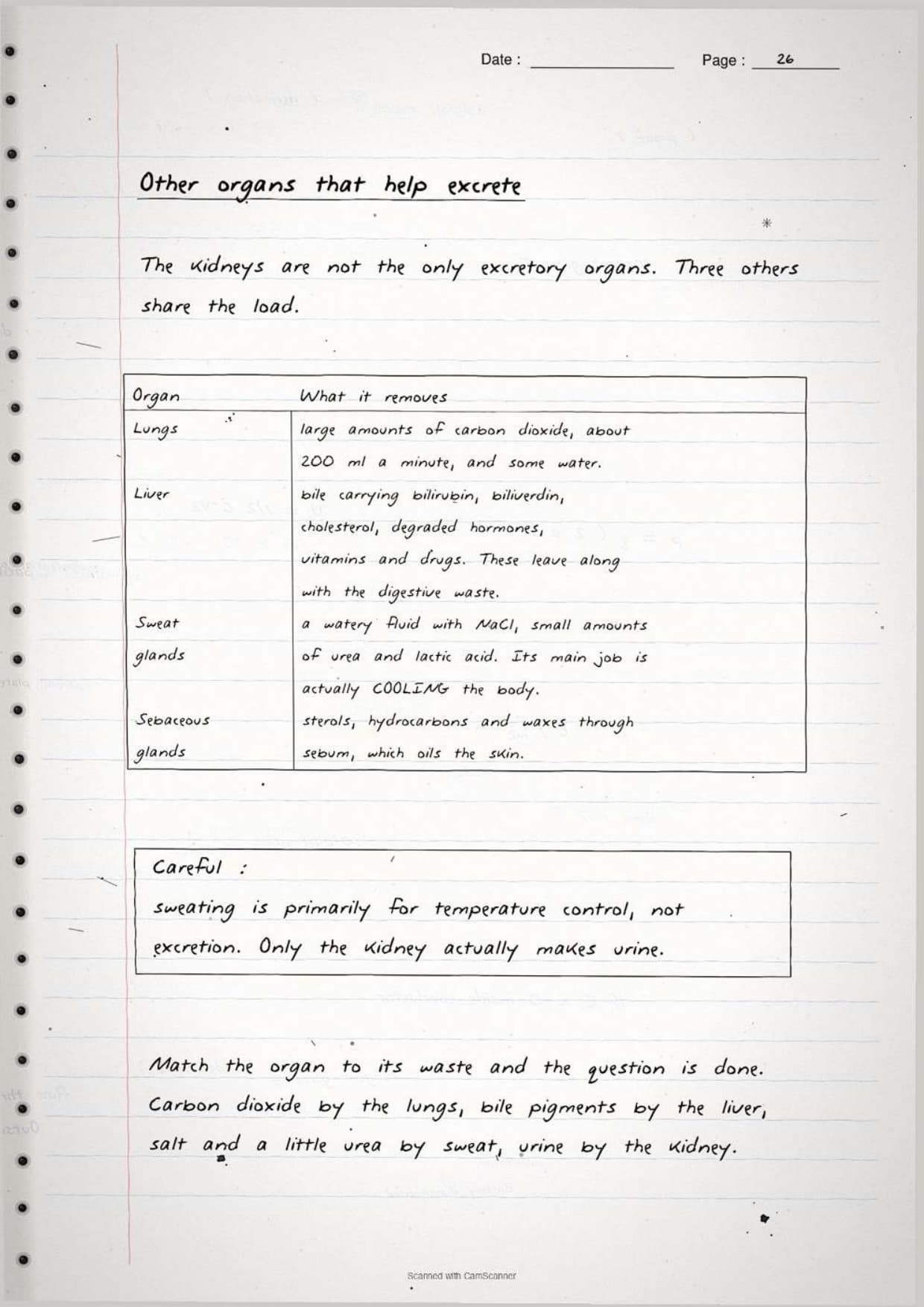
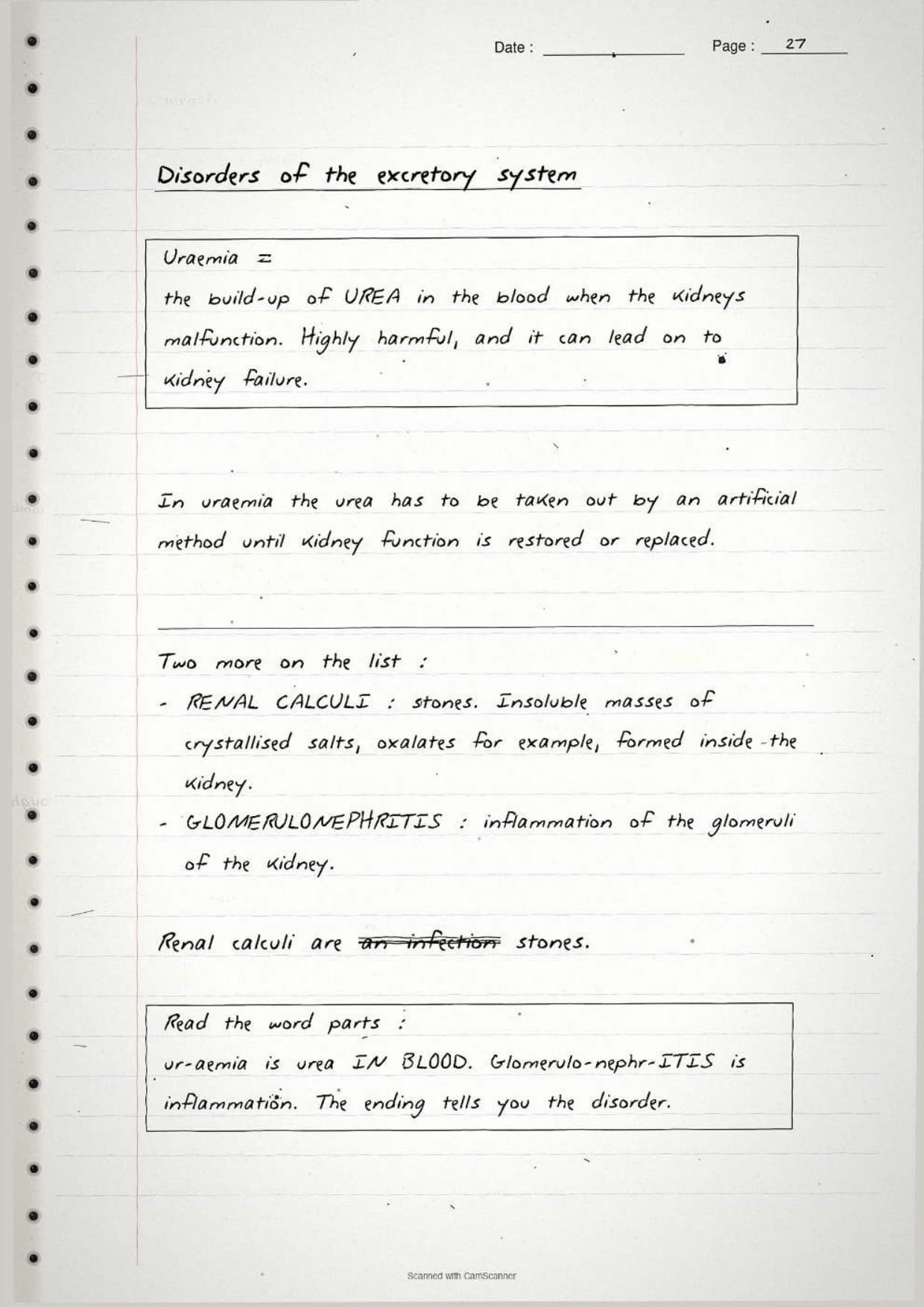
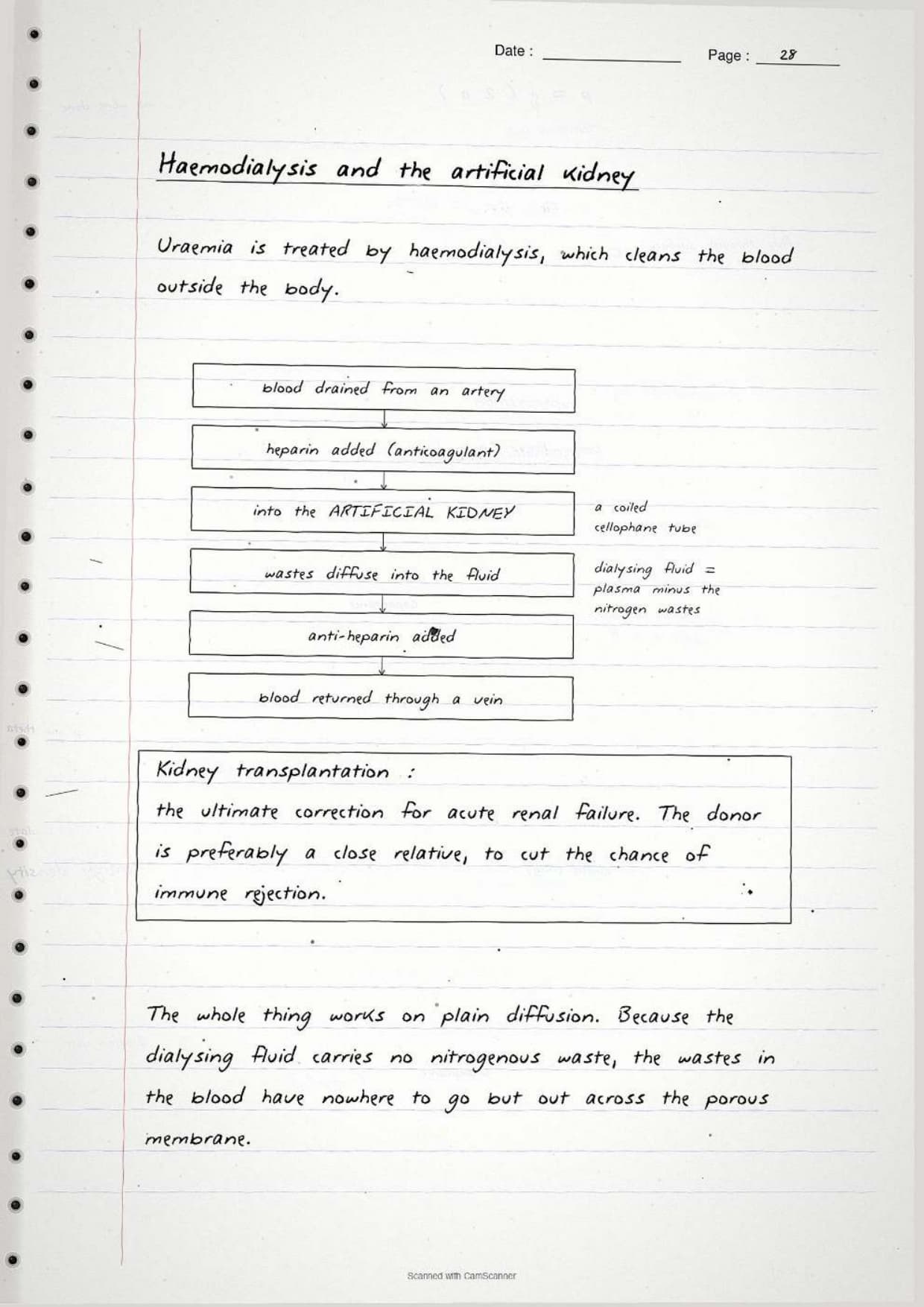
Chapter 16 is a numbers and sequence chapter, and both are asked as direct one-mark questions.
- Hand-drawn flow charts for the four organs, the RAAS cascade and the dialysis circuit.
- Boxed definitions for ultrafiltration, the Malpighian body, the counter current mechanism and micturition in exam wording.
- Pairs with the NCERT Solutions, Notes and Exemplar Solutions linked lower on this page.
What Excretory Products and their Elimination Handwritten Notes Cover
The 32 pages follow the NCERT order, starting from why waste must leave the body and ending at a night-before recap. Each topic gets its own page, so students revise one idea at a time. New sub-headings are written in red and every definition is boxed.
- The wastes: ammonia, urea and uric acid, plus CO2, water and ions such as Na+, K+ and Cl-.
- Modes of excretion: ammonotelism, ureotelism and uricotelism, with animal lists and the toxicity against water trade-off.
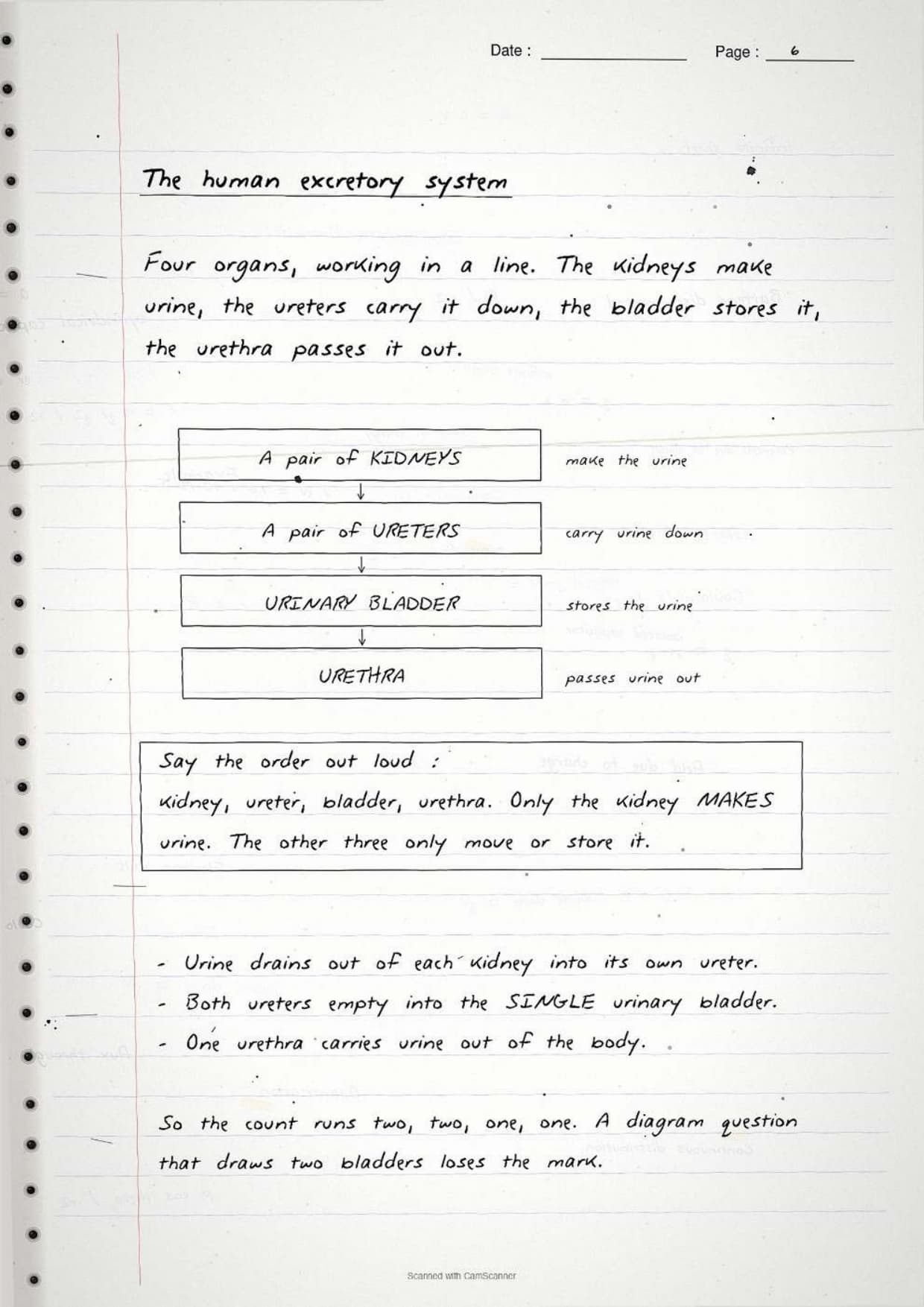
- Human excretory system: kidneys, ureters, bladder and urethra, in the order two, two, one, one.
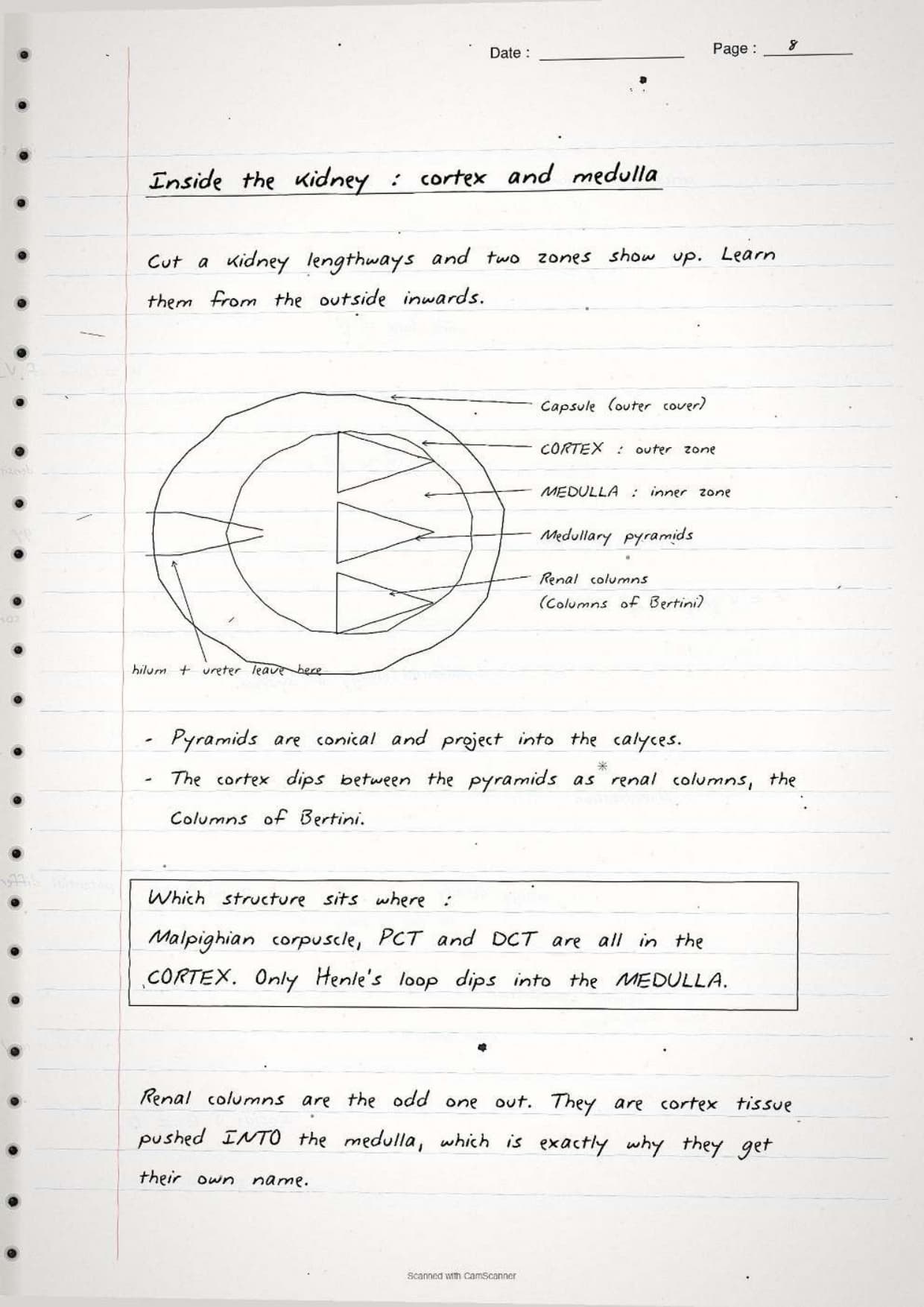
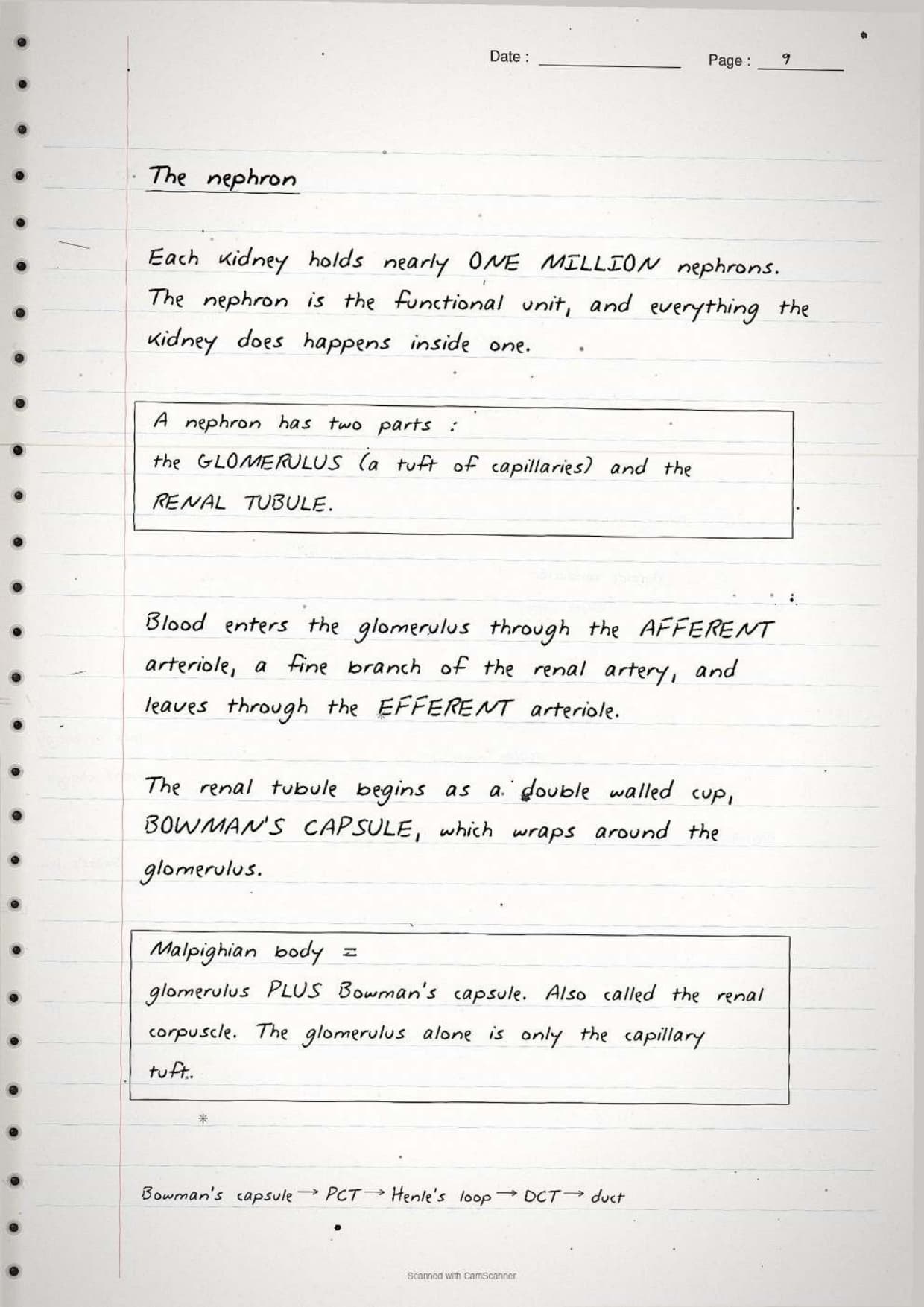
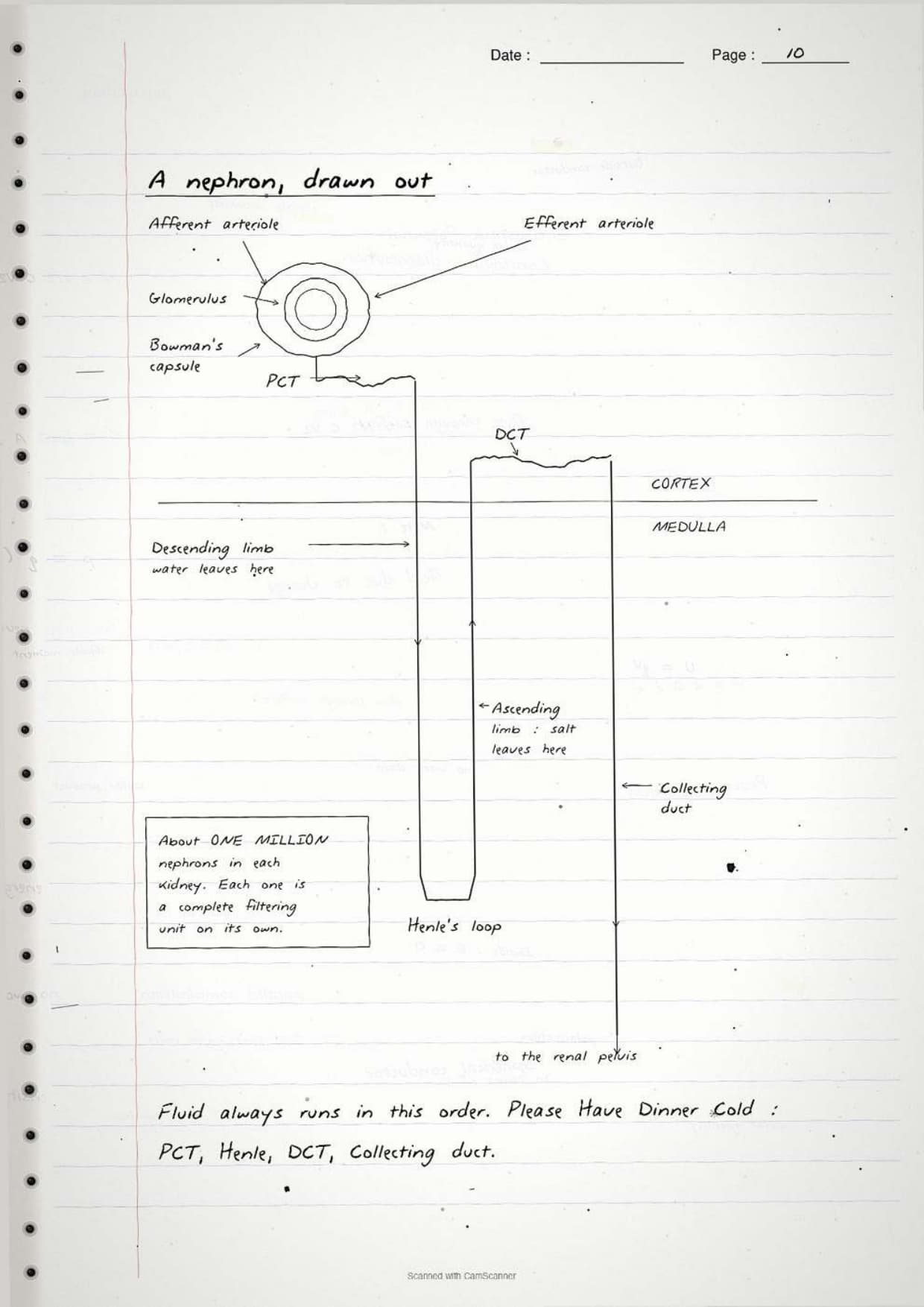
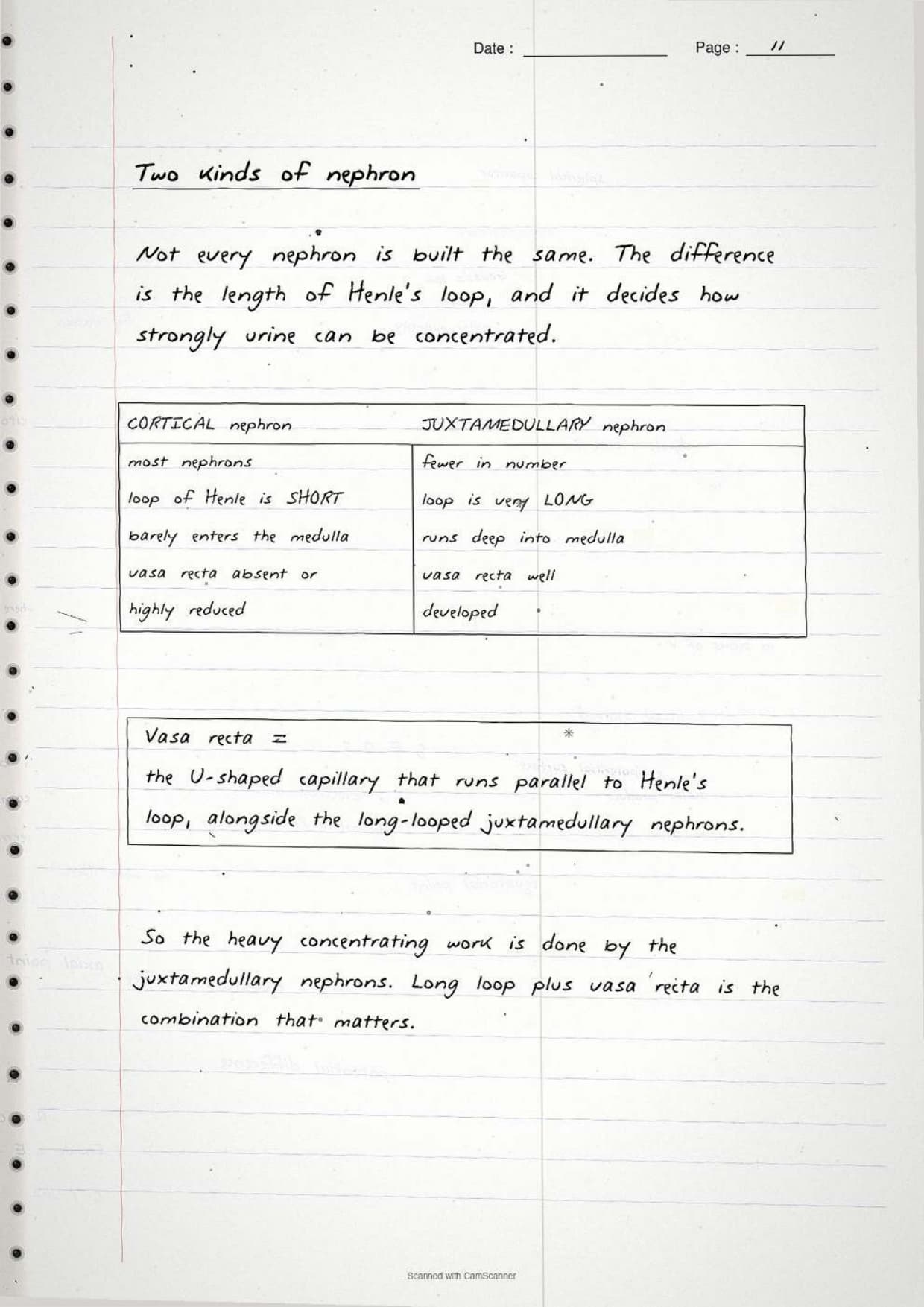
- The nephron: glomerulus and renal tubule, cortical against juxtamedullary types, and the vasa recta.
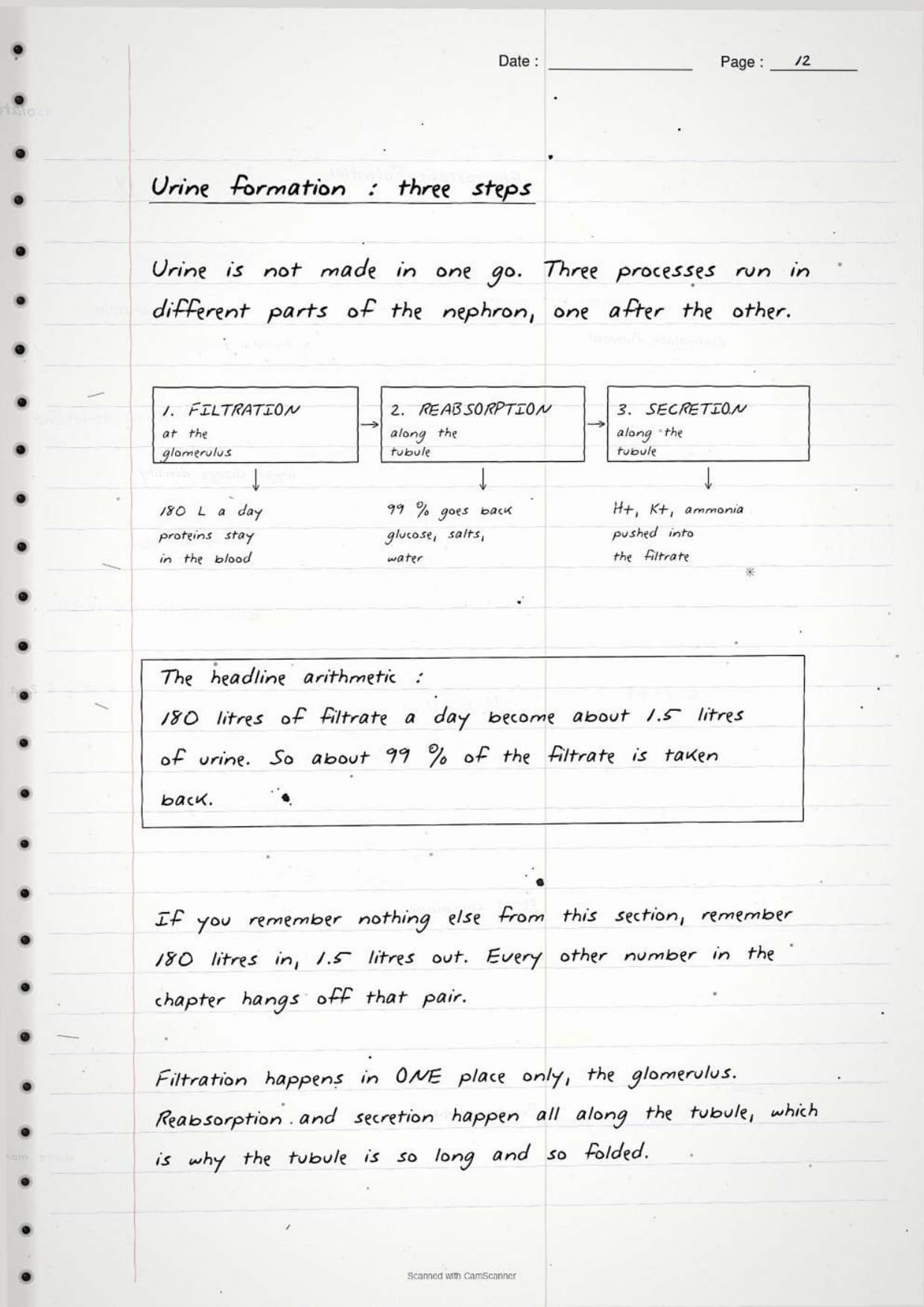
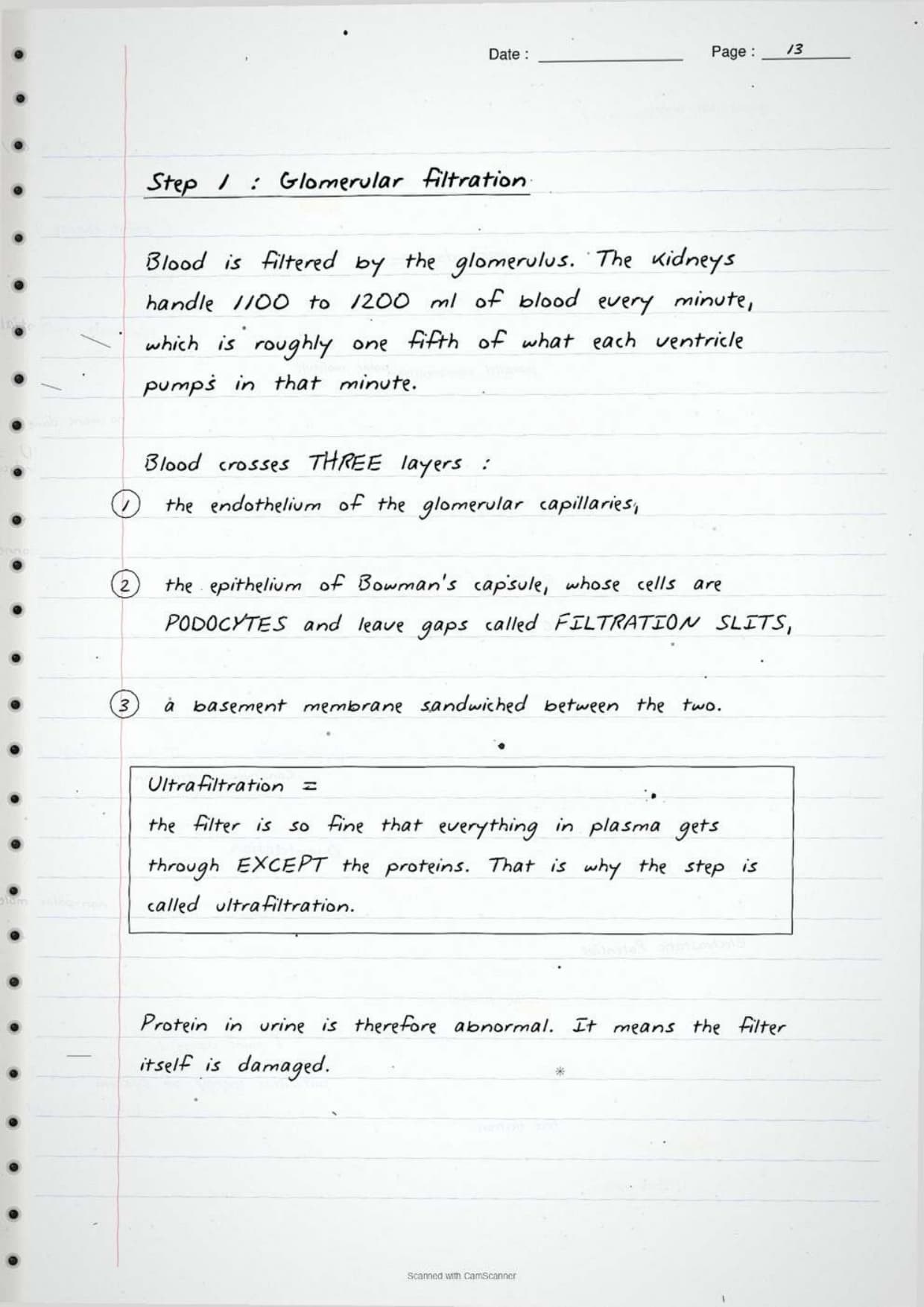
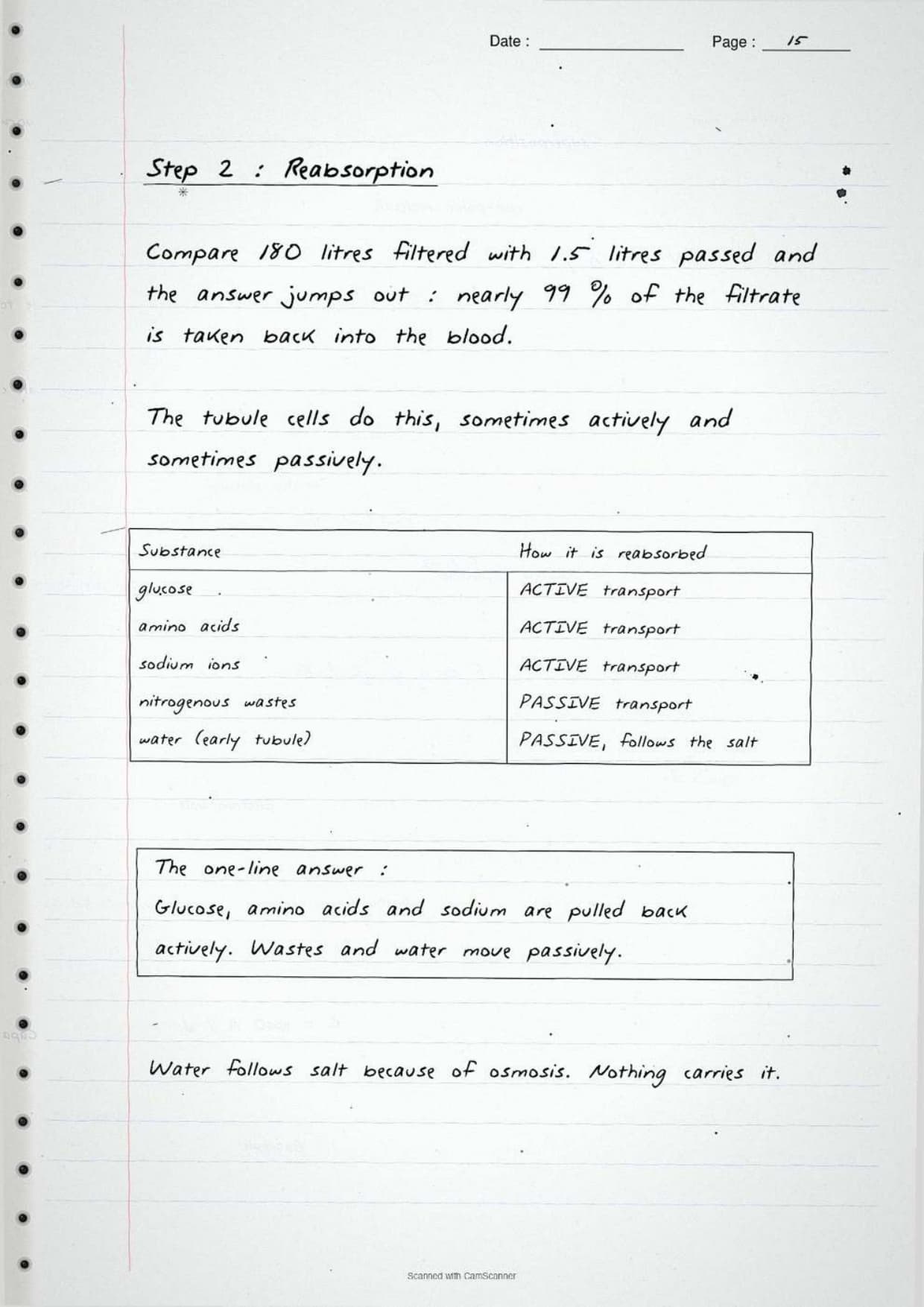
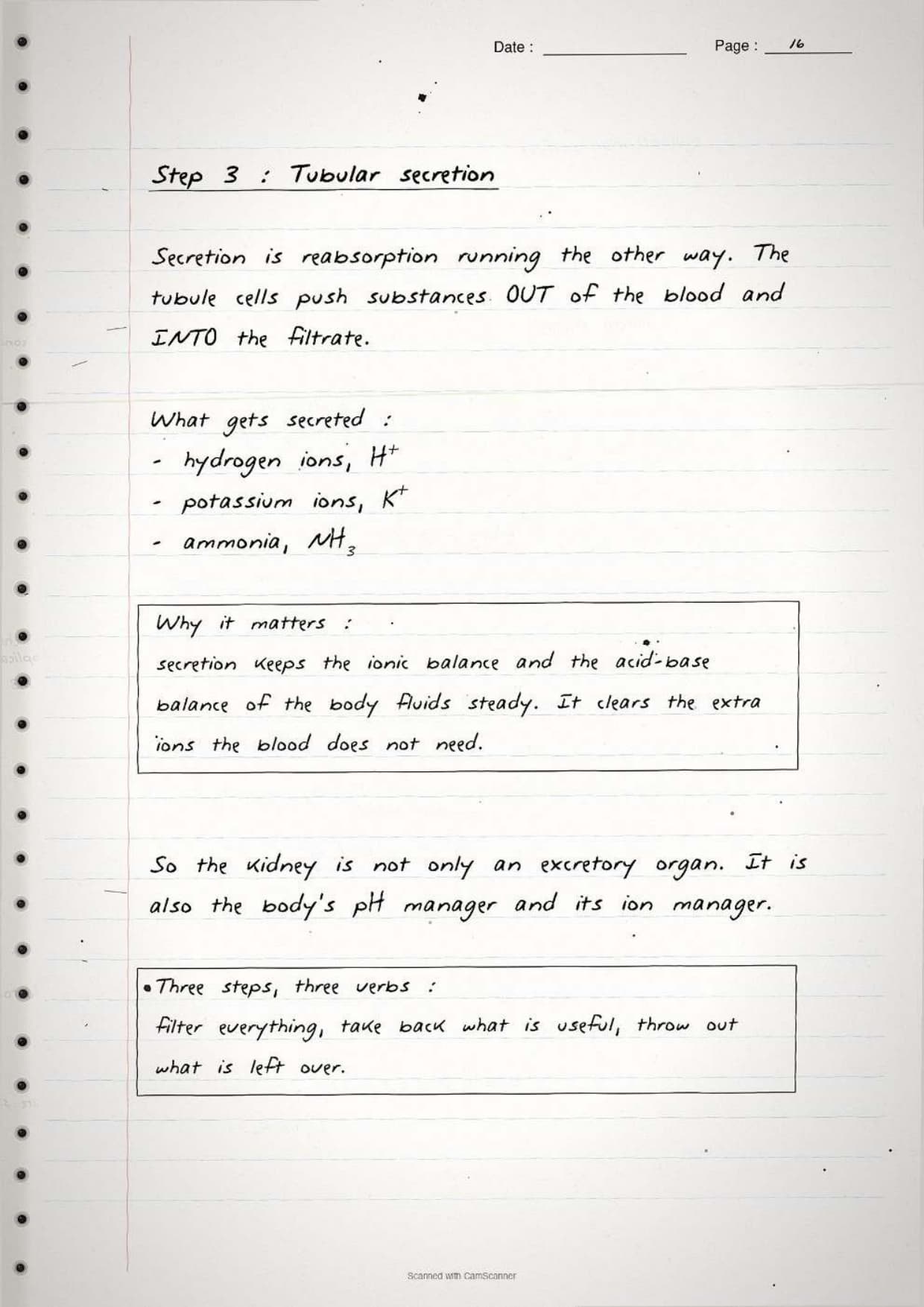
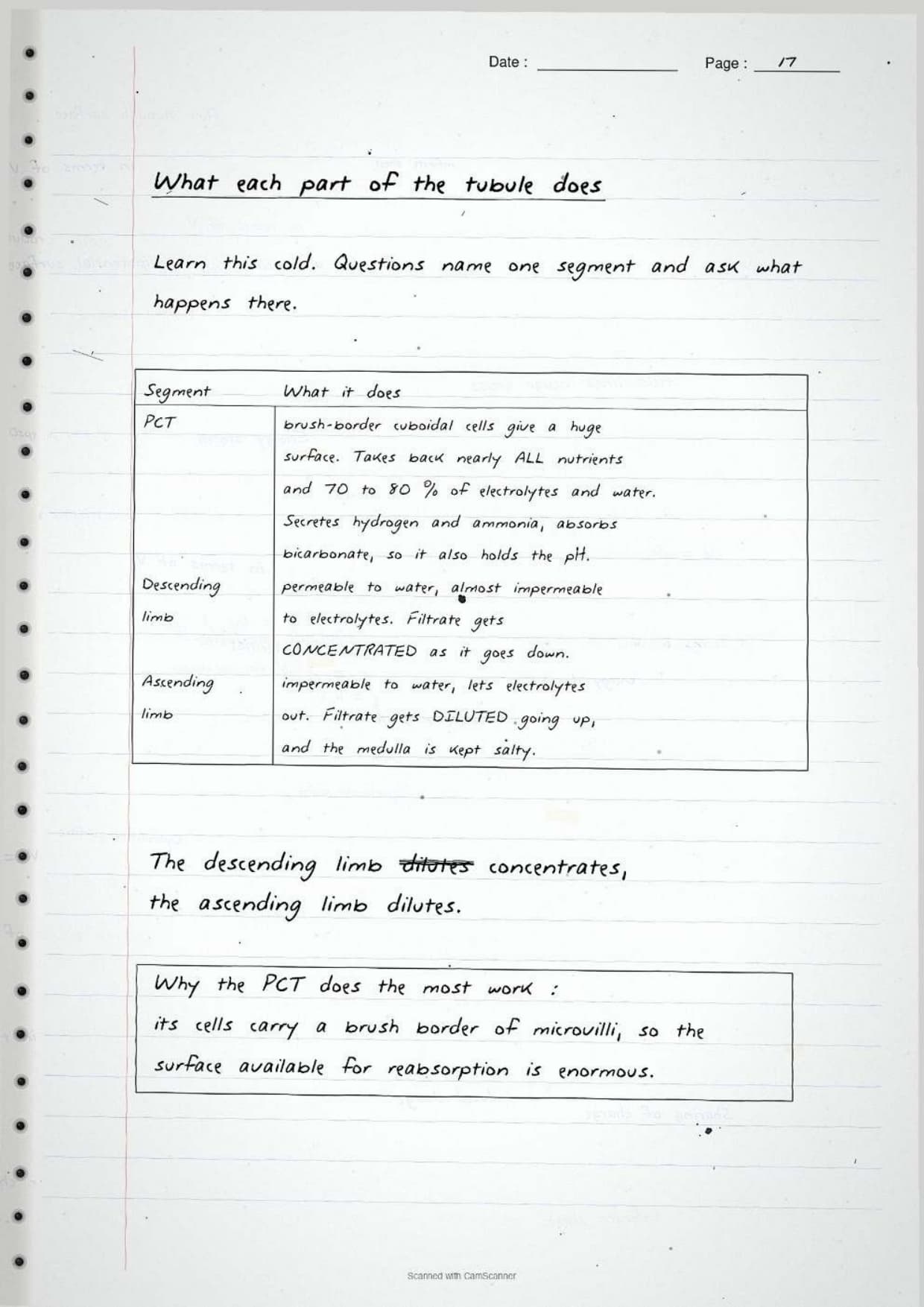
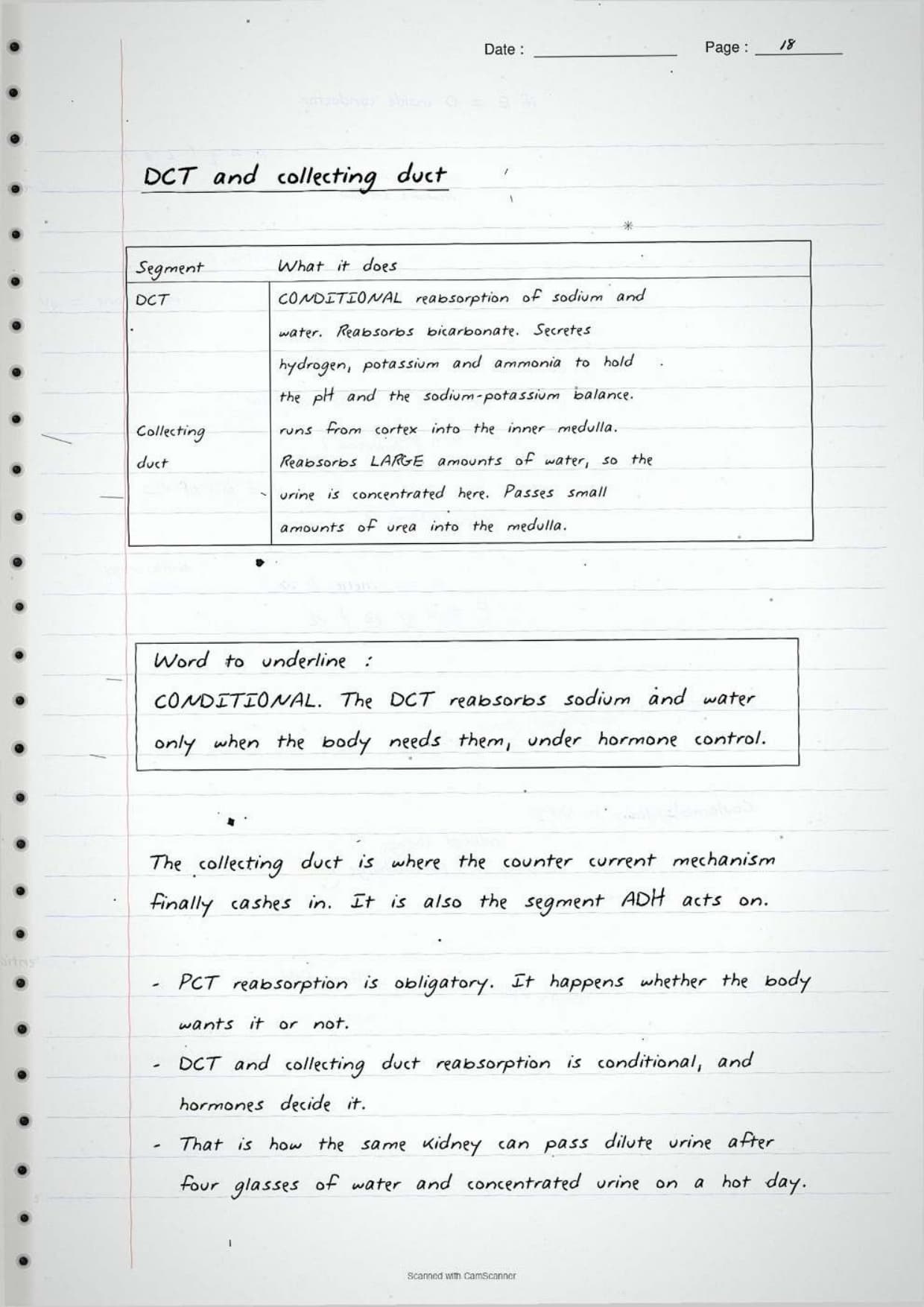
- Urine formation: glomerular filtration, reabsorption and secretion, with what each tubule segment does.
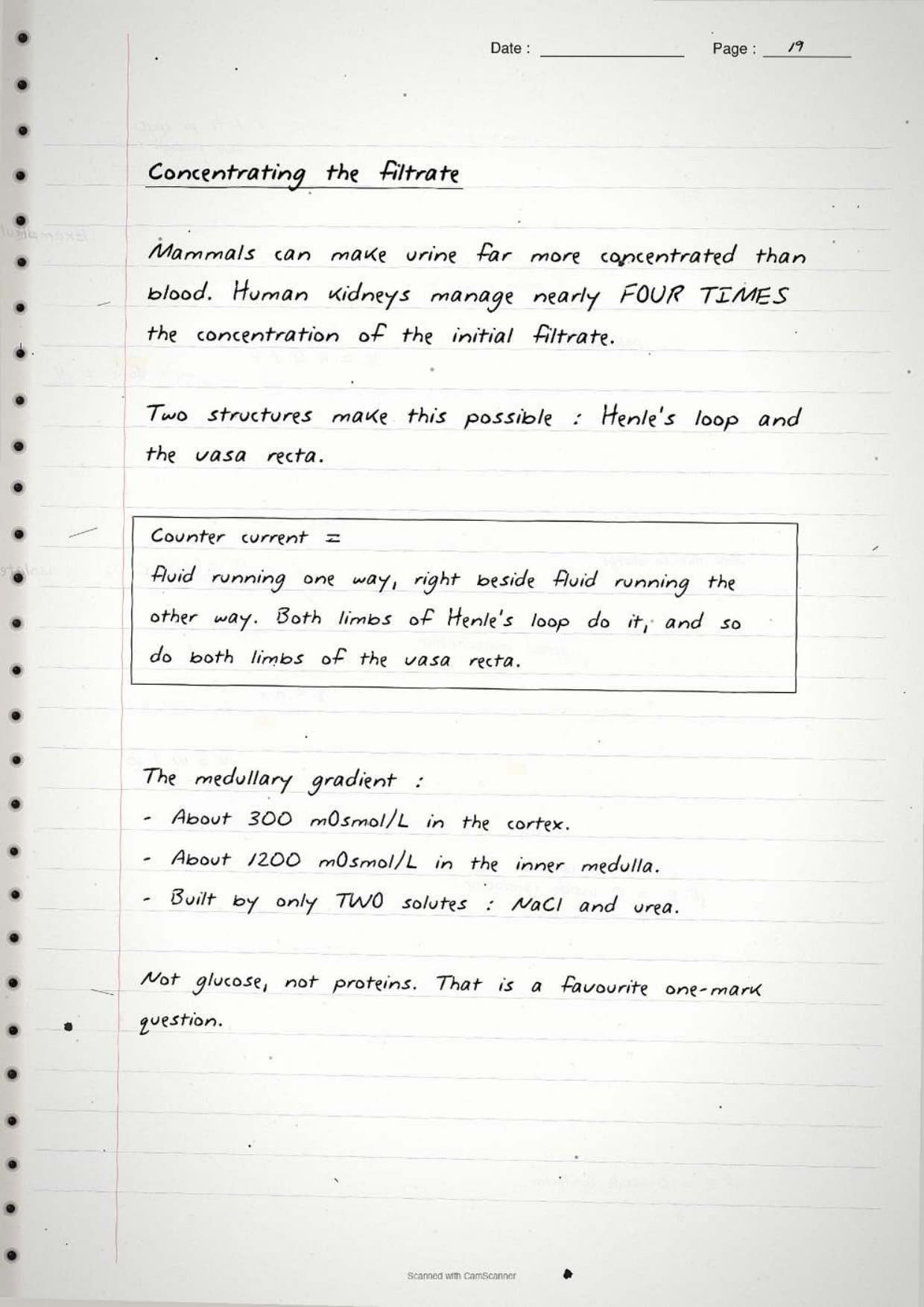
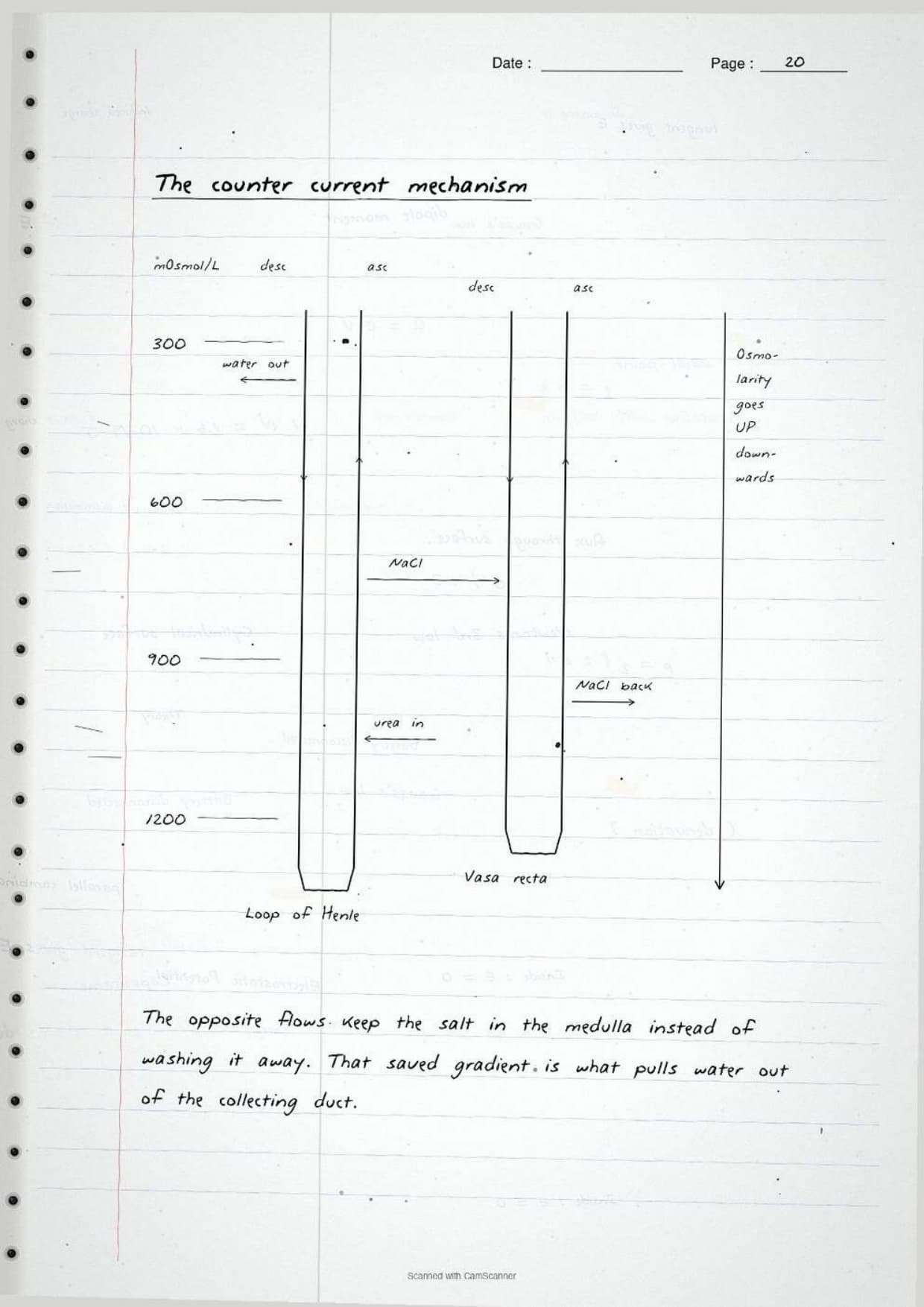
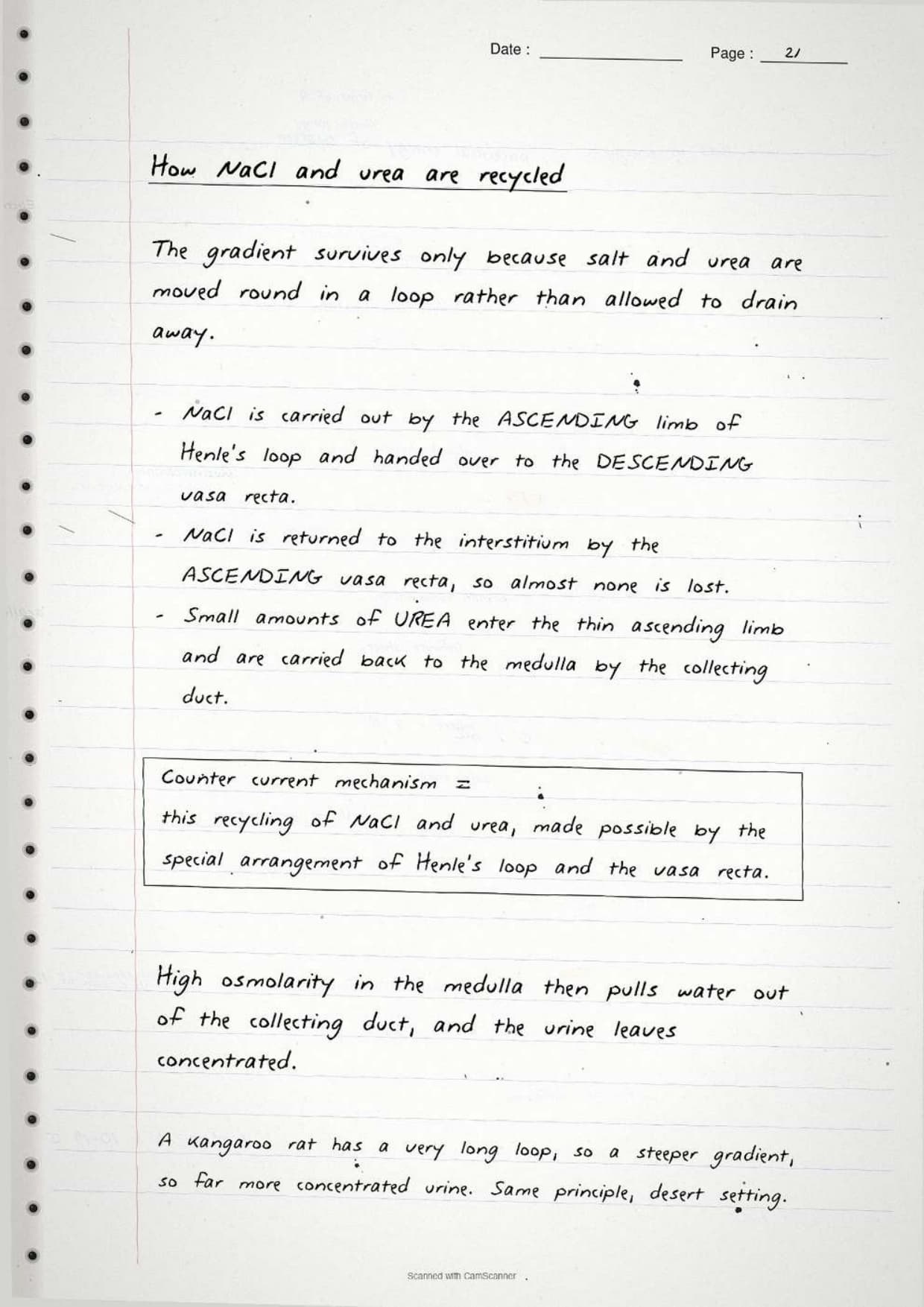
- Counter current mechanism: how Henle's loop and the vasa recta build the medullary gradient.
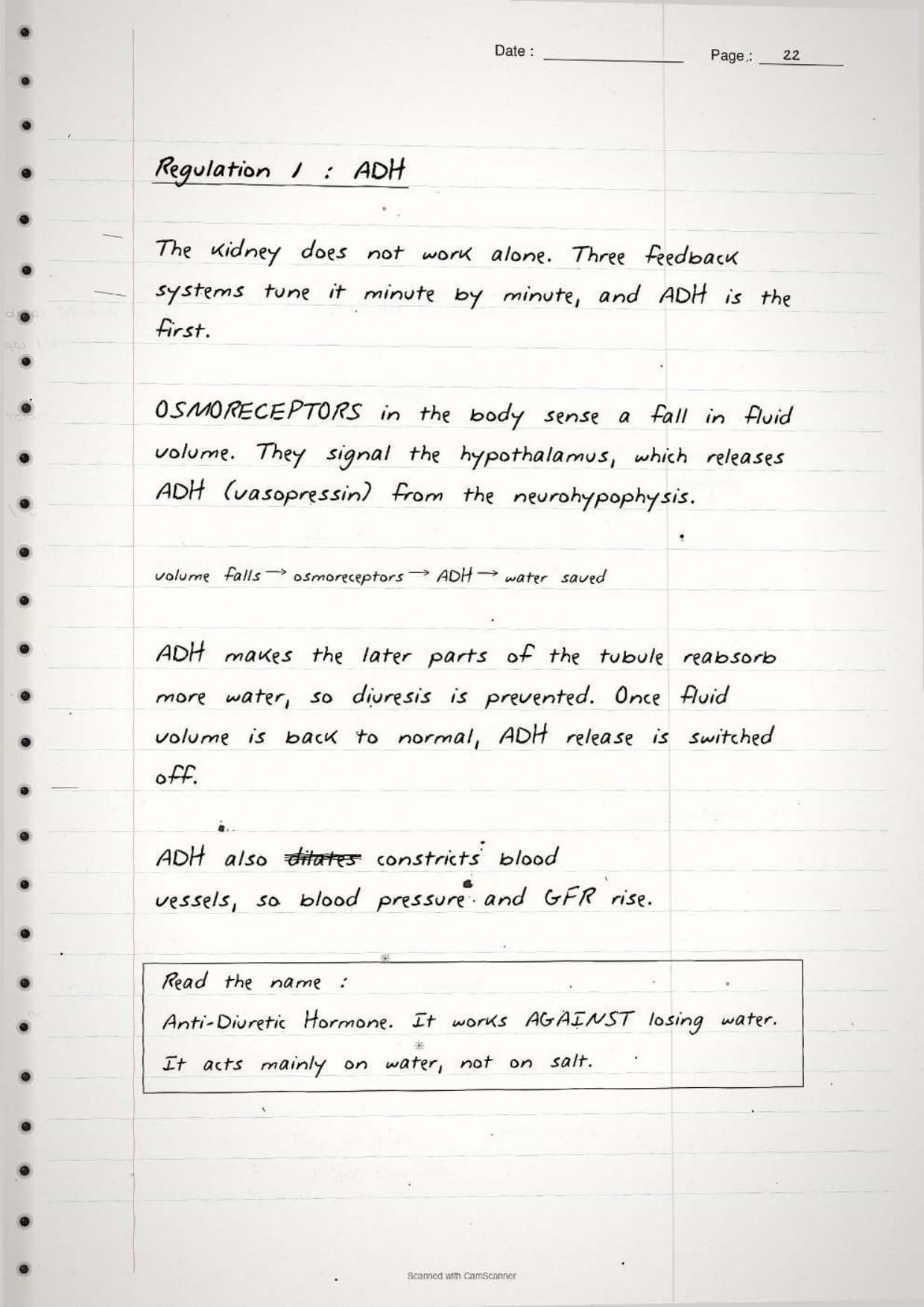
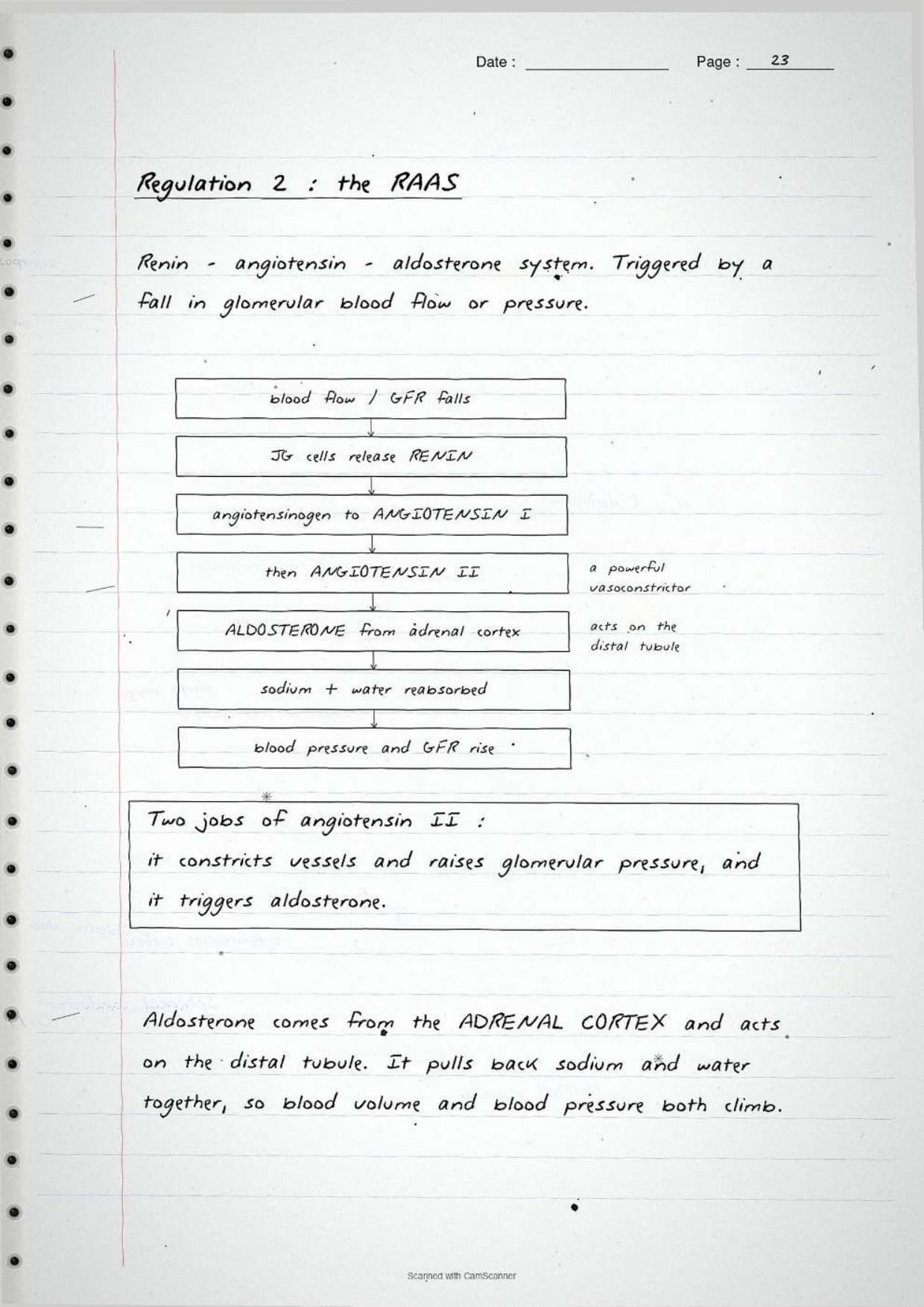
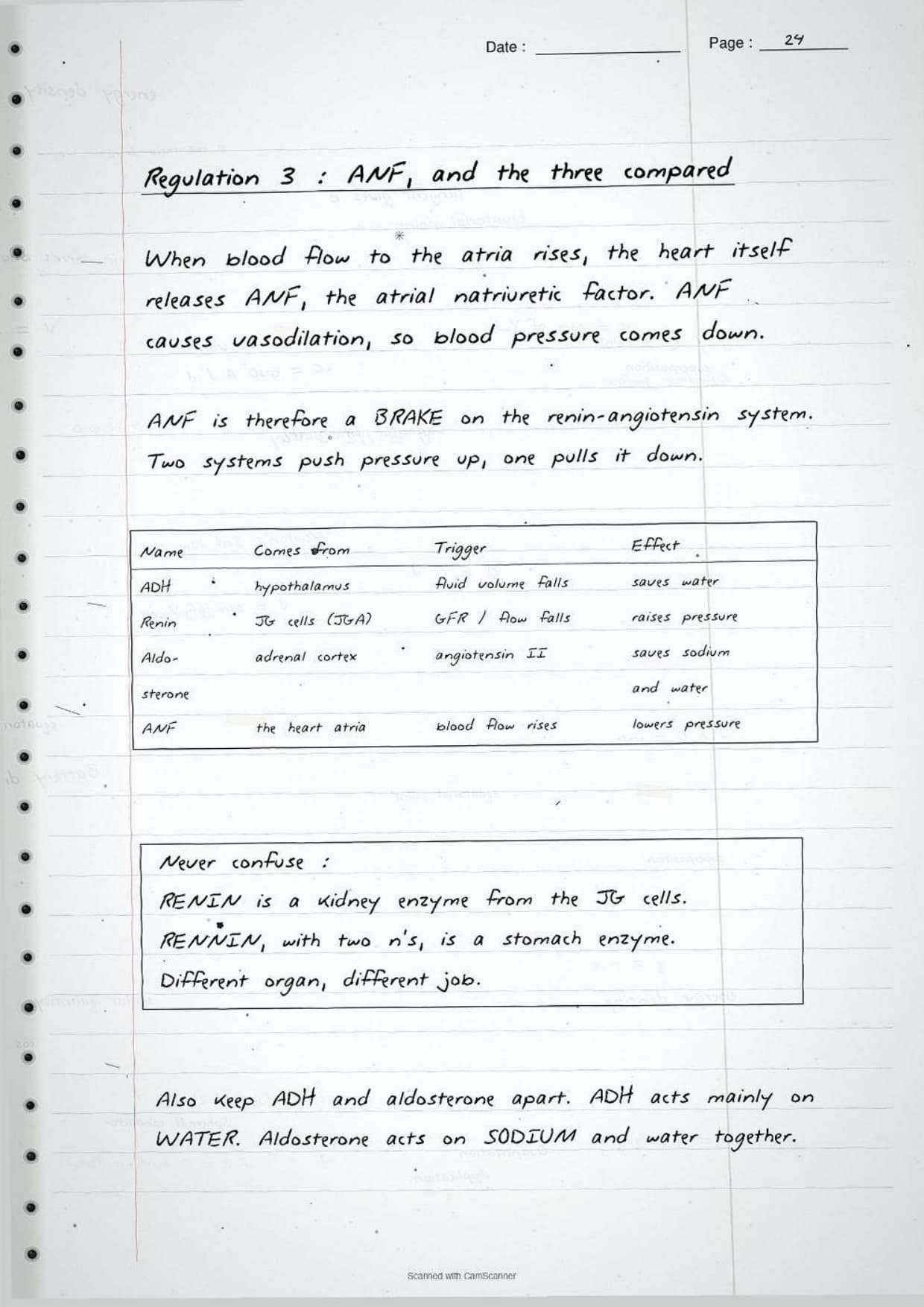
- Regulation and disorders: ADH, RAAS and ANF, micturition, other organs, then uraemia, renal failure, renal calculi, glomerulonephritis and dialysis.
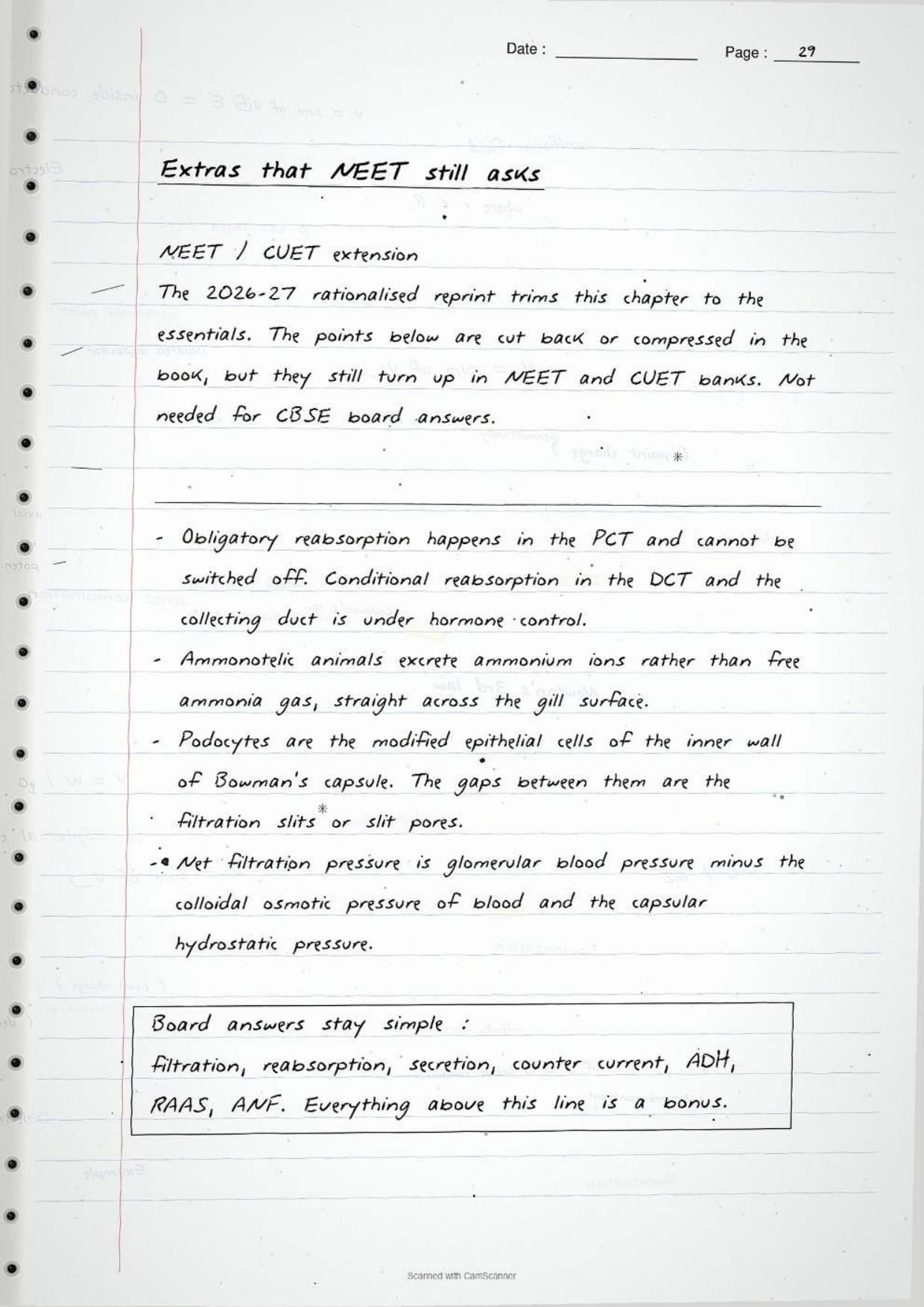
Page 29 carries a NEET and CUET extension block, since the current 2026-27 NCERT print compresses several of these points out of the board syllabus.
Key Diagrams and Terms in Excretory Products and their Elimination Notes
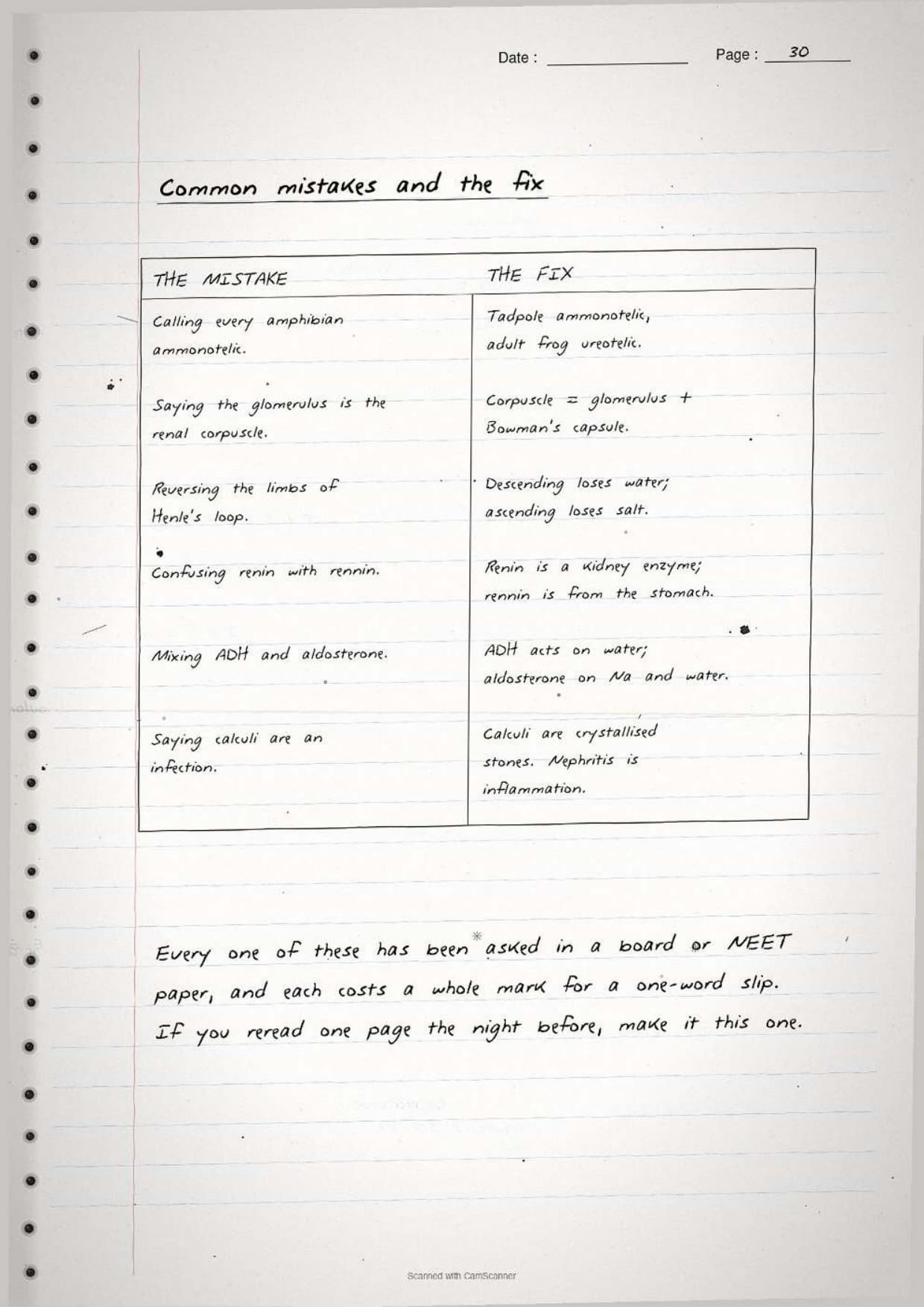
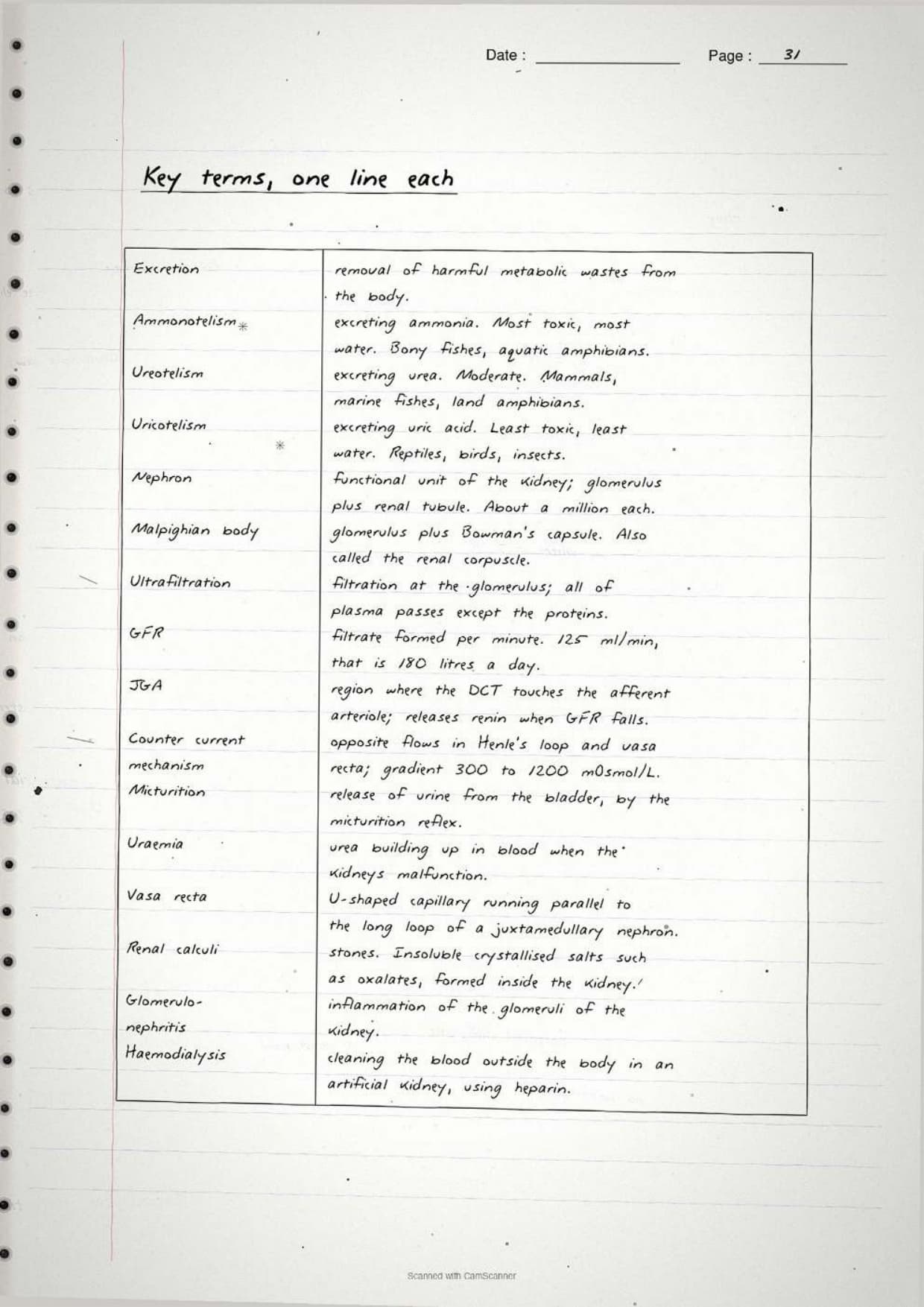
Most marks here are lost on terms that sound alike. The boxed table below is the block students get wrong most often, because examiners swap the meanings around.
| Term | How the notes define it |
|---|---|
| Nephron | Functional unit of the kidney, about a million in each; glomerulus plus renal tubule |
| Malpighian body | Glomerulus plus Bowman's capsule, also called the renal corpuscle |
| Ultrafiltration | Filtration at the glomerulus in which all of plasma passes except the proteins |
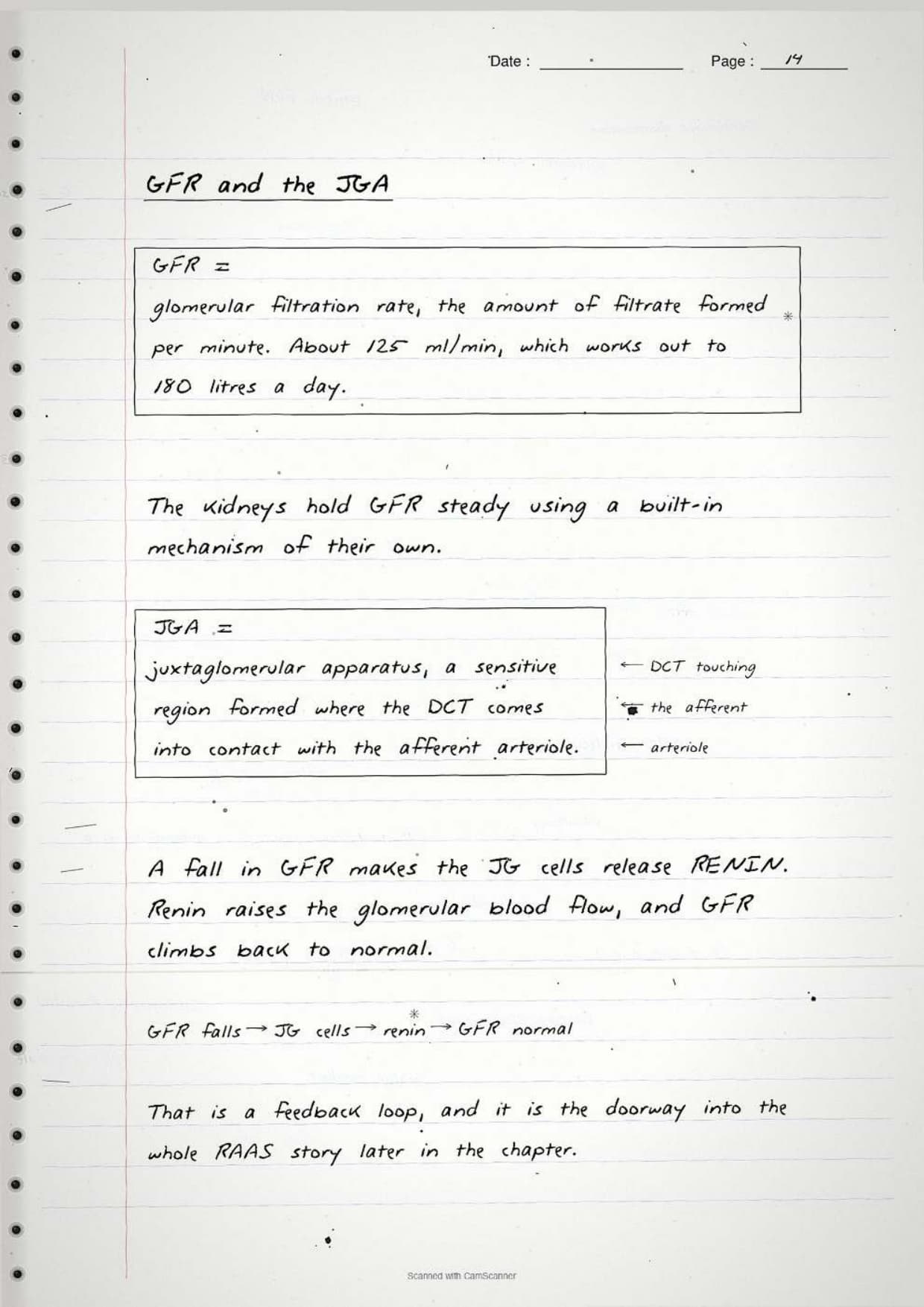
| GFR | Filtrate formed per minute, 125 ml/min, which is 180 litres a day |
| Vasa recta | U-shaped capillary running parallel to the long loop of a juxtamedullary nephron |
| Counter current mechanism | Opposite flows in Henle's loop and vasa recta; gradient 300 to 1200 mOsmol/L |
A hand-drawn flow chart runs the four organs in order, kidney to ureter to bladder to urethra. A second sketch traces the RAAS cascade from falling blood flow through renin, angiotensin II and aldosterone up to the rise in pressure. A third shows the dialysis circuit from artery to vein.
How to Use These Handwritten Notes for Revision
Work through the pages in three short passes. Read a topic page, cover the boxed definition and say it back, then answer two NCERT questions on it. This loop fixes exact wording faster than re-reading the textbook.
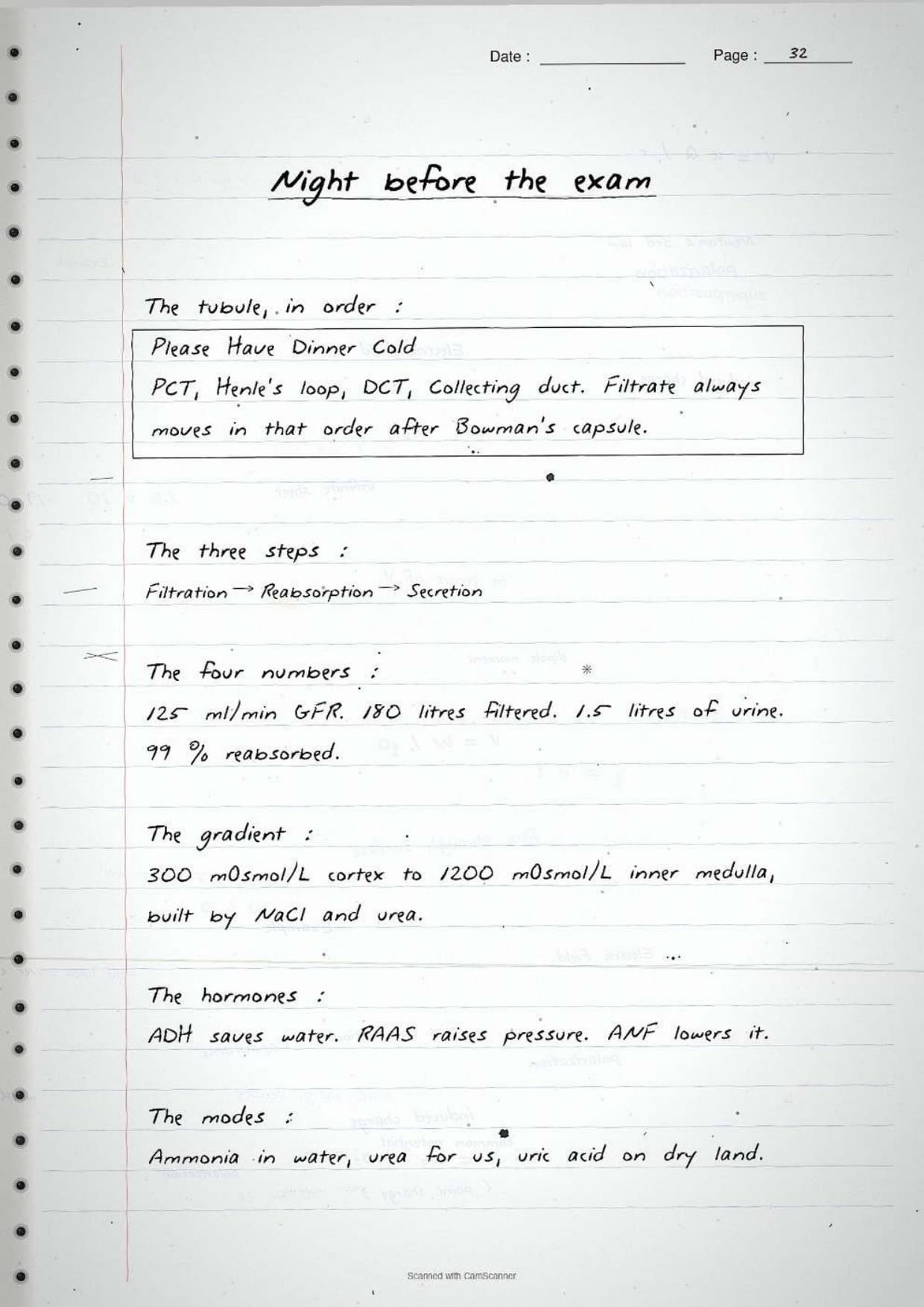
- Learn the four numbers cold: 125 ml/min, 180 litres, 1.5 litres of urine, 99% reabsorbed.
- Redraw the nephron and label PCT, Henle's loop, DCT and collecting duct from memory.
- Keep the class 11 biology handwritten notes chapter 16 Excretory Products and their Elimination open beside the NCERT Solutions while practising.
- Read the common-mistakes page last, on page 30, before you shut the file.
Around 40 minutes is enough for one full pass of this chapter, so the notes fit into the last week before an exam.
Student Feedback on Excretory Products and their Elimination Handwritten Notes
Students rate the hormone comparison table as the page that saves them the most time. The figures below come from a Collegedunia poll run before the 2026 boards.
- In a Collegedunia survey of 10,940 students, 74% said the ADH, renin, aldosterone and ANF table was their most-used revision page.
- Most-confused pair before the poll: renin against rennin, mixed up by about 5 in 10 students.
Source: 2026-27 Class 11 Biology student poll. Sample of 10,940 students from CBSE schools across 12 states.
Where to Use These Notes Alongside Other Resources
These handwritten pages work best next to the step-wise Solutions, the summary Notes and the Exemplar Solutions for the same chapter. Read the notes first, then check the answers, and keep the Exemplar for extra practice.
| Resource | Best used for |
|---|---|
| Excretory Products and their Elimination NCERT Solutions | Step-by-step answers to every back-exercise question |
| Excretory Products and their Elimination Class 11 Notes | Quick chapter summary with all key terms in one place |
| Excretory Products and their Elimination Exemplar Solutions | Every Exemplar question solved for NEET-level practice |
| Excretory Products and their Elimination NCERT Book PDF | The original chapter text and exercises |
All Class 11 Biology Handwritten Notes by Chapter
The table links the handwritten notes for every Class 11 Biology chapter, so students can move across the course in one click. Excretory Products and their Elimination is highlighted.
| Chapter | Handwritten Notes |
|---|---|
| Chapter 1 | The Living World |
| Chapter 2 | Biological Classification |
| Chapter 3 | Plant Kingdom |
| Chapter 4 | Animal Kingdom |
| Chapter 5 | Morphology of Flowering Plants |
| Chapter 6 | Anatomy of Flowering Plants |
| Chapter 7 | Structural Organisation in Animals |
| Chapter 8 | Cell The Unit of Life |
| Chapter 9 | Biomolecules |
| Chapter 10 | Cell Cycle and Cell Division |
| Chapter 11 | Photosynthesis in Higher Plants |
| Chapter 12 | Respiration in Plants |
| Chapter 13 | Plant Growth and Development |
| Chapter 14 | Breathing and Exchange of Gases |
| Chapter 15 | Body Fluids and Circulation |
| Chapter 16 | Excretory Products and their Elimination |
| Chapter 17 | Locomotion and Movement |
| Chapter 18 | Neural Control and Coordination |
| Chapter 19 | Chemical Coordination and Integration |
FAQs on Excretory Products and their Elimination Handwritten Notes
Ques. Are these class 11 biology handwritten notes chapter 16 Excretory Products and their Elimination free to download?
Ans. Yes. The Excretory Products and their Elimination handwritten notes are free to download as a PDF from this page. All 32 pages follow the 2026-27 NCERT and cover the full chapter in clear handwriting for quick revision.
Ques. What topics do these handwritten notes cover?
Ans. They cover the nitrogenous wastes, the three modes of excretion, the human excretory system, the nephron, urine formation, the counter current mechanism, ADH, RAAS and ANF, micturition, the role of other organs and the disorders with dialysis. Each topic sits on its own page with boxed definitions and hand-drawn charts.
Ques. What is the counter current mechanism in one line?
Ans. It is the recycling of NaCl and urea made possible by the way Henle's loop and the vasa recta run beside each other in opposite directions. This keeps the medulla salty, from about 300 mOsmol/L in the cortex to 1200 mOsmol/L in the inner medulla, so water is pulled out of the collecting duct.
Ques. Are these notes useful for NEET, not just Boards?
Ans. Yes. NEET picks two to three questions a year from this chapter, mostly on the nephron, the gradient numbers and the hormones. Page 29 is marked as a NEET and CUET extension and holds the points the board syllabus no longer needs.
Ques. How long do these notes take to revise?
Ans. About 40 minutes for one full pass. Read each topic page, recall the boxed definition, then answer two NCERT questions on it. Finish with the common-mistakes page on page 30 so the exact wording stays fresh.



Comments