



Content Curator
Classification of Organic Compounds covers two categories, Structure and Function. Organic compounds are any type of chemical compound in which one or more carbon atoms are covalently linked to other element atoms. Examples include methane, cyclohexane, ethyne, ethane, and many more.
| Table of Content |
Key Terms: Functional groups, organic compounds structure, carbon, atoms, acyclic, open chain compounds
Classification of Organic Compounds
[Click Here for Sample Questions]
Organic compounds can be classified on two bases. Namely:
- Structure of the organic compound
- Function of the organic compound

Classification of Organic Compounds
Read More: Acids Bases and Salt
Classification Based on Structure
[Click Here for Sample Questions]
Organic compounds classification on the basis of structure includes Acyclic or Open Chain Compounds and Cyclic or Closed Chain Compounds. Other categories have also been explained further in the article:
Acyclic or Open Chain Compounds
In these organic substances, the carbon atoms are present in the form of an open chain. These were initially known as Aliphatic compounds because the compounds of this classification were either extracted from animals or vegetable fats.
Acyclic or open chain compounds can be further divided into Straight Chain Compounds and Branched-chain Compounds.
Straight Chain Compounds
The carbon skeleton is in the form of a straight chain. Examples:
n-Propane CH3-CH2-CH3
Propene CH2=CH-CH3
Branched-chain Compounds
The carbon skeleton is in the form of a branched chain. Example: Isobutylene

Isobutylene
Cyclic or Closed Chain Compounds
They are distinguished by the presence of one or more closed chains or rings of carbon atoms in the structure. They are also called Ring compounds.
Cyclic or Closed chain compounds can be divided further into the categories of Heterocyclic Compounds and Homocyclic Compounds.
Heterocyclic Compounds
These are a kind of organic substance in which a carbon ring exists. Cyclic compounds which include one or more heteroatoms in their rings are called heterocyclic compounds.
The heteroatoms found in these compounds are nitrogen, oxygen, sulfur, boron, silicon, etc. Very popular examples for these compounds are synthetic dyes, nucleic acids, and most of the drugs.
Heterocyclic compounds are further divided into two broad categories which are: Alicyclic Heterocyclic Compounds and Aromatic Heterocyclic Compounds.
Alicyclic Heterocyclic Compounds
They can be simply understood as simple line compounds. They are ring structures which one or more heteroatoms. Examples for these are

Alicyclic Heterocyclic Compounds
Aromatic Heterocyclic Compounds
Aromatic heterocyclic compounds contain one or more heteroatoms in their molecules. Examples include:

Aromatic heterocyclic compounds
Homocyclic Compounds
These structures are pure in the sense that they are entirely made up of carbon atoms. They do not include any other element atom in their ring structure. These can also be called Carbocyclic compounds.
The best examples of these compounds are naphthalene, tetracene, benzene, and so on.
Homocyclic compounds are divided into two categories: Alicyclic Compound and Aromatic Compound.
Alicyclic Compound
Alicyclic exhibits properties of both aliphatic compounds and cyclic compounds. The name of these compounds is in attribute to Aliphatic compounds. Alicyclic compounds can be either saturated or unsaturated.
Examples of these compounds include cyclopropane, cyclobutane, cyclopentane, cyclohexane, etc.

Alicyclic Compound
Aromatic Compounds
These are cyclic unsaturated compounds. 'Aroma' is a Greek word that means pleasant smell. Most of these substances have a pleasant and fragrant smell. These compounds are called aromatics or arenas.
Aromatic compounds are easily distinguishable by one or more than one planar ring of atoms linked by covalent bonds of two different types. Aromatic compounds have high stability. For example, benzene and toluene.
Aromatic compounds are further categorized into Benzenoid Aromatic Compound and Non-Benzenoid Aromatic Compound.
Benzenoid Aromatic Compound
These aromatic compounds are mainly obtained from benzene. They are characterized by the presence of one or more connected or isolated benzene rings or their derivatives in their structure.
Depending upon the number of benzene rings fused benzenoid compounds can be monocyclic, bicyclic, or tricyclic compounds. A few examples of these compounds include Phenanthrene, Naphthalene, and Anthracene.
Benzenoid Aromatic Compound Classification
Based on how many benzene rings are present in the structure, the benzenoid compounds can be divided into Monocyclic Compounds, Bicyclic Compounds, and Tricyclic Compounds.
Monocyclic Compounds: They can be characterized by the presence of one single benzene ring to which other groups are attached.

Monocyclic Compounds
Bicyclic and Tricyclic Compounds: These can be characterized by the presence of two or more benzene or derivative rings in their structure. Examples include Naphthalene, Phenanthere, and Anthracene.

Bicyclic and Tricyclic Compounds
Non-benzenoid Aromatic Compound
The compounds consist of other highly unsaturated rings instead of benzene rings. These aromatic substances have special stability. Examples of these compounds are Tropolone and Azulene.

Non-benzenoid Aromatic Compound
Also Read:
Classification Based on Function
[Click Here for Sample Questions]
A functional group is described as a process in which a molecule receives its characteristic chemical properties by one or more groups of atoms or elements which are connected to the original molecule.
The classification of organic compounds based on their functional groups helps determine the chemical properties of a particular compound. It is important to understand that the addition of a functional group to the compound significantly changes the nature of the substance and impacts how the compound interacts and reacts with other substances.
There are many examples in the functional group such as the Carboxylic Acid Group(-COOH), the Hydroxyl Group (-OH), and the Aldehyde Group (-CHO).
Read More: Periodic Classification of Elements
Functional Groups of Organic Compounds
[Click Here for Sample Questions]
Class: Amides(Alkanamides)
Functional group: Amide
Example: Acetamide, Benzamide, Dimethylformamide

Acetamide
Class: Alcohols(Alkanols)
Functional group: -OH(Hydroxy)
Examples: ethyl alcohol

Ethyl Alcohol
Class: Amine
Functional group: Amine
Example: ethylamine

Ethylamine
Class: Acetylenes/ Alkynes(yne)
Examples: Ethyne, Propyne, 1-Butyne

Ethyne
Class: Acid anhydrides(Alkanoic anhydrides)
Functional group: Anhydride
Examples: acetic anhydride (CH3CO)2O

Acetic Anhydride
Class: Aldehydes (Alkanals)
Functional group: Aldehydic
Example: Formaldehyde, acetaldehyde, propionaldehyde, vanillin, benzaldehyde

Formaldehyde
Class: Acid Halides(Alkanoyl halids)
Functional group: Acylhalide
Examples: propanoyl chloride, butanoyl chloride, butanoyl bromide, butanoyl iodide

Propanyol Chloride
Class: Ethers(Alkoxyalkanes)
Examples: ethoxyethane(diethyl ether), methoxyethane(methyl ethyl ether), 2-methoxy-2-methylpropane(MTBE), phenoxybenzene(diphenyl ether)

Ethoxyethane
Class: Carboxylic acid (Alkonic acid)
Functional group: Carboxyl
Examples: acetic acid, benzoic acid, formic acid, chloroacetic acid

Acetic Acid
Class: Cyanides/ Nitriles (Alkanenitriles)
Functional groups: Cyano
Examples: calcium cyanamide, cyanogen bromide, cyanogen chloride

Calcium Cyanamide
Class: Alkyl Halides
Examples: bromoethane, fluorocyclopentane, 2-chloropropane
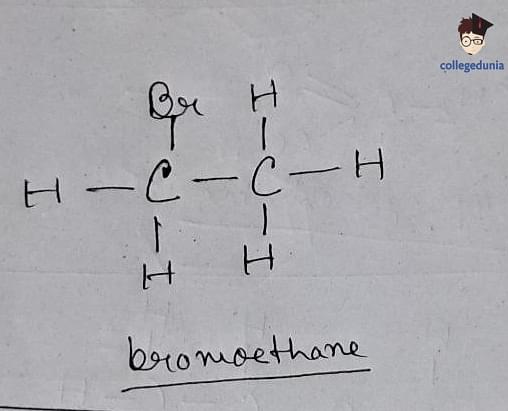
Bromoethane
Class: Esters ()
Functional group: Ester
Examples: ethyl ethanoate, methyl propanoate, butyl octanoate

Ethyl Ethenoate
Class: Nitro compounds (Nitroalkanes)
Functional group: Nitro
Examples: nitromethane, nitroethane, nitropropane

Nitromethane
Class: Ketones (Alkanones)
Functional groups: Carbonyl
Examples: carbamates, urea

Urea
Class: Olefins/ Alenes (ene)
Examples: ethene, propene

Ethene
Class: Isocyanides
Functional groups: -NC(Isocyanide)
Examples: tert-butyl isocyanide

tert-butyl isocyanide
Read More: Combustion Reaction
Things to Remember
- This chapter is easy and holds up to 4-6 marks.
- This chapter covers the basics of what organic compounds are and how they are classified.
- Remembering the examples for each category is very important as they also carry marks.
- The categories get interlinked as you progress so getting these basics clear will be extremely helpful.
- Organic compounds are compounds formed with one or more carbon atoms that are covalently paired with other elements atoms.
- These are only the classification of organic compounds, do not confuse them with inorganic compounds.
Read More: Carbon and its Compounds
Sample Questions
Ques. What is meant by Organic Compounds? (1 Mark)
Ans. Organic compounds are a large class of chemical compounds. In this class, one or more carbon atoms are covalently paired with other elements atoms. These are hydrogen, oxygen, or nitrogen.
Ques. What is an example of an organic chemical? (1 Mark)
Ans. Examples of organic chemicals are gasoline, plastics, detergents, natural gas, colorants, food additives, and drugs. Soap and detergent fall under two different categories of organic chemistry; however, both are used for washing.
Ques. What are the uses of organic compounds? (2 Marks)
Ans. Organic molecules have several industrial applications including food, pharmaceuticals, fuels, and building. Alkanes consist of chemical substances like propane, octane, and methane. These are used as oils for products like gasoline in cars, heating/cooking oil in households, etc.
Ques. What organic compounds are used in medicine? (2 Marks)
Ans. Organic compounds are widely used as medicinal products. Their availability ranges from small organic molecules (e.g., atorvastatin, clopidogrel, fluticasone) to “biologics” (erythropoietin, infliximab, insulin glargine). The latter is more widely used as protein medicinal products.
Ques. Name the functional group of organic compounds that can be hydrogenated. With the help of a suitable example, explain the process of hydrogenation mentioning the conditions of the reaction and any one change in physical property with the formation of the product. Name any one natural source of organic compounds that are hydrogenated. (3 Marks) [CBSE 2010]
Ans. Double =, Triple bond ≡ are functional groups (reactive parts of compounds) which can be hydrogenated

Heated unsaturated hydrocarbons with hydrogen (in the presence of nickel as a catalyst) form saturated hydrocarbons. If the unsaturated hydrocarbons are in the liquid form initially, they will change into solids. For example, vegetable oils are hydrogenated to produce vegetable ghee. Also, plants are natural sources of vegetable oils that can be hydrogenated.
Ques. Define homologous series of organic compounds. List its two characteristics. Write the name and formula of the first member of the series of alkenes. (3 Marks) [CBSE 2012]
Ans. Homologous series are organic compound series with the same functional group and similar chemical properties.
Each member is different from the successive member by —CH2— group. The difference in molecular weight between two successive members is 14 u.
Characteristics:
(i) It has the same general formula which makes it easy to derive all members.
(ii) They have similar chemical properties.
C2H4, CH2=CH2, Ethene is first member of alkene series.
Checkout Important Question: Homologous Series
Also Read:



Comments