



Education Journalist | Study Abroad Lead
Gamete is a sex cell. It is formed before sexual reproduction. It is a product of reduction division called meiosis. It is a haploid cell due to the presence of X number of chromosomes. The male gamete is called an antherozoid, spermatozoid, or sperm. The female gamete is called an egg cell or ovum.
| Table of Contents |
Key Takeaways: Gametes, Sperms, Ovum, Gonads, Testes, Ovaries, Fertilisation, Sexual reproduction, Meiosis, Chromosomes
Gamete
[Click Here for Sample Questions]
Gamete is a haploid cell that is involved in sexual reproduction. The male gamete is a sperm and the female gamete is an ovum.
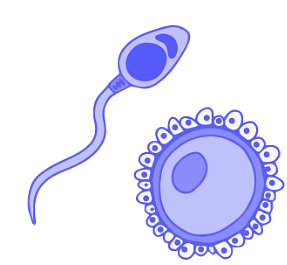
Sperm and ovum
Also Read:
| Related Articles | ||
|---|---|---|
| Thyroid Gland | Endocrine Gland | Pineal Gland |
| Luteinizing Hormone | Gonads | Growth Hormone |
| Estrogen Hormone | Female Hormones | Parathyroid Hormone |
Gonads
[Click Here for Sample Questions]
Gametes are formed in sex organs called gonads. Male gonads are called antheridia in plants and testes in animals. In mammals, testes are located in the scrotum. Female gonads are called archegonia in lower plants, ovaries in flowering plants and animals. In mammals, ovaries are located in the abdominal cavity on either side of the uterus.

Male and female gonads
Gamete Formation
[Click Here for Sample Questions]
Gametes are formed by reduction division called meiosis. They are formed in sex organs called gonads. In gonads, each cell is diploid with 2 sets of chromosomes (2x). They undergo a special kind of cell division called meiosis.

Gamete formation
In meiosis two successive nuclear division and one cytoplasmic division takes place. As a result, four daughter cells are formed. Each daughter cell is a haploid with only one set of chromosomes (X). The formation of male gametes is called spermatogenesis. The formation of an ovum or an egg cell is called oogenesis.
Read More: Hormones
Fertilisation
[Click Here for Sample Questions]
The fusion of male and female gametes (haploid) is called fertilisation. It is the characteristic feature of sexual reproduction. In the living world, fertilisation may be either external or internal. It results in the formation of a zygote (diploid). The zygote develops into an embryo, and subsequently into an adult one.

Fertilisation
Due to the mixing of DNA (Deoxyribonucleic acid), the zygote, embryo, and adults get features that are different from their parents. These kinds of variation are necessary for the survival of species in adverse conditions. Variations are the building blocks of evolution also.
Function of Gametes
[Click Here for Sample Questions]
Haploid gametes unite to maintain the chromosome number in zygote, embryo and adults. Otherwise, the future generation will get 4x, 8x, 16x, 32x, … etc chromosomes, which creates giants and is also harmful to the existence of the species.
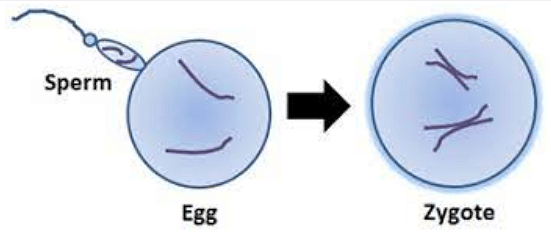
Male Gamete fuses with Female gametes
Modes of gametic fusion
[Click Here for Sample Questions]
On the basis of the size and shape of gametes, sexual reproduction is categorised as follows:
- Isogamy
- Anisogamy
- Oogamy
In Isogamy, both the gametes are similar in size, shape and are motile.
In anisogamy, the gametes are similar in shape but differ in size. Isogamy and anisogamy are is seen in lower organisms like algae and fungi.

Modes of Gametic Fusion
In oogamy, the gametes differ in both size and shape. The male gamete is called the sperm and the female gamete is called the ovum. It is a common feature in higher plants and animals.
Things to Remember
- A gamete is a haploid cell that is involved in sexual reproduction. The male gamete is a sperm and the female gamete is an ovum.
- Gametes are formed in sex organs called gonads.
- Male gonads are called antheridia in plants and testes in animals. Female gonads are called archegonia in lower plants, ovaries in flowering plants and animals.
- The formation of male gametes is called spermatogenesis. The formation of ovum or egg cells is called oogenesis.
- The fusion of male and female gametes (haploid) is called fertilisation. It results in the formation of a zygote (diploid).
Also Read:
Sample Questions
Ques 1: What is a gamete? What are the two types of gamete? (2 marks)
Ans: The haploid cell that takes part in sexual reproduction is called a gamete. Male gametes are called sperms. Female gametes are called ova.
Ques 2: What are gametes? Where are they formed? (2 marks)
Ans: The sex cells are called gametes. They are formed in special structures called gonads. The male gonads are called testes and female gonads are called ovaries.
Ques 3: Why do organisms produce gamets? What are their significance? (2 marks)
Ans: Organisms produce gametes for sexual reproduction. Gametes are haploid with a single set of chromosomes. Male and female gametes unite during fertilisation to make zygotes, embryos and adult organisms diploid. The secondary importance is the creation of variations through DNA mixing.
Ques 4: How are gametes produced? (2 marks)
Ans: Gametes are sex cells involved in sexual reproduction. They are formed before fertilisation. They are formed by a kind of reduction division called meiosis.
Ques 5: Where are gametes produced? What are the structures that form gametes in plants and animals? (2 marks)
Ans: Gametes are produced in sex organs called gonads. The male sex organs are called testes, and the female sex organs are called ovaries in animals. In the case of plants, the male sex organs are called antheridia, whereas the female sex organs are called archegonia.
Ques 6: What are the three ways of fusion of gametes? (3 marks)
Ans: On the basis of the size and shape of gametes, sexual reproduction is categorised as isogamy, anisogamy, and oogamy.
Isogamy: In isogamy, both the gametes are similar in size, shape and are motile.
Anisogamy: In anisogamy, the gametes are similar in shape but differ in size. Isogamy and anisogamy are is seen in lower organisms like algae and fungi.
Oogamy: In oogamy, the gametes differ in both size and shape. The male gamete is called the sperm and the female gamete is called the ovum. It is a common feature in higher plants and animals.
Ques 7: How is the chromosome number is maintained constant in species? (2 marks)
Ans: In species, the chromosome number is maintained constant by meiosis. It results in the formation of haploid gametes. When haploid gametes unite, diplod zygotes are formed. Zygote develops into an embryo and an adult organism with diplod number of chromosomes.
Ques 8. What do you mean by menstrual cycle? When does menopause occur? (2 marks)
Ans: The period of ovulation and mensuration in females primates that takes place every month positively for pregnancy is called the menstrual cycle.
Menopause occurs between the age of 45 - 50 in a female body.
For Latest Updates on Upcoming Board Exams, Click Here: https://t.me/class_10_12_board_updates
Also check:



Comments