



Education Journalist | Study Abroad Lead
Physiology is a branch of Biology which deals with the conventional and basic functions of a living organism and its parts. One will understand the depth and gets a basic knowledge about physiology after diving deep into this article. In this article, we mainly focus on the types of Physiology and the different branches of studies in Physiology which were further classified into different types. The precise definition of Physiology was given as – “the way in which a living organism or body part functions.” Professional physiologists mostly work in the research institutes and very few of them start practice for their research in disease management with the patients. This section of science is very interesting and had a vast base to learn about the leading technologies. Now, after completely reading this article, one can clearly understand the classification and the different types of Physiology.
| Table of Contents |
Key Terms: Physiology, Classification of Physiology, Difference between Physiology and Biology, Physiologist, Biology, Branches of Physiology, Organs, Cells, Human Body.
Definition of Physiology
[Click Here for Sample Questions]
Physiology is a branch of biology which deals with the functions, characteristics, and mechanisms of each part of the body. It also studies about mechanism of the basic constituents in each organ system.
To explain thoroughly, when we start to construct a building, certain elements have to be assembled in a particular order to work properly, If that is achieved then we can make many things work out by using the same elements. The same principle can be applied in the working of DNA which is the fundamental building block of all organisms. Tissue, molecules, cells, organs, and the whole-body systems all together work in different ways to respond to different environments and challenges by developing a picture of how these interactions work and how they maintain a delicate balance such as blood pressure or body temperature. These topics are the foremost area of study of a physiologist.
Most of the activities we do in our daily life go hand in hand without our involvement, these things were carried out by the internal organs which were controlled by the brain through the central nervous system. This particular branch of biology, called Physiology, deals with the science behind the molecular behaviour to be systematic so that the organs will function and keep the organism healthy.
Branches of Physiology
[Click Here for Sample Questions]
We can classify the physiology for each living organism based on the community or the ranking of the organisms in the ecosystem. According to this classification, Physiology was classified as the following:
- Plant Physiology
- Animal Physiology
- Human Physiology
- Medical Physiology
- Cellular Physiology
- Clinical Physiology
Plant Physiology
It is the study of plant tissues and their growth along with the functions occurring in plants, working, and several vital processes. Some of the examples of the studies which come under this Plant Physiology are:
Plant biology; metabolism; mineral nutrition and development; water relations; growth and transport process.
This study gives the complete metabolism from birth, growth, till the death of the plant.

Plant Physiology
Animal Physiology
It is the study of the process which includes the biological processes occurring in the animal body. This involves the understanding of various levels of biological systems present in the animal body. Many physiologists who were into this study, examine the biological processes and functioning of the system at different environmental stages.
This entire process is related to the anatomy and the basic chemical and physical laws of nature.
This study includes the scientific disciplines of cell biology, embryology, developmental biology, endocrinology, immunology, evolutionary biology, and a host of connected disciplines, ecology, genetics as they relate to all the organisms which come under consideration of animals in an ecosystem.
Human Physiology
It is the study of the human digestive system and the nervous system and includes the functions of living organisms such as nutrition, movement, reproduction, etc., All physiological activities are aimed at maintenance of homeostasis, living, and Reproduction. The homeostasis differentiates the living being from the non-living world. It provides the uniqueness for self-duplicating, genericized groups of organisms. These mechanisms involve stabilizing the optimum level of water, minerals, and other components of the body fluids and other thermal regulations. It is achieved by several biophysical, biochemical processes and Hormonal secretions, and metabolic modifications.
The phenomenon of living is made possible due to several types of evolved organs and their well-co-ordinated functions. The functioning of the heart as a pumping organ is being emotionally controlled by astonishing. The oxygen association and dissociation capabilities of blood pigments cascade effects of a minimal number of hormones at the molecular level. The process of nervous conduction, analyzing and memory maintaining capacities of the brain, the holistic visual perception of the eye are all wonderful inventions of nature towards a simple process of living.

Human Physiology
Medical Physiology
It is the branch of biology which deals with the body systems from the molecular level. This study majorly includes the working of pharmaceutical medicines on different parts of the body. It mostly focuses on the drug action at different parts of the body and the reaction given to a particular drug.
This study also helps to understand the cellular metabolism in animals. Sometimes the action of different chemicals was also tested on the plants and the reactions were noted which helps to understand the physiology of plants
Cellular Physiology
In this study, of all the biological activities that take place in a cell to keep it alive and functional. We find major similarities between the animal cells and the plant cells function despite them having a variable structure.
In the case of humans, deep testing of human cells takes place to get an idea of nutrient intake, cell replication, and energy production. Production of immunity enhancers and so on. It includes the study of cells, levels of organization in the cells, contents of the cell, study on the cell organelles, intercellular communication.

Cellular Physiology
Clinical Physiology
In this study, the physiologists go deeper into the metabolisms occurring in the human body by performing some surgeries and also using highly sophisticated technology to get a better understanding of the inner parts of the human body. This study is very complicated and also very expensive but the results will be path-breaking.
This study includes highly sophisticated and advanced technologies such as MRI (Magnetic Resonance Imagining), X-rays, cautery, lasers, electric current generators, and nuclear medicine scanners. The below diagram shows a Clinical Neuro Physiology Instrument.
Another type of classification of Physiology includes the following branches:
- Exercise Physiology
- Defence Physiology
- Evolutionary Physiology
- System Physiology
System Physiology
It tries to describe the way individual cells or components of a system converge to respond as a whole. They often investigate metabolic networks and cell signalling.
All the independent systems perform together in the human body to respond as a whole individual. All these different systems are studied in detail in the system physiology and then their signals and the interactions work together.
The physiological systems were divided into the following ways in the human body depending upon the location of that particular system:
- Cardiovascular system
- Digestive system
- Endocrine system
- Immune system
- Muscular system
- Nervous system
- Renal system
- Reproductory system
- Respiratory system
- Skeletal system
Evolutionary Physiology
It is the study of how the systems or parts of the system in the body have adopted and changed over multiple generations.
It mainly assesses the origin of the human being as we see the origin of light over time multiple changes occurred in the living organism. All these changes occurred over a long period and they are studied under this evolutionary physiology. The changes that occurred are of a series of multiple generations that take a large time for formation.
For example, the study of mitochondria which evolves as chloroplast over the period to adapt to the external environment comes under this physiology.

Evolutionary Physiology
Defence Physiology
It is the study of the changes that occur as a reaction to a potential threat. Such as the preparation for the flight or fight response against the foreign substances.
Whenever there is any foreign inflammation and all the processes and mechanisms come under Defence Physiology.
Exercise Physiology
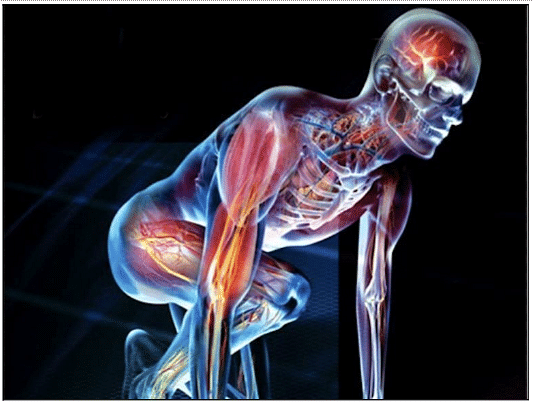
It is the study of normal functioning and the processes occurring during the exercise of the body and in short, it can be assumed as the physiology of physical exercise.
Exercise keeps the blood circulation and keeps the person healthy and active. behind all these positive outcomes to the body are due to specific mechanisms which are studied under the category of exercise physiology.
Exercise Physiology
Also Read:
Things to Remember
- Physiology is the investigation at each level of cells, tissues, organ systems, and the whole body.
- It strives to explain the underlying fundamental mechanisms in the living organism that operate and interact in all possible ways.
- Physiology study gave the complete structure and organization of the central nervous system.
- it is very important to note that physiology is applicable to living organisms.
- All the major physiological processes include digestion, blood circulation, exchange of gases, locomotion, and movement are described in cellular and molecular terms.
- Physiology unfolds the mystery of the complicated functional aspects of individual organs in the body.
- The basics of physiology are up to the knowledge of the human which are hunger, thirst, pain, fear, the existence of language, culture, and society.
Sample Questions
Ques. What is physiology and how does it work? (5 Marks)
Ans. Physiology is a branch of biology which deals with the functions, characteristics, and mechanisms of each part of the body. It also studies about mechanism of the basic constituents in each organ system and connects with the previous biochemical and molecular biology studies.
- Physiology deals with the function and malfunction of the body organs and helps the physiologists to sort out the problem and come to a universally accepted solution.
- It takes the reference of the areas related to pharmaceutical action and medicine for the betterment of the present situation.
- Moreover, this study is drastically expanded to the agriculture methods and many improvements were introduced to increase the crop yield.
- In the areas related to ecology, this study helps to focus on the response of the body of animals and plants to the ongoing climatic changes.
- It is involved in all the biological studies directly or indirectly and helps to get greater improvements and helps to retain a sustainable ecosystem.
Ques. what is the difference between Physiology and anatomy? (5 Marks)
Ans. Firstly, the anatomy and physiology were confused by many because of their similarities such as
- Both study the structure and mechanisms occurring in the system.
- Microscopic and macroscopic structures were included in both of these studies.
Anatomy, in Greek known as the study of structures of organisms, mainly deals with the cause for the certain structures of the biological systems in nature and helps to deeply understand the reasons in nature.
Whereas, physiology deals with the study of the entire functioning of the human body and can explain the mechanisms occurring in various systems.
- Anatomy is termed as the static study and physiology were termed as the dynamic study of organisms.
- It is applied to the dead organisms and physiology is applied to only living organisms.
- It mainly focuses on size, location, shape, and body structures. But physiology deals with chemical, physical processes.
- Anatomy is approached through systematic and regional approaches. But physiology doesn’t.
Ques. What are the different branches of physiology? (3 Marks)
Ans. The following are the main branches of Physiology
- Cellular Physiology
- Human Physiology
- Evolutionary Physiology
- Defence Physiology
- Exercise Physiology
- Environmental Physiology
- Medicinal Physiology
- Clinical Physiology
Ques. What are different systems present under the system physiology? (5 Marks)
Ans. The following are the different systems in the human body:
- Cardiovascular system.
- Digestive system
- Endocrine system.
- Immune system.
- Muscular system.
- Nervous system.
- Renal system.
- Reproduction system.
- Respiratory system.
- Skeletal system.
Ques. What are the few careers under physiology? (3 Marks)
Ans. There are a variety of career options under physiology such as
- Cardiac Physiologist
- Physiological Psychologist
- Neurophysiologist
- Exercise Physiologist
- Clinical physiologist
- Medical physiologist
- Mostly the physiologists get a chance to go to the research field and learn great things.
Ques. What is the importance of human physiology? (3 Marks)
Ans. Humans are considered the most intelligent ones amongst all the creatures in the world. Hence, they will be very eager to know the evolution and formation of the human body mechanisms.
This physiological study acts as a scientific inquiry into the nature of the physical, mechanical, and biotechnical functions of humans and their organs also into the cells of the body.
Because of the above reasons, human physiology is considered a boon to human knowledge to study human mechanisms.
Ques. Explain plant physiology? (3 Marks)
Ans. An ideal plant consists of leaves, stems, roots, Xylem, and Phloem in nature.
The study of every mechanism that occurs in the above parts of the plant comes under plant physiology.
- Plant nutrition goes through the stems and roots of the plant.
- respiration and photosynthesis process occurring in the leaves;
- transportation of nutrients and water through the Xylem and Phloem in the stem
These are mainly studied under plant physiology.
For Latest Updates on Upcoming Board Exams, Click Here: https://t.me/class_10_12_board_updates
Check-Out:



Comments