



Education Journalist | Study Abroad Lead
Spirochetes are prokaryotic organisms and consist of spiral-shaped bacteria. They belong to the kingdom monera and do not consist of a true nucleus. They cause different kinds of diseases like syphilis, Lyme disease, relapsing fever and leptospirosis in human beings.
| Table of Content |
Key Takeaways: Spirochete, Monera, Eubacteria, Spirochaetales, Syphilis, Lyme Disease, Relapsing Fever, Leptospirosis, Treponema, Borrelia, Leptospira.
Spirochete
[Click Here for Sample Questions]
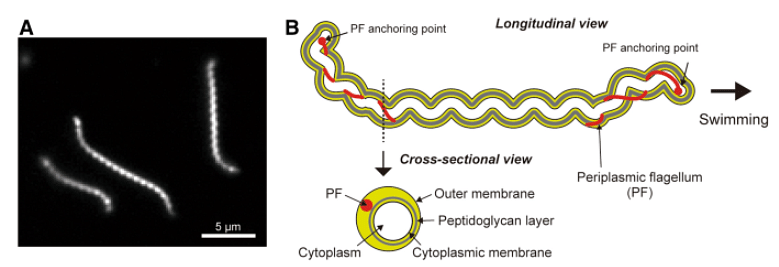
Spirochete (spirochaete) consists of gram-negative, motile and spiral-shaped bacteria, with endocellular flagella. cause diseases like syphilis, Lyme disease, relapsing fever and leptospirosis. Some of the genera of spirochetes are Spirochaeta, Treponema, Borrelia, and Leptospira.
Spirochete
Also Read:
Spirochete Characteristics
[Click Here for Sample Questions]
- Spirochetes are gram-negative, motile, and spiral bacteria, with endocellular flagella.
- The cells of spirochetes are 3 to 500 millimicrons in length.
- The flagella of spirochetes are endocellular, known as axial fibrils, or axial filaments.
- The flagella of spirochetes are 2 to around 100 per organism.
- The axial fibril of spirochetes present at the opposite end wind around the entire cell.
- The spirally wound flagella are ensheathed by an envelope.
- Spirochetes are mostly found in fluid environments such as water, mud, blood, and lymph.

Spirochetes Cell
Read More: Catabolism and Anabolism
Spirochete Hierarchy
[Click Here for Sample Questions]
Spirochetes belong to the kingdom monera, domain eubacteria, phylum spirochetes, and order spirochaetales
Kingdom Monera
- It contains prokaryotic unicellular organisms with different forms.
- The cell is without a true nucleus and nuclear membrane.
- It includes different organisms like bacteria, mycoplasma, archaebacteria, and eubacteria.
- Asexual reproduction in monera is due to binary fission and endospore formation and sexual reproduction by gene transfer.
- Mycoplasma is a bacterium without a cell wall.

Kingdom Monera
- Archaebacteria live in extreme environmental conditions like saltwater, the gut of herbivores, and in hot springs.
- Eubacteria are the true bacteria with cell wall and flagella
- Photosynthetic bacteria include cyanobacteria or blue-green algae).
- Chemosynthetic bacteria live in mines.
- Heterotrophic bacteria depend on other organisms for survival.
Domain Eubacteria
- They are true bacteria without a nucleus, membrane-bound organelles, but with a rigid cell wall.
- The cell wall is made of peptidoglycan.
- The nucleoid consists of a sink circular DNA.
- They are abundant in the air, water, hot springs, saline water, etc.
- They are free-living, autotrophs, heterotrophs, saprophytes, or parasites.
Phylum Spirochaetes
- They consist of a double cell wall called diderm or double-membrane.
- The thick double wall imparts gram-negative character to the bacteria.
- Almost all bacterial cells are spiral-shaped.
- All bacteria have endoflagella called axial filaments.
Read More: Difference between respiration and photosynthesis
Order Spirochaetales
- The bacteria of spirochaetales consist of helically spiral bacteria.
- The cells are motile due to the presence of locomotory organelles called flagella.
- The habitat is variable. Facultative anaerobes can exist in the presence or absence of oxygen. Obligate anaerobes exist only in the absence of oxygen. Obligate aerobes exist only in the presence of oxygen.
- This order spirochaetales is subdivided into three families, namely Spirochaetaceae, Brachyspiraceae, and Leptospiraceae.

Spirochete detail
Ecology and Distribution
[Click Here for Sample Questions]
They live in freshwater, saltwater, mud, marshes, deep-sea vents, protozoans, oral cavities, gastrointestinal tracts of insects, termites, and mammals. Some spirochetes are beneficial, and some others are harmful. Some cause diseases in human beings like Lyme disease, relapsing fever and leptospirosis. Obligatory aerobic spirochetes cannot survive without oxygen in surrounding habitats. Leptospira are obligate aerobes. Obligate anaerobes cannot exist in the presence of oxygen, Facultative anaerobe can exist both in the absence and presence of oxygen.
Read More: Sexual and asexual reproduction
Things to Remember
- Spirochete (spirochaete) consists of gram-negative, motile and spiral-shaped bacteria, with endocellular flagella. cause diseases like syphilis, Lyme disease, relapsing fever and leptospirosis.
- Spirochetes are mostly found in fluid environments such as water, mud, blood, and lymph.
- Spirochetes belong to the kingdom monera, domain eubacteria, phylum spirochetes, and order spirochaetales
- Asexual reproduction in monera is due to binary fission and endospore formation and sexual reproduction by gene transfer.
- They are true bacteria without a nucleus, membrane-bound organelles, but with a rigid cell wall.
- The habitat is variable. Facultative anaerobes can exist in the presence or absence of oxygen. Obligate anaerobes exist only in the absence of oxygen. Obligate aerobes exist only in the presence of oxygen.
Also Read:
Sample Questions
Ques: Why are spirochetes included in monera? (2 Marks)
Ans: Spirochetes consist of all the features of prokaryotic organisms. They do not consist of a true nucleus without a nuclear membrane and membranous organelles.
Ques: Describe spirochetes in a sentence (2 Marks)
Ans: Spirochete (spirochaete) consists of gram-negative, motile and spiral-shaped bacteria, with endocellular flagella.
Ques: Why are spirochete gram-negative bacteria? (2 Marks)
Ans: Spirochetes consist of a double membranous cell wall and are protected by a capsule, They do not stain with gram stains. The cell is protected against antibiotics such as penicillin. The membrane on disruption releases endotoxins.
Ques: Describe the motile organelles of spirochetes? (2 Marks)
Ans: The locomotory organelles of spirochetes are flagella. The flagella of spirochetes are endocellular, known as axial fibrils, or axial filaments. The flagella of spirochetes are 2 to around 100 per organism. The axial fibril of spirochetes present at the opposite end wind around the entire cell. The spirally wound flagella are ensheathed by an envelope.
Ques: Why are spirochetes included in eubacteria? (2 Marks)
Ans: They are true bacteria without a nucleus, membrane-bound organelles, but with a rigid cell wall. The cell wall is made of peptidoglycan. The nucleoid consists of a sink circular DNA.
Ques: What is meant by endoflagella? (2 Marks)
Ans: Endoflagella are also called axial filaments. They are the flagella-like organelles present in the periplasmic space encased by the outer membrane in spirochetes. The endoflagella begin at each end of the cell and wind around the body, extending to and overlapping at the midpoint of the organism.
Ques: Explain the ecology and distribution of spirochete? (3 Marks)
Ans: They live in freshwater, saltwater, mud, marshes, deep-sea vents, protozoans, oral cavities, gastrointestinal tracts of insects, termites, and mammals. Some spirochetes are beneficial, and some others are harmful. Some cause diseases in human beings like Lyme disease, relapsing fever and leptospirosis. Obligatory aerobic spirochetes cannot survive without oxygen in surrounding habitats. Leptospira are obligate aerobes. Obligate anaerobes cannot exist in the presence of oxygen, Facultative anaerobe can exist both in the absence and presence of oxygen.
Ques: What are the characteristic features of spirochetes? (5 Marks)
Ans: The following are the characteristic features of spirochetes:
- Spirochetes are gram-negative, motile, and spiral bacteria, with endocellular flagella.
- The cells of spirochetes are 3 to 500 millimicrons in length.
- The flagella of spirochetes are endocellular, known as axial fibrils, or axial filaments.
- The flagella of spirochetes are 2 to around 100 per organism.
- The axial fibril of spirochetes present at the opposite end wind around the entire cell.
- The spirally wound flagella are ensheathed by an envelope.
- Spirochetes are mostly found in fluid environments such as water, mud, blood, and lymph.
For Latest Updates on Upcoming Board Exams, Click Here: https://t.me/class_10_12_board_updates
Check-Out:



Comments