



Exams Prep Master
The tundra ecosystem harbors one of the most beautiful landscapes. Though the harsh climates, life thrives in the tundra region. The harmonious interactions between the living and the non-living components bound us to rethink the capabilities of nature. The chain of such interaction ensures equality between the different living components and their environment. This structural and functional unit of the ecology is called the ecosystem. Here we will learn more about the tundra ecosystem and discuss some important questions.
| Table of Content |
Key Takeaways: Ecosystem, Ecology, Tundra Ecosystem, Biome, Terrestrial, Aquatic, Arctic Tundra, Alpine Tundra, Carbon Sink
Also Read: Our Environment
Types of Ecosystems
[Click Here for Sample Questions]
The term ecosystem was first coined in 1935 by the famous English Botanist, A.G. Tansley. The earth, the living, and nonliving things are components of the global ecosystem, which itself comprises several local ecosystems.

An Ecosystem
These local systems can be as small as a pond or an oasis or as large as the tropical rainforests or vast deserts or oceans. For easy classification and study, the ecosystem can be divided into two types:
- Aquatic Ecosystem: These comprise all the water bodies on earth ranging from the lakes, valleys, ponds, oceans, seas, etc. This is subdivided into:
- Freshwater: These are aquatic bodies with no salt content like ponds, lakes, rivers, etc.
- Marine: These are water bodies with a substantial amount of salt content and are home to a larger variety of flora and fauna in comparison to the freshwater ecosystem. Seas and oceans form the marine ecosystem.
- Terrestrial Ecosystem: All land-based chain interactions between the biotic and abiotic components on earth fall under this category. Based on the geographical location, these can be further classified into four types:
- Forests: Living organisms like plants, animals, insects, micro-organisms that interact with the abiotic factors and help in regulating the earth’s temperature and carbon cycle, are part of the forest ecosystem.
- Grasslands: These are ecosystems that are rich in vegetation like grasses and herbs. The Savanna or the temperate grasslands are some of the classic examples of this type of ecosystem.
- Desserts: Certain geographical locations on earth receive scanty rainfall. And this brings about differences in their climatic conditions causing them to have extreme heat or cold conditions. This forms the desert ecosystem.
- Tundra: Mountain tops or arctic regions are areas with the harshest climatic conditions. These geographical locations do not have trees and vegetation that can thrive in cold conditions with an acute scarcity of rainfall. This is the Tundra Ecosystem.
What is Tundra Ecosystem?
[Click Here for Sample Questions]
Areas with extremely cold climates that are covered with snow all year round host the Tundra Ecosystem. Owing to the cold climate and very limited or almost no rainfall, these areas are devoid of trees.
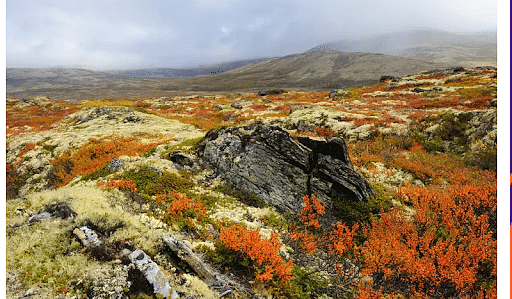
Tundra Ecosystem
These ecosystems are large stretches of bare grounds or rocks having low vegetation like mosses, lichens, herbs, and small shrubs. The snow-covered landscapes support the existence of very meager yet unique species of animals.
Also Read: Reproductive Health
Types of Tundra Ecosystem
[Click Here for Sample Questions]
Tundra ecosystems are usually of two types based on the climatic conditions: Arctic Tundra and Alpine Tundra. Let us look at each of these types in a little more detail.
Arctic Tundra
The northern hemisphere constitutes the arctic tundra. There are extremely cold desert-like areas where the surface soil is covered with a thick layer of snow all around the year. This region is characterized by cold temperatures and extremely low levels of precipitation. The day temperature in winters varies from 3-12 oC whereas it can get as cold as -34oC at night.
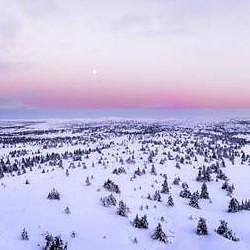
The Arctic Tundra Ecosystem
During summers the snow melts to form shallow ponds. Owing to the harsh conditions, the arctic tundra is home to unique species of flora and fauna that are comparatively less in number. The frozen barren lands predominantly have scrubby bushes and grasses. About 1700 species of plants with adaptive nature like low shrubs, reindeer mosses, liverworts, and about 400 varieties of flowers are exclusive to this region. The polar bears, arctic foxes are some of the mammals that are a part of this biome.
Alpine Tundra
About 3 percent of the earth’s land surface constitutes mountains in the northern hemisphere i.e the alpine tundra. These mountain tops have very low temperatures, below freezing point at night with strong winds that do not support the growth of trees in this region.

The Alpine Tundra Biome
Being located at great heights these regions are exposed to a large concentration of sunlight as the air and the atmosphere is thinner here, hence facilitating better penetration of the solar rays. Temperatures during the warmer months range from -12 to 100C with a yearly precipitation of about 30 cm. The soil in this region is well-drained and plants like dwarf trees, small-leafed shrubs, tussock, and heaths form the majority of the vegetation. Animal species in this region have good adapting capabilities to climatic conditions. Some commonly found species include marmots, pikas, mountain goats, sheep, etc.
Features of Tundra Ecosystem
[Click Here for Sample Questions]
Some of the salient features of the Tundra Ecosystem are as follows:
- They have characteristically long winters and extremely hot and short summers. Thus, they are the world’s coldest biomes and typically are uninhabited by man.
- These regions receive very limited or almost no rainfall and experience strong winds all year round. The frozen ground, extremely high humidity, and low precipitation rates facilitate the survival of exclusive plants and animals.
- Night temperatures drop below the freezing point and the daytime temperatures support the growth of plants.
- Common nutrients are nitrogen which is formed as part of the biochemical process and phosphorus produced from precipitation.
Plant Life in Tundra Ecosystem
[Click Here for Sample Questions]
The plants in the tundra biome grow in soils with good drainage. However, the climatic conditions cause the topsoil to be covered mostly with snow. Besides, the time of meltdown and local abiotic factors like the wind, soil, moisture, and nutrients influence plant growth. The landscapes in the tundra biome tend to be greenish-brown in color and do not remain in flowering conditions for more than a few days.
The alpine habitats are usually more colorful compared to the arctic. Rocky cliffs have algae and fungi growing on them, rosette plants are seen in the rock cornices and gravel beds. The plant life comprises primarily low vegetation like mosses, lichens, and herbs. These do not have deep roots and hence the topsoil always remains wet.
Plants are smaller in height and grow in clusters to provide warmth to each other. Photosynthesis is carried out in these plants even in low light and cold temperatures. Due to cold conditions, they reproduce by asexual means than by depending on flowering and pollination. Some of the commonly noted varieties of plants are shrubs are sedges, rushes, dwarf heath, dwarf willows, cotton grass, etc.
The tundra biome is one of the largest carbon sinks. The biomass produced here takes in more carbon dioxide than what is produced. The short cool summers and freezing winters do not allow the complete decomposition of plants. As a result, the remains are left covered in the permafrost for a long time which traps the carbon dioxide and removes it from the atmosphere.
Animal Life in Tundra Ecosystem
[Click Here for Sample Questions]
The animal life in the tundra biome is unique and these species have special adaptations to survive the chilly weather conditions. Their bodies have layers of fats, furs, or feathers that protect them from the bitter cold.
The frozen layer of ice makes the tundra ecosystem home to a few burrowing animals. There is an acute shortage of food during winters. These discourage hibernation, leaving the animals to remain active or migrate. Birds also are found migrating during extreme winds and have characteristic long wingspan.
Animal species are broadly classified as follows in the tundra biome:
- Herbivores (Plant-eating)- these include voles, musk-oxen, snow geese, mountain goats, snowshoe rabbits, etc.
- Carnivores (Meat-eating): These are mammals such as wolves, arctic foxes, wolverines, polar bears, etc.
- Aquatic animals: Seals, walrus, beluga, whales are some of the aquatic species.
- Fishes: These include salmon, cod, trout, etc.
- Insects: Mosquitoes, flies, grasshoppers, moths, arctic bumblebees.
- Birds: Falcons, ravens, gulls, sandpipers, harlequin ducks, etc.
Things to Remember
- The non-living and the living interaction on the earth form the ecosystem. The ecosystem is classified as Terrestrial and Aquatic based on the type of animals and vegetation surviving in the land and water-based geography.
- The Tundra is a terrestrial ecosystem, devoid of trees and is usually found in the arctic regions surrounding the poles (arctic tundra ) or the high mountain regions in the northern hemisphere (alpine tundra).
- Harsh winters, brief summers, strong gusty winds, high humidity levels, and availability of nutrients such as nitrogen and phosphorus are some of the salient features of the tundra ecosystem.
- Short vegetation mainly consisting of shrubs and herbs comprises the vegetation in the tundra biome.
- Herbivores, carnivores, aquatic life forms like fishes and mammals, insects, and burrowing animals are some of the animal species with special adaptations to thrive in extreme climatic conditions.
Also Read:
Sample Questions
Ques. Brief on the structure of the Ecosystem. (3 marks)
Ans. The abiotic (non-living) and the biotic (living) species interact with each other and form the basis for the ecosystem on earth. The hierarchical level at which different species in the ecosystem are placed is termed stratification.
For example, trees are at the top level and the shrubs constitute the lowermost part. The abiotic components like the climate, soil, water, etc play an important role in placing these species and maintaining the interaction and food chain. The temperature and presence of certain microorganisms at the lower levels facilitate the process of decomposition, energy flow, and nutrient recycling to happen simultaneously.
Ques. Elaborate on the climatic conditions of the tundra ecosystem. (2 marks)
Ans. The variation in temperatures in the alpine regions is less in comparison to the arctic regions and is dependent on the latitude. The alpine tundra has the same annual temperature variations as that noted on the arctic tundra. Coastal tundra ecosystems are cooler and foggier. Cloudy seasons and a low precipitation rate are also characteristic of the tundra ecosystem. Strong gusty winds influence the snowdrift patterns reducing visibility and causing ice crystals to penetrate the soil.
Ques. Elaborate on the soil type in the tundra ecosystem. (2 marks)
Ans. The frozen layer of ice is a characteristic of the tundra biome. This is termed as permafrost. The presence of this layer prohibits the movement of water onto the lower layers of the soil causing the soil to become saturated and boggy especially in the arctic tundra. Rapid drainage in the soil is noted in the alpine tundra owing to the relatively high amount of precipitation in comparison to the arctic biome. The active layer of soil is usually where the burrowing, root growth, and decomposition of organic matter take place.
Ques. Explain how the biodiversity in the tundra ecosystem functions based on the sunlight and carbon dioxide available. (2 marks)
Ans. Differences in day lengths caused by the cold climate conditions and the presence of carbon dioxide in the atmosphere affected the biodiversity in the tundra ecosystem. In the arctic tundra, sunlight is available for a maximum of four months facilitating the flowering of plants to be restricted to this period only. Carbon dioxide levels are however less in the alpine tundra owing to the thinner atmosphere at higher altitudes. However, the tundra ecosystems make use of the low light and carbon dioxide to carry out photosynthesis.
Ques. What are the effects of human activities on the climate and the survival of species in the tundra ecosystem? (3 marks)
Ans. Human habitats are sparse in the tundra biome owing to the harsh climatic conditions. However, there has been a steady increase in human activity in these regions over the past 20,000 years. A major cause of this has been the food procurement and building materials needed for human survival. Landscapes have been altered into residences, resorts and have been used for mining activities as well.
Hunting and oil drilling have further threatened the flora and fauna in this ecosystem. Further expansion of these activities in this region can cause air pollution, ozone depletion, greenhouse gas emissions, and subsequently, change the climatic conditions. Global warming has already signaled signs of warmer winters in this region followed by rising sea levels that will eventually hamper the natural balance in these ecosystems.
Ques. What are the functional components of the ecosystem? (2 marks)
Ans. The four main functional components of the ecosystem are as follows:
- Productivity
- Decomposition
- Energy Flow
- Nutrient Cycling
Ques. What are the factors upon which the vegetation in the tundra ecosystem depends? (2 marks)
Ans. The major factors affecting the vegetation are :
- Altitude: The vegetation especially in the alpine biome is dependent on the altitude of the geographical zone. There are mixed species of dwarf plants and herbs growing in these regions.
- Soil: The drainage of the soil and lack of a root system in the plants that grow here, make the top layer wet and avoid penetration of water from the frozen layers of topsoil.
- Vegetation zones: Different heights based on the location from the equator also play an important role in deciding the vegetation types. Regions closer to the equator have tropical vegetation whereas an increase in altitude paves way for temperate forests. Alpine tundra is generally located at 12,000 ft above sea levels.
For Latest Updates on Upcoming Board Exams, Click Here: https://t.me/class_10_12_board_updates
Check-Out:



Comments