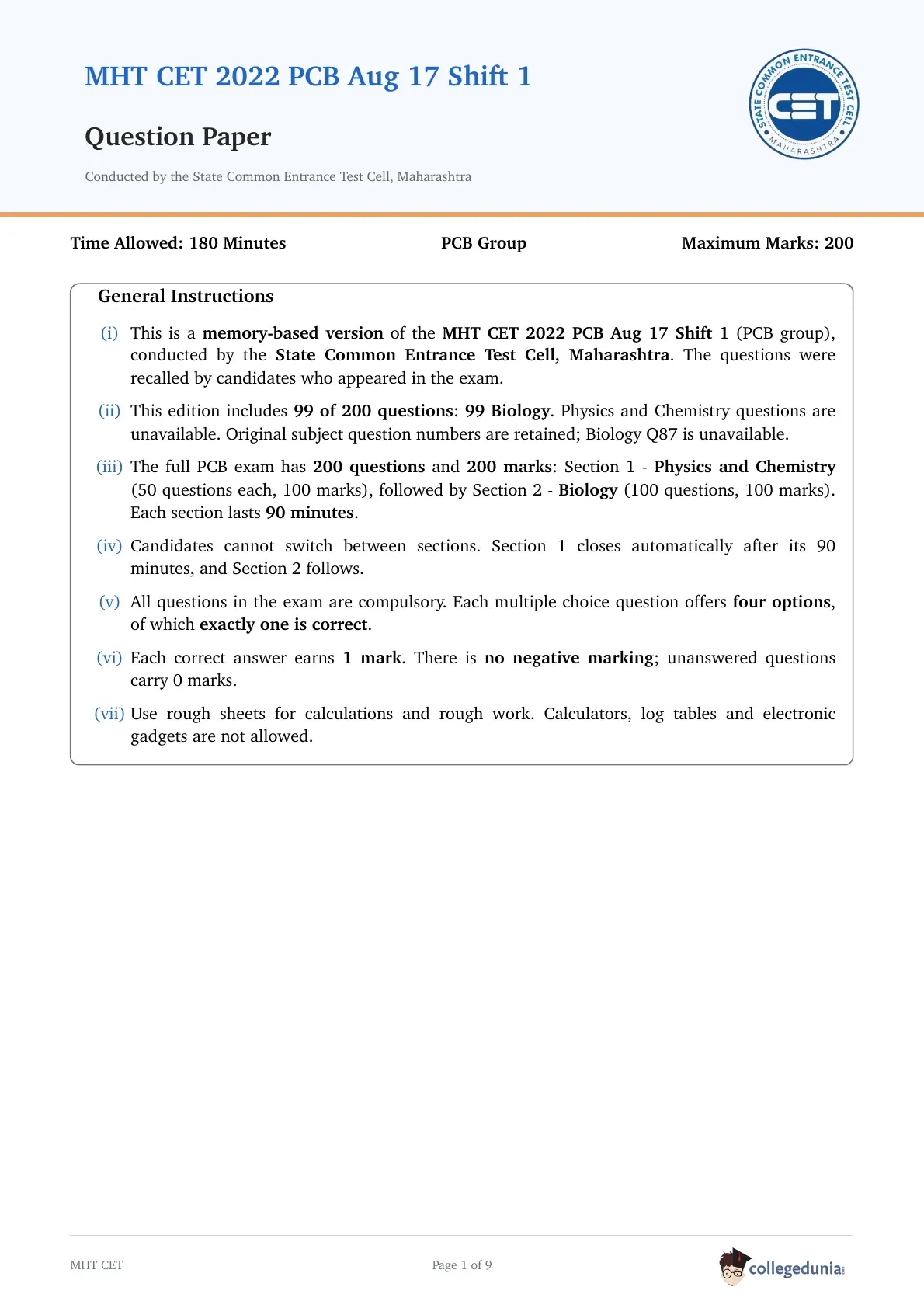
MHT CET 2022 Aug 17 Shift 1 PCB Question Paper is available for download here. Maharashtra State CET Cell conducted MHT CET 2022 PCB Exam on Aug 17 in Shift 1 from 9 AM to 12 PM in CBT mode. This paper is memory-based: it is compiled from the questions candidates recalled after the exam, so it does not contain every question of the shift.

The MHT CET 2022 PCB question paper includes the following:

  • The MHT CET 2022 PCB Question Paper consists of 200 multiple-choice questions (MCQs) totalling 200 marks divided into 3 sections: Physics (50 questions), Chemistry (50 questions), and Biology (100 questions).
  • All questions carry 1 mark each. There is no negative marking for incorrect answers.

MHT CET 2022 Aug 17 Shift 1 PCB Question Paper with Solution PDF

CD PDF CD PDF with Solutions
Download Collegedunia PDF 0.52 MB -

Also Check:

MHT CET 2022 Aug 17 Shift 1 PCB Questions with Solutions


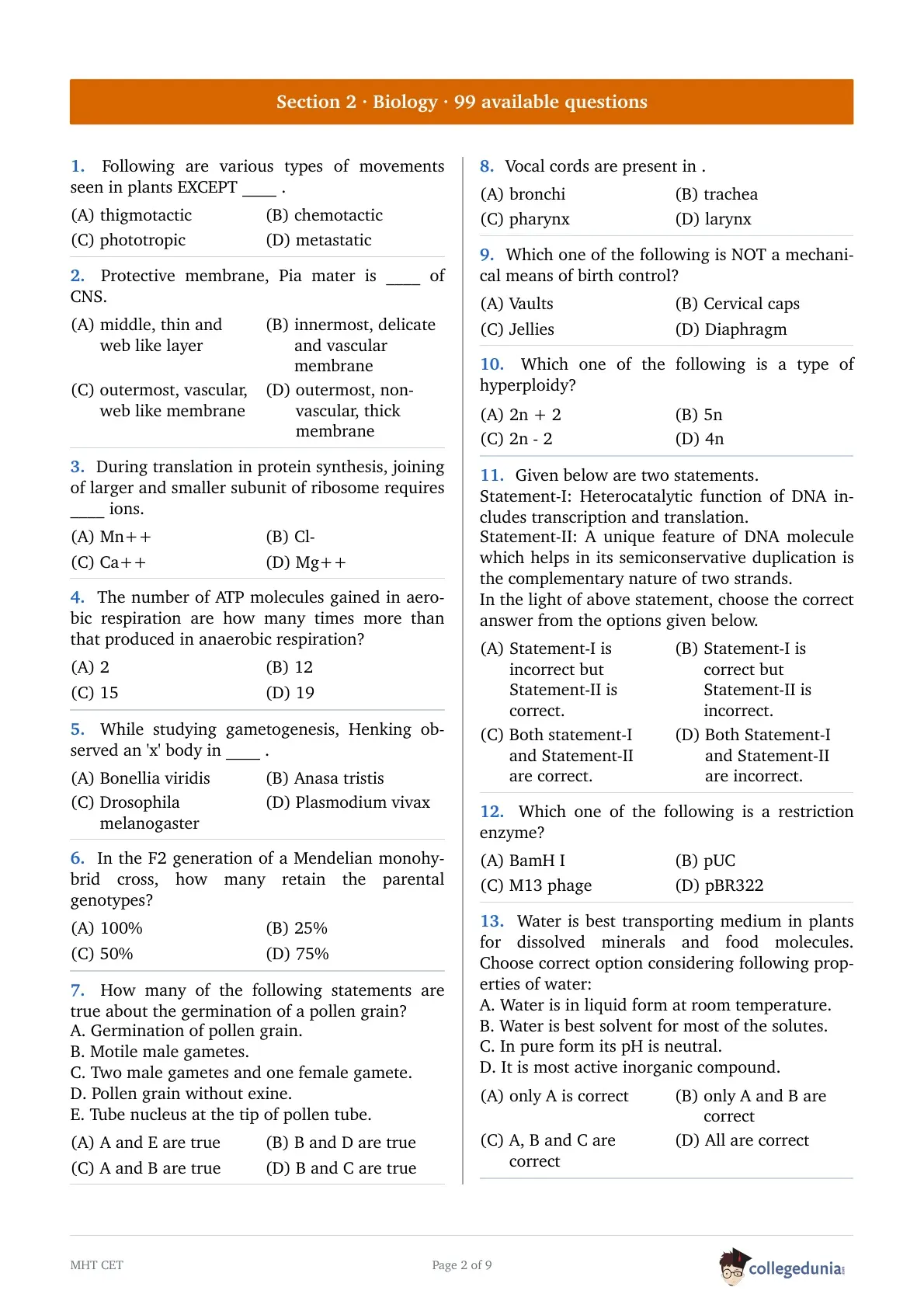
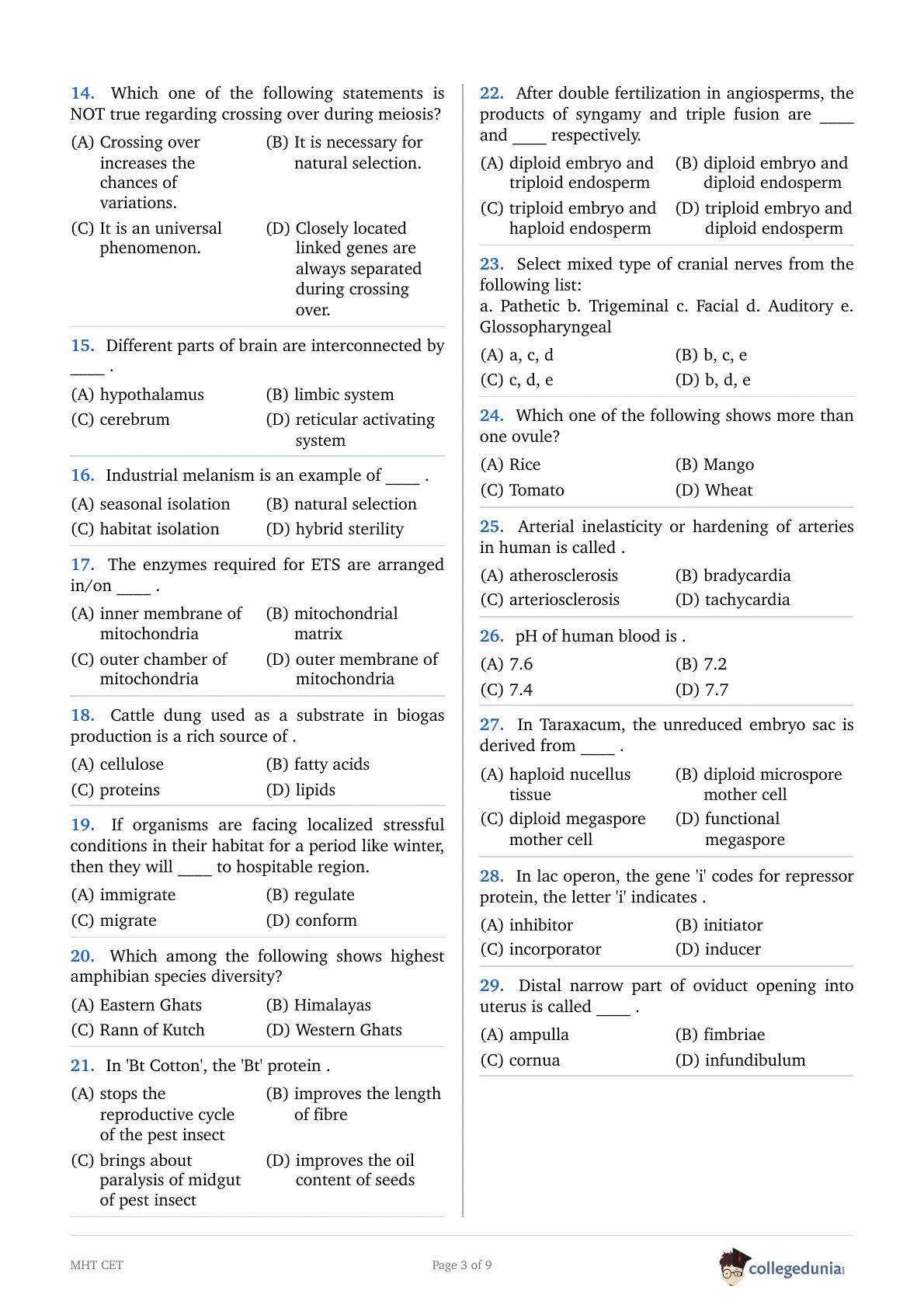
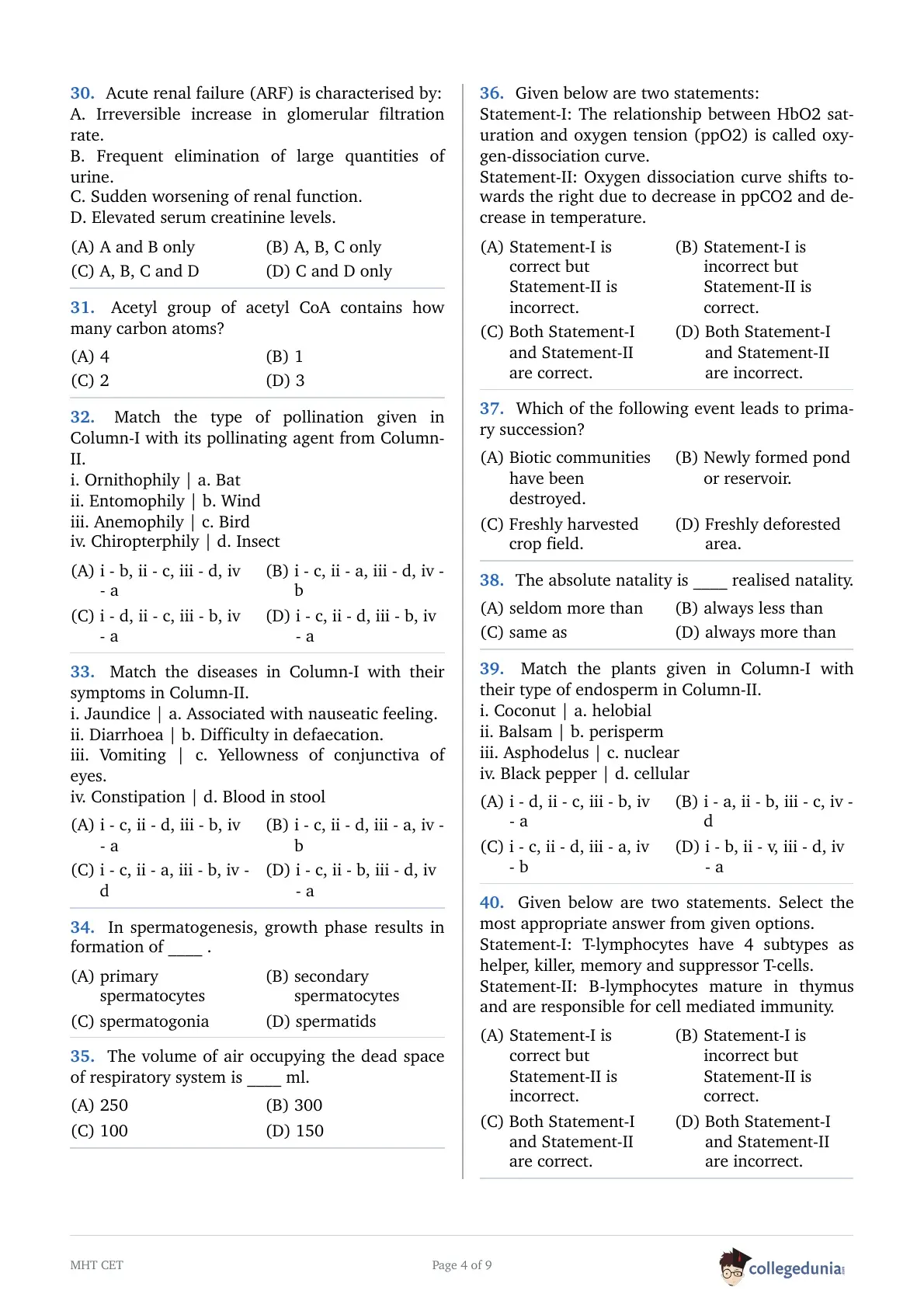
Biology (Q1 - Q99)

Question 1:

Following are various types of movements seen in plants EXCEPT ____ .

  • (A) thigmotactic
  • (B) chemotactic
  • (C) phototropic
  • (D) metastatic

Question 2:

Protective membrane, Pia mater is ____ of CNS.

  • (A) middle, thin and web like layer
  • (B) innermost, delicate and vascular membrane
  • (C) outermost, vascular, web like membrane
  • (D) outermost, non-vascular, thick membrane

Question 3:

During translation in protein synthesis, joining of larger and smaller subunit of ribosome requires ____ ions.

  • (A) Mn++
  • (B) Cl-
  • (C) Ca++
  • (D) Mg++

Question 4:

The number of ATP molecules gained in aerobic respiration are how many times more than that produced in anaerobic respiration?

  • (A) 2
  • (B) 12
  • (C) 15
  • (D) 19

Question 5:

While studying gametogenesis, Henking observed an 'x' body in ____ .

  • (A) Bonellia viridis
  • (B) Anasa tristis
  • (C) Drosophila melanogaster
  • (D) Plasmodium vivax

Question 6:

In the F2 generation of a Mendelian monohybrid cross, how many retain the parental genotypes?

  • (A) 100%
  • (B) 25%
  • (C) 50%
  • (D) 75%

Question 7:

How many of the following statements are true about the germination of a pollen grain?
A. Germination of pollen grain.
B. Motile male gametes.
C. Two male gametes and one female gamete.
D. Pollen grain without exine.
E. Tube nucleus at the tip of pollen tube.

  • (A) A and E are true
  • (B) B and D are true
  • (C) A and B are true
  • (D) B and C are true

Question 8:

Vocal cords are present in .

  • (A) bronchi
  • (B) trachea
  • (C) pharynx
  • (D) larynx

Question 9:

Which one of the following is NOT a mechanical means of birth control?

  • (A) Vaults
  • (B) Cervical caps
  • (C) Jellies
  • (D) Diaphragm

Question 10:

Which one of the following is a type of hyperploidy?

  • (A) 2n + 2
  • (B) 5n
  • (C) 2n - 2
  • (D) 4n

Question 11:

Given below are two statements.
Statement-I: Heterocatalytic function of DNA includes transcription and translation.
Statement-II: A unique feature of DNA molecule which helps in its semiconservative duplication is the complementary nature of two strands.
In the light of above statement, choose the correct answer from the options given below.

  • (A) Statement-I is incorrect but Statement-II is correct.
  • (B) Statement-I is correct but Statement-II is incorrect.
  • (C) Both statement-I and Statement-II are correct.
  • (D) Both Statement-I and Statement-II are incorrect.

Question 12:

Which one of the following is a restriction enzyme?

  • (A) BamH I
  • (B) pUC
  • (C) M13 phage
  • (D) pBR322

Question 13:

Water is best transporting medium in plants for dissolved minerals and food molecules. Choose correct option considering following properties of water:
A. Water is in liquid form at room temperature.
B. Water is best solvent for most of the solutes.
C. In pure form its pH is neutral.
D. It is most active inorganic compound.

  • (A) only A is correct
  • (B) only A and B are correct
  • (C) A, B and C are correct
  • (D) All are correct

Question 14:

Which one of the following statements is NOT true regarding crossing over during meiosis?

  • (A) Crossing over increases the chances of variations.
  • (B) It is necessary for natural selection.
  • (C) It is an universal phenomenon.
  • (D) Closely located linked genes are always separated during crossing over.

Question 15:

Different parts of brain are interconnected by ____ .

  • (A) hypothalamus
  • (B) limbic system
  • (C) cerebrum
  • (D) reticular activating system

Question 16:

Industrial melanism is an example of ____ .

  • (A) seasonal isolation
  • (B) natural selection
  • (C) habitat isolation
  • (D) hybrid sterility

Question 17:

The enzymes required for ETS are arranged in/on ____ .

  • (A) inner membrane of mitochondria
  • (B) mitochondrial matrix
  • (C) outer chamber of mitochondria
  • (D) outer membrane of mitochondria

Question 18:

Cattle dung used as a substrate in biogas production is a rich source of .

  • (A) cellulose
  • (B) fatty acids
  • (C) proteins
  • (D) lipids

Question 19:

If organisms are facing localized stressful conditions in their habitat for a period like winter, then they will ____ to hospitable region.

  • (A) immigrate
  • (B) regulate
  • (C) migrate
  • (D) conform

Question 20:

Which among the following shows highest amphibian species diversity?

  • (A) Eastern Ghats
  • (B) Himalayas
  • (C) Rann of Kutch
  • (D) Western Ghats

Question 21:

In 'Bt Cotton', the 'Bt' protein .

  • (A) stops the reproductive cycle of the pest insect
  • (B) improves the length of fibre
  • (C) brings about paralysis of midgut of pest insect
  • (D) improves the oil content of seeds

Question 22:

After double fertilization in angiosperms, the products of syngamy and triple fusion are ____ and ____ respectively.

  • (A) diploid embryo and triploid endosperm
  • (B) diploid embryo and diploid endosperm
  • (C) triploid embryo and haploid endosperm
  • (D) triploid embryo and diploid endosperm

Question 23:

Select mixed type of cranial nerves from the following list:
a. Pathetic b. Trigeminal c. Facial d. Auditory e. Glossopharyngeal

  • (A) a, c, d
  • (B) b, c, e
  • (C) c, d, e
  • (D) b, d, e

Question 24:

Which one of the following shows more than one ovule?

  • (A) Rice
  • (B) Mango
  • (C) Tomato
  • (D) Wheat

Question 25:

Arterial inelasticity or hardening of arteries in human is called .

  • (A) atherosclerosis
  • (B) bradycardia
  • (C) arteriosclerosis
  • (D) tachycardia

Question 26:

pH of human blood is .

  • (A) 7.6
  • (B) 7.2
  • (C) 7.4
  • (D) 7.7

Question 27:

In Taraxacum, the unreduced embryo sac is derived from ____ .

  • (A) haploid nucellus tissue
  • (B) diploid microspore mother cell
  • (C) diploid megaspore mother cell
  • (D) functional megaspore

Question 28:

In lac operon, the gene 'i' codes for repressor protein, the letter 'i' indicates .

  • (A) inhibitor
  • (B) initiator
  • (C) incorporator
  • (D) inducer

Question 29:

Distal narrow part of oviduct opening into uterus is called ____ .

  • (A) ampulla
  • (B) fimbriae
  • (C) cornua
  • (D) infundibulum

Question 30:

Acute renal failure (ARF) is characterised by:
A. Irreversible increase in glomerular filtration rate.
B. Frequent elimination of large quantities of urine.
C. Sudden worsening of renal function.
D. Elevated serum creatinine levels.

  • (A) A and B only
  • (B) A, B, C only
  • (C) A, B, C and D
  • (D) C and D only

Question 31:

Acetyl group of acetyl CoA contains how many carbon atoms?

  • (A) 4
  • (B) 1
  • (C) 2
  • (D) 3

Question 32:

Match the type of pollination given in Column-I with its pollinating agent from Column-II.
i. Ornithophily | a. Bat
ii. Entomophily | b. Wind
iii. Anemophily | c. Bird
iv. Chiropterphily | d. Insect

  • (A) i - b, ii - c, iii - d, iv - a
  • (B) i - c, ii - a, iii - d, iv - b
  • (C) i - d, ii - c, iii - b, iv - a
  • (D) i - c, ii - d, iii - b, iv - a

Question 33:

Match the diseases in Column-I with their symptoms in Column-II.
i. Jaundice | a. Associated with nauseatic feeling.
ii. Diarrhoea | b. Difficulty in defaecation.
iii. Vomiting | c. Yellowness of conjunctiva of eyes.
iv. Constipation | d. Blood in stool

  • (A) i - c, ii - d, iii - b, iv - a
  • (B) i - c, ii - d, iii - a, iv - b
  • (C) i - c, ii - a, iii - b, iv - d
  • (D) i - c, ii - b, iii - d, iv - a

Question 34:

In spermatogenesis, growth phase results in formation of ____ .

  • (A) primary spermatocytes
  • (B) secondary spermatocytes
  • (C) spermatogonia
  • (D) spermatids

Question 35:

The volume of air occupying the dead space of respiratory system is ____ ml.

  • (A) 250
  • (B) 300
  • (C) 100
  • (D) 150

Question 36:

Given below are two statements:
Statement-I: The relationship between HbO2 saturation and oxygen tension (ppO2) is called oxygen-dissociation curve.
Statement-II: Oxygen dissociation curve shifts towards the right due to decrease in ppCO2 and decrease in temperature.

  • (A) Statement-I is correct but Statement-II is incorrect.
  • (B) Statement-I is incorrect but Statement-II is correct.
  • (C) Both Statement-I and Statement-II are correct.
  • (D) Both Statement-I and Statement-II are incorrect.

Question 37:

Which of the following event leads to primary succession?

  • (A) Biotic communities have been destroyed.
  • (B) Newly formed pond or reservoir.
  • (C) Freshly harvested crop field.
  • (D) Freshly deforested area.

Question 38:

The absolute natality is ____ realised natality.

  • (A) seldom more than
  • (B) always less than
  • (C) same as
  • (D) always more than

Question 39:

Match the plants given in Column-I with their type of endosperm in Column-II.
i. Coconut | a. helobial
ii. Balsam | b. perisperm
iii. Asphodelus | c. nuclear
iv. Black pepper | d. cellular

  • (A) i - d, ii - c, iii - b, iv - a
  • (B) i - a, ii - b, iii - c, iv - d
  • (C) i - c, ii - d, iii - a, iv - b
  • (D) i - b, ii - v, iii - d, iv - a

Question 40:

Given below are two statements. Select the most appropriate answer from given options.
Statement-I: T-lymphocytes have 4 subtypes as helper, killer, memory and suppressor T-cells.
Statement-II: B-lymphocytes mature in thymus and are responsible for cell mediated immunity.

  • (A) Statement-I is correct but Statement-II is incorrect.
  • (B) Statement-I is incorrect but Statement-II is correct.
  • (C) Both Statement-I and Statement-II are correct.
  • (D) Both Statement-I and Statement-II are incorrect.

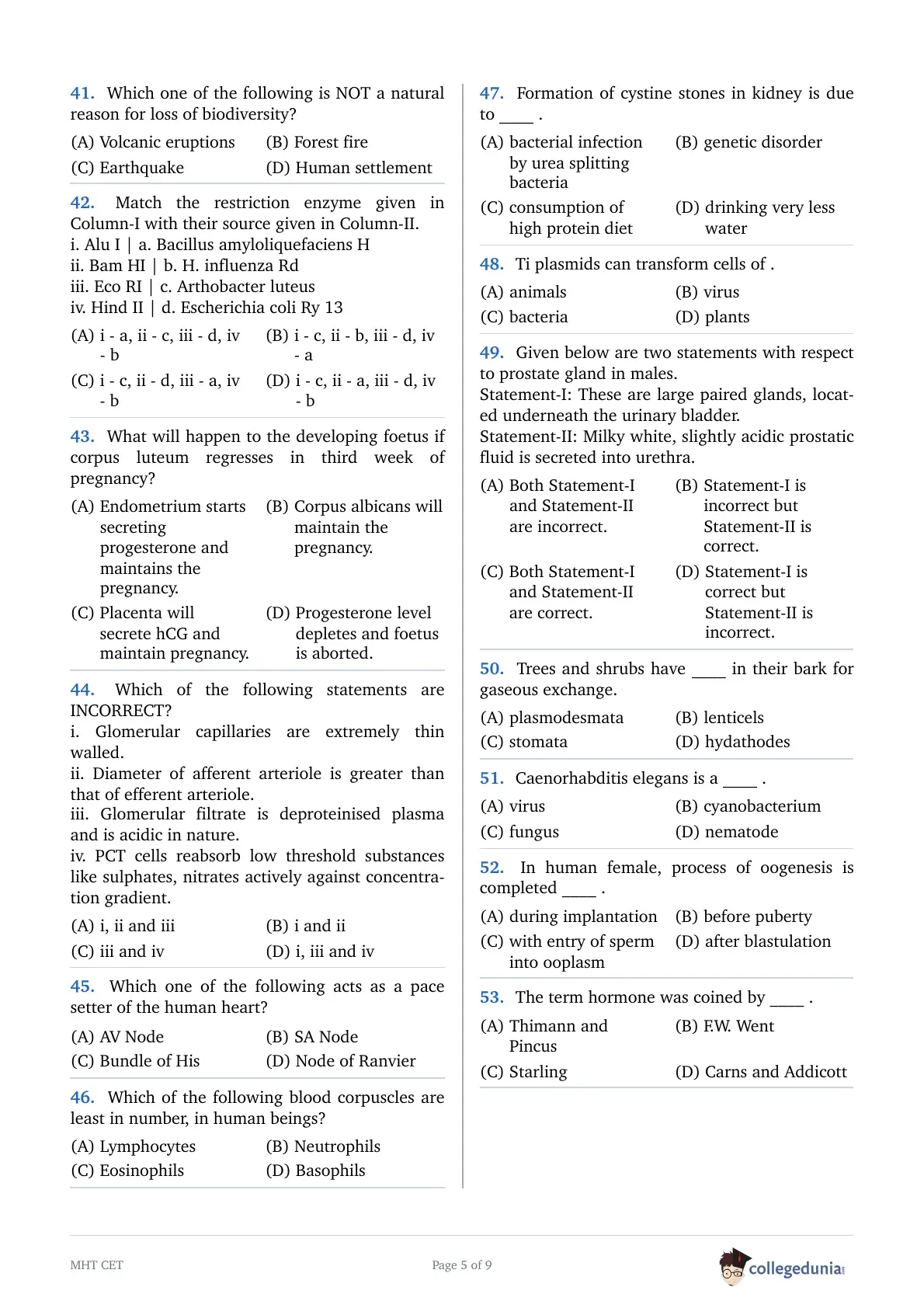
Question 41:

Which one of the following is NOT a natural reason for loss of biodiversity?

  • (A) Volcanic eruptions
  • (B) Forest fire
  • (C) Earthquake
  • (D) Human settlement

Question 42:

Match the restriction enzyme given in Column-I with their source given in Column-II.
i. Alu I | a. Bacillus amyloliquefaciens H
ii. Bam HI | b. H. influenza Rd
iii. Eco RI | c. Arthobacter luteus
iv. Hind II | d. Escherichia coli Ry 13

  • (A) i - a, ii - c, iii - d, iv - b
  • (B) i - c, ii - b, iii - d, iv - a
  • (C) i - c, ii - d, iii - a, iv - b
  • (D) i - c, ii - a, iii - d, iv - b

Question 43:

What will happen to the developing foetus if corpus luteum regresses in third week of pregnancy?

  • (A) Endometrium starts secreting progesterone and maintains the pregnancy.
  • (B) Corpus albicans will maintain the pregnancy.
  • (C) Placenta will secrete hCG and maintain pregnancy.
  • (D) Progesterone level depletes and foetus is aborted.

Question 44:

Which of the following statements are INCORRECT?
i. Glomerular capillaries are extremely thin walled.
ii. Diameter of afferent arteriole is greater than that of efferent arteriole.
iii. Glomerular filtrate is deproteinised plasma and is acidic in nature.
iv. PCT cells reabsorb low threshold substances like sulphates, nitrates actively against concentration gradient.

  • (A) i, ii and iii
  • (B) i and ii
  • (C) iii and iv
  • (D) i, iii and iv

Question 45:

Which one of the following acts as a pace setter of the human heart?

  • (A) AV Node
  • (B) SA Node
  • (C) Bundle of His
  • (D) Node of Ranvier

Question 46:

Which of the following blood corpuscles are least in number, in human beings?

  • (A) Lymphocytes
  • (B) Neutrophils
  • (C) Eosinophils
  • (D) Basophils

Question 47:

Formation of cystine stones in kidney is due to ____ .

  • (A) bacterial infection by urea splitting bacteria
  • (B) genetic disorder
  • (C) consumption of high protein diet
  • (D) drinking very less water

Question 48:

Ti plasmids can transform cells of .

  • (A) animals
  • (B) virus
  • (C) bacteria
  • (D) plants

Question 49:

Given below are two statements with respect to prostate gland in males.
Statement-I: These are large paired glands, located underneath the urinary bladder.
Statement-II: Milky white, slightly acidic prostatic fluid is secreted into urethra.

  • (A) Both Statement-I and Statement-II are incorrect.
  • (B) Statement-I is incorrect but Statement-II is correct.
  • (C) Both Statement-I and Statement-II are correct.
  • (D) Statement-I is correct but Statement-II is incorrect.

Question 50:

Trees and shrubs have ____ in their bark for gaseous exchange.

  • (A) plasmodesmata
  • (B) lenticels
  • (C) stomata
  • (D) hydathodes

Question 51:

Caenorhabditis elegans is a ____ .

  • (A) virus
  • (B) cyanobacterium
  • (C) fungus
  • (D) nematode

Question 52:

In human female, process of oogenesis is completed ____ .

  • (A) during implantation
  • (B) before puberty
  • (C) with entry of sperm into ooplasm
  • (D) after blastulation

Question 53:

The term hormone was coined by ____ .

  • (A) Thimann and Pincus
  • (B) F.W. Went
  • (C) Starling
  • (D) Carns and Addicott

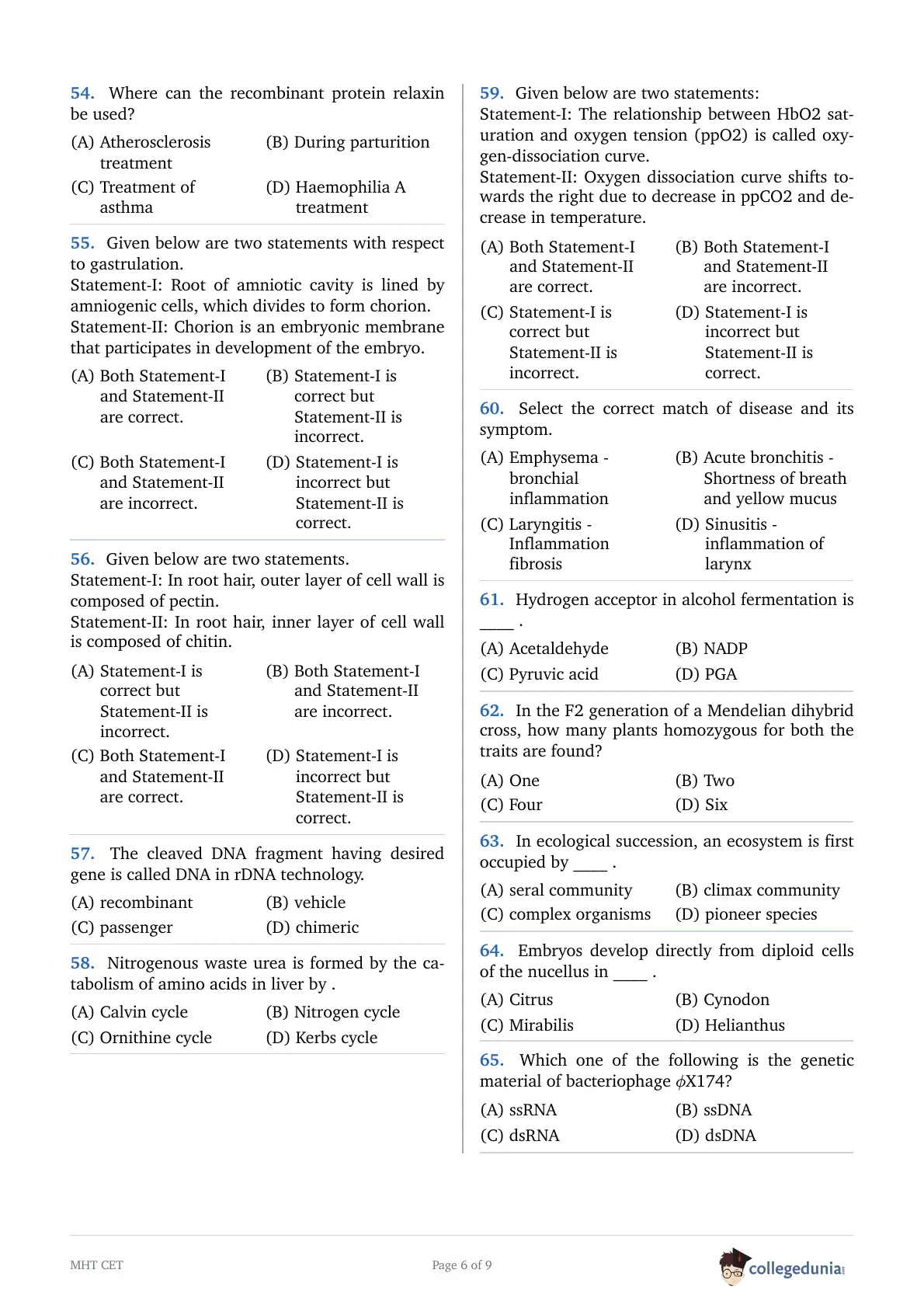
Question 54:

Where can the recombinant protein relaxin be used?

  • (A) Atherosclerosis treatment
  • (B) During parturition
  • (C) Treatment of asthma
  • (D) Haemophilia A treatment

Question 55:

Given below are two statements with respect to gastrulation.
Statement-I: Root of amniotic cavity is lined by amniogenic cells, which divides to form chorion.
Statement-II: Chorion is an embryonic membrane that participates in development of the embryo.

  • (A) Both Statement-I and Statement-II are correct.
  • (B) Statement-I is correct but Statement-II is incorrect.
  • (C) Both Statement-I and Statement-II are incorrect.
  • (D) Statement-I is incorrect but Statement-II is correct.

Question 56:

Given below are two statements.
Statement-I: In root hair, outer layer of cell wall is composed of pectin.
Statement-II: In root hair, inner layer of cell wall is composed of chitin.

  • (A) Statement-I is correct but Statement-II is incorrect.
  • (B) Both Statement-I and Statement-II are incorrect.
  • (C) Both Statement-I and Statement-II are correct.
  • (D) Statement-I is incorrect but Statement-II is correct.

Question 57:

The cleaved DNA fragment having desired gene is called DNA in rDNA technology.

  • (A) recombinant
  • (B) vehicle
  • (C) passenger
  • (D) chimeric

Question 58:

Nitrogenous waste urea is formed by the catabolism of amino acids in liver by .

  • (A) Calvin cycle
  • (B) Nitrogen cycle
  • (C) Ornithine cycle
  • (D) Kerbs cycle

Question 59:

Given below are two statements:
Statement-I: The relationship between HbO2 saturation and oxygen tension (ppO2) is called oxygen-dissociation curve.
Statement-II: Oxygen dissociation curve shifts towards the right due to decrease in ppCO2 and decrease in temperature.

  • (A) Both Statement-I and Statement-II are correct.
  • (B) Both Statement-I and Statement-II are incorrect.
  • (C) Statement-I is correct but Statement-II is incorrect.
  • (D) Statement-I is incorrect but Statement-II is correct.

Question 60:

Select the correct match of disease and its symptom.

  • (A) Emphysema - bronchial inflammation
  • (B) Acute bronchitis - Shortness of breath and yellow mucus
  • (C) Laryngitis - Inflammation fibrosis
  • (D) Sinusitis - inflammation of larynx

Question 61:

Hydrogen acceptor in alcohol fermentation is ____ .

  • (A) Acetaldehyde
  • (B) NADP
  • (C) Pyruvic acid
  • (D) PGA

Question 62:

In the F2 generation of a Mendelian dihybrid cross, how many plants homozygous for both the traits are found?

  • (A) One
  • (B) Two
  • (C) Four
  • (D) Six

Question 63:

In ecological succession, an ecosystem is first occupied by ____ .

  • (A) seral community
  • (B) climax community
  • (C) complex organisms
  • (D) pioneer species

Question 64:

Embryos develop directly from diploid cells of the nucellus in ____ .

  • (A) Citrus
  • (B) Cynodon
  • (C) Mirabilis
  • (D) Helianthus

Question 65:

Which one of the following is the genetic material of bacteriophage \(\phi\)X174?

  • (A) ssRNA
  • (B) ssDNA
  • (C) dsRNA
  • (D) dsDNA

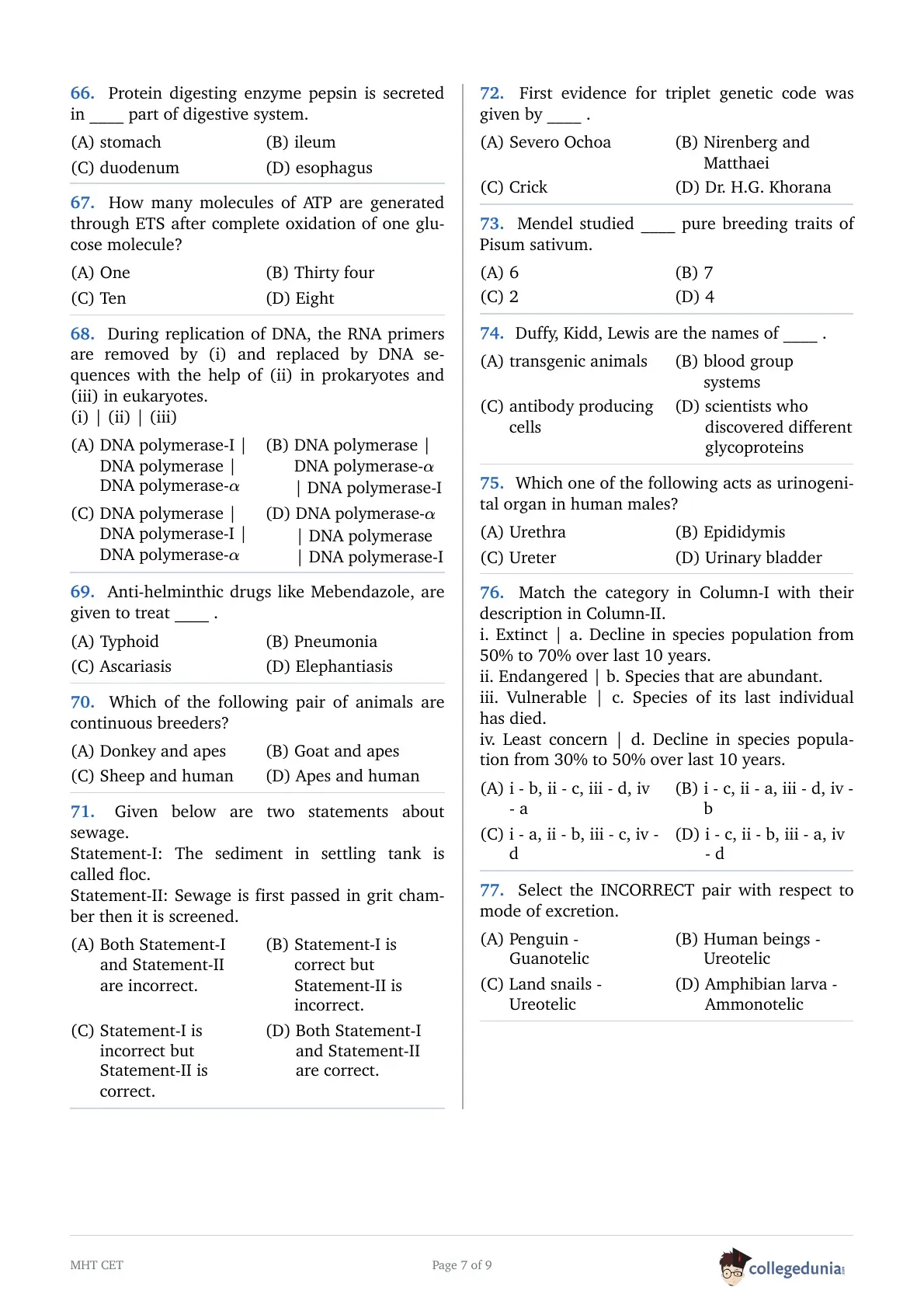
Question 66:

Protein digesting enzyme pepsin is secreted in ____ part of digestive system.

  • (A) stomach
  • (B) ileum
  • (C) duodenum
  • (D) esophagus

Question 67:

How many molecules of ATP are generated through ETS after complete oxidation of one glucose molecule?

  • (A) One
  • (B) Thirty four
  • (C) Ten
  • (D) Eight

Question 69:

Anti-helminthic drugs like Mebendazole, are given to treat ____ .

  • (A) Typhoid
  • (B) Pneumonia
  • (C) Ascariasis
  • (D) Elephantiasis

Question 70:

Which of the following pair of animals are continuous breeders?

  • (A) Donkey and apes
  • (B) Goat and apes
  • (C) Sheep and human
  • (D) Apes and human

Question 71:

Given below are two statements about sewage.
Statement-I: The sediment in settling tank is called floc.
Statement-II: Sewage is first passed in grit chamber then it is screened.

  • (A) Both Statement-I and Statement-II are incorrect.
  • (B) Statement-I is correct but Statement-II is incorrect.
  • (C) Statement-I is incorrect but Statement-II is correct.
  • (D) Both Statement-I and Statement-II are correct.

Question 72:

First evidence for triplet genetic code was given by ____ .

  • (A) Severo Ochoa
  • (B) Nirenberg and Matthaei
  • (C) Crick
  • (D) Dr. H.G. Khorana

Question 73:

Mendel studied ____ pure breeding traits of Pisum sativum.

  • (A) 6
  • (B) 7
  • (C) 2
  • (D) 4

Question 74:

Duffy, Kidd, Lewis are the names of ____ .

  • (A) transgenic animals
  • (B) blood group systems
  • (C) antibody producing cells
  • (D) scientists who discovered different glycoproteins

Question 75:

Which one of the following acts as urinogenital organ in human males?

  • (A) Urethra
  • (B) Epididymis
  • (C) Ureter
  • (D) Urinary bladder

Question 76:

Match the category in Column-I with their description in Column-II.
i. Extinct | a. Decline in species population from 50% to 70% over last 10 years.
ii. Endangered | b. Species that are abundant.
iii. Vulnerable | c. Species of its last individual has died.
iv. Least concern | d. Decline in species population from 30% to 50% over last 10 years.

  • (A) i - b, ii - c, iii - d, iv - a
  • (B) i - c, ii - a, iii - d, iv - b
  • (C) i - a, ii - b, iii - c, iv - d
  • (D) i - c, ii - b, iii - a, iv - d

Question 77:

Select the INCORRECT pair with respect to mode of excretion.

  • (A) Penguin - Guanotelic
  • (B) Human beings - Ureotelic
  • (C) Land snails - Ureotelic
  • (D) Amphibian larva - Ammonotelic

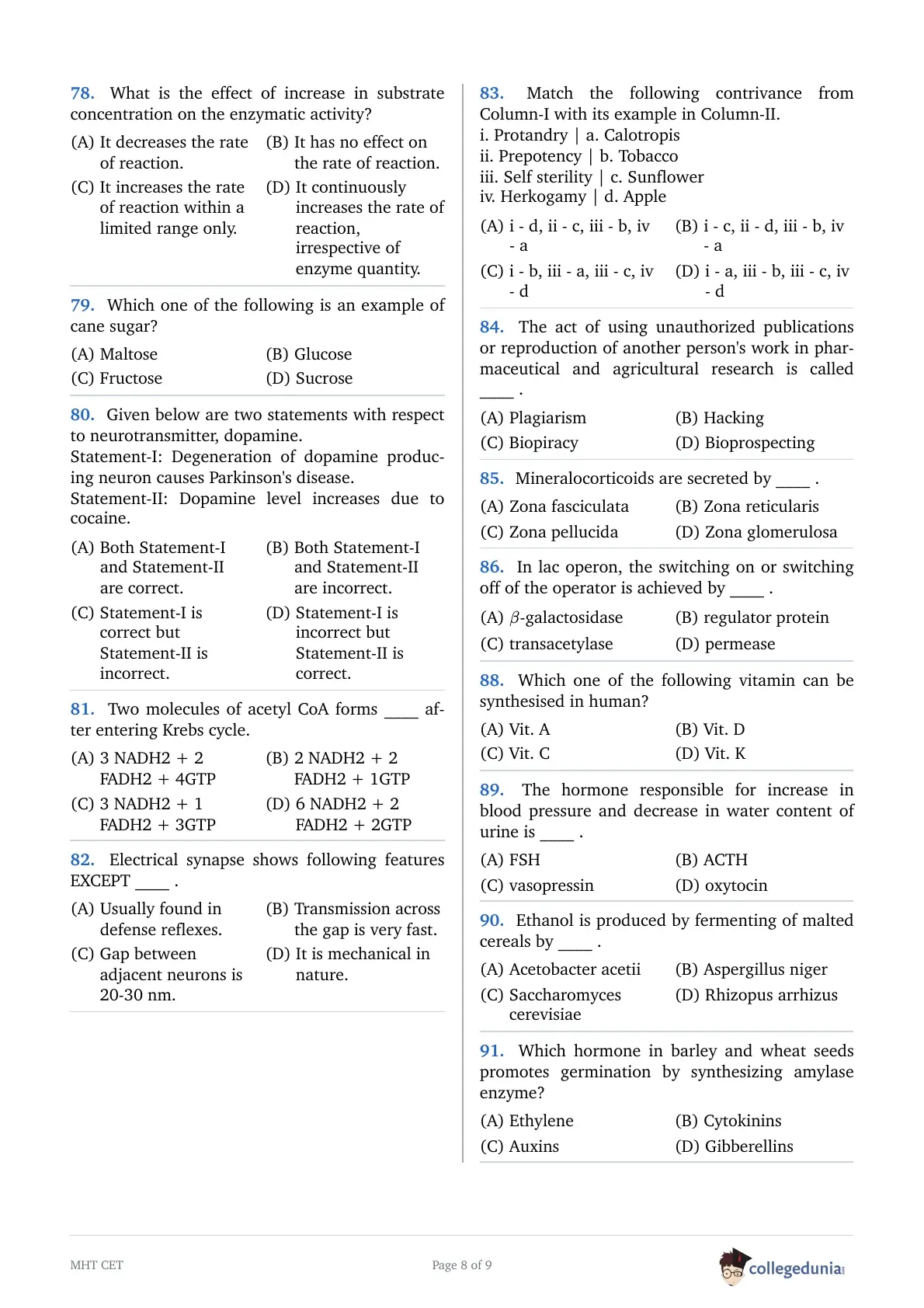
Question 78:

What is the effect of increase in substrate concentration on the enzymatic activity?

  • (A) It decreases the rate of reaction.
  • (B) It has no effect on the rate of reaction.
  • (C) It increases the rate of reaction within a limited range only.
  • (D) It continuously increases the rate of reaction, irrespective of enzyme quantity.

Question 79:

Which one of the following is an example of cane sugar?

  • (A) Maltose
  • (B) Glucose
  • (C) Fructose
  • (D) Sucrose

Question 80:

Given below are two statements with respect to neurotransmitter, dopamine.
Statement-I: Degeneration of dopamine producing neuron causes Parkinson's disease.
Statement-II: Dopamine level increases due to cocaine.

  • (A) Both Statement-I and Statement-II are correct.
  • (B) Both Statement-I and Statement-II are incorrect.
  • (C) Statement-I is correct but Statement-II is incorrect.
  • (D) Statement-I is incorrect but Statement-II is correct.

Question 81:

Two molecules of acetyl CoA forms ____ after entering Krebs cycle.

  • (A) 3 NADH2 + 2 FADH2 + 4GTP
  • (B) 2 NADH2 + 2 FADH2 + 1GTP
  • (C) 3 NADH2 + 1 FADH2 + 3GTP
  • (D) 6 NADH2 + 2 FADH2 + 2GTP

Question 82:

Electrical synapse shows following features EXCEPT ____ .

  • (A) Usually found in defense reflexes.
  • (B) Transmission across the gap is very fast.
  • (C) Gap between adjacent neurons is 20-30 nm.
  • (D) It is mechanical in nature.

Question 84:

The act of using unauthorized publications or reproduction of another person's work in pharmaceutical and agricultural research is called ____ .

  • (A) Plagiarism
  • (B) Hacking
  • (C) Biopiracy
  • (D) Bioprospecting

Question 85:

Mineralocorticoids are secreted by ____ .

  • (A) Zona fasciculata
  • (B) Zona reticularis
  • (C) Zona pellucida
  • (D) Zona glomerulosa

Question 86:

In lac operon, the switching on or switching off of the operator is achieved by ____ .

  • (A) \(\beta\)-galactosidase
  • (B) regulator protein
  • (C) transacetylase
  • (D) permease

Question 87:

Which one of the following vitamin can be synthesised in human?

  • (A) Vit. A
  • (B) Vit. D
  • (C) Vit. C
  • (D) Vit. K

Question 88:

The hormone responsible for increase in blood pressure and decrease in water content of urine is ____ .

  • (A) FSH
  • (B) ACTH
  • (C) vasopressin
  • (D) oxytocin

Question 89:

Ethanol is produced by fermenting of malted cereals by ____ .

  • (A) Acetobacter acetii
  • (B) Aspergillus niger
  • (C) Saccharomyces cerevisiae
  • (D) Rhizopus arrhizus

Question 90:

Which hormone in barley and wheat seeds promotes germination by synthesizing amylase enzyme?

  • (A) Ethylene
  • (B) Cytokinins
  • (C) Auxins
  • (D) Gibberellins

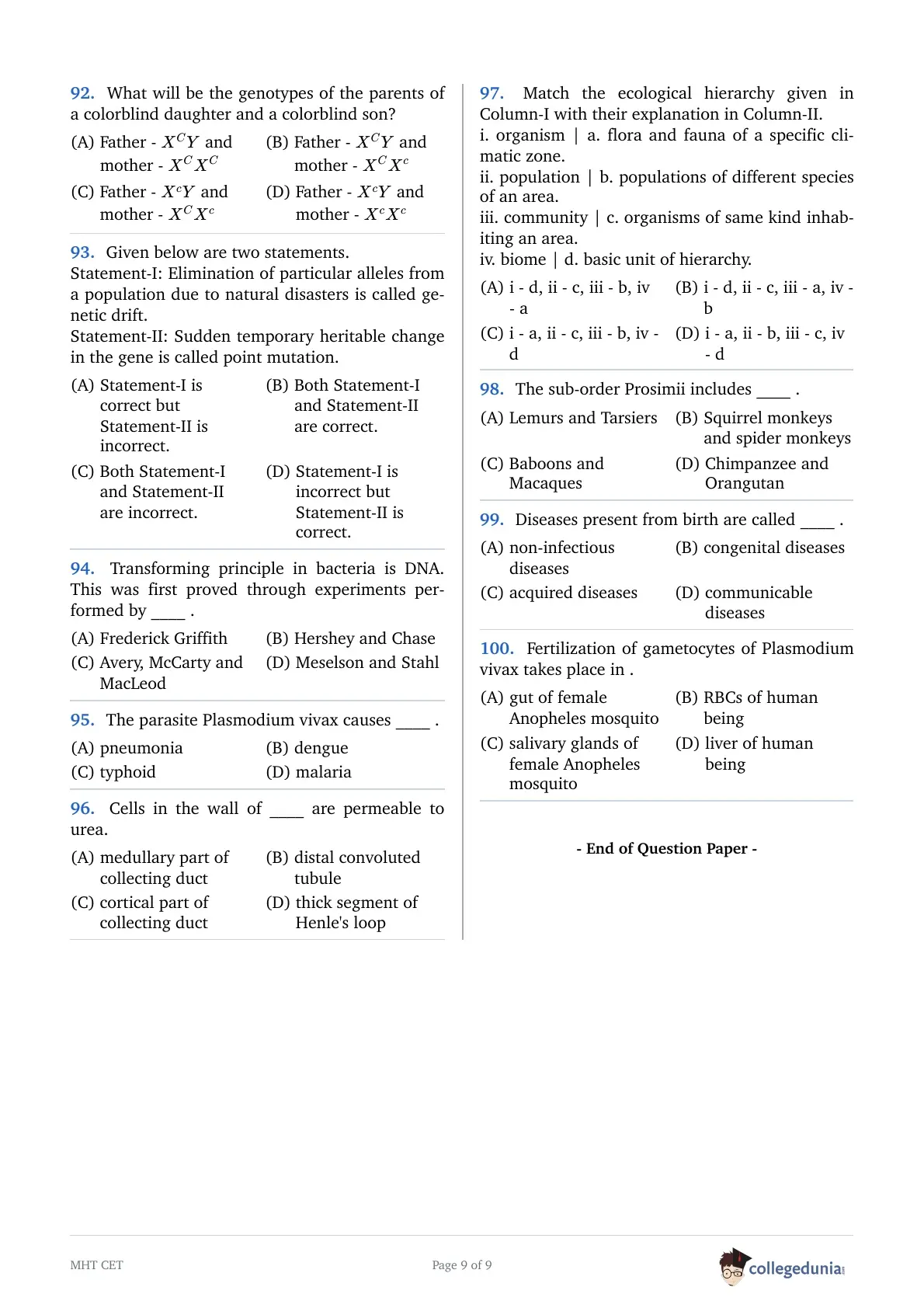
Question 92:

Given below are two statements.
Statement-I: Elimination of particular alleles from a population due to natural disasters is called genetic drift.
Statement-II: Sudden temporary heritable change in the gene is called point mutation.

  • (A) Statement-I is correct but Statement-II is incorrect.
  • (B) Both Statement-I and Statement-II are correct.
  • (C) Both Statement-I and Statement-II are incorrect.
  • (D) Statement-I is incorrect but Statement-II is correct.

Question 93:

Transforming principle in bacteria is DNA. This was first proved through experiments performed by ____ .

  • (A) Frederick Griffith
  • (B) Hershey and Chase
  • (C) Avery, McCarty and MacLeod
  • (D) Meselson and Stahl

Question 94:

The parasite Plasmodium vivax causes ____ .

  • (A) pneumonia
  • (B) dengue
  • (C) typhoid
  • (D) malaria

Question 95:

Cells in the wall of ____ are permeable to urea.

  • (A) medullary part of collecting duct
  • (B) distal convoluted tubule
  • (C) cortical part of collecting duct
  • (D) thick segment of Henle's loop

Question 96:

Match the ecological hierarchy given in Column-I with their explanation in Column-II.
i. organism | a. flora and fauna of a specific climatic zone.
ii. population | b. populations of different species of an area.
iii. community | c. organisms of same kind inhabiting an area.
iv. biome | d. basic unit of hierarchy.

  • (A) i - d, ii - c, iii - b, iv - a
  • (B) i - d, ii - c, iii - a, iv - b
  • (C) i - a, ii - c, iii - b, iv - d
  • (D) i - a, ii - b, iii - c, iv - d

Question 97:

The sub-order Prosimii includes ____ .

  • (A) Lemurs and Tarsiers
  • (B) Squirrel monkeys and spider monkeys
  • (C) Baboons and Macaques
  • (D) Chimpanzee and Orangutan

Question 98:

Diseases present from birth are called ____ .

  • (A) non-infectious diseases
  • (B) congenital diseases
  • (C) acquired diseases
  • (D) communicable diseases

Question 99:

Fertilization of gametocytes of Plasmodium vivax takes place in .

  • (A) gut of female Anopheles mosquito
  • (B) RBCs of human being
  • (C) salivary glands of female Anopheles mosquito
  • (D) liver of human being

MHT CET 2022 PCB Exam Pattern and Marking Scheme

Parameter Details
Conducting Body Maharashtra Common Entrance Test Cell (Maharashtra CET Cell)
Exam Mode Online (Computer-Based Test)
Duration 180 minutes (3 hours)
Groups / Subjects PCB (Physics, Chemistry, Biology) for Pharmacy and Agriculture
Total Questions

200

Total Marks 200
Question Type Multiple Choice Questions (MCQs)
Marking Scheme 1 mark for each correct answer
Negative Marking No
Syllabus Weightage
  • Class 12 – 80%
  • Class 11 – 20%