



Education Journalist | Study Abroad Lead
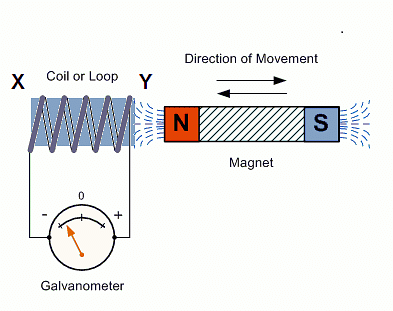
Magnetic Induction is the process of magnetization of materials in an external magnetic field. Due to this magnetization of materials, some magnetic properties arise in them. Electricity and magnetism are interrelated concepts. Scientists almost 200 years back found out that moving electric charges (electric current) produce magnetic fields. The converse is also true where moving magnets produce electric currents. Magnetic induction refers to the production of EMF or voltage across an electrical conductor that is placed inside a varying magnetic field. It is also known as electromagnetic induction. The magnetic induction formula is given as \(\epsilon = {d\phi_b \over dt}\).
Related Links
- Appearing for JEE Main, Download JEE Mains PYQ for all sabjects
- Appearing for NEET, Download NEET PYQ for all subjects
| Table of Content |
Key Terms: Electromagnetism, Electric Current, Induction, Flux, Charge, Lenz Law, Magnetic induction, Electricity, Magnetism, Electric charges, Magnetic fields
Faraday’s Law of Magnetic Induction
[Click Here for Sample Questions]
Faraday’s experiments resulted in the conclusion that an emf is induced in a coil when the magnetic flux through that coil changes with time. This law states that the ‘rate of change of magnetic flux in a circuit induces an emf in it.’ The magnitude of the induced emf in a circuit is equal to the rate of change of magnetic flux through that circuit.
Magnetic Induction Formula
From Faraday’s law, EMF in a closed circuit is given as –
\(\epsilon = -{d\phi_b \over dt}\)
Here, \(\phi_b\) is the magnetic flux, \(\epsilon\) is the EMF and t is the time. The negative sign shows that current I and magnetic field B which is opposite to the direction of change in flux are produced. This is Lenz’s law.
In the case of a closely wound coil of N turns, the change of flux associated with each turn is the same and so the total induced emf or magnetic induction is given by
\(\epsilon = N{d\phi_b \over dt}\)
Faraday’s Law of Electromagnetic Induction Detailed Explanation
Faraday’s Laws of Electromagnetic Induction Video Explanation
Solved ExampleCalculate the EMF induced if the magnetic flux linked with a coil changes from 12 x 10-3 Wb to 6 x 10⁻³ Wb in 0.01 second. Solution: Induced EMF = \(\epsilon = -{d\phi_b \over dt} = {6 \times 10^-3 - 12 \times 10^-3 \over 0.01}\\= 0.6 V\) |
Also Read:
| Related Articles | ||
|---|---|---|
| AC Generator | Unit of Magnetic Flux | Faraday Constant |
| Electromagnetic Induction MCQ | Eddy Currents | Inductance |
| Uses of Inductor | emf formula | Faraday’s Law of Induction |
Magnetic Induction Formula for Moving Conductor
For a moving rod, N = 1 and the flux Φ = BAcosθ, θ = 0º and cosθ =1. The area swept out by the rod is ΔA= lΔx
\(\epsilon = {B \triangle A \over \triangle t} = {Bl \triangle x \over \triangle t} = Blv\)
Here, velocity is perpendicular to the magnetic field.
If the velocity is at an angle θ with B, its component perpendicular to B is v sinθ.
ε = Blv sinθ
Here, l = length of the conductor,
v = velocity of the conductor
θ = the angle between the magnetic field and the direction of motion.
Therefore, the induced current formula denotes a close relation between electric field and magnetic field which is dependent on a specific time variation.
Electricity and Magnetism
[Click Here for Previous Year Questions]
Electricity and magnetism are interrelated concepts. Scientists almost 200 years back found out that moving electric charges (electric current) produce magnetic fields.
- Moving magnets produce electric currents.
- Experiments conducted by Michael Faraday and Joseph Henry demonstrated conclusively that electric currents were induced in closed coils when they were subjected to changing magnetic fields.
- This phenomenon is called Electromagnetic Induction.

Electromagnetic Induction
Magnetic Flux
[Click Here for Sample Questions]
The magnetic flux, \(\Phi\)B, is a measure of the number of magnetic field lines linking a surface of cross-sectional area A. The magnetic flux through a small surface is the product of magnetic flux density normal to the surface and the area of the surface. Similar to electric flux, magnetic flux is defined as,
\(\Phi\)B = B.A cos\( \phi\)
Here \( \phi\) is the angle between B and A . Magnetic Flux is a scalar quantity. Its SI unit is Weber.
1 Weber = 1 Tesla.meter2 .

Magnetic Flux
Lenz’s Law
[Click Here for Previous Year Questions]
Lenz law states that “The polarity of the induced emf is such that it tends to produce a current which opposes the change in magnetic flux that produced it”.
In the below figure we can see that the north pole of a bar magnet is being pushed towards a closed coil, hence the magnetic flux through the coil increases. Hence current is induced in the coil in such a direction that it opposes the increase in flux, i.e. in a counterclockwise direction.
Lenz Law
Read Further: NCERT Solutions for Electromagnetic Induction
Motional Electromotive Force
[Click Here for Sample Questions]
Consider a straight conductor moving in a magnetic field. In the figure, one can see that the rod PQ is moved towards the left with a constant velocity v. Assuming no loss of energy PQRS forms a closed circuit that encloses an area that changes as PQ moves. Magnetic flux is given by
\(\Phi\)B=Blx
since x is changing with time, the rate of change of flux \(\Phi\)B will induce an emf given by,
\(\epsilon\) = -d\(\Phi\)/dt
= -d/dt(Blx)
-Bld/dt= Blv

Motional Electromotive Force
It is also possible to explain the motional emf expression by invoking the Lorentz force acting on the free charge carriers of conductor PQ. When the rod moves with speed v, the charge will also be moving with speed v in the magnetic field B. The Lorentz force on this charge is qvB in magnitude and its direction is towards Q. Work done in moving the charge from P to Q is
W = qvBL
Since emf is work done per unit charge,
\(\epsilon\) = Wq = BLv
Also Read:
| Related Articles | ||
|---|---|---|
| Solenoid Engine | Transformers | Electromagnets |
| Electromagnetic Field | Types of Generators | Experiment faraday henry |
| Energy Consideration | Unit of Inductance | Electromagnetic Damping |
Things To Remember
- The magnetic flux through a surface of area A placed in a uniform magnetic field B is defined as, ΦB = B A = BA cos θ where θ is the angle between B and A.
- Lenz’s law states that the polarity of the induced emf is such that it tends to produce a current which opposes the change in magnetic flux that produces it. The negative sign in the expression for Faraday’s law indicates this fact.
- When a metal rod of length l is placed normal to a uniform magnetic field B and moved with a velocity v perpendicular to the field, the induced emf (called motional emf) across its ends is ε = Bl v
- Changing magnetic fields can set up current loops in nearby metal (any conductor) bodies. They dissipate electrical energy as heat. Such currents are called eddy currents.
- Magnetic induction is the production of EMF across an electrical conductor placed inside a varying magnetic field.
- The magnetic induction formula can be denoted by the formula is given as \(\epsilon = {d\phi_b \over dt}\).
Previous Year Questions
- Lenz law is based in principle of conservation of….
- A moving conductor is equivalent to a battery of emf….
- A copper rod of length L is rotated about the end perpendicular to….
- A resistance 'R' draws power 'P' when connected to an AC source...[NEET 2015]
- A uniform magnetic field is restricted within a region of radius….
- A copper wire is wound on a wooden frame, whose shape is that of an equilateral…. [JEE Main 2019]
- A metallic rod of length ll is tied to a string of length 2l and made to rotate with angular speed…. [JEE Main 2013]
- A square frame of side 10 cm and a long straight wire carrying current 1 A are in the plane of the paper…. [JEE Main 2014]
- If the rod makes n rotations per second, then the time-averaged magnetic moment of the rod is… [JEE Main 2019]
- The figure shows a circular area of radius R where a uniform magnetic field….
- In a coil of resistance 100Ω, a current is induced by changing the magnetic flux through it….. [JEE Main 2017]
- When the current in a coil changes from 5A to 2A…. [JEE Main 2015]
- Two identical circular coils A and B are kept on a horizontal tube side by side without touching each other…. [KCET 2013]
- The magnetic flux through a circuit of resistance RR changes by an amount….[NEET 2004]
- A conducting loop in the shape of a right-angled isosceles triangle of height...[JEE Advance 2016]
- If a transformer of an audio amplifier has output impedance…..[JCECE]
- the circular loop of wire is moved with velocity towards the infinite current carrying wire…… [VITEEE 2016]
- Two identical coaxial coils P and Q carrying an equal amount of current in the same direction are ...[KEAM]
- The polarity of induced emf is given by….[KEAM]
- In a coil of resistance 100Ω, a current is induced by changing the magnetic flux through it….. [JEE Main 2017]
Sample Questions
Ques 1. A metal rod of length 0.5 cm is placed perpendicular to a field of flux density 0.6 Tesla and moves at a right angle to the field with a speed of 2 m/s. Calculate the emf induced in the rod. (2 marks)
Ans. l = 0.5cm
B = 0.6T
θ = 90°
v = 2 m/s.
E = Blv
= 0.5 × 0.6 × 2
= 0.6 V
Hence induced emf is 0.6Volt.
Ques 2. A coil of area 50cm2 is placed perpendicular to a uniform field of flux density 10-3T. i)What is the flux passing through the coil? ii) If the magnetic field drops down to 0 in 3 sec, what is the value of emf induced? (2 marks)
Ans.
i) Area (A) = 50 cm2 = 5 × 10⁻³ m2
B = 10-3T
Now,
(i) Flux(θ) = B × A
= 5 × 10⁻² Tm2
ii) E = dθ/dt
= 5 × 10⁻⁶ − 0
= 1.67 × 10⁻⁶V
Ques 3. The magnetic field of 2*10-2T acts at a right angle to a coil of area 100 cm2 with 50 turns. The average emf induced in the coil is 0.1 V when it is removed from the magnetic field in time t. Calculate the value of t. (2 marks)
Ans.
B = 2 × 10⁻² T
θ = 90°
A = 100cm2 = 0.01m2
n = 50 turns.
E = 0.1 V
Or, θ = B × A
= 2 × 10-2 × 0.01
= 0.0002
E = N. θt
Or, 0.1 = 50 × 0.002 t
So, t = 0.1 sec.
Ques 4. The electric current is flowing in a wire in the direction from B to A . Find out the direction of the induced current in the metallic loop that keeps the wire as shown in the figure. (2 marks)
Ans. According to Lenz’s law, the direction of induced current will oppose the cause of its production. Hence, the induced current will be in a manner that will support the current of the wire. (same direction). The direction of the current will be clockwise.
Ques 5. Define electric flux. Is it a scalar or a vector quantity? (CBSE 2018) (2 marks)
Ans. Electric flux is defined as the number of field lines crossing per unit area. It is a scalar quantity.
Ques 6. A point charge q is at a distance of d/2 directly above the centre of a square of side d, as shown in the figure. Use Gauss law to obtain the expression for electric flux through the square.

If the point charge is now moved to a distance d from the centre of the square and the side of the square is doubled. Explain how the electric flux will be affected. (CBSE 2018) (2 marks)
Ans: When the cube is of side d and the point charge q is at the centre of the cube then the total electric flux due to this charge will pass evenly through the six faces of the cube. So the electric flux through one face will be equal to ? of the total electric flux due to this charge or q/6????0. Now if we moved the charge by a distance d from the centre and the side of the square gets doubled i.e. 2d, so the point charge can be assumed to be at the centre of a cube of side 2d, flux through one face being equal to 1/6th of the total flux. Hence it will remain the same i.e. q/6????0.
Ques 7. A metallic rod of 1m length is rotated with a frequency of 50 rev/s, with one end hinged at the centre and the other end at the circumference of a circular metallic ring of radius 1m, about an axis passing through the centre and perpendicular to the plane of the ring. A constant and uniform magnetic field of 1T parallel to the axis is present everywhere. What is the emf between the centre and metallic ring? (3 marks)

Ans. As the rod is rotated, free electrons in the rod move towards the outer end due to the Lorentz force and get distributed over the ring. Thus the resulting separation of charges produces an emf across the ends of the rod. At a certain value of emf, there is no more flow of electrons and a steady-state is reached. Using equation the magnitude of the emf generated across a length dr of the rod as it moves at right angles to the magnetic field is given by
dε = Bvdr
\(\varepsilon=\int \mathrm{d} \varepsilon=\int_{0}^{R} B v \mathrm{~d} r=\int_{0}^{R} B \omega r \mathrm{~d} r=\frac{B \omega R^{2}}{2}\)
Note that we have used v = ωr. This gives
\(\begin{aligned} &\varepsilon=\frac{1}{2} \times 1.0 \times 2 \pi \times 50 \times\left(1^{2}\right) \\ &=157 \mathrm{~V} \end{aligned}\)
Ques 8. A circular coil of the radius of 10 cm, 500 turns and resistance of 2? are placed with its plane perpendicular to the horizontal components of the earth’s magnetic field. It is rotated about its vertical diameter through 180° in 0.25 seconds. Estimate the value of the induced emf and the current in the coil. The horizontal component of the earth’s magnetic field at the place is 3×10⁻⁵ Tesla. (2 marks)
Ans. Initial flux through the coil,
\(\Phi\) initial = BA Cos θ
→ 3 × 10 -5 × ( \(\pi\) x 10-²) × Cos 0
→ 3\(\pi\) × 10-7 Wb
Final flux after the rotation,
\(\Phi\) final = 3 × 10 -5 × ( \(\pi\) × 10-²) × Cos 180°
→ -3\(\pi\) × 10-7 Wb
Therefore the estimated value of the induced emf is,
\(\epsilon\) = Nd\(\Phi\)/dt
→ 500 × (6\(\pi\) × 10-7) / 0.25
→ 3.8 × 10-³ V
I = ε / R = 1.9 × 10-³ A
Ques 9. What is the unit for magnetic induction? (1 mark)
Ans. Magnetic Induction is measured in Tesla.
Ques 10. What is Eddy current? (2 marks)
Ans. Eddy currents are loops of electrical current that are induced within the conductors through a changing magnetic field as per Faraday's law of induction. Eddy currents flow in closed loops within conductors, in planes perpendicular to the magnetic field.
Ques 11. What are some of the applications of magnetic induction? (3 marks)
Ans. The principle of magnetic induction is applied in –
- Current clamp
- Electric generators
- Inductors
- Magnetic flow meters
- Electromagnetic forming
- Graphics tablet
Ques 12. What are Faraday’s laws of induction? (3 marks)
Ans. Faraday’s law of induction can be stated as –
- First law: Whenever a conductor is placed in a varying magnetic field, an emf is induced and if the conductor is a closed circuit then the current flows through it.
- Second law: The magnitude of the induced EMF is equal to the rate of change of flux linkages.
Ques 13. Write a short note on the use of magnetic induction in electrical transformers. (3 marks)
Ans. A transformer is a device that changes AC electric power from one voltage level to another through the action of a magnetic field.
- A step-down transformer is one in which voltage is higher in the primary than the secondary voltage.
- Whereas the one in which the secondary voltage has more turns is called a step-up transformer.
- Household circuits use step-down transformers to decrease the voltage to 120 V or 240 V in them.
Ques 14. Write a short note on magnetic induction in AC generator. (2 marks)
Ans. As the coil rotates in a magnetic field B in a generator, the effective area of the loop is A cosθ, where θ is the angle between A and B. It produces a flux change. The axis of the rotation coil is perpendicular to the magnetic field direction. The rotation of the coil causes the magnetic flux to change, so an emf keeps being induced in the coil.
Ques 15. Describe an application of eddy currents. (2 marks)
Ans. During braking in the trains, the brakes expose the metal wheels to a magnetic field which produces eddy currents in the wheels. The magnetic interaction between the eddy currents and the applied field slows the wheels down. The faster the wheels spin, the stronger the effect. As the train slows the braking force is reduced, which produces a smooth stopping motion.
For Latest Updates on Upcoming Board Exams, Click Here: https://t.me/class_10_12_board_updates
Check-Out:



Comments