



Content Curator
The Detritus food chain is a first trophic level food chain that begins with dead organic material. In the detritus food chain, microscopic animals are mainly involved. It absorbs its primary source of energy from dead remains of plants and animals. This food chain helps in solving inorganic nutrients.
| Table of Content |
Key Terms: Food Chain, Microorganisms, Decomposer, Organic Substances, Energy, Animals, Plants, Detritivores, Inorganic nutrients, Detritus
Detritus Food Chain or DFC
[Click Here for Sample Questions]
In the detritus food chain, primary consumers of the dead matter or detritus are detritivores. The chain starts with the detritivores. The organisms that consume the dead and decayed matter are called detritivores.
The source of the energy in this food chain is decayed matter. The energy is then transferred from one organism to the other and the flow is carried on in this way to make a chain of the energy derived from the detritus.
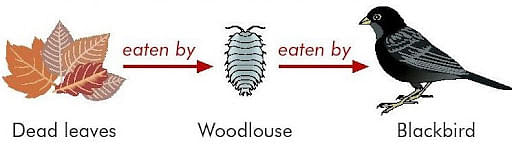
Detritus Food Chain
Detritus food chain ensures the maximum transfer of energy from one organism to the other. This type of food chain also helps with the inorganic nutrients present in the soil, hence it restores these nutrients in the soil. The dead matter usually is deformed by the processes it goes through and the consumption by decomposers.
The simple compounds present in the matter are decomposed quickly but the complex compounds take more time to decompose. The decomposers thus take whatever material they need for their persistence and to accomplish their metabolism.
Also Check:
Flow Of Energy In Detritus Food Chain
[Click Here for Previous Year Questions]
The process of flow of energy in the detritus food chain occurs in the following manner:
- The process of energy transfer in the detritus food chain is majorly carried out by the subsoil (microscopic or macroscopic) organisms. Detritus food chain is rarely dependent on solar energy, making it a possibly continuous food chain in an ecosystem.
- The energy to the ecosystem is contributed by the detritus food chain. Detritus food chain occurs in both the land and water and detritivores are present in both ecosystems.
- The detritus food chain plays an important role in the transfer of energy from organism to organism in both ecosystems (land and water)
- The dead material or the fecal material excreted by the detritivores is carried away by the water currents in an aquatic ecosystem. The material later settles on the bottom of the water bodies and continues its process of energy transfer.
- In a land ecosystem, the dead and decayed matter or even the fecal matter remains on the surface of the land. The dead matter is decomposed partially and the rest of the process is taken by the organisms while transferring the energy in them.
- This way the energy keeps on going in the ecosystem and the detritus food chain helps in producing more energy than the grazing food chain.
| Dead plant→ microbes → earthworms → rats → snakes → predators |
Energy Flow In Detritus Food Chain
Implications Of Detritus Food Chain
[Click Here for Sample Questions]
Few implications of the detritus food chain is as follows:
- The Detritus food chain ensures the maximum transfer of energy from one organism to the other.
- The process of energy transfer in the detritus food chain is majorly carried out by the subsoil (microscopic or macroscopic) organisms.
- The primary consumers of the dead matter or detritus in the detritus food chain are detritivores.
- The simple compounds present in the matter are decomposed quickly but the complex compounds take more time to decompose.
- Energy flows in abundance in the Detritus food chain. For example, a dead plant is consumed by microbes (detritivores) present in the soil before it gets decomposed.
- Detritus food chain occurs in both the land ecosystem and the aquatic ecosystem. The detritivores are present both in the water and on the land.
- Detritus food chain is rarely dependent on solar energy, thus, making it a possibly continuous food chain in an ecosystem.
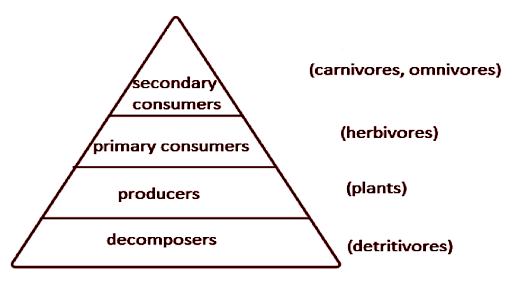
Food Chain
Also check: Difference Between Food Chain And Food Web
Examples of Detritus Food Chain
[Click Here for Previous Year Questions]
Few examples of the detritus food chain are specified below:
- A dead plant is consumed by microbes (detritivores) present in the soil before it gets decomposed. The bacteria present in the soil are consumed by the earthworms which are consumed by rats and rats are consumed by snakes and snakes by predators like vultures or eagles.
- The dead material or the fecal material excreted by the detritivores is carried away by the water currents in an aquatic ecosystem. The material later settles on the bottom of the water bodies and continues its process of energy transfer.
- Whereas, in the land ecosystem, the dead and decayed matter or even the fecal matter remains on the surface of the land. The dead matter is decomposed partially there and the rest of the process is taken by the organisms whilst transferring the energy in them.
Also Check: Difference Between Grazing and Detritus Food Chain
Things to Remember
- Detritus food chain begins with a dead matter (organic) consumed by animals which are consumed by other organisms present in the soil until the dead organic is properly decomposed.
- The primary consumers of the dead matter or detritus in the detritus food chain are detritivores.
- The Detritus food chain ensures the maximum transfer of energy from one organism to the other.
- The process of energy transfer in the detritus food chain is majorly carried out by the subsoil (microscopic or macroscopic) organisms. The detritus food chain helps in producing more energy than the grazing food chain.
- Detritus food chain occurs in both the land ecosystem and the aquatic ecosystem.
Also Read:
Previous Year Questions
- Energy transfer from one trophic level to other, in a food chain, is...[Neet 1999]
- _____ is the rate of production of organic matter by consumers….[Neet 2012]
- About 70% of total global carbon is found in...[Neet 2008]
- The biomass available for consumption by the herbivores and the decomposers is called...[Neet 2010]
- Both hydrarch and xerarch successions lead to….[Neet 2011]
- During ecological succession….[Neet 2015]
- In a biotic community, the primary consumers are...[Neet 1995]
- In an ecosystem, which one shows one-way passage...[Neet 1998]
- Which ecosystem has the maximum biomass?…[Neet 2017]
- Vertical distribution of different species occupying different levels in a biotic community is known as...[Neet 2015]
- What is true of ecosystem?...[Neet 1998]
- Which is not a functional unit of an ecosystem...[Neet 2012]
- Which of the following acts as 'nature's scavengers'...[Neet 1997]
- Which of the following ecological pyramids is generally inverted?...[Neet 2019]
- Which of the following ecosystem has the highest gross primary productivity?...[Neet 1997]
- Which one of the following types of organisms occupy more than one trophic level in a pond ecosystem?….[Neet 2009]
- Which one of the following is not a gaseous biogeochemical cycle in ecosystem?...[Neet 2012]
- Which one of the following is a characteristic feature of cropland ecosystem?...[Neet 2016]
- Which one of the following animals may occupy more than one trophic levels in the same ecosystem at the same time?...[Neet 2011]
- Which of the following pairs is a sedimentary type of biogeochemical cycle?….[Neet 1995]
Sample Questions
Ques. Discuss the detritus food chain. (1 Mark)
Ans. Detritus food chain begins with a dead matter (organic) consumed by animals which is consumed by other organisms present in the soil until the dead organic is properly decomposed. The organisms that consume the dead and decayed matter are called detritivores.
Ques. What is a detritivore? What does a detritivore feed on? (2 Marks)
Ans. The organisms that consume the dead and decayed matter are called detritivores. The primary consumers of the dead matter or detritus in the detritus food chain are detritivores. The source of the energy in this food chain is decayed matter. The energy is then transferred from one organism to the other and the flow is carried on in this way to make a chain of the energy derived from the detritus.
Ques. Discuss the process of the energy flow in the detritus food chain. (2 Marks)
Ans. The process of energy transfer in the detritus food chain is majorly carried out by the subsoil (microscopic or macroscopic) organisms. Detritus food chain is rarely dependent on solar energy, thus, making it a possibly continuous food chain in an ecosystem. Therefore, we can say that much of the energy to the ecosystem is contributed by the detritus food chain. The wastage in this type of food chain is a negligible amount.
Ques. Is the detritus food chain dependent upon solar energy anyway? (1 Mark)
Ans. No, the Detritus food chain is rarely dependent on solar energy, thus, making it a possibly continuous food chain in an ecosystem.
Ques. Are detritivores the primary consumers in the detritus food chain? (1 Mark)
Ans. Yes, the primary consumers of the dead matter or detritus in the detritus food chain are detritivores.
Ques. Does the decomposition of decayed matter take place on the surface of the water in an Aquarium ecosystem? (2 Marks)
Ans. No, the dead material or the fecal material excreted by the detritivores are carried away by the water currents in an aquatic ecosystem. The material later settles on the bottom of the water bodies and continues its process of energy transfer.
Ques. What does the detritus food chain begin with? (1 Mark)
Ans. The detritus food chain begins with a dead organism known as detritus. For example: algae, protozoan, bacteria, etc.
Ques. What is a food chain, explain with an example? What are its types? (3 Marks)
Ans. A food chain describes how energy and nutrients move through an ecosystem. At the basic level, there are plants that produce the energy, then it moves up to higher-level organisms like herbivores. After that when carnivores eat the herbivores, energy is transferred from one to the other. A food chain always starts with the producer and ends with an apex predator.
Example of the food chain: grass - insects - lizard - snake.
The food chain is broadly divided into two parts: (i) the detritus food chain and (ii) the grazing food chain.
Ques. What role does the detritus food chain play in the food chain? Who is involved in this food chain? Explain with an example. (3 Marks)
Ans. Role of DFC- Detritus food chain absorb energy from detritus with the assurance of maximum utilization and negligible waste
Detritus food chain involves macroscopic and microscopic organism.
Examples of the detritus food chain: leaves of mangrove trees etc.
Ques. What is the trophic level of the detritus food chain? (1 Mark)
Ans. The detritus food chain lies in the first trophic level.
For Latest Updates on Upcoming Board Exams, Click Here:https://t.me/class_10_12_board_updates
Also check:



Comments