



Education Journalist | Study Abroad Lead
Zinc is the twenty-fourth most abundant element and the fourth most common metal in use. Pure metallic zinc was discovered by Andreas Sigismund Marggraf in 1746. Although the production of zinc dates back to the sixth century in the mines of Rajasthan and its first known use was in 1000 BC. It is an essential mineral and has five stable isotopes. It is represented with the symbol Zn.
| Table of Content |
Key Terms: Zinc, Transition Earth Metal, Metal, Element, Mineral, Isotopes, Atomic number, Periodic table
What is Zinc?
[Click Here for Sample Questions]
Zinc is a transition earth metal of bluish-white colour. It has the atomic number 30 and is present in group 12 of the periodic table. Zinc is a primordial isotope, i.e., it exists in its current form before the earth was formed. It forms about 0.0075% of the earth’s crust and is found in association with other base metals such as copper and lead in ores. Many alloys like brass contain zinc. Zinc is a good conductor of electricity and moderately reactive metal.
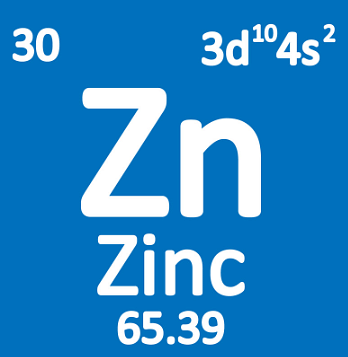
Zinc
Read More:
| Related Topics | ||
|---|---|---|
| Zinc Chloride Formula | Sulphuric acid | Nitric acid |
| Acids bases and salts | Classification of metals | Newland’s law of octaves |
Properties of Zinc
[Click Here for Sample Questions]
The chemical and physical properties of zinc are as follows:
Physical Properties
- Zinc has a hexagonal crystal structure.
- Zinc Is malleable between 100°C and 150°C and becomes hard and brittle at other temperatures.
- Zinc is less dense than iron.
- Zinc burns in the air with a bright bluish-green flame. While burning it gives off fumes of zinc oxide. The chemical reaction is given below:
2Zn + O2 → 2ZnO
Chemical Properties
| Particulars | Details |
|---|---|
| Group | 12 |
| Period | 4 |
| Block | d |
| Atomic Number | 30 |
| State of Matter | State at 20°C Solid |
| Electron Configuration | [Ar] 3d104s2 |
| Melting Point | 419.527°C, 787.149°F, 692.677 K |
| Boiling Point | 907°C, 1665°F, 1180K |
| Density | 7.134 Kg/m³ |
| Relative Atomic Mass | 65.38 |
| Key Isotopes | 64Zn,66Zn,67Zn,68Zn and 70Zn |
Common Zinc Compounds
[Click Here for Sample Questions]
Zinc compounds are colourless and descript in behaviour. Some common compounds formed from Zinc are as follows:
- Zinc Carbides (ZnC2), Peroxide(ZnO2), Hydride(ZnH2)
- Zinc halogenides (fluoride, chloride, bromide, iodide)
- The organic compound of zinc is the acetate (Zn(O2CCH3)2
- Phosphate
- Zinc selenide, sulfide, arsenite Zn(AsO2)
- Thiocyanates, Thiosulfates, and Cyanides – present in aqueous solution in the form of corresponding complexes
Uses of Zinc
[Click Here for Sample Questions]
- Zinc is a widely used metal across various sectors. It is used in paints and as a catalyst in the manufacture of rubber to disperse heat. It protects rubber polymers and plastics from ultraviolet radiation.
- Other compounds of zinc are used in model rockets, salting material for nuclear weapons, and fire retardants.
- Zinc sulphide (ZnS) is used in luminescent pigments such as on the hands of clocks, X-rays and television screens.

Uses of Zinc
- Zinc is also used in galvanizing iron and steel as it prevents iron from rusting. Galvanized steel is used in manufacturing vehicles.
- Brass, a zinc alloy is useful in making communication equipment, hardware, musical instruments, and water valves.
- Other applications of zinc include electrical batteries and small non-structural castings.
- Zinc carbonate and zinc gluconate are used as dietary supplements, zinc chloride in deodorants), zinc pyrithione (anti-dandruff shampoos) and dimethylzinc in the organic laboratory.
Biological Role of Zinc
[Click Here for Sample Questions]
- Zinc is an essential nutrient that plays a vital role in the human body. It is required for various functions to be performed in our body. These include enzymatic reactions, immune function, protein and DNA synthesis, wound healing and growth and development.
- However, our body is not capable of producing zinc on its own. Therefore it is essential that we consume enough zinc through various sources.
- Foods rich in zinc include shellfish, meat, chicken, fish, legumes, nuts and seeds. Dairy products such as milk, yoghurt and cheese, eggs; whole grains like oats, brown rice, etc. and certain vegetables like Mushrooms, peas, and beet greens should be eaten.
Hazards of Zinc
[Click Here for Sample Questions]
- Although zinc is beneficial for health, its excessive absorption suppresses copper and iron absorption in the body. This can cause copper and iron deficiency. Also, overconsumption of zinc causes lethargy, depression and defects in the skin.
- Nearly two billion people in the world suffer from zinc deficiency. It can cause growth retardation, delayed sexual maturation, infection susceptibility, and diarrhoea in children.
Things to Remember
- Zinc is an important earth element present in our periodic table. It is bluish-white in colour.
- Zinc is used for various purposes in industries like galvanising, construction etc.,
- Zinc plays a vital part in maintaining the human body and should be consumed in enough amount.
- It is important to remember that it should not be taken in excess as it can lead to more harm than doing good.
Read More:
Sample Questions
Ques: What is galvanization? [2 marks]
Ans: Galvanization is the process of applying a protective zinc coating to steel or iron, to prevent them from corrosion. The most common method is hot-dip galvanizing. In this process, the parts are submerged in a bath of molten hot zinc.
Ques: Why is zinc used in galvanization? [2 marks]
Ans: Zinc is more reactive than iron and steel. It oxidizes first and experiences acid corrosion before iron and steel. Hence it forms a protective layer over zinc and steel and prevents the air from getting in contact with them.
Ques: List any three environmental impacts of using zinc. [2 marks]
Ans: Any three environmental impacts of using zinc are as follows:
- Zinc contaminates the soil when activities like mining, refining or fertilizing are done. 2. Excess amounts of zinc in soil interfere with the ability of plants to absorb essential minerals like iron and manganese.
- Zinc can have adverse effects on health if not consumed properly.
Ques: What is zinc toxicity? [2 marks]
Ans: If zinc is consumed more than the required amount of 225 mg, then it results in zinc toxicity. Living in industrial areas or taking supplements for a long time can result in zinc toxicity. However, zinc overdose through supplements is rare.
Ques: List three ways in which zinc can be consumed by the body? [2 marks]
Ans: Three ways in which zinc can be consumed by the body are:
- There are many foods that are rich in zinc. They are a good source for providing zinc to your body.
- Eating dietary supplements of zinc can also be a good alternative. Generally, they are recommended when there is a high risk of zinc deficiency.
- Applying ointments including zinc on the affected part of the skin can also be useful.
Ques: What type of diseases can zinc cure? [2 marks]
Ans: Zinc can cure many diseases like
Gastroenteritis: A lot of mineral content is lost due to diarrhoea among people. Intake of zinc can reduce gastroenteritis and the severity of diarrheal episodes.
Common cold: The use of zinc supplements can reduce the symptoms of common cold within one day.
Macular degeneration: The research shows that intake of zinc can prevent the process of age-related macular degeneration.
Ques: List uses of zinc oxide. [2 marks]
Ans: Uses of zinc oxide are:
- Zinc oxide is widely used in cosmetics such as makeup, nail products and many personal care products.
- It is used as medicine in treating many skin issues like diaper rash, minor burns, severely chapped skin, or other minor skin irritations.
Ques: List the symptoms of zinc deficiency in humans. [2 marks]
Ans: The symptoms of zinc deficiency in humans are
- Skin related issues such as acne or rashes
- Repeated diarrhoea
- Lack of appetite and loss of weight
- Skin dryness
- Problems with visibility
- Slow growth in children
- Delay in wound healing
- Not being able to smell or taste accurately
For Latest Updates on Upcoming Board Exams, Click Here: https://t.me/class_10_12_board_updates
Check-Out:



Comments