



Exams Prep Master
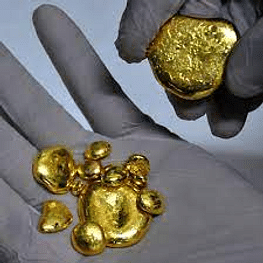
Aqua regia is a fascinating yet dangerous liquid. Aqua Regia is a Latin word meaning “royal water” and is a mixture of two acids. The chemical consists of two acids, nitric acid (HNO3) and hydrochloric acid (HCl), mixed in a 3:1 ratio with three parts of HCl and one part of HNO3. Here, we will discuss the concept, how it dissolves gold, precautions and other facts along with important questions. Aqua regia is known as royal water because it has the ability to dissolve various metals, which are extremely hard to dissolve. It can dissolve gold, platinum, and other noble metals. Noble metals can be defined as those metals that show high resilience to chemical attacks. Thus, the ability of Aqua Regia to dissolve such metals makes the mixture royal.
| Table of Content |
Keyterms: Aqua Regia, Acids, Nitric acid, Hydrochloric Acid, Gold, platinum, Noble Metals, liquid, metals
Read More: Praseodymium
Definition of Aqua Regia
[Click Here for Sample Questions]
Aqua Regia is a yellowish red liquid, and it is highly corrosive and dangerous in nature. It causes skin burns and is explosive if stored. While Aqua Regia is mainly used in dissolving noble metals, it also has other uses.

Aqua Regia is used in analytical procedures for phosphate rocks, selenium, antimony, and less soluble materials such as cobalt, arsenic, lead, mercury etc. All these materials are categorised as noble metals and this is the reason why the title “royal water” was given to the solution that could dissolve them.
Read More: Phosphorus Pentachloride
What is an Acid?
[Click Here for Sample Questions]
An acid is a substance that has the ability to donate H+ ions. While most people consider acids to be highly corrosive and dangerous, weak acids are present in everyday life items. Acetic acid is present in vinegar, lactic acid in curd and citric acid in oranges and lemons.
Strong acids such as nitric acid, sulphuric acid, hydrochloric acid, on the other hand, are hazardous but also extremely useful. For example, sulphuric acid is used in lead-acid batteries.
How Does Aqua Regia Dissolve Gold ?
[Click Here for Sample Questions]
Metals can exist in their elemental or ionic forms. Gold exists in a solid elemental form without the presence of any change on it. Gold can be represented as Au0 as it is uncharged. Gold can be dissolved if it forms Au3+, which is formed if the metal loses 3 electrons.
Losing 3 electrons requires a powerful oxidising agent. Nitric acid is a potent oxidising agent, and while nitric acid can transform Au into Au3+, it can only dissolve a minimal amount of gold before the process reaches an equilibrium.

When nitric acid and hydrochloric acid are mixed, the HCl ions break to form H+ and Cl- ions. Opposite charges attract, leading the positive gold ions (Au3+) to react with negative Cl- ions forming AuCl4– (tetragold). As gold now is a part of AuCl4– it can be easily removed from the solution.
Also Read:
Precautions While Using Aqua Regia
[Click Here for Sample Questions]
Aqua Regia is highly dangerous, therefore various precautions need to be taken before using the compound.
- Those handling the substance must wear gloves, a face shield, lab coat and eyeglasses.
- The substance should only be kept in glass containers as aqua regia can corrode plastics.
- Aqua Regia is an unstable acid, and it must be prepared in small quantities.
- Aqua regia should not be stored as it decomposes to form nitrosyl chloride, chlorine gases, and nitrogen dioxide, leading to increased pressure in the container. The increased pressure leads to an explosion.
- The solution is extremely hot and should be handled with extreme care.
- Nitric acid must be added very slowly to hydrochloric acid to avoid an explosion.
- The leftover aqua regia must be neutralised with sodium bicarbonate (baking soda) and disposed of through a drain
- Aqua Regia must not be mixed with any organic compounds as it can cause an explosion.
Also check: Metals and Non-metals
Uses of Aqua regia
[Click Here for Sample Questions]
- Aqua regia is used in the production of chloroauric acid, an electrolyte that is used in the refining of gold
- It can dissolve noble metals such as platinum, gold, silver etc
- Aqua Regia is also used in analytical procedures for phosphate rocks, selenium, antimony, and less soluble materials such as cobalt, arsenic, lead, mercury etc.
- Glassware is also cleaned using aqua regia to remove organic compounds
Also Read:
| Related Articles | ||
|---|---|---|
| Inner Transition Metals | Actinoids | Ammonium phosphate |
| Argon | Astatine | Gallium |
| Ozone | Organometallic compounds | Brown Ring Test |
| Noble Gases | Red Phosphorus | Transition Metals |
Things to Remember
[Click Here for Sample Questions]
- Aqua regia is a mixture of nitric acid (HNO3) and hydrochloric acid (HCl) mixed in a 1:3 ratio, respectively.
- It is a yellowish red liquid that is highly corrosive.
- Aqua regia can dissolve noble metals such as gold, silver, platinum etc.
- It is also known as 'royal water'.
- Aqua regia should be disposed of after proper neutralisation.
- Aqua regia should never be stored.
Sample Questions
Ques: What is aqua regia? (1 mark)
Ans: Aqua Regia is a yellowish red liquid, a mixture of nitric acid (HNO3) and hydrochloric acid (HCl) mixed in a 1:3 ratio. It is highly corrosive and unstable.
Ques: What is the chemical equation and structure of Aqua regia? (2 marks)
Ans: The chemical equation of aqua regia is as follows:
HNO3 + 3HCl → NOCl + Cl2 + 2H2O
The chemical structure of aqua regia is:

Ques: Why is Aqua regia known as royal water? (2 marks)
Ans: Aqua regia is known as royal water because it has the ability to dissolve noble metals. Noble metals such as gold, platinum, silver are very resilient, and thus the ability to decompose them makes aqua regia royal.
Ques: Is Aqua regia dangerous? (2 marks)
Ans: Yes, aqua regia is highly dangerous. The liquid is very unstable and highly corrosive. It can corrode plastic, skin and glass. It reacts very vigorously and it gives an exothermic reaction. It can become as hot as 100 degrees Celsius and must be handled with extreme care.
Ques: Why is Aqua regia so powerful? (2 marks)
Ans: Aqua Regia is not a single acid but a mixture of two powerful acids, which makes the mixture extremely acidic. Aqua Regia is more powerful than the sum of its parts as neither nitric acid nor hydrochloric acid can individually dissolve gold.
Ques: How should aqua regia be disposed of? (2 marks)
Ans: As aqua regia is extremely dangerous, it cannot be disposed of directly. The excess aqua regia must be first put in large quantities to ice. After this, the solution must be neutralised with sodium bicarbonate till the pH of the solution is normal. The neutralised solution can be poured down the drain.
Ques: Should aqua regia be stored? (2 marks)
Ans: In no case should aqua regia be stored. The mixture is highly unstable, and it decomposes to form nitrosyl chloride, chlorine gases, and nitrogen dioxide. The decomposition leads to increased pressure in the container leading to an explosion.
Ques: Aqua regia is used for dissolving noble metals, the gas evolved in the process is: (2 marks)
(a) N2O3
(b) N2
(c) N2O5
(d) NO
Ans: The correct answer is d.

Ques: What is aqua regia? Name two special metals which are insoluble in common reagents but dissolve in aqua regia. (2 marks)
Ans: Aqua regia is a freshly prepared mixture with one part of concentrated nitric acid and 3 parts of concentrated hydrochloric acid.
The name of the two special metals are gold and platinum that dissolve in aqua regia.
Ques: State why aqua regia dissolves gold, which is insoluble in all other acids? (3 marks)
Ans: Metals can exist in their elemental or ionic forms. Gold exists in a solid elemental form without the presence of any change on it. Gold can be represented as Au as it is uncharged. Gold can be dissolved if it forms Au3+, which is formed if the metal loses 3 electrons.
Losing 3 electrons requires a powerful oxidising agent. Nitric acid is a potent oxidising agent, and while nitric acid can transform Au0?into Au3+, it can only dissolve a minimal amount of gold before the process reaches an equilibrium.
When nitric acid and hydrochloric acid are mixed, the HCl ions break to form H+ and Cl- ions. Opposite charges attract, leading the positive gold ions (Au3+) to react with negative Cl- ions forming AuCl4– (tetragold). As gold now is a part of AuCl4– it can be easily removed from the solution.

Ques: State the composition of aqua regia, and state which component is the oxidising agent in aqua regia? (2 marks)
Ans:

In aqua regia, hydrochloric acid is the oxidising agent.
Ques: How hazardous is aqua regia? (2 marks)
Ans: The solution of aqua regia is very strong, very likely to become hot (> 100 degree celsius) and potentially explosive. Moreover, aqua regia solutions are highly corrosive. Corrosive materials, through chemical act at the contact sire, can cause degradation of living tissue and can be solids, liquids or gases.
For Latest Updates on Upcoming Board Exams, Click Here: https://t.me/class_10_12_board_updates
Check-Out:



Comments