



Content Writer
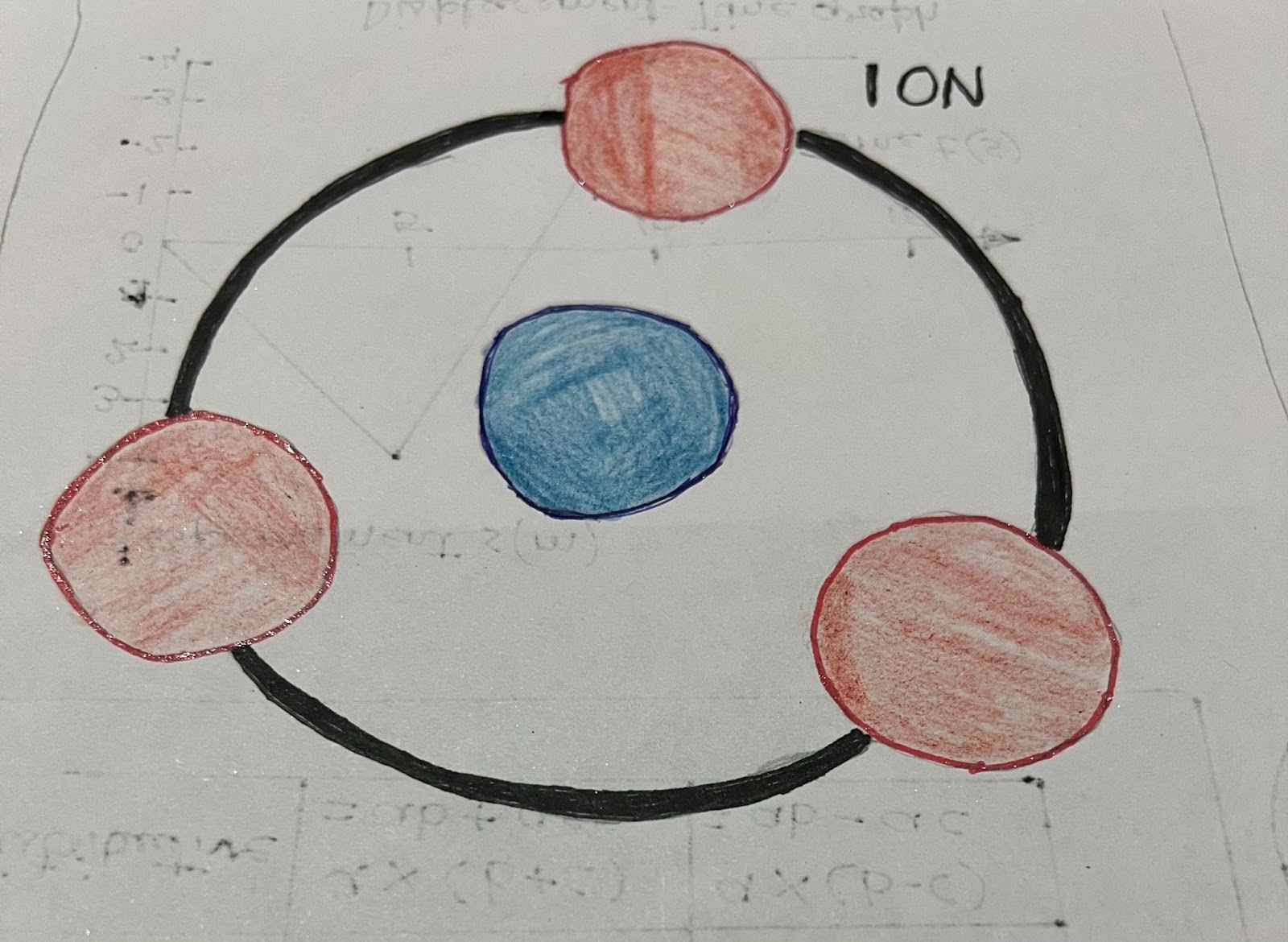
An ion is an atom or molecule that contains a positive or negative charge. It was found that some low-mass particles appeared in clouds around the nucleus. These particles contain almost the entire mass of the atom.
- A neutral atom has exactly the same number of protons (+) and electrons (-).
- The atoms with an unbalanced charge are called ions.
- It was coined by physicist and chemist Michael Faraday in 1834.
- An ionic compound is formed when two oppositely charged electrons form an ionic bond.
- It is derived from the Greek word ienai, meaning to go.
- Cation and anion are two types of ion.
- Ion is formed by the addition or removal of electrons.
- Na+, Ca2+, and Cl– are some examples of electronic charged species.
Key Terms: Ion, Atom, Proton, Electron, Covalent bond, Ionic Bond, Molecular Ion, Polyatomic Ion, Anion, Cation, Proton, Molecule, Hydrogen, Silver, Types of Ion
What is an Ion?
[Click Here for Sample Questions]
An ion is basically an atom or a group of atoms in which the number of electrons is not equal to the number of protons. It bears a negative or a positive charge.
- A negative ion is known as an anion, and a positive ion is known as a cation.
- An ion is formed by removing or adding electrons from molecules or neutral atoms.
- Ionic bonds are formed when the electrostatic force of attraction arises between anions and cations.
- It is a group of atoms or any subatomic particle which has a net electric charge.
It can also be formed by the combination of particles when a covalent bond between two atoms is ruptured so that both electrons of that bond are left with one of the atoms with which they formerly bonded.
- In simple terms, an ion is a negatively or positively charged atom/group of atoms.
- If the number of electrons in an atom is less than usual, the charge is positive.
- If it has more electrons than usual, then the charge is negative.
- When an ion has only one type of atom (having a positive or negative net charge), it is referred to as a monoatomic ion.
- If it is made of more than one atom (two or more), it is known as a molecular or polyatomic ion.
Example of What is an Ion?Example 1: The reaction of an atom of sodium with a chlorine atom results in the formation of a sodium cation and a chloride anion. Example 2: Another such example is adding a hydrogen cation to a molecule of ammonia, resulting in the formation of an ammonium cation. Example 3: The dissociation of a molecule of water resulting in the formation of a hydrogen cation and a hydroxide anion is also an example of the same. |
Ion
Read More:
How are Ions created?
[Click Here for Sample Questions]
For the preparation of ion, there are several methods which are as follows:
Physical Ionization
When a spontaneous collision takes place between a gaseous fluid or liquid molecules, it results in knocking off an electron from a molecule/atom. This is known as physical ionization.
- The free electron then attaches to a new molecule or atom, forming a new anion (negative charge).
Chemical Interactions
Another process of creating ions is through chemical interactions. For instance, when salt (an ionic compound) is dissolved in water (a suitable solvent), the atoms of salt dissociate and form free ions.
- When sodium chloride (common salt) is dissolved in water, its dissociation yields chloride anions and sodium cations.
- Hence, the symbol of the chloride anion is Cl- and of the sodium cation is Na+.
Representing the Charge on an Ion
The chemical formula of an ion is written first to represent the charge the charge that the ion holds. The positive charge is denoted by “+” in superscript, and similarly, the negative charge is denoted by the “-“symbol.
- It is represented by the magnitude of the charge that the ion holds (also in superscript).
- For anions, the magnitude of the charge is written first and then the sign (for the ones that hold a charge of more than -1 magnitude).
- If the value is one, then the magnitude of the charge is omitted.
Example of Representing the Charge on an IonExample: Sodium cation’s charge is +1 and hence it is represented as Na+. |
Examples of Ion Notations
[Click Here for Sample Questions]
The solved examples of ion notations are as follows:
Oxide AnionOxygen’s symbol is O, the charge that oxide anion holds is -2. So, oxide anion is denoted as O2-. Zinc CationZinc’s symbol is Zn, the charge that zinc cation holds is +2. So, zinc cation is denoted as Zn2+. Lithium CationLithium atom has Li symbol; it holds a net charge of +1. So, it is a monoatomic ion and is represented as Li+. |
Types of Ion
[Click Here for Sample Questions]
Ion is divided into two categories namely cation and anion which are discussed in below section.
Cation
A cation is an ion that bears a positive charge. It consists of more number of proton and fewer numbers of electrons. In this, the charge on proton is equal to the charge of electron.
- Most of the metal belongs in this category.
- They are also known as positive ions.
- Some important cations are tabulated in the table below:
| Name | Formula |
|---|---|
| Hydrogen | H+ |
| Sodium | Na+ |
| Silver | Ag+ |
| Potassium | K+ |
| Lithium | Li+ |
| Ammonium | NH4+ |
| Barium | Ba2+ |
| Calcium | Ca2+ |
| Copper (II) | Cu2+ |
| Magnesium | Mg2+ |
| Zinc | Zn2+ |
| lead | Pb2+ |
| Iron (II) | Fe2+ |
| Iron (III) | Fe3+ |
| Aluminium | Al3+ |
Anion
An anion is an ion that bears a negative charge. It consists of more number of electron and fewer numbers of protons. In this, the net charge is equal to zero due to the difference in the number of protons and electrons.
- Most of the non-metal belongs in this category.
- They are also known as negative ions.
- Some important anions are tabulated in the table below:
| Name | Formula |
|---|---|
| Chloride | Cl- |
| Bromide | Br- |
| Fluoride | F- |
| Iodide | I- |
| Hydroxide | OH- |
| Nitrate | NO3- |
| Oxide | O2- |
| Sulphide | S2- |
| Sulphate | SO42- |
| Carbonate | CO32- |
| Hydrogencarbonate | HCO3- |
Types of Anions
Various types of anions are as follows:
Monovalent
The anions that have a valency of -1 are known as monovalent anions. They are the negative ions. They can either accept or donate 2 electrons and can form one covalent bond.
Example of Monovalent AnionExample: Some important ones are- Hydride ion: H- , Fluoride ion: F-, Chloride ion: Cl-, Bromide ion- Br- , Iodide ion: I- , Nitrite ion: NO2- , Nitrate ion: NO3-, Hydroxide ion: OH- , etc. |
Divalent
Divalent is an ion that has a valency of 2 and can form two bonds with other molecules or ions. These anions are atoms that have two additional electrons in comparison to their elemental state.
Example of Divalent AnionExample: Zincate, thiosulphate, silicate, oxide and peroxide. Sulphide ion is a divalent ion: S2-. |
Trivalent
These are negative ions which have a valency of 3 (3- ). Some other trivalent anions are arsenate, aluminate and borate.
Example of TrivalentExample: Nitride ion: N3- , Phosphide ion: P3- and Phosphate ion: PO43-. |
Tetravalent
The elements that have a valency of four are tetravalent. Negative ions with valency of 4- are tetravalent anions. They are the elements in second and third row in group 14.
Example of TetravalentExample: Carbon anion: C-4, Silicon anion: Si-4, etc. these elements are less stable. |
Important Topics for JEE MainAs per JEE Main 2024 Session 1, important subtopics included in the ion are as follows:
Some memory based important questions asked in JEE Main 2024 Session 1 include:
|
Things to Remember
- An ion is an electrically charged atom or molecule formed by removing or adding electrons from a neutral atom.
- It possesses an electrical charge which can be negative or positive.
- When an ion loses an electron, it becomes a cation (positively charged).
- When it gains an electron, it becomes an anion (negatively charged).
- When ionic compounds are dissolved in water, they break into individual ions, resulting in dissociation carrying a polar charge.
- Ions which possess more than one atom are called polyatomic ions.
- The joining or breaking of two atoms leads to the formation of ions.
Read More:
Sample Questions
Ques: What is the number of electrons in Mg atom and Mg2+ ion. (1 mark)
Ans: The Mg atom has 12 electrons and Mg2+ion has 10 electrons.
Ques: What are polyatomic ions ? Give two examples. (1 mark)
Ans: A group of atoms having a charge is known as polyatomic ions.
Examples: NH41+ and SO42−
Ques: Which of the following statement is true about ionic compounds. (1 mark)
A. Ionic compounds conduct electricity when dissolved in water.
B. Ionic compounds are not soluble in water.
C. Ionic compounds are crystalline solids.
D. Only A and C
Ans: D
Explanation: Ionic compounds conduct electricity when they are dissolved in water or melted. They are soluble in water and are also crystalline solids.
Ques: Write the name of the compound (NH4)2SO4 and mention the ions present in it. (2 marks)
Ans: The name of the compound is (NH4)2SO4 Ammonium Sulphate. The compound is formed by two polyatomic ions. Each molecule of ammoium sulphate has two NH4+ and one SO4- ions.
Ques: Give one example each of (a) Monovalent cation (b) Bivalent cation (c) Monovalent anion (d) Bivalent anion (2 marks)
Ans: (a) Monovalent cation - K+ or Na+
(b) Bivalent cation - Mg2+ or Ca2+
(c) Monovalent anion- F- or Cl-
(d)Bivalent anion- O2- or S2-
Ques: State what are ions. Write the formulae of two divalent cations and anions each. (2 marks)
Ans: Ions are the atoms or a group of atoms in which the number of electrons is not equal to the number of protons. It bears a negative or a positive charge, a negative ion is known as anion and a positive ion is known as a cation.
- Cations: Ba2+,Mg2+,Ca2+
- Anions :O2−,S2−
Ques: What is the electronic configuration of calcium ion (Ca2+). (2 marks)
Ans: The atomic number of calcium is 20. So its electronic configuration is 2,8,8,2. Calcium will donate to electron to form calcium ion (Ca2+). So its configuration becomes 2,8,8.
So, the electronic configuration of Ca2+ is 2,8,8.
Ques: (a) Give one point of difference between an atom and an ion.
(b) Give one example each of a polyatomic cation and an anion.
(c) Identify the correct chemical name of FeSO3: Ferrous sulphate, Ferrous sulphide, Ferrous sulphite.
(d) Write the chemical formula for the chloride of magnesium. (4 marks)
Ans: (a) An atom is an electrically neutral particle whereas an ion is an electrically charged particle.
(b) Polyatomic Cation- (NH4)+
Ployatomic Anion- (SO4)2-
(c) The chemical name of FeSO3 is Ferrous Sulphite
(d) The chemical formula for the chloride of magnesium is Magnesium Chloride MgCl2
Ques: What are the applications of ions. (4 marks)
Ans: The applications of ions are as follows:
- In electrolysis, an ion-containing solution is passed through with current.
- An ionization chamber is a common feature of smoke detectors that interrupts current flow and activates the alarm.
- Water can be made cleaner by using the ion exchange phenomena.
- Ion exchange chromatography techniques are used by biochemists and chemists to separate pigments, protein mixtures, and other compounds that have electrical charges.
- One way to propel a spacecraft is with an ion engine or thruster.
Ques: How are ions spread in the environment. (4 marks)
Ans: In the natural world, ions are extensively distributed. They are electric current carriers and are highly susceptible to magnetic fields.
Plasma is a body of ionized matter. It acts differently as a gas, liquid, or solid.
- On Earth, there are many different kinds of ionic chemicals.
- These substances' cations and anions separate and are encircled by water molecules as they dissolve in water.
- The body's genesis of teeth and bones is linked to phosphate and calcium ions.
- Plants require magnesium, calcium, potassium, phosphate, and nitrate for proper development.
Ques: What is Zinc cation. (2 marks)
Ans: Zn is the symbol for zinc. The zinc cation's positive charge has a magnitude of two. As a result, Zn2+ can be used to represent the zinc cation.
For Latest Updates on Upcoming Board Exams, Click Here:https://t.me/class_10_12_board_updates
Read More:



Comments