



Content Writer
Methyl Ethyl Ketone is an organic chemical with a colourless form. It is also named Butanone, Methyl acetone, or ethyl methyl ketone. It is a colourless organic compound that has a sweet odour.
- Methyl Ethyl Ketone formula is given as CH3C(O)CH2CH3.
- The compound is prepared by oxidation of 2-butanol.
- It is a famous solvent that is visible with only a few drops.
- Most industries use methyl ethyl ketone.
- The compound is harmful to the skin and eyes.
- It is used to manufacture wax, chemical products, and synthetic rubber.
- Butanone is prepared by the isomer of a compound named tetrahydrofuran.
Key Terms: Methyl Ethyl Ketone, Ketone, Butanone, Water, Butanol, Copper, Bronze. Zinc, Carbon, Hydrogen, Oxygen, Cyclic Compounds, Acetone, Solvent, Melting Point, Molecular Mass, Boiling Point
What is Methyl Ethyl Ketone?
[Click Here for Sample Questions]
Methyl Ethyl Ketone is a pale liquid with a sweet smell. It is also referred to as Methyl Acetone. Methyl Ethyl Ketone is composed of four carbon ketones with only one keto group.
- Butanone is a common solvent used in gums, cellulose and resins.
- It is also known as a polar aprotic solvent.
- The compound is easily soluble in water.
- Methyl Acetone is also used as a bacterial metabolite.
- It is produced in industries on a larger scale.
- The quantity of compounds occurring naturally is small.
- Since it can dissolve polystyrene, it is sold as "model cement".
Read more:
Structure of Methyl Ethyl Ketone
[Click Here for Sample Questions]
Methyl Ethyl Ketone also known as butanone is a volatile liquid that has the formula CH3C(O)CH2CH3. Another formula of compound is C4H8O. The structure of the compound is given as:
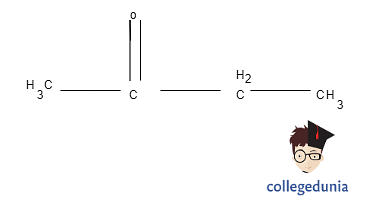
Structure of Methyl Ethyl Ketone
Properties of Methyl Ethyl Ketone
[Click Here for Sample Questions]
Methyl Ethyl Ketone tends to have a pleasant smell. It is a colourless liquid that results in the formation of vapours which is higher than air. It is soluble in water.
- Methyl Ethyl Ketone can also be obtained naturally.
- A small amount of compounds can be traceable in vegetables and fruits.
- It is released from car and truck drains.
The table given below shows various properties of Methyl Ethyl Ketone:
| Category | Data |
|---|---|
| Methyl Ethyl Ketone | C4H8O |
| Molecular Weight | 72.107 g/mol |
| Density | 0.8050 g/mL |
| Boiling Point | 79.64 °C |
| Melting Point | −86 °C |
Chemical Properties of Methyl Ethyl Ketone
[Click Here for Sample Questions]
Some important chemical properties of methyl ethyl ketone are as follows:
- Methyl ethyl ketone, on reactivity, will form a carbonyl group and hydrogen atoms.
- An aldol condensation by two moles of Methyl Ethyl Ketone led to the formation of hydroxyl ketone.
- An unsaturated ketone is produced by the dehydration process.
- It forms cyclic compounds, ketals, and higher ketones through the reaction with aldehydes.
- Glycols and organic oxides condense with Methyl ethyl ketone.
- The reaction with hydrogen peroxide prepares a peroxide mixture.
- Several resins are processed by reaction with chemicals, which are helpful for electrical insulation.
Production of Methyl Ethyl Ketone
[Click Here for Sample Questions]
The production of butanone led to the oxidation of 2-butanol. A catalyst like zinc, copper, or bronze needs for the dehydrogenation of Methyl Ethyl Ketone. So, the reaction for production is:
CH3CH(OH)CH2CH3 → CH3C(O)CH2CH3 + H2
Wacker oxidation of isobutyl benzene led to the production of methyl acetone. This compound exists at room temperature in a liquid form. A low boiling point occurs, and a flammable colourless solvent exists.
- The element is necessary as a resin system in several industries.
- However, the vapours of the solvent are heavy.
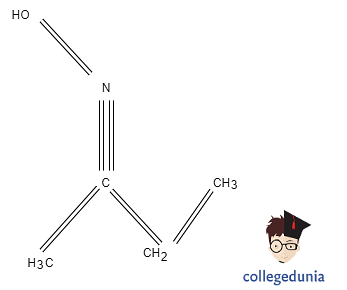
Methyl Ethyl Ketone
Uses of Methyl Ethyl Ketone
[Click Here for Sample Questions]
Some important uses of methyl ethyl ketone are as follows:
- Methyl ethyl ketone is used for the formation of resins, cellulose acetate, gums, and vinyl films.
- It is necessary to produce plastics, textiles, and wax.
- Methyl Ethyl Ketone is used in household products like lacquer and paint remover.
- It acts as an agent for denatured glues and alcohol.
- Butanone acts as a cleaning agent and helps in petroleum production.
Effect on Health
[Click Here for Sample Questions]
The side effects of the methyl ethyl ketone on human health includes:
- Irritation in Eyes
- Problem in breathing
- Irritation in throat.
- Rashes on skin
- Problem of dehydration
Things to Remember
- Methyl ethyl ketone is a colourless liquid with a sweet odour.
- It is also named Butanone or Methyl acetone.
- Catalysts like zinc, copper, or bronze are used for the dehydrogenation of methyl ethyl Ketone.
- The compound is helpful for electrical insulation.
- It is required to make plastics, fabrics, and wax.
- Further, it aids in the arrangement of resins, cellulose acetate, gums, and vinyl films.
Read More:
| Chemistry Related Concepts | ||
|---|---|---|
| Electrophile Vs Nucleophile | Grignard Reagents | Corey House Reaction |
| Radical Formula | Process Of Metallurgy | Carbocation Stability |
Sample Questions
Ques: Anwer the following: (A) How do the resins link with Methyl Ethyl Ketone
(B) Give a simple definition of Methyl Ethyl Ketone? (2 marks)
Ans: (A) Several industries use the chemical as a resin system. Chemical reactions involve the use of many resins. These help a bit when it relates to electrical insulation.
(B) Methyl Ethyl Ketone is a colourless organic compound which is available in nature in a small amount and this compound is very harmful for skin and eyes but still used in various industries.
Ques: How the formation of Methyl Ethyl Ketone takes place? (2 marks)
Ans: Formation of Methyl Ethyl Ketone takes place due to the dehydrogenation of Methyl Ethyl Ketone which is done by a catalyst like zinc, copper, or bronze. It is formed when the following reaction takes place:
CH3CH(OH)CH2CH3 → CH3C(O)CH2CH3 + H2
Ques: Which are the uses of Methyl Ethyl Ketone? (4 marks)
Ans: Methyl ethyl ketone aids in the arrangement of resins, cellulose acetate, gums, and vinyl films. Furthermore, it is necessary to produce plastics, textiles, and wax. It is used in household products like lacquer and paint remover.
- Methyl ethyl ketone can dissolve polystyrene and other plastics, it is utilized as a plastic welding agent.
- It's utilized to make paraffin wax and varnishes.
- In polymerization processes, it serves as a precursor.
- It has a cleansing purpose.
- In glues, methyl ethyl ketone is utilized.
- Petroleum is produced with the aid of butanone.
Ques: What is the role of peroxide and glycol in Methyl Ethyl Ketone? (1 mark)
Ans: Glycols and organic oxides condense with the compound. A peroxide mixture makes by the reaction with hydrogen peroxide.
Ques: What are the physical properties of methyl ethyl ketone? (4 marks)
Ans: The physical properties of methyl ethyl ketone are as follows:
- It smells distinctively sweet, almost like acetone.
- This colorless solvent has a low boiling point of 79.64oC and is combustible.
- It has good solvent qualities and a quick rate of evaporation.
- Nearly all organic solvents are miscible with methyl acetone.
- This property makes the compound ideal for a wide range of resin systems across several sectors.
Ques: What are the effects of methyl ethyl alcohol on human? (2 marks)
Ans: The effects of methyl ethyl alcohol are as follows:
- Irritation in Eyes
- Problem in breathing
- Irritation in throat.
- Rashes on skin
- Problem of dehydration
Ques: Explain the chemical properties of methyl ethyl ketone? (5 marks)
Ans: The chemical properties of methyl ethyl ketone are as follows:
- The hydrogen atoms and carbonyl group are where the reaction forms.
- Hydroxyl ketone was created by an aldol condensation between two moles of methyl ethyl ketone.
- The dehydration process yields an unsaturated ketone.
- By reacting with aldehydes, it creates higher ketones, ketals, and cyclic compounds.
- It condenses with organic oxides and glycols.
- A mixture of peroxide is created through a reaction with hydrogen peroxide.
- Chemical reactions are used to process a variety of resins.
- These are useful for insulating electrical systems.
Ques: How methyl ethyl can used in creation of fire? (3 marks)
Ans: The majority of oxidizing substances can react with butanone to create flames. It is somewhat explosive; a small flame or spark will be enough to set off a strong reaction.
- Since the vapor is heavier than air, low points may see an accumulation of it. At concentrations between 1.4 and 11.4%, it is explosive.
- Humans cannot tolerate concentrations in the air that are high enough to catch fire because of the vapor's unpleasant properties.
- Alcohol-resistant foam, dry chemicals, or carbon dioxide should be used to put out butanone fires.
Ques: Explain adol condensation? (2 marks)
Ans: Adol condensation occurs when an enolate ion combines with a carbonyl compound to generate a β-hydroxy ketone or β-hydroxy aldehyde, which is then dehydrated to produce a conjugated enone. In organic synthesis, aldol condensation is essential because it makes it possible for carbon-carbon bonds to form.
Ques: What will happen when methyl ethyl ketone react with aldehydes? (2 marks)
Ans: Depending on the circumstances, methyl ethyl ketone can also combine with aldehydes to produce cyclic molecules, ketals, and higher ketones. Moreover, it condenses with glycols and organic oxides to produce dioxolane derivatives.
Ques: What will happen when methyl ethyl ketone is oxidised? (2 marks)
Ans: The flavoring substance diacetyl is produced when oxygen is added to methyl ethyl ketone to cause it to oxidize. When this chemical is chlorinated, a combination of monochloro and dichloro derivatives are produced in varying amounts. Methyl ethyl ketone and hydrogen peroxide can also combine to produce a combination of peroxides.
Read Also:



Comments