



Education Content Expert
Tonsils are two round-shaped masses of flesh located at the back of the throat. They are composed of lymphatic tissues, situated on the walls of the pharynx, right behind the mouth cavity. Tonsils act as protective gear for the human body from dirt and germs entering the mouth and nose. Due to its primary function, tonsils are easily subjected to infections and other conditions. The removal of the tonsils does not increase the susceptibility to infection. Tonsils vary in size and swell in response to an infection. There are three types of tonsils present in the human body namely Palatine Tonsils, Adenoids, and Lingual tonsils.
| Table of Content |
Key Terms: Tonsils, Tonsillitis, Throat, Palatine Tonsils, Lymphatic Tissues, Infection, Adenoids, Nose, Tonsillectomy
What are Tonsils?
[Click Here for Sample Questions]
Tonsils are a pair of soft tissue masses located at the back of the throat that help to filter out germs that enter through our nose or mouth to protect the body from infection.
- Tonsils are oval in shape and located near the back of the throat.
- They are visible if we open our mouths in front of a mirror.
- Tonsils appear pinkish in color when they are healthy and would appear red or swollen when infected.
- Each tonsil is composed of a tissue that is very similar to lymph nodes found in the body’s immune system.
- Tonsils are covered by a pink mucus membrane or ‘Mucosa’. The mucosa contains pit-like structures called ‘Crypts’.
- The size of the tonsils can vary for every person. The average size is around 2.6 inches.
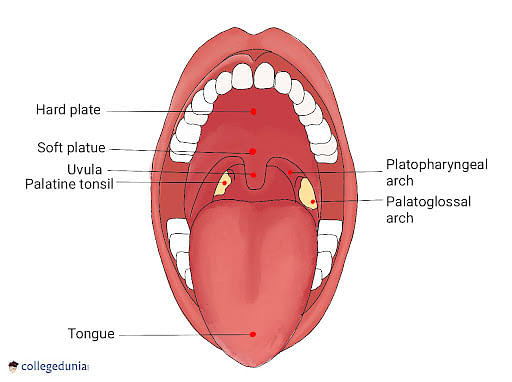
Tonsils
Read More:
| Relevant Concepts | ||
|---|---|---|
| Lymphocyte | Throat Cancer Symptoms | Inflammation |
| Human Health and Diseases | Vestigial Organs | Common Cold |
Functions of Tonsils
[Click Here for Sample Questions]
The functions of tonsils are as follows:
- The primary function of the tonsils is to fight infections.
- They perform the function of protecting the body against microbes or antigens in the body through the mouth.
- Tonsils also produce the necessary antibodies to kill the microbes entering the body.
- In the case of children, the tonsils fail to protect the body against infections and hence, result in enlarged tonsils.
Read More: Mouth Anatomy
Types of Tonsils
[Click Here for Sample Questions]
There are three types of tonsils that can be seen in our body namely
- Palatine Tonsils (tonsilla palatina)
- Adenoids (pharyngeal tonsil or tonsilla pharyngealis)
- Lingual Tonsils (tonsilla lingualis)
Palatine Tonsils
- Palatine Tonsils, also known as Faucial Tonsils are located at either side of the back of the throat.
- These sets of tonsils protect the body against antigens and bacteria in the digestive and respiratory systems.
- These tonsils also produce antibodies to kill the bacteria.
- These tonsils in children cannot protect the body against antigens and thus, enlarges when infected.
Read More: Trachea
Adenoids
- Pharyngeal tonsils are a mass of lymphatic tissue located at the root of the nasopharynx, behind the nasal cavity.
- These sets of tonsils help filter the air we breathe.
- When they are infected, they become enlarged, blocking the entry of air into your respiratory tract.
- It can also affect sinus drainage, causing ear infections or sinus. This results in the person breathing through the mouth.
- In children, it may even hinder the development of facial bone development.
- A surgical procedure can be done in children to revolve the glands.
Lingual Tonsils
- Lingual tonsils are a set of lymphatic tissues located at the root of the tongue.
- These tonsils are composed of B and T lymphocytes, which activate themselves when antigens enter the body.
- The chances of lingual tonsils being infected are comparatively less.
Read More: Structure of Tongue
Conditions Affecting Tonsils
[Click Here for Sample Questions]
There are different conditions that affect tonsils which are discussed as follows:
- Tonsillitis: Tonsillitis is an infection of the tonsils. It is caused by bacteria and viruses and it can be short-term (acute) or long-term (chronic).
- Strep Throat: It is a condition caused by a bacteria named Streptococcus which can cause neck stiffness, fever, and a sore throat.
- Tonsil Stones: Tonsil Stones, also known as Tonsilloliths are basically white and yellow lumps that can cause bad breath, taste, and sore throat.
- Enlarged Tonsils: Also known as Hypertrophic tonsils, this condition causes your tonsils to enlarge causing difficulty in breathing or sleep apnea.
- Tonsil Cancer: Tonsil Cancer is the most common type of Oropharyngeal cancer caused by Human Papillomavirus (HPV). Some symptoms include sore throat, Tonsil pain, lump on the neck, or even blood in the saliva.
Read More: Structure of Nose
How to Keep a Check on the Health of Tonsils?
[Click Here for Sample Questions]
There are various tests that are provided by a healthcare professional to check the health of the tonsils:
- Blood Tests: Certain conditions can be detected via a blood test, which detects certain antibodies in the blood. For instance, if the test turns out negative, check for Epstein-Barr antibodies in the blood.
- Bacterial Culture Test: This test is carried out to identify bacterial infections. A long swab is used to collect samples of secretions from the tonsils and the back of the throat which is sent for analysis to determine if the tonsils are affected or not.
Treatment for Tonsils
[Click Here for Sample Questions]
For treating tonsils, the doctor would need to examine the tonsils first to figure out what the tonsils are diagnosed with. Some of the procedures usually prescribed for the treatment of tonsils are
- A physician may prescribe antibiotics depending on how severely your tonsils have been affected.
- A tonsillectomy may have to be performed if the tonsils have been affected very badly.
- Laser resurfacing can be done if the tonsils have been affected by tonsil stones.
Other than these procedures, basic care for the tonsils can be given by:
- Avoiding smoking.
- Drinking plenty of fluids.
- Practicing good oral hygiene.
- Preparing a saltwater gargle.
Also Check:
| Related Topics | ||
|---|---|---|
| Mouth Cancer | Diphtheria | HIV and AIDS |
| Flu Symptoms | Nipah Symptoms | Mumps |
What is Tonsillitis?
[Click Here for Sample Questions]
Tonsilitis is a medical condition where the tonsils are infected with any microbes, antigens, or bacteria which leads to the swelling of the tonsils. Children get easily affected by tonsils due to weaker immune systems. Although adults have shrunken tonsils, they still can be affected by Tonsillitis.
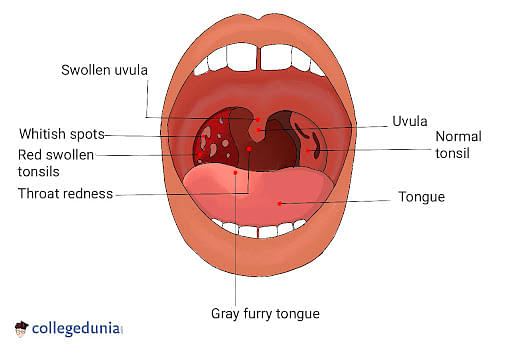
Tonsillitis
Types of Tonsillitis
Tonsillitis can be cured easily if found at an early stage and might require surgical procedures, if critical. There are three types of Tonsillitis:
- Acute Tonsillitis
- Chronic Tonsillitis
- Recurrent Tonsillitis
Symptoms of Tonsillitis
Some of the common symptoms that help one to identify tonsillitis are:
- Sore throat
- Difficulty swallowing
- Yellow/White spots over tonsils
- Fever
- Difficulty in breathing
- Muscular stiffness
- Weak voice
- Neck stiffness
- Poor appetite
The recovery time is longer for adults, compared to that of children.
Read More: Sinusitis
Diagnosis and Treatment for Tonsillitis
In order to treat tonsillitis, the doctor will examine the tonsil and absorb the variations of tonsils. They may pick samples from tonsils and send them to the laboratory for identifying the cause of enlarged Tonsils.
One can take antibodies to treat tonsillitis in its initial stage. However, at an advanced stage, the doctors will suggest a tonsillectomy. This surgical process may require 1-2 weeks for perfect recovery.
Home Remedies for Tonsillitis
The home remedies to treat tonsillitis are
- Drinking plenty of fluid.
- Complete rest for a long time.
- Should avoid smoking.
- Avoid eating frozen foods
- Can use the humidifier to moisturize the air.
- Mild hot water gargling.
Read More: Difference between Pharynx and Larynx
Things to Remember
- Tonsils are small structures located at the back of the throat, near the pharynx.
- Tonsils protect our body from infections by preventing the entry of bacteria and microbes through the nose and mouth.
- There are three types of tonsils namely Palatine Tonsils, Adenoids, and Lingual tonsils
- Tonsillitis is an infection, commonly affecting your tonsils.
- Depending on the severity of the infection caused, tonsillitis may be cured by antibiotics or through Tonsillectomy.
- Maintaining oral hygiene is the most important measure to keep tonsils healthy.
Sample Questions
Ques. What are the types of tonsils? Explain their functions. (3 Marks)
Ans. There are three types of tonsils:
- Palatine Tonsils: These tonsils perform the function of filtering harmful microbes and bacteria entering your body from the nose and mouth. They also produce necessary antibodies to fight the bacteria entering the body.
- Adenoids: These tonsils perform the function of filtering the air entering the respiratory tract.
- Lingual Tonsils: These tonsils perform the function of protecting the body from antigens, by activating B and T lymphocytes when bacteria enter the body.
Ques. What are the functions of tonsils? (2 Marks)
Ans. Tonsils are oval-shaped lymphatic tissues present at the walls of the pharynx. Their primary function is to assist the body in protecting itself from Antigens and other bacteria and microbes which cause illnesses.
Ques. Which doctor should be consulted to check tonsils? (2 Marks)
Ans. An ENT specialist should be consulted to get your tonsils checked. The physician would recommend you the method of treatment depending on how severely your tonsils have been affected.
Ques. What is Tonsillitis? (3 Marks)
Ans. Tonsillitis is an infection caused in the tonsils. This usually happens when our body has a less-developed immune system or due to bad lifestyle habits such as smoking or living in areas with more pollutants. Children are more likely to be affected by tonsillitis. Tonsillitis can be easily treated and might require a surgical procedure if affected badly.
Ques. When should Tonsils be Removed? (3 Marks)
Ans. The removal of tonsils is advised in the chronic stages of tonsil infection. Children get affected through the tonsils in most cases. They would face breathing difficulties or chronic fever. In such cases, the doctors will suggest surgery for the tonsils. The person who cannot get rid of the enlarged tonsils problem can be suggested to undergo surgery.
Ques. Can tonsillitis be treated? (3 Marks)
Ans. Yes, your physician would examine the tonsils first and prescribe the appropriate medication for the treatment of the tonsils. Tonsillitis is usually treated very easily without any need for any surgical procedure. If the infection has advanced, then a tonsillectomy is preferred. The surgery would be a perfect remedy and would take up to 2 weeks for complete recovery.
Ques. What are the symptoms of Tonsillitis? (3 Marks)
Ans. Some of the common symptoms of tonsillitis are:
- Sore/Swollen throat
- Fever
- Difficulty in swallowing
- Swollen tonsils
- Yellow/White spots on tonsils
These symptoms may vary from person to person and also according to their severity.
Ques. Is tonsillitis contagious? (2 Marks)
Ans. Yes, the germs are easily prone to spread through the air or by direct contact. A person affected with tonsillitis needs to take utmost care of themselves and should maintain distance from others until complete recovery.
Ques. Is Tonsillectomy required? (2 Marks)
Ans. Tonsillectomy would only be required if it is prescribed by your physician. If you are prone to contracting infections easily, then your physician might suggest you undergo a procedure. Undergoing a Tonsillectomy can be a solution to recurring infection by the tonsils.
Ques. What are some of the remedies for Tonsillitis? (3 Marks)
Ans. Tonsils can be treated easily with medication. If the tonsils have been affected by bacteria, doctors might suggest penicillin for a period of 10 days to recover. This defends the body against Streptococcus Group A bacteria. If the tonsils have been affected badly then it is advised to undergo a Tonsillectomy.
Ques. What are tonsil stones? (2 Marks)
Ans. Tonsil stones or tonsilloliths are formed when dirt and bacteria accumulate at the nooks and creaks in the tonsils. As they accumulate, they turn hard and calcify into stones. This occurs when tonsils are inflated for a long period of time.
Ques. How to cure Tonsillitis? (3 Marks)
Ans. Tonsillitis can be cured through various simple measures or home remedies at an initial stage. Some of them are as follows:
- Adequate Rest.
- Gargle with Warm Saltwater.
- Eating smooth foods, such as smoothies.
- Plenty of fluid.
- Mild antibiotics for recovery from a mild infection.
Check-Out:



Comments