



Content Writer
Calcium Chloride is an ionic compound made up of calcium and chlorine. Its colour is a crystalline white solid at normal room temperature, but it starts to generate heat when released into the atmosphere.
- It is an odourless solid compound that is highly soluble. Calcium Chloride is hygroscopic in nature.
- This ion compound has a wide range of applications like dust control, de-icing, etc.
- It is commonly known as Calcium di-chloride and Calcium Chlorine anhydrous.
- The chemical formula of calcium chloride is CaCl2.
- It is the most active compound used in absortech products.
- The enthalpy power of such solution is high.
- The preparation of calcium chloride involves neutralising hydrochloric acid with calcium hydroxide.
- It is used as a food additive to add a saltier flavour.
Read More: Chemical Equation for Calcium Hydroxide
Key Terms: Calcium Chloride, Hydrochloric Acid, Calcium Carbonate, Calcium Hydroxide, Limestone, Ionic Compound, Enthalpy Power
Preparation of Calcium Chloride
[Click Here for Sample Questions]
Calcium Chloride or Calcium Di-Chloride can be prepared by reacting hydrochloric and calcium carbonate solution acid or directly from the limestone. The preparation of calcium chloride by limestone method is discussed below in detail:
Step 1
Wear gloves and a mask before starting the method because, in this process, we are going to handle acids.
Step 2
Take a beaker and add limestone to quarterly fill up the beaker.
Step 3
Then, fill the quarter of the beaker with hydrochloric acid to the limestone.
Step 4
Once the hydrochloric acid begins to dissolve limestone, it starts to bubble and mix the contents gently till the reaction ends.
Step 5
Then, filter the solution into another clean beaker with the help of filter paper.
Step 6
Heat the beaker containing the filtered calcium chloride solution until the water fully evaporates. The solid calcium chloride is obtained as a result of this preparation process.
Read More: NCERT Solutions for Class 10 Science
Properties of Calcium Chloride
[Click Here for Sample Questions]
The properties of calcium chloride are as follows:
- The chemical name of calcium chloride is calcium chloride or calcium di-chloride.
- It has a molecular weight or molar mass of 110.98 g/mol.
- Calcium Chloride has a density of 2.15 g/cm3.
- It is an odourless powder in the form of granules and flakes.
- The melting and boiling points are 772 °C and 1,935 °C, respectively.
- It can absorb water to convert into liquid.
| Category | Data |
|---|---|
| Density | 2.15 g/cm3 |
| Molecular Weight/ Molar Mass | 110.98 g/mol |
| Melting Point | 772 °C |
| Boiling Point | 1,935 °C |
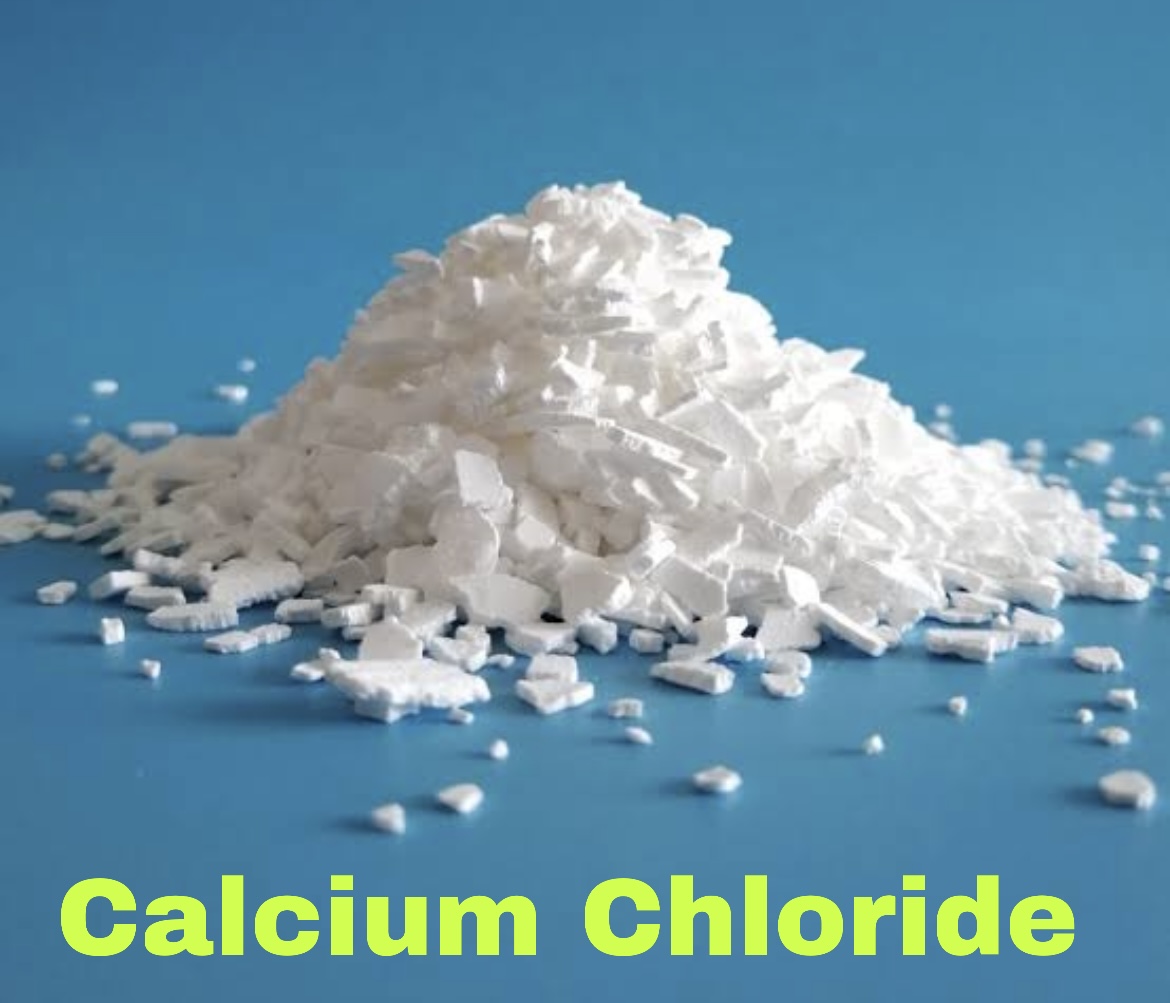
Calcium Chloride
Read More:
Structure of Calcium Chloride
[Click Here for Sample Questions]
Calcium Chloride molecule comprises two ionic bonds between a single calcium cation and two chloride anions. The calcium cation holds a positive charge of +2 magnitude, and each chloride anion holds a negative charge of -1 magnitude.
- It clearly shows that the Calcium Chloride molecule is electrically neutral.
- The bivalent calcium metal will form an ionic bond with the chlorine atoms.
- Chlorine ions are required to create a balance in the reactions.
- Calcium Chloride can also be produced by soda ash using the Solvay process.
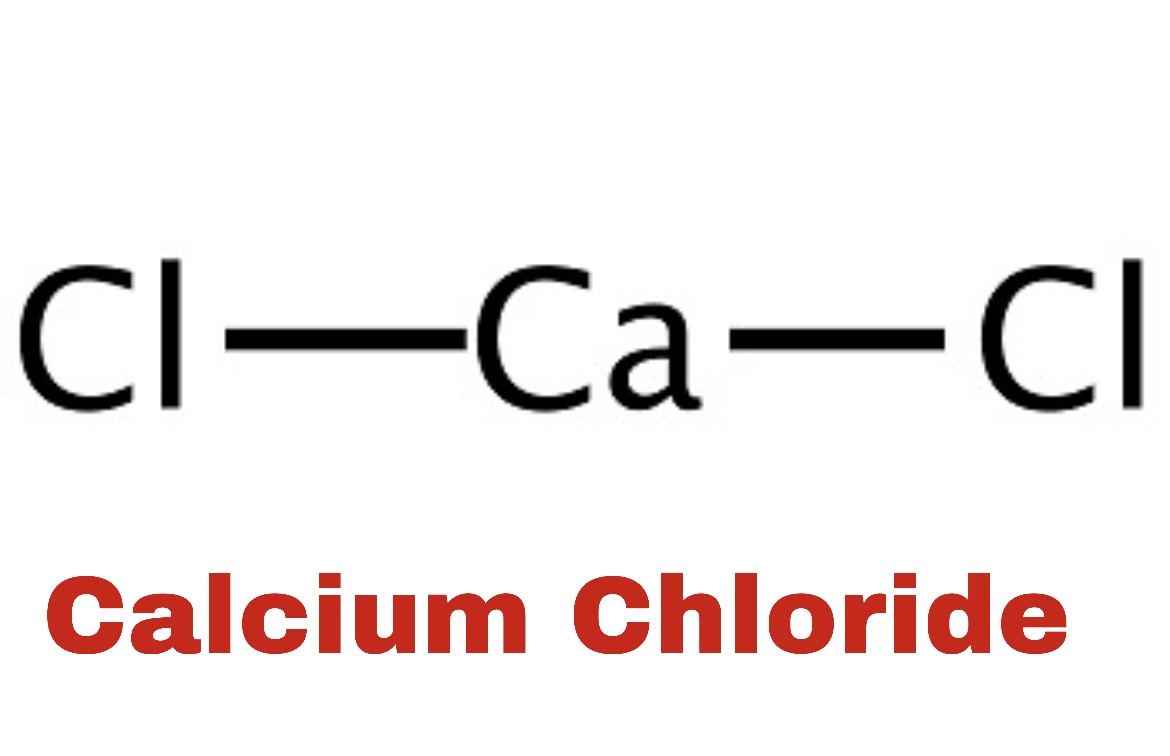
Structure of Calcium Chloride
Read More: Factors Affecting Solubility
Formula of Calcium Chloride
[Click Here for Sample Questions]
Calcium Chloride consists of 1 calcium cation and 2 chlorine anions, so the bivalent calcium cation develops an ionic bond with the 2 chlorine anions.The chemical formula of Calcium Chloride and an explanation about the structure of the formula are given below,
- Calcium chloride is an ionic compound, which is made of ions.
- Ions can either have positive or negative charges, but the main idea is that the overall ionic compound charge has to balance to get neutral.
- Calcium is an element in the group of 2 with a positive charge of 2+.
- Chlorine is an element which is in group 7 with a negative charge of -1.
- As an iconic molecule, the calcium chloride must have a neutral charge.
- As the overall charge is 0 for neutral, there must be a balance of charges between the calcium and chlorine elements.
- So, the molecule needs two chlorine ions to balance the calcium ion charge as it becomes 2−2=0 because Calcium is a bivalent element.
The formation of Calcium Chloride occurs by the reaction of limestone (CaCo3) with hydrochloric acid (HCl), and the chemical equation can be given as follows.
CaCO3 + 2HCl → Calcium Chloride + CO2 + H2O(aq)
Read More: Difference between Cations and Anions
Uses of Calcium Chloride
[Click Here for Sample Questions]
The various uses of calcium chloride are as follows:
- Calcium Chloride is commonly used to prevent ice formation during the winter season and is widely used in the deicing process.
- It is mainly used in activated charcoal, which has many benefits.
- It is commonly used as a sterilant for male animals in modern days.
- Calcium Chloride is widely used in heating pads and self-heating cans.
- It is highly helpful to correct the mineral deficiencies in brewing beer.
- Calcium chloride is used as an electrolyte in sports drinks, which restores the energy in the human body.
- Usually, it is used to pack dry tubes in laboratories.
Read More:
Things to Remember
- Calcium Chloride is an ionic compound that is electrically neutral and a combination of Calcium and Chlorine molecules.
- Calcium is a bivalent molecule with a charge of +2 magnitude.
- Chlorine is a molecule with a charge of -1, so these two have to be combined to form a neutrally charged Calcium Chloride ionic compound.
- The Calcium Chloride is prepared by two methods, namely the limestone method and the Solvay process.
- The limestone method is the most commonly used method to prepare Calcium Chloride.
- It is also prepared as a by-product of the Solvay process in a larger quantity.
- It has many applications, and the most important usage is the deicing of ice during winter.
Read More:
Sample Questions
Ques. Explain some health hazards caused by Calcium Chloride? (2 Marks)
Ans. The compound can cause irritation to humans so it is advisable to handle it with hand gloves and it results in an exothermic reaction with water so it causes damage to the mouth, oesophagus and intestine.
Ques. What are some common effects of Calcium Chloride on the human body? (2 Marks)
Ans. The some minor health issues caused by Calcium Chloride to the human body are:
- Dizziness
- Faint
- Bad taste in the mouth
- Constipation
Ques. Why is Calcium Chloride used as an electrolyte in sports drinks? (2 Marks)
Ans. Calcium Chloride is an ionic compound because it has one calcium cation and 2 chlorine anions which when combined results in the formation of electrically neutral calcium chloride.
Ques. What happens when Calcium Chloride is exposed to the atmosphere? (2 Marks)
Ans. Calcium Chloride is a solid chemical in its natural state but when it is released into the atmosphere it reacts with air and begins to produce heat. That is why calcium chloride is used to melt ice in the winter season.
Ques. What is the shelf life of Calcium Chloride? (2 Marks)
Ans. Calcium Chloride is soluble when introduced to the moisture or wet atmosphere so to protect it from being soluble we have to do some storing practice. When the calcium chloride is properly stored and protected from moisture conduction it can be useful for up to 36 months or 3 years.
Ques. Can Calcium Chloride be used in food items? (2 Marks)
Ans. Yes, Calcium Chloride is available in various grades so food-grade calcium chloride is used in the production of food items like pickles, cheese and sports drinks. Because of these heating and electrolytic properties, it maintains the quality of food items for a time at the same time it gives its good properties to the food items. So adding calcium chloride in food items is allowed.
Ques. How Calcium Chloride is useful in controlling the dust in the atmosphere? (2 Marks)
Ans. Calcium Chloride is hygroscopic so it absorbs atmospheric moisture quickly and it keeps the surface damp and dust down. The single-time use of calcium chloride will last a long time and it also slows down evaporation.
Ques. How can calcium chloride be prepared using limestone? (2 marks)
Ans. In this process, limestone or calcium carbonate (CaCo3) will react with hydrochloric acid (HCl), which in turn undergo a neutralising reaction. The chemical equation can be given as follows.
Ques. What are the applications of using calcium chloride? (3 marks)
Ans. The applications of calcium chloride are as follows:
- It is used as a food additive to add flavour and taste to the food.
- Calcium Chloride is used as an additives in fire extinguishers.
- It is used as a thinner fabric softener.
- Dissolution of calcium chloride is used as the heating pad.
Ques. What will happen when calcium chloride is electrolysed? (2 marks)
Ans.When calcium chloride is electrolysed, it will give calcium metal and chloride gas as the by-products. The chemical reaction involved in the process is as follows:
CaCl2 → Ca + Cl2
Ques. Calculate the molecular mass of calcium chloride? (3 marks)
Ans. The molecular mass of calcium chloride is calculated as follows:
- The formula for calcium chloride is CaCl2.
- As the molecular mass of Calcium is 40.08 grams
- Molecular mass of Chlorine is 35.45 grams.
- So the molecular mass of Calcium Chloride will be: 40.08+2×35.45
The molecular mass of calcium chloride is 110.98 gram per mole.
Check-Out:



Comments