



Content Curator
The group of living organisms particularly living in the region where non-living components are also present is called an ecosystem. Similarly, the ecosystem can be very small or can be very big.
The ecosystems that are found on earth are known as Terrestrial Ecosystem. The area of land that is covered by the terrestrial ecosystems is approximately about 140 to 150 million km2, which is considered to be about 25%-30% of the total earth’s surface.
Similarly, an ecosystem can also be stated as the place that suits the life of a particular species. There are 4 types of terrestrial ecosystems – Forest, desert, Tundra, and Grasslands.
Read Also: Classification of Animal Kingdom
| Table of Content |
Key Terms: Habitat, terrestrial ecosystems, grassland, forest, Tundra, deciduous forests, plantation forests, tropical rain forests, living species
Types of Terrestrial Ecosystems
[Click Here for Sample Questions]
4 types of terrestrial ecosystems are mentioned below–
Forests
Forest is that type of ecosystem that contains temperate deciduous forests, plantation forests, and tropical rain forests. They provide natural habitat to several types of living species.
Forest covers approximately 30 to 35 million sq. km surface of the earth. About 300 million species of plants and animals consider forests as their natural habitat.
The forests have a high density of trees and tropical rainforests that provide habitat to various types of animal species.
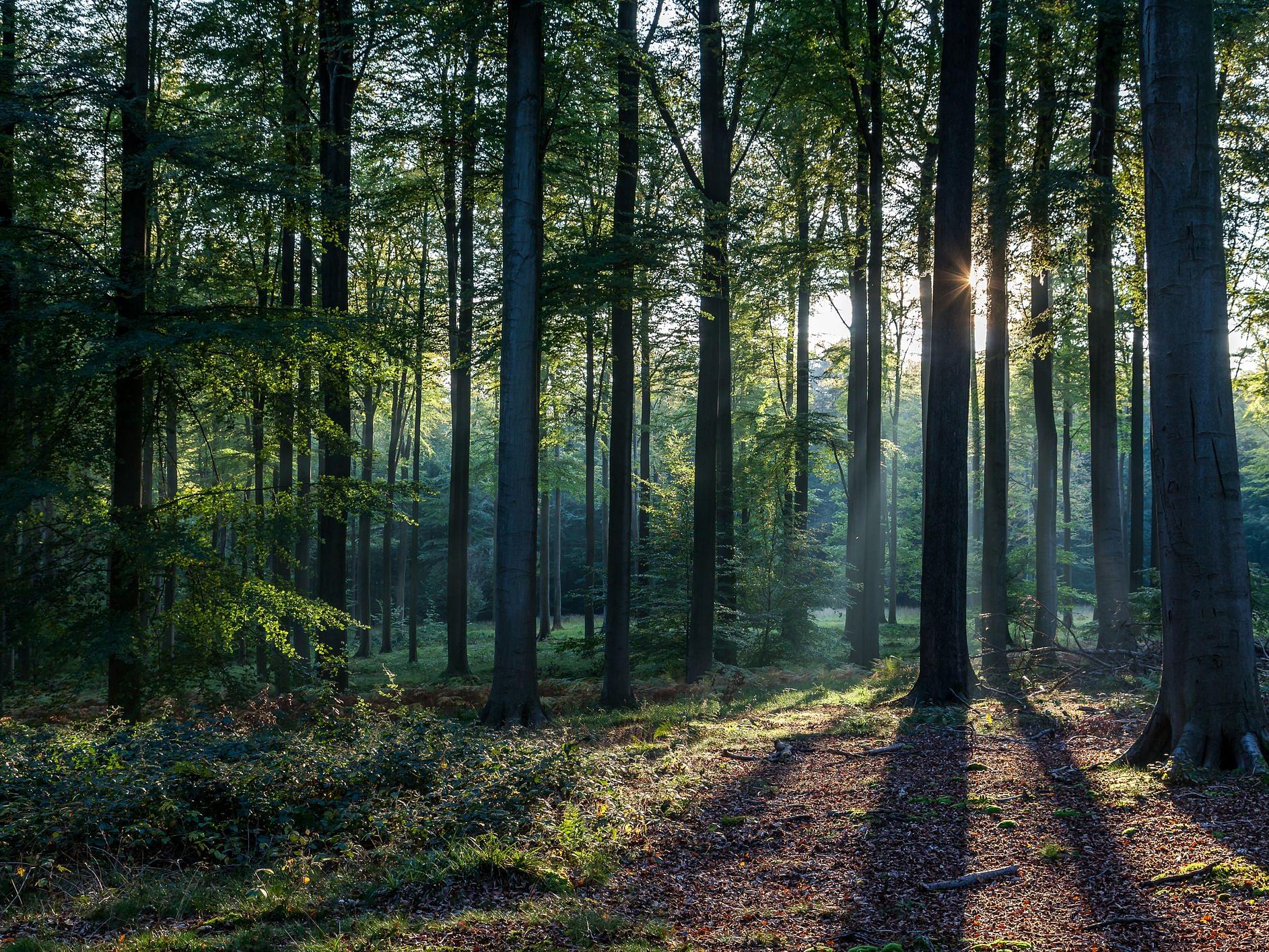
Forests
Grasslands
These are the most subservient type of vegetation and such type of environments can naturally occur in some parts of the earth. Similarly, grasslands are also considered as the natural habitat for a wide range of animal species like jackrabbits, hyenas, lions, elephants, warthogs, giraffes, etc.
Read More: Animal Tissue
Grasslands are mainly of two types- tropical grasslands and temperate grasslands.
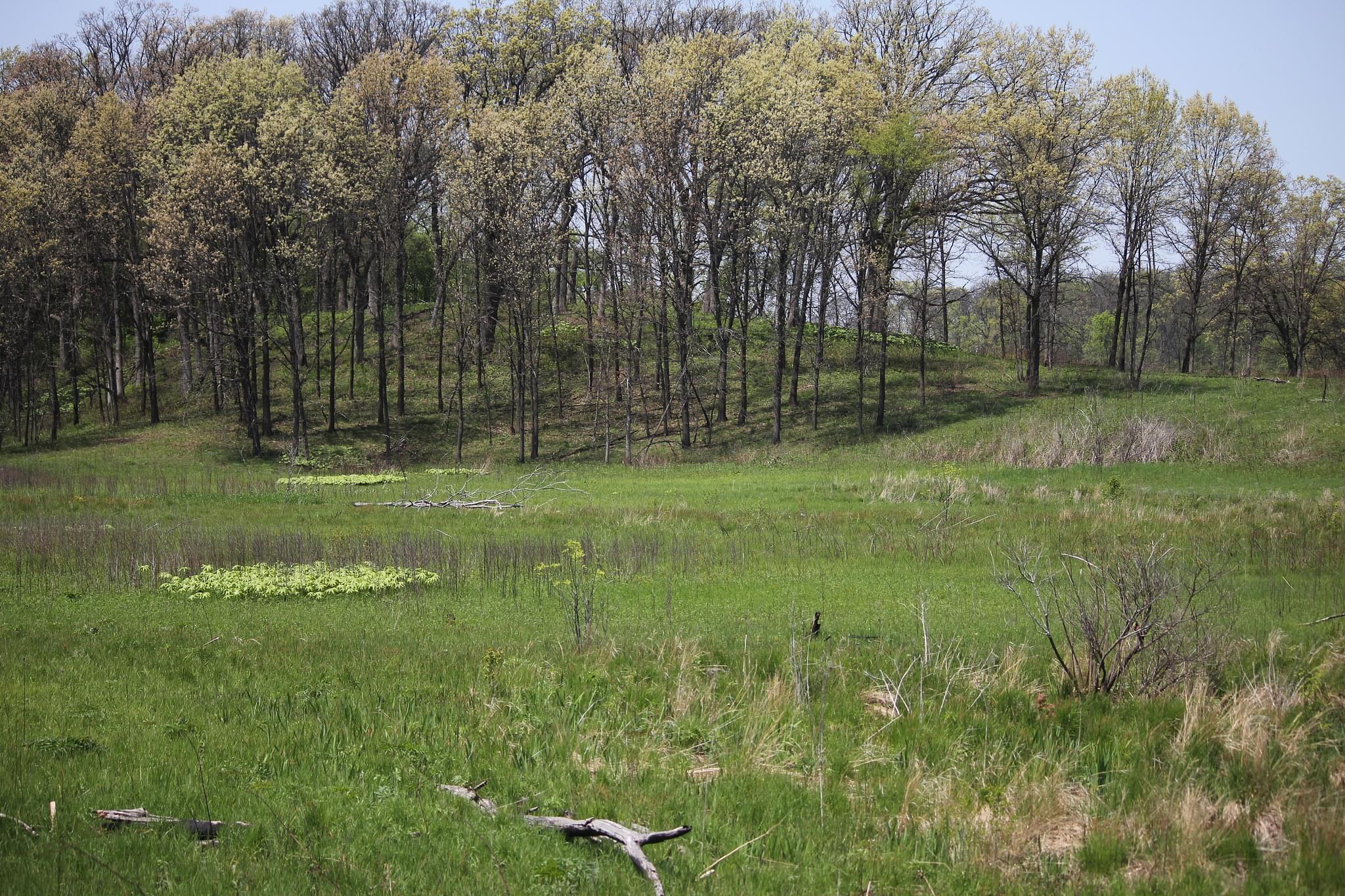
Grasslands
Tundra
Tundra is a type of polar region that has harsh environmental conditions similar to those of deserts. Usually, the region is highly wind-swept, covered with snow and treeless area.
As compared to the deserts, this ecosystem is filled with completely frozen soil the whole year. When the snow melts, small ponds are formed. The water from such ponds helps some lichens to grow in the tundra regions. In tundra regions, different ecologies such as forest regions, valleys, meadows, and peaks are found.

Tundra
Read Also: Deltoid Muscle
Deserts
Deserts are considered to be unproductive land surfaces with exceedingly high or low temperatures, where vegetation is done deficiently. Because of the rapid climate change, we can categorize deserts into hot deserts and cold deserts.
There are many species of animals that can be found in the desert namely camels, foxes, hyenas, jackals, some range of lizards and snakes, and plants like acacia, cactus, and date palms.
We can consider Sahara in the category of hot deserts, where the climatic conditions are extremely hot, with very little rainfall, because of which the life of plants and animals becomes complicated.
Similarly, Ladakh is an example of cold deserts, located in the eastern Jammu and Kashmir close to the Great Himalayas. Rainfall is very less in deserts, at about approximately 25cm. Animals living in deserts usually search for their food at night time.

Deserts
Terrestrial Habitat Plants
[Click Here for Previous Year Questions]
A plant that grows on or from the land is categorized as a terrestrial habitat plant. These types of plants are generally classified based on physical conditions that are as follows-
- Mesophyte- Itisa type of plant that only needs a sufficient amount of water to grow, it also kept the features of well-nourished root, shoot, and vascular structure.
- Xerophyte- Xerophytes are mainly grown in deserts, where the climatic conditions are dry and the habitat is hot. They stored water in their stem, which is generally fleshy and thick. Its leaves are small and help lessen the transpiration process.
Read More:
Terrestrial Habitat Animals
[Click Here for Sample Questions]
Those animals that are general live on the land are defined as terrestrial animals. These animals usually inherit various features based on their natural habitat, which are defined as follows-
Desert Animals- These types of animals have thick skin and also have a water-storing organ in their body, for instance- camel, and rodents.
Arboreal Animals- Those animals that have curved body and muscular chest, that helps them in climbing and moving between branches are known as the Arboreal Animals, such as, squirrels and chameleons.
Fossorial Animals- These types of animals make their habitats by burrowing underground and having short forelimbs, and their head is in the shape of stout. Examples of fossorial animals are rats and rabbits.
Cursorial Animals- These animals generally move or live on hard open ground and have strong legs. For instance, deer and horses.
Aerial Animals- These animals usually have streamlined forelimbs, that are generally developed as wings.
Read Also: Difference Between Frog and Toad
Features of Terrestrial Ecosystem
[Click Here for Previous Year Questions]
Features of the terrestrial ecosystem are as follows-
- Terrestrial ecosystem is the ecosystem that exists on the land only as the word terrestrial signifies land.
- These ecosystems are distinct groups of organisms living and interacting with each other.
- Terrestrial ecosystem is different from the marine ecosystem because the marine ecosystem comprises of both water and level below the water. Whereas terrestrial ecosystem deals with land only.
- There are 4 types of terrestrial ecosystems.
Also Read:
| Important Chapter Topics | ||
|---|---|---|
| Pelagic Zone | Benthic Zone | Productivity in Ecosystem |
| Biome Vs Ecosystem | Food Chains and Webs | Decomposers |
| Microbes in Human Welfare | Diversity in Living Organisms | Biomes |
Things to Remember
- The place where living organisms live and interact together is known as an ecosystem.
- There are 4 types of ecosystems namely – Artificial, Terrestrial, Lentic, and Lotic.
- There are further 4 types of ecosystems in the Terrestrial ecosystem – Grassland, Deserts, forests, and Tundra.
- Tundra terrestrial ecosystem is also considered as Mountain Ecosystem.
- The terrestrial habitat plants are classified into two – Xerophytes and Mesophyte.
- Terrestrial habitat animals are classified into five categories – Aerial, Cursorial, Fossorial, Arboreal, and Desert animals.
Previous Year Questions
- Which of the following aquatic plant does not show pollination by water? … (KCET 2021)
- Aquatic reptiles are … (NEET 1999)
- Upper part of sea/aquatic ecosystem contains … (NEET 1988)
- An ecosystem which can be easily damaged but can recover … (NEET 2004)
- Energy transfer from one trophic level to other...[NEET 1999]
- the rate of production of organic matter by consumers….[NEET 2012]
- About 70% of total global carbon is found in...[NEET 2008]
- An ecosystem which can be easily damaged but can….[NEET 2004]
- The biomass available for consumption by the herbivores...[NEET 2010]
- Both hydrarch and xerarch successions lead to...[NEET 2011]
- During ecological succession...[NEET 2015]
- In a biotic community, the primary consumers are...[NEET 1995]
- In an ecosystem, which one shows one-way passage...[NEET 1988]
- Upper part of sea/aquatic ecosystem contains...[NEET 1988]
- Vertical distribution of different species occupying different...[NEET 2015]
- What is true of ecosystem?...[NEET 1988]
- Which ecosystem has the maximum biomass ?...[NEET 2017]
Sample Questions
Ques. Mention some examples of terrestrial animals? (1 Mark)
Ans. Some of the terrestrial animals are – Giraffes, Spiders, Snakes, Monkeys, flies, cows and dogs.
Ques. What are the characteristics of Terrestrial animals? (2 Marks)
Ans. The characteristics of terrestrial animals vary from habitat to habital. Some characteristics are –
- Aerial animals have spongy and hollow bones
- Open space animals have strong limbs
- Burrowing animals have shorter limbs
Ques. What is a terrestrial habitat? (1 Mark)
Ans. The environment that promotes the living of animals on land is known as the terrestrial ecosystem. For instance, Mountains, Deserts, Forests, and Grasslands.
Ques. In the study of ecosystems, what are the limitations of the ecological pyramids? (2 Marks)
Ans. The limitations of the ecological pyramid are –
- The species can be found at one or more than two levels.
- These pyramids represent only simple food chains. However, complex food chains occur in nature.
- The crucial roles of the decomposers are not recognized by the ecological pyramids.
Ques. Can the ecosystem be man-made? If yes, then how? (1 Mark)
Ans. Yes, the ecosystem can be man-made. For instance, the places such as – Zoos, national parks, sanctuaries, and so on, can be considered artificial or man-made ecosystems.
For Latest Updates on Upcoming Board Exams, Click Here:https://t.me/class_10_12_board_updates
Do Check Out:



Comments