



Exams Prep Master
Amphoterism is the property of some chemicals that exhibit the property of both acids and bases. Acids and bases have long been understood. According to Robert Boyle, acids dissolve numerous compounds and modify the color of many natural dyes, as defined in 1680. For example, they change the color of litmus from blue to red and then lose these characteristics when exposed to alkalis or bases. Acids have a sour taste, react with limestone to liberate a gaseous material, i.e., CO2, and interact with alkalis to form neutral compounds. It was discovered in the eighteenth century. A chemical's ability to act as both an acid and a base is referred to as amphoterism, and this type of substance is referred to as an amphoteric substance. In general, in the presence of a base, such a chemical behaves as an acid, and in the absence of a base, it acts as a base.
| Table of Content |
Key Takeaways: Acids, Bases, Salts, Agents, Electron, Proton, Oxides, Amino acids, Hydroxides, Sodium Chloride, pH Scale.
Definition of Amphoterism
[Click Here for Sample Questions]
The word 'amphoteric' originates from the Greek prefix ‘Amphi,’ which means ‘Both.’ An amphoteric substance can behave as an acid and a base in chemistry. It's important to remember that acids supply protons (or accept electron pairs), whereas bases take them. Amphoteric drugs can do both. As a result, we can think of an amphoteric chemical as a twofold agent. The amphoteric substance can behave as an acid or a base depending on what other compounds it reacts with, just like a double agent can act as an ally or an enemy depending on the situation.

Water, amino acids, proteins, etc., are some examples of amphoteric compounds. Amphoteric oxides are found in several metals and metalloids, including zinc, tin, lead, Aluminum, and beryllium.
Also Read:
| Related Articles | ||
|---|---|---|
| Red Phosphorus | Ammonium Phosphate | Uses of oxides of carbon group |
| Compounds of Boron | Silicic Acid Formula | Boron Carbide |
| F-block elements | Noble Gases | Carbon Dioxide |
Identification of Amphoteric Substances
[Click Here for Sample Questions]
How would we distinguish an amphoteric molecule and match the qualities to the amphoteric definition when investigating in the lab?
To make an amphoteric compound, one or more hydrogen ions can be removed from any acid. As a result, these compounds have a wider range of applications. Amphoteric compounds can be discovered by continually removing hydrogen ions from acid or adding hydrogen ions to a base.
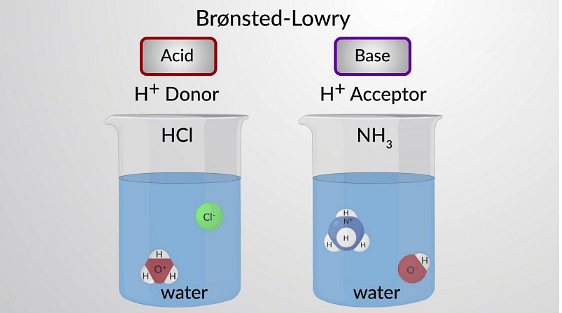
When an amphoteric material is combined with an acid, it absorbs hydrogen from the acid, resulting in the formation of the H3O+ ion. When an amphoteric chemical combines with a base, it gives the alkaline compound hydrogen and produces an OH- ion.
For example, HNO2 is a strong acid. Taking one hydrogen ion out, it yields
HNO2 → H+ + NO2-
Because NO2 is not an acid, it contains no more hydrogen ions, much alone more hydrogen ions than can be eliminated.
Amphoteric Hydroxide
Amphoterism is a technique used by hydroxides. Amphoteric hydroxides can't be made out of every metal. Amphoterism is achieved by using hydroxides composed of highly charged metal cations. They can react in one of two ways. They can work as a Bronsted lowry base by accepting protons or as a Lewis acid by accepting a pair of electrons. A simple neutralizing process happens in acidic circumstances. The hydroxide would react as a base here, giving out protons or accepting electrons. The hydroxide will receive protons from the other reactant in an alkaline environment, exactly like an acid.
Some examples of amphoteric hydroxide are Aluminum Hydroxide Zinc hydroxide, Copper hydroxide, Chromium hydroxide, Beryllium hydroxide, Tin hydroxide, etc.
Amphoteric Oxide
Some oxides, like hydroxides, are also amphoteric. Its oxidation state determines the amphoteric properties of a chemical. When a metal oxide combines with an acid, a neutralization process occurs, similar to that of an amphoteric hydroxide. It will take in protons from the acid and convert them to salt. When a metal oxide combines with an alkali, it produces salt and water, in contrast to this reaction. It would emit protons, which the other reactant would absorb. Amphoteric oxides and amphoteric hydroxides are quite similar.
Some examples of amphoteric oxide are Aluminum oxide, Lead oxide, Zinc oxide, Tin oxide, Beryllium oxide, Chromium Oxide, Copper oxide, etc.
Amphoteric Amino acids
Amino acids have amphoteric characteristics because of their carboxyl group. Amphoterism is the common usage for them. COOH and NH2 are acidic and alkaline components of amphoteric amino acids. Amino acid acts as a base when it is present in an acidic environment. It will repel positively charged ions and attract negatively charged ions. It either emits protons or receives electrons. On the other hand, when reacting with a base, it takes on acidic properties by transporting negative ions and receiving protons. Amino acids are extremely beneficial to amphoterism. Glycine is an example of amphoteric amino acid.
Glycine, for example, is an amphoteric amino acid. A base is an amino group (it can accept a proton). A carboxylic acid is a type of acid (it can donate a proton).
Amphoteric Aluminum
Aluminum's amphoteric characteristics are well-known. Amphoteric chemicals are those created with aluminum. All of these substances have the ability to act as both acids and bases. Aluminumamphoteric comes in a variety of forms that allow it to react as acids or bases. It similarly reacts with other amphoteric chemicals. When combined with an acid, it takes protons and releases protons when reacting with an alkali. Aluminum Amphoteric compounds include Aluminum chloride, Aluminum oxide, and Aluminum hydroxide. You can understand how significant it is in the field of chemistry, as you can see from the amphoteric list above. The periodic table and amphoteric reactions are used to examine element properties and analyze the periodic table.
Many of the chemicals in the amphoteric examples above can be used as both an acid and an alkali. These chemicals are also beneficial in the laboratory. Because one chemical can behave as both an acid and a base, you can see a variety of reactions with it.
Reactions of Amphoteric substances
[Click Here for Sample Questions]
Water is the most basic example of an amphoteric material. It acts as a base (proton acceptor) in the presence of an acid and as an acid in the presence of a base (proton donor). Water, for an instance, functions as a base when hydrochloric acid (HCl) is dissolved in water.
The chemical reaction can be given as
H2O + HCl → H3O+ + Cl−
Facts about Amphoterism
[Click Here for Sample Questions]
- Water is both a neutral and an amphoteric material.
- There are very few alkalines or acidic characteristics in neutral substances.
- Both acidic and alkaline properties can be found in amphoteric substances.
- In 1680, Robert Boyle defined acid and bases.
- Humphry Davy in 1815 established that hydrogen is an essential component of acids.
Things to Remember
- A chemical that can function as both an acid and a base is called amphoteric.
- When hydrogen (H+) ions are added to water, the material is called an acid.
- A base is an acid-neutralizing chemical. When you mix bases with water, they break into hydroxide ions.
- When we put an acid molecule into the water, it disintegrates.
- There are very few alkalis or acidic characteristics in neutral substances.
Also Read:
Sample Questions
Ques. What is Amphoterism? (2 marks)
Ans. In chemistry, amphoterism refers to a substance's ability to react with both acids and bases, functioning as an acid in the presence of a base and as a base in the presence of an acid. A good example of an amphoteric material is water.
Ques. How to identify Amphoteric substances? (2 marks)
Ans. When an amphoteric material is mixed with an acid, it reacts like an alkali. When it comes into contact with an alkaline solution, however, it reacts as an acid. As a result, depending on the situation, an amphoteric chemical can be both an acid and a base. You can test a compound with alkaline and an acidic solution to see if it's amphoteric. An amphoteric element is one that receives protons when reacting with an acid and releases protons when reacting with a base. The best technique to determine whether a material is amphoteric is to conduct a laboratory experiment and evaluate the compound's alkaline and acidic qualities. It's an amphoteric chemical if it has both qualities.
Ques. What are the examples of Amphoteric substances? (2 marks)
Ans. Water is the most frequent and readily available amphoteric material. Depending on the reaction, water can serve as both a basic and an acid. Many metal oxides, metal hydroxides, and amino acids, in addition to water, have amphoteric characteristics. Aluminum Is another prominent amphoteric element. Amphoteric materials include aluminum oxides and hydroxides. Amino acids, such as Glycine, have amphoteric properties. Many other elements can be converted into amphoteric compounds, including zinc, copper, beryllium, tin, lead, titanium, chromium, scandium, indium, and many others. The majority of amphoteric chemicals are oxides or hydroxides.
Ques. Due to the consumption of hot, spicy food, a person is experiencing indigestion. What treatment will you provide the patient? (2 marks)
Ans. Stomach acidity has come from spicy food. To get rid of it, you'll need an antacid. Mg(OH)2 is a magnesium hydroxide that serves as an antacid.
Ques. Write down the chemical name and formula for common salt, as well as the two primary sources. (3 marks)
Ans. Sodium chloride (NaCl), generally known as table salt or common salt, is the most important component of our diet. It is created chemically by the interaction of sodium hydroxide with hydrochloric acid solutions.
The main source of sodium chloride is seawater, which contains it in the dissolved form together with other soluble salts like calcium and magnesium chlorides and sulfates. It is separated using an appropriate process.
Rock salt is a type of salt that can be found in many locations across the world. The slow evaporation of seawater, which takes a long time, results in the development of rock salt. It is a white crystalline solid when it is pure. However, due to the presence of contaminants, it is frequently brown.
Ques. Write three uses for common salt and how they relate to our fight for freedom. (3 marks)
Ans. Common Salt is used as a raw material to make a variety of industrial chemicals such as sodium hydroxide, sodium carbonate, and baking soda, among others.
- It's used as a preservative in pickles and in cooking.
- It's used in the production of soap.
- It is stated that those who made their own salt in secret were subjected to harsh punishment by the state. As a result, salt was chosen to represent a common man's defiance of the British government, which was becoming increasingly unethical and authoritarian.
Ques. Define Amphoteric Oxides. (2 marks)
Ans. Oxides that act as both acidic and basic are known as amphoteric oxides. Amphoteric oxides are acidic and basic oxides with the ability to neutralize both acids and bases. Metallic oxides are often basic, while non-metallic oxides are acidic. Amphoteric oxides are metallic oxides that have both a basic and an acidic character. Some metals and some non-metals are present in the elements that produce amphoteric oxides. Amphoterism is based on the oxidation state of an oxide. Metal oxides categorized as amphoteric oxides react with both acids and bases to produce salts and water.
Ques. Define Amphoteric Hydroxides. (2 marks)
Ans. Amphoteric compounds have the ability to act as acids or bases. Amphoteric hydroxides are those that include strongly charged metal cations. Depending on the reaction conditions, amphoteric hydroxides operate as Bronsted-Lowry bases (accepting protons) or Lewis acids (accepting an electron pair).
Ques. Why Are Amino Acids Amphoteric? (2 marks)
Ans. Amino acids are made up of at least one acidic carboxyl (-COOH) and a basic amino (-NH2) group, as their name suggests. Both of these groups are connected to the same carbon atom, as is a hydrogen atom. Because amino acids have both amino and carboxyl groups, depending on the situation, they can operate as weak alkali bases or weak acids. This is a characteristic of amino acids that can be used to identify them. Amphoteric compounds are substances that have this feature. Amino acids are thus amphoteric.
Ques. What is a pH Paper and What Does It Do? (2 marks)
Ans. We can use a pH paper to assess whether a solution is basic, acidic, or neutral. The color of the solution changes when the paper is dipped in it, showing the nature of the solution. The pH of a solution is approximately 11 to 14 when a piece of paper turns a vivid greenish-blue color.
For Latest Updates on Upcoming Board Exams, Click Here: https://t.me/class_10_12_board_updates
Check-Out:



Comments