



Education Journalist | Study Abroad Lead
Hydrogen Chloride was first prepared by Glauber in 1684 by heating common salt with concentrated Sulphuric acid (H2SO4). Later in 1810, Davy proved that Hydrogen chloride is a compound of Hydrogen and Chlorine. Hydrogen chloride is commonly called Muriatic acid. Due to the presence of chlorine, hydrogen chloride bleaches vegetables and other organic matter in the presence of moisture. In this article, we will cover the preparation process, uses, and properties of Hydrogen chloride.
| Table of Content |
Keyterms: Sulphuric Acid, Hydogen, Chlorine, Hydrocarbons, Sodium Chloride, Oxygen, Sodium, Zinc
How is it prepared?
[Click Here for Sample Questions]
Due to the chemical reaction of other elements hydrogen chloride if generally created as a by-product of that chemical reaction. It can also be prepared by chlorination of hydrocarbons. Hydrogen chloride is prepared in both laboratories and industries.
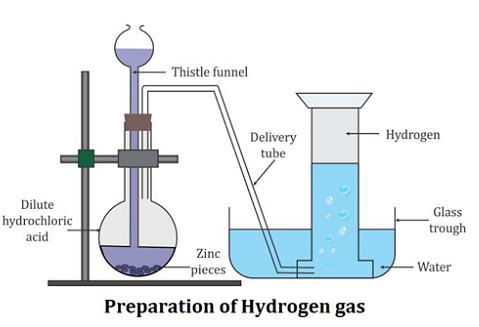
Laboratory Preparation of Hydrogen Chloride
Hydrogen chloride is prepared by heating sodium chloride with concentrated sulphuric acid in the laboratory.
NaCl + H2SO4 → 420k NaHSO4 + HCl
NaHSO4 + NaCl → 823k Na2SO4 + HCl
The HCl gas is then dried by passing through concentrated sulphuric acid.
Industrial Preparation of Hydrogen Chloride
In industries, hydrogen chloride is prepared by heating a mixture of concentrated sulphuric acid with sodium chloride in a muffle furnace.
The video below explains this:
Hydrogen Chloride Detailed Video Explanation:
Also Read:
| Related Articles | ||
|---|---|---|
| Raney Nickel | Praseodymium | Magnetic Properties Transition Elements |
| Einsteinium | Holmium | Dysprosium |
What are the properties?
[Click Here for Sample Questions]
Physical properties of Hydrogen Chloride
- Hydrogen chloride has a pungent smell.
- It is a colorless gas.
- It is soluble in water and ionises as follows -
HCL(g) + H2O(1) H3O+ (aq) + Cl- (aq) Ka = 107
- The water based solution of hydrogen chloride is called hydrochloric acid.
- HCl gas fumes in moist air - NH3 + HCL = NH4Cl.
- HCl is 1.25 times heavier than air and its vapour density is 18.25.
- It can easily get liquified into a colorless liquid at a temperature of 189K and can freeze at 159K into a white solid.
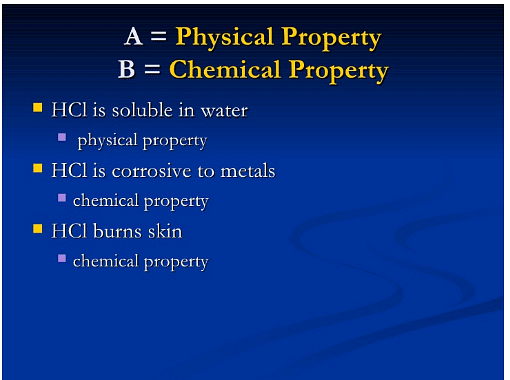
Chemical Properties of Hydrogen Chloride
- Dry HCl gas has no action on litmus. But its aqueous solution turns blue litmus into a red color as it is acidic.
- HCl is oxidized by atmospheric oxygen in the presence of cuprous chloride to produce chlorine gas.
4HCl + O2 → 2H2O + 2Cl2
- The aqueous solution of HCl (i.e Hydrochloric acid) behaves as a strong acid as it is fully ionized in water.
H2O + 4HCl ⇔ H3O+ + Cl-
- Hydrochloric acid reacts with metals like potassium, sodium, zinc, magnesium, and iron to release hydrogen gas.
2Na + 2HCl → 2NaCl + H2
Zn + 2HCl → 2ZnCl2 + H2
- Hydrochloric acid reacts with bases like hydroxides, carbonates of metals, and oxides and forms their chlorides.
ZnO + 2HCl → ZnCl2 + H2O
NaOH + HCL → NaCL + H2O
K2CO3 + 2HCl → 2KCl + H2O + CO2
- Hydrogen chloride can be used as a reducing agent as it can be oxidized to chlorine using oxidizing agents like manganese dioxide, potassium dichromate, potassium permanganate.
MnO2 + 4HCl → MnCl2 + 2H2O + Cl2
2KMnO4 + 16HCl → 2KCl + 2MnCl2 + 8H2O + 5Cl2
K2Cr2O7 + 14 HCL → 2KCl + 2CrCl3 + 7H2O + 3Cl2
- Fluorine can displace chlorine from HCl.
2HCl + F2 → 2HF
- Bromine and Iodine have no effect on hydrogen chloride.
- Hydrochloric acid decomposes salts of weak acids such as bicarbonates, sulphides, nitrites, etc.
- Aqua regia is a mixture containing three fourth portions of concentrated hydrochloric acid and one fourth portion of concentrated nitric acid. In aqua regia, nitric acid oxidizes hydrochloric acid to form nascent chlorine.
3HCl + HNO3 → NOCl + 2H2O + 2Cl

What are Hydrogen Chloride’s uses?
[Click Here for Sample Questions]
- Hydrogen chloride is used to manufacture glucose by hydrolysis of starch.
- It’s used to manufacture chlorides and chlorines.
- It’s used for preparing medicines.
- HCl is used in the preparation of aqua regia which is used to dissolve noble metals like gold.
- It is an important reagent in the laboratory.
- Hydrogen chloride is used for refining bone black by removing glue from bones.
- HCl is used in dyeing calico printing and tinning industries.
- It’s used in pickling before tinning, galvanizing, and electroplating.
Also Read:
Sample Questions
Ques. Why does HCL form into ferrous chloride rather than ferric chloride when reacted with finely powdered iron?(1 mark)
Ans. When HCl reacts with iron it produces H2. The reaction is as follows:
Fe + 2HCl → FeCl2 + H2
Hence, it releases hydrogen gas which prevents the formation of ferric chloride.
Ques. What is the method of preparation of Cl2 from HCl and HCl from Cl2? Mention the reactions only.(1 mark)
Ans. HCl can be prepared from Cl2 by reacting with water.
Cl2 + H2O → HCl + HOCl
Cl2 is prepared from HCl using Deacon’s process.
4HCl + O2 → 2Cl2 + 2H2O
Ques. What happens when Hydrogen Chloride gas reacts with ammonia? Write the equations.(1 mark)
Ans. When a jar filled with hydrogen chloride gas is inverted over a jar full of ammonia gas, dense white fumes are produced due to the formation of Ammonium chloride.
NH3 + HCl → NH4Cl
Ques. Equations formed due to the reaction between Hydrochloric acid and:
Silver nitrate solution
Magnesium foil
Caustic soda solution
Zink carbonate
Manganese (IV) oxide
Copper oxide(2 marks)
Ans.
- AgNO33 + HCl → AgCl + HNO3
- Mg + HCl → MgCl2 + H2 ↓
- NaOH + HCl → NaCl + H2O
- ZnCO3 + 2HCl → ZnCl2 + H2O + CO2↑
- MnO2 + 4HCl → MnCl2 + 2H2O + Cl2↑
- CuO + 2HCl → CuCl2 + H2O
Ques. A.Mention the name of the acid which gives a white precipitate when mixed with silver nitrate solution and is dissolvable in high quantities of ammonium hydroxide.
B.Mention the name of the gas which gives out a thick white smoke when ammonia gas.
C.Hydrogen Chloride Gas lab preparations:
Equation of hydrogen chloride gas preparation along with the necessary conditions
Mention the agent required for drying for the preparation and substantiate the reason for the selection of it.
Mention the safety precaution taken during its preparation.(2 marks)
Ans. A. HCL (Hydrochloric Acid)
B. Hydrogen Chloride
C. Hydrogen Chloride Gas lab preparations:
- Equation: NaCl + H2SO4(200oC) → NaHSO4 + HCl ↑
- 200oC is the ideal temperature that needs to be maintained.
- Concentrated sulphuric acid is used as a drying agent. When passed through concentrated sulphuric acid hydrogen chloride does not react with it and hence the most preferred drying agent.
- While working with Hydrochloric acid one must always wear a chemical resistant apron, gloves and goggles so as to safeguard oneself. They should never inhale the gas as it is very toxic in nature. So one must always work with it while being under the fume hood.
Ques. Explain the reason behind Hydrogen chloride not being dried up over quicklime.
Provide the balanced equation for: Potassium permanganate and hydrochloric acid solution.
Give the balanced equation for:
Sodium chloride Hydrogen chloride
Hydrogen chloride Ammonium chloride
Hydrogen chloride Lead chloride (2 marks)
Ans. The reason behind Hydrogen chloride not being dried up over quicklime is because HCL undergoes a chemical change with quicklime.
2HCL + CaO → CaCl2 + H2O
2KMnO4 +16HCL → 2MnCl2 + 2KCL + 8H2O + 5Cl2↑
Balanced Equation:
NaCl + H2SO4 (<200oC) → NaHSO4 + HCL↑
HCL + NH4OH → NH4Cl + H2O
4HCL + PbO2 → PbCl2 + 2H2O + Cl2↑
Ques. Write four different word equations relating to acidic properties of an aqueous solution of HCl gas.(2 marks)
Ans.
- Zinc + Hydrochloric Acid → Zinc Chloride + Hydrogen
- Sodium Hydroxide + Hydrochloric Acid → Sodium Chloride + Water
- Sodium Carbonate + Hydrochloric Acid → Sodium Chloride + Water + Carbon Dioxide
- Calcium Oxide + Hydrochloric Acid → Calcium Chloride + Water
Ques. Why can diluted HCl not be concentrated beyond a certain concentration by boiling it?(1 mark)
Ans. When you boil a mixture the vapors that evolve out contain both acid and water in the same proportion as in the liquid. Therefore, when you boil diluted HCl it cannot be concentrated beyond a certain concentration.
Ques. What are the safety factors to consider while using Hydrogen Chloride?(2 marks)
Ans.
- Hydrogen chloride when comes into contact with water gives rise to corrosive hydrochloric acid which can be found in body tissues.
- The fumes intake can cause choking, upper respiratory tract, coughing, nose and throat inflammation.
- Sometimes, it may lead to circulatory system failure, pulmonary edema, and death.
- When HCl comes in contact with skin it can cause pain, redness, severe chemical burns.
- HCl can also cause severe burns to the eye and may even lead to permanent eye damage.
Ques. A. What is the reason behind the Fountain experiment?
B. Give a balanced chemical reaction of hydrochloric acid on sodium bicarbonate. C. Write down your observation in the following cases:
When the mixture of dilute hydrochloric acid and Lead nitrate solution is heated.
When dilute hydrochloric acid is mixed with Sodium thiosulphate.
D. Name the gas evolved from the following mixtures along with providing the chemical mixture of the following:
Reaction of dilute hydrochloric acid with iron
Dilute hydrochloric acid with sodium sulphite.(2 marks)
Ans. A. The main aim behind the Fountain experiment is to prove that Hydrocloride acid is extremely soluble in water.
B. NaHCO3 + HCL → NaCl + H2O + CO2 ↑
C. When the mixture of dilute hydrochloric acid and Lead nitrate solution is heated it gives us a white precipitate of lead chloride.
Pb(NO3)2 + 2HCL → PbCl2 + 2HNO3
When dilute hydrochloric acid is mixed with Sodium thiosulphate it gives rise to sulphur dioxide and precipitates yellow sulphur.
Na2S2O3 + 2HCl → 2NaCl + H2O + SO2 + S ↓
D. When dilute hydrochloric acid is mixed with iron it gives out a smell of rotten egg and forms hydrogen sulphide.
On mixing dilute hydrochloric acid with sodium sulphite it forms sulphur dioxide and the newly made K2Cr2O7 paper turns green from orange.
For Latest Updates on Upcoming Board Exams, Click Here: https://t.me/class_10_12_board_updates
Check-Out:



Comments