



Content Writer
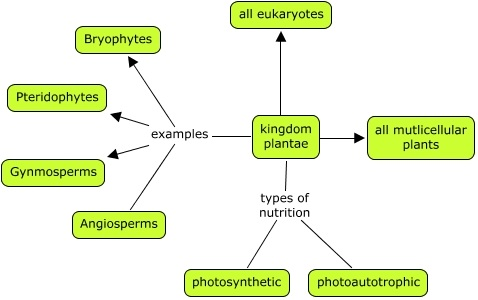
A plant kingdom is a type of kingdom included in the five kingdoms classification for living organisms. They are also referred to as the Kingdom of Plants. The five kingdoms are Monera, Protista, Fungi, Animalia, and Plantae.
- The plant kingdom consists of multicellular and eukaryotic organisms.
- R.H. Whittaker proposed a general classification of living things from 1969.
- The kingdom of Plantae includes all living things.
- Organism can synthesise their own food, which makes them autotrophic in nature.
- Cell walls are one of the primary properties of plants.
- The cell wall gives the cell rigidity and structural stability.
- Plant kingdoms are classified based on structural and reproductive characteristics.
- The mode of nutrition in plants is photosynthesis.
- They store photosynthetic pigment in plastids.
Read More: Plant Kingdom MCQs: Classification & Examples
Key Terms: Plant Kingdom, Kingdom Plantae, Autotrophic, Multicellular, Photosynthesis, Organisms, Algae, Thallophytes, Bryophytes, Pteridophytes, Gymnosperm, Angiosperm, Chlorophyceae, Phaeophyceae, Rhodophyceae.
Characteristics of Plant Kingdom
[Click Here for Sample Questions]
The features of the plant kingdom are as follows:
- Plant kingdom have eukaryotes cells.
- They are referred to as autotrophs since they produce their own sustenance.
- Kingdom plantae cannot move.
- Chlorophyll, a type of photosynthetic pigment found in the plastids of plants, is present in them.
- They can reproduce sexually or naturally in an asexual manner.
- Starch is how plants store their nourishment.
- They consist of alternating haploid gametophyte and diploid sporophyte generation.
- The plant kingdom life cycle is also known as alternation of generation.

Plant Kingdom
Read More:
| Chapter Related Concepts | ||
|---|---|---|
| Conservation of Plants & Animals | Hotspots | Endangered Species |
| Catabolism and Anabolism | Endemic Species | Homeostasis |
Classification of Kingdom Plantae
[Click Here for Previous Year Questions]
Kingdom plantae consists of various subgroups. They are classified on the basis of ffollowing factors which are as follows:
Plant body
A well-differentiated plant body is present or absent. Such as the root, stem, and leaves.
Vascular system
Whether or not there is a vascular system in place to convey substances like water. Such as the Xylem and Phloem.
Seed formation
The occurrence of flowers and seeds, as well as whether or not the seeds are exposed or covered by a fruit, all affect seed production.
The characteristics listed above have been used to divide the plant kingdom into five subgroups:
Thallophyta
Thallophyta is a subclass of plants that includes all organisms with short, well-differentiated bodybuilding. Algae is the common name for thallophytes. They have a water-based appeal.
- They include spirogyra, chara, ulothrix, and other instances.
Characteristics of Thallophyta
The characteristics of Thallophyta are mentioned below:
- Thallophyta have their beginnings in damp or wet areas.
- The reason is that "true roots" and vascular tissue needed to transfer water and minerals are absent.
- They can, therefore, be found in wet or humid environments.
- Most of the members in this group grow their own food.
- However, other species, like fungi, rely on alternative food sources.
- Around the cells of Thallophyta, they have a cellulose-based cell wall.
- Lack of vascular tissue appearance.
- Xylem and phloem are absent, in contrast to other plants, etc.
- After fertilisation, there is no embryonic development in the basic, single-celled sex organs.
Read More: Natural Resources Management
Classification of Thallophyta
Thallophyta can be classified into two parts:
Algae
Algae are thalloids that have chlorophyll in them. They are primarily water plants and autotrophic. These organisms are tough and water-absorbent, sloth fur. As a result, sloth fur processes create a moist, damp atmosphere that is ideal for the growth of algae.
- In exchange, the algae provide the sloth with additional nutrition and serve as a predator decoy.
Example of AlgaeExample: Spirogyra is an example. |
Fungi
Fungi are heterotrophic achlorophyllous thallophytes, which means they do not produce chlorophyll. On rare occasions, fungi may develop a symbiotic connection with algae or a cyanobacterium to offset this disadvantage.
- It contains chlorophyll, the algae may produce food, and in exchange
- The fungi provide a secure environment that protects the algae from UV rays.
Example of FungiExample: One instance of two organisms working together is lichen. |

Plant Kingdom
Bryophytes
Bryophytes have distinctive plant parts, such as leaf and stem structures. They do not have a vascular system for distributing materials throughout the plant's body.
- Bryophytes have their origins in both terrestrial and aquatic habitats.
- This subcategory includes Mosses and Marchantia.
- The absence of real vascular tissue is the only distinguishing characteristic of bryophytes.
- Due to the lack of lignin, some organisms contain tissues that are employed to transport water.
- They are not recognised as true vascular tissue.
Characteristics of Bryophytes
The characteristics of Bryophytes are as follows:
- Bryophyte plants lack roots and have simple stalks and leaves.
- They have "rhizoids" in place of roots, which aid in the plant's ability to cling to the surface.
- The roots do not absorb nutrition.
- Mosses spread spores from their leaves, which travel through water and establish new mosses in different locations.
- Water is essential for the growth and spread of mosses.
- They can endure total desiccation.
Read More: Species, Population and Community
Pteridophytes
Pteridophytes have distinct features such as stems, roots, leaves, and vascular tissue. They include several plant species like ferns, horsetails, and marsilea. It can be classified into two categories, which are as follows:
- Lycopodiopsida
- Polypodiopsida
Characteristics of Pteridophytes
The characteristic of pteridophytes are as follows:
- First True Terrestrial Plants Are Pteridophytes.
- These plants were among the first plants to adapt to terrestrial life successfully.
- Pteridophytes Are Vascular Cryptogams, Seedless Plants.
- They are spore-producing seedless plants.
- The plants don't need to conduct tissues to transport minerals and water.
- They demonstrate a real transformation in generations:
- Pteridophytes contain members of the sporophyte group and the gametophyte group.
- Advanced Sporangia Spores Are Homosporous.
- The groups in which spores are created are called sporangium.
- They are frequently both heterosporous.
- It means that two different types of spores are generated.
- Sporophyte's Early Leaves Reveal Circinate Vernation.
- The tips of the leaves often curl inward to protect the growing regions that are more susceptible to predators.
Gymnosperm
Gymnosperms are plants with distinct plant bodies, vascular structures, and the ability to produce seeds. Gymno, which means "naked," and spermatic, which means "seed," are the names of the place.
- The gymnosperm seeds are bare.
- They are not walled inside of a fruit.
- This group includes the steady, woody trees that are evergreen.
Example of GymnospermExample: Among the products are pines, deodar, redwood, etc. |
Characteristics of Gymnosperm
The characteristics of gymnosperm are mentioned below:
- Self-pollination and dissemination are primarily caused by wind.
- As one of the largest and tallest tree species, the sequoia is a gymnosperm.
- The body of the plant is differentiated into leaves, stems, and roots.
- The leaves are often needle-like, with a thick cuticle and depressed stomata.
- This characteristic encourages a reduction in transpiration-related water loss.
- The gymnosperms have a taproot system for their root system.
- These roots in some plants are associated with fungus to generate mycorrhiza; Pinus is one example.
- Few additional species, like the Cycas, have roots that are linked to cyanobacteria.
- They can fix nitrogen and are known as coralloid roots.
Read More: Red Data Book
Angiosperm
Angiosperms are plants that have distinct plant bodies and carry seeds. The name comes from the Greek terms angio, which means enclosed, and sperma, which means seed.
- Angiosperm seeds, in contrast to gymnosperm seeds, are enclosed within the fruits.
- Typically, angiosperms are thought of as flowering plants.
Example of AngiospermExample: For instance, it has pomegranate plants, mango trees, etc. Cotyledons are the embryonic leaves from which seeds grow. |
Classification of Angiosperm
Angiosperms are divided into two groups depending on how many cotyledons are present in the seeds: Dicotyledons (dicots) and monocotyledons (monocots).
Dicotyledons
The dicotyledonous plants have two cotyledons that are arranged as taproots. The leaves' apparent venation is reticulate. They are also known as dicots.
- Tetramerous and pentamerous flowers exist.
- Vascular bundles often come in groups of two to six and are arranged in a ring.
Example of DicotyledonsExample: Sunflowers, potatoes, tomatoes, grapes, and dandelions |
Monocotyledons
The monocotyledons differ from other plant groups in that they frequently have adventitious roots, simple leaves with identical venation, and trimerous blooms. They are also known as monocots.
- Vascular bundles are present in greater numbers.
Example of MonocotyledonsExample: Bamboos, bananas, sugarcane plants, cereals, lilies, etc. |
Read More: Difference between Algae and Fungi
Classification Theory of Plant Kingdom
[Click Here for Sample Questions]
The plant kingdom is split into two subkingdoms, Cryptogams and Phanerogamae, according to the traditional classification theory.
Cryptogams
Cryptogams don't have obvious reproductive mechanisms, like seeds, to show off. Other names for them include lower plants and seedless plants. The simplest plants belong to the phylum Thallophyta and have undifferentiated or thallus-like shapes
- There are no vascular tissues.
- Accessory spores frequently reproduce asexually.
- Algae, fungus, and bacteria are the three traditional groupings that make up Thallophyta.
- Eukaryotes and prokaryotes are not distinguished from one another.
Phanerogams
Phanerogams contain seeds as their obvious reproductive structure. They're known as seed plants. Spermatophyta is the sole division that exists in phanerogams.
Classification of Plant Kingdom
Read More: Economic Importance of Gymnosperms
Algae
[Click Here for Previous Year Questions]
Algae are mostly aquatic (freshwater and marine), simple, thalloid, autotrophic organisms that contain chlorophyll. They can also be found in moist stones, soils, and wood, among other environments.
- Algae come in a wide variety of shapes and sizes.
- It includes filamentous forms like Ulothrix and Spirogyra as well as colony forms like Volvox.
- Some aquatic life, like kelps, create enormous plant bodies.
- The algae can reproduce sexually, asexually, and vegetatively.
- Plants reproduce through fragmentation.
- Each piece grows into a thallus.
- The most prevalent type of spore produced during asexual reproduction is called a zoospore.
- They are flagellated (motile) and produce new plants after germination.
- In order to reproduce sexually, two gametes must fuse.
- These gametes can be similarly sized and flagellated, like Ulothrix.
- They can be non-flagellated and non-motile, like Spirogyra.
Read More: Species Biodiversity
The three primary classes of algae are Chlorophyceae, Phaeophyceae, and Rhodophyceae.
Chlorophyceae
The family of chlorophyceae includes the organisms known as green algae. The body of the plant could be filamentous, colonial, or unicellular. Due to the prevalence of chlorophyll a and b pigments, they are often grass-green.
- The pigments are restricted to specific chloroplasts.
- In various species, the chloroplasts might form a discoid, plate-like, reticulate, cup-shaped, spiral, or ribbon structure.
- The chloroplasts of the members include one or more pyrenoid storage bodies.
- Along with carbohydrates, pyrenoids also include protein.
- Food may be stored by some algae as oil droplets.
- The stiff cell wall of green algae typically comprises an inner layer of cellulose and an outside layer of pectose.
Example of ChlorophyceaeExample: Chlamydomonas, Volvox, Ulothrix, Spirogyra, and Chara are a few examples of often encountered green algae. |
Phaeophyceae
Brown algae, also known as phaeophyceae, are most frequently found in maritime settings. Their size and form exhibit significant variety. They can be as simple as branched, filamentous forms (Ectocarpus) or as complex as kelps, which can grow to a height of 100 metres.
- They have xanthophylls, carotenoids, chlorophyll a, and c.
- Depending on the amount of the xanthophyll pigment, fucoxanthin, present in them, they range in hue from olive green to various brown colours.
- Complex carbohydrates from food, such as mannitol or laminarin, are stored in the body.
- The cellulose wall is typically covered in a gelatinous layer of algin.
- In addition to plastids, the protoplast also has a central vacuole and nucleus.
- The plant body, which comprises a stalk called the stipe and a frond that resembles a leaf
- Fragmentation is the method used in vegetative reproduction.
- The majority of brown algae reproduce asexually by producing pear-shaped biflagellate zoospores.
- They have two uneven flagella that are laterally connected.
Read More: Biosphere reserves
Rhodophyceae
Members of the Rhodophyceae family are often referred to as red algae due to the preponderance of the red pigment r-phycoerythrin in their bodies. Most red algae are marine, and warmer regions tend to have higher quantities of them.
- They can be found in well-lit areas near the water's surface.
- Rhodophyceae can be found at extremely deep oceanic levels where relatively little light can reach.
- Most red algae have multicellular red thalli.
- Some of them have intricate body plans.
- Food is stored as floridean starch.
- It has a structure remarkably similar to that of amylopectin and glycogen.

Algae
Read More:
| Class 11 Biology Related Concepts | ||
|---|---|---|
| Reproduction In Bacteria | Flora And Fauna | Tap Root System |
| Regions Of Root | Earthworm Reproductive System | Transport Of Mineral Nutrients |
Things to Remember
- Plants kingdom known as bryophytes, can survive in soil but require water for sexual reproduction.
- A gametophyte is the name for the main plant body of a bryophyte, which produces gametes.
- Algae are simple, thalloid, autotrophic, mostly aquatic creatures that contain chlorophyll.
- The primary kingdom Plantae in pteridophytes is a sporophyte.
- It is distinguished by its true root, stem, and leaves.
- The dicotyledons and the monocotyledons are the two classes of angiosperms.
Read More: The NCERT Solutions for class 11 Biology Chapter 3: Plant Kingdom
Previous Year Questions
- Electric flux at a point in an electric field is..
- The correct order of acid strength of the following carboxylic acids is..[Jee Advanced 2019]
- The measurement of voltmeter in the following circuit is...[AIIMS 2017]
- Angular velocity of minute hand of a clock is...[MP PMT 2004]
- Highly pure dilute solution of sodium in liquid ammonia...[Jee Advanced 1998]
- A gas mixture consists of 22 moles of oxygen and 44 moles of Argon at temperature T. Neglecting all vibrational modes, the total internal energy of the system is..[NEET UG 2017]
- Alkali halides do not show Frenkel defect because..
- Let R = {(1,3),(4,2),(2,4),(2,3),(3,1)} be a relation on the set A = {1,2,3,4}. The relation R is...[AIEEE 2004]
- Degree of freedom for polyatomic gas...[AIIMS 2012]
- In pyrrole, the electron density is maximum on...[NEET UG 2016]
Sample Questions
Ques. What are the five divisions of the kingdom of plants? (3 marks)
Ans. Based on its characteristics, the kingdom of plants is divided into five subgroups. These are the subgroups:
- Thallophyta: Algae, also known as thallophyta, grows in wet environments.
- Bryophyta: It possesses some distinctive body parts, such as leaves and stems, but no vascular system.
- Pteridophyta: This group of plants has a clearly defined body structure that includes a stem, roots, leaves, vascular system, etc.
- Gymnosperms: These don't have blooms and have open seeds.
- Angiosperms: These plants contain blooms and give out seeds that are housed in a carpel.
Ques. Why is the gametophyte the most important stage of the bryophyte life cycle? (3 marks)
Ans. Male gametes (antherozoids) and female gametes (egg cell) are produced by gametophytes, which also carry the female reproductive organ archegonia and the male reproductive organ antheridia.
- The stage of a bryophyte's life cycle known as a gametophyte is the most prevalent form.
- To create a zygote, the antherozoid and egg unite.
- Zygote develops into sporophyte, a multicellular structure.
Ques. Write a short note on parasitic algae? (3 marks)
Ans. Parasitic algae are also known as common plant pathogens. These types of algae are typically found in plants with leathery leaves, such as litchi, hollies, magnolias, and viburnums, and are most frequently observed in warm, humid conditions.
- Foliar disease and red tea leaf rust are mostly brought on by parasitic algae.
- One type of parasitic green algae is Cephaleuros.
Ques. Certain characteristics displayed by heterosporous pteridophytes are antecedents of gymnosperms' seed behaviours. Explain? (3 marks)
Ans. Megaspory and microspory are two different types of spores that are produced during heterospory. Male gametophyte produced by the microspores results in male gametes, whilst female gametophyte produced by the megaspores results in archegonia, which feeds the embryo.
- So, heterospory results in a decrease in the gametophyte.
- Thus, the foundation of gymnosperm seed behaviours is heterospory in pteridophytes.
Ques. Describe the characteristics and life cycle of a fern prothallus. (3 marks)
Ans. Prothallus life cycle: The fern's life cycle shows alternation between generations. The prothallus of ferns has a multicellular, haploid, autotrophic, thalloid structure, and is free-living.
- It is created from the spores that saprophytes make after dividing via reduction.
- A germ tube is used to help these spores grow.
- At the base, it generates a filament of 3-6 cells and rhizoids that later transforms into a gametophytic plant.
Ques. Why are bryophytes believed to be amphibians in the plant kingdom? (2 marks)
Ans. Bryophytes need water for the transport of male gametes termed antherozoids to reach the archegonium for fertilisation, they are referred to as amphibians of the plant kingdom.
Ques. Does heterospory in the plant kingdom have any evolutionary significance? (2 marks)
Ans. Between bryophytes and gymnosperms, pteridophytes constitute a middle class. While later pteridophytes are heterosporous, primitive pteridophytes are homosporous. Gymnosperms and bryophytes both have heterosporous spore types.
Ques. What do you mean by triple fusion and double fertilisation? (2 marks)
Ans. One male gamete fertilises the egg in this process, creating a diploid zygote. The two polar nuclei and the additional male gametes combine to create a triploid zygote, which eventually becomes the endosperm. The process is called twofold fertilisation. Endosperm is created when the three haploid nuclei combine. Triple fusion is the term for it.
Ques. How far does Selaginella stray from the seed habit? (2 marks)
Ans. Selaginella produces both megaspores and microspores. Male and female gametophytes are created when these spores germinate. However, Selaginella lacks integument around the megasporangium, preventing it from developing a seed habit.
Ques. What three factors are used to classify Plant kingdom? (3 marks)
Ans. The three standards that serve as the foundation for classifying the plant kingdom are as follows:
- Plant Body: Whether or not a body has clearly distinct assembly determines its classification.
- Vascular System: One of the criteria used to categorise plants is whether or not they have a vascular system for transporting chemicals.
- Seed formation: The ability of a plant to produce seeds and produce blossoms is another way to classify plants. If it does, it is crucial to understand whether or not it is encircled by fruits.
Ques. Differentiate beteen three classes of algae?(5 marks)
Ans. The three classes of algae are as follows:
| Chlorophyceae | Phaeophyceae | Rhodophyceae |
|---|---|---|
| Chlorophyceae are type of green algae. | Phaeophyceae are type of brown algae. | Rhodophyceae are type of red algae. |
| They mostly live in freshwater and subaerial. | They are basically marine algae. | They are basically marine algae. |
| They contain unicellular organism in large quantity. | They do not contain unicellular organism. | They contain few unicellular organism. |
| Chlorophyceae reserve food for consumption is starch. | Phaeophyceae reserve food for consumption is laminarin. | Rhodophyceae reserve food for consumption is starch. |
| In this category cell wall is made of cellulose. | In this category cell wall is made of algin. | In this category cell wall is made of poly-sulphate esters. |
For Latest Updates on Upcoming Board Exams, Click Here: https://t.me/class_10_12_board_updates
Check-Out:



Comments