



Education Content Expert
Solvent is a chemical substance, primarily a liquid, in which other substances dissolve to form a solution. It is a fluid or medium in which one or more substances are added to create a homogenous mixture called Solution.
- Solution is a homogenous mixture of a solvent and a solute.
- Solute is a substance that is dissolved in the solvent to create a solution.
- Solvent Examples include water, ethanol, methanol, and acetone.
- Solvents usually occur in a liquid state, however, they might exist in the solid and gaseous phases as well.
| Table of Content |
Key Terms: Solvent, Solvent Examples, Solute, Solution, Water, Ethanol, Methanol, Acetone, Homogenous Mixture, Toluene,
What are Solvents?
[Click Here for Sample Questions]
Solvent is a chemical substance that dissolves another chemical substance, called a Solute, to form a homogeneous mixture. This homogenous mixture of a solute and a solvent is referred to as a Solution.
- Solvent is the component that is present in larger amounts in a solution.
- Solute is the component that is present in smaller amounts and is dissolved in the solvent.
- Solvents are usually liquids, but can also be gases or solids.
- Solvents are frequently used in chemical, pharmaceutical, oil, and gas industries for chemical synthesis and purification.
| Solute + Solvent = Solution |
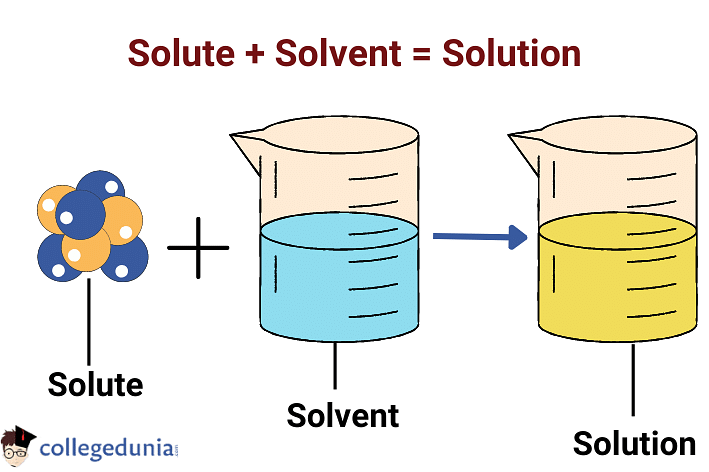
Solvent
Read More:
| Relevant Concepts | ||
|---|---|---|
| Solubility Curve | Types of Solutions | Factors Affecting Solubility |
| Solubility | Organic Solvent | Solubility Formula |
Types of Solvent
[Click Here for Previous Years’ Questions]
Solvents are classified into two major types depending on Polarity. Polarity is defined as the ability of a solvent to dissolve any solute.
- Polar Solvents
- Non-polar Solvents
Polar Solvent
- Polar solvents are made up of molecules that contain bonds between atoms with different electronegativity.
- This type of solvent has a high dielectric constant.
- The dipole moment of this type of solvent is high.
- Polar Solvents are further classified into protic and aprotic solvents.
- Examples are Water, Methanol, Ammonia, Ethanol, etc.
Solutions Detailed Video Explanation
Non-Polar Solvent
- Non-Polar Solvents are made up of molecules that contain bonds between atoms with the same or similar electronegativity.
- This type of solvent has a low dielectric constant.
- The dipole moment of this type of non-polar solvent is low.
- They have low static permittivity.
- Examples are Chloroform, Pentane, Toluene, and Hexane.
Solvent Examples
[Click Here for Sample Questions]
Solvents are substances that are used as a medium to dissolve the solute to form a solution. Solvents are generally liquids, however, they are also found in solid and gaseous forms. Here are some common solvent examples:
- Water
- Ethanol
- Methanol
- Acetone
- Tetrachloroethylene
- Toluene
- Methyl Acetate
- Ethyl Acetate
- Hexane
- Benzene
Some of the solvent examples are described in detail below.
Water
- Water is the most common polar and protic solvent with the chemical formula H2O.
- A large variety of substances can be dissolved easily in Water.
- Owing to its ability to dissolve almost all solutes, water is considered a Good Solvent.
- It is also referred to as a “Universal Solvent” as it can dissolve more substances than all other liquid solvents.
- Water is one of the most important resources on planet earth that is crucial for all life forms to survive.
- It transports valuable minerals and nutrients with it through the water cycle.
Ethanol
Ethanol is also considered a versatile solvent. It forms miscible mixtures with water and other organic solvents such as
- Benzene
- Acetone
- Ethylene Glycol
- Chloroform
- Toluene
- Glycerol
- Nitromethane
- Carbon Tetrachloride
- Pyridine
- Diethyl Ether
Ethanol is also miscible with several light aliphatic hydrocarbons such as pentane and hexane. It is also miscible with aliphatic chlorides such as tetrachloroethylene.

Solvent Examples
Methanol
- Methanol is an organic compound that has the chemical formula CH3-OH.
- It is also known as Methyl Alcohol.
- It is primarily used as an industrial solvent to help in the manufacturing of resins, inks, colors, and adhesives.
- Methanol is also used to manufacture essential pharmaceutical ingredients and products such as cholesterol, vitamins, and streptomycin.
Acetone
- Acetone is considered to be a very good solvent due to its ability to dissolve both polar and nonpolar compounds.
- Usually, other solvents can only dissolve either polar or non-polar compounds.
- Acetone is a strong solvent because it is a miscible substance, i.e. it has the potential to mix in certain amounts with water.
- It is also used in several important organic reactions such as nucleophilic substitution reactions as a polar, aprotic solvent.
- It also plays an integral role in Jones Oxidation Reaction.
- Acetone does not form an azeotrope with water.
Uses of Solvents
[Click Here for Previous Years’ Questions]
Solvents are used in a wide variety of products used in daily life such as:
Ink
- A wide variety of inks are used in printing everything from magazines to food packaging and labels.
- It depends on which solvents are used properly to deliver vibrant colors.
- Toluene is used as an ink solvent in printing a specialized magazine type.
- It evaporates quickly enough to prevent smudging, and the remaining toluene is easily recycled.
Personal Care Products
- Many cosmetic products use solvents to dissolve ingredients and ensure they function efficiently.
- Solvents are used in shaving creams, powders, and creams to give the product the desired consistency.
- Perfume manufacturers use ethanol as their preferred solvent due to its low odor.
- Ethyl acetate or acetone is used in nail polish and is especially prized for its fast-drying properties.
Medical Purposes
- Solvents are used in hundreds of pharmaceutical products in the healthcare industry.
- They contribute to many of the medicines people use today, from penicillin to aspirin, cough syrups, and topical ointments.
- Butyl acetate is used to purify penicillin by keeping impurities in the solution.
Automotive
- Solvents help the washer fluid to remove dirt from the windshield.
- Isopropyl alcohol is used as a solvent for ice removal and windshield cleaning.
- It remains liquid below the freezing point of water and thus helps to remove ice.
- Fatty or aliphatic hydrocarbons are used in the manufacture of tires.
- Solvent smoothes and cleans each layer of rubber before applying the next one.
- Its adhesive helps to bond the various tire components together for increased safety and improved performance.
Apart from that, solvents are also used as cleaners. Glycol ether is very effective as an active ingredient in glass, floor, and other hard surface cleaning formulations.
Check More:
Things to Remember
- Solvent is a chemical substance that is present in large quantities in a solution.
- Examples of solvents include water, ethanol, methanol, acetone, Toluene, etc.
- Water is the most common example of a solvent and is also referred to as Universal Solvent.
- Ethanol is a versatile solvent that forms miscible mixtures with water and other organic solvents
- Methanol is an organic compound that is used as an industrial solvent to manufacture resins, inks, colors, and adhesives.
- Acetone is another good solvent example that can dissolve both polar and nonpolar compounds.
For Latest Updates on Upcoming Board Exams, Click Here: https://t.me/class_10_12_board_updates
Previous Year Questions
- A graph of vapor pressure and temperature for three different… (JEE Main - 2020)
- At 35∘C, the vapor pressure of CS2 is 512 mm Hg… (JEE Main - 2020)
- Two open beakers one containing a solvent and the other… (JEE Main - 2020)
- Which of the following aqueous solution has highest... (KCET - 2017)
- The solubility of CO2 in water increases with…
- For an ideal solution, the correct option is… (NEET - 2019)
- In water-saturated air the mole fraction of water vapour… (NEET - 2019)
- A solution of sodium sulfate contains 92g of… (JEE Main - 2019)
- Which one of the following statements regarding Henry's law… (JEE Main - 2019)
- Choose the correct statement... (KCET - 2021)
Sample Questions
Ques. What is a Solvent? (3 Marks)
Ans. Solvent is defined as a chemical substance that dissolves another chemical substance, a solute, to form a solution as a homogeneous mixture.
- Solvent is the component of a solution that is present in the largest amount.
- It determines the physicochemical form of the substance as either solid, liquid, or gas.
- Usually, solvents are liquids, but they can also be gases or solids.
Ques. What are Organic and Inorganic Solvents? (3 Marks)
Ans. Solvents can be classified into two types as follows:
- Organic Solvents
- Inorganic Solvents
Inorganic Solvents don’t contain the element carbon such water, and liquid ammonia whereas Organic Solvents contain carbon and oxygen in their structure such as alcohols, glycol ethers, etc.
Ques. State a few Solvent Examples. (3 Marks)
Ans. Here are some common solvent examples:
- Water
- Ethanol
- Methanol
- Acetone
- Ethyl Acetate
- Hexane
- Benzene
- Tetrachloroethylene
- Toluene
- Methyl Acetate
Ques. State the uses of Solvents. (3 Marks)
Ans. The important uses of Solvents are as follows:
- Solvents are used in paints and coatings.
- They are used in Dyes or Inks.
- They are also used in personal care products such as cosmetics, and nail removers.
- Solvents are also applicable in cleaning products.
- They also have healthcare applications such as pharmaceutical products.
- Solvents are also used in automobiles in washer fluid to remove dirt and grime from the windshield.
Ques. (a) Is Milk an example of a Solvent?
(b) Is Vinegar an example of a Solvent? (3 Marks)
Ans. (a) A solvent is a substance used to dissolve a solute that is present in more quantity in solution than the solute. A solution is defined as a homogeneous mixture of two or more substances that do not react with each other, so milk is not a solvent.
(b) Vinegar is basically an acetic acid solution in water. It is impossible to state which substance is the solute and which is the solvent in a two-liquid solution. In vinegar, water is the solvent and the solute is acetic acid.
Ques. Define Polar Solvents. (3 Marks)
Ans. Polar Solvent is a type of solvent that is made up of partial charges or dipole moments. This type of solvent can dissolve ions and other polar compounds.
- Polar solvents are strong dipolar molecules that also use hydrogen bonding as an interface form.
- They work by breaking the solute’s covalent bonds and inducing the ionization of the solute.
- Polar solvents are the most common solvents used in drug delivery systems.
Ques. Why is Water called a Universal Solvent? (2 Marks)
Ans. Water has the ability to dissolve many a large variety of substances, therefore it is a good solvent. It is also known as a "universal solvent" because it dissolves more substances than any other liquid or solvent. Most of the solutes are easily dissolved in water, thus, making water one of the most common and useful solvents.
Ques. What are Nonpolar Solvents? (3 Marks)
Ans. Nonpolar Solvents are a type of solvent along with Polar Solvents.
- They possess little or no dipolar character.
- Though non-polar solvents tend to be unable to independently form dipoles, they can use induced dipole-induced dipole interactions for dissolving appropriate solutes.
- They have dielectric constants between 1 and 20.
- Polar solutes and Ionic solutes have little to no solubility in nonpolar solvents.
- Oils, fats, and fatty acids dissolve easily in nonpolar solvents.
Ques. How does a Solvent work? (1 Mark)
Ans. In chemistry, Solvents are usually liquid and are used to dissolve, suspend, or extract other materials, usually without chemical alteration. Solvents combine with solutes in order to form a homogenous mixture called Solution.
Ques. The main factors that affect solubility are
(a) Temperature
(b) Pressure
(c) Nature of Solute and Solvent
(d) All of the Above (2 Marks)
Ans. (d) All of the Above
Explanation: Solubility of a substance is affected by Temperature, Pressure, and the Nature of the Solute and Solvents.
- Increased temperature leads to an increase in solubility.
- Increasing the pressure of the solution can increase or decrease solubility.
- If the solute is non-polar and the solvent is polar it does not dissolve, thus, to make a solution both the solute and solvent should be of the same nature.
For Latest Updates on Upcoming Board Exams, Click Here: https://t.me/class_10_12_board_updates
Check-Out:



Comments