CUET 2026 Environmental Science Question Paper is available for download here. NTA conducted the CUET 2026 exam from 11th May to 31st May in two shifts.
The CUET 2026 Environmental Science question paper includes the following:
50 questions, all compulsory, to be attempted in 60 minutes
Q1 - Q40: 40 independent multiple choice questions (MCQs) with four options
Q41 - Q50: two passage / case-based sets with 5 questions each
Marking: +5 for a correct answer, -1 for an incorrect answer, 0 for an unattempted question
Maximum marks: 250
CUET 2026 Environmental Science May 15 Shift 1 Question Paper with Solution PDF
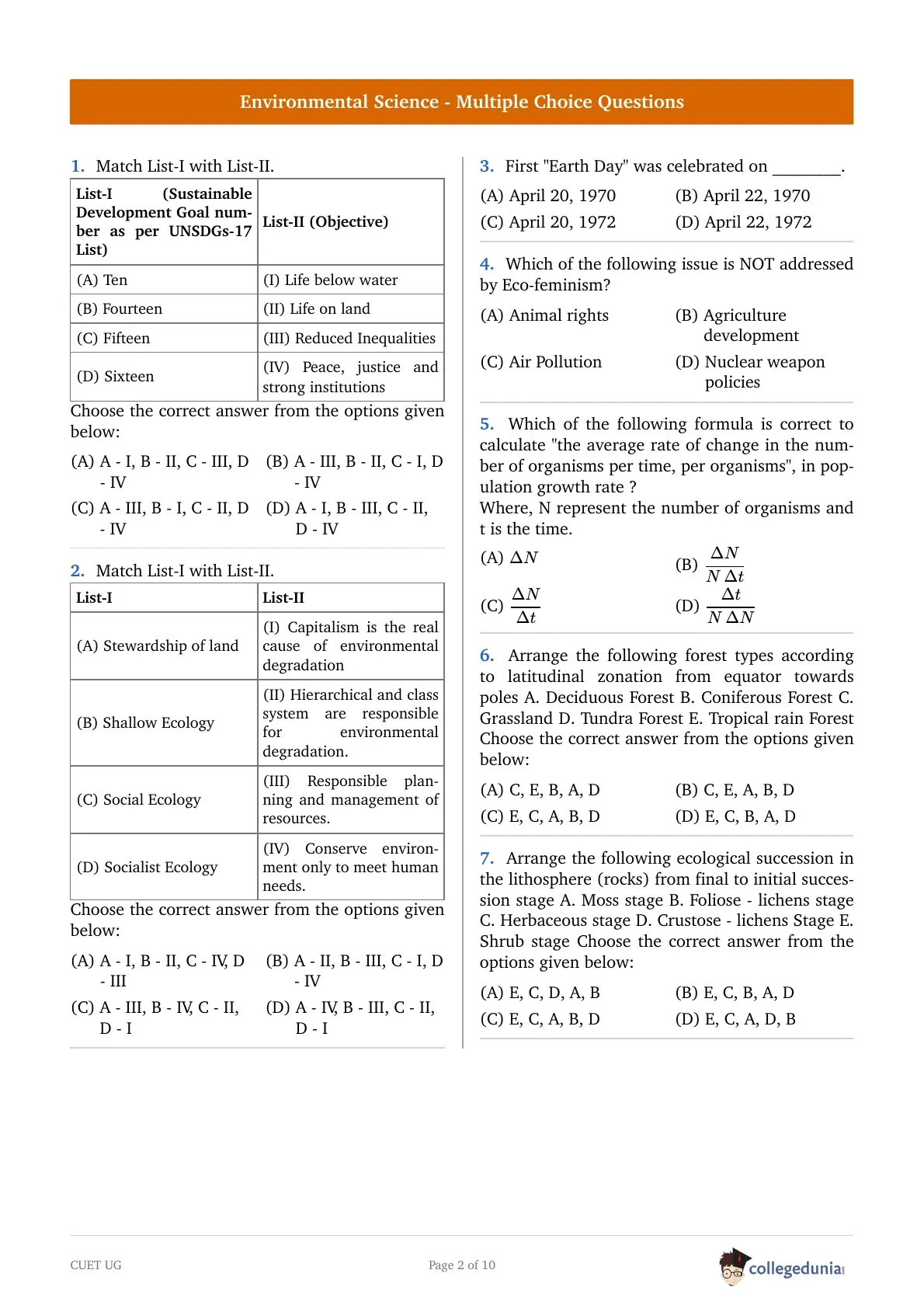
Which of the following formula is correct to calculate "the average rate of change in the number of organisms per time, per organisms", in population growth rate ? Where, N represent the number of organisms and t is the time.
Arrange the following forest types according to latitudinal zonation from equator towards poles
A. Deciduous Forest
B. Coniferous Forest
C. Grassland
D. Tundra Forest
E. Tropical rain Forest
Choose the correct answer from the options given below:
Arrange the following ecological succession in the lithosphere (rocks) from final to initial succession stage
A. Moss stage
B. Foliose - lichens stage
C. Herbaceous stage
D. Crustose - lichens Stage
E. Shrub stage
Choose the correct answer from the options given below:
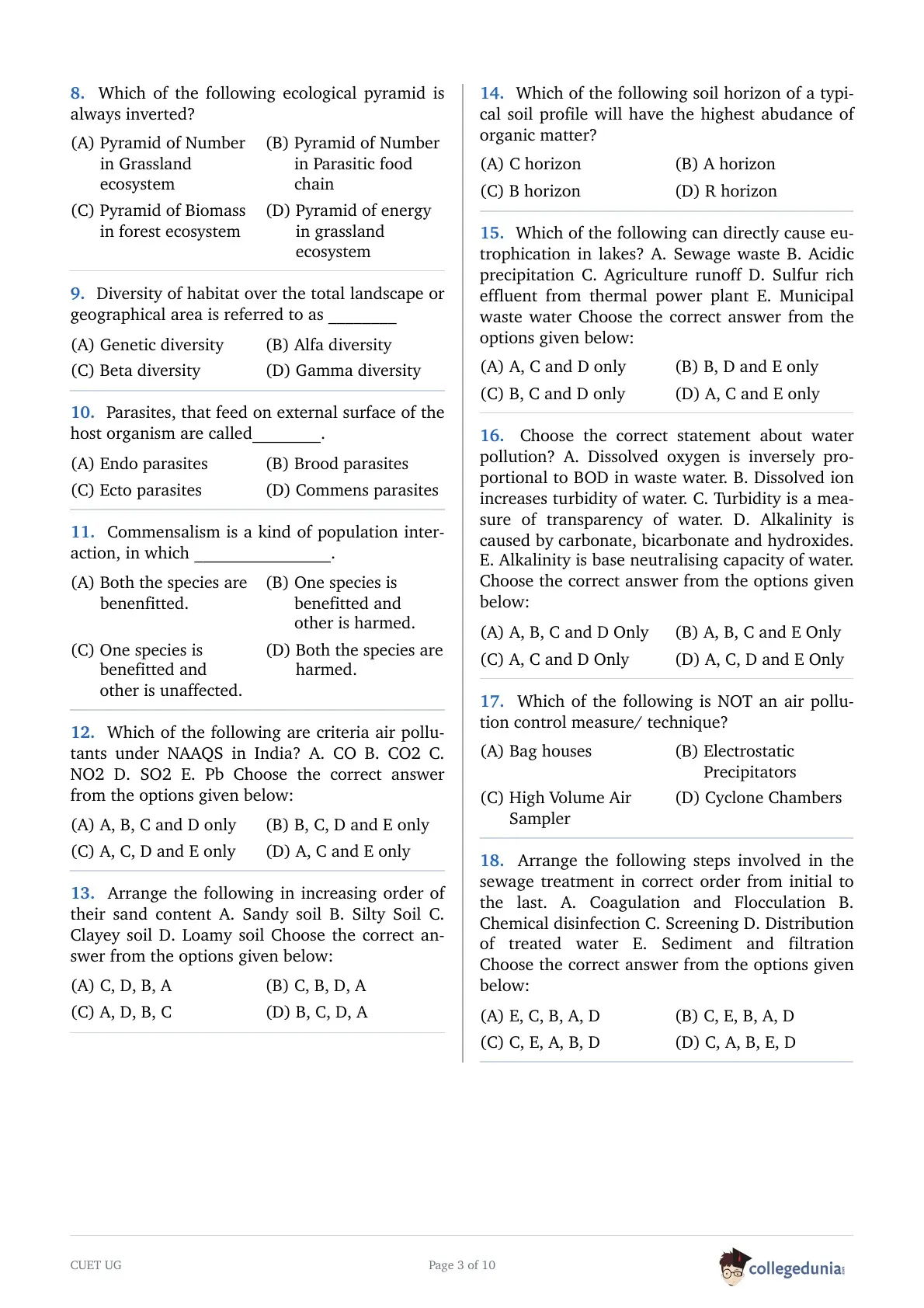
Which of the following are criteria air pollutants under NAAQS in India?
A. CO
B. \(\text{CO}_2\)
C. \(\text{NO}_2\)
D. \(\text{SO}>_2\)
E. Pb
Choose the correct answer from the options given below:
Arrange the following in increasing order of their sand content
A. Sandy soil
B. Silty Soil
C. Clayey soil
D. Loamy soil
Choose the correct answer from the options given below:
Which of the following can directly cause eutrophication in lakes?
A. Sewage waste
B. Acidic precipitation
C. Agriculture runoff
D. Sulfur rich effluent from thermal power plant
E. Municipal waste water
Choose the correct answer from the options given below:
Choose the correct statement about water pollution?
A. Dissolved oxygen is inversely proportional to BOD in waste water.
B. Dissolved ion increases turbidity of water.
C. Turbidity is a measure of transparency of water.
D. Alkalinity is caused by carbonate, bicarbonate and hydroxides.
E. Alkalinity is base neutralising capacity of water.
Choose the correct answer from the options given below:
Arrange the following steps involved in the sewage treatment in correct order from initial to the last.
A. Coagulation and Flocculation
B. Chemical disinfection
C. Screening
D. Distribution of treated water
E. Sediment and filtration
Choose the correct answer from the options given below:
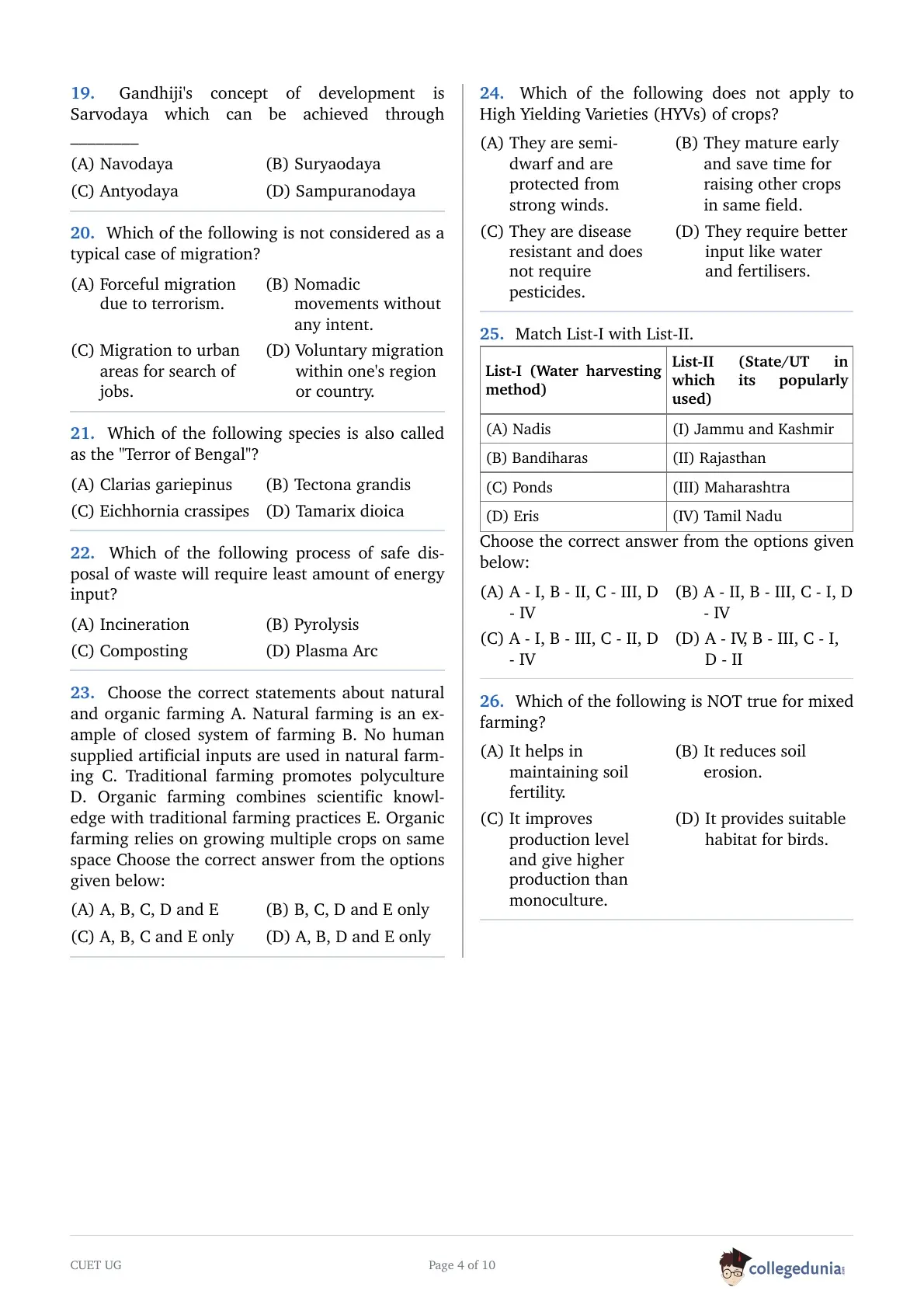
Choose the correct statements about natural and organic farming A. Natural farming is an example of closed system of farming B. No human supplied artificial inputs are used in natural farming C. Traditional farming promotes polyculture D. Organic farming combines scientific knowledge with traditional farming practices E. Organic farming relies on growing multiple crops on same space Choose the correct answer from the options given below:
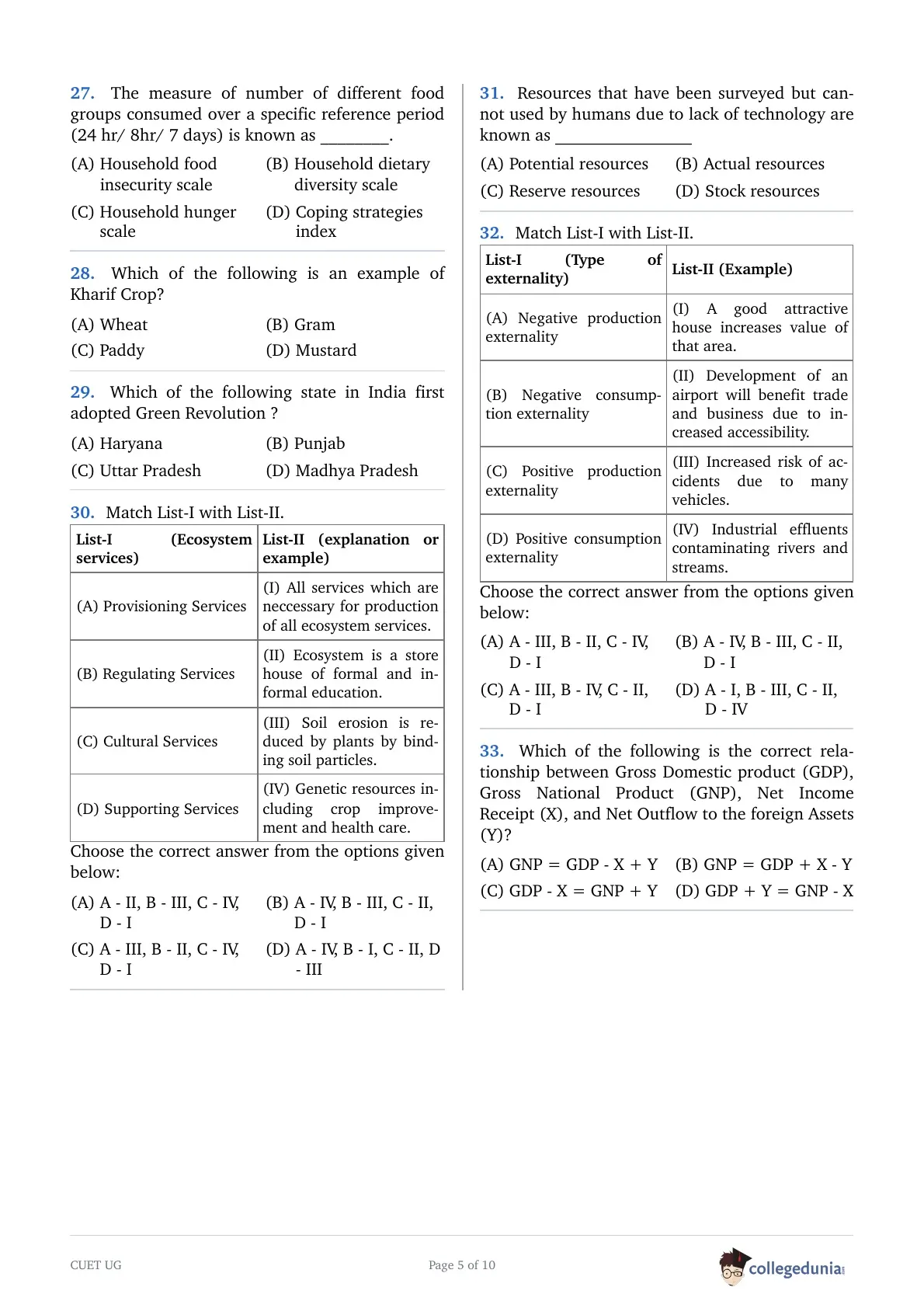
Which of the following is the correct relationship between Gross Domestic product (GDP), Gross National Product (GNP), Net Income Receipt (X), and Net Outflow to the foreign Assets (Y)?
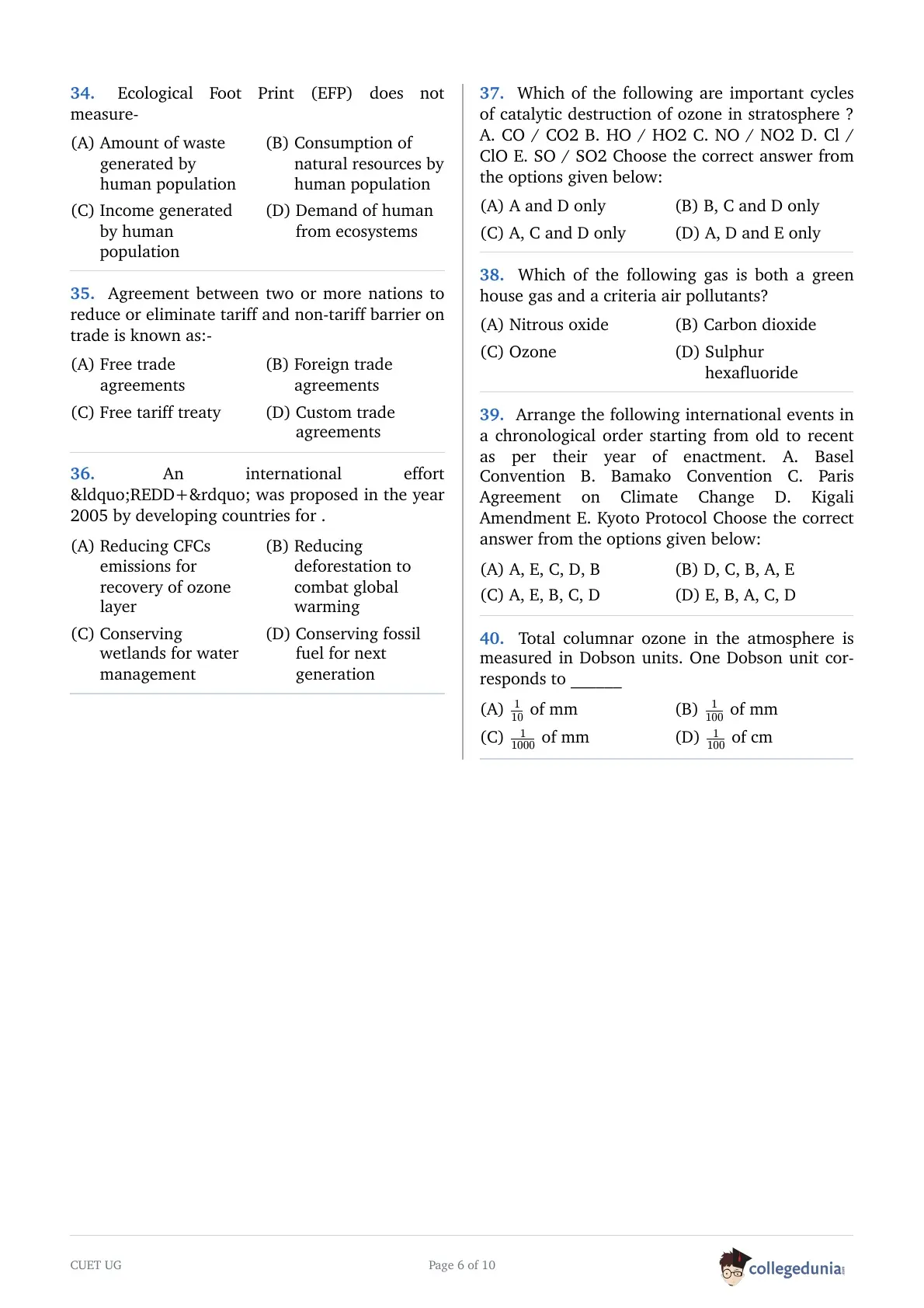
Which of the following are important cycles of catalytic destruction of ozone in stratosphere ? A. CO / CO2 B. HO / HO2 C. NO / NO2 D. Cl / ClO E. SO / SO2 Choose the correct answer from the options given below:
Arrange the following international events in a chronological order starting from old to recent as per their year of enactment.
A. Basel Convention
B. Bamako Convention
C. Paris Agreement on Climate Change
D. Kigali Amendment
E. Kyoto Protocol
Choose the correct answer from the options given below:
Which of the following is the correct relationship between Gross Domestic product (GDP), Gross National Product (GNP), Net Income Receipt (X), and Net Outflow to the foreign Assets (Y)?
Which of the following formula is correct to calculate "the average rate of change in the number of organisms per time, per organisms", in population growth rate ? Where, N represent the number of organisms and t is the time.








Comments