CUET Syllabus 2027 is based on the NCERT Class 11 and Class 12 curriculum and covers three broad sections: Domain-Specific Subjects (Section II), Languages (Section IA and IB), and the General Aptitude Test (GAT). The National Testing Agency (NTA) conducts CUET UG for undergraduate admissions across 250+ participating universities, including all 45 central universities. Students preparing for CUET 2027 should note that the official Information Bulletin — which contains the full subject-wise syllabus — is expected to release at cuet.nta.nic.in in late 2026 or early 2027. Until then, the syllabus below reflects the established NCERT-aligned framework CUET has followed across recent cycles.
- The CUET 2027 syllabus is structured into three sections: Section IA/IB (Languages), Section II (Domain Subjects), and Section III (General Aptitude Test / GAT).
- Domain subjects span Science, Commerce, and Humanities streams — you choose subjects relevant to your target programme.
- All domain-specific papers are based on NCERT Class 11 and Class 12 textbooks; no additional curriculum source is prescribed.
- Each domain subject paper has 50 compulsory MCQs worth 250 marks (+5 correct, −1 incorrect) to be completed in 60 minutes.
- The GAT covers General Knowledge, Current Affairs, Mental Ability, Quantitative Reasoning, and Logical Reasoning.
- You can select a maximum of 6 subjects in total based on your target universities’ requirements.
- The official CUET 2027 syllabus PDF is expected at cuet.nta.nic.in once NTA releases the Information Bulletin.
You should build your CUET 2027 preparation on NCERT Class 11 and 12 textbooks, as every domain subject paper maps directly to the NCERT curriculum prescribed by CBSE.
| Download (Expected Soon) CUET 2027 Official Syllabus PDF |
CUET Syllabus 2027 PDF: Download Subject-wise PDFs
NTA publishes the CUET syllabus as part of the Information Bulletin at cuet.nta.nic.in. The 2027 bulletin is expected in late 2026. The links below will be updated once NTA releases subject-specific PDFs. Until then, the 2026 PDFs at the same portal serve as the reference, as the domain syllabus has remained NCERT-aligned across cycles.
| Subject | CUET Syllabus PDF 2027 |
|---|---|
| Physics | CUET Physics Syllabus PDF 2027 (to be updated) |
| Chemistry | CUET Chemistry Syllabus PDF 2027 (to be updated) |
| Mathematics | CUET Mathematics Syllabus PDF 2027 (to be updated) |
| Biology / Biological Studies | CUET Biology Syllabus PDF 2027 (to be updated) |
| Accountancy / Book Keeping | CUET Accountancy Syllabus PDF 2027 (to be updated) |
| Business Studies | CUET Business Studies Syllabus PDF 2027 (to be updated) |
| Economics / Business Economics | CUET Economics Syllabus PDF 2027 (to be updated) |
| History | CUET History Syllabus PDF 2027 (to be updated) |
| Geography | CUET Geography Syllabus PDF 2027 (to be updated) |
| General Aptitude Test (GAT) | CUET GAT Syllabus PDF 2027 (to be updated) |
CUET Syllabus 2027: Overview
CUET 2027 (Common University Entrance Test for Undergraduate programmes) is conducted by NTA in Computer Based Test (CBT) mode. It serves as the single gateway for admissions across 250+ universities. You select subjects based on the eligibility requirements of your chosen programme — no fixed subject set applies to all students.
| Parameter | Details |
|---|---|
| Conducting Body | National Testing Agency (NTA) |
| Full Form | Common University Entrance Test — Undergraduate |
| Official Website | cuet.nta.nic.in |
| Syllabus Basis | NCERT Class 11 and Class 12 (Domain Subjects); NTA-defined framework (GAT and Language) |
| Sections | Section IA/IB (Languages), Section II (Domain Subjects), Section III (General Aptitude Test) |
| Languages in Section IA | 13 languages (including English, Hindi, and 11 regional languages) |
| Languages in Section IB | 20 additional languages (classical and modern) |
| Maximum Subjects Per Student | Up to 6 subjects (language + domain + GAT combined, as per NTA norms) |
| Exam Mode | Computer Based Test (CBT) |
| Marking Scheme | +5 for each correct answer; −1 for each incorrect answer; 0 for unattempted |
| Questions Per Domain Paper | 50 compulsory MCQs — all to be attempted within 60 minutes |
CUET 2027 Important Dates
The official CUET 2027 schedule has not been announced as of August 2026. NTA typically releases the Information Bulletin between November and January. You should bookmark cuet.nta.nic.in and check it regularly for official announcements from November 2026 onwards. The dates below are projections based on CUET’s historical calendar from 2022–2026.
| Event | Expected Date (2027 Cycle) | Status |
|---|---|---|
| Official Notification / Information Bulletin | November–December 2026 | Upcoming |
| CUET 2027 Registration Begins | November–December 2026 | Upcoming |
| Last Date to Apply | January 2027 | Upcoming |
| Form Correction / Modification Window | January–February 2027 | Upcoming |
| City Intimation Slip / Admit Card | April 2027 | Upcoming |
| CUET 2027 Exam Dates | May–June 2027 | Upcoming |
| Provisional Answer Key | June–July 2027 | Upcoming |
| CUET 2027 Result Declaration | July 2027 | Upcoming |
| University-Level Counselling / Admission | August–September 2027 | Upcoming |
CUET 2027 Domain-Specific Syllabus
Section II of CUET 2027 covers domain-specific subjects across Science, Commerce, and Humanities streams. You must choose domain subjects that align with the eligibility requirements of your target university programme. Each subject’s syllabus draws from NCERT Class 11 and Class 12 textbooks. The major subjects for each stream are detailed below.
CUET Physics Syllabus 2027
The CUET 2027 Physics syllabus is based on NCERT Class 11 and Class 12 Physics textbooks. It covers units from both classes — mechanics and thermodynamics from Class 11, and electromagnetism and modern physics from Class 12. Electrostatics, Current Electricity, and Optics carry the highest question frequency in the CUET Physics paper based on past trends.
| Class | Unit | Chapter | Key Sub-topics |
|---|---|---|---|
| Class 11 | Unit 1 | Physical World and Measurement | Sub-topics - Click Here Scope and excitement of physics, nature of physical laws, physics and technology and society; units of measurement, systems of units (SI), fundamental and derived units, length, mass and time measurements, accuracy and precision, errors in measurement, significant figures; dimensions of physical quantities, dimensional analysis and applications. |
| Unit 2 | Kinematics | Sub-topics - Click Here Frame of reference, motion in a straight line (position-time graph, speed and velocity), uniform and non-uniform motion, average speed and instantaneous velocity, uniformly accelerated motion, velocity-time and position-time graphs; scalar and vector quantities, unit vectors, addition and subtraction of vectors, relative velocity, projectile motion, uniform circular motion. | |
| Unit 3 | Laws of Motion | Sub-topics - Click Here Force and inertia, Newton’s first, second, and third laws of motion, momentum, impulse, law of conservation of linear momentum, equilibrium of concurrent forces, static and kinetic friction, laws of friction, rolling friction, dynamics of uniform circular motion — centripetal force. | |
| Unit 4 | Work, Energy and Power | Sub-topics - Click Here Work done by constant and variable forces, kinetic and potential energies, work-energy theorem, power, potential energy of a spring, conservation of mechanical energy, elastic and inelastic collisions in one and two dimensions. | |
| Unit 5 | Thermodynamics and Kinetic Theory | Sub-topics - Click Here Thermal equilibrium, zeroth law, heat, work and internal energy, first and second laws of thermodynamics, isothermal and adiabatic processes, Carnot engine and its efficiency; kinetic theory — equation of state, degrees of freedom, law of equipartition of energy, specific heats of gases, mean free path. | |
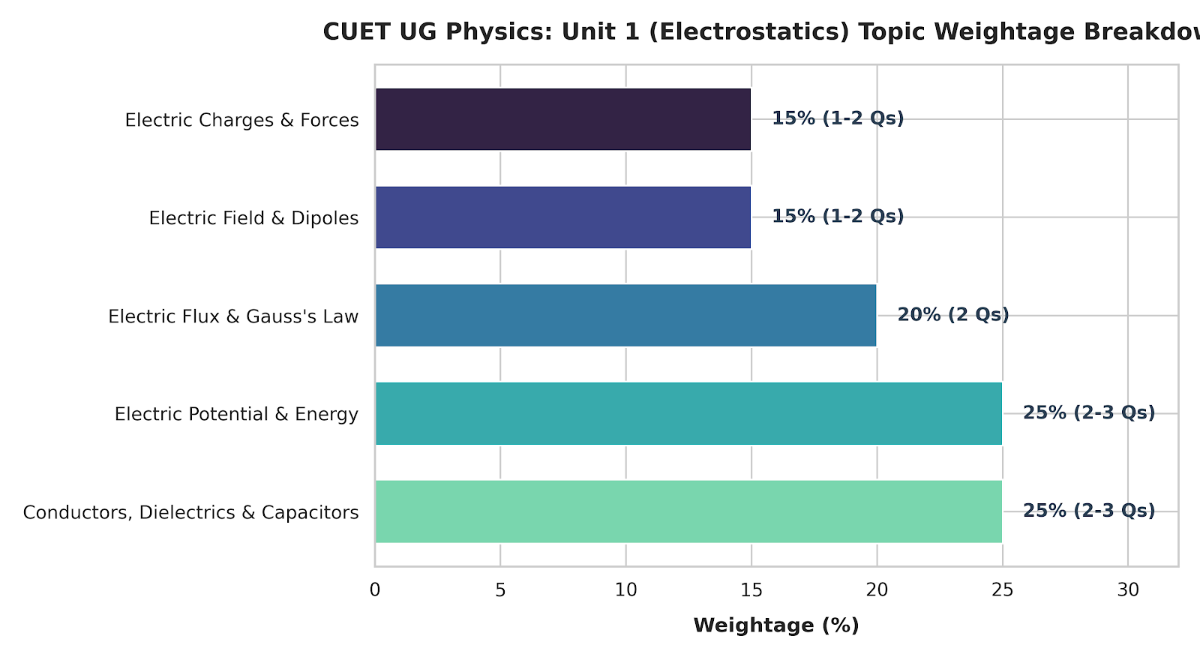
| Class 12 | Unit 6 | Electrostatics | Sub-topics - Click Here Electric charges and conservation, Coulomb’s law, electric field and field lines, electric dipole and torque in a uniform field, electric flux, Gauss’s theorem and applications, electric potential and potential difference, equipotential surfaces, potential energy of a system of charges, dielectrics and electric polarisation, capacitors and capacitance, combination of capacitors, energy stored in a capacitor, Van de Graaff generator. |
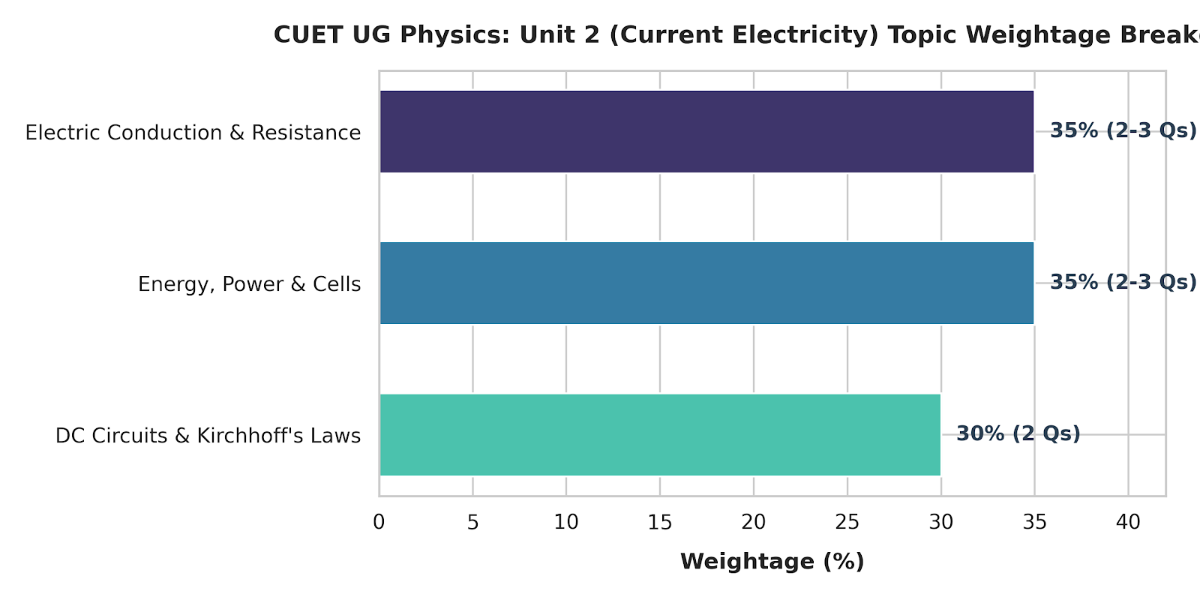
| Unit 7 | Current Electricity | Sub-topics - Click Here Electric current and drift velocity, Ohm’s law, V-I characteristics, resistance and resistivity, temperature dependence, carbon resistors, Kirchhoff’s laws, Wheatstone bridge, metre bridge, potentiometer, EMF and internal resistance, cells in series and parallel. | |
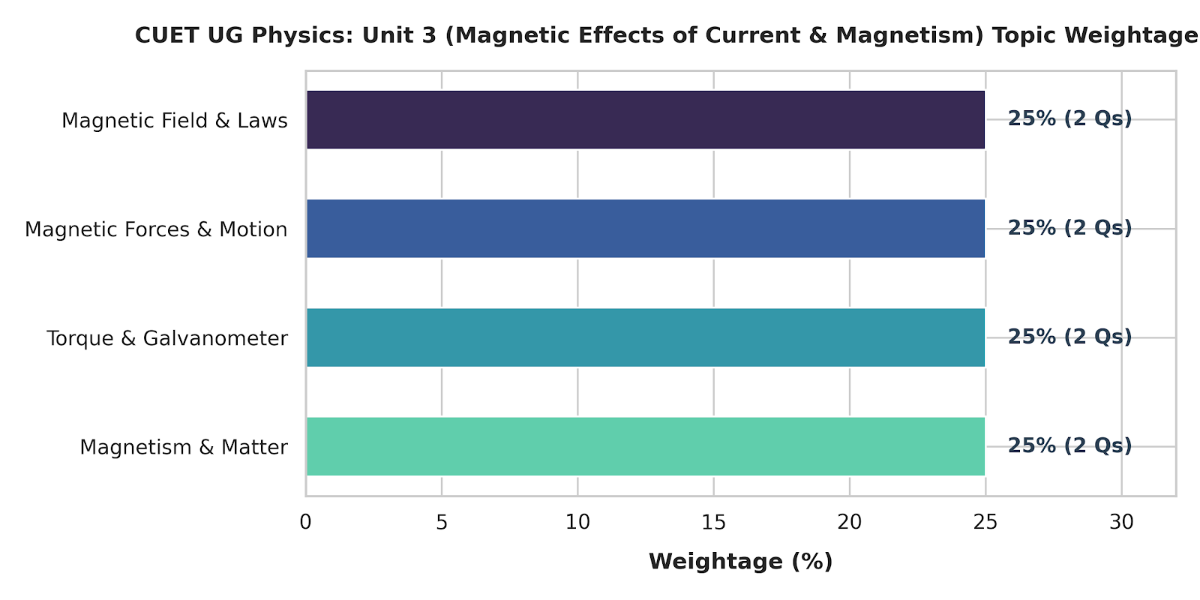
| Unit 8 | Magnetic Effects of Current and Magnetism | Sub-topics - Click Here Biot-Savart law and application to a circular current loop, Ampere’s circuital law, solenoid and toroid, force on a current-carrying conductor, moving coil galvanometer, bar magnet, earth’s magnetism, diamagnetism, paramagnetism, ferromagnetism, hysteresis. | |
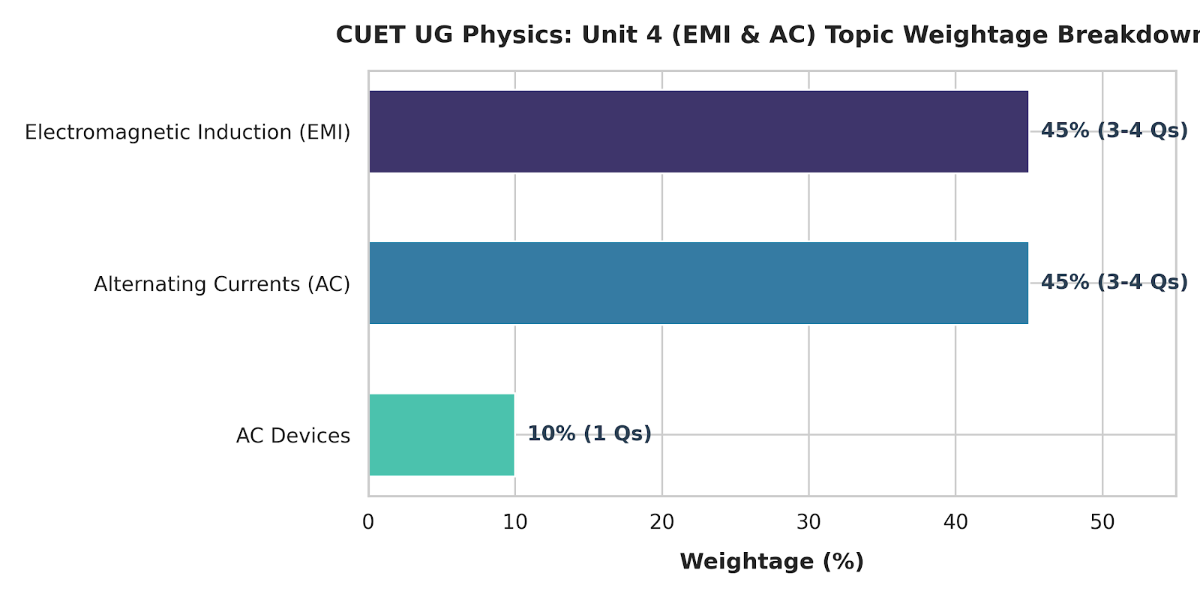
| Unit 9 | Electromagnetic Induction and Alternating Currents | Sub-topics - Click Here Faraday’s law, Lenz’s law, self-inductance and mutual inductance, eddy currents, AC generator, peak and RMS values, phasors, LCR series circuit and resonance, power factor, wattless current, transformers. | |
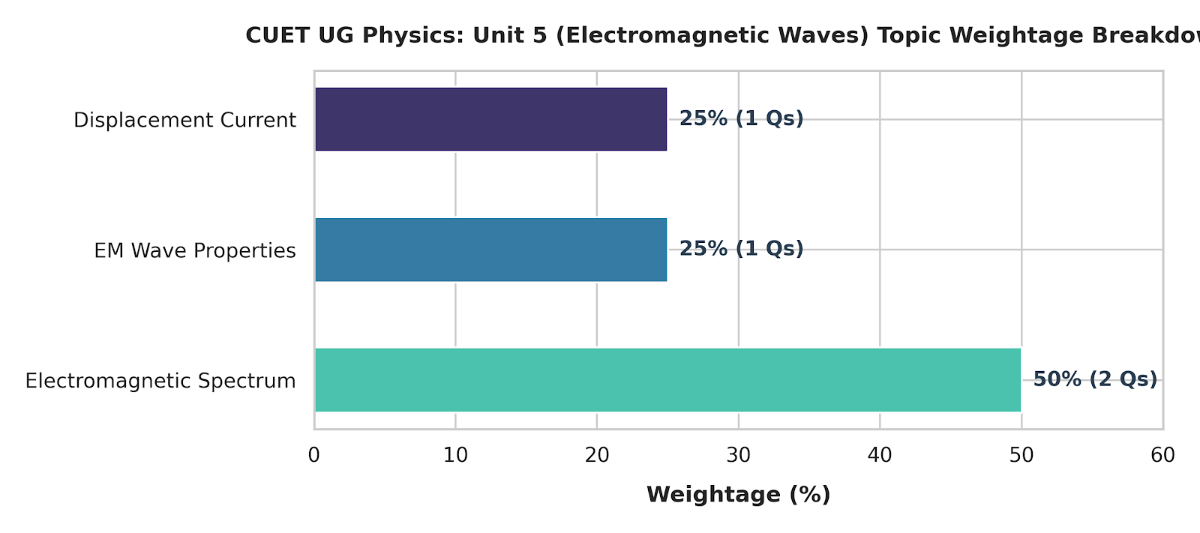
| Unit 10 | Electromagnetic Waves | Sub-topics - Click Here Displacement current, electromagnetic waves — characteristics and transverse nature, the electromagnetic spectrum (radio, microwave, infrared, visible, UV, X-rays, gamma rays) — sources, properties, and uses. | |
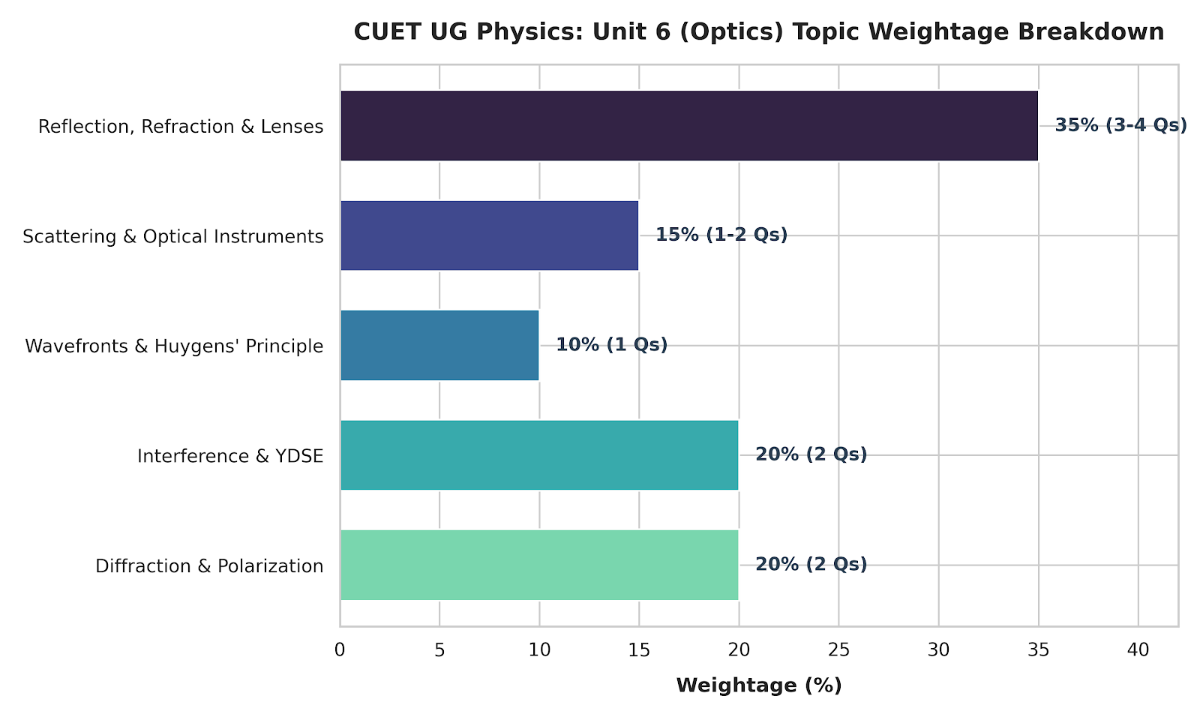
| Unit 11 | Optics | Sub-topics - Click Here Reflection by spherical mirrors, refraction at plane and spherical surfaces, total internal reflection, lenses (thin lens formula, lens maker’s formula), refraction through a prism, scattering of light, compound microscope, astronomical telescope; wave optics — Huygens’ principle, interference (Young’s double slit experiment), diffraction (single slit), polarisation by scattering and reflection (Brewster’s law), Malus’s law. | |
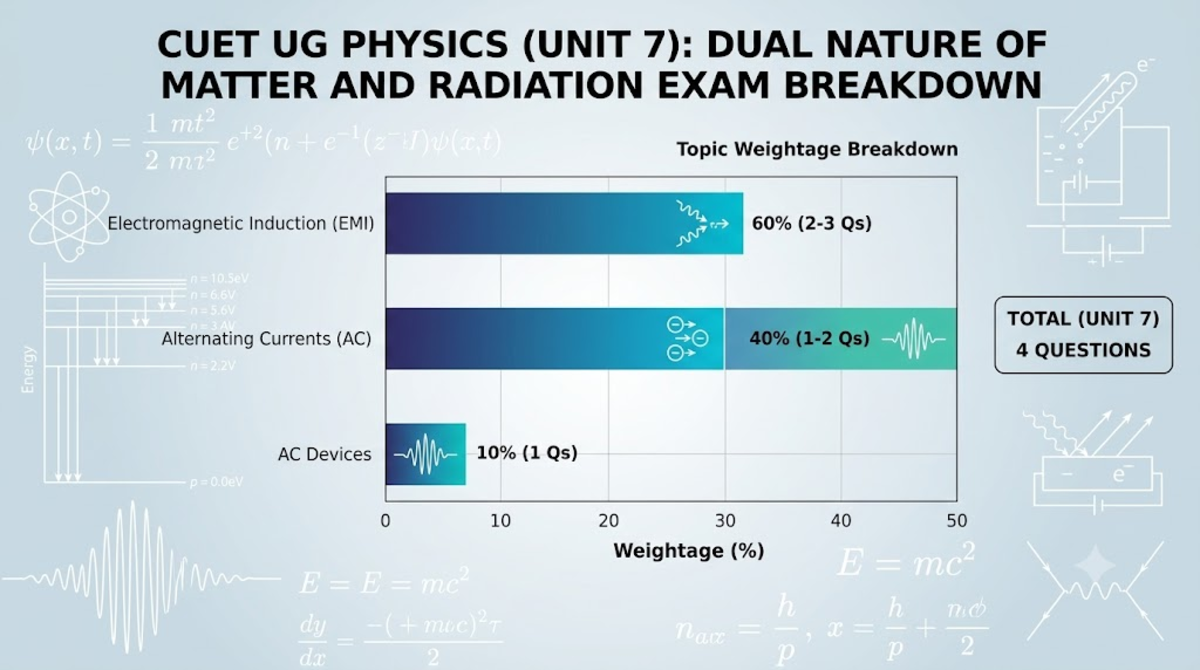
| Unit 12 | Dual Nature of Radiation and Matter | Sub-topics - Click Here Photoelectric effect, Einstein’s photoelectric equation, particle nature of light, de Broglie hypothesis, Davisson-Germer experiment, Heisenberg’s uncertainty principle. | |
| Unit 13 | Atoms and Nuclei | Sub-topics - Click Here Alpha-particle scattering, Rutherford’s model, Bohr model and hydrogen spectrum, energy levels, nuclear composition and size, mass-energy relation, binding energy per nucleon, radioactive decay (alpha, beta, gamma), half-life and mean life, nuclear fission and fusion. | |
| Unit 14 | Electronic Devices | Sub-topics - Click Here Energy bands in solids, intrinsic and extrinsic semiconductors, p-n junction diode, I-V characteristics, rectifier circuits, Zener diode, LED, photodiode, solar cell, junction transistor, transistor as switch and amplifier, logic gates (AND, OR, NOT, NAND, NOR). |
CUET Chemistry Syllabus 2027
The CUET 2027 Chemistry syllabus covers NCERT Class 11 and Class 12 Chemistry. Class 11 topics include atomic structure, thermodynamics, and equilibrium. Class 12 topics cover electrochemistry, organic reactions, and biomolecules. Organic chemistry units — especially Haloalkanes, Aldehydes and Ketones, and Biomolecules — consistently appear with high frequency in the CUET Chemistry paper.
| Class | Unit | Chapter | Key Sub-topics |
|---|---|---|---|
| Class 11 | Unit 1 | Some Basic Concepts of Chemistry | Sub-topics - Click Here Laws of chemical combination, atomic and molecular masses, mole concept, molar mass, percentage composition, empirical and molecular formulae, chemical reactions, stoichiometry and calculations based on stoichiometry. |
| Unit 2 | Structure of Atom | Sub-topics - Click Here Discovery of electron, proton and neutron, Thomson model, Rutherford’s nuclear model, Bohr’s model and its limitations, quantum mechanical model of the atom, orbitals and quantum numbers, electronic configuration, stability of half-filled and completely filled orbitals. | |
| Unit 3 | Chemical Bonding and Molecular Structure | Sub-topics - Click Here Ionic bond, covalent bond, Lewis structure, VSEPR theory and molecular shapes, valence bond theory, hybridisation (sp, sp², sp³, sp³d, sp³d²), resonance, molecular orbital theory, bond parameters. | |
| Unit 4 | Chemical Thermodynamics | Sub-topics - Click Here Concepts of system and surroundings, enthalpy, entropy, spontaneity, Hess’s law, bond enthalpy, lattice enthalpy, Gibbs free energy change and its relation to equilibrium constant. | |
| Unit 5 | Equilibrium | Sub-topics - Click Here Equilibrium in physical and chemical processes, law of chemical equilibrium (Kc and Kp), Le Chatelier’s principle, ionic equilibrium — acids and bases (Arrhenius, Brønsted-Lowry, Lewis), pH, buffer solutions, Henderson-Hasselbalch equation, solubility product. | |
| Class 12 | Unit 6 | Electrochemistry and Chemical Kinetics | Sub-topics - Click Here Redox reactions, conductance and Kohlrausch’s law, electrolytic cells, Faraday’s laws, galvanic cells, EMF, standard electrode potential, Nernst equation, batteries and fuel cells, corrosion; rate of reaction, rate law, integrated rate equations, half-life, activation energy, Arrhenius equation, collision theory. |
| Unit 7 | d- and f-Block Elements and Coordination Compounds | Sub-topics - Click Here Transition metals — electronic configuration, oxidation states, magnetic properties, KMnO₄ and K₂Cr₂O₇; lanthanides and actinides; coordination compounds — Werner’s theory, IUPAC nomenclature, isomerism (geometric and optical), VBT and CFT, spectrochemical series, stability constants. | |
| Unit 8 | Haloalkanes and Haloarenes | Sub-topics - Click Here Classification and nomenclature, SN1 and SN2 mechanisms (mechanism and stereochemistry), elimination reactions, reactions of aryl halides, polyhalogen compounds (DDT, freons) and environmental impact. | |
| Unit 9 | Alcohols, Phenols, Ethers and Carbonyl Compounds | Sub-topics - Click Here Alcohols — preparation, reactions (O–H and C–O bond cleavage); phenols — acidity, electrophilic substitution (Kolbe reaction, Reimer-Tiemann reaction); ethers — preparation and reactions; aldehydes and ketones — nucleophilic addition, Cannizzaro reaction, aldol condensation; carboxylic acids — acidity and reactions. | |
| Unit 10 | Amines and Biomolecules | Sub-topics - Click Here Amines — classification, basicity (aliphatic vs aromatic), diazonium salts and coupling reactions; biomolecules — carbohydrates (classification, reducing/non-reducing sugars), proteins (amino acids, peptide bond, denaturation), enzymes, vitamins, nucleic acids (DNA and RNA), hormones. | |
| Unit 11 | Polymers | Sub-topics - Click Here Classification (addition and condensation), copolymerisation, natural rubber and vulcanisation, biodegradable and non-biodegradable polymers, commercially important polymers (nylon, polyester, bakelite). | |
| Unit 12 | Chemistry in Everyday Life | Sub-topics - Click Here Drugs — classification and interaction with receptors; antibiotics, antiseptics and disinfectants; chemicals in food (preservatives, artificial sweeteners, antioxidants); cleansing agents — soaps (saponification) and detergents. |
CUET Mathematics Syllabus 2027
The CUET 2027 Mathematics syllabus covers NCERT Class 11 and Class 12 Mathematics. Class 11 topics include Sets, Algebra, Coordinate Geometry, and Statistics. Class 12 adds Calculus, Vectors, 3D Geometry, and Probability. Calculus and Algebra (Matrices and Determinants) together account for the largest share of CUET Mathematics questions.
| Class | Topic Cluster | Key Sub-topics |
|---|---|---|
| Class 11 | Sets, Relations and Functions; Algebra; Coordinate Geometry; Statistics | Sub-topics - Click Here Sets and their representations, Venn diagrams, operations on sets; relations and types of functions, domain and range; complex numbers, quadratic equations, arithmetic progression (AP), geometric progression (GP), permutations and combinations, binomial theorem, sequences and series; straight lines, conic sections (circle, parabola, ellipse, hyperbola); limits and derivatives (introduction); statistics — mean, variance, standard deviation; probability — random experiments, events. |
| Class 12 | Relations, Functions and Algebra | Sub-topics - Click Here Types of relations (reflexive, symmetric, transitive, equivalence), types of functions (injective, surjective, bijective), composition of functions, invertible functions, binary operations, inverse trigonometric functions (domain, range, principal values, properties and identities); matrices — order, types (zero, identity, symmetric, skew-symmetric), operations, elementary operations, invertible matrices; determinants — properties, minors and cofactors, area of triangle, adjoint and inverse of a matrix, solving systems of linear equations. |
| Calculus | Sub-topics - Click Here Continuity and differentiability, derivatives of composite, implicit, and inverse trigonometric functions, exponential and logarithmic functions, second-order derivatives, Rolle’s theorem and mean value theorem; applications of derivatives — rate of change, tangents and normals, maxima and minima; integrals — integration by substitution, by parts, by partial fractions, definite integrals and their properties, area under curves; differential equations — order, degree, separation of variables, homogeneous equations, linear first-order equations. | |
| Vectors, 3D Geometry and Linear Programming | Sub-topics - Click Here Vectors — types, addition, scalar and vector products, scalar triple product, projection; 3D geometry — direction cosines and direction ratios, equation of a line, angle between lines, equation of a plane, distance of a point from a plane; linear programming — feasible region, corner point method, types of LPP problems (diet, manufacturing, transportation). | |
| Probability | Sub-topics - Click Here Conditional probability, multiplication theorem, independent events, Bayes’ theorem, random variable and probability distribution, mean and variance, Bernoulli trials and binomial distribution. |
CUET Biology Syllabus 2027
The CUET 2027 Biology syllabus (Biological Studies) covers NCERT Class 11 and Class 12 Biology. Class 11 covers cell biology, plant physiology, and human physiology. Class 12 adds genetics, biotechnology, and ecology. Genetics and Evolution and Biotechnology and Its Applications are the most frequently tested units in CUET Biology based on past papers.
| Class | Unit / Theme | Key Sub-topics |
|---|---|---|
| Class 11 | Diversity, Structural Organisation, Cell Biology, Plant and Human Physiology | Sub-topics - Click Here Diversity in living world (five kingdoms, classification), structural organisation in animals and plants (tissues, morphology), cell — structure and function (cell organelles, cell cycle, mitosis, meiosis), plant physiology (transport, mineral nutrition, photosynthesis, respiration, plant growth and development), human physiology (digestion, breathing, body fluids, circulation, excretion, locomotion, neural control, chemical coordination). |
| Class 12 | Reproduction | Sub-topics - Click Here Reproduction in organisms, sexual reproduction in flowering plants (pollination, double fertilisation, post-fertilisation developments), human reproduction (gametogenesis, fertilisation, implantation, pregnancy, parturition), reproductive health (contraception, STIs, infertility and ART). |
| Genetics and Evolution | Sub-topics - Click Here Mendel’s laws, exceptions (incomplete dominance, co-dominance, multiple alleles, polygenic inheritance), sex determination, linkage and crossing over, mutation; DNA structure, replication, transcription, translation, genetic code, regulation of gene expression (lac operon), Human Genome Project, DNA fingerprinting; evolution — origin of life, evidences, theories (Darwin, Neo-Darwinism), Hardy-Weinberg principle, natural selection, speciation. | |
| Biology and Human Welfare; Biotechnology | Sub-topics - Click Here Health and disease (immunity, AIDS, cancer), strategies for enhancement in food production (animal husbandry, plant breeding, tissue culture), microbes in human welfare (fermentation, antibiotics, biocontrol, biofertilisers); biotechnology — recombinant DNA technology (tools: restriction enzymes, vectors, PCR), gene cloning and expression, applications in medicine (insulin, gene therapy) and agriculture (Bt crops, herbicide tolerance), ethical issues. | |
| Ecology and Environment | Sub-topics - Click Here Organisms and populations (adaptations, population interactions), ecosystems (structure, energy flow, nutrient cycling, decomposition), biodiversity (levels, threats, conservation — in-situ and ex-situ, hotspots, IUCN Red List), environmental issues (air and water pollution, solid waste, greenhouse effect, ozone depletion, deforestation). |
CUET Commerce Stream Syllabus 2027
Commerce students typically choose Accountancy, Business Studies, and Economics as their domain subjects in CUET 2027. All three papers draw from NCERT Class 11 and 12 Commerce textbooks. Students applying to B.Com, BBA, and Economics Honours programmes should confirm the exact domain requirements of each target university before finalising subject choices.
| Subject | Key Units / Chapters |
|---|---|
| Accountancy | Key Units - Click Here Class 11: accounting process (journal, ledger, trial balance), financial statements (trading and profit and loss account, balance sheet), depreciation, provisions and reserves, bills of exchange, rectification of errors. Class 12: partnership accounts (admission, retirement, death, dissolution), accounting for share capital (issue, forfeiture, reissue), debentures, financial statements of companies, cash flow statements, analysis of financial statements — ratio analysis. |
| Business Studies | Key Units - Click Here Class 11: nature of business, forms of business organisation, business services, emerging modes of business, social responsibility of business and business ethics. Class 12: nature and significance of management, principles of management (Fayol and Taylor), business environment, planning, organising, staffing, directing (motivation theories — Maslow, Herzberg, McGregor; leadership; communication), controlling; financial management, financial markets, marketing management (4Ps), consumer protection (Consumer Protection Act 2019), entrepreneurship development. |
| Economics / Business Economics | Key Units - Click Here Class 11 (Microeconomics): consumer equilibrium (utility approach and indifference curve approach), demand and supply, price elasticity, production function (TP, AP, MP; law of variable proportions), cost curves, revenue, market equilibrium, market structures (perfect competition, monopoly, monopolistic competition, oligopoly). Class 12 (Macroeconomics): national income concepts (GDP, GNP, NNP, NI, PI, DPI) and methods of measurement, money and banking (money creation, credit creation, functions of RBI), income determination (aggregate demand and supply, investment multiplier), government budget (components and balance), balance of payments, foreign exchange rate (fixed vs flexible). |
CUET Humanities and Arts Syllabus 2027
Humanities students may choose from History, Political Science, Geography, Sociology, Psychology, Philosophy, Home Science, and other domain subjects. Each follows NCERT Class 11 and 12 Humanities textbooks. You should check the specific domain subject requirement of every university programme you apply to, as accepted subjects vary significantly across institutions.
| Subject | Key Themes / Units |
|---|---|
| History | Key Themes - Click Here Bricks, beads and bones (Harappan civilisation), kings, farmers and towns, kinship, caste and class, thinkers and beliefs, through the eyes of travellers (Al Beruni, Ibn Battuta, Bernier), bhakti–sufi traditions, Vijayanagara — an imperial capital, peasants, zamindars and the state, kings and chronicles (Mughal court), colonialism and the countryside, rebels and the Raj (1857), Mahatma Gandhi and the nationalist movement (non-cooperation, civil disobedience, Quit India), understanding partition, framing the Indian constitution. |
| Political Science | Key Themes - Click Here Contemporary World Politics (Class 12): Cold War era, end of bipolarity, US hegemony, alternative power centres (EU, ASEAN, China), contemporary South Asia, international organisations, environment and natural resources, globalisation; Politics in India Since Independence (Class 12): challenges of nation-building, one-party dominance, politics of planned development, India’s external relations, challenges to the Congress system, emergency and democratic order, popular and social movements, regional aspirations, democratic upsurge and coalition politics. |
| Geography | Key Themes - Click Here Human Geography (Class 12 Part A): nature and scope, world population (distribution, density, growth, composition), human development; primary, secondary, tertiary and quaternary activities; transport, communication and trade; international trade; human settlements. India (Class 12 Part B): people, human settlements, land resources and agriculture, water resources, mineral and energy resources, manufacturing industries, planning and sustainable development, transport and communication, international trade, geographical perspective on selected issues. |
| Sociology | Key Themes - Click Here Introducing sociology (society, social institutions, social stratification), introducing Indian society (diversity in India, structural change, cultural change, challenges of unity), social change and development in India (structural changes, social movements, globalisation, mass media and communications). |
| Psychology | Key Themes - Click Here Intelligence and aptitude (theories — Spearman, Thurstone, Gardner, Sternberg), personality (type, trait, psychodynamic, humanistic approaches), human strengths and positive psychology, psychological disorders (DSM/ICD classification, anxiety, mood, psychotic disorders, substance abuse), therapeutic approaches (CBT, psychoanalytic, humanistic), attitude and social cognition, social influence and group processes, psychology and life, developing psychological skills. |
CUET General Aptitude Test (GAT) Syllabus 2027
Section III of CUET 2027 is the General Aptitude Test (GAT). Many central and state universities require a GAT score alongside domain subject scores — particularly for BBA, B.Sc (Interdisciplinary), and general B.A. programmes. You should treat GAT preparation separately from domain subjects, as its content is not covered in NCERT Class 11 or 12 textbooks.
| Topic Area | Sub-topics and Focus Areas |
|---|---|
| General Knowledge and Current Affairs | National and international events (past 12 months), India’s polity and governance, economy and budget highlights, sports (national and international tournaments), arts and culture, science and technology, important days and themes, awards and honours, prominent personalities and their contributions |
| General Mental Ability | Analogies, series completion (number, letter, mixed), coding-decoding, blood relations, direction sense and distance, ranking and order arrangements, classification (odd-one-out) |
| Numerical Ability | Number system (HCF, LCM, divisibility), simplification and approximation, ratio and proportion, averages, percentages, profit and loss, simple and compound interest, time-speed-distance, time and work, pipes and cisterns |
| Quantitative Reasoning | Simple application of basic mathematical concepts (up to Class 10 level), data sufficiency (two-statement type), elementary statistics (mean, median, mode, range, interpretation of bar graphs and pie charts) |
| Logical and Analytical Reasoning | Statement and assumptions, statement and conclusions, syllogisms, Venn diagrams, linear and circular seating arrangements, puzzles (floor-based, box-based), critical reasoning passages (strengthening and weakening arguments) |
The GAT paper has 50 compulsory MCQs worth 250 marks (+5 correct, −1 incorrect) to be attempted within 60 minutes. No question is optional. Practising 2–3 full-length GAT mock tests per week is the most effective way to build the speed and accuracy needed for this section.
CUET Language Section Syllabus 2027
CUET 2027 offers 13 languages in Section IA and 20 languages in Section IB. Most central university programmes require at least one language score from Section IA. The language test assesses reading comprehension, literary aptitude, and vocabulary. You should practise unseen passage comprehension and inference-based questions to score well in the language section — rote grammar memorisation has very limited value here.
| Component | Description and Question Types |
|---|---|
| Reading Comprehension | 3–5 unseen passages of varying types (factual, literary, narrative, discursive); questions on main idea, inference, tone, author’s purpose, and vocabulary in context |
| Literary Aptitude | Short literary excerpts (poetry and prose); identification of literary devices (metaphor, simile, personification, alliteration), thematic content, mood, and author’s intent |
| Vocabulary | Synonyms, antonyms, idioms and phrases, one-word substitutes, fill-in-the-blanks (vocabulary-based, contextual) |
| Grammar | Error spotting, sentence rearrangement, active-passive voice, direct-indirect speech; grammar component is lighter compared to reading comprehension in Section IA |
Languages available in CUET 2027 Section IA (expected): English, Hindi, Assamese, Bengali, Gujarati, Kannada, Malayalam, Marathi, Odia, Punjabi, Tamil, Telugu, and Urdu. Section IB lists include additional classical and modern Indian languages. NTA confirms the full list in the official Information Bulletin.
CUET 2027 Syllabus: Subject-Wise Weightage
The weightage data below is based on analysis of CUET papers from 2022 to 2026. Official CUET 2027 question distribution will be confirmed in the Information Bulletin; treat the figures below as indicative trends based on past patterns.
| Subject | High-Weightage Units / Chapters | Total Questions | Duration |
|---|---|---|---|
| Physics | Electrostatics, Optics, Current Electricity, Electromagnetic Induction | 50 (all compulsory) | 60 minutes |
| Chemistry | Organic units (Haloalkanes, Aldehydes, Amines), Coordination Compounds, Biomolecules | 50 (all compulsory) | 60 minutes |
| Mathematics | Calculus, Algebra (Matrices and Determinants), Probability | 50 (all compulsory) | 60 minutes |
| Biology | Genetics and Evolution, Biotechnology, Ecology | 50 (all compulsory) | 60 minutes |
| Accountancy | Partnership Accounts, Share Capital, Financial Statement Analysis | 50 (all compulsory) | 60 minutes |
| Business Studies | Management Functions, Financial Management, Marketing Management | 50 (all compulsory) | 60 minutes |
| Economics | National Income, Demand-Supply Analysis, Money and Banking | 50 (all compulsory) | 60 minutes |
| History | Colonial India, Nationalist Movement, Harappan Civilisation | 50 (all compulsory) | 60 minutes |
| General Aptitude Test (GAT) | GK / Current Affairs (~30%), Logical Reasoning (~40%), Numerical Ability (~30%) | 50 (all compulsory) | 60 minutes |
Best Books for CUET 2027
NCERT Class 11 and Class 12 textbooks are the primary resource for all CUET 2027 domain subjects. You should complete NCERT cover-to-cover — including intext questions and chapter-end exercises — before picking up any supplementary book. The table below lists the most useful additional resources by subject.
| Subject | Book Name | Author / Publisher | Why This Book |
|---|---|---|---|
| Physics | NCERT Physics (Class 11 and 12) | NCERT | Primary source; every CUET Physics question traces back to NCERT chapters and examples |
| Physics | CUET UG Physics Topic-wise Practice Papers | Arihant / MTG | CUET-specific MCQ practice with previous year questions and timed section tests |
| Chemistry | NCERT Chemistry (Class 11 and 12, Part I and II) | NCERT | Covers the full CUET Chemistry syllabus; intext questions are directly exam-relevant |
| Chemistry | CUET UG Chemistry Question Bank | Arihant / Oswaal | Topic-wise CUET-pattern MCQ practice with solved answer keys |
| Mathematics | NCERT Mathematics (Class 11 and 12) | NCERT | Covers all CUET Maths topic clusters; exercise types match CUET question style |
| Mathematics | CUET Mathematics Mock Test Series | MTG / Disha | Timed full-length mock tests with CUET-pattern questions and detailed solutions |
| Biology | NCERT Biology (Class 11 and 12) | NCERT | All units from both classes; diagrams, definitions, and examples are directly testable |
| Biology | CUET Biology Chapter-wise Practice Guide | Oswaal / Arihant | Chapter-wise CUET-focused MCQs with answer keys and concept revision boxes |
| GAT — GK | Lucent’s General Knowledge | Lucent Publications | Comprehensive static GK (polity, history, geography, economy, science) for the GAT |
| GAT — Reasoning | A Modern Approach to Verbal and Non-Verbal Reasoning | R.S. Aggarwal | Covers all logical and analytical reasoning topics appearing in the CUET GAT |
| GAT — Quant | Quantitative Aptitude for Competitive Examinations | R.S. Aggarwal | Chapter-wise arithmetic practice up to Class 10 level; well-suited for CUET’s numerical ability component |
How to Download CUET Syllabus 2027 PDF
The official CUET syllabus is part of the Information Bulletin published at cuet.nta.nic.in. Once NTA releases the 2027 bulletin, follow these steps to download the syllabus PDF.
- Visit the official CUET portal at cuet.nta.nic.in.
- Look for the "Information Bulletin" or "Syllabus" link on the homepage or in the Downloads section.
- Click the link — the Information Bulletin PDF opens in a new browser tab.
- Navigate to the Syllabus section within the PDF (usually labelled as an Appendix or a dedicated Syllabus section inside the bulletin).
- Press Ctrl + S (Windows) or Cmd + S (Mac) to save the PDF to your device.
- Alternatively, click the download icon in your PDF viewer to save the file locally.
Note: The CUET 2027 Information Bulletin is expected in late 2026. Bookmark cuet.nta.nic.in now and revisit from November 2026 onwards for the official release.
CUET 2027 Preparation Strategy
CUET 2027 preparation is most effective when it runs in parallel with your Class 11 and 12 board exam preparation. Both exams draw from the same NCERT curriculum for domain subjects. You gain a double benefit — every chapter you study for your board exam is direct CUET preparation; the effort is not split, it is shared.
Physics
- Complete all NCERT Class 11 and 12 Physics chapters. Pay special attention to solved examples and chapter-end exercises — many CUET questions adapt these directly.
- Focus first on Electrostatics, Current Electricity, and Optics from Class 12. These three units account for the largest share of CUET Physics questions based on past papers.
- Do not skip Class 11 units (Kinematics, Laws of Motion, Work-Energy, Thermodynamics). They contribute meaningfully to the 50-question CUET Physics paper.
- Practise numericals from Electromagnetic Induction and Alternating Currents — formula-heavy units need repeated problem practice.
- Attempt at least two timed CUET Physics mock tests per month. Fifty questions in 60 minutes requires both accuracy and speed.
Chemistry
- Read every NCERT intext question and chapter-end exercise. A significant share of CUET Chemistry questions comes directly from NCERT text.
- Build a reaction summary chart for all Organic Chemistry units from Class 12 (Haloalkanes, Alcohols, Aldehydes and Ketones, Amines). Cover mechanisms and conditions in one table.
- Memorise coordination compound IUPAC names, isomerism types, and spectrochemical series order — these are direct recall questions in CUET.
- Revise Biomolecules and Chemistry in Everyday Life last — short chapters with very high return on time invested.
- Class 11 Equilibrium and Thermodynamics chapters are consistently tested. Treat them with the same priority as Class 12 Organic Chemistry.
Mathematics
- Prioritise Calculus above all other units — continuity, differentiability, integrals, and differential equations together carry the heaviest CUET Maths question load.
- Practise Matrices and Determinants systematically. Calculation errors here are common and costly.
- Cover Class 11 chapters (Permutations and Combinations, Binomial Theorem, Statistics, and Probability) alongside Class 12 material — CUET draws from both classes.
- Solve the NCERT Miscellaneous exercise for every chapter. These test conceptual clarity and mirror CUET question difficulty.
General Aptitude Test (GAT)
- Start reading a national newspaper or current affairs digest daily from now. Twelve months of consistent reading builds GK depth that short-term cramming cannot replicate.
- Practise seating arrangements and syllogisms daily. Speed and accuracy in reasoning come from daily repetition, not marathon sessions.
- Revise static GK — India’s polity (Constitution, Parliament, judiciary), geography (rivers, mountain ranges, national parks), economy (key institutions, schemes), history (freedom struggle milestones), and science.
- Take one full-length GAT mock test each week from January 2027. Analyse every error by category before attempting the next mock.
Language (English and Regional Languages)
- Read one editorial or long-form essay daily. This builds reading speed and inference ability — the two skills CUET language passages test most heavily.
- Practise paraphrase-identification and author’s-purpose questions. CUET passages require inference, not surface-level recall.
- Build your vocabulary through contextual reading rather than rote word lists. Words encountered in context are retained better and applied more accurately in MCQ settings.
CUET Syllabus 2027 FAQs
Ques. Is the CUET 2027 syllabus the same as the 2026 syllabus?
Ans. The official CUET 2027 Information Bulletin has not been released as of August 2026. Based on the pattern followed from 2022 to 2026, NTA has maintained the NCERT Class 11 and 12-aligned syllabus for domain subjects. If NTA announces any changes for 2027, they will appear first in the official Information Bulletin at cuet.nta.nic.in, expected in late 2026.
Ques. Which subject has the highest weightage in CUET 2027?
Ans. Every domain subject paper carries equal marks — 50 compulsory MCQs for 250 marks per paper. Within individual subjects, Physics sees the highest question density from Electrostatics and Optics; Chemistry from Organic units (Haloalkanes, Aldehydes and Ketones); Mathematics from Calculus; Biology from Genetics and Evolution. The GAT carries equal weight per question across its five topic areas, with Logical Reasoning typically having the most questions.
Ques. Is NCERT enough for CUET 2027 preparation?
Ans. Yes, for all domain subjects — Physics, Chemistry, Mathematics, Biology, Accountancy, Business Studies, Economics, History, Political Science, Geography, Sociology, and Psychology — NCERT Class 11 and 12 textbooks are the primary and largely sufficient source. Supplement with CUET-specific MCQ practice books to get comfortable with the question format. For the GAT, NCERT is not enough — use a dedicated GK resource and a reasoning practice book alongside.
Ques. Where can I download the CUET 2027 official syllabus PDF?
Ans. The CUET 2027 syllabus PDF will be part of the Information Bulletin at cuet.nta.nic.in. NTA typically releases it in November–December. Until the 2027 bulletin is out, the 2026 Information Bulletin at the same portal is the most current official reference. The domain syllabus has remained NCERT-aligned across cycles.
Ques. Which are the most important chapters in Physics for CUET 2027?
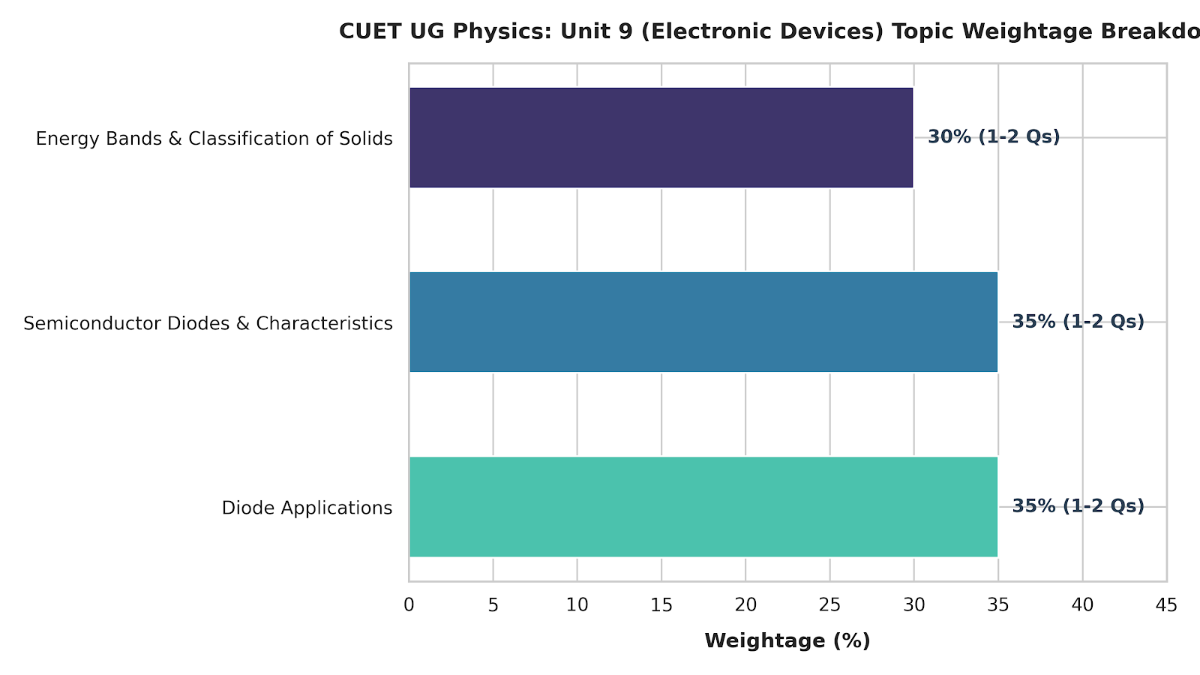
Ans. Based on past CUET Physics papers, the most frequently tested chapters are Electrostatics (Class 12, Unit 1), Current Electricity (Class 12, Unit 2), Optics (Class 12, Unit 6), and Electromagnetic Induction and Alternating Currents (Class 12, Unit 4). From Class 11, Kinematics, Laws of Motion, and Thermodynamics consistently contribute questions. You should not skip Atoms and Nuclei or Electronic Devices — definition and concept questions from these units appear each year.
Ques. Has the CUET 2027 syllabus been revised?
Ans. No official revision has been announced for CUET 2027 as of August 2026. The domain syllabus has remained anchored to NCERT Class 11 and 12 across every CUET cycle since 2022. Any topic additions or deletions for 2027 will be notified in the official Information Bulletin. Treat any unofficial revision claims with caution until NTA confirms them at cuet.nta.nic.in.
Ques. How many subjects are covered in the CUET 2027 syllabus?
Ans. CUET 2027 includes domain-specific subjects across Science, Commerce, and Humanities streams, plus 13 languages in Section IA, 20 languages in Section IB, and the General Aptitude Test. You are not required to prepare all available subjects — you select only those relevant to your target programme (up to 6 subjects per student). Each domain subject’s syllabus corresponds to NCERT Class 11 and 12 content for that subject.
Ques. What books should I follow for Chemistry in CUET 2027?
Ans. Start with NCERT Class 11 and 12 Chemistry (Part I and Part II for Class 12) and complete every intext question and chapter-end problem. Once NCERT is done, use the Arihant or Oswaal CUET UG Chemistry Question Bank for CUET-pattern MCQ practice. These books contain chapter-wise questions and previous year CUET Chemistry problems with detailed answer explanations.
Ques. Is Modern Physics (Atoms and Nuclei) in the CUET 2027 syllabus?
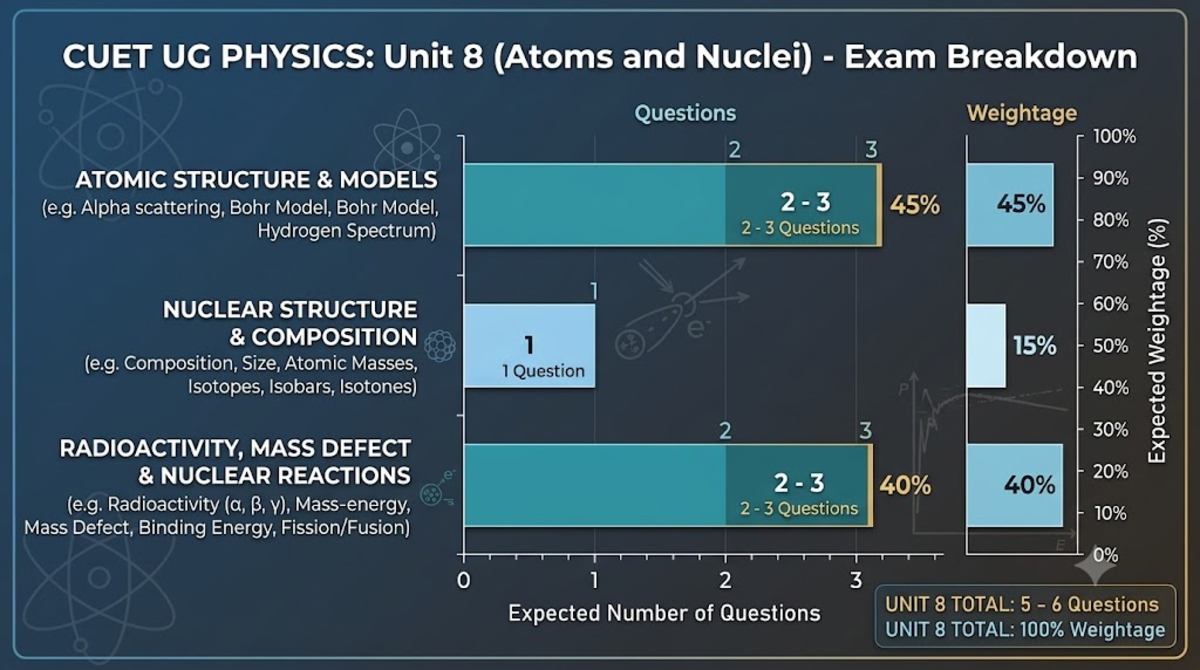
Ans. Yes. Atoms and Nuclei is part of the CUET Physics syllabus 2027, based on NCERT Class 12 Unit 13. It covers the Rutherford nuclear model, Bohr model, hydrogen spectrum, nuclear binding energy, radioactivity (alpha, beta, gamma decay), half-life, and the basic concepts of nuclear fission and fusion. This unit typically contributes 2–3 definition- or concept-based questions per CUET Physics paper. It is a short chapter with reliable return on preparation time.
Ques. Can I choose domain subjects from different streams in CUET 2027?
Ans. Yes. NTA places no restriction on mixing domain subjects from different streams. You can combine Physics (Science), Economics (Commerce), and History (Humanities) as your domain subjects, for example. However, each university sets its own eligibility conditions — most programmes require specific domain subjects for admission. You must check the requirements of every university you plan to apply to before finalising your subject choices.
Ques. How should I cover the full CUET 2027 syllabus in time?
Ans. A four-phase plan works best. Phase 1 (August–December 2026): Complete NCERT Class 11 and 12 reading for all chosen domain subjects alongside board exam preparation. Phase 2 (January–February 2027): Topic-wise CUET MCQ practice for each subject; start daily GAT practice. Phase 3 (March–April 2027): One full-length subject mock per week; analyse errors by unit. Phase 4 (May 2027): Rapid revision of high-weightage units only; short notes review; maintain timed practice stamina. Starting now (August 2026) gives you a strong preparation window ahead of the expected May–June 2027 exam dates.
Ques. What is the marking scheme for CUET 2027?
Ans. Based on the established CUET pattern, each correct answer earns +5 marks and each wrong answer carries a penalty of −1 mark. Questions left unattempted carry no penalty. Each domain subject paper has 50 compulsory MCQs (all questions must be attempted) worth a total of 250 marks per paper. NTA will confirm the exact scheme for 2027 in the official Information Bulletin at cuet.nta.nic.in.
*The article might have information for the previous academic years, which will be updated soon subject to the notification issued by the University/College.


Comments