




CAT LCM and HCF notes, free to download as a 19-page PDF that also covers base systems. Together these carry about 4 to 8 marks in the Quant section.
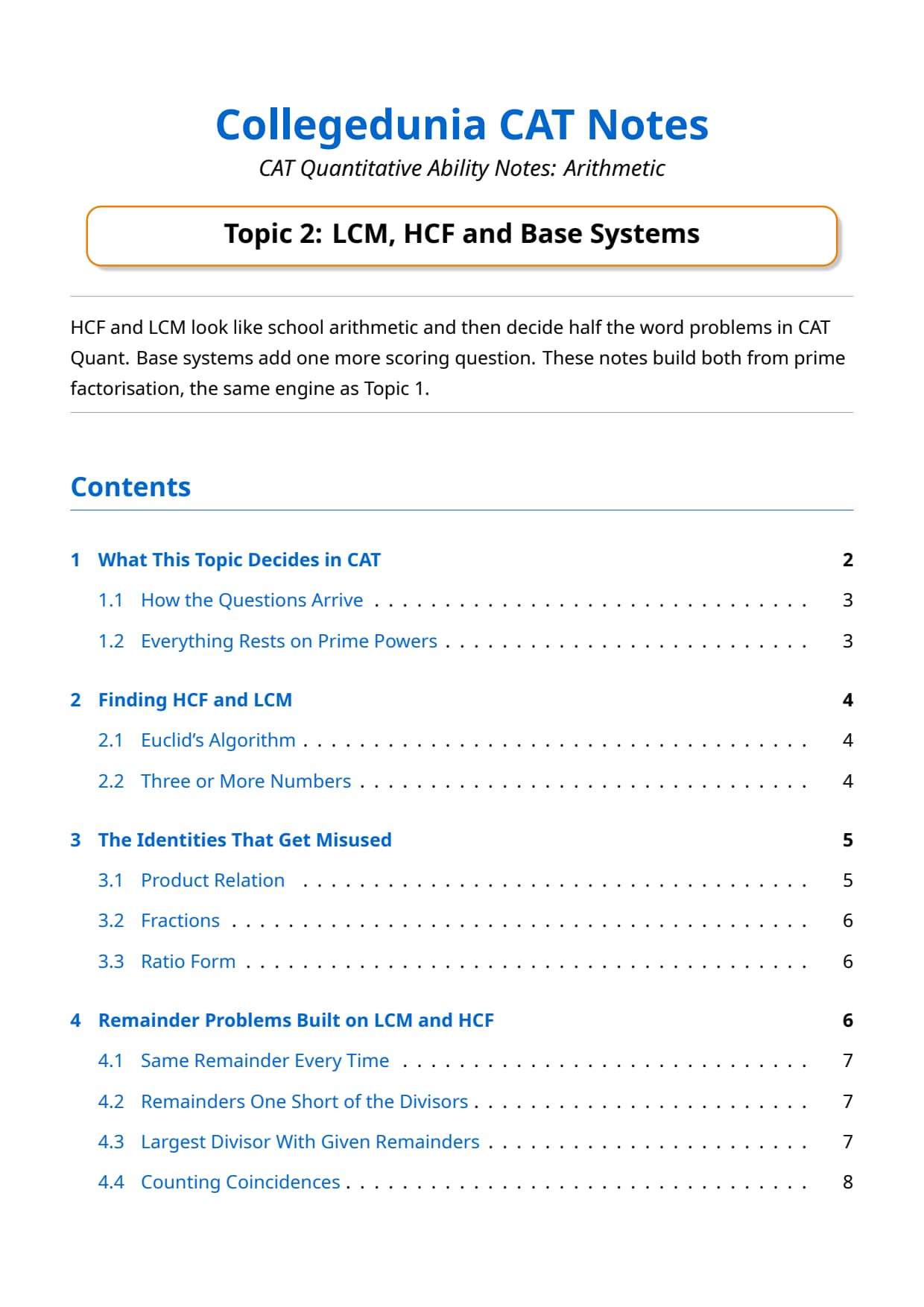
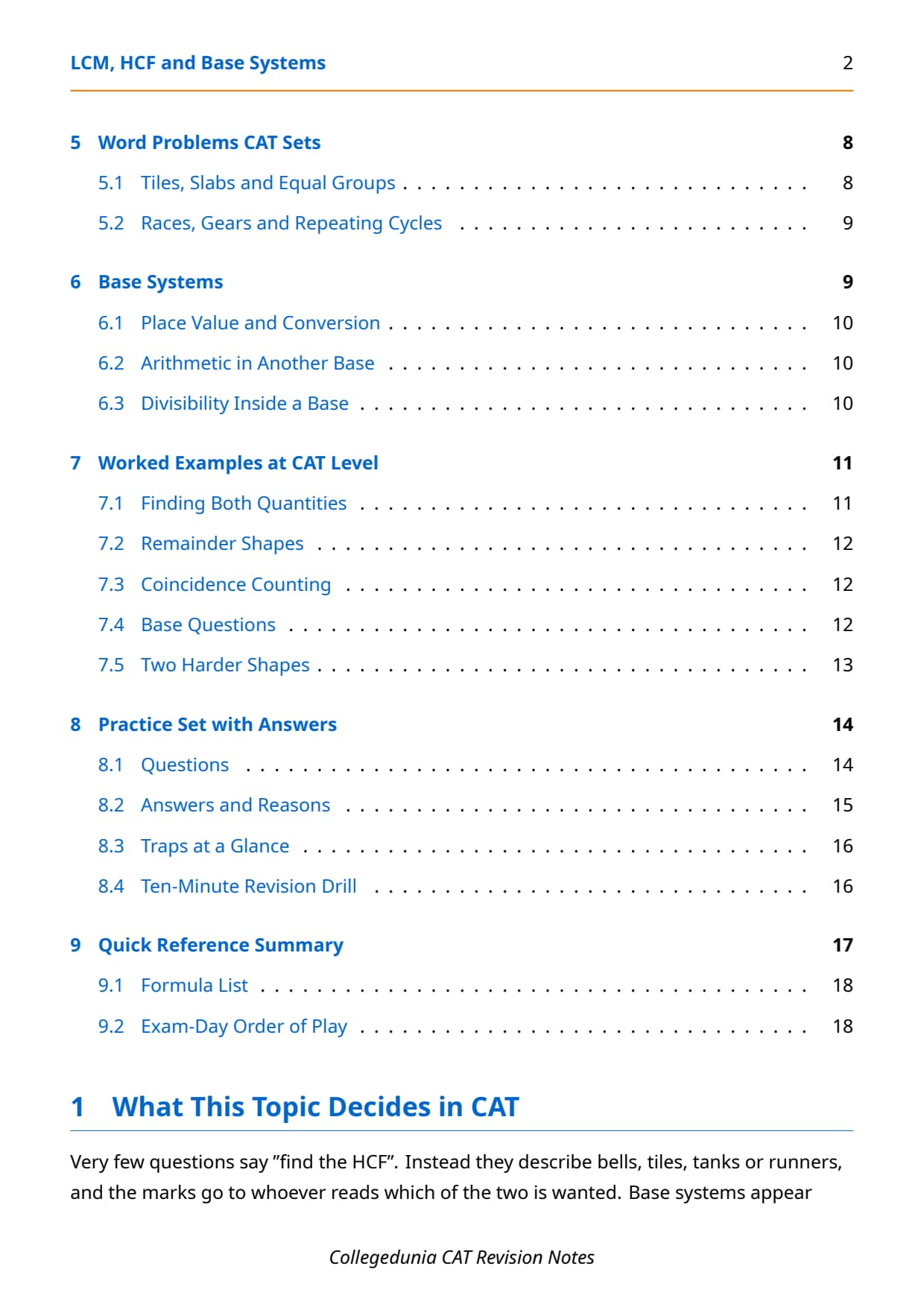
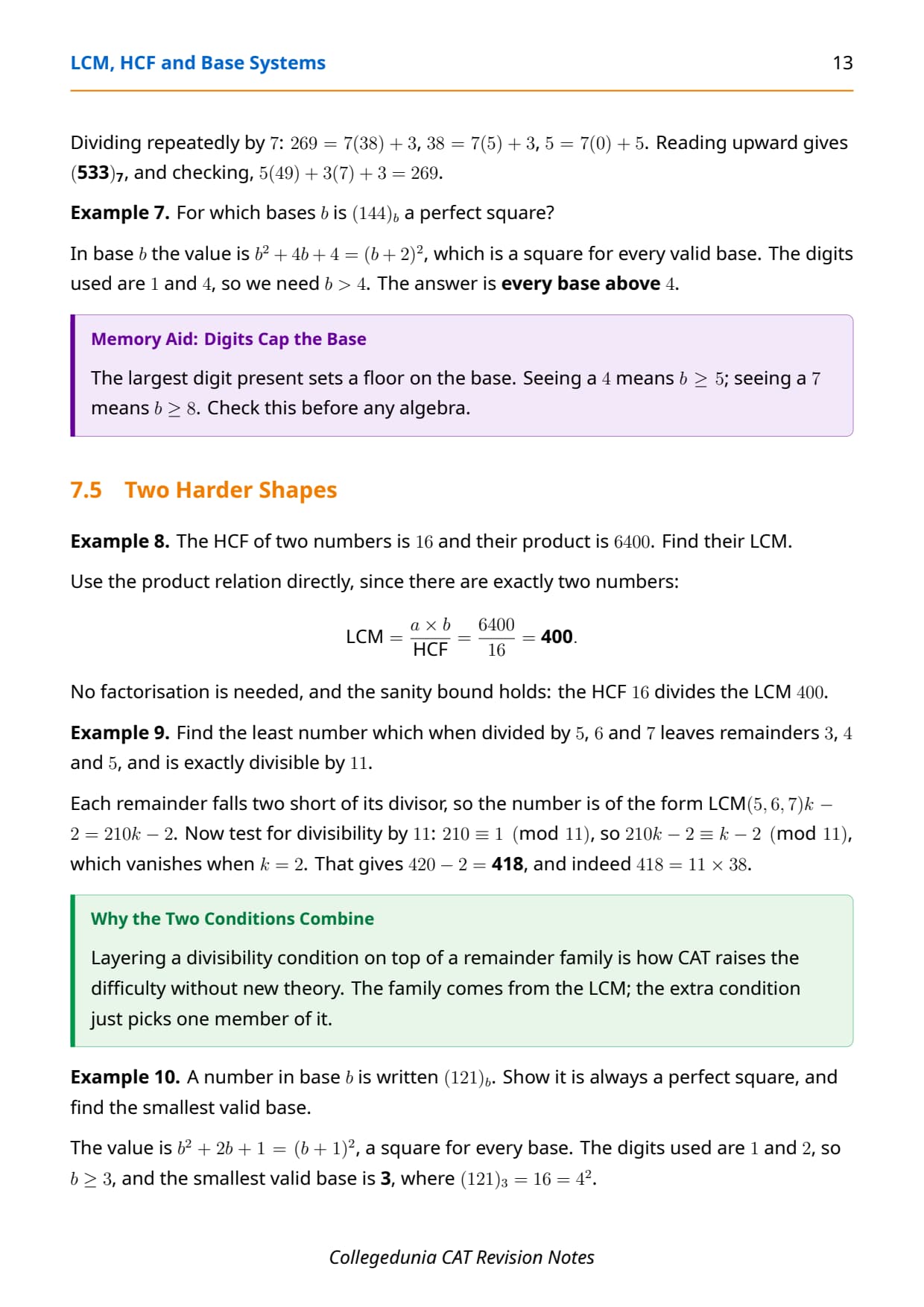
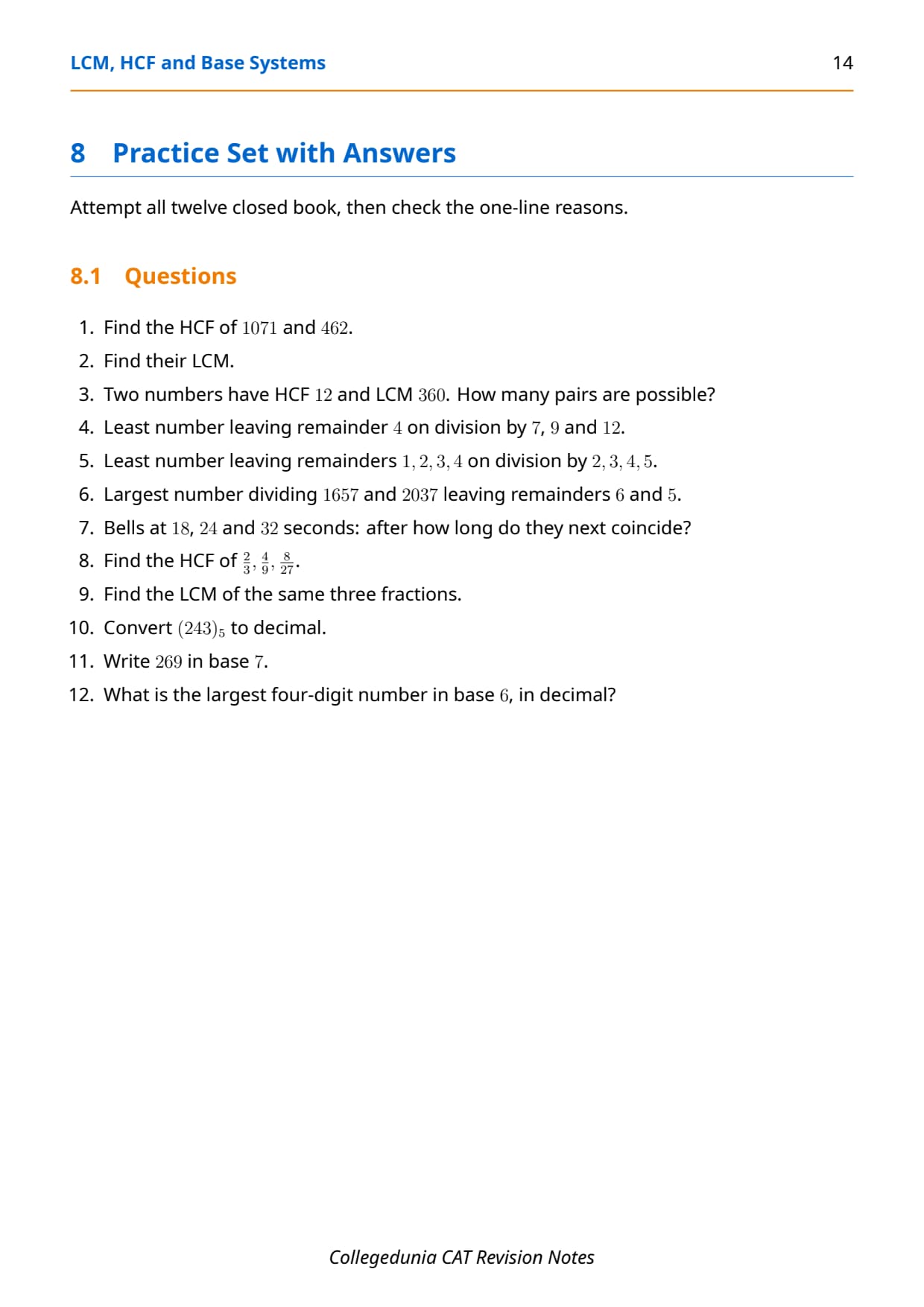
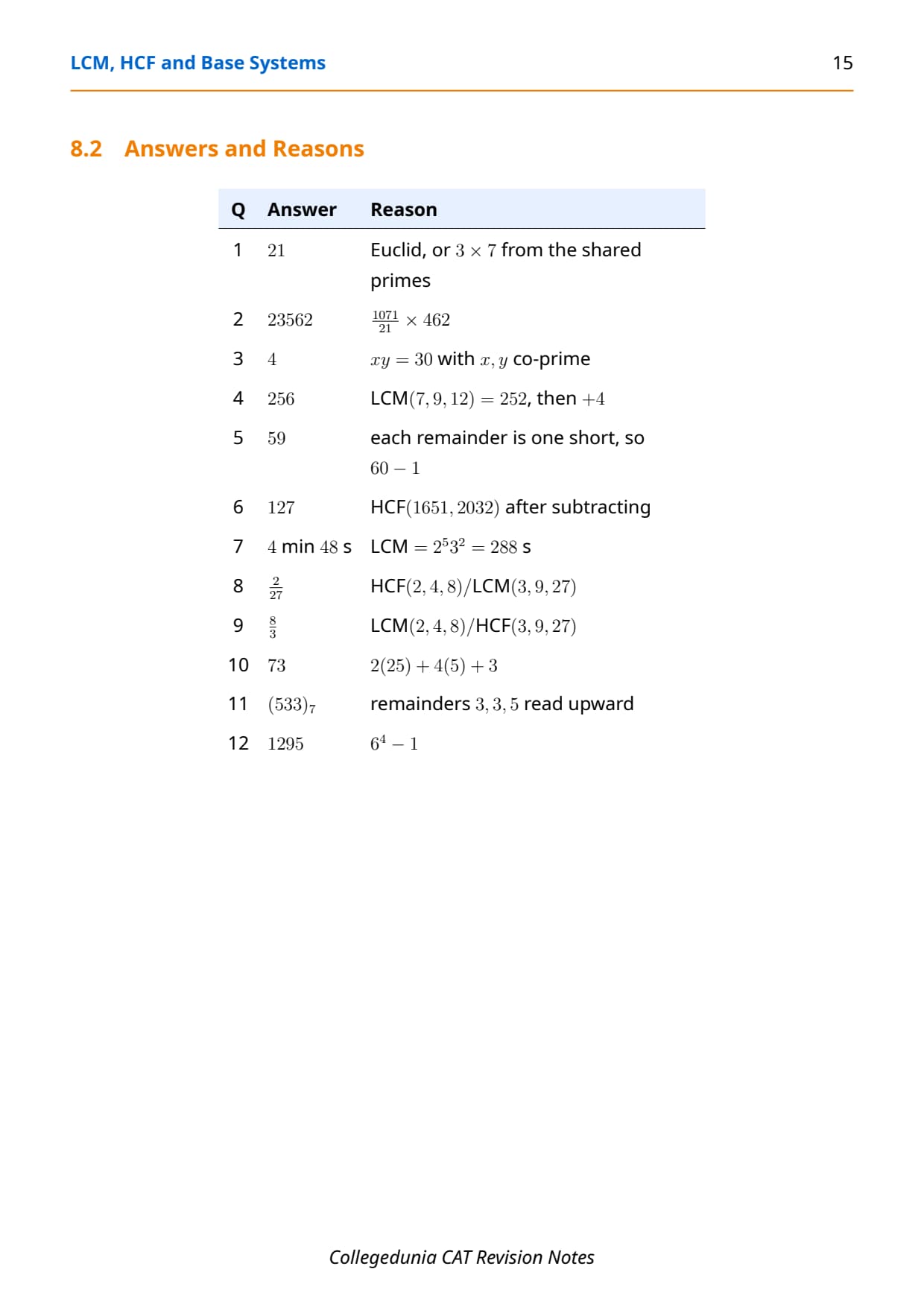
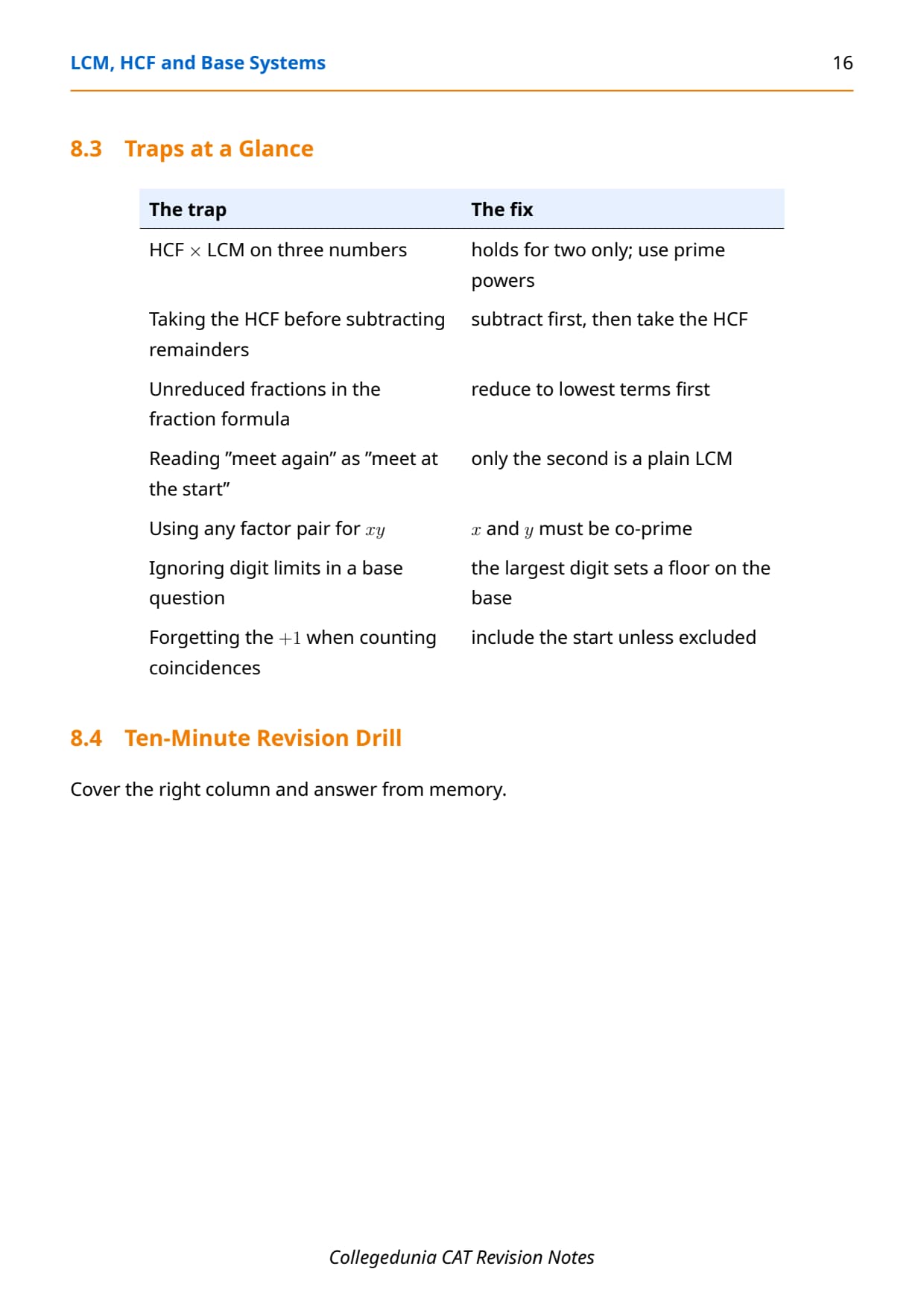
These are typeset revision notes with ten worked examples and a twelve question practice set. They follow on from the number system notes, reusing the same prime-factorisation engine.
Why Reading the Question Decides the Marks
Very few CAT questions say "find the HCF". They describe bells, tiles, tanks or runners, and the marks go to whoever spots which of the two is being asked for.
- Events repeating together, meeting again, tolling together point to LCM
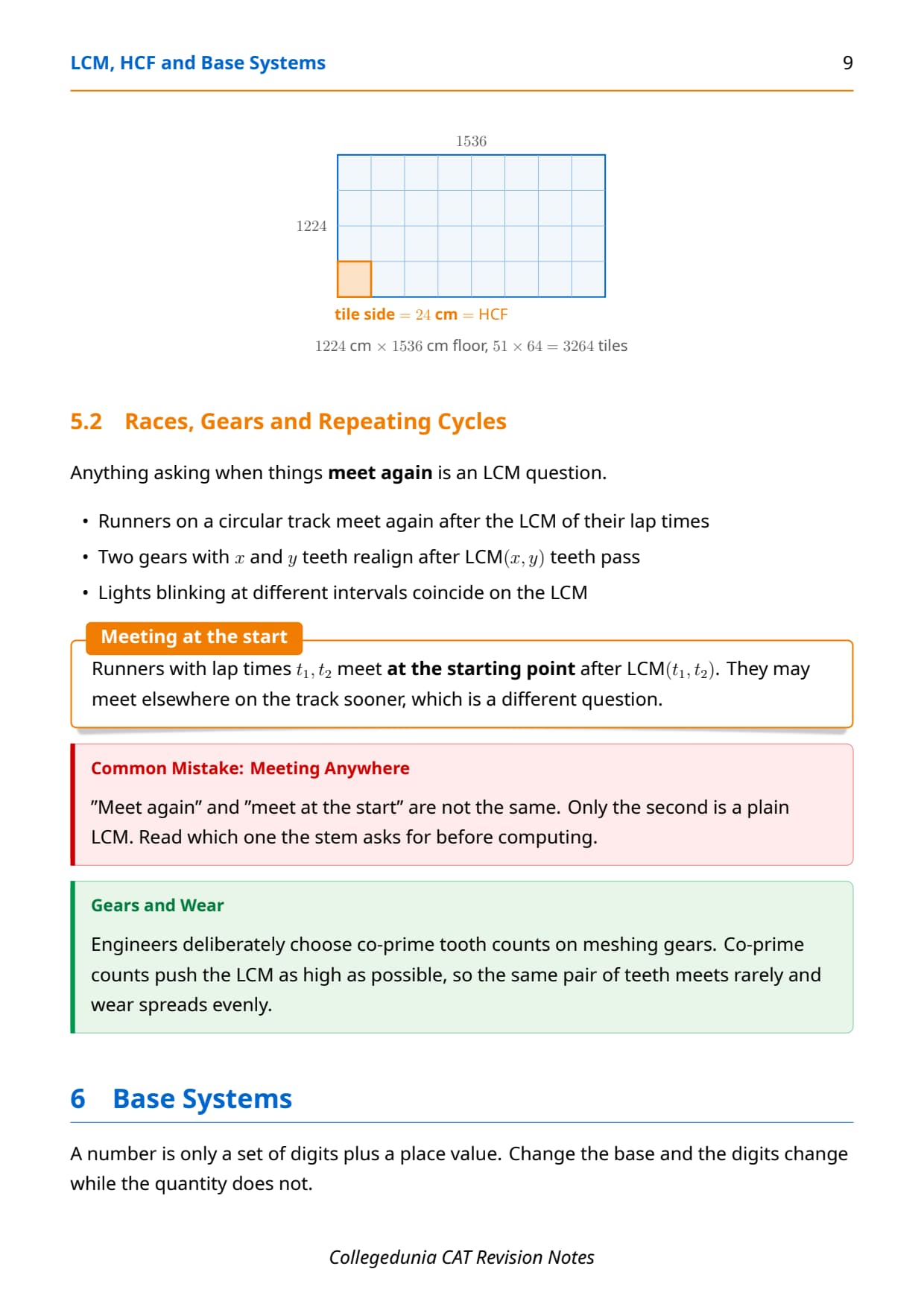
- Largest tile, greatest measure, biggest equal group point to HCF
- A least number leaving fixed remainders is an LCM, then an adjustment
- A largest number dividing several numbers with remainders is an HCF of differences
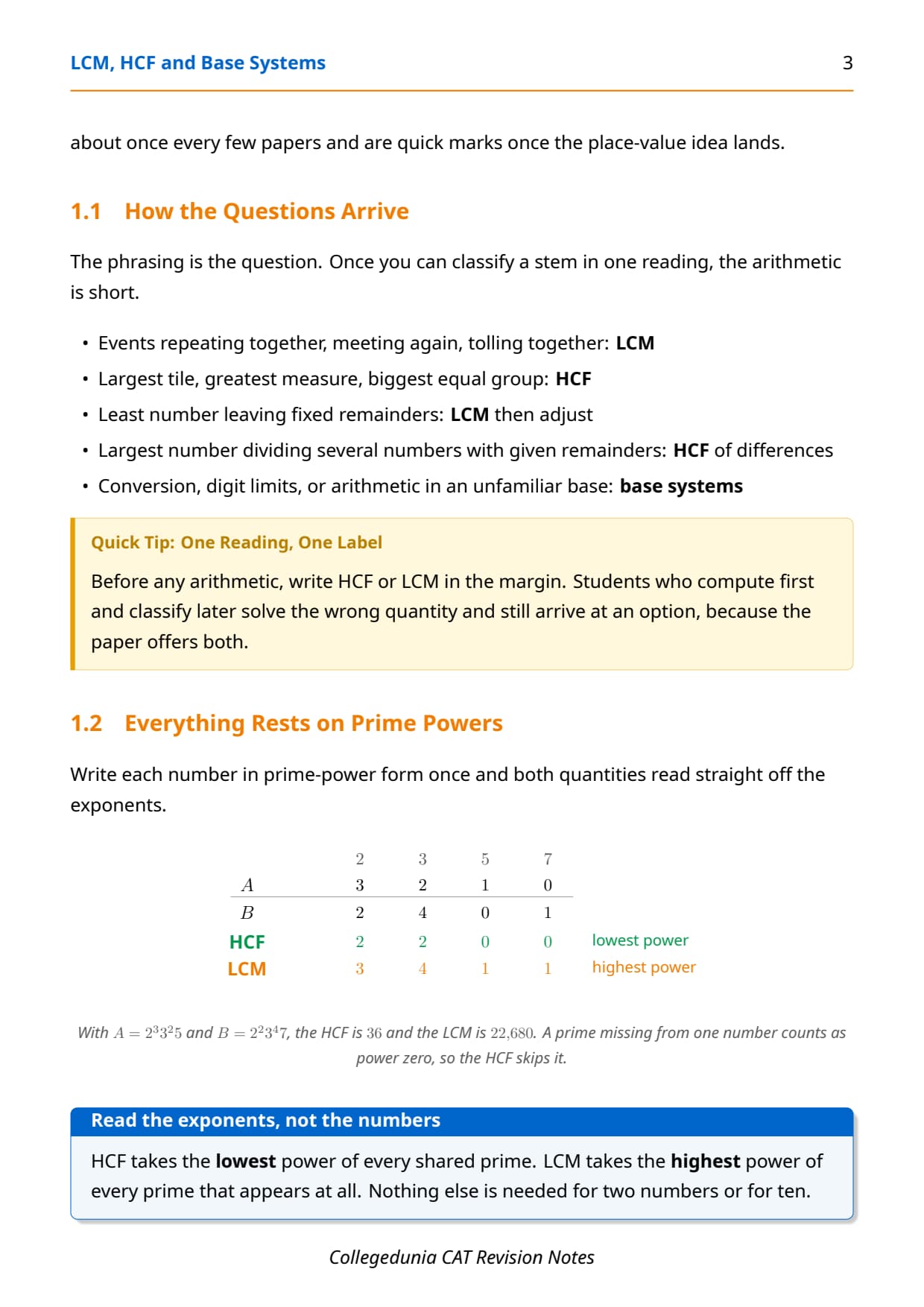
The notes open by sorting these phrasings, because classifying the stem in one reading is what makes the arithmetic short.
Two Ways to Find Them, and When Each Wins
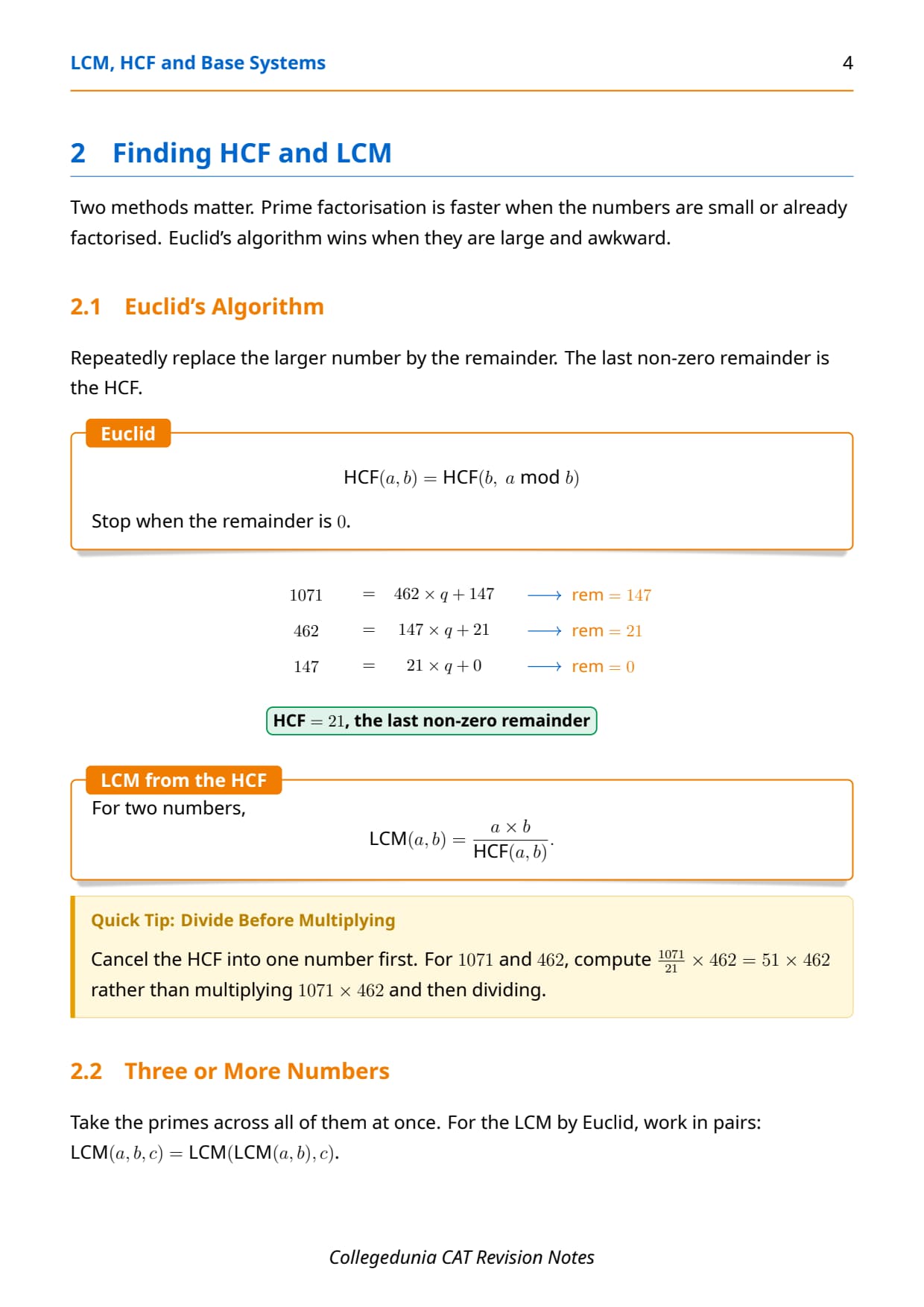
Prime factorisation is faster when numbers are small or already broken down. Euclid's algorithm wins when they are large and awkward.
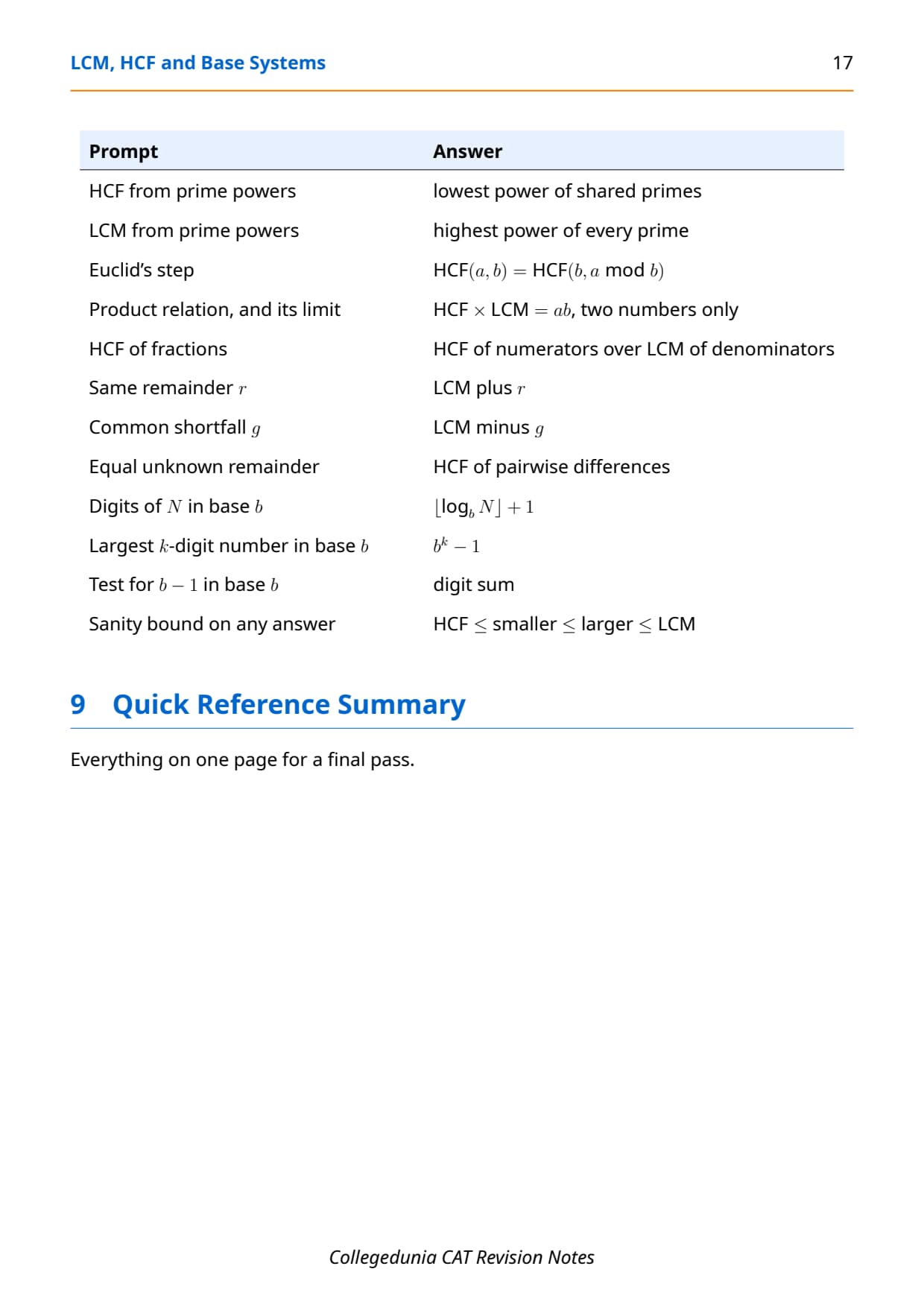
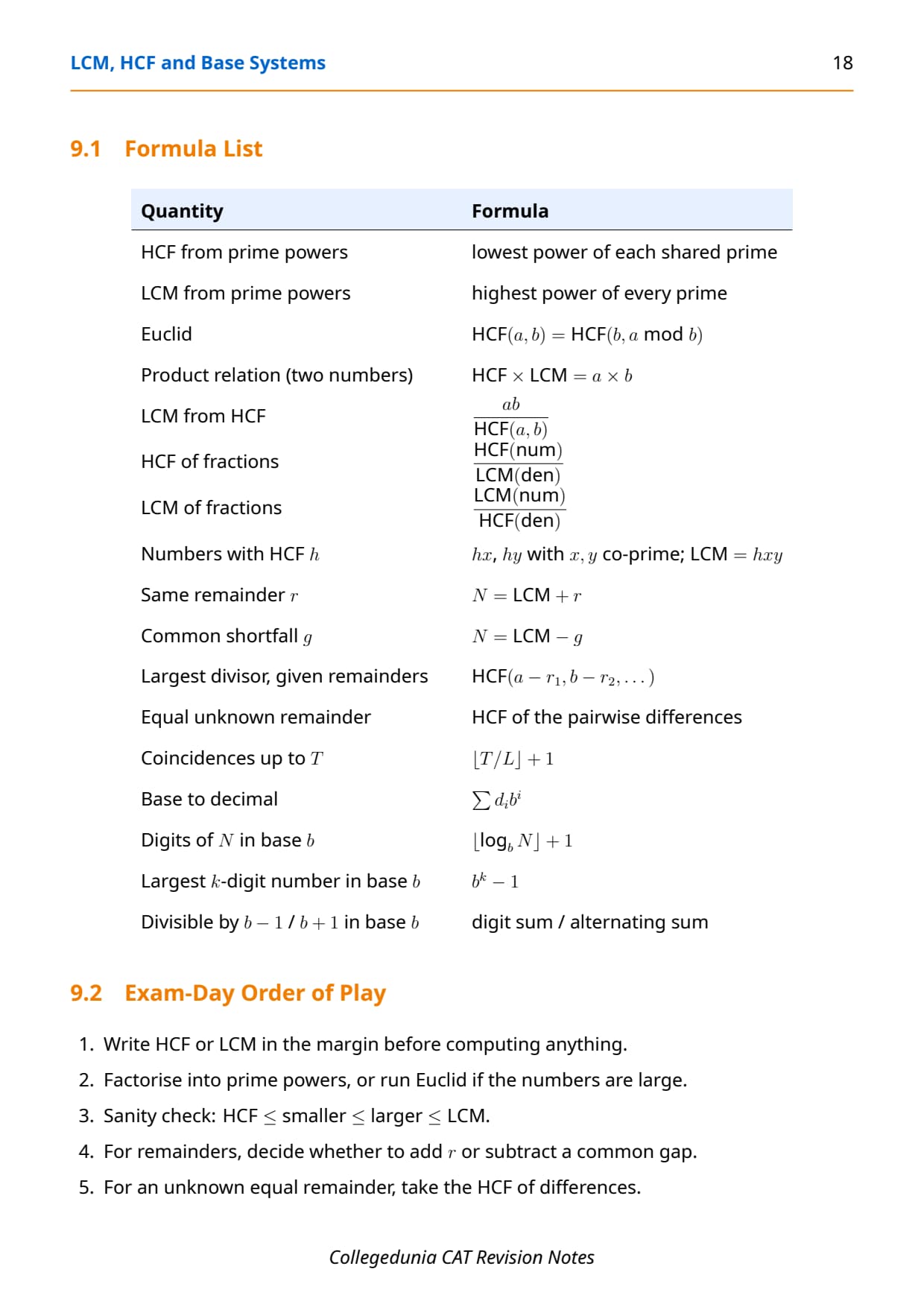
- Prime powers: HCF takes the lowest power of each shared prime, LCM the highest power of every prime present
- Euclid: replace the larger number by the remainder until the remainder is zero
- Cancel before multiplying when going from HCF to LCM, so the numbers stay small
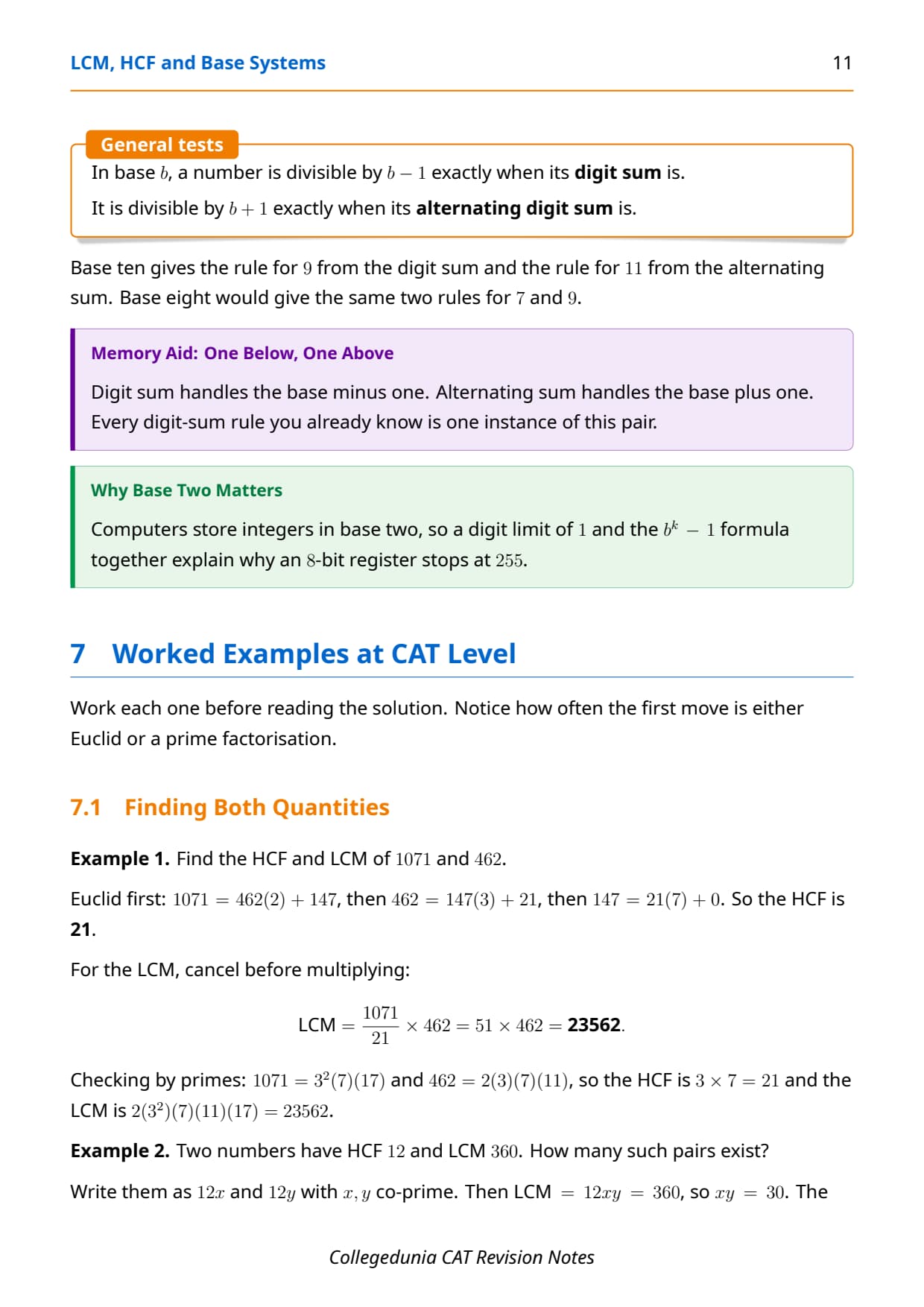
The worked example runs Euclid on 1071 and 462 to reach an HCF of 21, then gets the LCM as 51 times 462 rather than multiplying the two originals.
The Identities Students Misuse
Three results carry most of the marks and two have conditions that get dropped under time pressure.
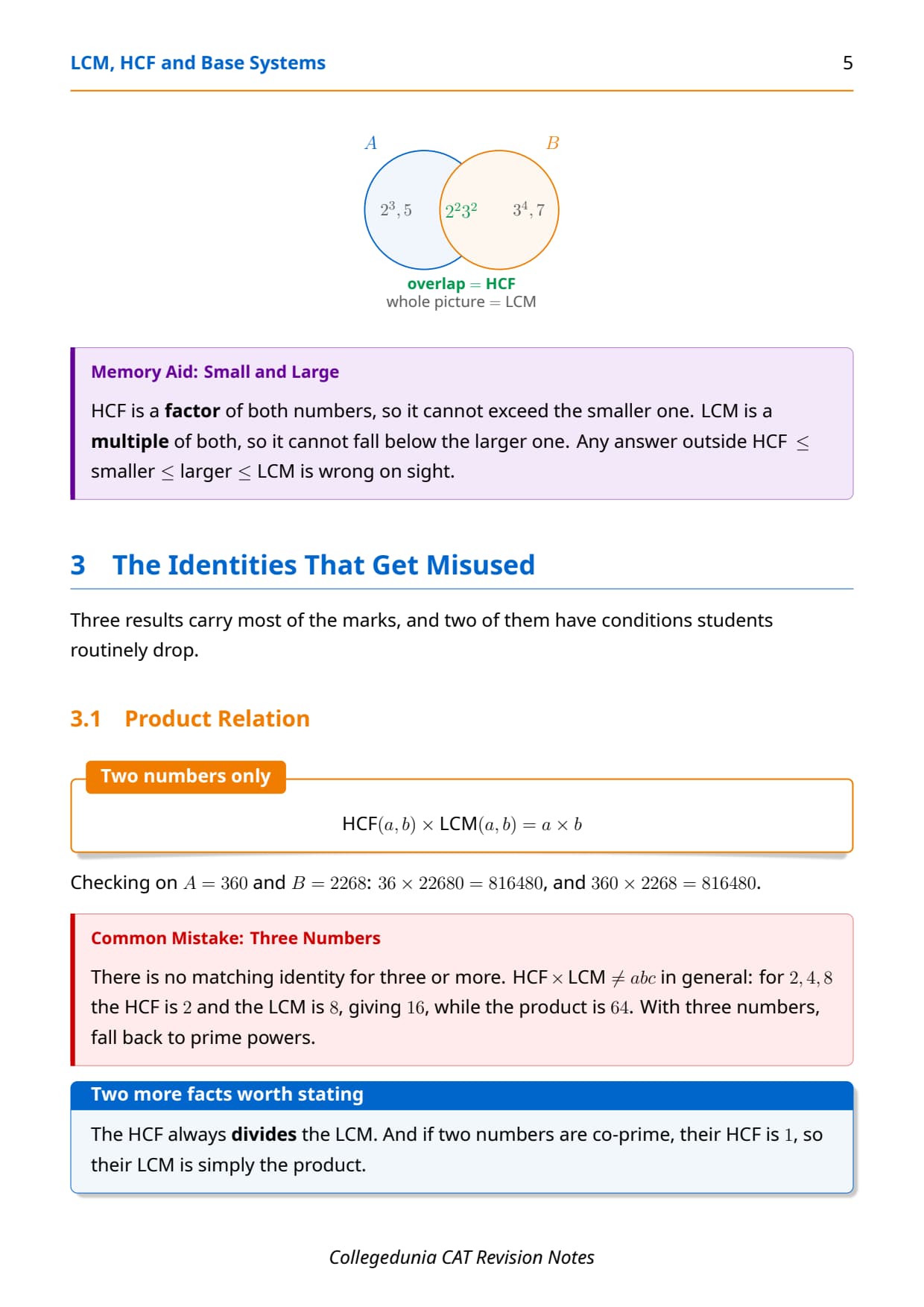
- HCF times LCM equals the product, for two numbers only
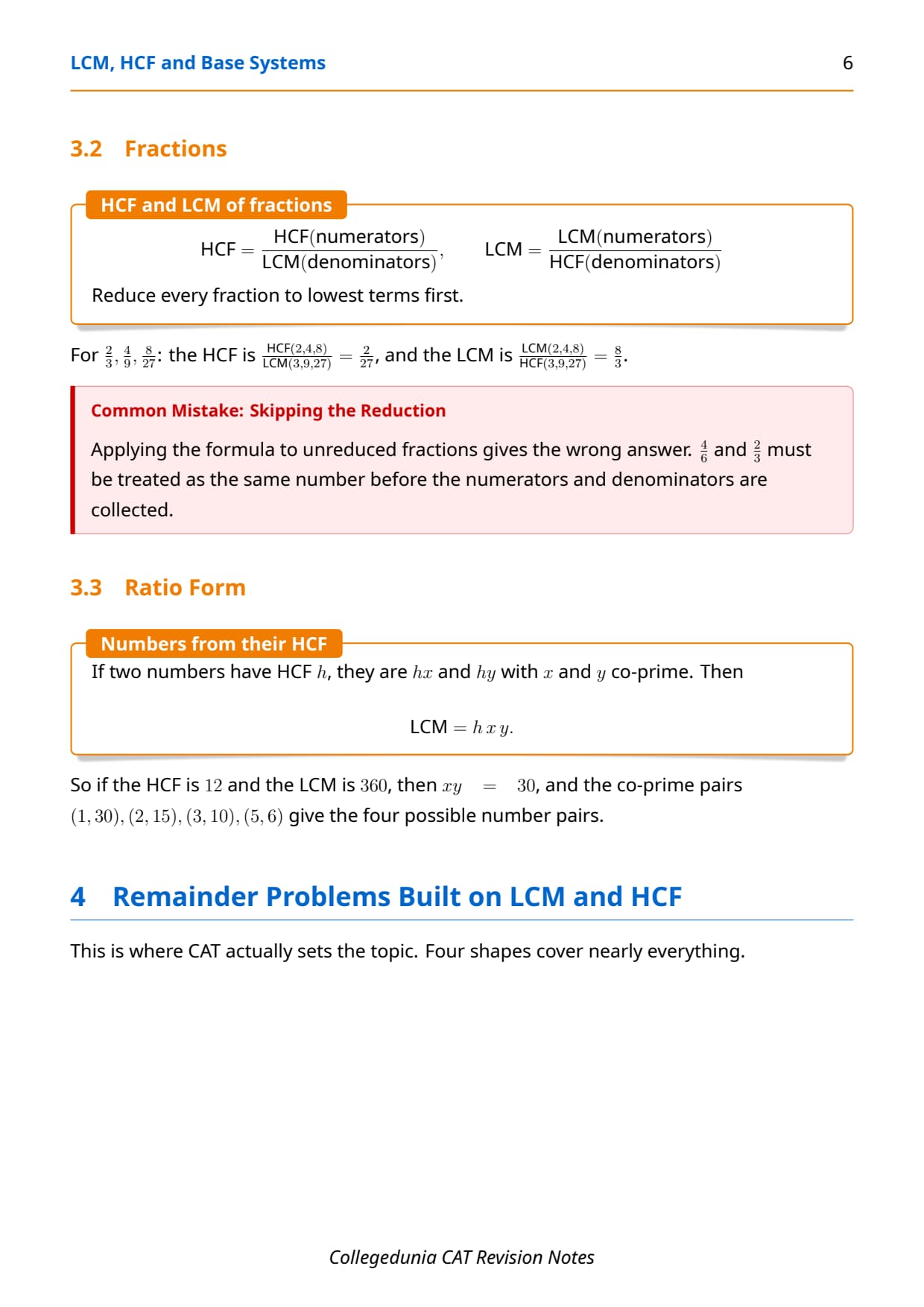
- HCF of fractions is HCF of numerators over LCM of denominators, after reducing
- Numbers with HCF h are h times x and h times y with x and y co-prime
The notes show the counter-example for the first: for 2, 4 and 8 the HCF is 2 and the LCM is 8, giving 16, while the product is 64. With three numbers you go back to prime powers.
Four Remainder Shapes That Cover Almost Everything
This is where CAT actually sets the topic, and each shape has a one-line rule.
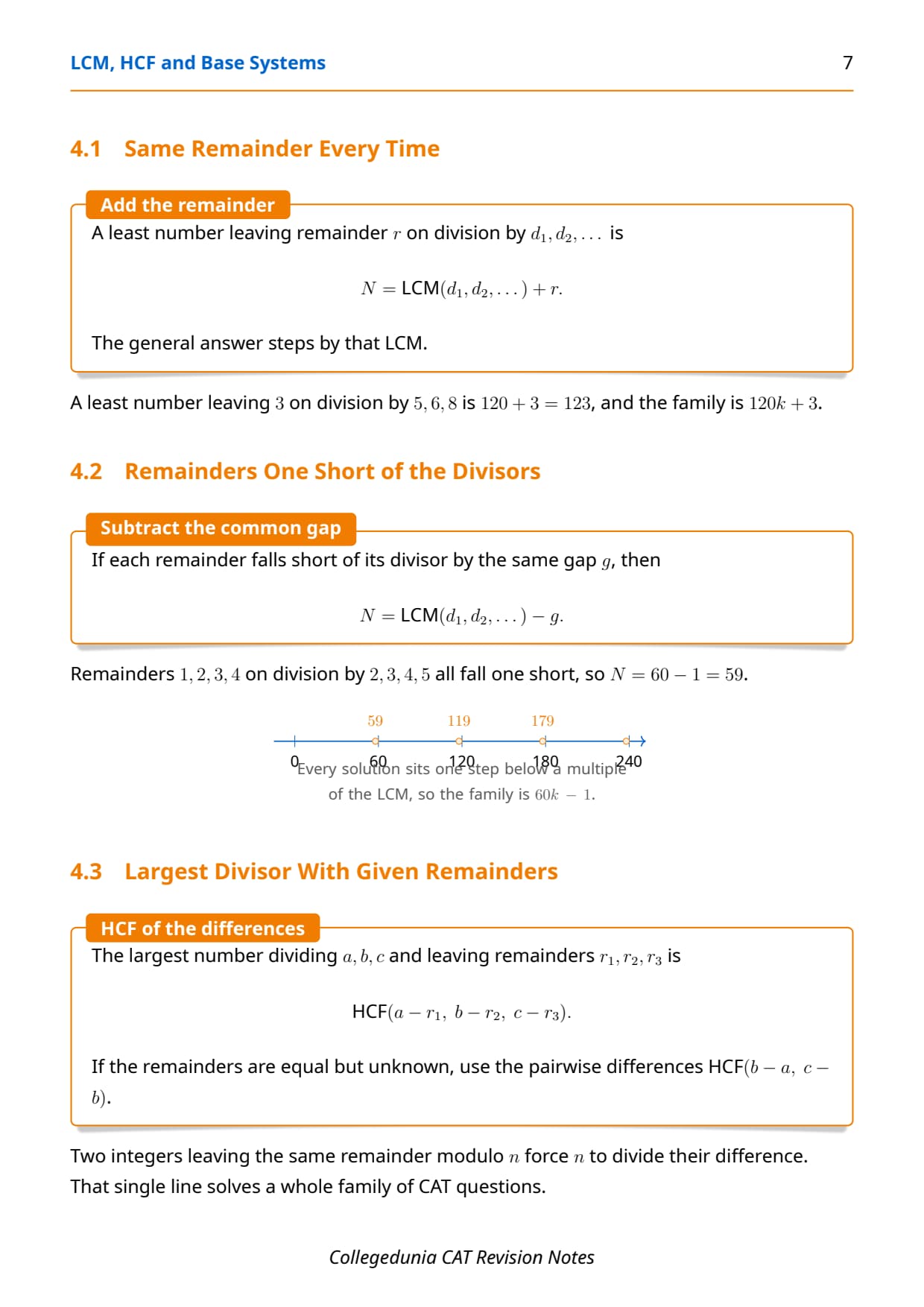
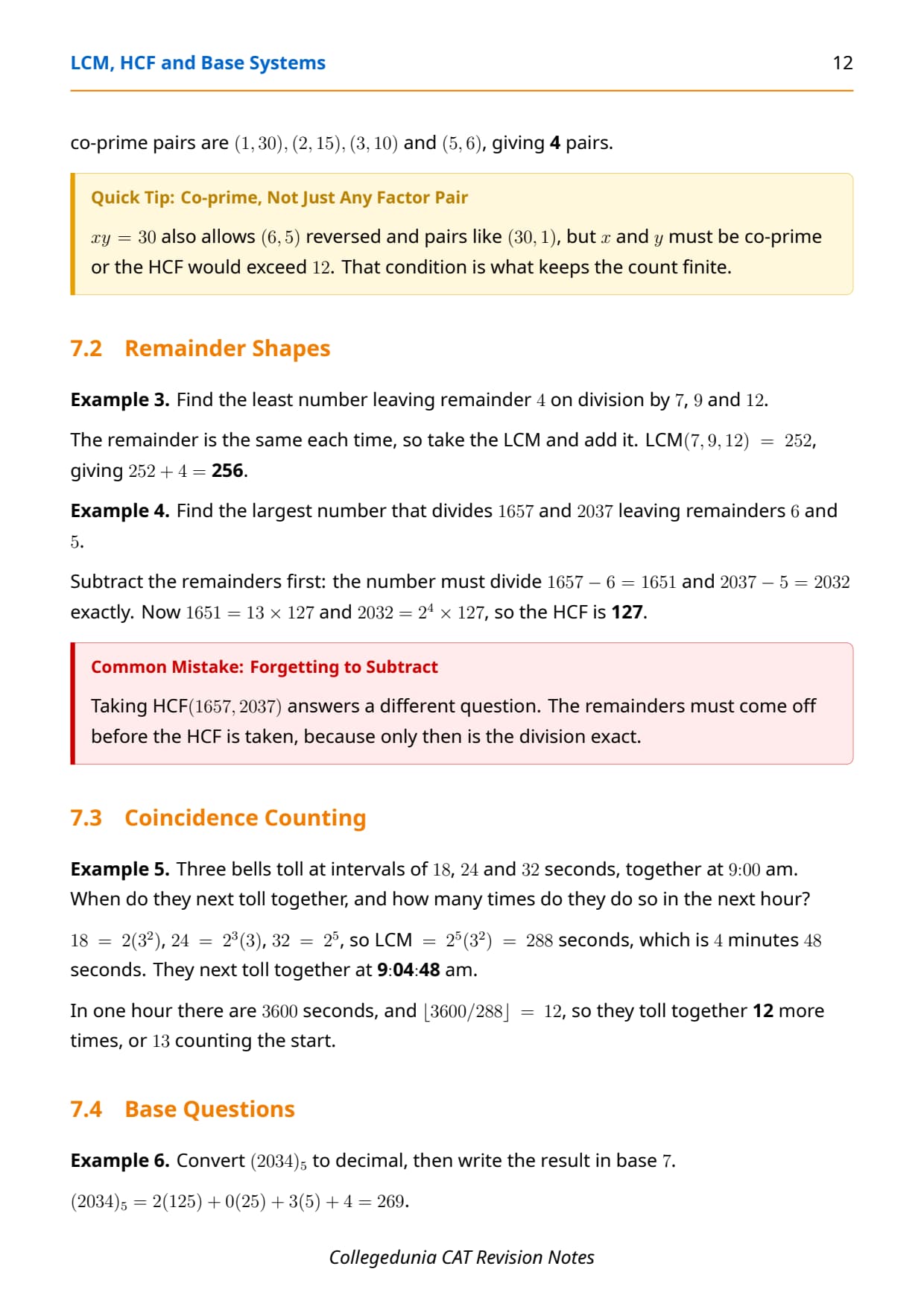
- Same remainder each time: the LCM plus that remainder
- Every remainder falling short by the same gap: the LCM minus the gap
- Largest divisor leaving given remainders: subtract the remainders, then take the HCF
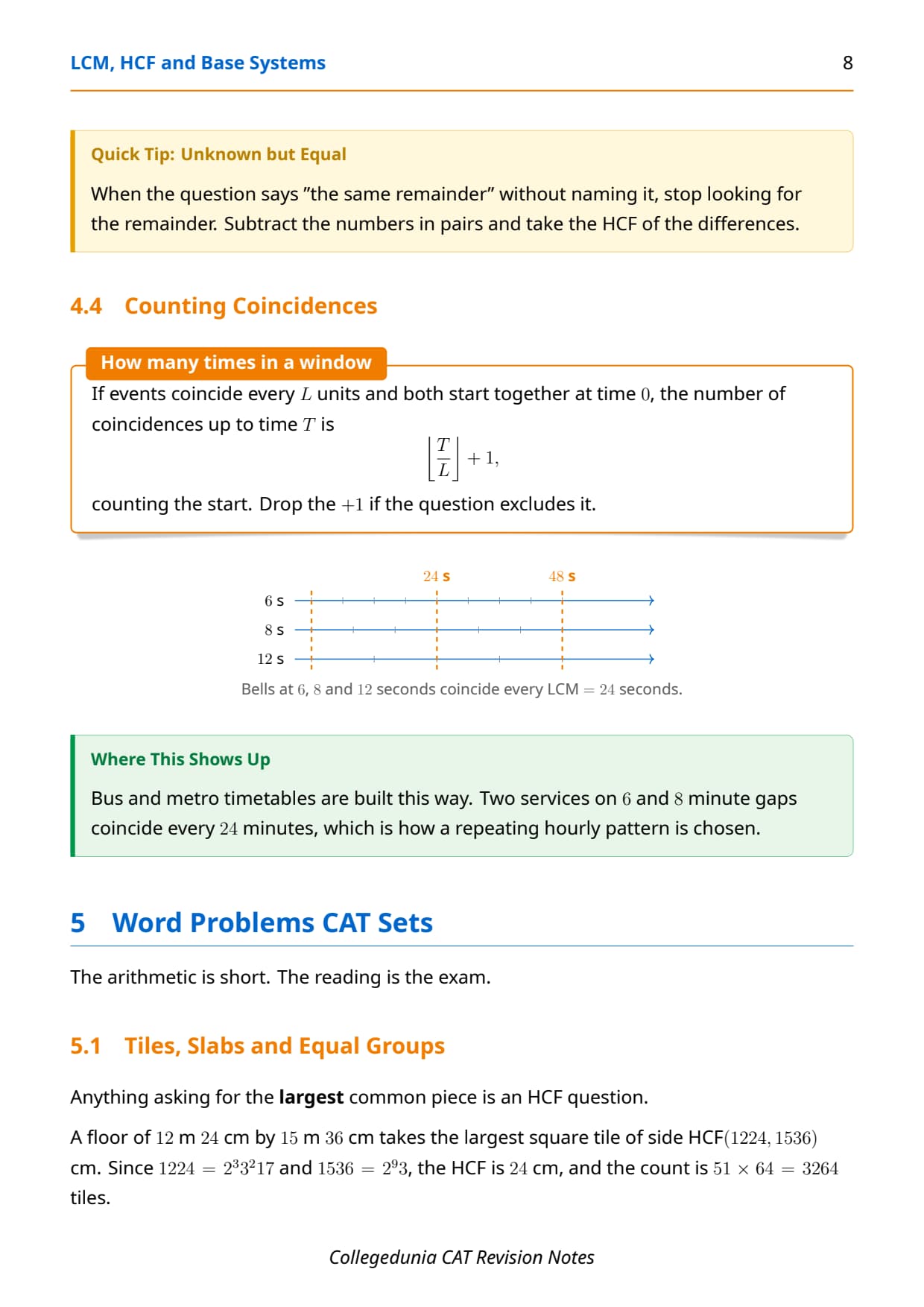
- Counting coincidences up to a time: divide by the LCM and add one for the start
The third is the one worth drilling. When a question says "the same remainder" without naming it, stop hunting for the remainder and take the HCF of the pairwise differences.
Watch HCF and LCM Solved Step by Step
Source: Rodha
Base Systems in One Sitting
A number is only digits plus a place value. Change the base and the digits change while the quantity does not.
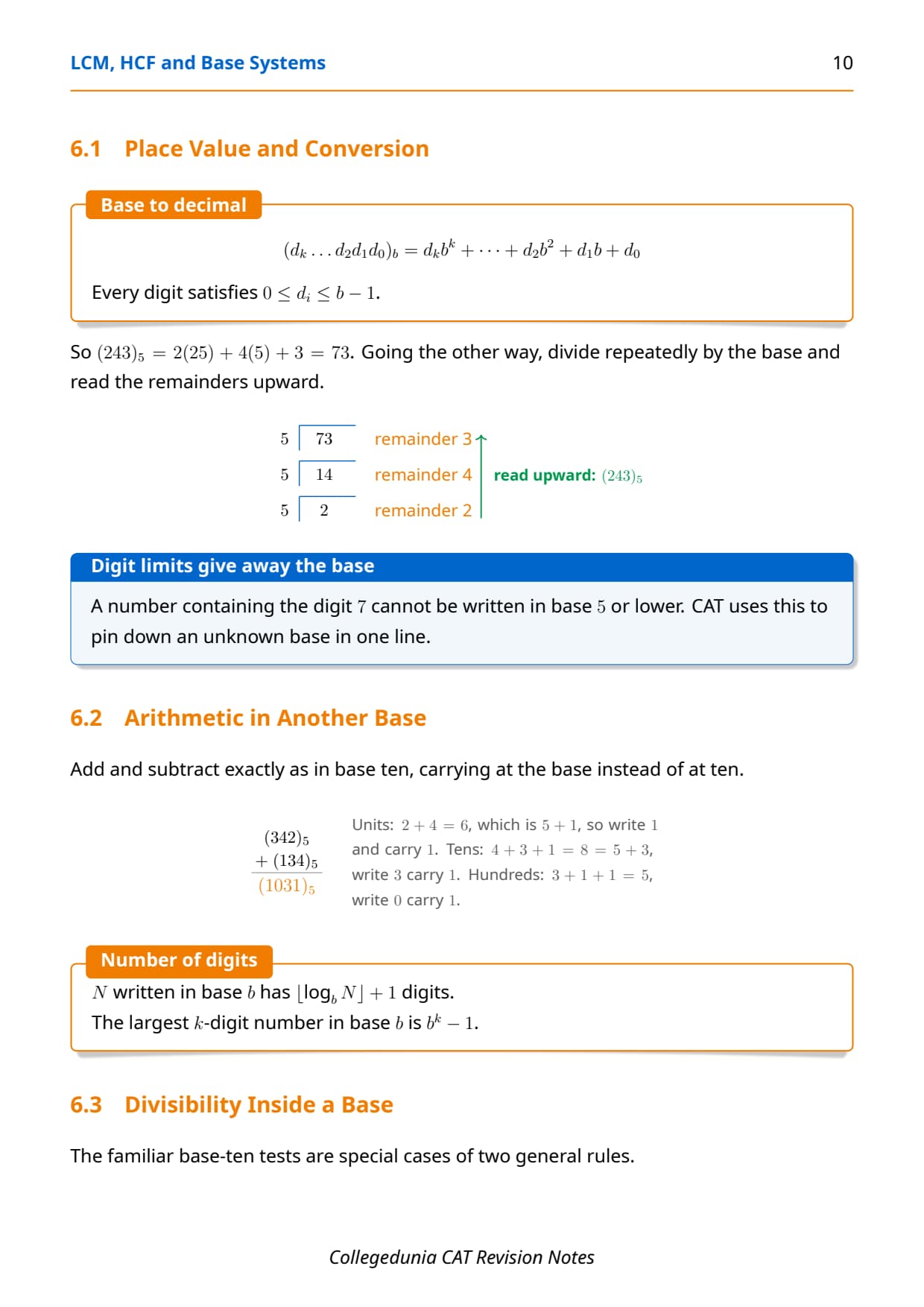
- Convert to decimal by place value, and back by dividing repeatedly and reading remainders upward
- Every digit must be smaller than the base, so the largest digit present sets a floor on it
- A number has as many digits as the log of it in that base, plus one
- In base b, the digit sum tests divisibility by b minus one and the alternating sum tests b plus one
That last pair is why the familiar tests for 9 and 11 work in base ten. They are one instance of a general rule, not two separate facts to memorise.
How to Revise This Topic
The last four pages are built for a final pass: a formula list, a traps table and a ten-minute drill.
- Write HCF or LCM in the margin before computing anything
- Sanity check every answer: HCF is at most the smaller number, LCM at least the larger
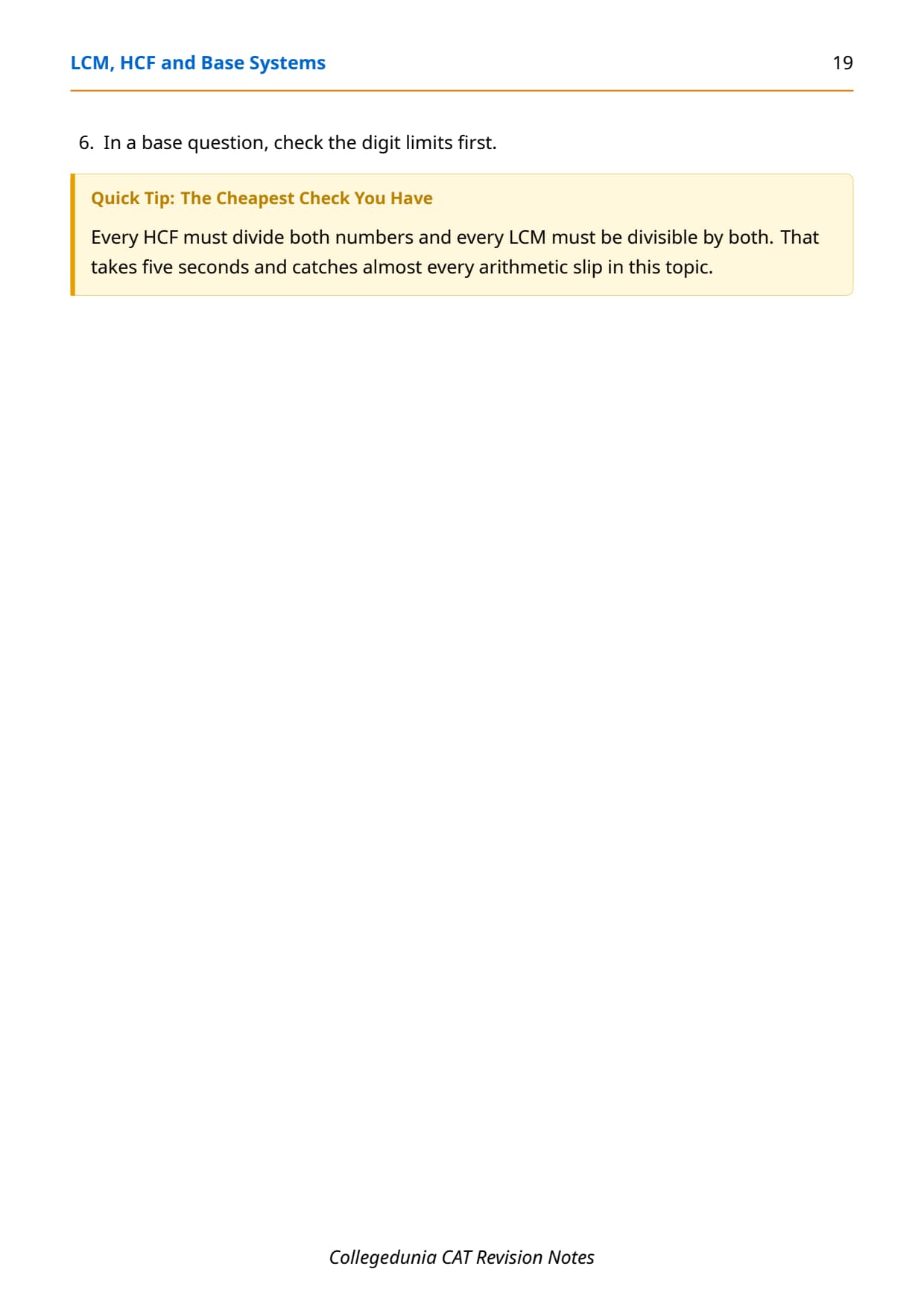
- Confirm the HCF divides both numbers and the LCM is divisible by both
- Attempt the practice set closed book, then read the one-line reasons
That sanity bound takes five seconds and catches almost every arithmetic slip in this topic.
CAT LCM HCF and Base Systems Notes FAQs
Ques. How many marks do LCM, HCF and base systems carry in CAT?
Ans. Together they usually account for about 4 to 8 marks. LCM and HCF appear inside Arithmetic word problems most years, while base systems turn up roughly once every few papers as a quick single question.
Ques. Does HCF times LCM equal the product for three numbers?
Ans. No, and this is a common lost mark. The identity holds for two numbers only. For 2, 4 and 8 the HCF is 2 and the LCM is 8, giving 16, while the product is 64. With three or more numbers, work from prime powers instead.
Ques. When a question says the same remainder without naming it, what do I do?
Ans. Take the HCF of the pairwise differences of the numbers. If two integers leave the same remainder on division by n, then n divides their difference, so the remainder itself is never needed.
Ques. Are base systems worth preparing for CAT?
Ans. Yes, because the return is high for the time spent. Place value, digit limits and the two general divisibility tests cover nearly every base question CAT has set, and the notes fit all of it into one section.
Ques. Can these notes be downloaded free?
Ans. Yes. The full 19 page PDF can be read on this page and downloaded at no cost, so students can print it or keep it on a phone for revision.



Comments