



CAT Number System notes, free to download as a 22-page PDF with 11 diagrams and 10 solved examples. Factors and remainders alone are worth about 6 to 12 marks in Quant.
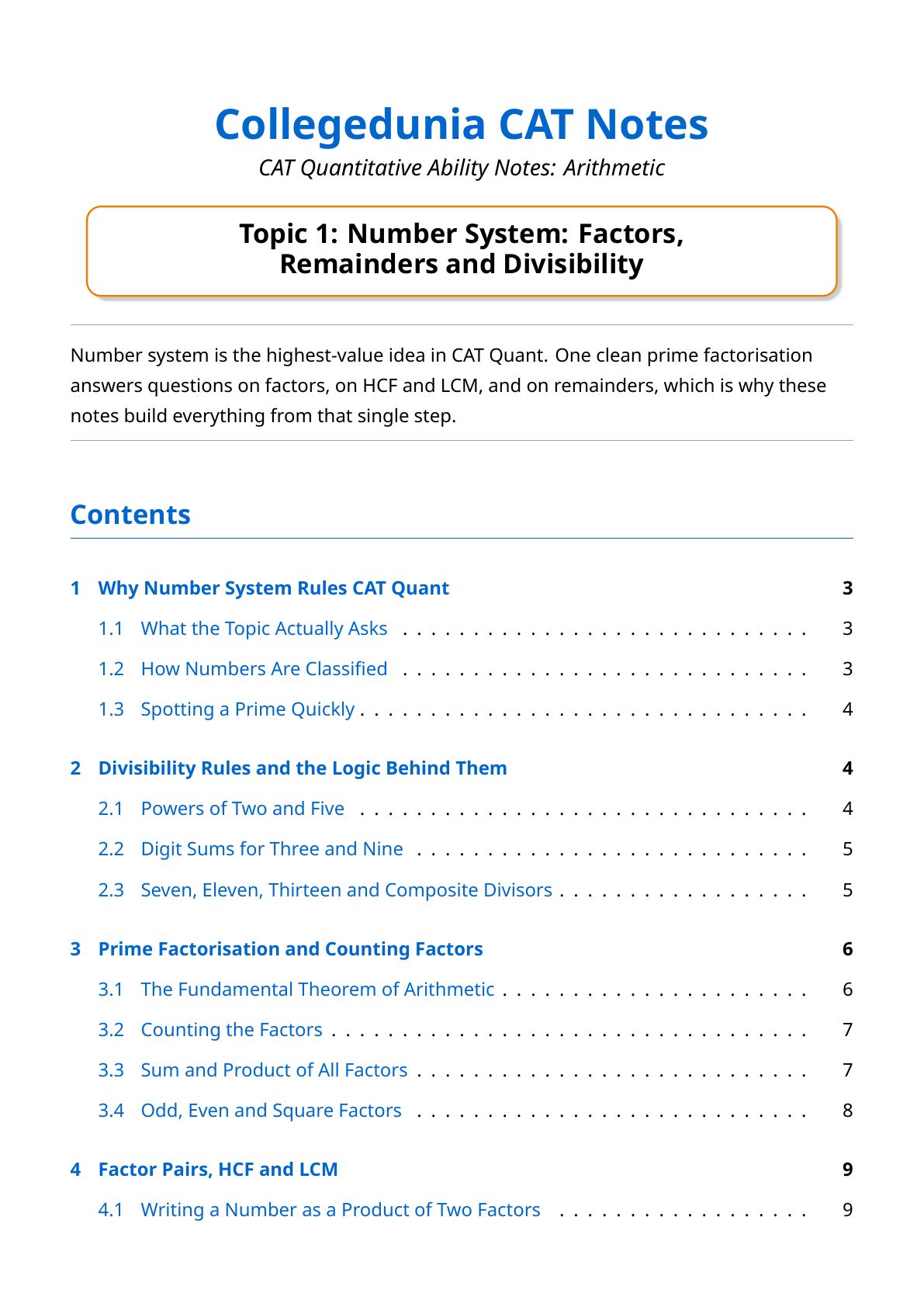
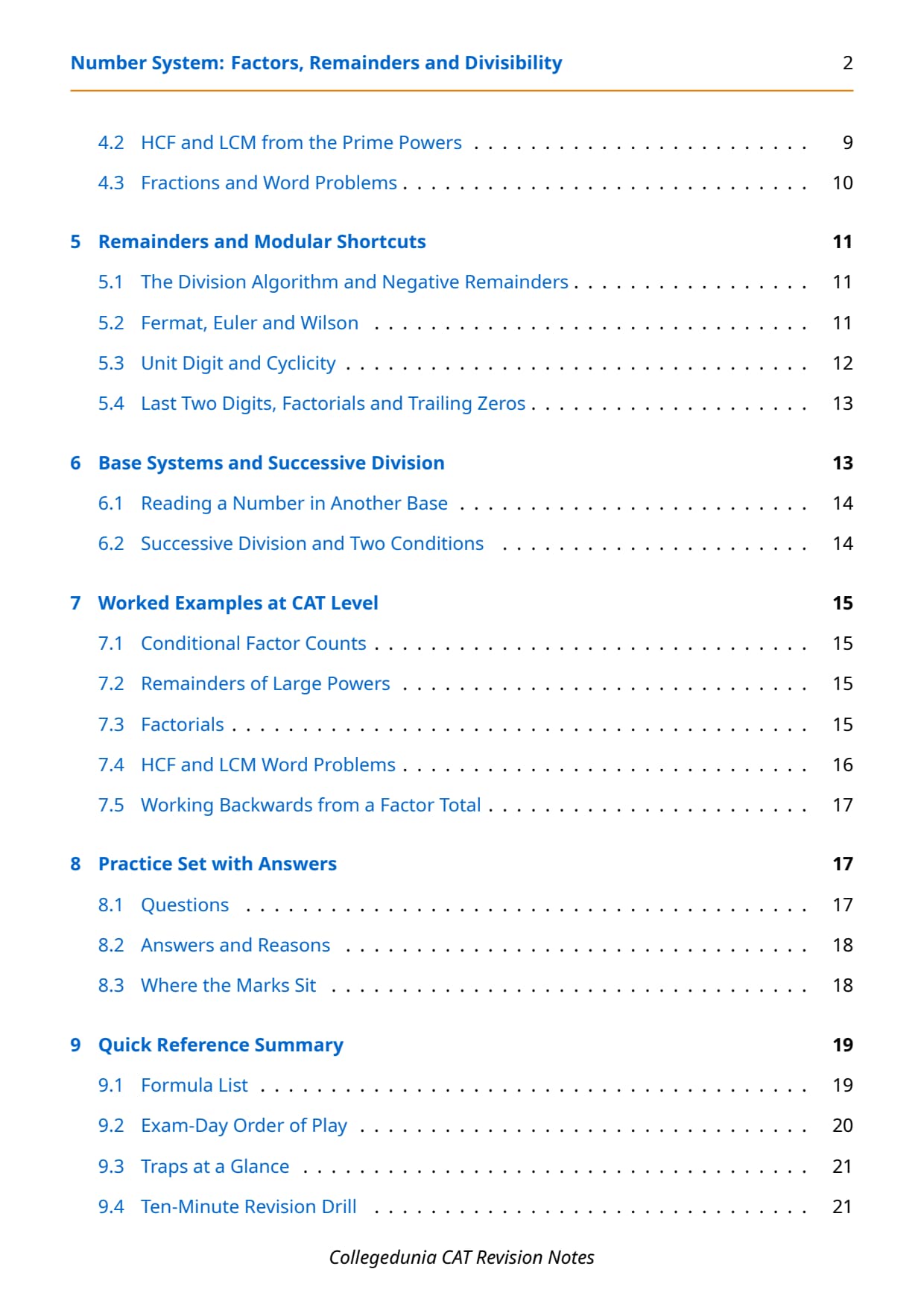
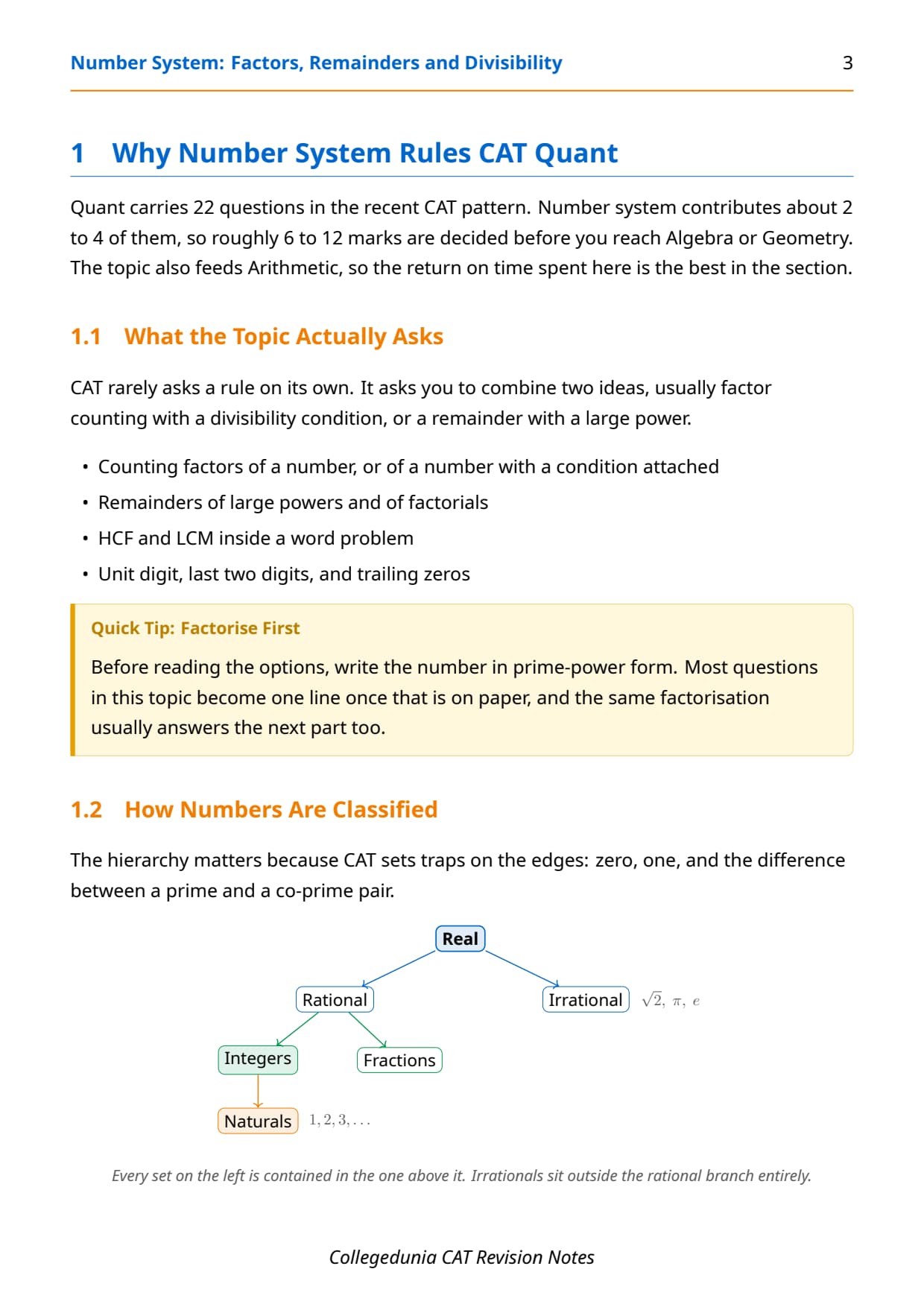
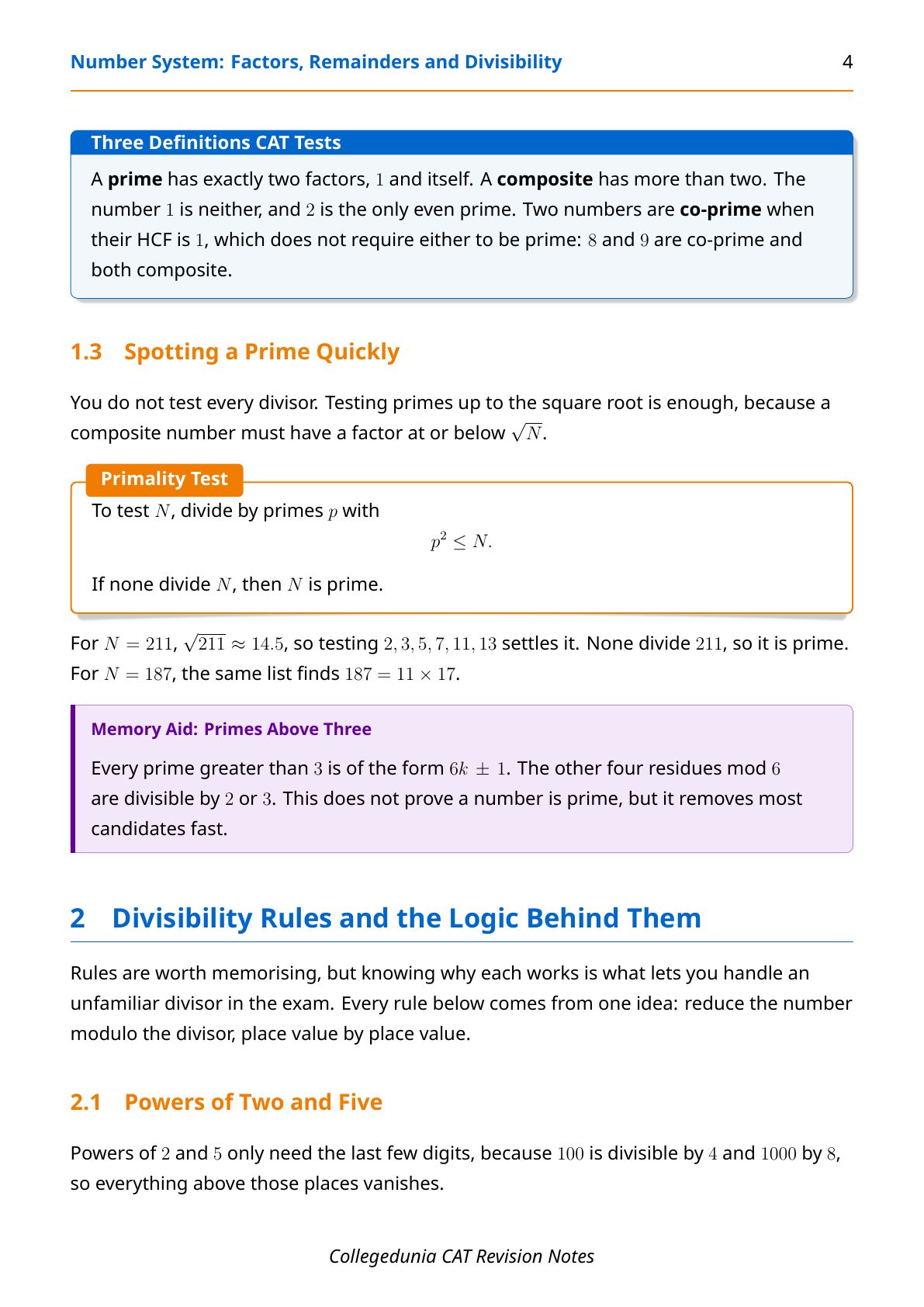
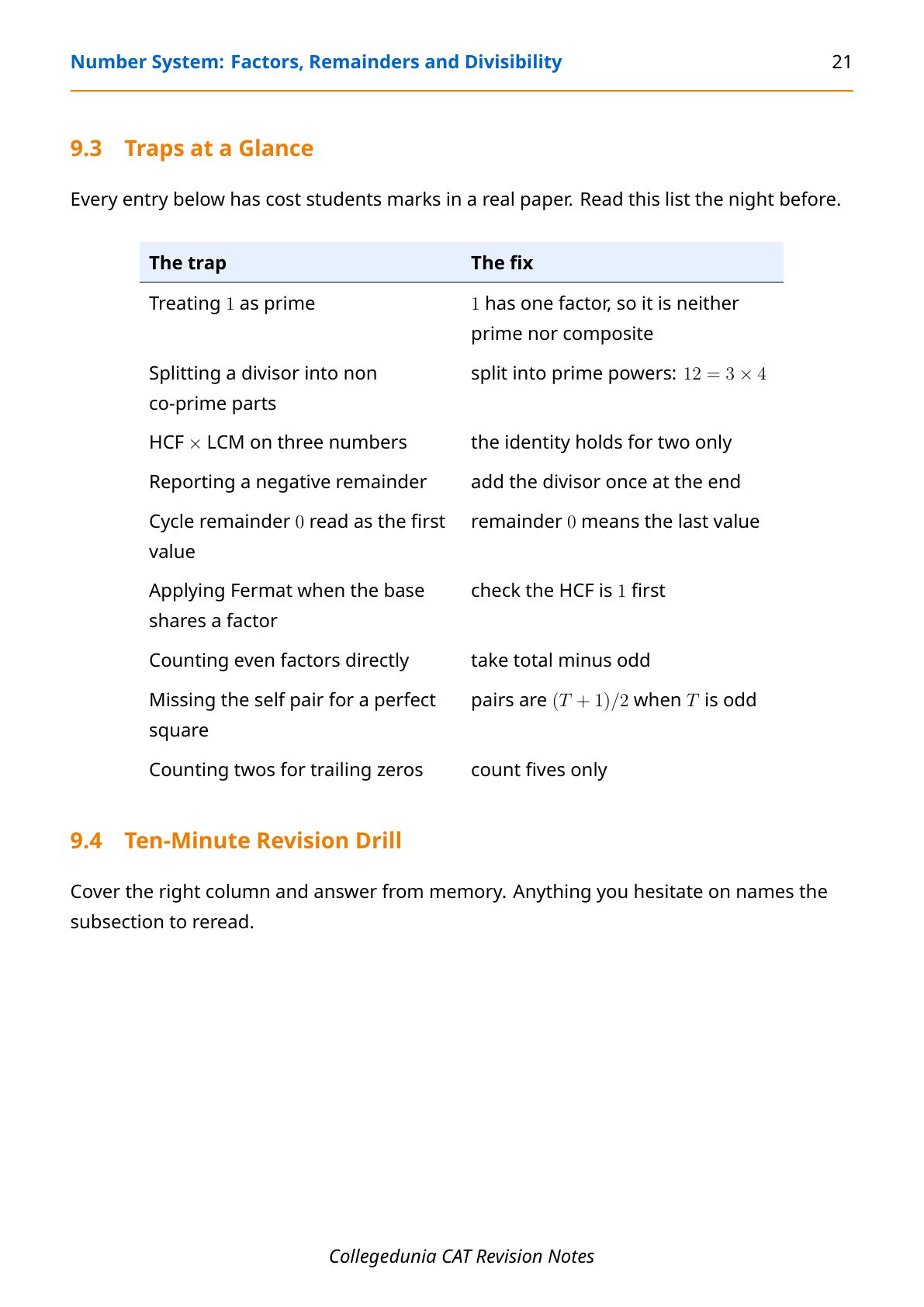
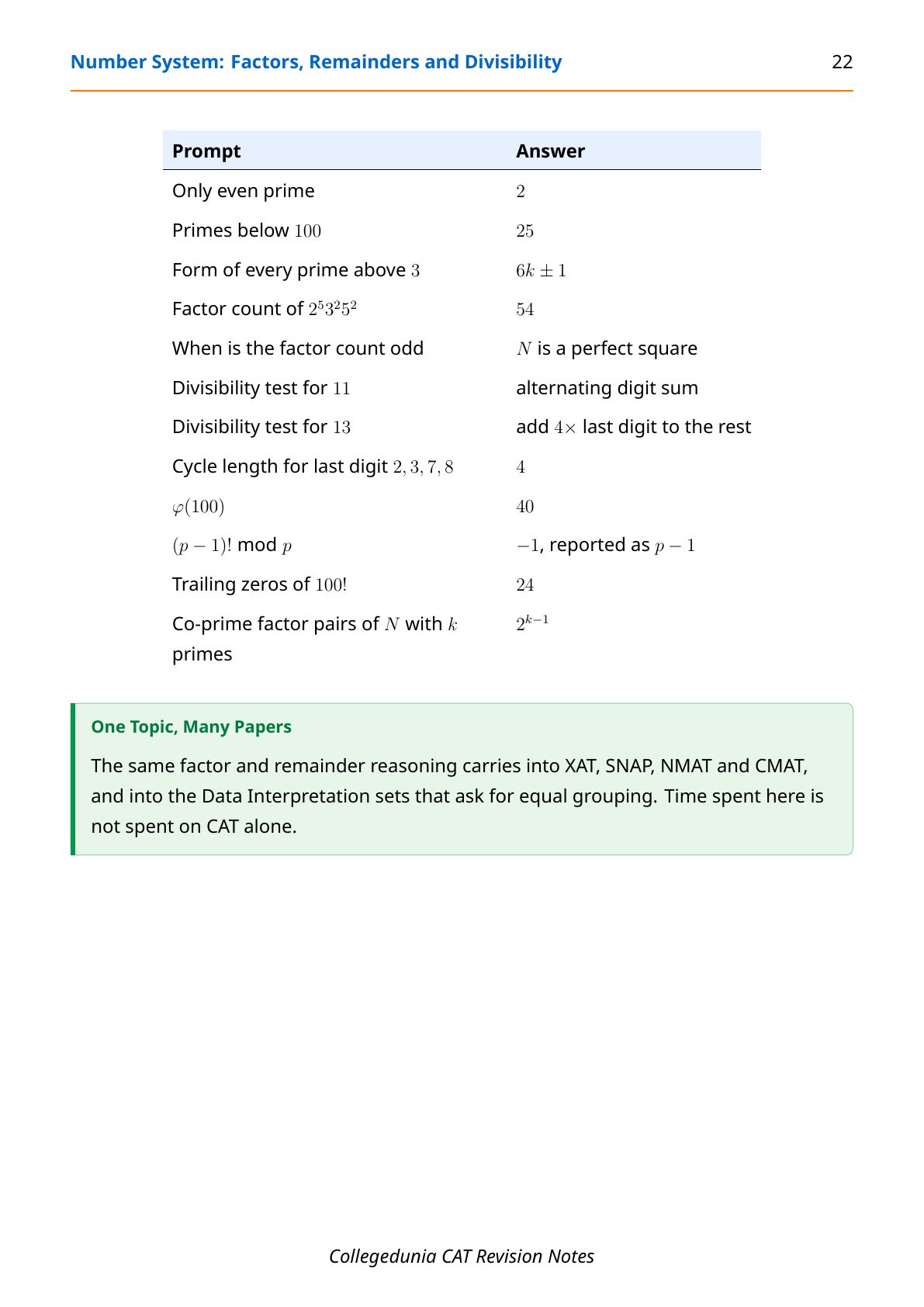
These are typeset revision notes, built so every rule sits next to the reason it works. If you would rather revise from a scanned notebook, the handwritten version of the same topic is also free.
What Is Inside the 22 Pages
The notes run in the order students actually learn the topic, starting from prime factorisation and building every formula on top of it. Nothing is stated without a worked number beside it.
- Classification of numbers, primality testing and the 6k plus or minus 1 form
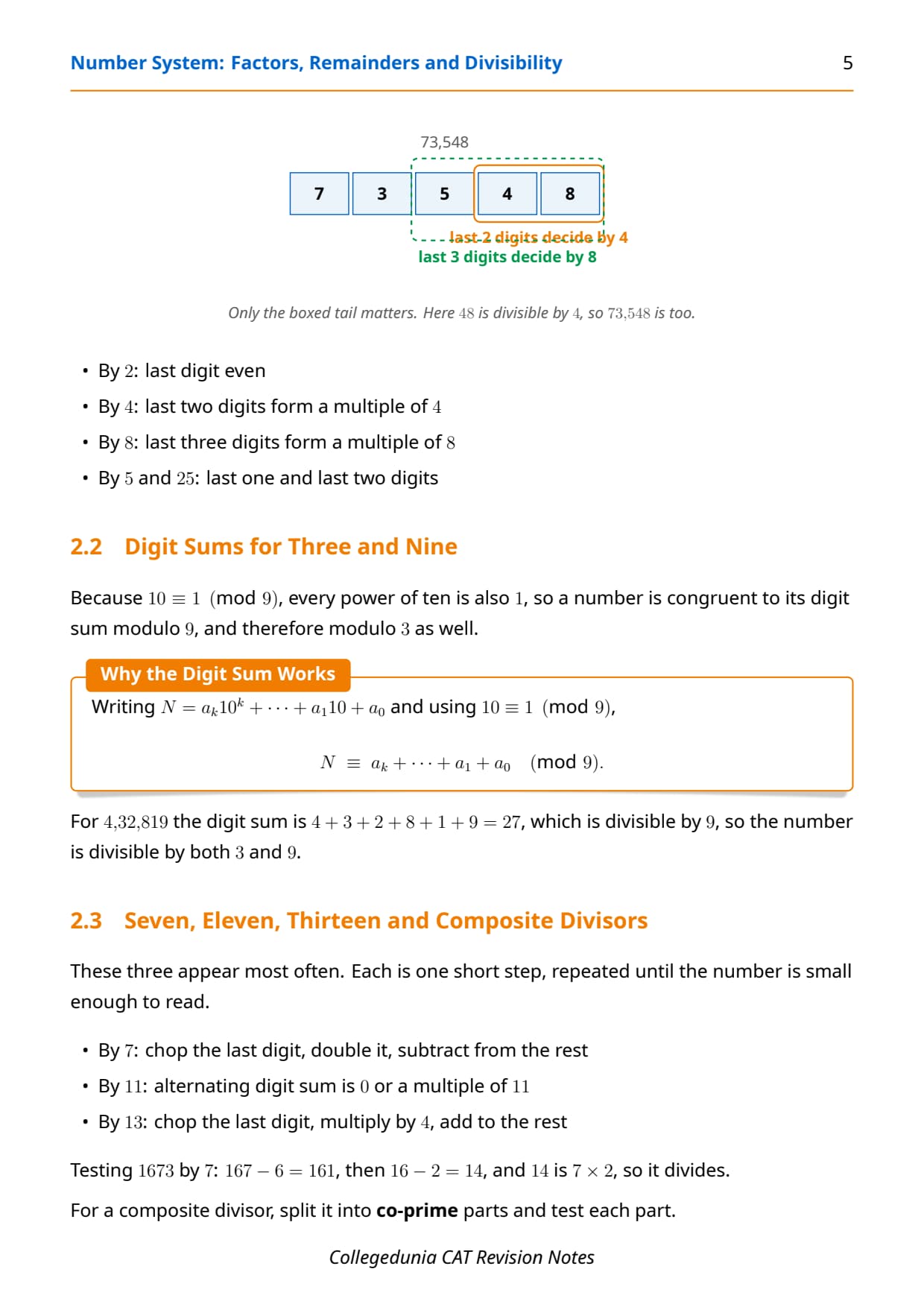
- Divisibility rules for 2, 4, 8, 3, 9, 7, 11 and 13, with the logic behind each
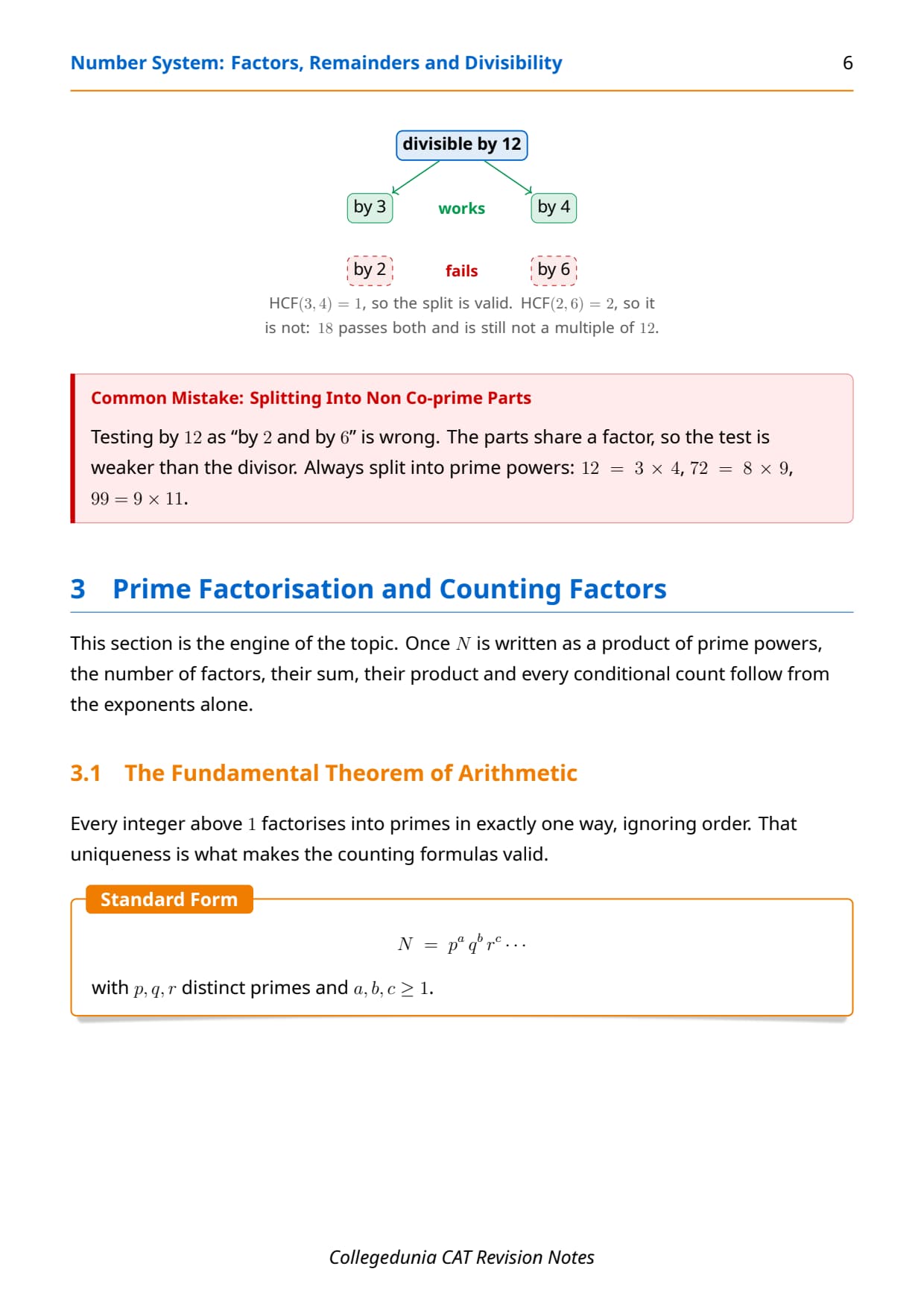
- Prime factorisation and every factor formula that follows from it
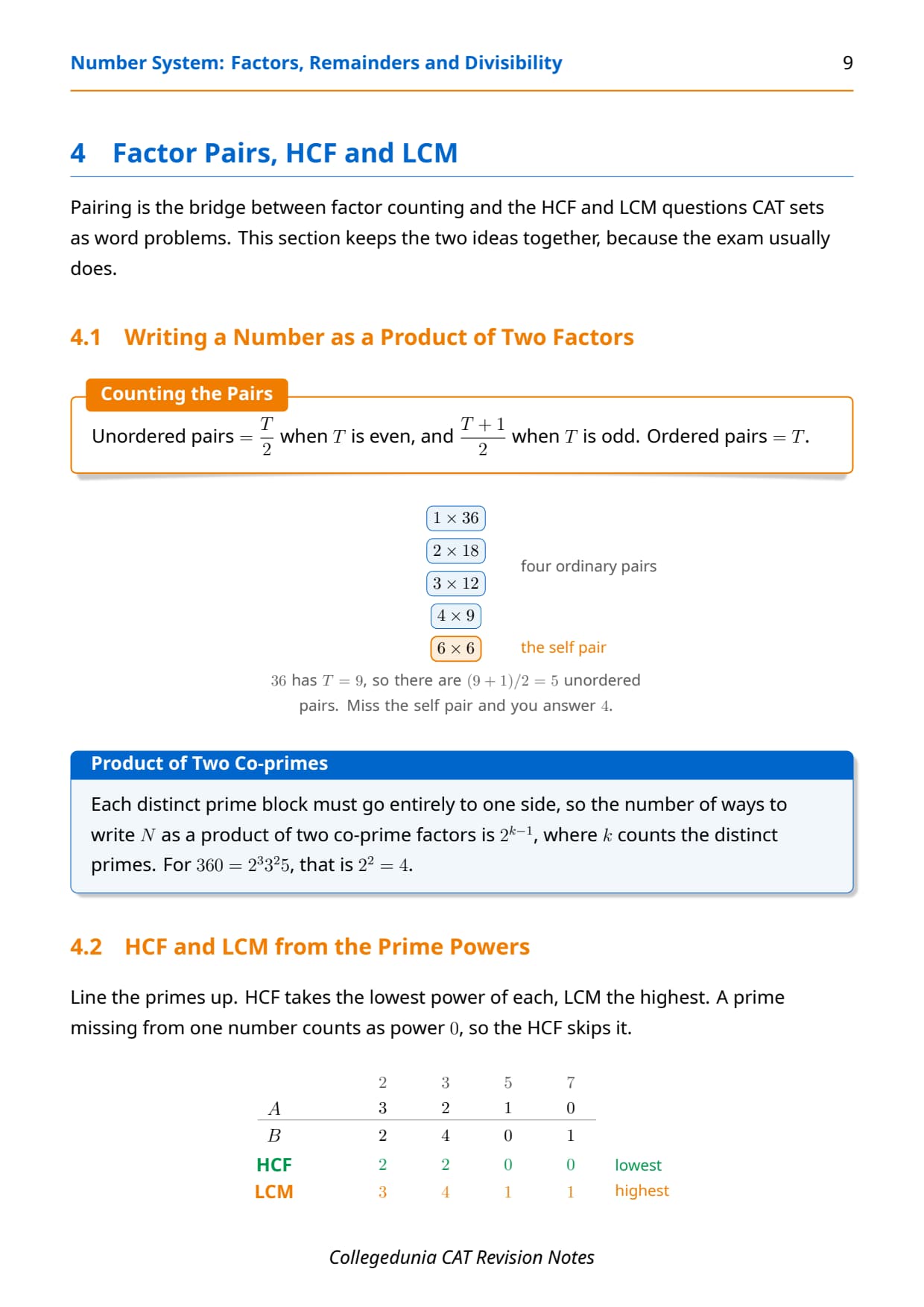
- HCF and LCM from prime powers, including fractions
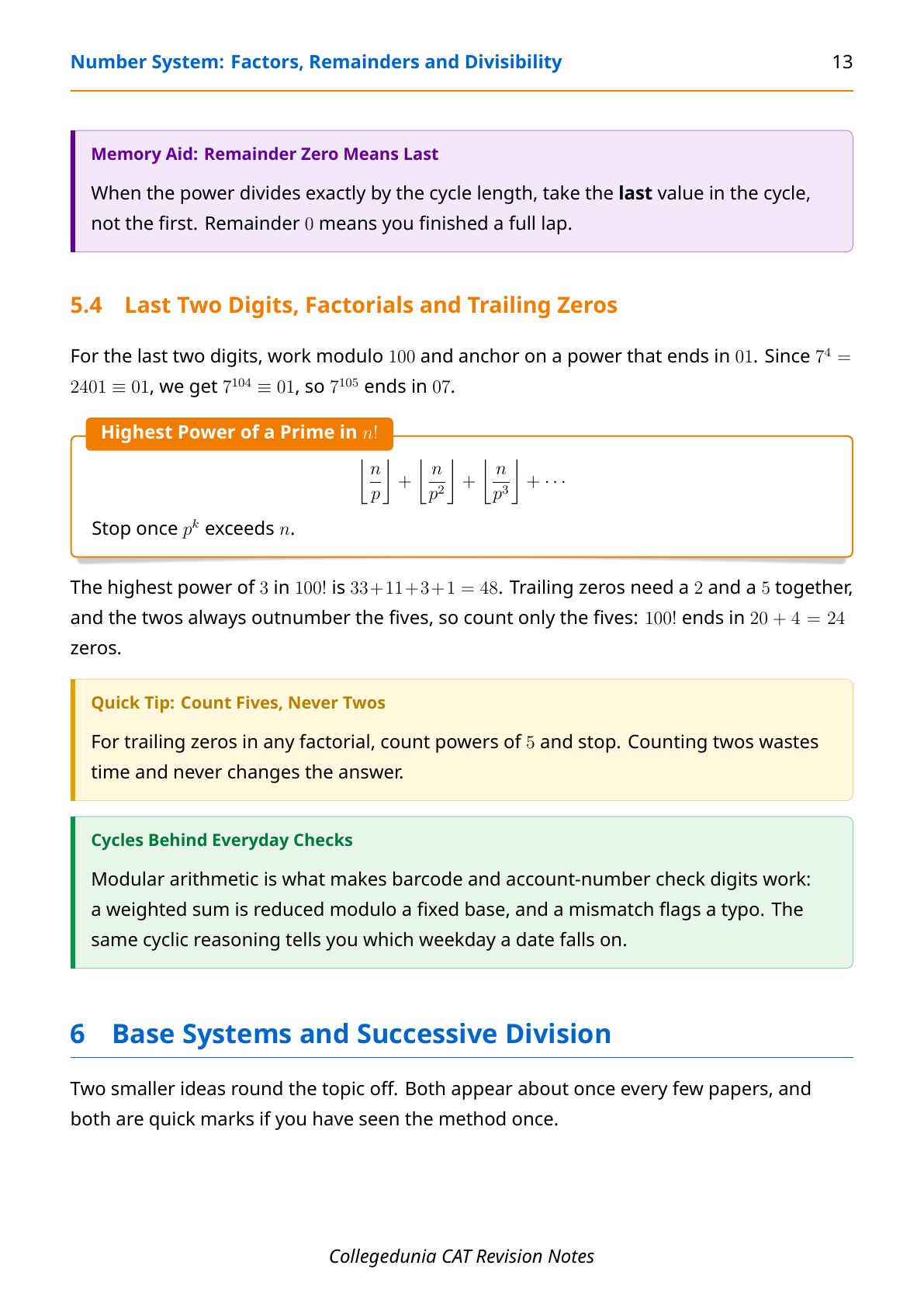
- Remainders, cyclicity, last two digits and factorial powers
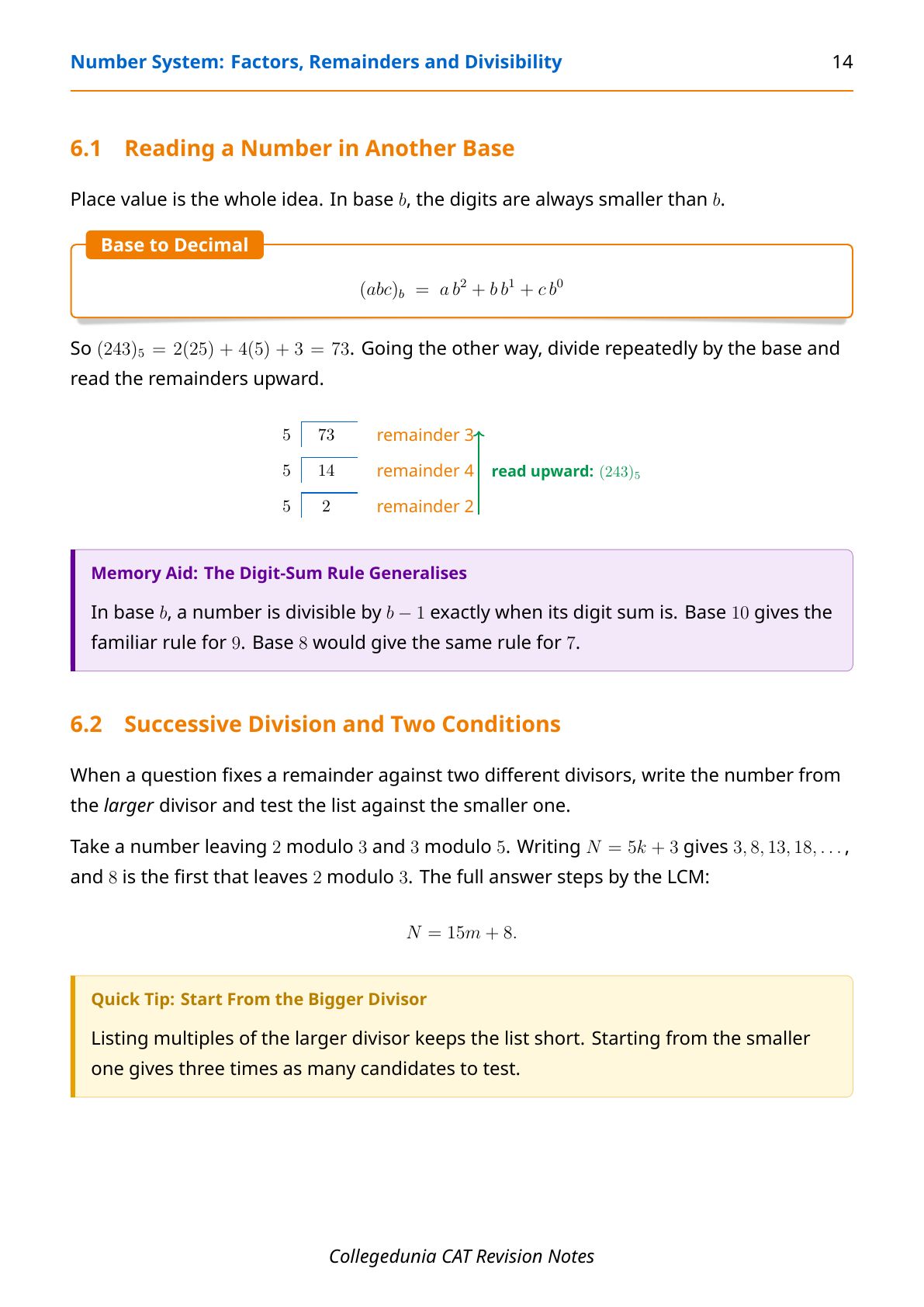
- Base systems, ten worked examples, a twelve question practice set
Prime Factorisation Does Most of the Work
One clean factorisation answers five different questions. That is the single habit these notes push hardest, because it is what separates a two minute solve from a five minute one.
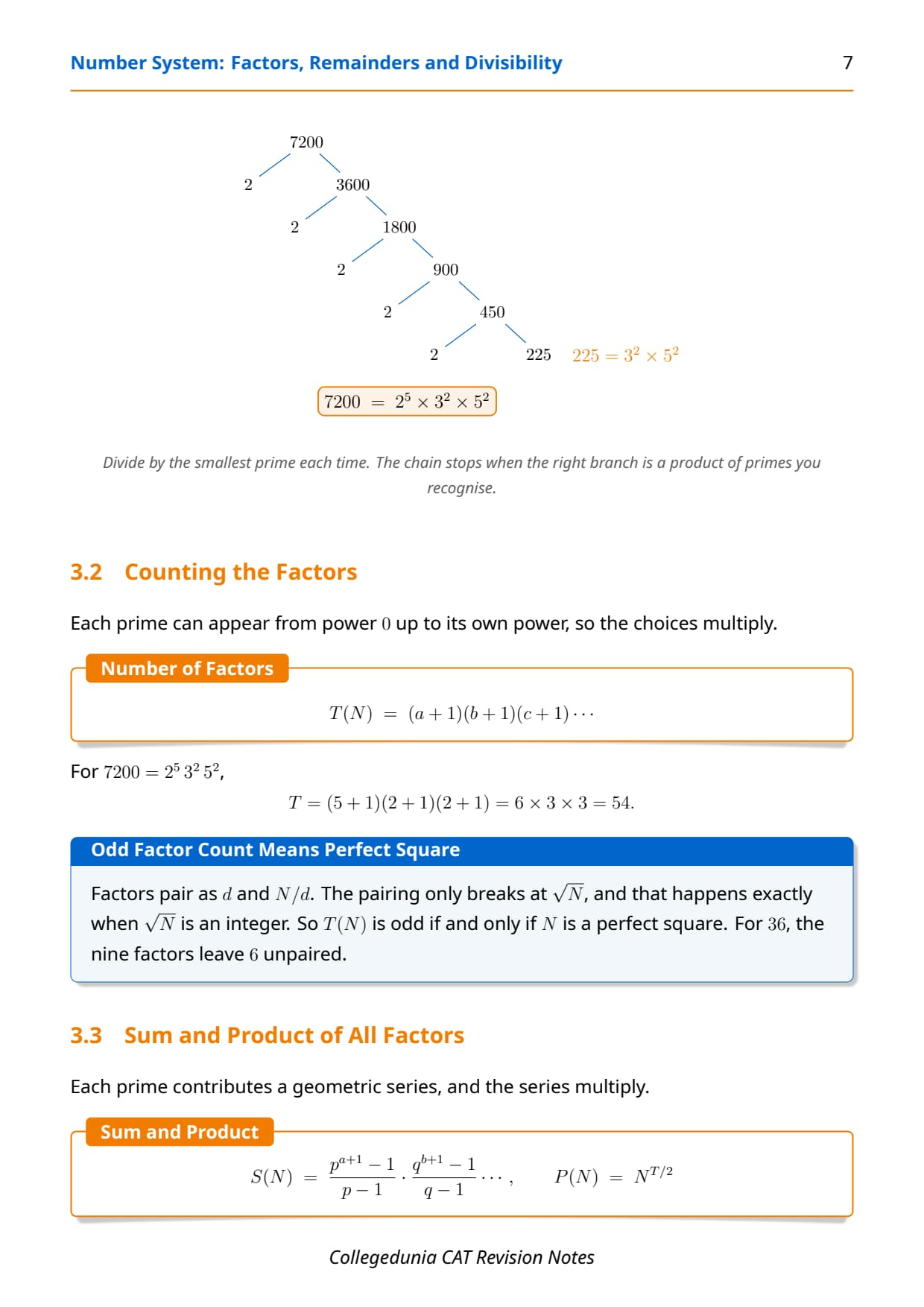
Write the number as primes raised to powers. Every count after that is a choice of exponents, so you never list factors by hand again.
- How many factors the number has, and how many are odd or even
- The sum and the product of all its factors
- Whether it is a perfect square, which flips the factor count to odd
- Its HCF and LCM with any other number, with no long division
Every Factor Formula in One Place
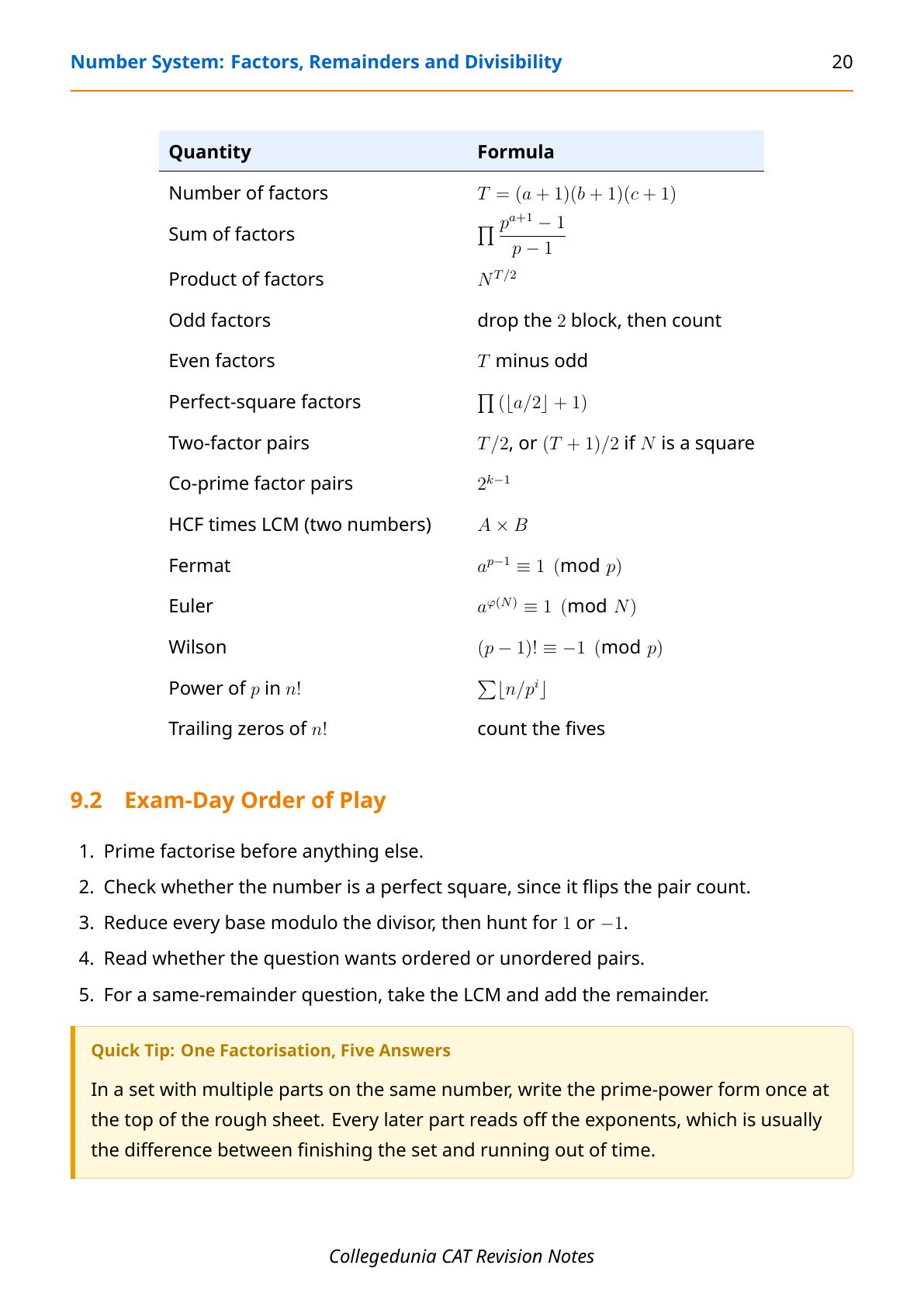
The notes derive these rather than listing them, then collect them on a single reference page for the night before.
- Number of factors: add one to each power and multiply
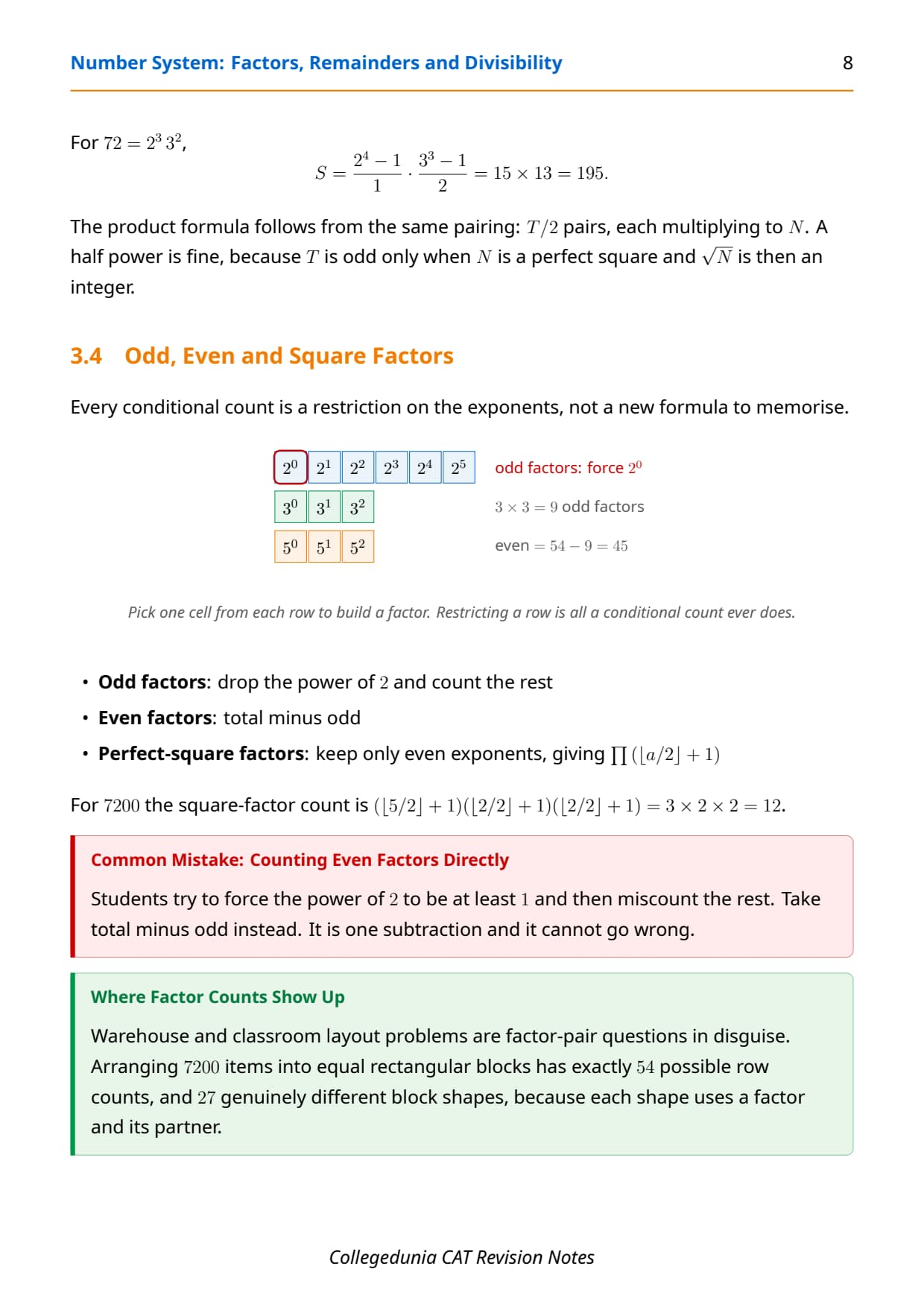
- Odd factors: drop the block of twos, then count what is left
- Even factors: total minus odd, never counted directly
- Perfect-square factors: keep only the even exponents
- Two-factor pairs: half the total, with a self pair when the number is a square
- Co-prime pairs: two raised to one less than the count of distinct primes
Worked on 7,200 throughout, so students can check each formula against the same number instead of re-reading a new example every time. That one number has 54 factors, 9 of them odd and 12 of them perfect squares, and every figure comes off the same three exponents.
The divisibility rules get the same treatment. Powers of two read only the last few digits because 100 divides by 4 and 1000 by 8, and the digit-sum test for 9 works because every power of ten leaves remainder one. Composite divisors are split into co-prime parts, which is why 12 becomes 3 and 4 and never 2 and 6.
Reading HCF and LCM Word Problems Correctly
Students rarely fail the arithmetic here. They pick the wrong one of the two. The notes sort the phrasings so the choice is automatic.
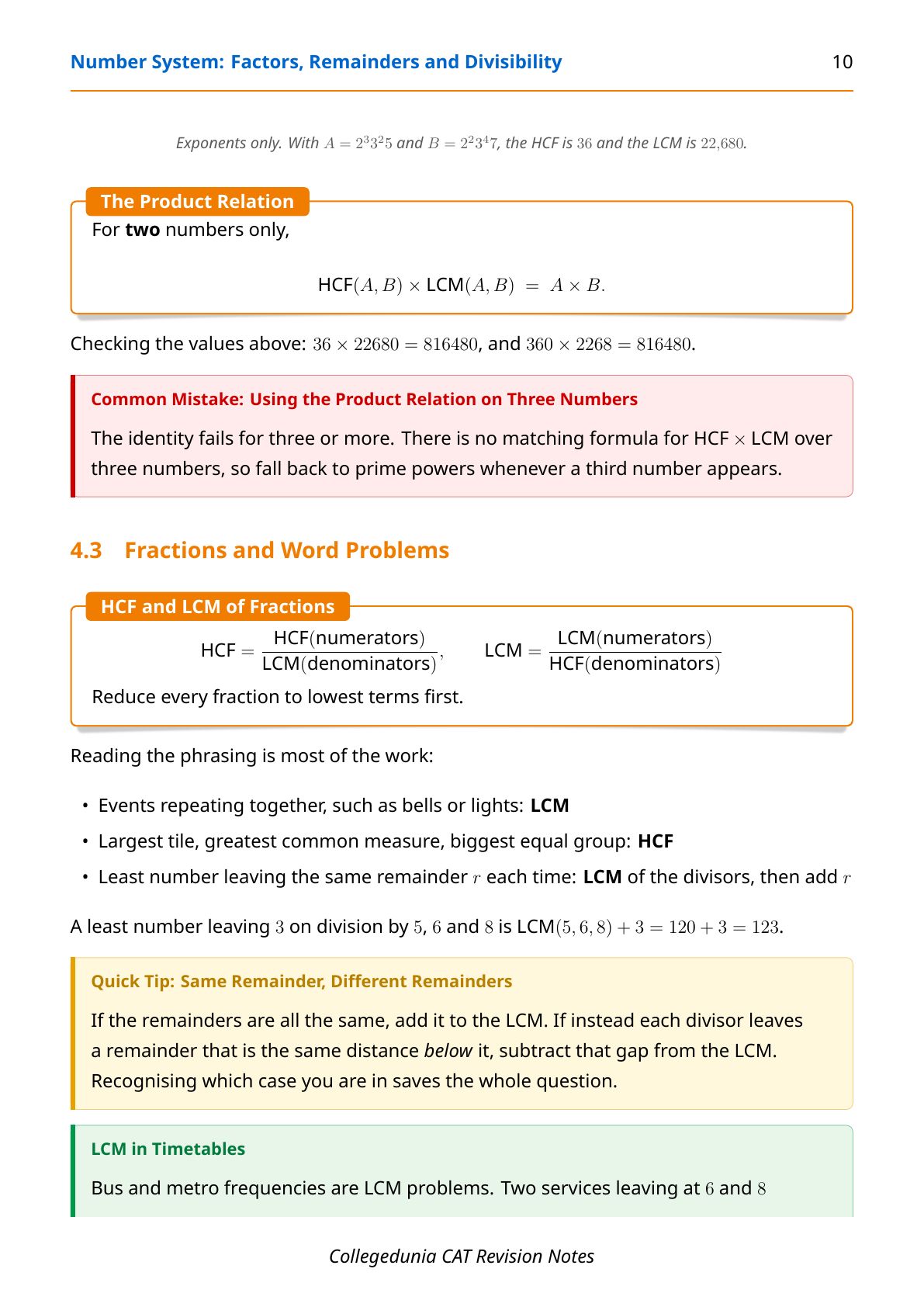
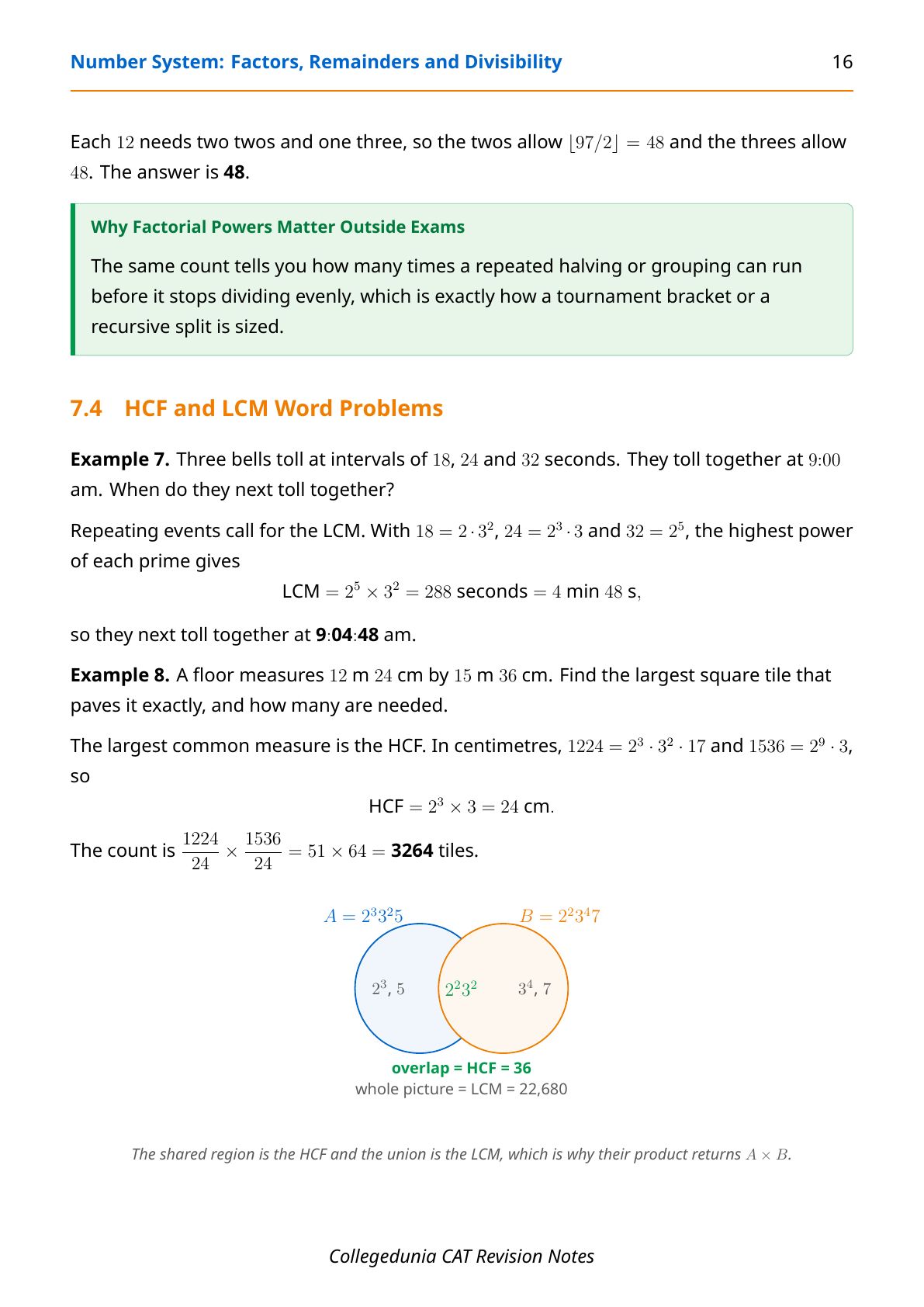
- Bells, lights or services repeating together point to LCM
- Largest tile or greatest common measure points to HCF
- A least number leaving the same remainder is the LCM plus that remainder
- For fractions, HCF is HCF of numerators over LCM of denominators
One caution is flagged in writing: HCF times LCM equals the product of the numbers for two numbers only. Carrying it to three is a common lost mark.
The Remainder Toolkit, Cyclicity to Wilson
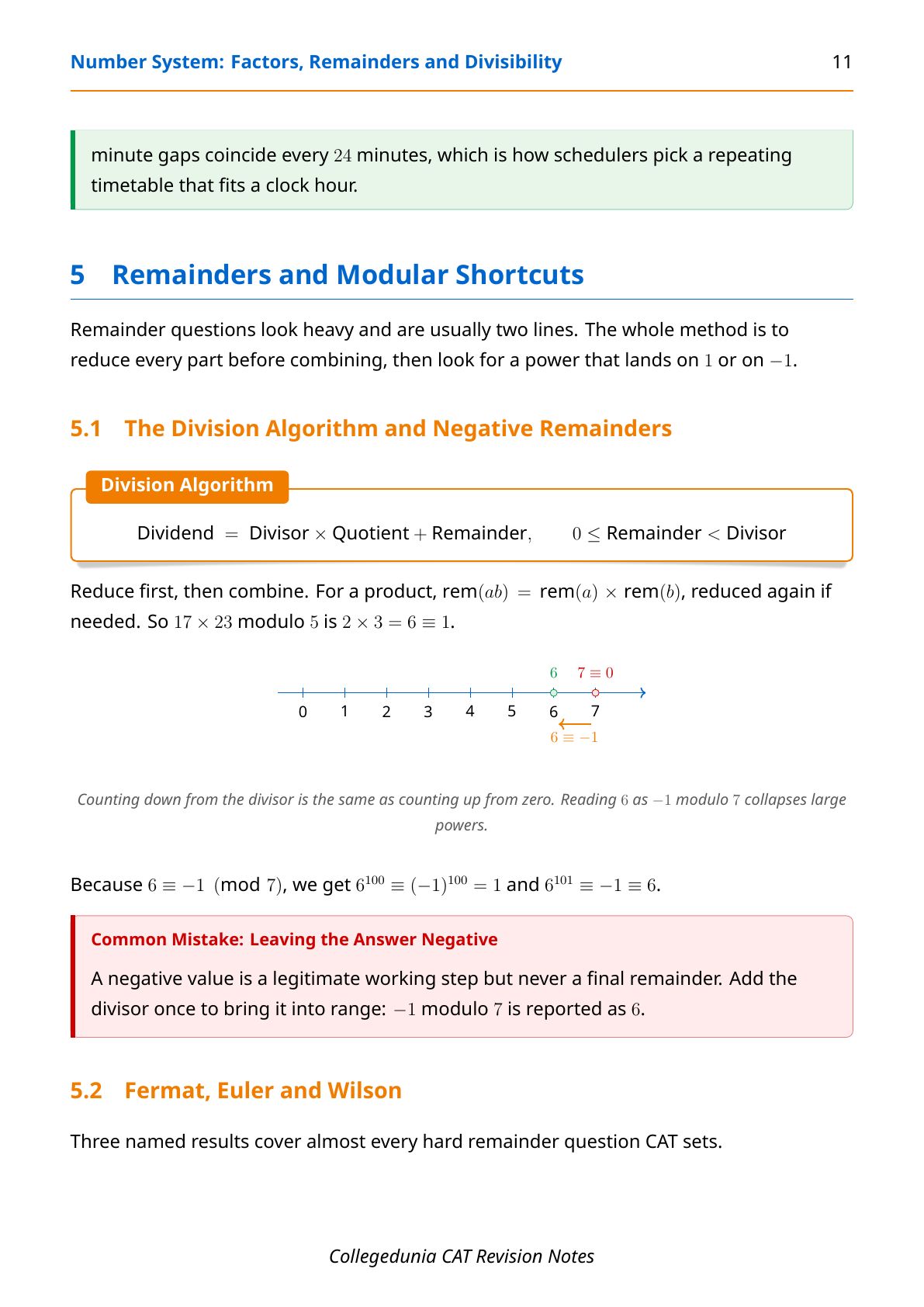
Remainder questions look heavy and are usually two lines. Reduce every base first, then look for a power that lands on one or on minus one.
From there the notes build up through Fermat, Euler and Wilson, then cover unit-digit cyclicity, last two digits, and the highest power of a prime inside a factorial.
- Negative remainders: read 6 as minus one against 7 and a hundredth power collapses to a single line
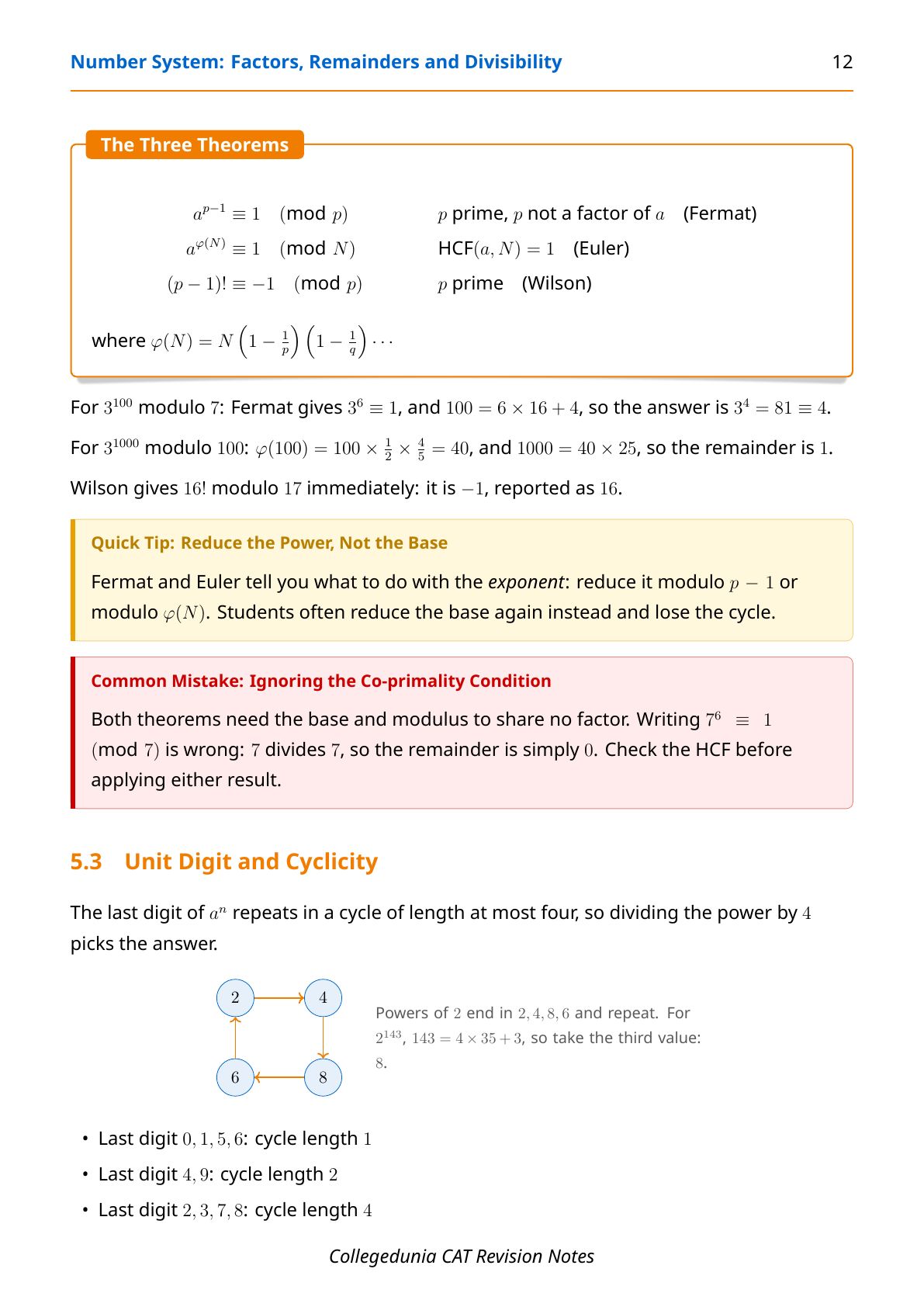
- Fermat: reduce the power, not the base, whenever the divisor is prime
- Euler: the same trick for any divisor, once you can compute the totient
- Cyclicity: unit digits repeat in cycles of at most four, so divide the power by four
- Trailing zeros: count the fives inside the factorial and stop
Each one carries the condition that makes it valid. Fermat and Euler both need the base and the divisor to share no factor, and the notes show what goes wrong when students skip that check.
Watch HCF and LCM Solved Step by Step
Source: MBA Wallah
Ten Worked Examples and a Practice Set
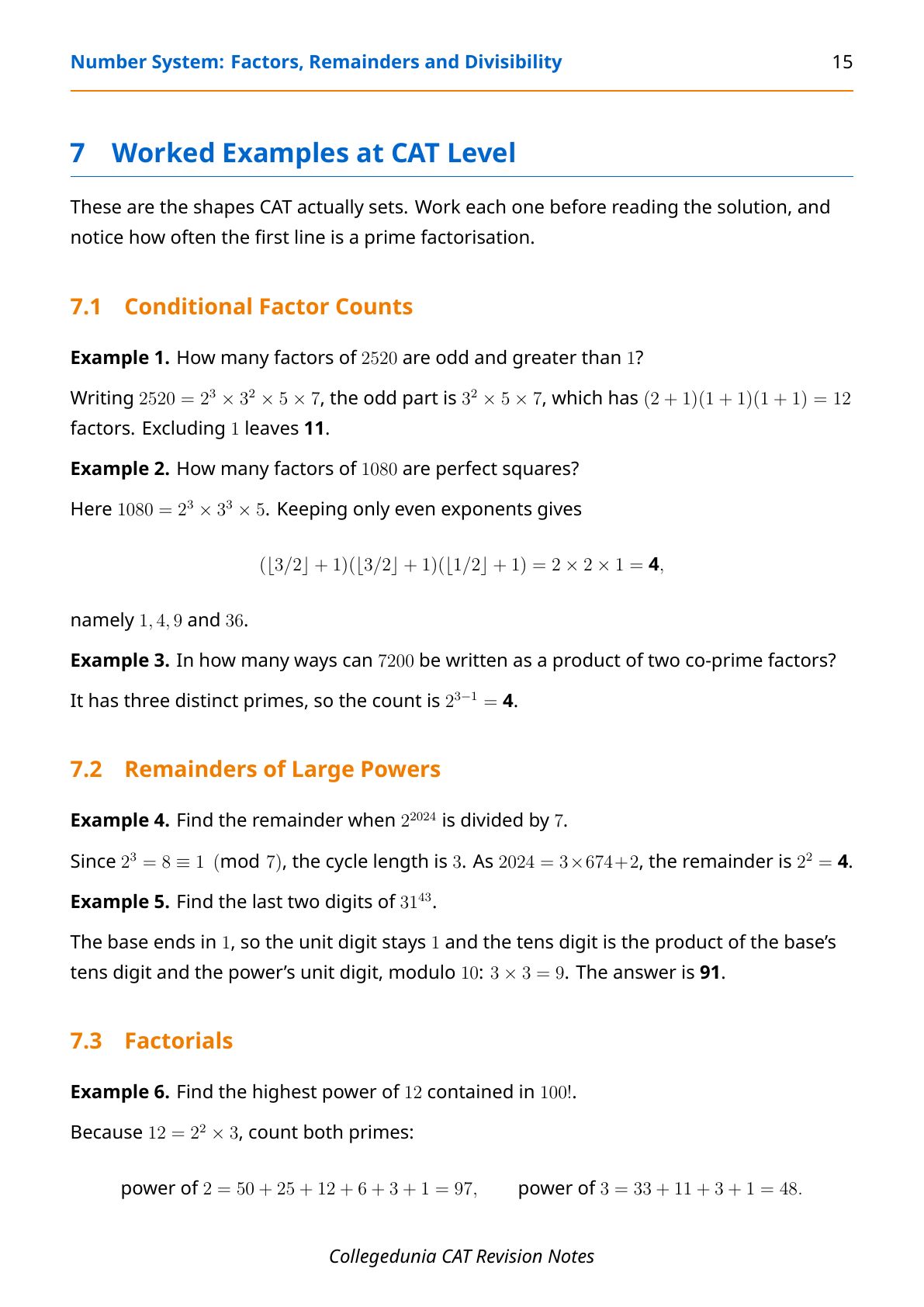
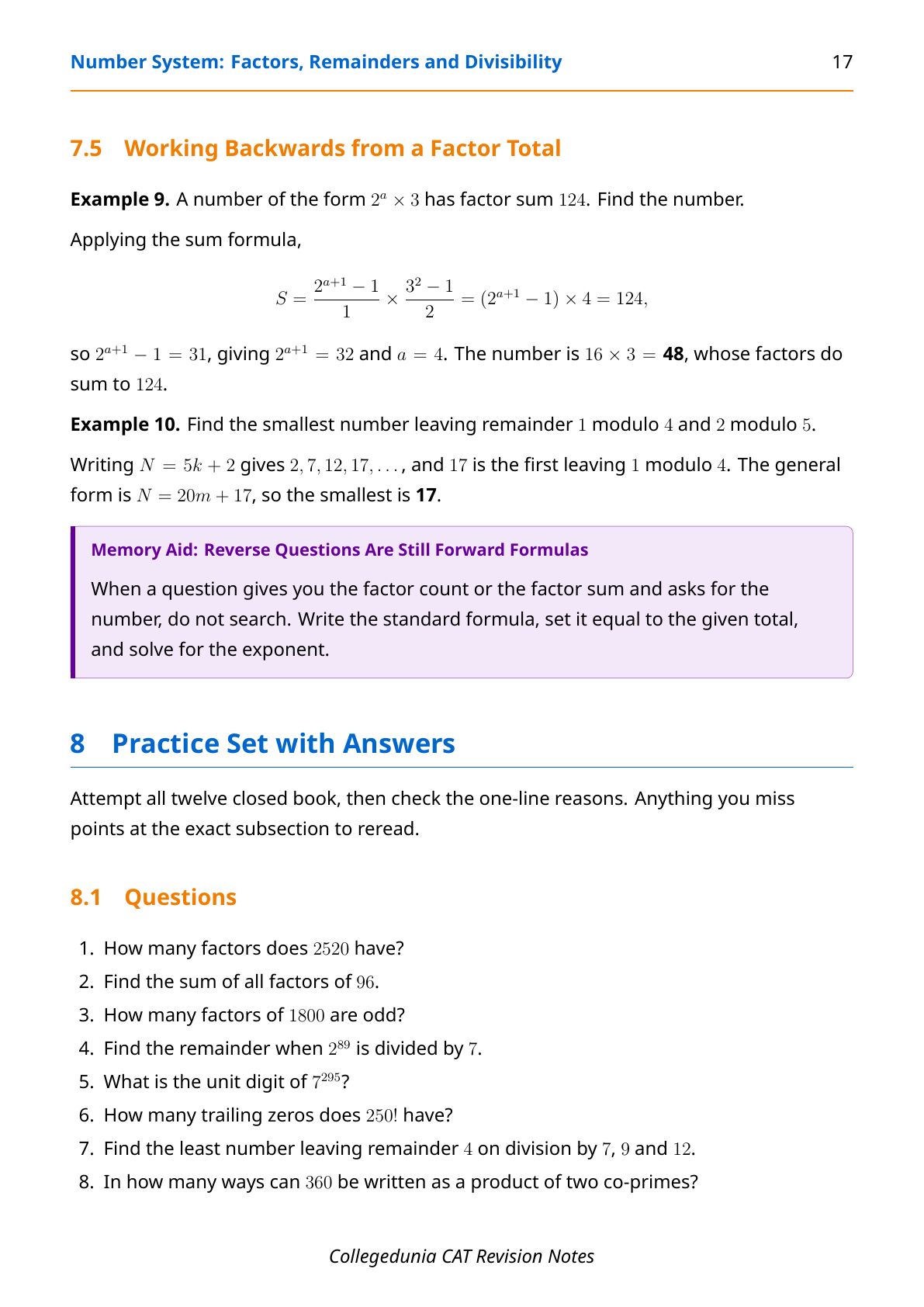
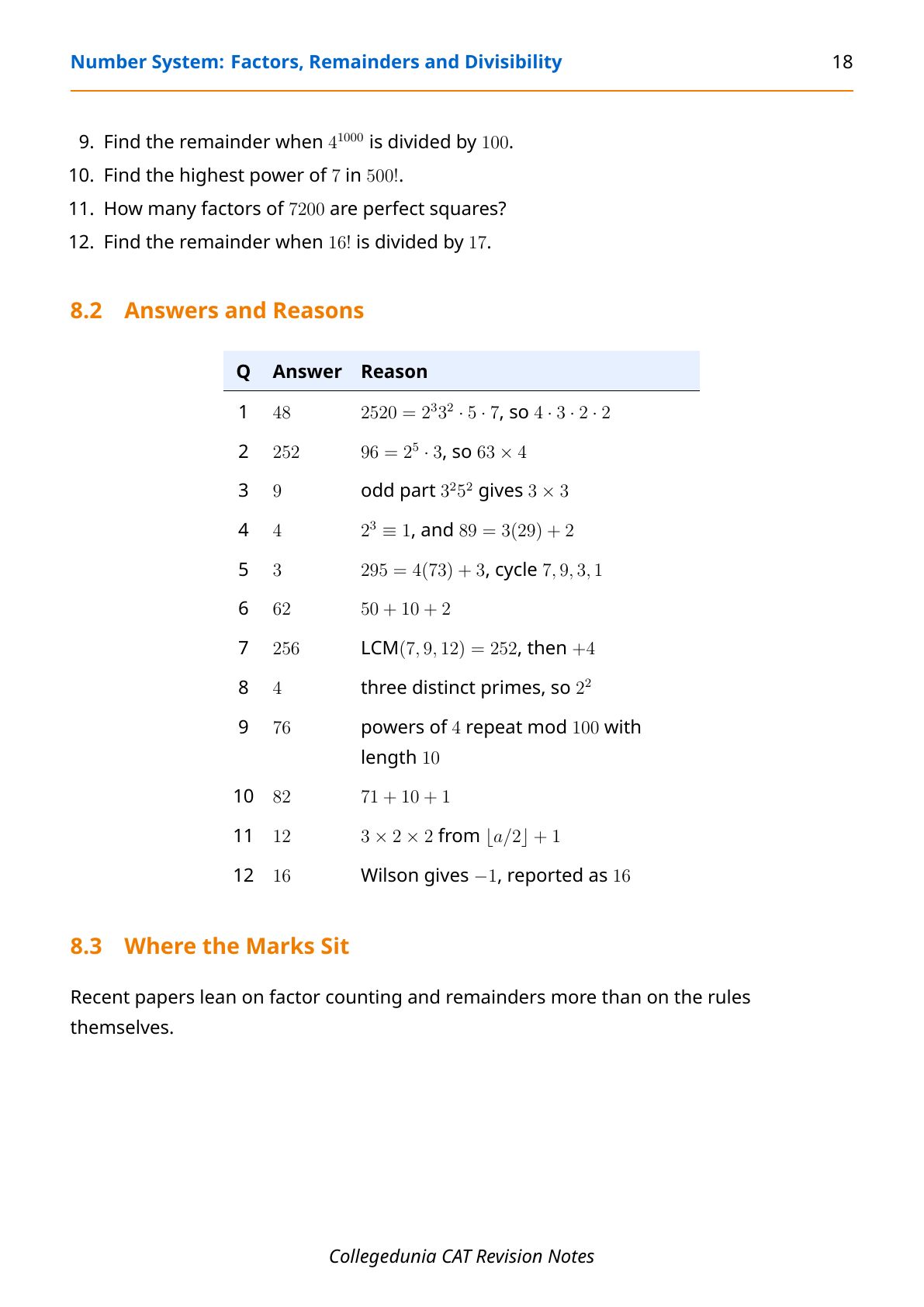
The back third of the notes is practice. Ten examples are solved in full, in the shapes CAT actually sets, then twelve questions follow with a one-line reason for each answer.
- Conditional factor counts, such as odd factors greater than one
- Remainders of large powers, and the highest power of 12 inside 100 factorial
- Bells tolling together, and the largest square tile that paves a floor
- Working backwards from a given factor total to find the number
A Study Plan That Fits One Week
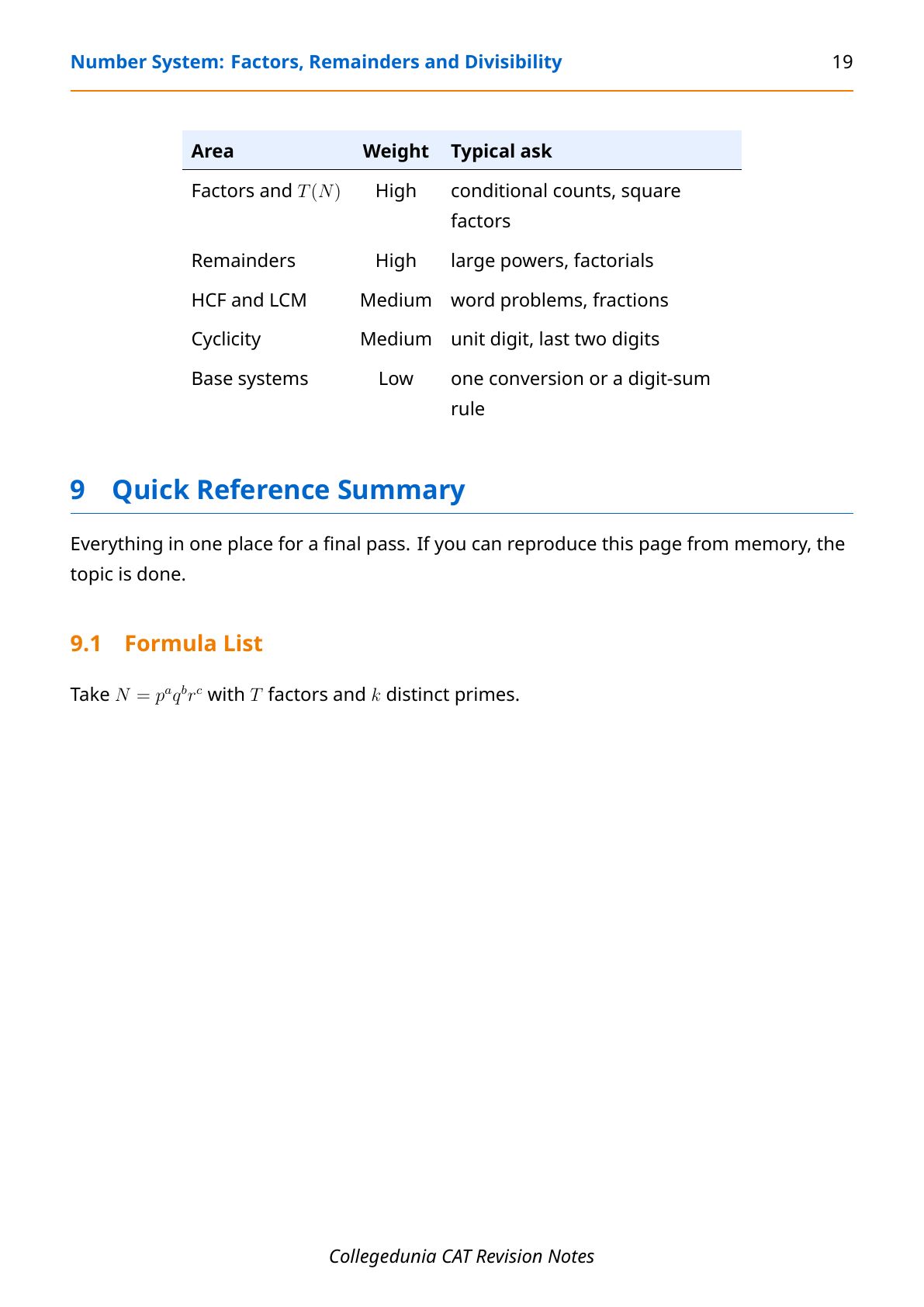
Read once slowly, then treat the last four pages as the revision set. The formula recap, the traps table and the ten-minute drill are built for a final pass.
- Days one and two: factorisation and all the factor formulas
- Day three: divisibility rules, tested on random six digit numbers
- Days four and five: remainders, then cyclicity and factorials
- Day six: the worked examples closed book
- Day seven: the practice set and the drill page
Students who keep one factorisation at the top of the rough sheet finish this topic faster than students who restart for every part of the question.
CAT Number System Notes FAQs
Ques. Are these CAT number system notes enough on their own?
Ans. The 22 pages cover the full CAT syllabus for this topic, from divisibility rules through to Euler and Wilson, with ten solved examples. Students should still add a larger question bank for volume, since the notes carry twelve practice questions.
Ques. How many questions come from number system in CAT?
Ans. Expect about 2 to 4 questions in the Quant section, which is roughly 6 to 12 marks. Factors and remainders are the two most repeated sub-areas, so they are worth the most preparation time.
Ques. What should students study first in this topic?
Ans. Prime factorisation. Factor counts, sum of factors, HCF, LCM and square-factor counts are all built on it, so the rest of the topic falls into place much faster once it is solid.
Ques. Do these notes cover Fermat, Euler and Wilson theorems?
Ans. Yes, each is stated with its conditions and shown on a solved number. They turn a hard remainder question with a large power into a one-line answer, and CAT has set that shape before.
Ques. Is there a handwritten version of these notes?
Ans. Yes. The same topic is available as a 27-page handwritten set for students who revise better from notebook-style pages. Both are free to download on Collegedunia.



Comments