




JEE Main Mole Concept PYQ, free to download as a 233-page PDF. The bank carries 141 solved questions from the 2022 to 2026 papers and takes roughly a fortnight to work through, so pace it across your revision.
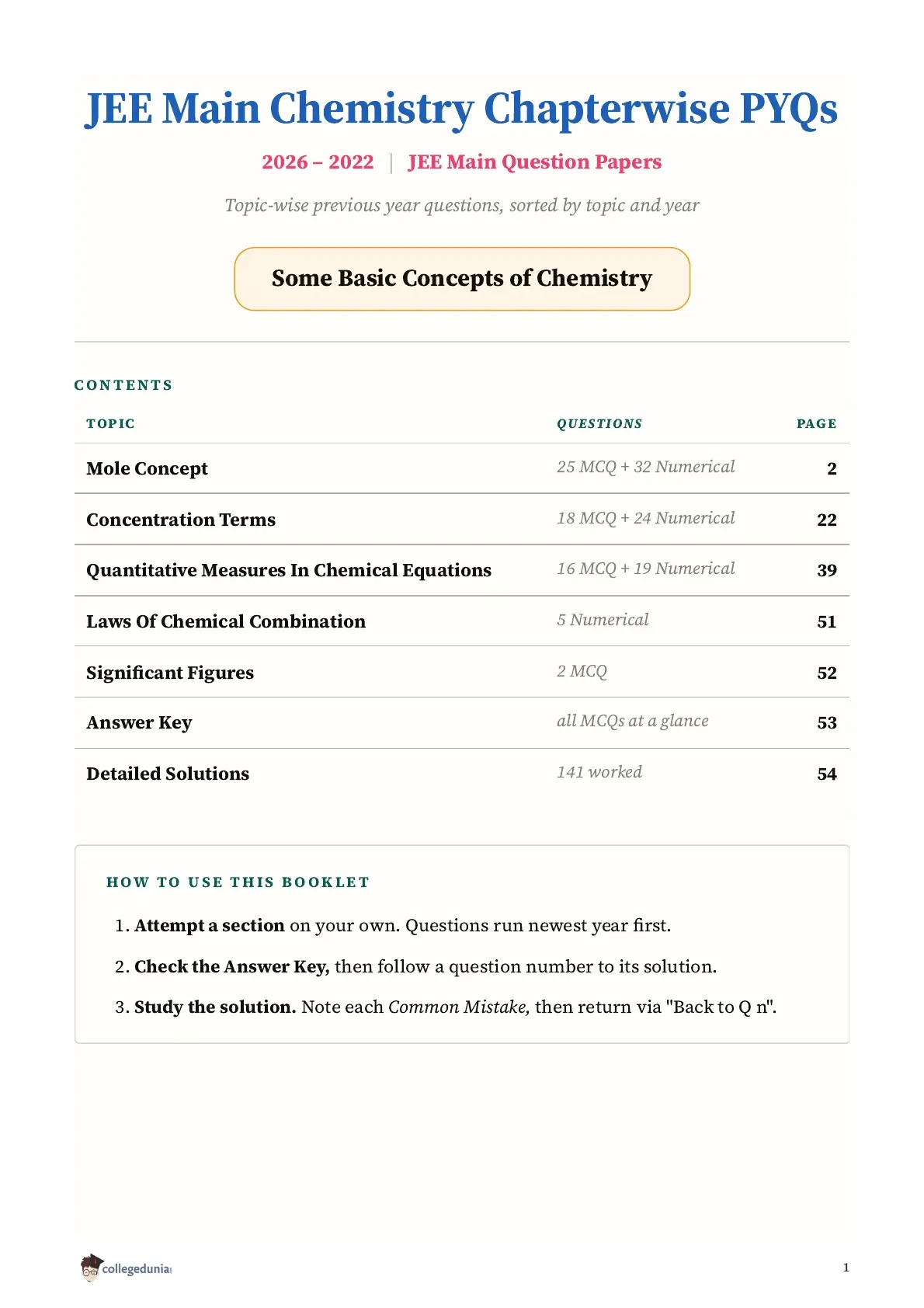
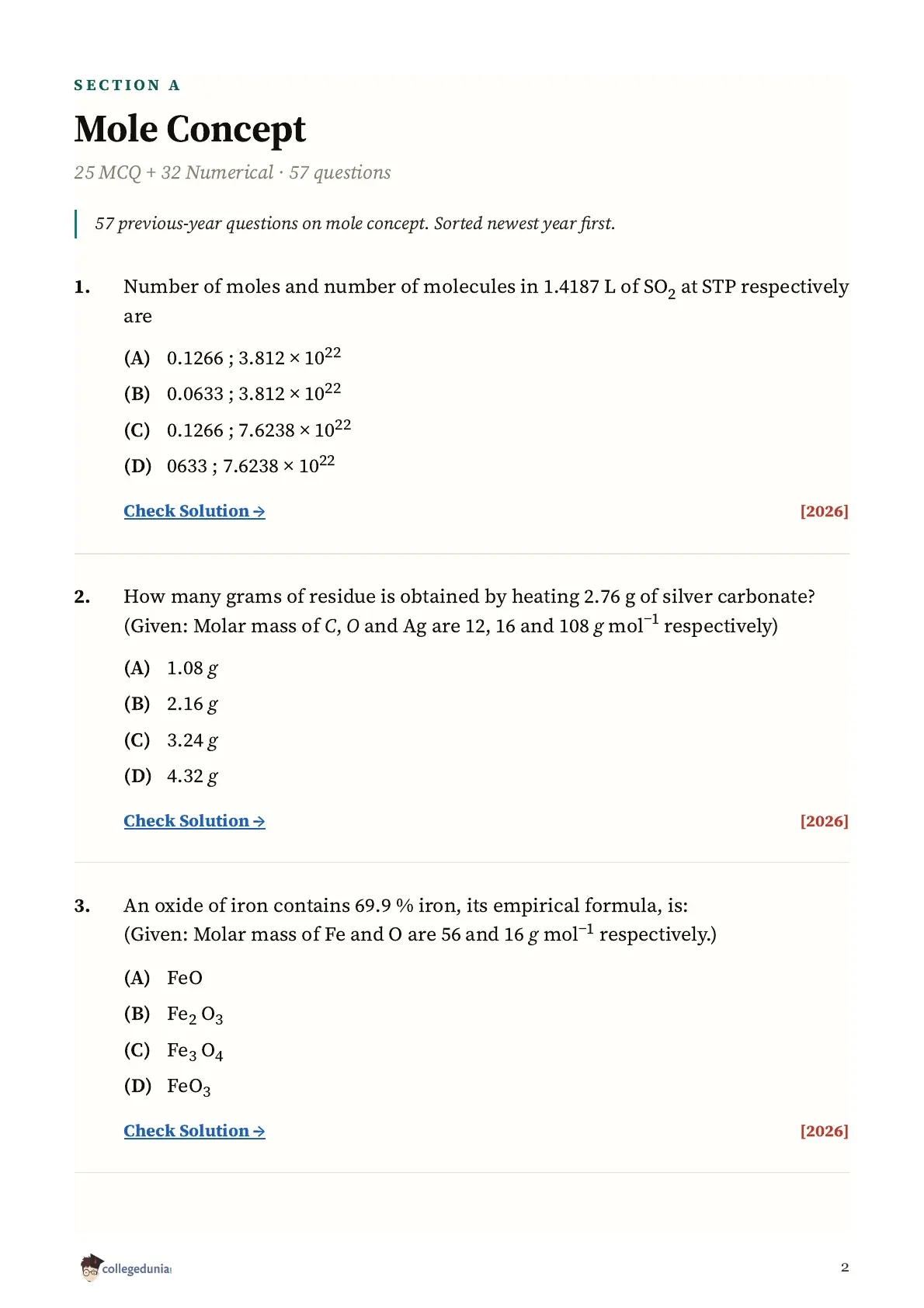
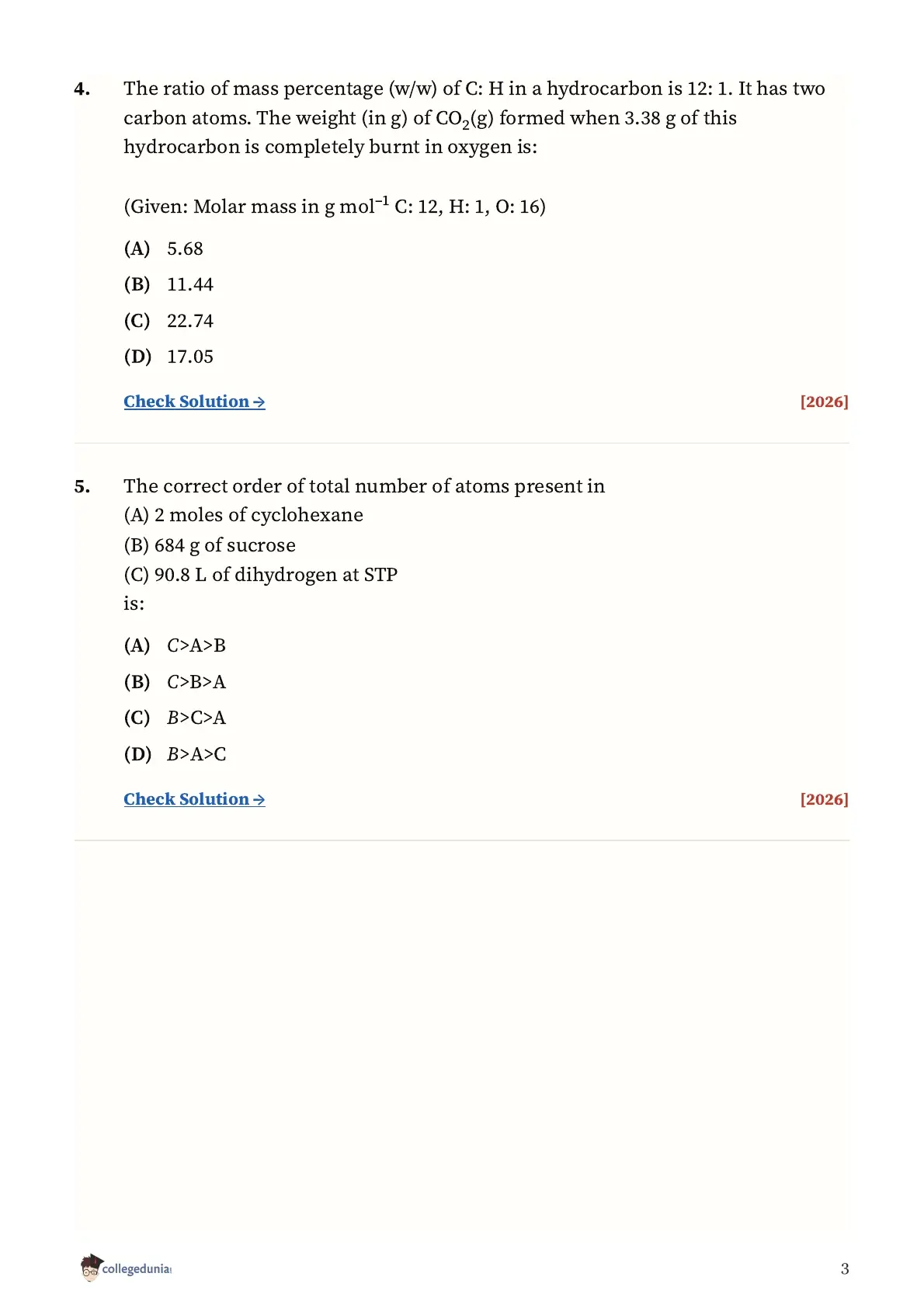
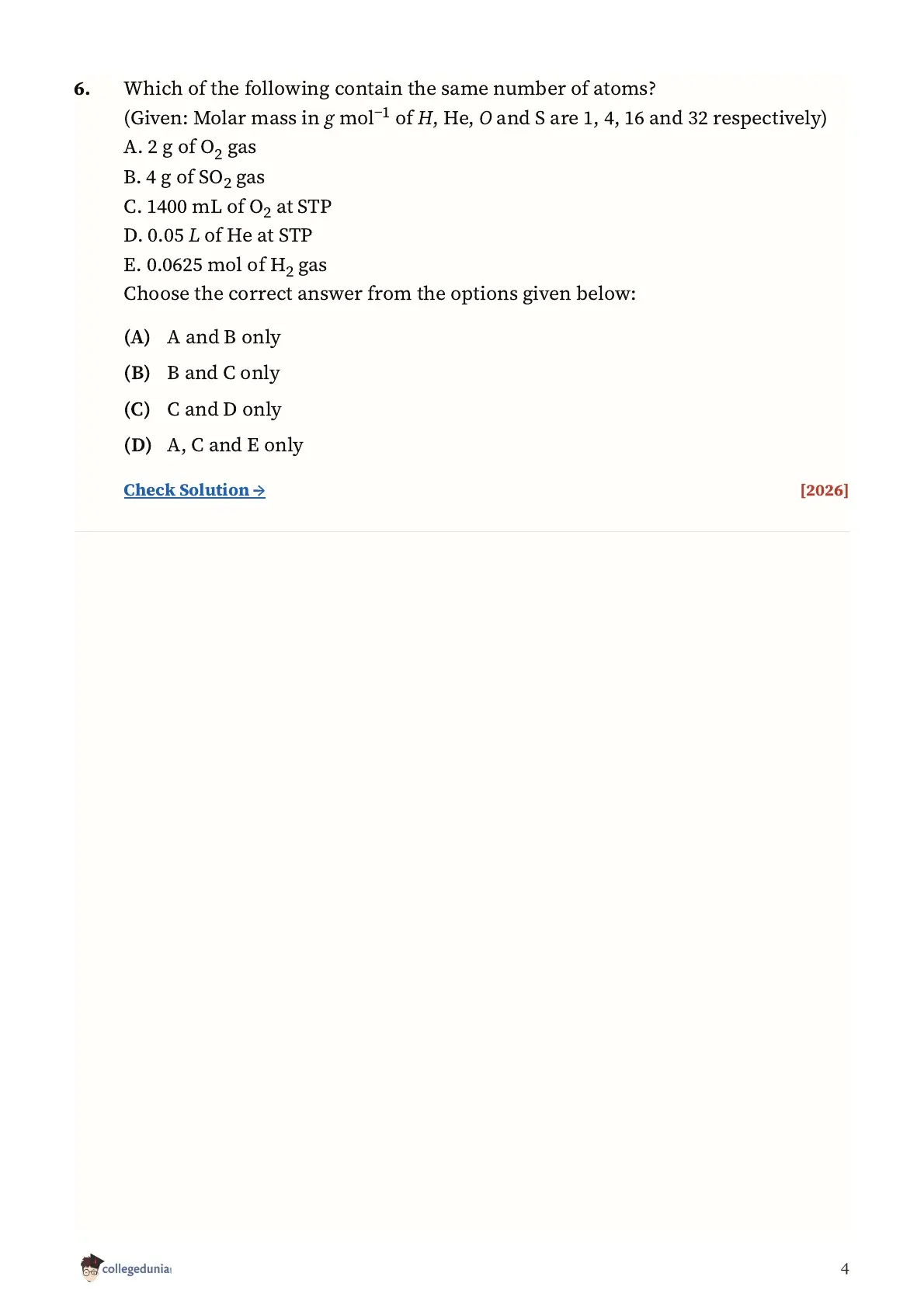
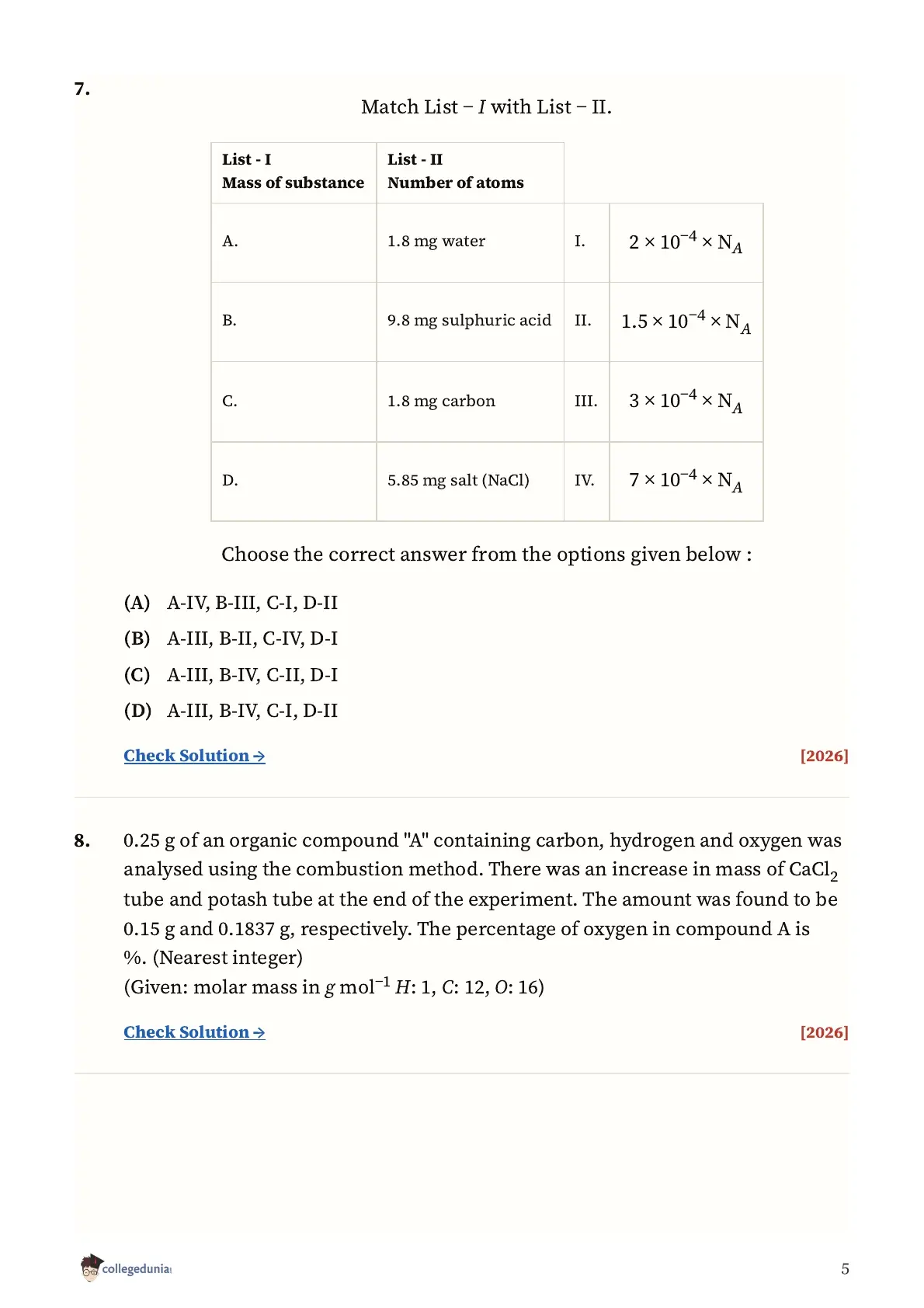
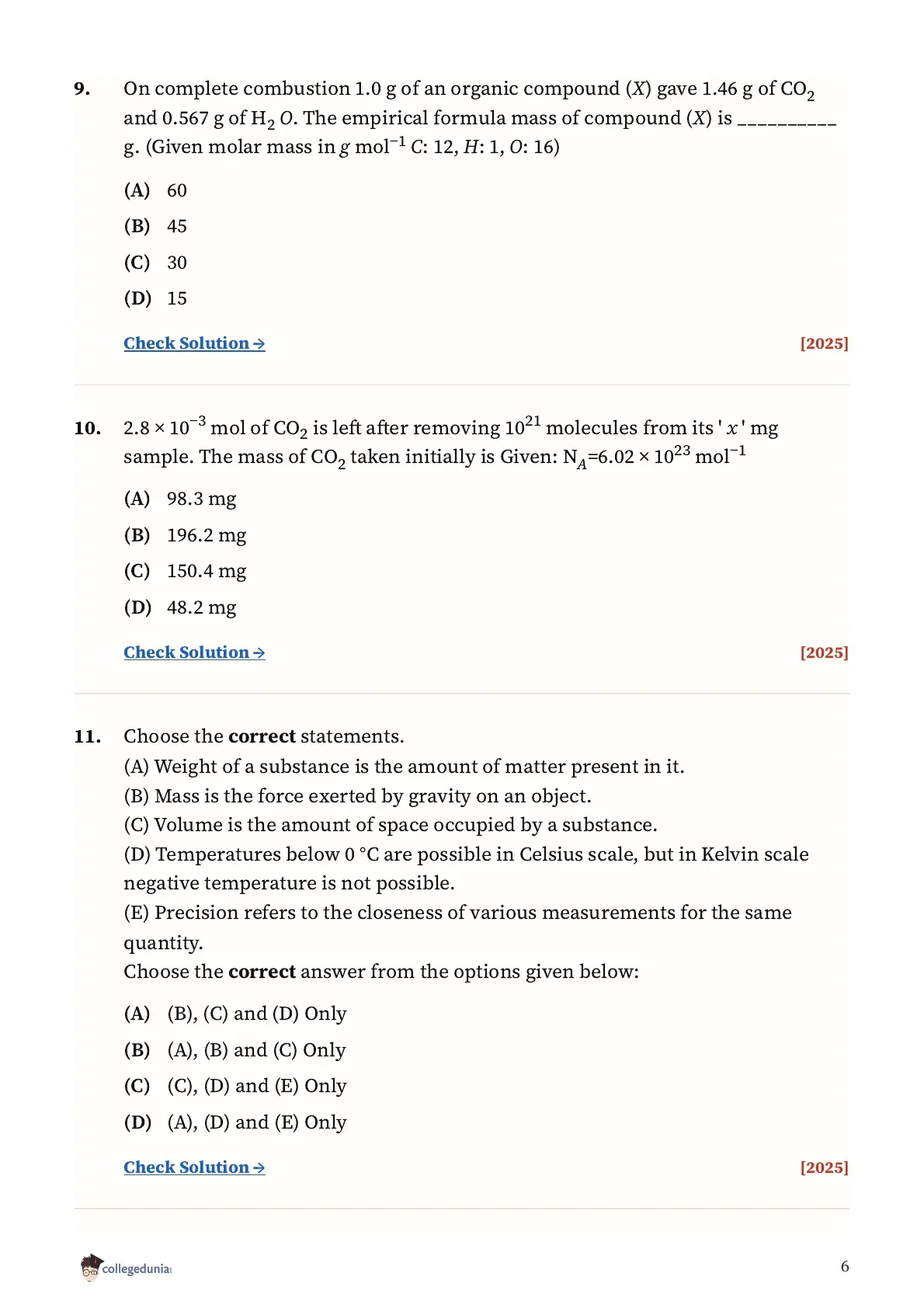
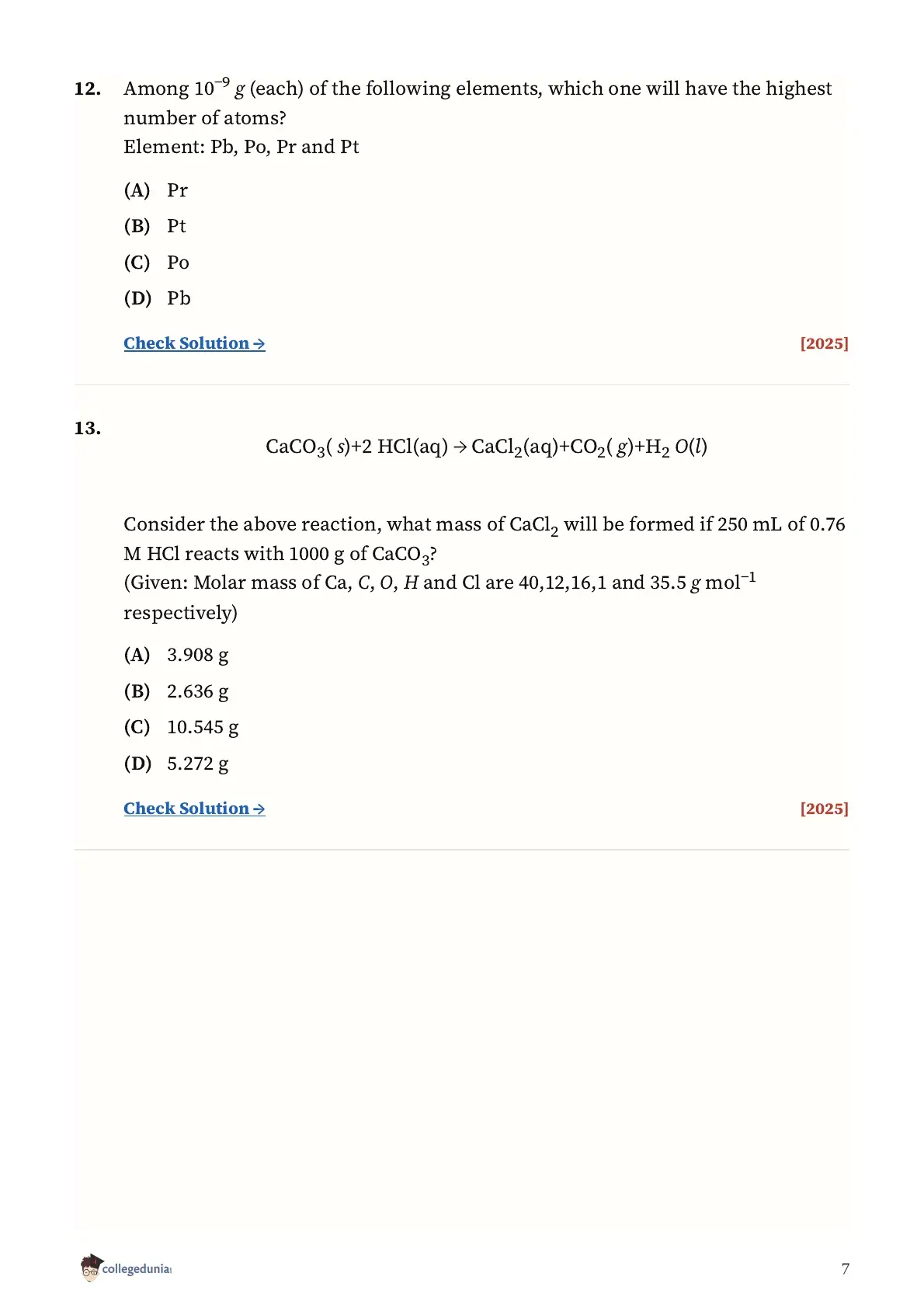
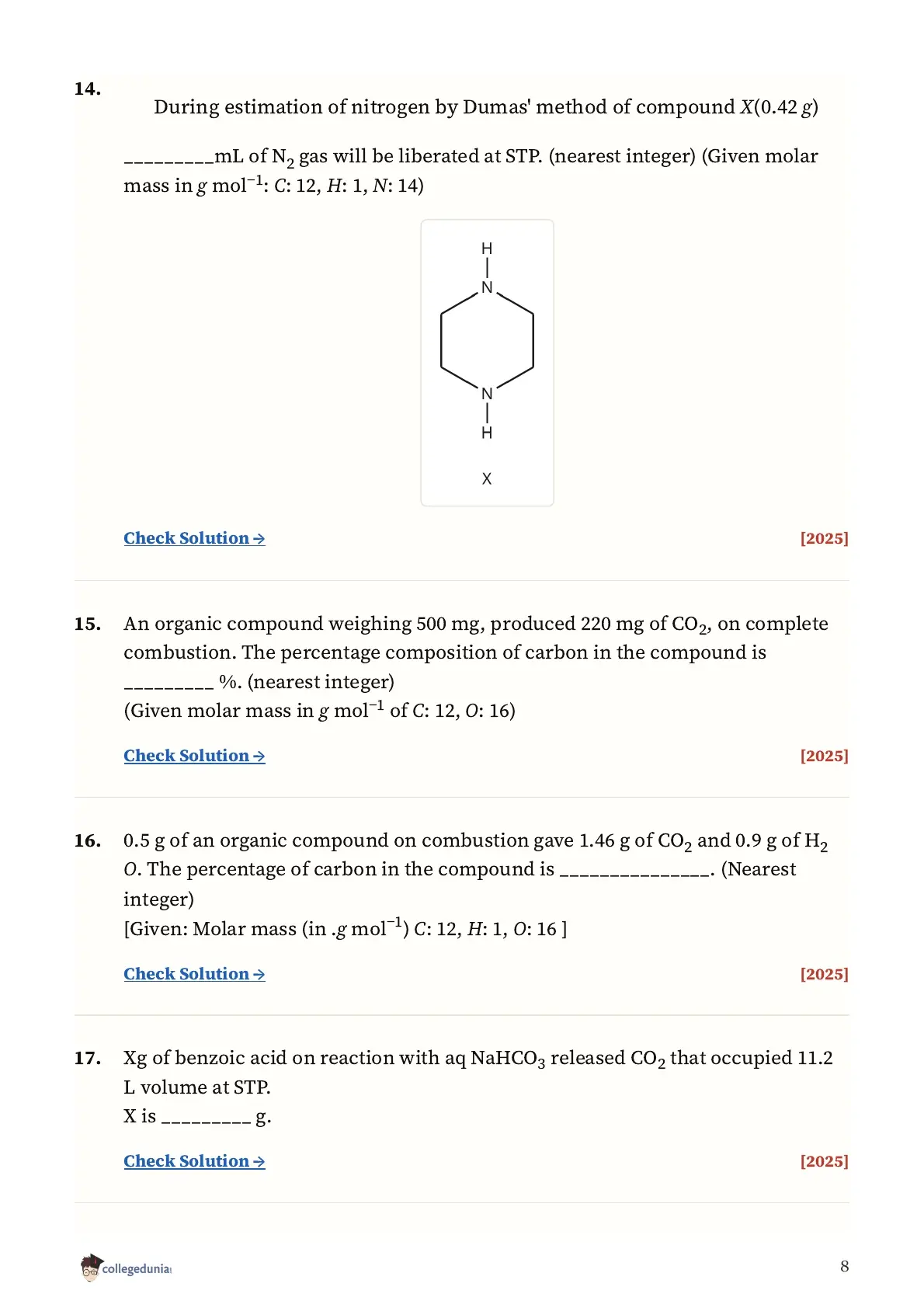
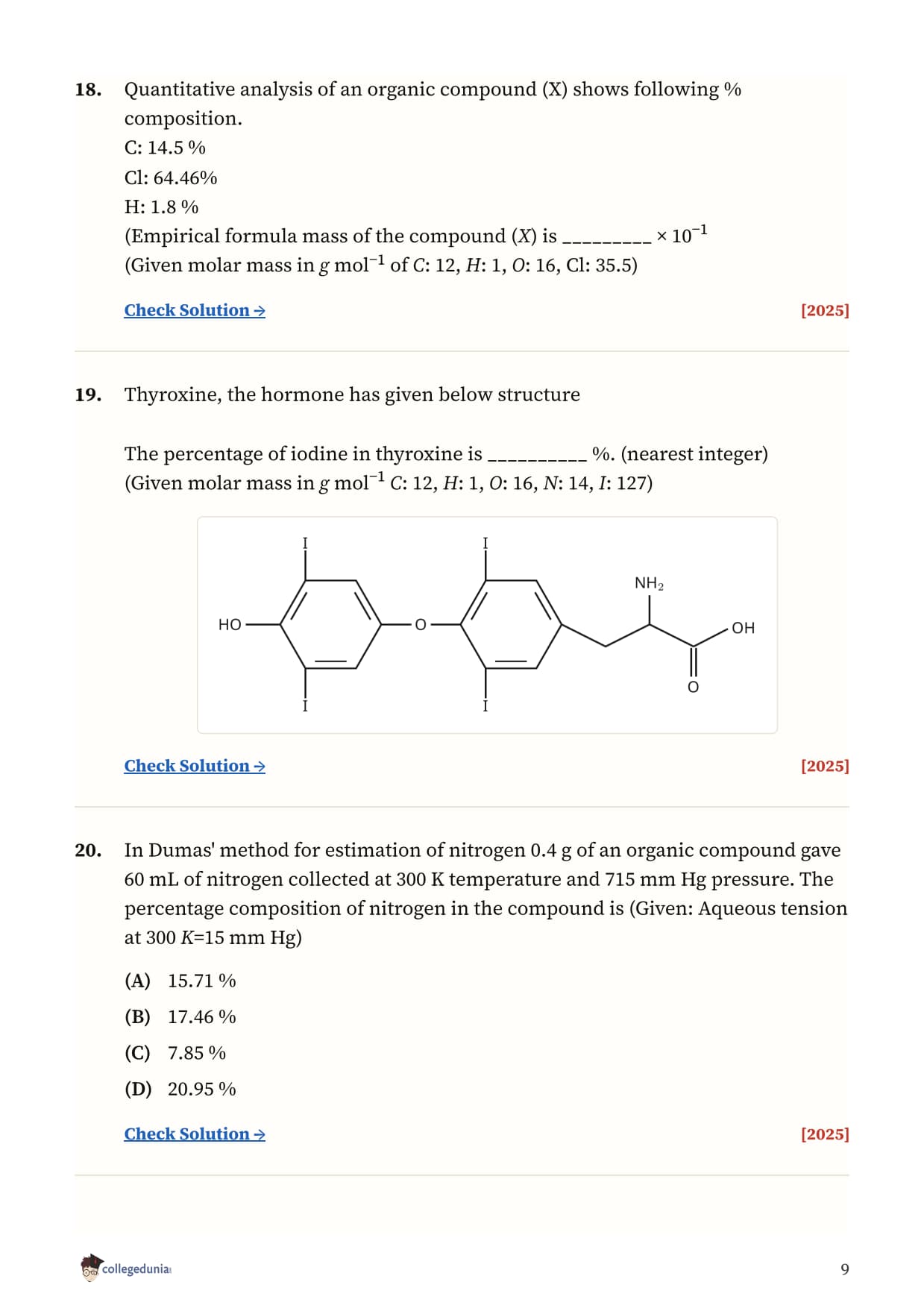
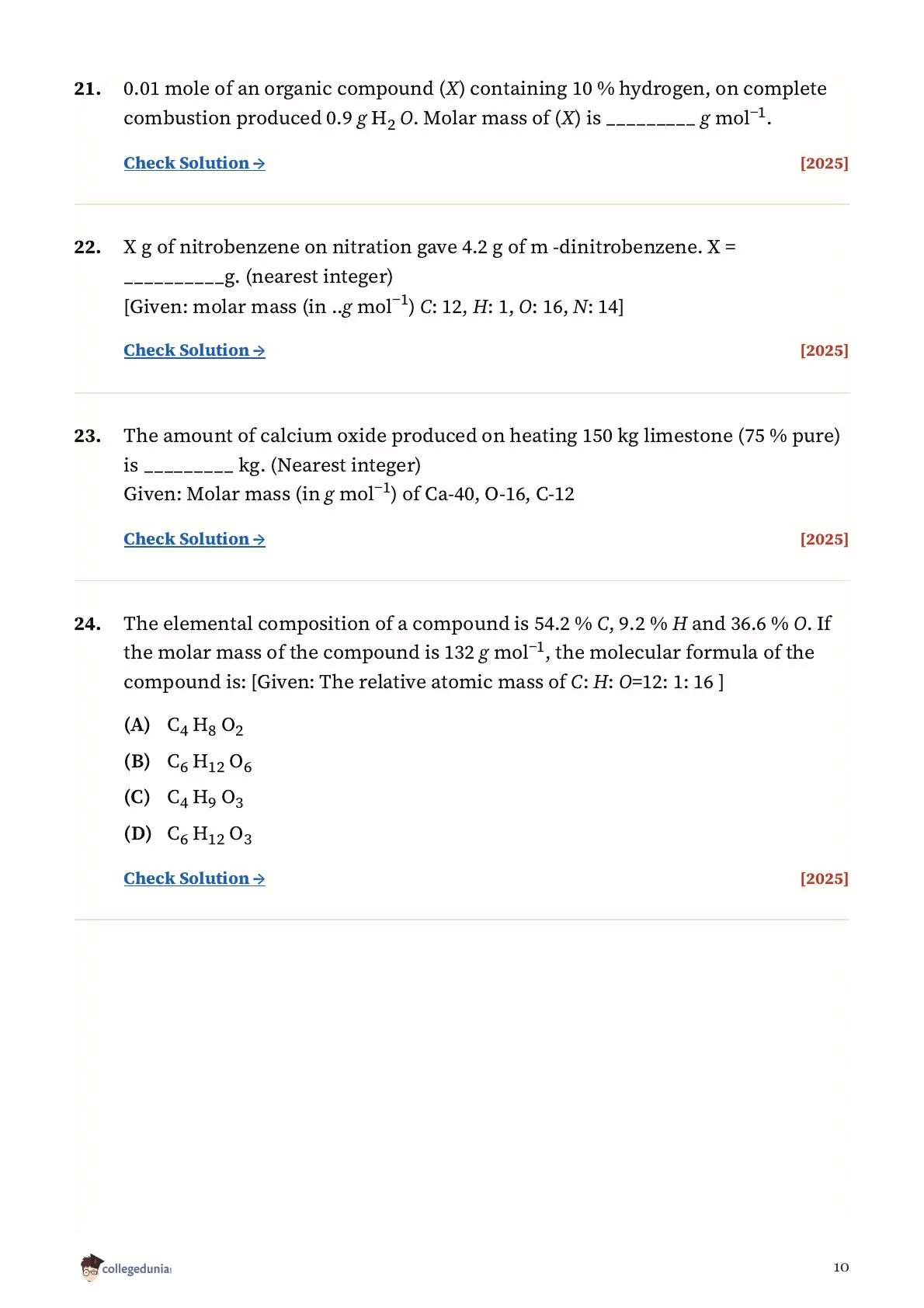
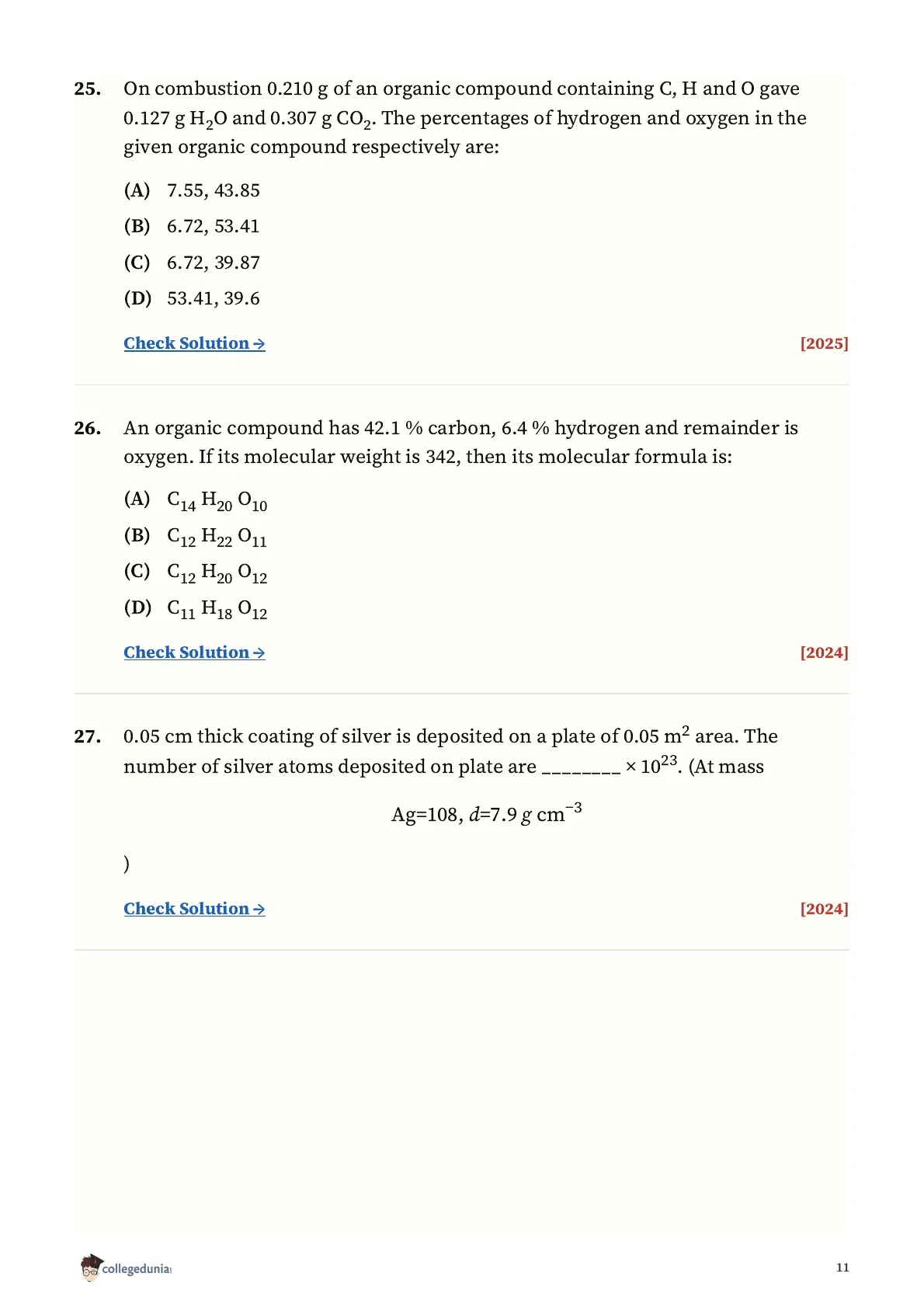
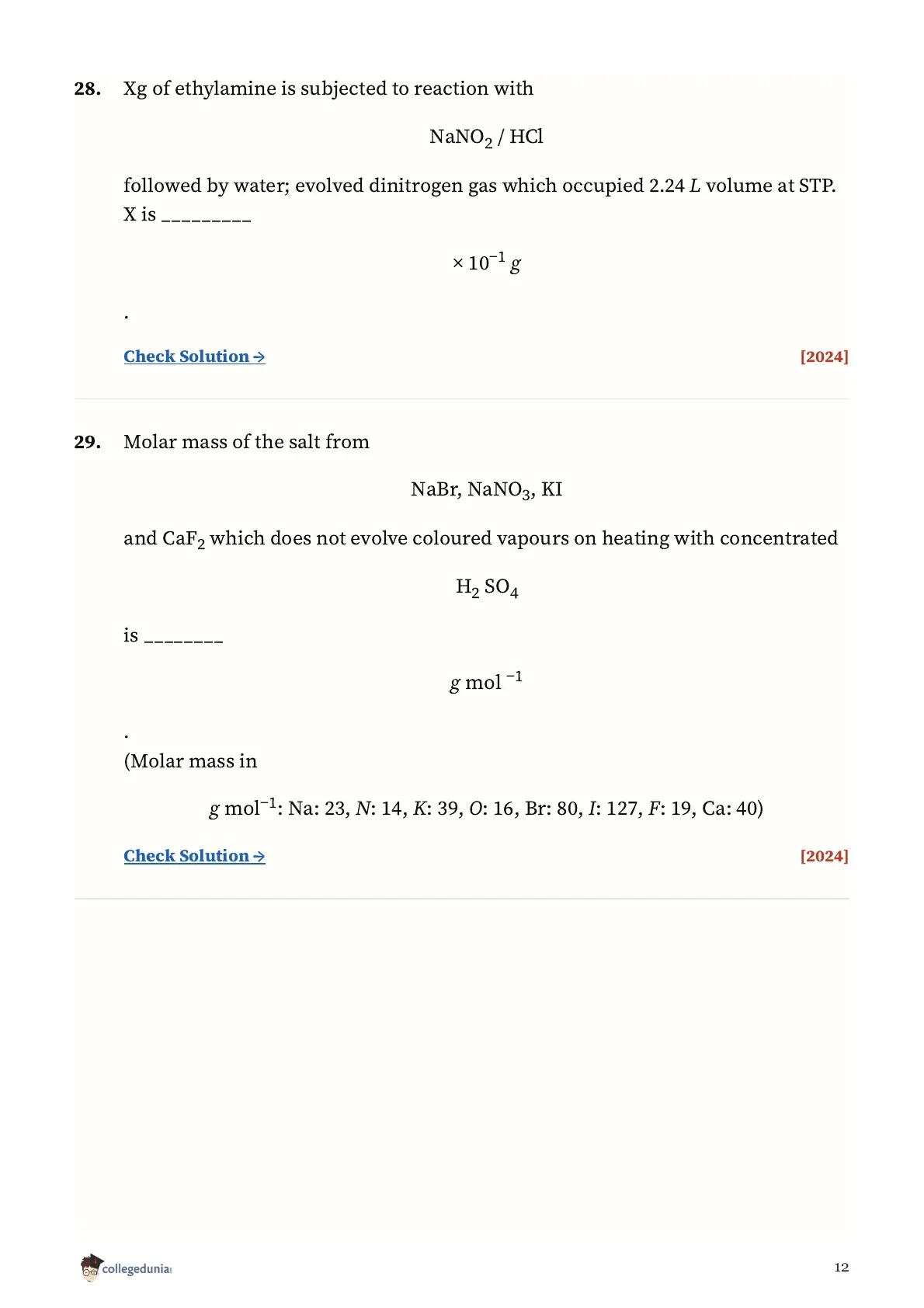
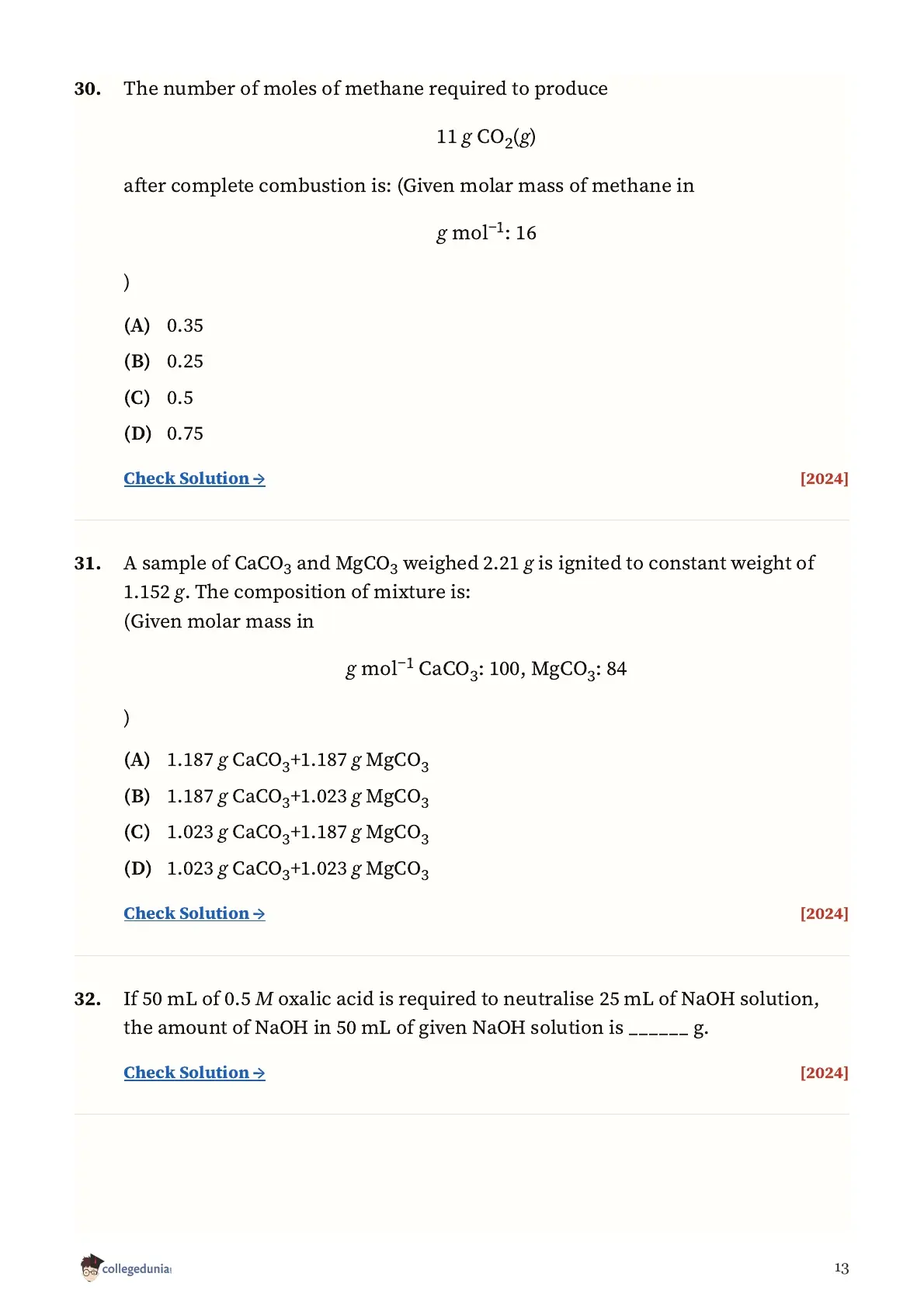
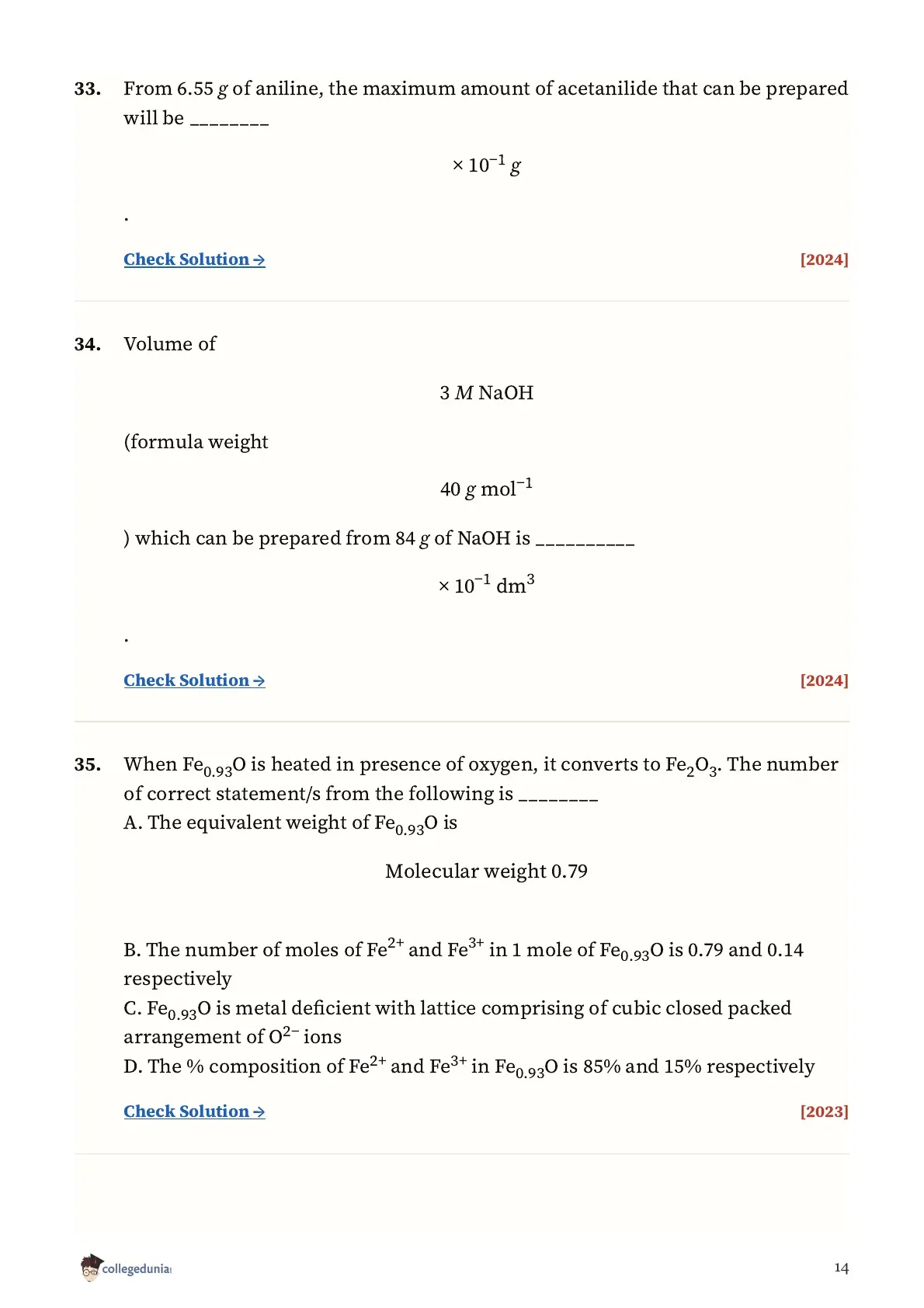
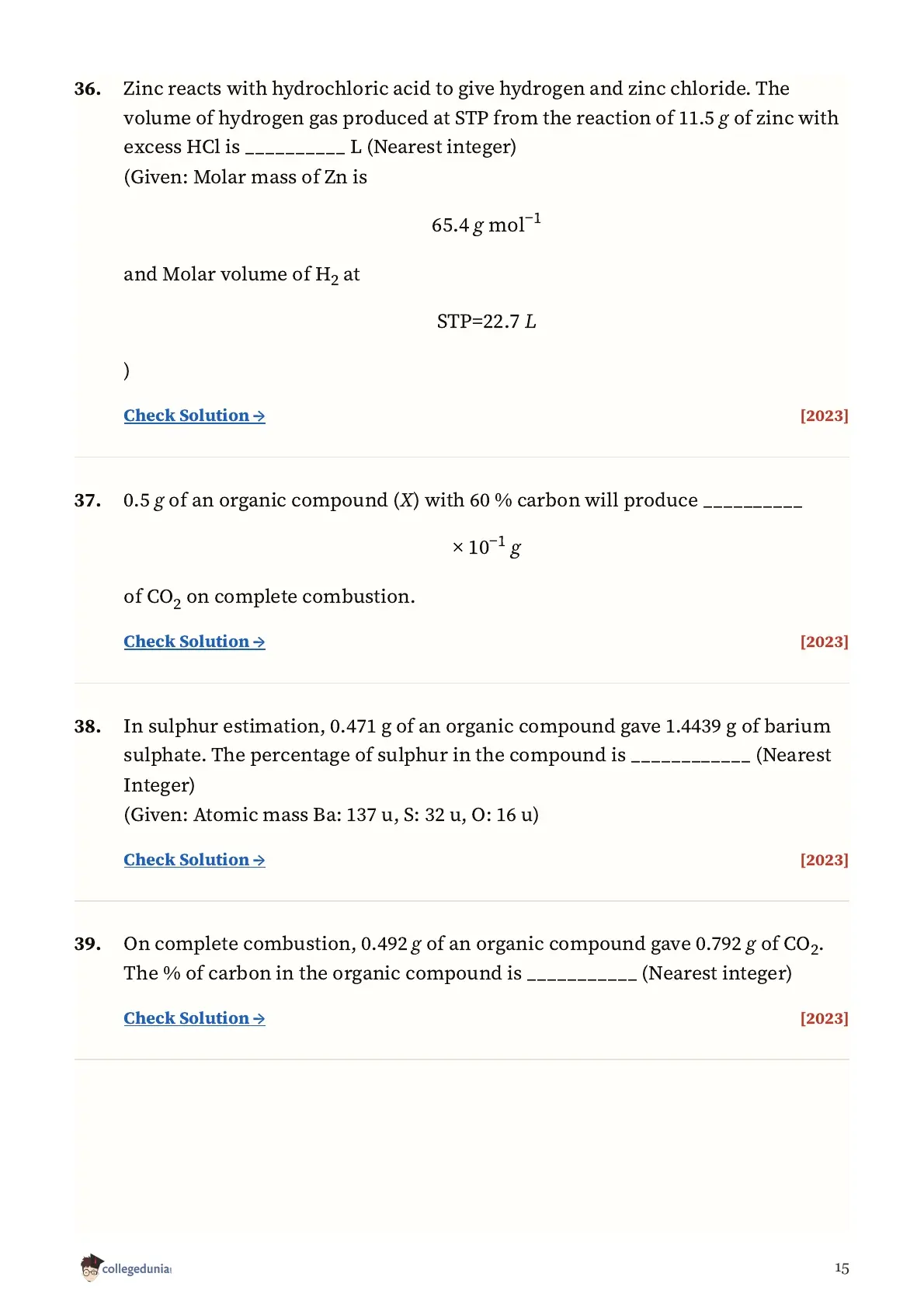
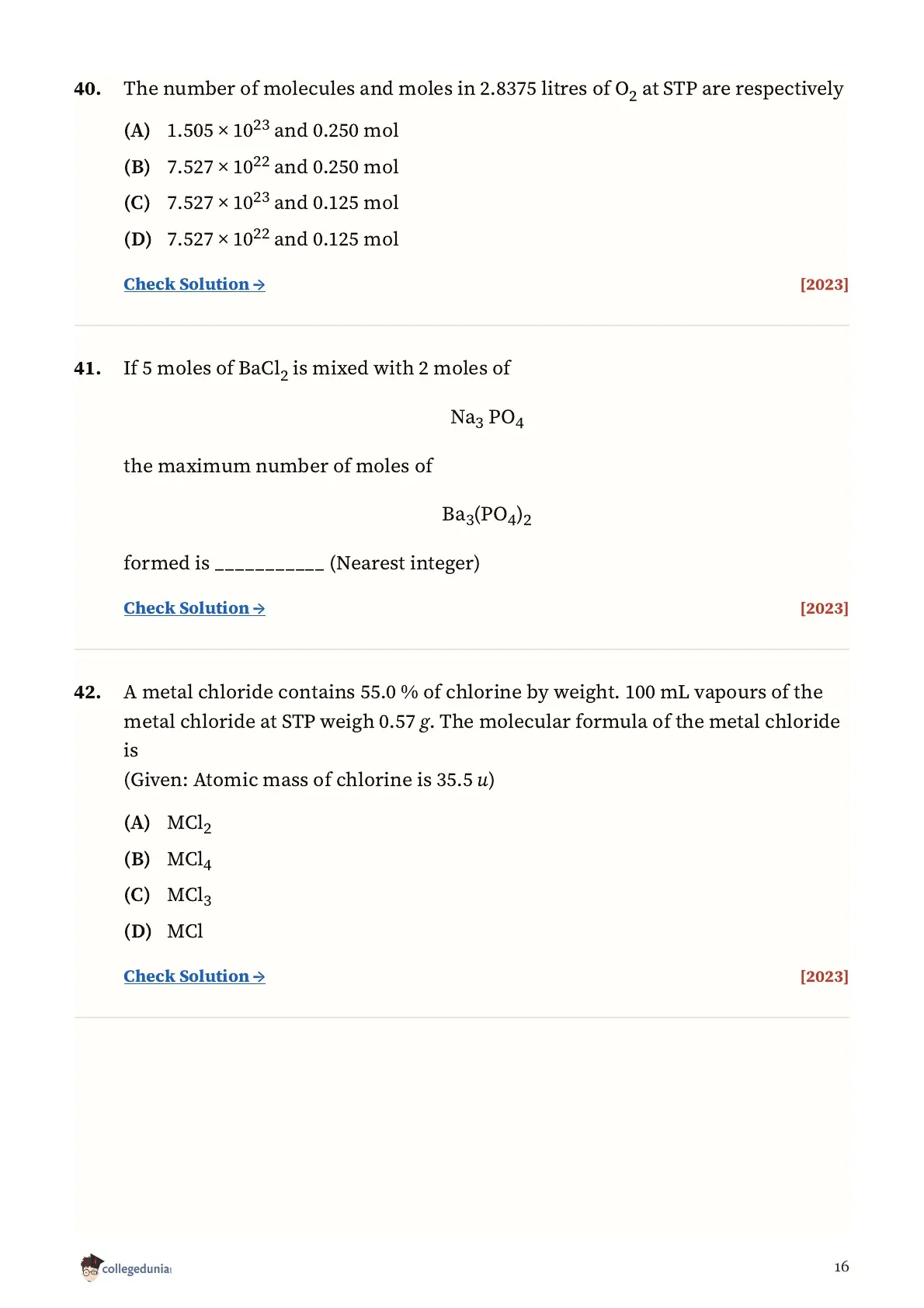
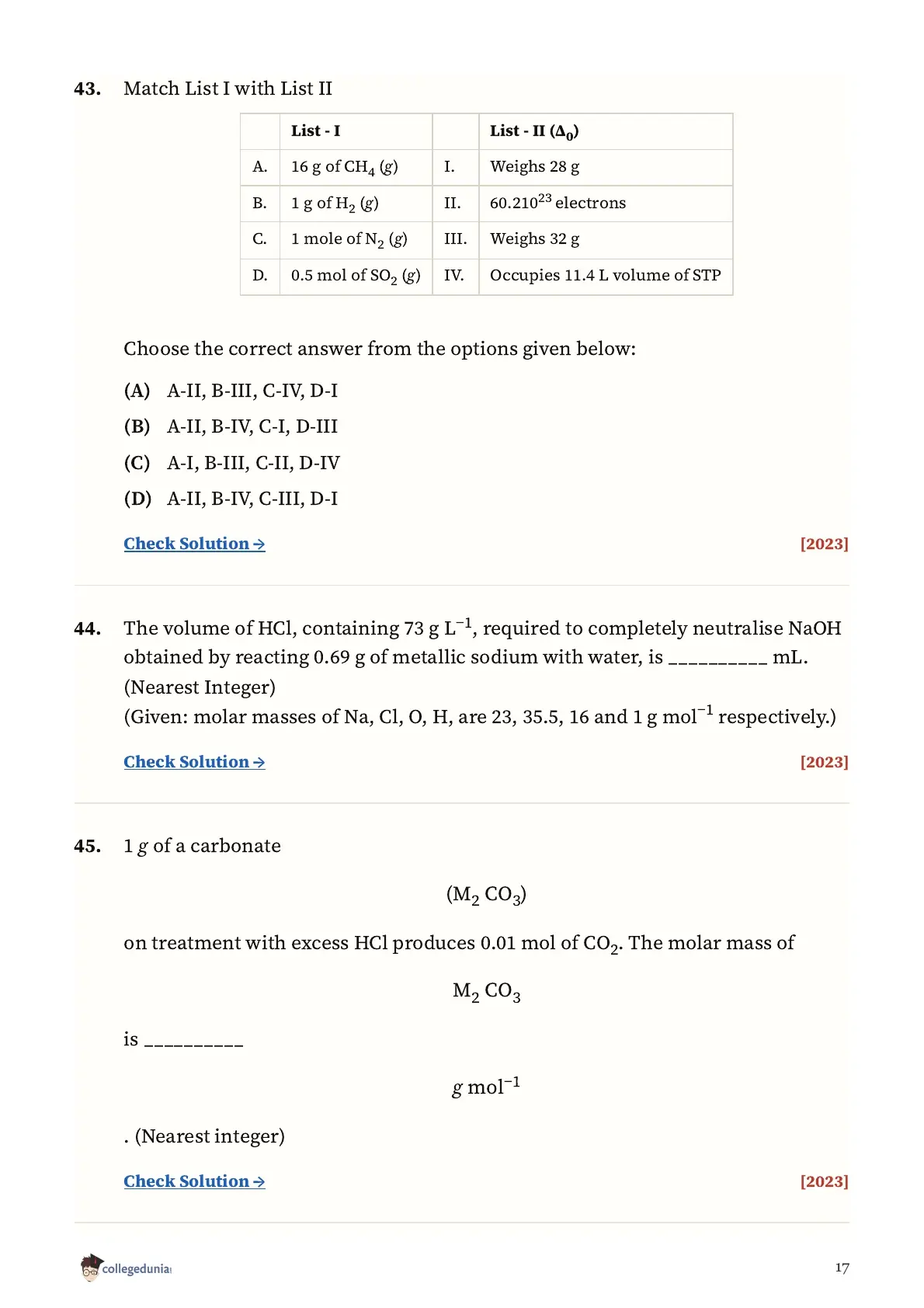
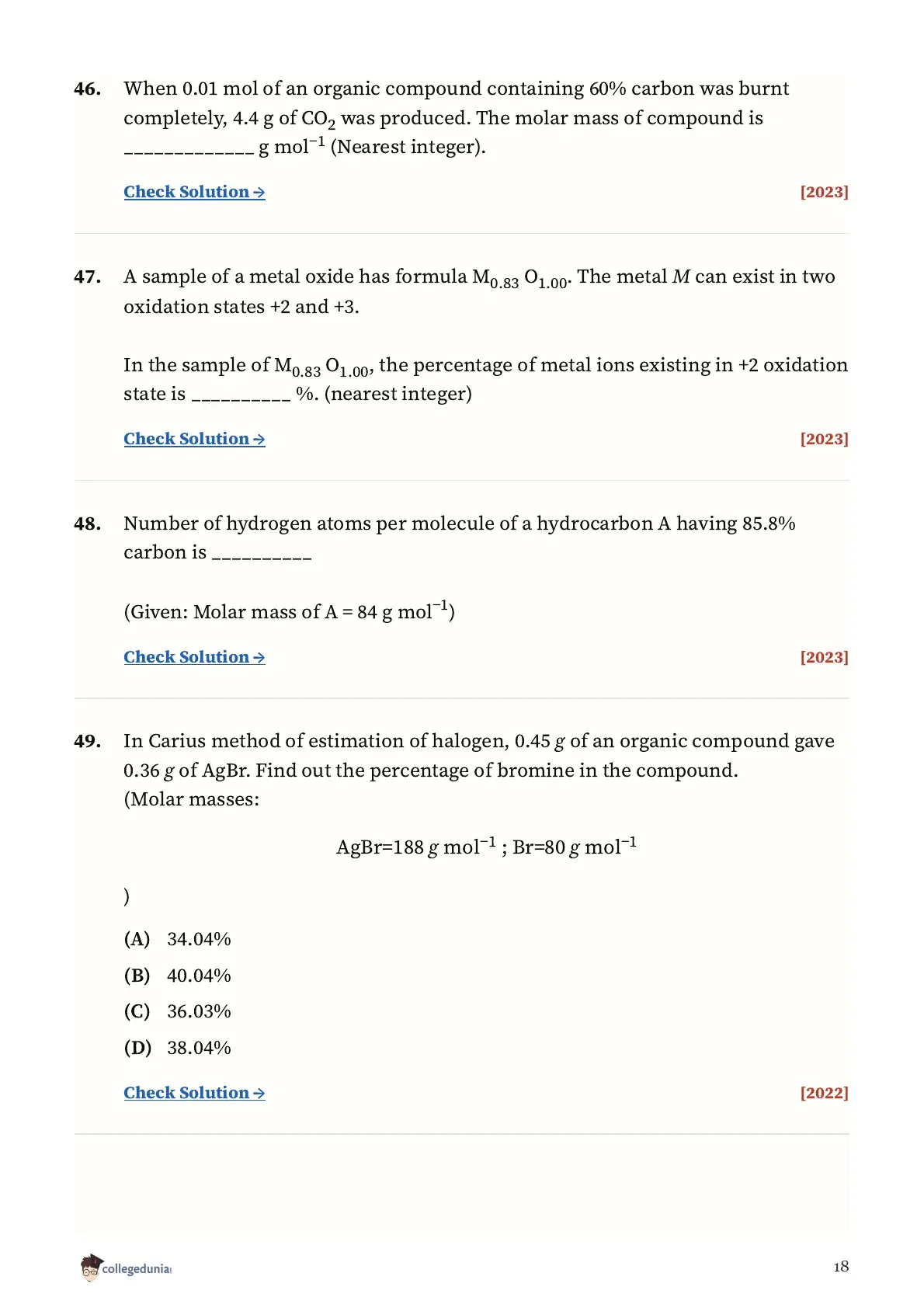
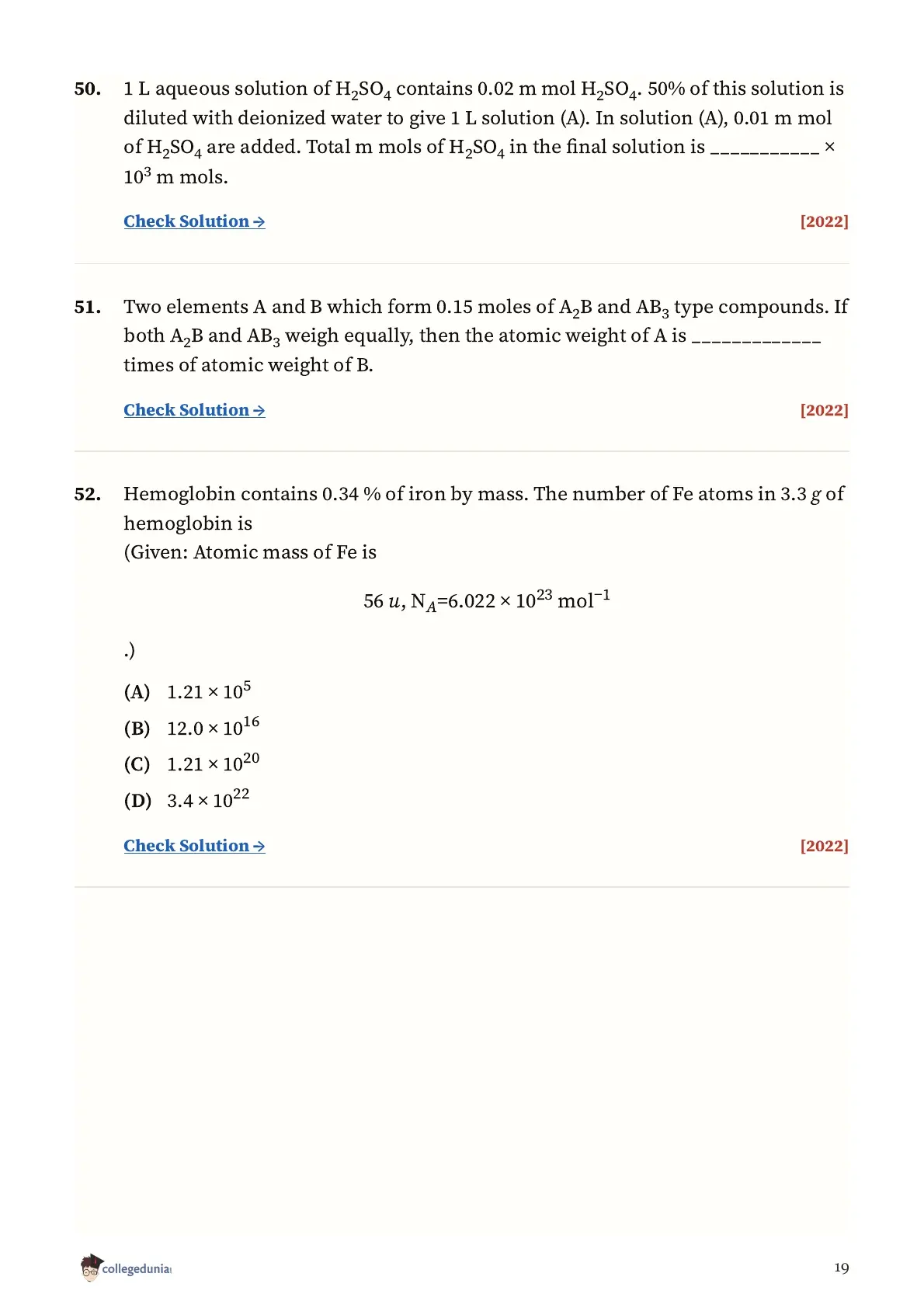
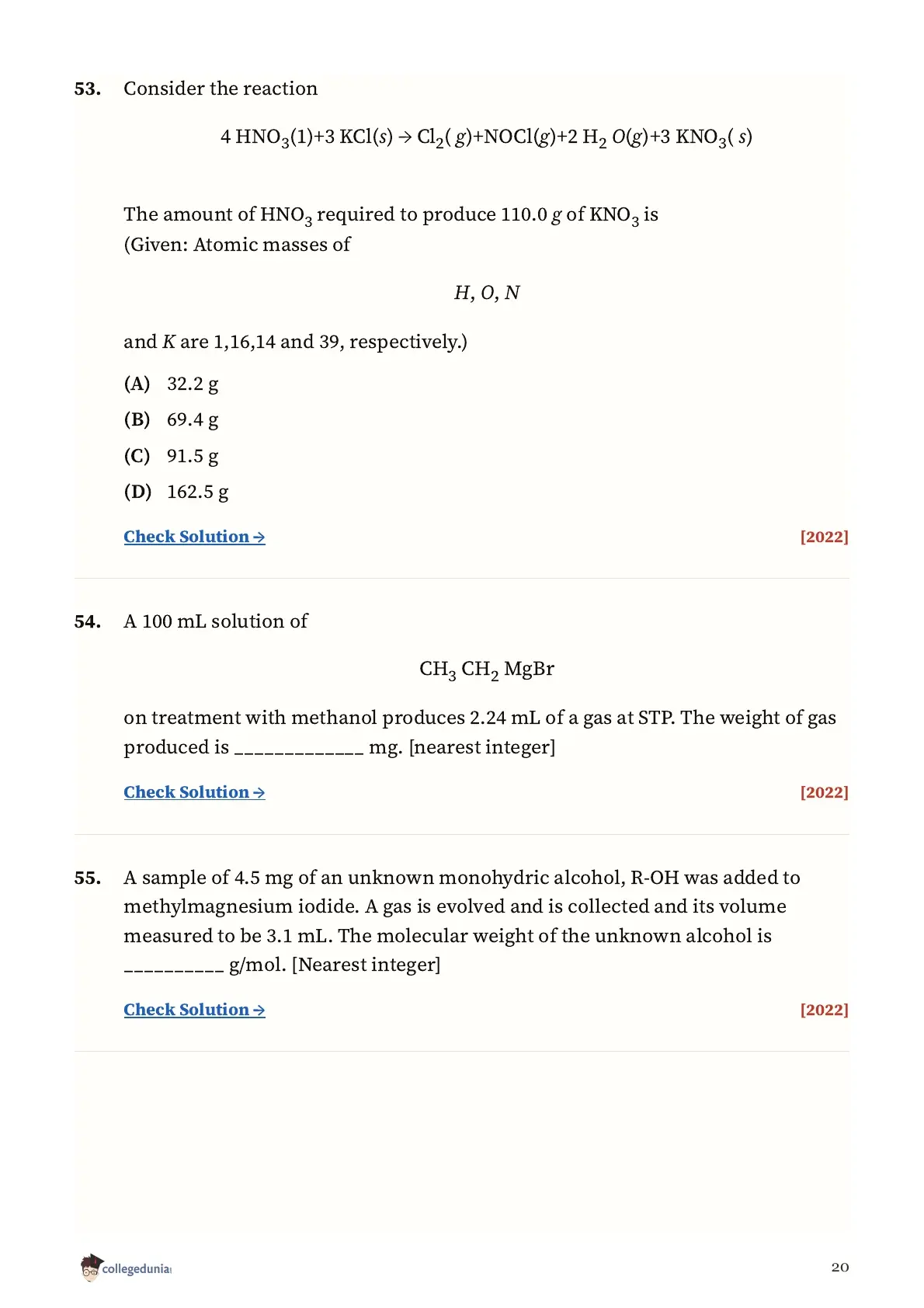
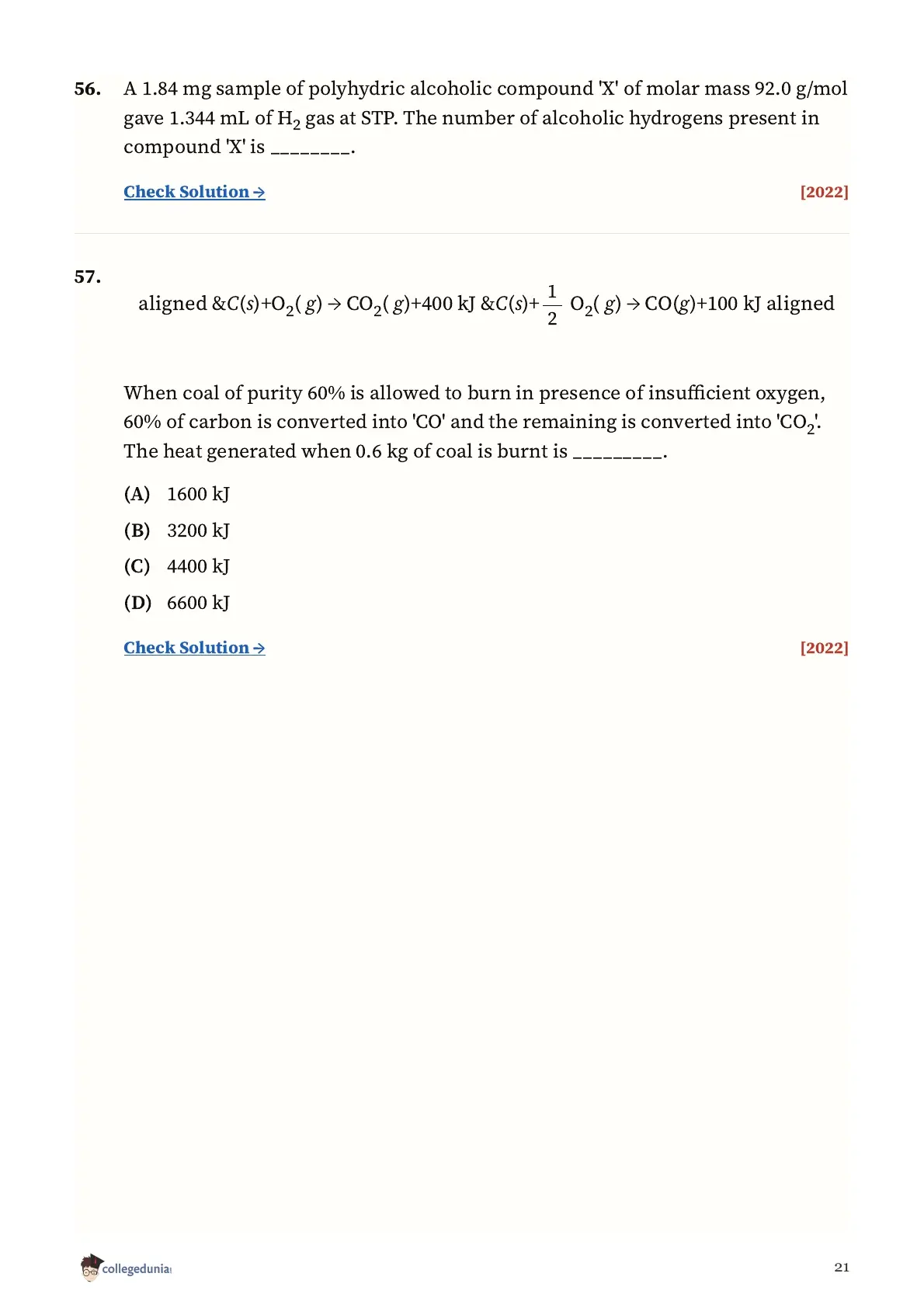
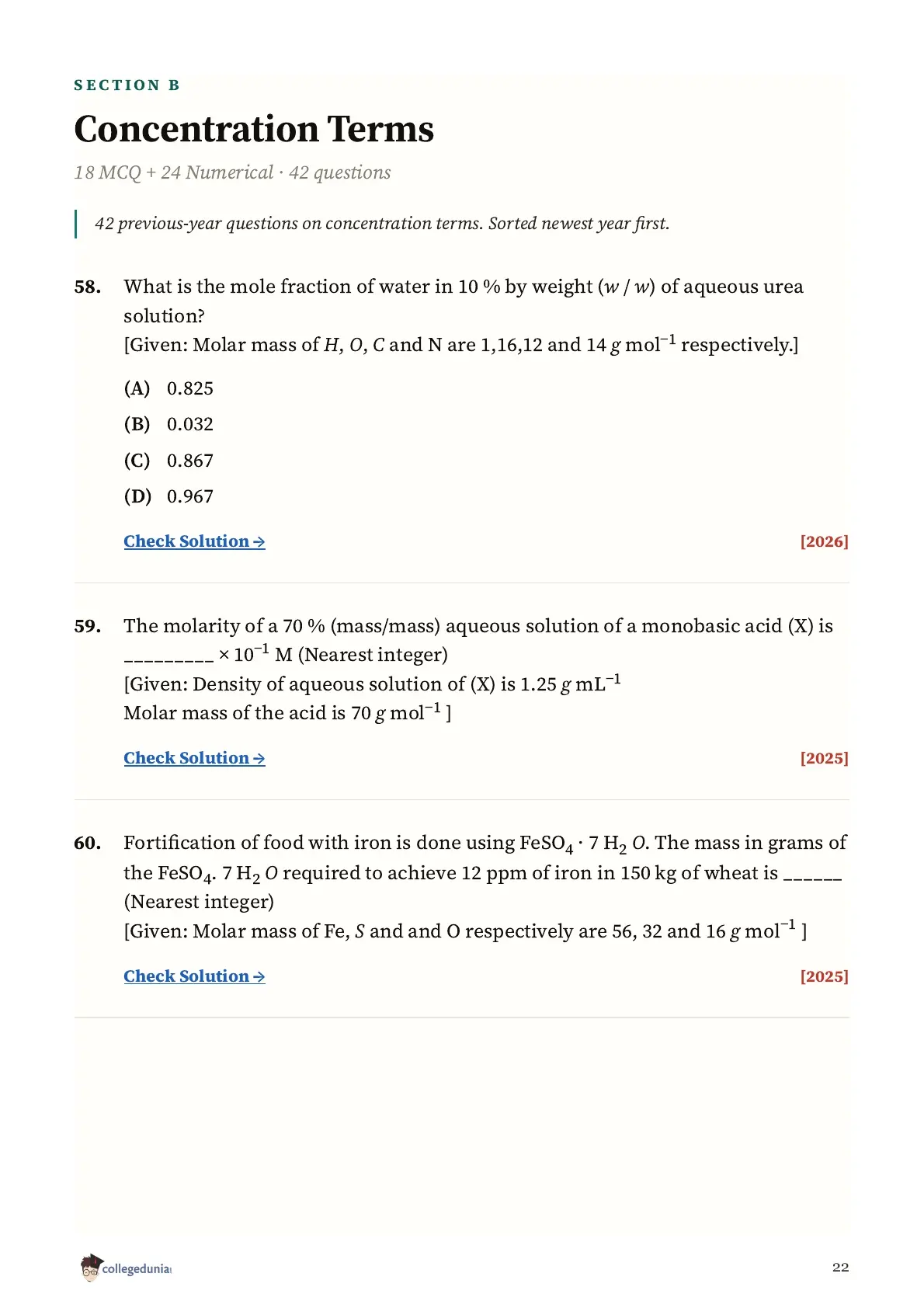
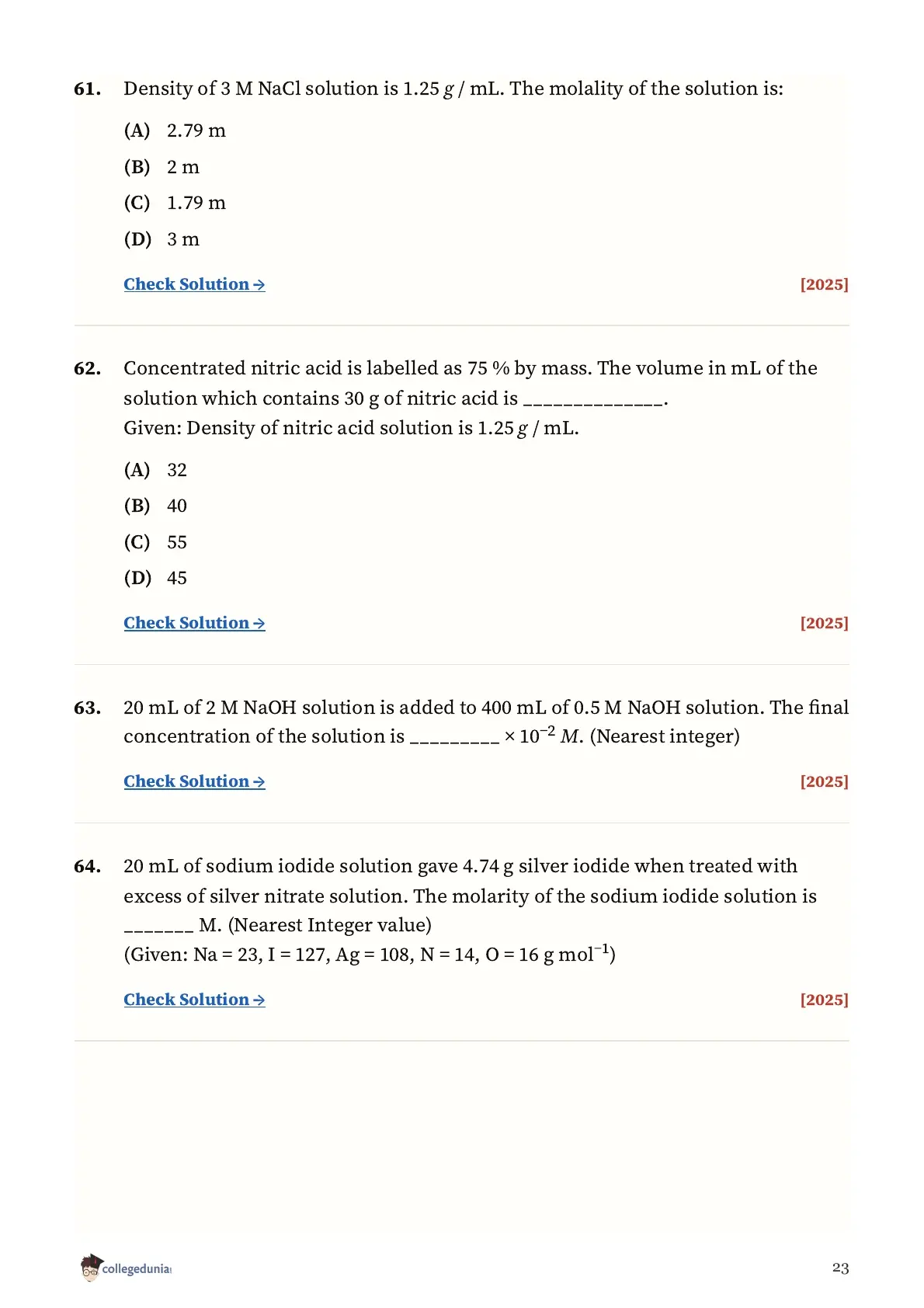
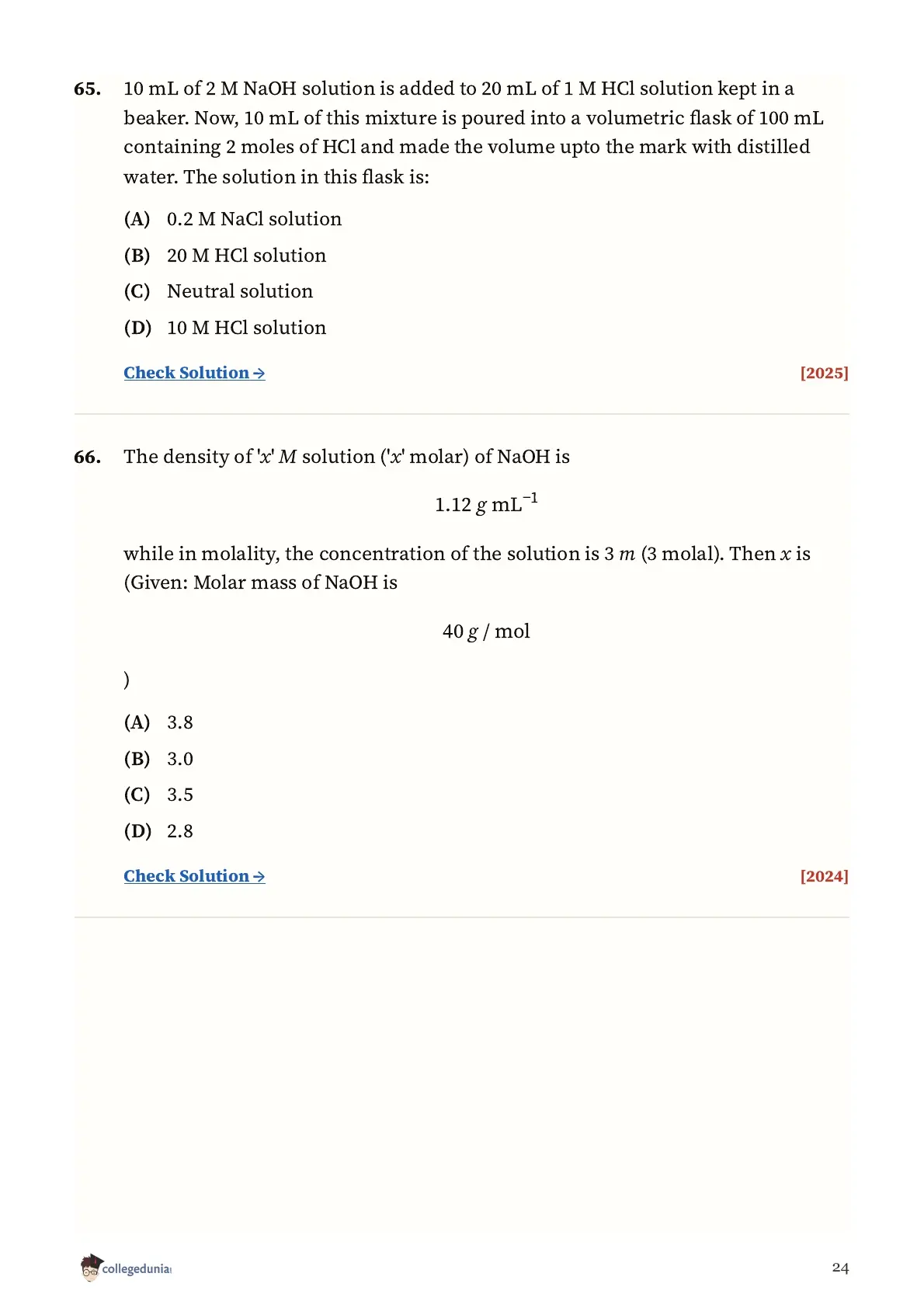
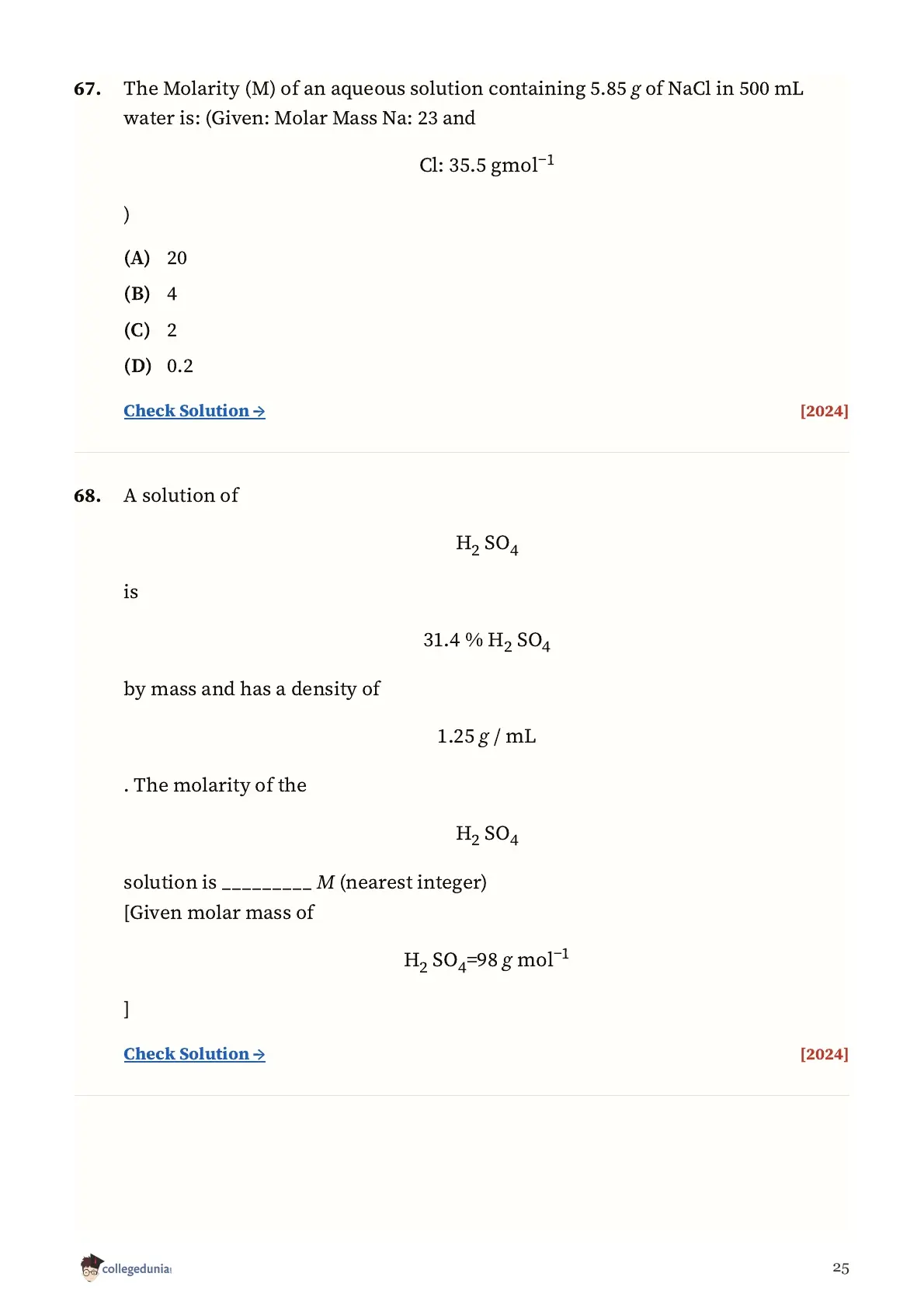
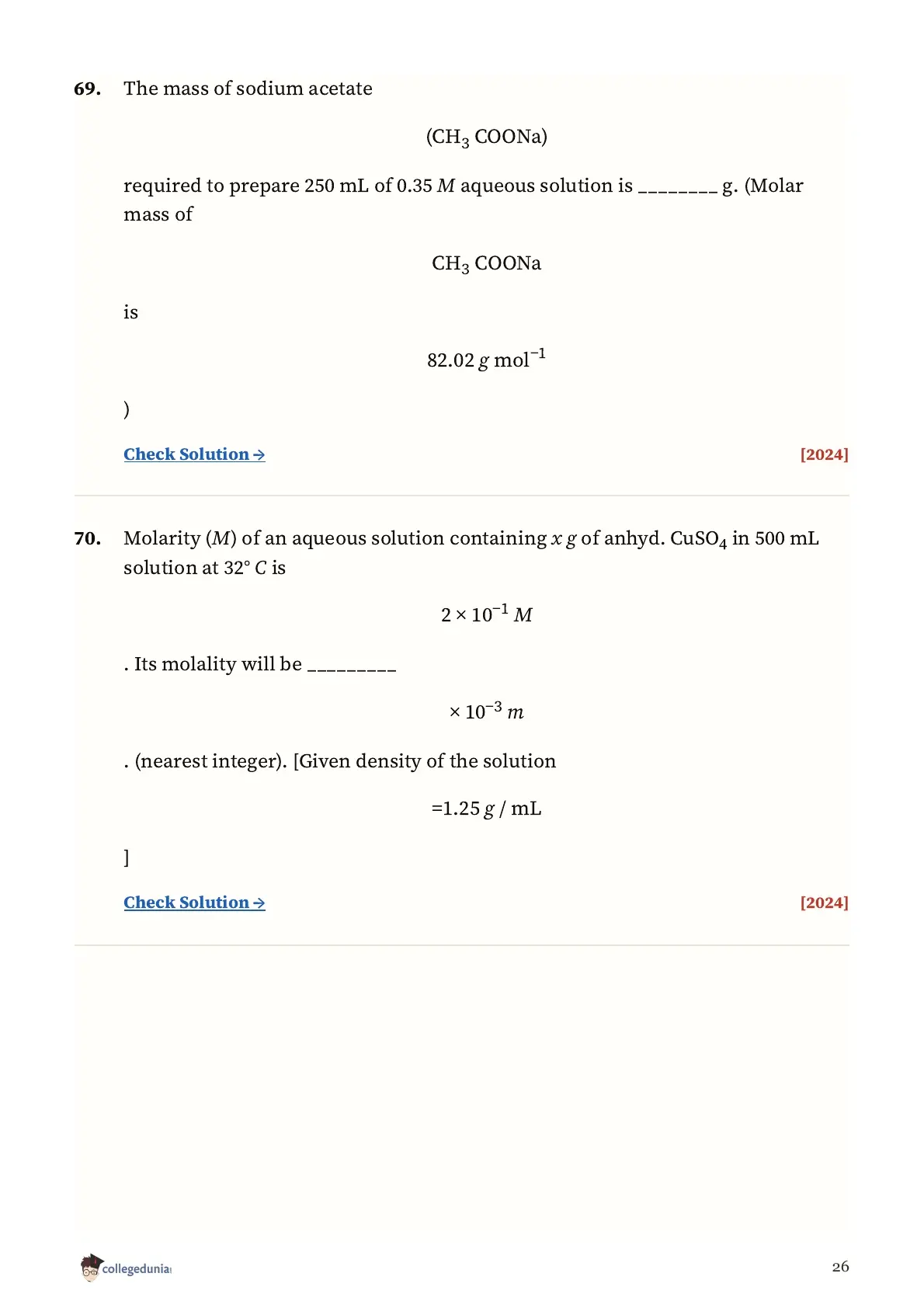
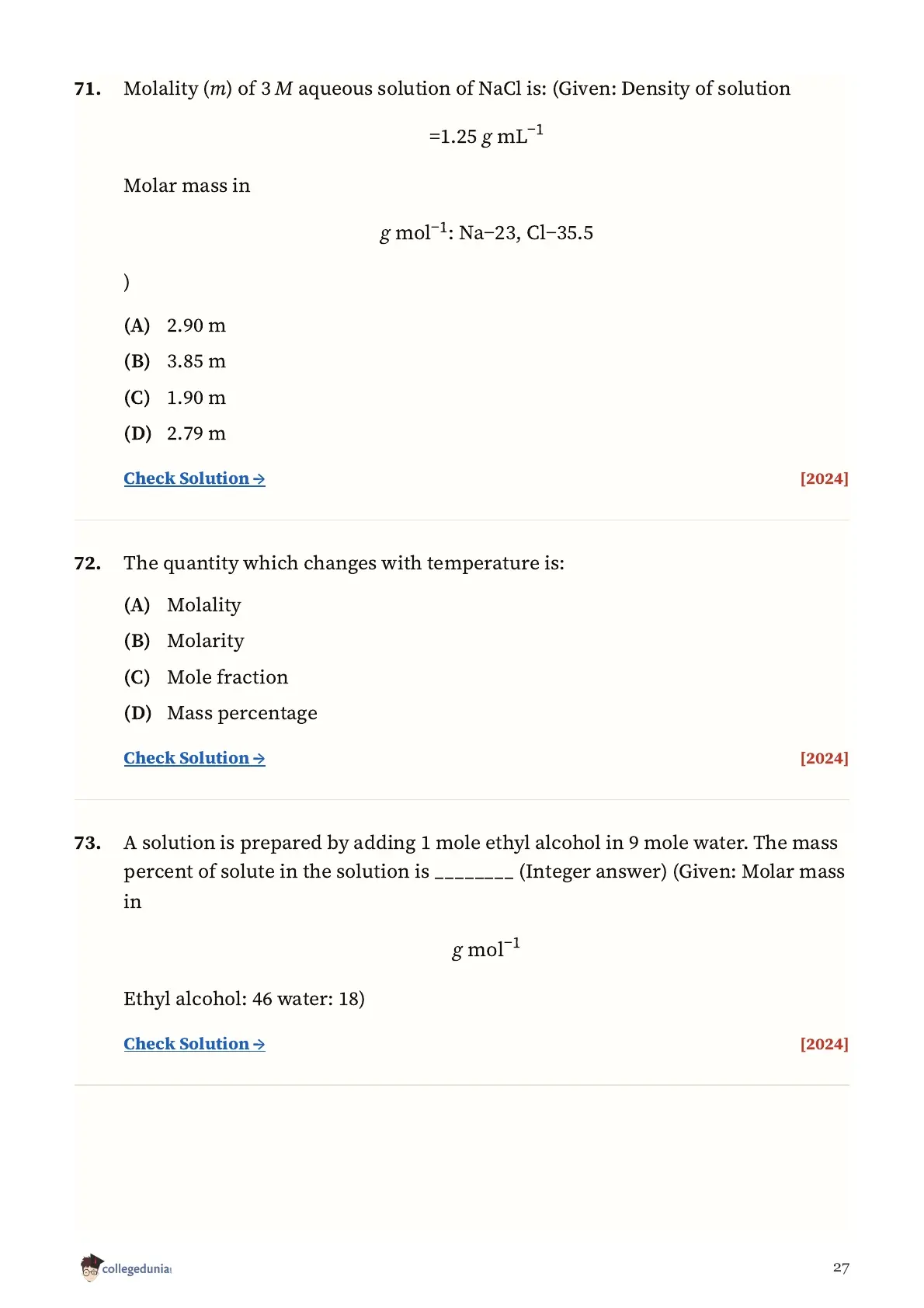
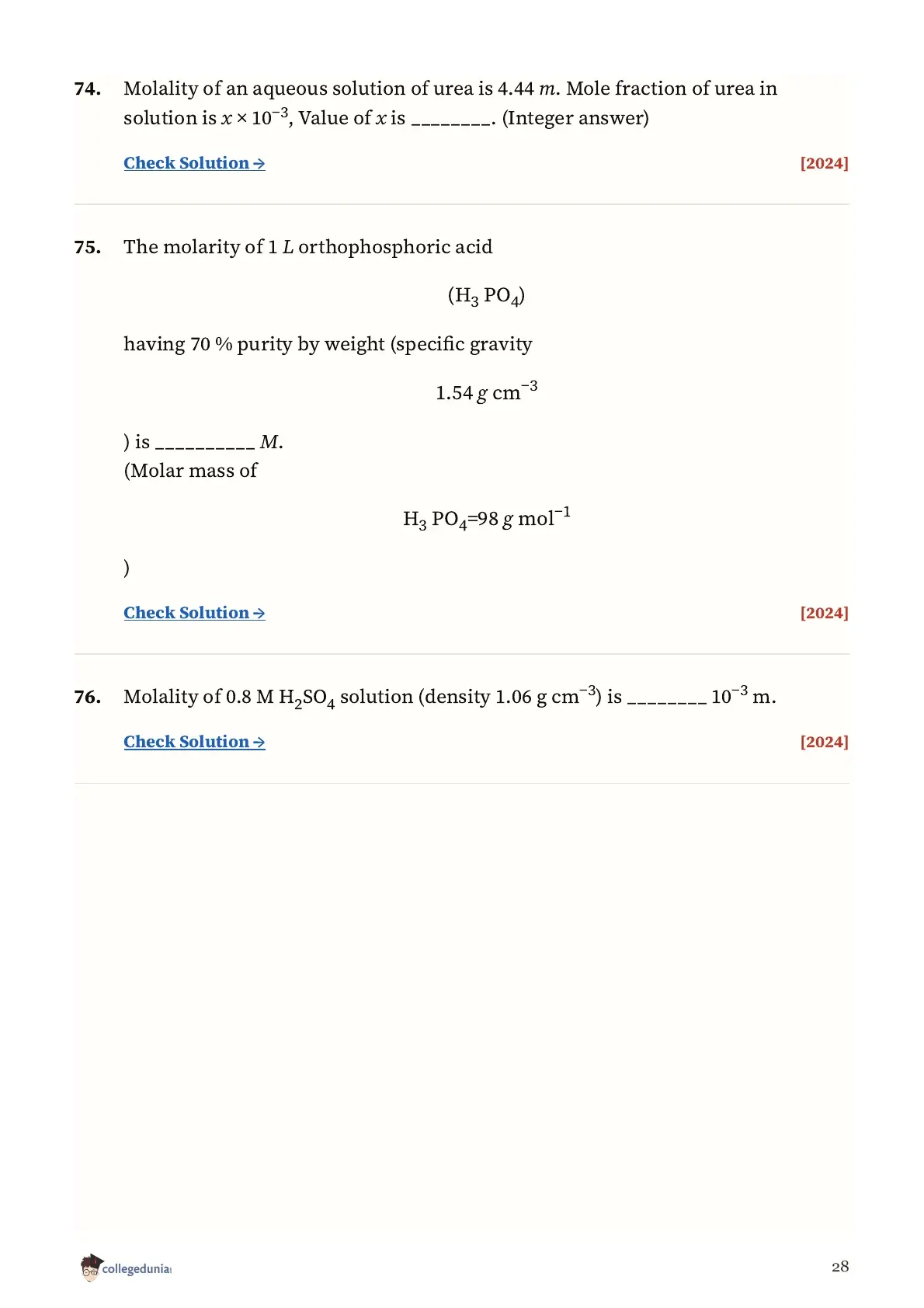
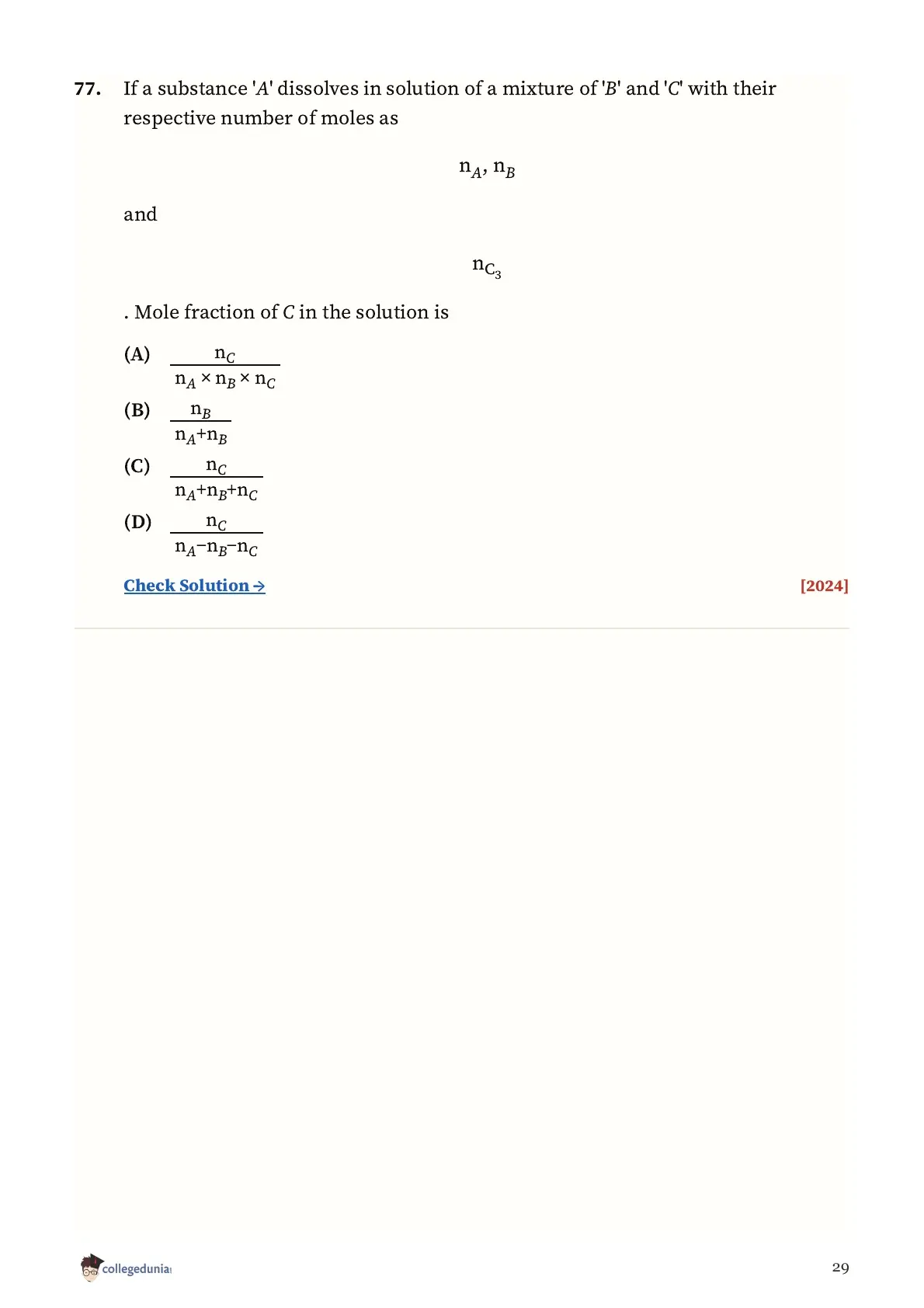
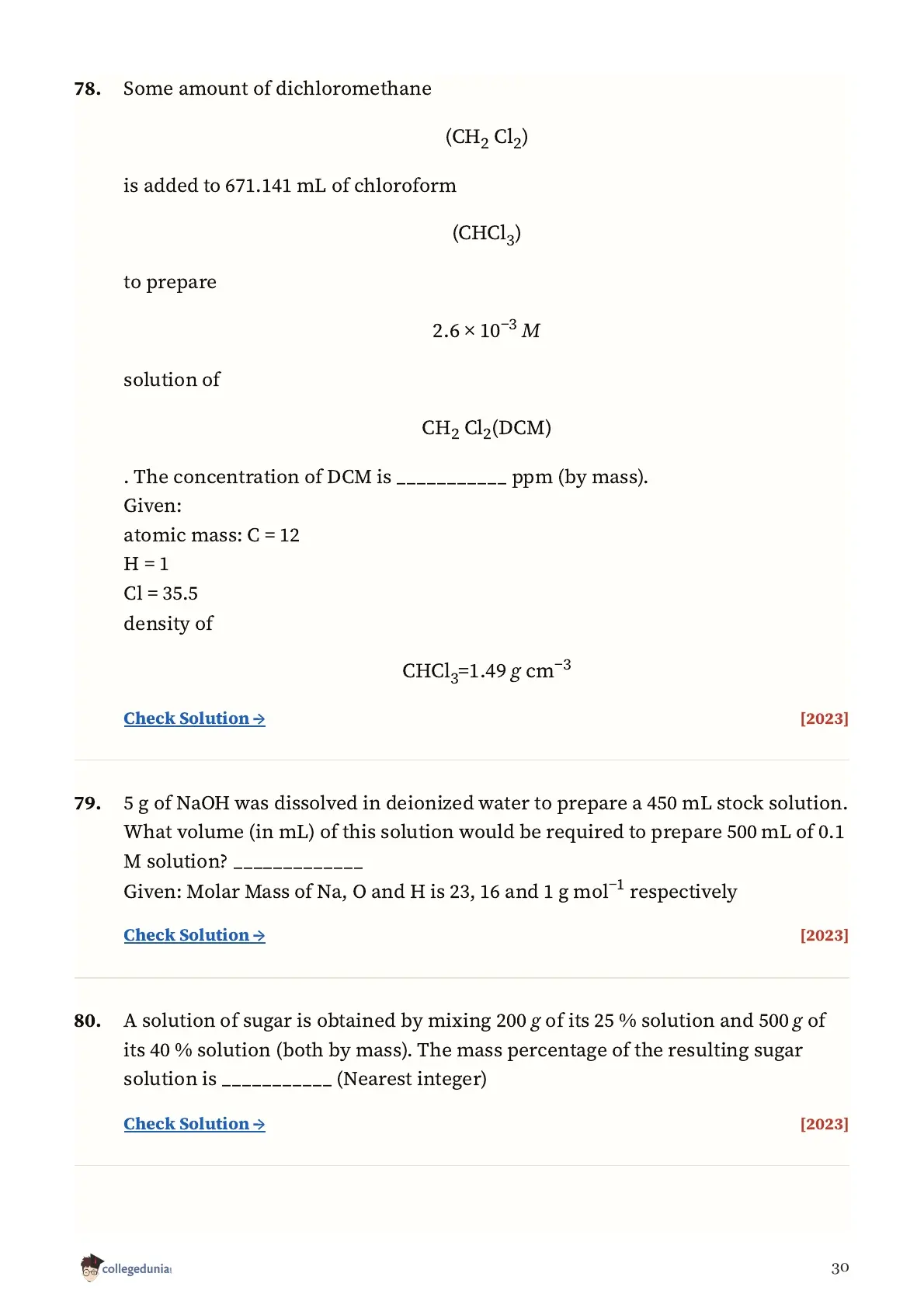
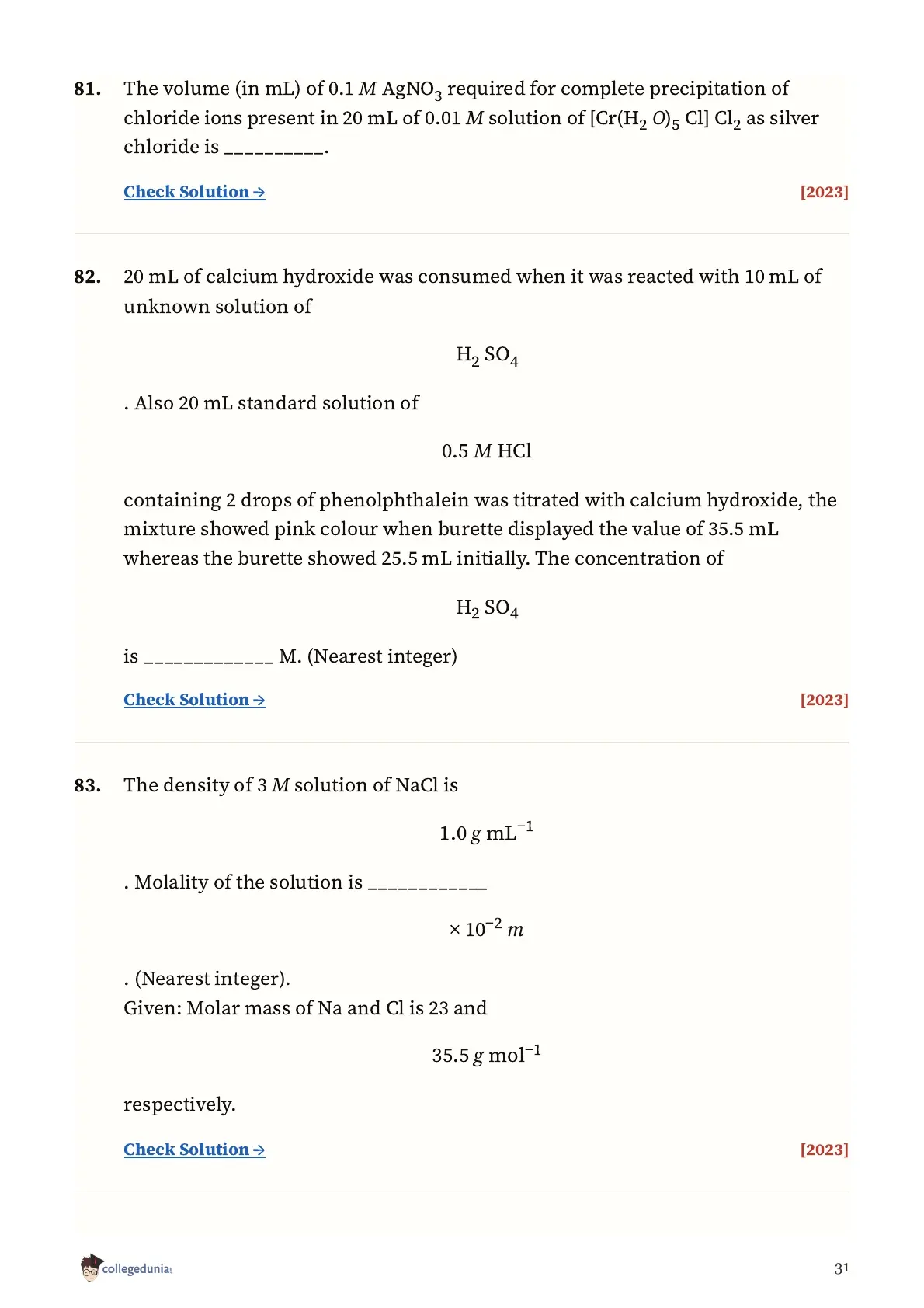
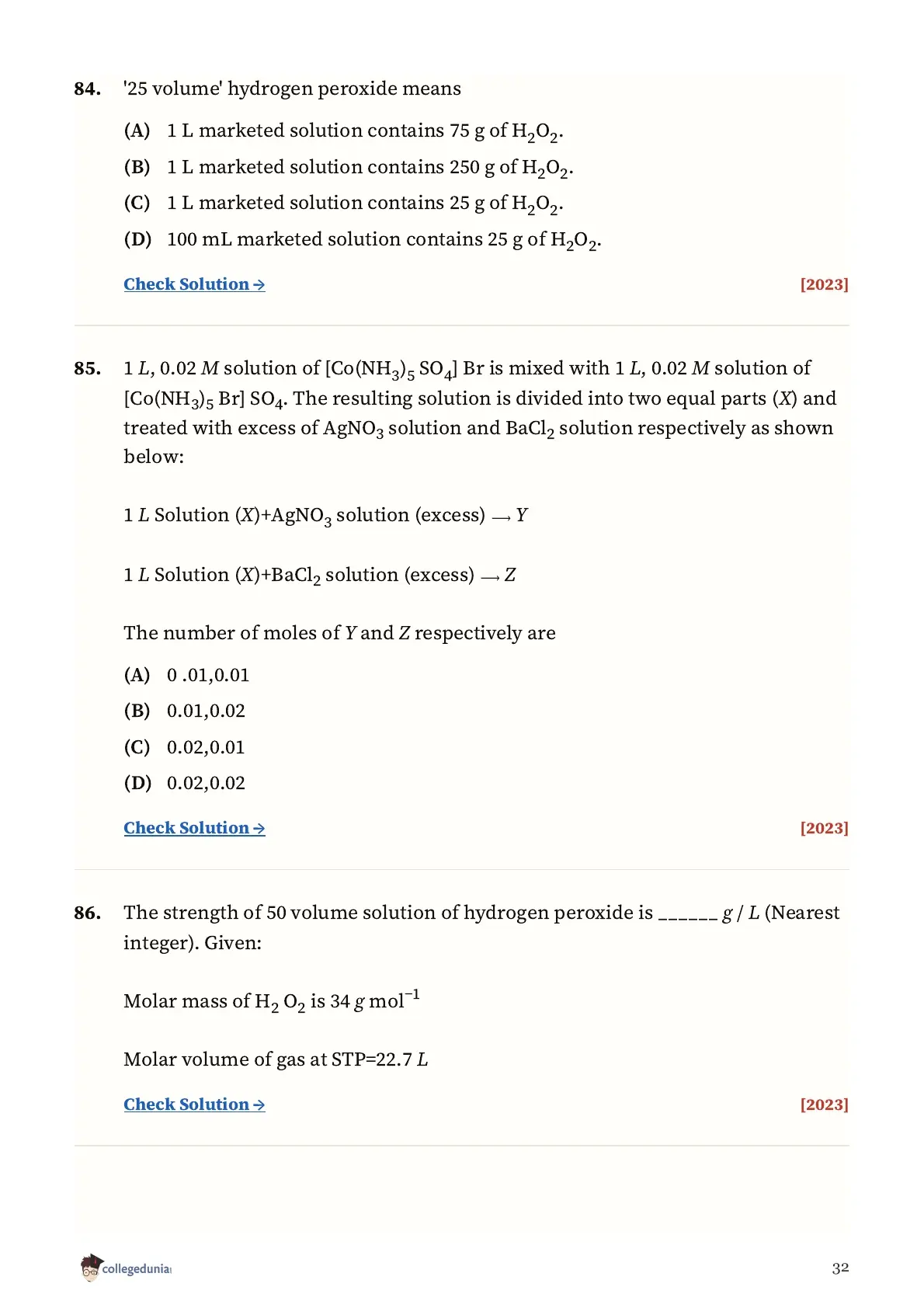
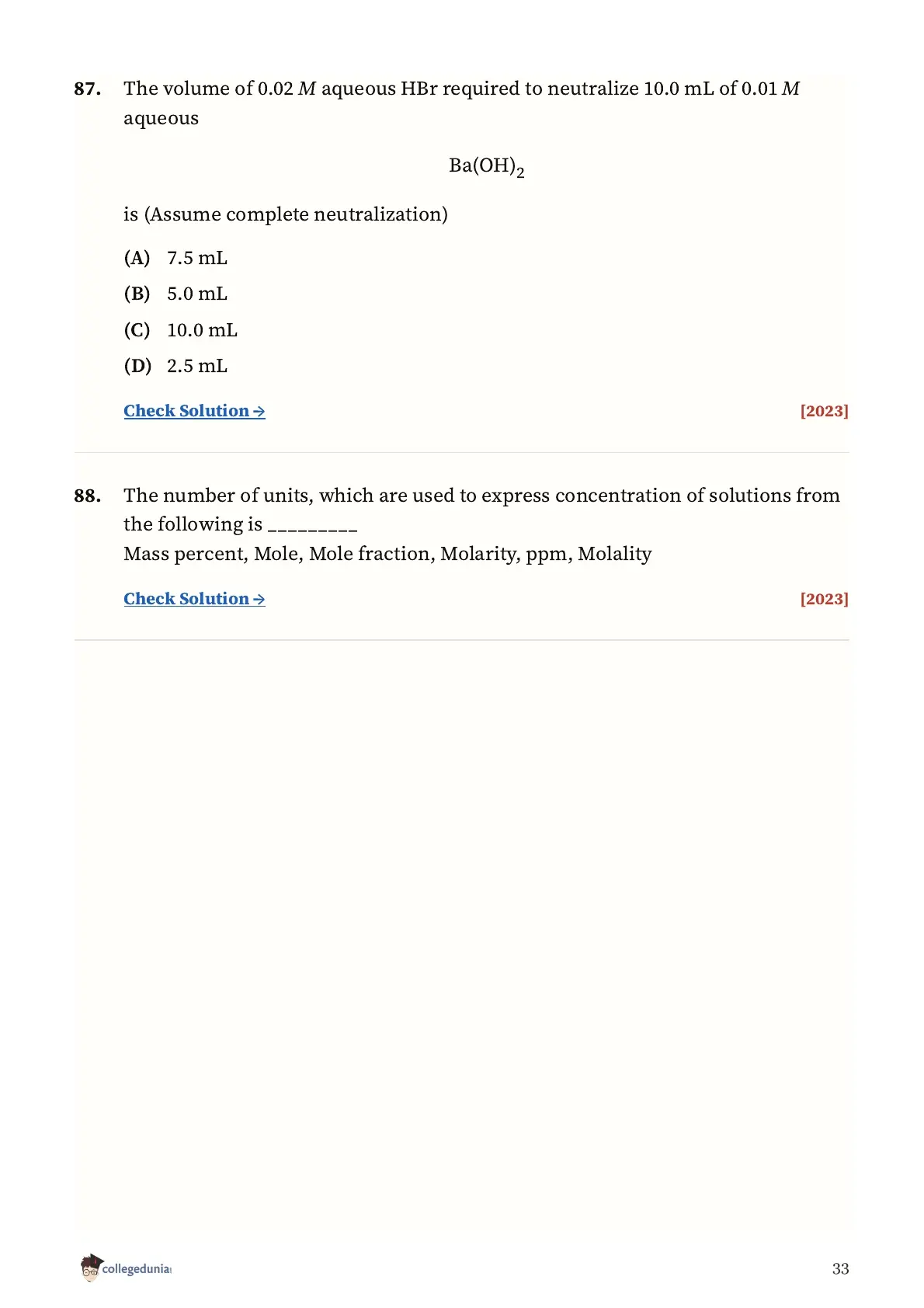
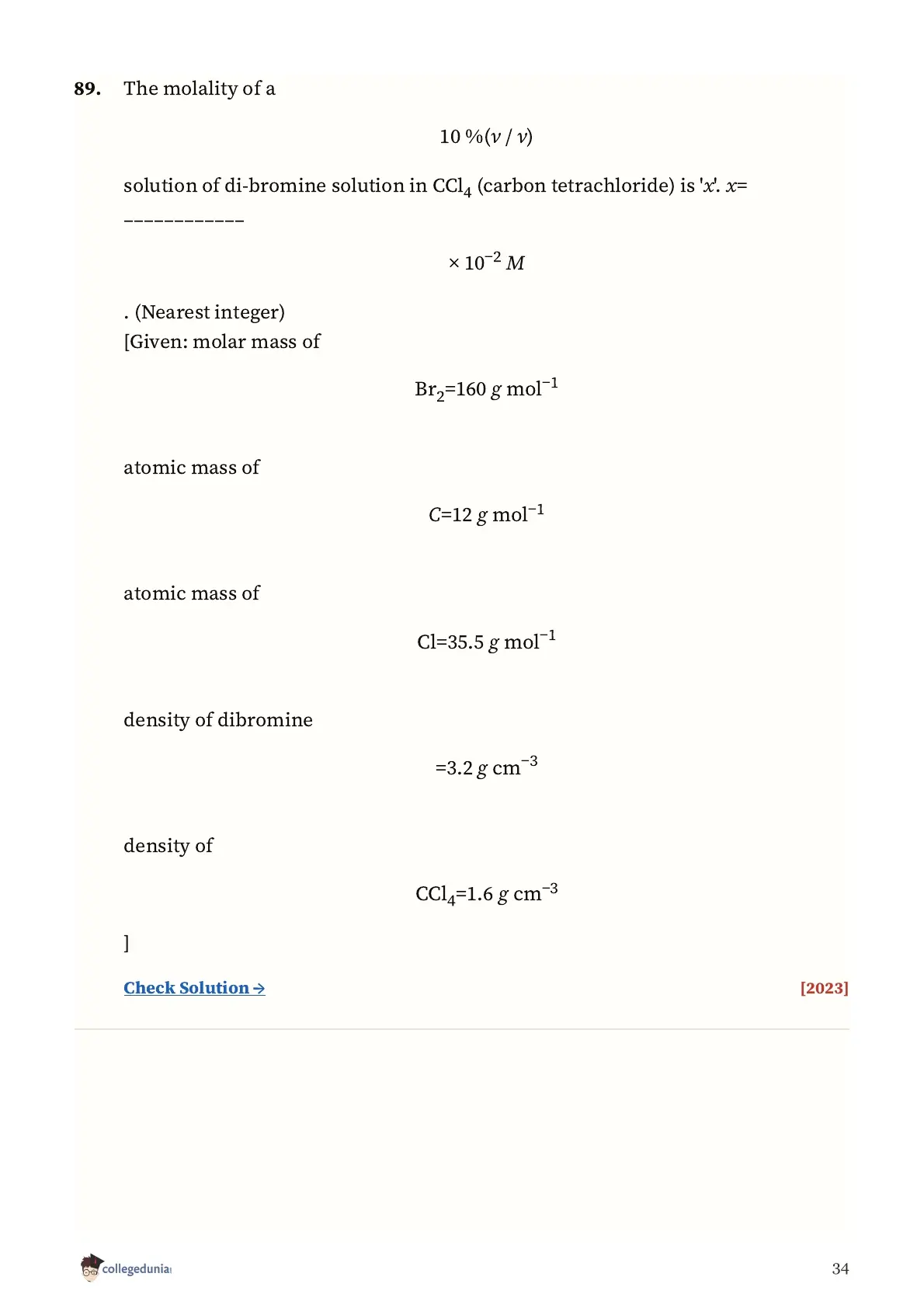
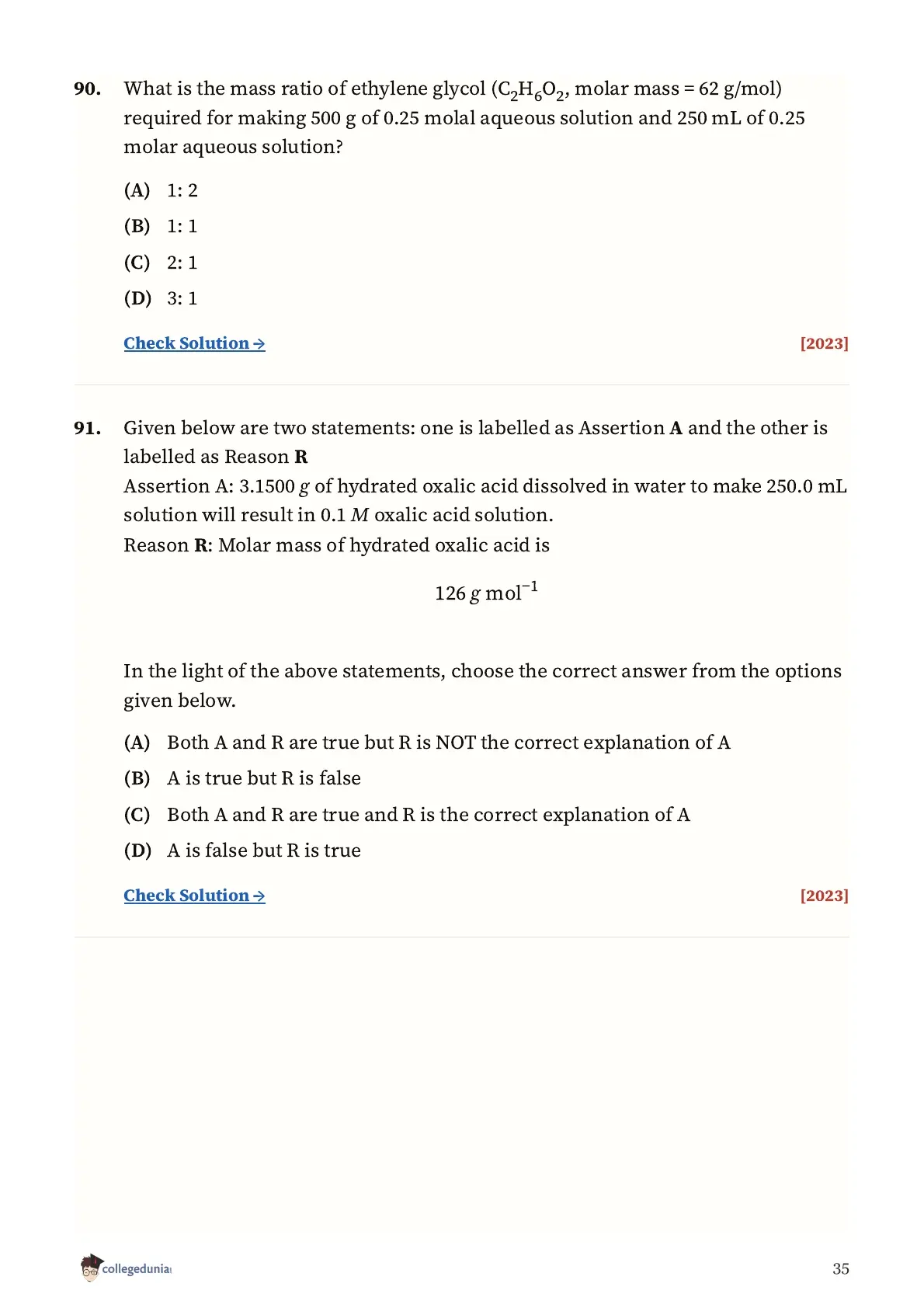
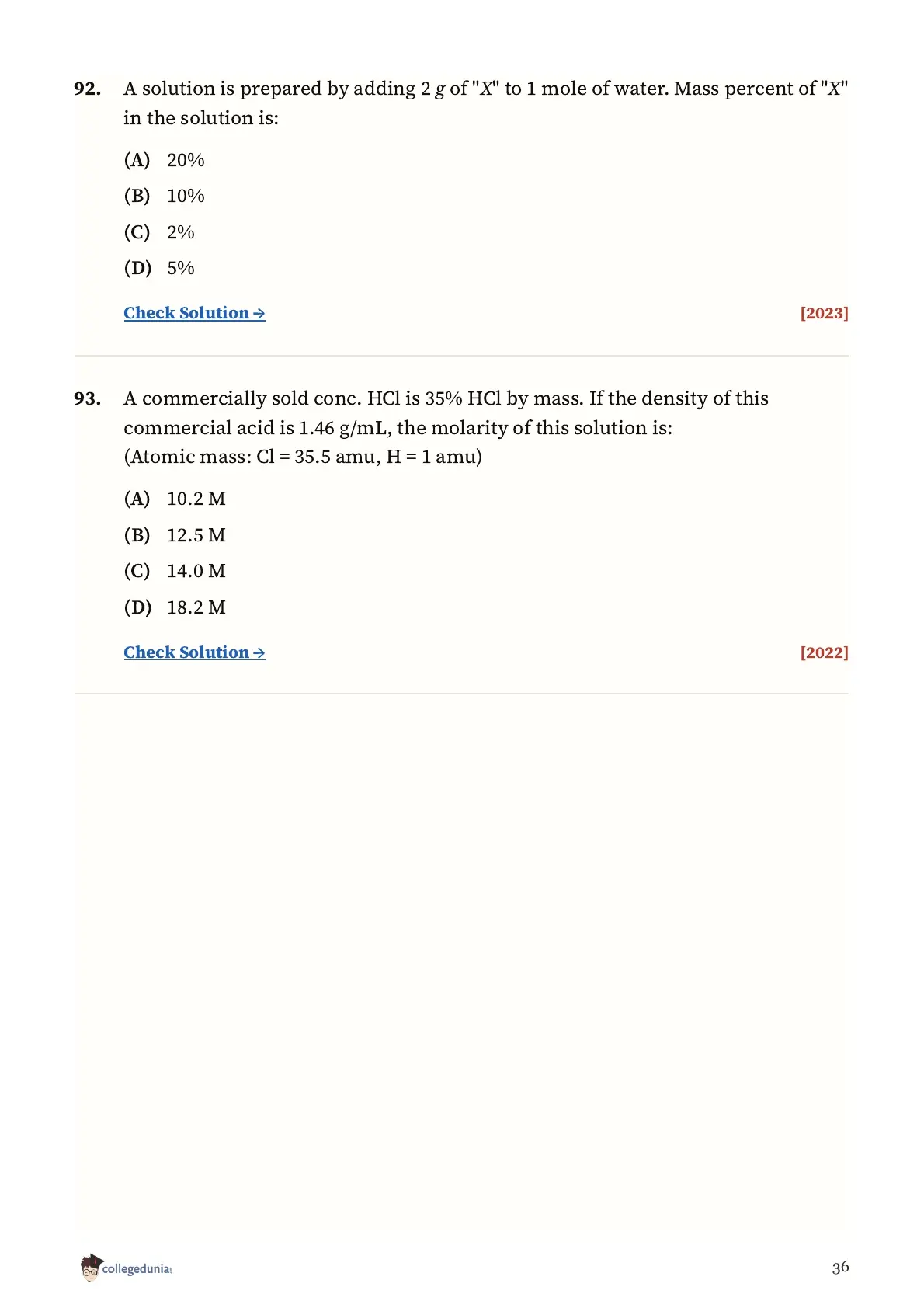
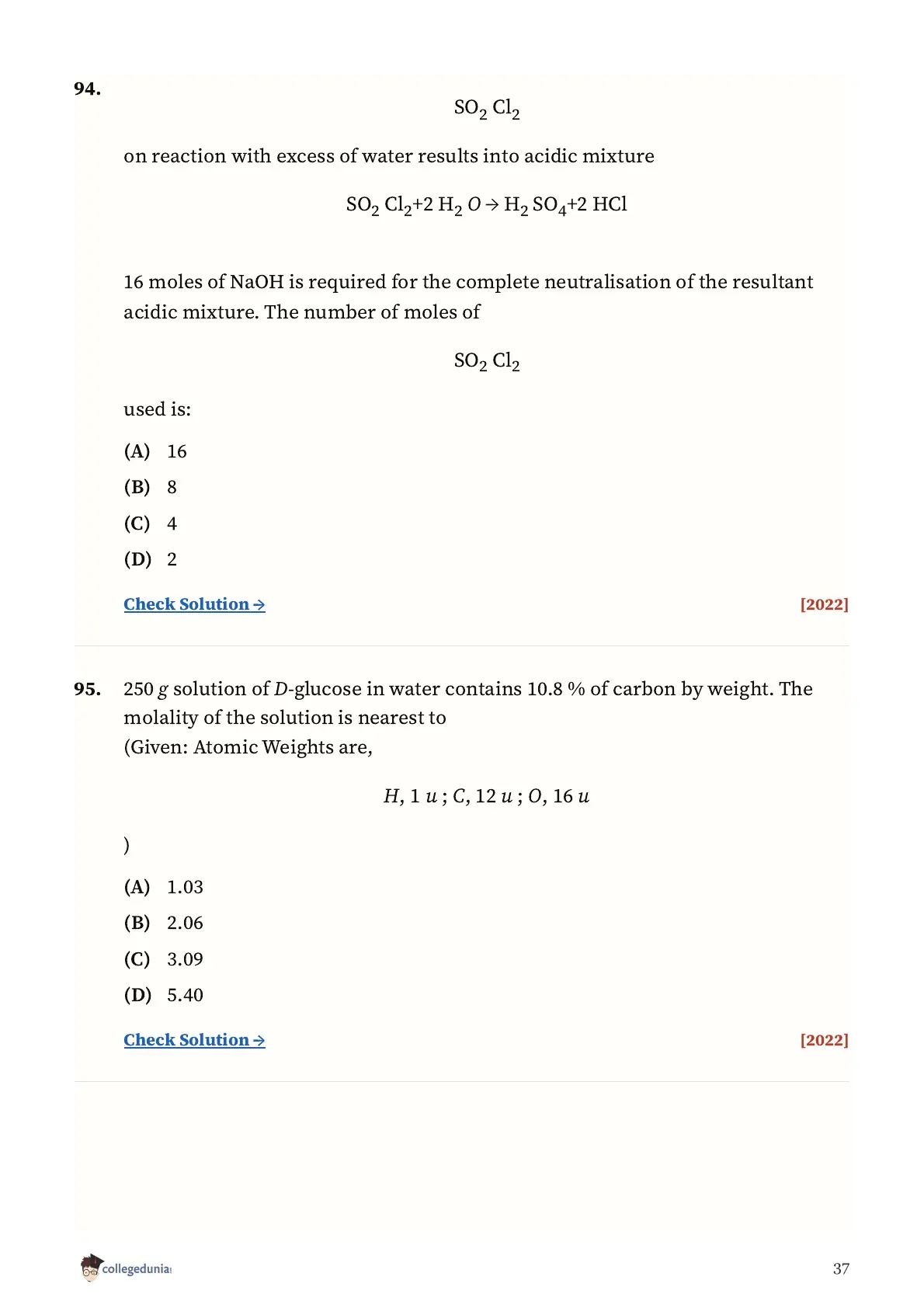
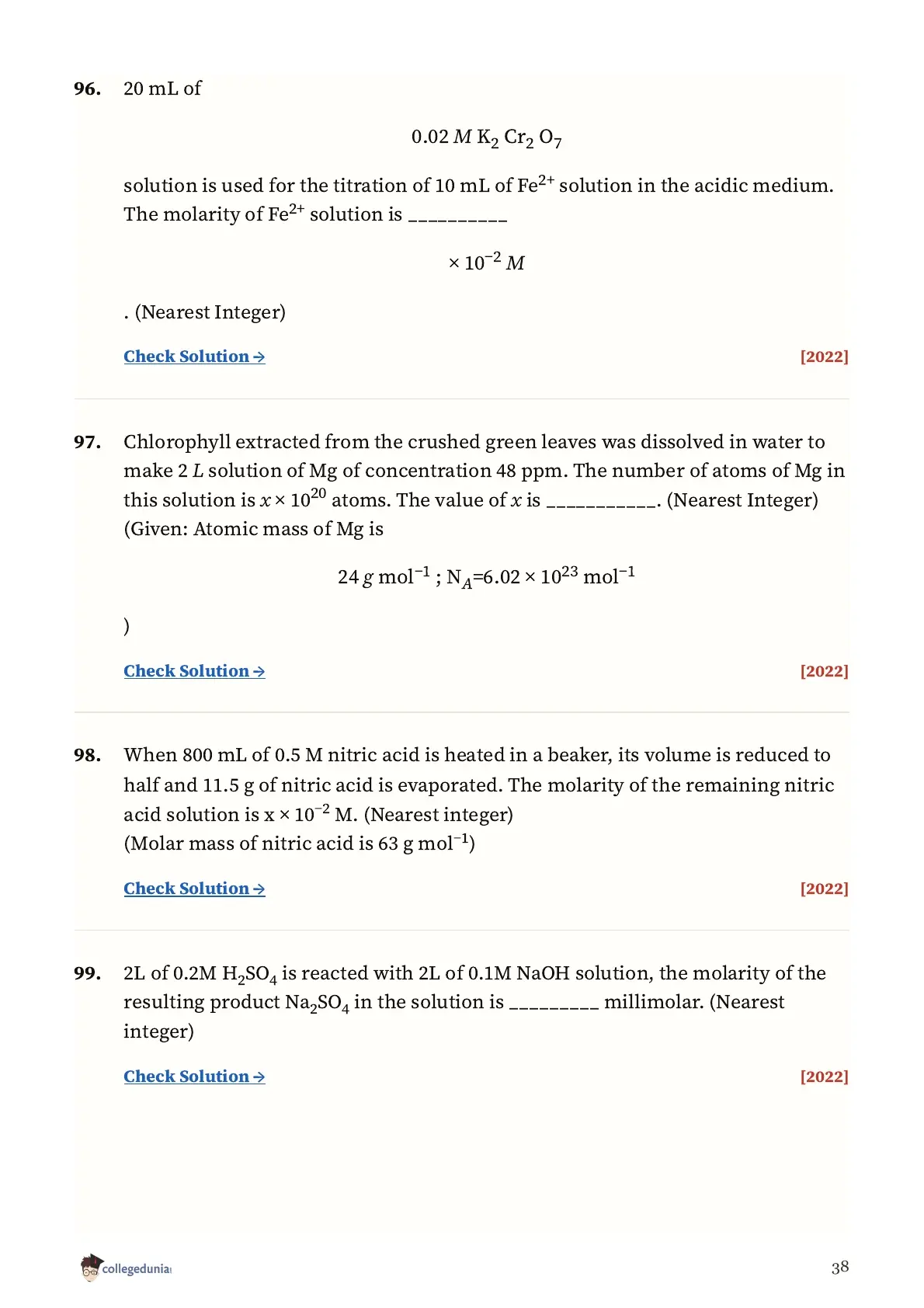
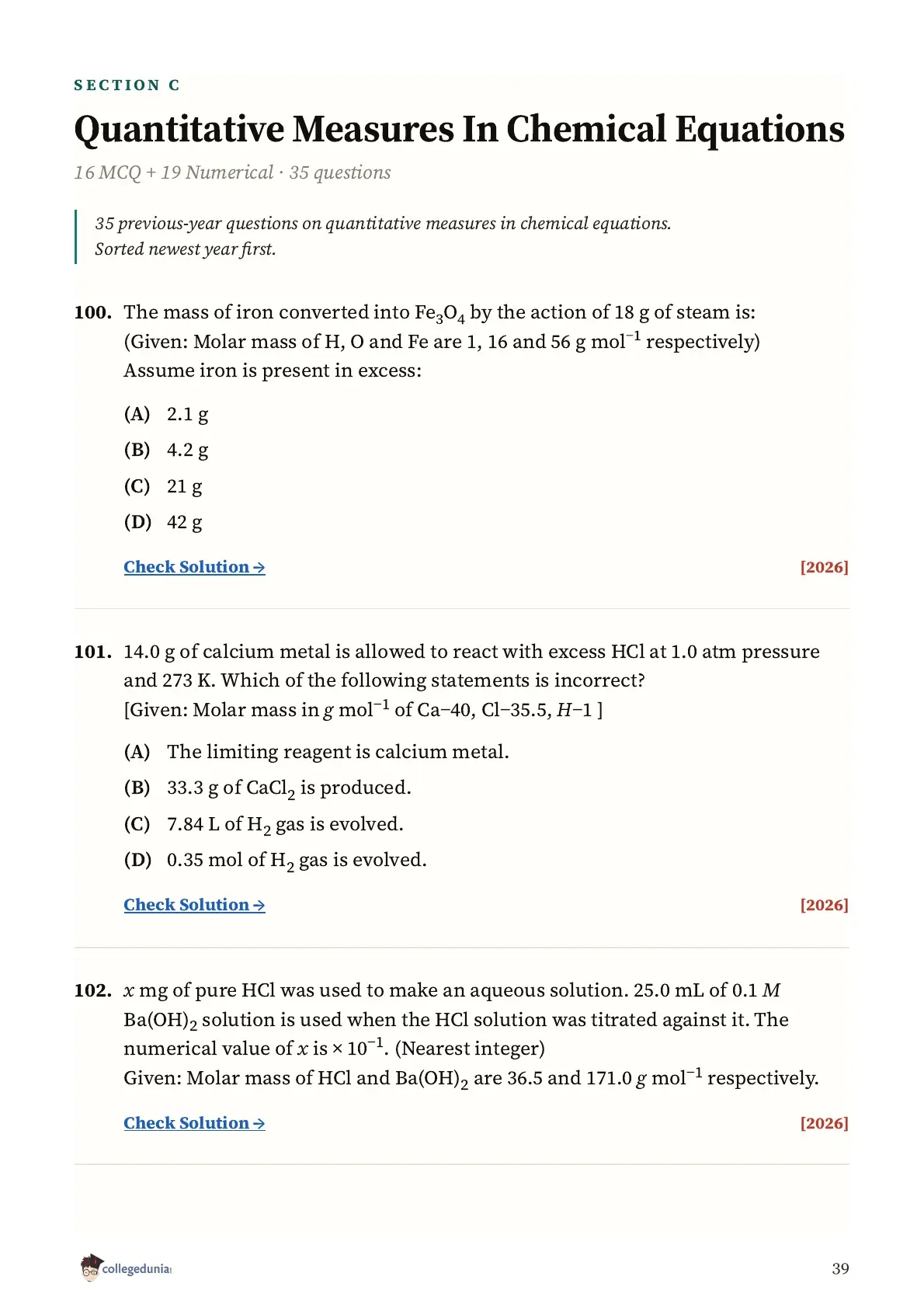
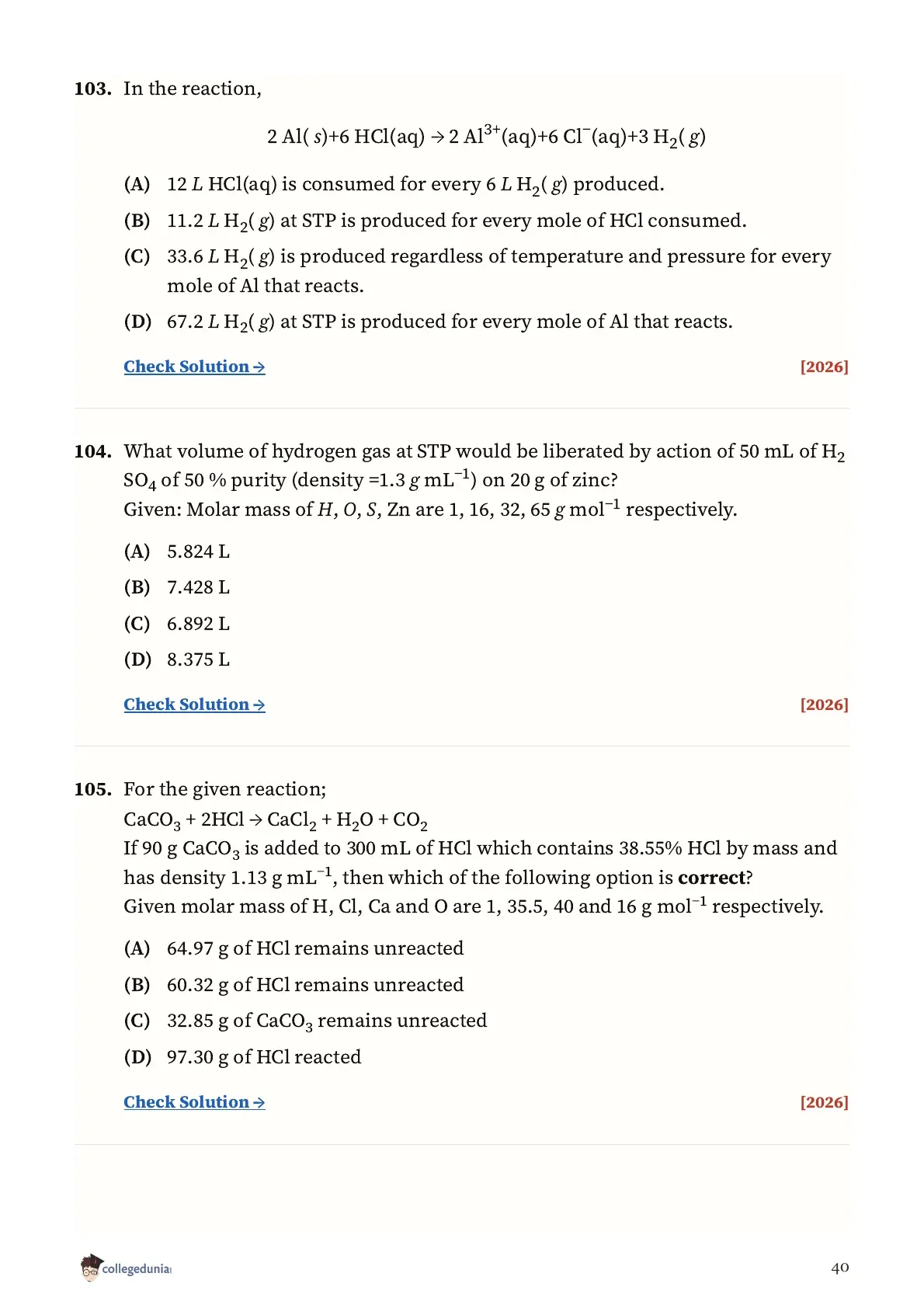
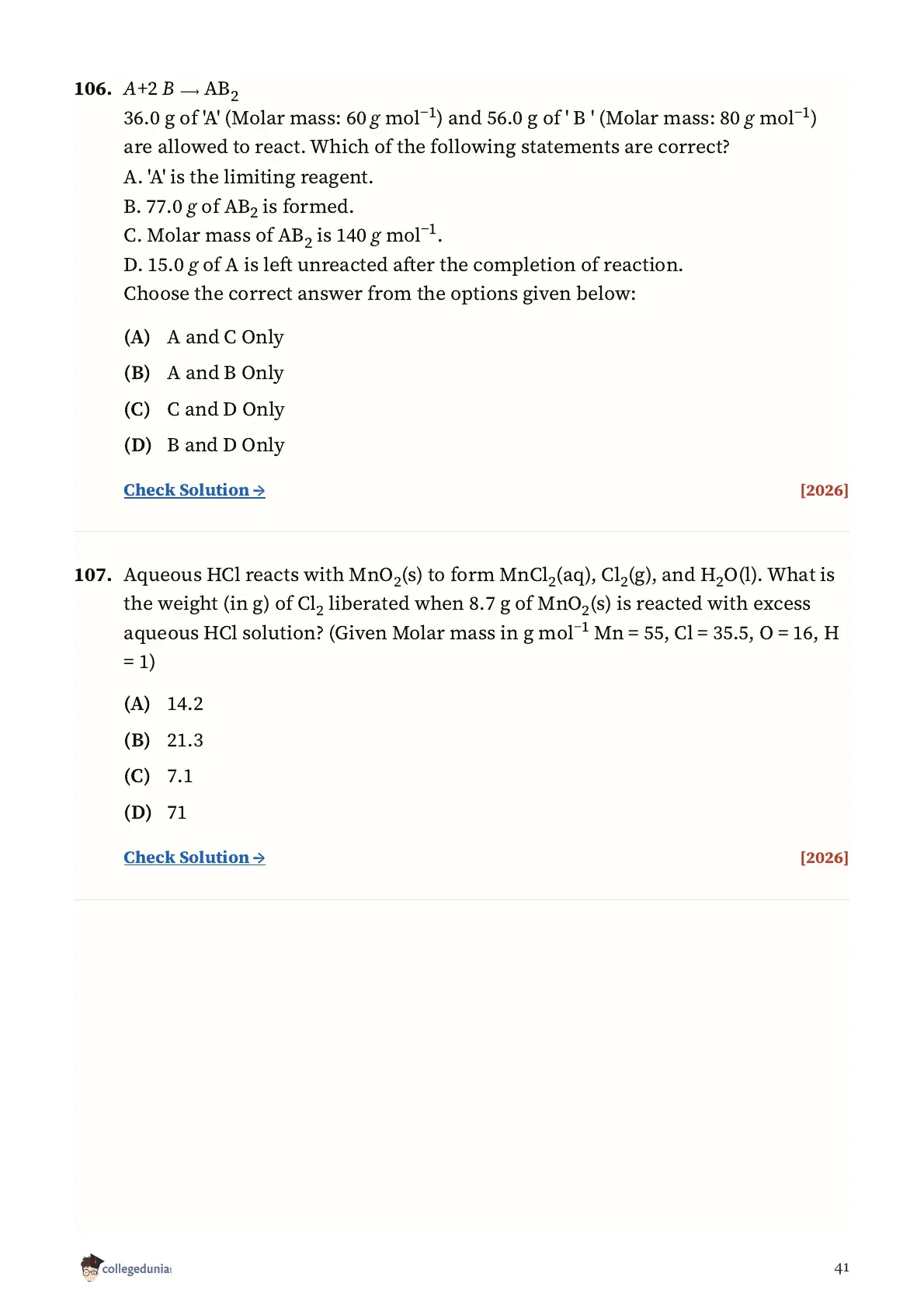
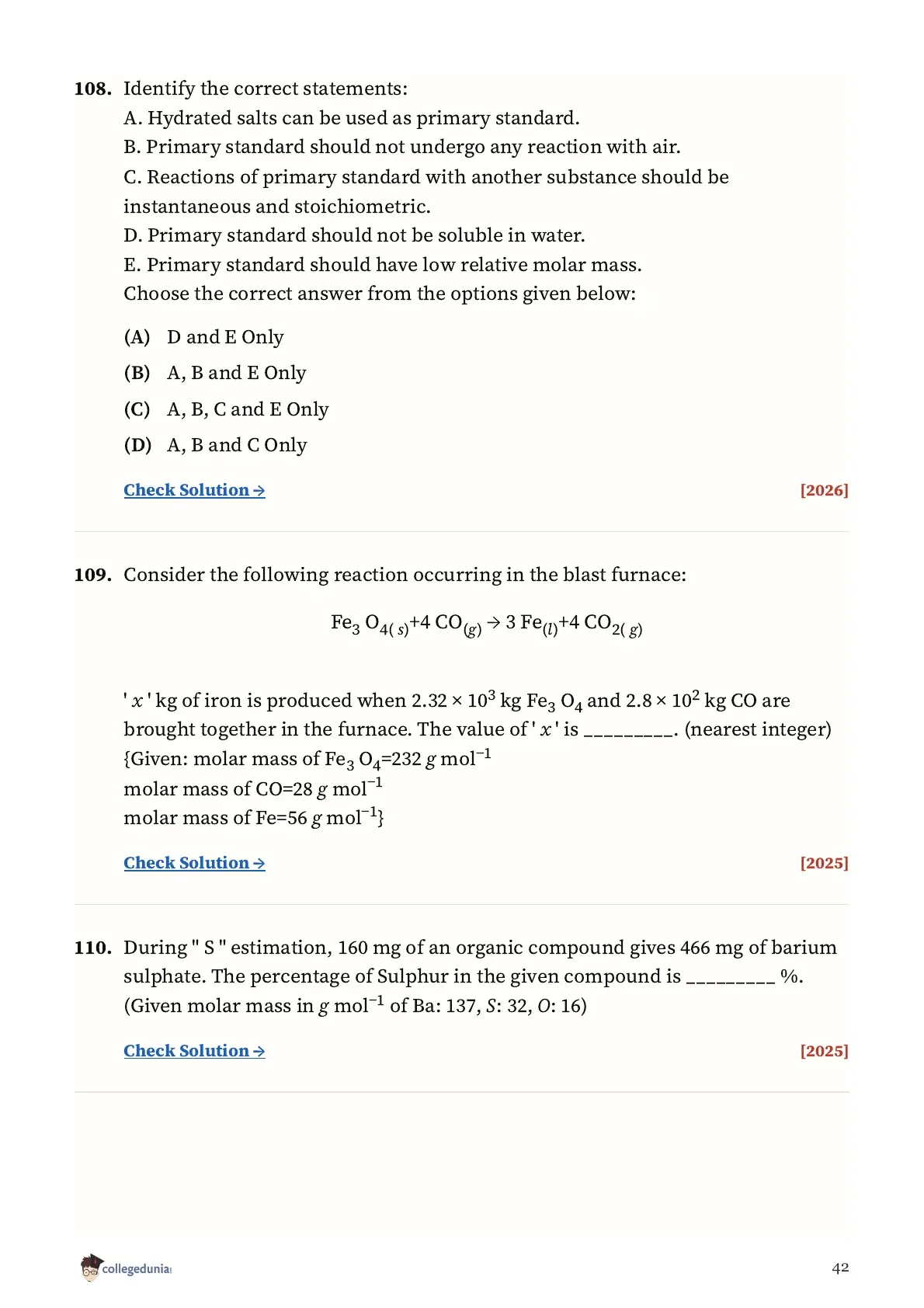
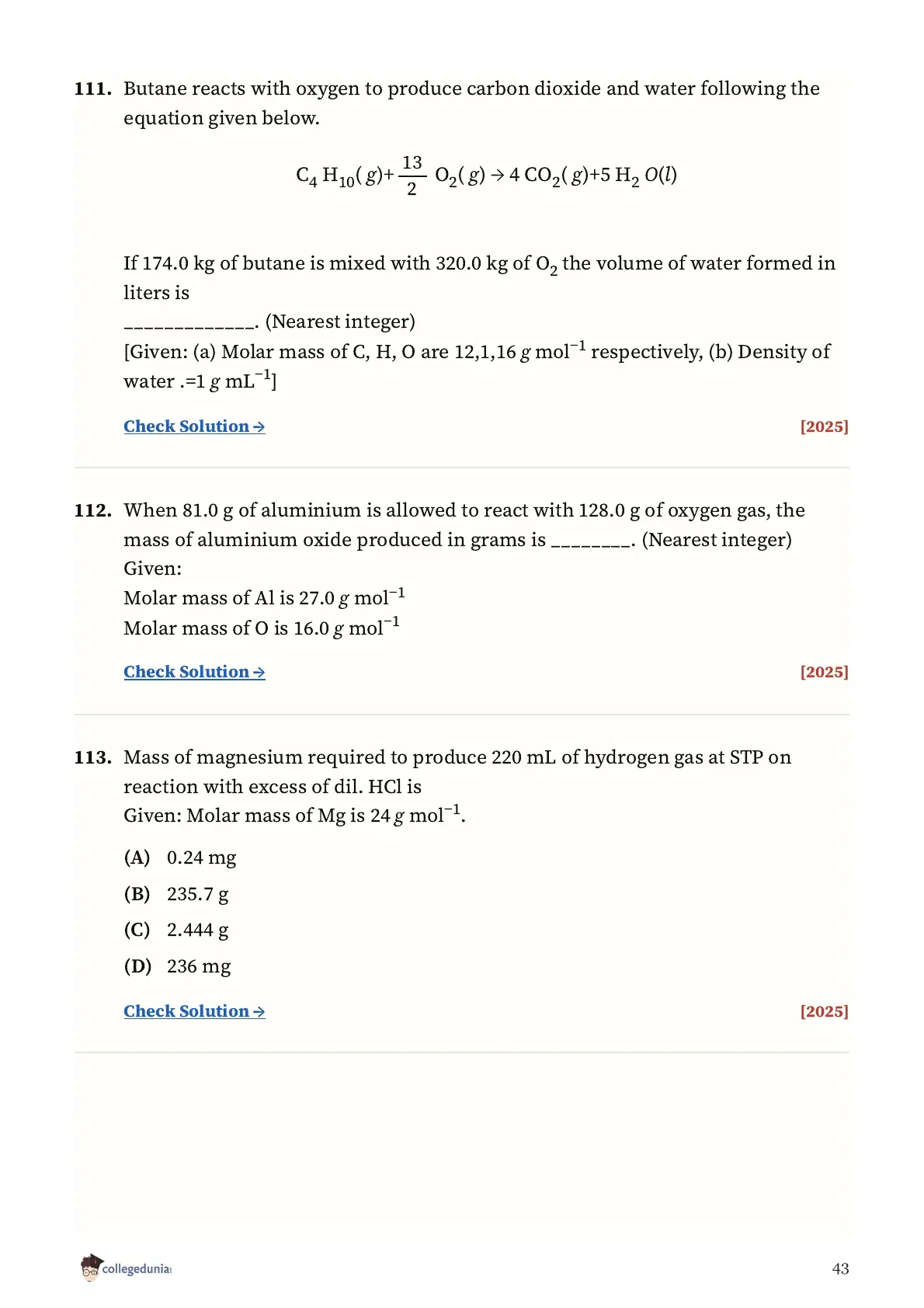
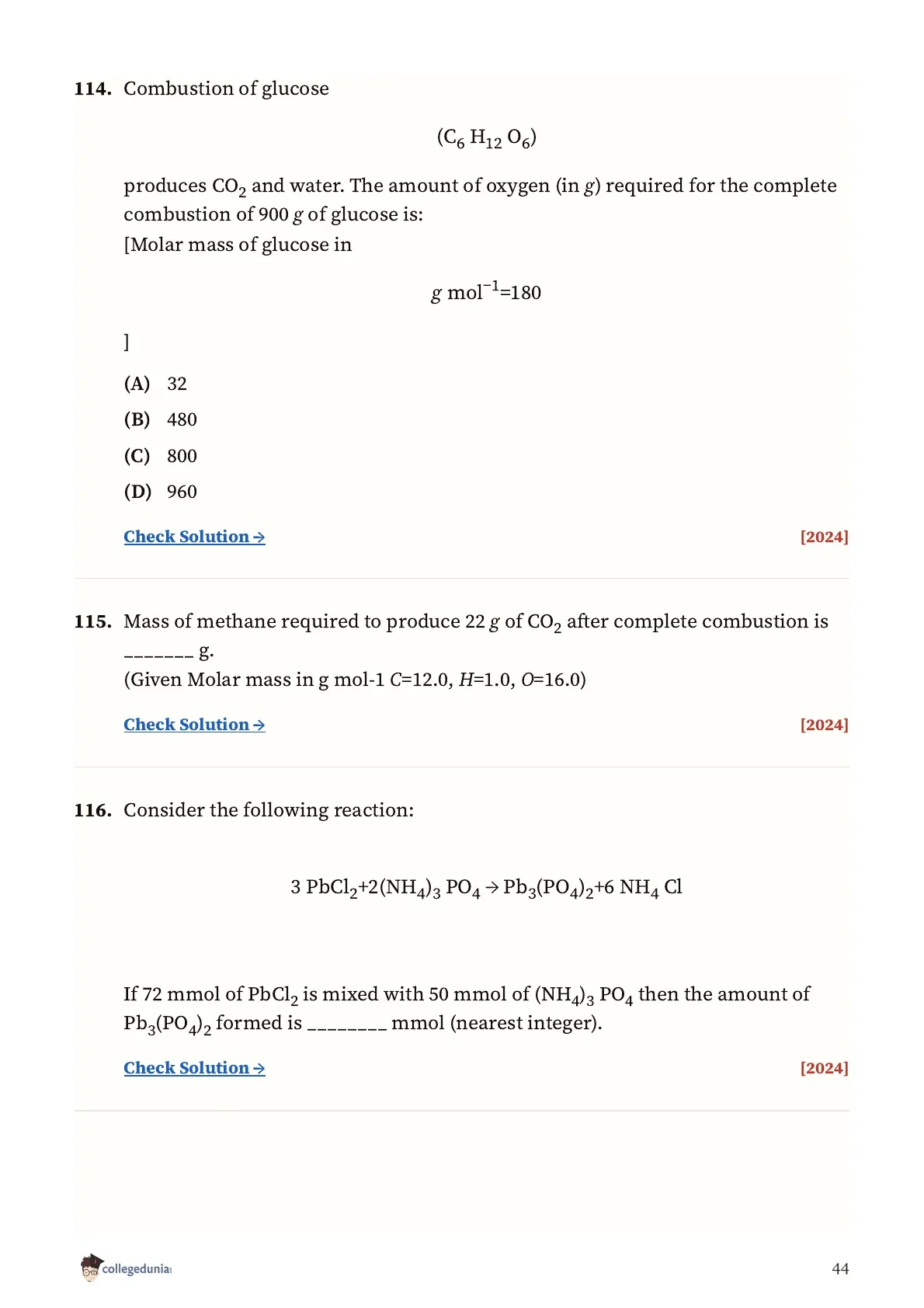
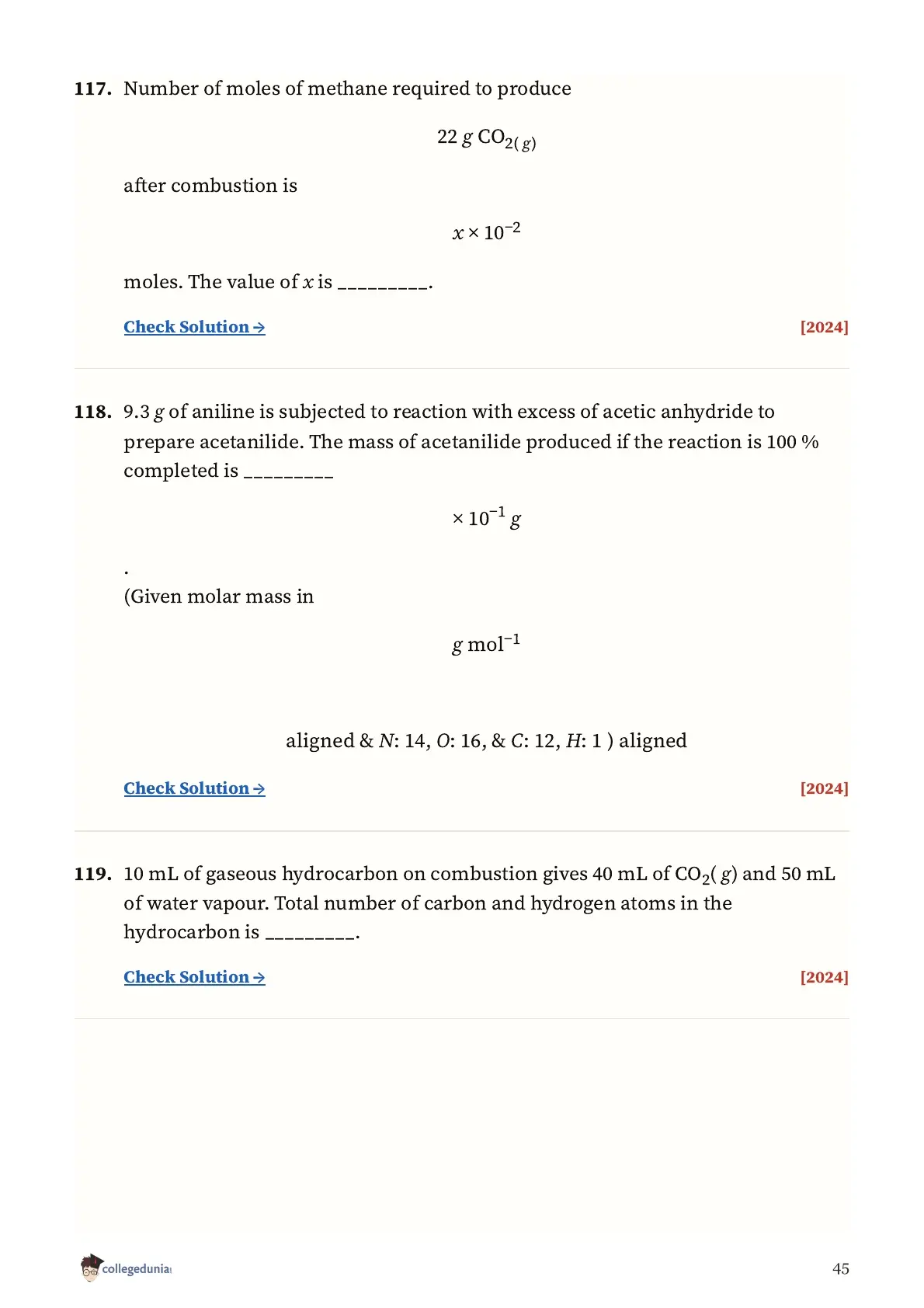
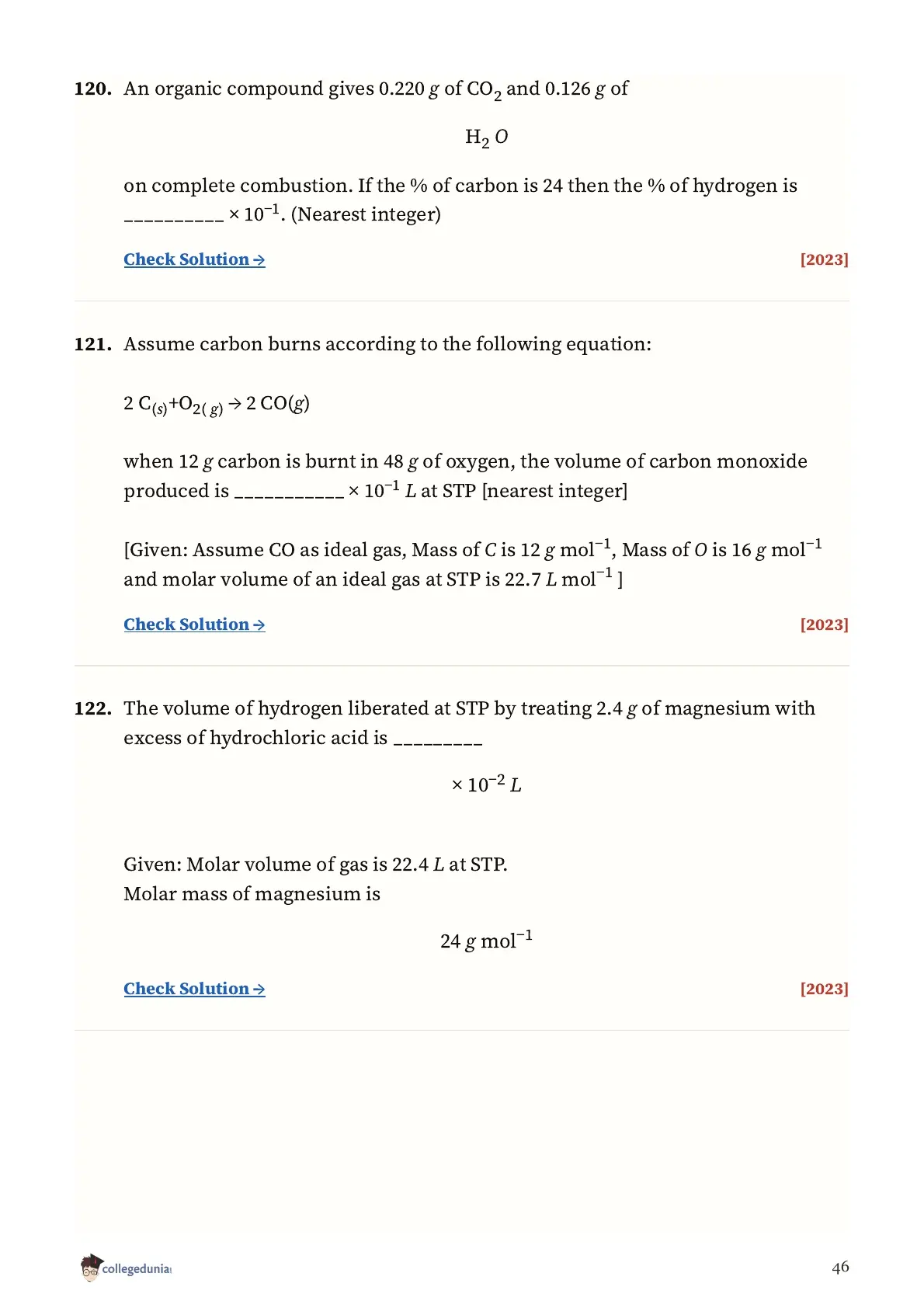
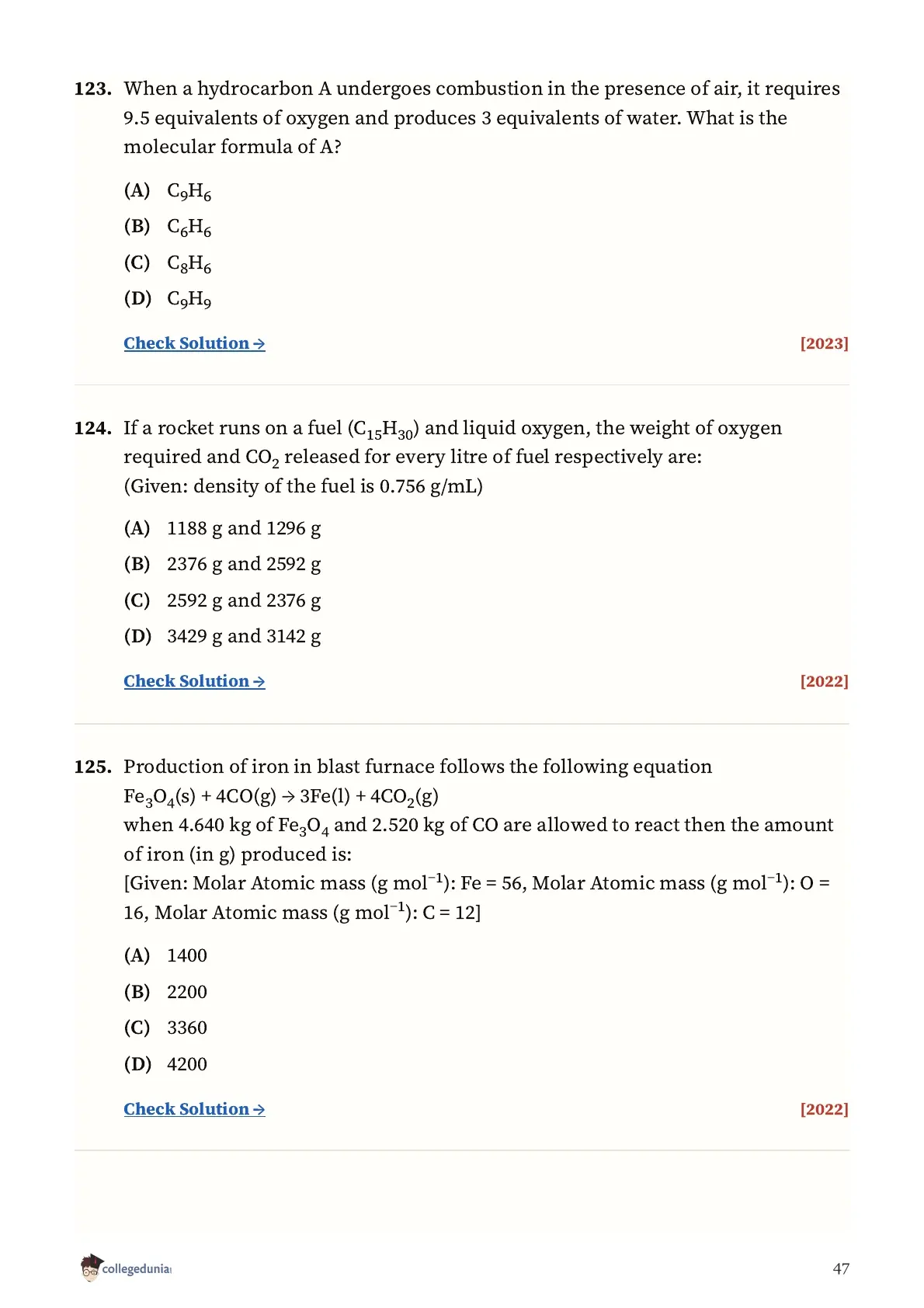
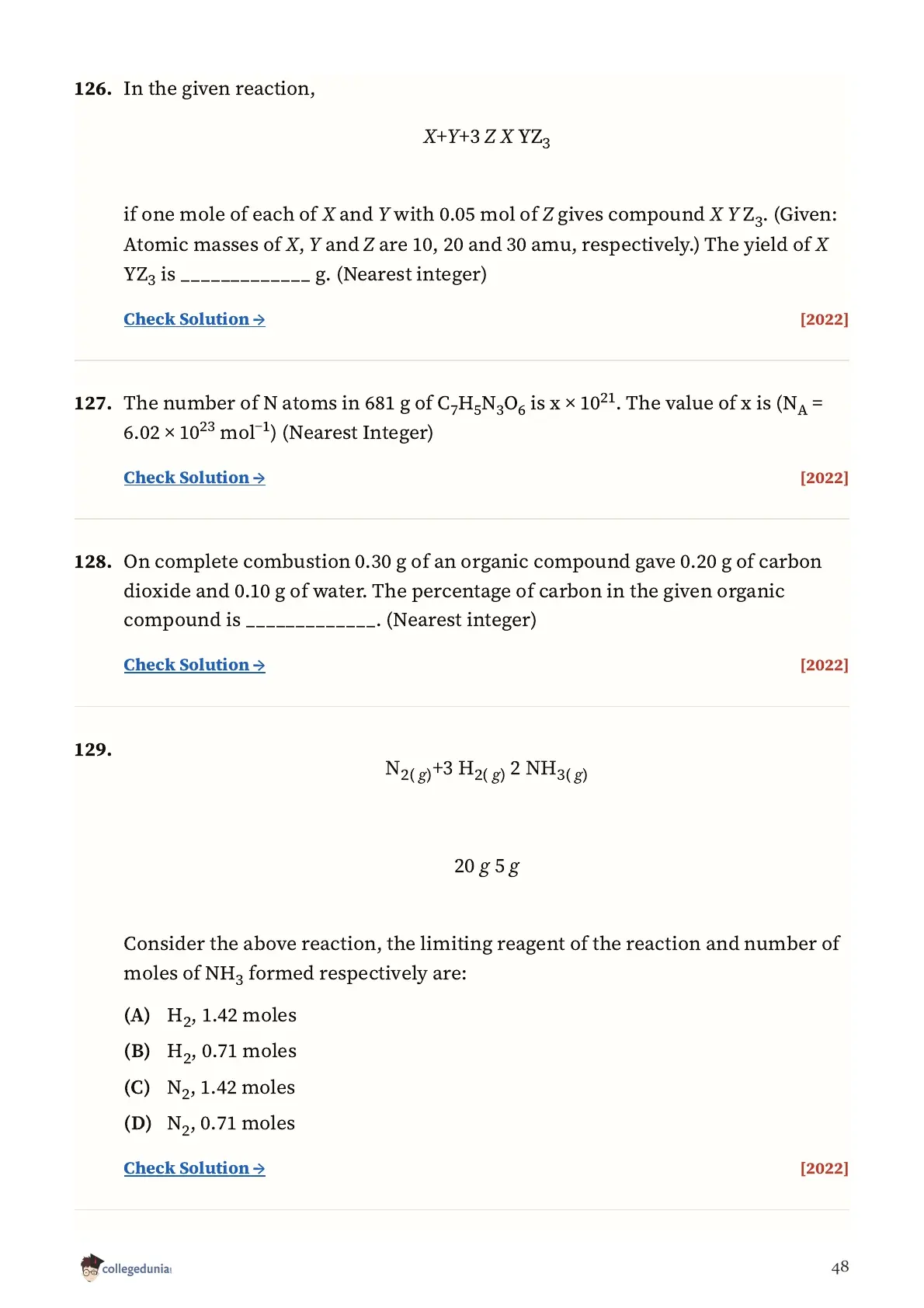
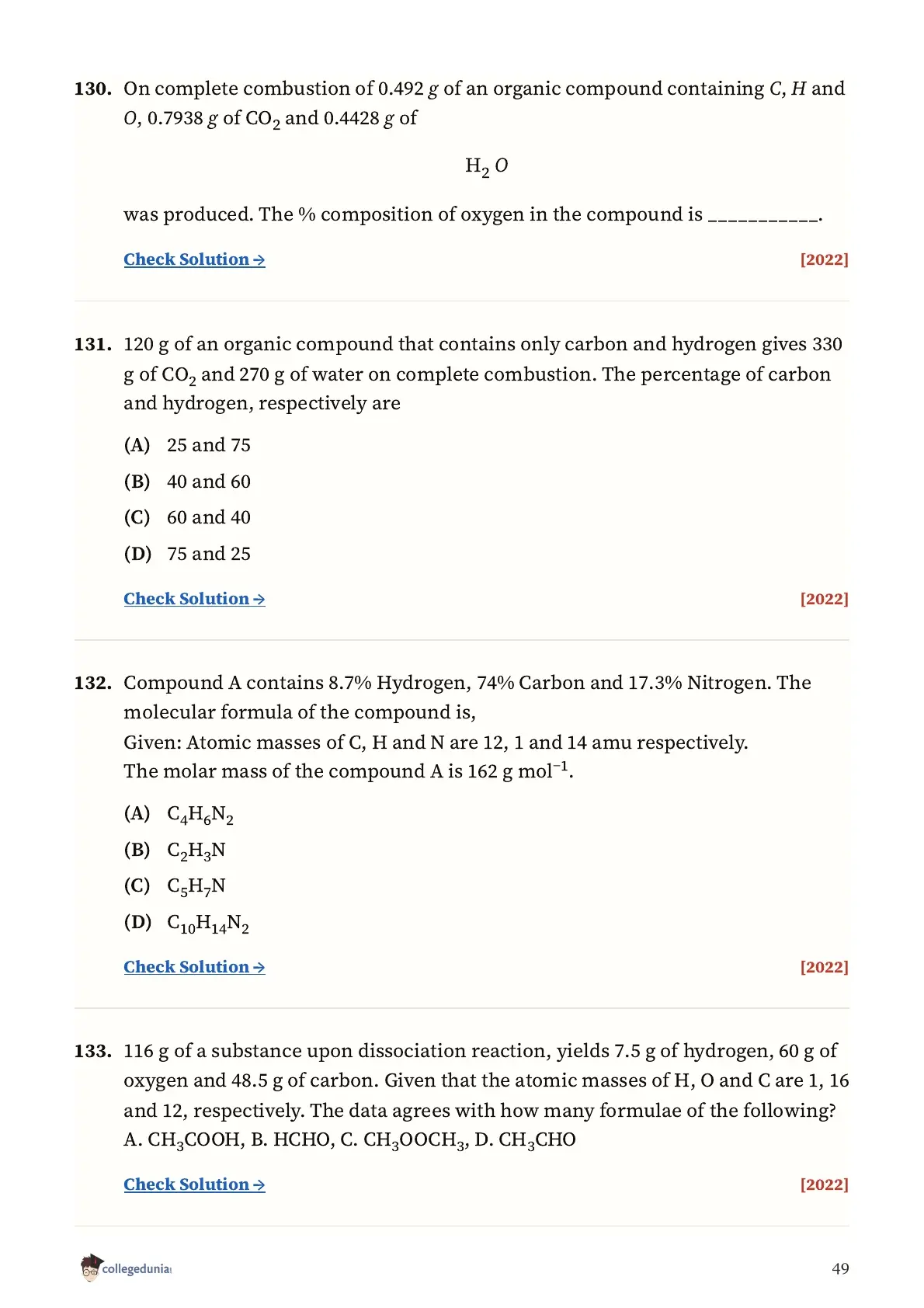
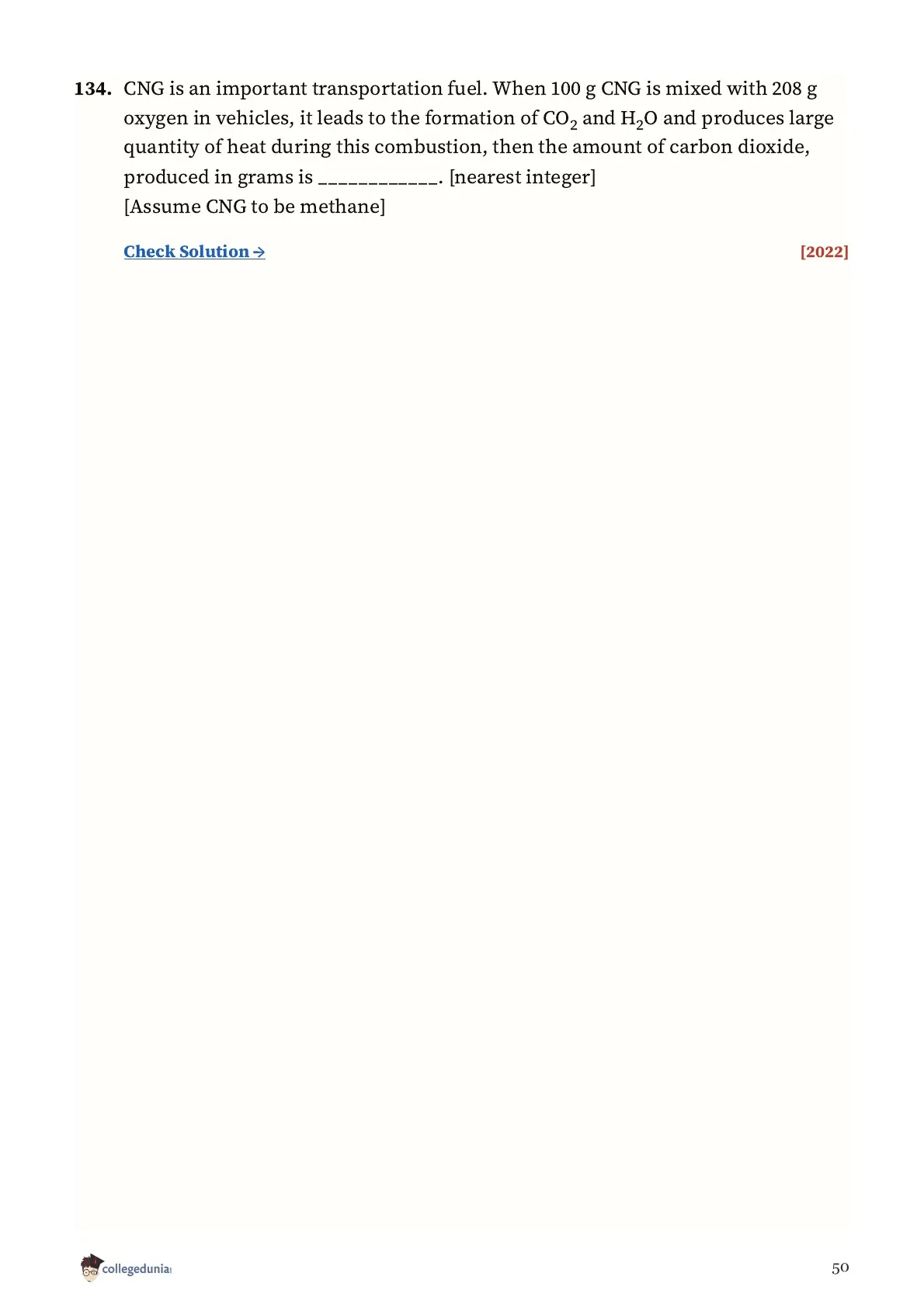
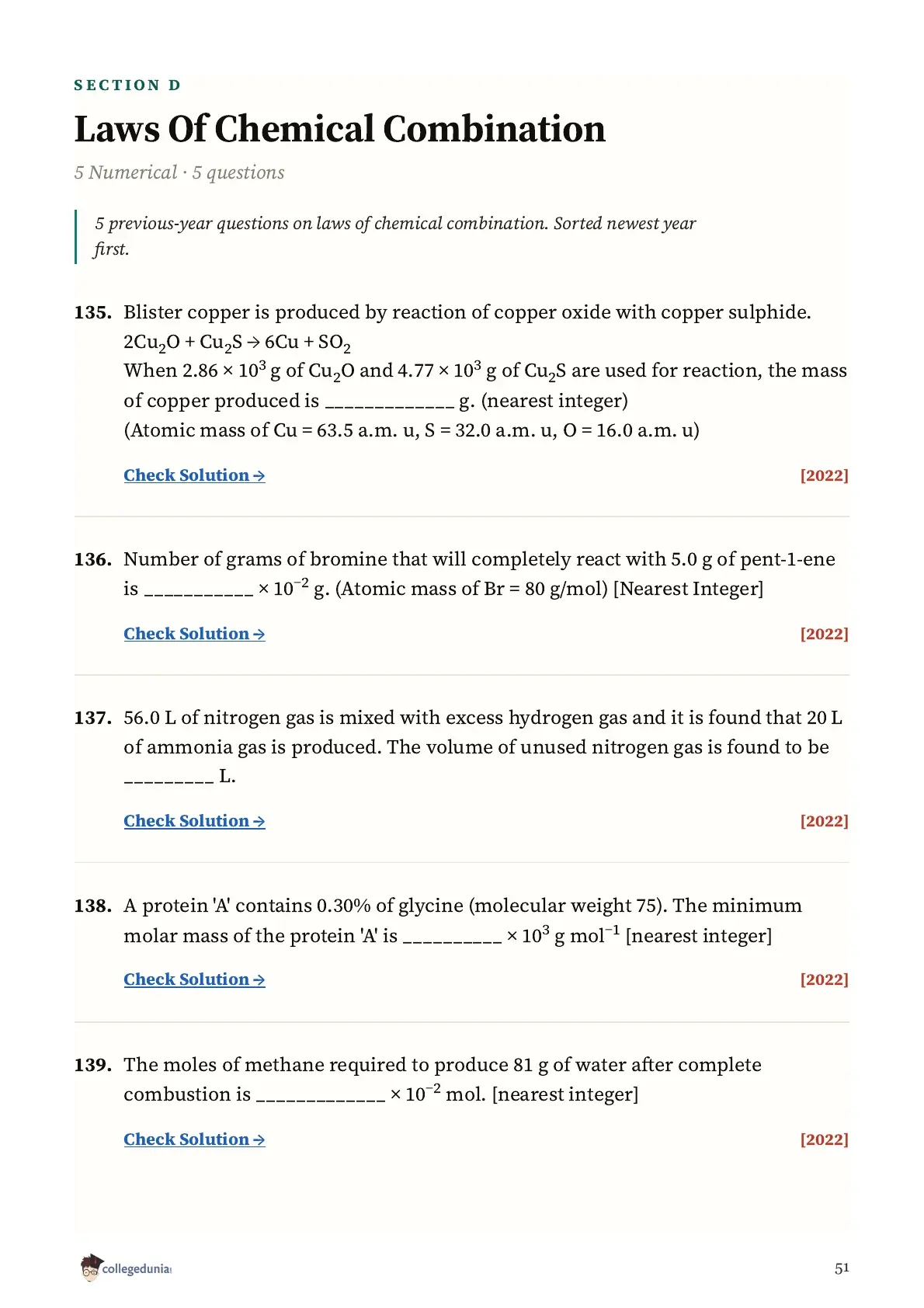
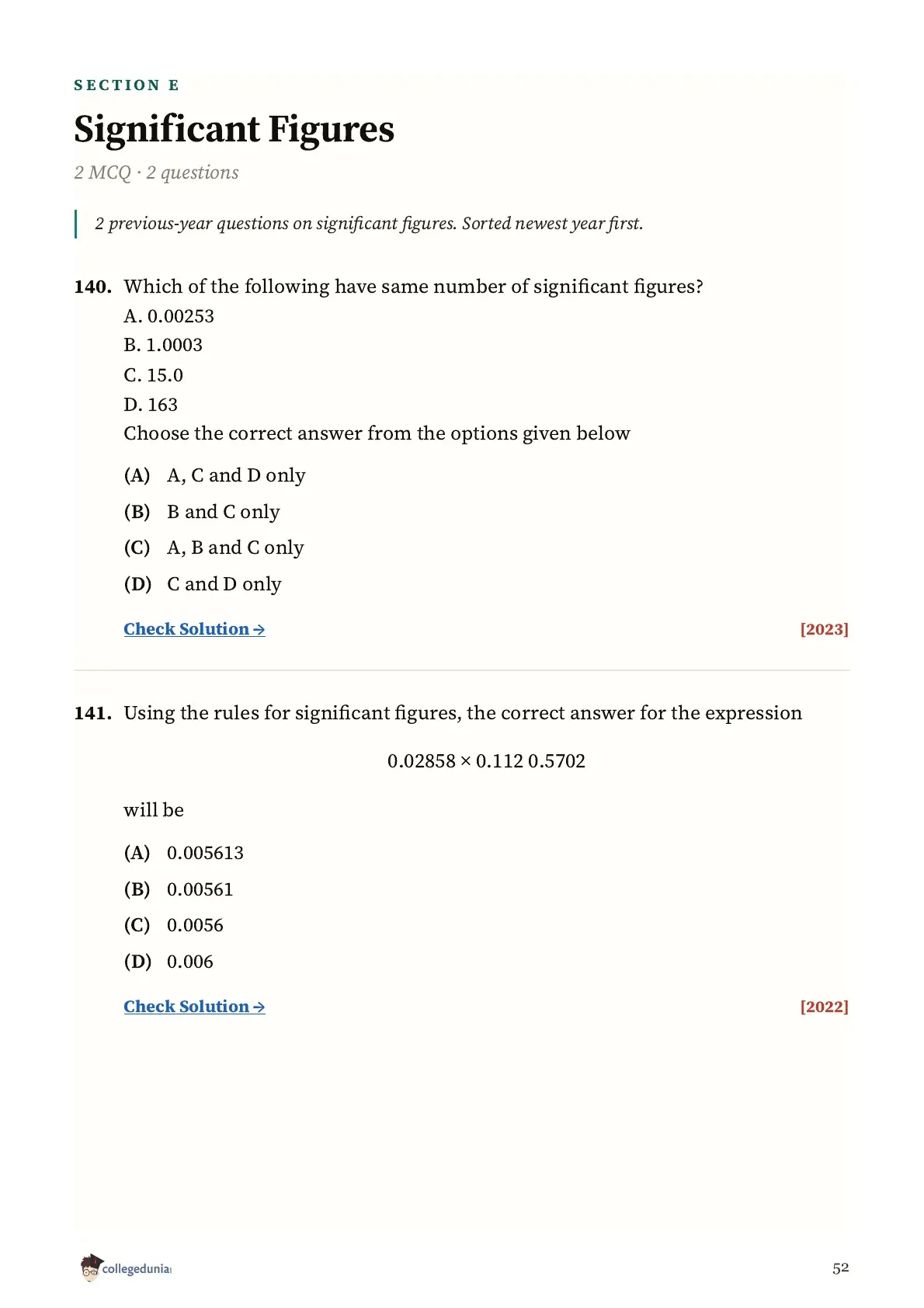
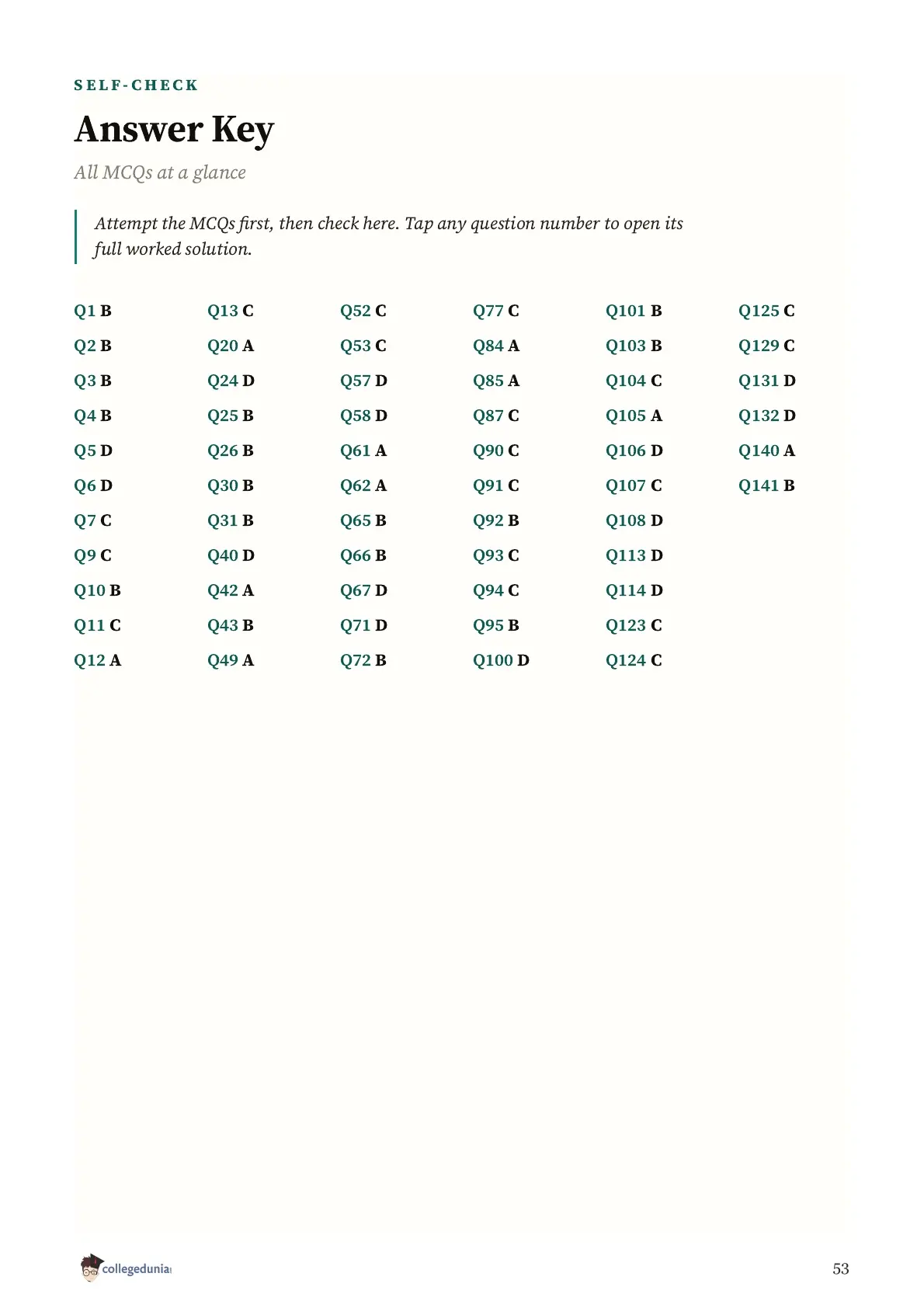
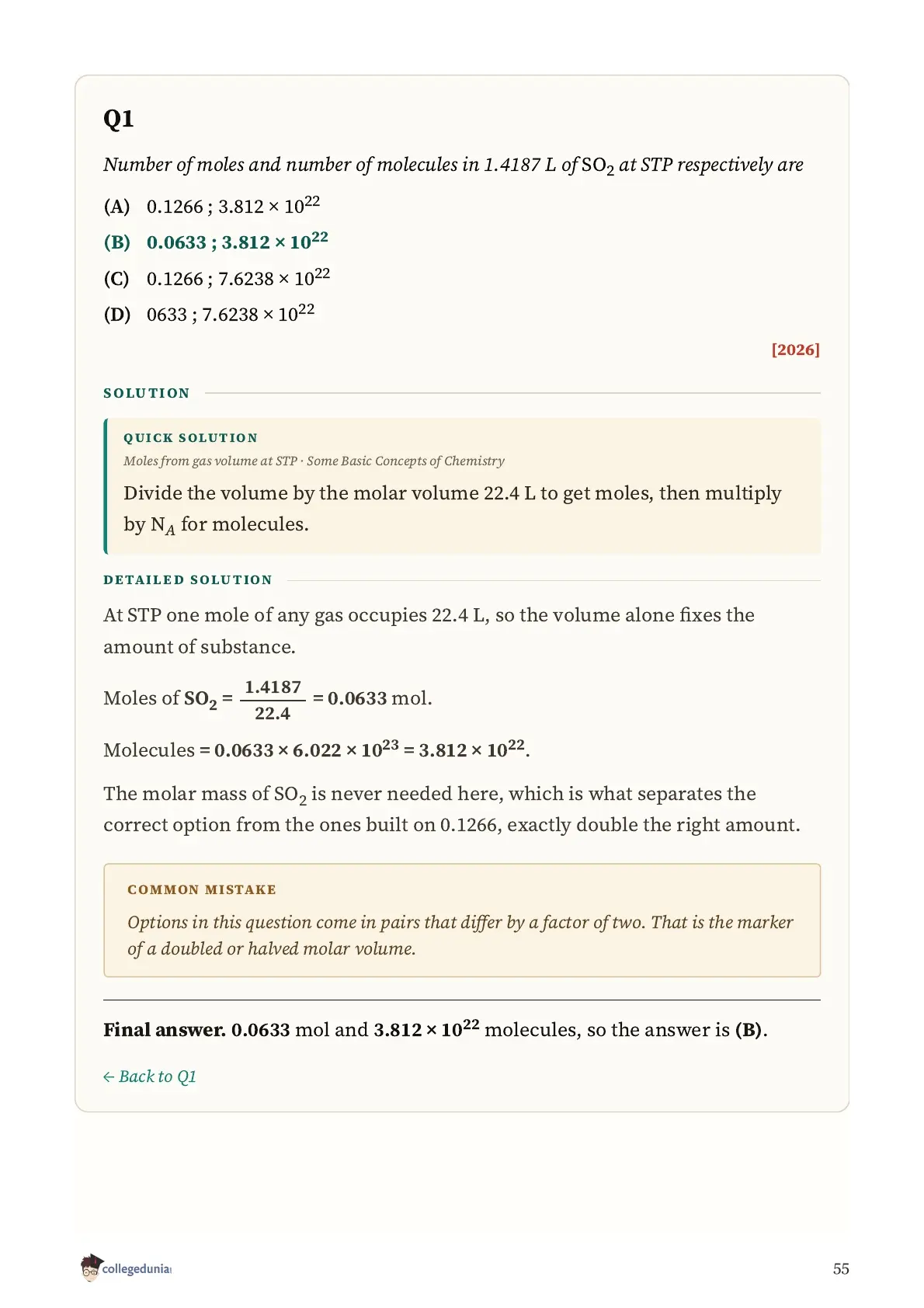
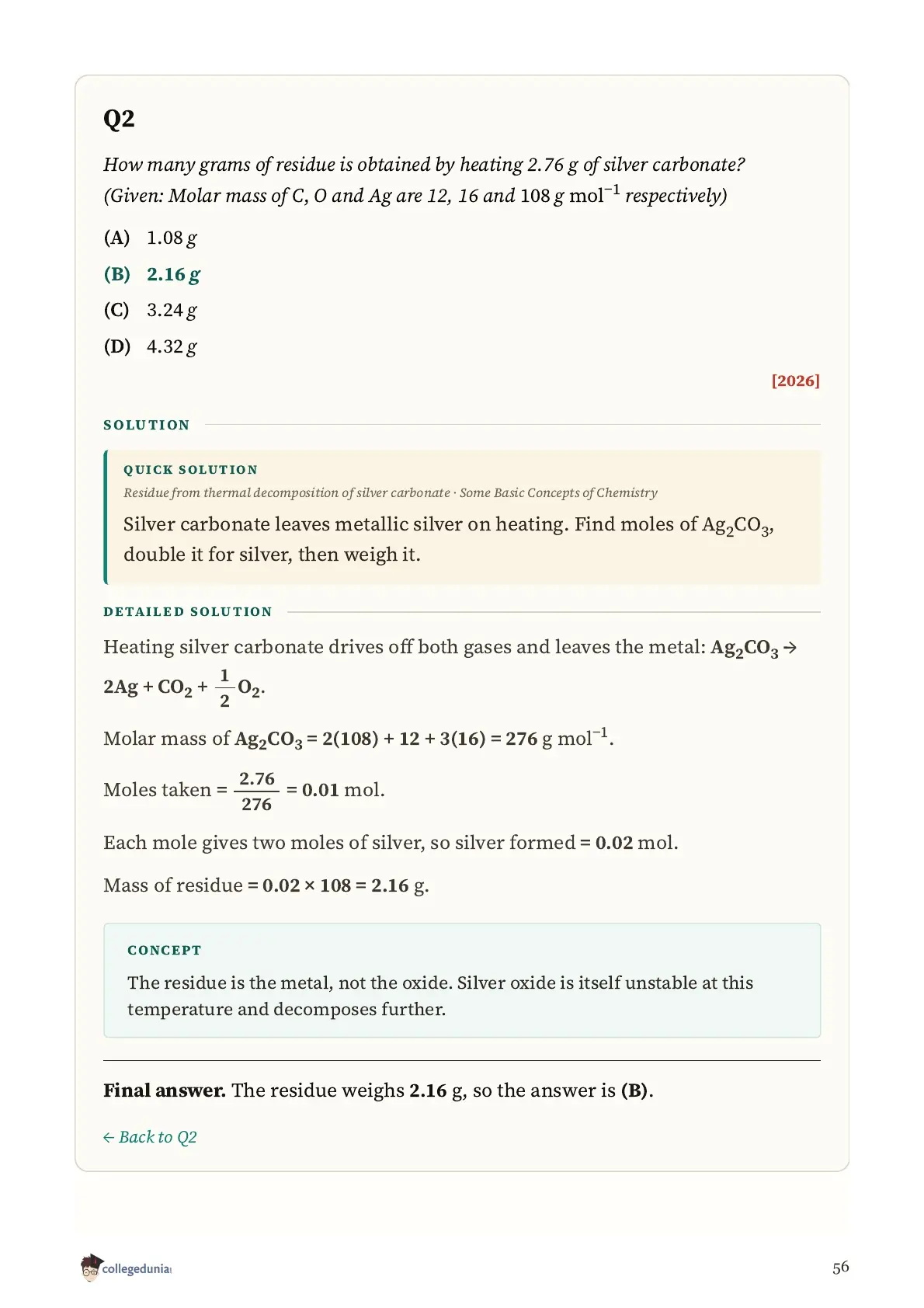
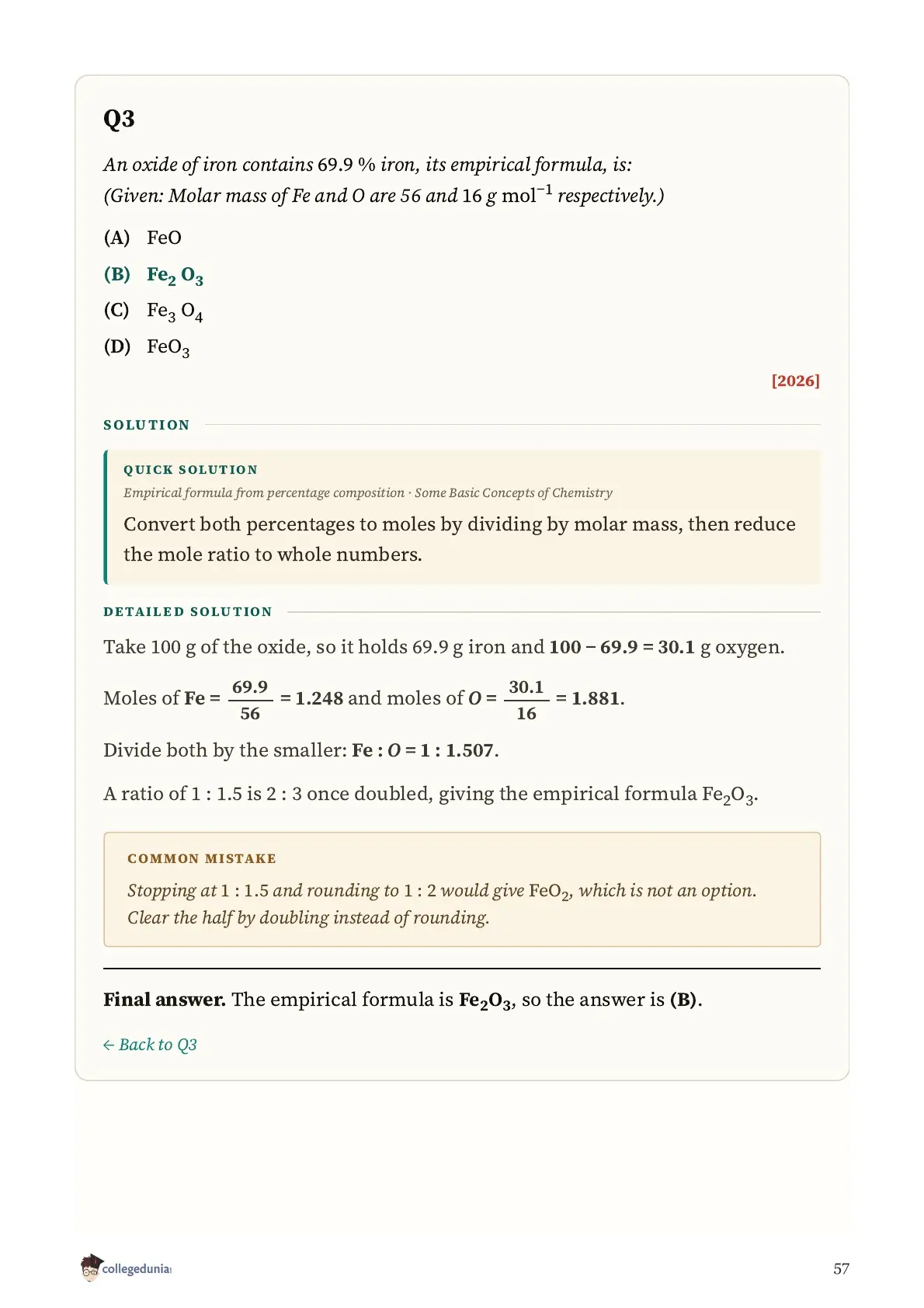
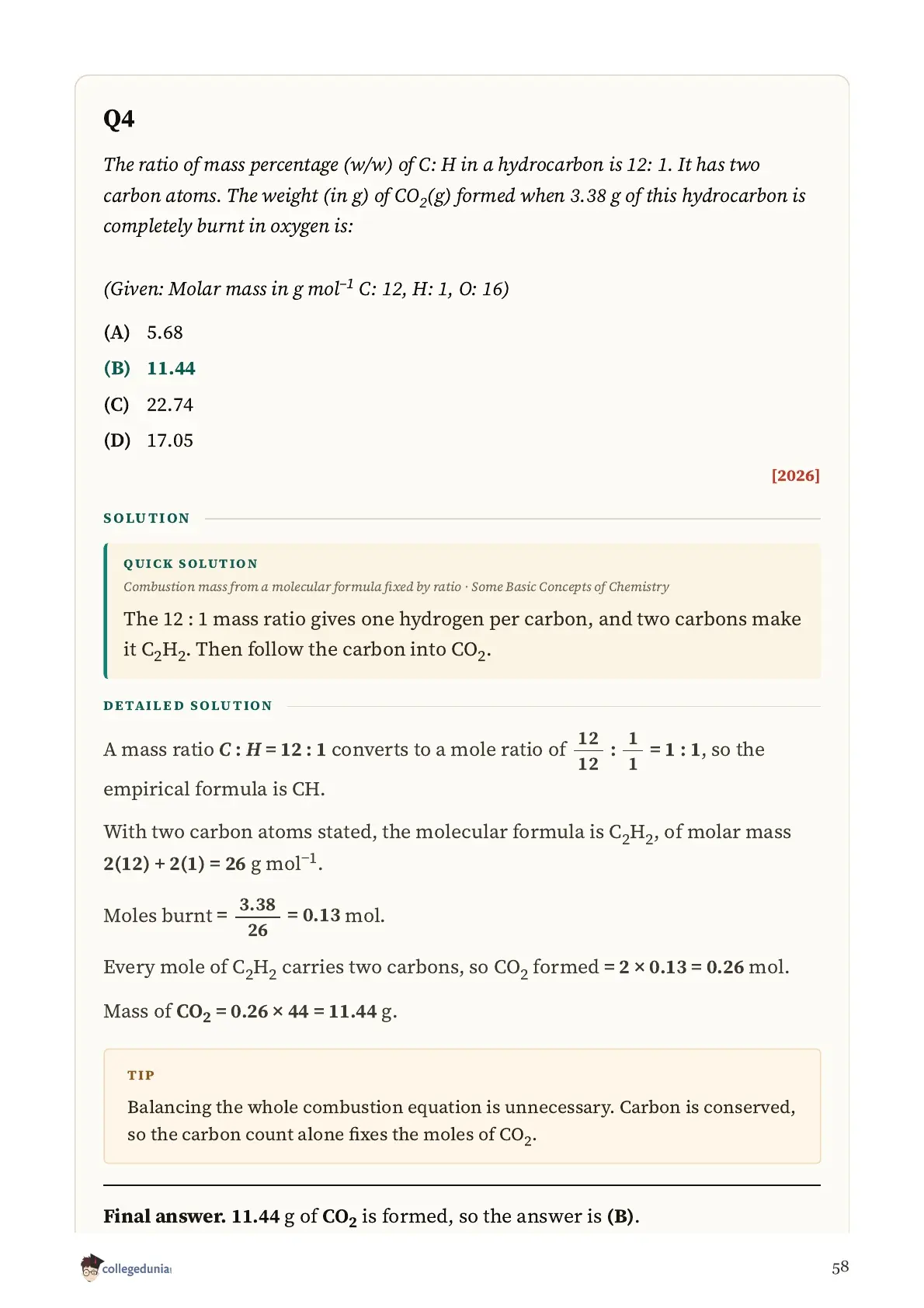
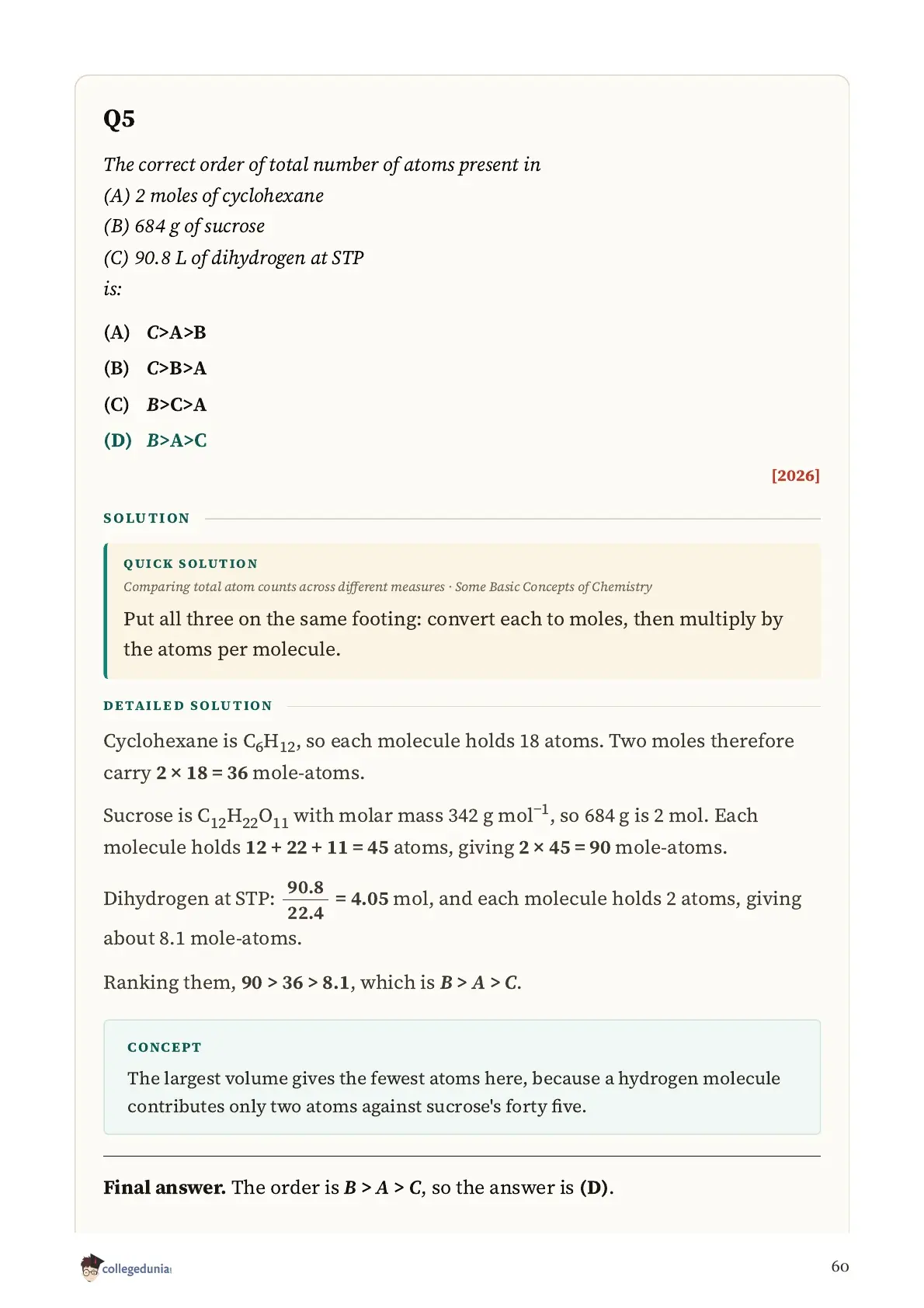
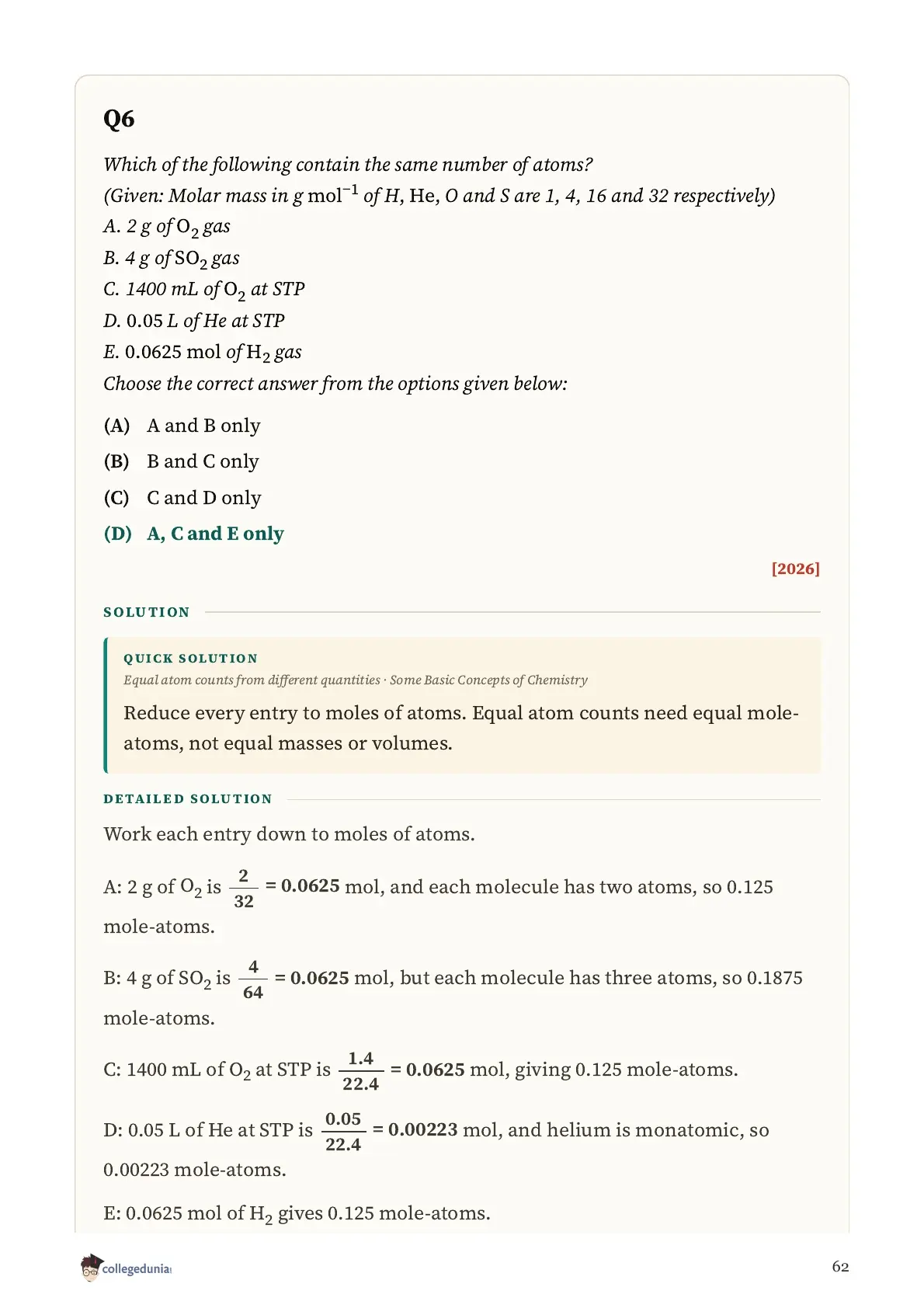
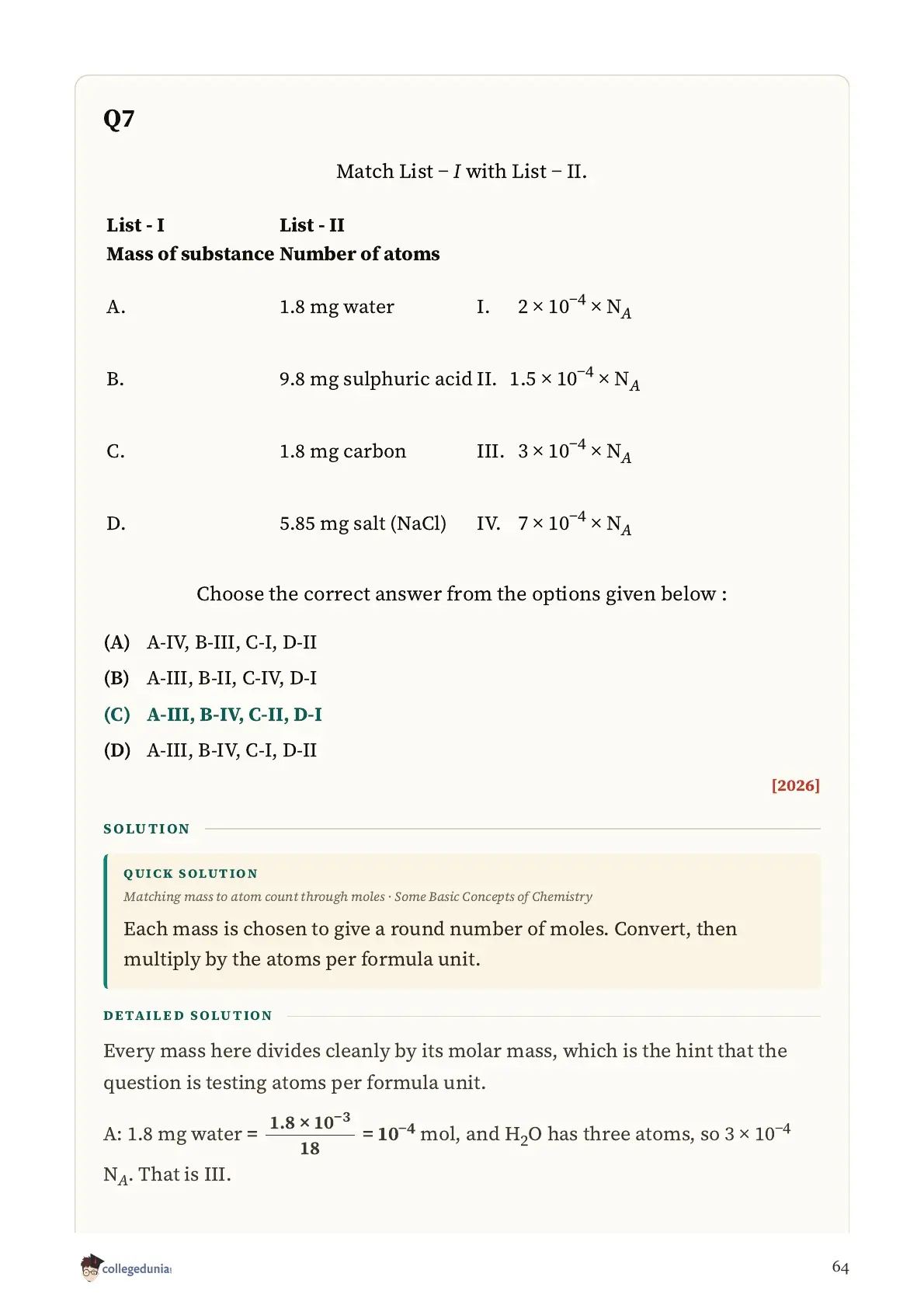
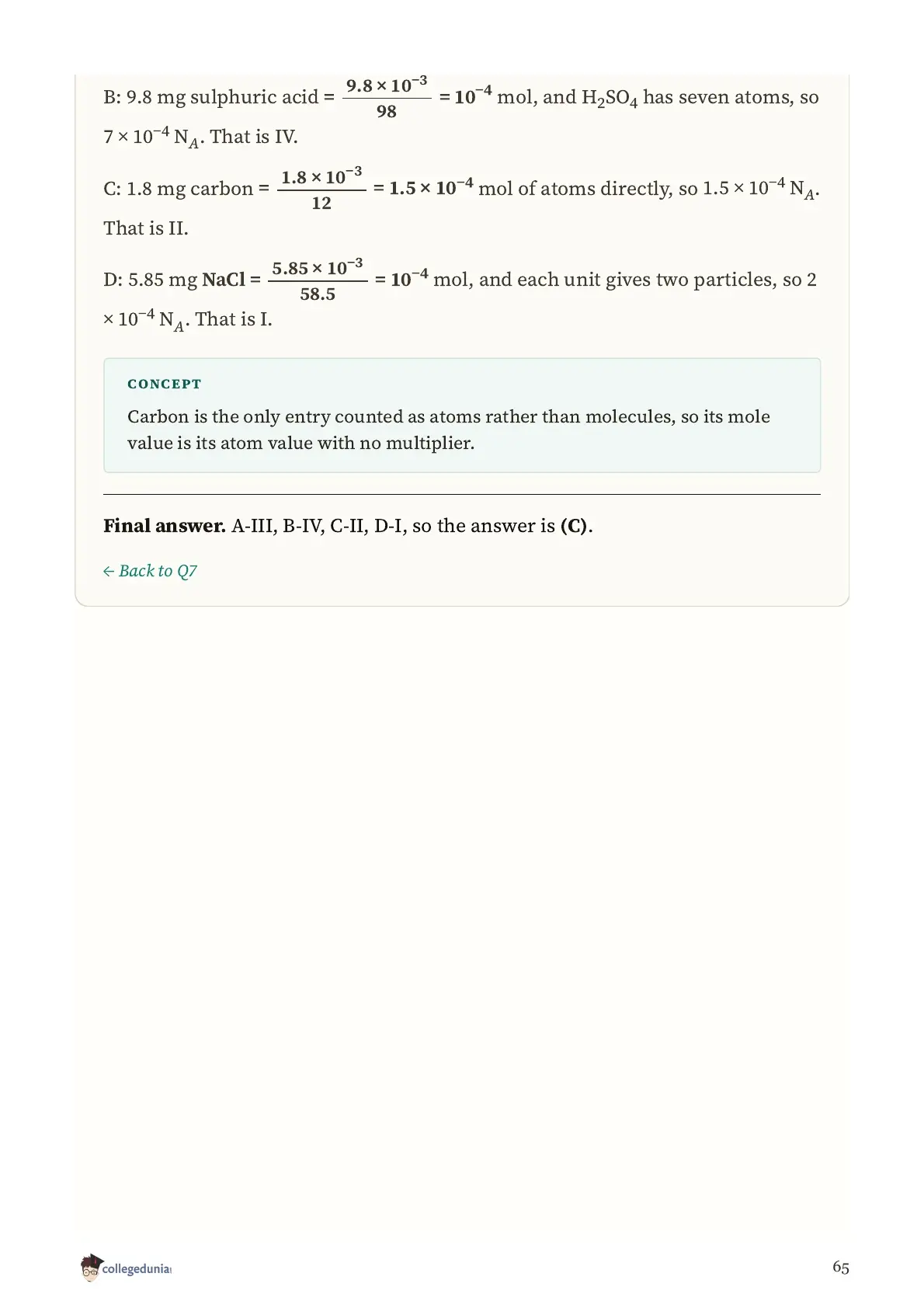
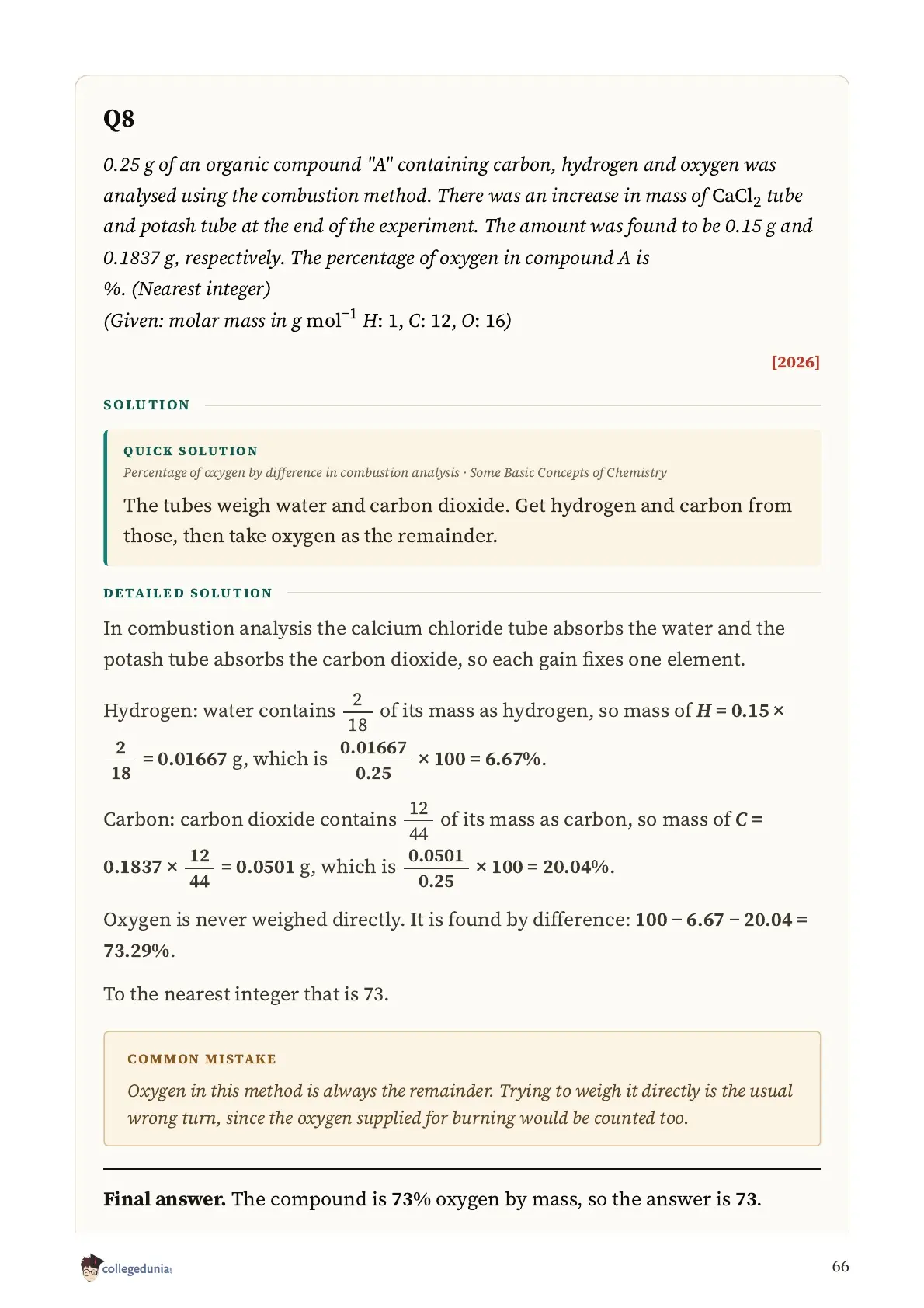
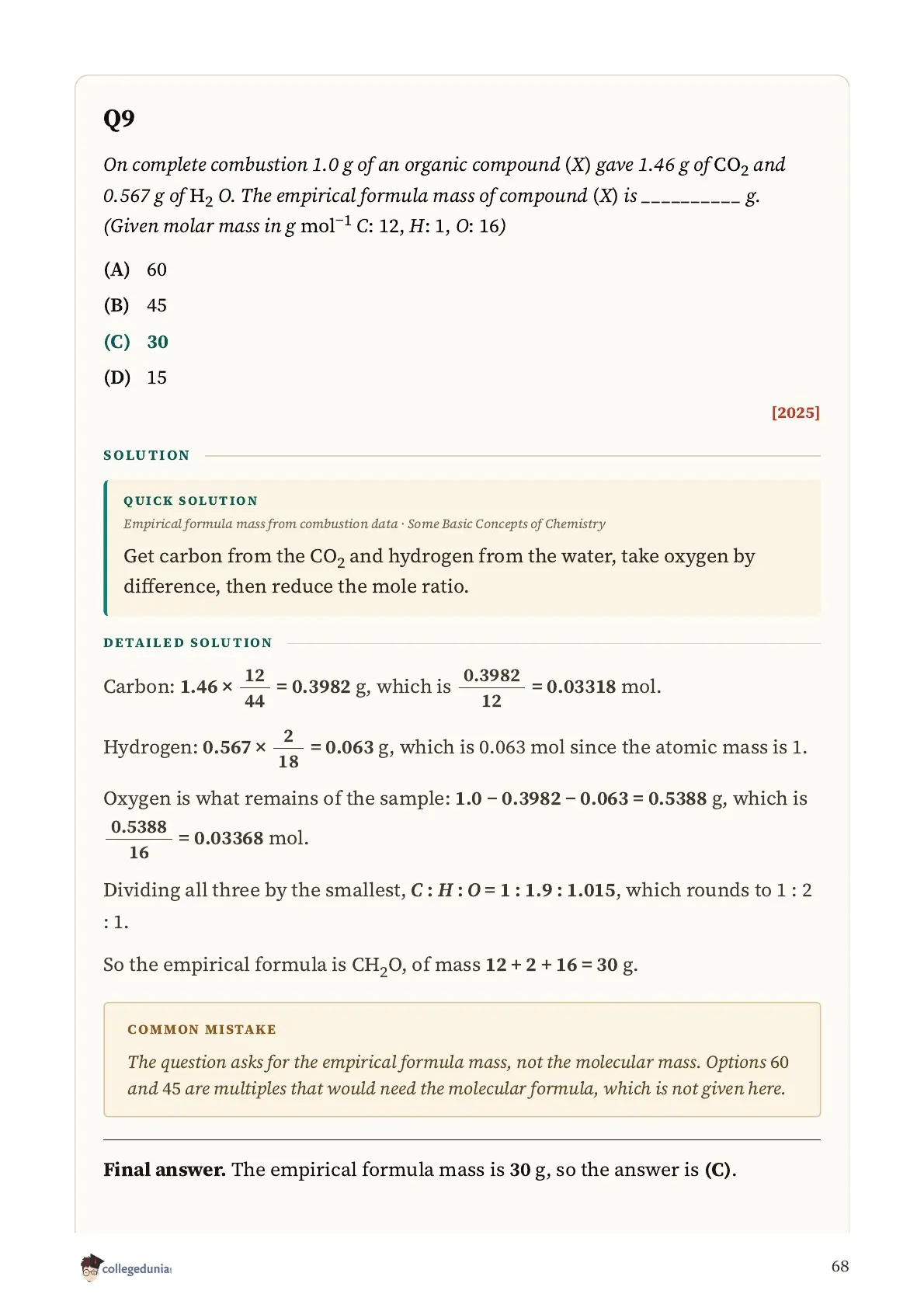
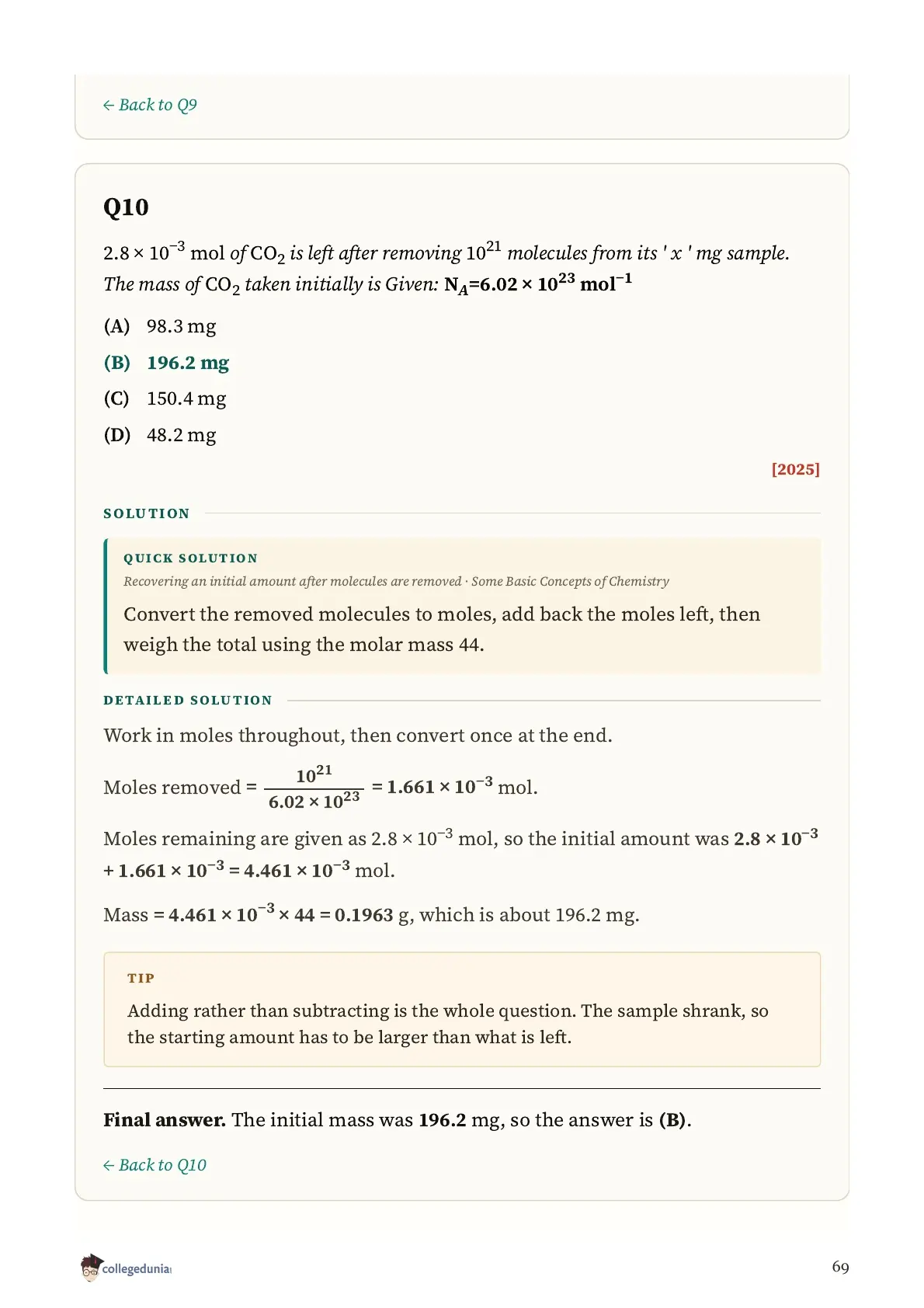
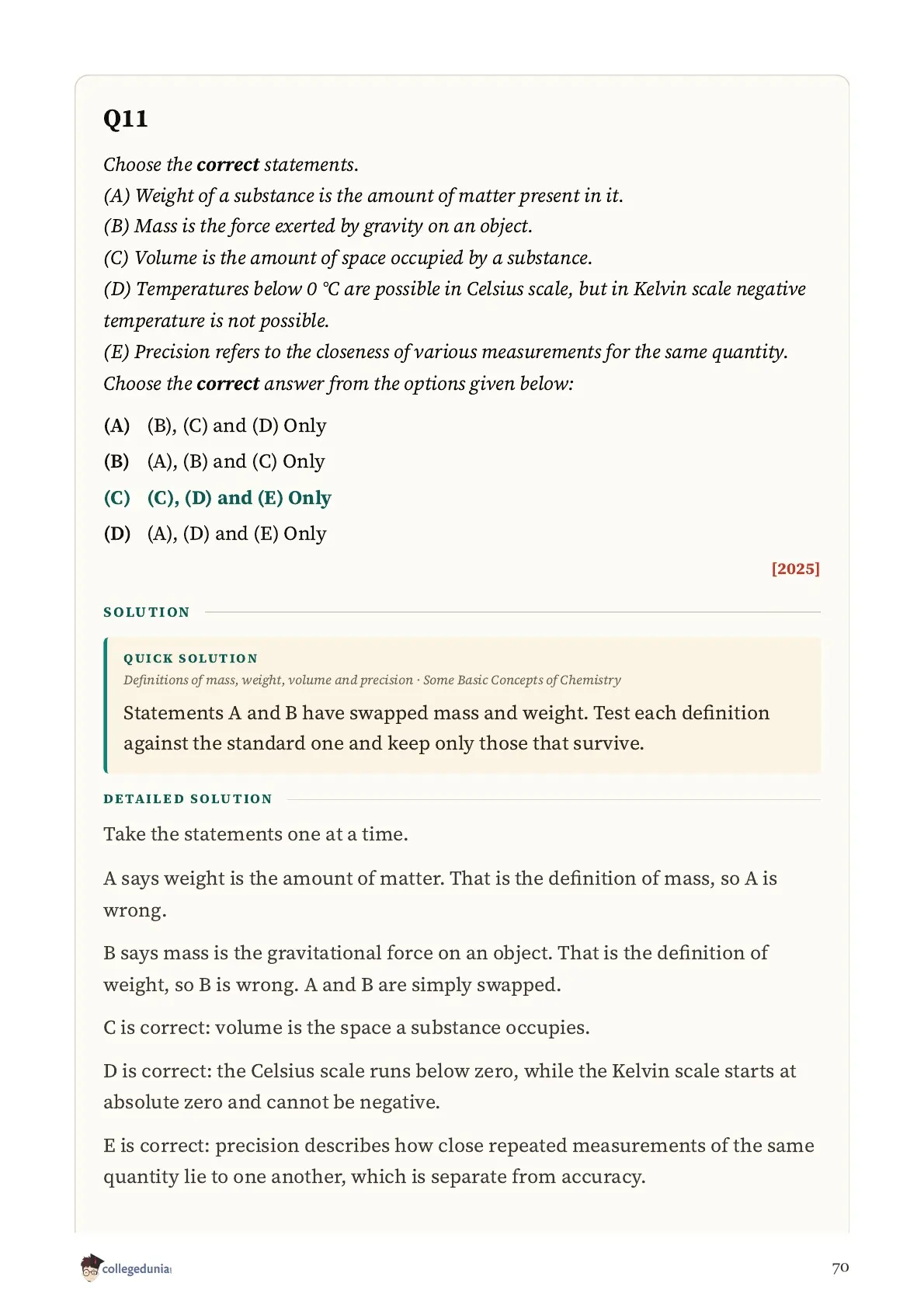
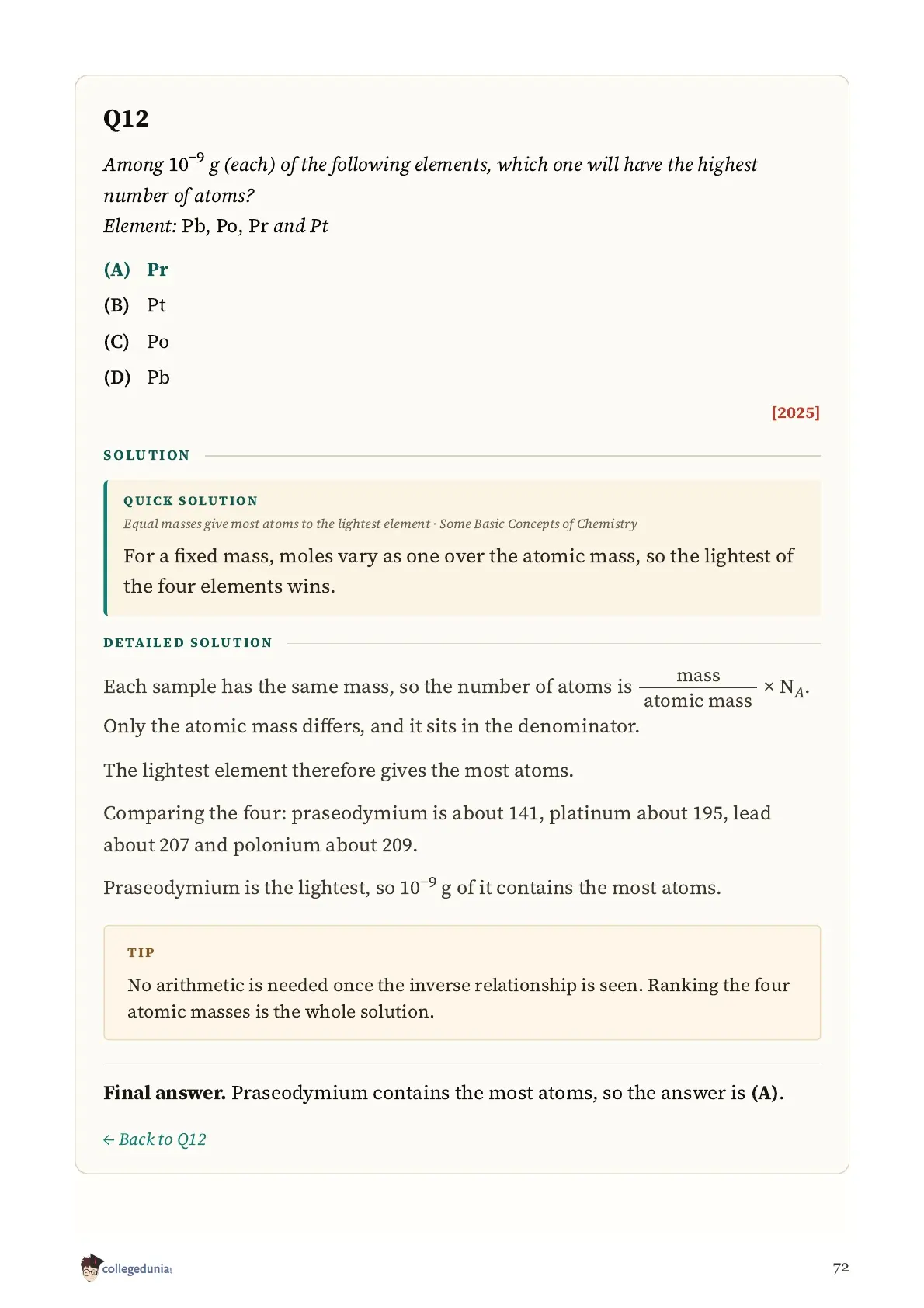
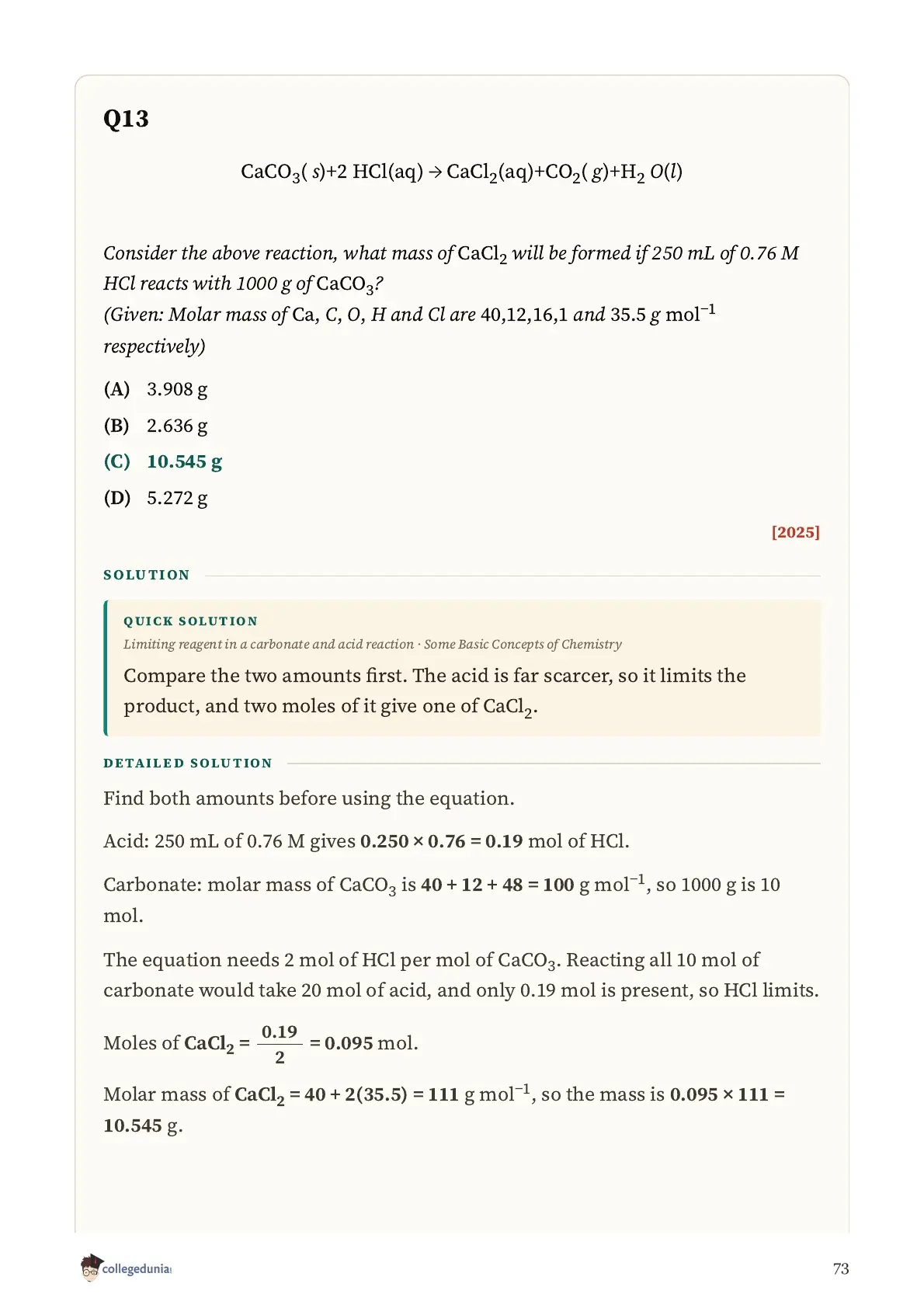
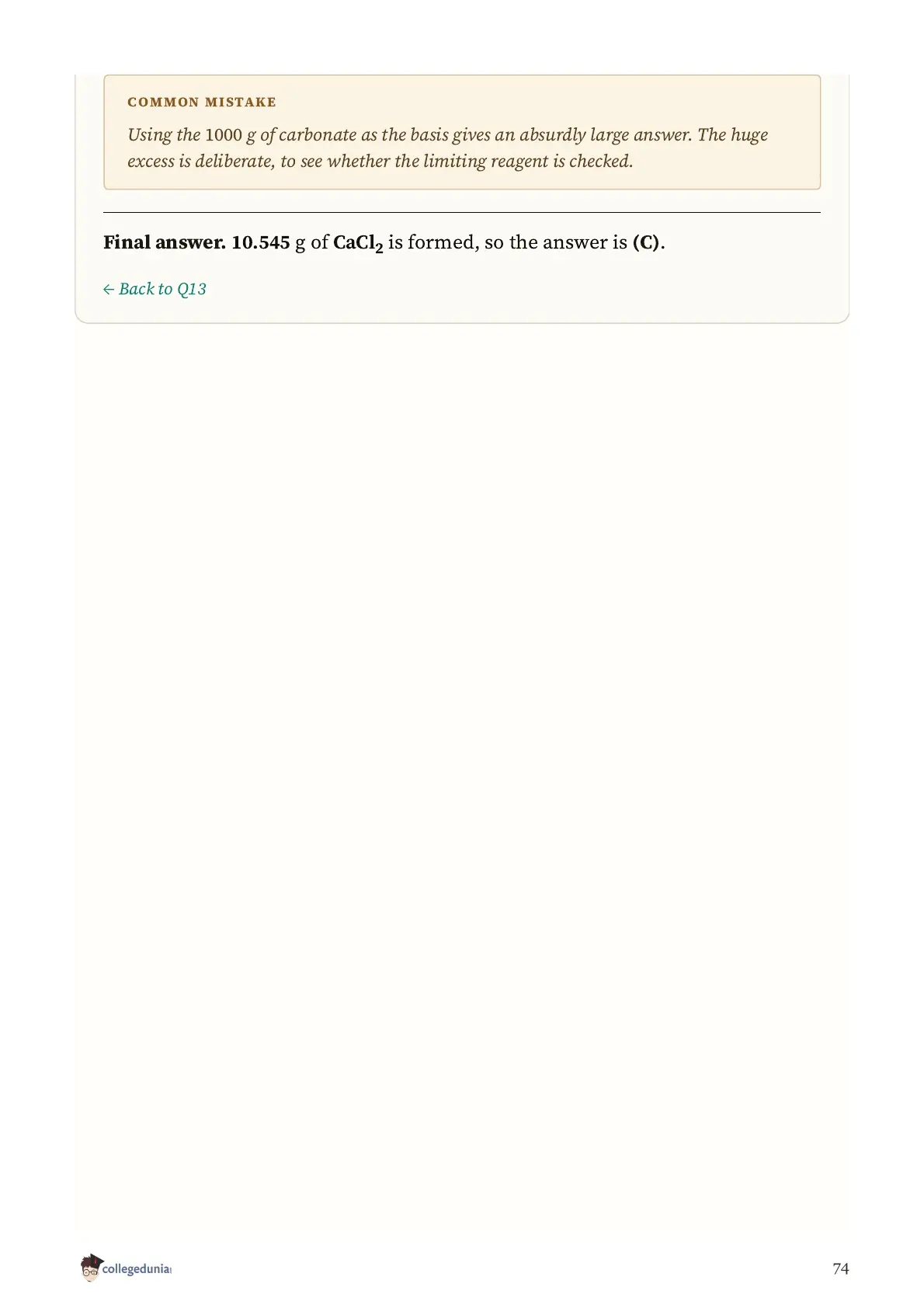
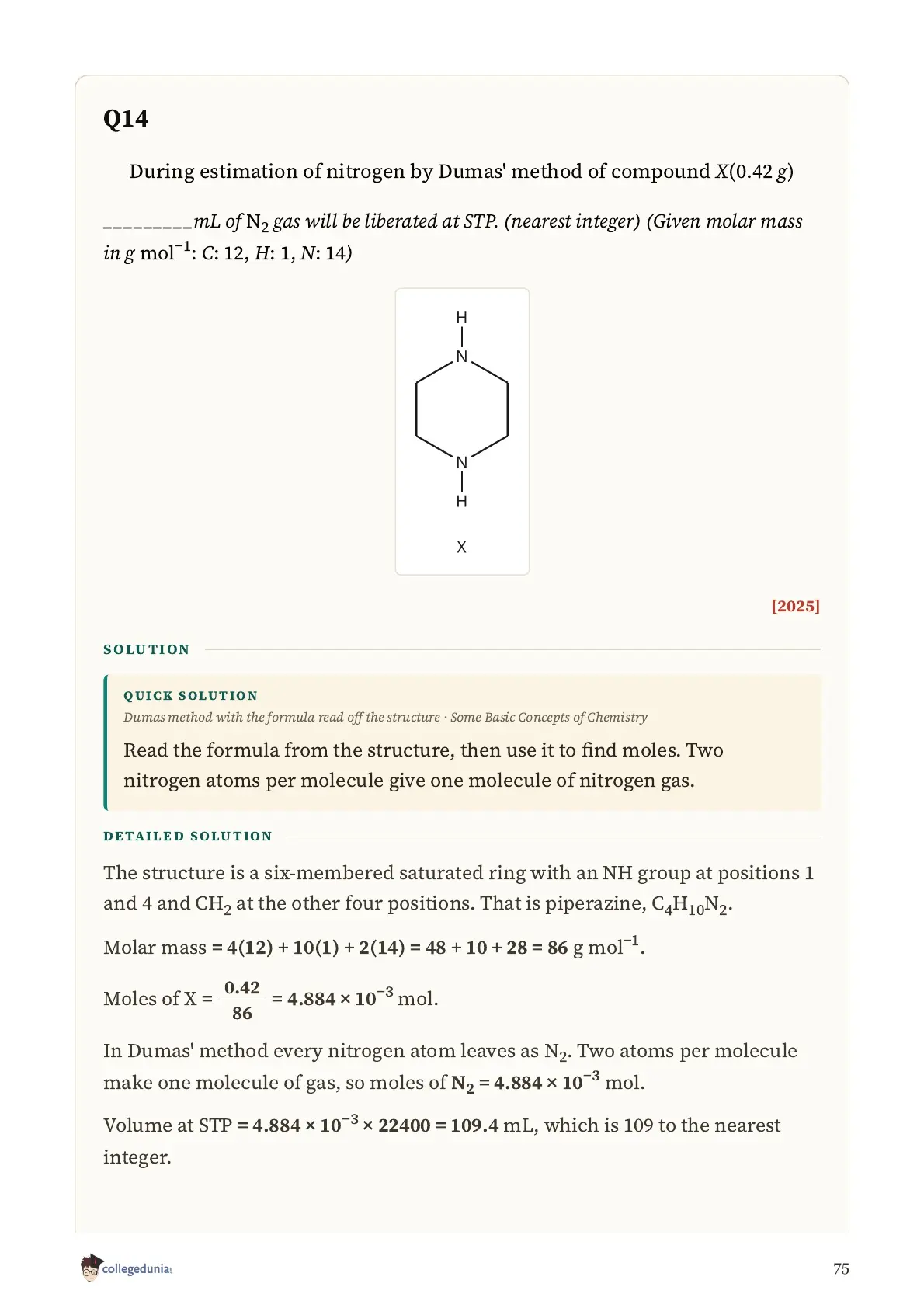
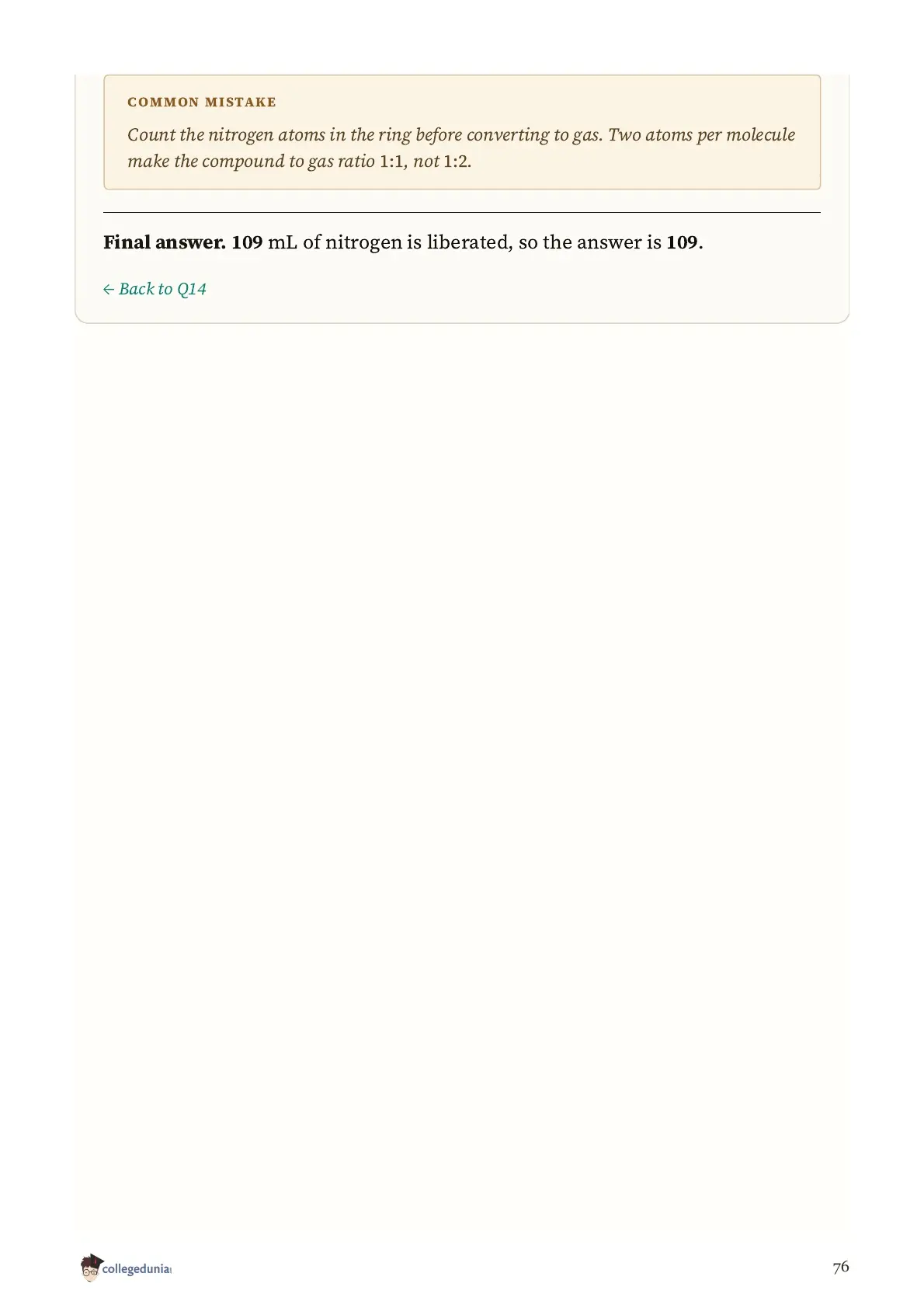
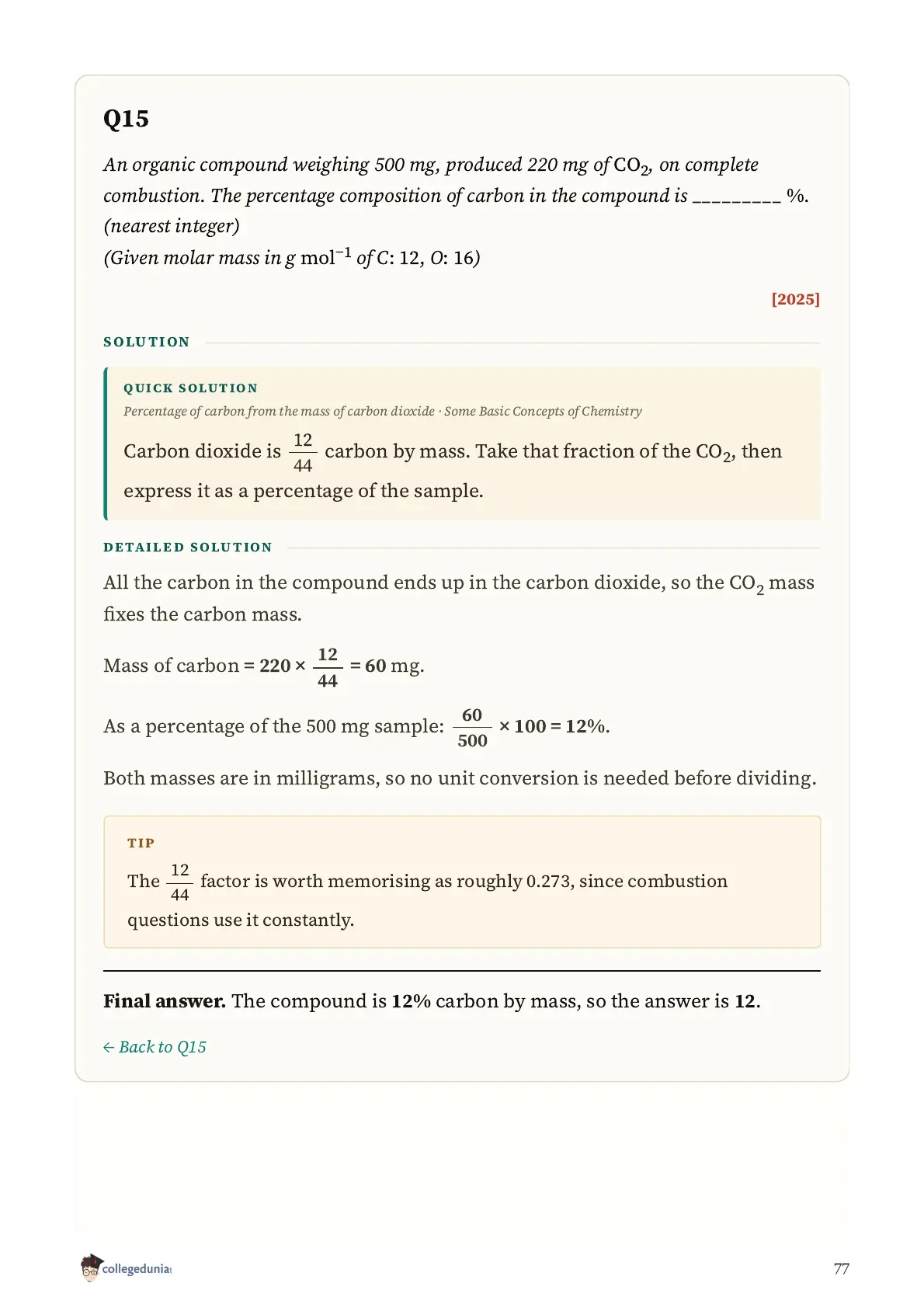
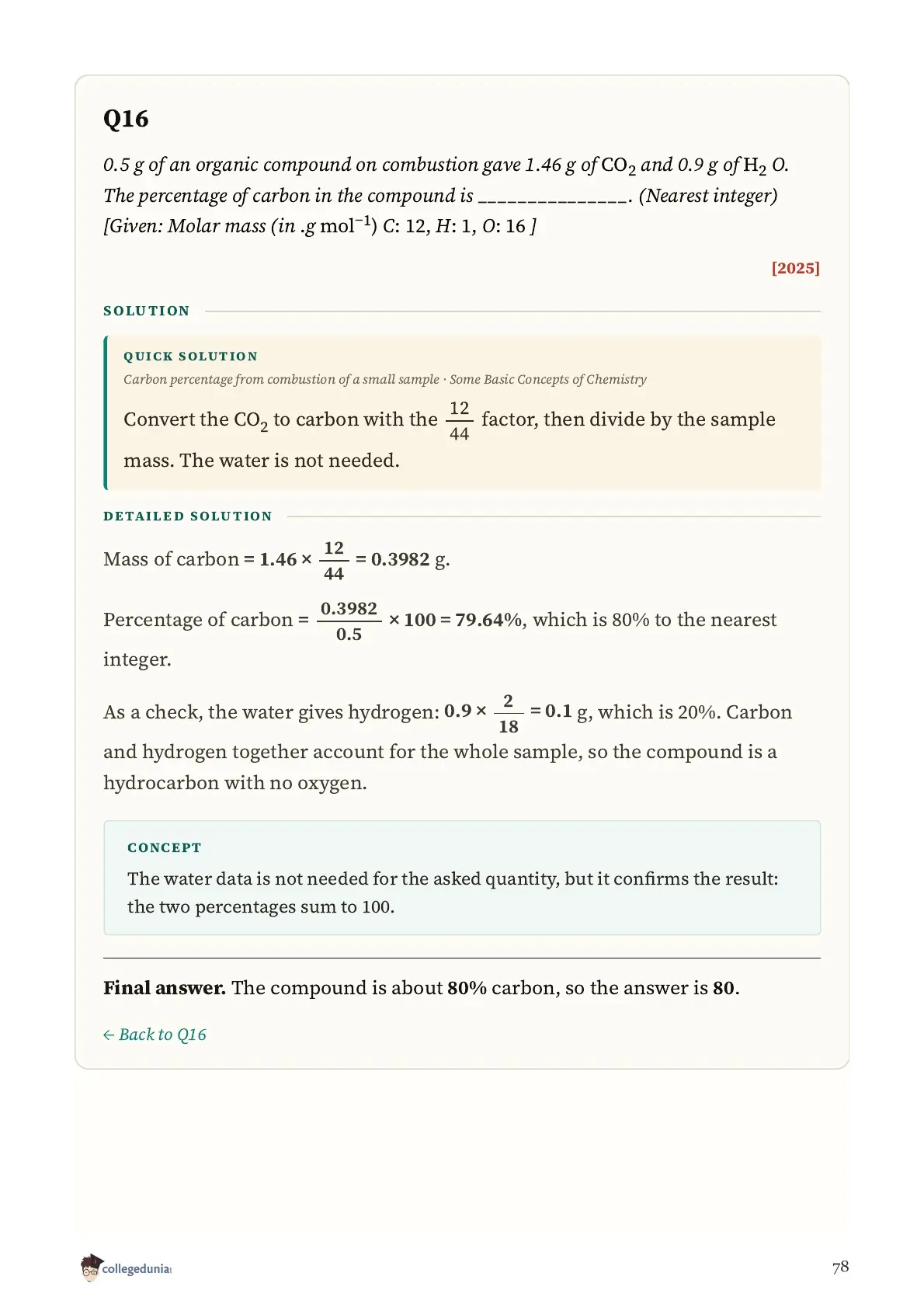
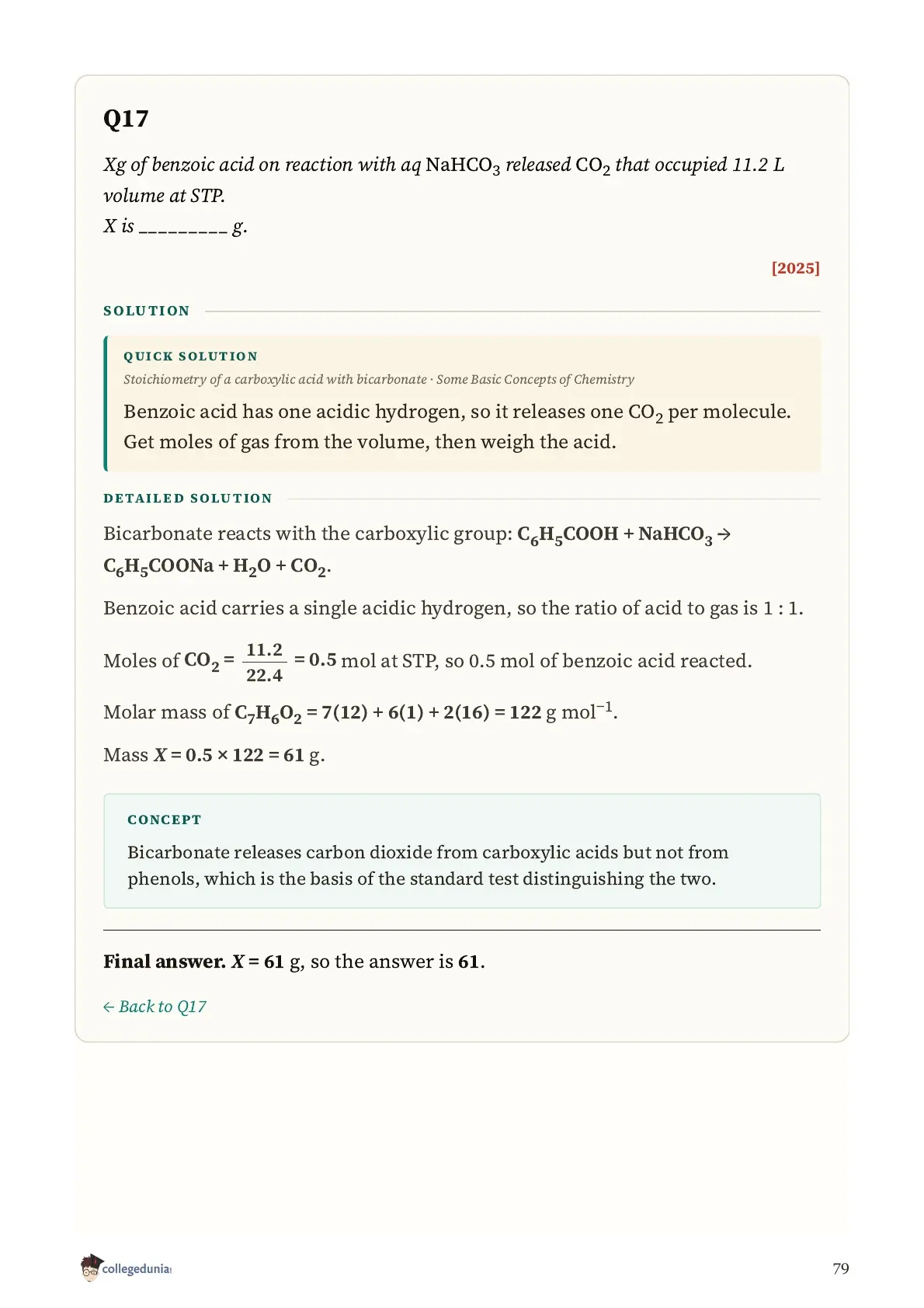
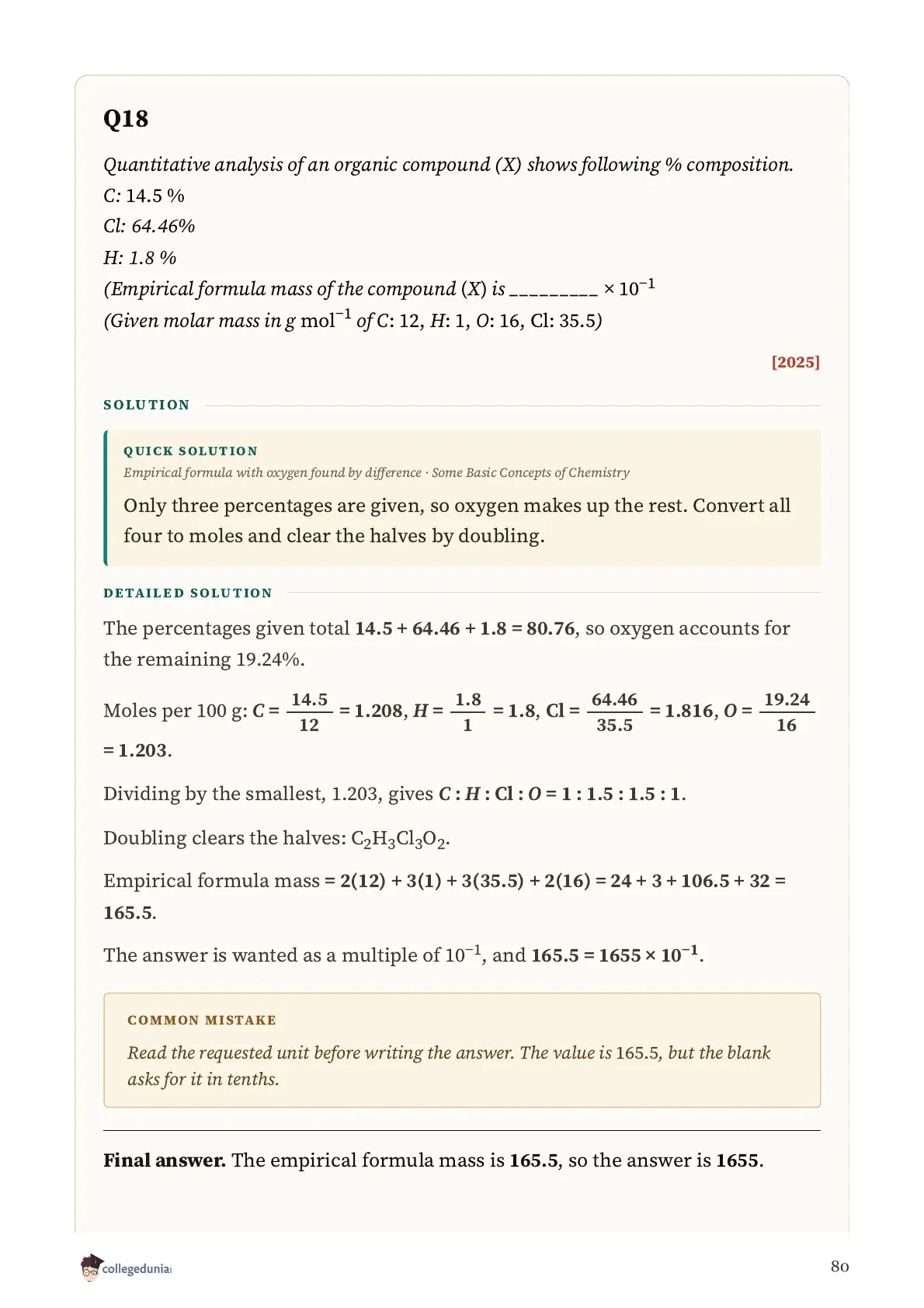
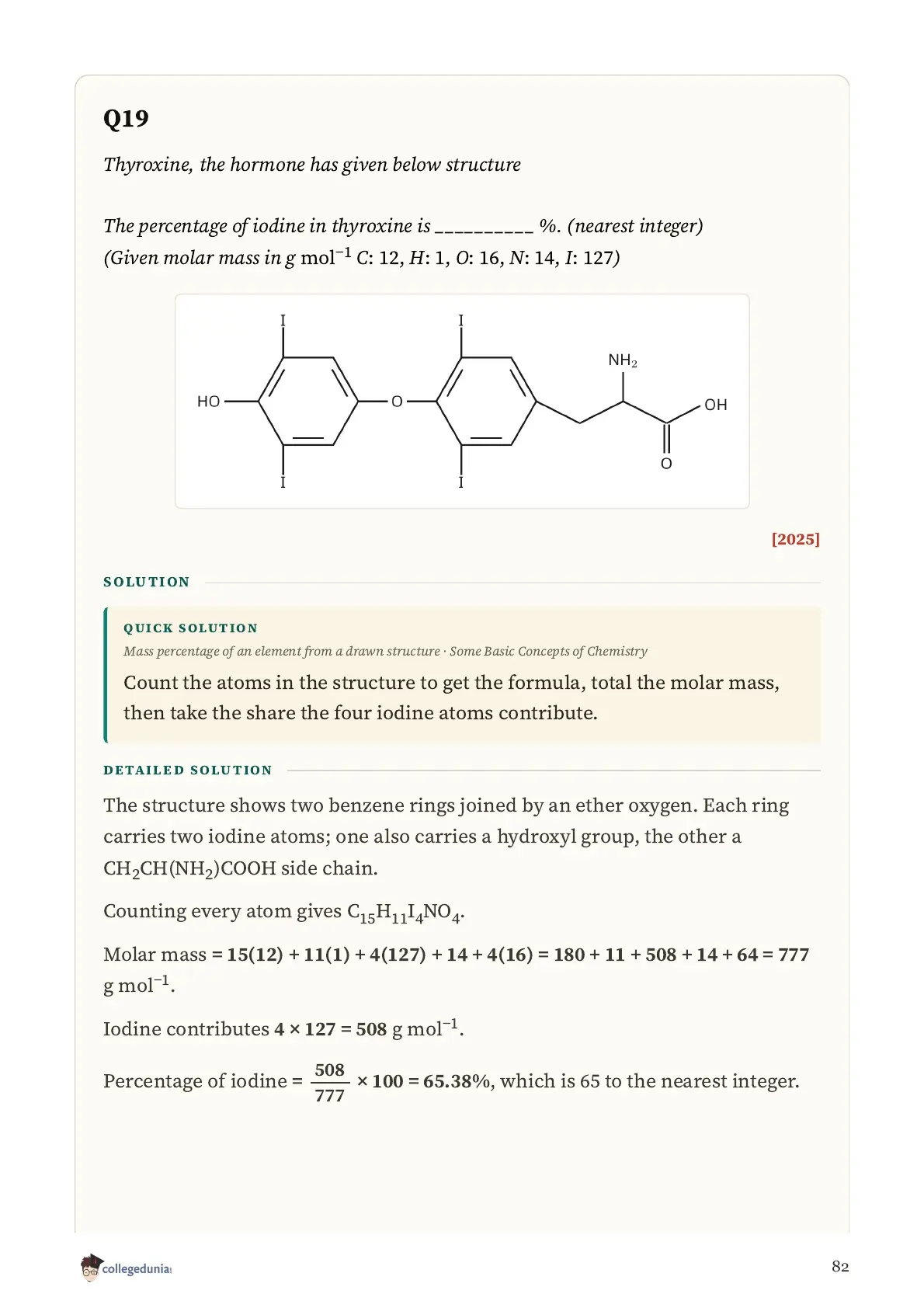
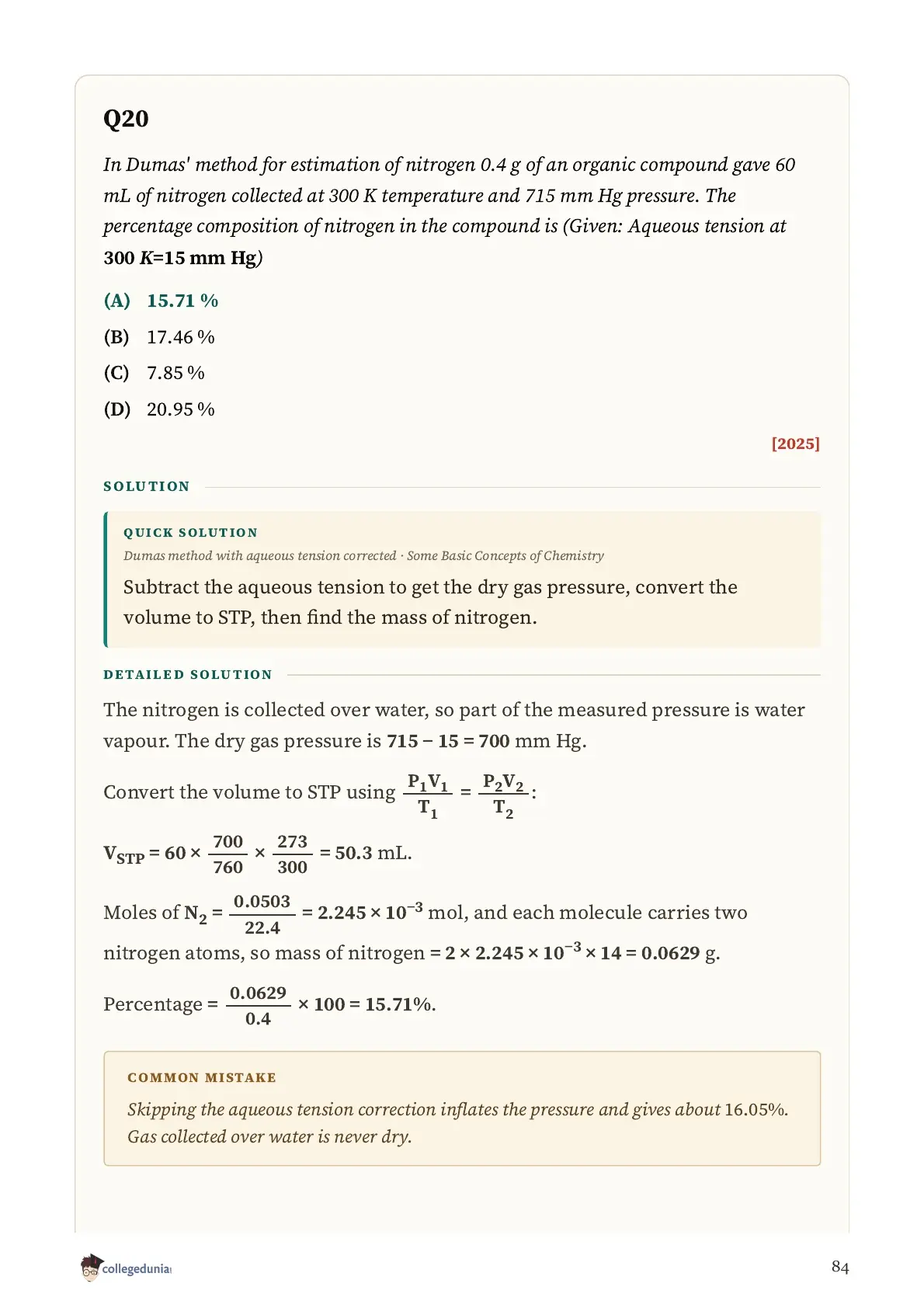
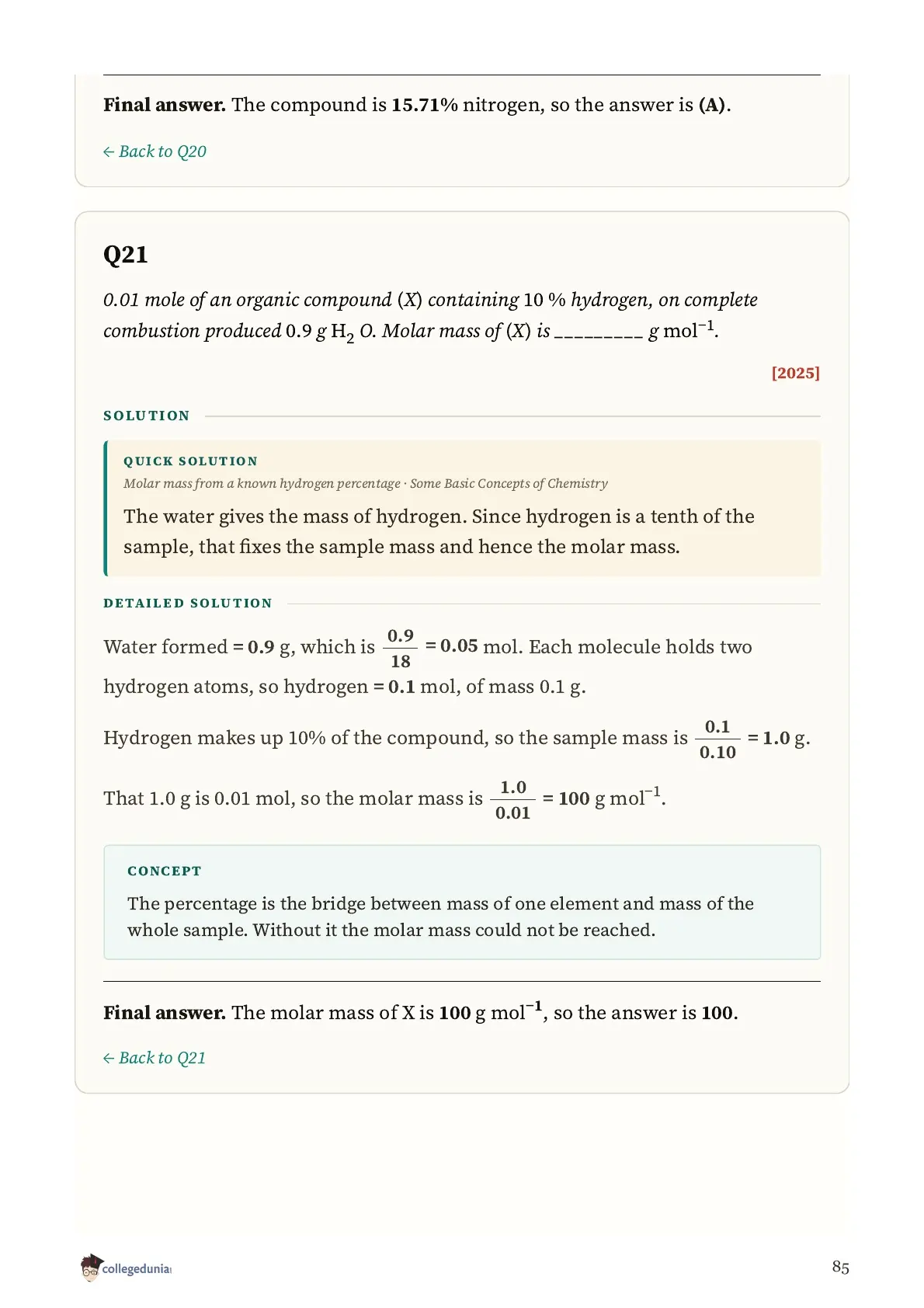
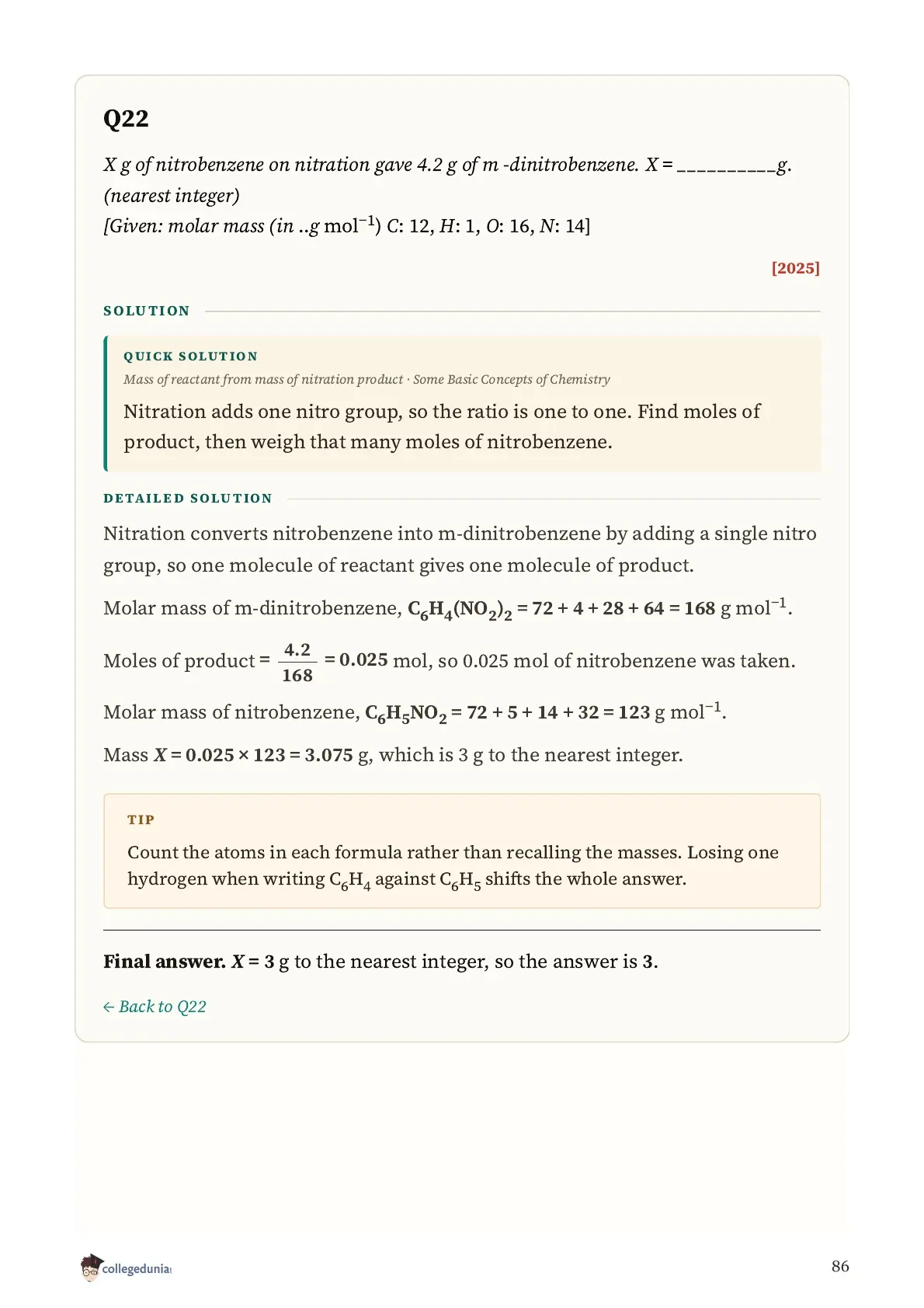
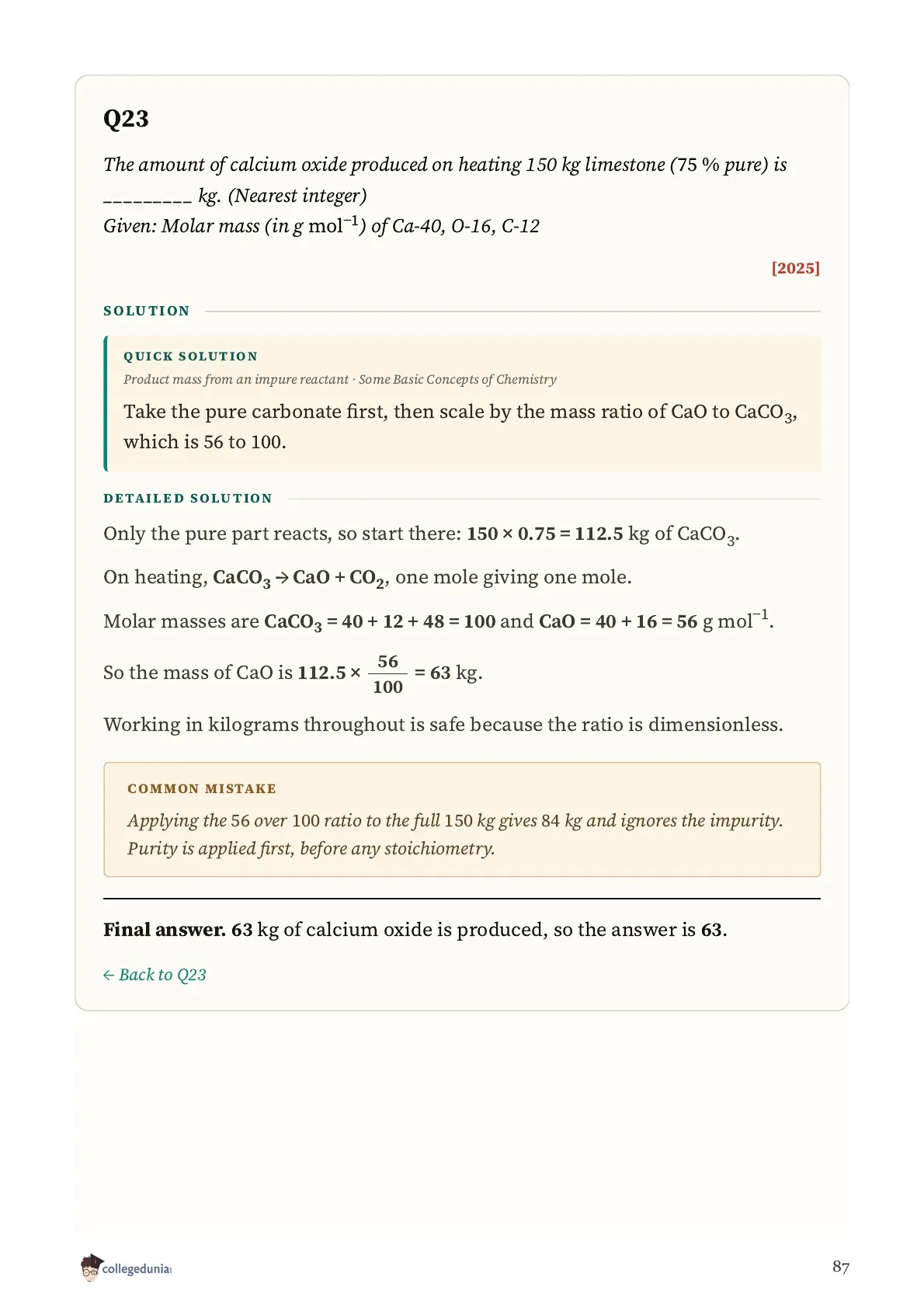
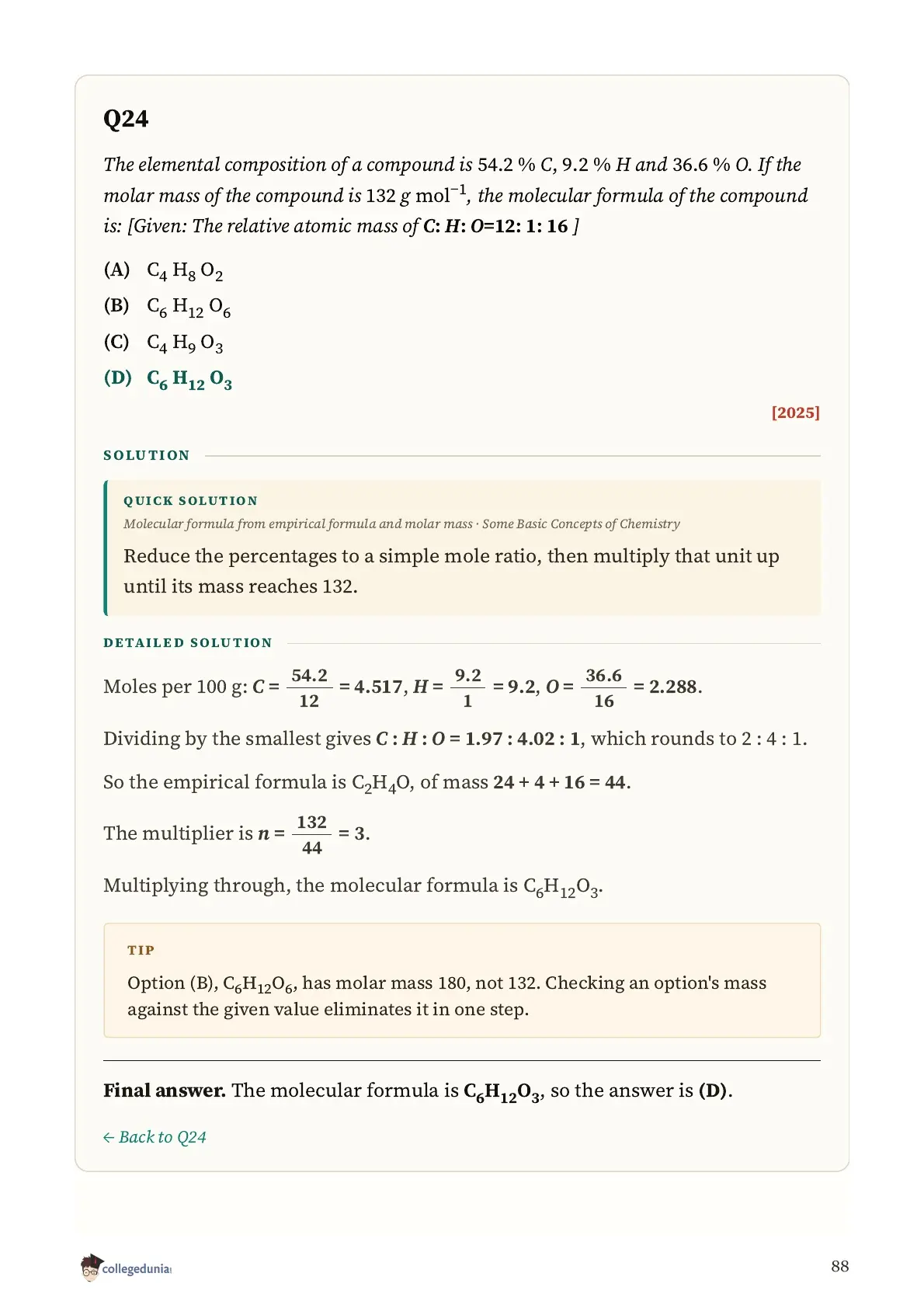
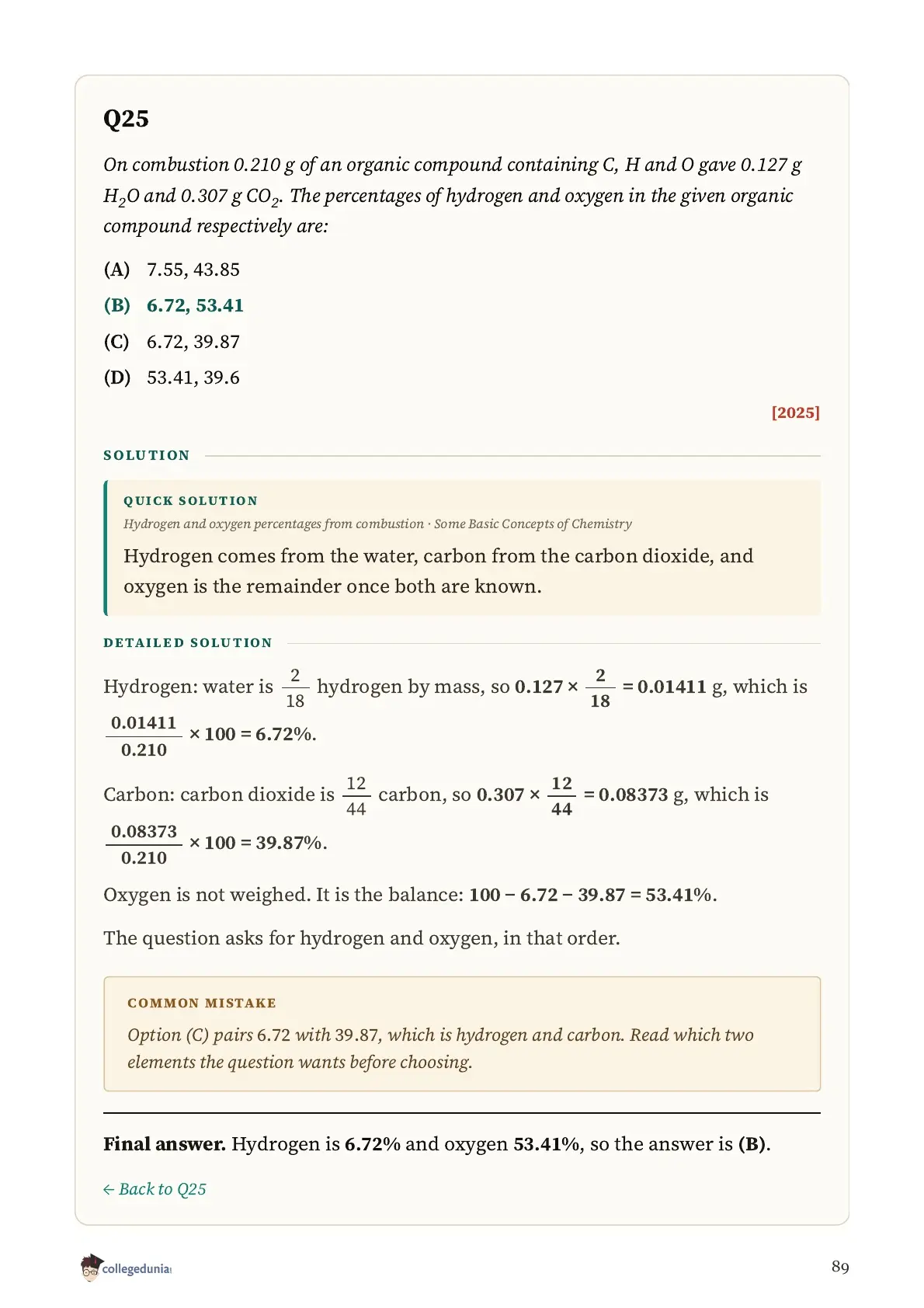
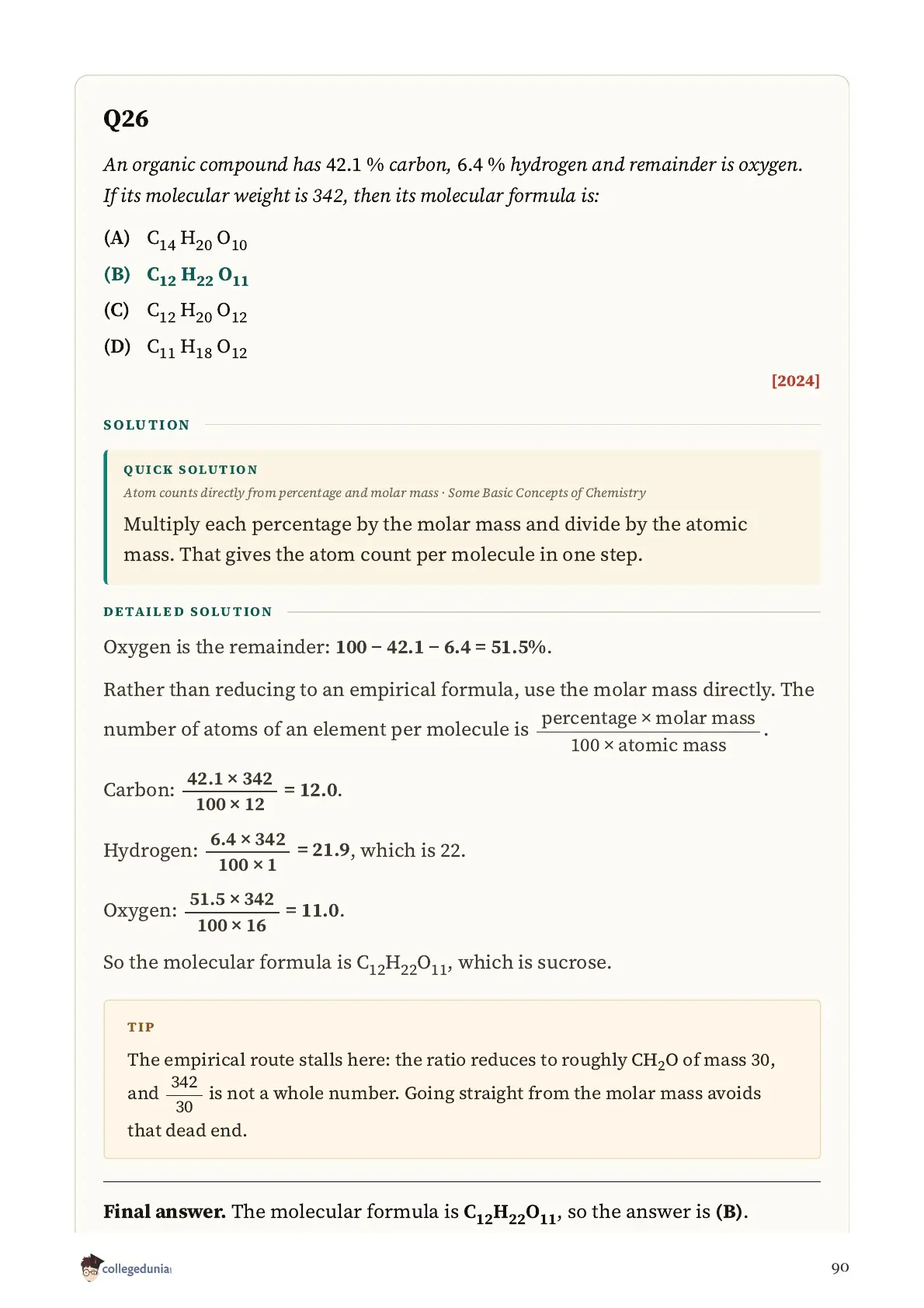
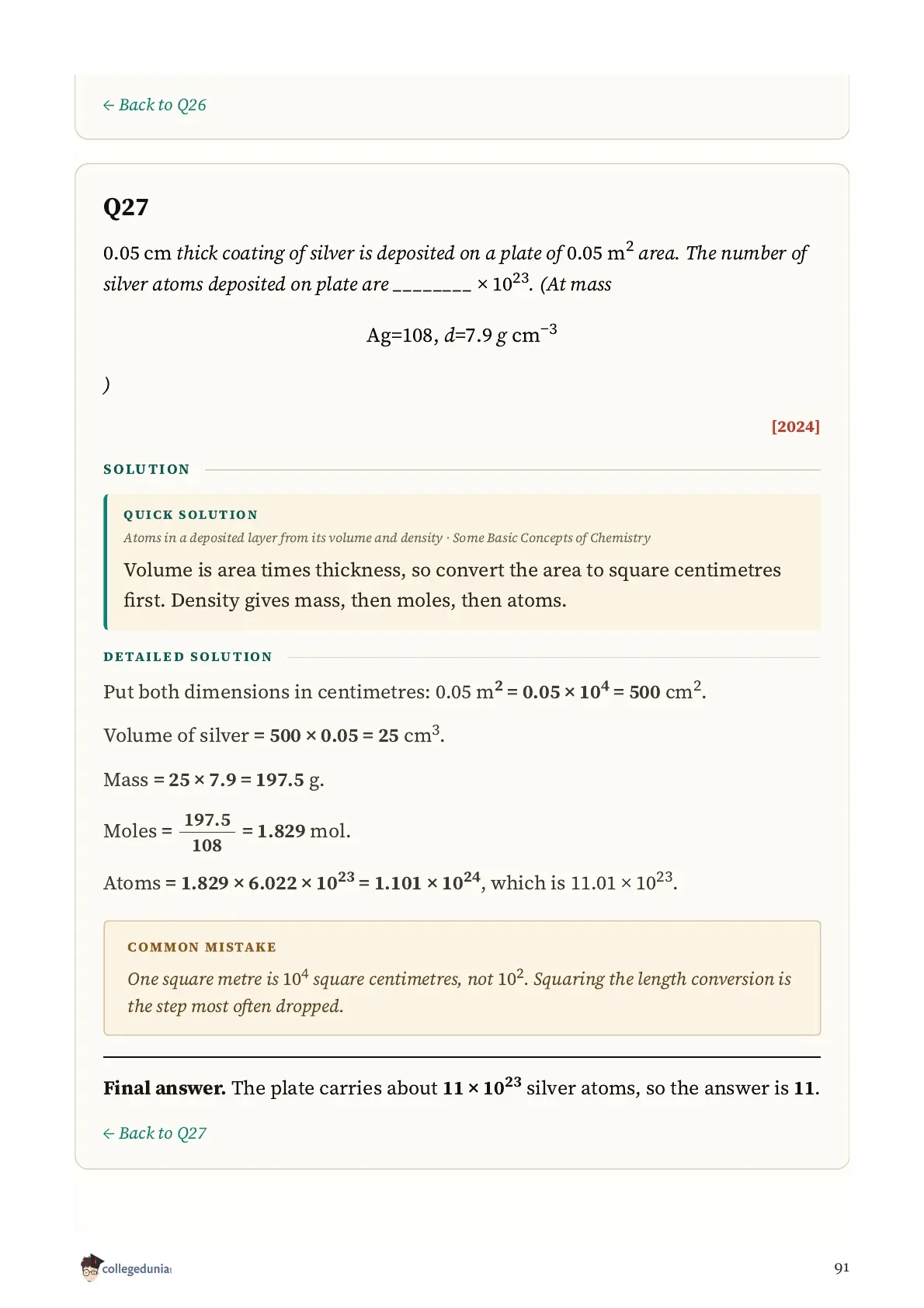
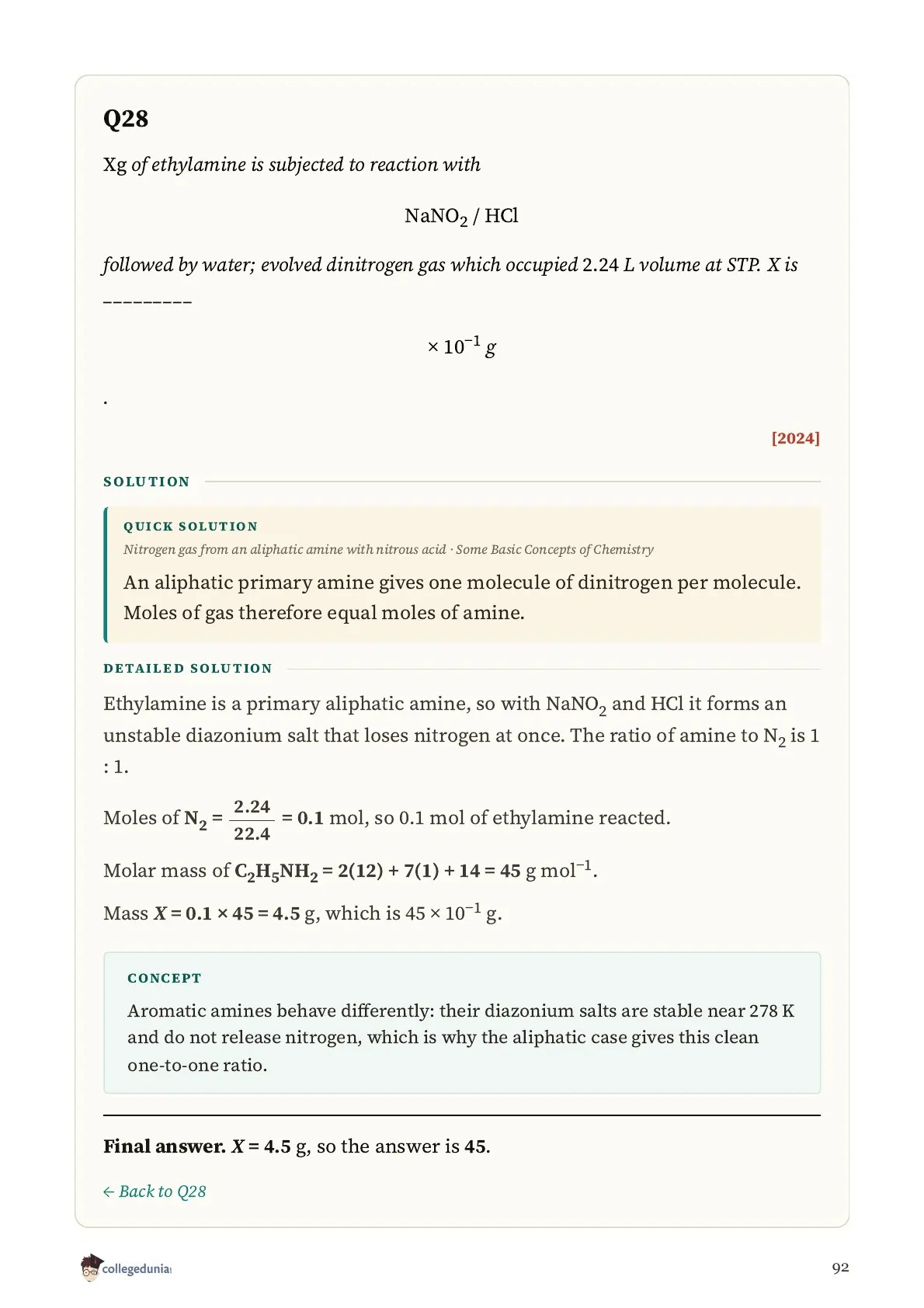
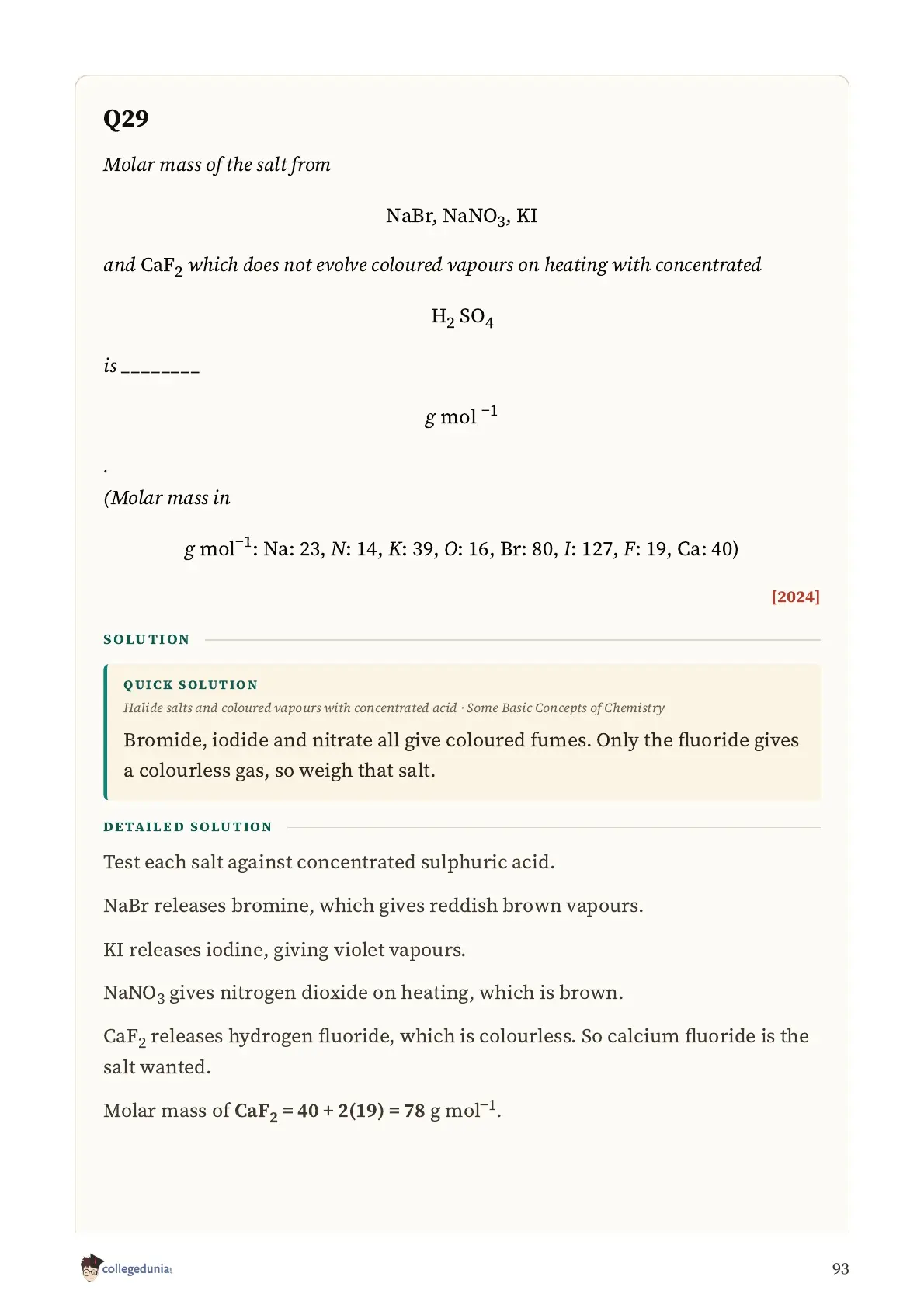
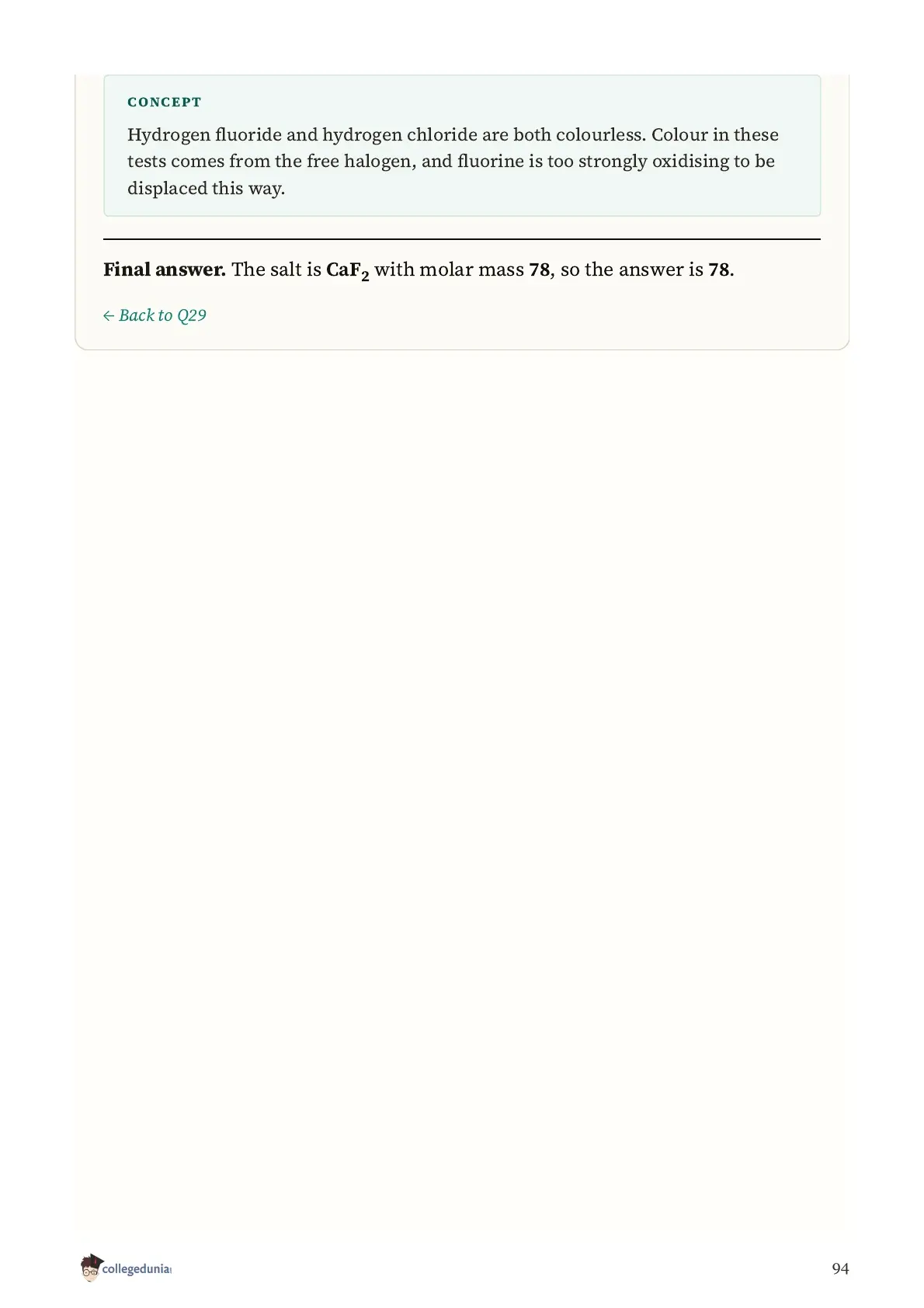
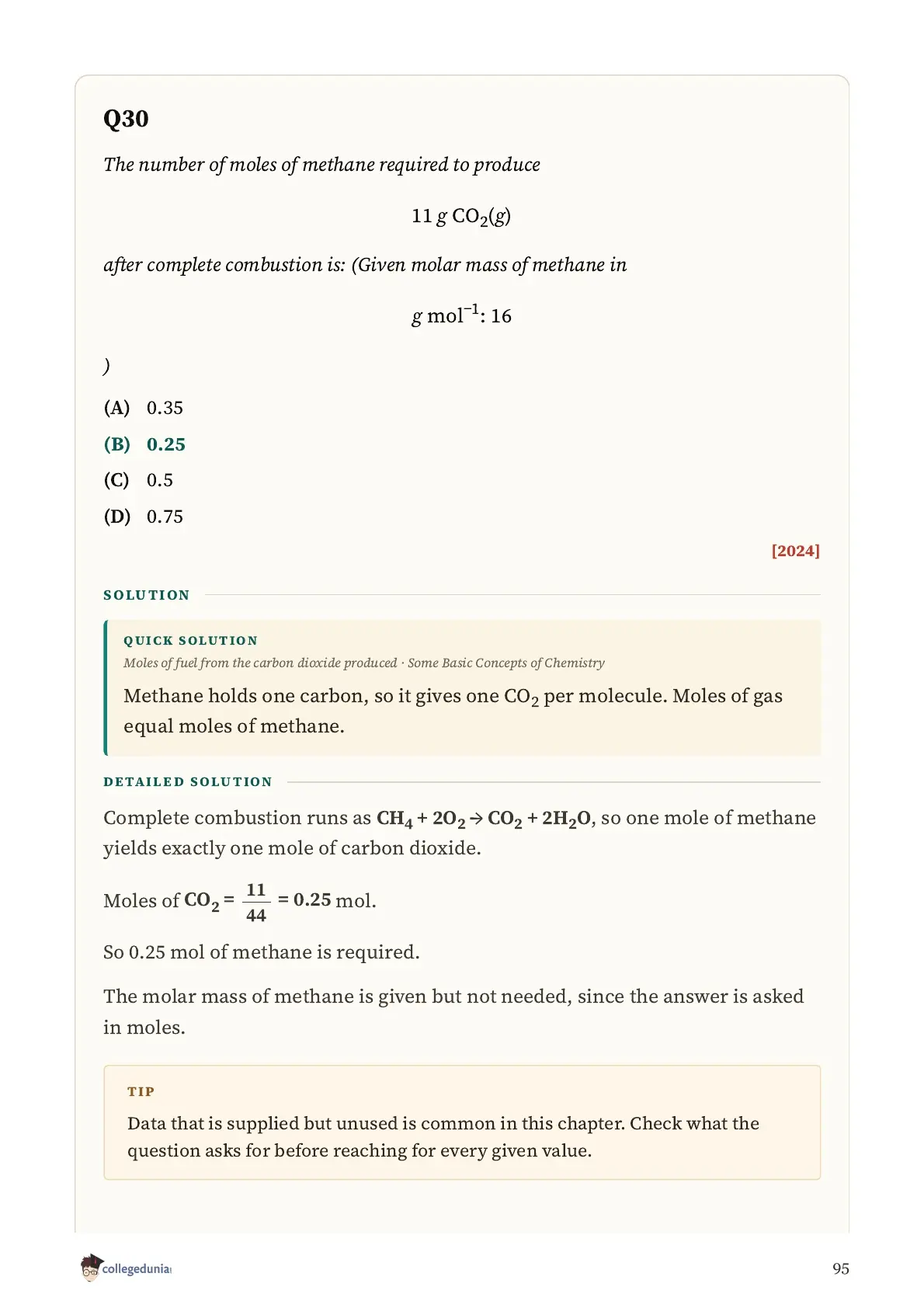
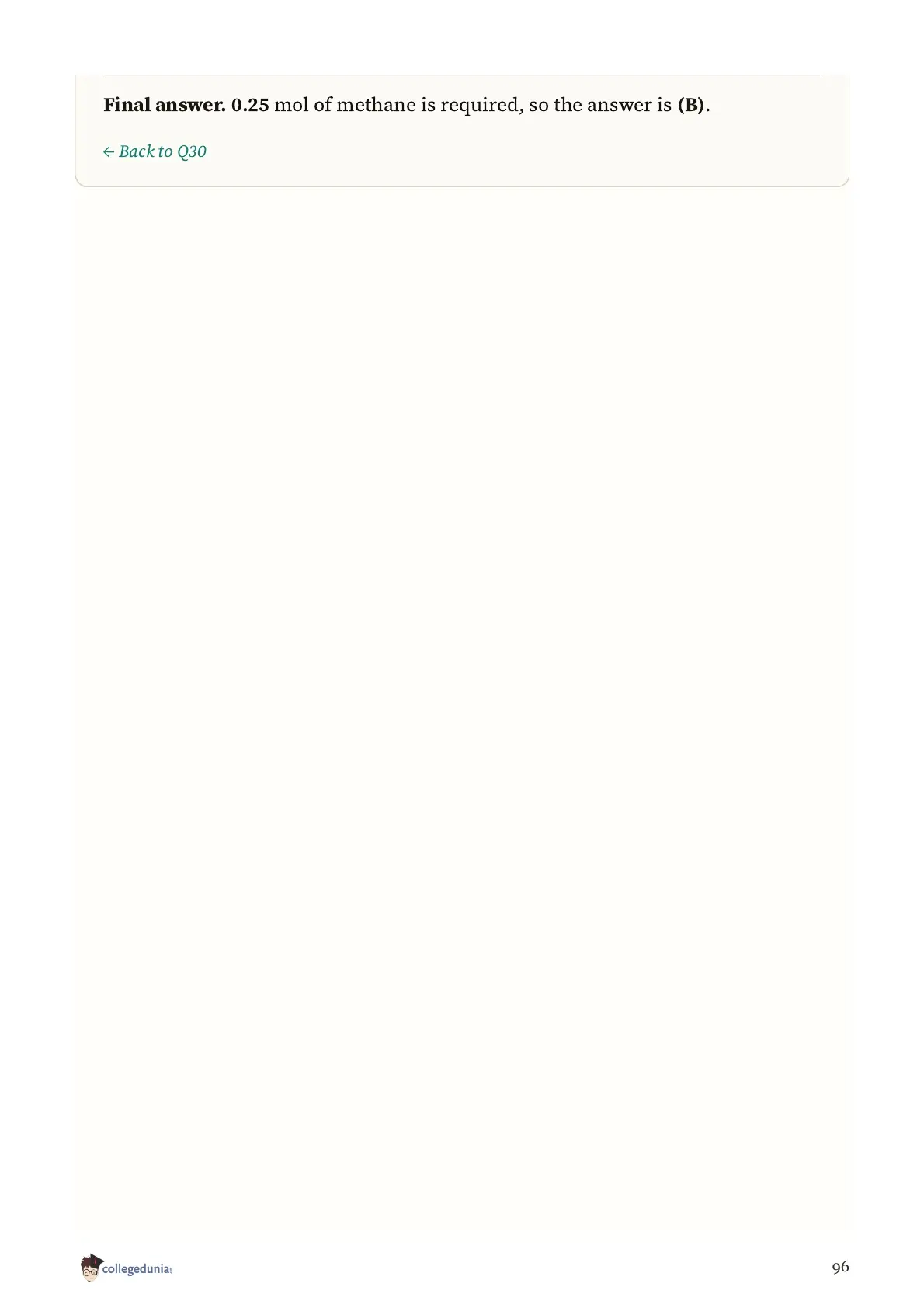
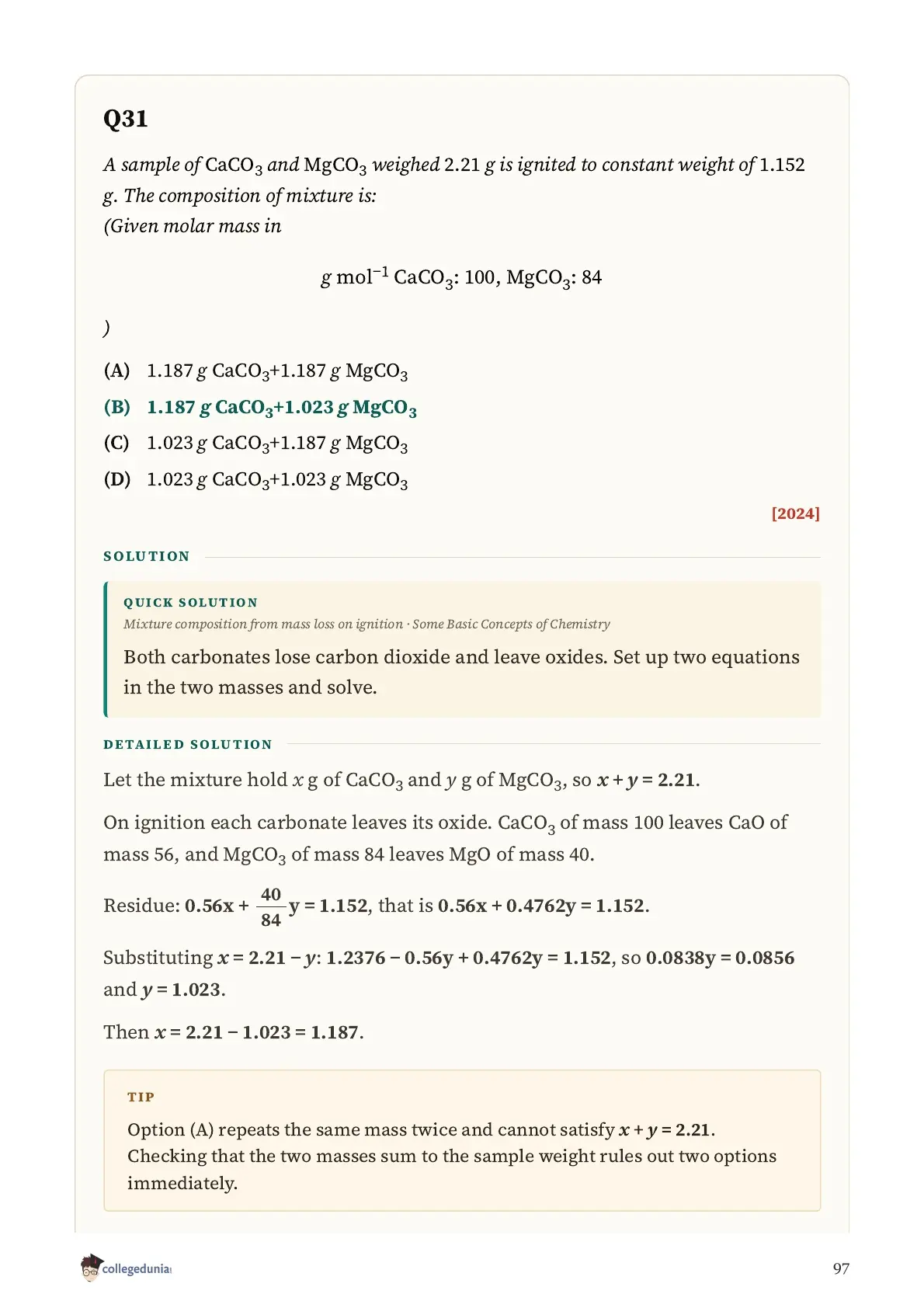
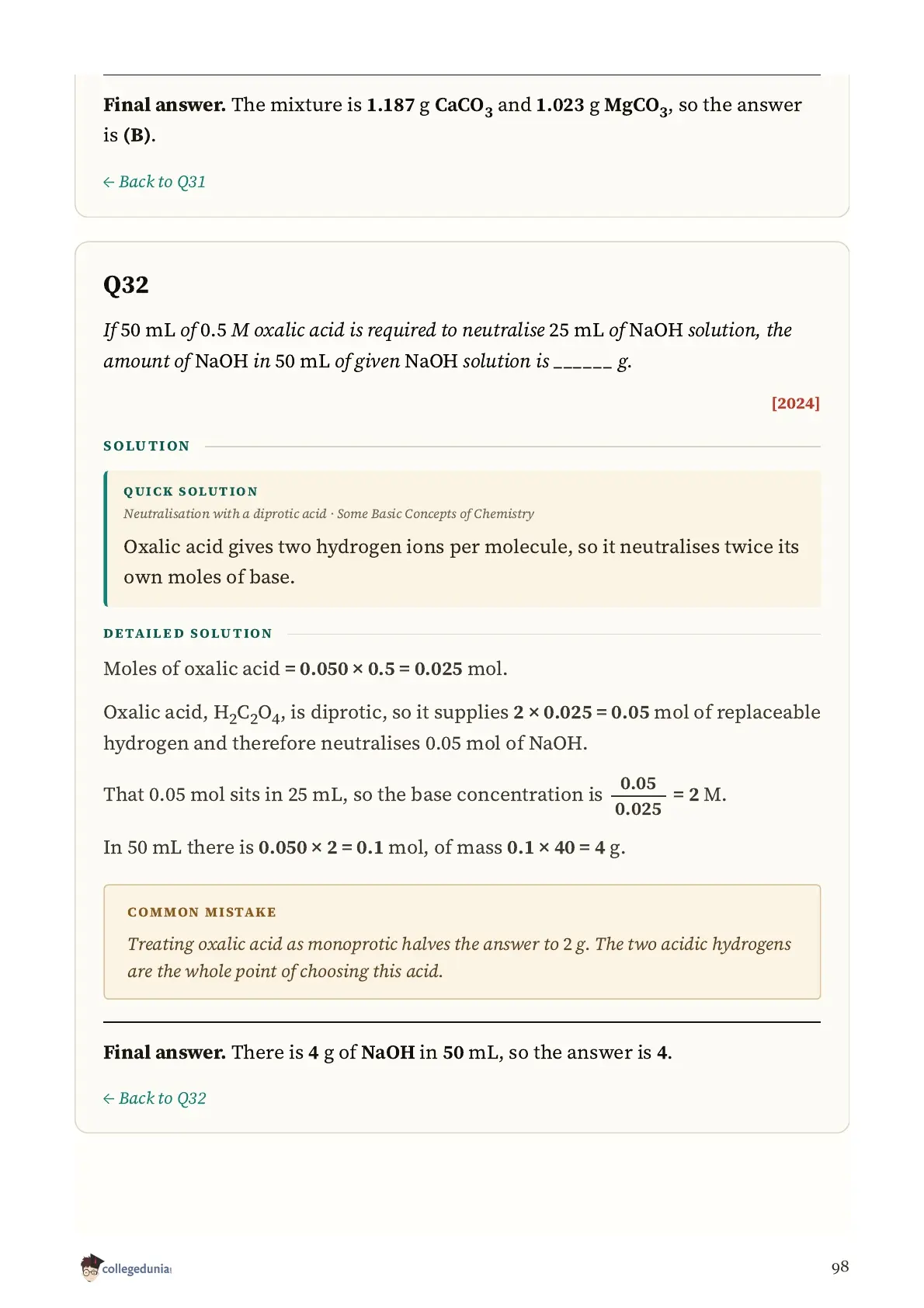
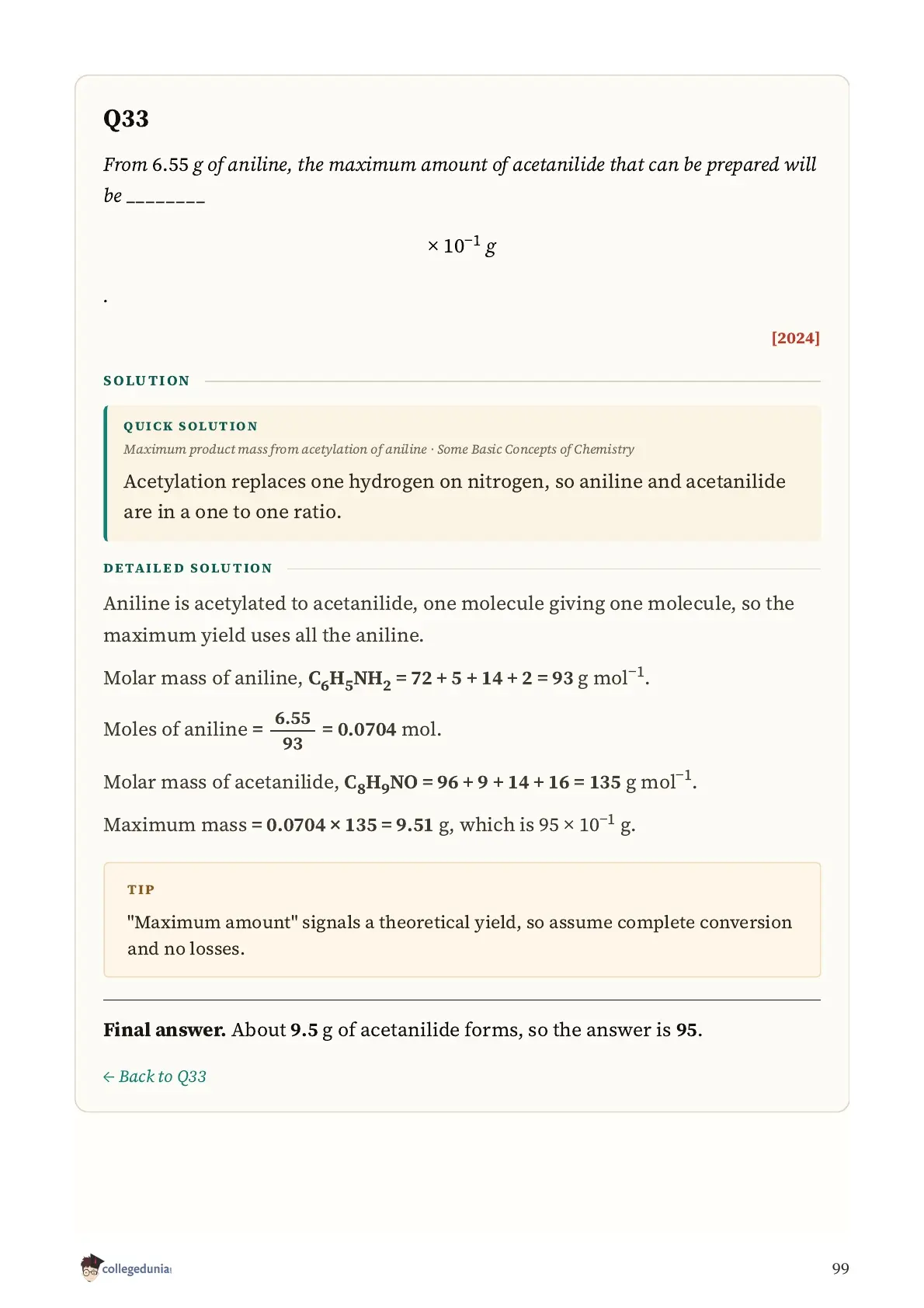
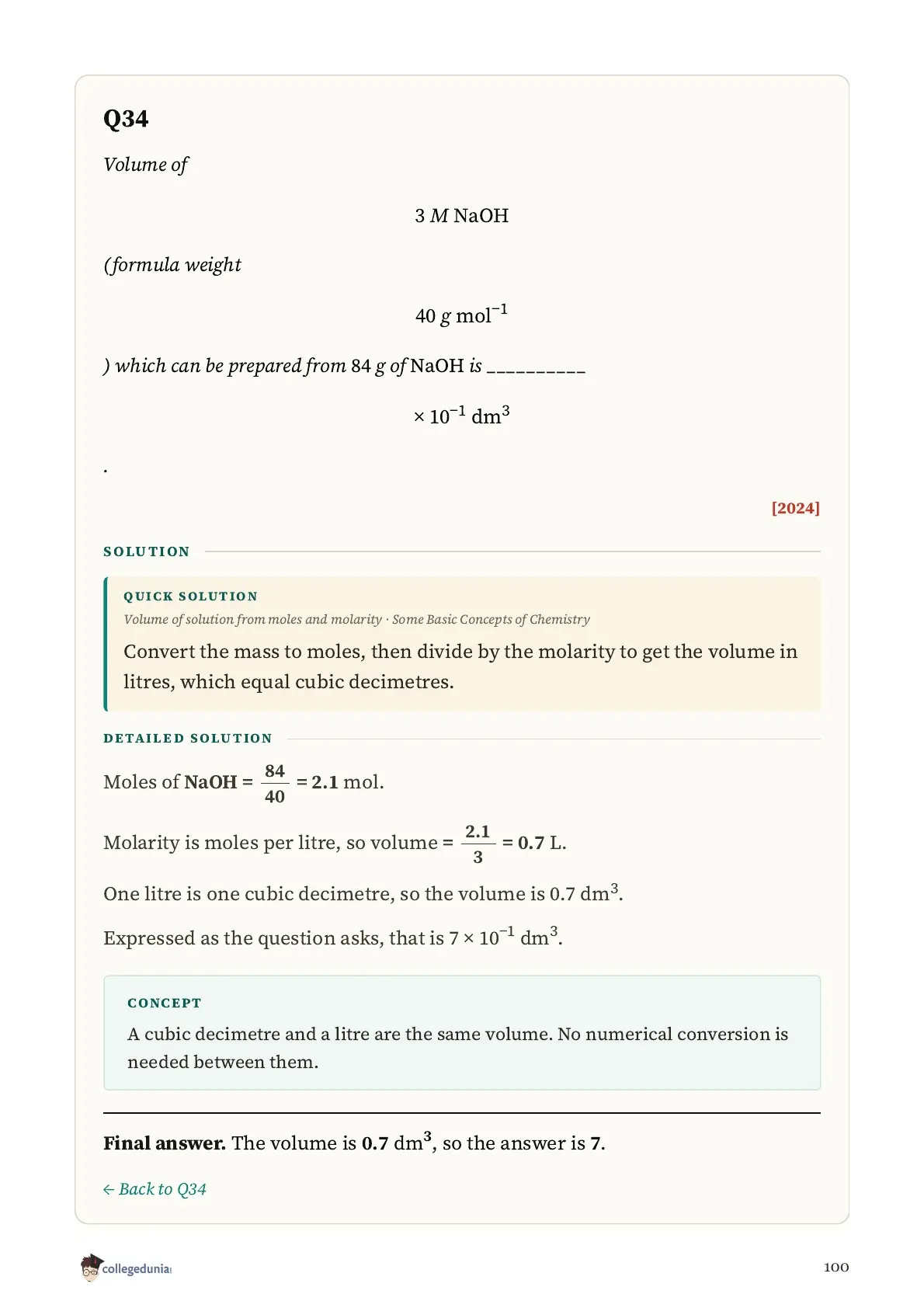
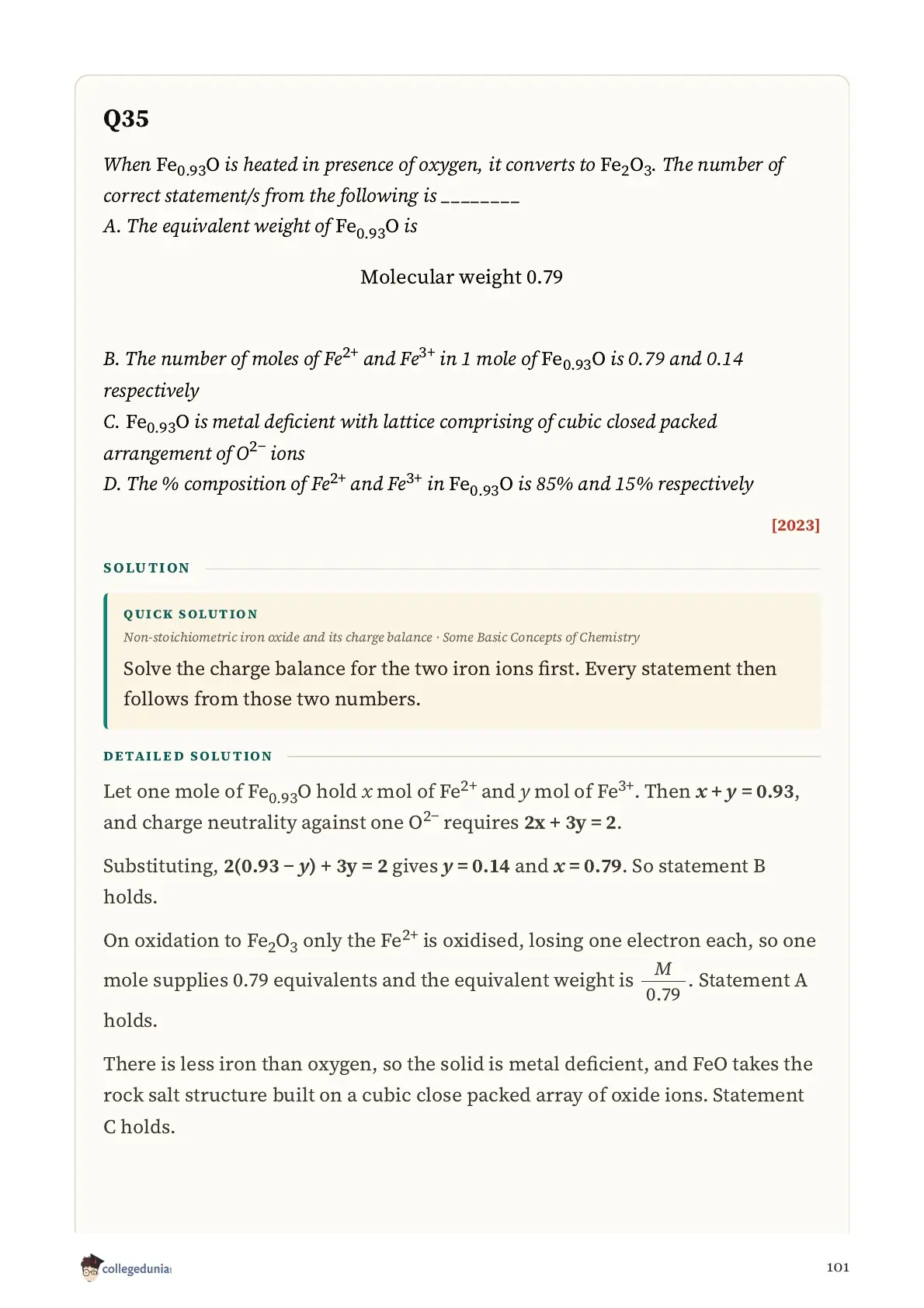
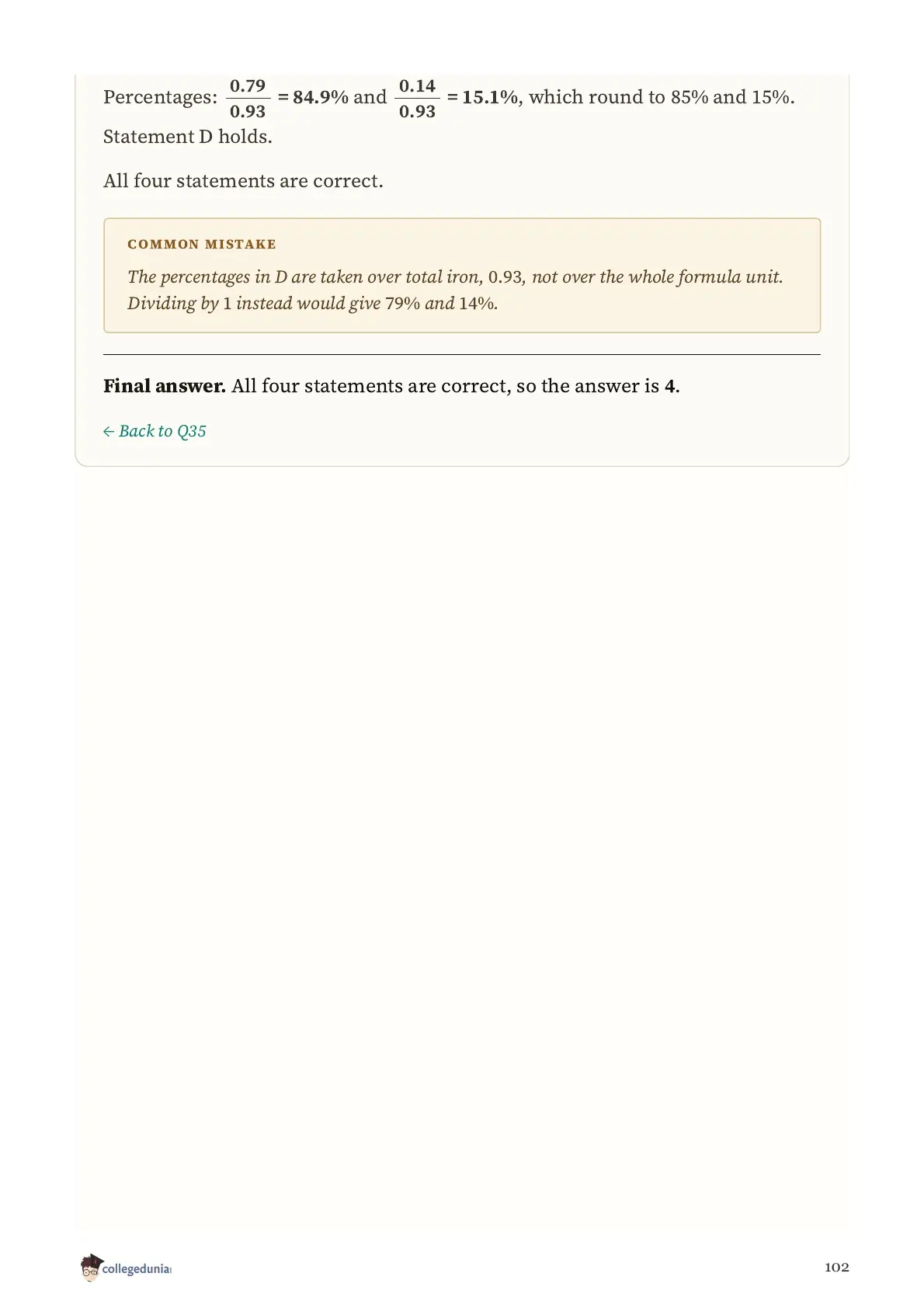
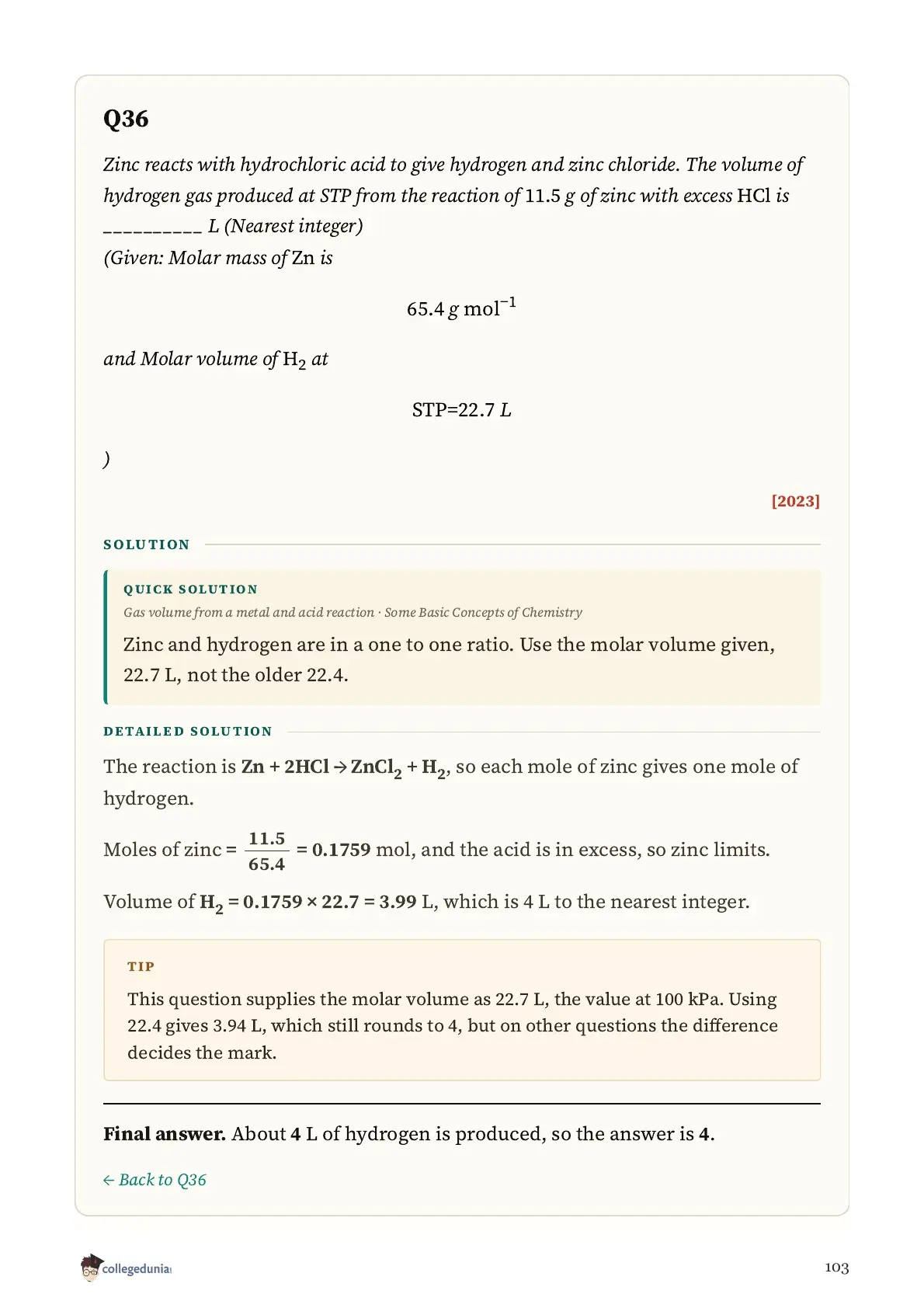
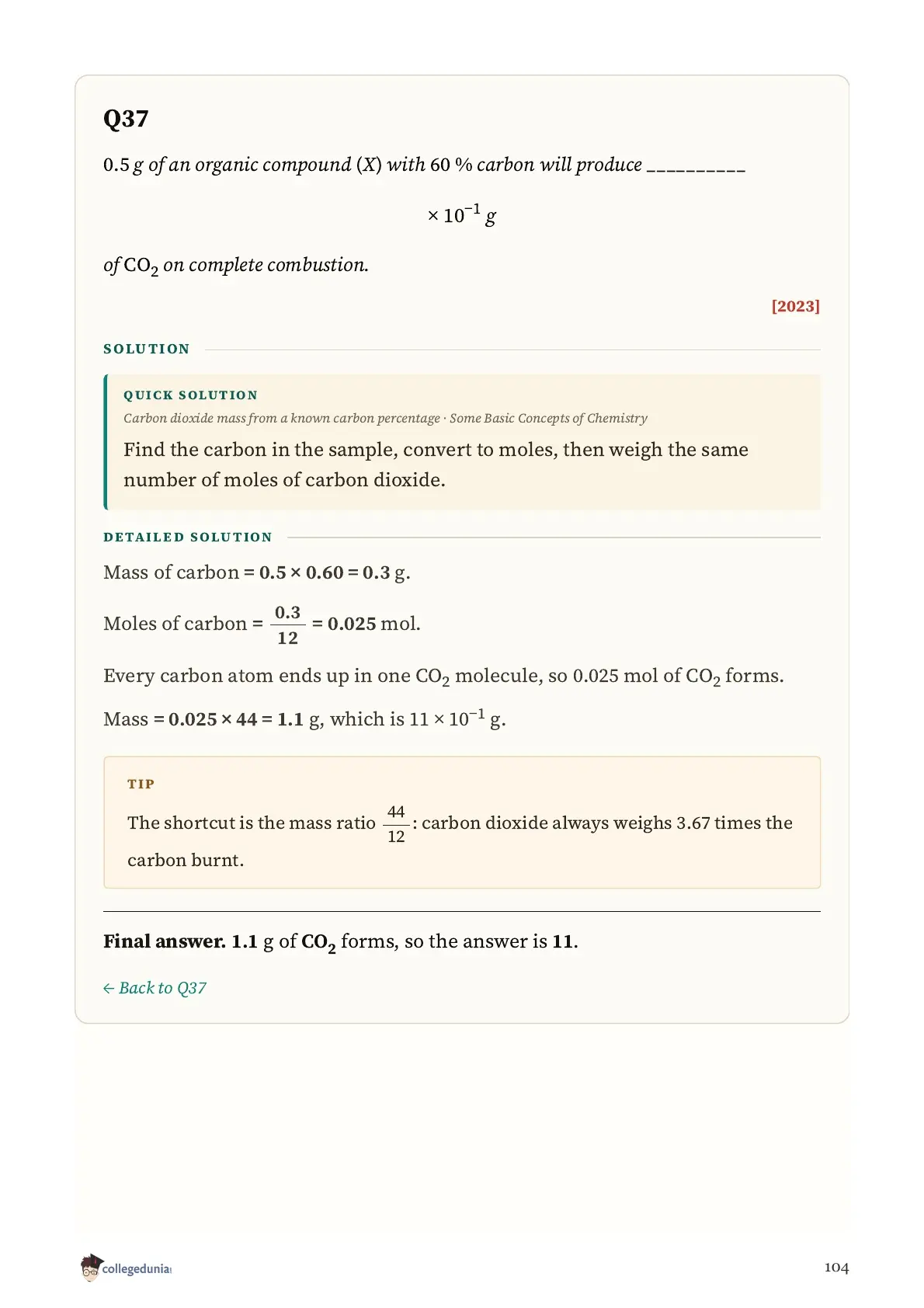
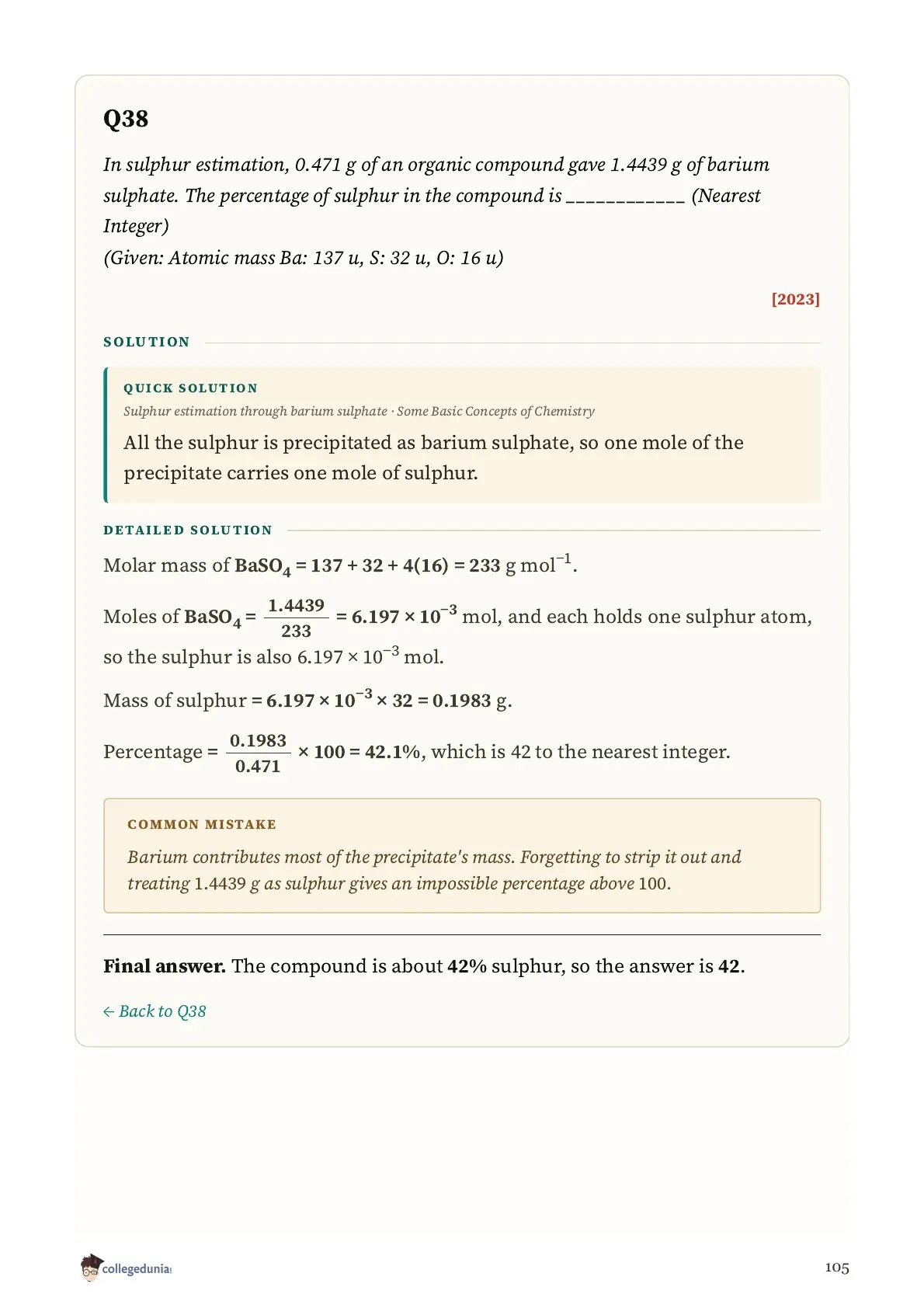
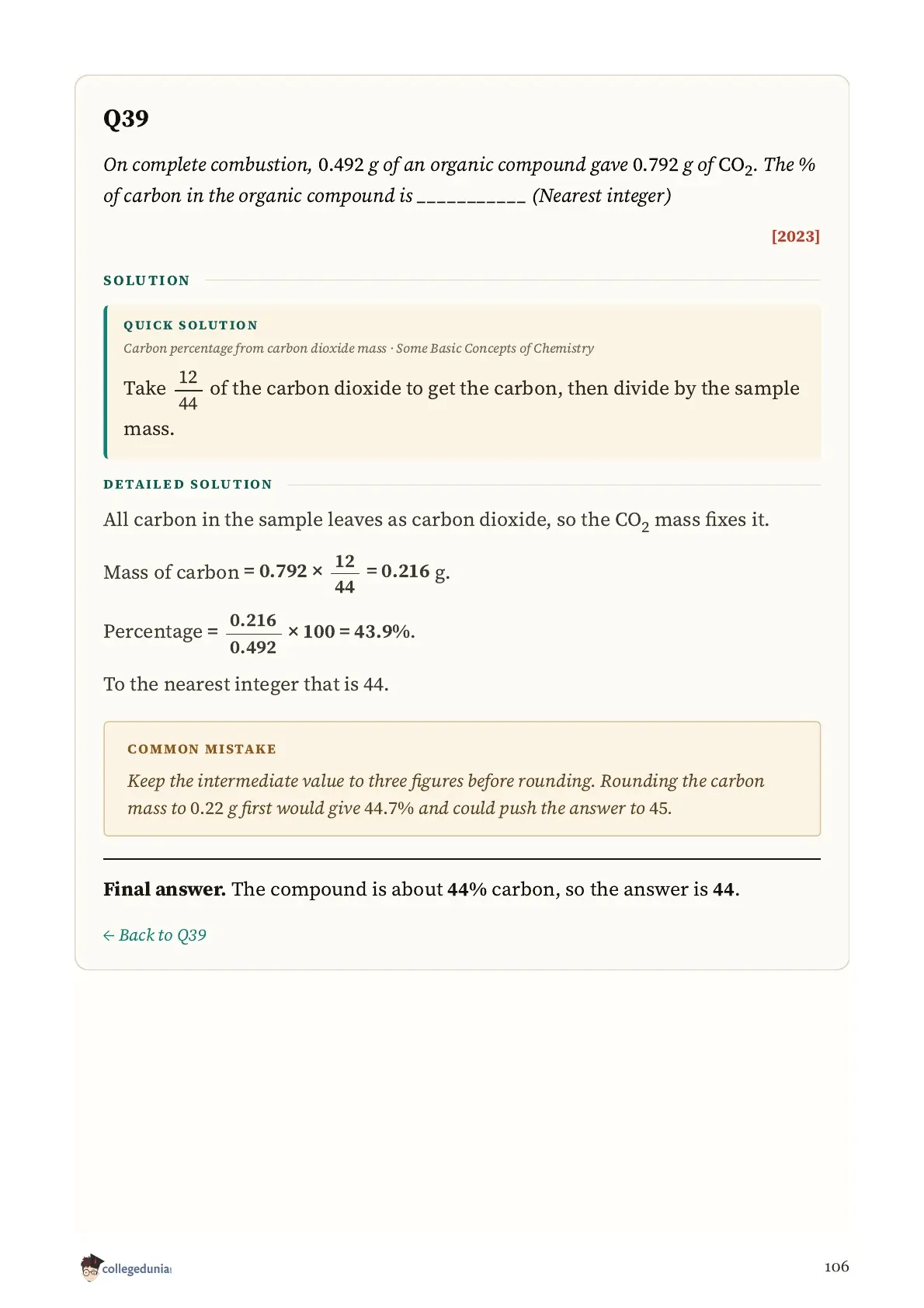
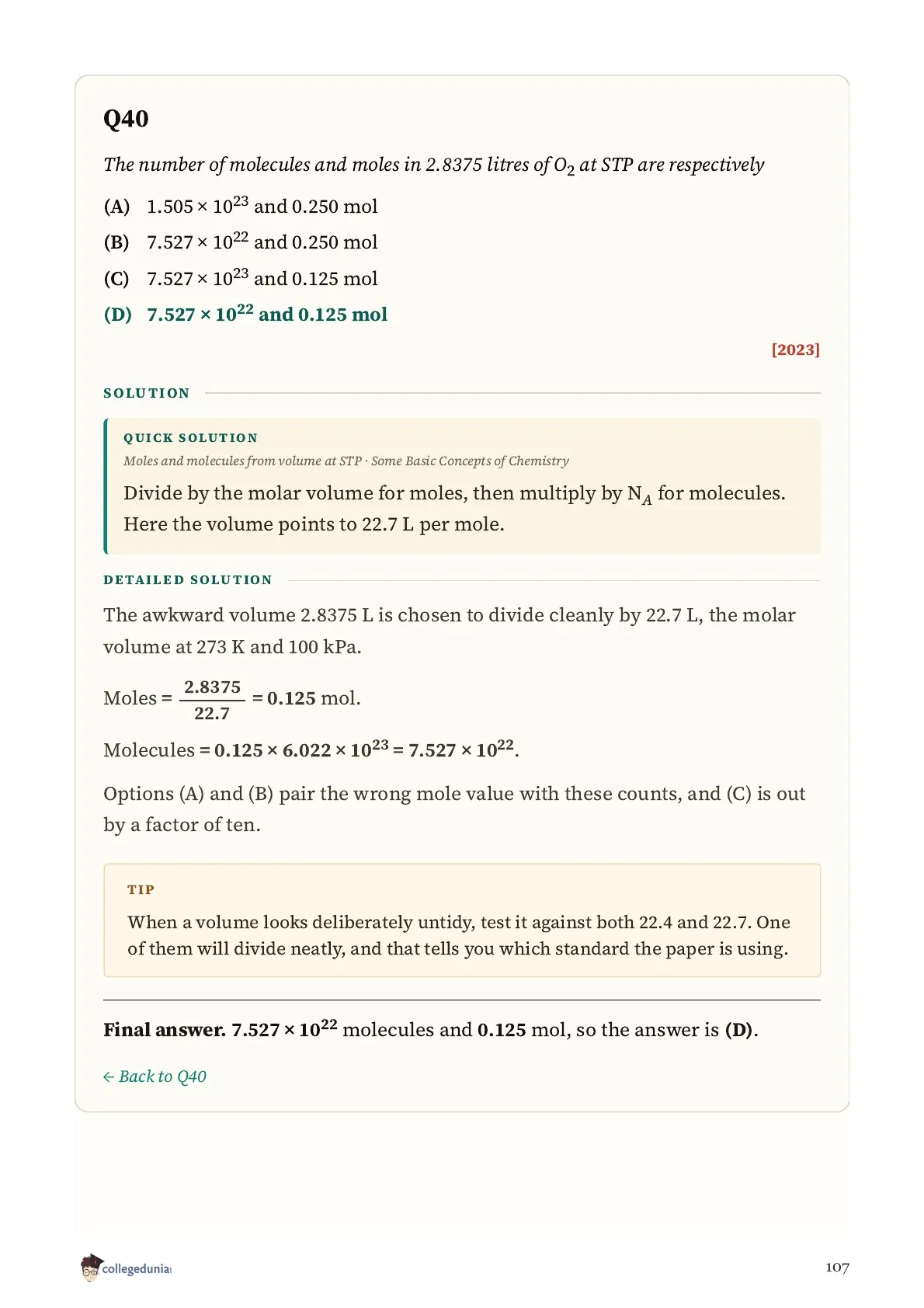
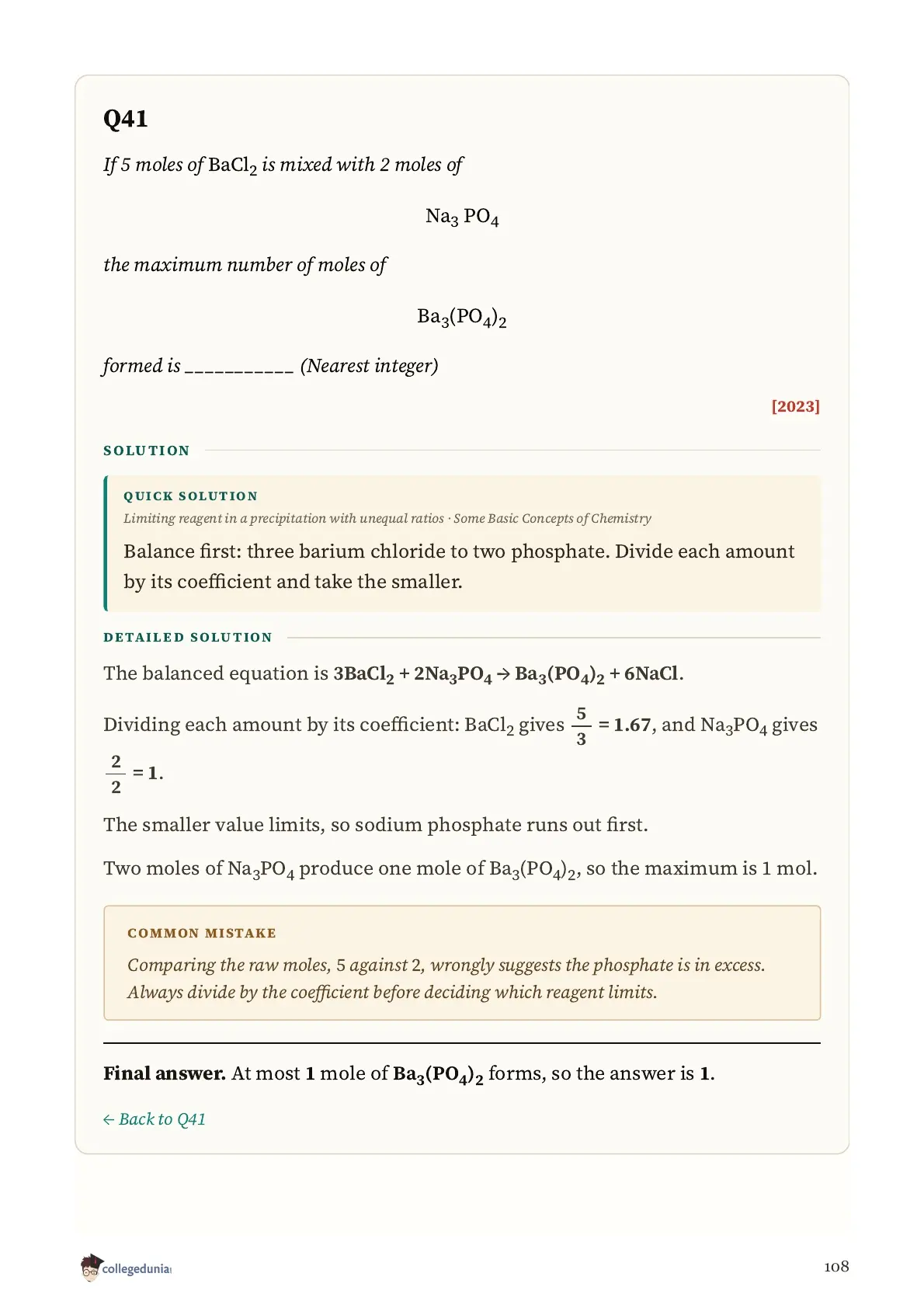
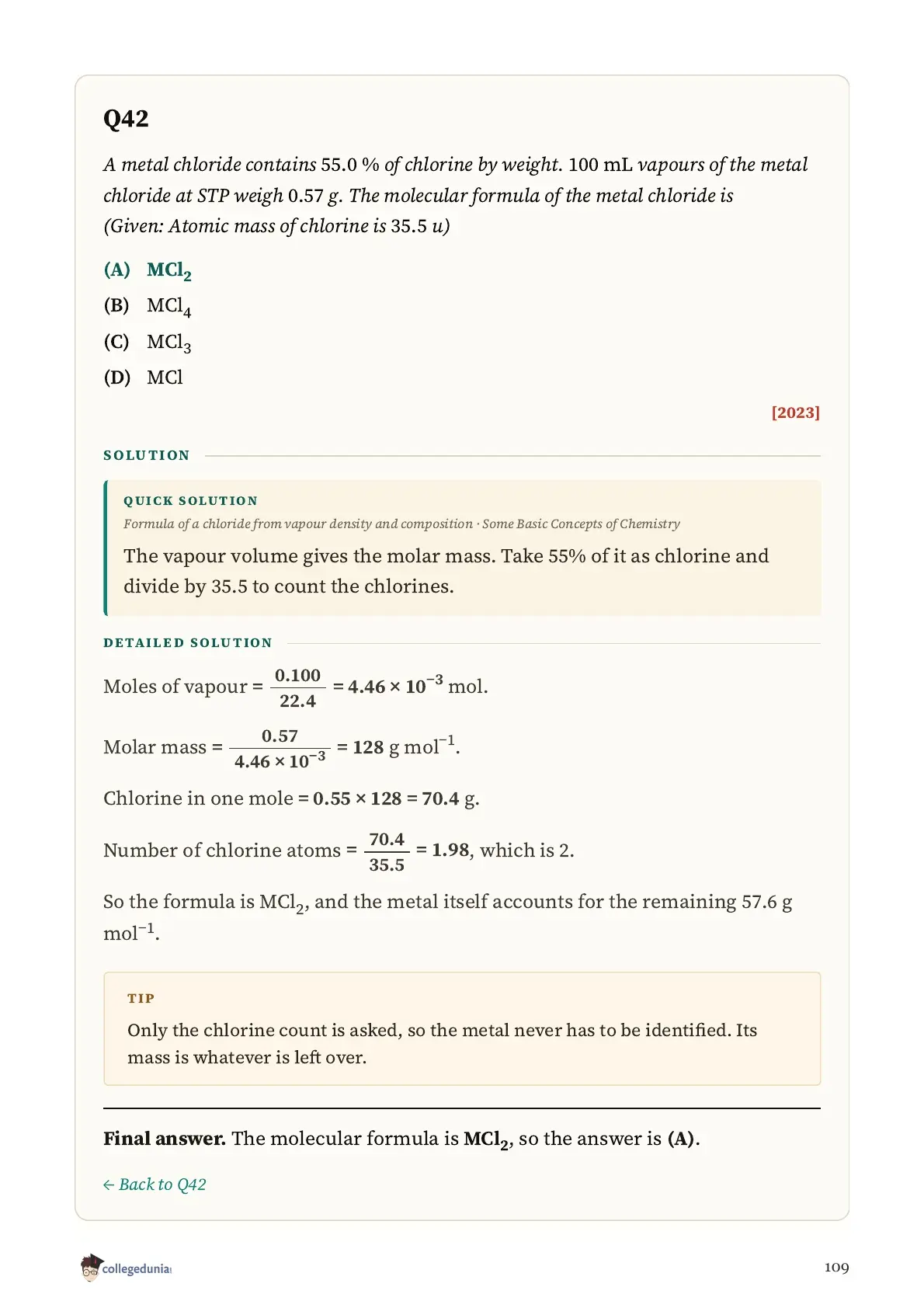
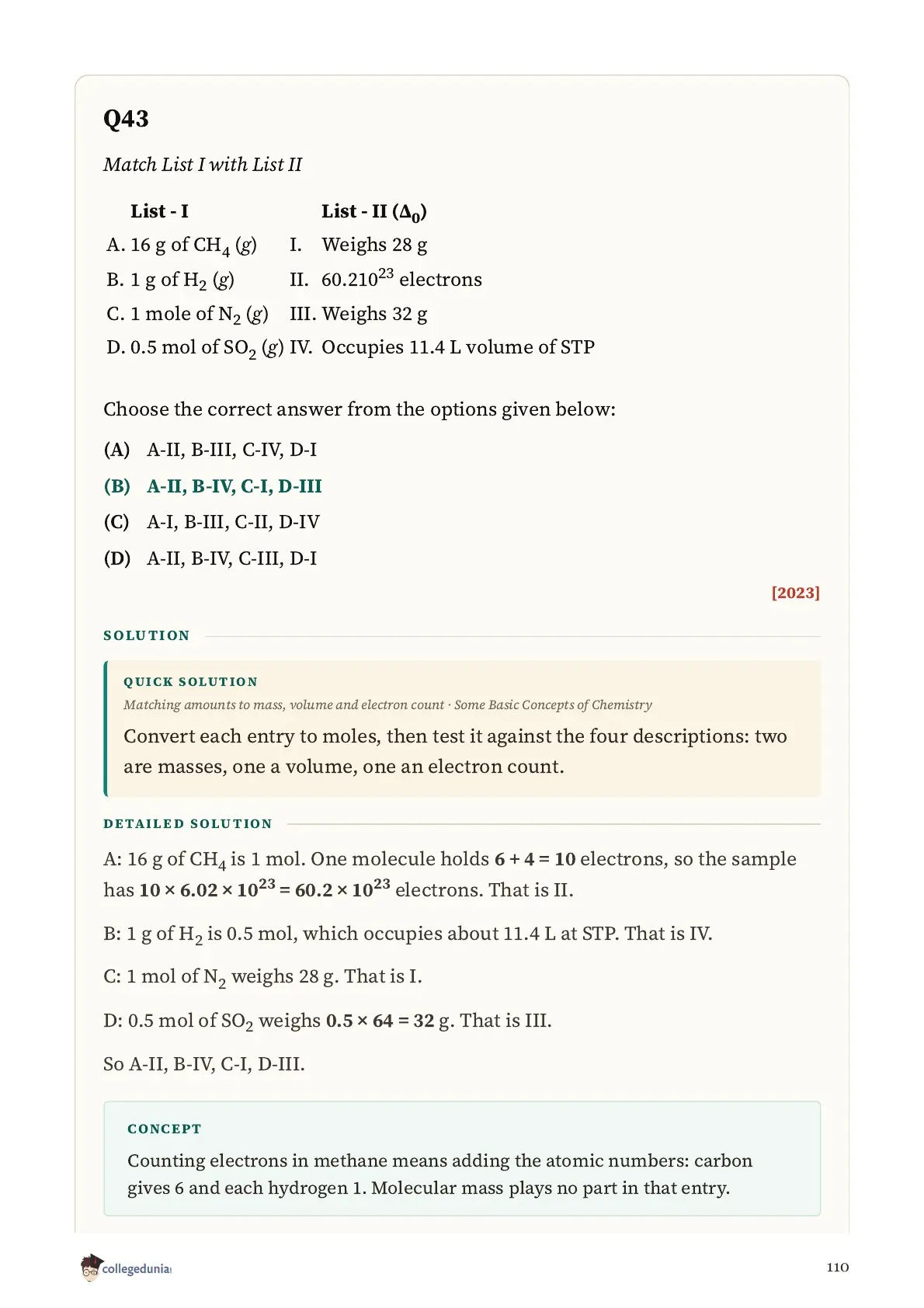
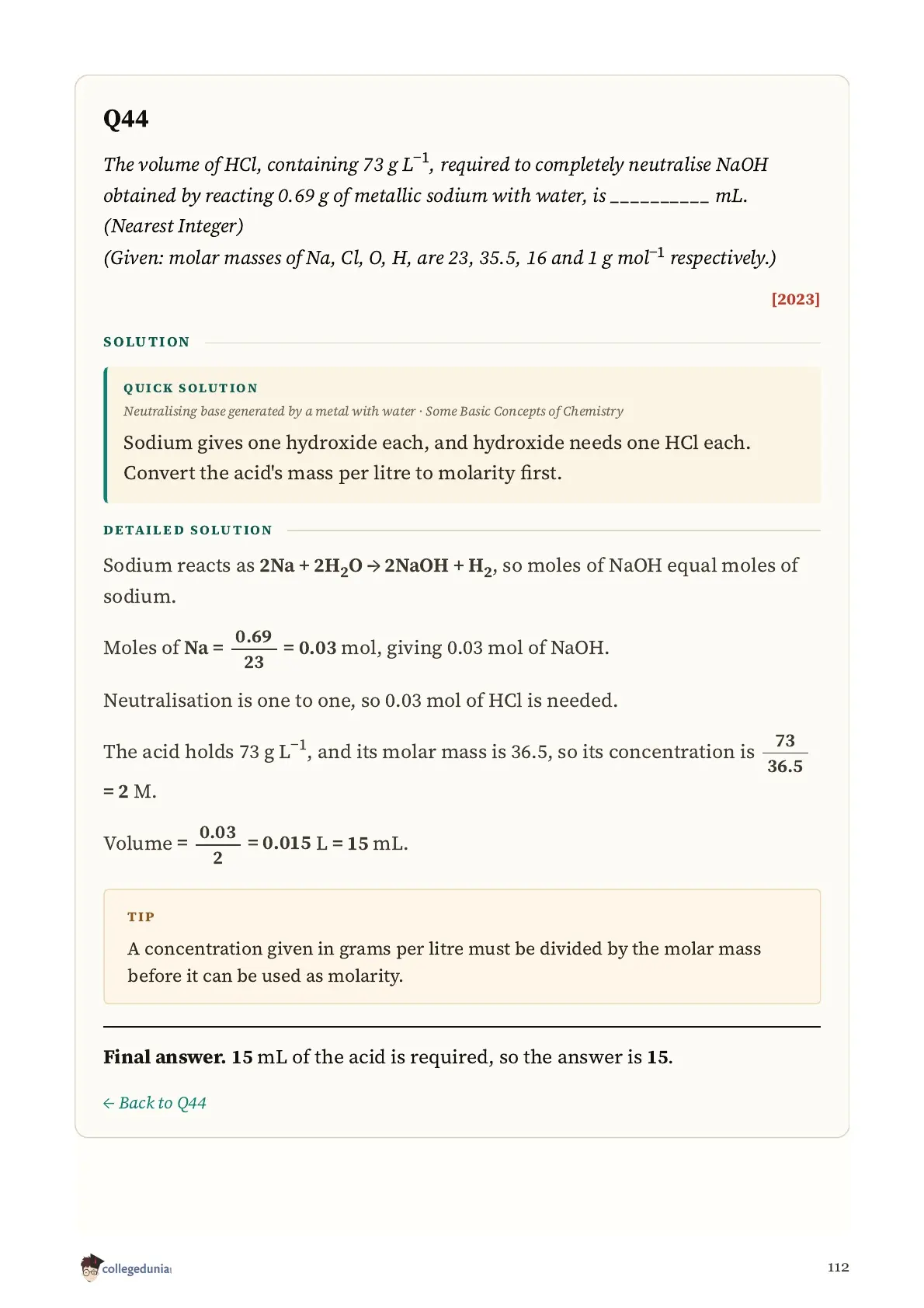
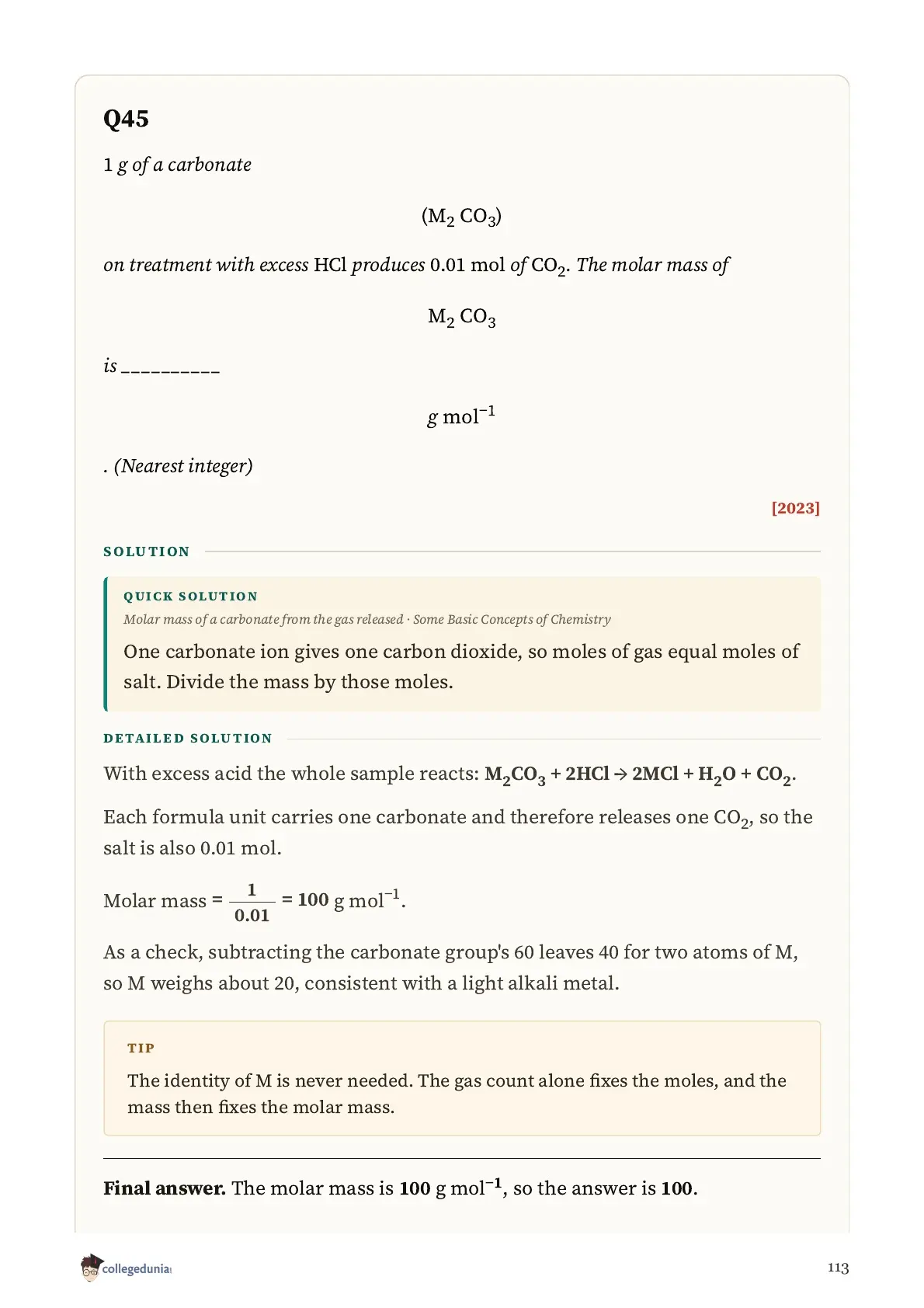
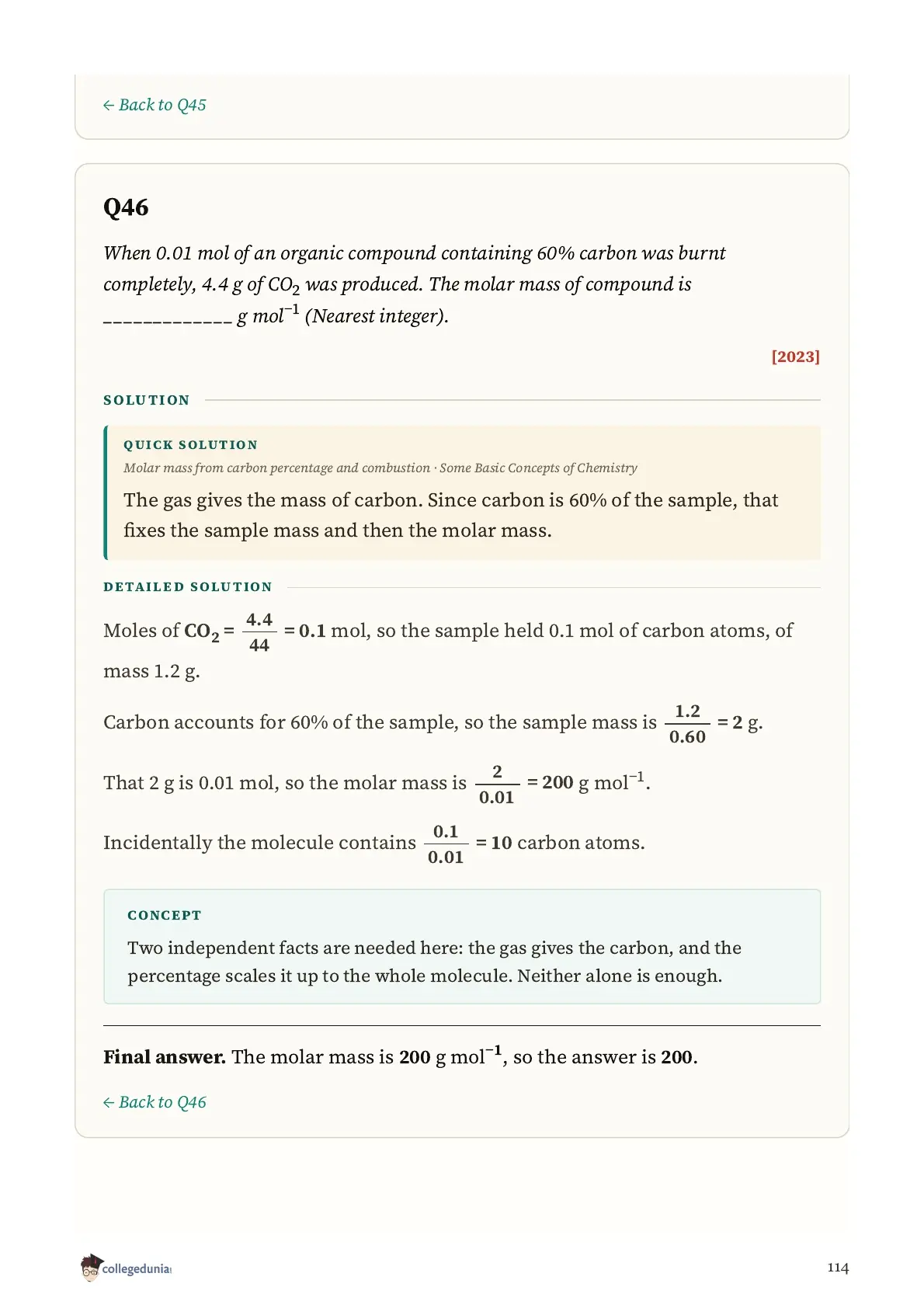
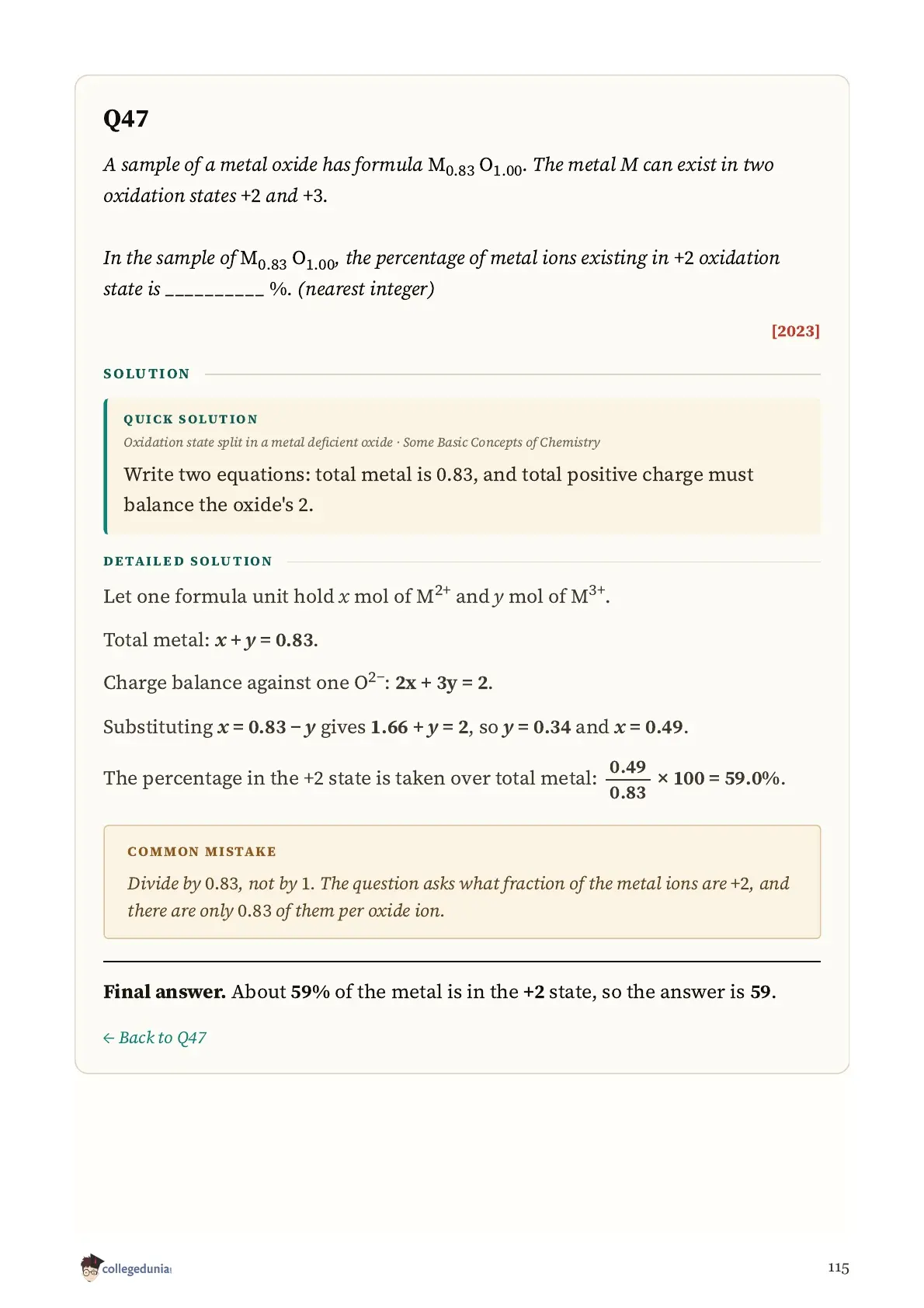
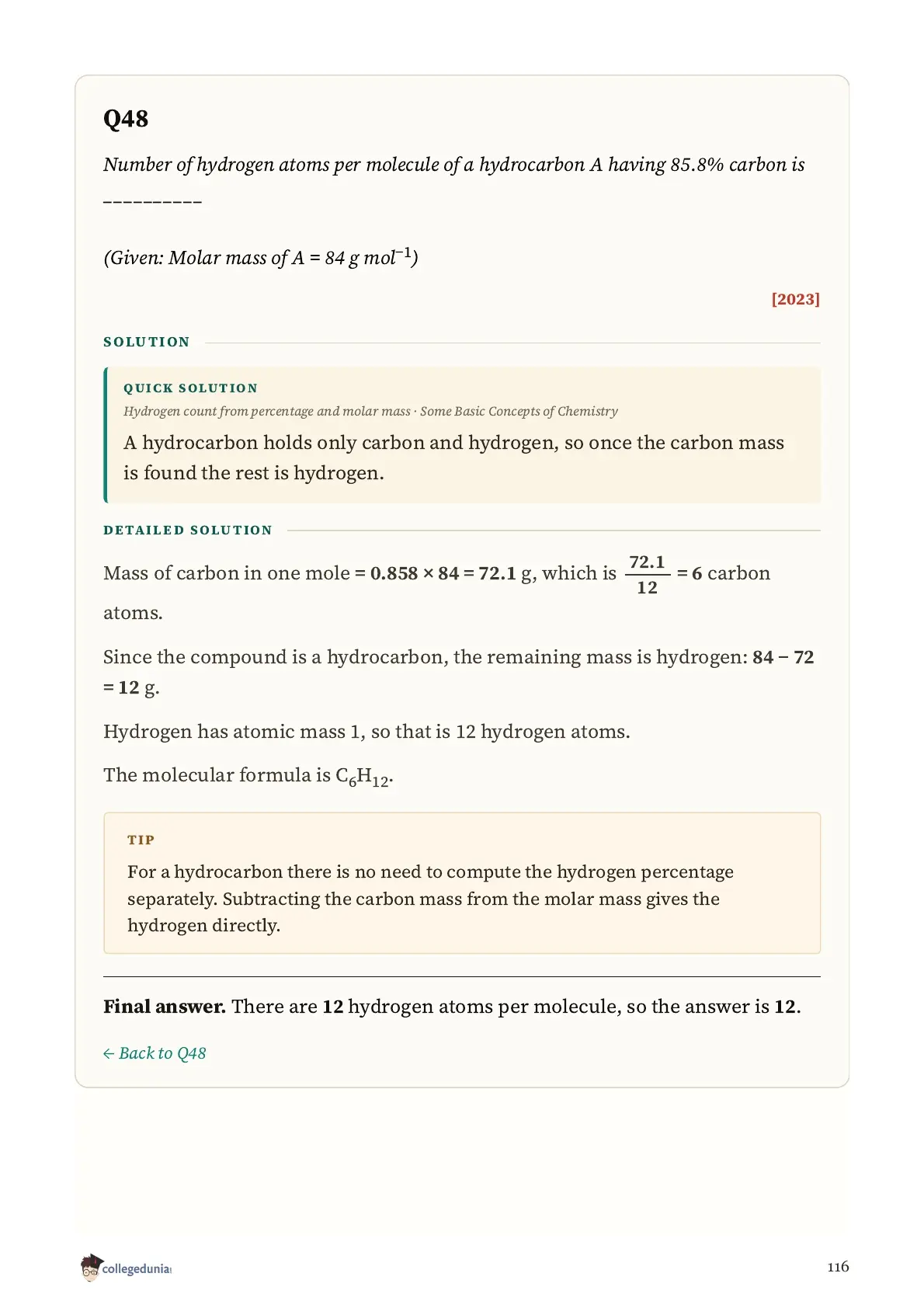
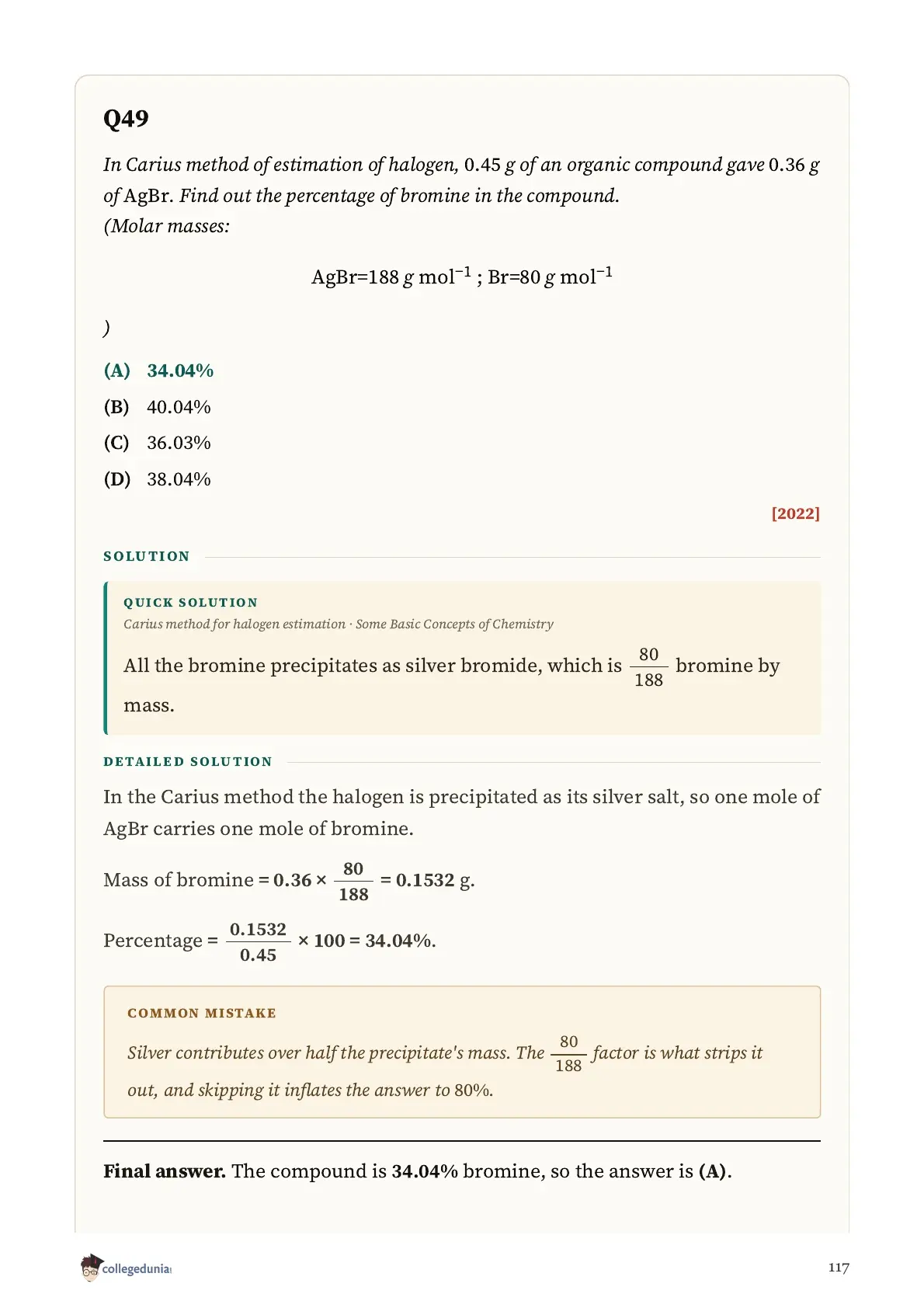
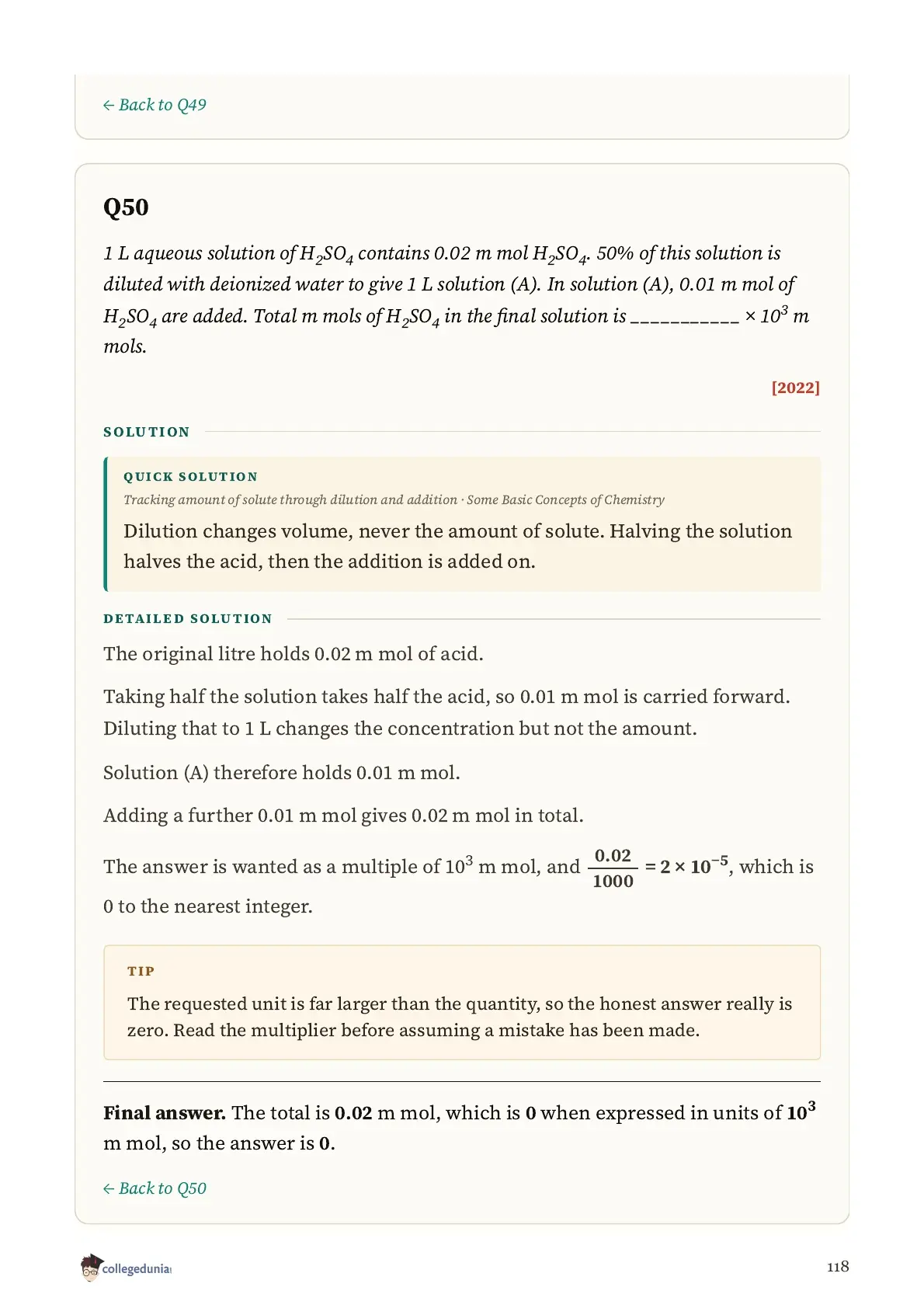
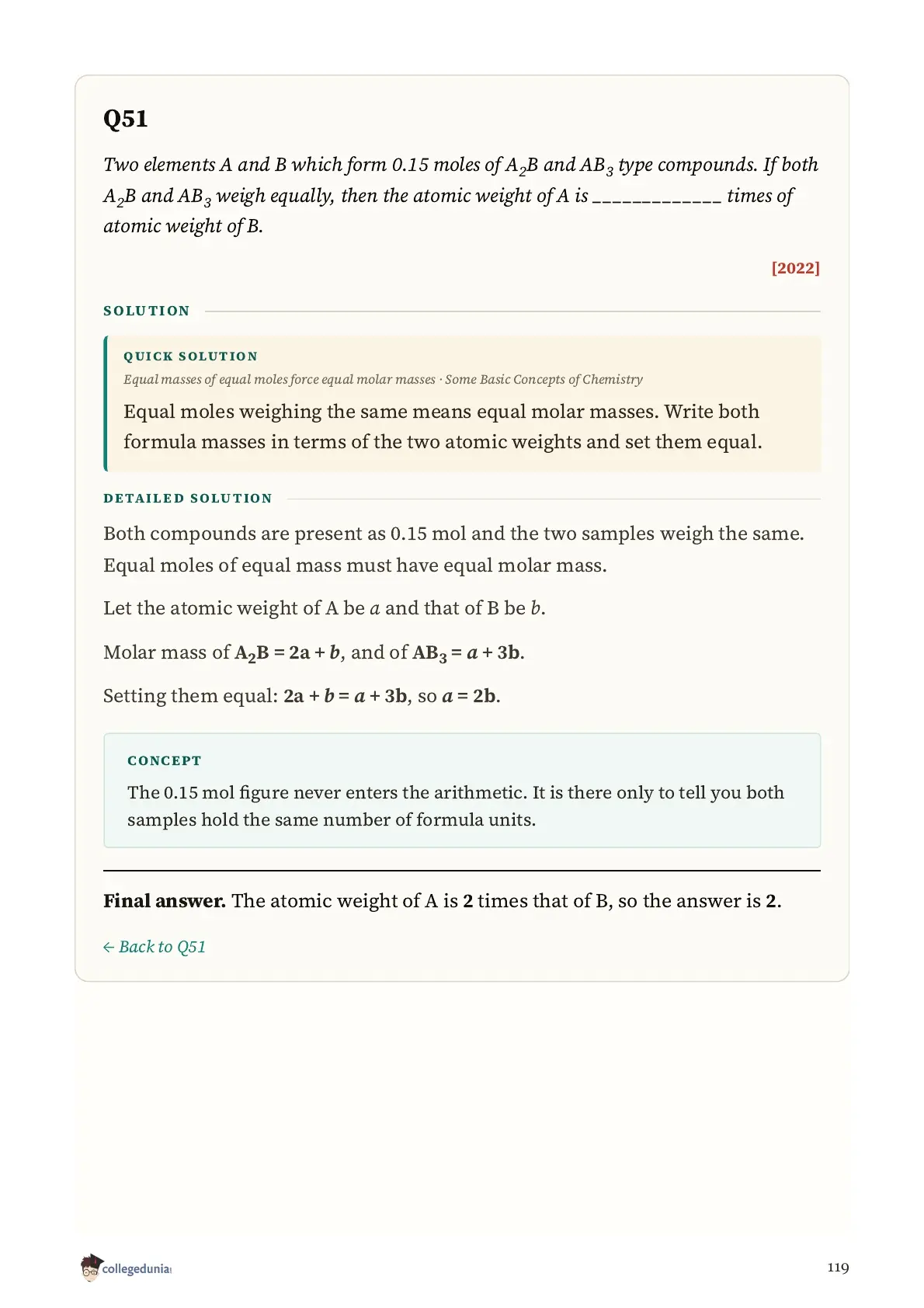
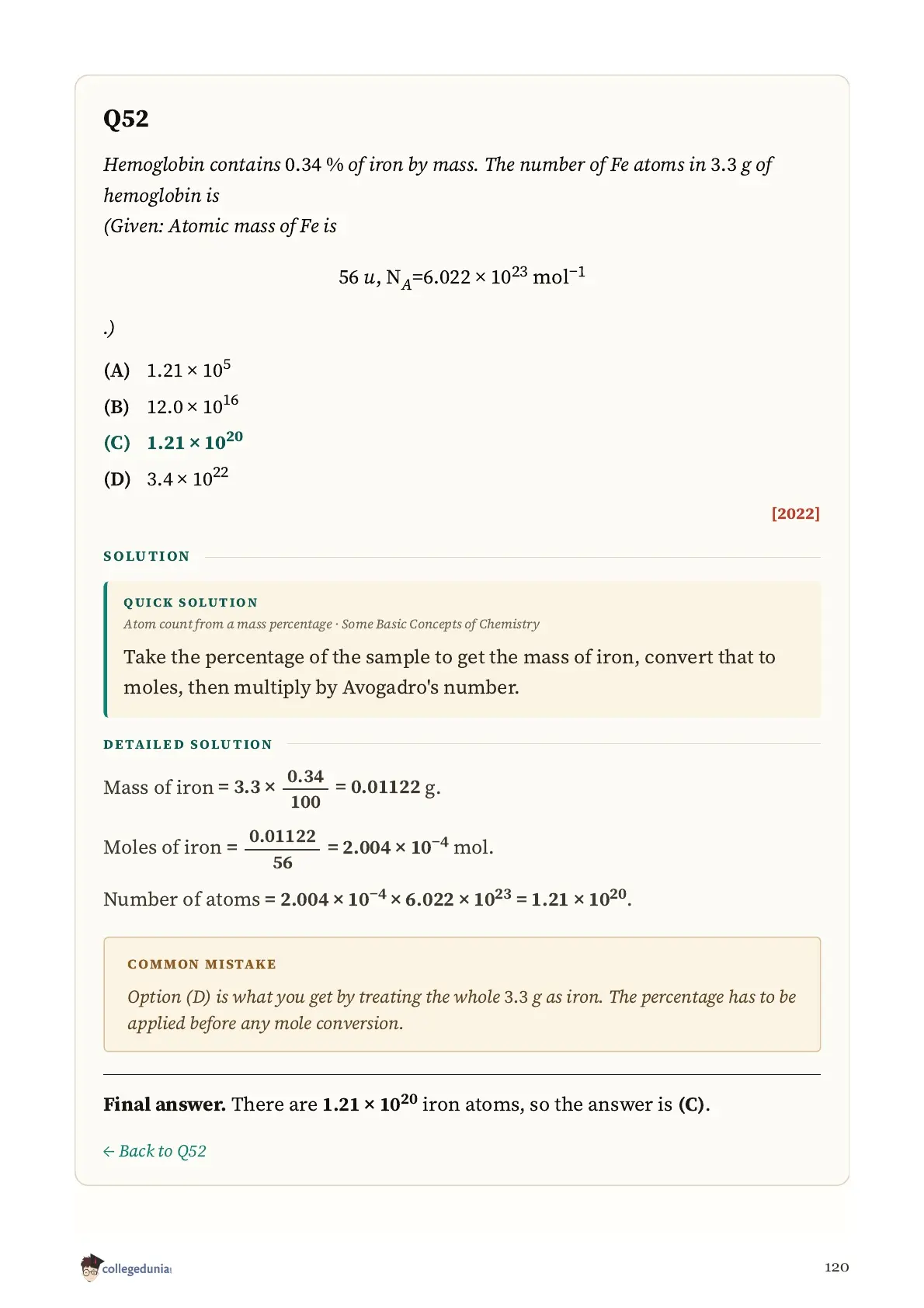
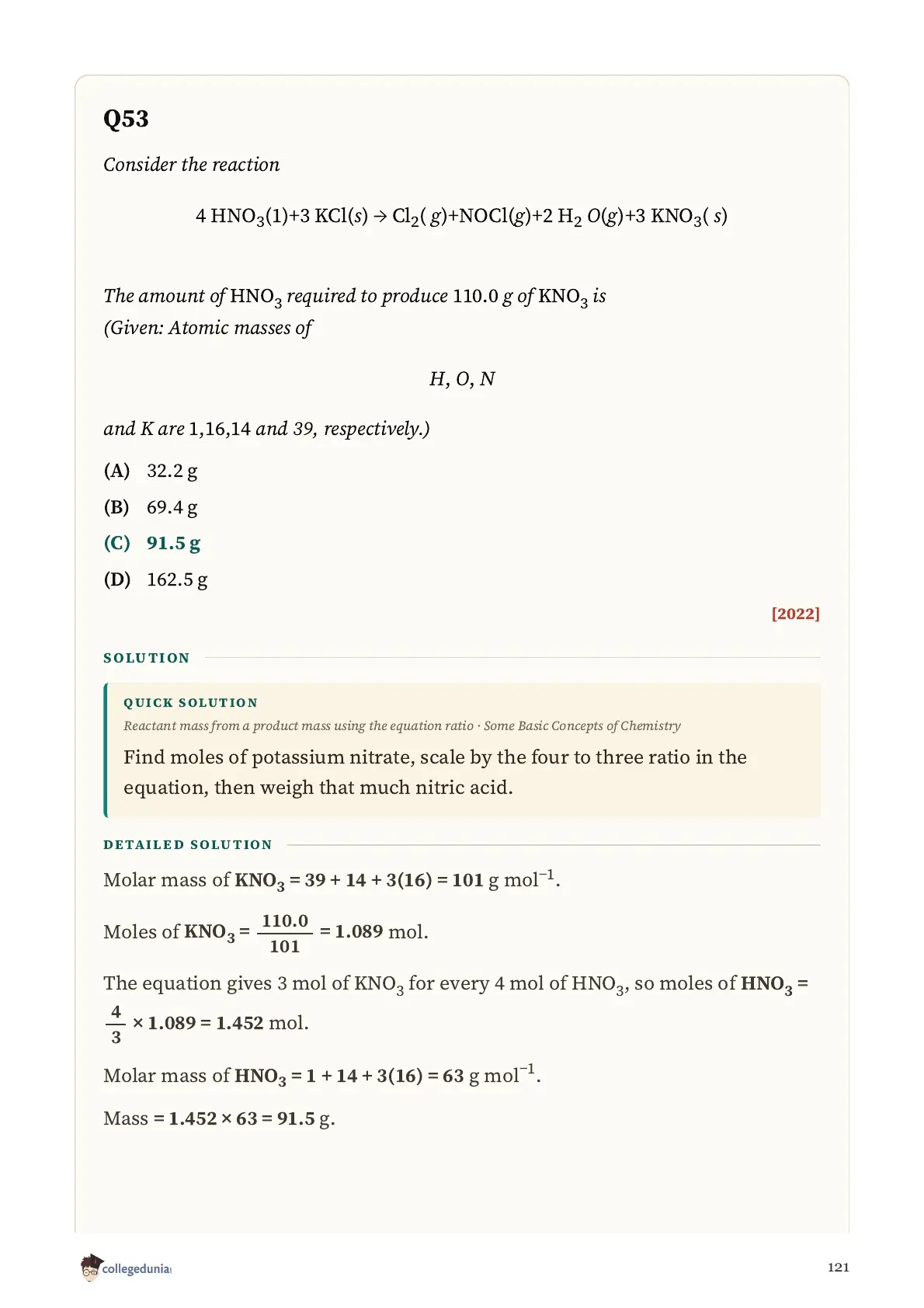
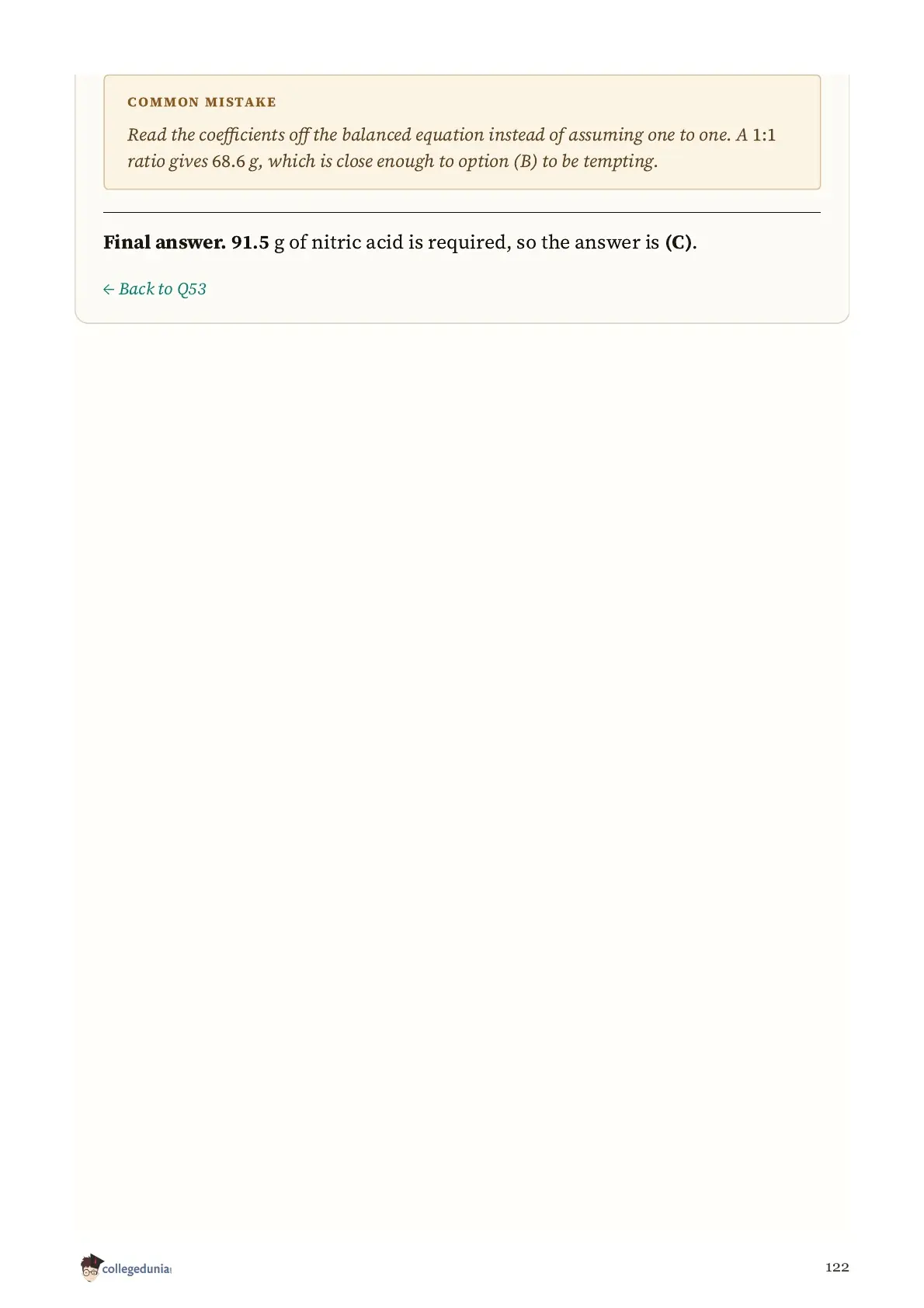
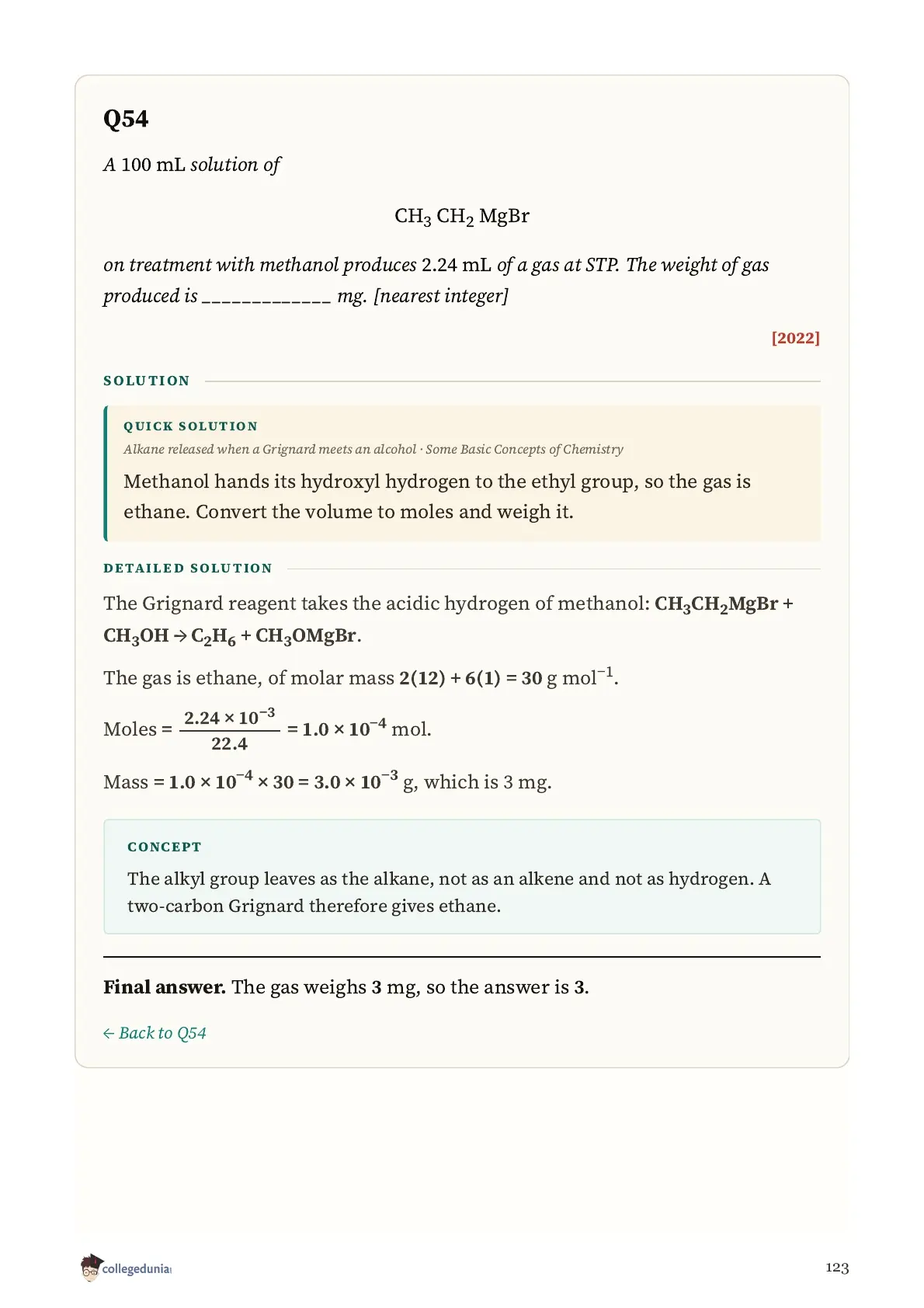
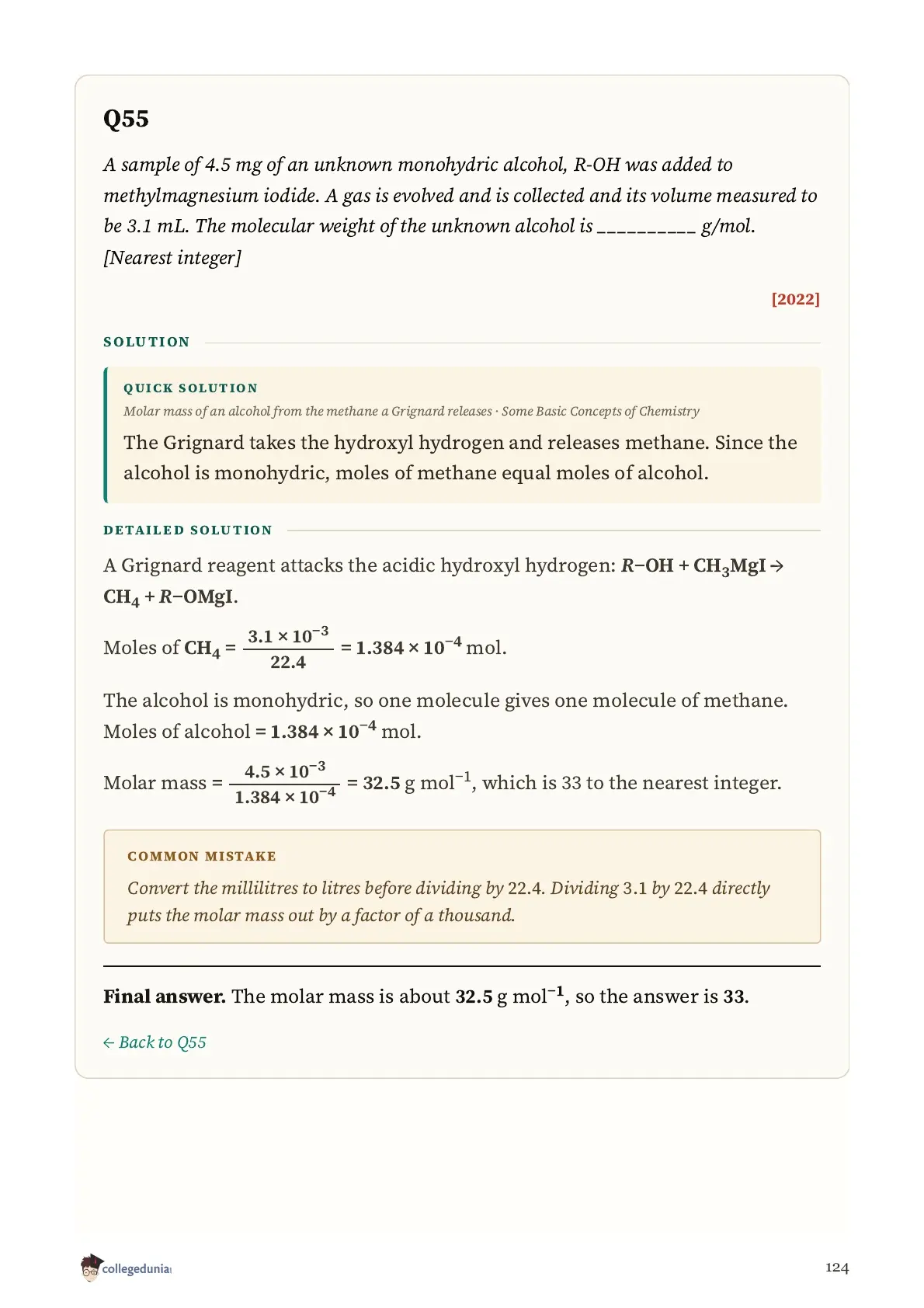
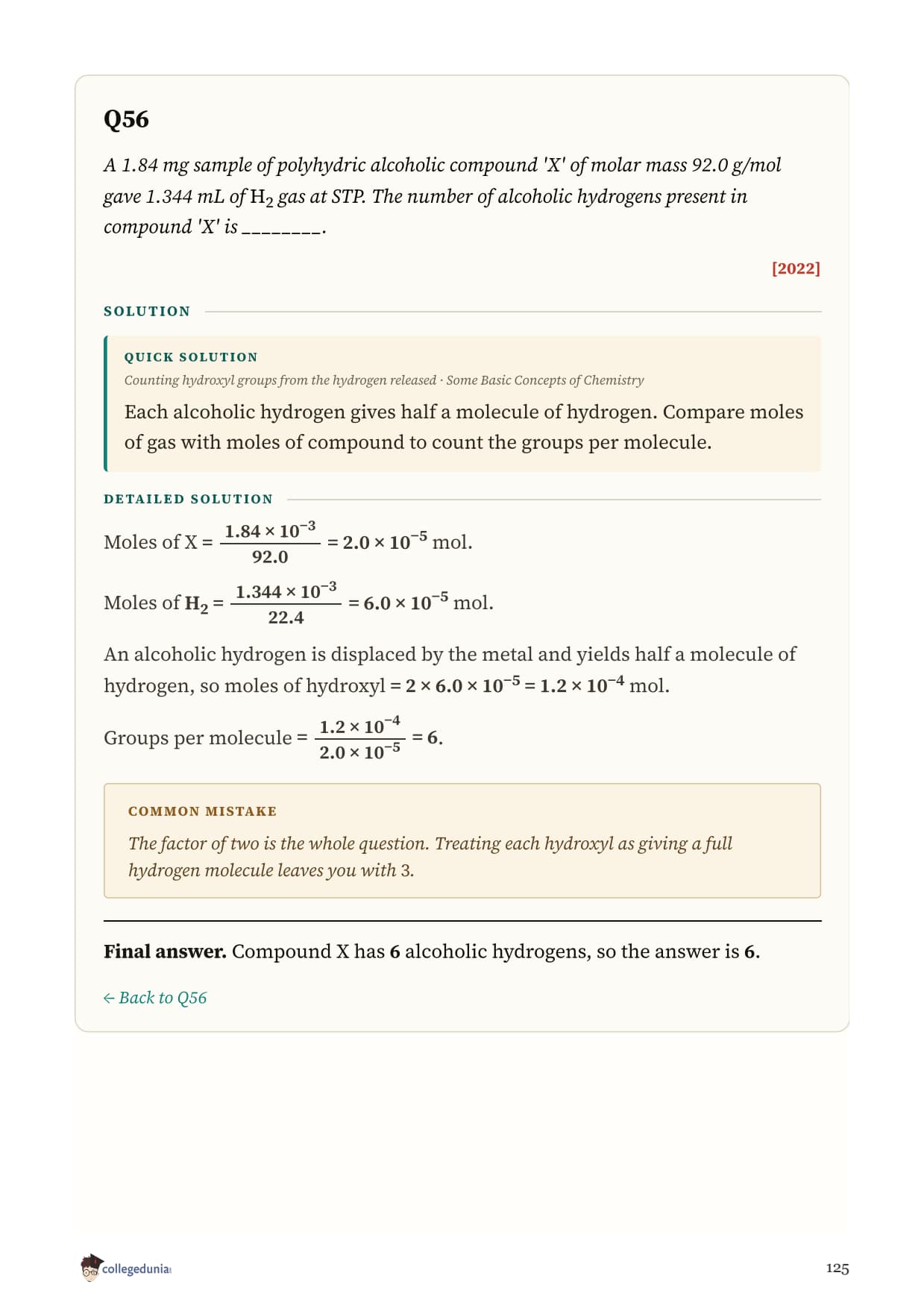
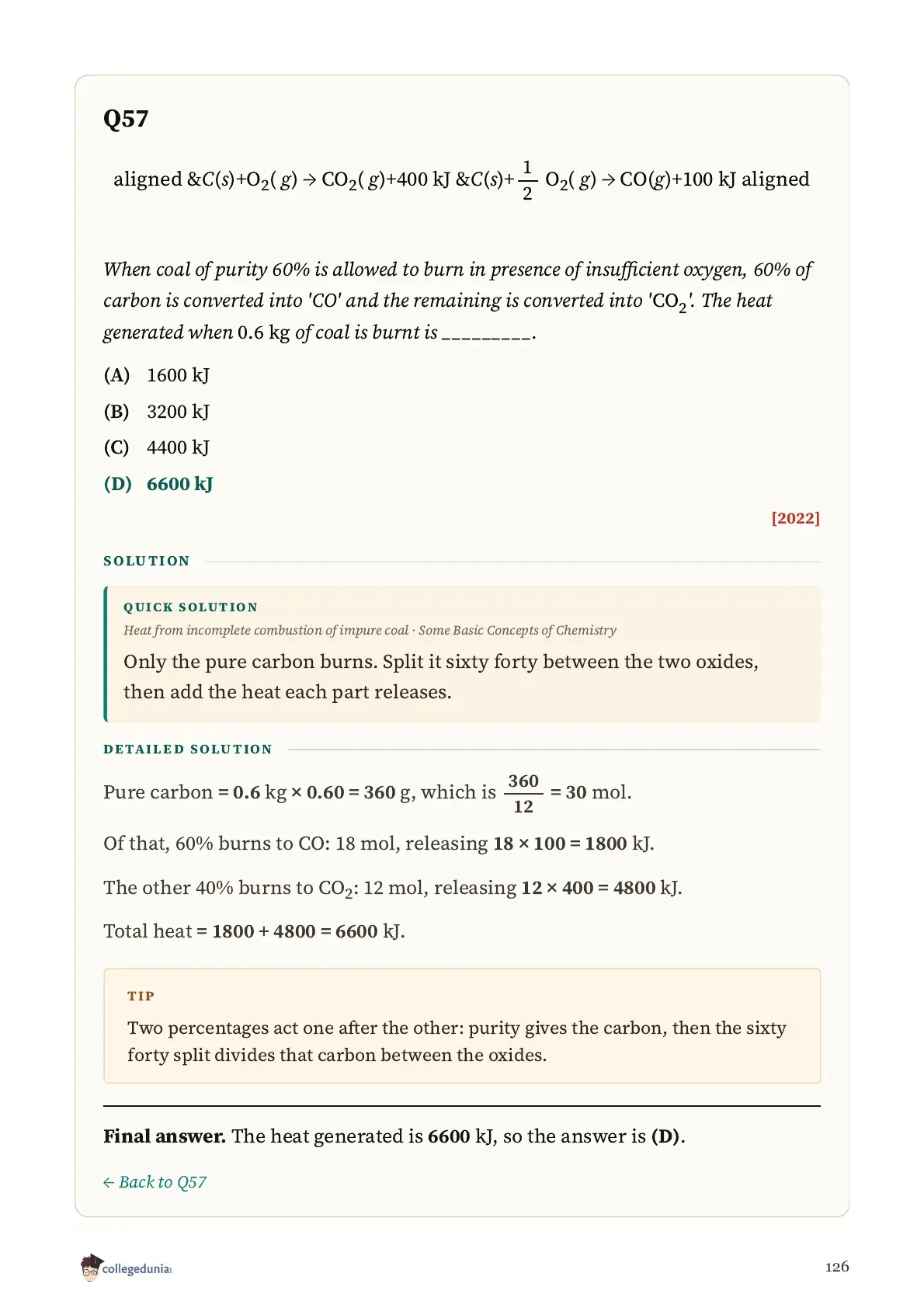
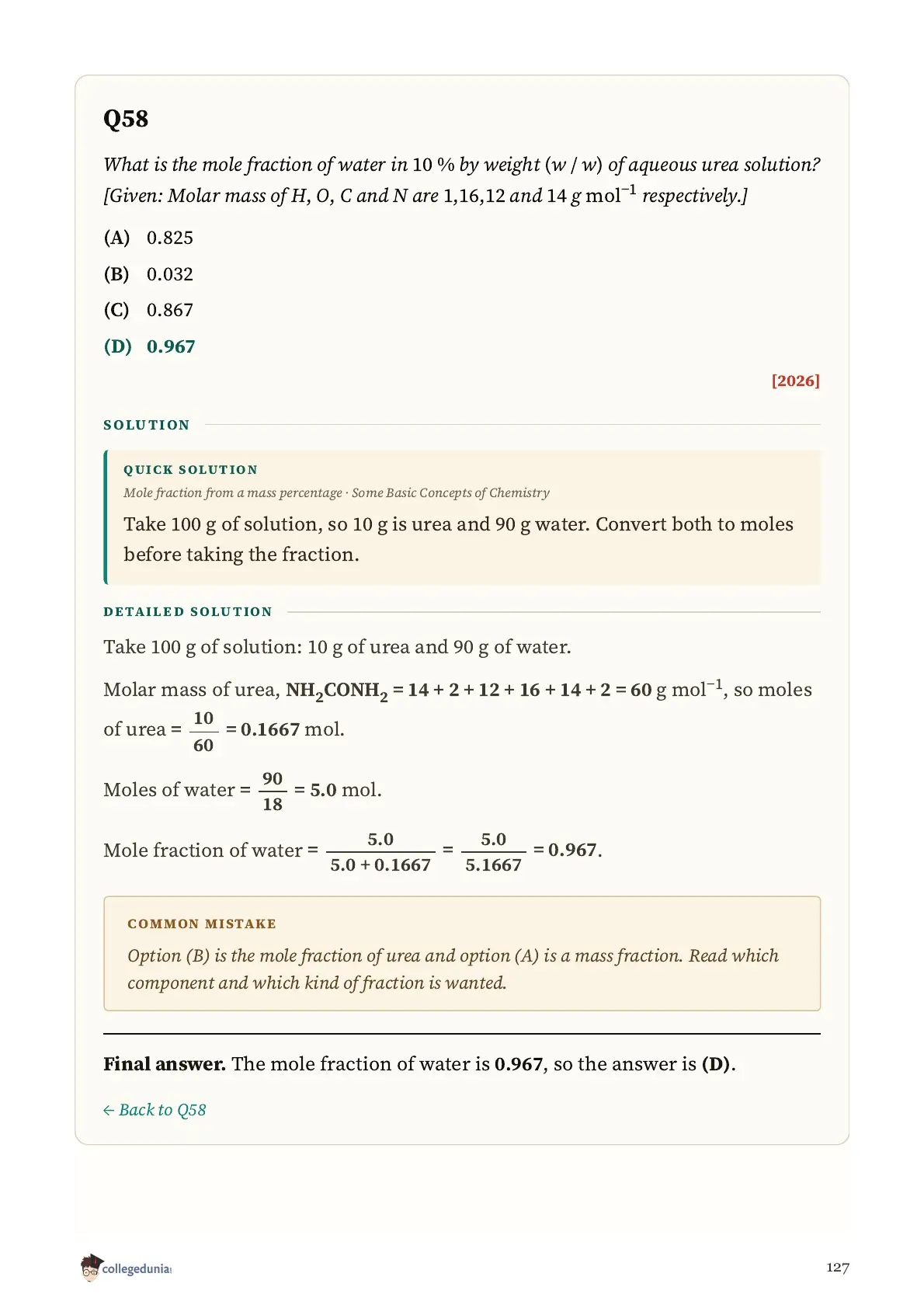
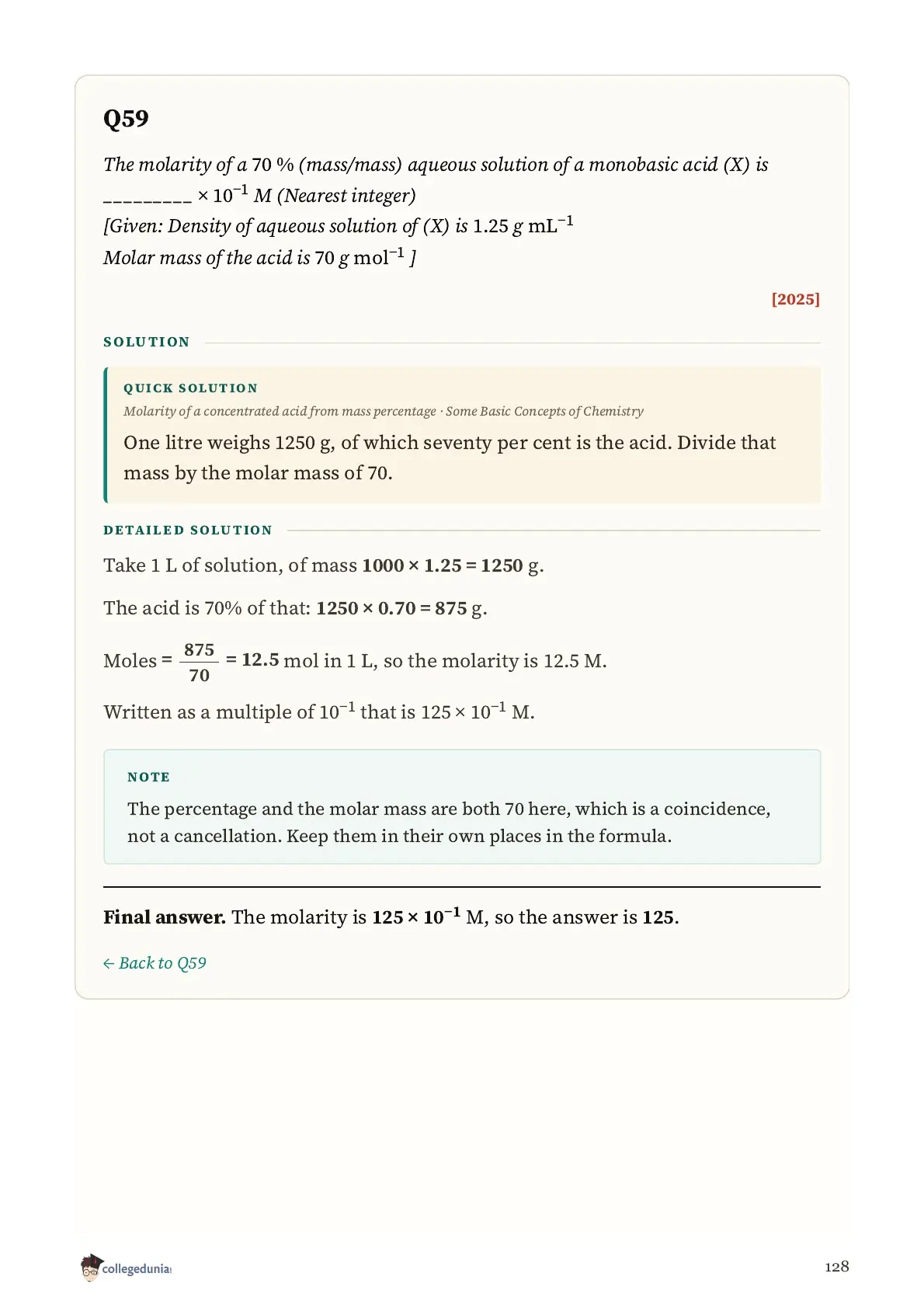
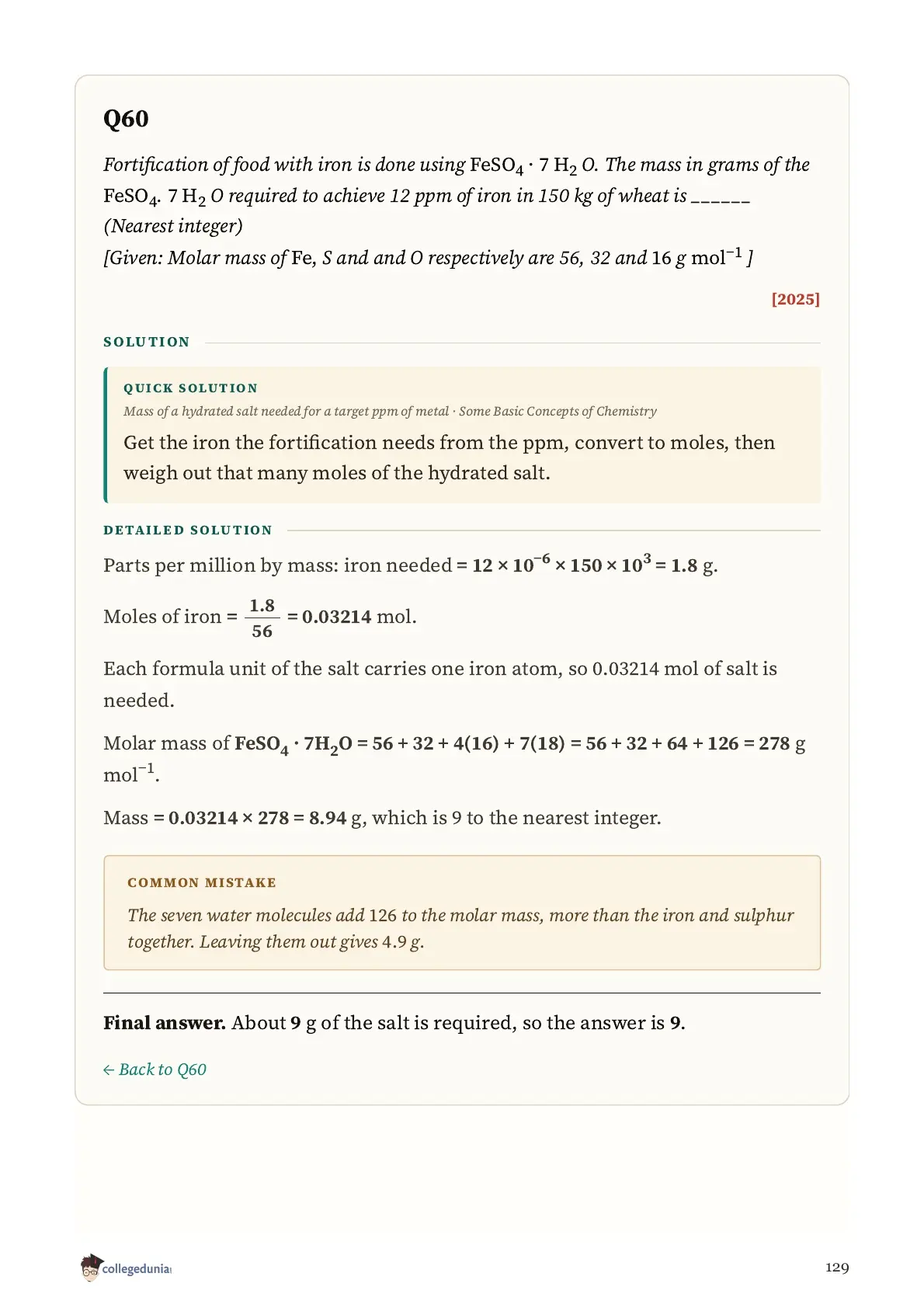
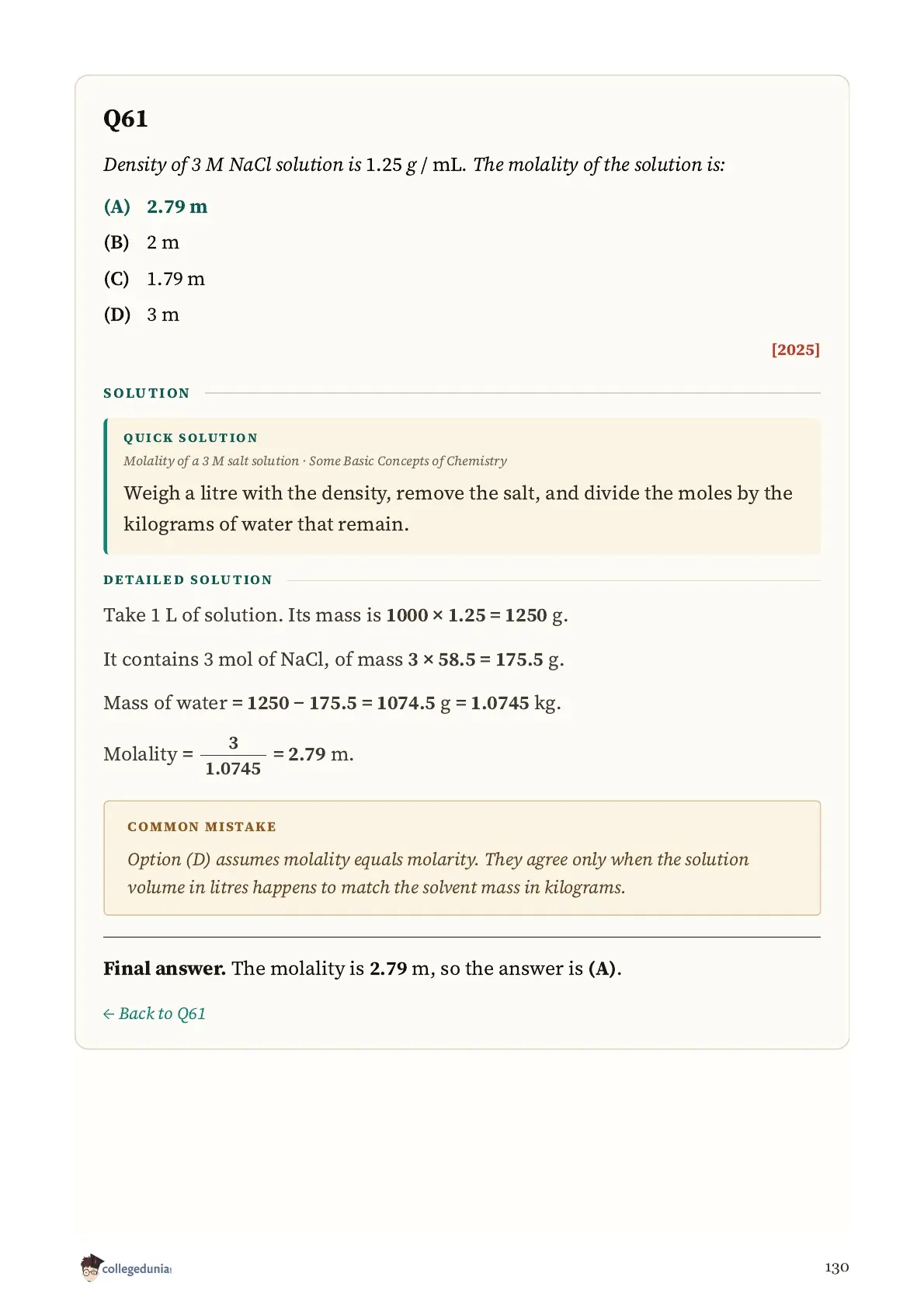
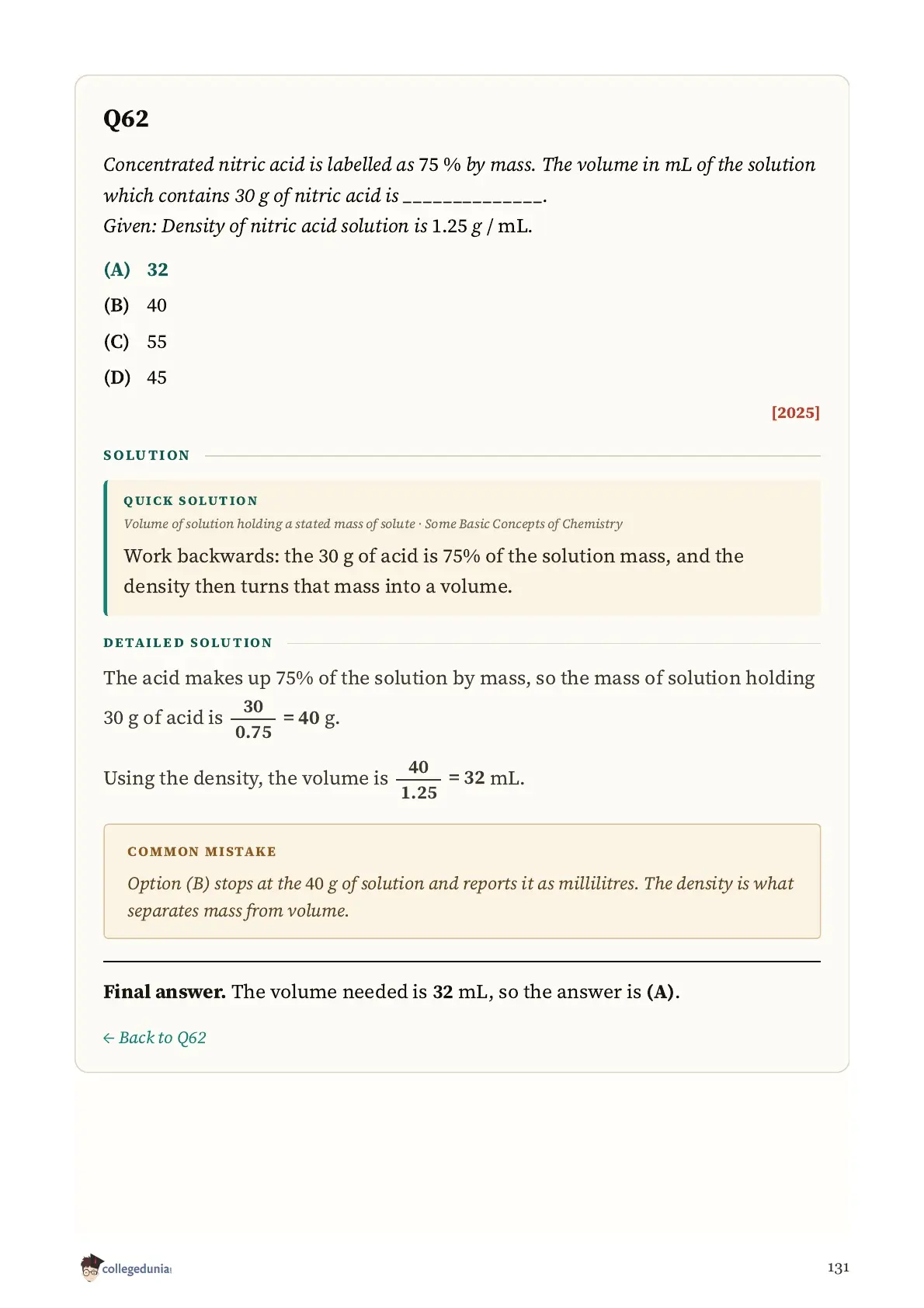
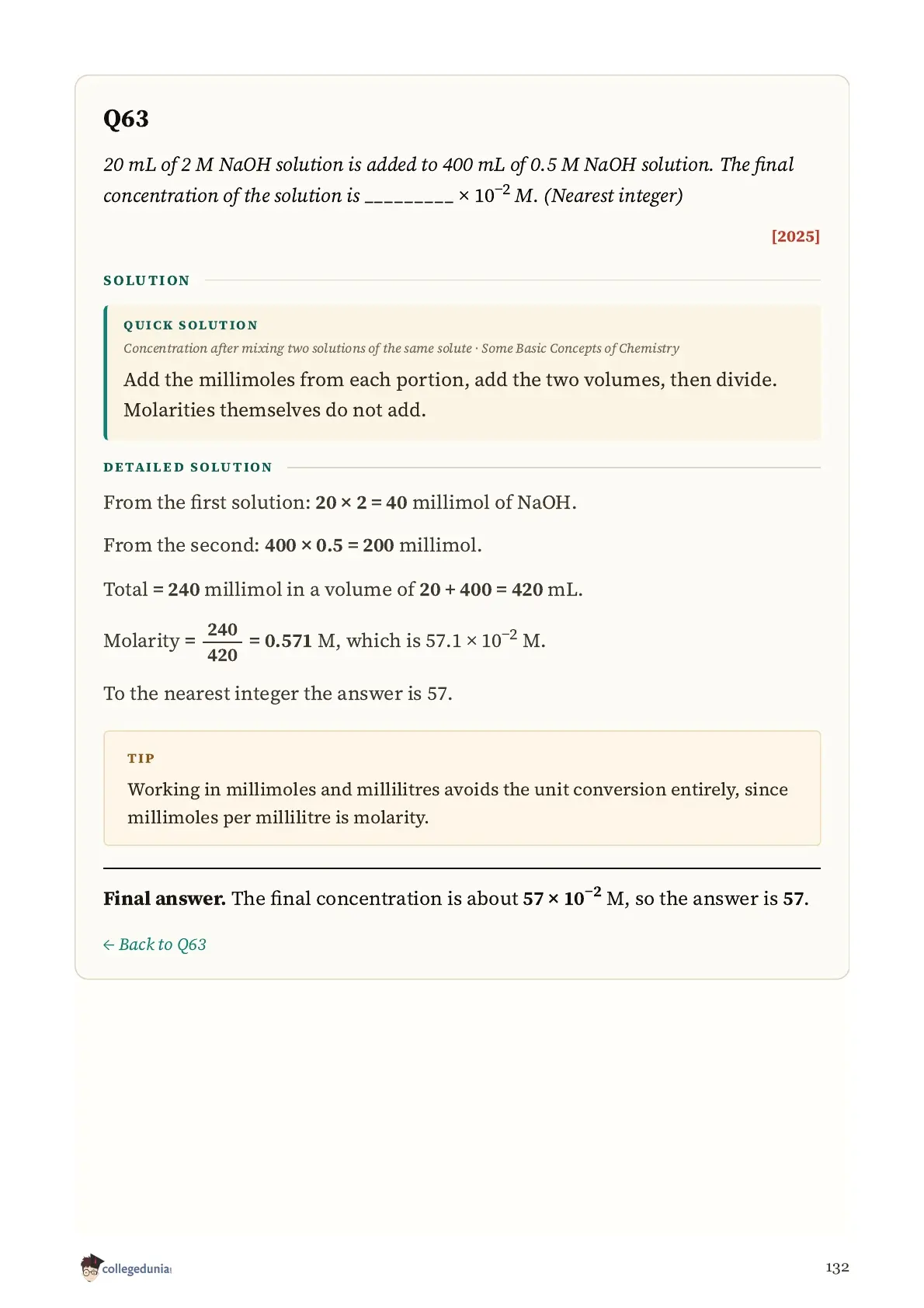
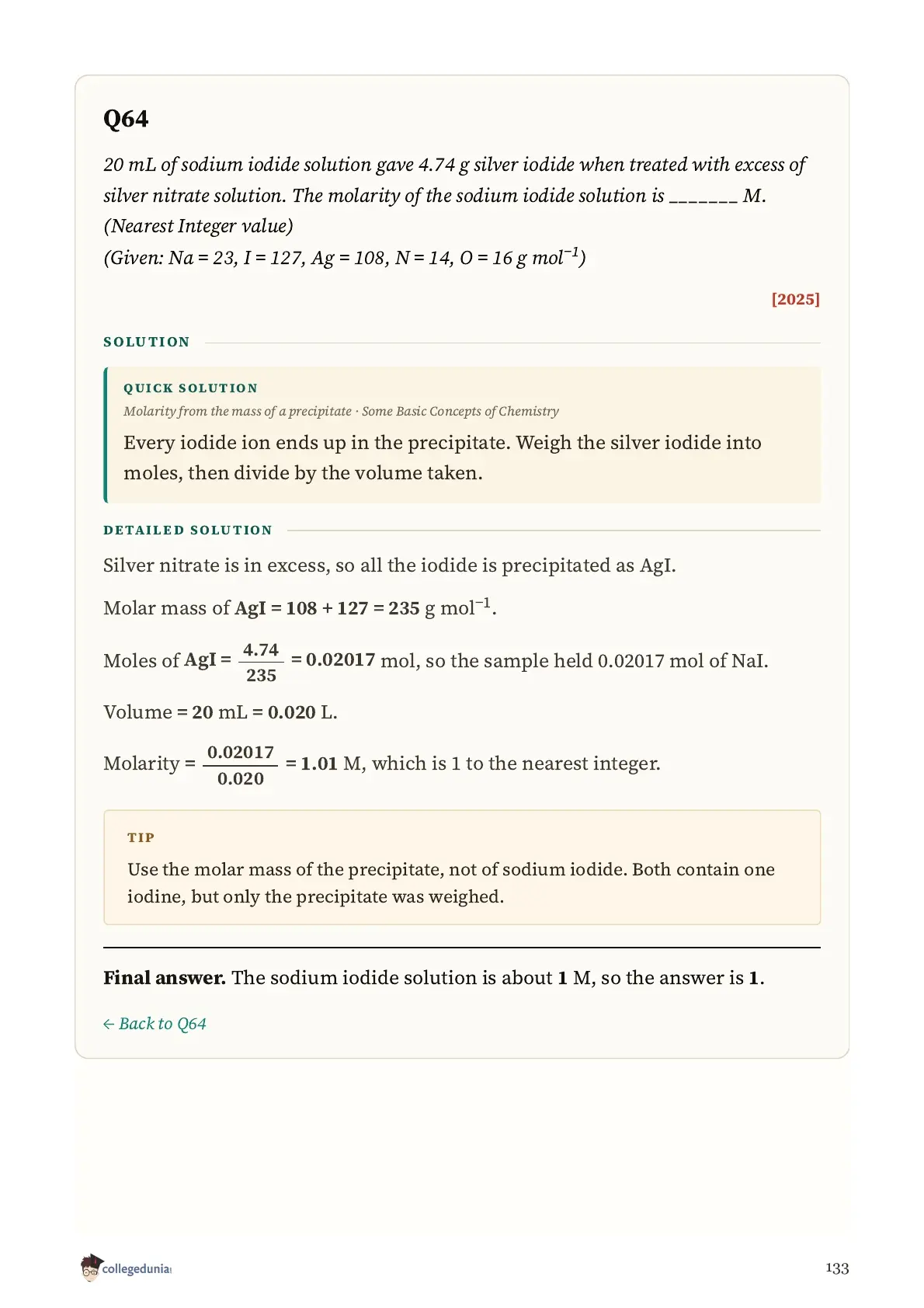
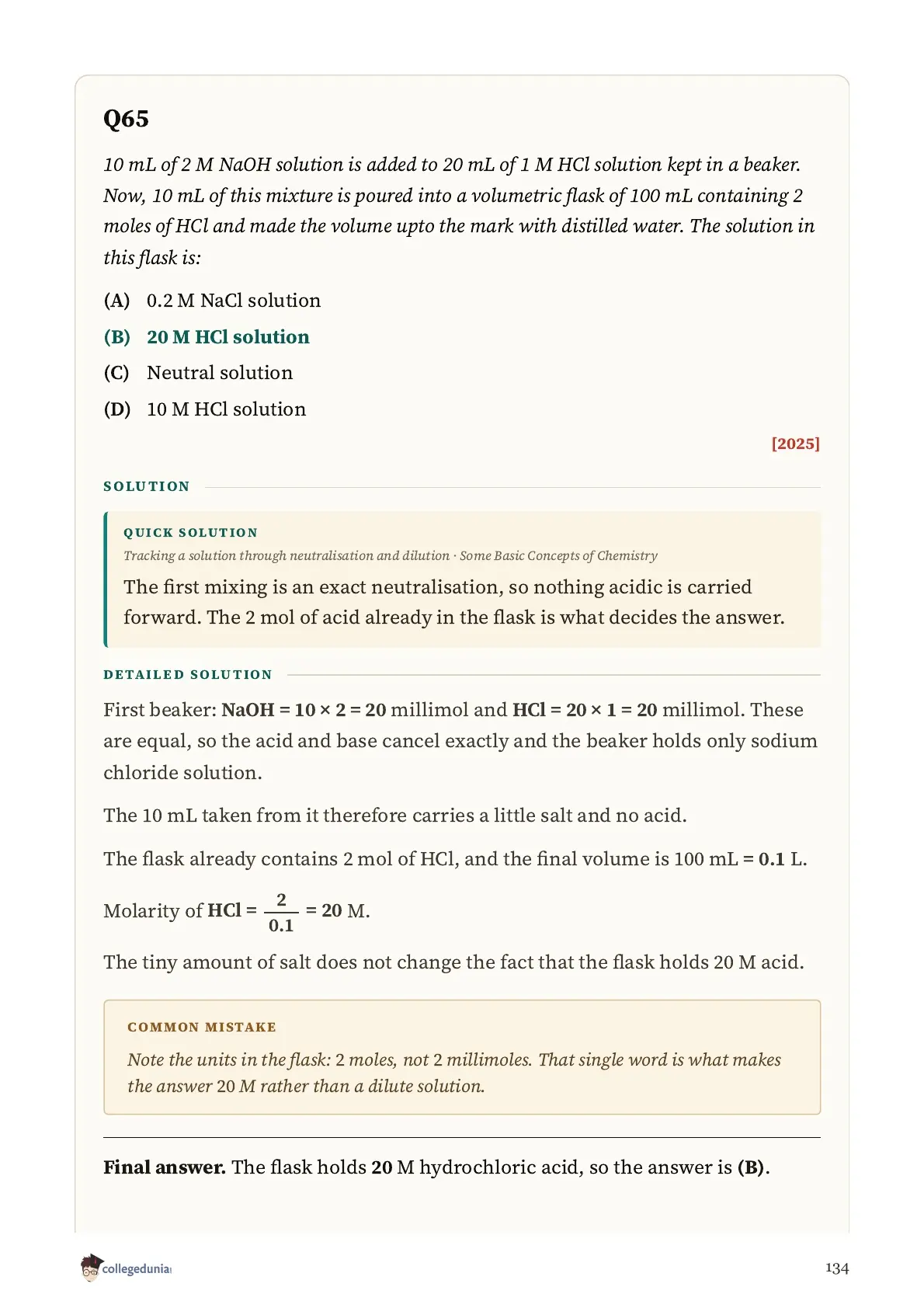

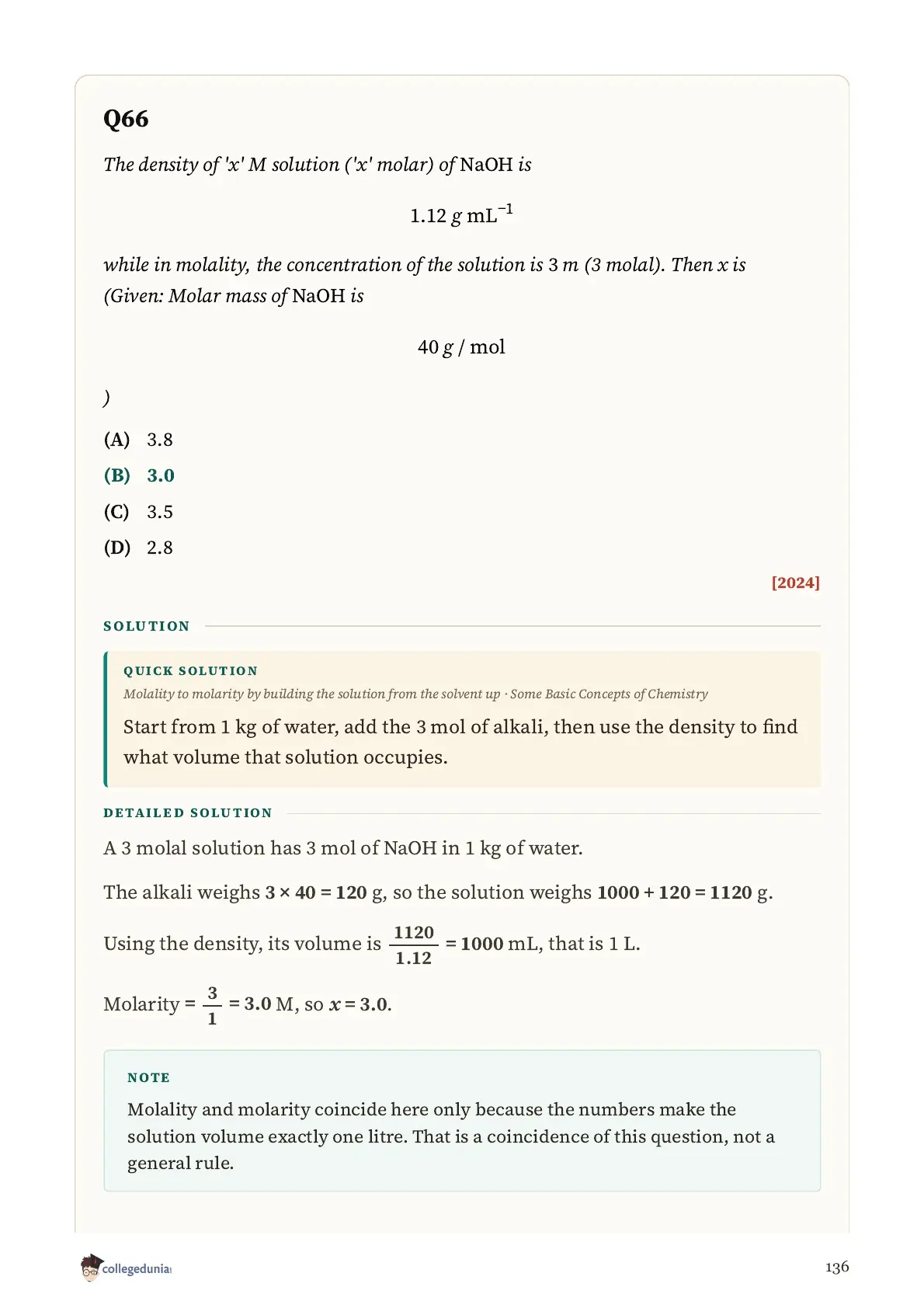
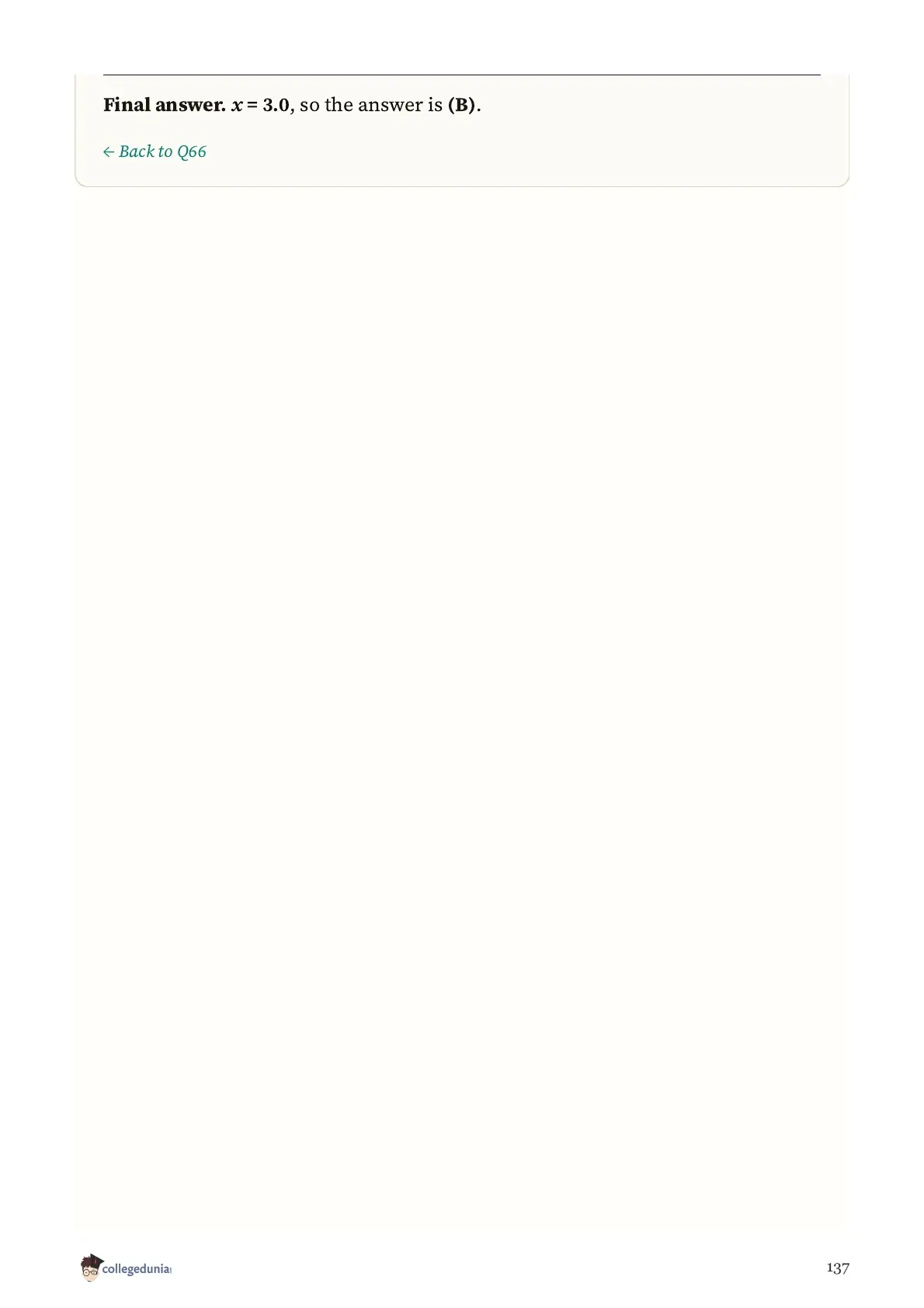
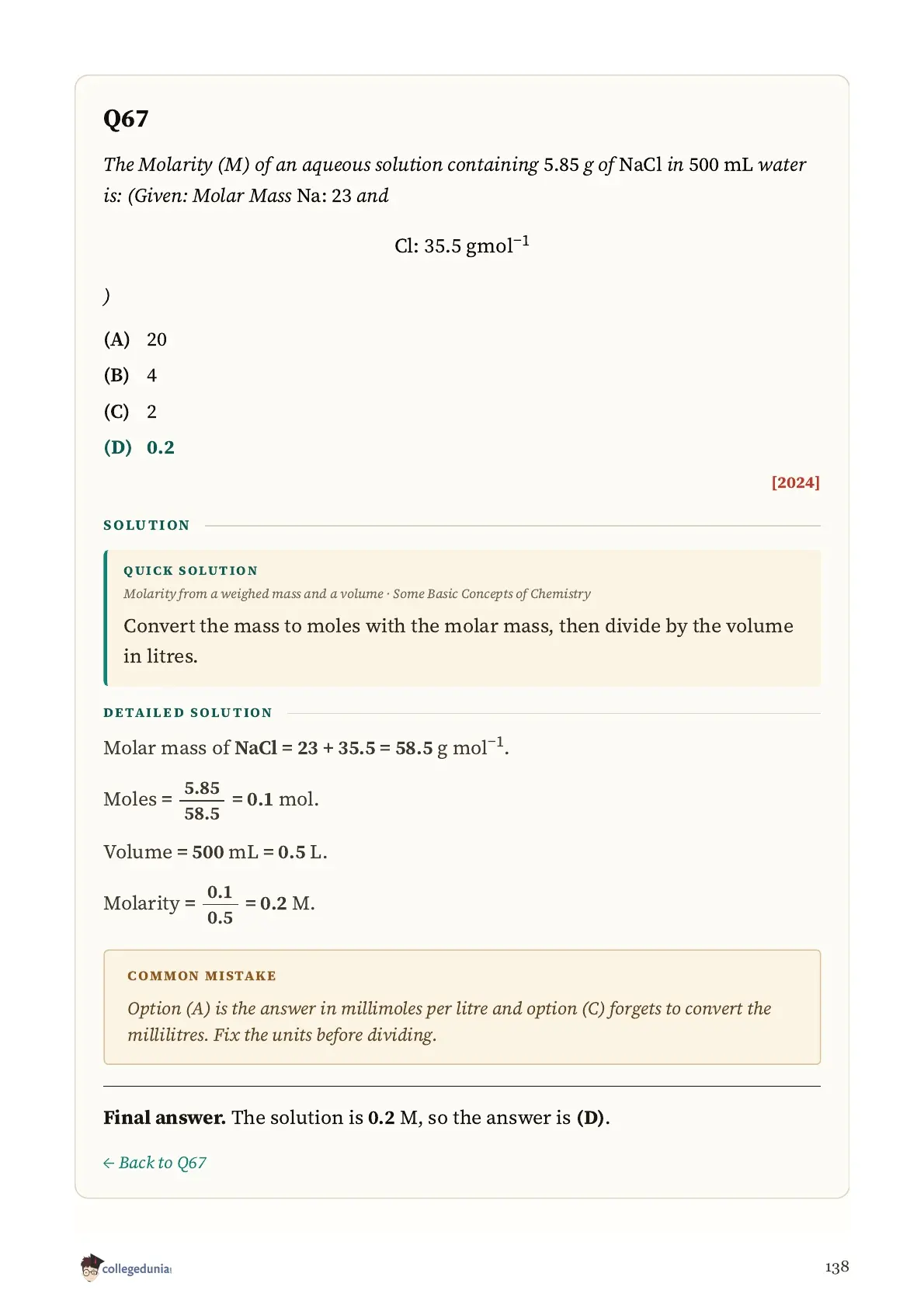
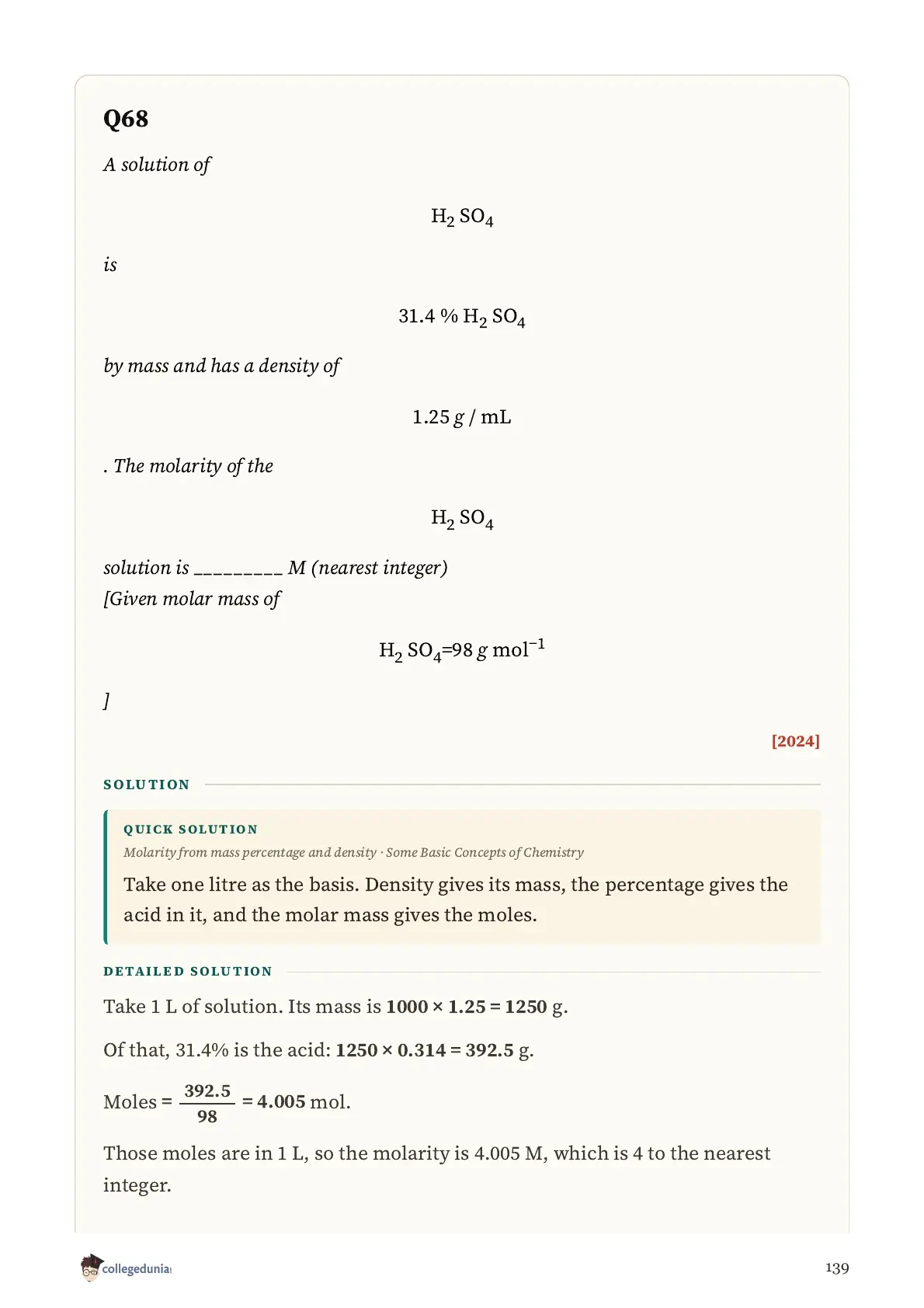
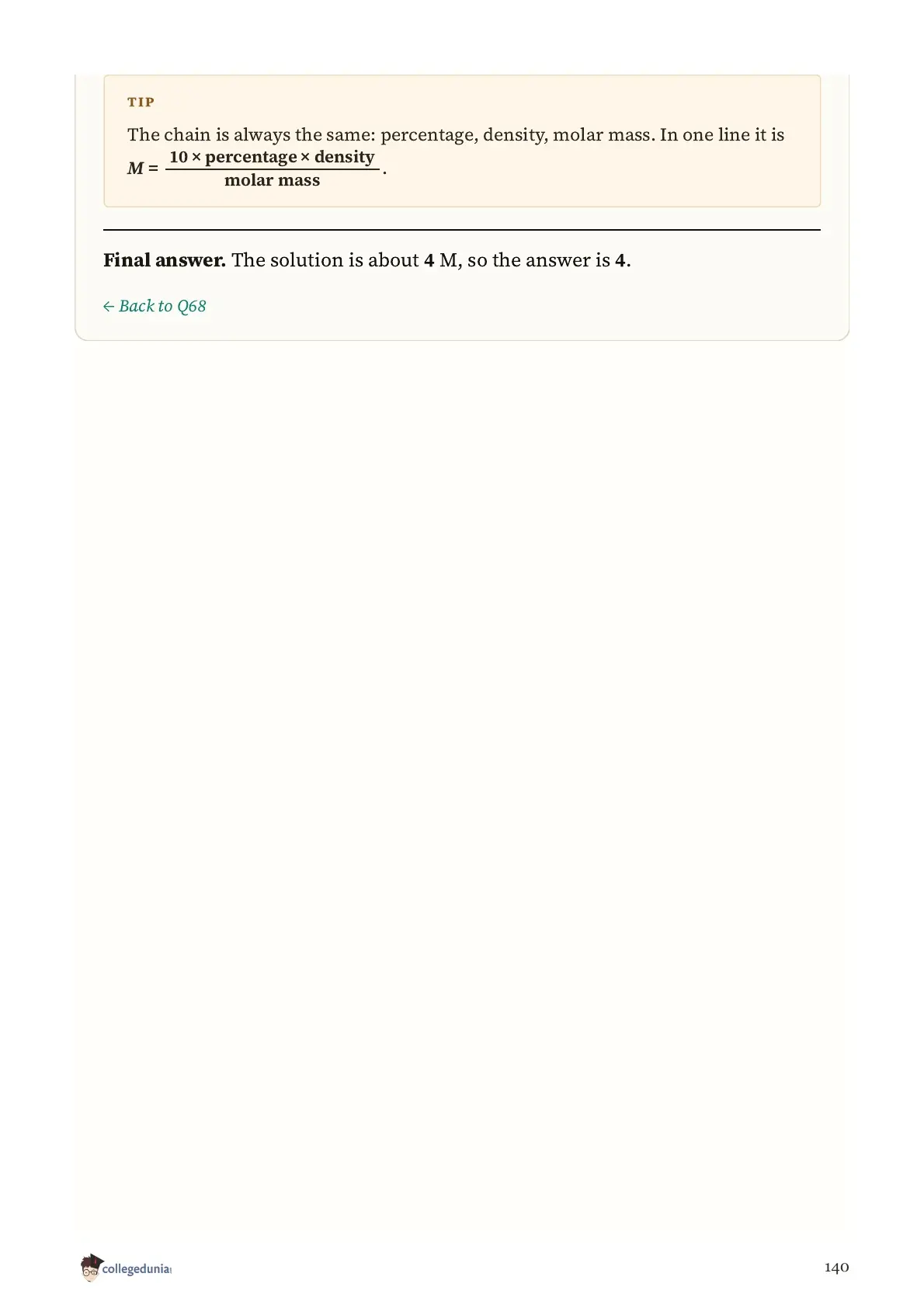
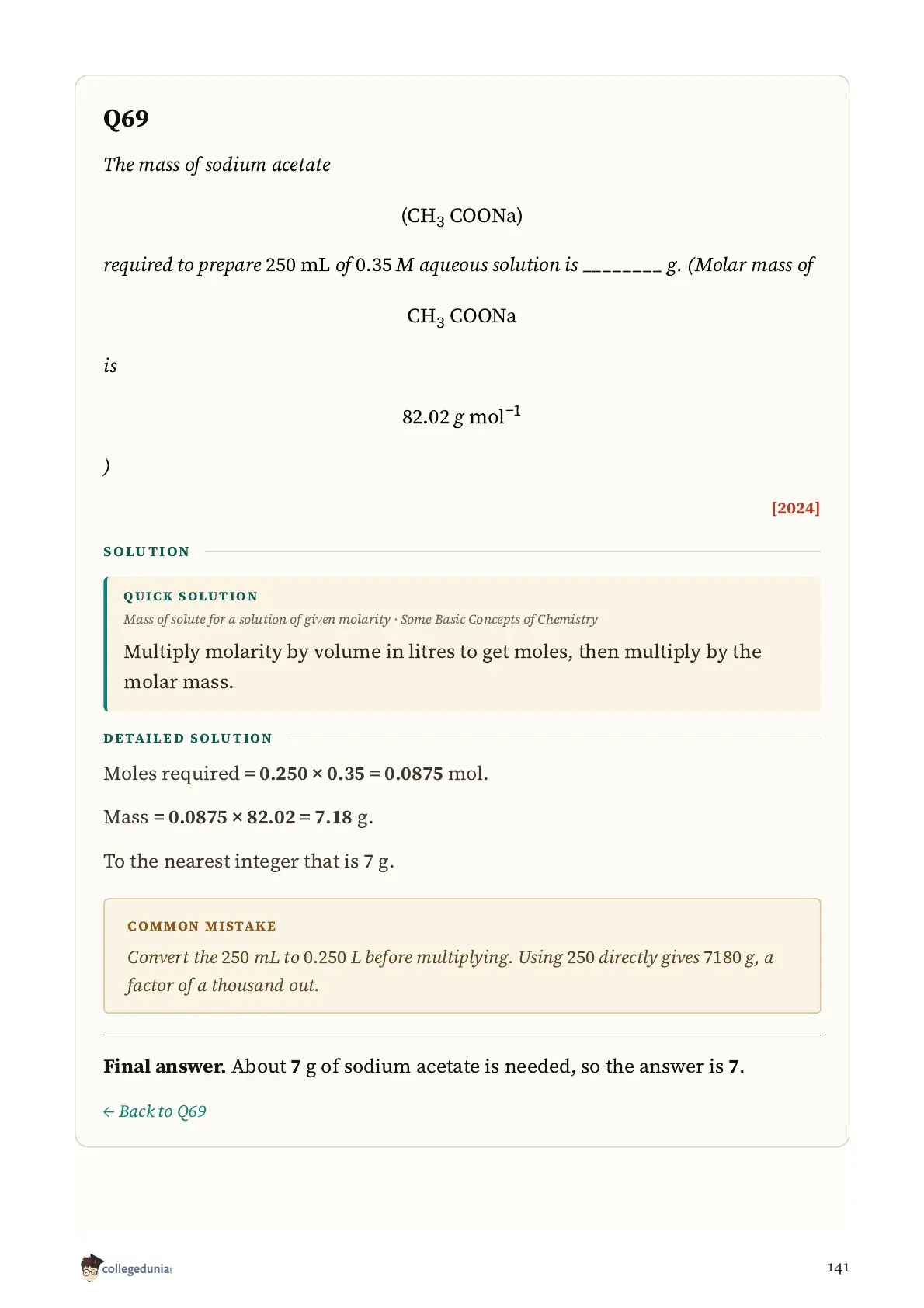
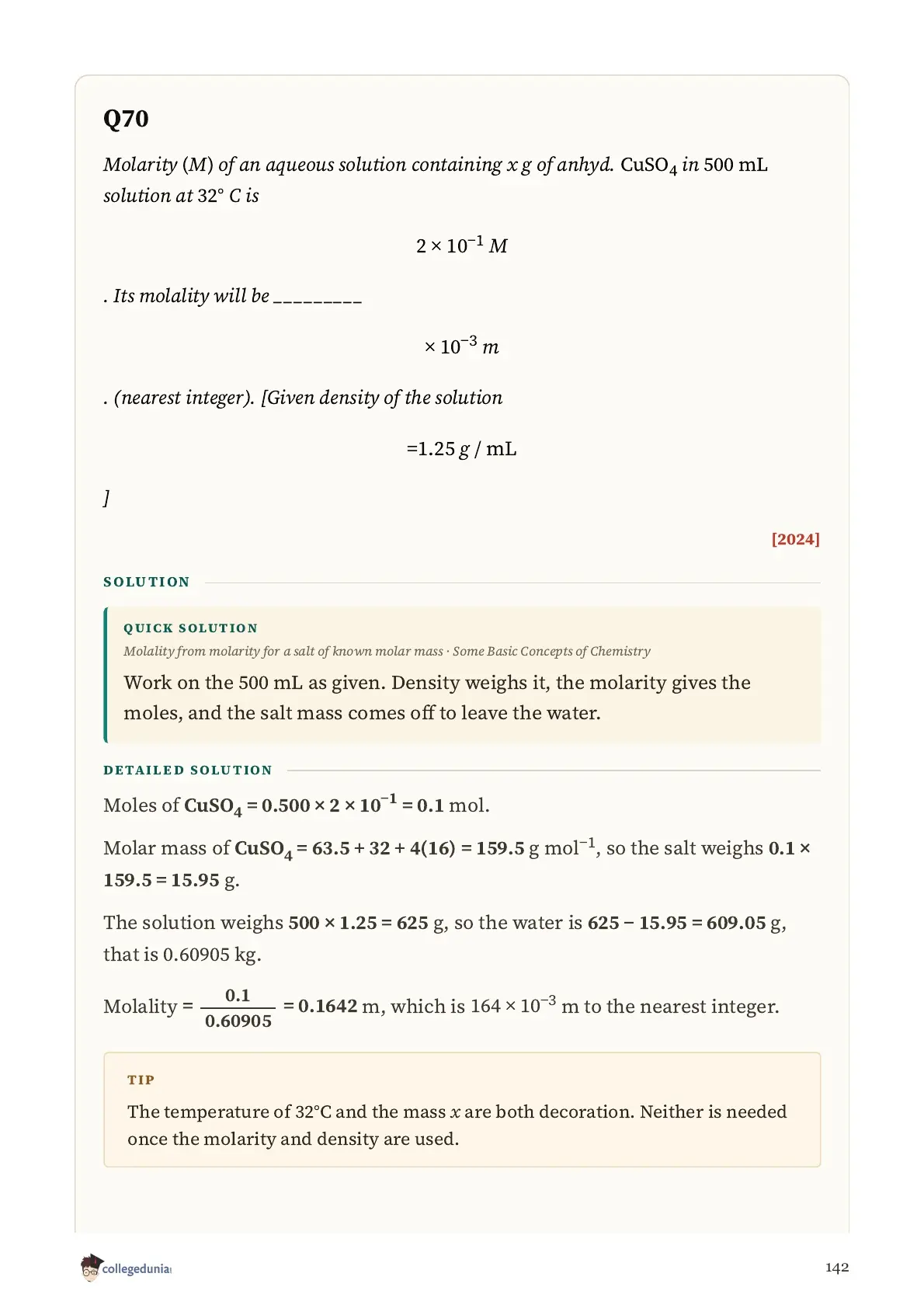
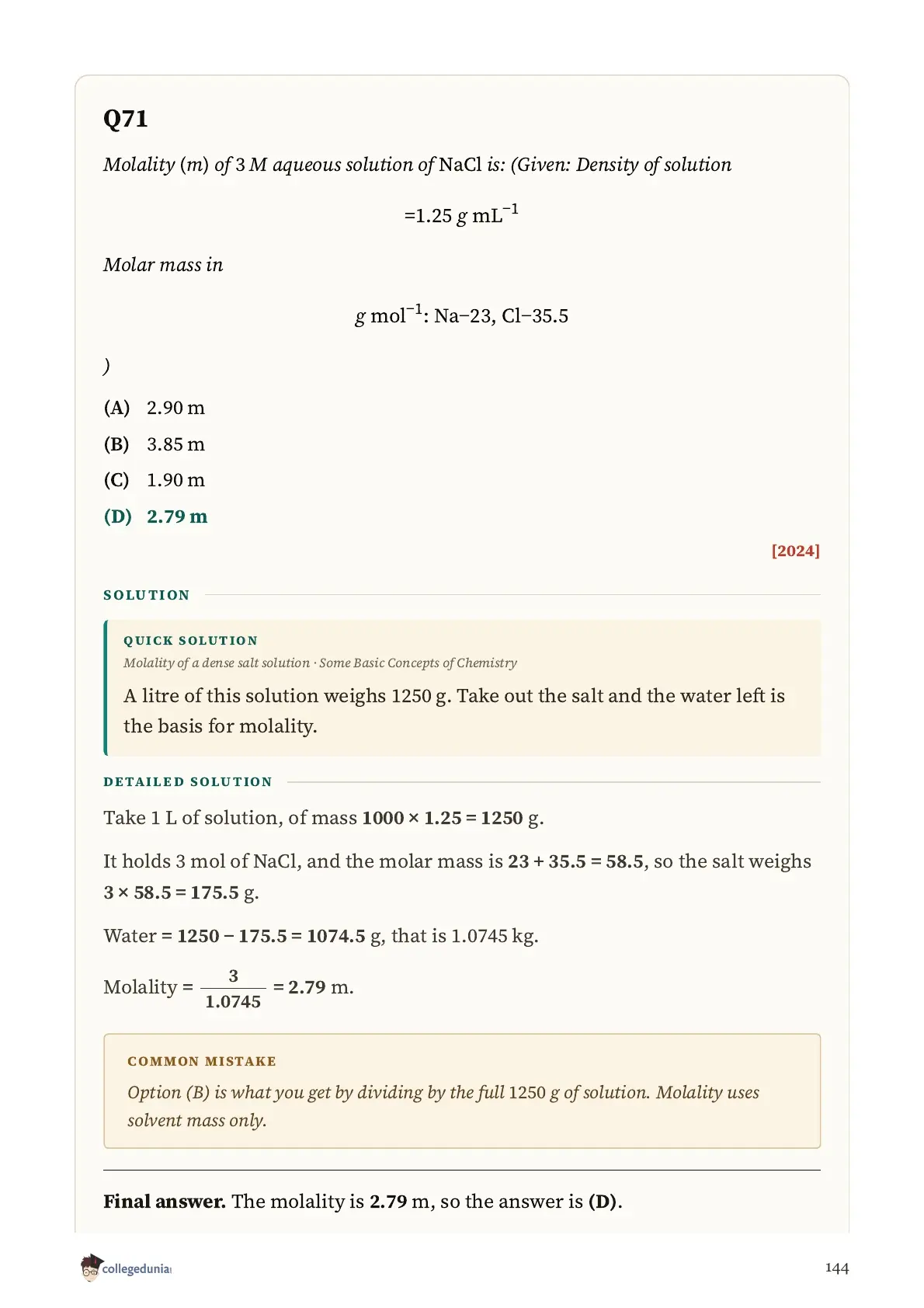

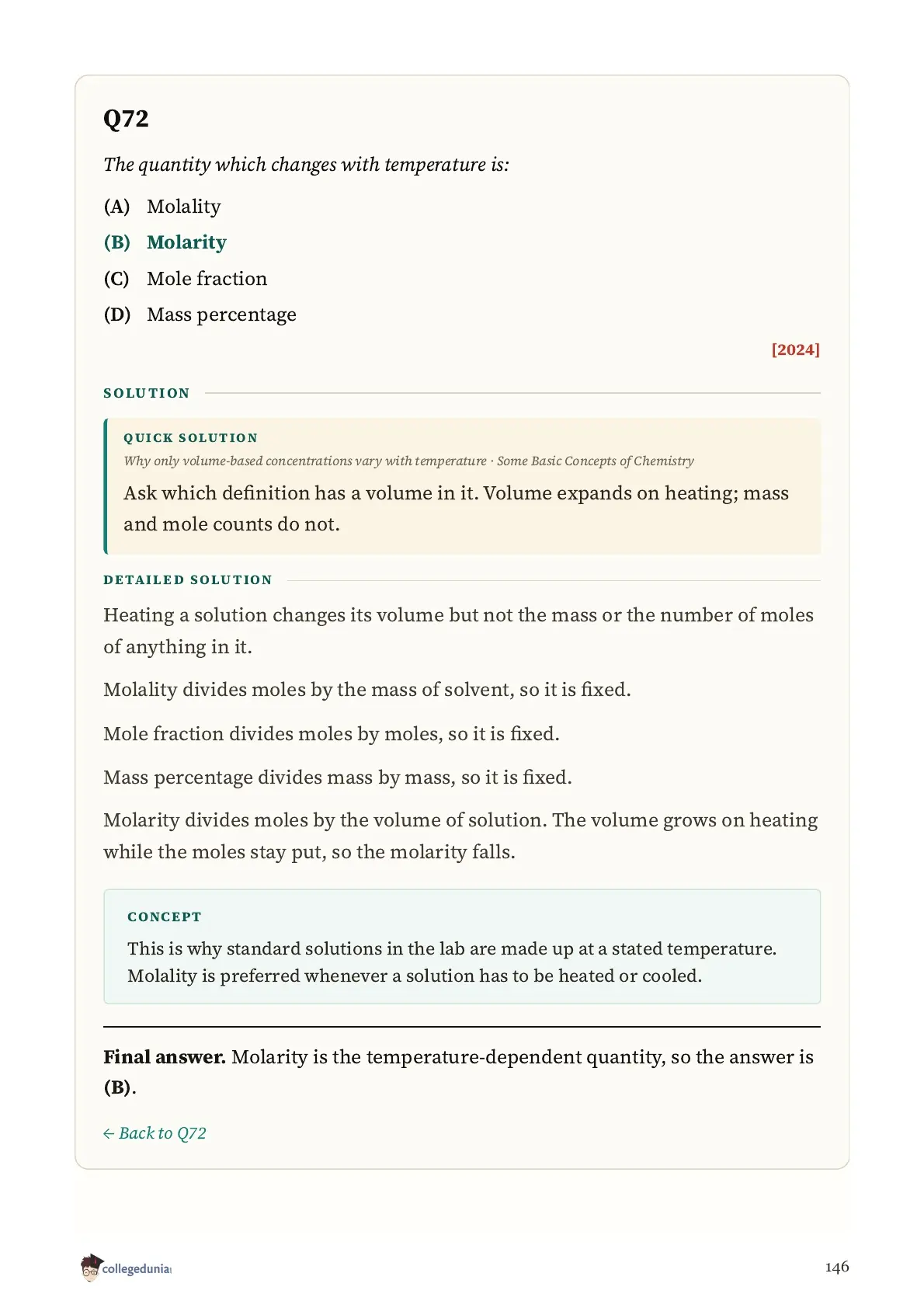
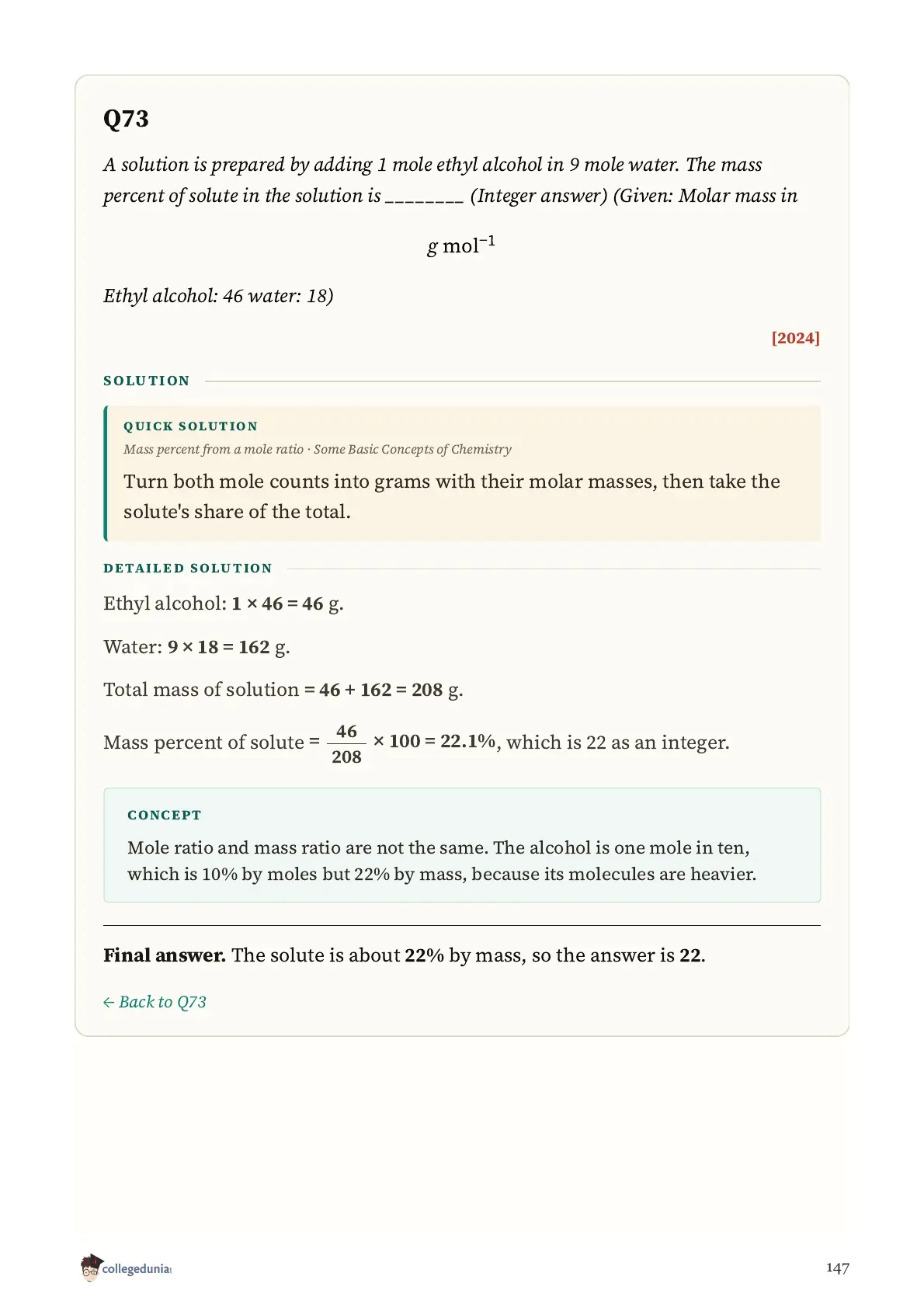
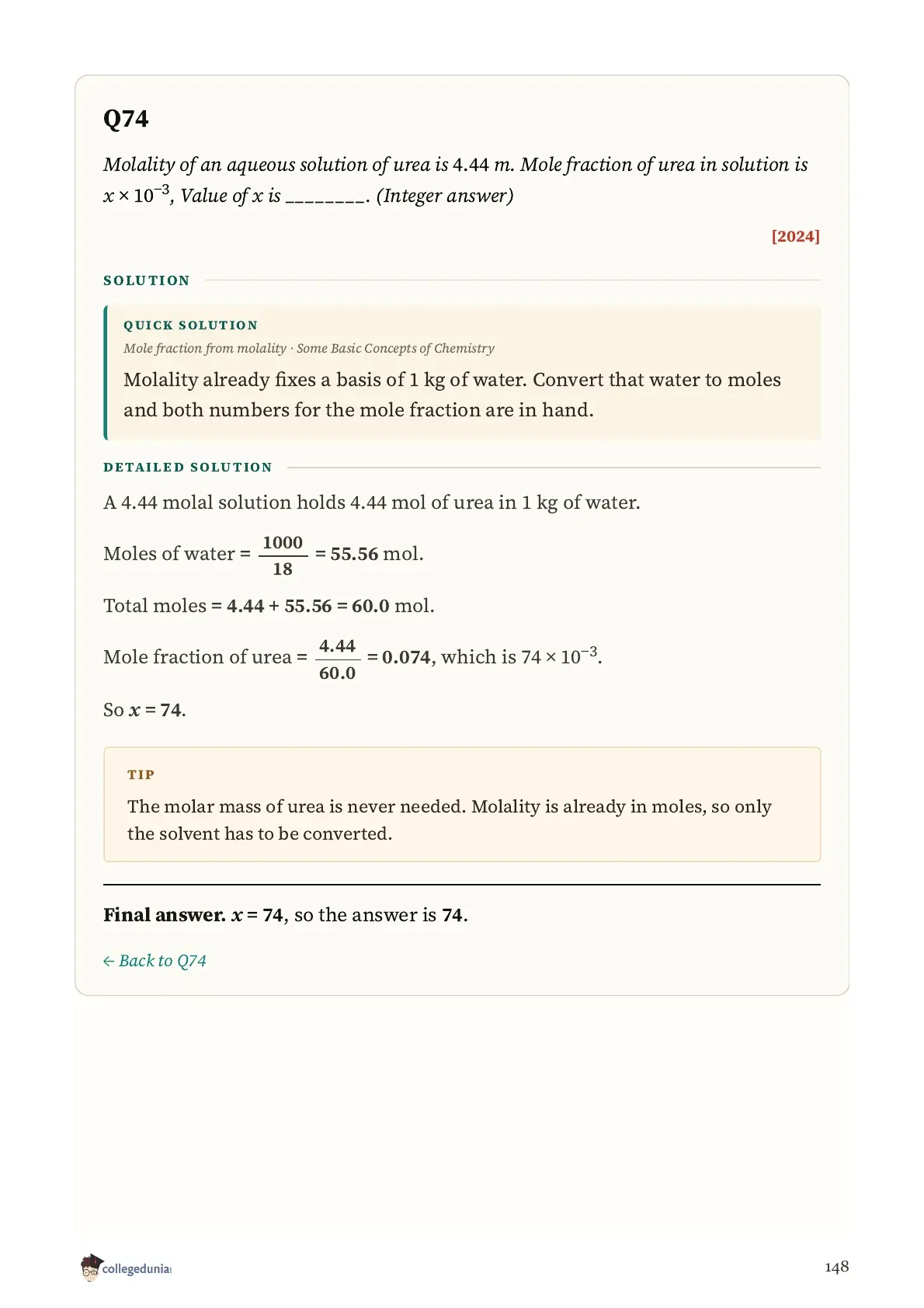
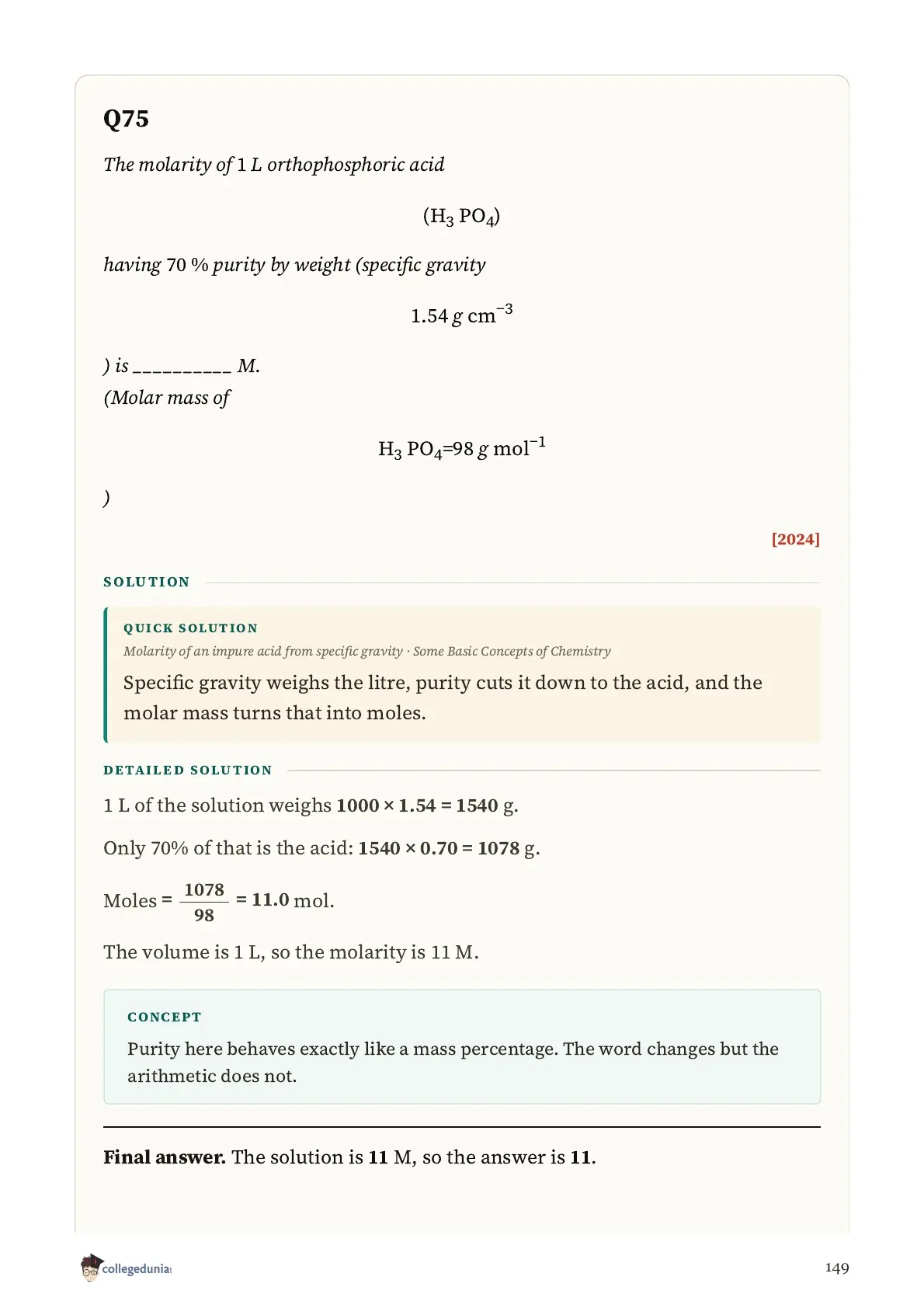
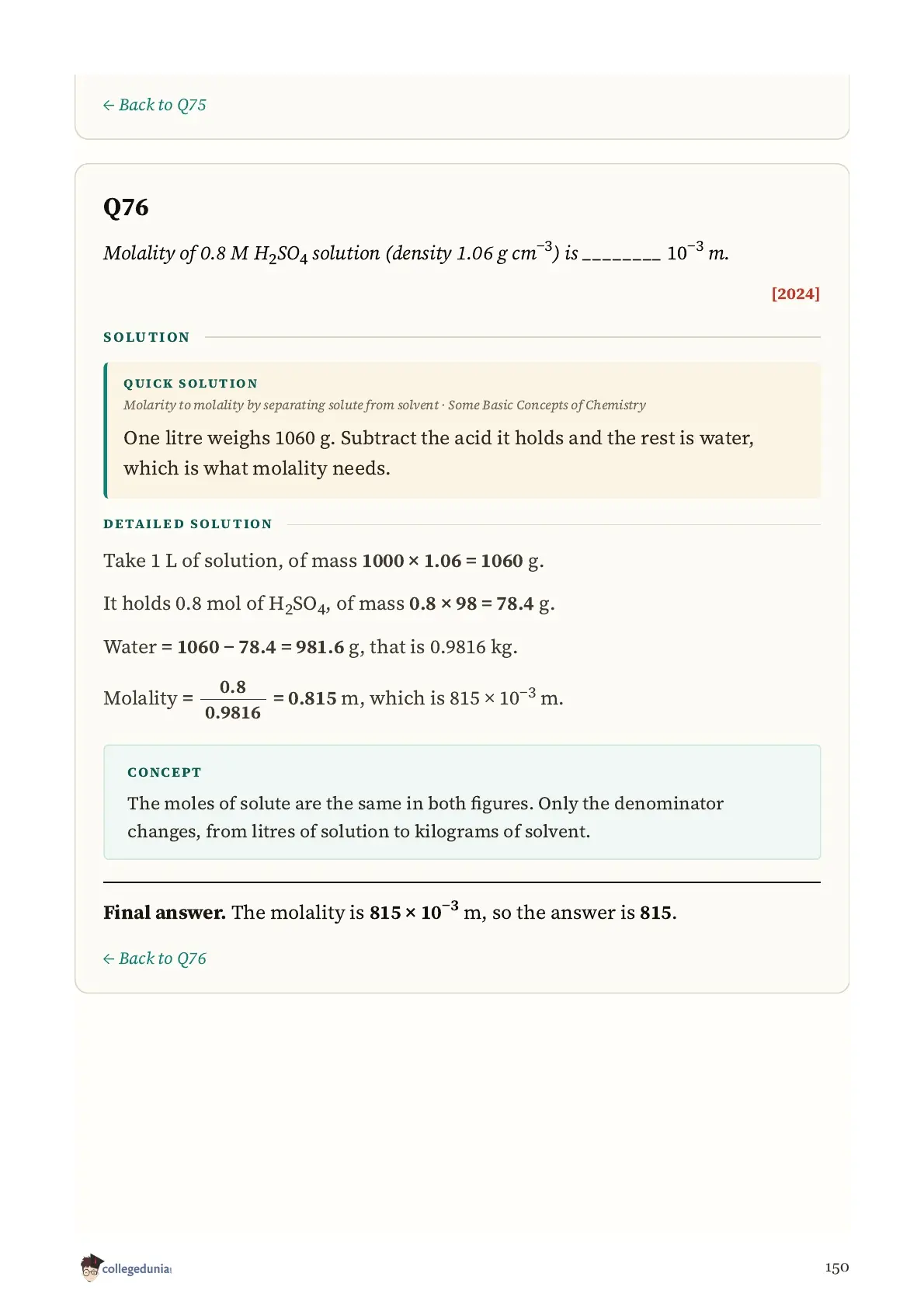
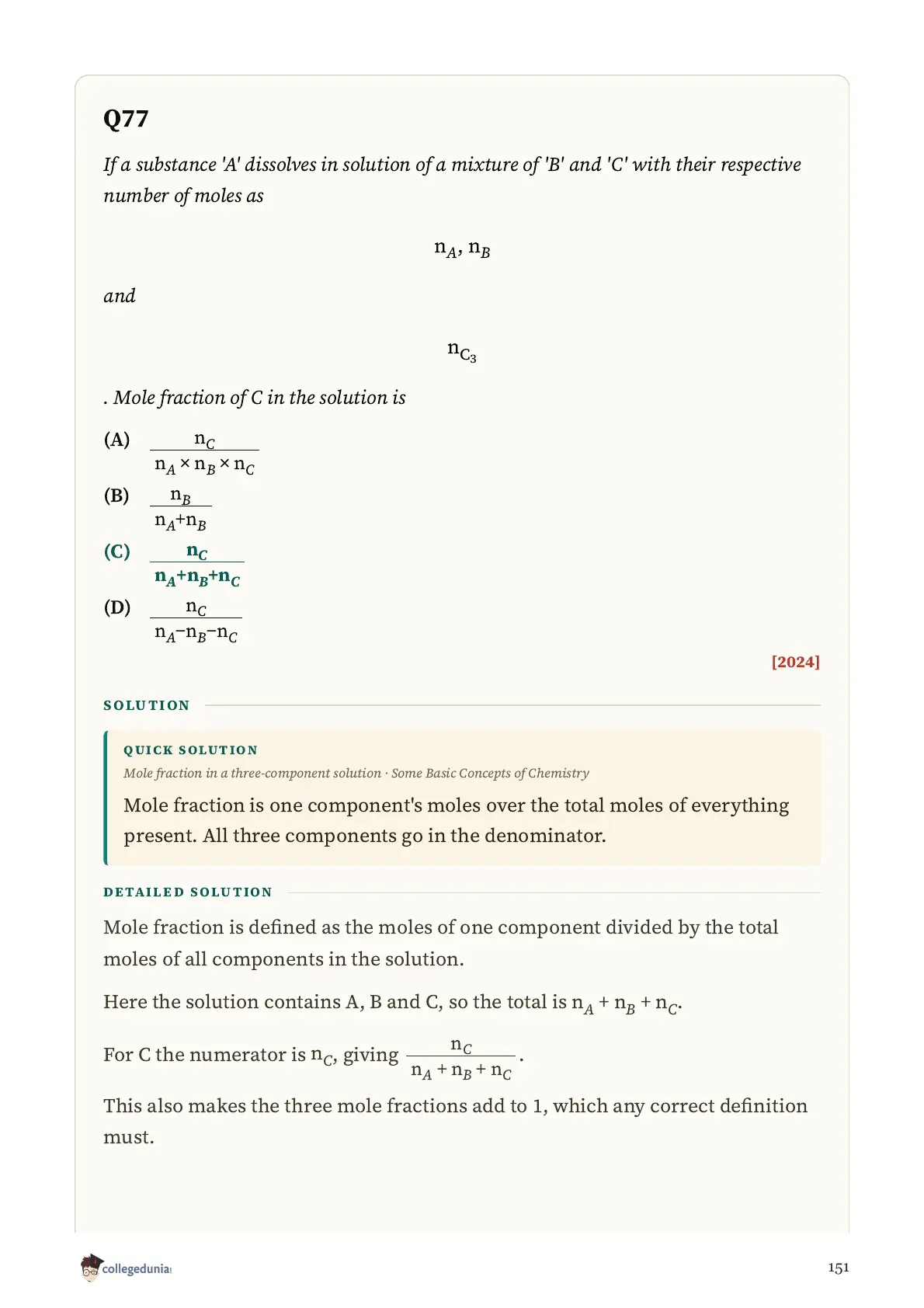
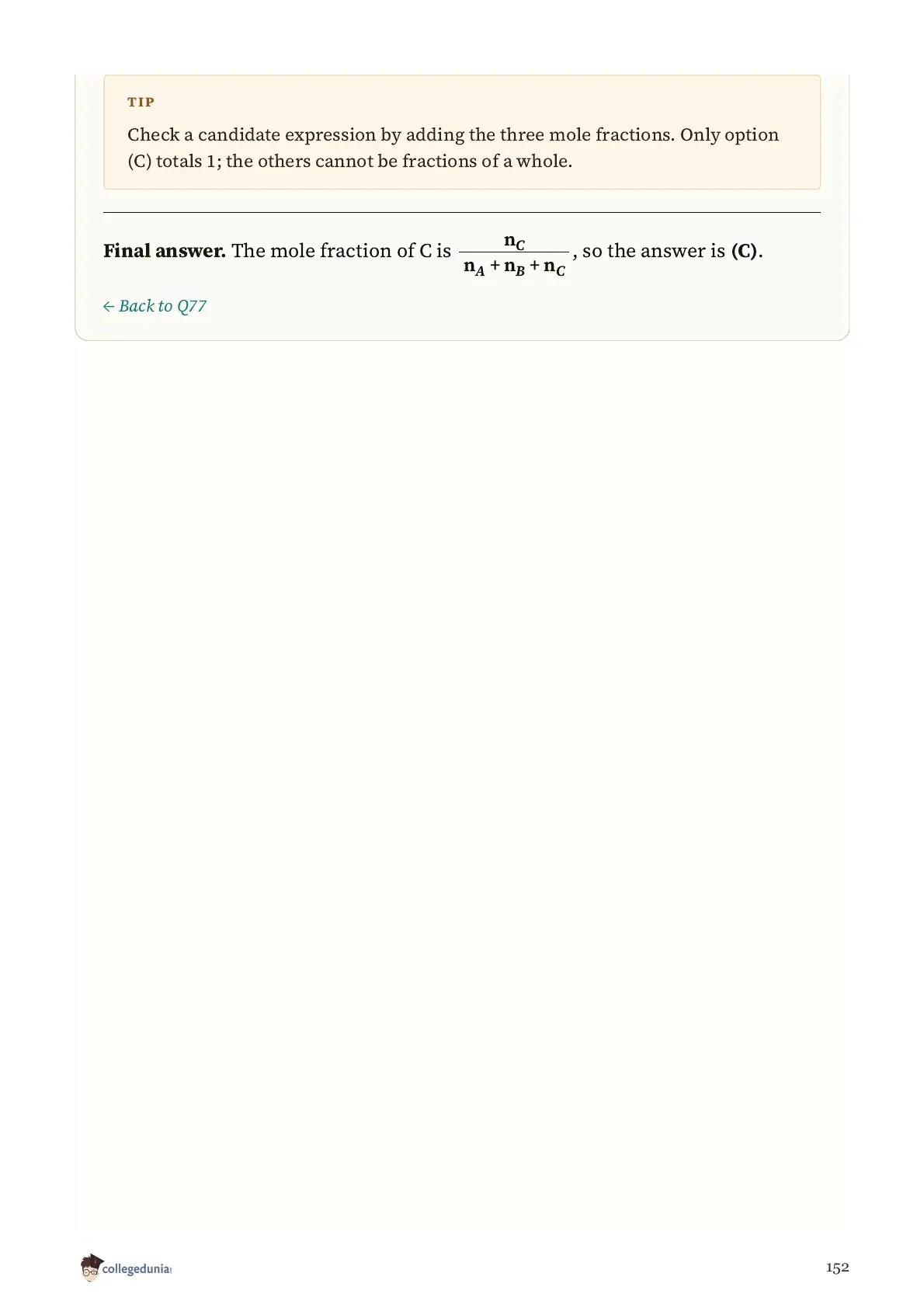
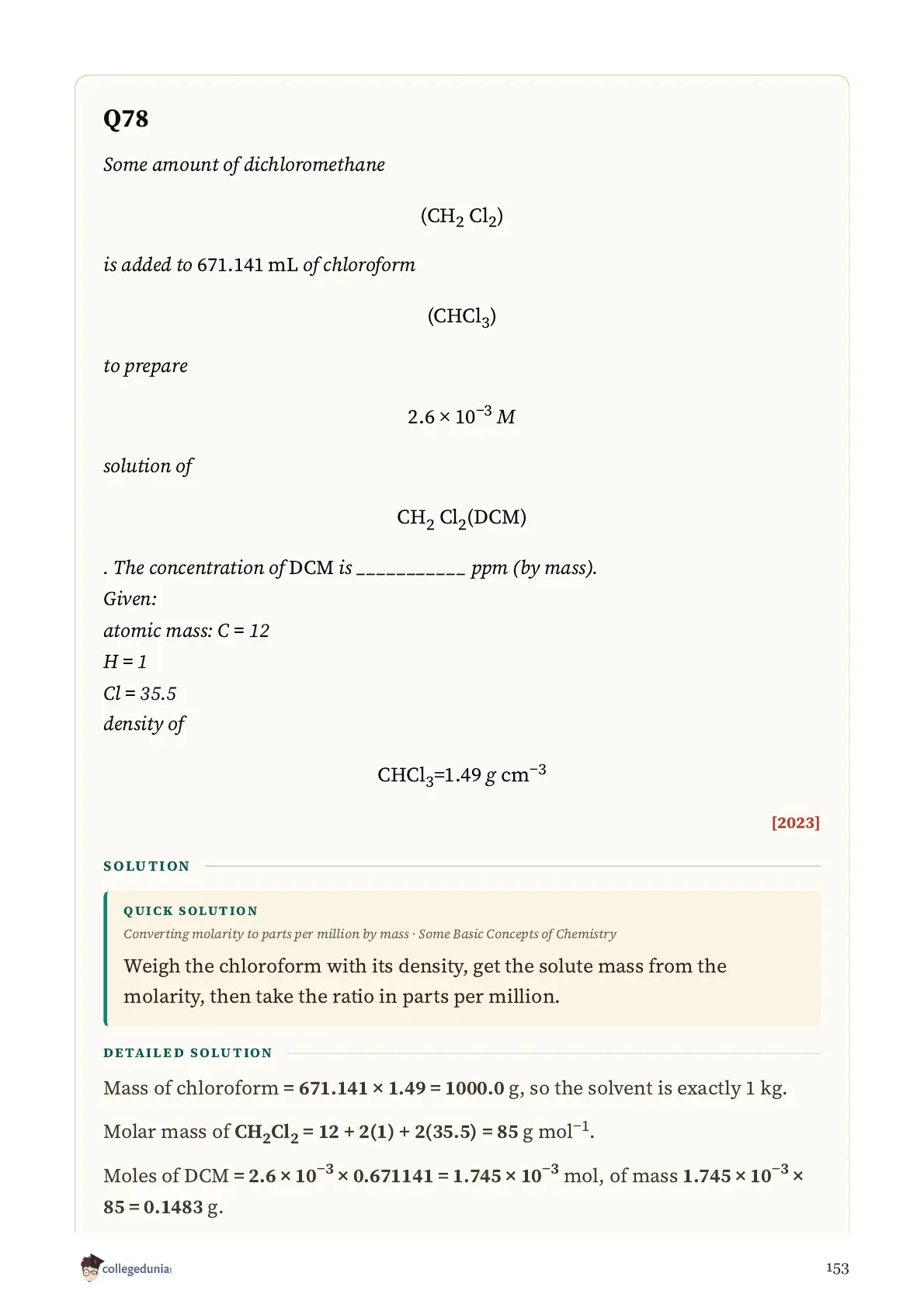
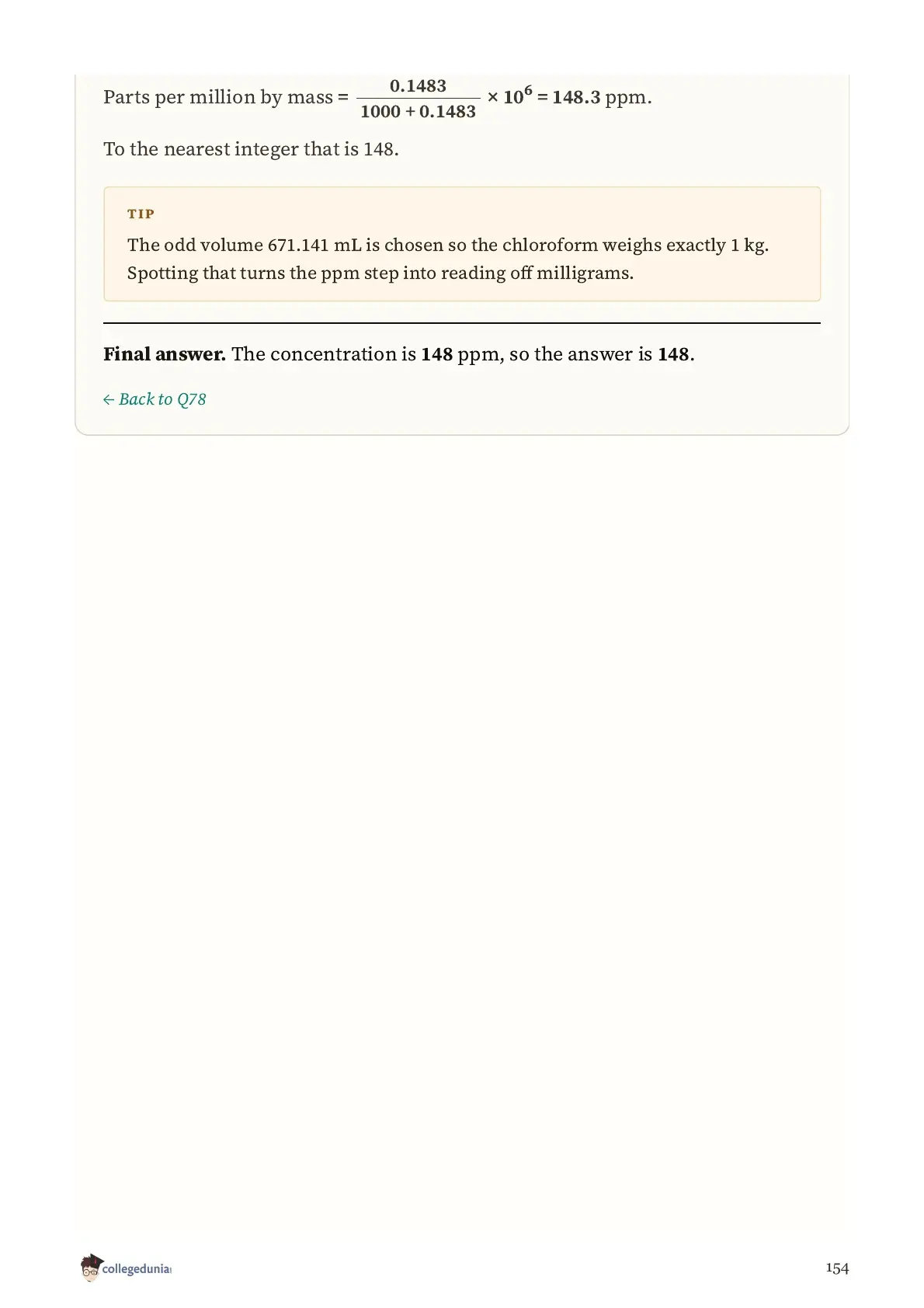
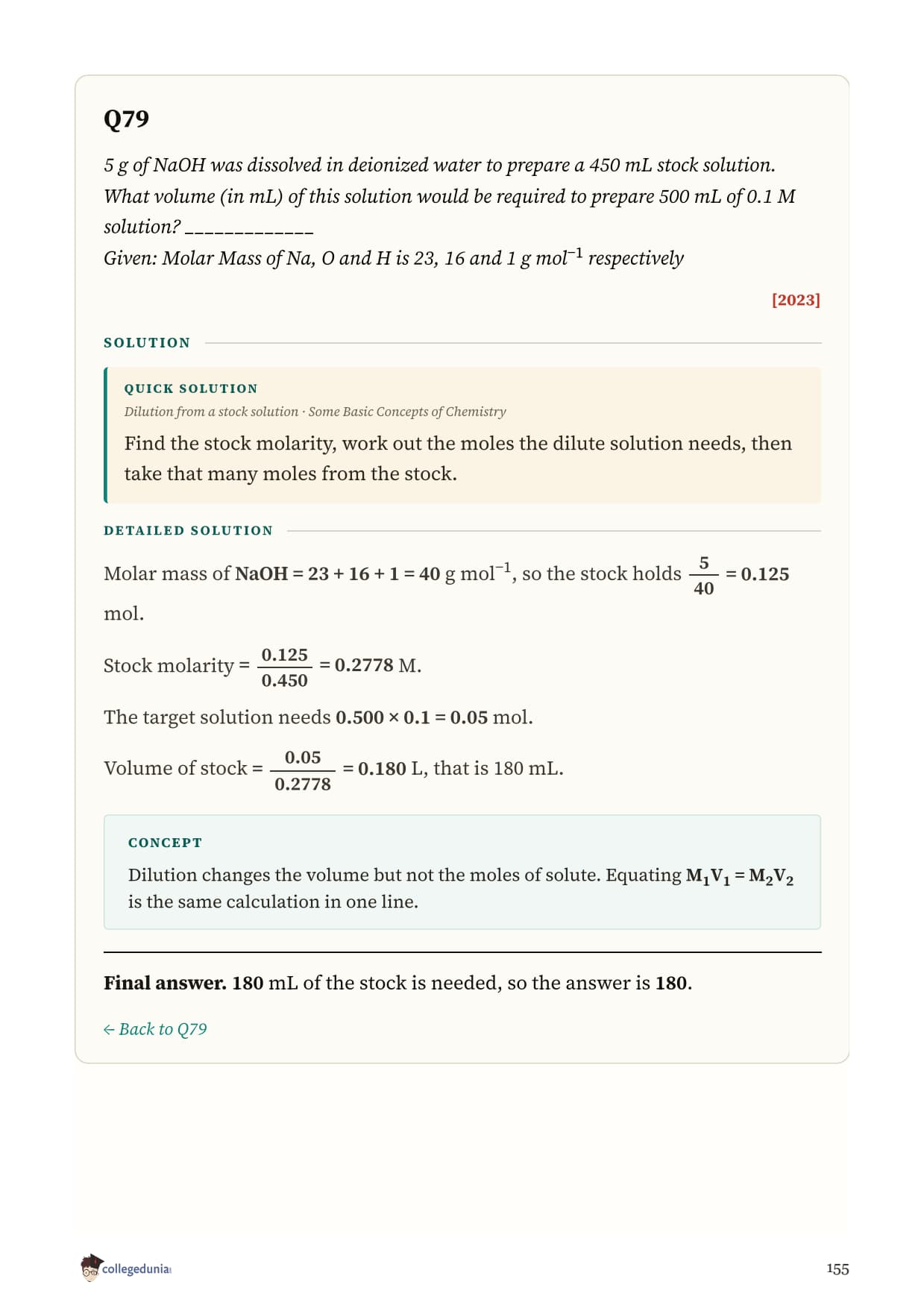
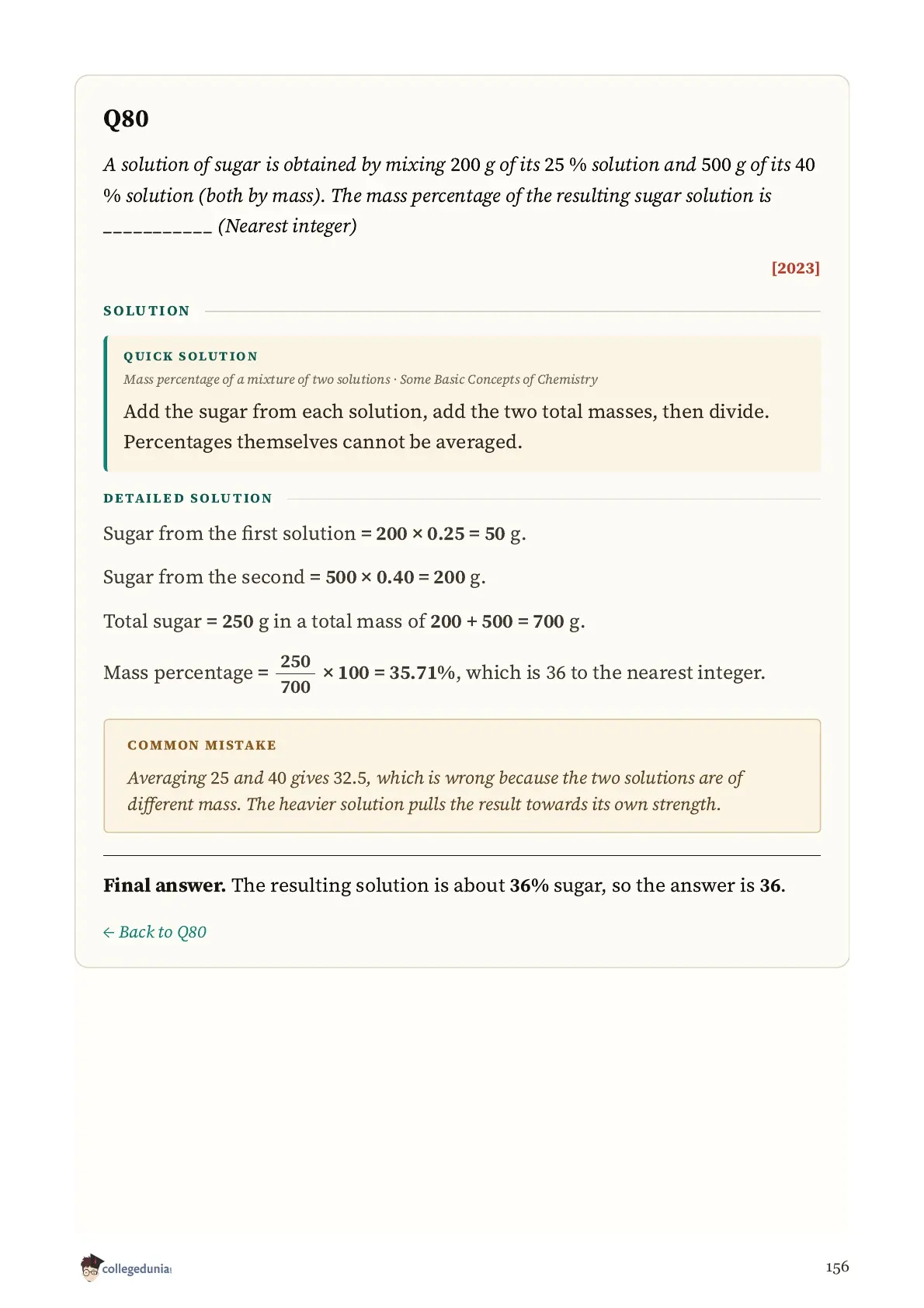
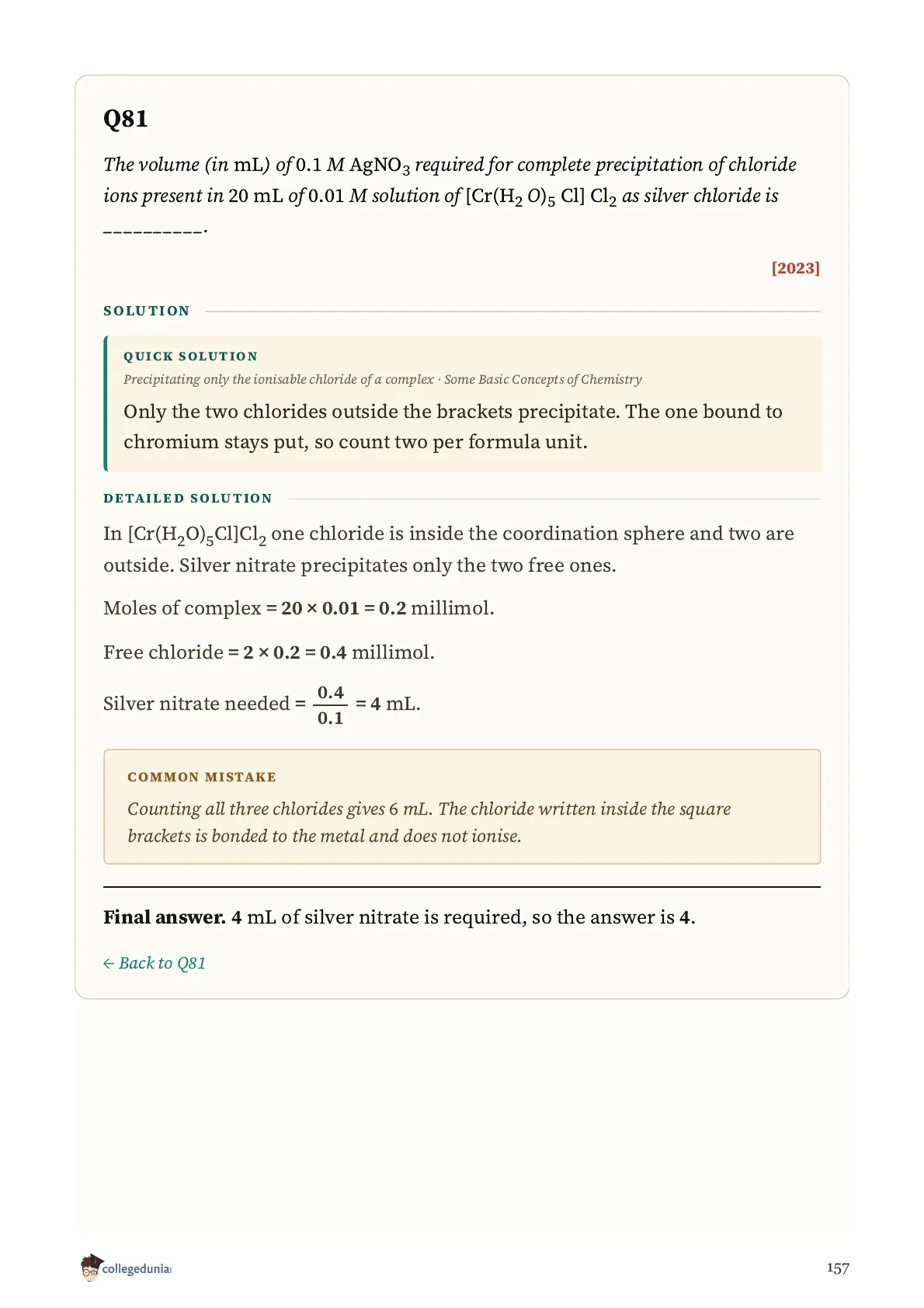
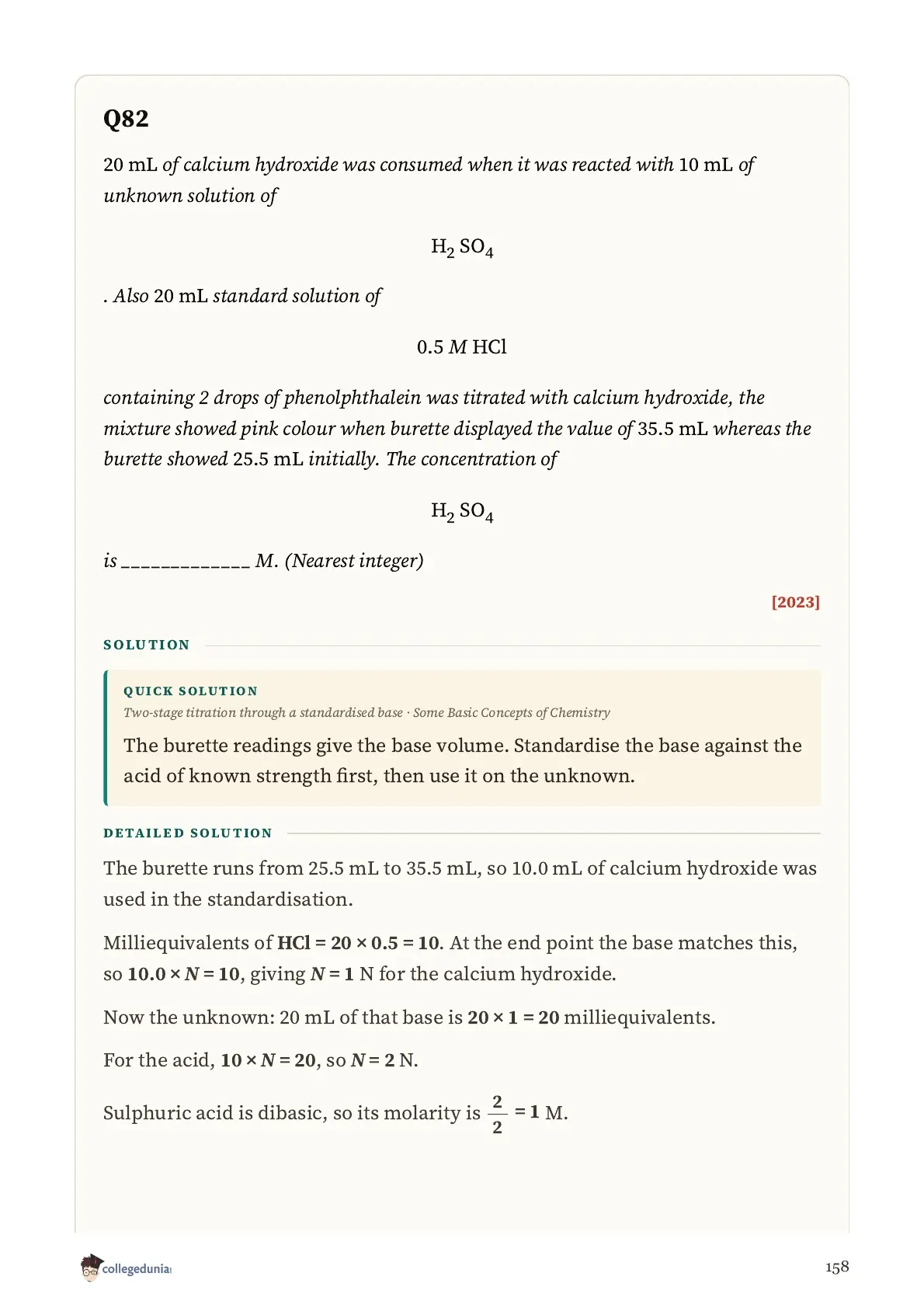
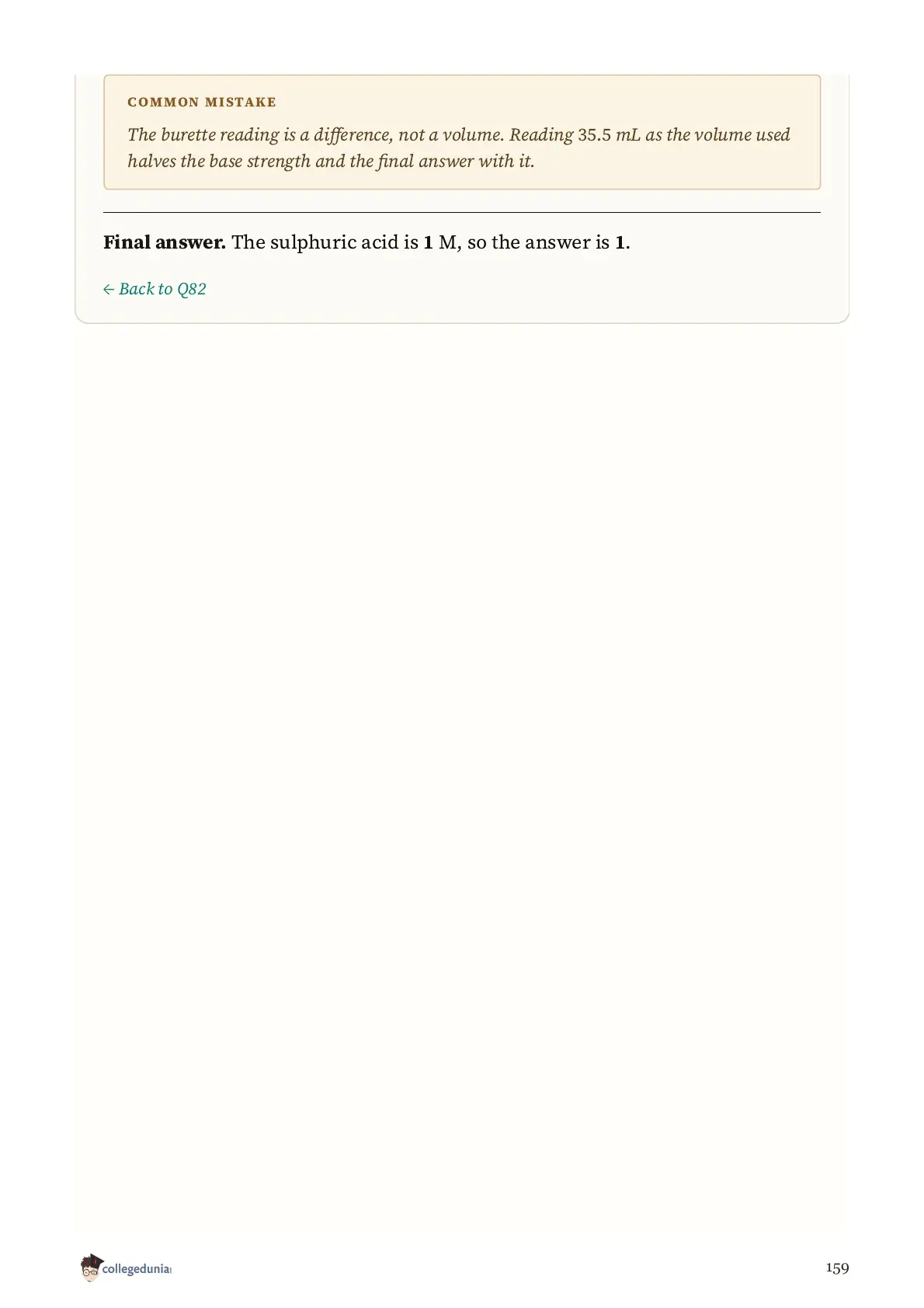
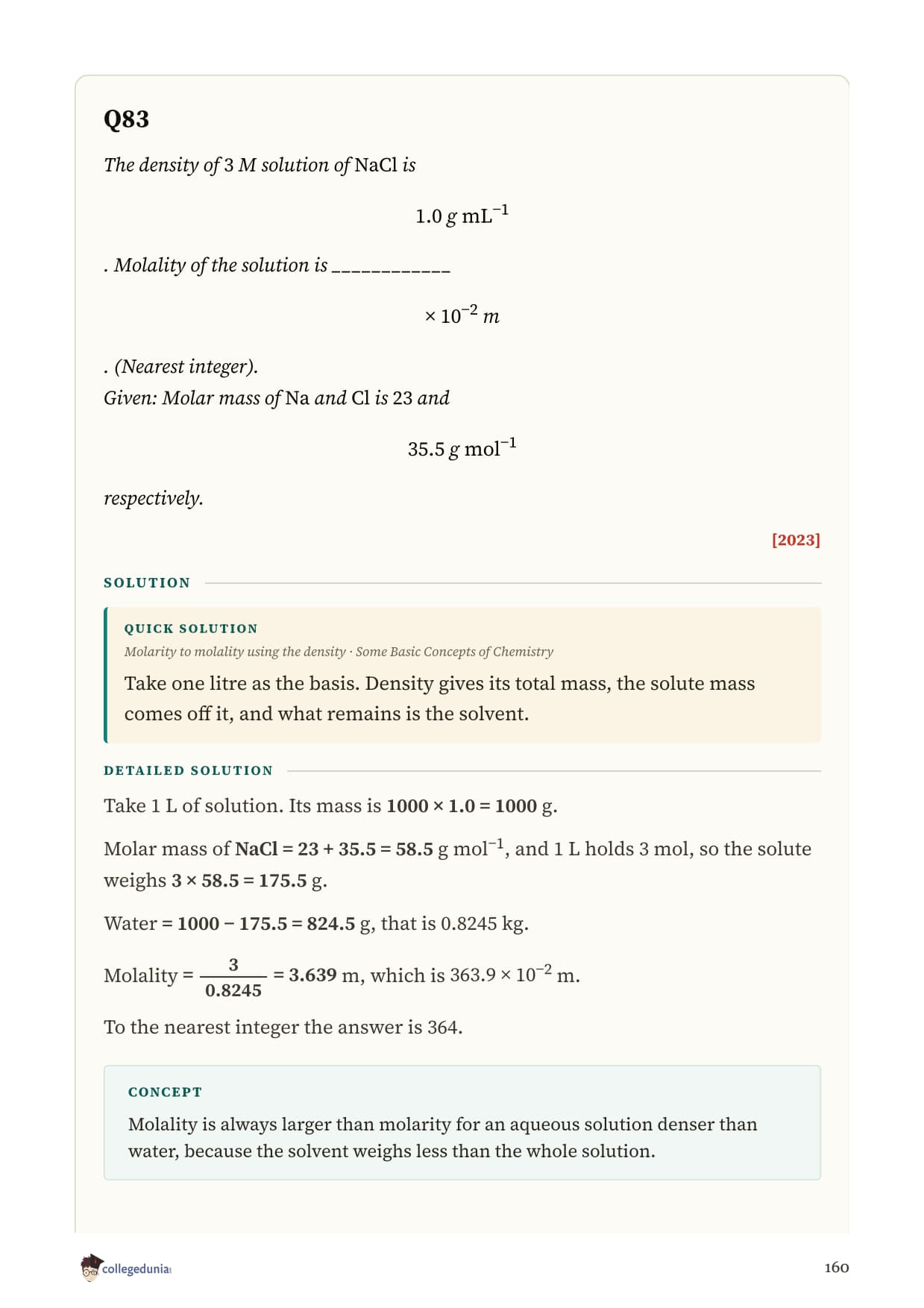
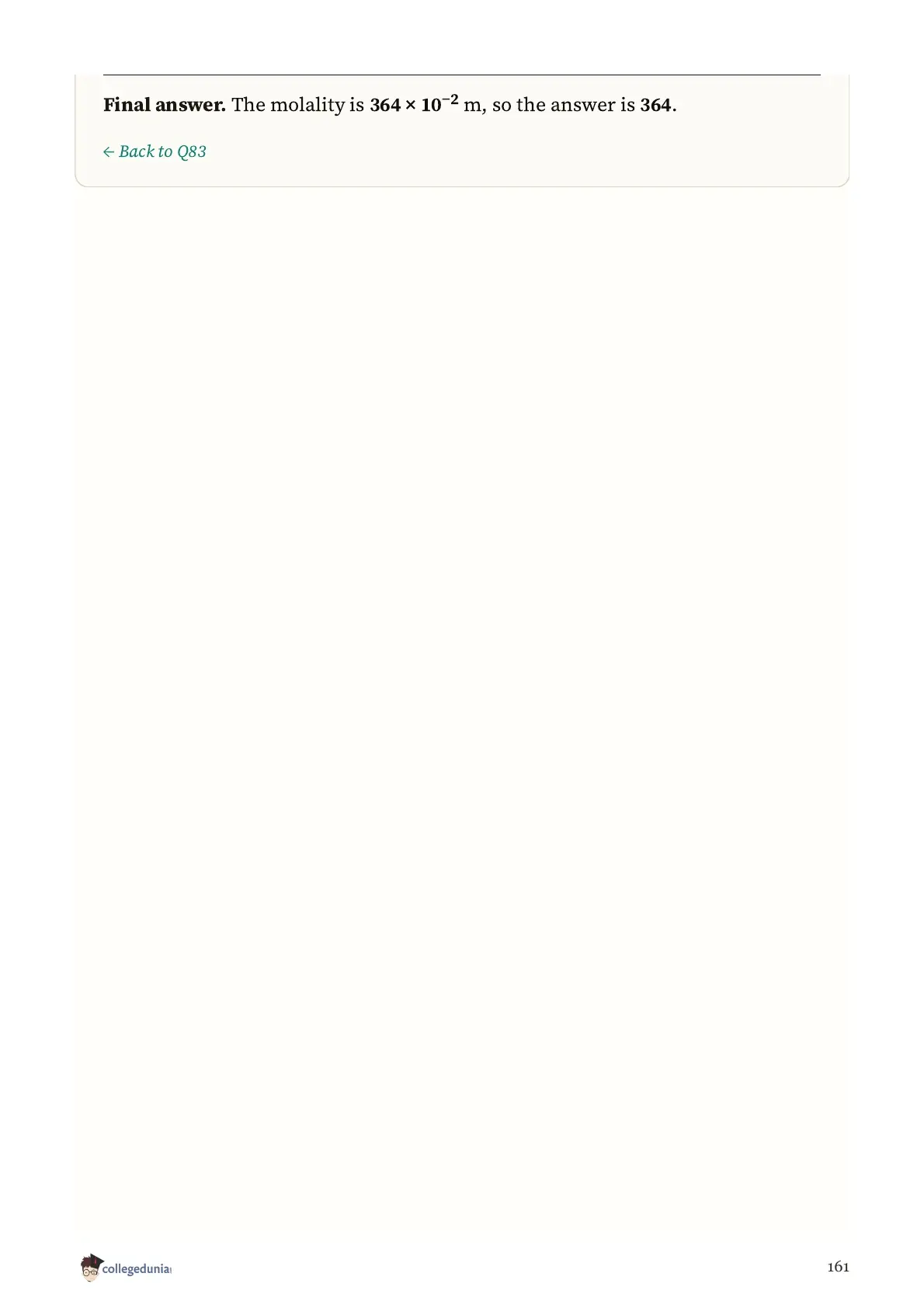
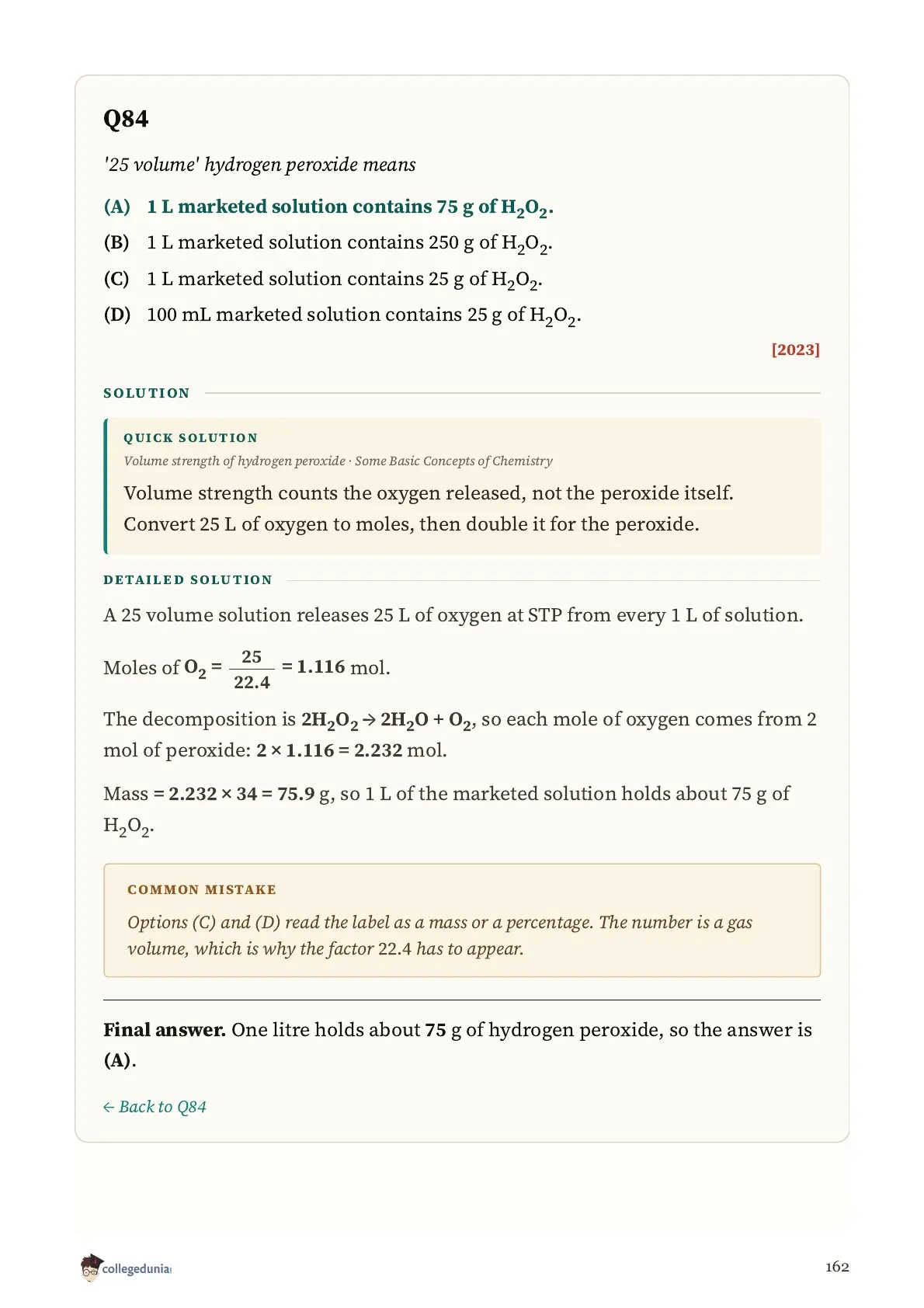
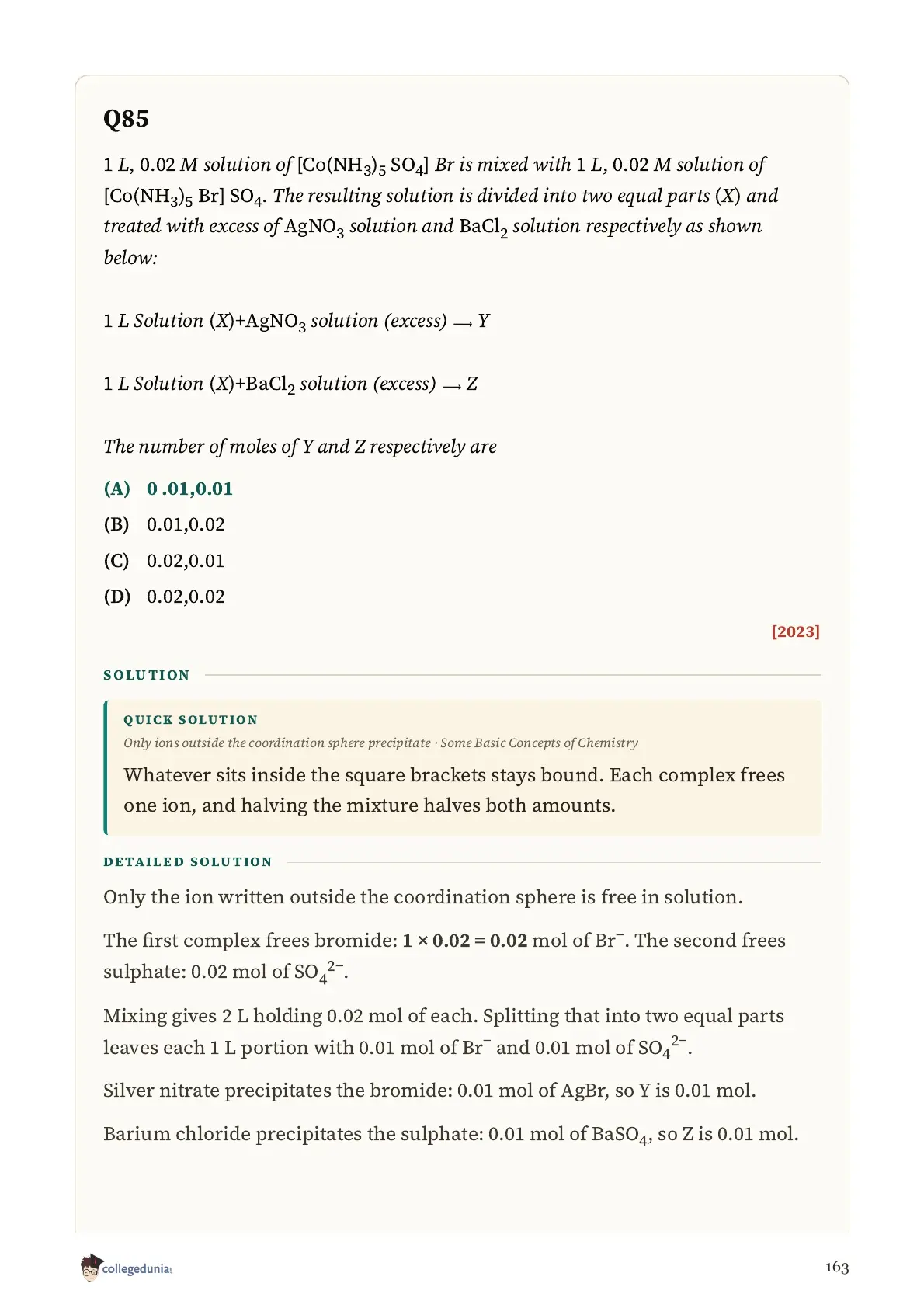
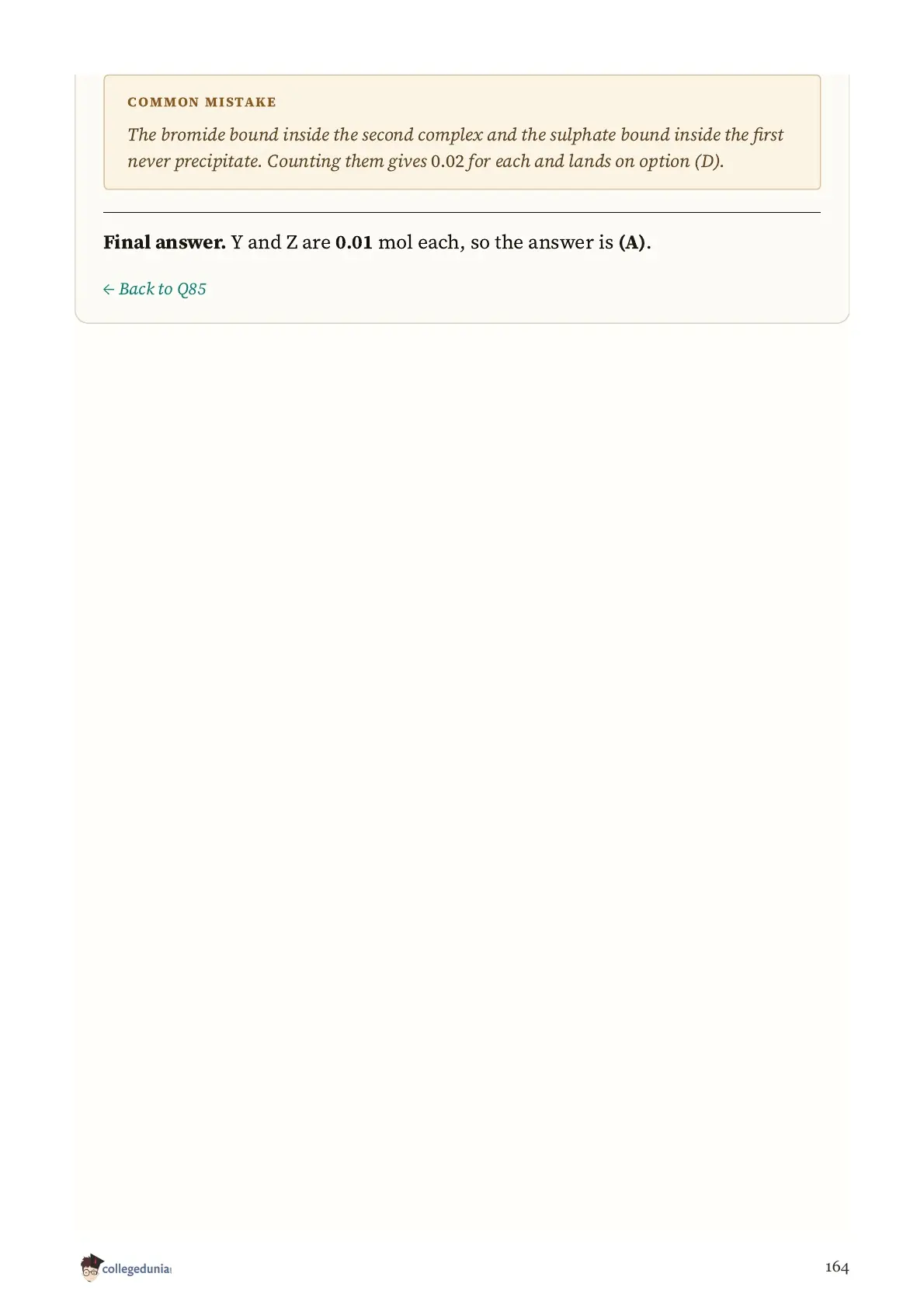
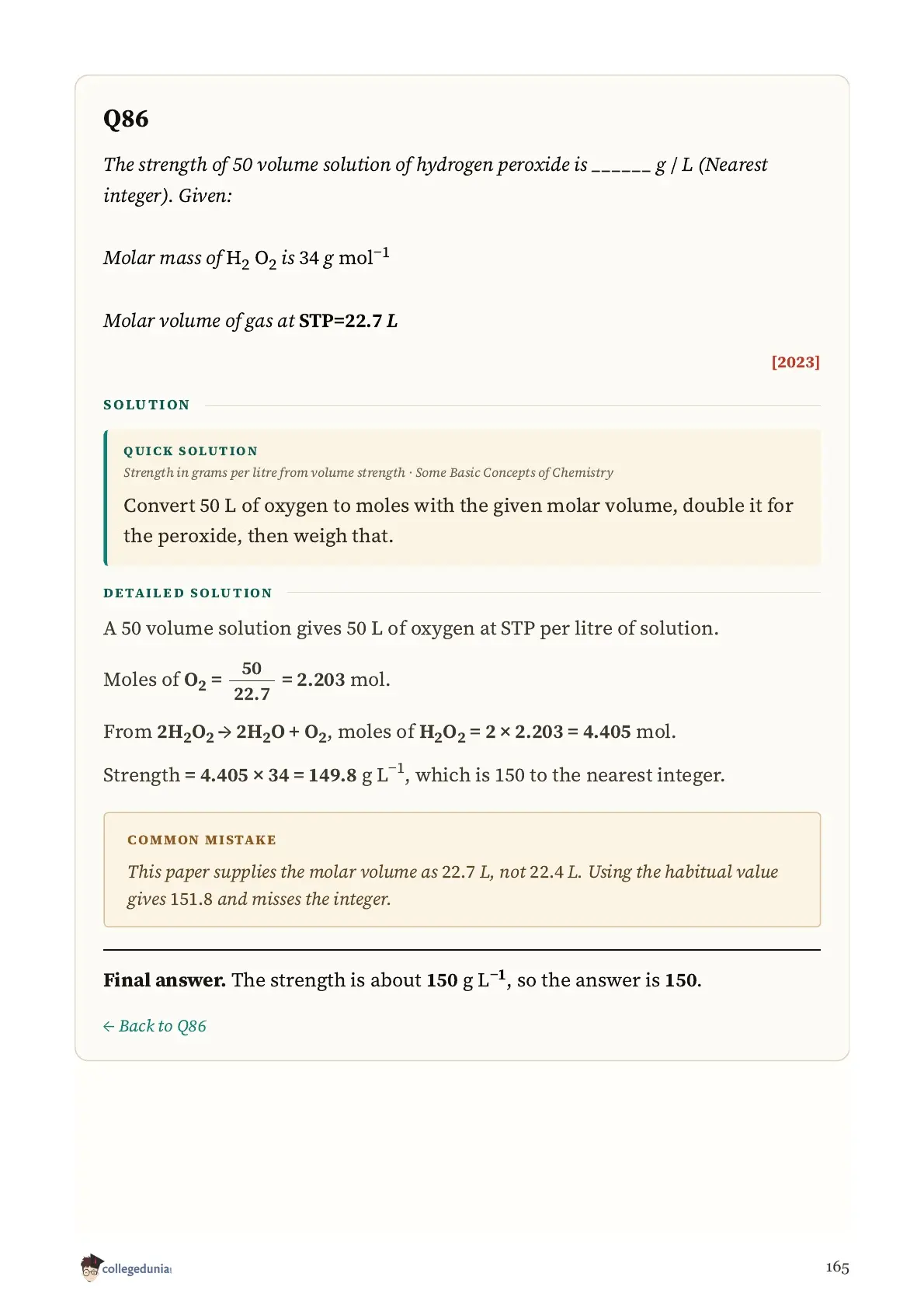
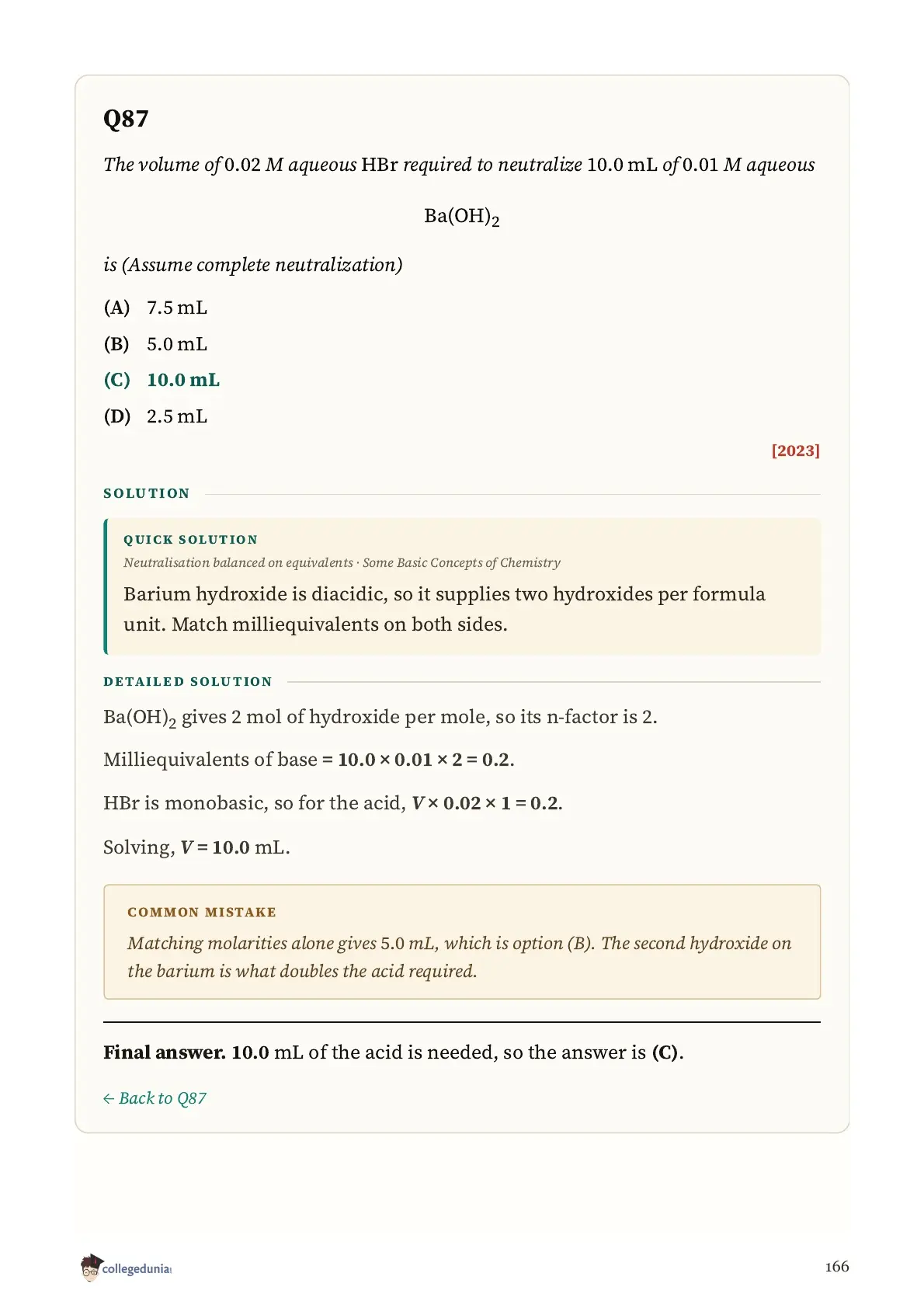
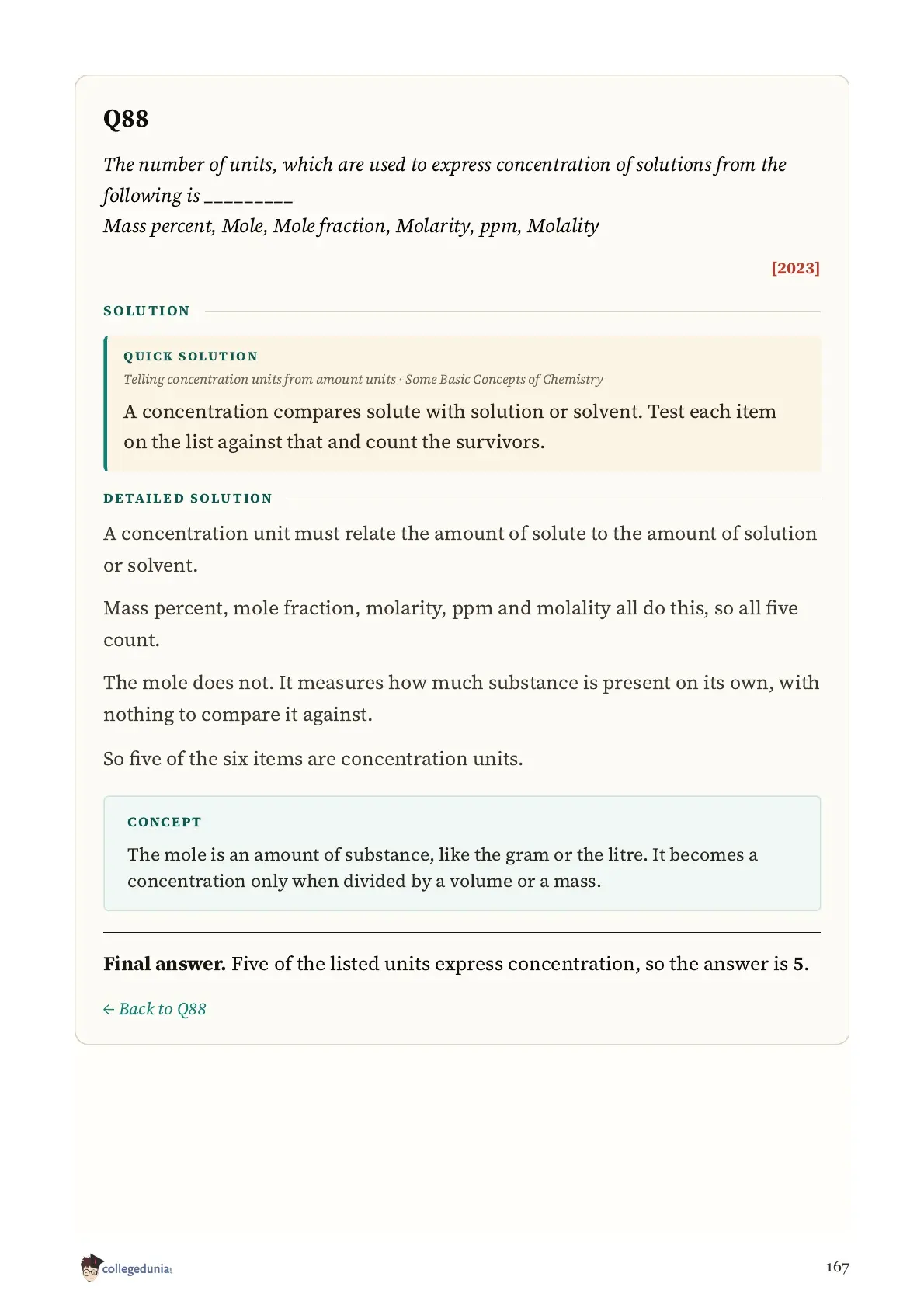
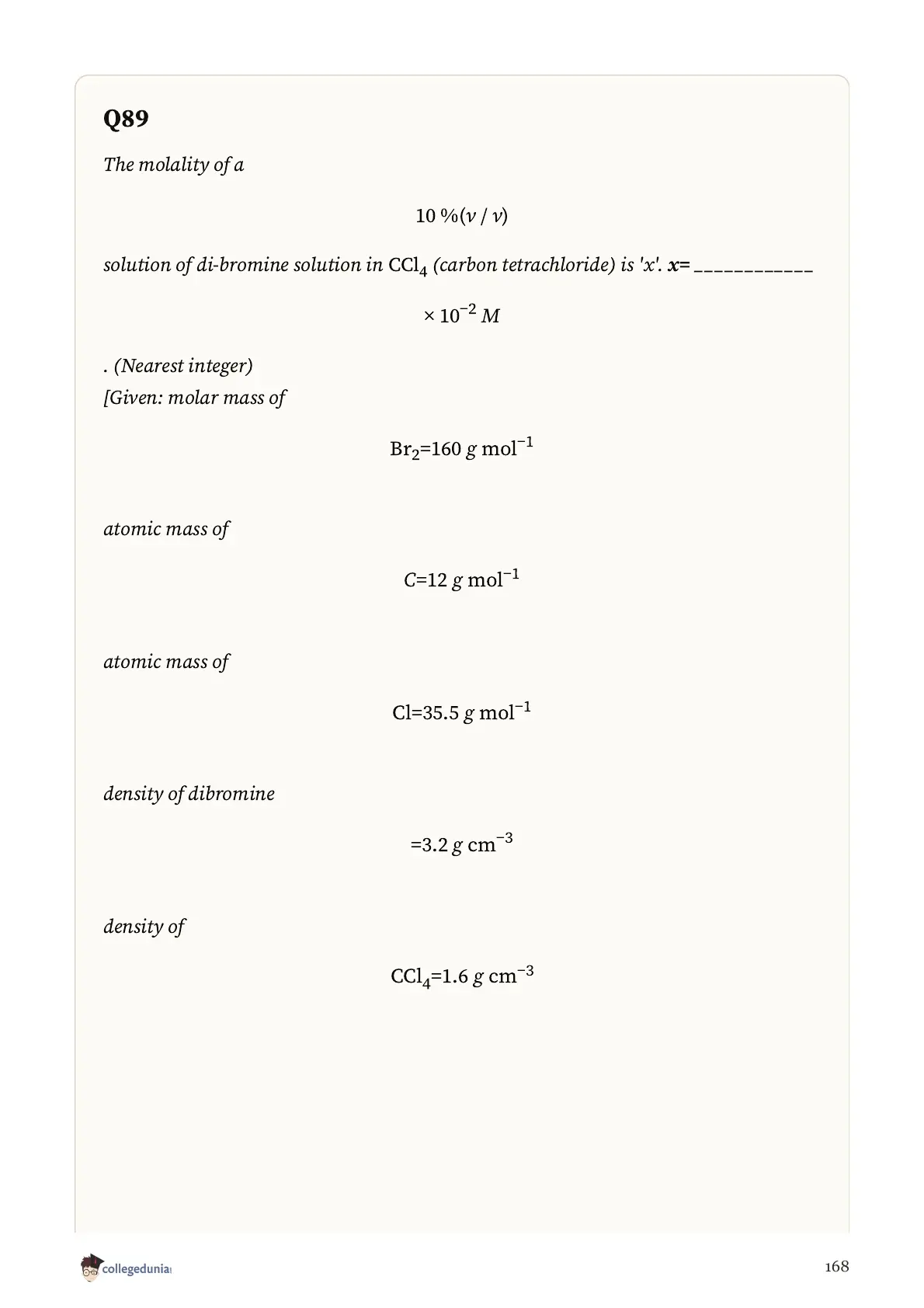
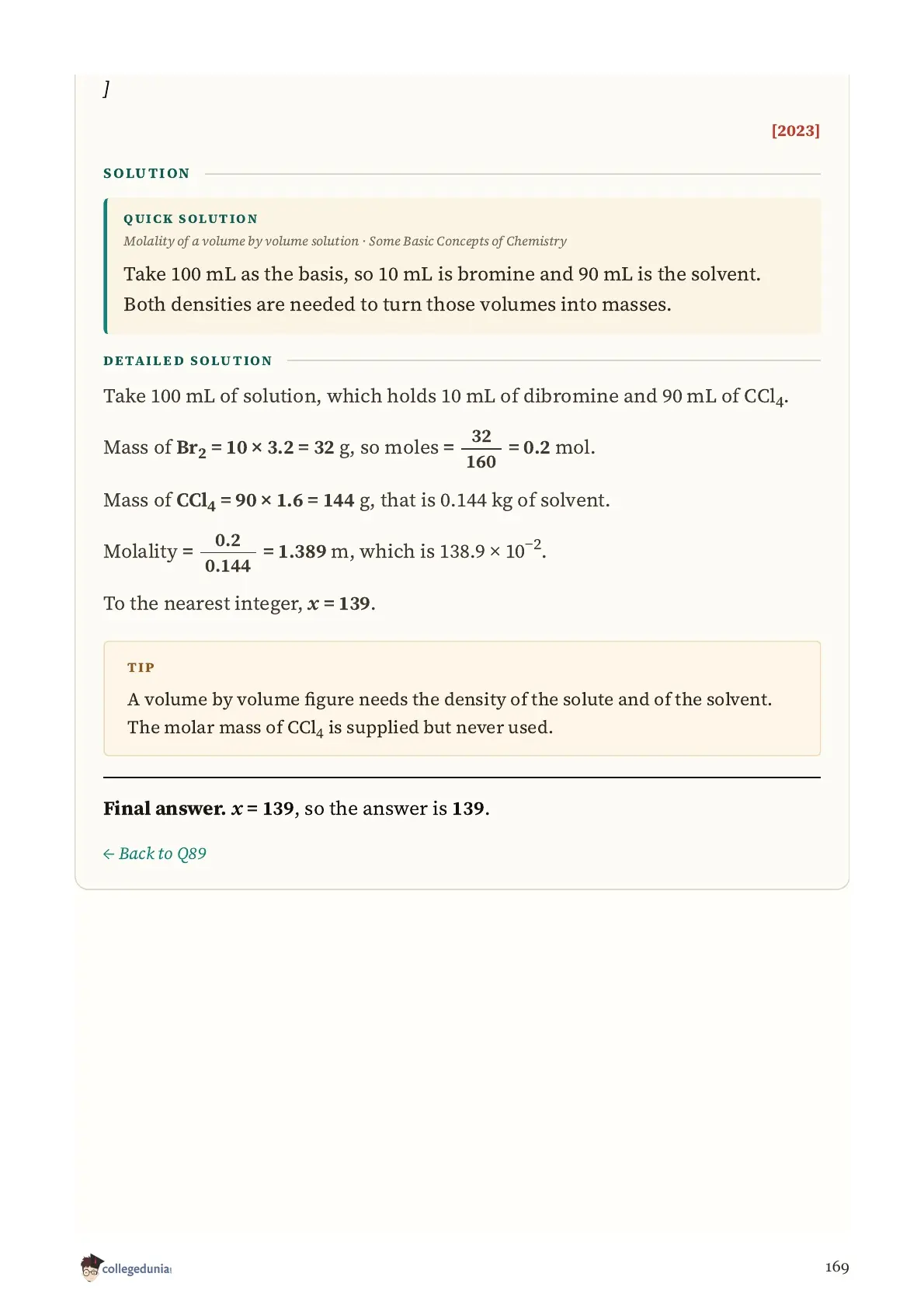
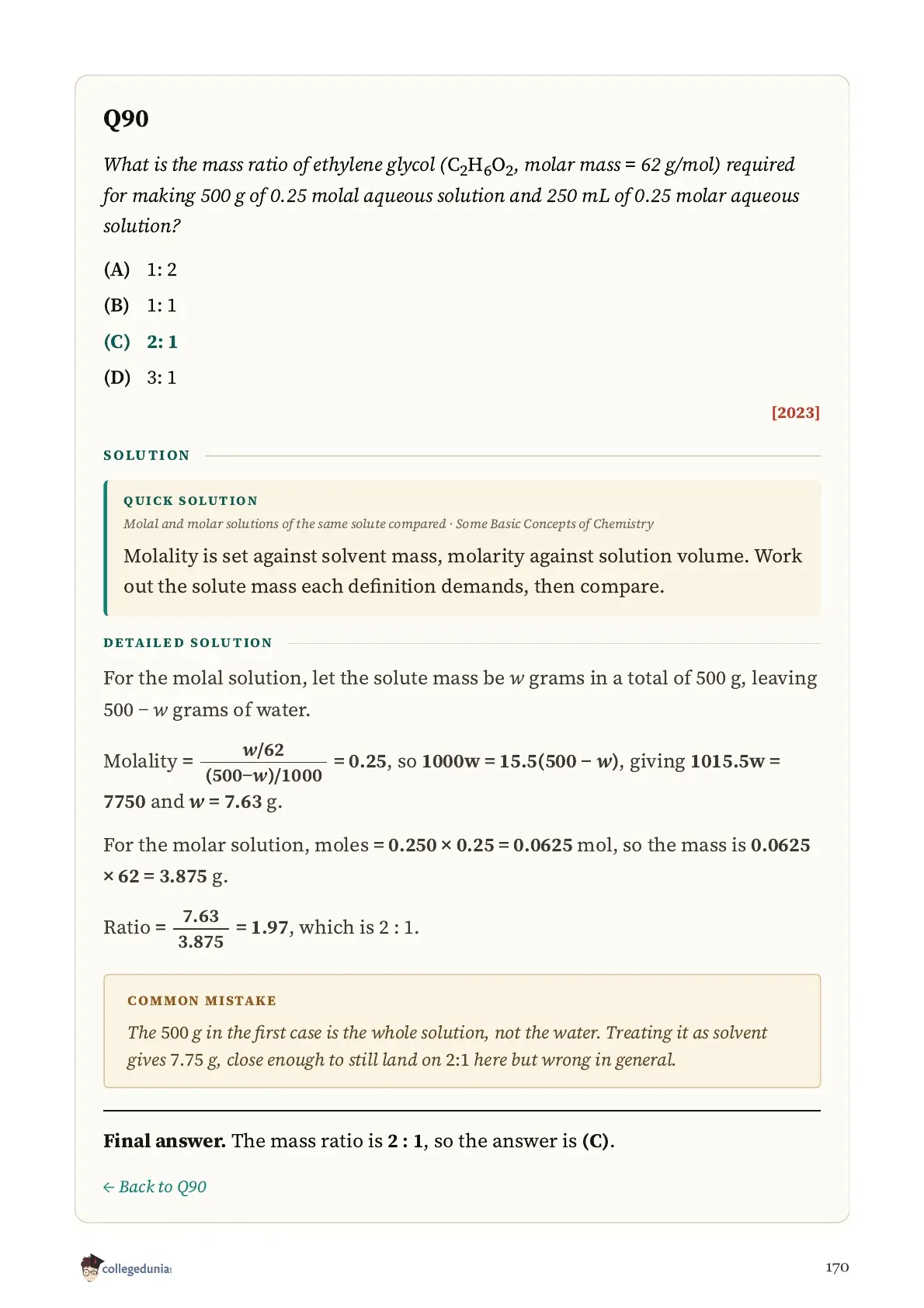
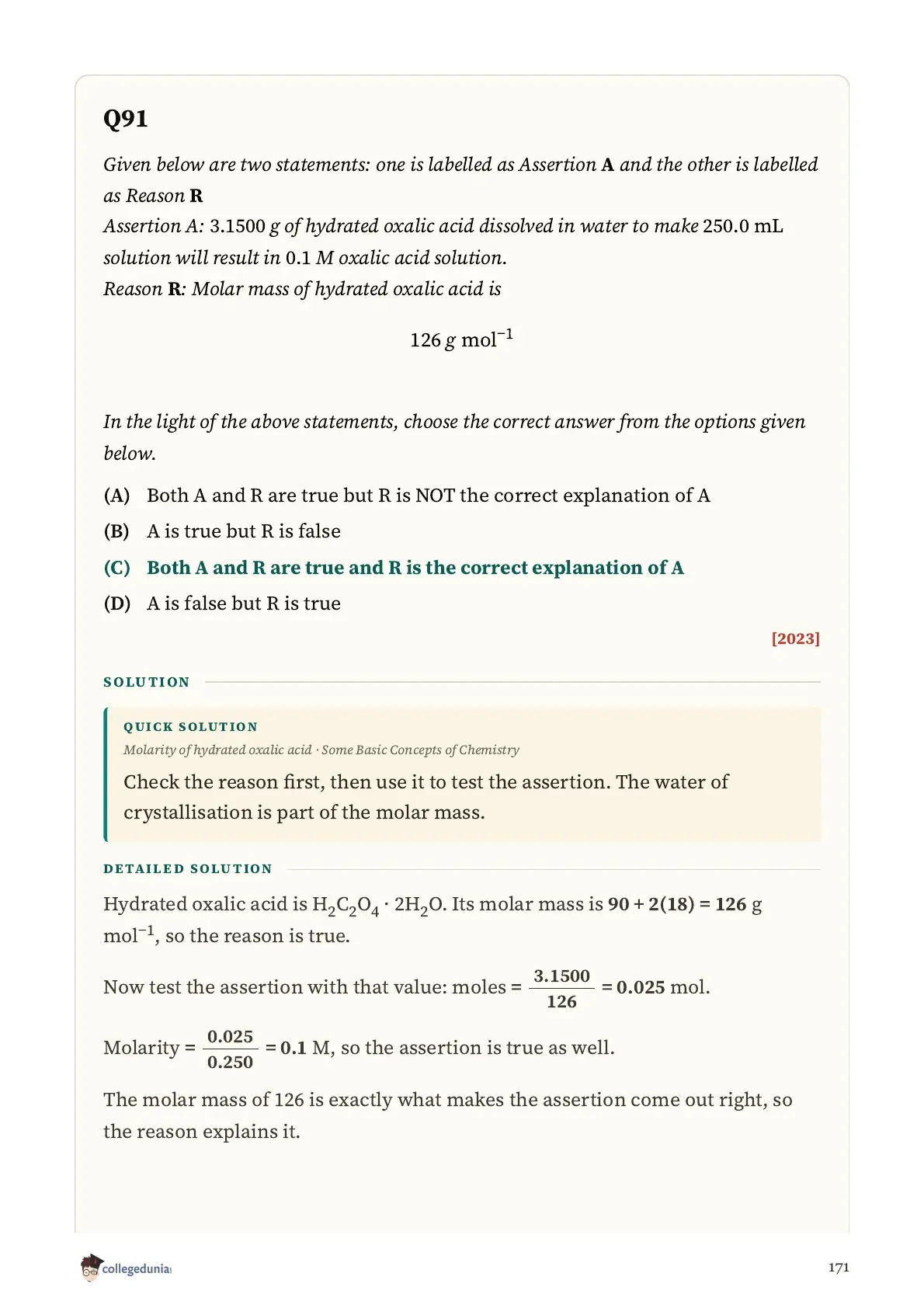
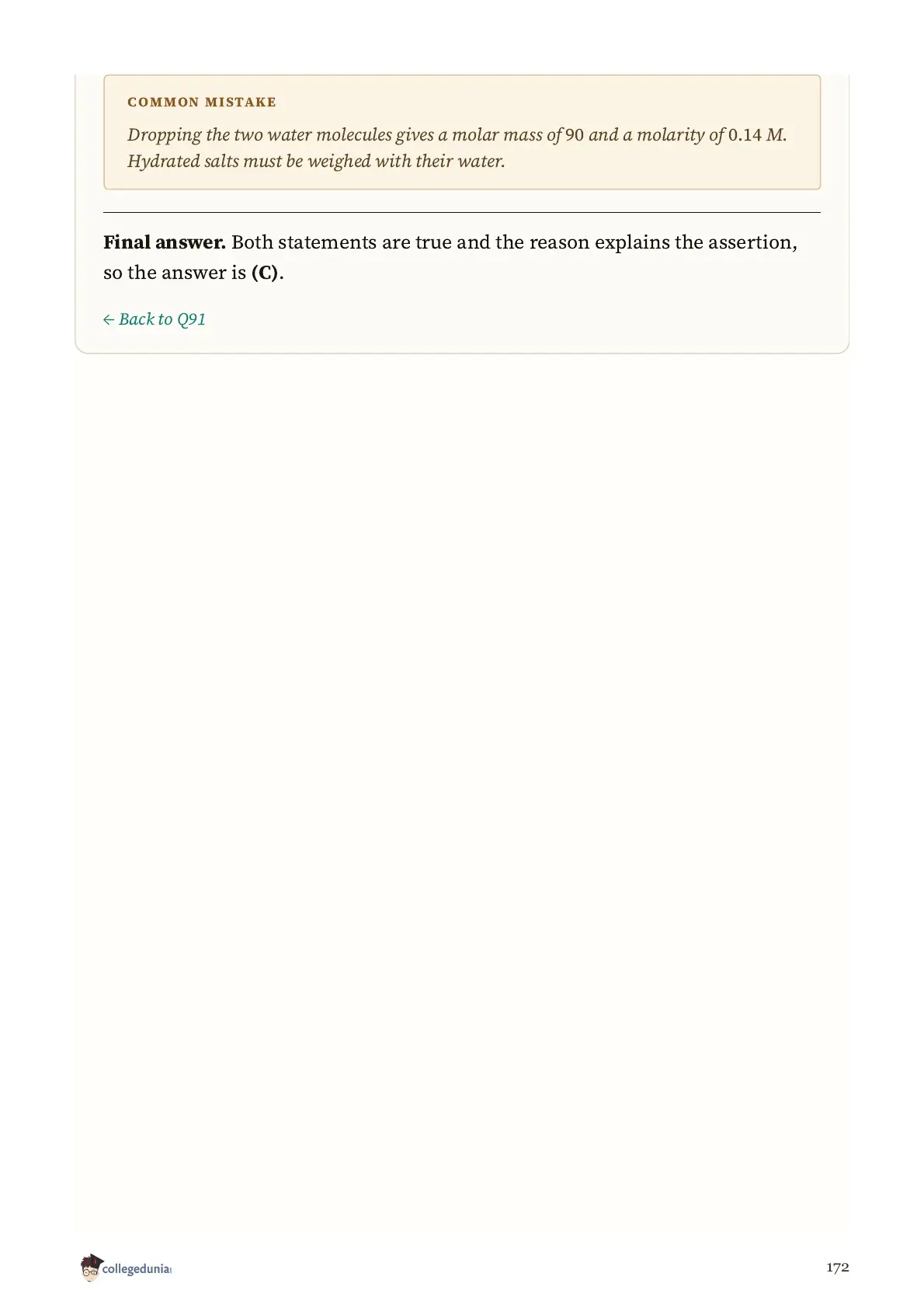
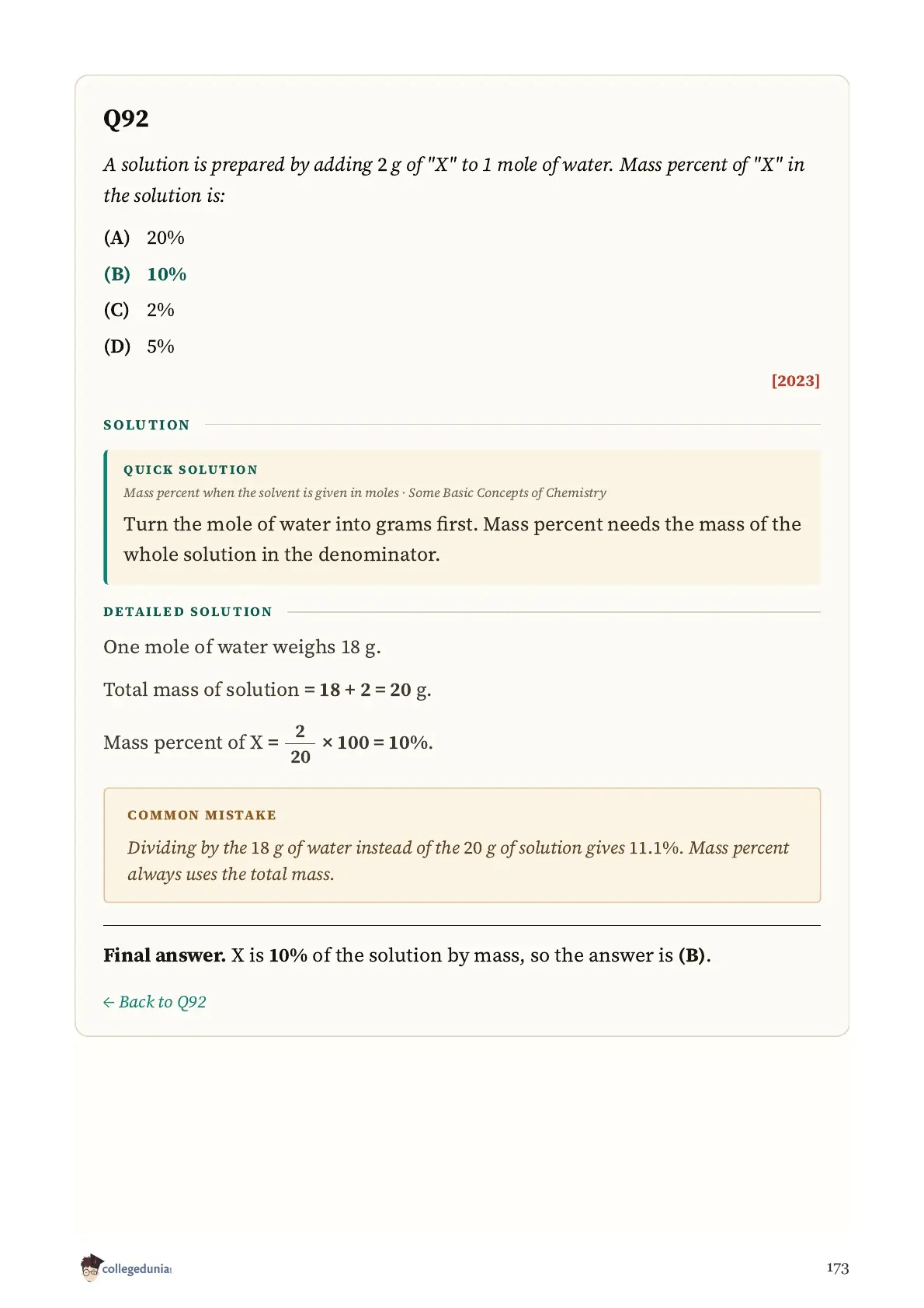
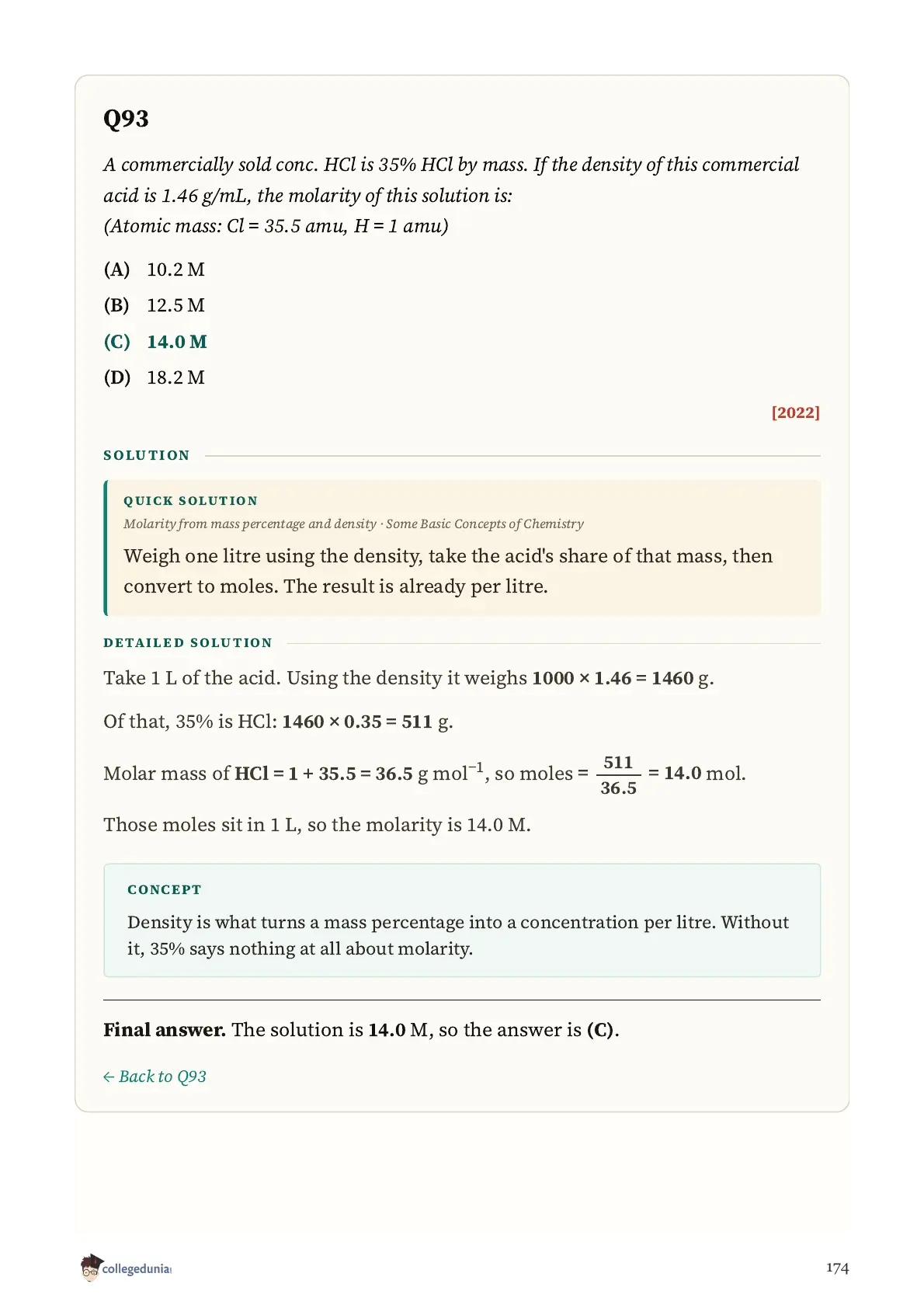
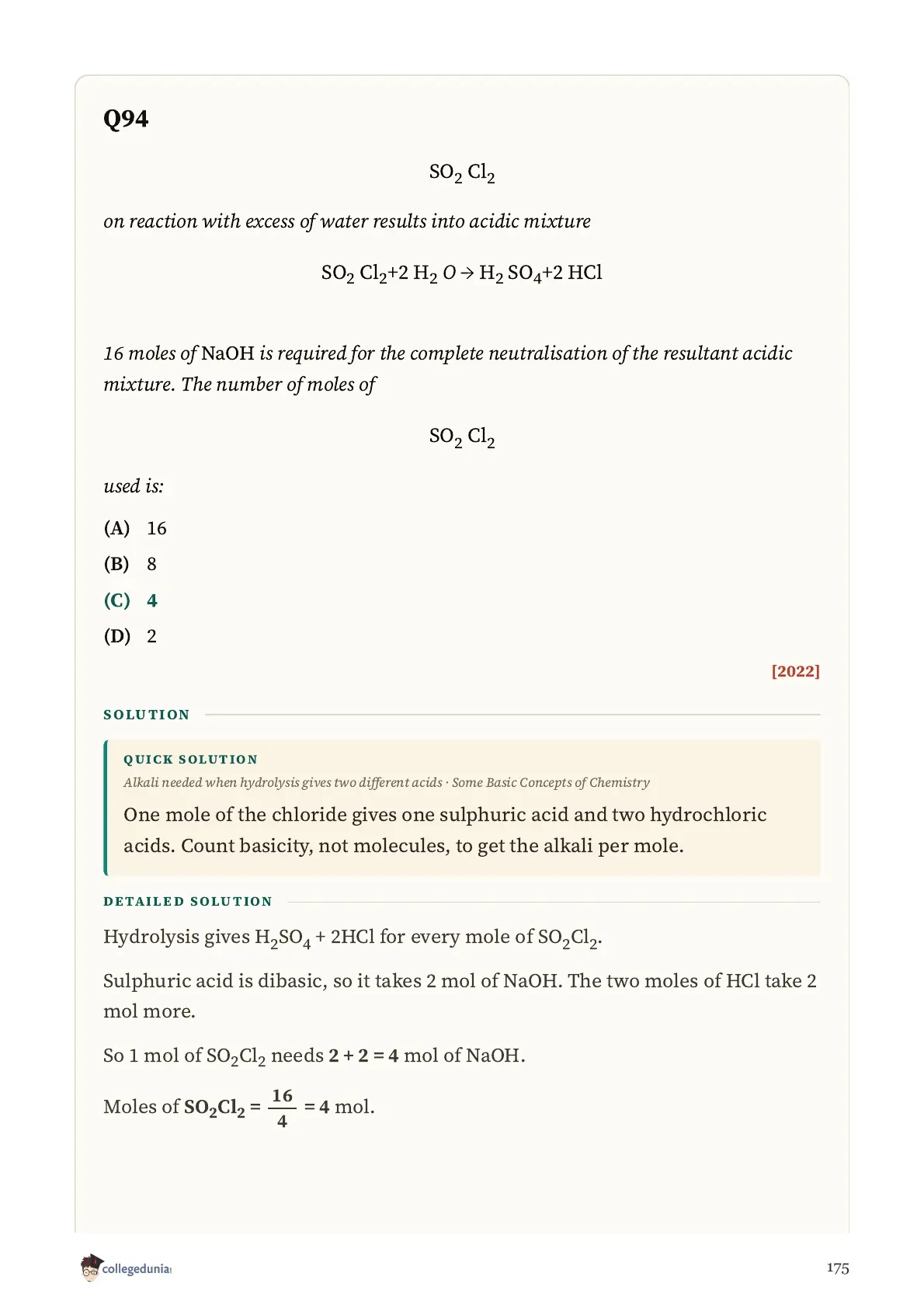
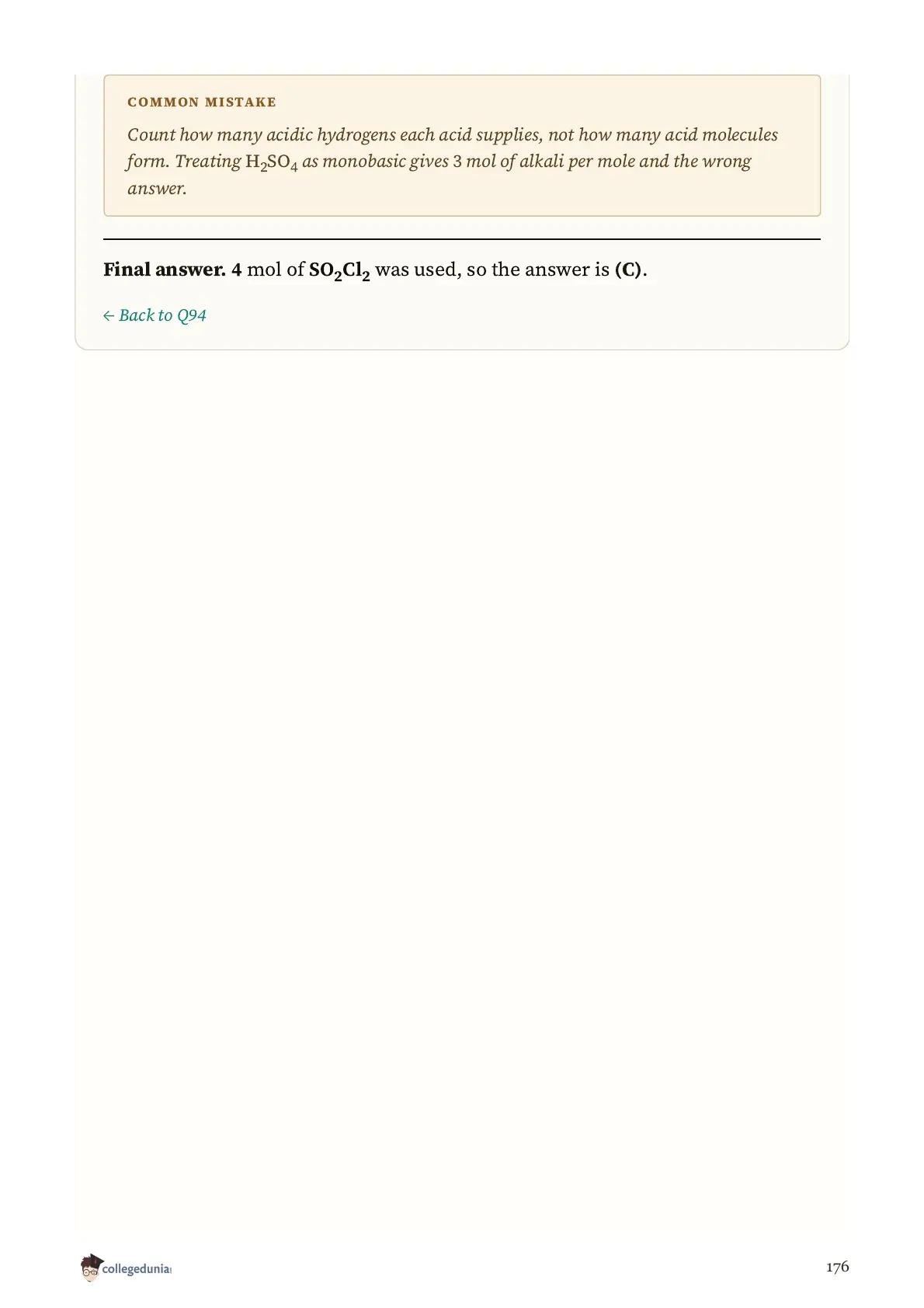
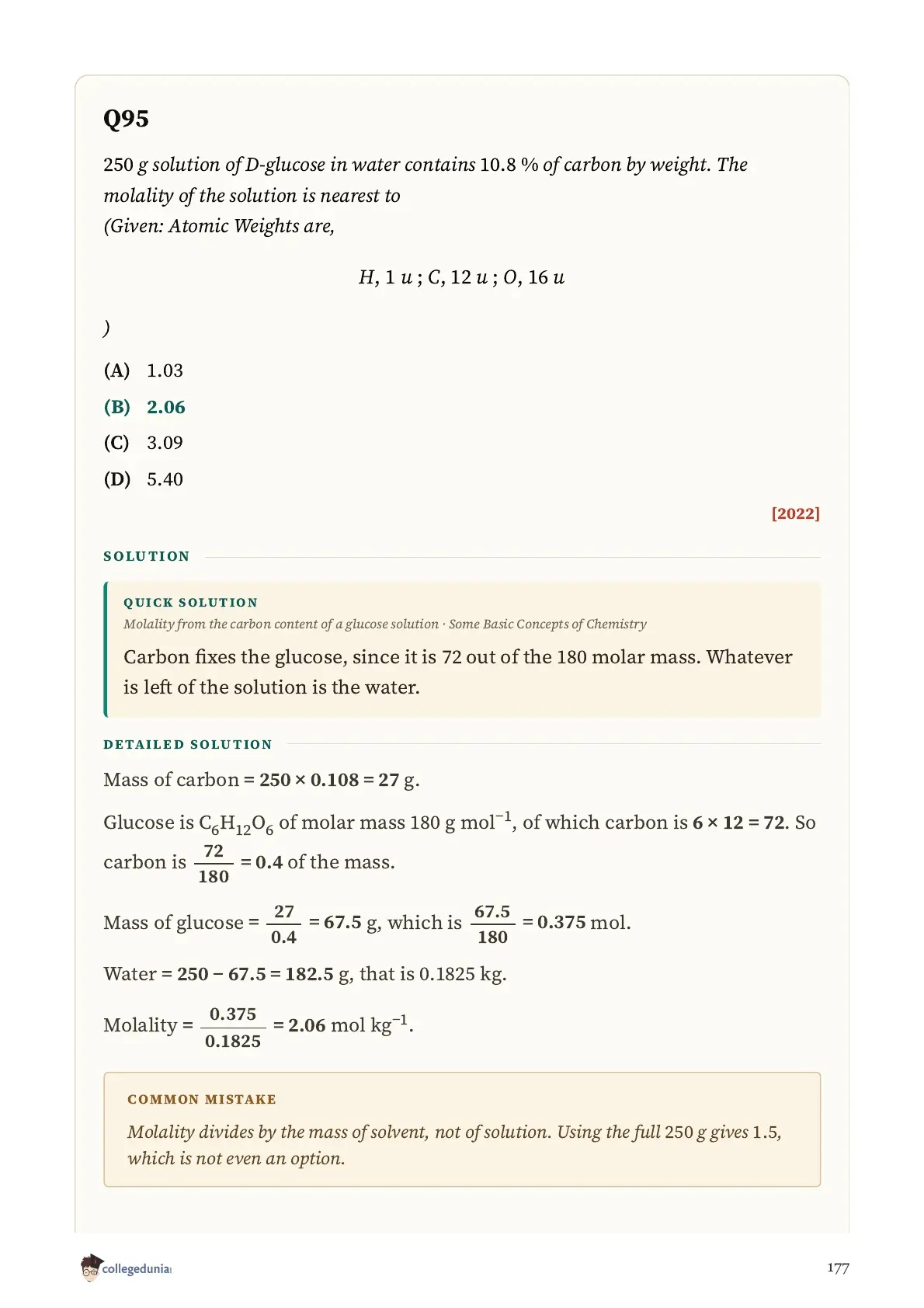
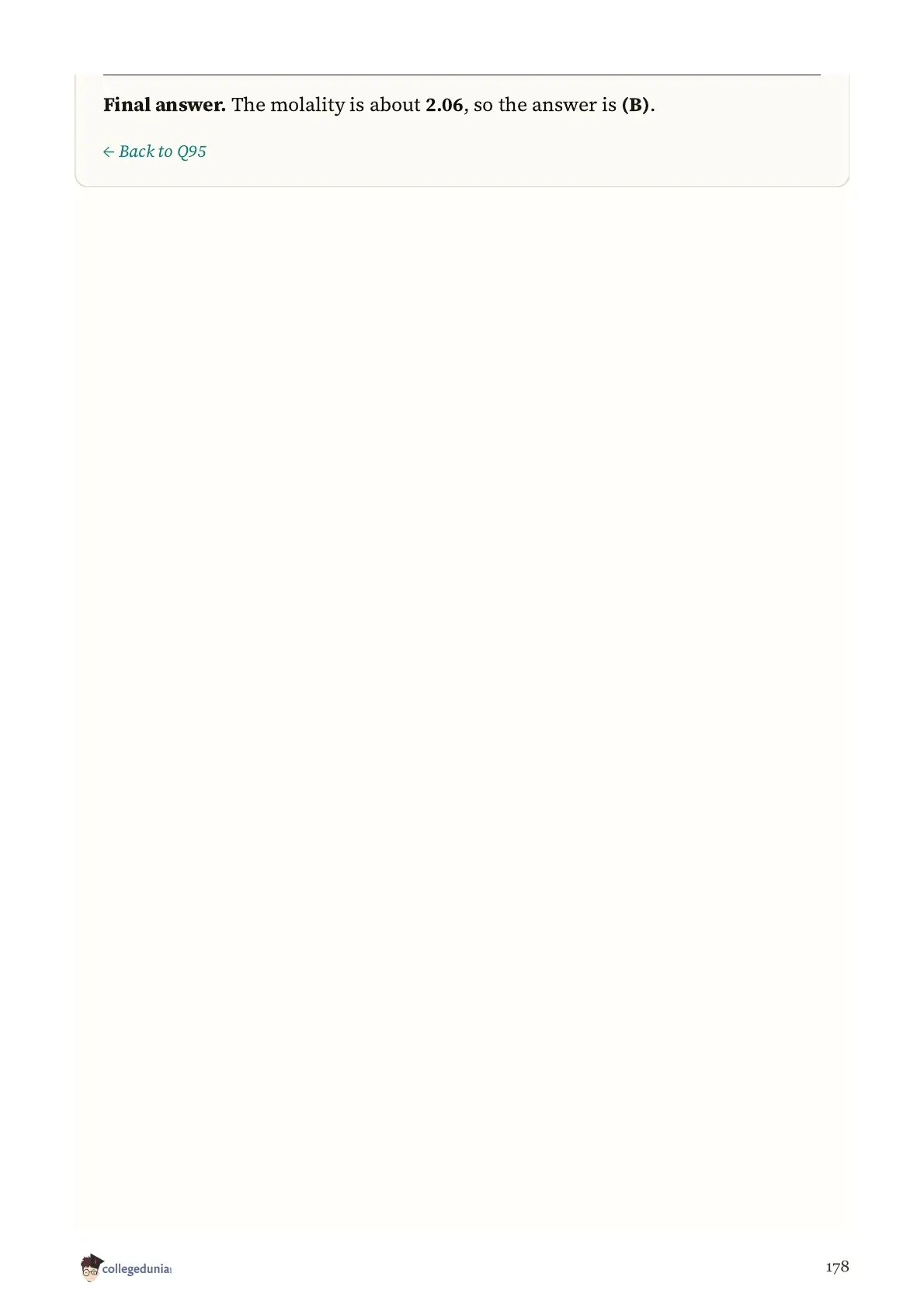
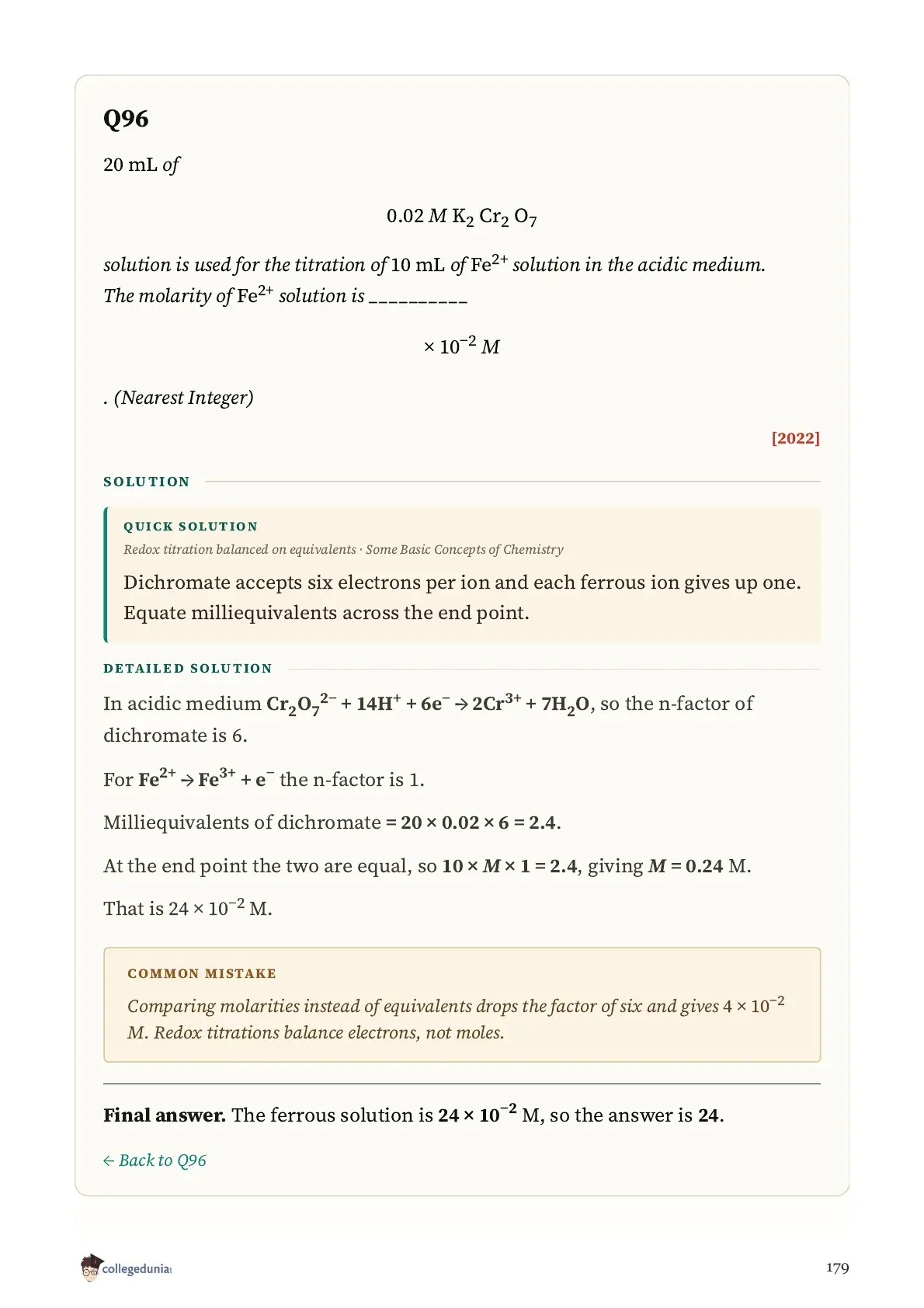
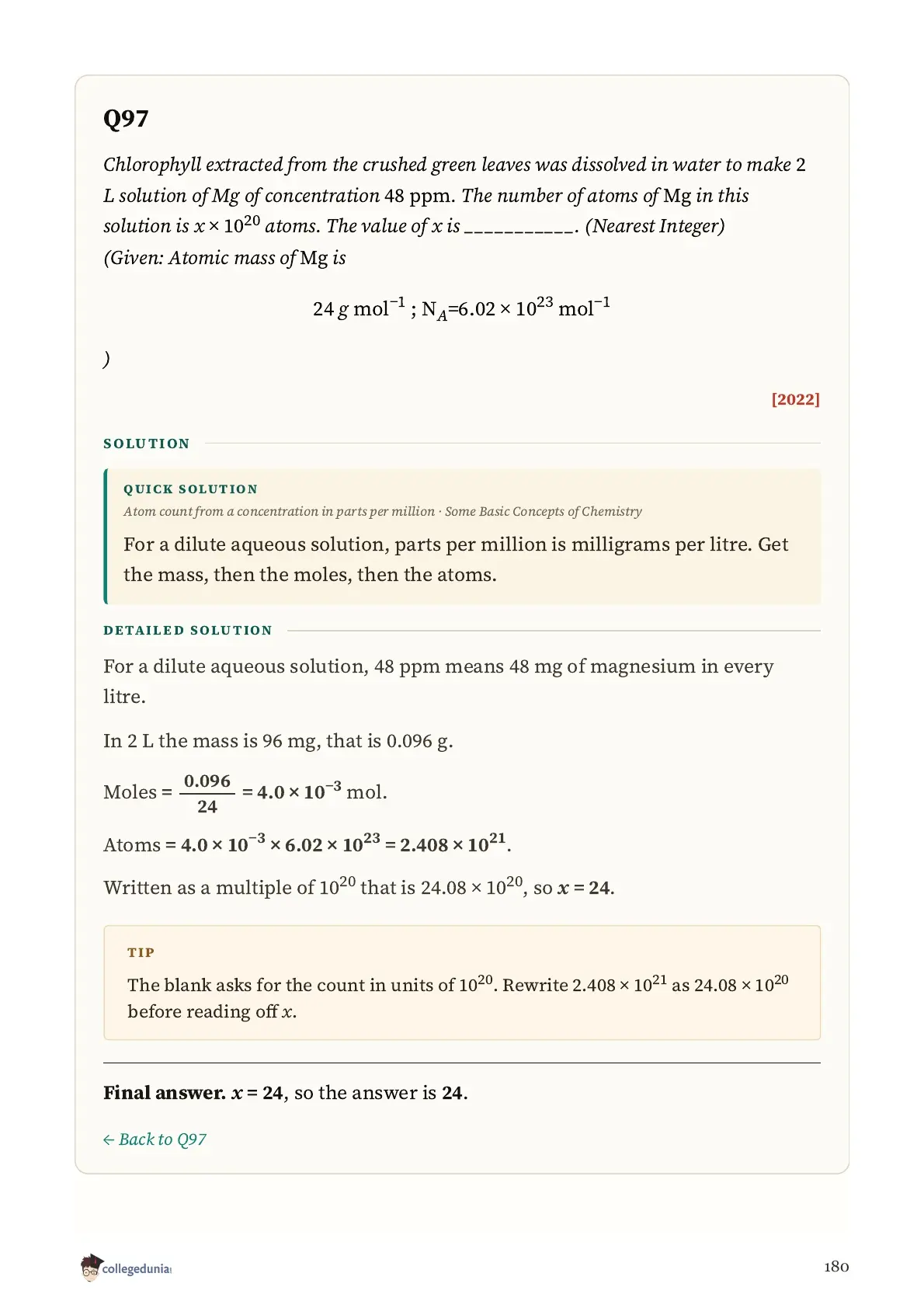
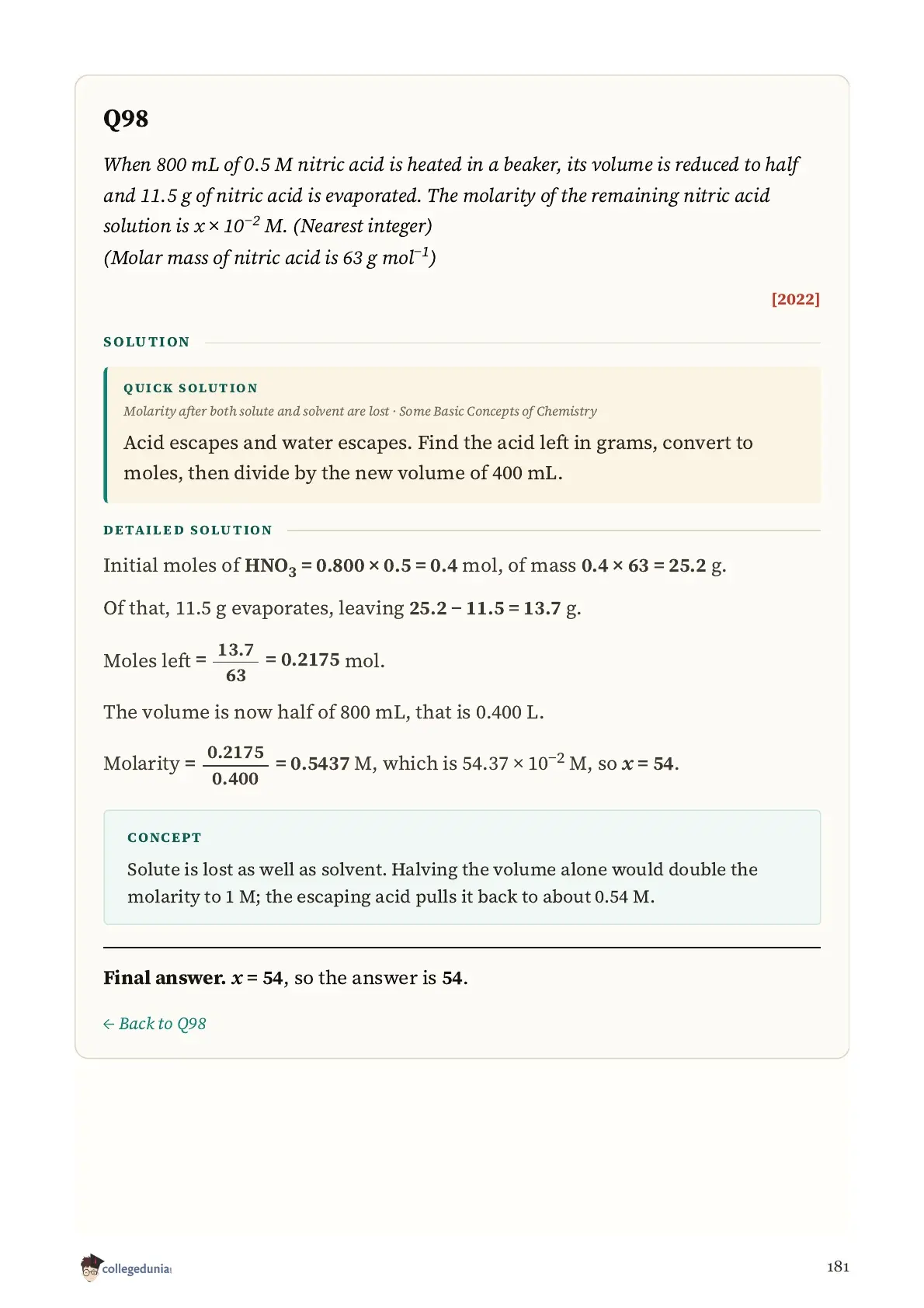
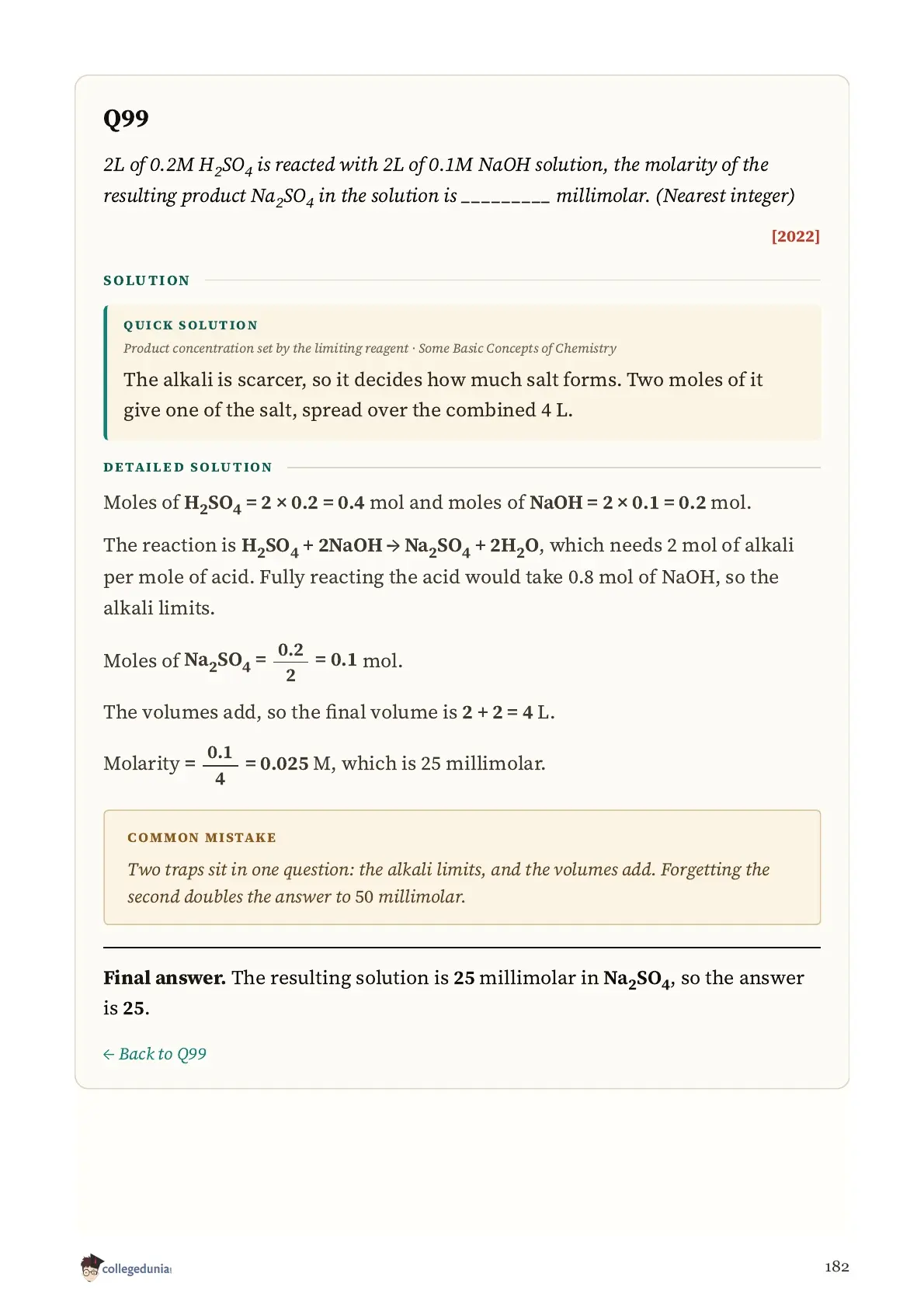
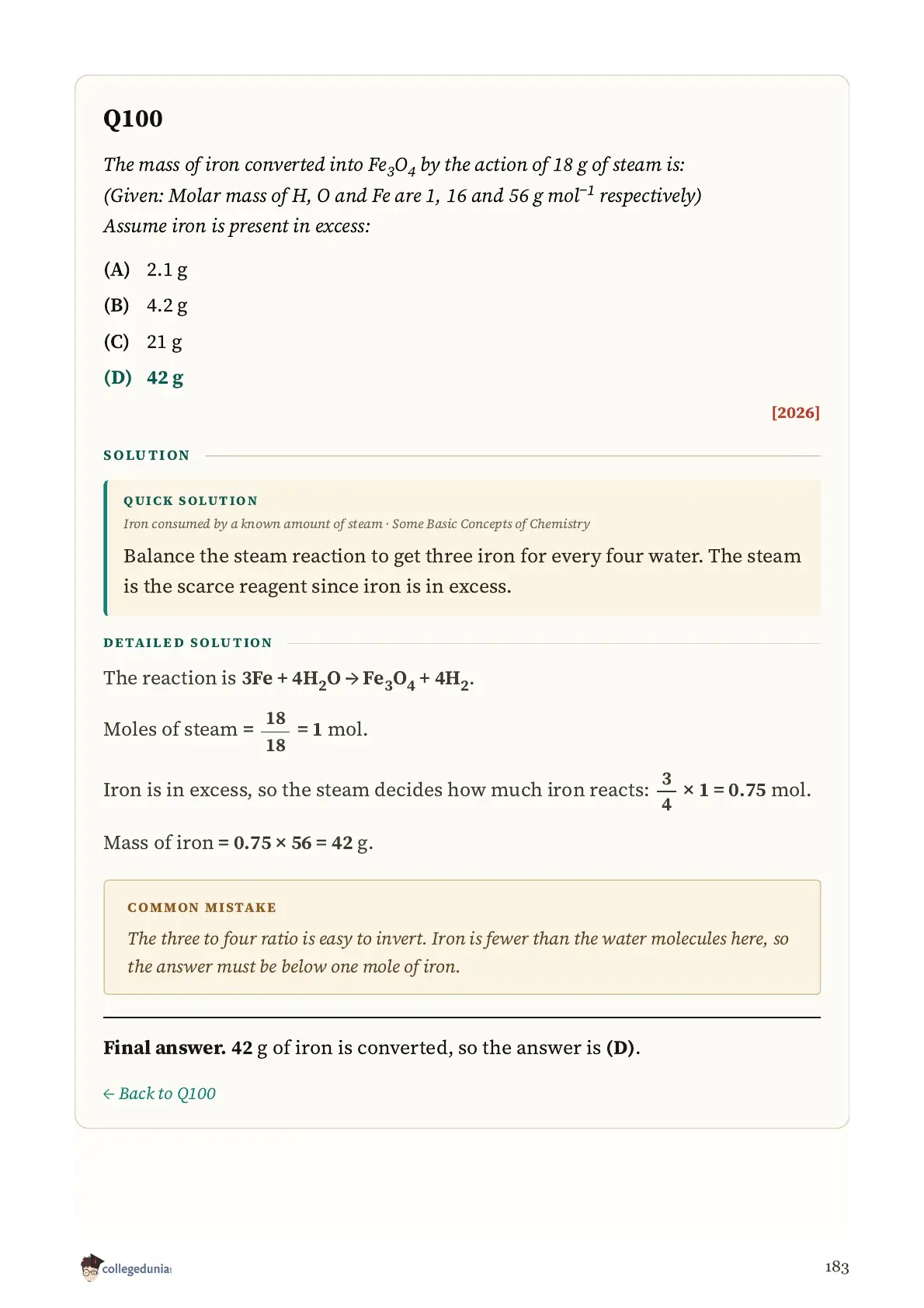
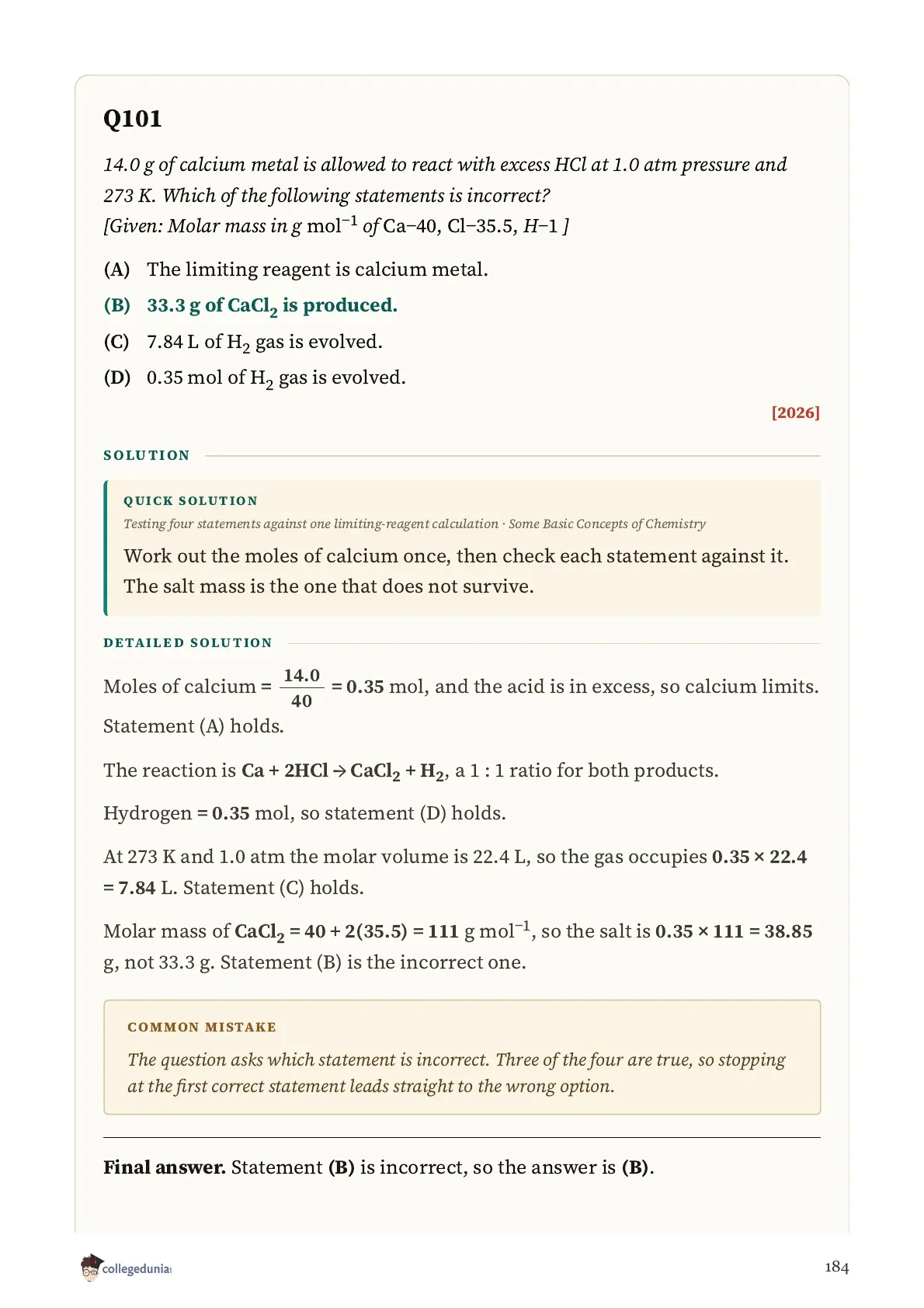
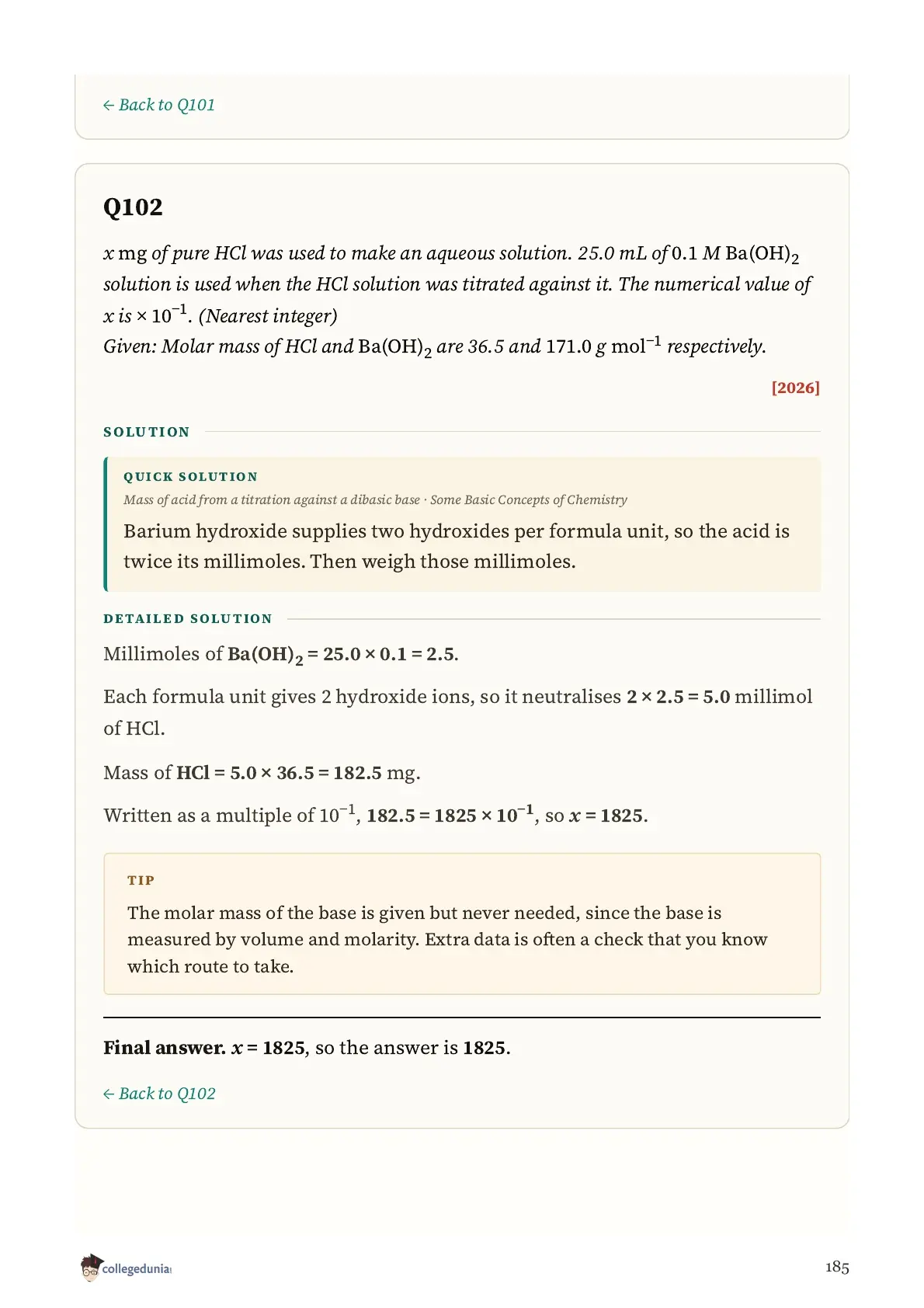
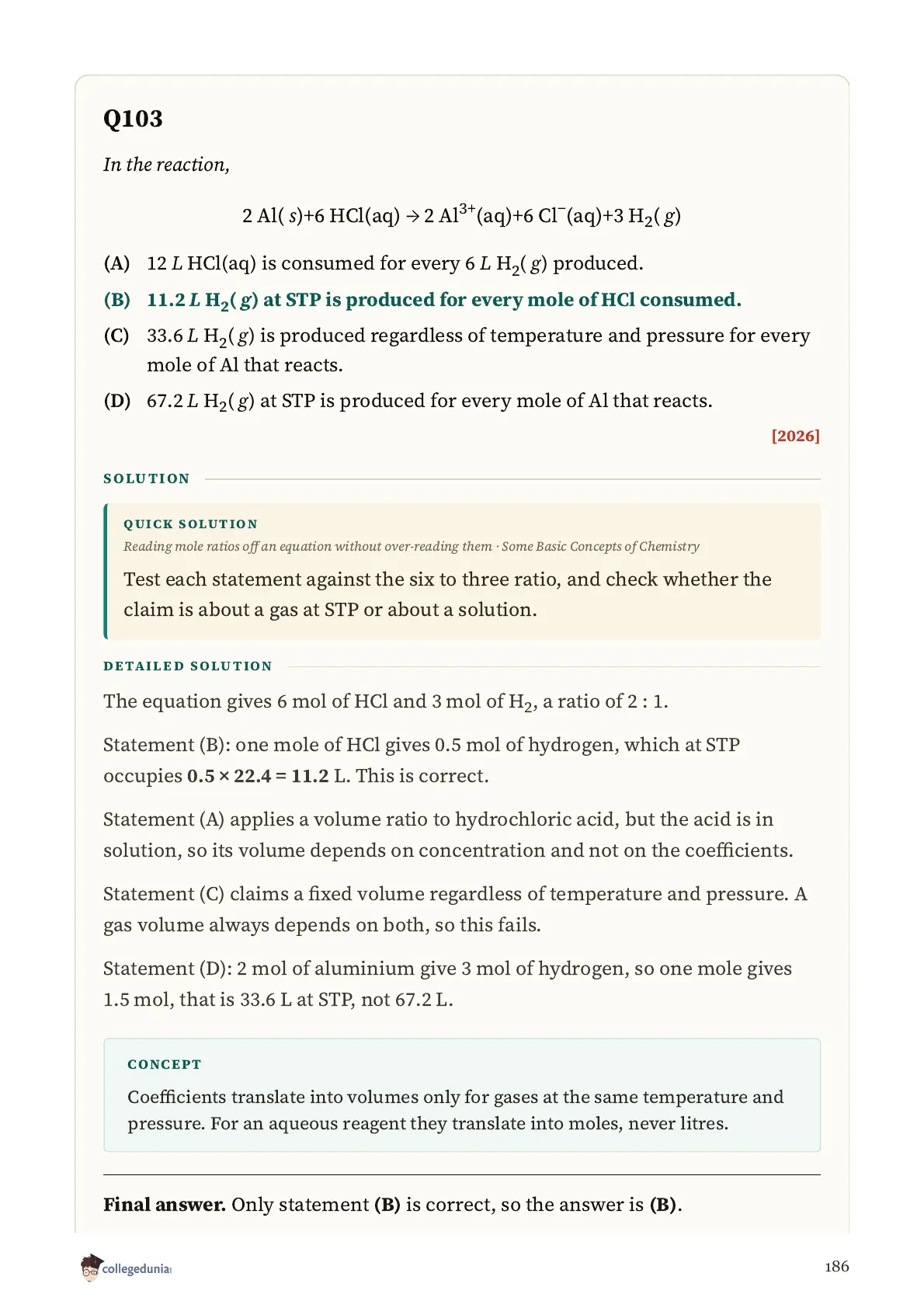

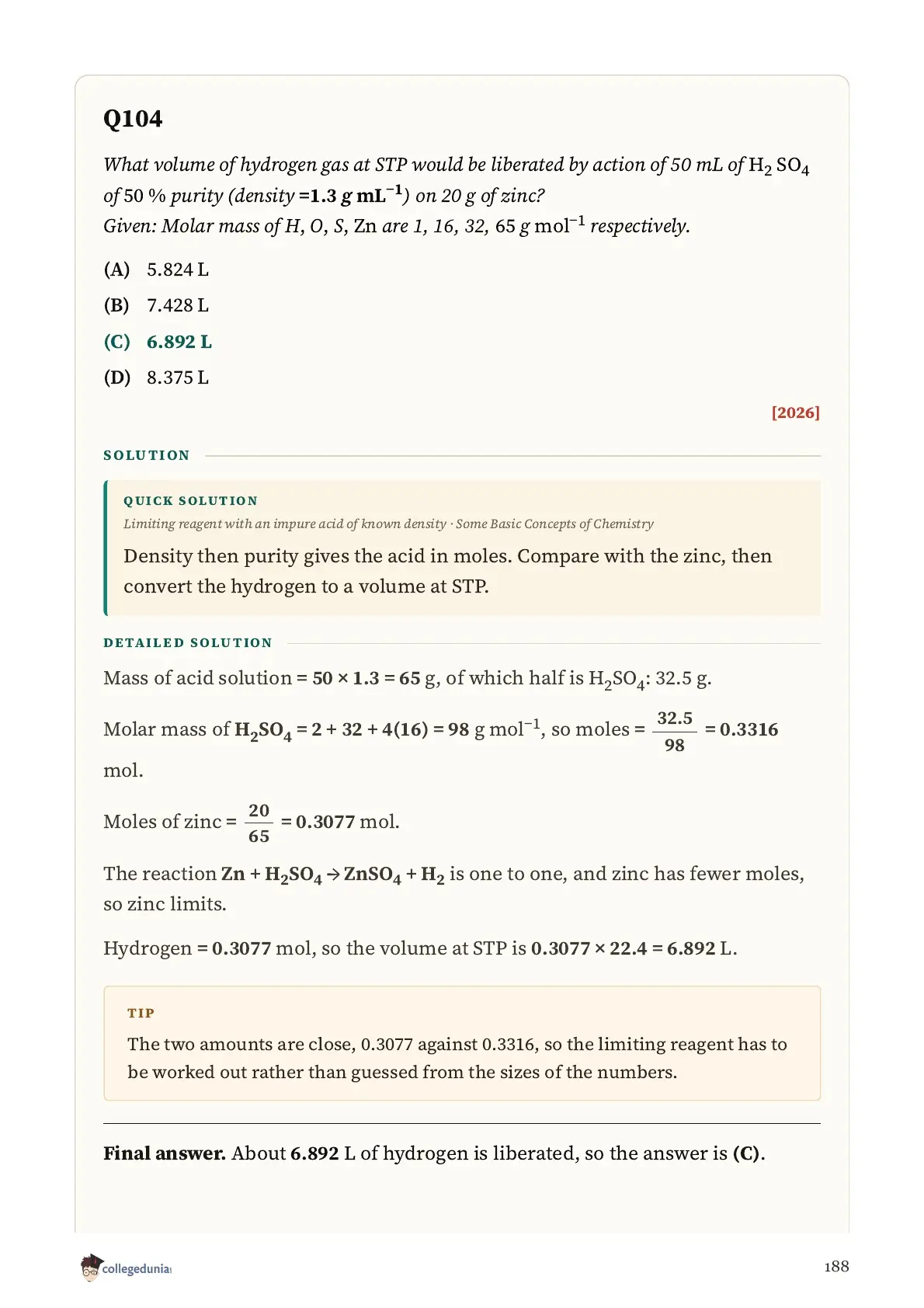

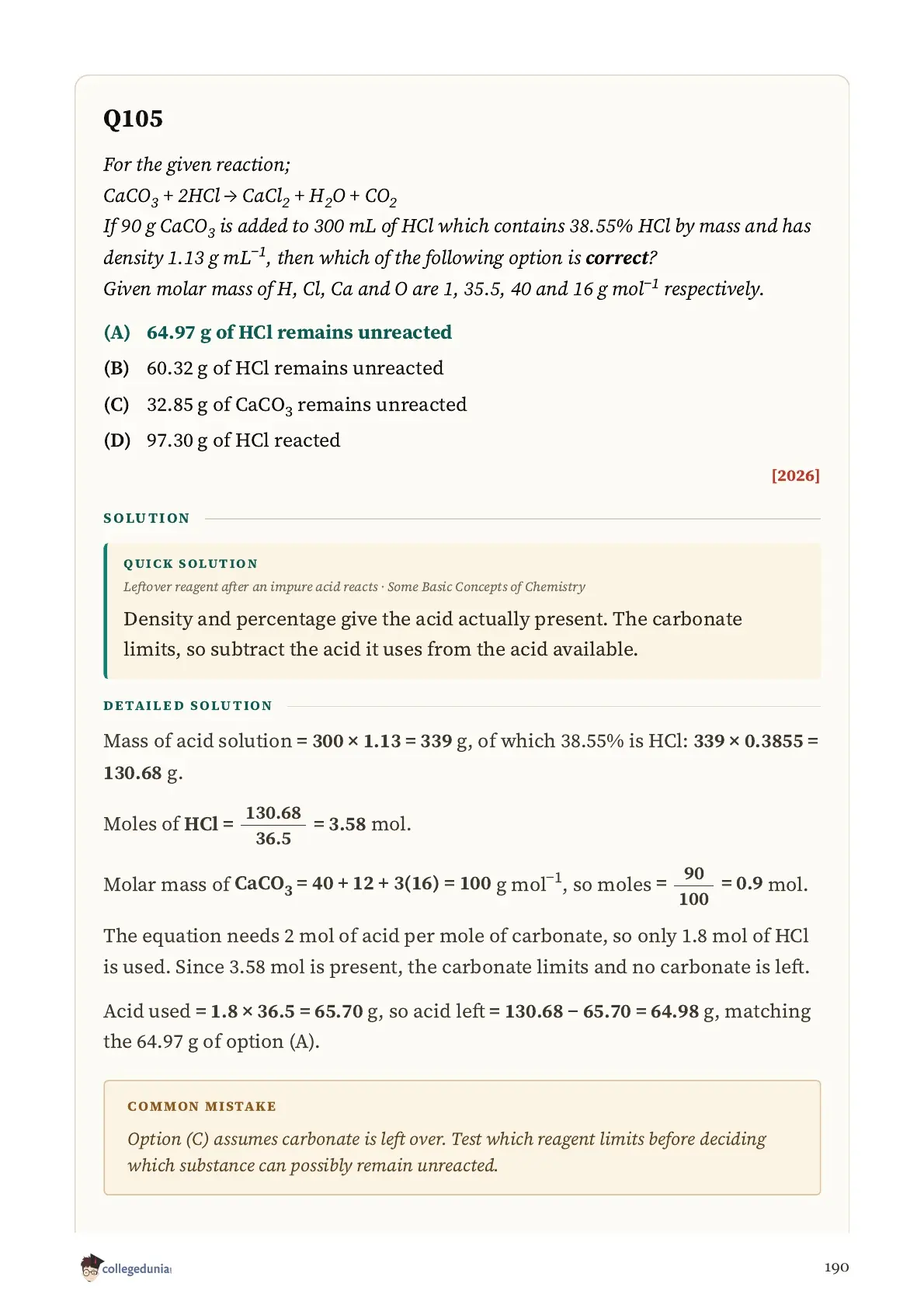
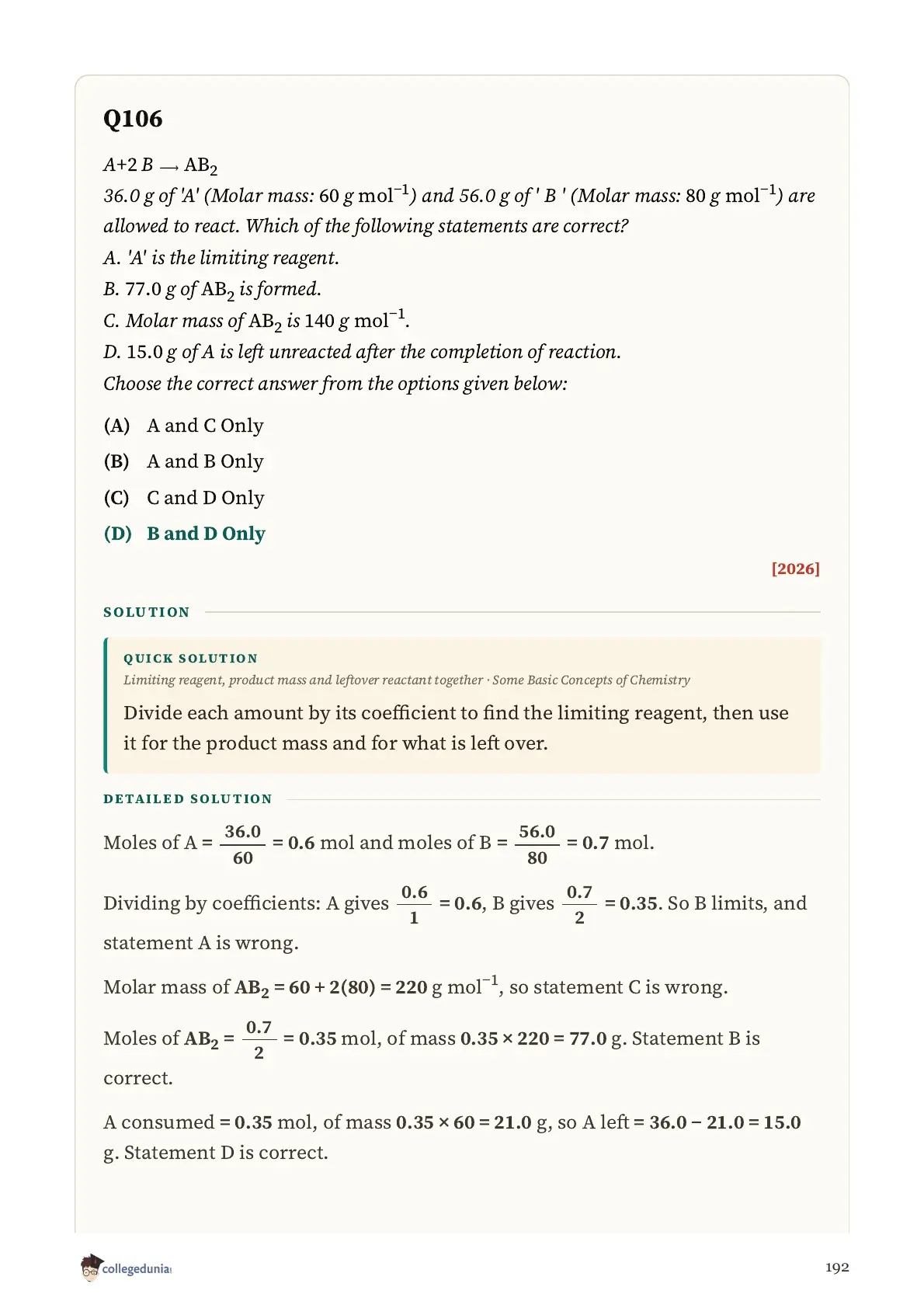
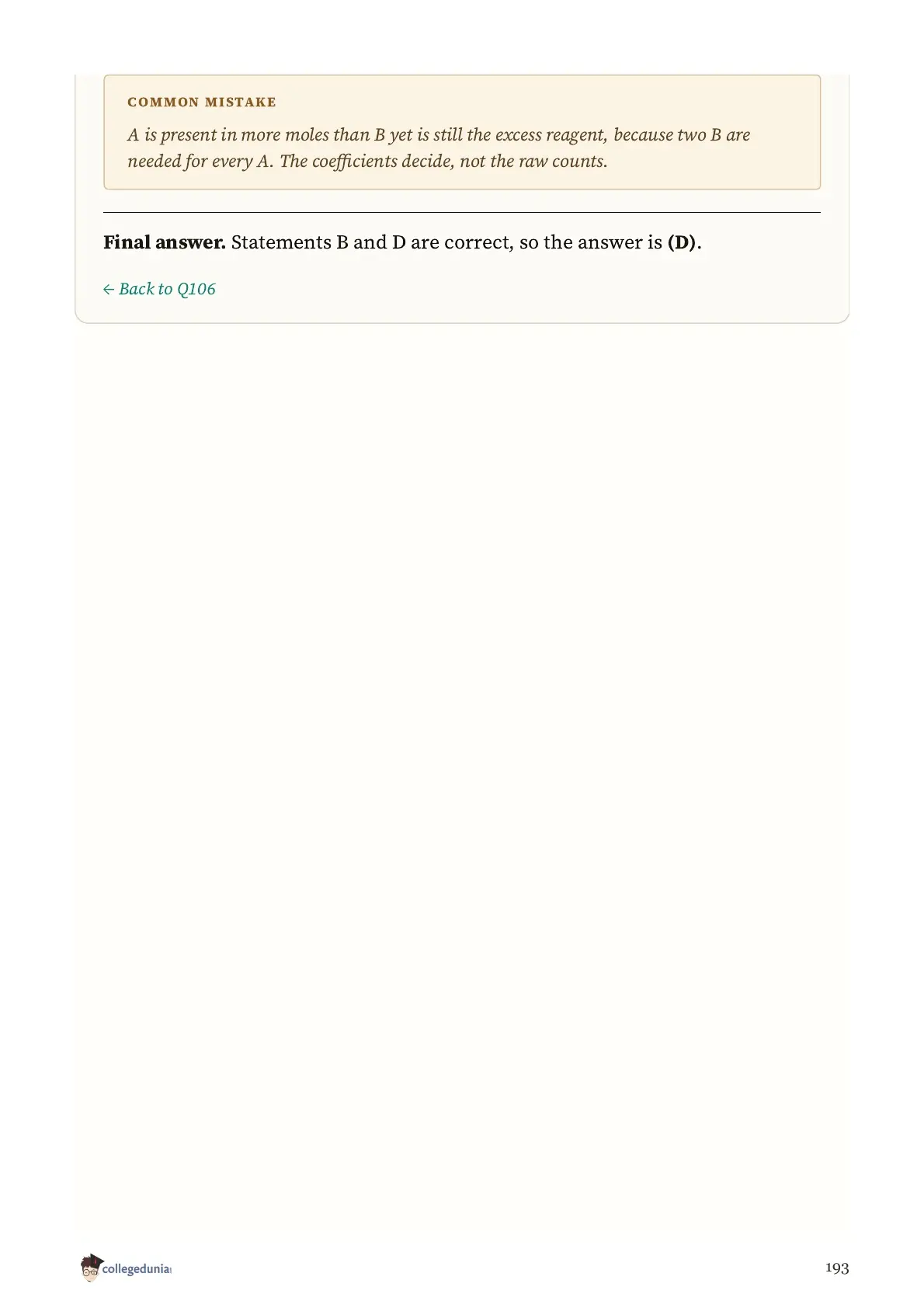
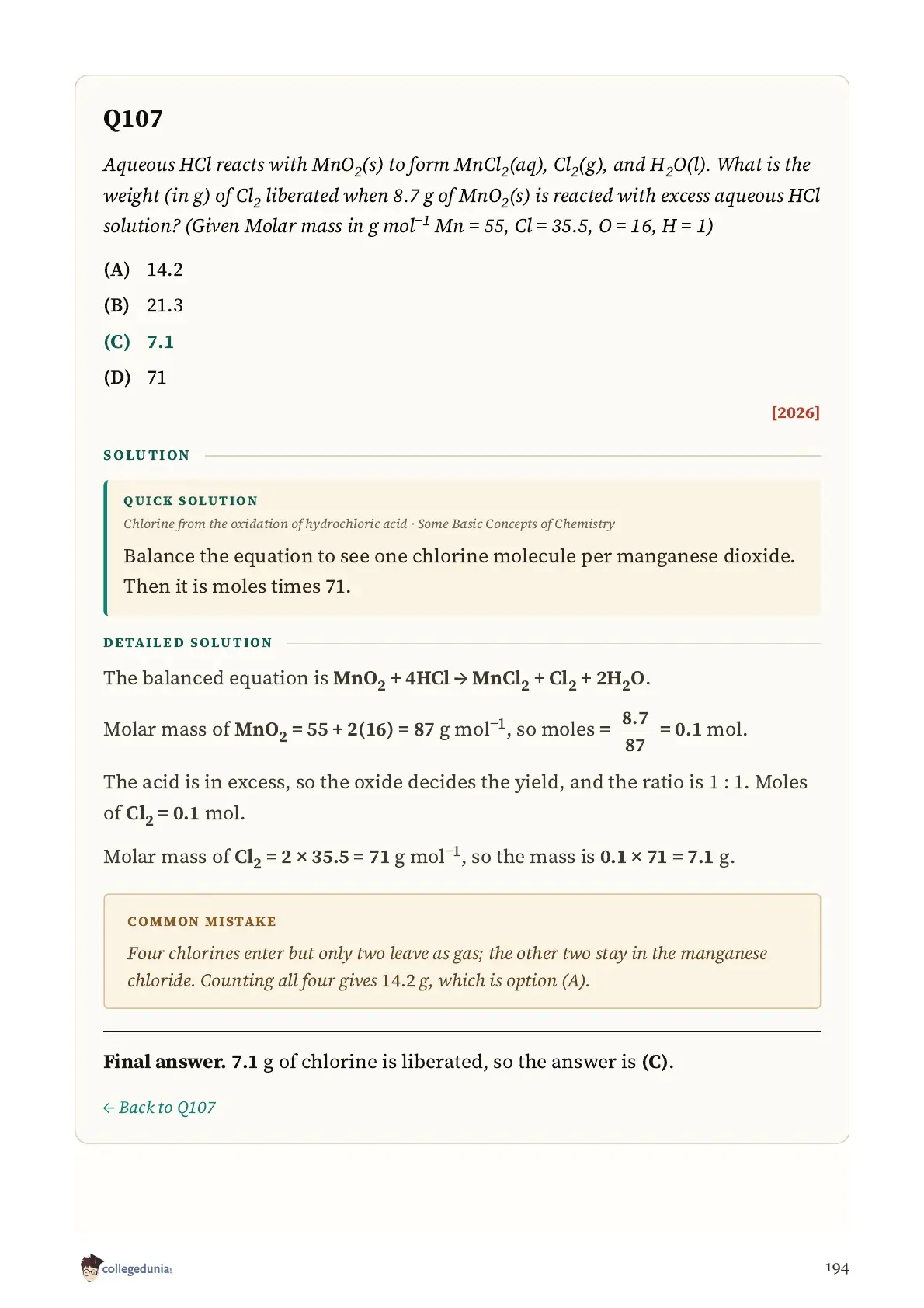
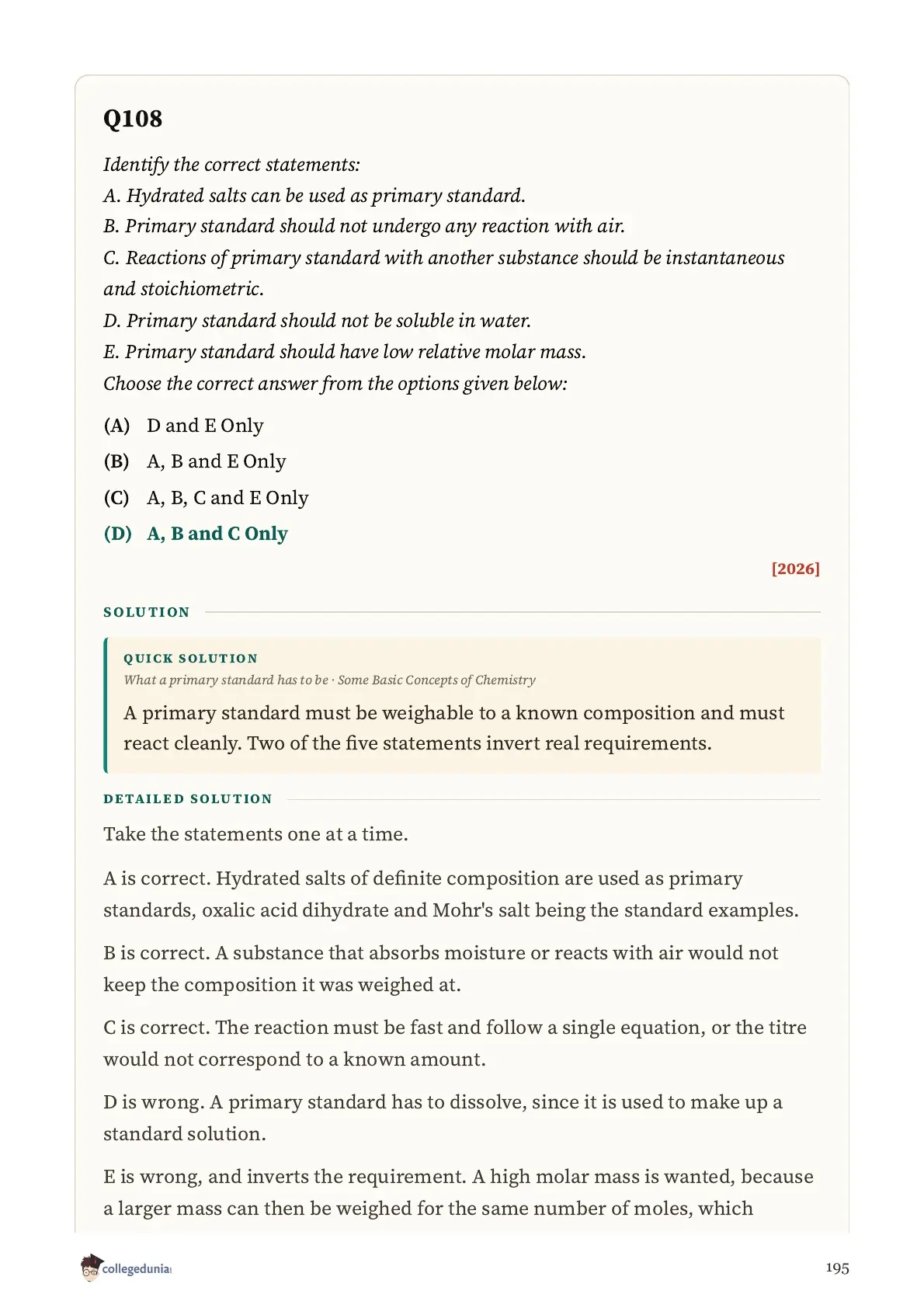
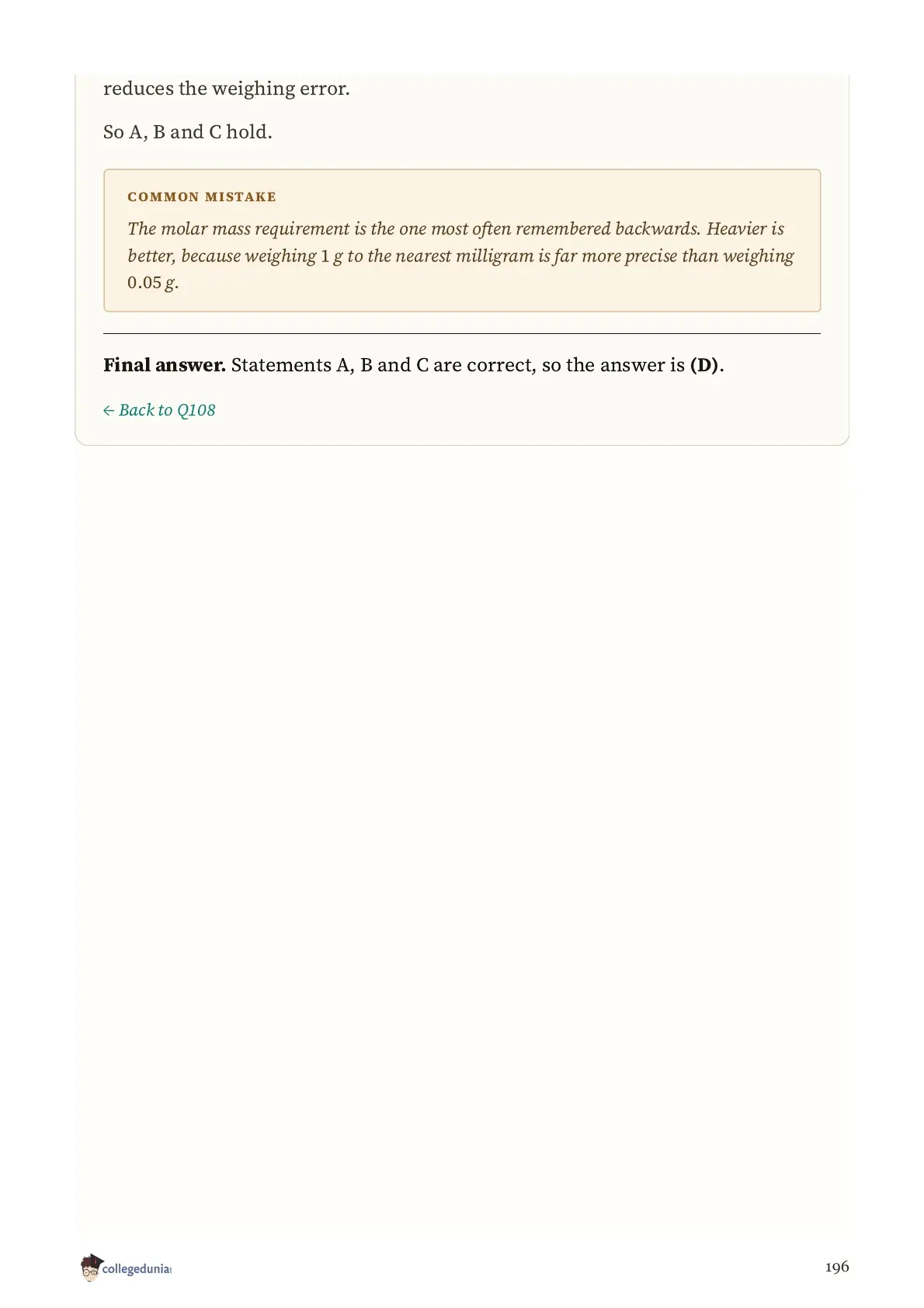
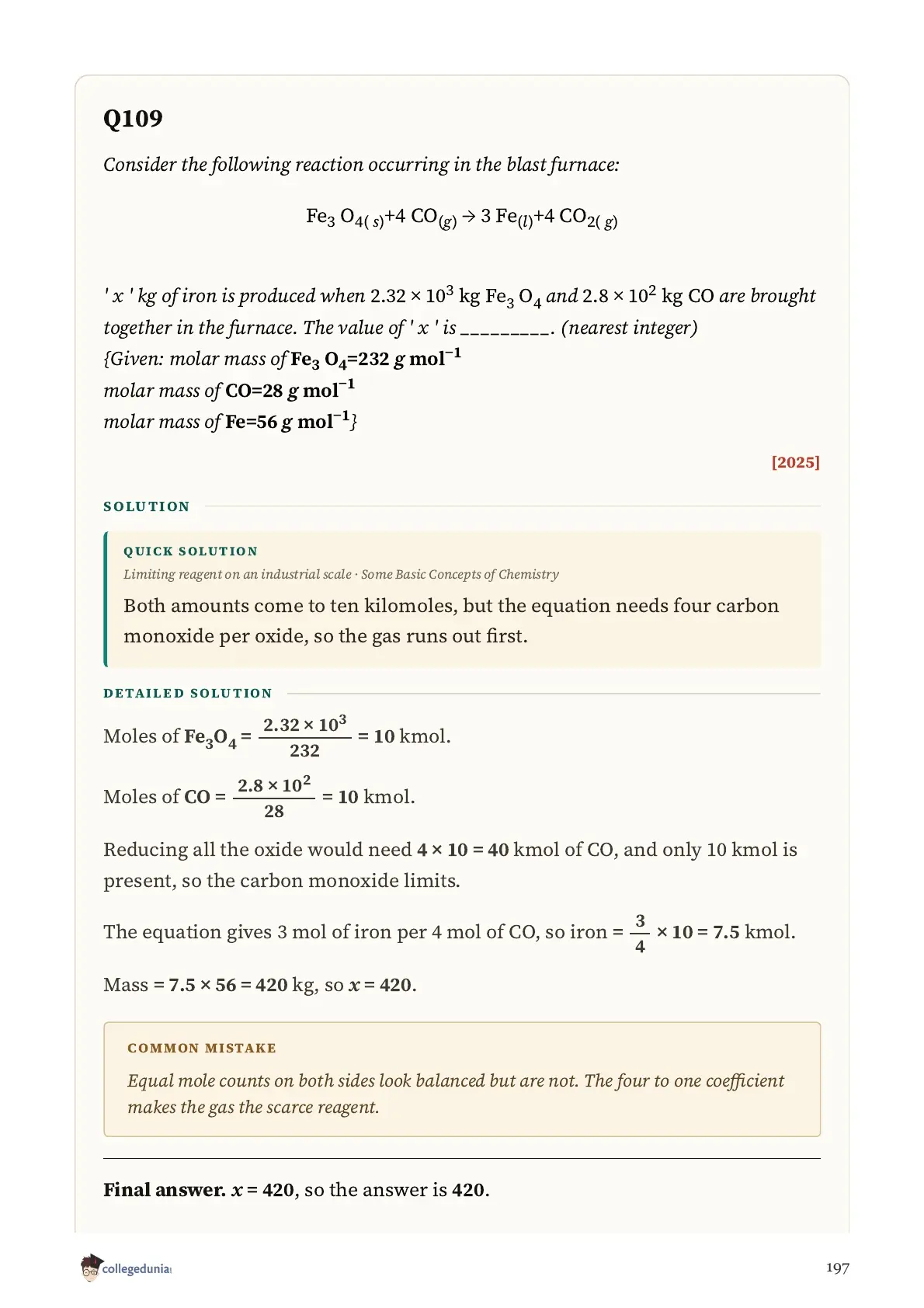
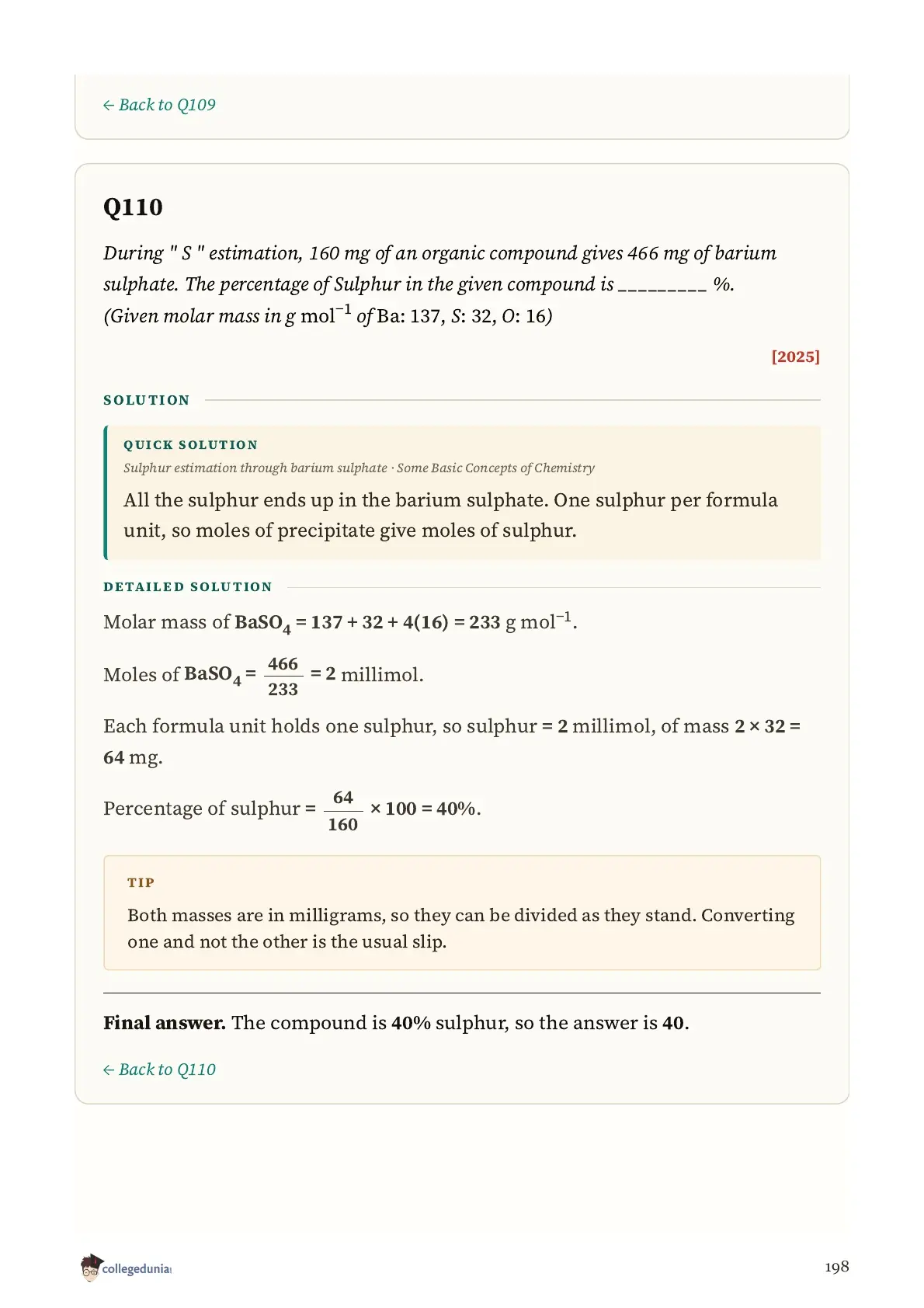
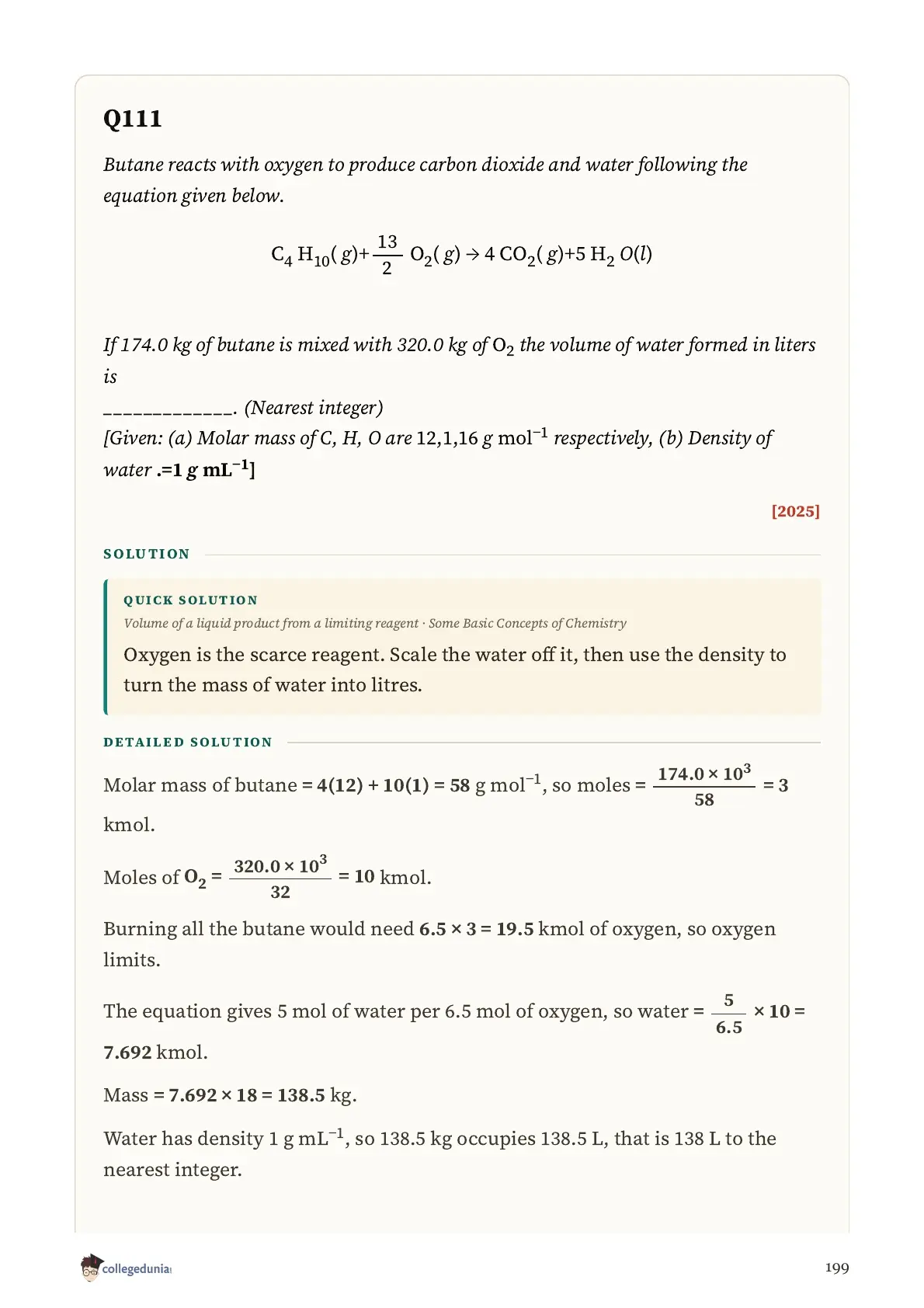
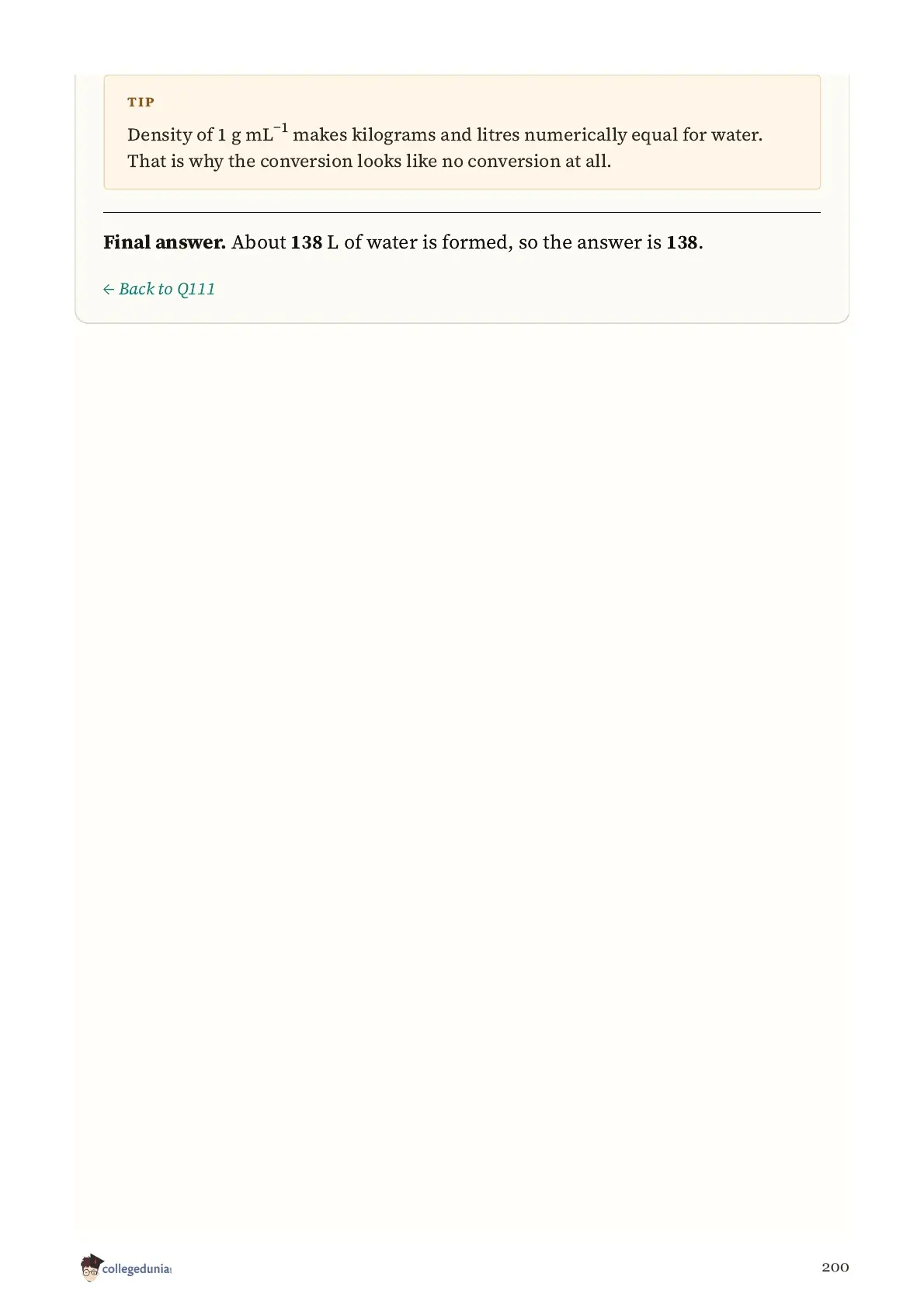
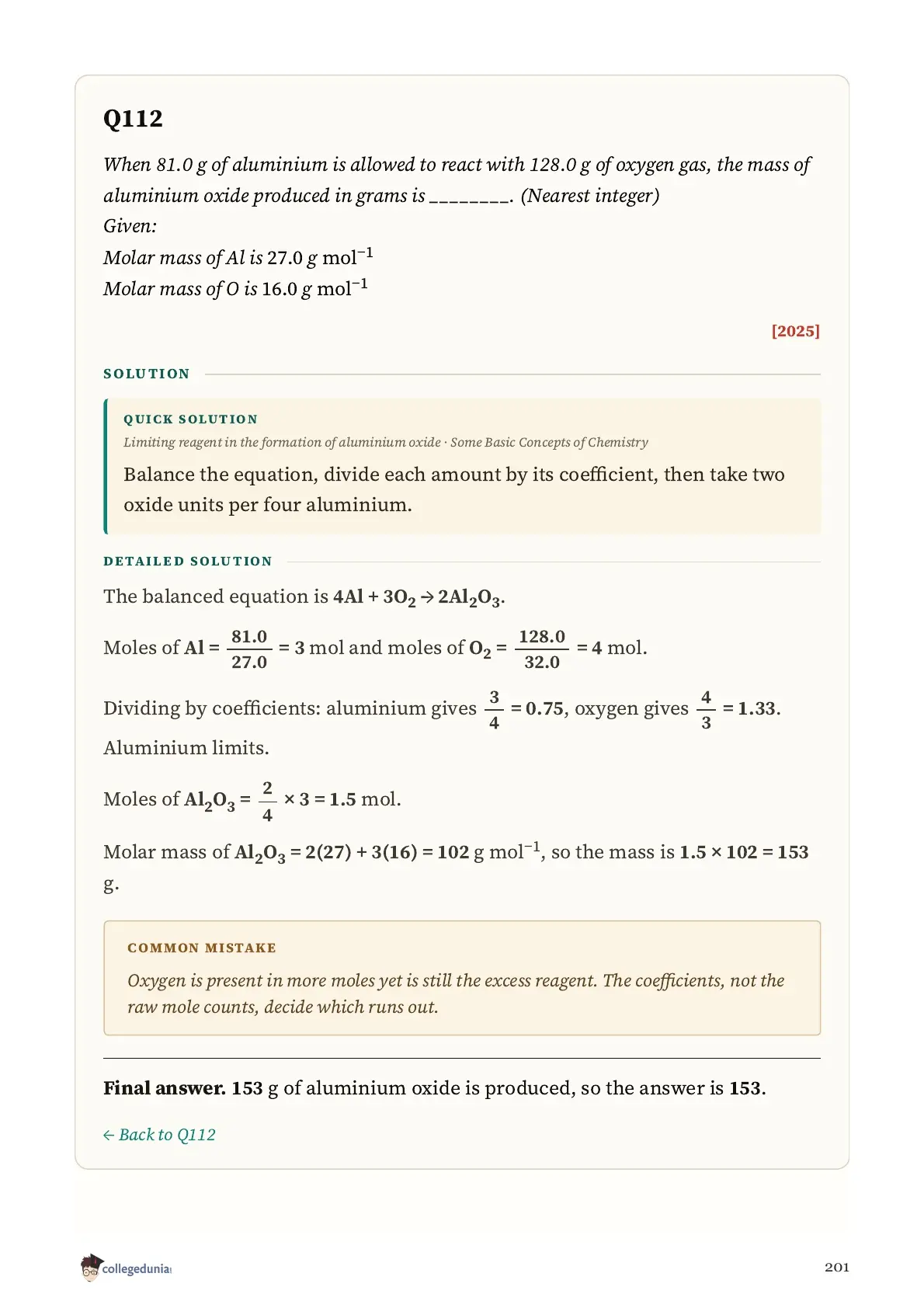
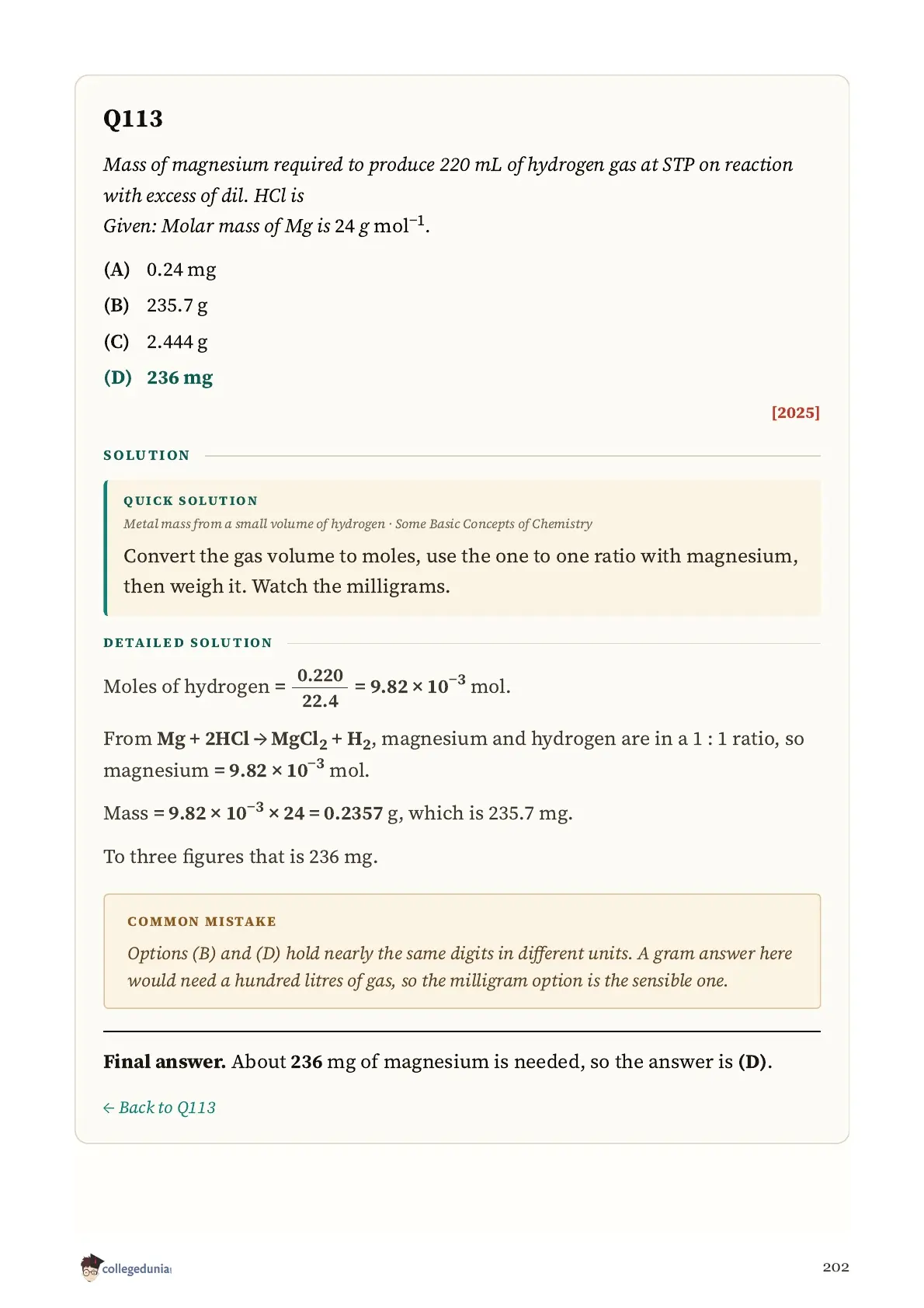
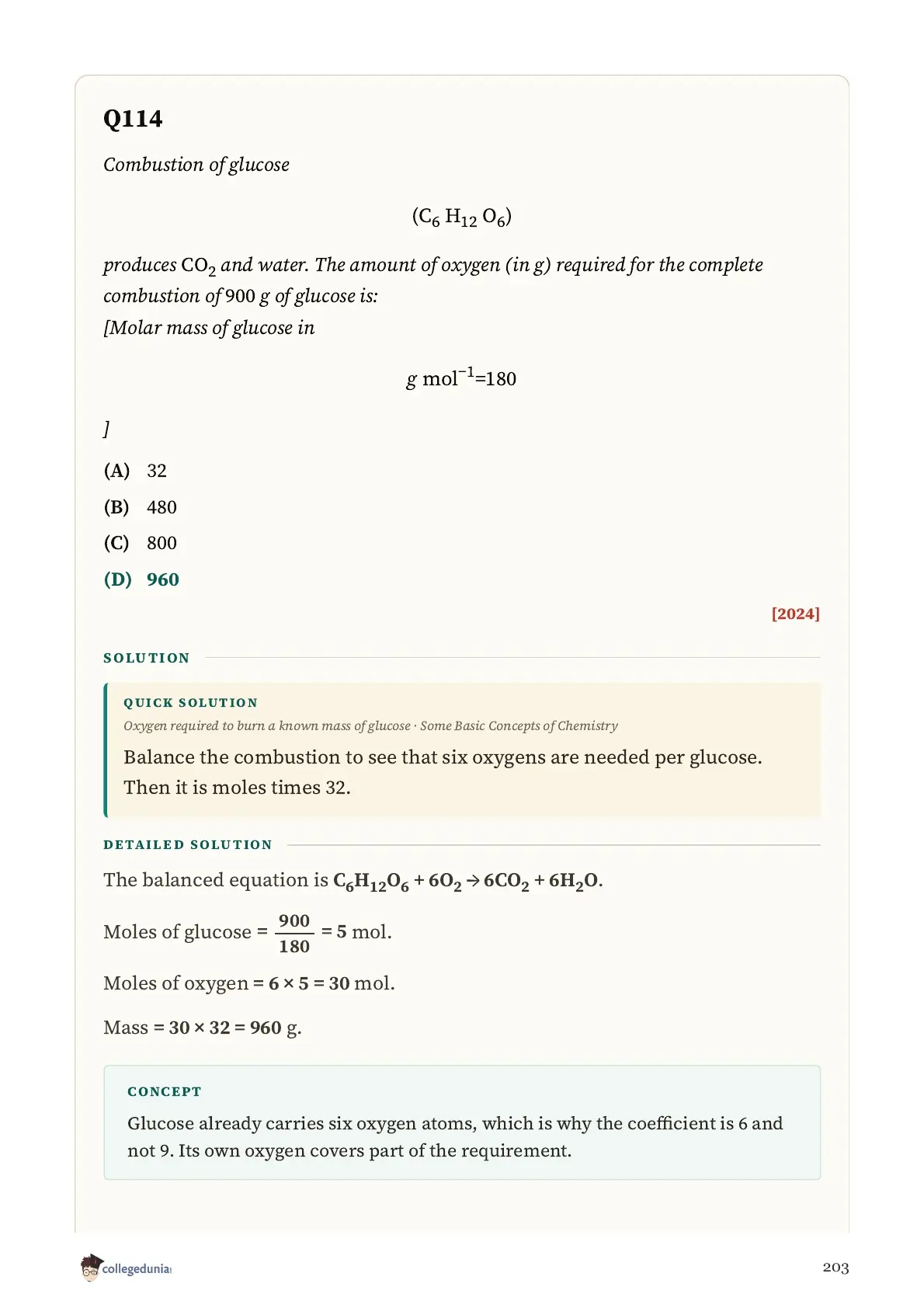
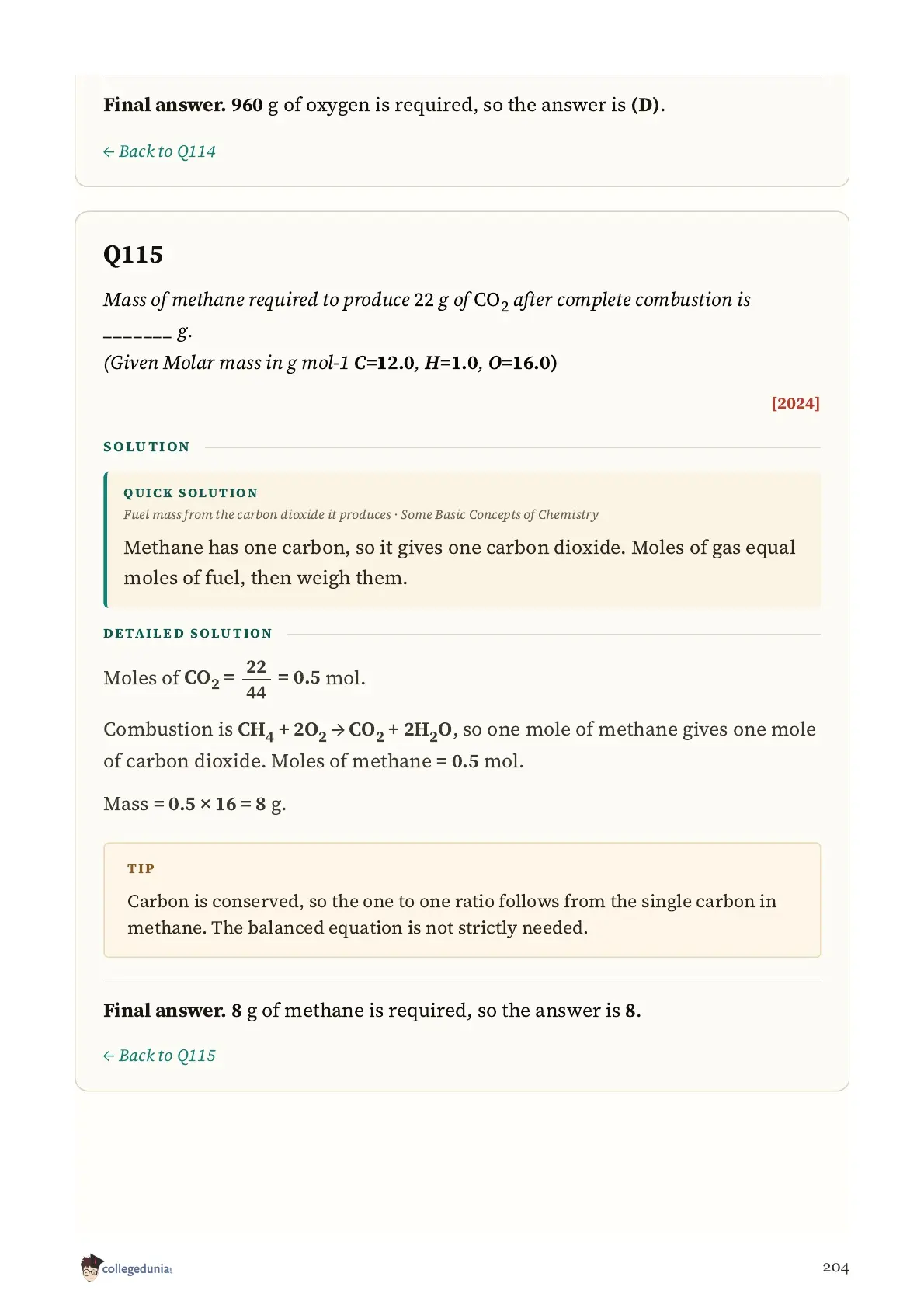
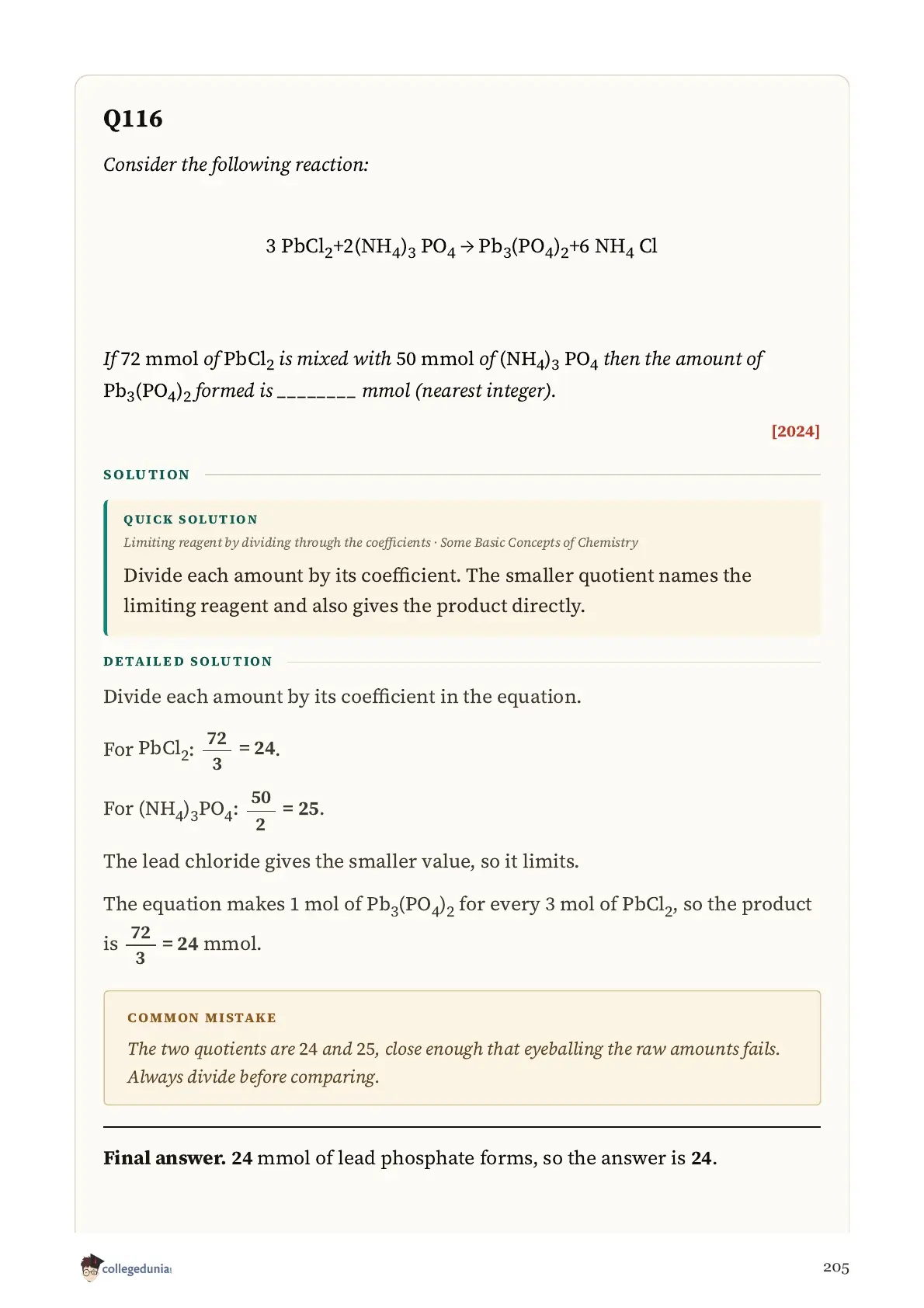
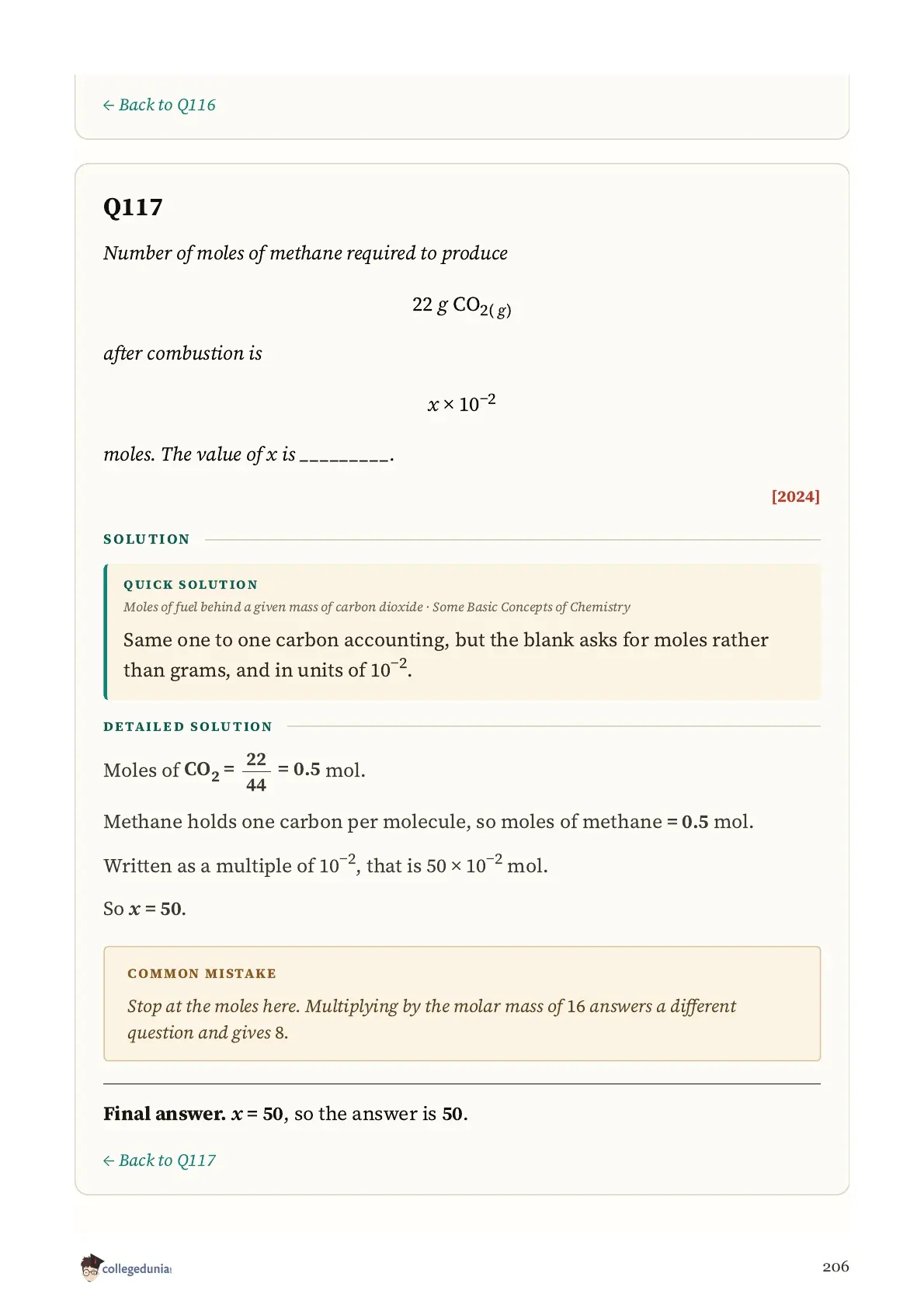
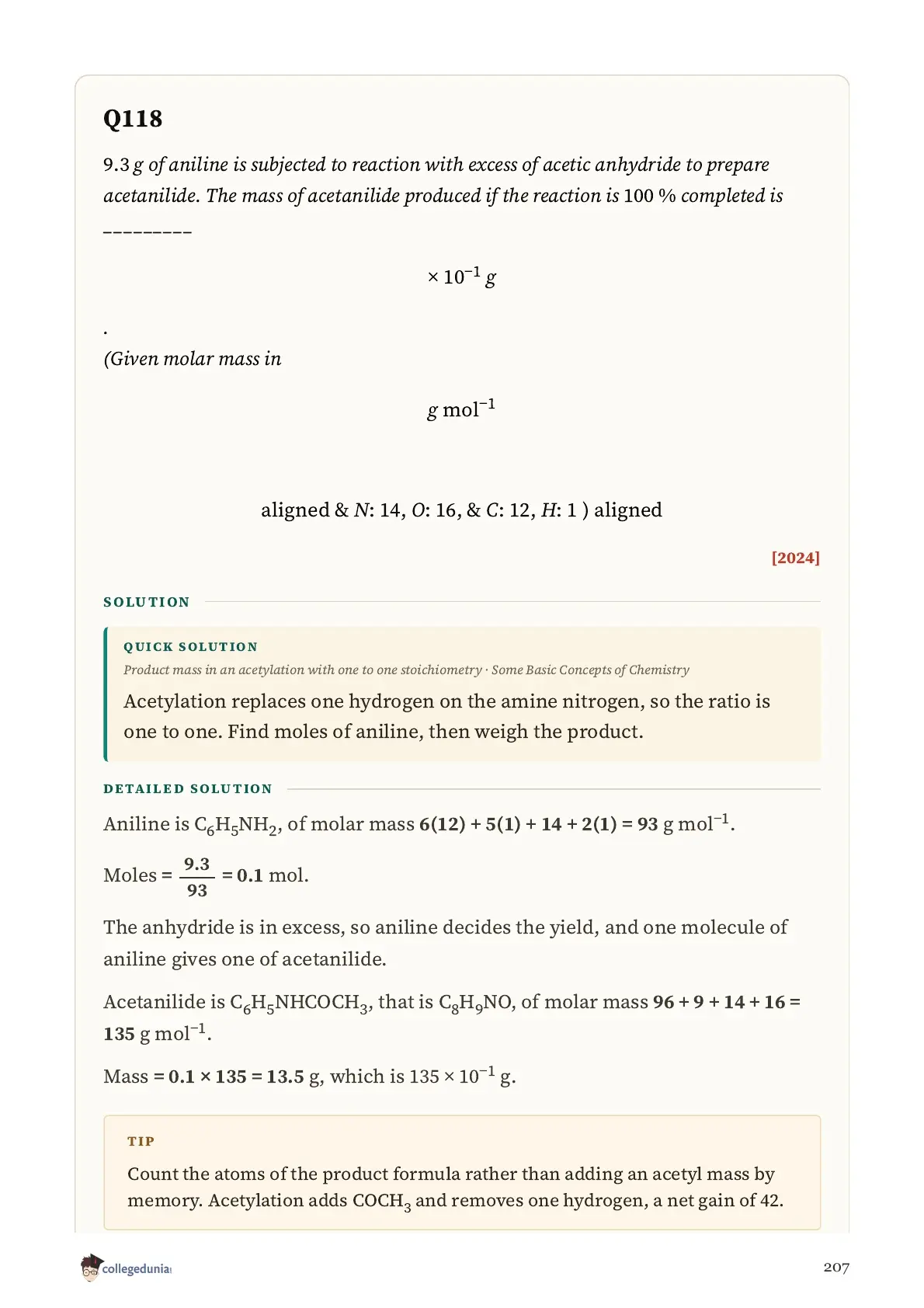
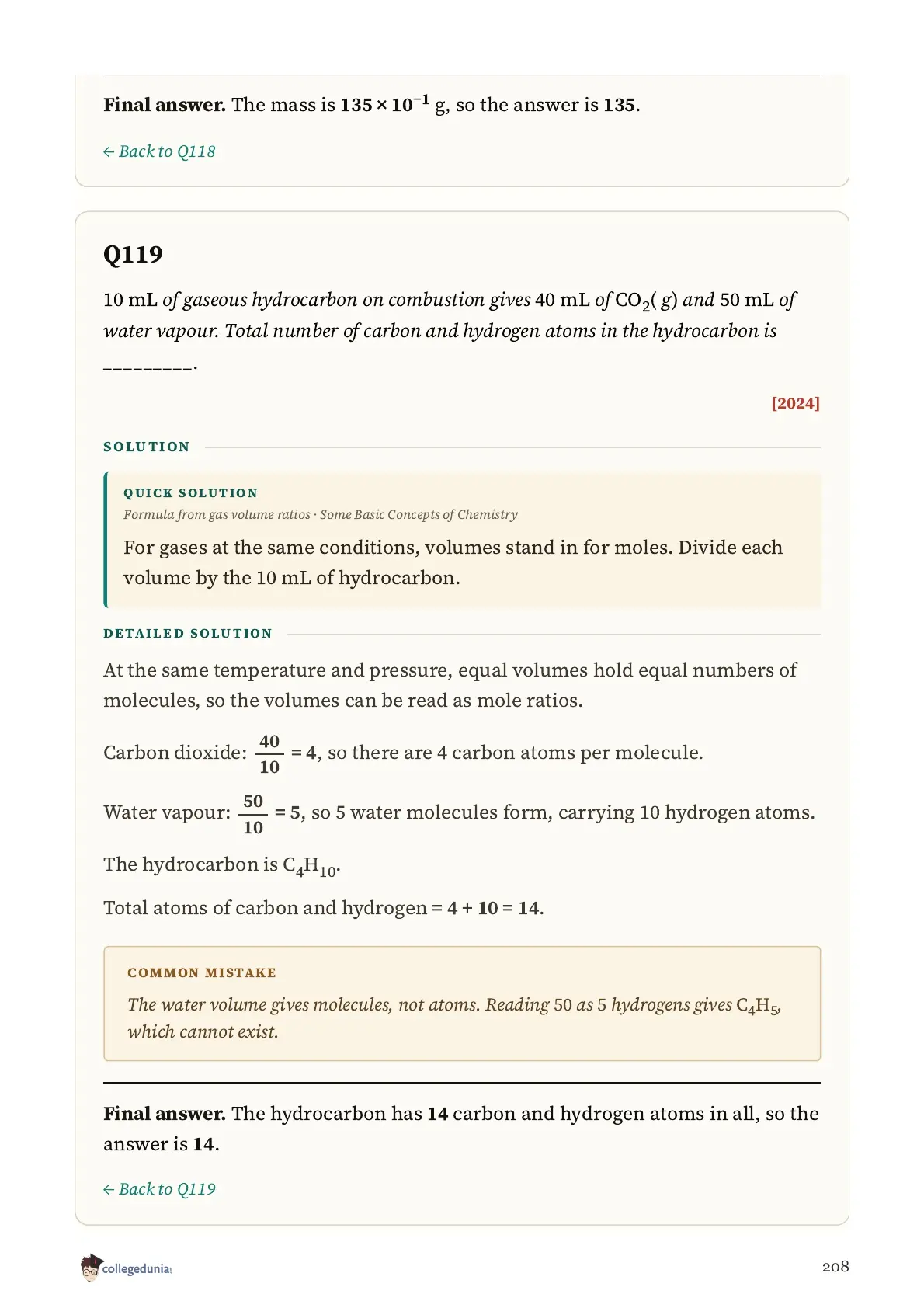
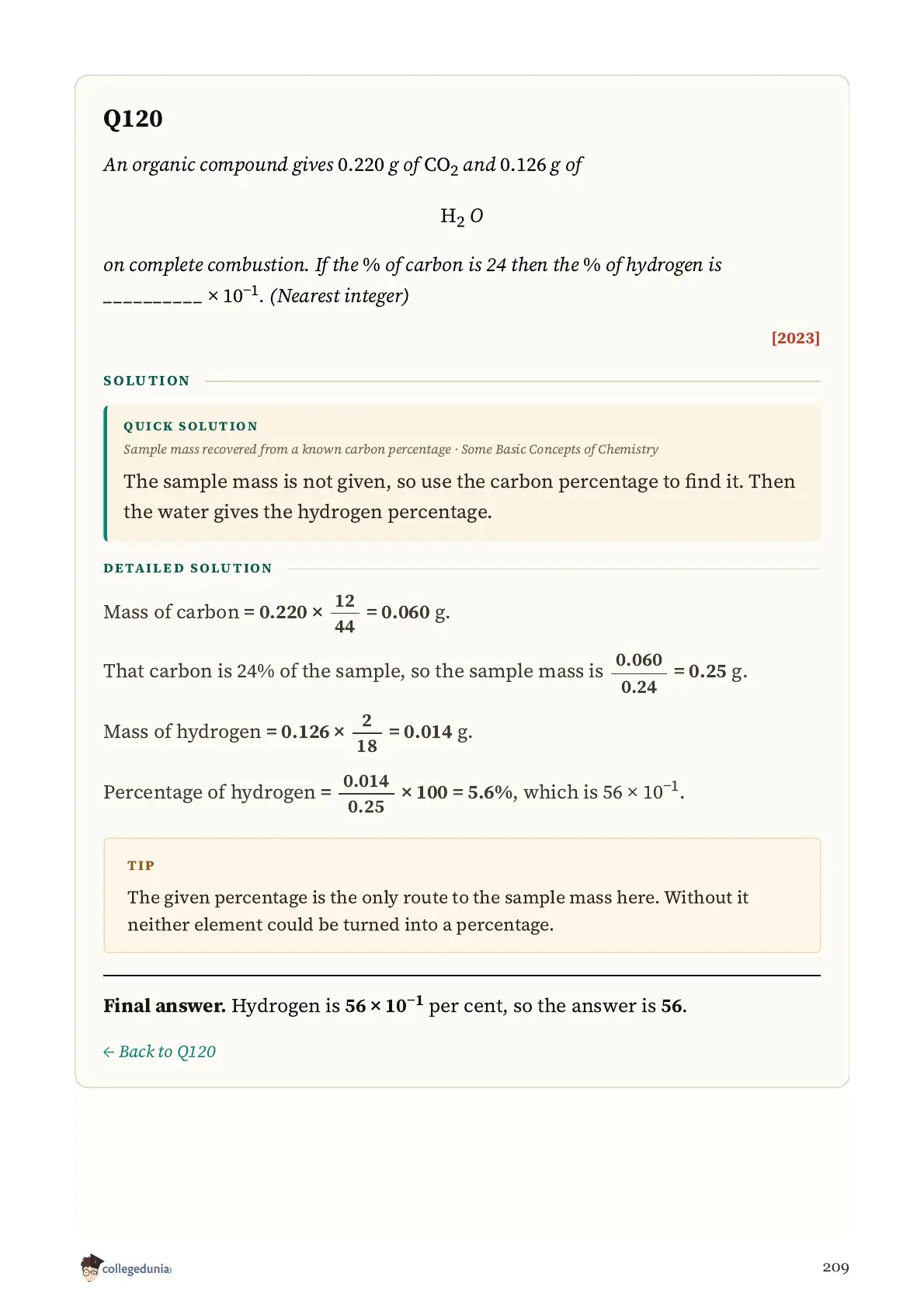
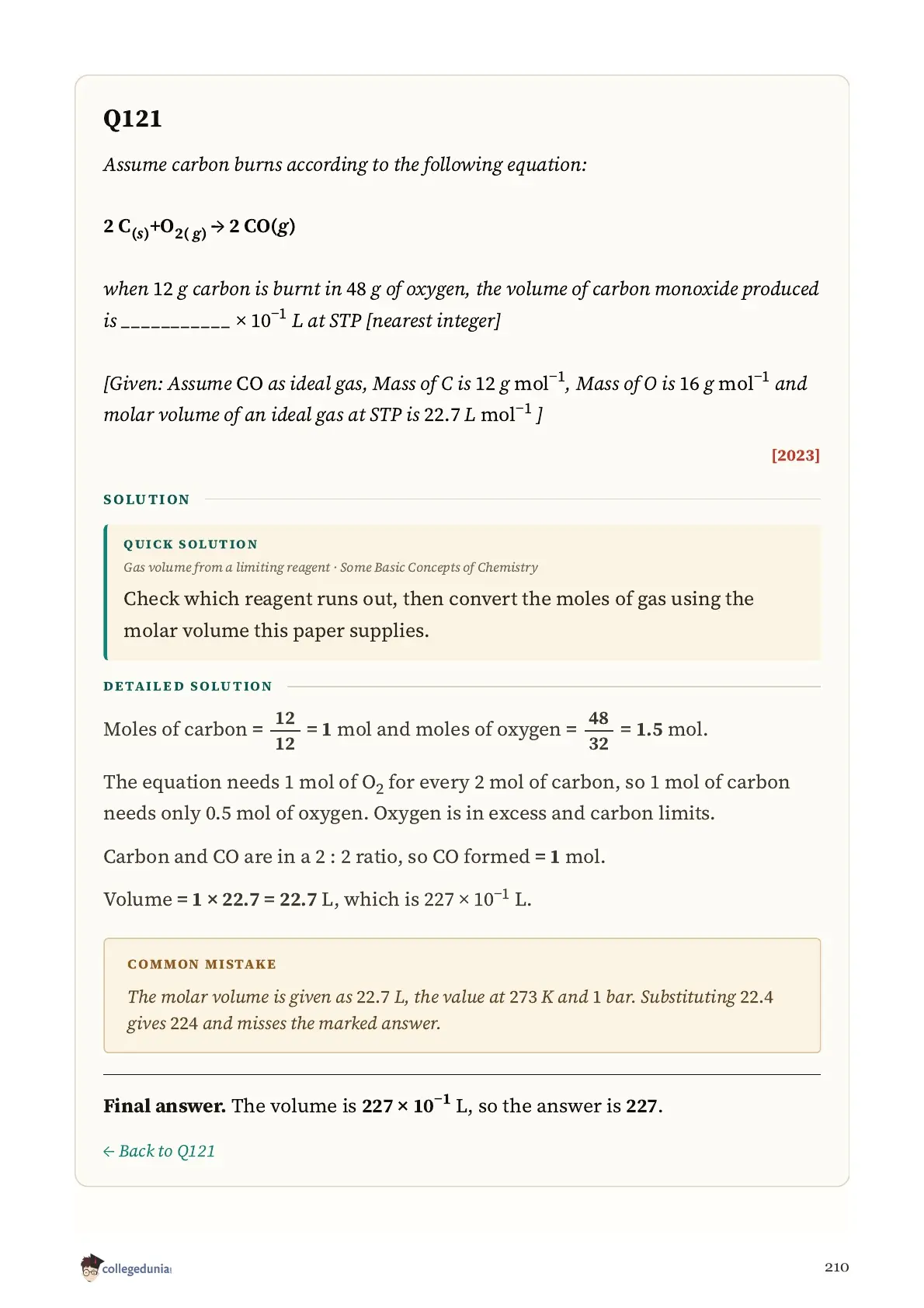
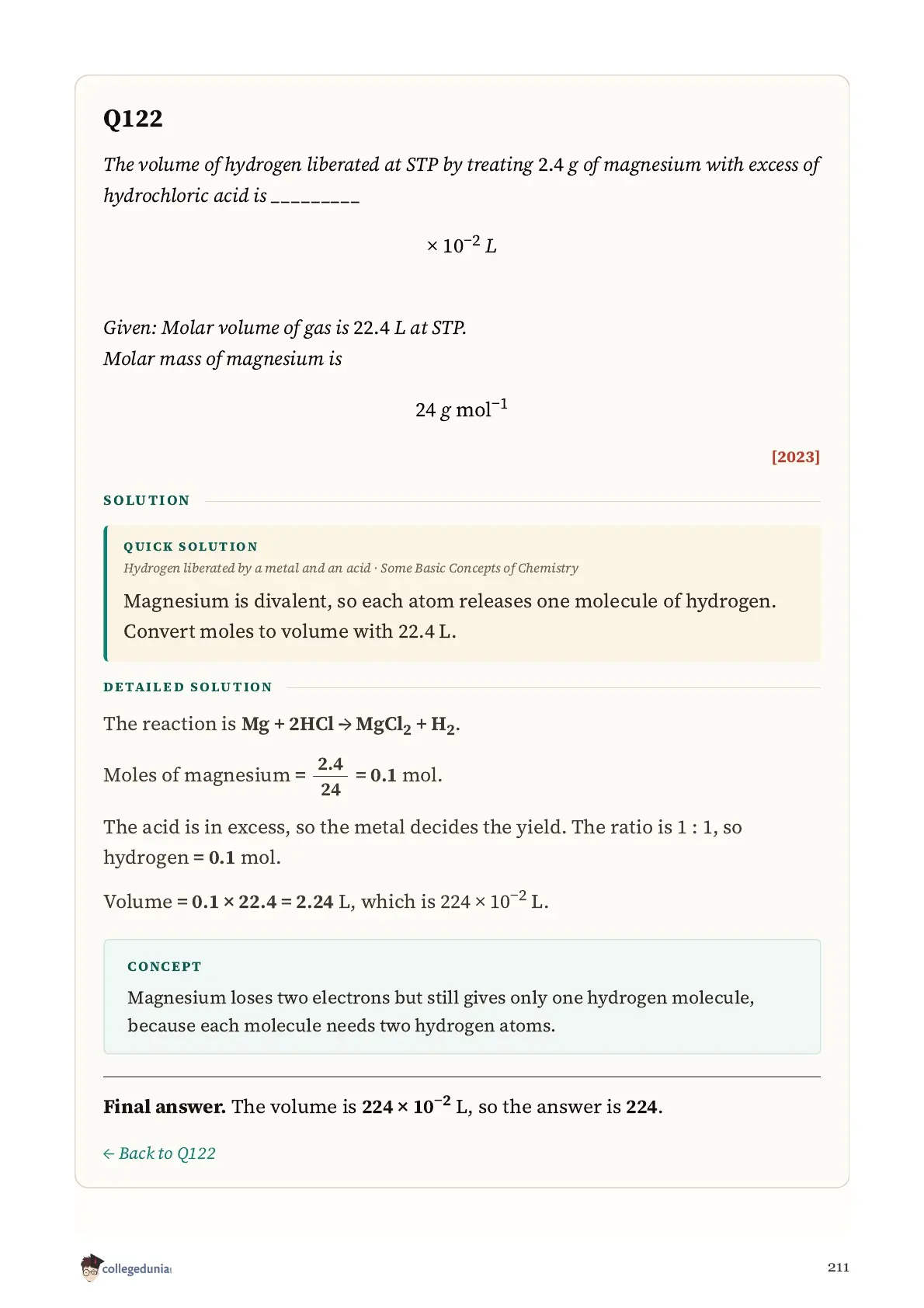
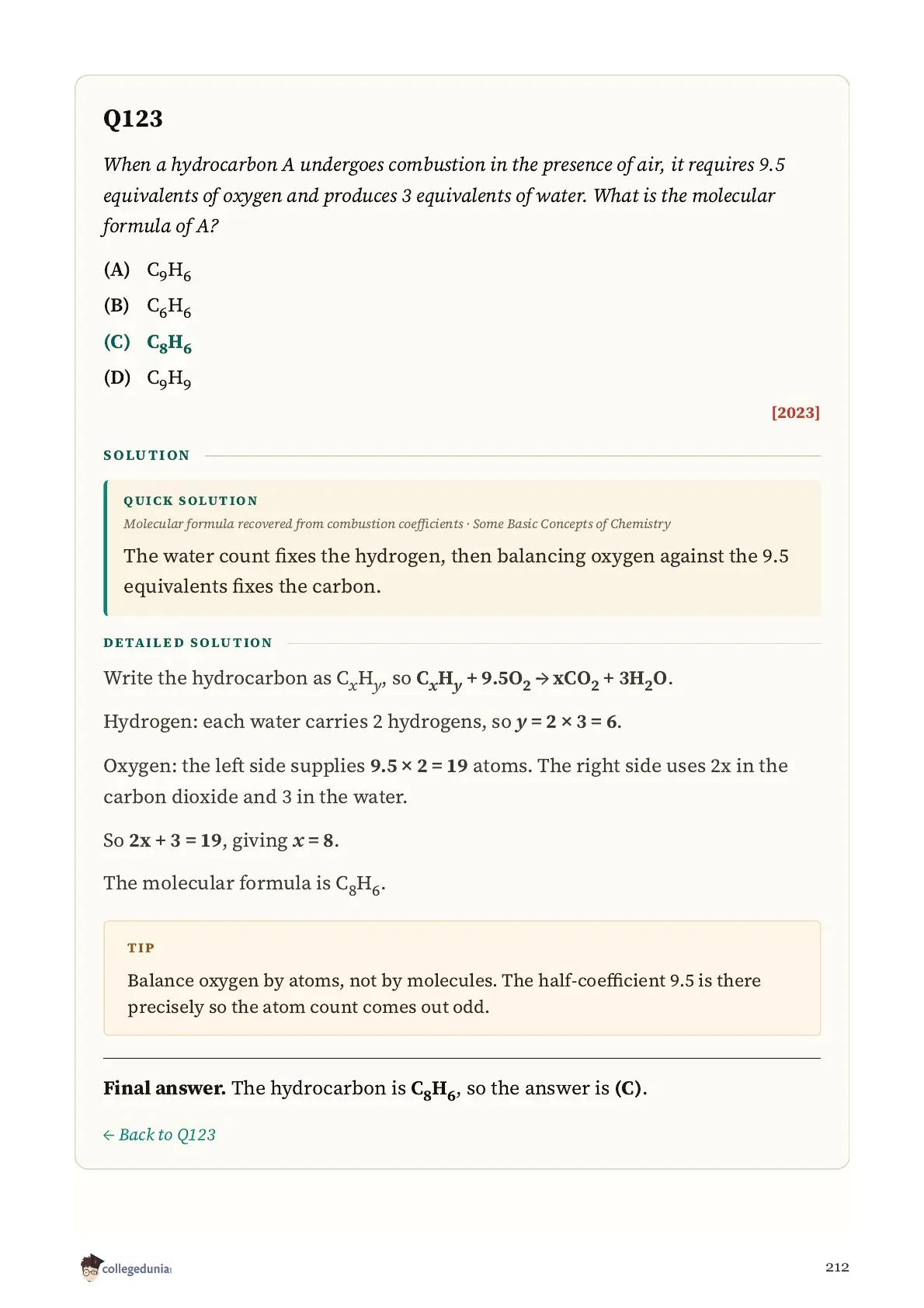
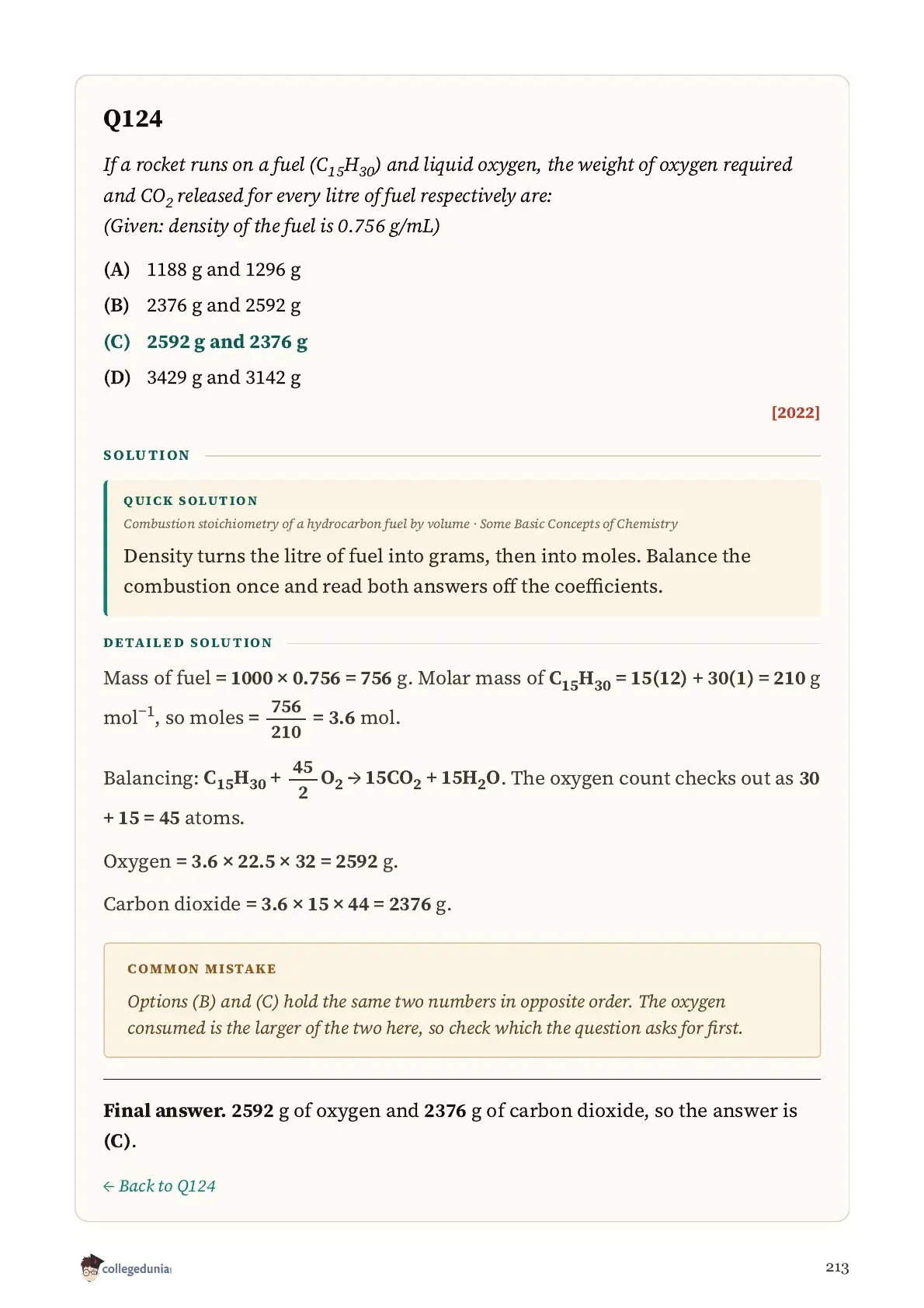
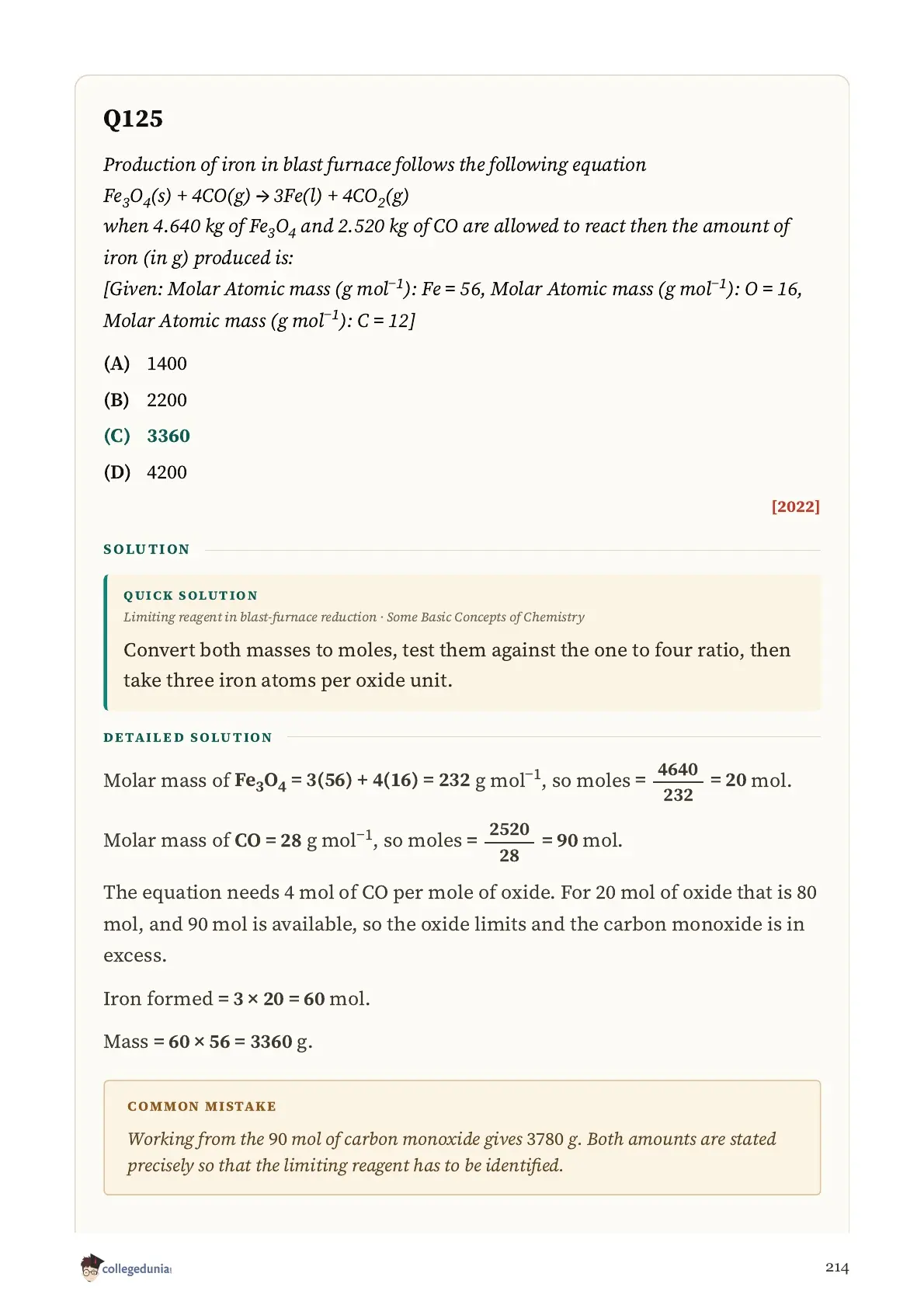
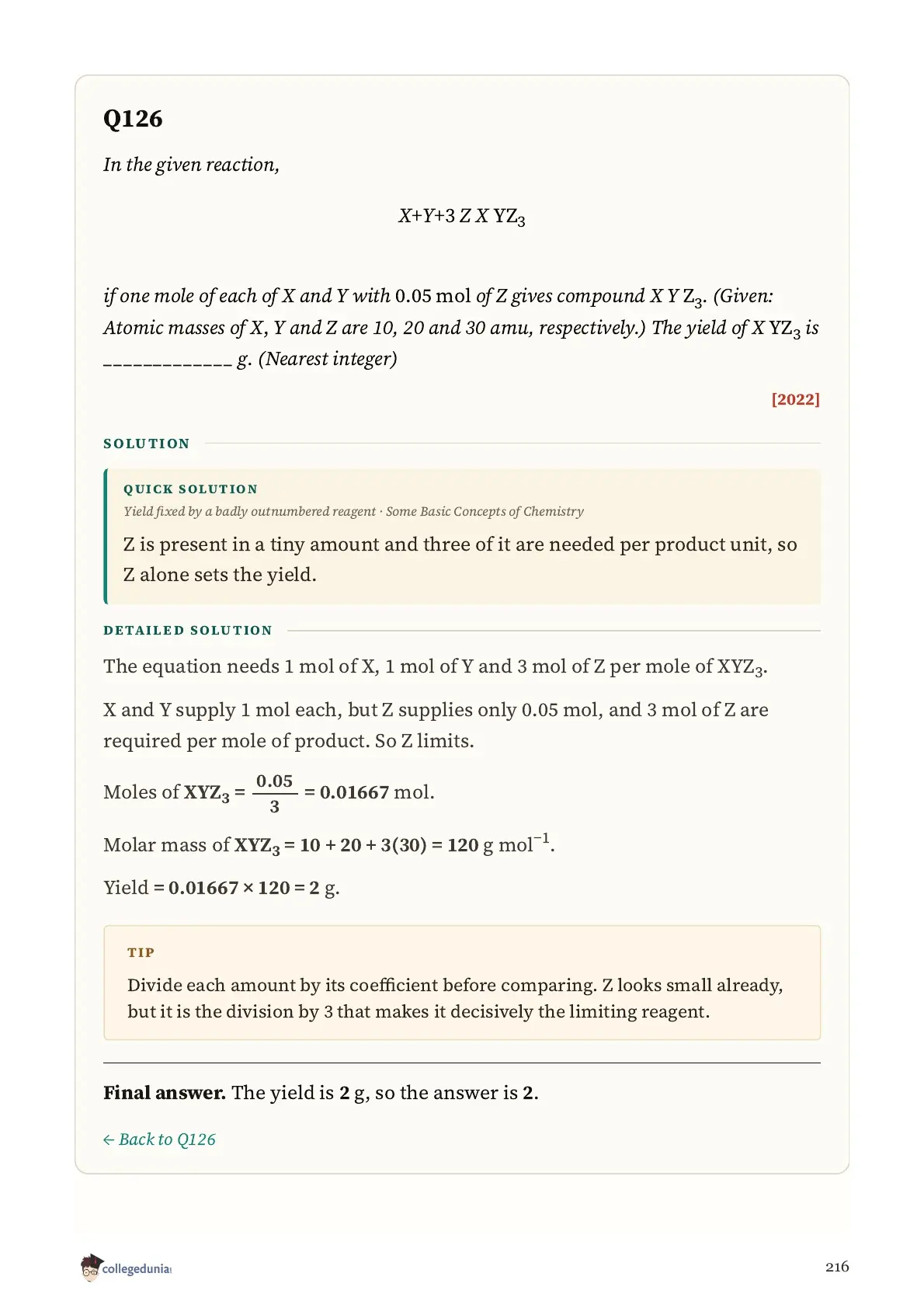
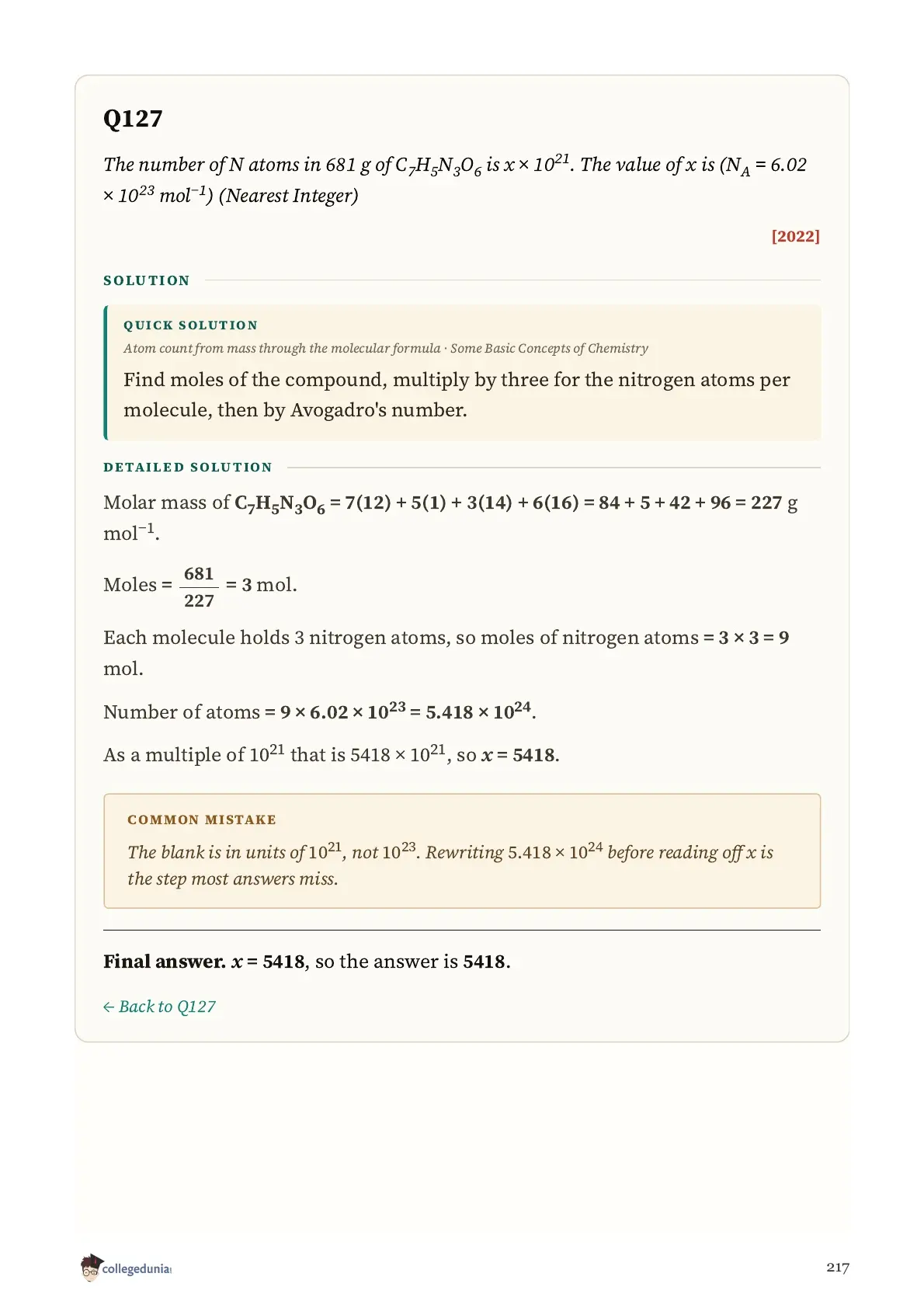
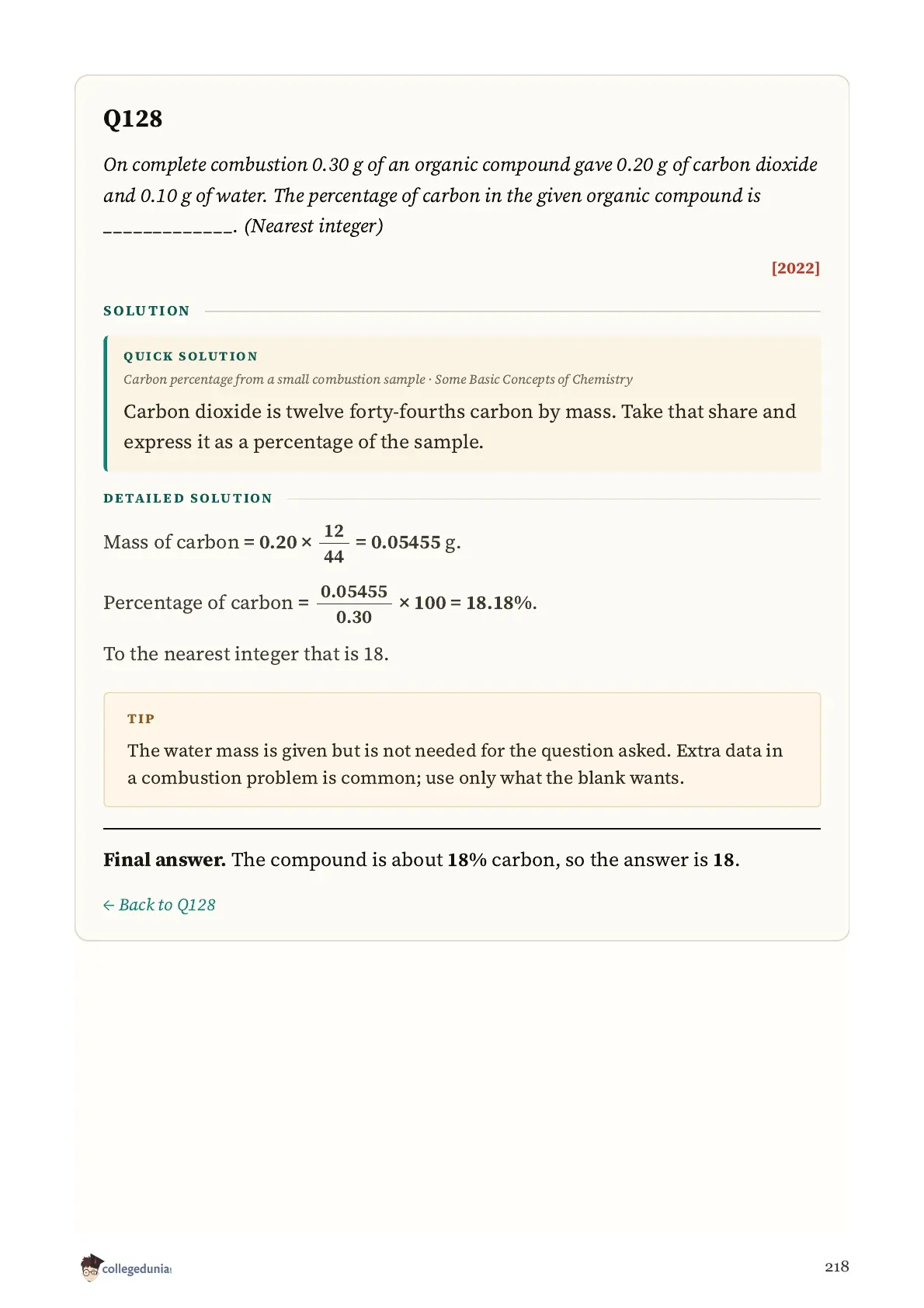
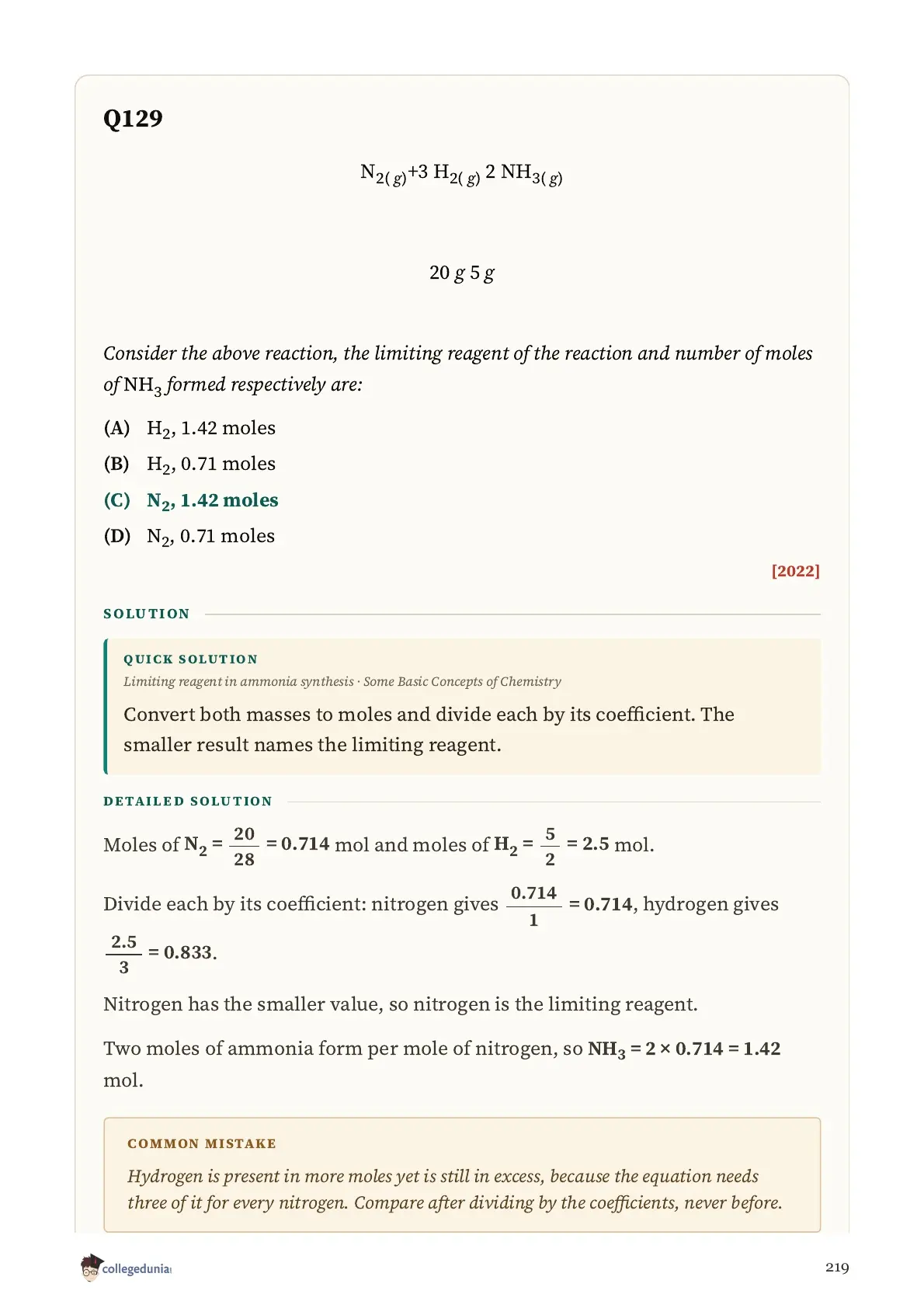
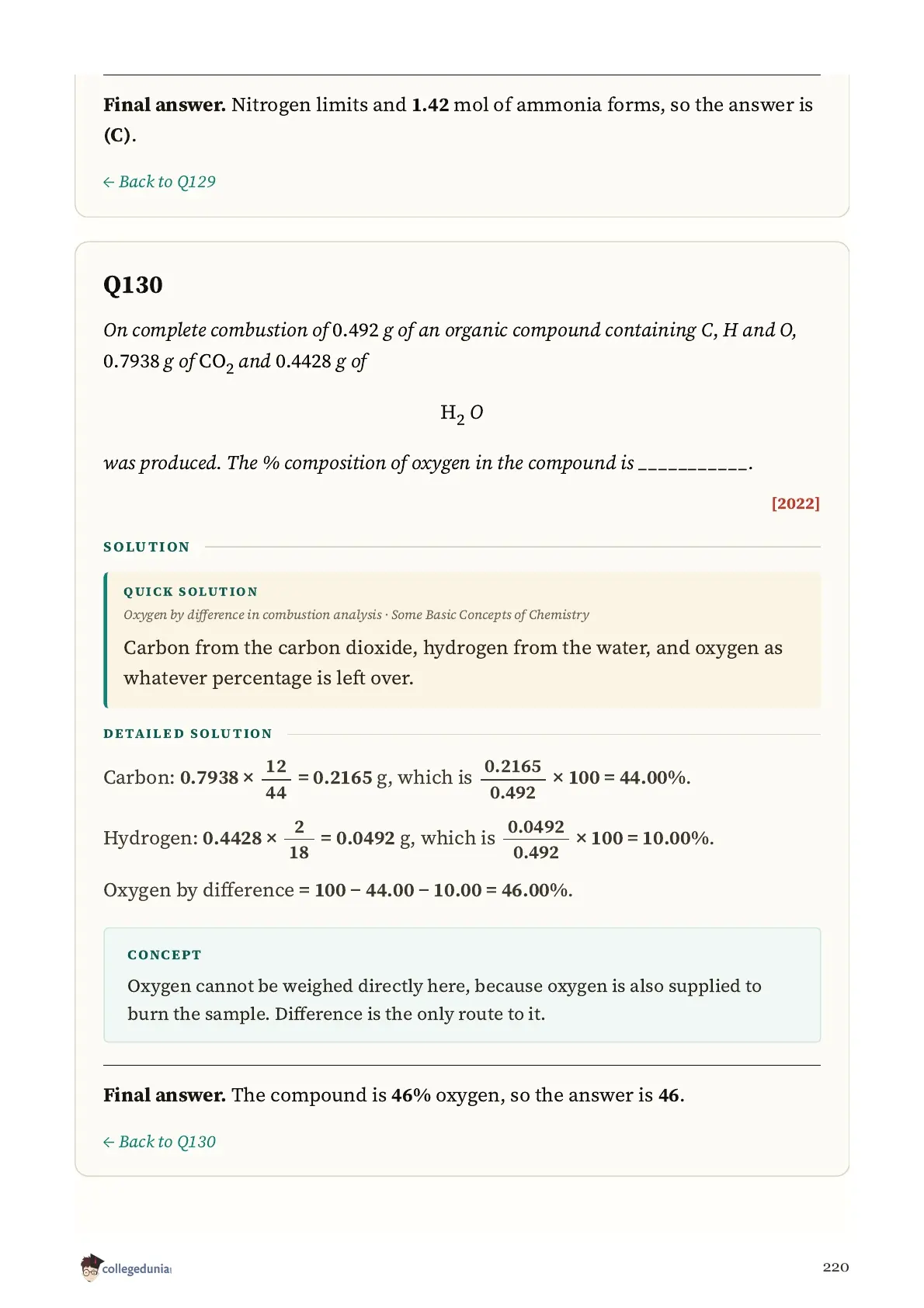
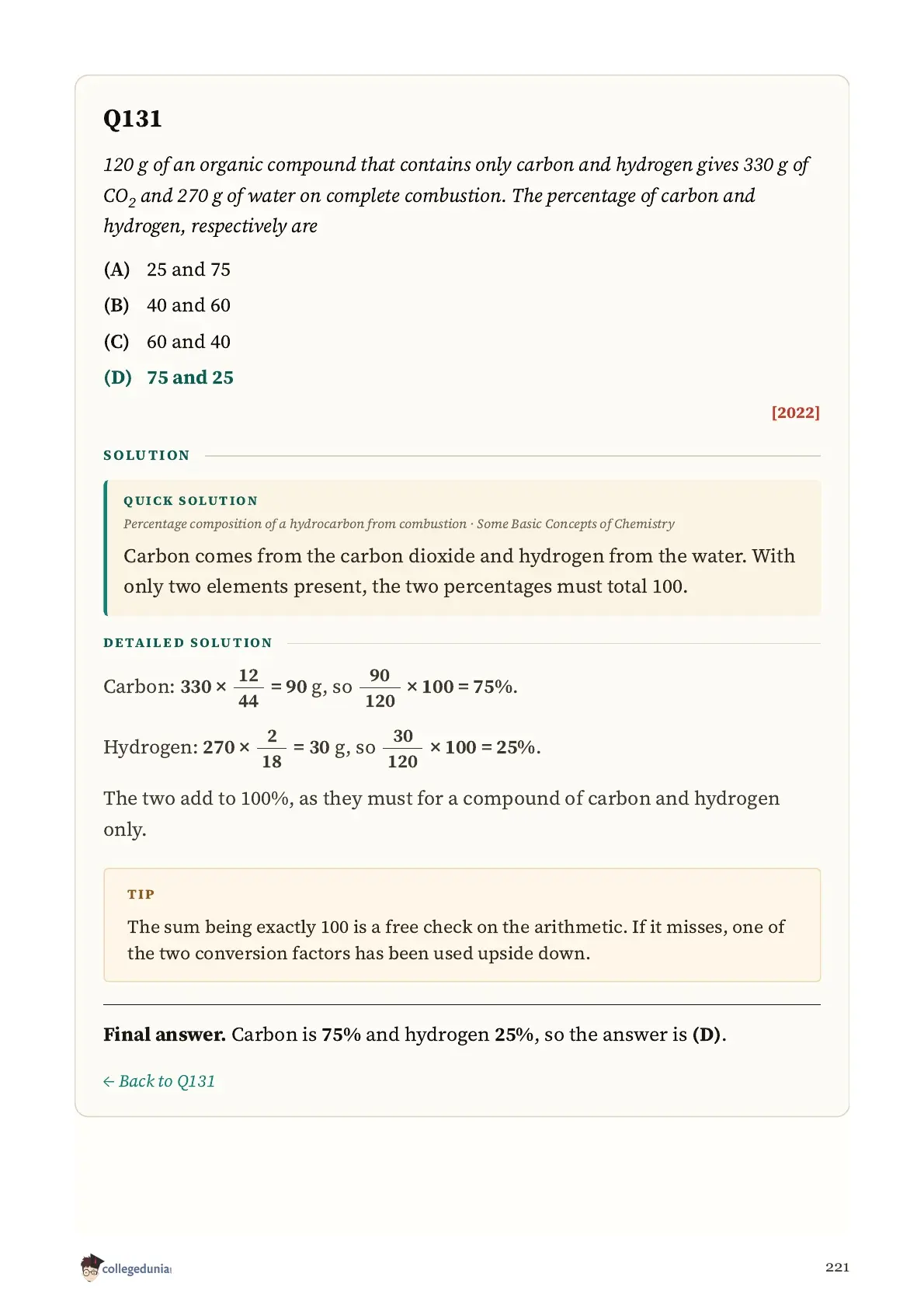
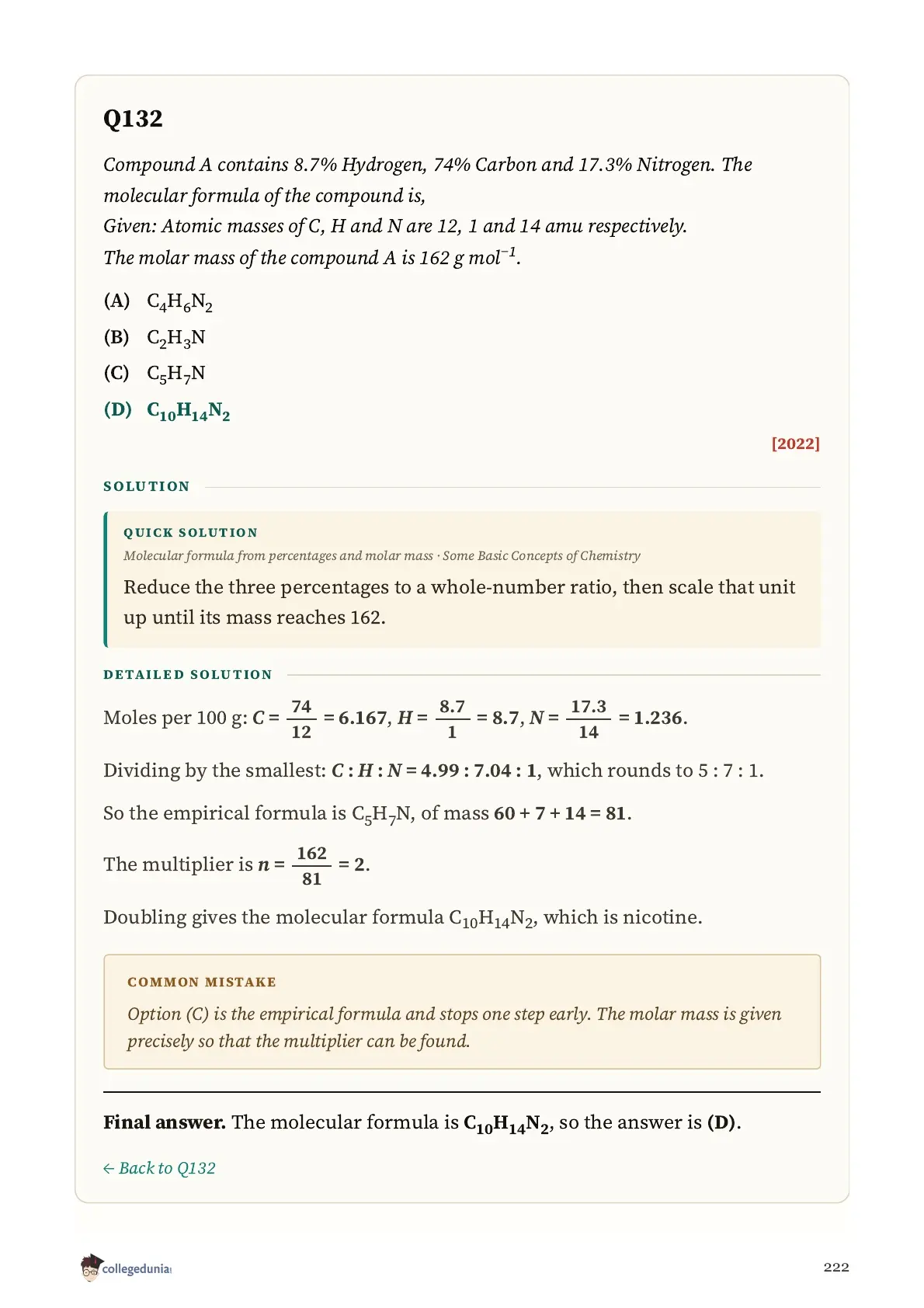
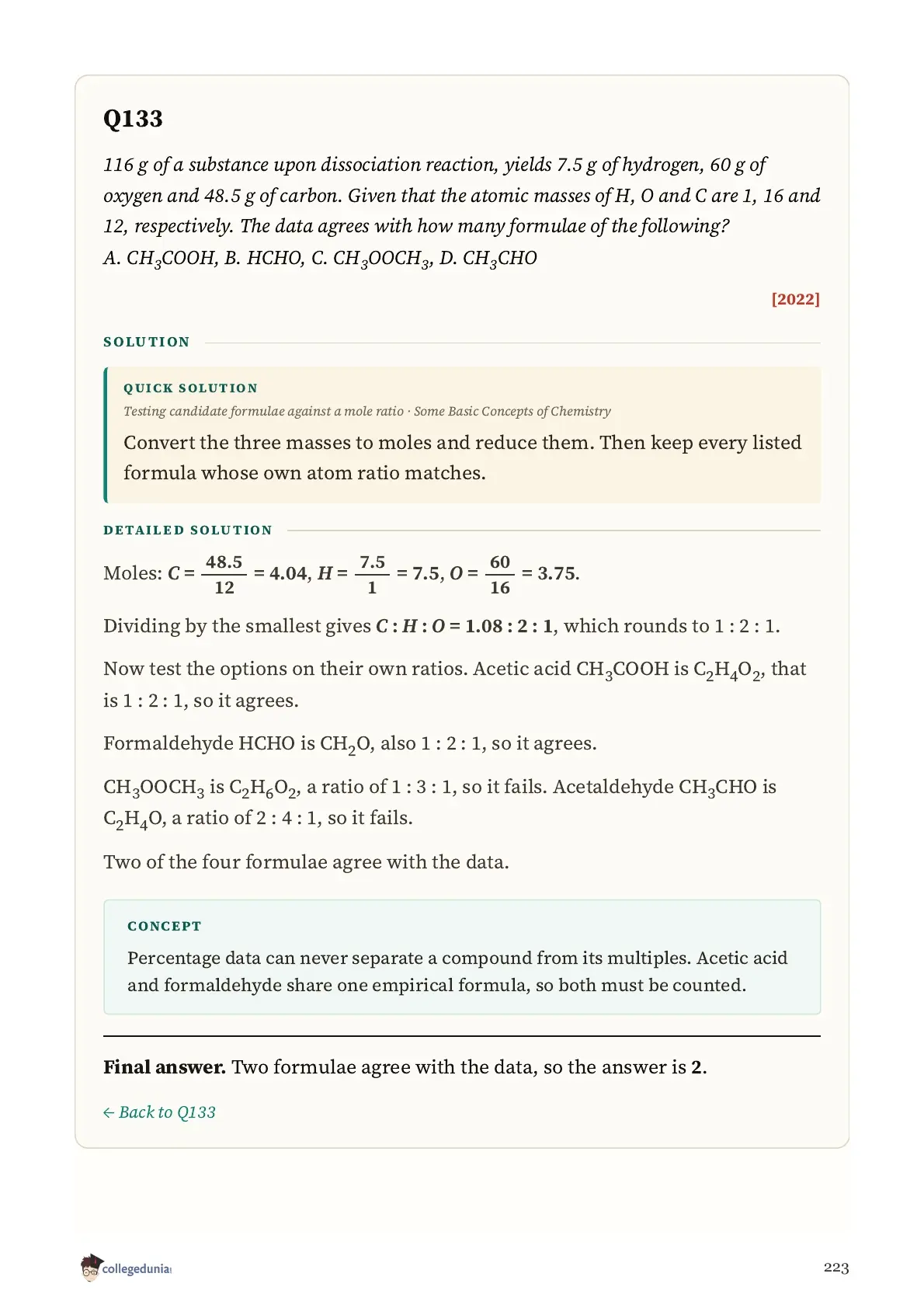
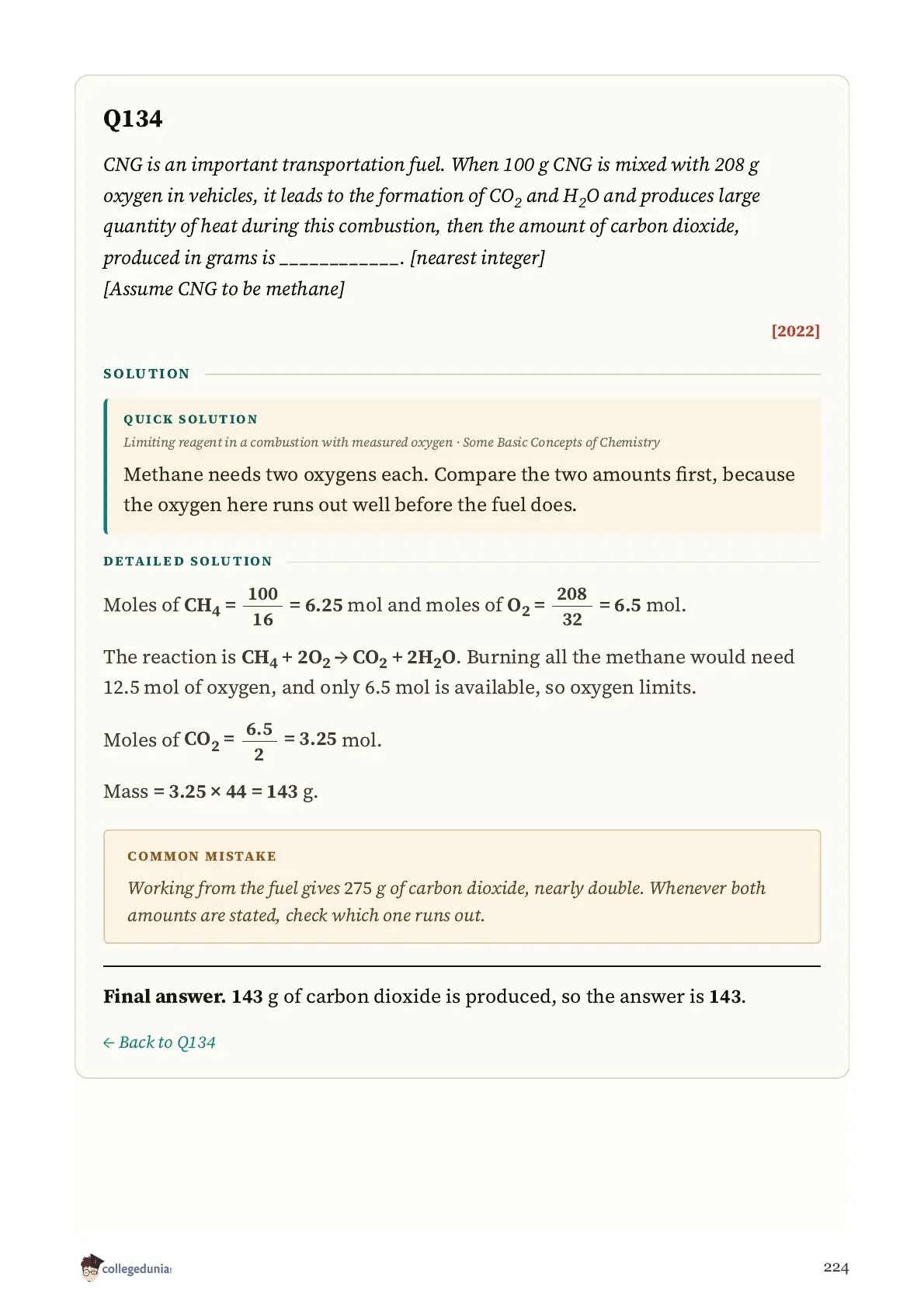
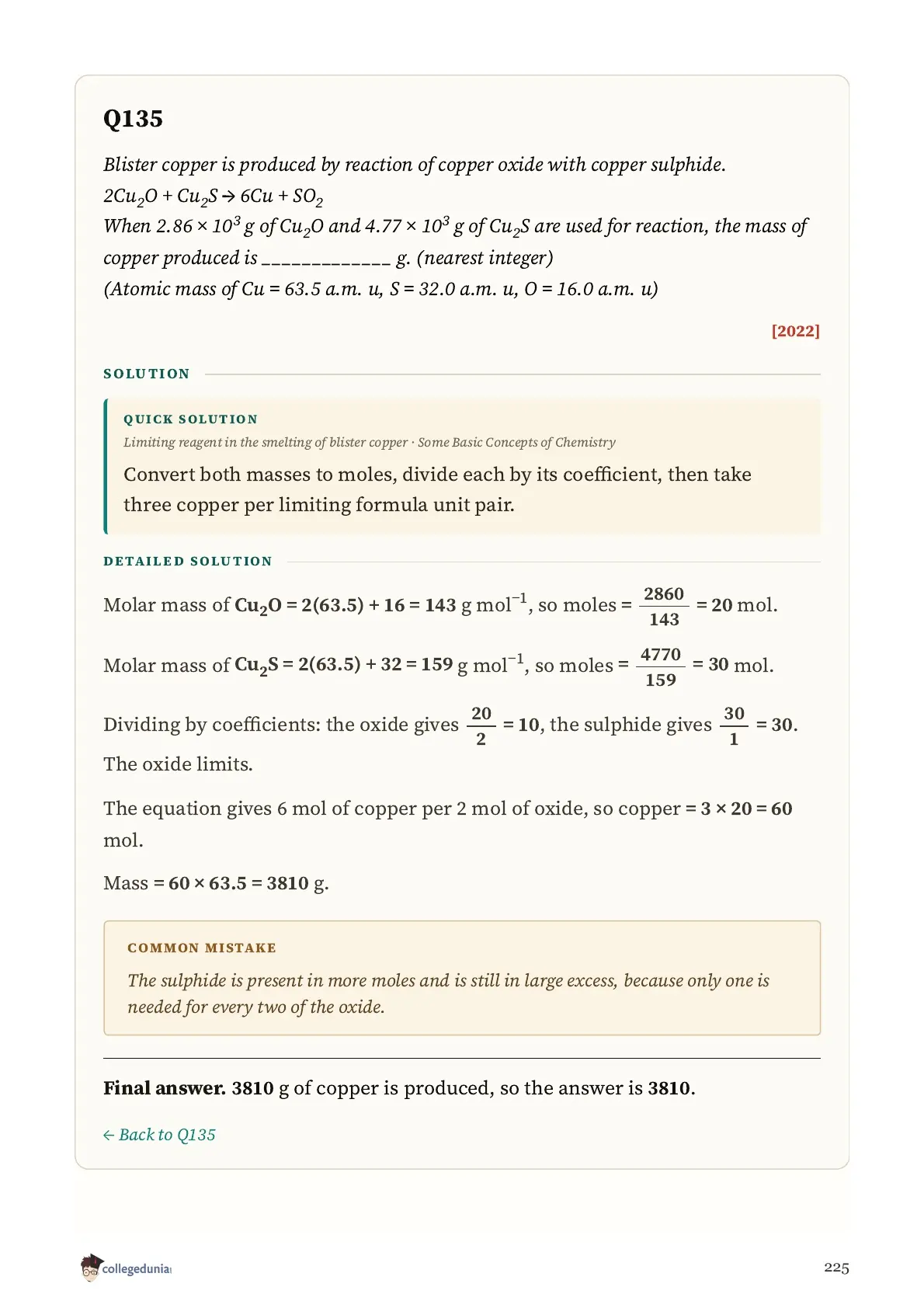
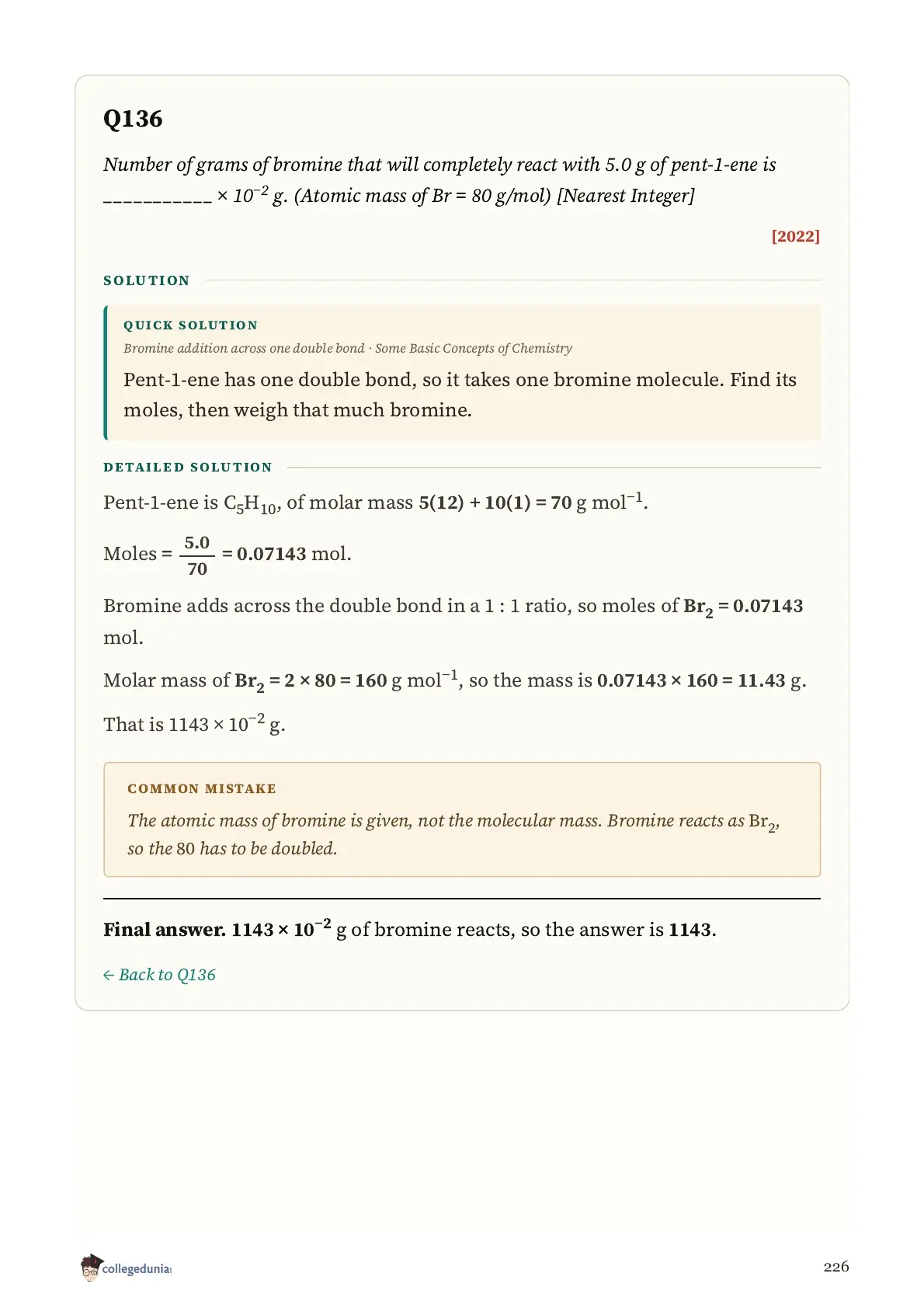
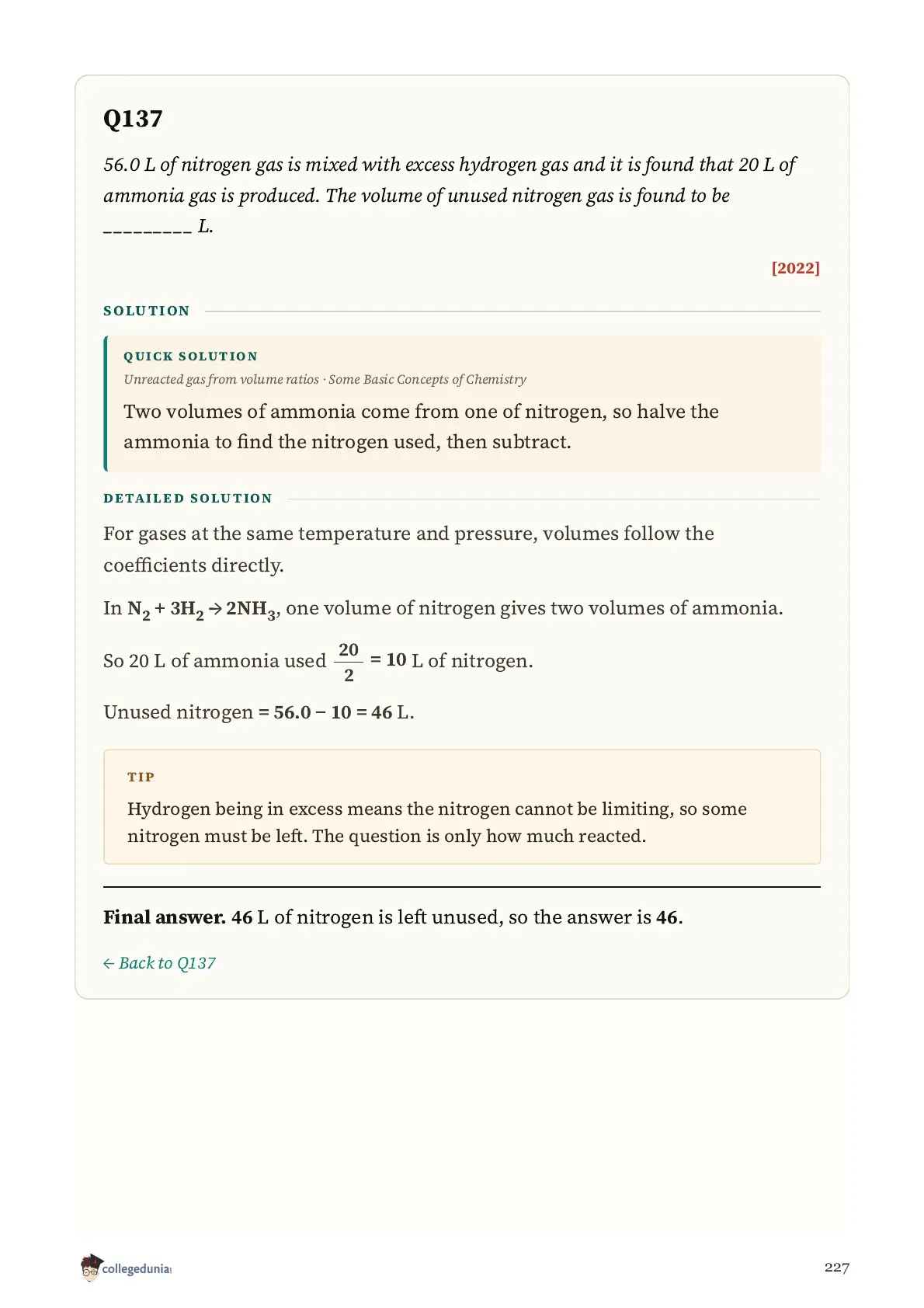
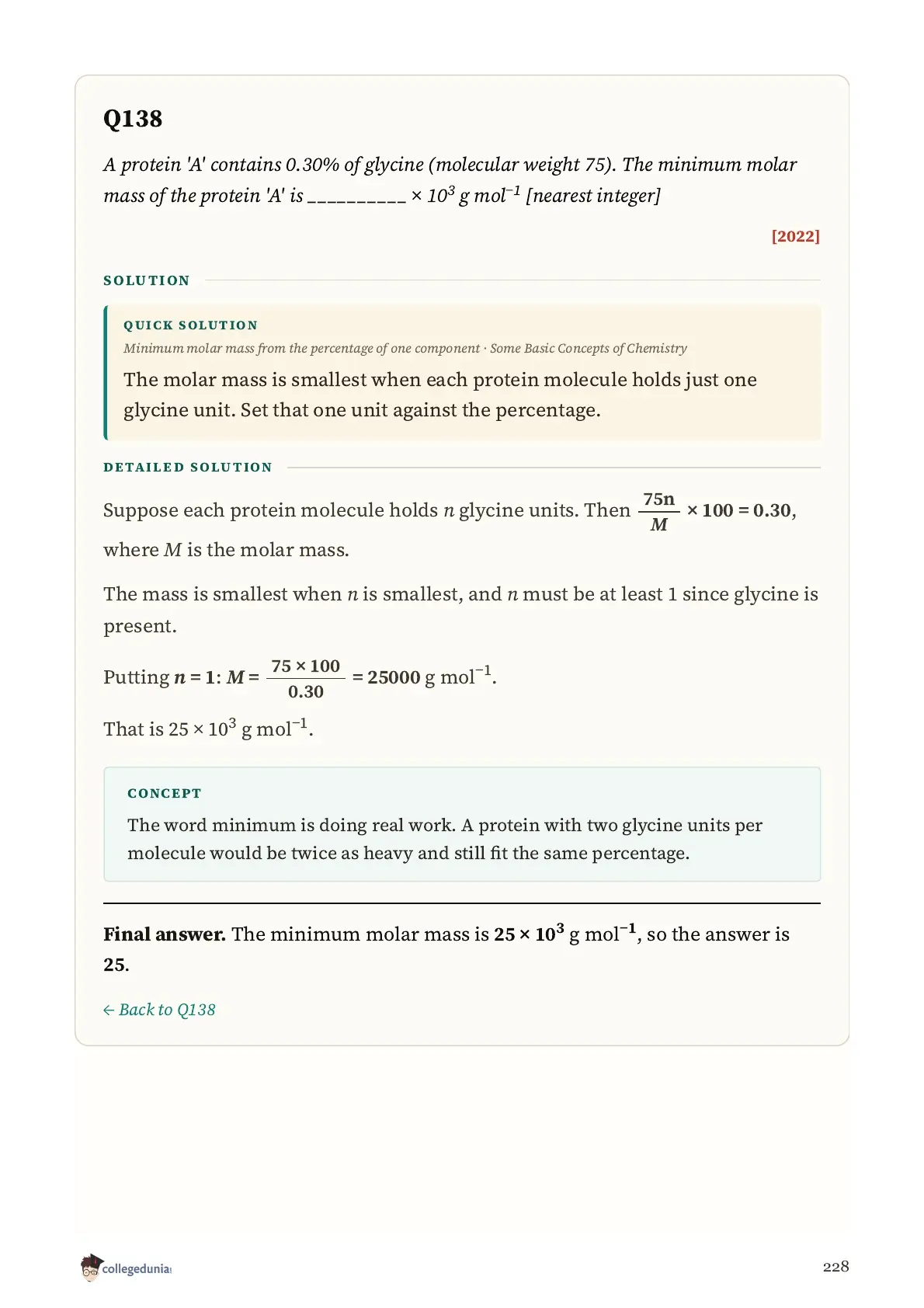
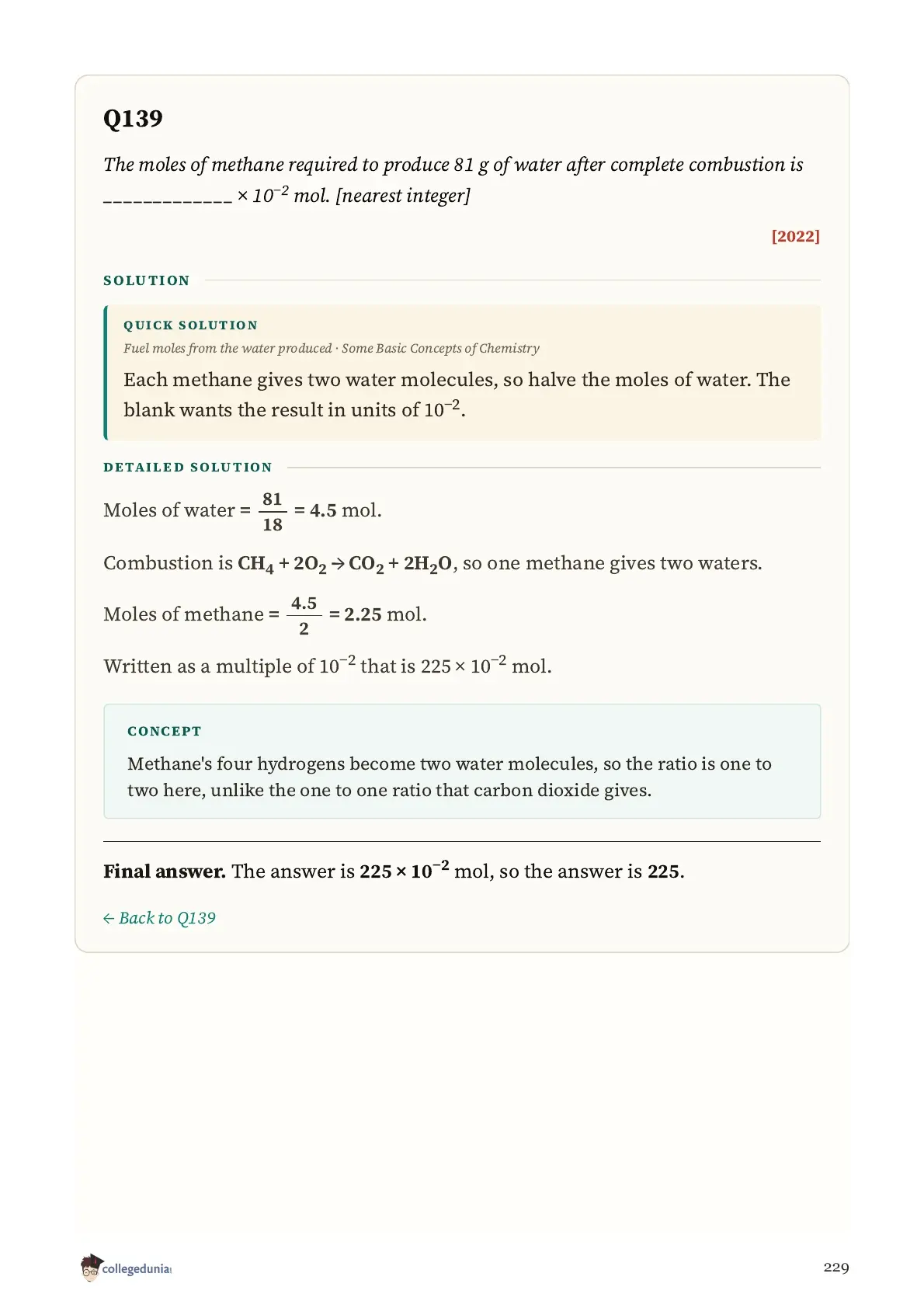
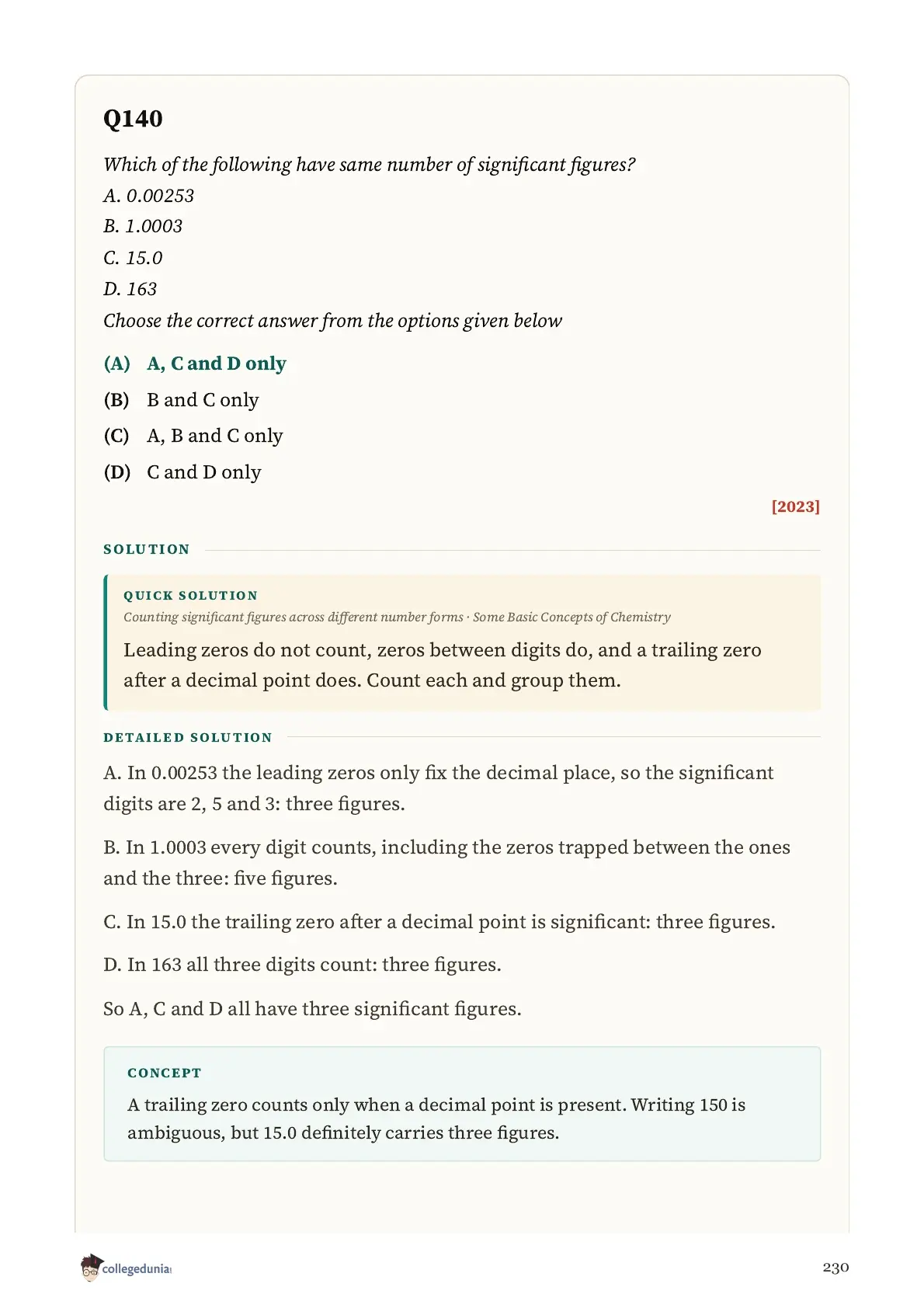
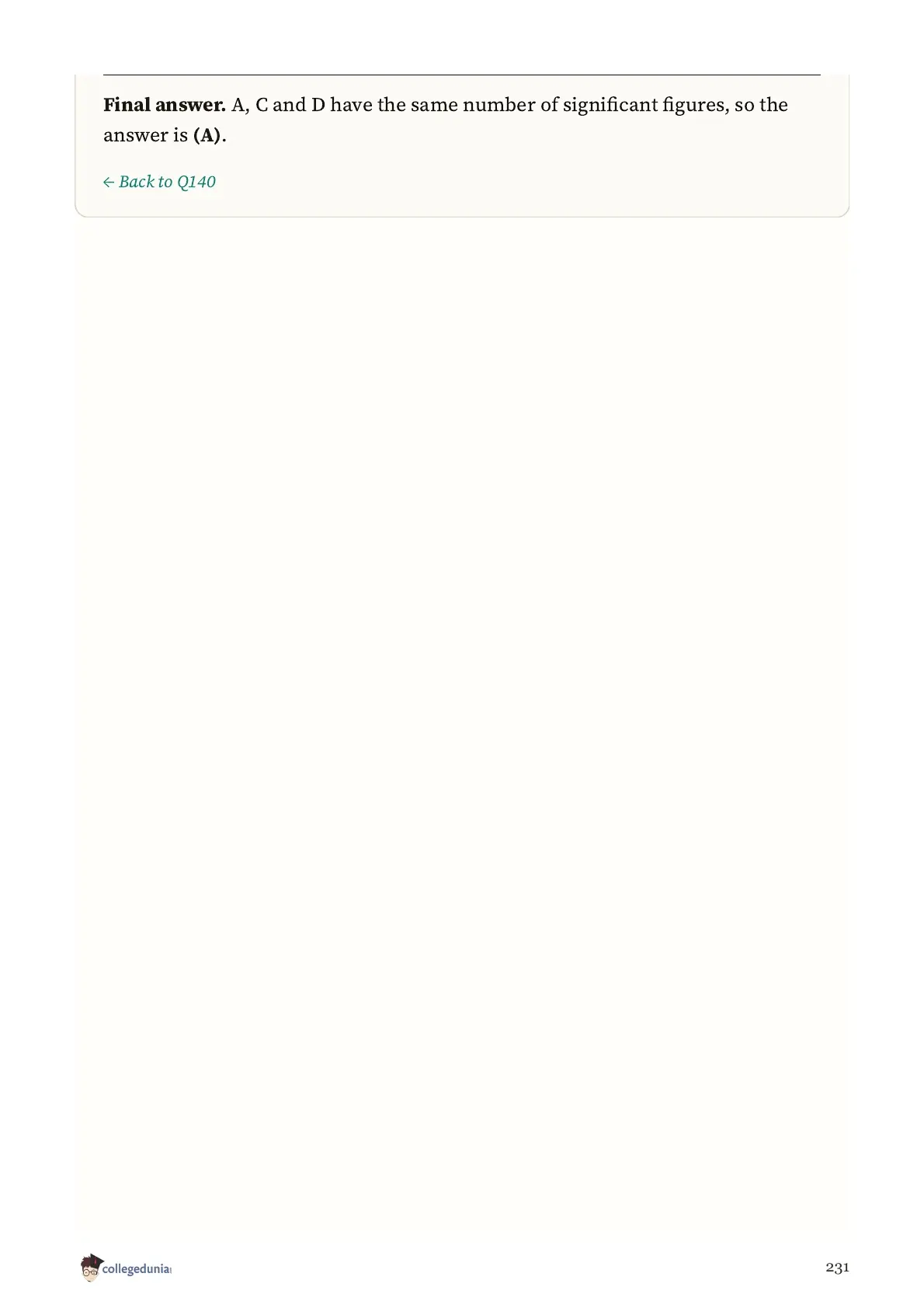
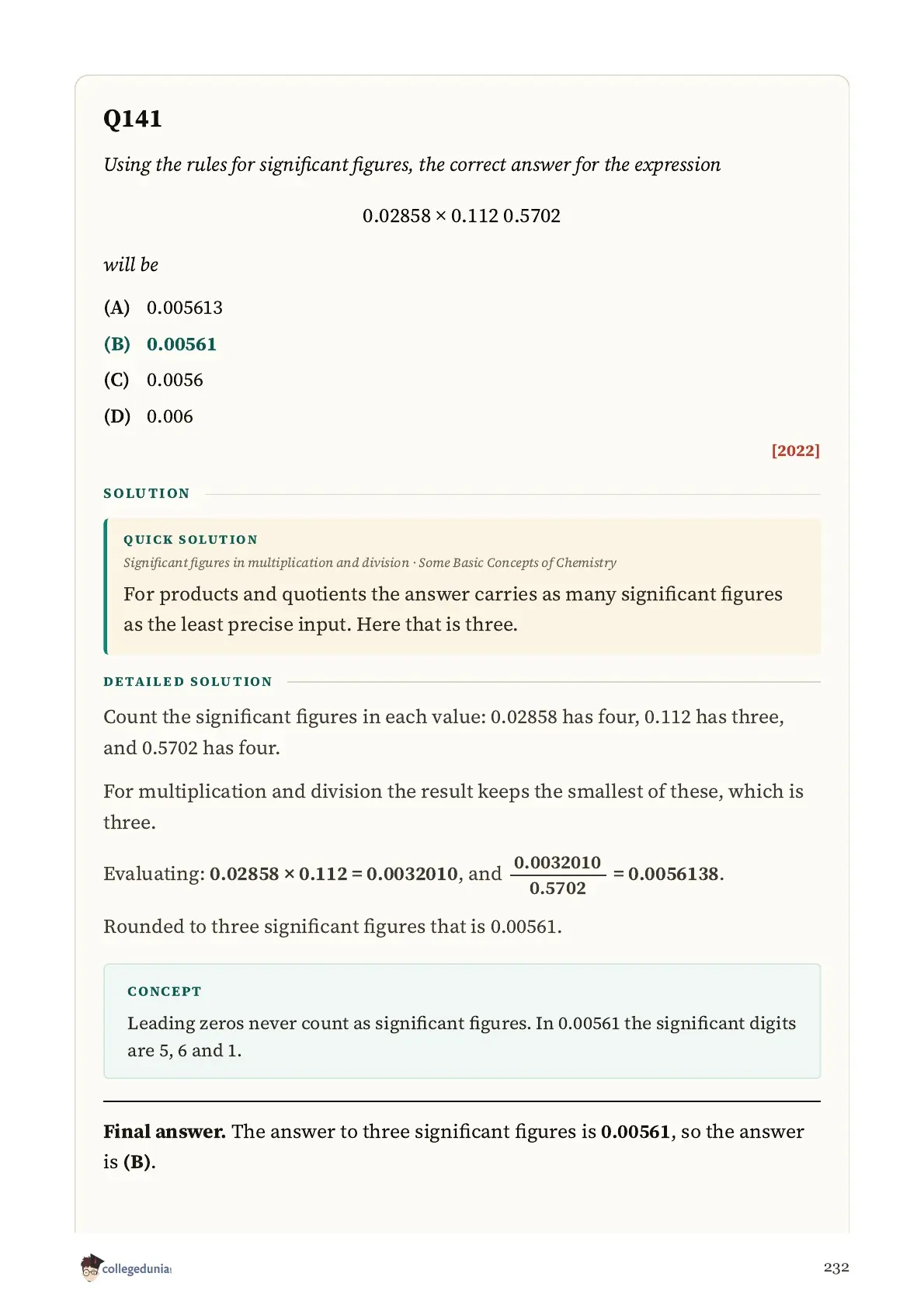

Every question carries its year and its shift, so students can spot which shapes repeat. Each question also links to a worked solution at the back, so the same booklet serves timed practice and then review.
What the 141 Questions Cover
The bank is sectioned by sub-topic rather than by year, so you can attempt one idea at a time. Each section header shows its own split of multiple choice and numerical questions.
- Mole Concept: 25 MCQ and 32 numerical, the largest section by far
- Concentration Terms: 18 MCQ and 24 numerical, covering molarity, molality and mole fraction
- Quantitative Measures in Chemical Equations: 16 MCQ and 19 numerical
- Laws of Chemical Combination: 5 numerical
- Significant Figures: 2 MCQ
The numerical count is the striking part. 80 of the 141 are numerical-answer questions, which is where the section has moved since 2022.
Why Numericals Now Dominate This Chapter
Older papers leaned on definitions and unit conversions. Recent ones ask for a figure, which removes the option to work backwards from choices.
- Numerical questions carry no options, so an approximate method will not survive
- Significant figures and rounding start to matter in the final step
- Limiting reagent problems appear more often, and they punish a skipped check
- Concentration conversions between molarity and molality recur almost yearly
Practising against the real split, rather than a set of tidy MCQs, is the point of using a bank drawn from actual papers.
How the Five Years Break Down
Spreading the questions across 2022 to 2026 makes the repetition visible in a way a single year never does.
- 2022 and 2023 contribute 35 questions each, the heaviest years
- 2024 adds 27, 2025 adds 29
- 2026 contributes 18 so far
Shifts are recorded on every question, so a student can see the same idea arriving in a morning and an evening paper with only the numbers changed.
Watch the Chapter Covered in One Sitting
Source: JEE Wallah
How to Work Through the Bank
Attempt a whole section before checking anything, and time yourself against the real pace of the paper.
- Take one sub-topic per sitting, starting with Mole Concept since it is the largest
- Separate the numerical questions and attempt them without looking for options
- Mark every question where you guessed, not only the ones you got wrong
- Note the year and shift on anything you miss, then look for its twin in another year
What Trips Students in This Chapter
The chapter is not conceptually hard. It punishes carelessness, and the same few slips account for most lost marks.
- Skipping the limiting reagent check and computing from the wrong reactant
- Confusing molarity with molality, which differ by using volume against mass of solvent
- Losing track of significant figures on a numerical answer
- Mixing up empirical and molecular formula in a percentage-composition question
- Forgetting that gas volumes only relate directly at the same temperature and pressure
JEE Main Mole Concept Previous Year Questions FAQs
Ques. How many questions does JEE Main ask from mole concept?
Ans. The chapter reliably contributes one to three questions per paper, and across 2022 to 2026 it produced the 141 collected here. Because it also underpins stoichiometry in physical and inorganic chemistry, its real weight is higher than the count suggests.
Ques. Does this PDF include solutions?
Ans. Yes. All 141 questions carry a worked solution. Each one opens with a short quick solution that names the idea being tested, then a full step-by-step derivation, and most close with a common mistake to avoid. Tap a question number to jump to its solution and use the back link to return.
Ques. Why are so many of the questions numerical?
Ans. Because that is how the paper has changed. 80 of the 141 are numerical-answer questions, so options cannot be used to work backwards. Practising against that real split is more useful than practising only multiple choice.
Ques. Which sub-topic should students start with?
Ans. Mole Concept, which is the largest section at 57 questions. Concentration Terms is the next heaviest and shares most of its methods, so the two together cover the bulk of what the chapter asks.
Ques. Can the PDF be downloaded free?
Ans. Yes. The full 52 page booklet can be read on this page and downloaded at no cost, so students can print it or keep it on a phone for practice.



Comments