




JEE Main Inverse Trigonometric Functions PYQ, free to download as a 42-page PDF. The bank carries 27 solved questions from the 2023 to 2026 papers and takes roughly two days to work through, so split it across identities and domains.
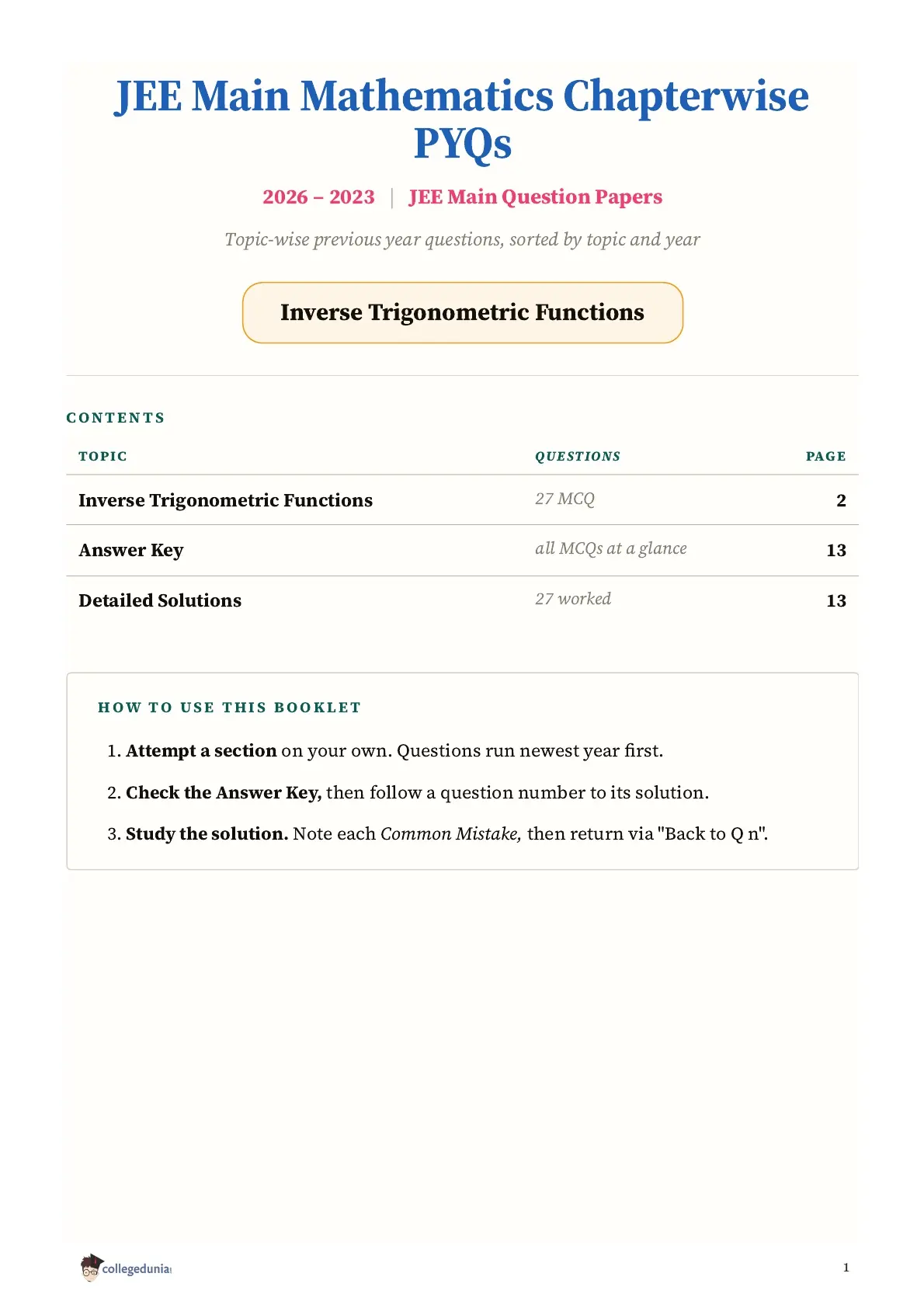
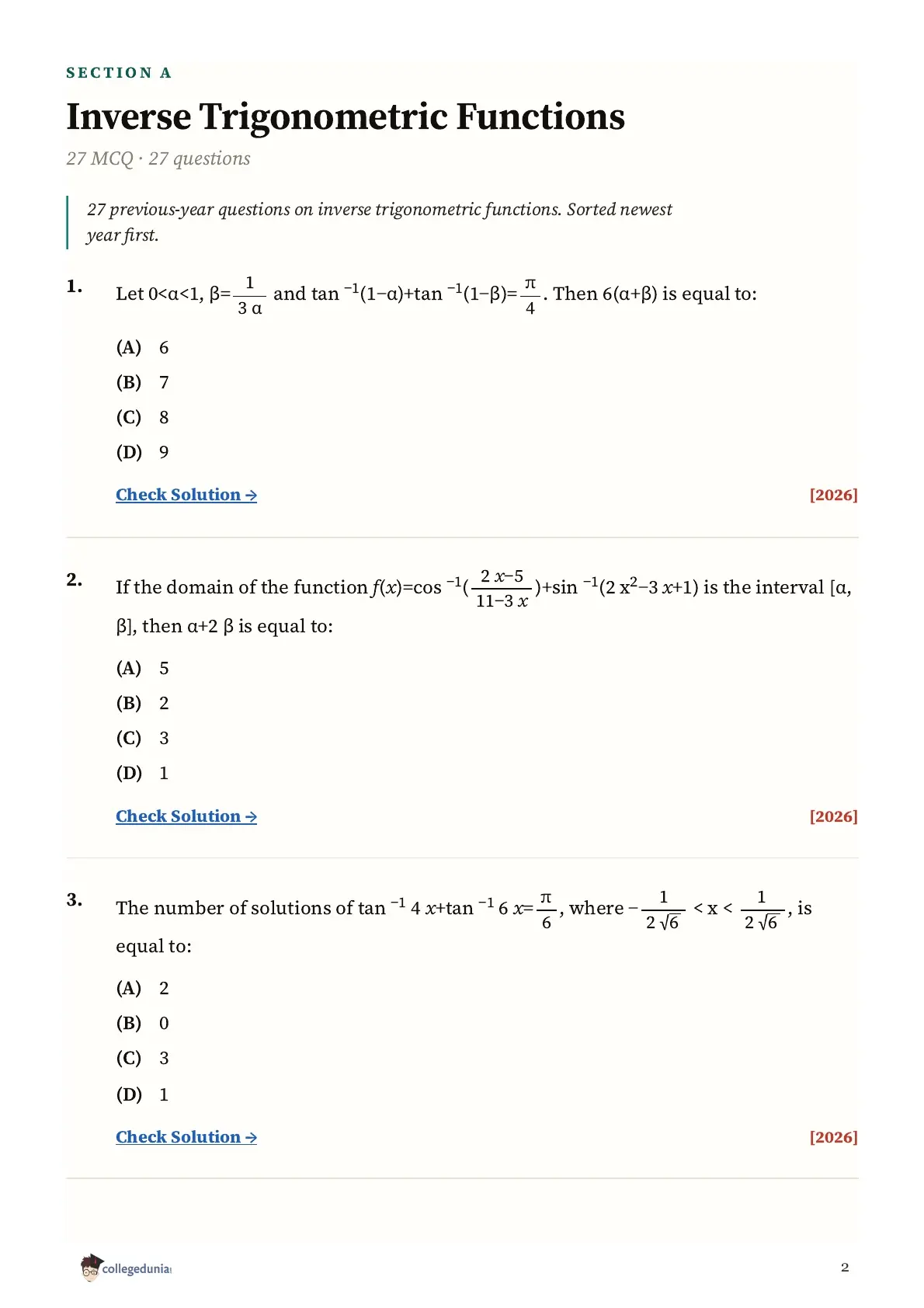
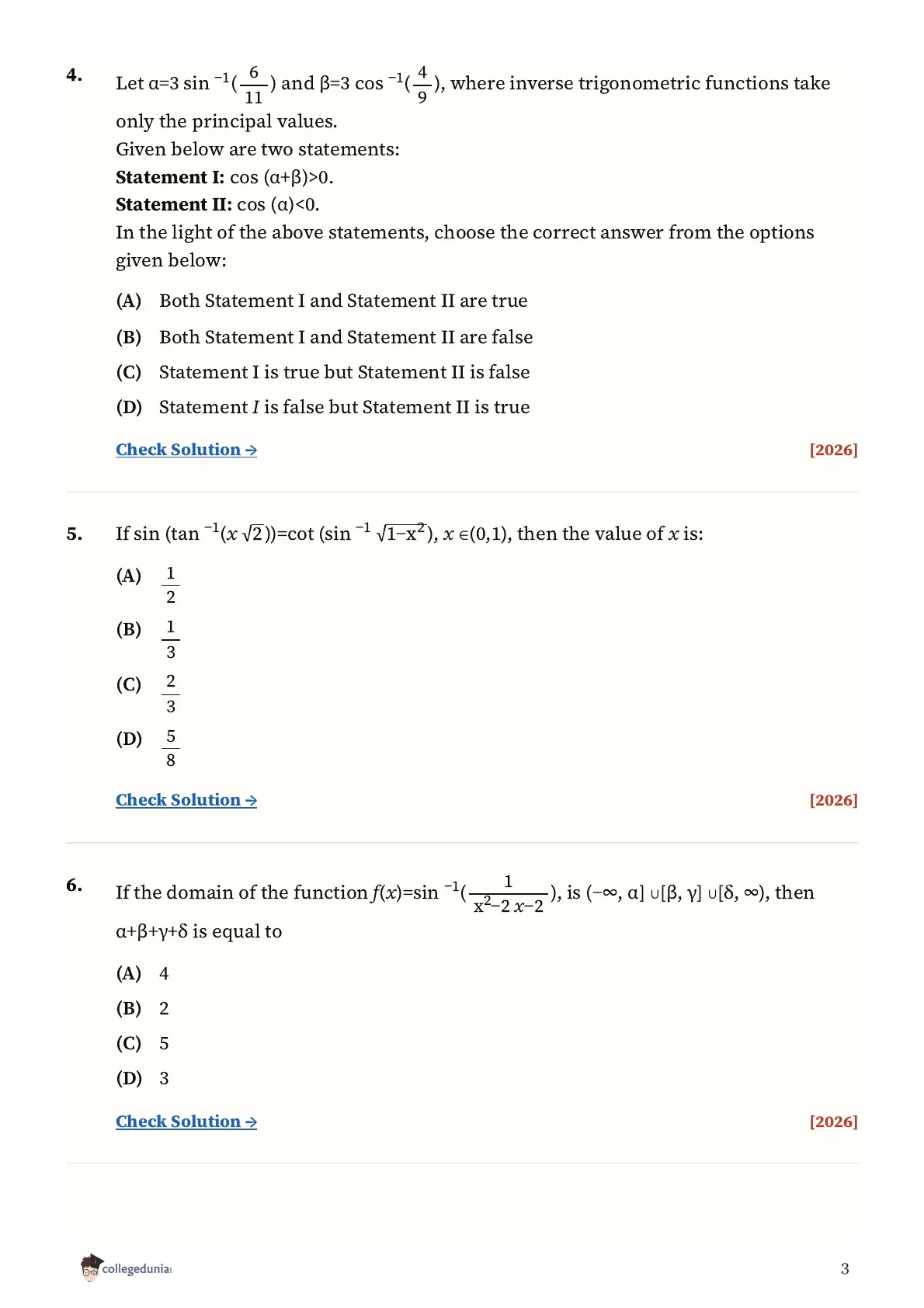
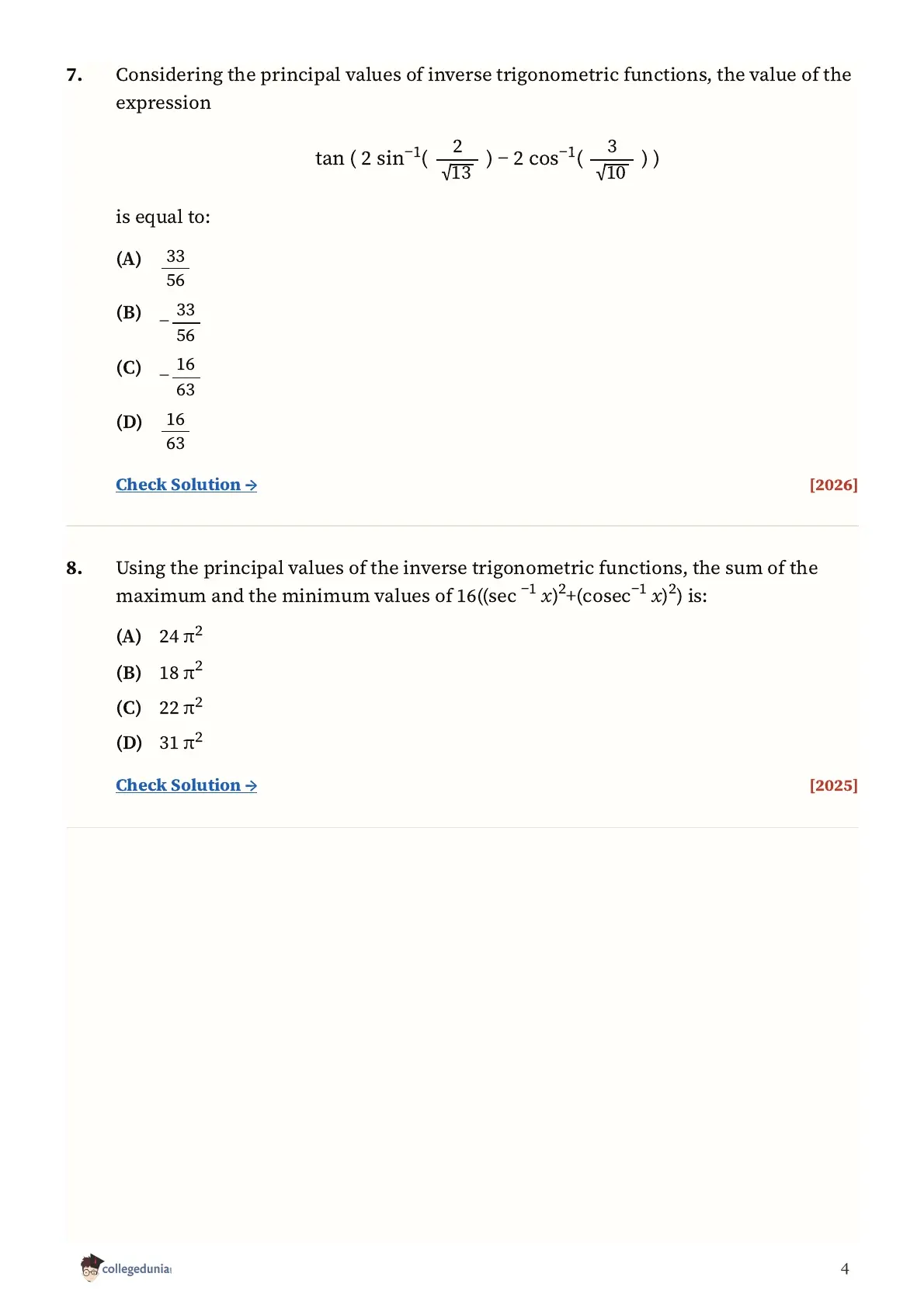
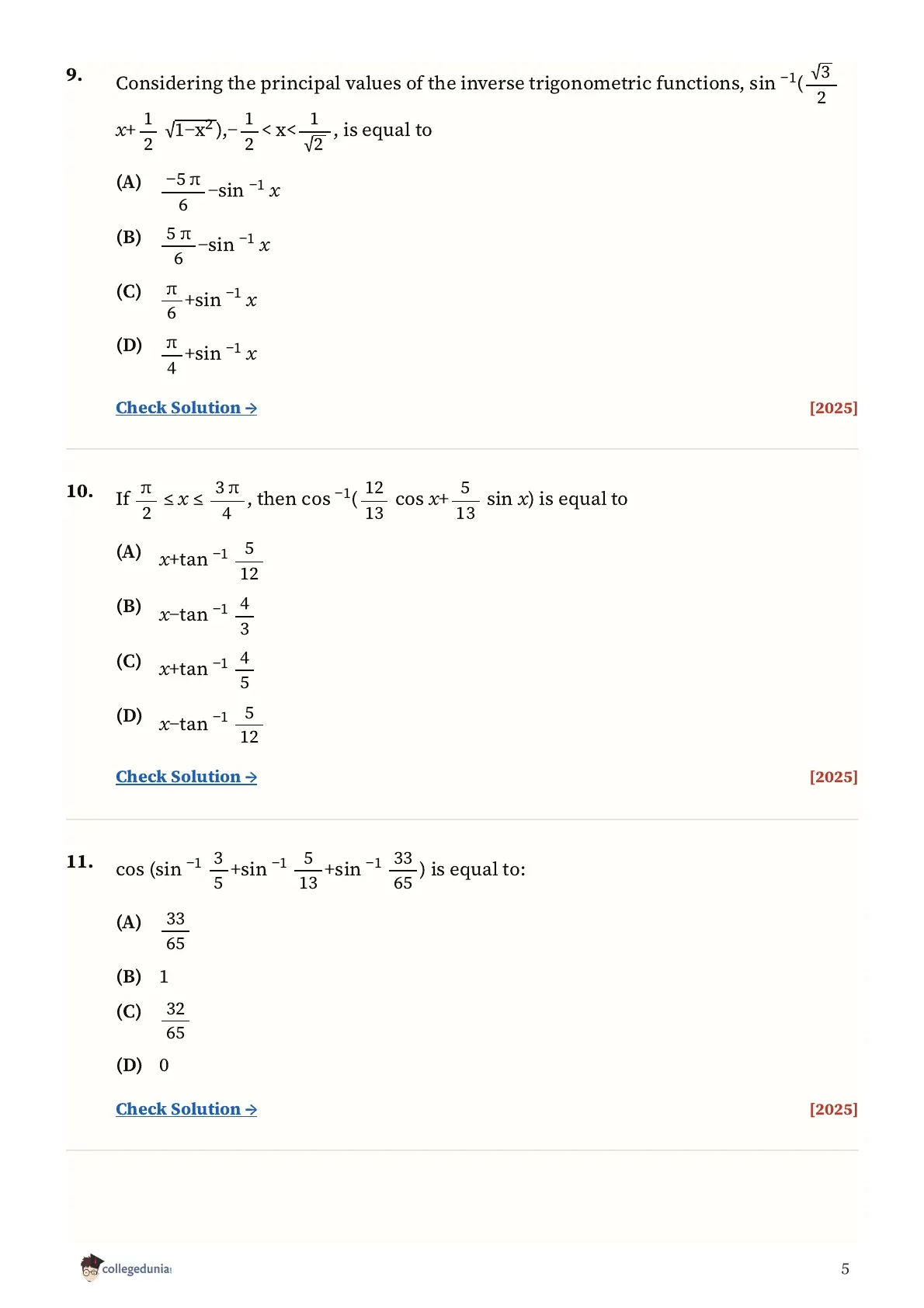
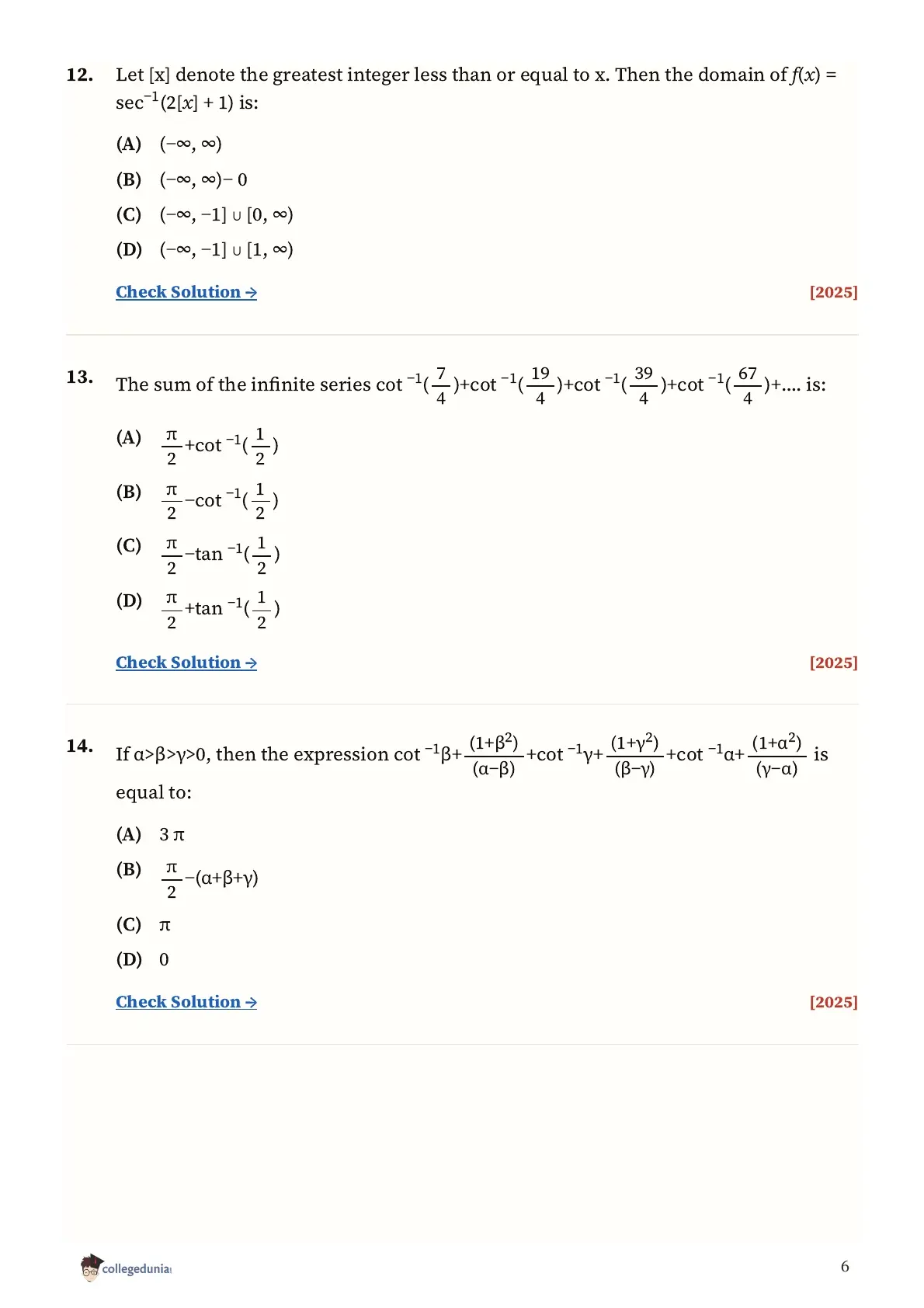
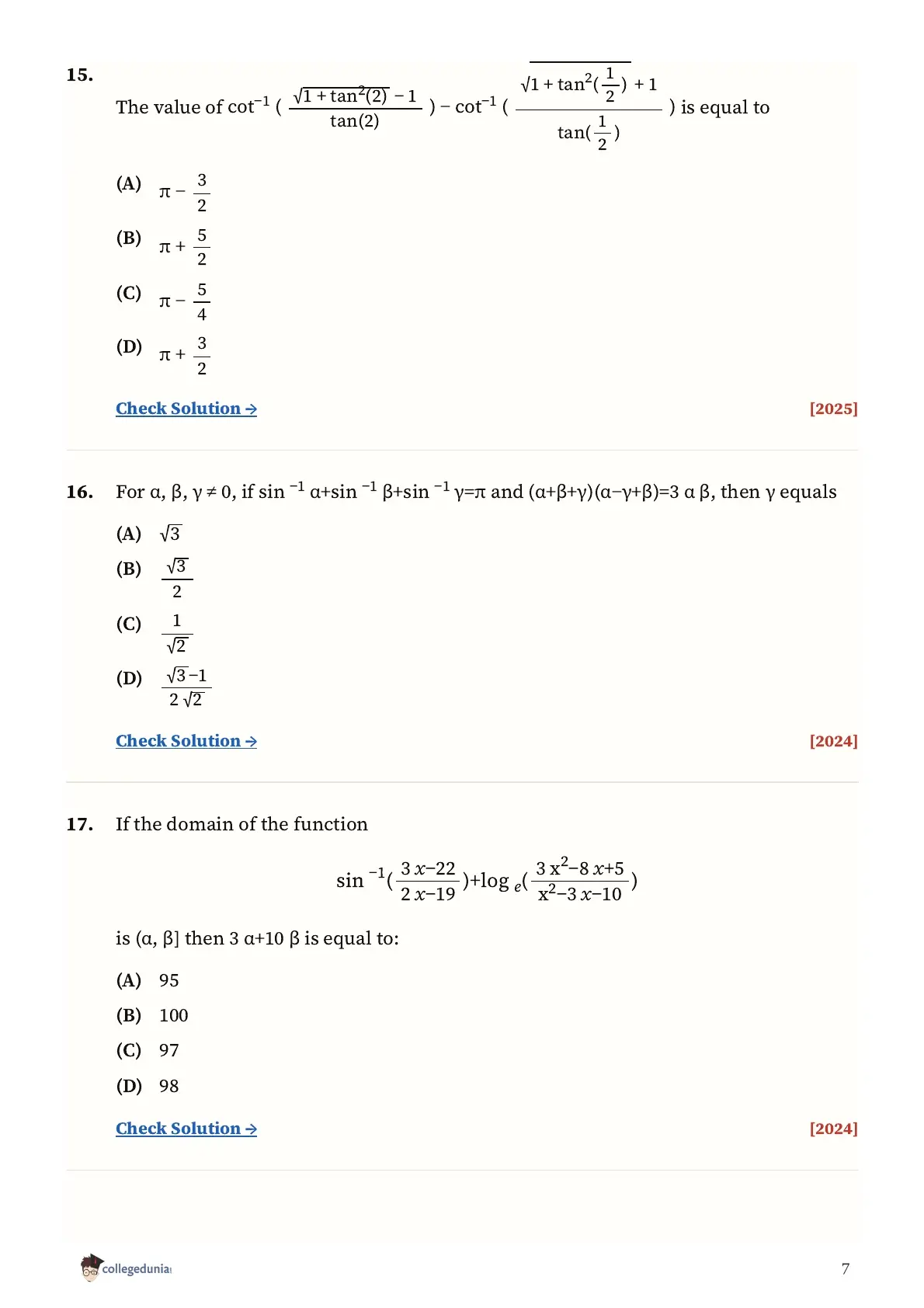
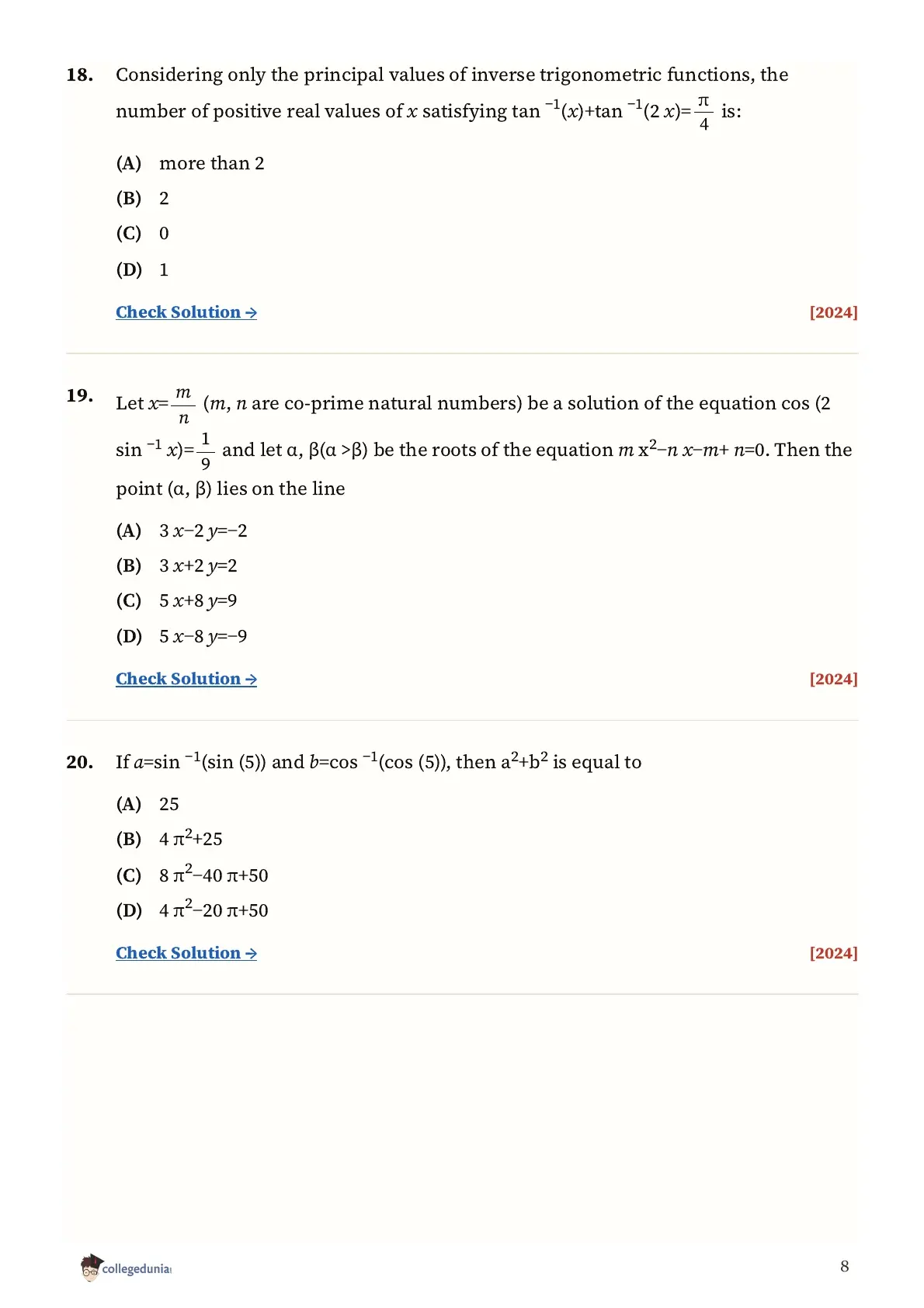
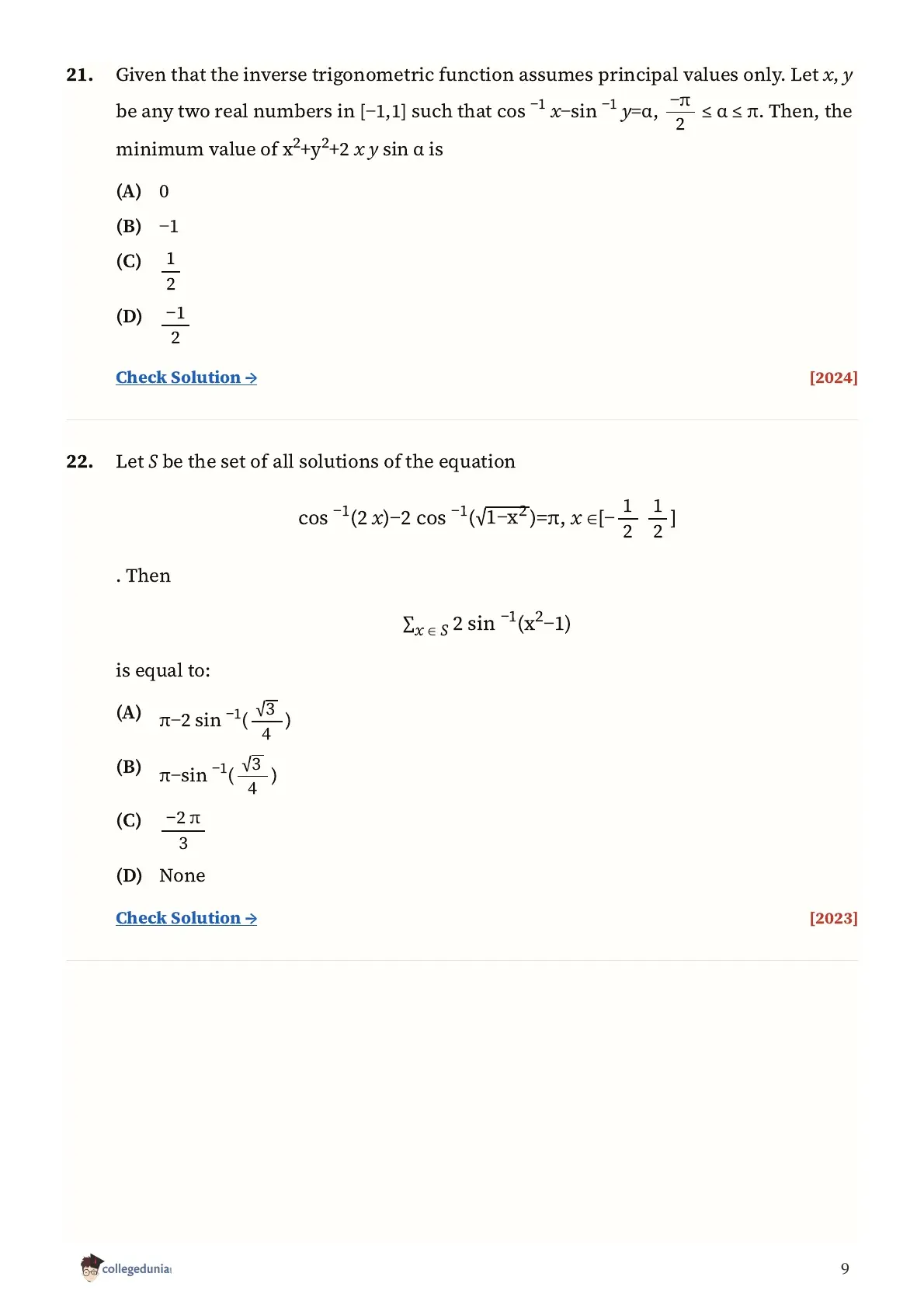
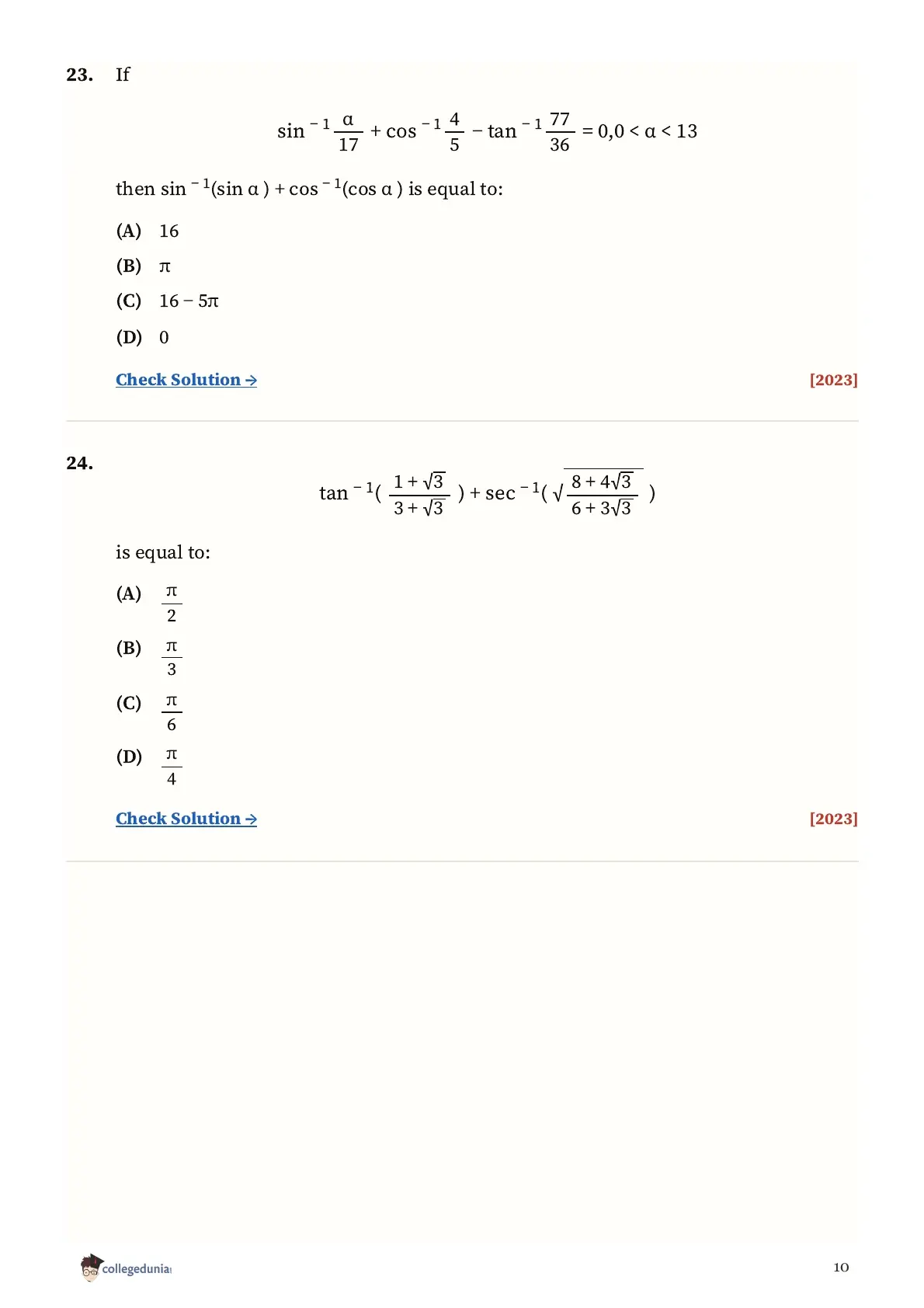
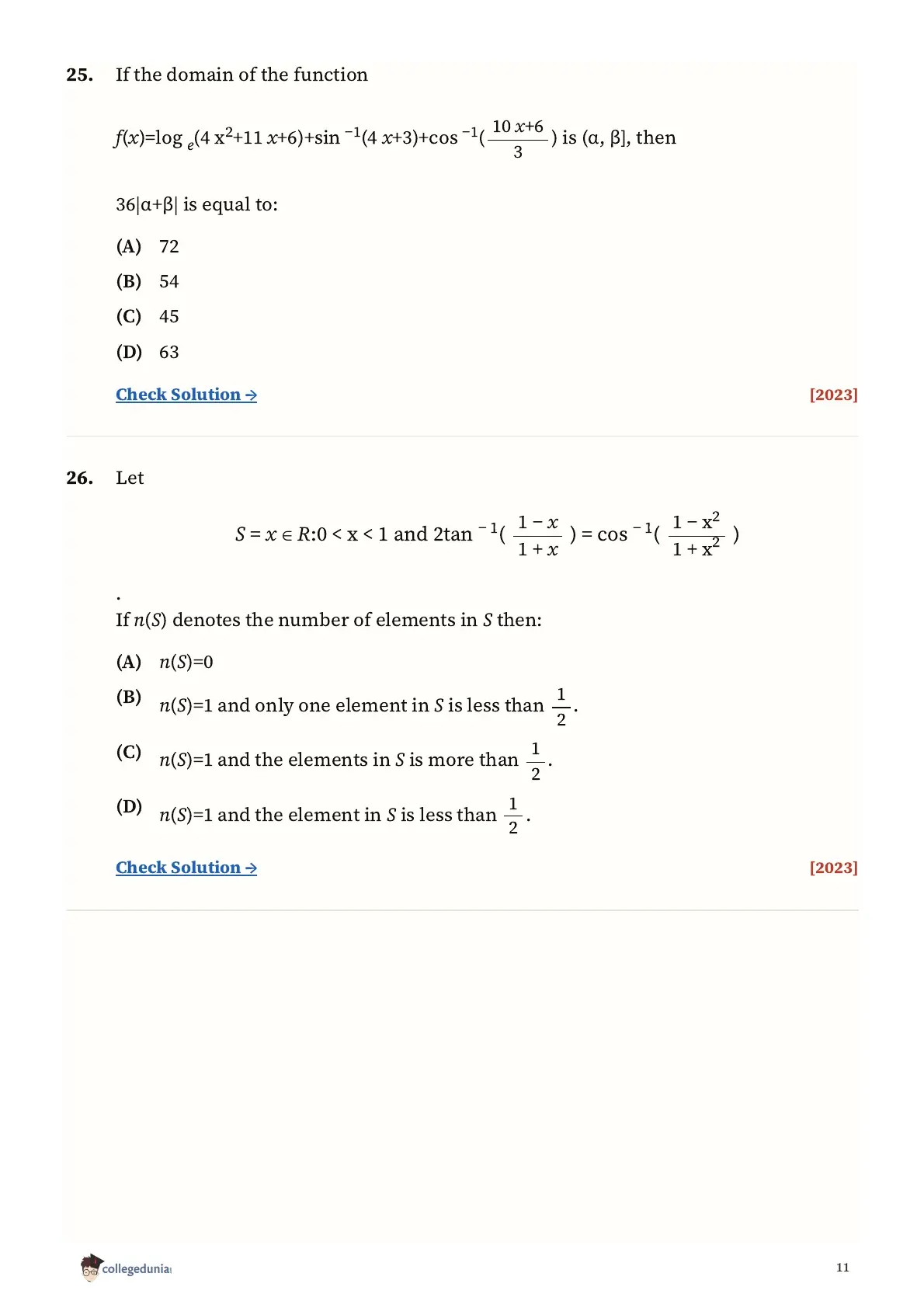
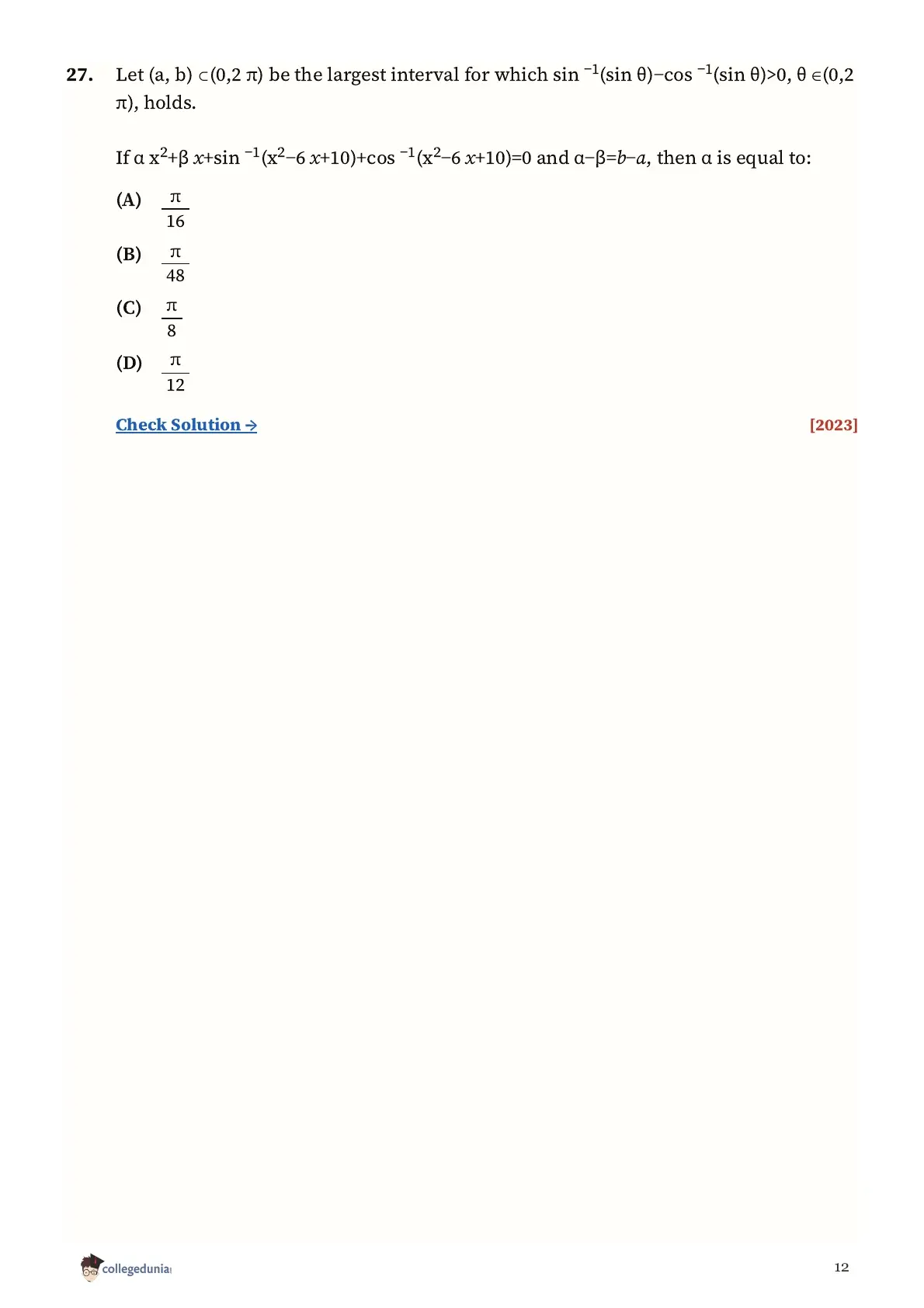
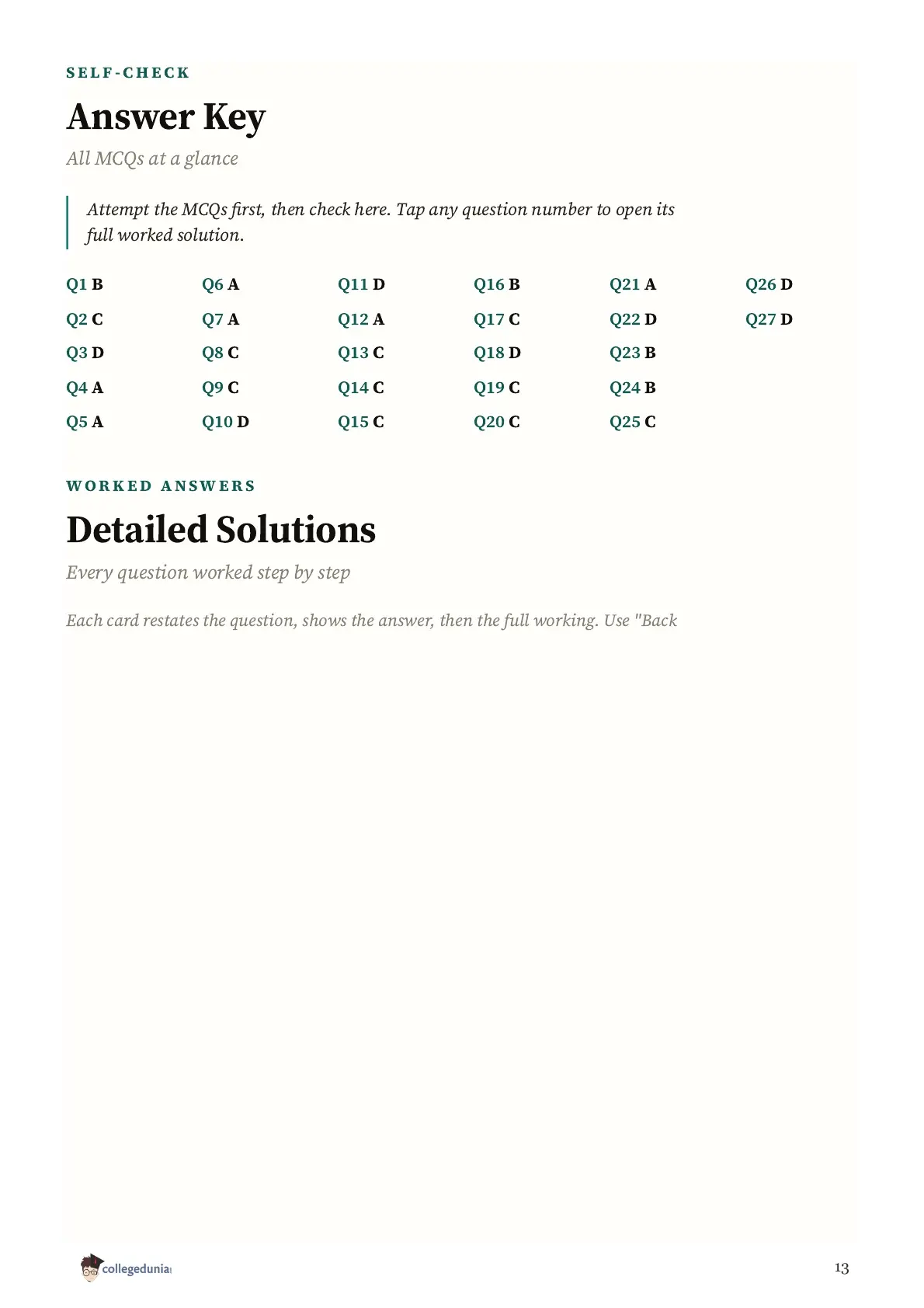
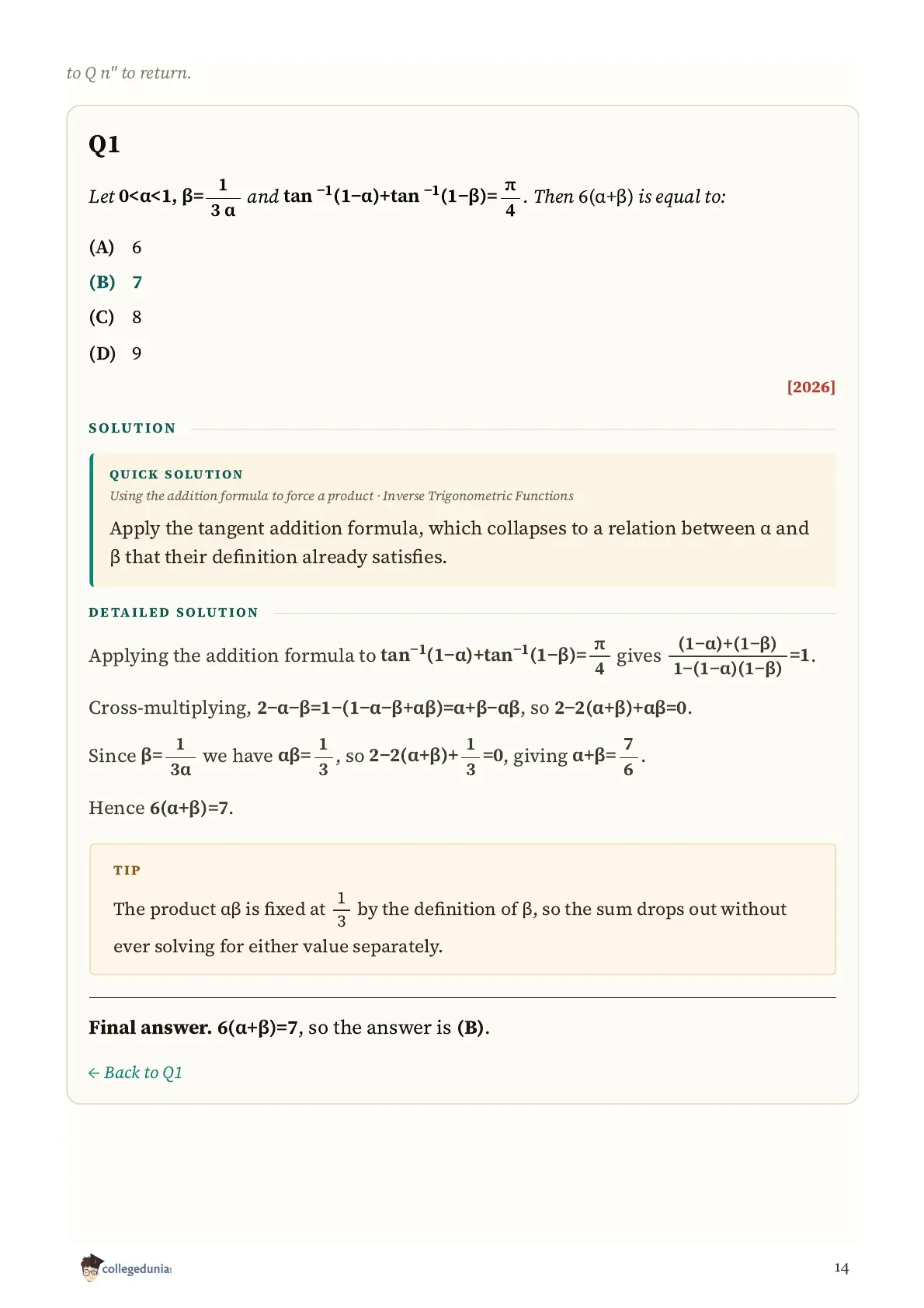
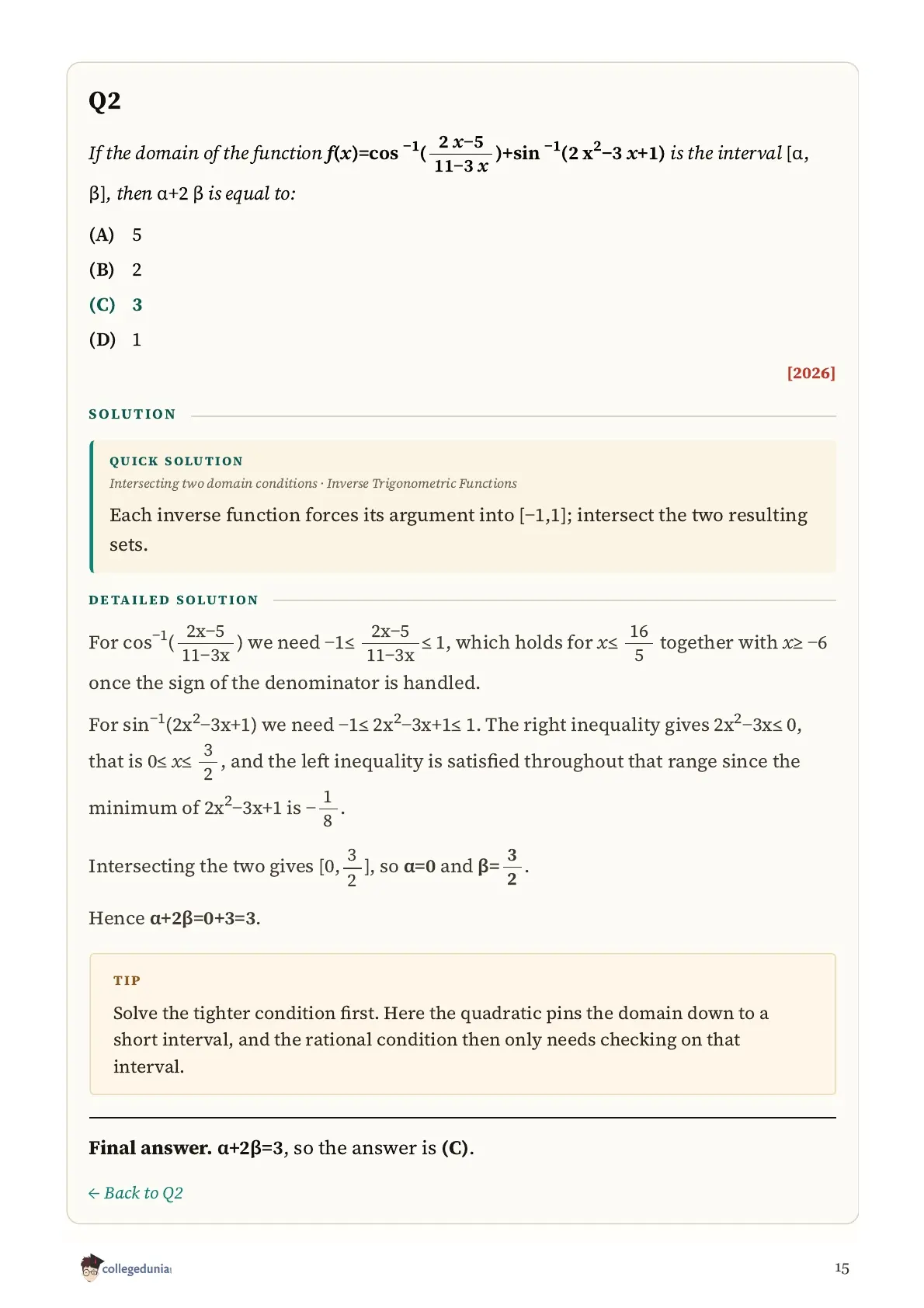
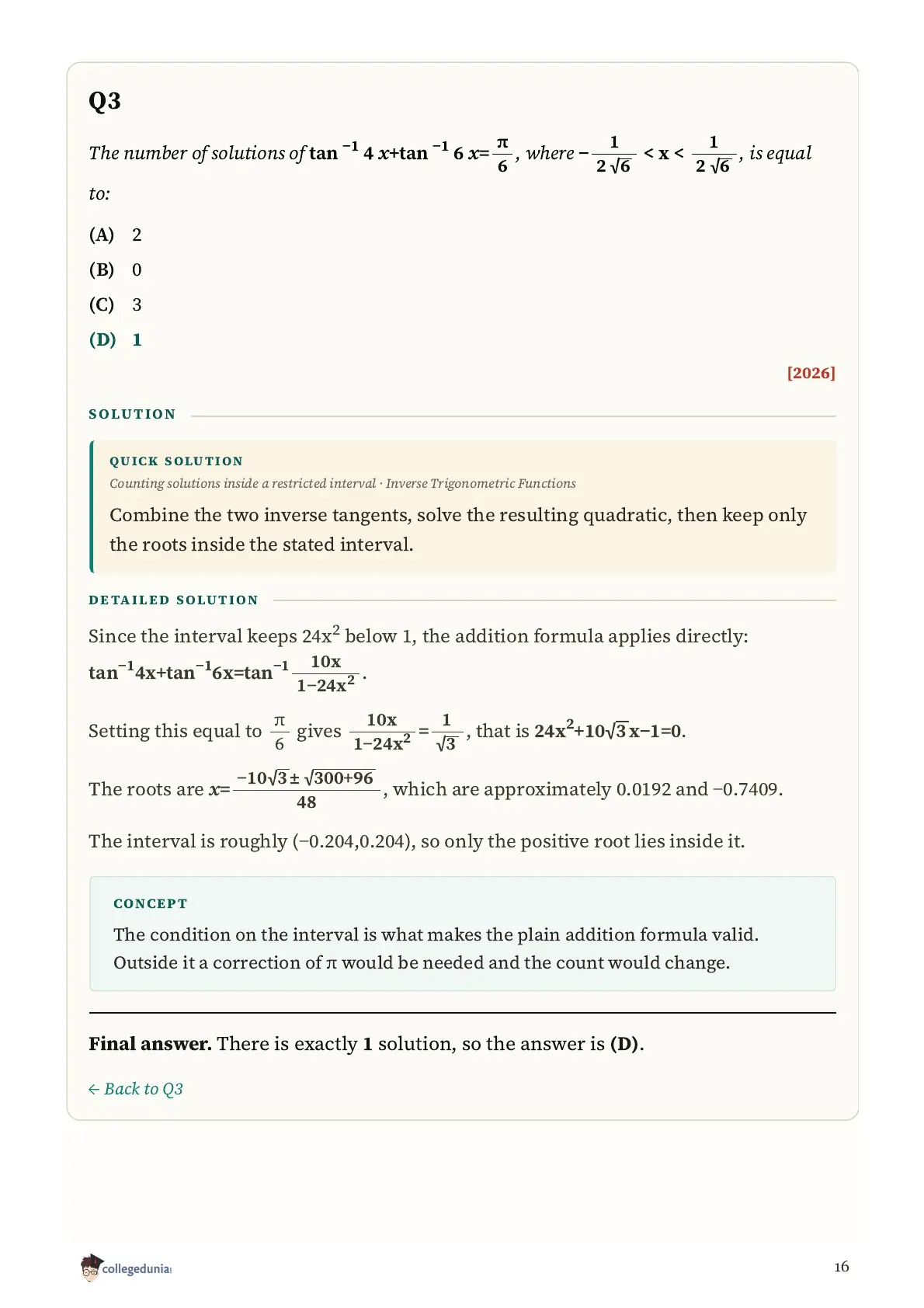
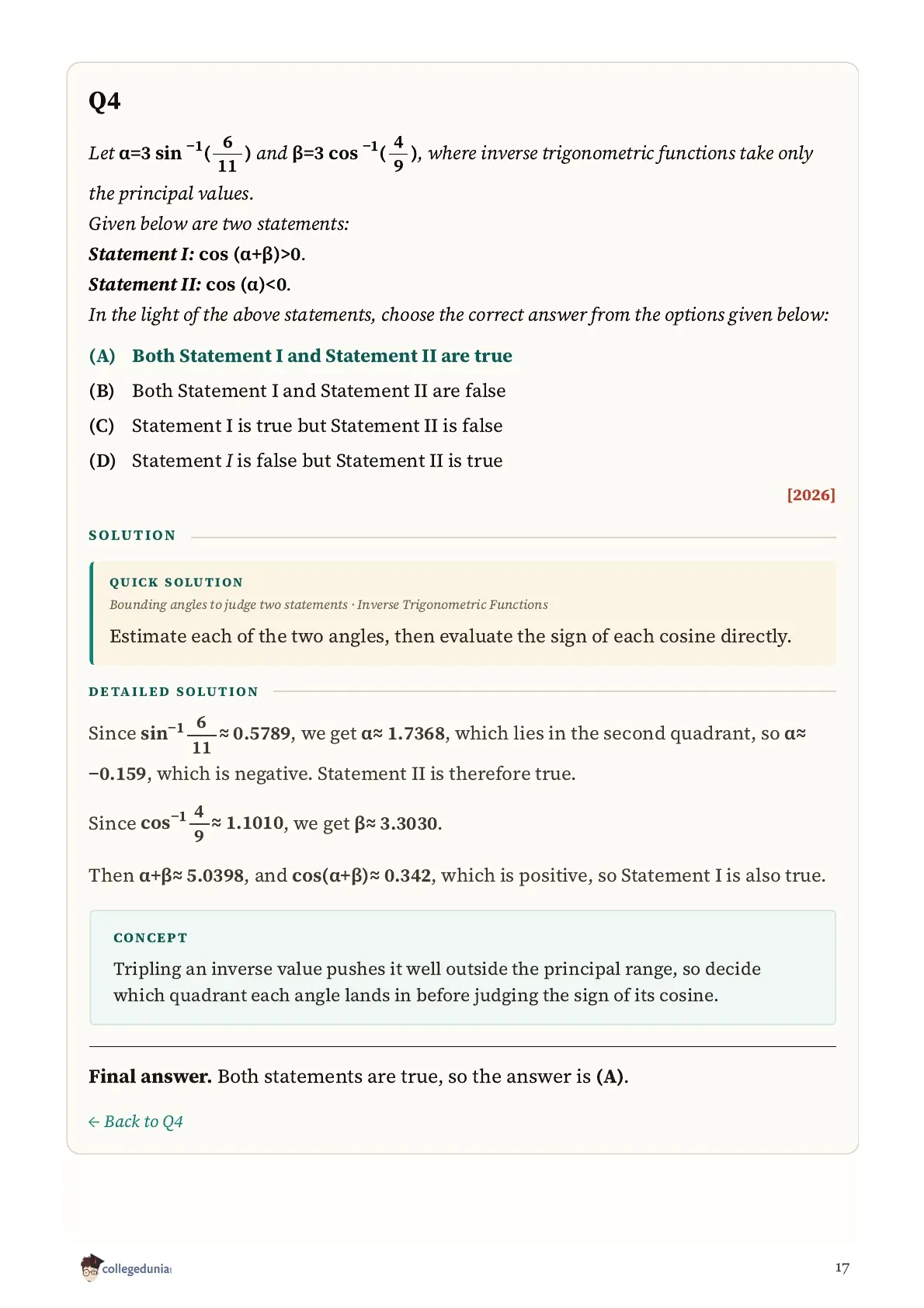
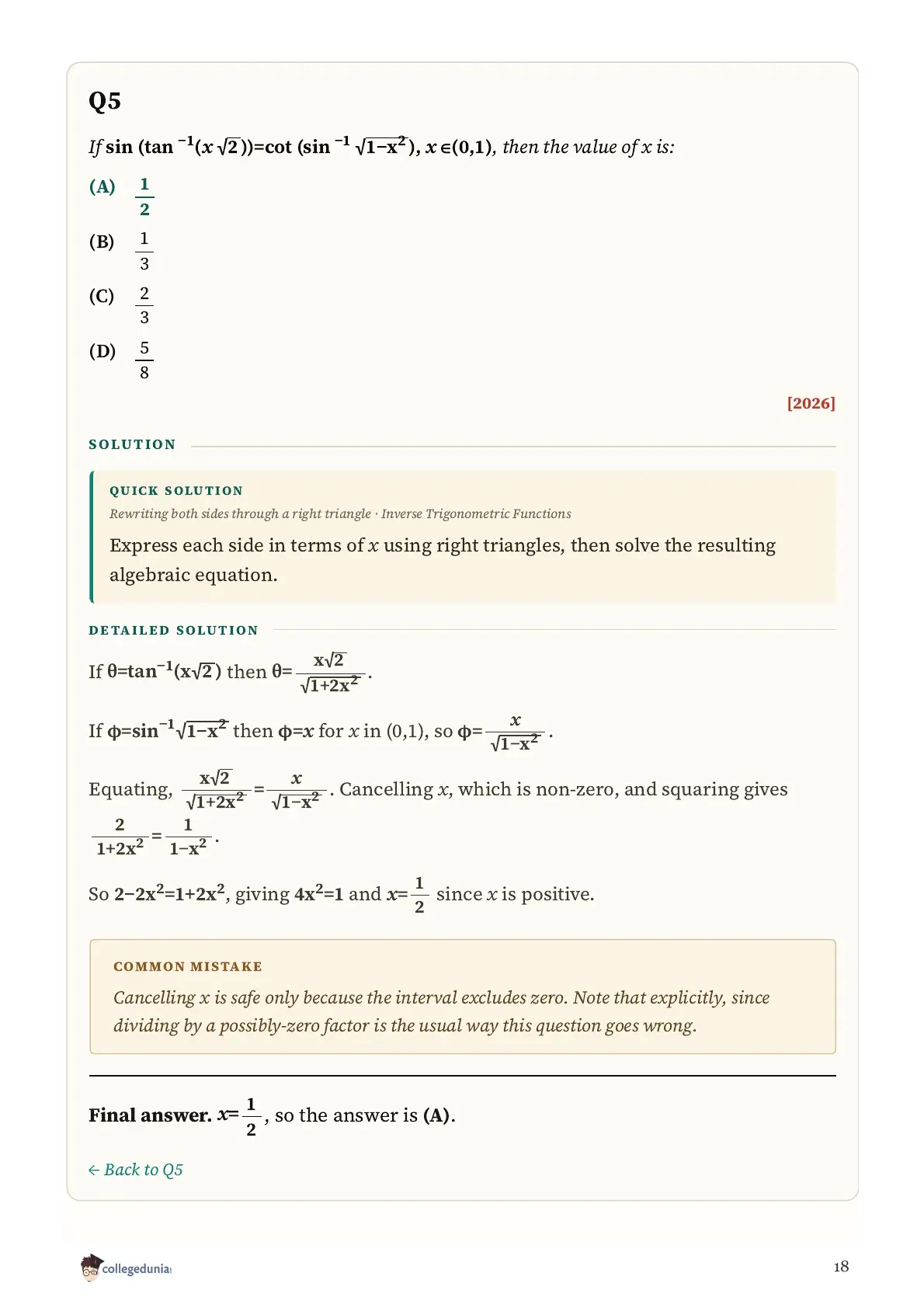
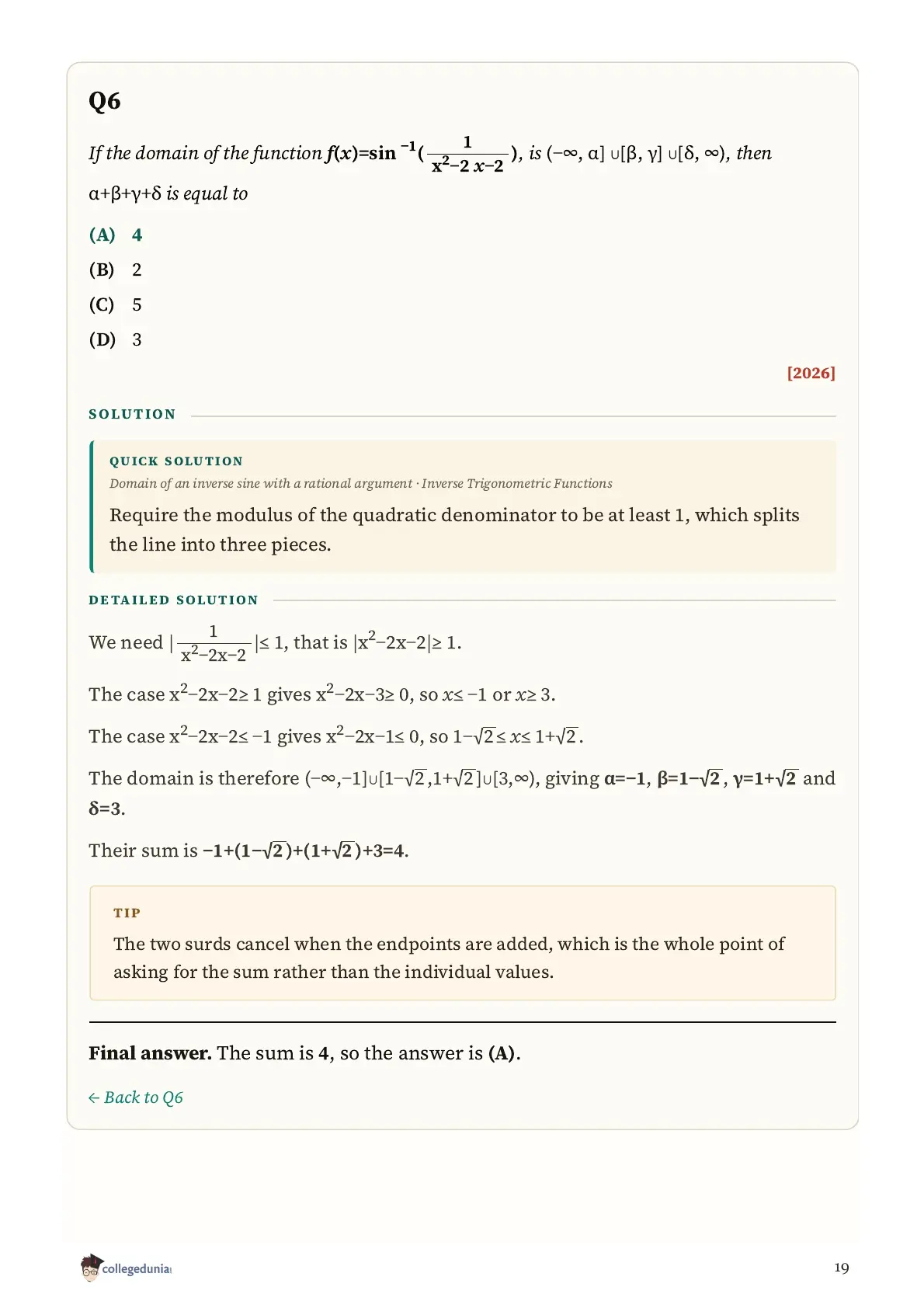
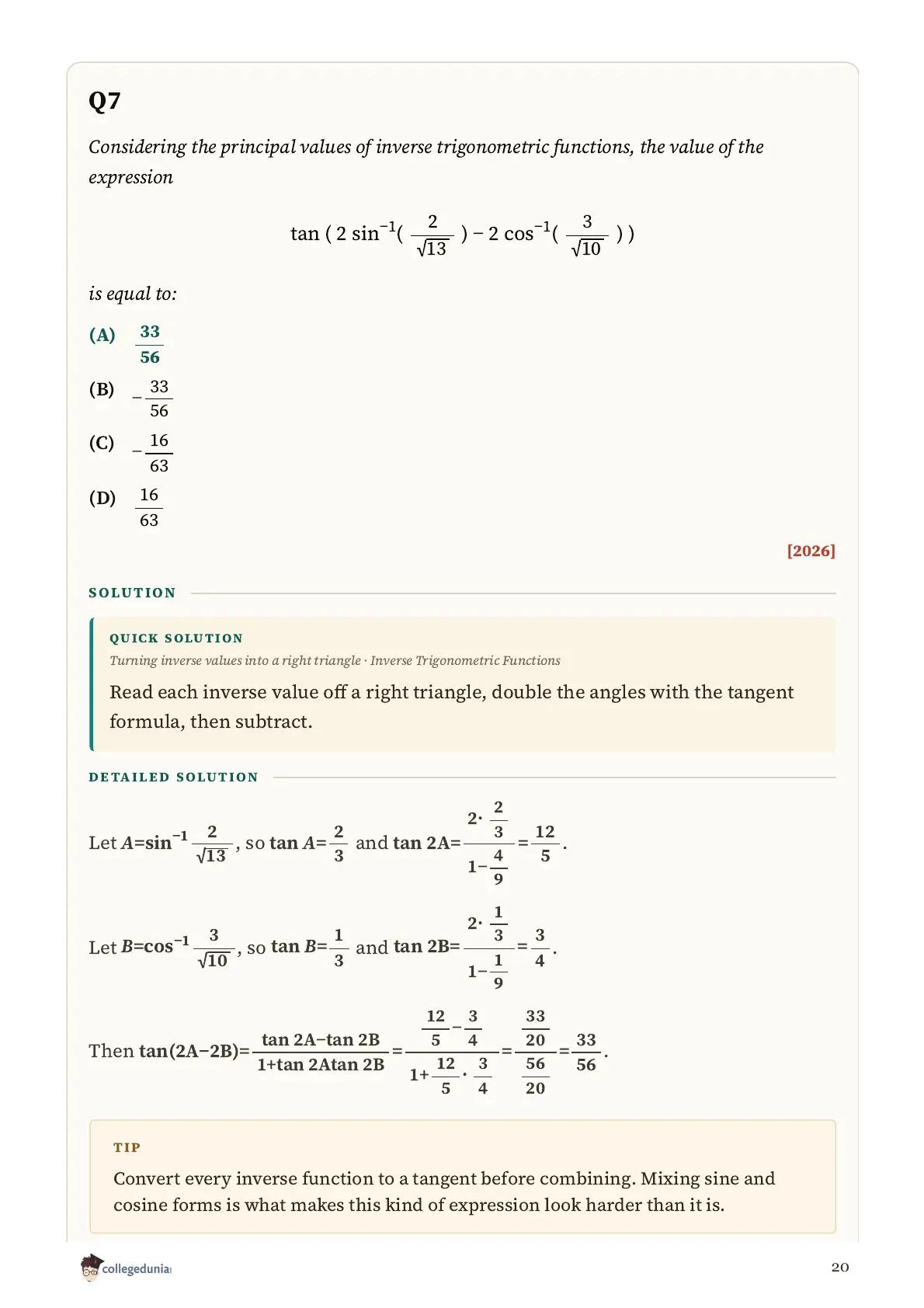
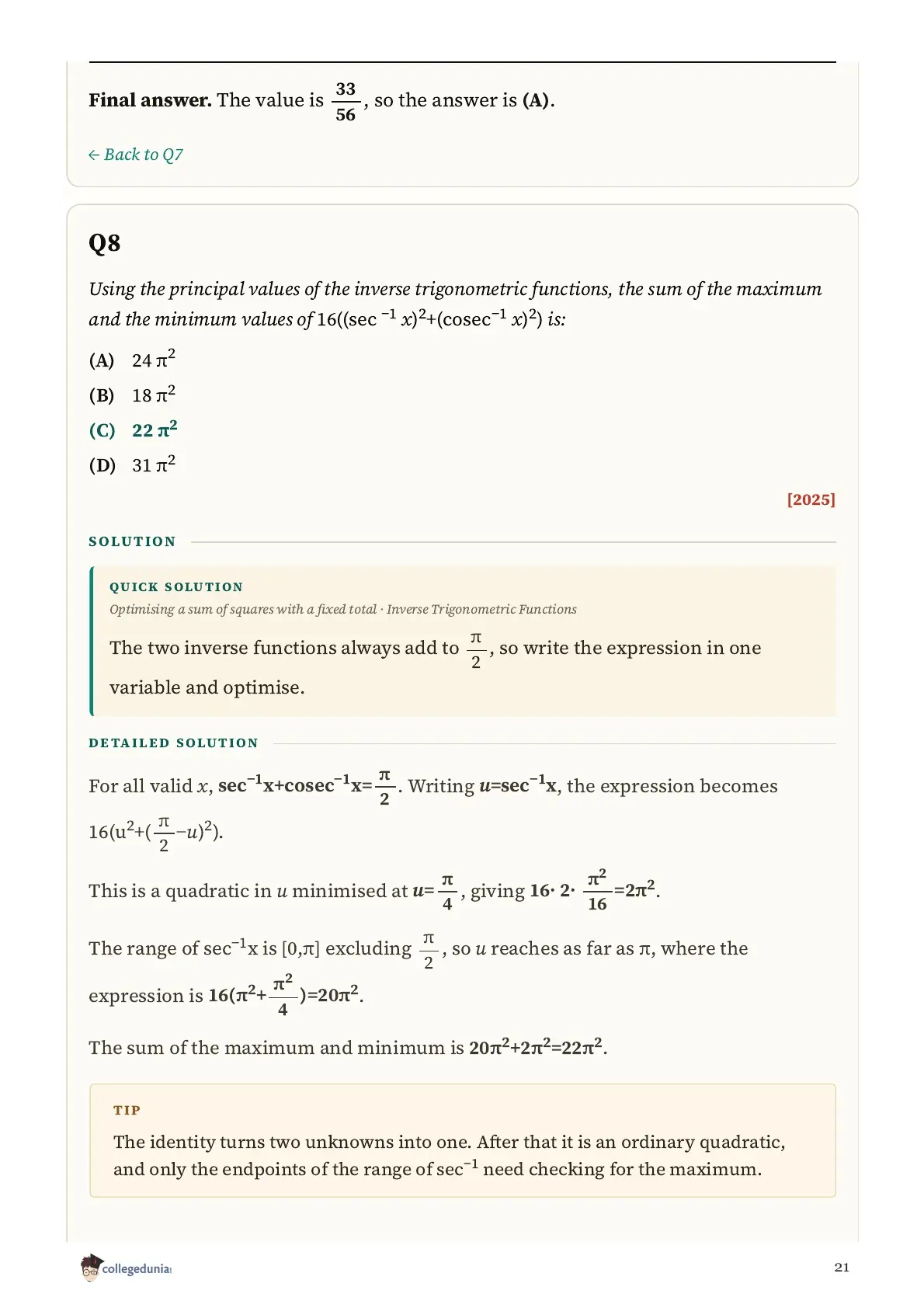
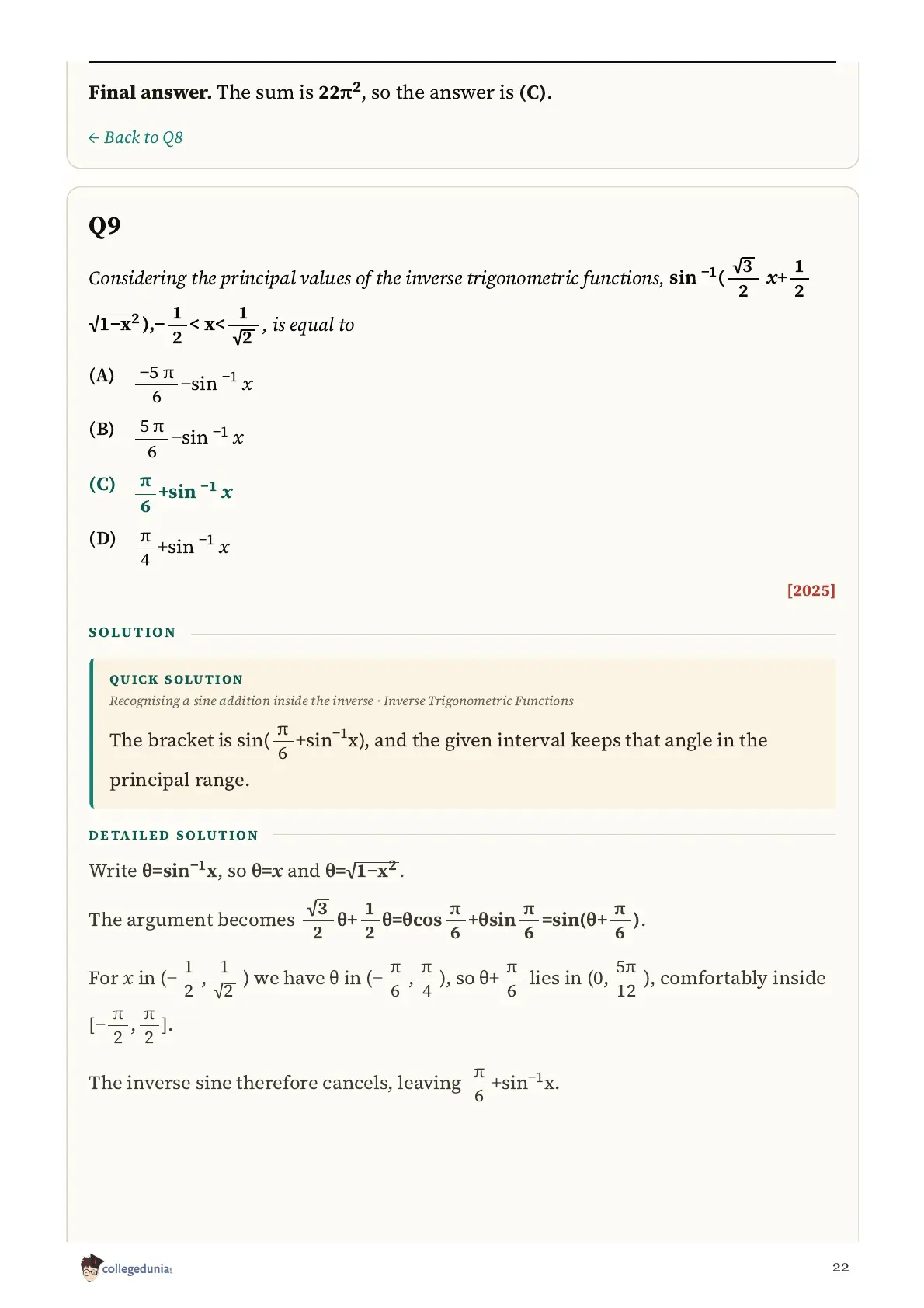
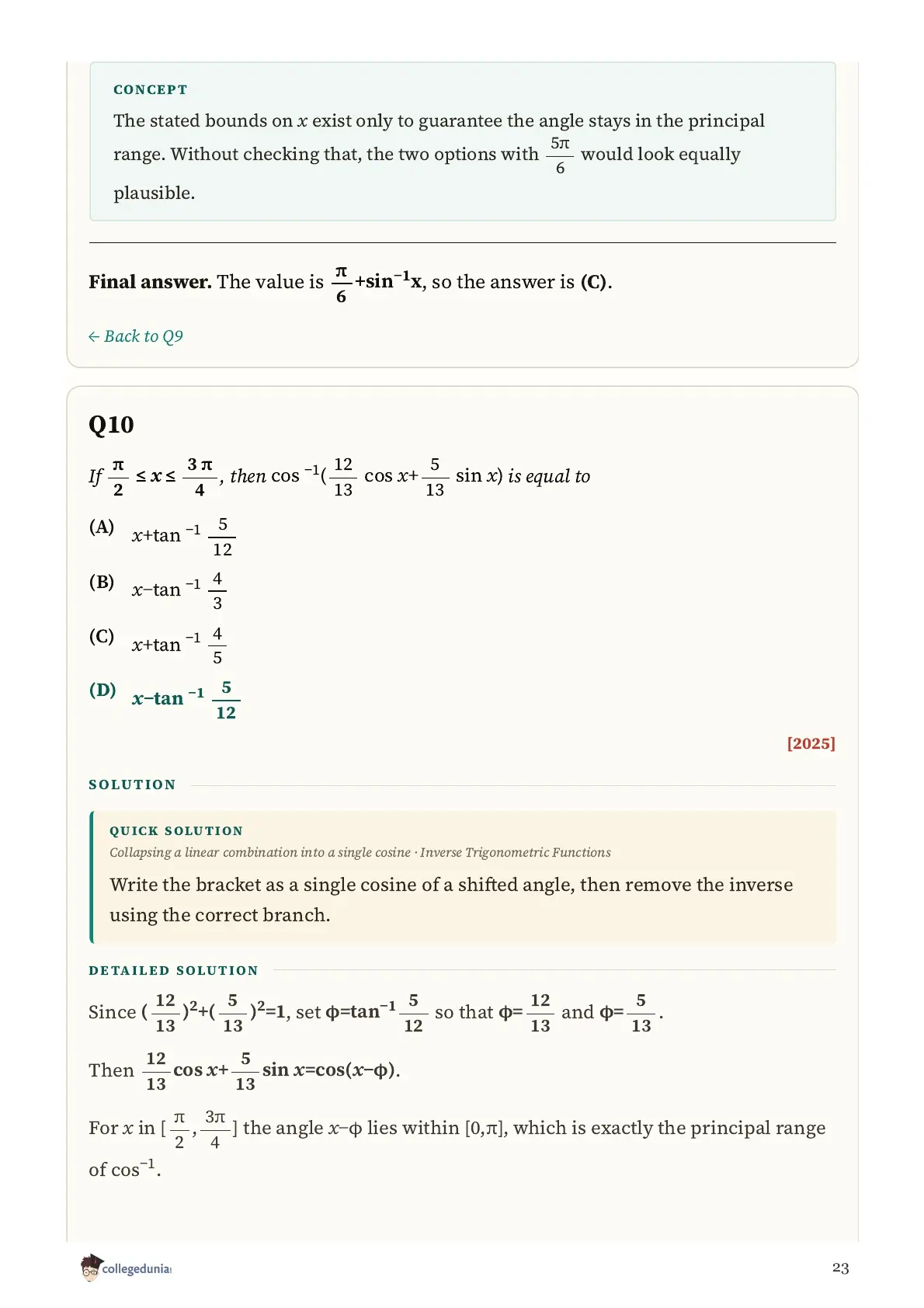
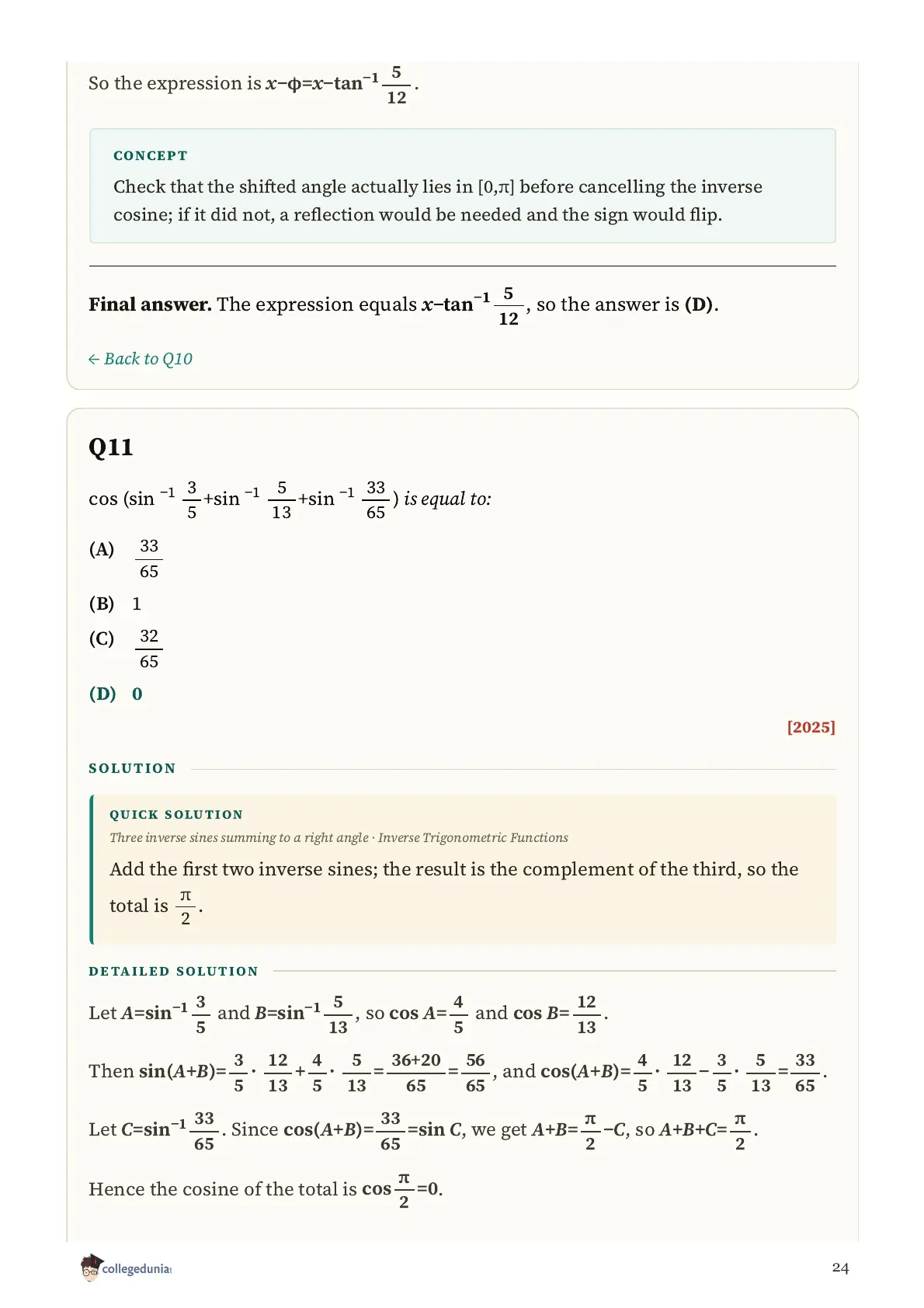
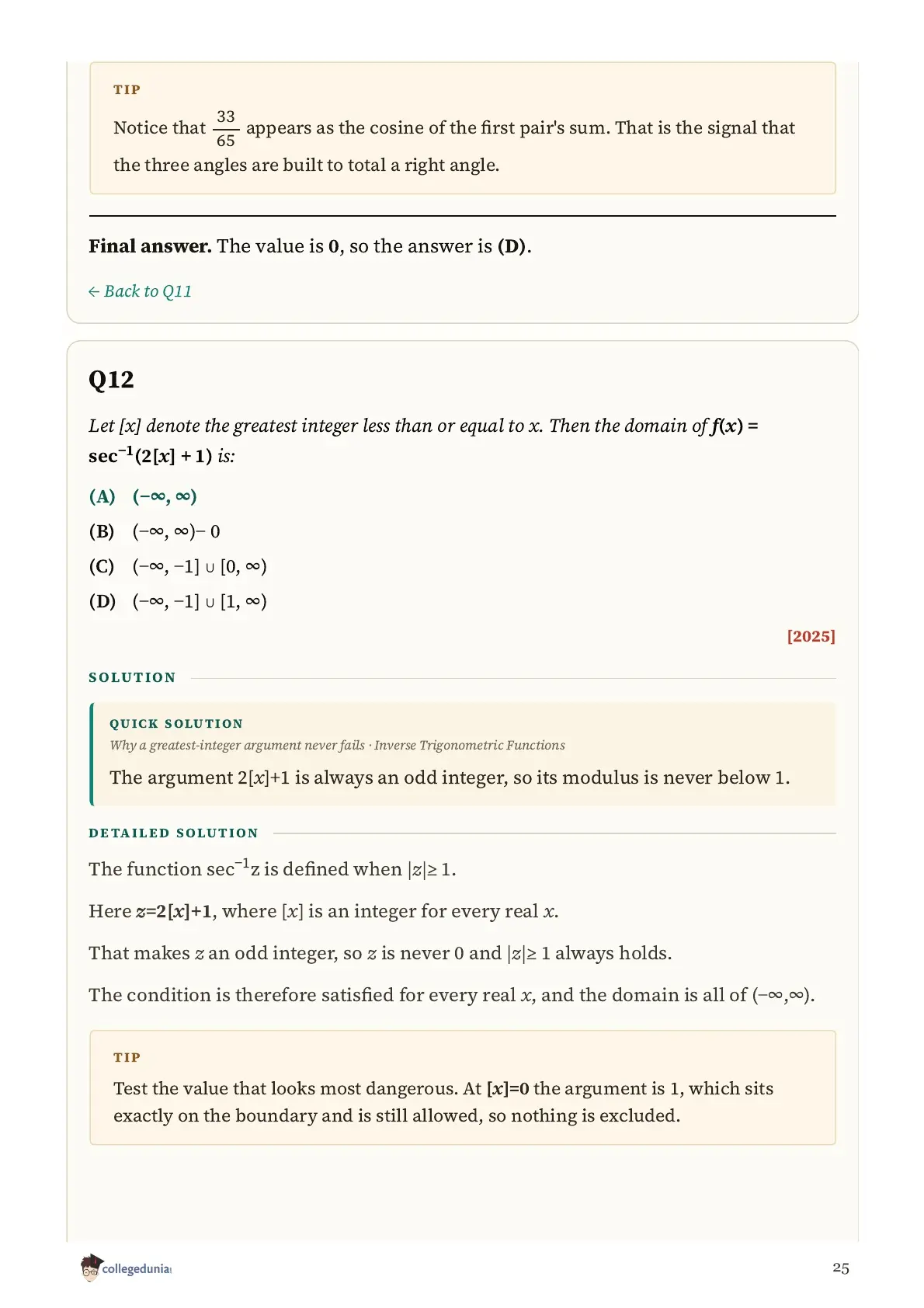
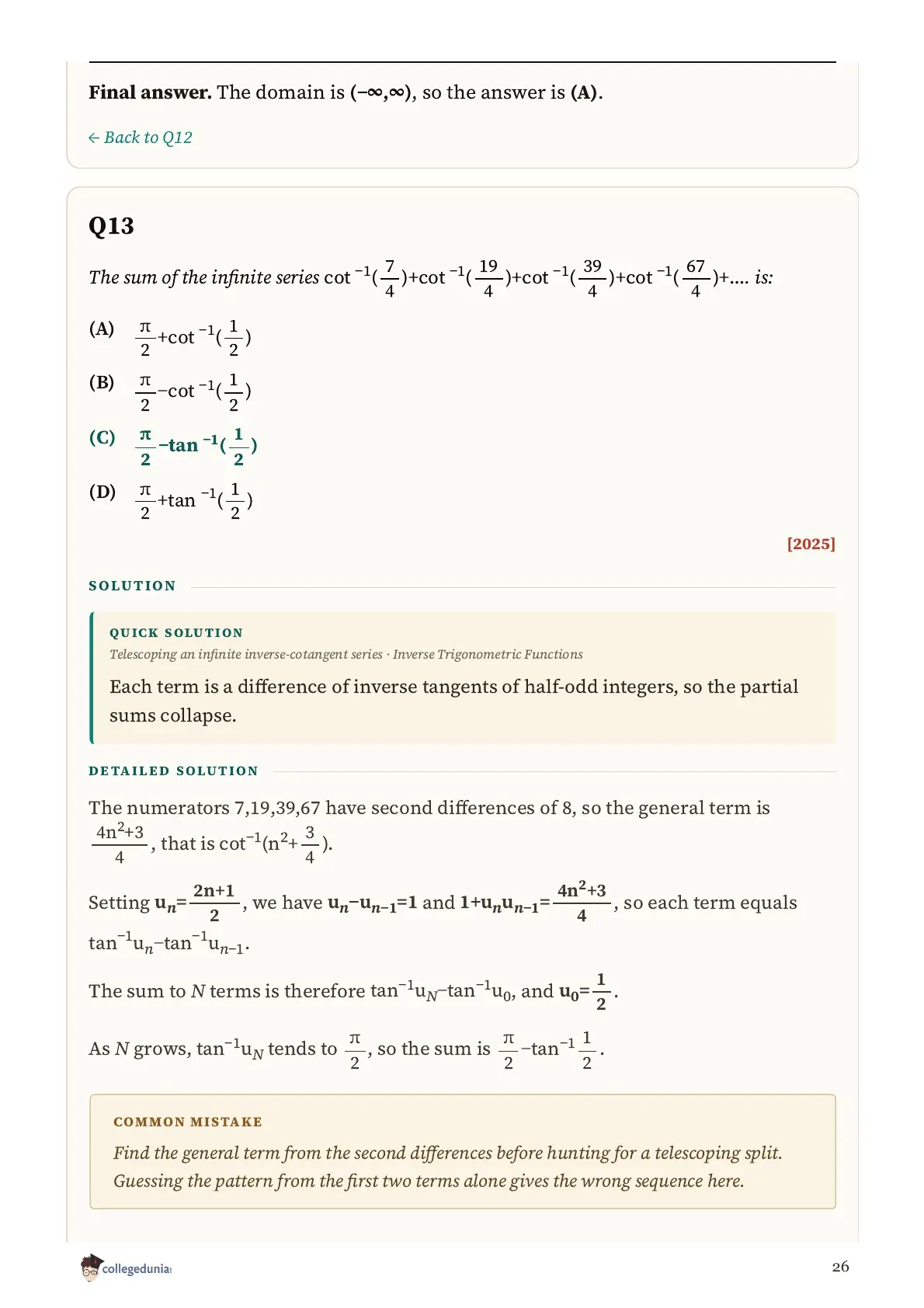
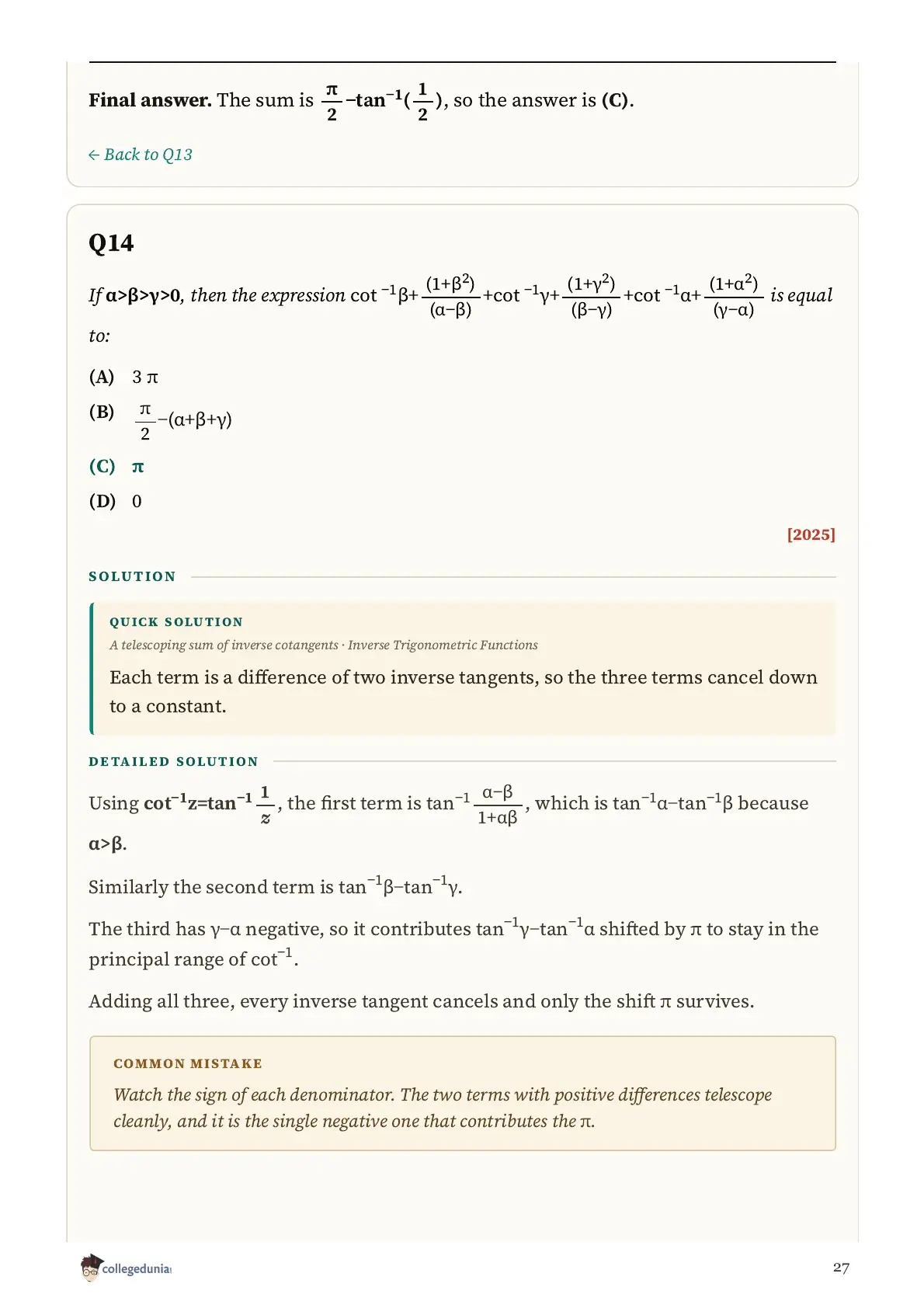
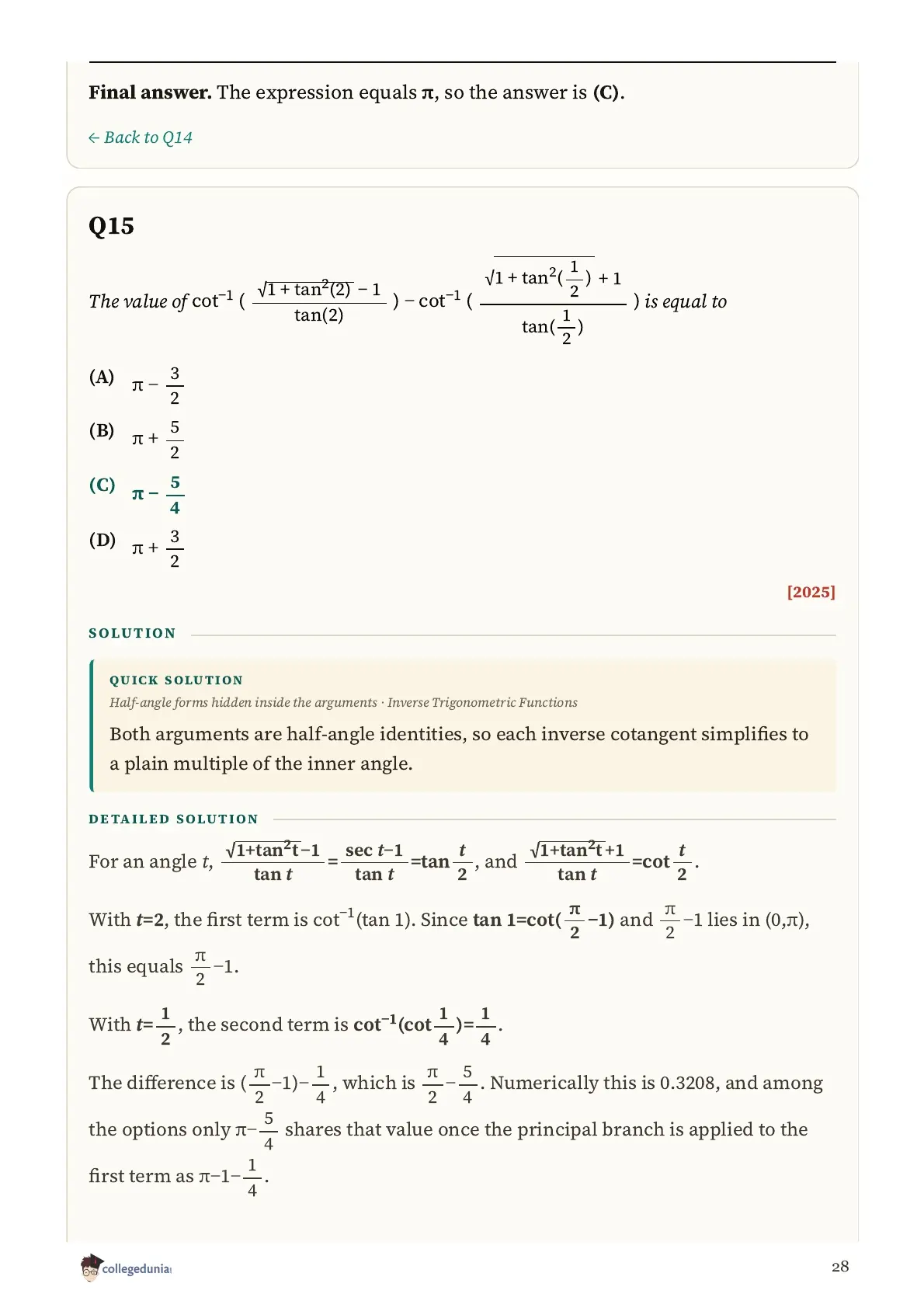
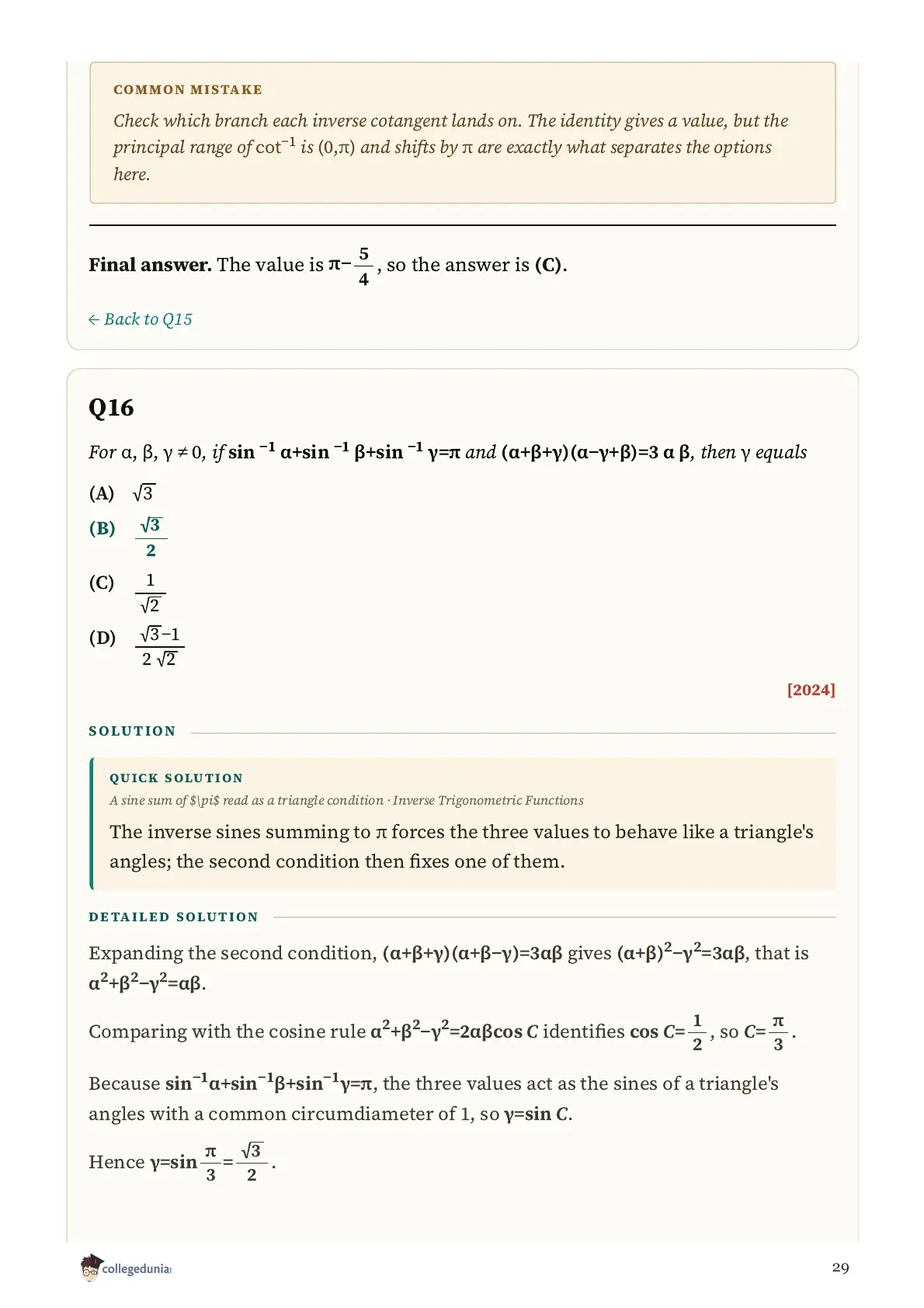
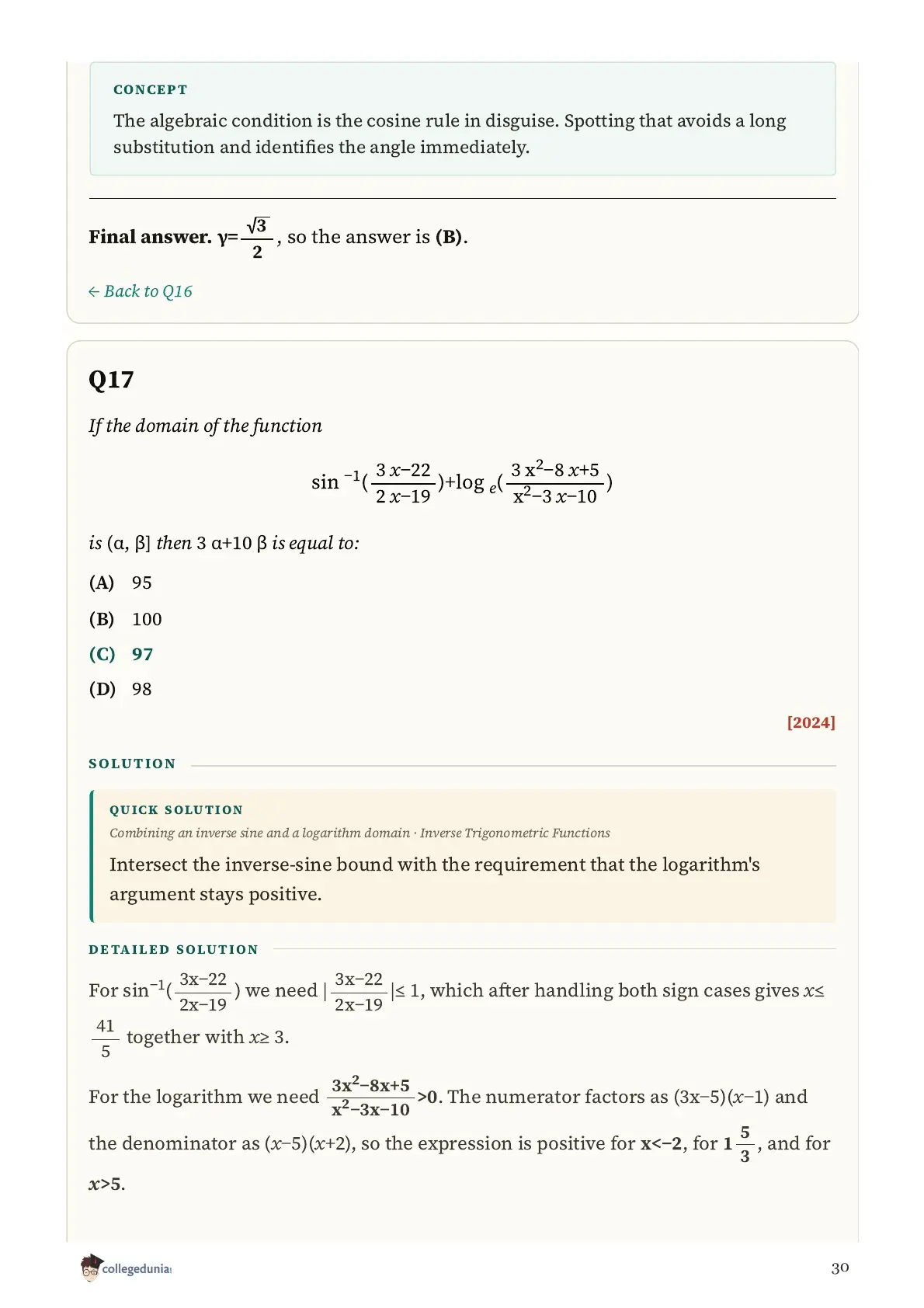
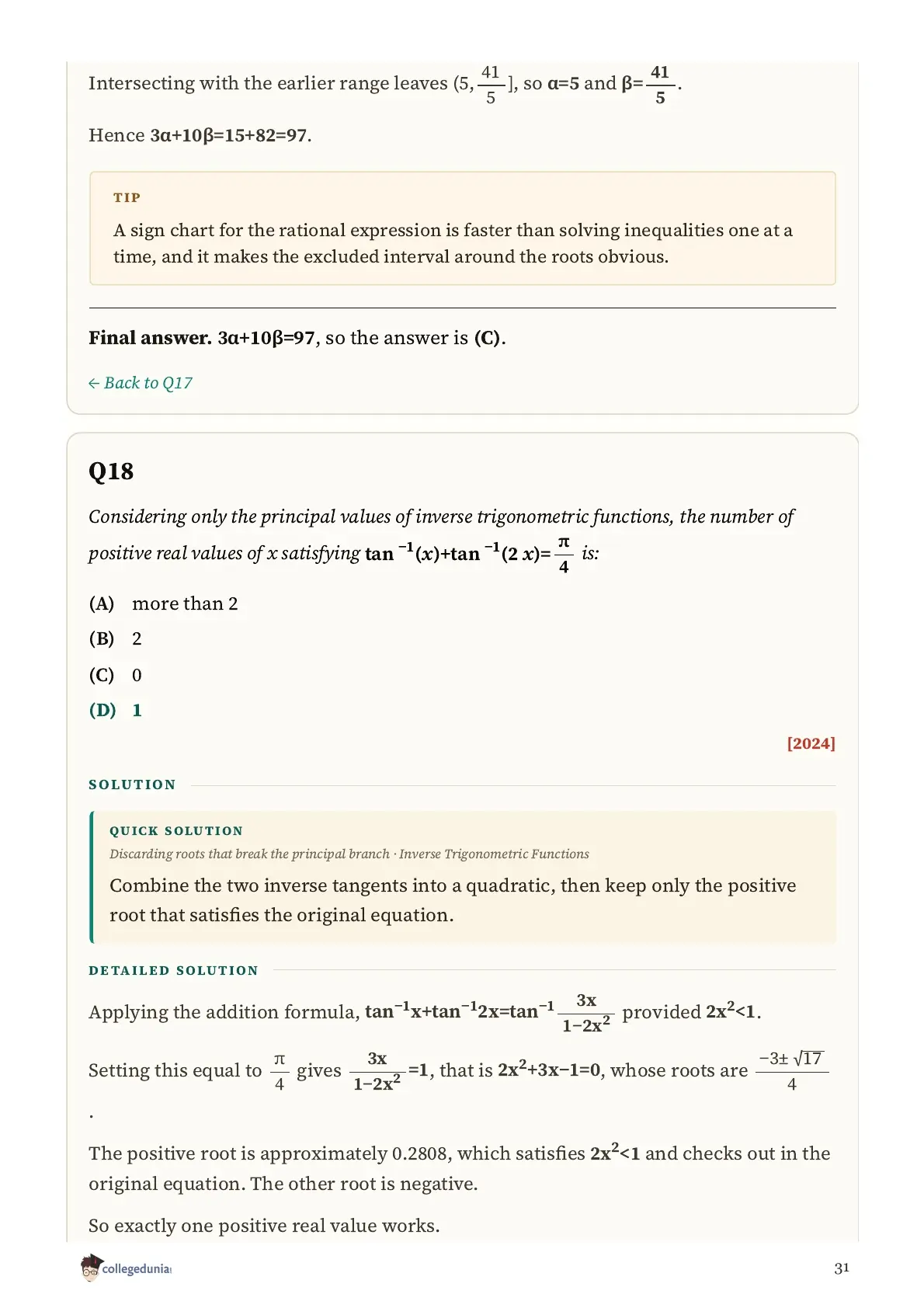
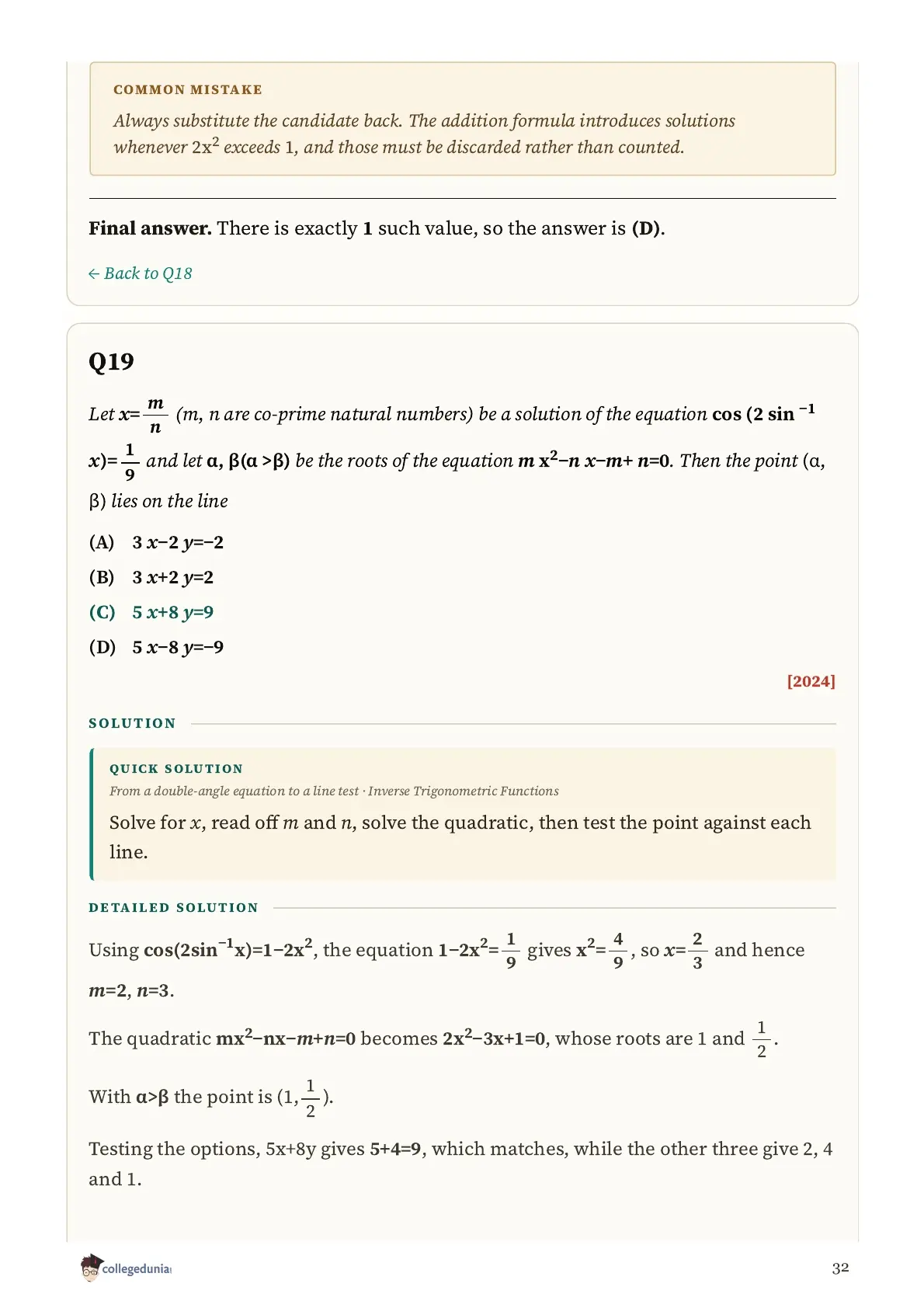
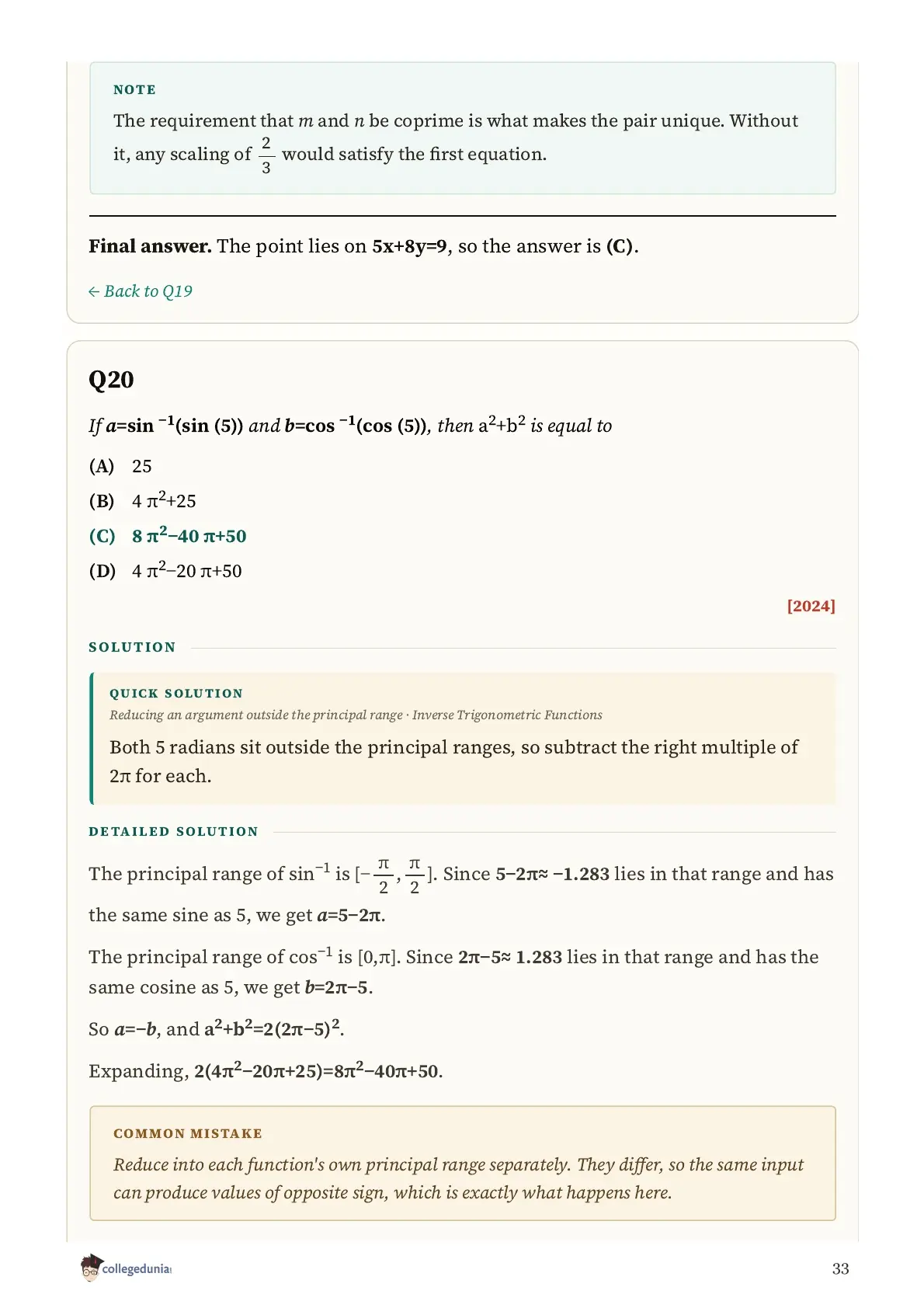
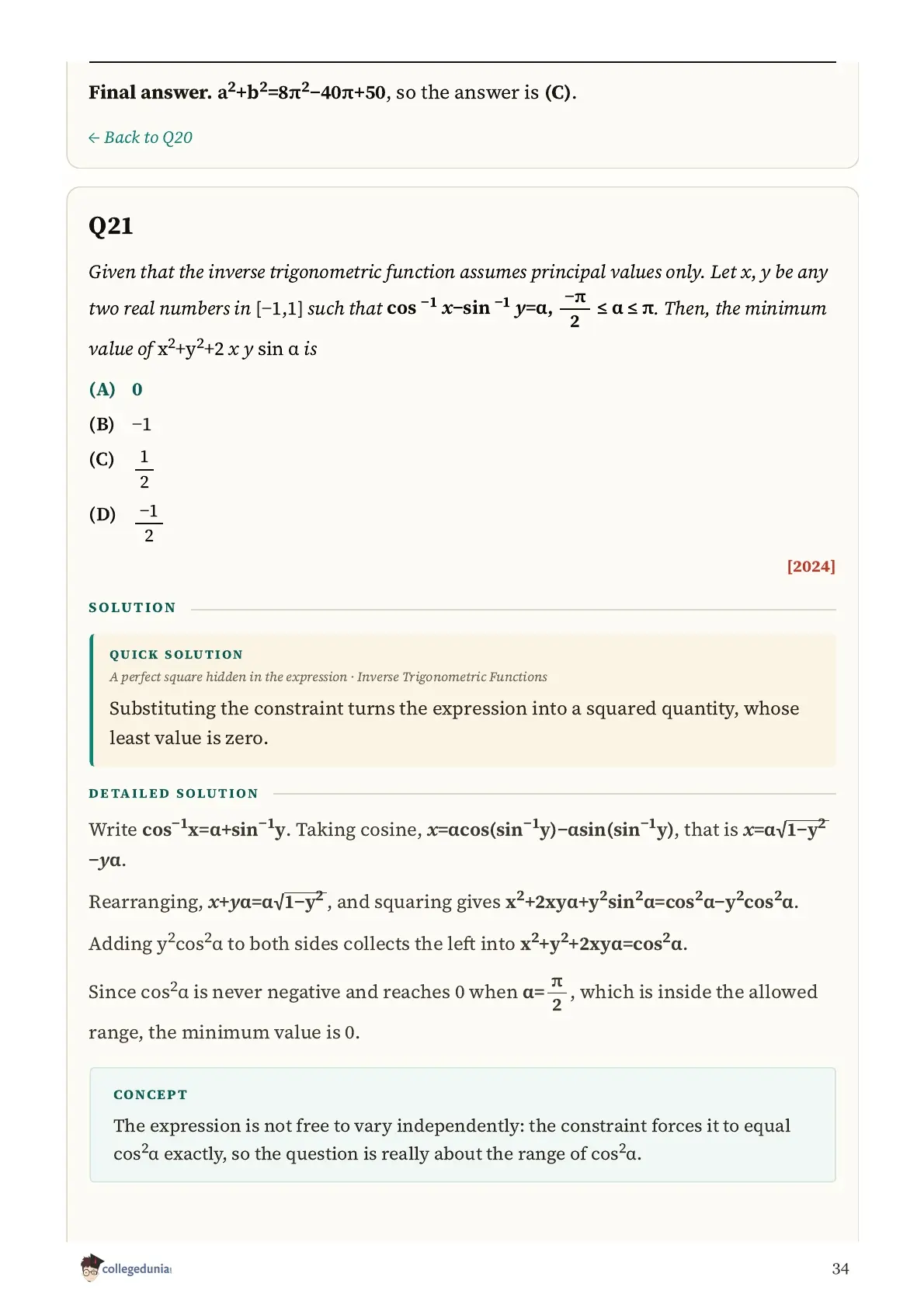
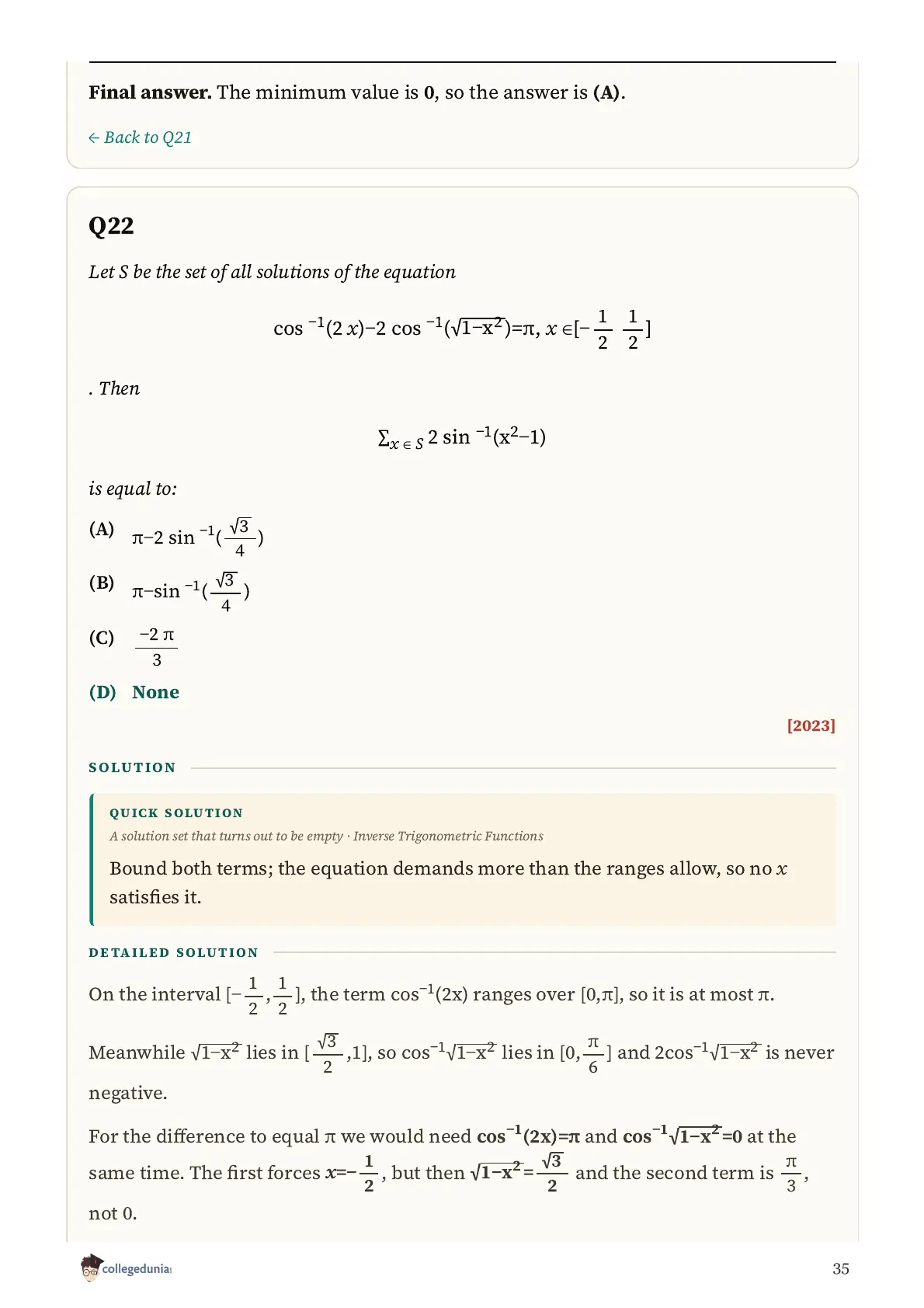
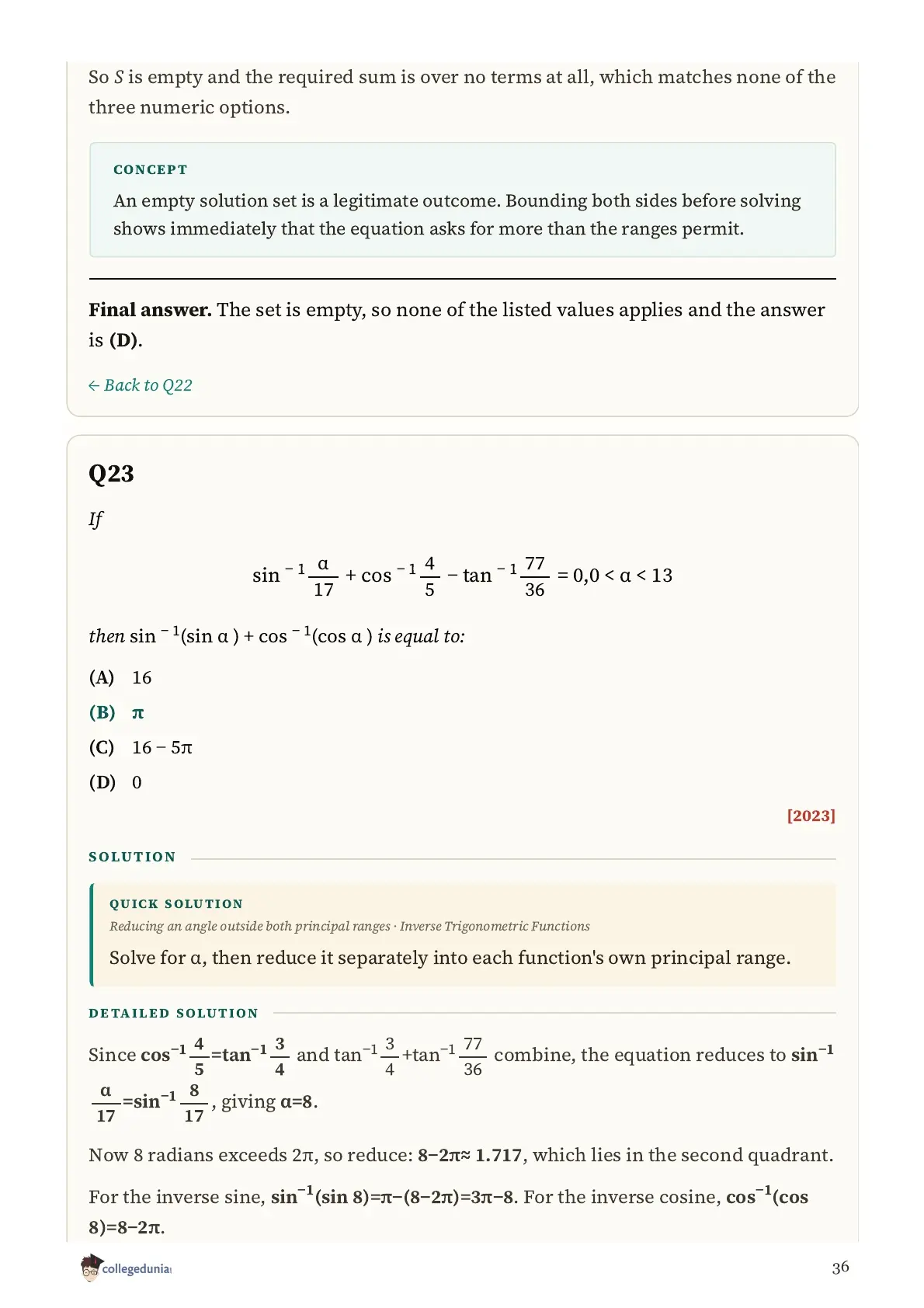
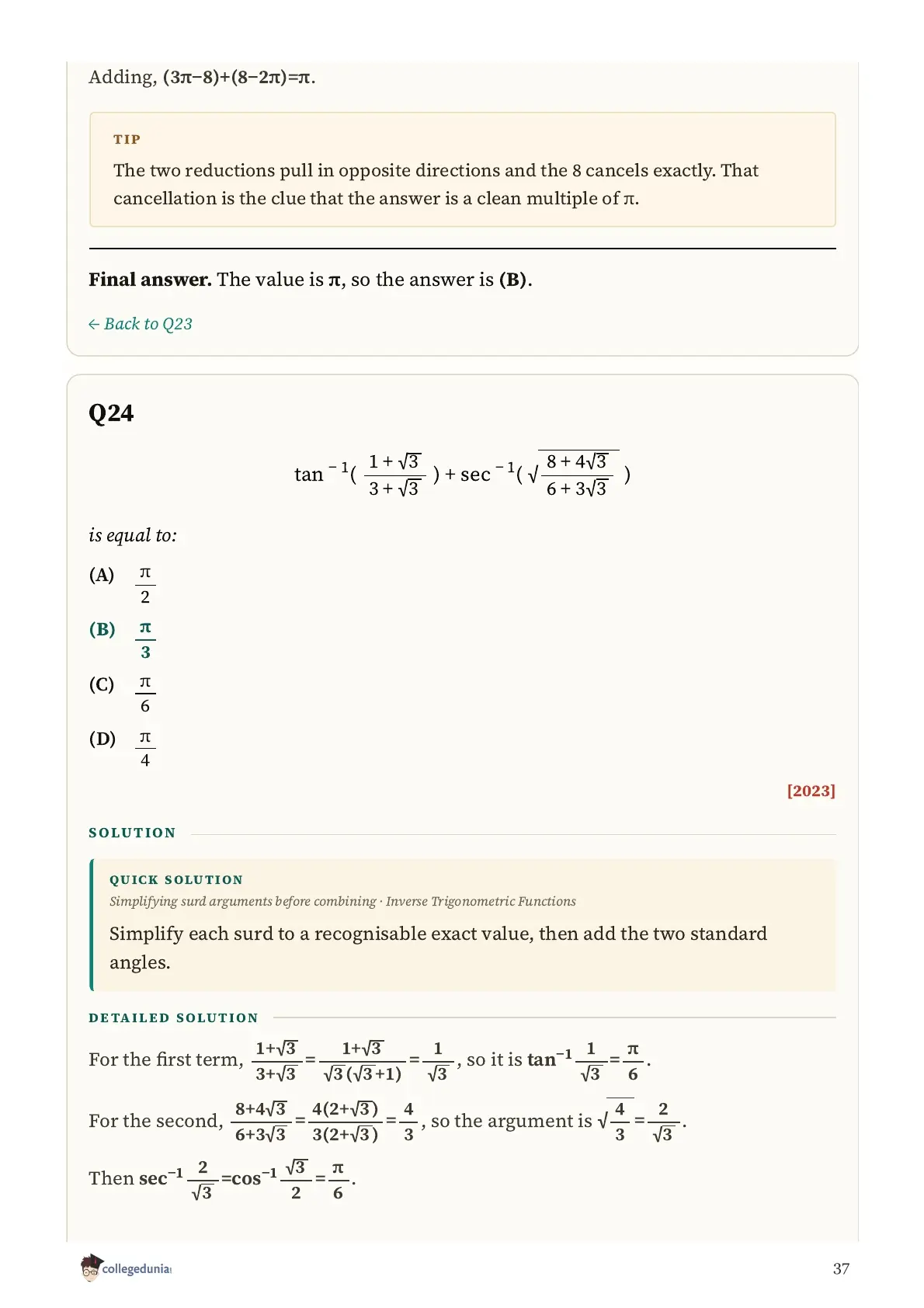
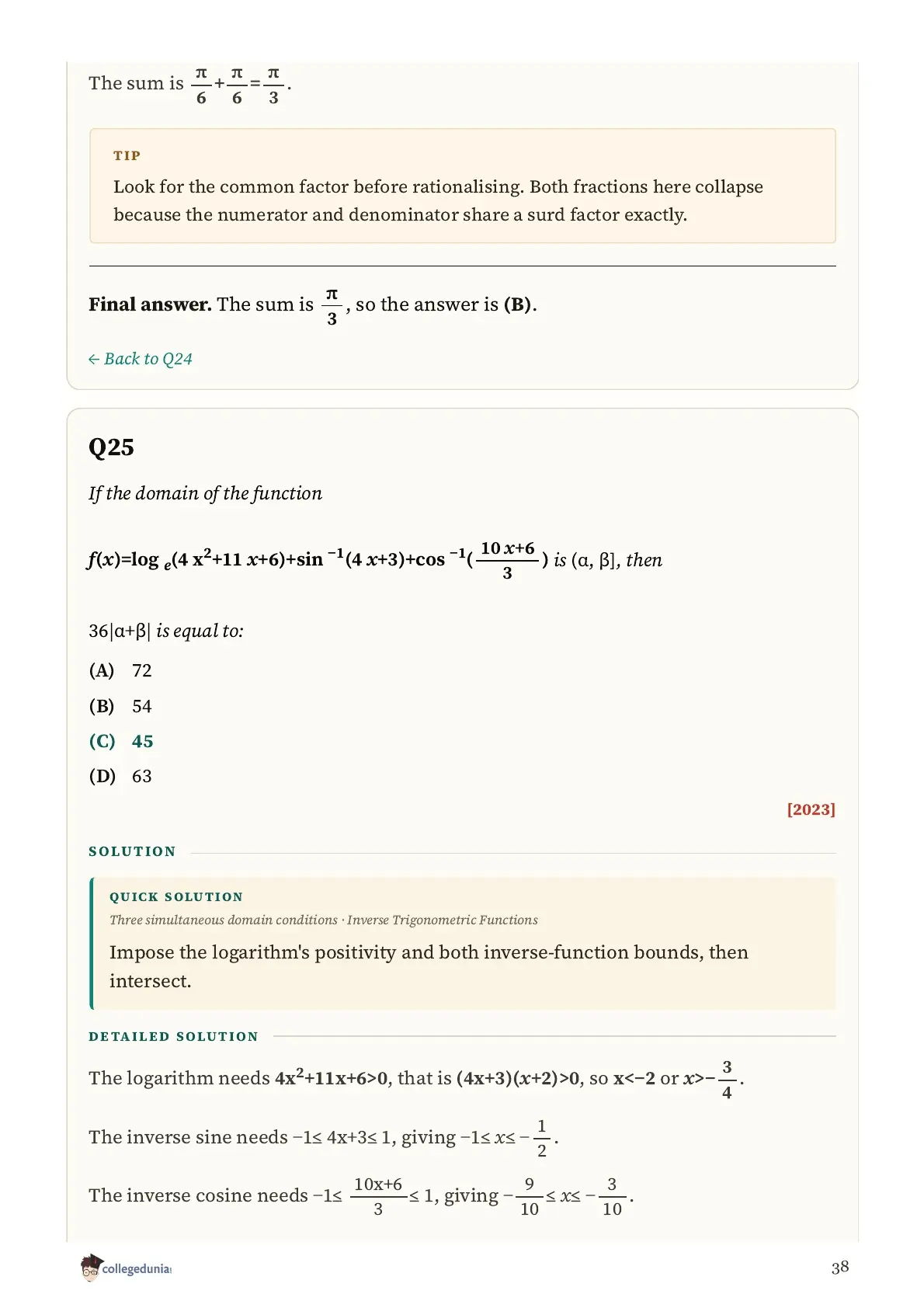
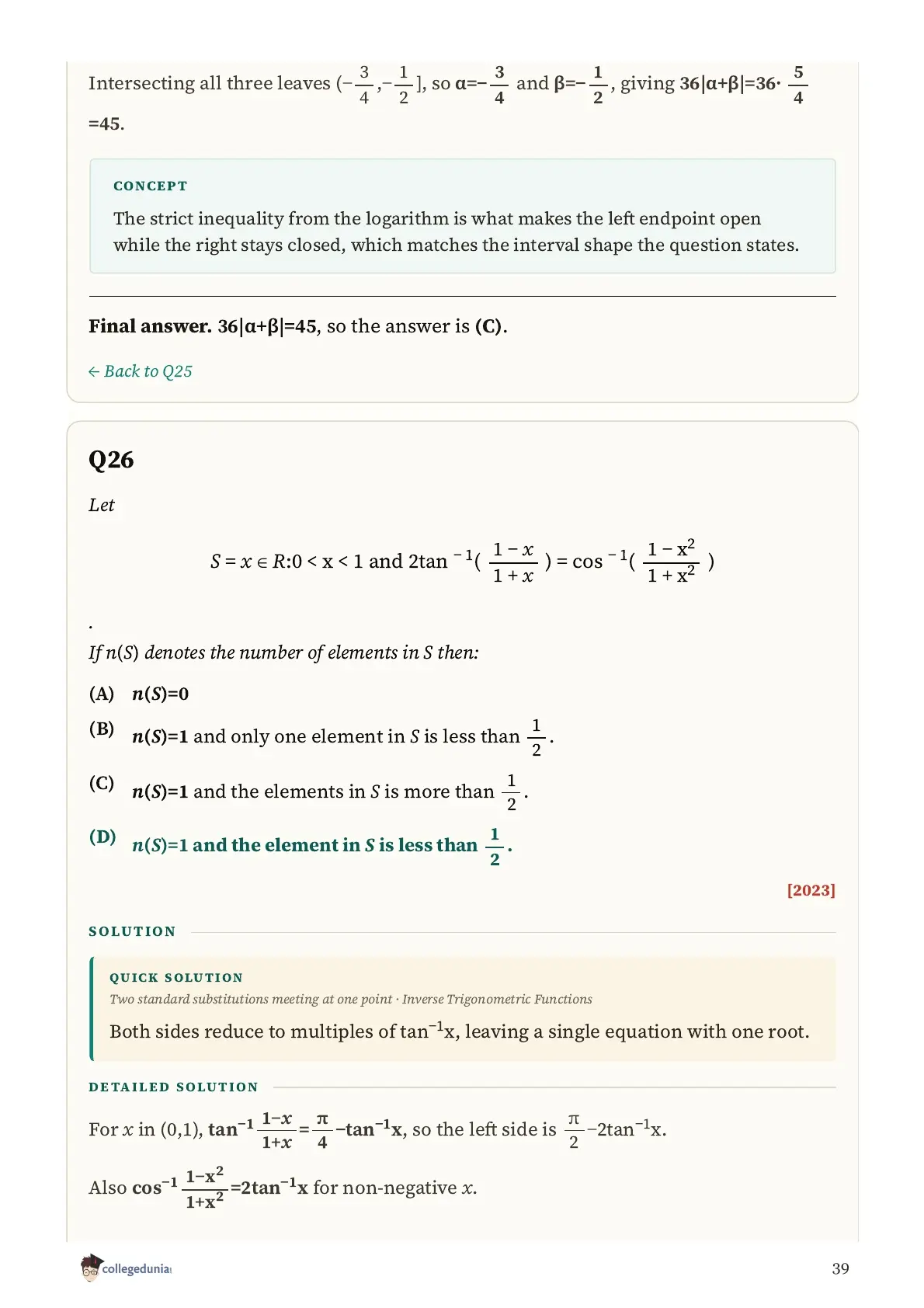
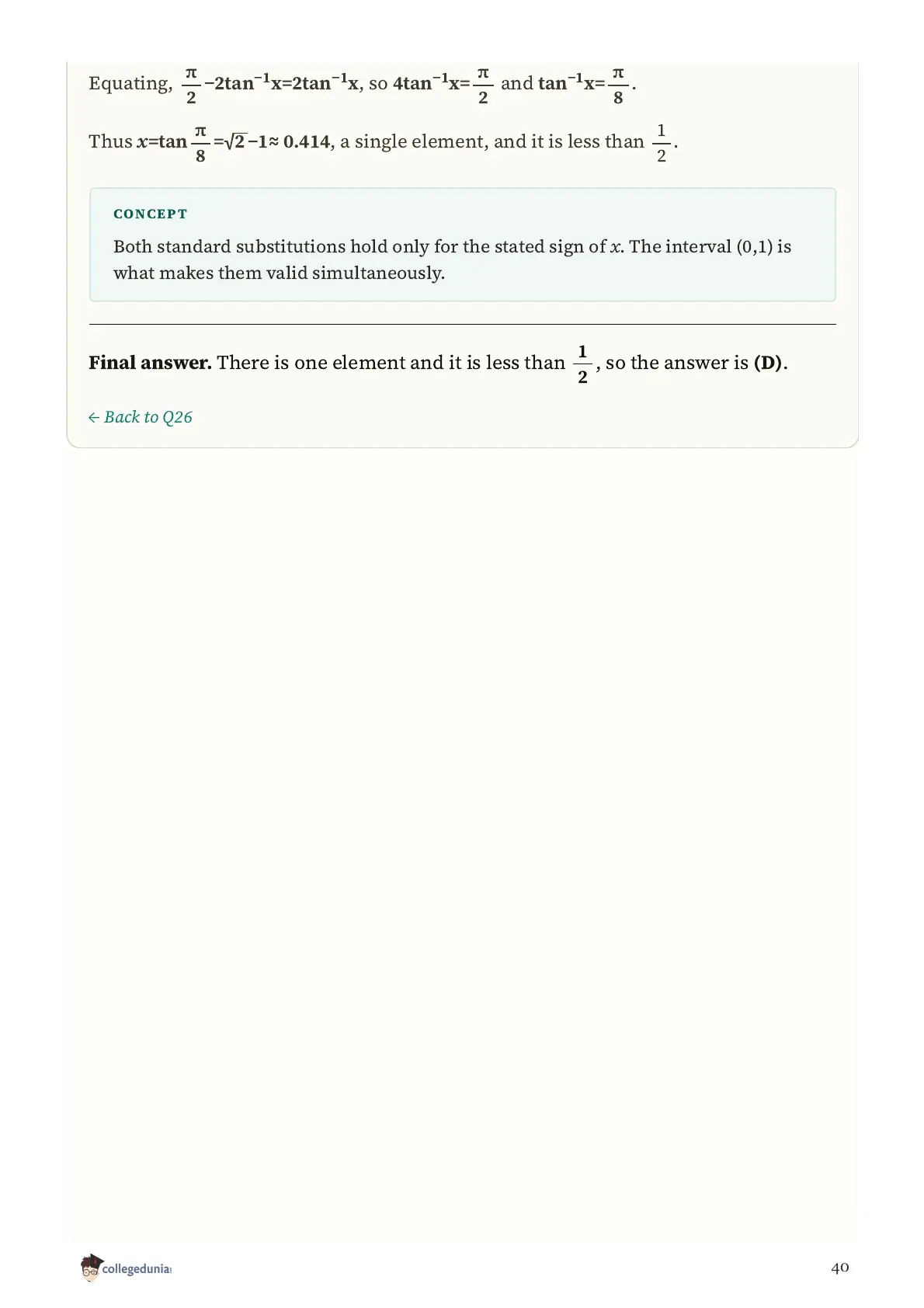
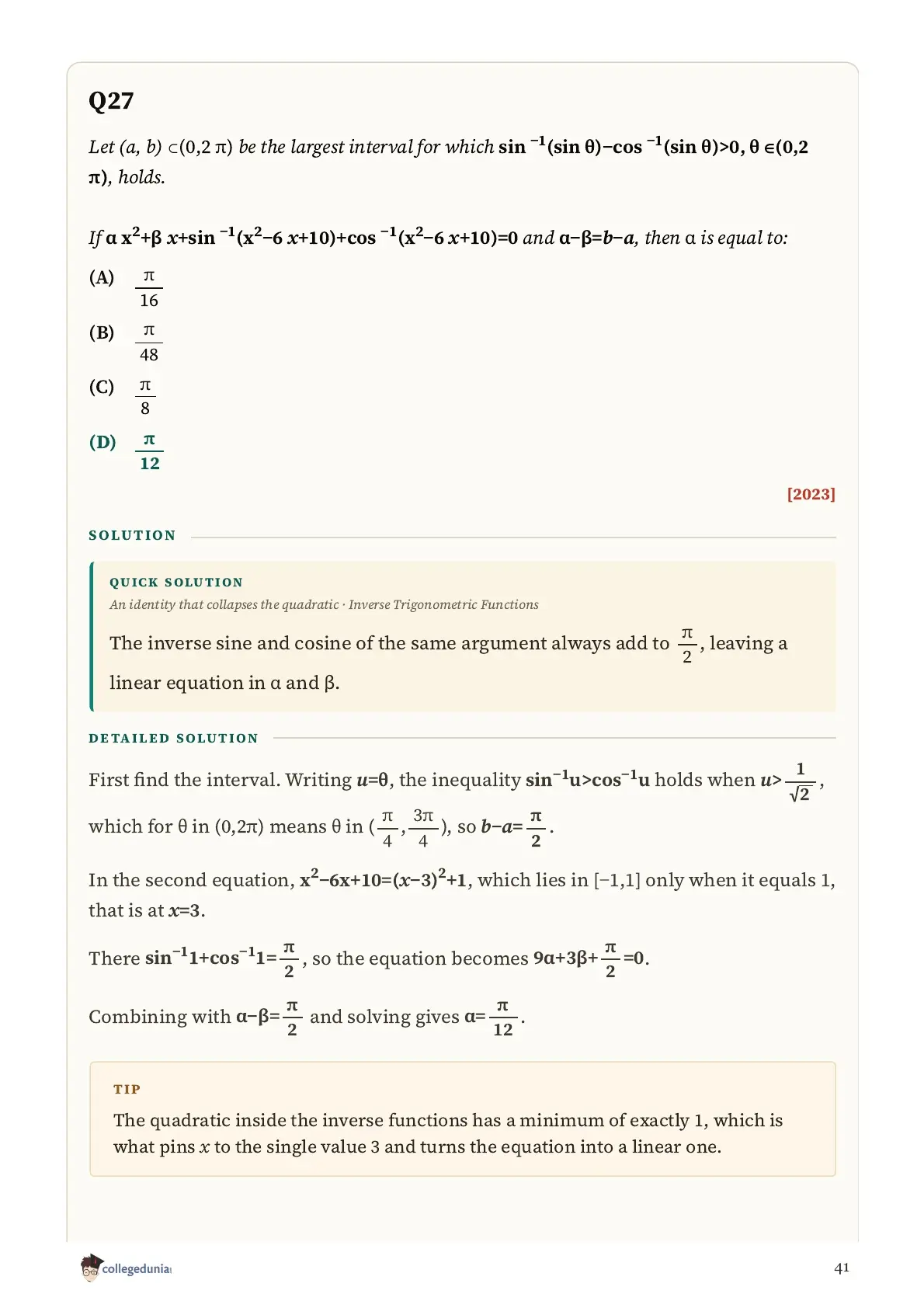
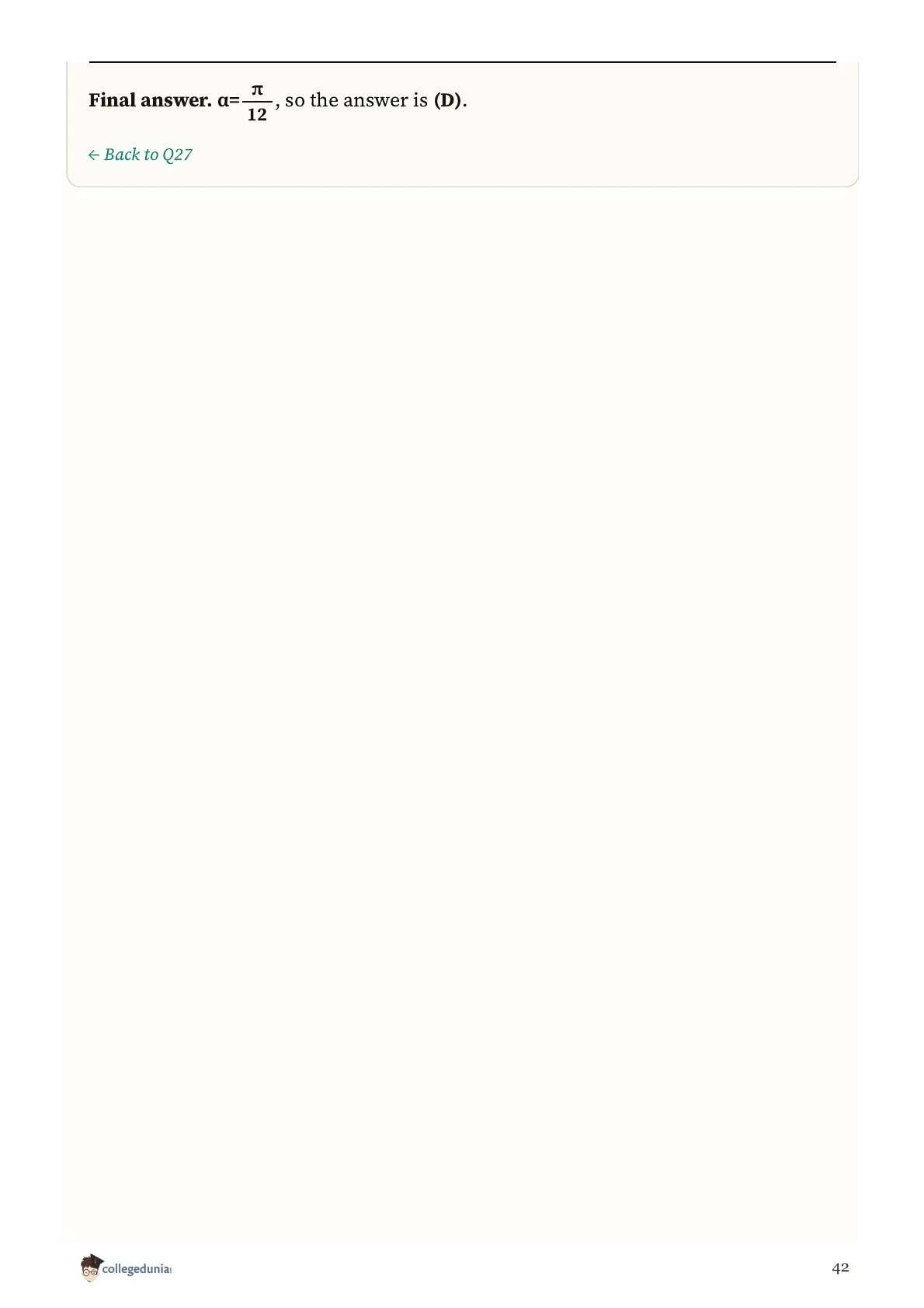
Questions run newest year first, with the options exactly as printed. The answer key follows, then a worked solution for each one.
JEE Main Inverse Trigonometry Weightage
Inverse trigonometry is a compact chapter that JEE Main returns to every year, reliably one to two questions per session. It is a small syllabus with a fixed set of identities, so it repays preparation time well.
| Year | Questions in this bank |
|---|---|
| 2026 | 7 |
| 2025 | 8 |
| 2024 | 6 |
| 2023 | 6 |
The recent papers lean on domains rather than pure identity manipulation. That shift began around 2024 and is the main thing to know if you are preparing from older material.
What the 27 Questions Cover
- Domain and range, where two or three conditions must be intersected, now the most common style
- Addition formulae for inverse tangents, including when the formula needs a correction term
- Principal values, where an angle outside the principal range must be reduced correctly
- Telescoping series, both finite and infinite
- Identity collapses, where a long expression reduces to a constant
- Counting solutions, where extraneous roots have to be discarded
Identities Worth Memorising
- Inverse sine plus inverse cosine of the same argument is always a right angle
- The inverse tangent addition formula needs a correction term once the product of the arguments exceeds one
- Inverse sine and inverse cosine have different principal ranges, so an out-of-range angle reduces differently for each
How to Approach the Set
Convert every inverse function to a tangent before combining anything. Mixing sine and cosine forms is what makes these expressions look harder than they are, and the conversion costs one line.
For domain questions, solve the tightest condition first and check the others only on that interval. Working all three conditions in parallel produces algebra that does not need doing.
After using an addition formula, always substitute the root back. The formula introduces solutions that do not satisfy the original equation, and the option list is usually built to accept one of them.
Common Mistakes
- Applying the inverse tangent addition formula without checking whether a correction term is needed
- Cancelling the inverse function without confirming the angle sits in its principal range
- Reducing an out-of-range angle the same way for inverse sine and inverse cosine
- Dividing by a factor the interval does not guarantee is non-zero
- Reading a general term from the first two values instead of from the second differences
Two to Solve First
The 2023 question with an empty solution set. An equation is posed on a closed interval and nothing satisfies it, so the required sum is over nothing at all. Bounding both sides before solving shows that in two lines.
Then the 2025 infinite telescoping series. Its numerators 7, 19, 39 and 67 have constant second differences, which fixes the general term; only then does the telescoping split appear. Guessing the pattern from the first two terms gives the wrong sequence entirely.
Video Solutions
Source: JEE Wallah
Using the Answer Key
Do the set in two timed sittings, allowing about three minutes a question. Mark the key in one pass, right or wrong only, then read the solution for every miss and every lucky guess. Each opens with a one-line quick solution you can stop at and retry from.
For the rest of the paper, the JEE Main Ellipse and Hyperbola PYQs cover conic sections in the same format.
JEE Main Inverse Trigonometric Functions PYQ FAQs
Ques. How many inverse trigonometry questions come in JEE Main?
Ans. One to two per session, and the chapter has appeared in every recent year. It is a small syllabus with a fixed set of identities, which makes it one of the better returns on preparation time.
Ques. Which years does this bank cover?
Ans. 2023 to 2026, taking the most recent sessions first. That range reflects the current pattern, including the domain-and-range style that has become more frequent since 2024.
Ques. Are the answers official?
Ans. They come from our tagged JEE Main question bank, and every one was independently re-derived before publication, numerically and symbolically. All 27 agreed with the bank's key.
Ques. What has changed in recent papers?
Ans. The weight has moved from identity manipulation towards domain and range, where two or three conditions have to be intersected. If you are preparing from older material, that is the gap worth closing.
Ques. Why are there no multiple-answer questions?
Ans. One candidate question was a multiple-answer type whose two correct options were algebraically the same value. A single-answer booklet cannot express that honestly, so it was left out.
Ques. Can the PDF be downloaded free?
Ans. Yes. All 42 pages can be read on this page and downloaded at no cost.



Comments